Scientific Writing Workshop David L. Armbruster, Ph.D. Head, Scientific Editing Health Sciences Library and Biocommunications Center University of Tennessee Health Science Center
Goals
Procedures for Workshop Attendance Questions Your manuscript Editorial conference
Workshop Format Process of writing Organization of research article Grammar and authorship Tables and figures References and ethics Getting published
Resources Books, journals
Resources Books, journals People
Resources Books, journals People Computer aides
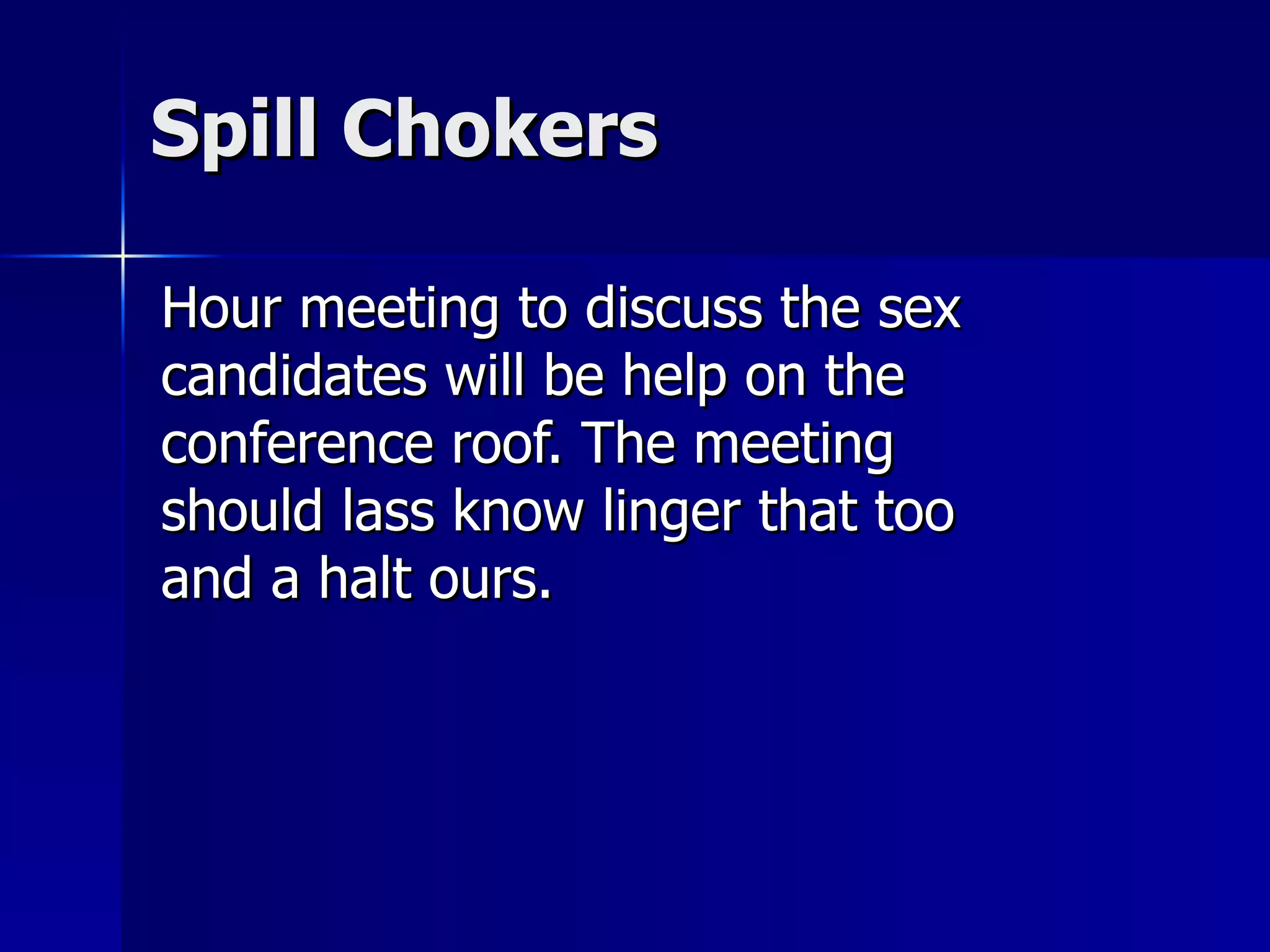
Spill Chokers Hour meeting to discuss the sex candidates will be help on the conference roof. The meeting should lass know linger that too and a halt ours.
Resources Books, journals People Computer aides
Typical Writing Problems
Typical Writing Problems Chinese Morse code Poetry Vocabulary Mathematics Signaling/signing Music Fortran Hieroglyphics Profanity
Typical Writing Problems The data is incomplete.
Typical Writing Problems Long-chain hydrocarbons in pump oil is the primary factor in reducing friction.
Typical Writing Problems When placed in the canine descending thoracic aorta, Brewin found that pericardial valves became rigid.
Typical Writing Problems Prostatic carcinoma predominately metastasizes to bone, having occurred in 8-35% of patients by the time of diagnosis.
Typical Writing Problems The findings have led to increased understanding of the likely modes of transmission as well as the identification of persons at risk for infection.
Audience and Purpose
Audience Focus on audience Define as specifically as possible Age Education Gender Politics Ethnic background
Purpose Persuade Teach Inform Amuse
Getting Started Writing is easy. All you have to do is cross out the wrong words. Mark Twain
Getting Started To improve writing skills Write frequently Cultivate knowledgeable, critical reviewer Learn from critique
Getting Started Schedule time to write Eliminate distractions Have resources at hand Plan B
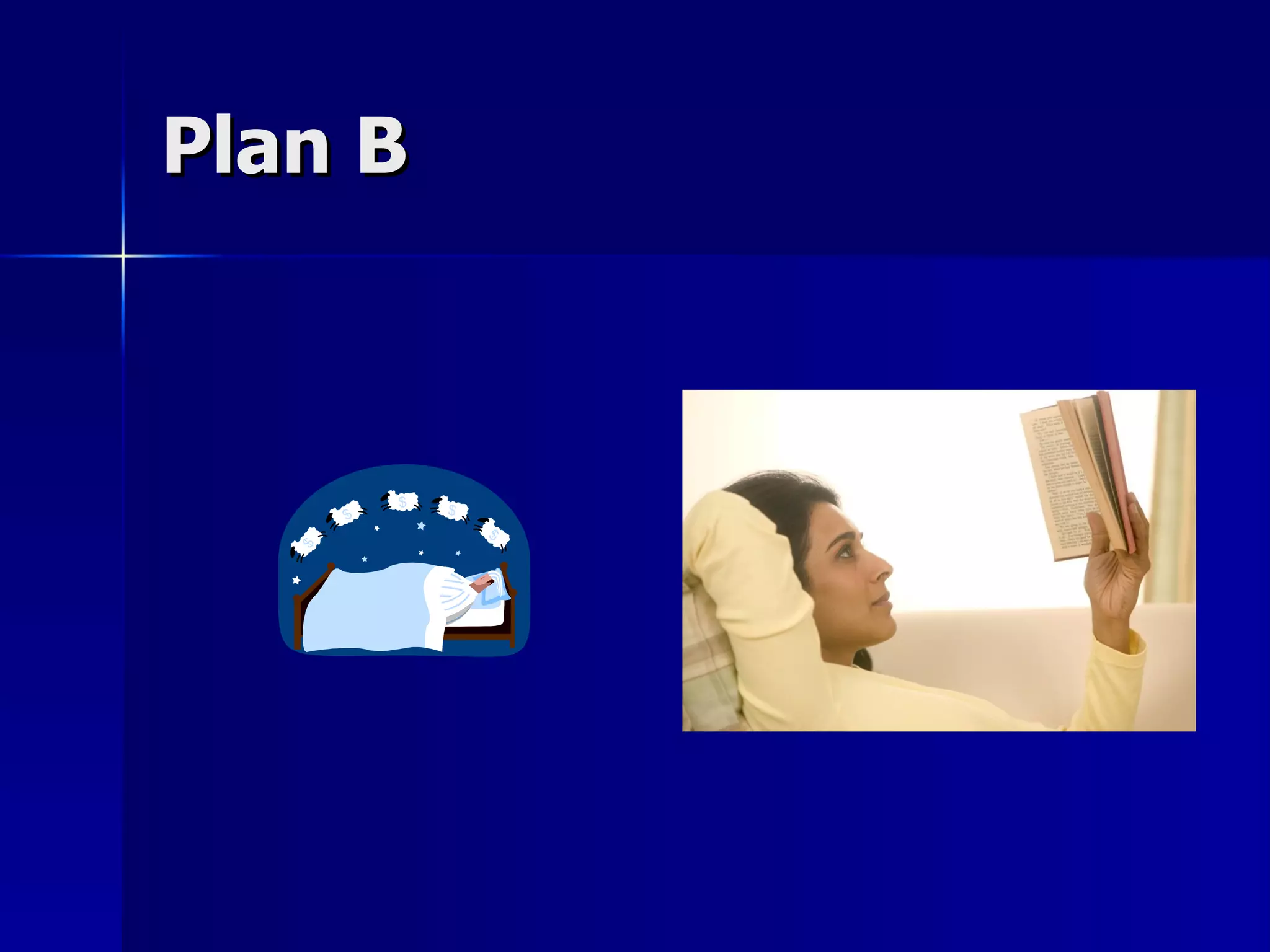
Plan B
Getting Started Organize before you write Formal outline Sentence (phrase) outline Mind mapping
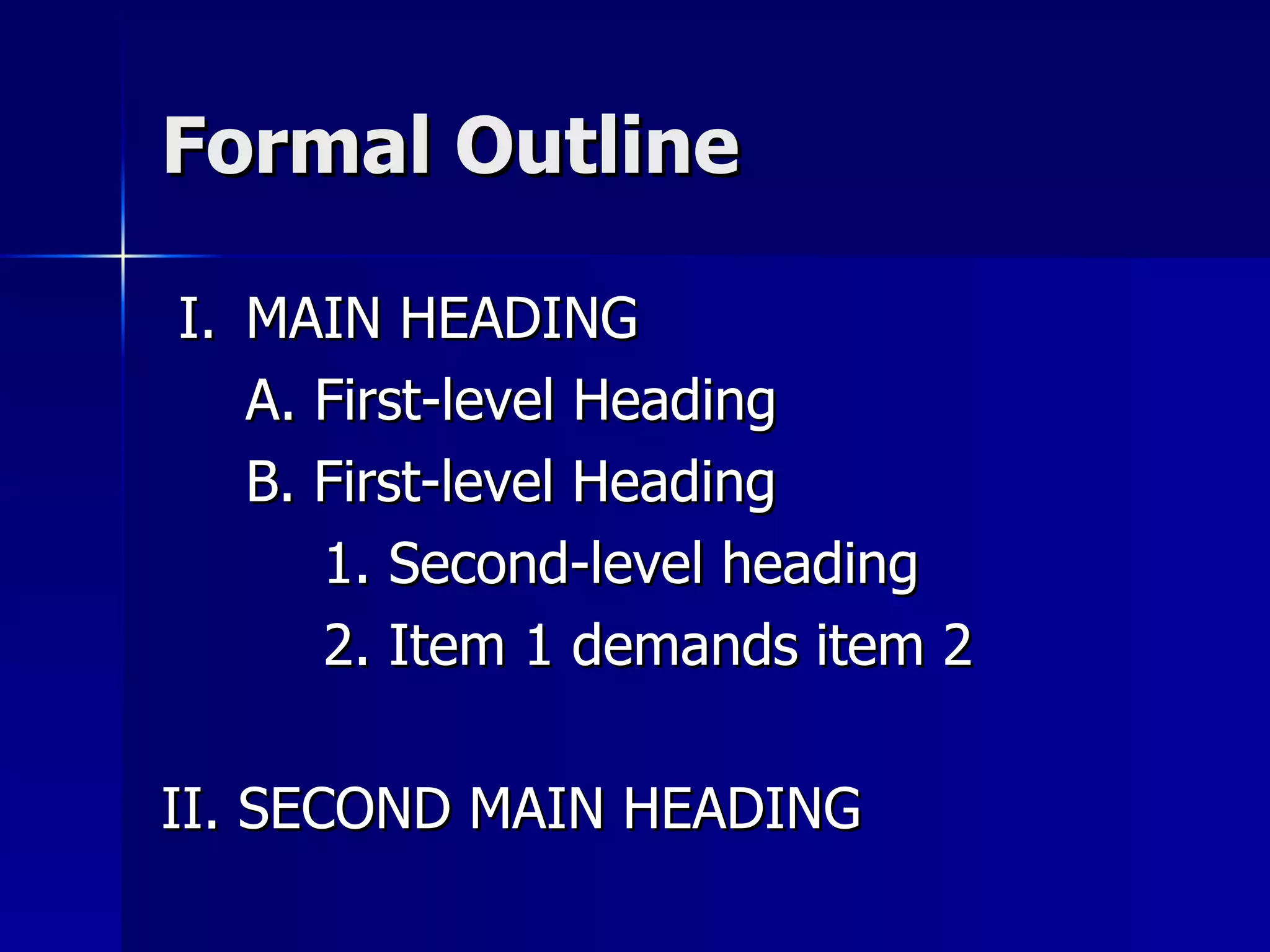
Formal Outline I. MAIN HEADING A. First-level Heading B. First-level Heading   1. Second-level heading   2. Item 1 demands item 2 II. SECOND MAIN HEADING
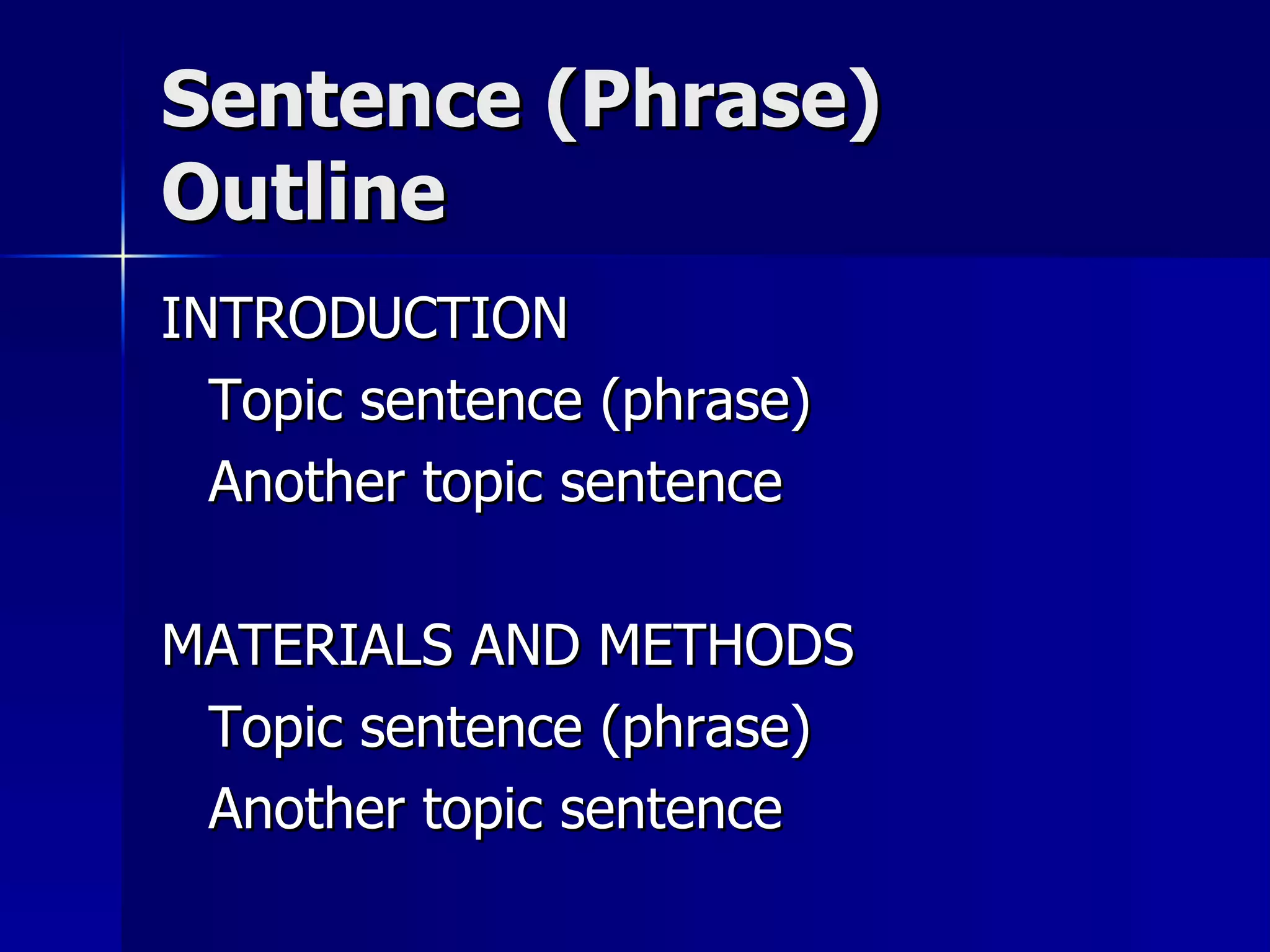
Sentence (Phrase) Outline INTRODUCTION Topic sentence (phrase) Another topic sentence MATERIALS AND METHODS Topic sentence (phrase) Another topic sentence
Mindmapping
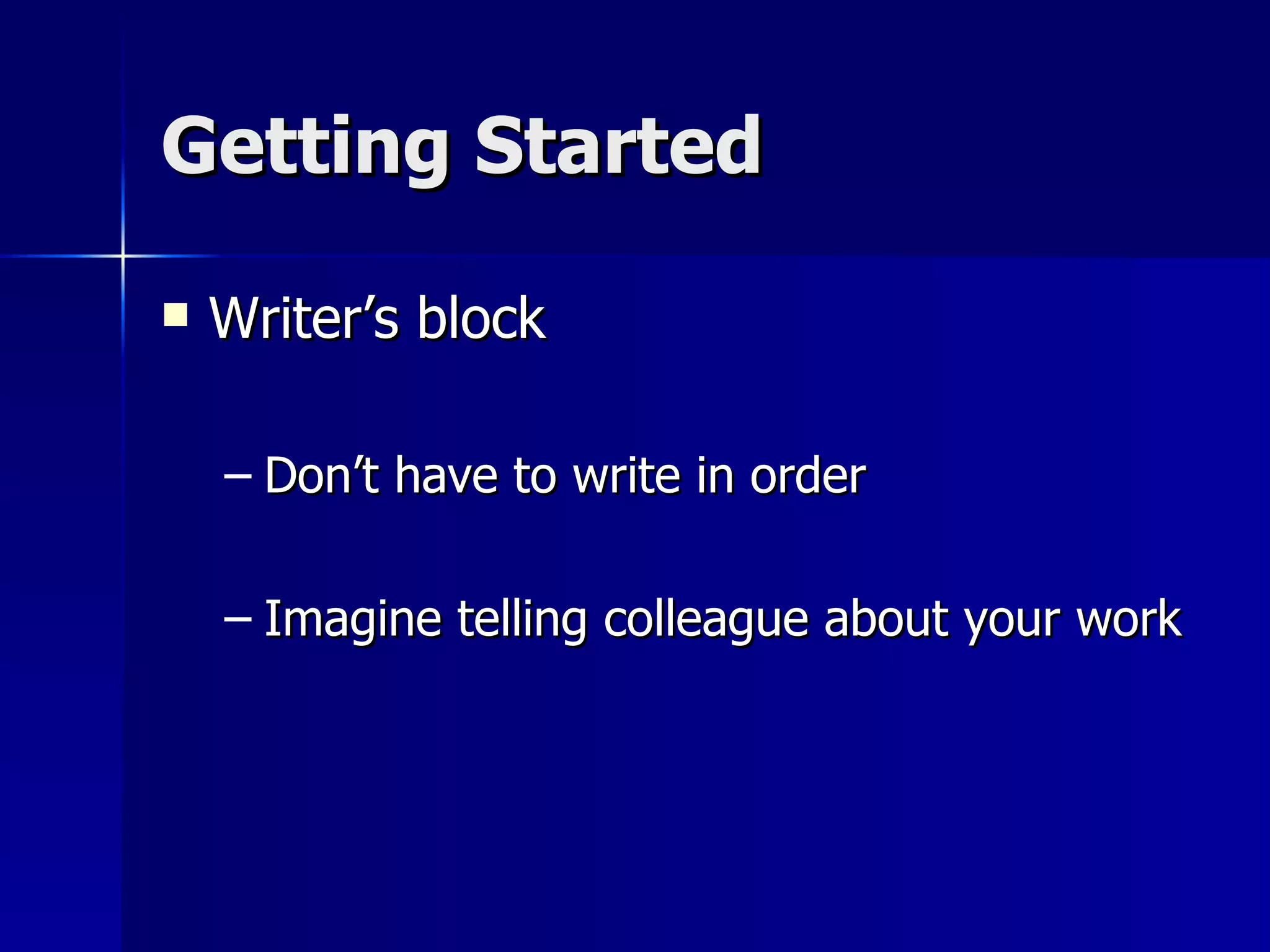
Getting Started Writer’s block
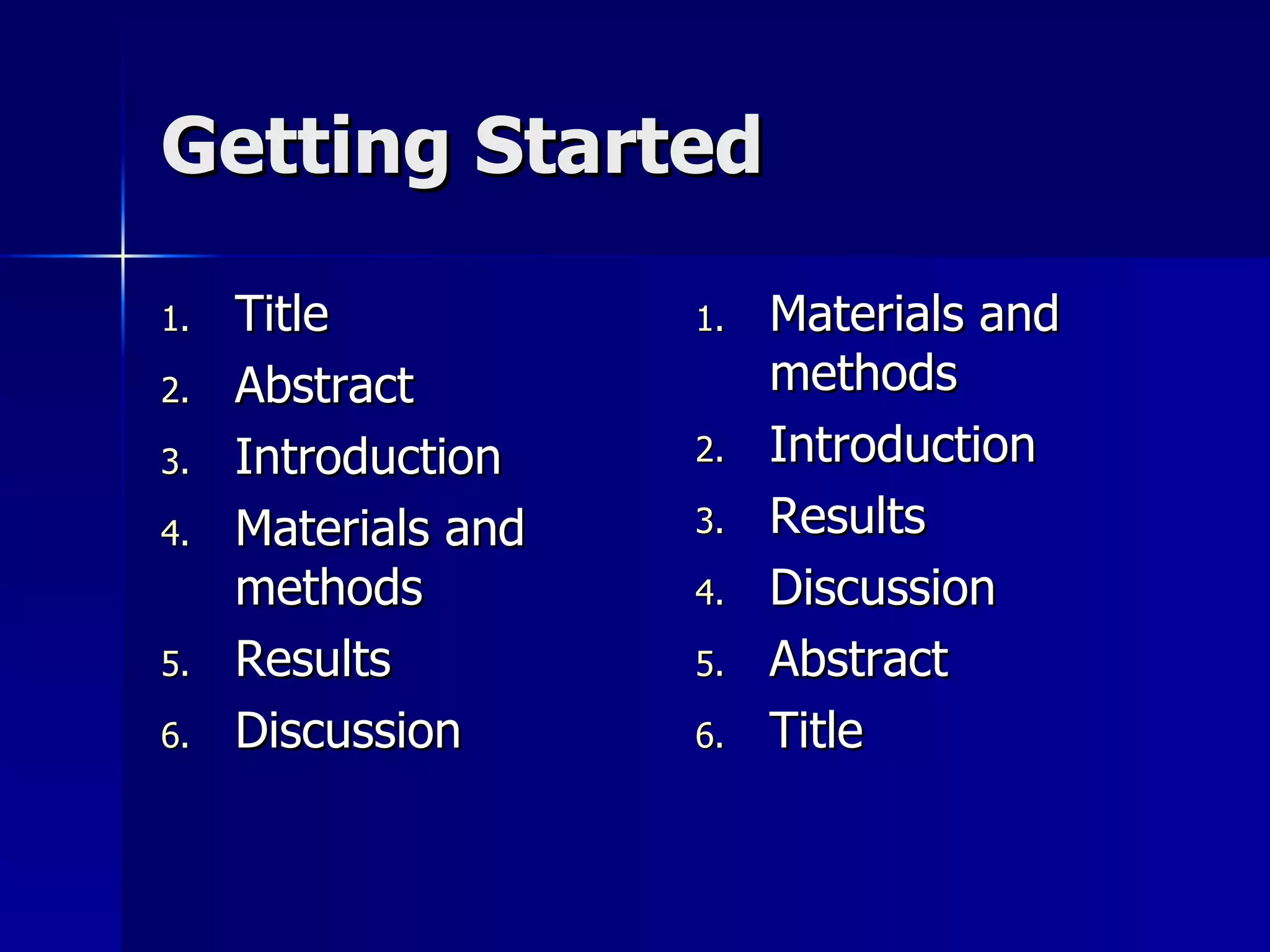
Getting Started Title Abstract Introduction Materials and methods Results Discussion Materials and methods Introduction Results Discussion Abstract Title
Getting Started Writer’s block Don’t have to write in order Imagine telling colleague about your work
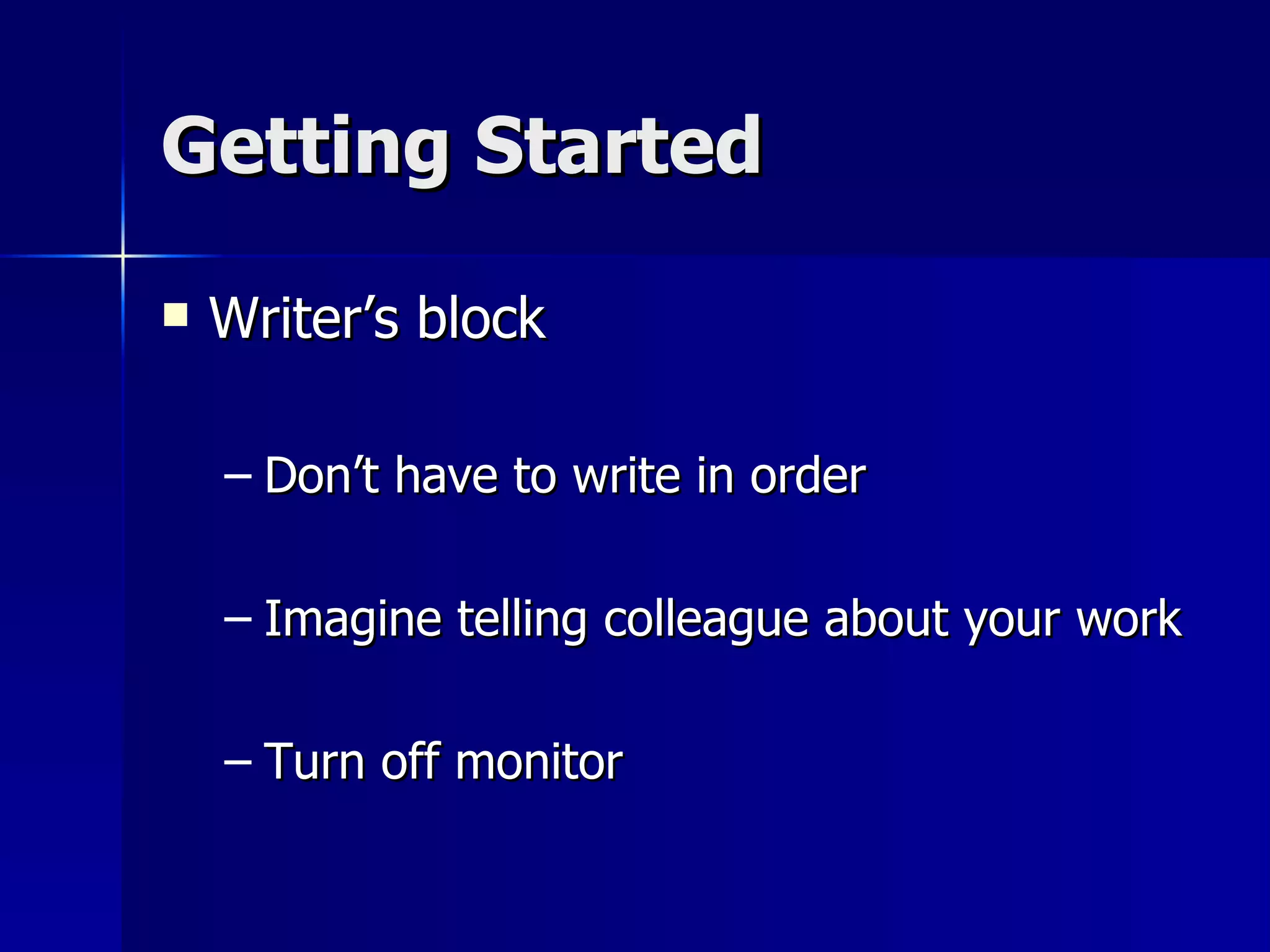
Getting Started Writer’s block Don’t have to write in order Imagine telling colleague about your work Turn off monitor
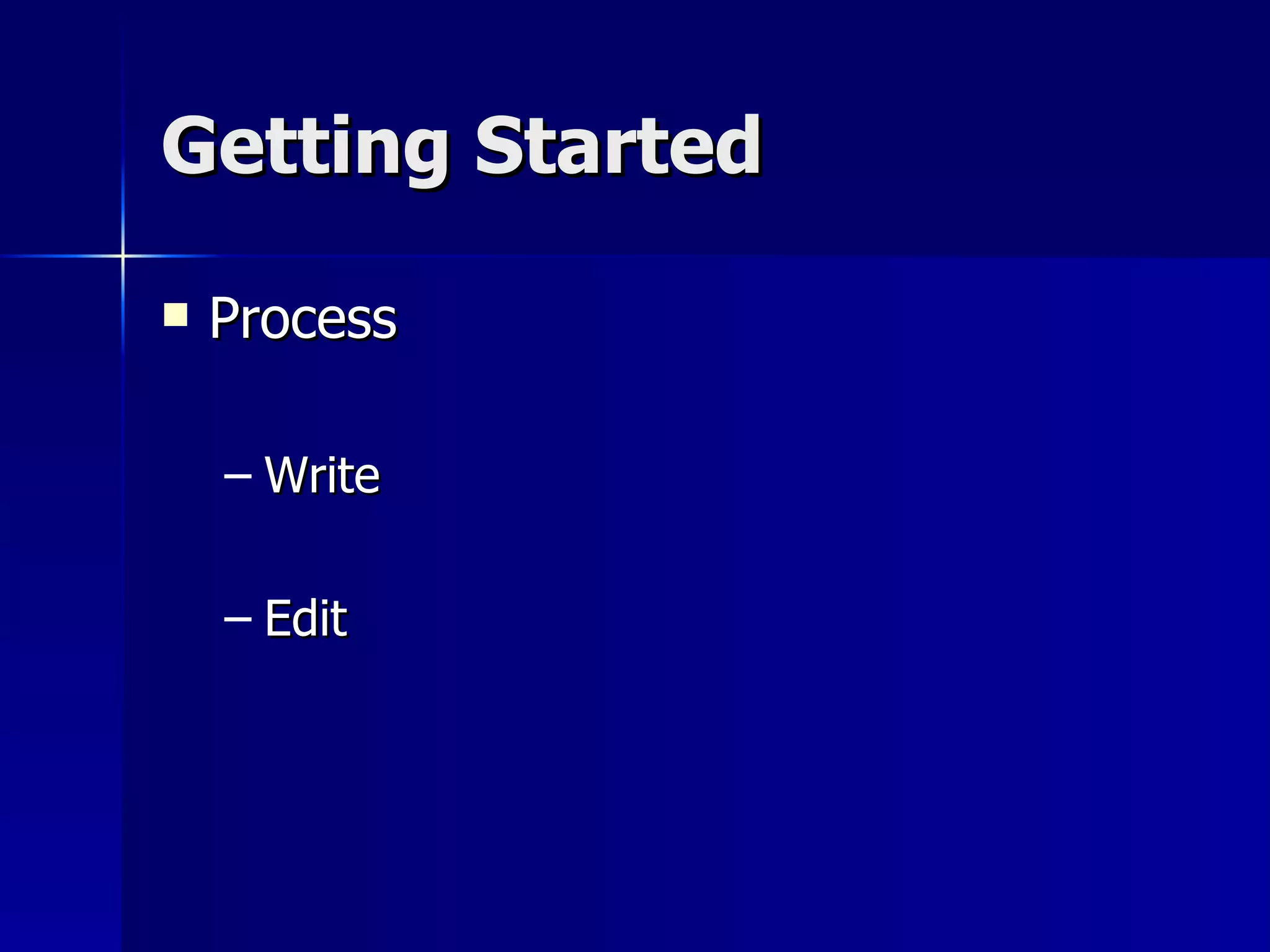
Getting Started Process Write Edit
Next Week Organization of the scientific research article IMRAD

Writing Workshop 1 Handout

Editor's Notes

  • #2 Who has published? What kind of experience was it?
  • #3 Your goals? Write on flipchart.
  • #4 Let me know if you can’t attend Ask questions: you’re here to learn, improve writing Revise after workshop, submit for a full edit Sign schedule for conference with me
  • #6 Biblio (handout) Journal guidelines; instructions to authors Look at recent issues
  • #7 Biostatisticians (Preventive Medicine) Graphic artists Colleagues Mentors
  • #8 Spell checker
  • #10 Style checker Questions?
  • #11 Natural language exercise (handout).
  • #18 2 most important aspects of writing.
  • #19 Name people you know. Birth control: Catholic Ladies Auxiliary vs. public health nurses Why not?
  • #20 Thesis/dissertation lit review vs. article lit review Questions?
  • #22 Like riding bike or playing piano, must practice to get better.
  • #23 2-3 hours uninterrupted Close office door Quiet time to think, concentrate Turn off phones, email Computer Notes Lab notebook Dictionaries Style guides Instructions to authors
  • #24 More on starting writing process in a minuts, but . . . Can’t fall asleep, read Can’t write today, do something else
  • #28 CPR example Use flipchart or blackboard
  • #29 Clear desk. Turn on computer. Get coffee. Get dictionary. Open document. Get coffee. Go to bathroom. Etc.
  • #30 You don’t have to write in order.
  • #32 Avoid worrying about typos. Get words into computer.
  • #33 Write more than you need. Edit viciously. Process is iterative. Several additional handouts. Questions?