Writing the Research
Methodology
Adopted from Philip Adu, Ph. D.
Things to Think About
1. Data
2. Problem
3. Question
4. Purpose
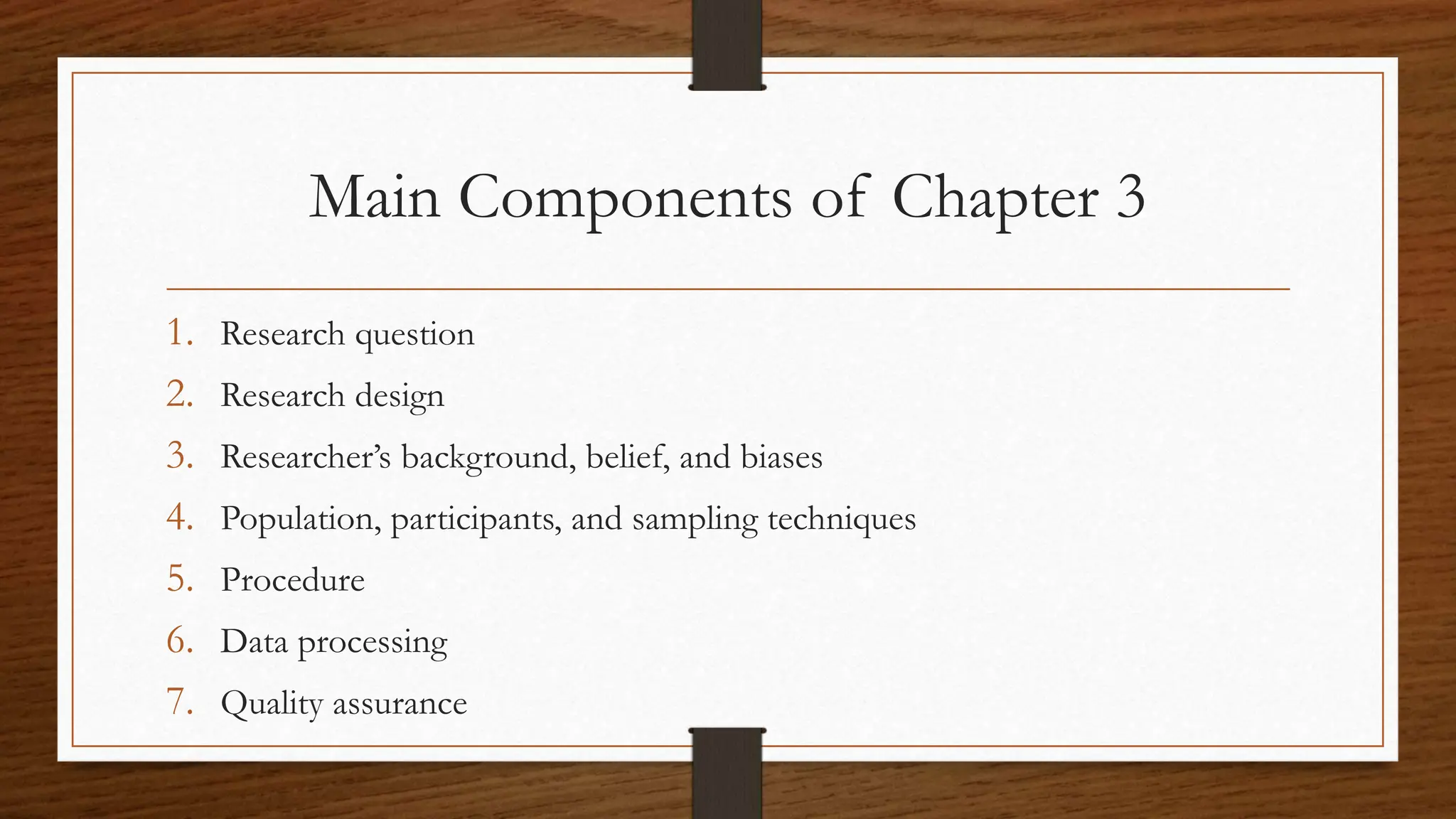
Main Components of Chapter 3
1. Research question
2. Research design
3. Researcher’s background, belief, and biases
4. Population, participants, and sampling techniques
5. Procedure
6. Data processing
7. Quality assurance
1. Research Question
• State your research question(s)
- Choose the best research question that answers your research problem
directly.
• Provide an argument supporting the need to address the research questions
- Provide a citation.
2. Research Design
• State specific qualitative approach for your study
- What is it all about? (Define. Describe.)
- Why is this approach appropriate to your research?
> Purpose of the study
> Kind of data
> Data source
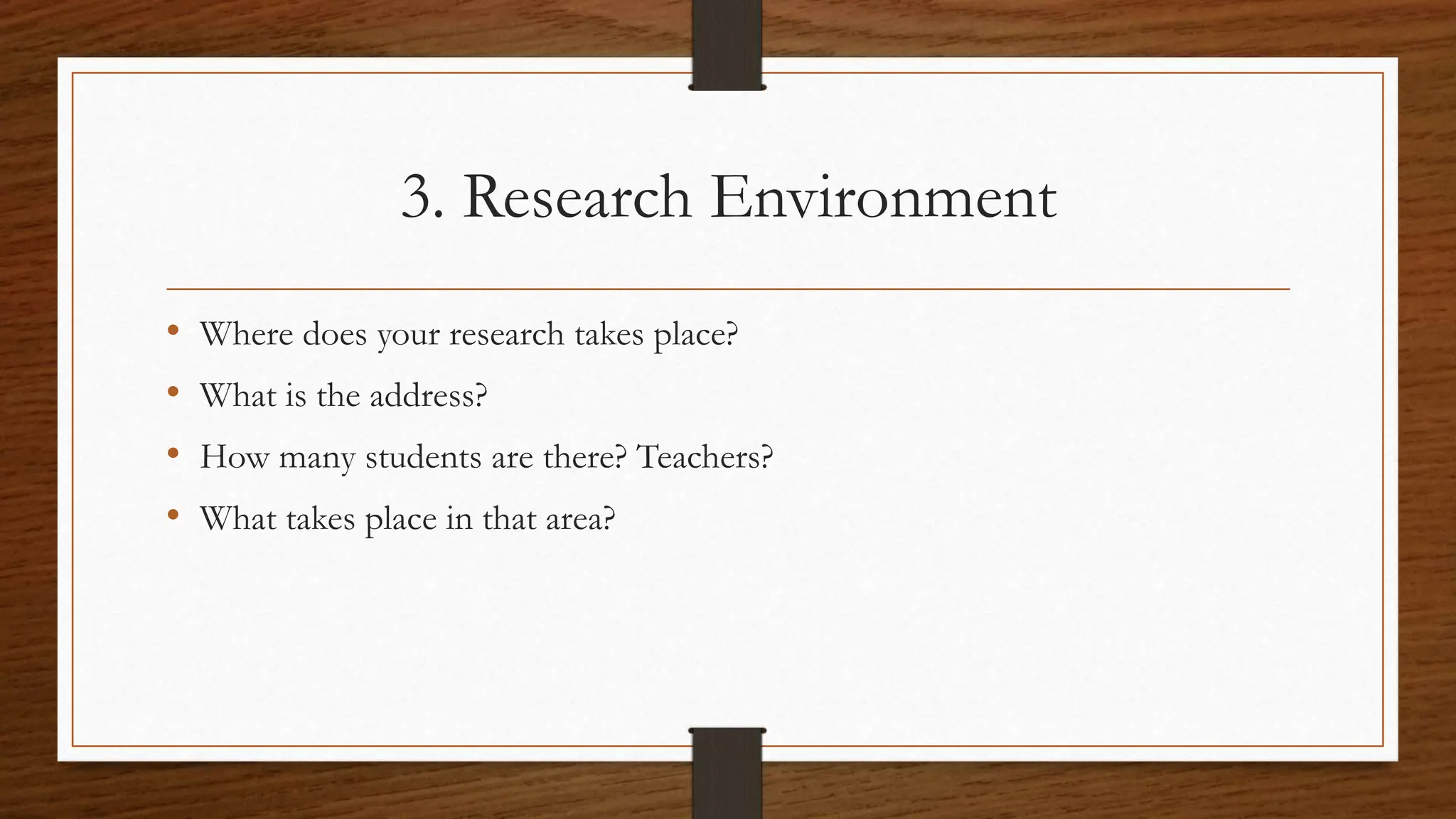
3. Research Environment
• Where does your research takes place?
• What is the address?
• How many students are there? Teachers?
• What takes place in that area?
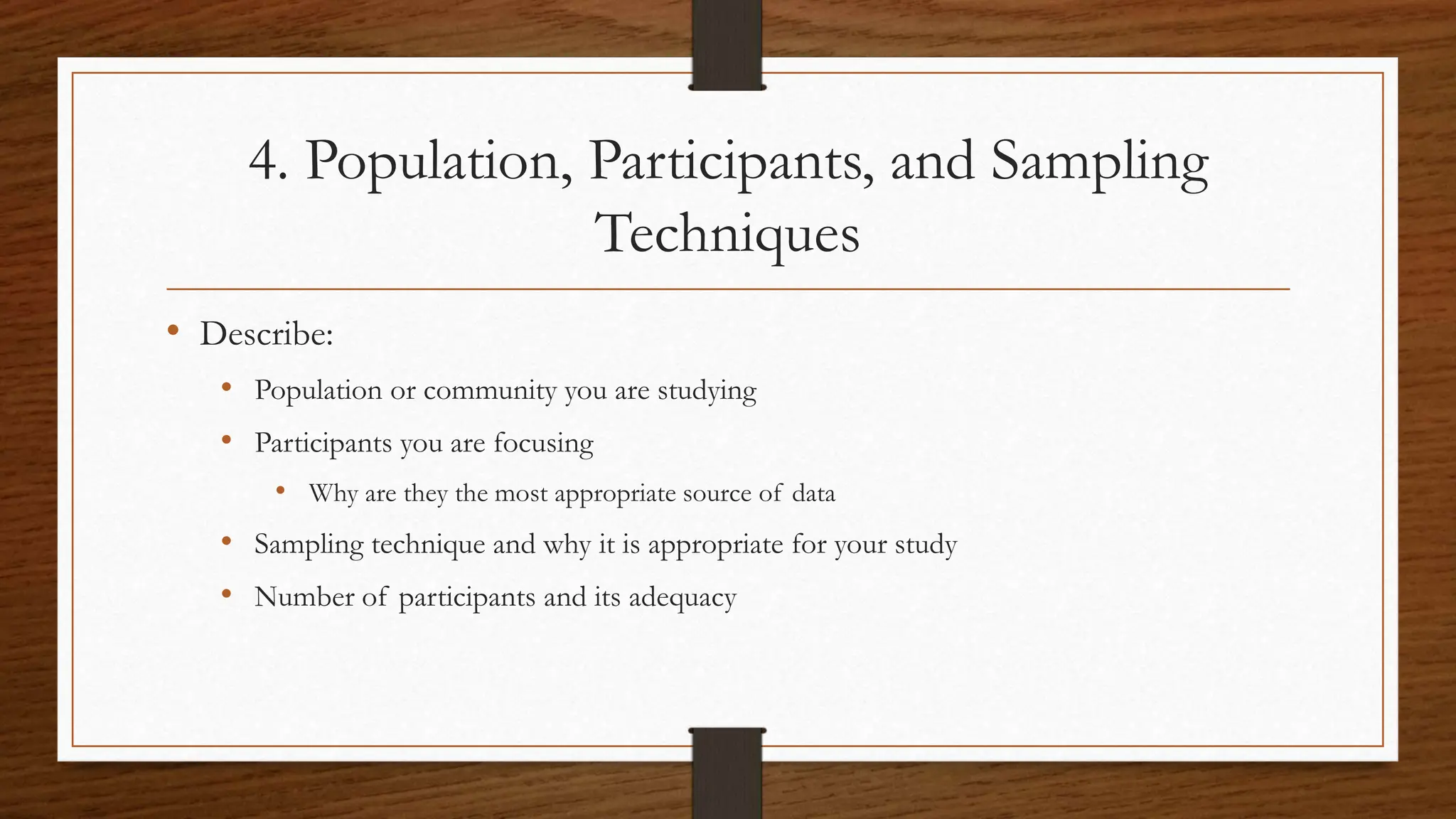
4. Population, Participants, and Sampling
Techniques
• Describe:
• Population or community you are studying
• Participants you are focusing
• Why are they the most appropriate source of data
• Sampling technique and why it is appropriate for your study
• Number of participants and its adequacy
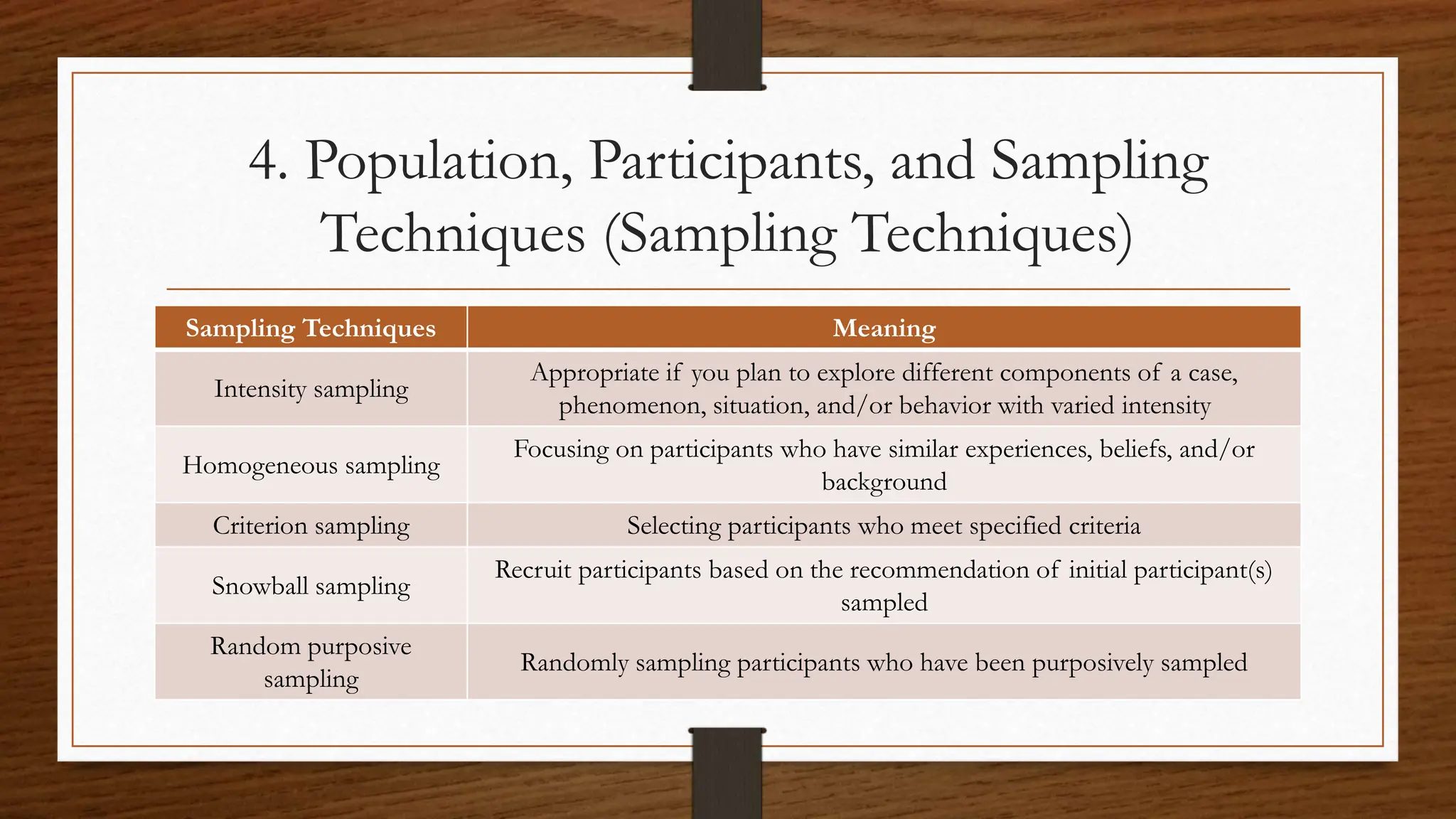
4. Population, Participants, and Sampling
Techniques (Sampling Techniques)
Sampling Techniques Meaning
Intensity sampling
Appropriate if you plan to explore different components of a case,
phenomenon, situation, and/or behavior with varied intensity
Homogeneous sampling
Focusing on participants who have similar experiences, beliefs, and/or
background
Criterion sampling Selecting participants who meet specified criteria
Snowball sampling
Recruit participants based on the recommendation of initial participant(s)
sampled
Random purposive
sampling
Randomly sampling participants who have been purposively sampled
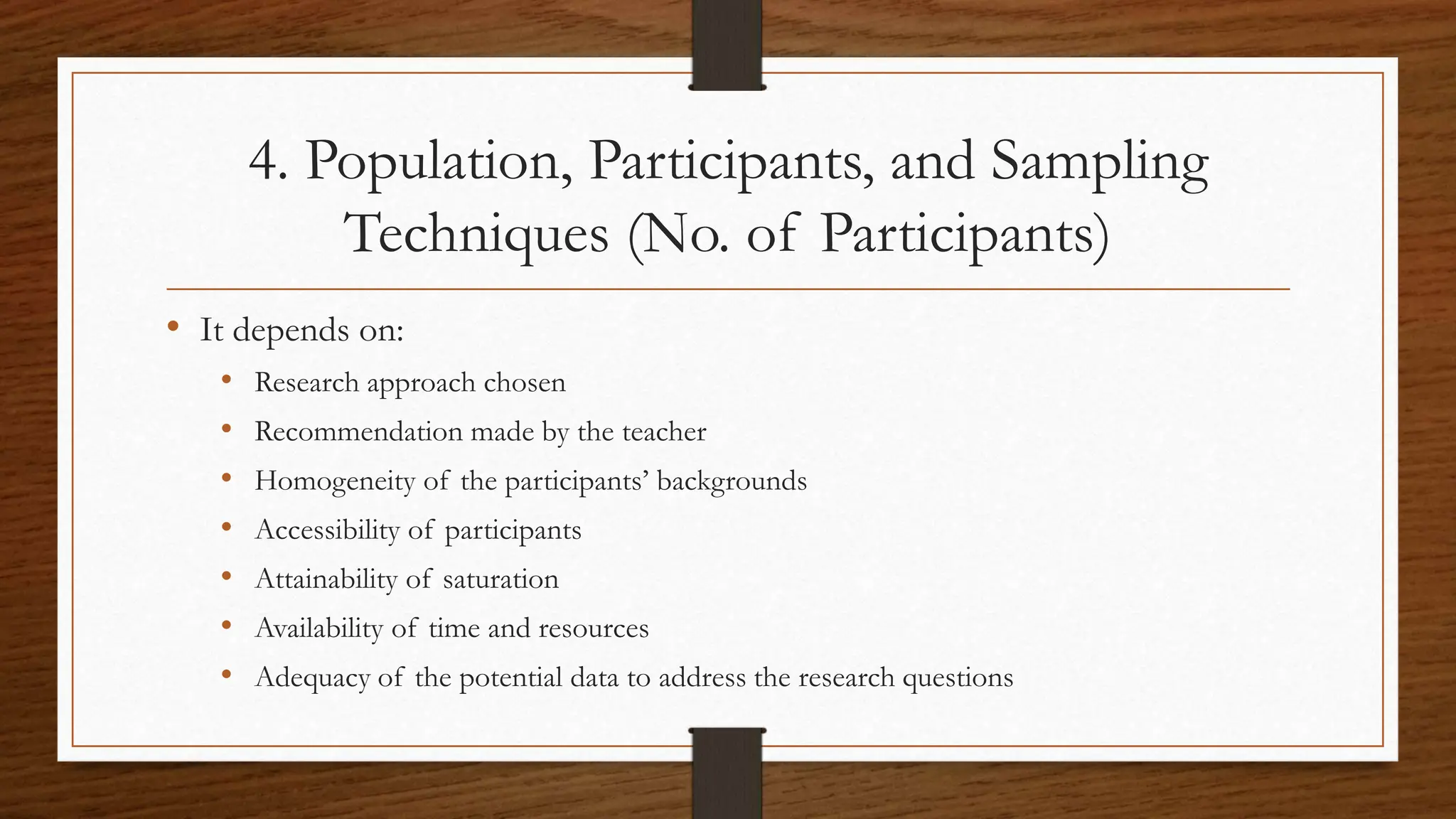
4. Population, Participants, and Sampling
Techniques (No. of Participants)
• It depends on:
• Research approach chosen
• Recommendation made by the teacher
• Homogeneity of the participants’ backgrounds
• Accessibility of participants
• Attainability of saturation
• Availability of time and resources
• Adequacy of the potential data to address the research questions
5. Procedure
• Step-by-step process of collecting data
• Describing where and how you collected the data
• The kind of data collected
• Who you interacted with and for how long
• Specific actions you took
• What participants did in the study
5. Procedure
Qualitative Data Collection
• Data collection strategies:
• Observation
• Participants observation
• In-depth interviews
• Document collection/analysis
• Focus groups
5. Procedure
Qualitative Data Collection
• Characteristics of data
• Audio
• Text
• Visual/artifacts
6. Data processing
• Describing how demographic information was analyzed
• Describing the data analysis process – how the research questions were
addressed
6. Data processing
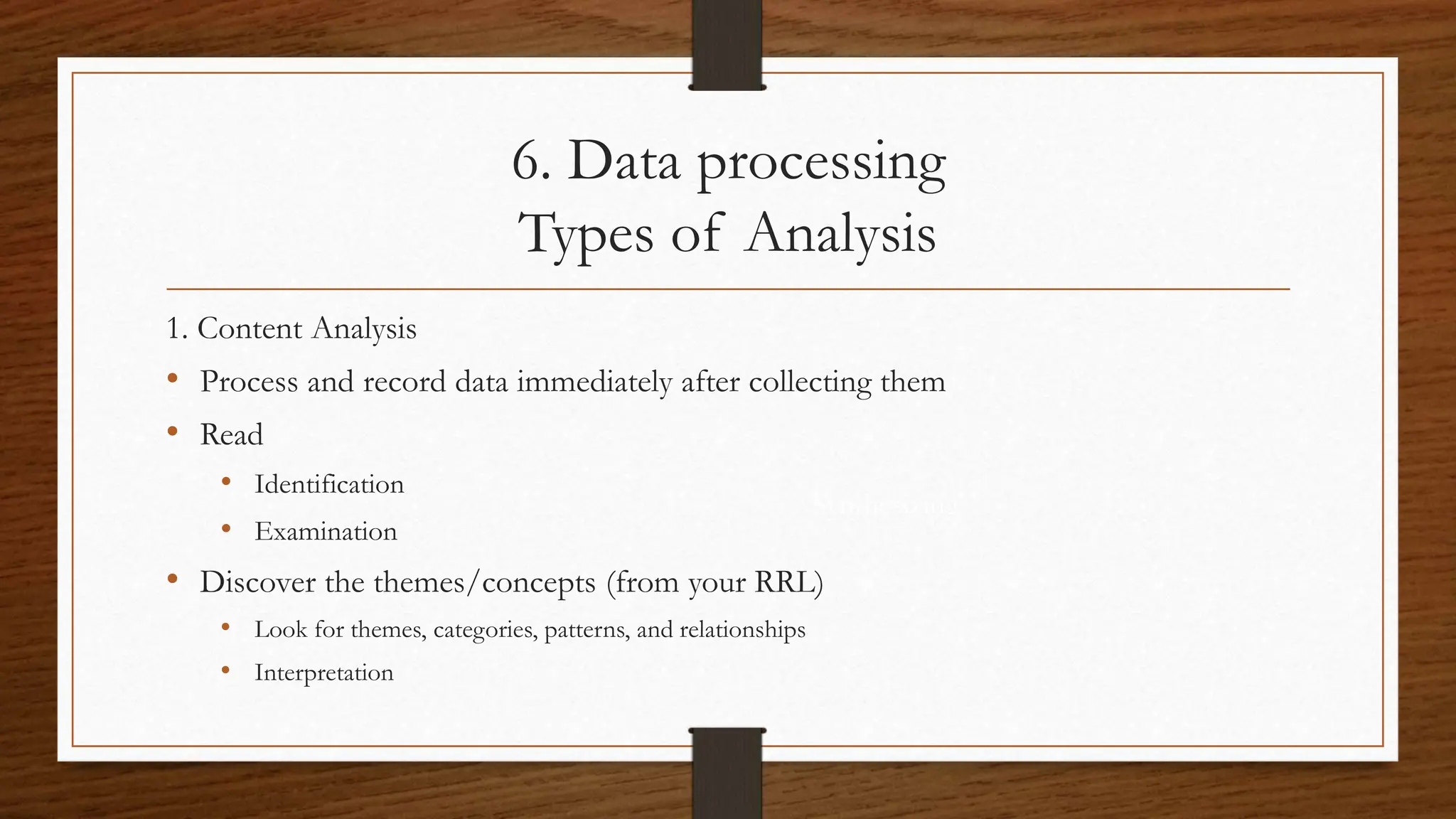
Types of Analysis
Synthesizing
1. Content Analysis
• Process and record data immediately after collecting them
• Read
• Identification
• Examination
• Discover the themes/concepts (from your RRL)
• Look for themes, categories, patterns, and relationships
• Interpretation
6. Data processing
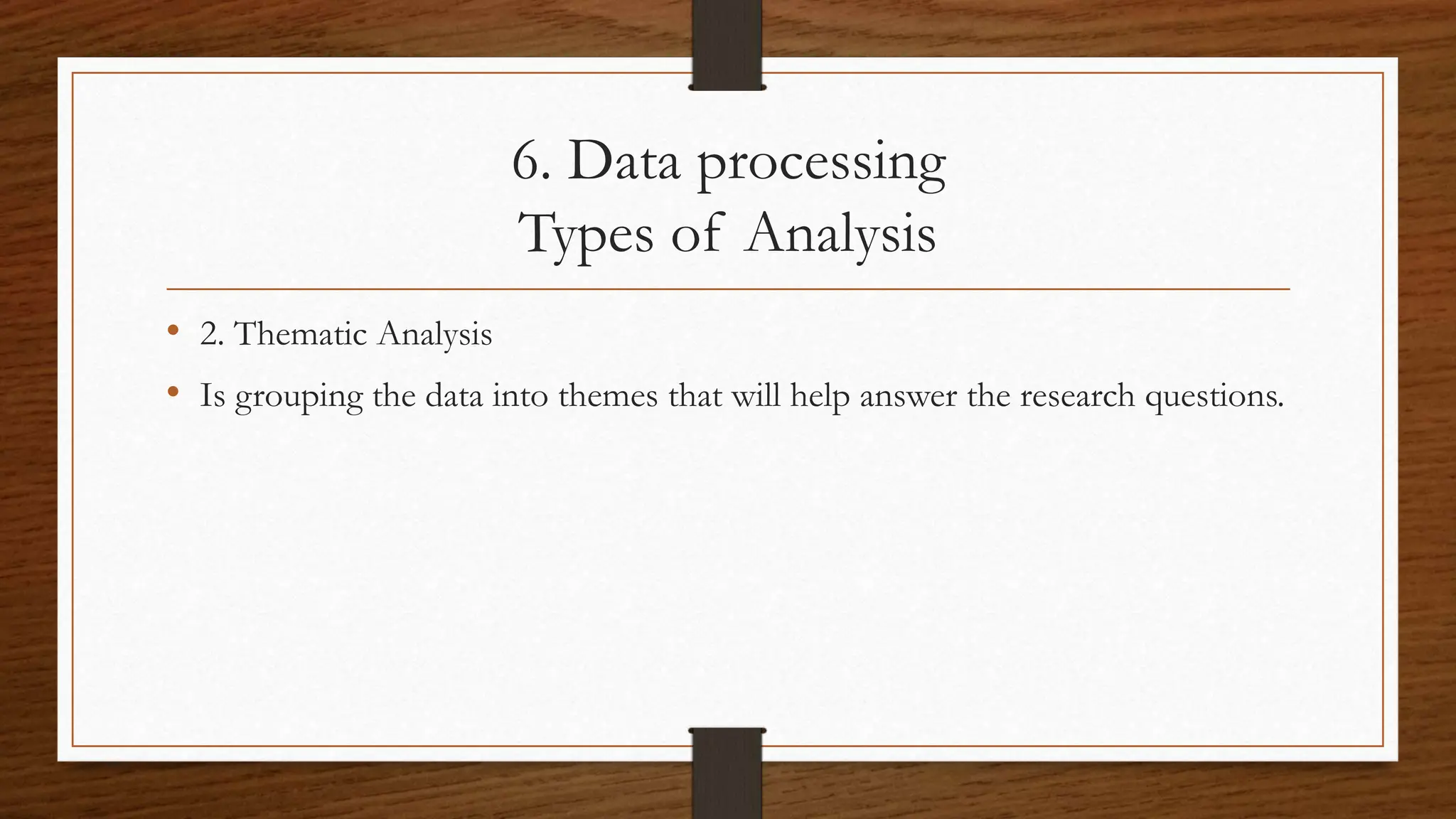
Types of Analysis
• 2. Thematic Analysis
• Is grouping the data into themes that will help answer the research questions.

Writing the Research Methodology.pptx

  • 1.
  • 2.
    Things to ThinkAbout 1. Data 2. Problem 3. Question 4. Purpose
  • 3.
    Main Components ofChapter 3 1. Research question 2. Research design 3. Researcher’s background, belief, and biases 4. Population, participants, and sampling techniques 5. Procedure 6. Data processing 7. Quality assurance
  • 4.
    1. Research Question •State your research question(s) - Choose the best research question that answers your research problem directly. • Provide an argument supporting the need to address the research questions - Provide a citation.
  • 5.
    2. Research Design •State specific qualitative approach for your study - What is it all about? (Define. Describe.) - Why is this approach appropriate to your research? > Purpose of the study > Kind of data > Data source
  • 6.
    3. Research Environment •Where does your research takes place? • What is the address? • How many students are there? Teachers? • What takes place in that area?
  • 7.
    4. Population, Participants,and Sampling Techniques • Describe: • Population or community you are studying • Participants you are focusing • Why are they the most appropriate source of data • Sampling technique and why it is appropriate for your study • Number of participants and its adequacy
  • 8.
    4. Population, Participants,and Sampling Techniques (Sampling Techniques) Sampling Techniques Meaning Intensity sampling Appropriate if you plan to explore different components of a case, phenomenon, situation, and/or behavior with varied intensity Homogeneous sampling Focusing on participants who have similar experiences, beliefs, and/or background Criterion sampling Selecting participants who meet specified criteria Snowball sampling Recruit participants based on the recommendation of initial participant(s) sampled Random purposive sampling Randomly sampling participants who have been purposively sampled
  • 9.
    4. Population, Participants,and Sampling Techniques (No. of Participants) • It depends on: • Research approach chosen • Recommendation made by the teacher • Homogeneity of the participants’ backgrounds • Accessibility of participants • Attainability of saturation • Availability of time and resources • Adequacy of the potential data to address the research questions
  • 10.
    5. Procedure • Step-by-stepprocess of collecting data • Describing where and how you collected the data • The kind of data collected • Who you interacted with and for how long • Specific actions you took • What participants did in the study
  • 11.
    5. Procedure Qualitative DataCollection • Data collection strategies: • Observation • Participants observation • In-depth interviews • Document collection/analysis • Focus groups
  • 12.
    5. Procedure Qualitative DataCollection • Characteristics of data • Audio • Text • Visual/artifacts
  • 13.
    6. Data processing •Describing how demographic information was analyzed • Describing the data analysis process – how the research questions were addressed
  • 14.
    6. Data processing Typesof Analysis Synthesizing 1. Content Analysis • Process and record data immediately after collecting them • Read • Identification • Examination • Discover the themes/concepts (from your RRL) • Look for themes, categories, patterns, and relationships • Interpretation
  • 15.
    6. Data processing Typesof Analysis • 2. Thematic Analysis • Is grouping the data into themes that will help answer the research questions.