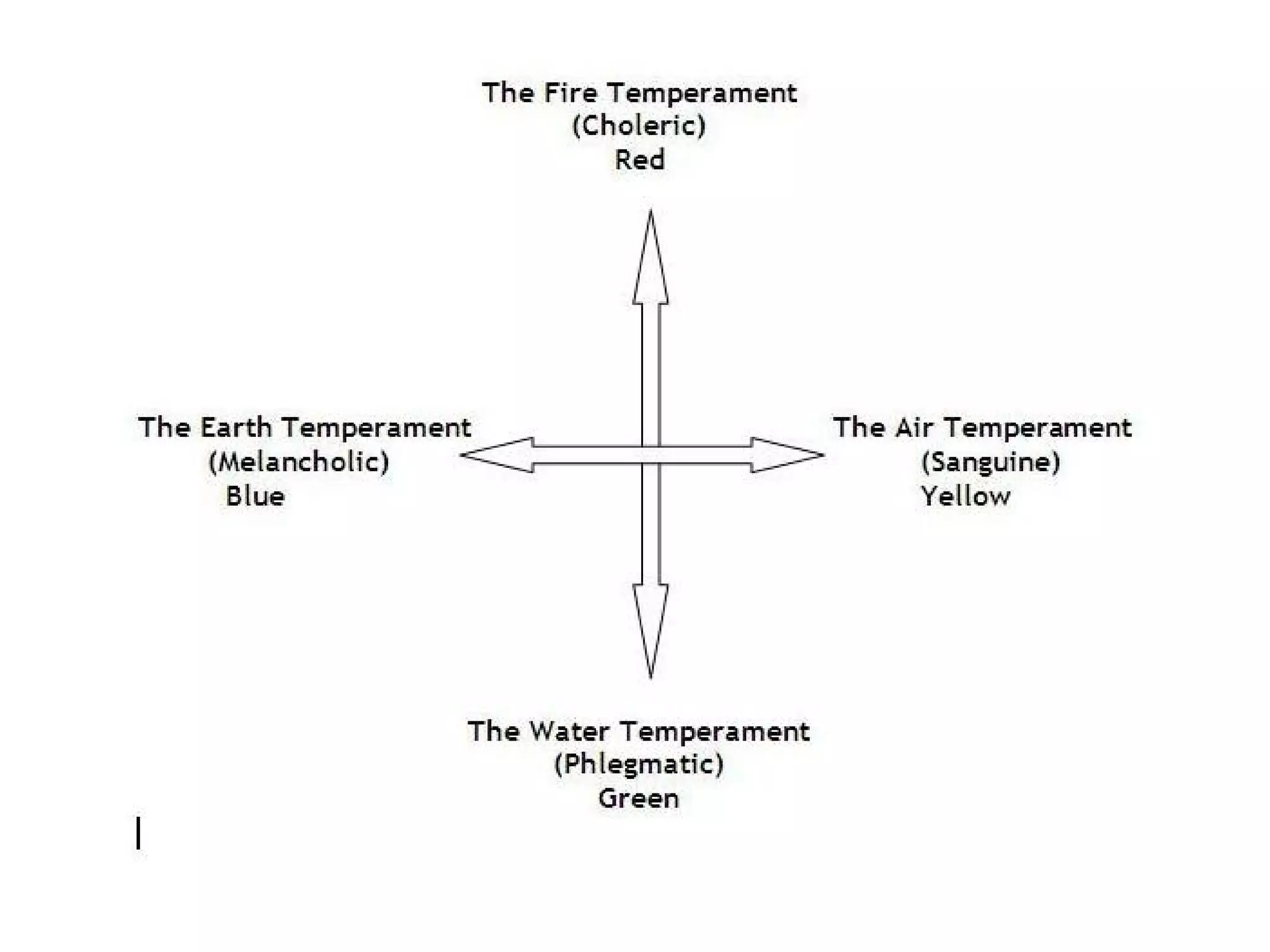
The Four Temperaments
What are the 4 Temperaments?

• The 4 Temperaments are
  one window through
  which we can see
  people…

• … perhaps understand
  them a little better…


• But there are many other
  windows…
Other ways of knowing people…

For example
• Knowing a person’s life story
• Observing their relationships
• Discovering how they think, what they
  feel, what they want
• ???
What are our temperament
behaviours?
• They are our patterns of behaviour…
  the ways we usually respond
  to situations
• They are instinctive or natural
  behaviours, rather than learned
  behaviours
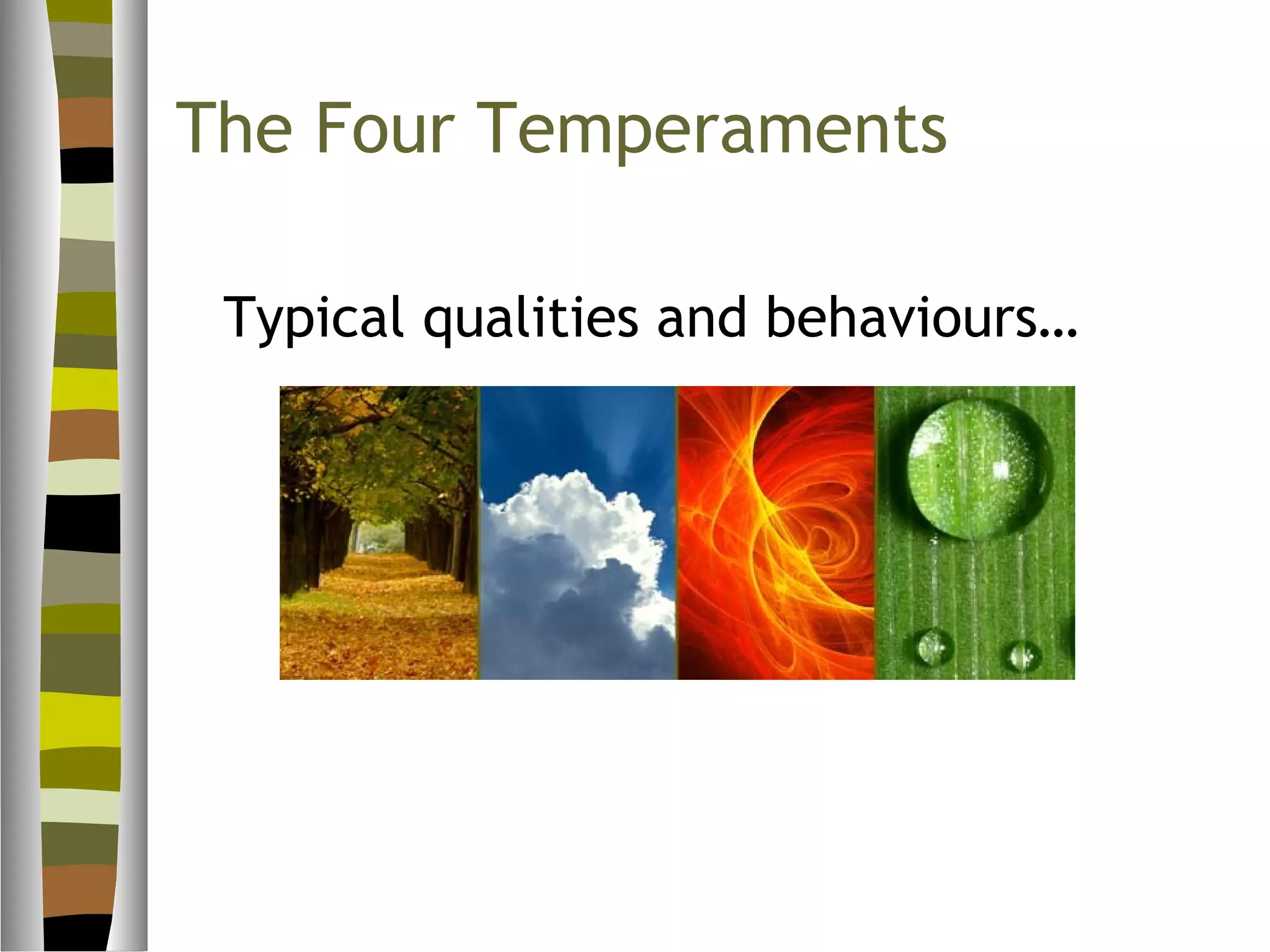
The Four Temperaments

 Typical qualities and behaviours…
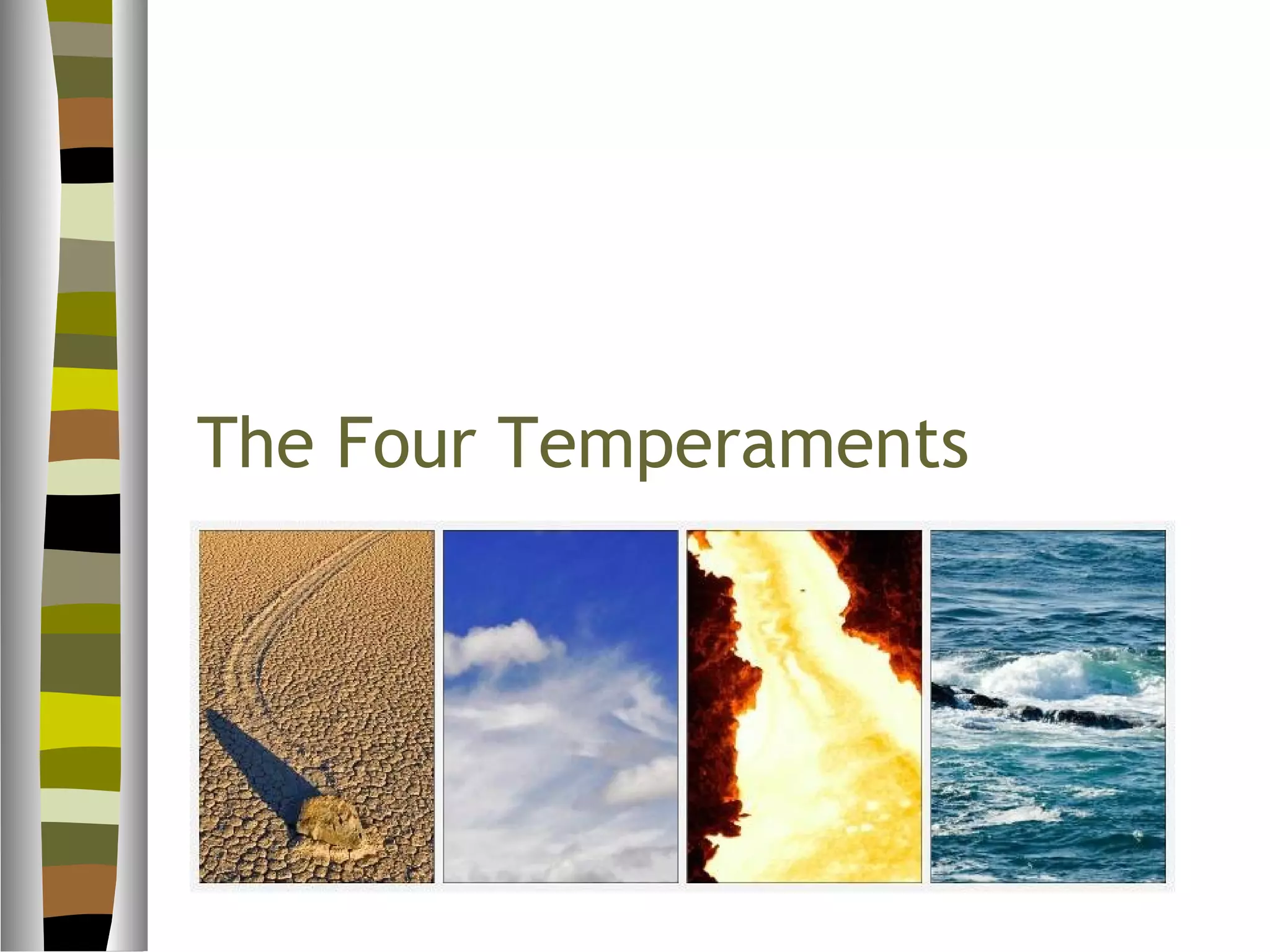
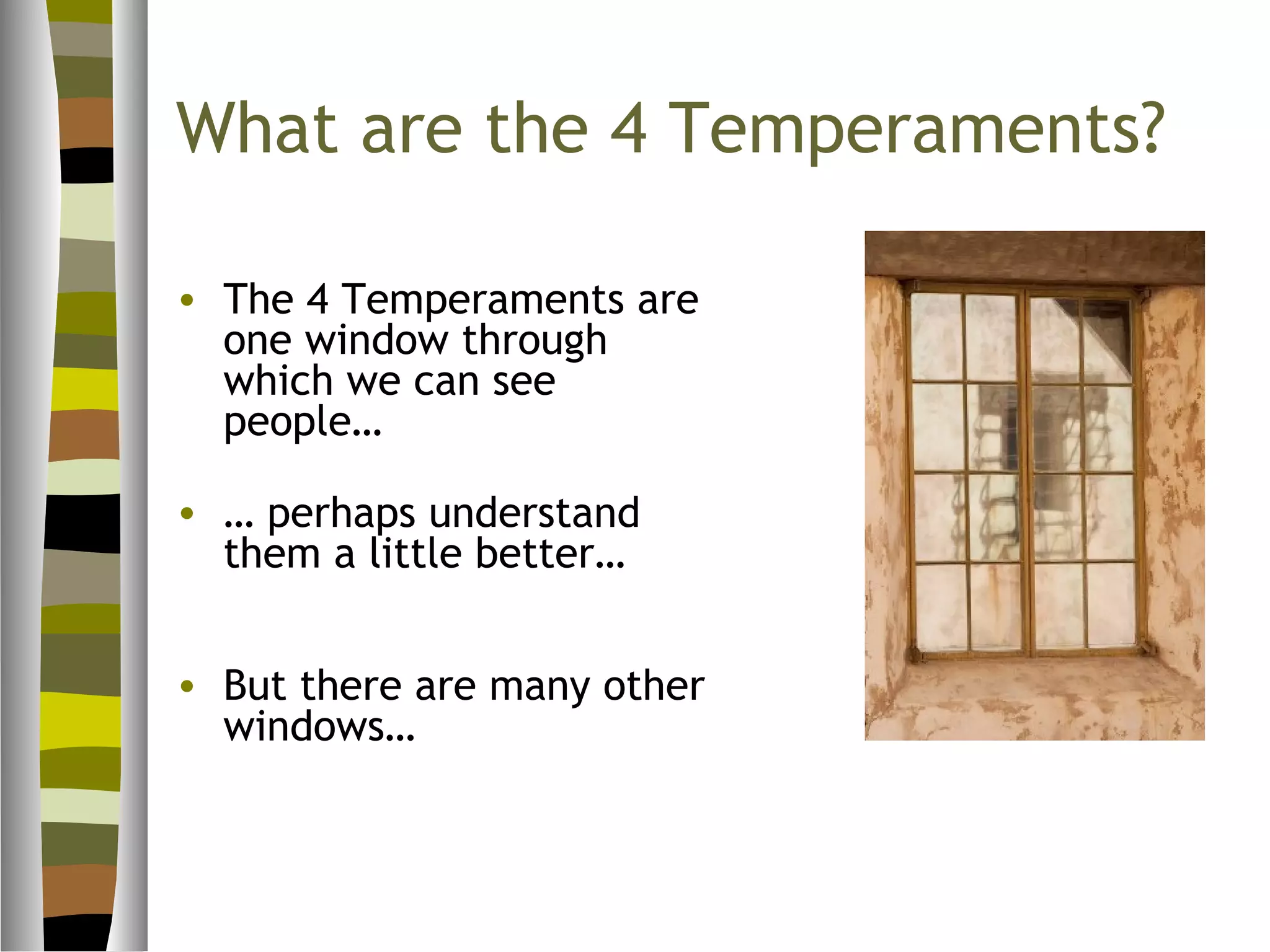
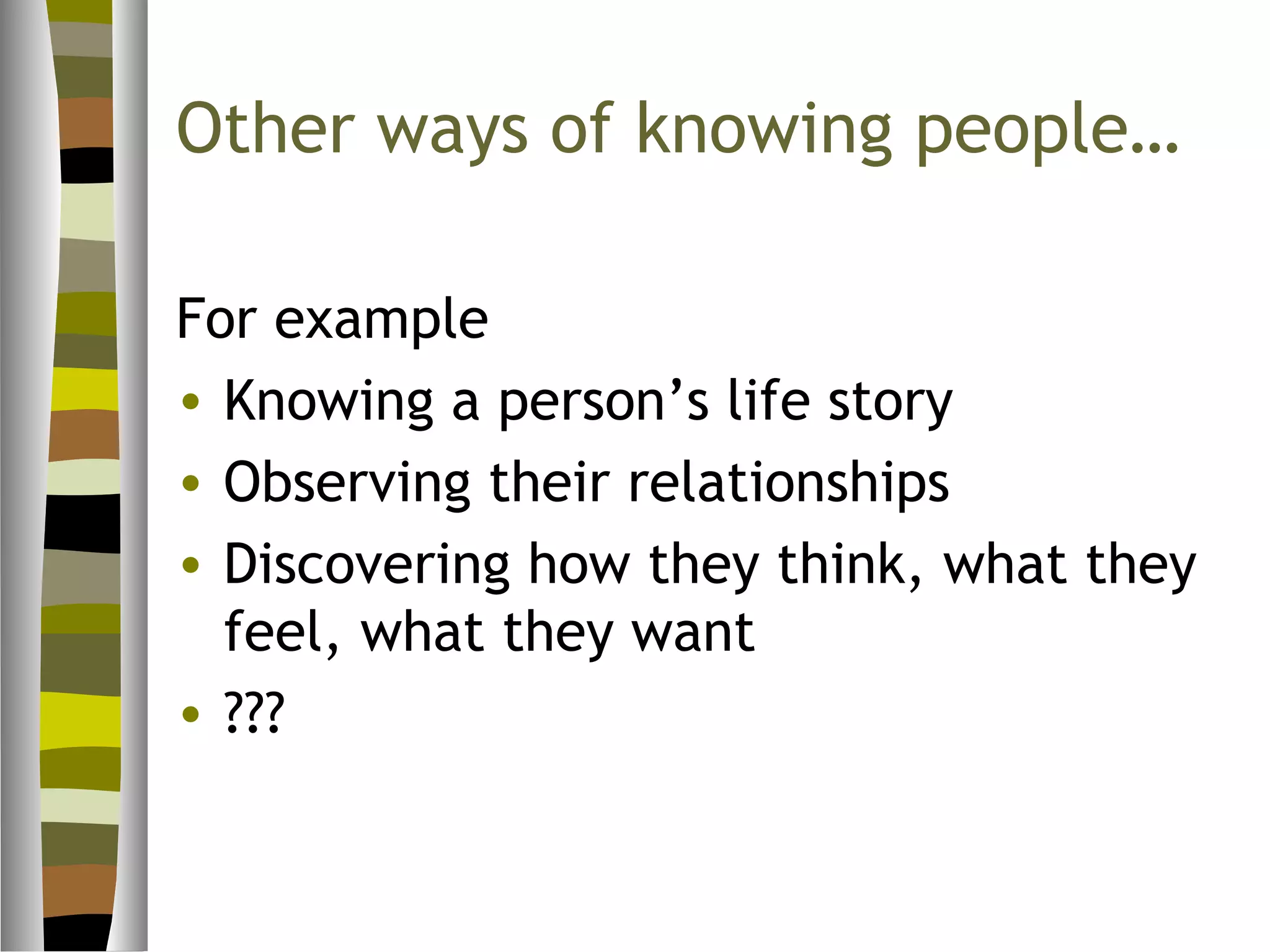
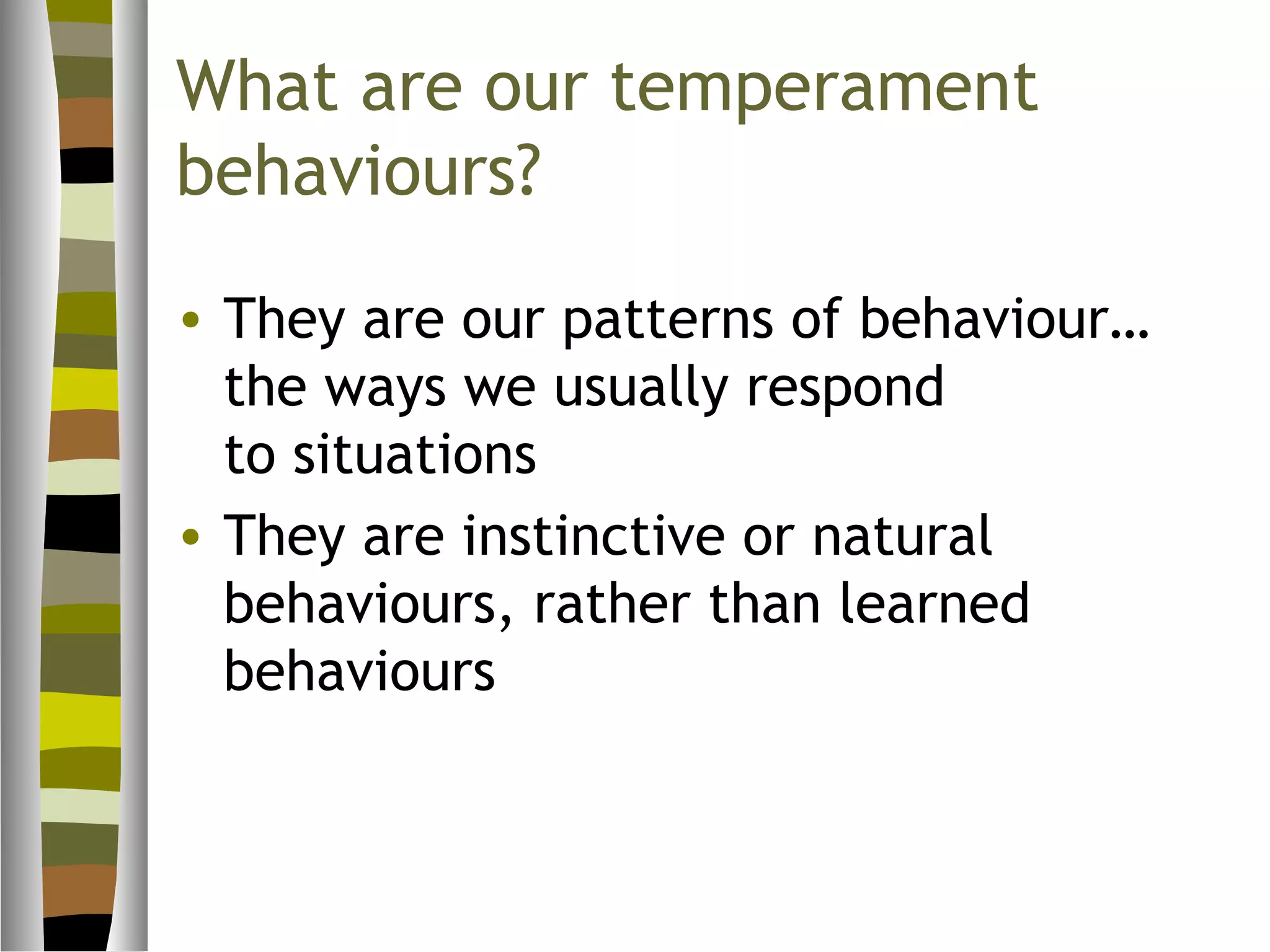
Fire (Choleric)
• Goal oriented, sees the
  whole picture
• Seeks practical solutions
• Moves quickly to action
• Thrives on opposition
• Can be blind to their effect on others
• Impatient with meetings – has quick answers
• Can create unnecessary work
• Good at thinking, judging and deciding (not
  feeling, perceiving, intuiting)
Water (Phlegmatic)
•   Good at process
•   Mediates problems
•   Avoids conflicts
•   Finds it hard to be heard
•   Has good timing
•   Needs deadlines
•   Calm under pressure
•   Takes time but finds the easy way
Air (Sanguine)
• Provides positive human
  atmosphere
• Does many things at once
• Does not always complete
• Gets bored when novelty wears off
• Has energy and enthusiasm
• Inspires others to join
• Cannot say no
• Concerned with interaction and conflict
• Does not easily know where they stand
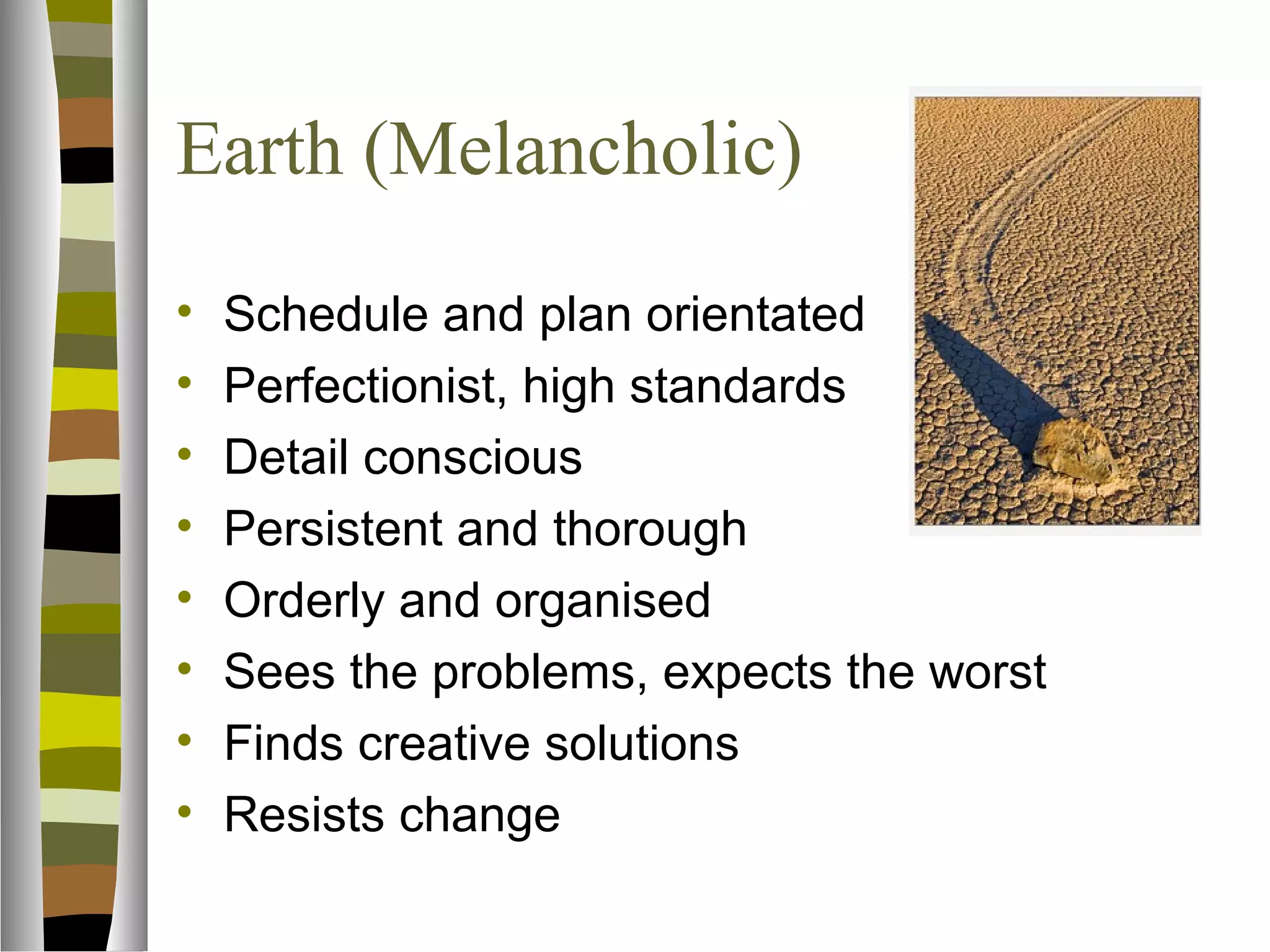
Earth (Melancholic)
•   Schedule and plan orientated
•   Perfectionist, high standards
•   Detail conscious
•   Persistent and thorough
•   Orderly and organised
•   Sees the problems, expects the worst
•   Finds creative solutions
•   Resists change
What temperaments do I have?
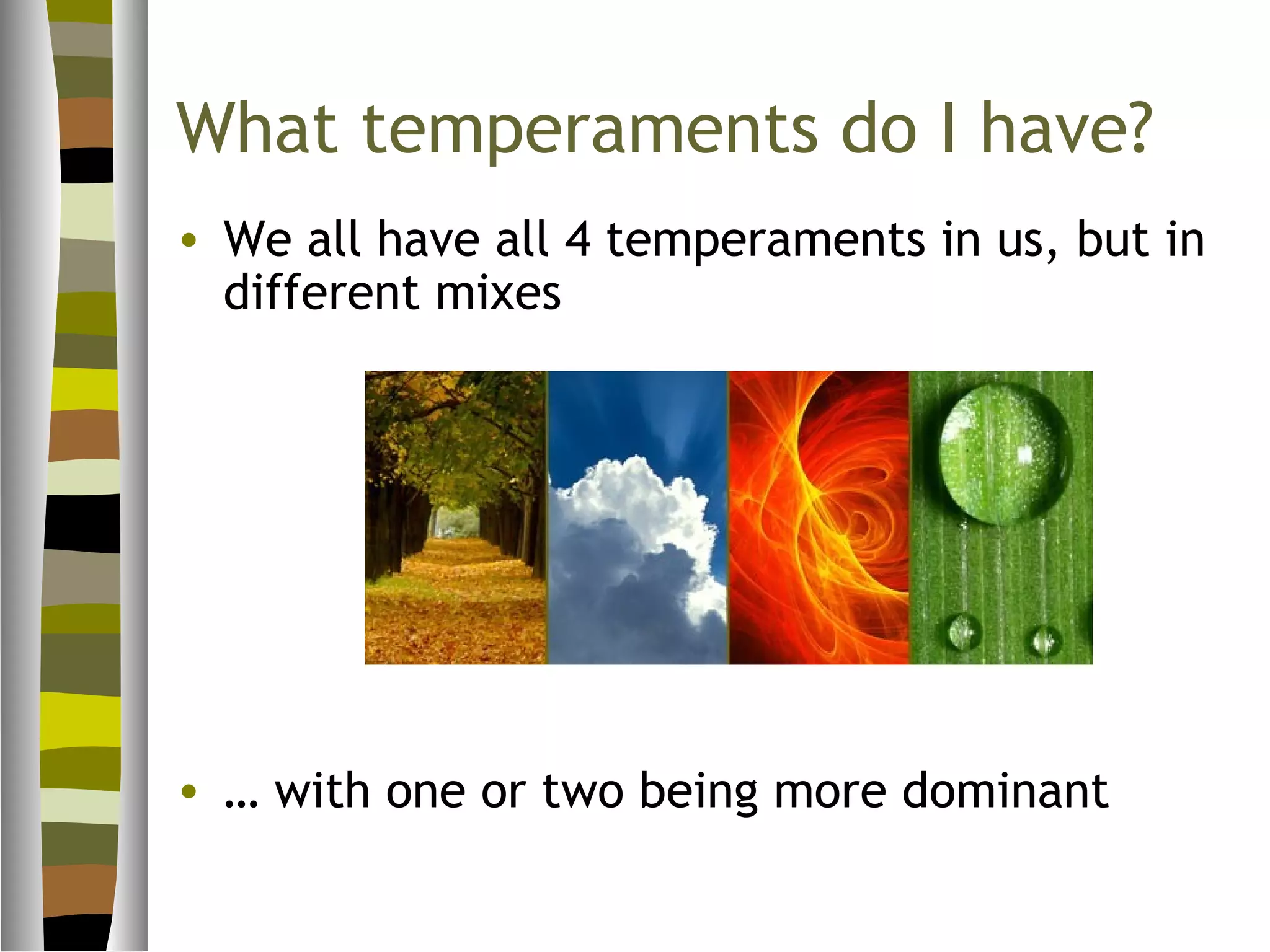
• We all have all 4 temperaments in us, but in
  different mixes


• … with one or two being more dominant
Where are temperaments useful?

Being aware of our temperaments can help us
• to better understand each other’s and our
  own behaviours
• to better appreciate and more fully use what
  gifts we have
• to appreciate our differences
• to find ways of bridging these differences
But look out!

Temperaments can be hidden
• By outside influences on us, (e.g. a very
  dominant parent)
• By other factors such as depression, illness,
  hormonal imbalances etc.

 We must avoid labeling others and ourselves
 too quickly. The temperament I think I see in
 you may be a mask hiding your true nature
Working with temperaments

Working with temperaments

  • 1.
  • 2.
    What are the4 Temperaments? • The 4 Temperaments are one window through which we can see people… • … perhaps understand them a little better… • But there are many other windows…
  • 3.
    Other ways ofknowing people… For example • Knowing a person’s life story • Observing their relationships • Discovering how they think, what they feel, what they want • ???
  • 4.
    What are ourtemperament behaviours? • They are our patterns of behaviour… the ways we usually respond to situations • They are instinctive or natural behaviours, rather than learned behaviours
  • 5.
    The Four Temperaments Typical qualities and behaviours…
  • 6.
    Fire (Choleric) • Goaloriented, sees the whole picture • Seeks practical solutions • Moves quickly to action • Thrives on opposition • Can be blind to their effect on others • Impatient with meetings – has quick answers • Can create unnecessary work • Good at thinking, judging and deciding (not feeling, perceiving, intuiting)
  • 7.
    Water (Phlegmatic) • Good at process • Mediates problems • Avoids conflicts • Finds it hard to be heard • Has good timing • Needs deadlines • Calm under pressure • Takes time but finds the easy way
  • 8.
    Air (Sanguine) • Providespositive human atmosphere • Does many things at once • Does not always complete • Gets bored when novelty wears off • Has energy and enthusiasm • Inspires others to join • Cannot say no • Concerned with interaction and conflict • Does not easily know where they stand
  • 9.
    Earth (Melancholic) • Schedule and plan orientated • Perfectionist, high standards • Detail conscious • Persistent and thorough • Orderly and organised • Sees the problems, expects the worst • Finds creative solutions • Resists change
  • 10.
    What temperaments doI have? • We all have all 4 temperaments in us, but in different mixes • … with one or two being more dominant
  • 11.
    Where are temperamentsuseful? Being aware of our temperaments can help us • to better understand each other’s and our own behaviours • to better appreciate and more fully use what gifts we have • to appreciate our differences • to find ways of bridging these differences
  • 12.
    But look out! Temperamentscan be hidden • By outside influences on us, (e.g. a very dominant parent) • By other factors such as depression, illness, hormonal imbalances etc. We must avoid labeling others and ourselves too quickly. The temperament I think I see in you may be a mask hiding your true nature