Working with People
in Community:
Field Reflections
Pradeep Kumar Panda
pradeep25687@yahoo.co.in
Whatsapp: 9951178889
www.pradeepkumarpanda.weebly.com
Community work is the profession bestowed with
missions of tackling social problems, and
eliminating societal deprivation, discrimination and
exploitation.
It is concerned with bringing about positive changes
in the wider socio-political arena.
It relates to changes in social policies and practices,
structural institutional changes, as well as changes
in the values and attitudes of the wider public.
The ability to feel the pain of the people who are
suffering, the possession of knowledge required to
design appropriate interventions and the skills in
bringing about change are all essential qualities of
an effective community worker.
OVERALL PURPOSE OF FIELD PRACTICE
Interaction
Learning
Trust
Transparency
Relatability
Application of Knowledge
Communication
Need Assessment
Conflict Navigation
Solutions of Community Problems
ETHICAL GUIDELINES FOR SUCCESSFUL FIELD PRACTICE
Respect local culture.
Respect local faith and belief.
Do not refuse to participate.
ETHICAL GUIDELINES FOR SUCCESSFUL FIELD PRACTICE
Do make an attempt to learn a
few words of the local language.
Never call them by their first
names. Likewise for all other
individuals of a community. It is
best to use the local expressions
like Bhai, Ben, Dada, Ji, Anna as
used in different places.
ETHICAL GUIDELINES FOR SUCCESSFUL FIELD PRACTICE
Make sure that the tone of
speech when communicating with
the villagers or any other
stakeholders is always polite and
respectful.
Make sure that body language
must be respectful.
ETHICAL GUIDELINES FOR SUCCESSFUL FIELD PRACTICE
Please remember to be accepting
of a different kind of living,
environment and people.
While being aware of cultural
sensitivities, be friendly and open
with community residents.
ETHICAL GUIDELINES FOR SUCCESSFUL FIELD PRACTICE
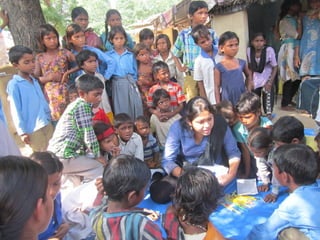
Always sit at the same level with
the individual or the community.
Politely refuse and take your
seat with them on the ground.
ETHICAL GUIDELINES FOR SUCCESSFUL FIELD PRACTICE
Do not drink or smoke while
interacting with the individuals
and communities.
Never use ‘Tum‘ or ‘Tu‘ or its
other Indian language equivalent
while talking to any individual or
community or any other
stakeholder.
ETHICAL GUIDELINES FOR SUCCESSFUL FIELD PRACTICE
Do not react to social and
political environments in the
surrounding.
Remember that you are a
student in this scenario.
Do not engage in arguments
about party politics.
ETHICAL GUIDELINES FOR SUCCESSFUL FIELD PRACTICE
Do not come across as
condescending and superior.
Do not laugh at any answer
or response you receive.
That will alienate you from
the community.
ETHICAL GUIDELINES FOR SUCCESSFUL FIELD PRACTICE
Do not wear sun glasses while
talking.
The other person(s) will not
trust you if they do not see your
eyes.
Don’t wear stylish/ much
fashionable clothes
Norms with regard to data collection
An ethical orientation towards data collection
requires you to be
aware of the history of research malpractice,
committed to ensuring that your research
intervention does not deliberately or
inadvertently compound the vulnerability of
respondents like child, victims etc.
Be clear about the laws governing research
with respective subjects
Prior Consent
Confidentiality of data
Tools of data collection
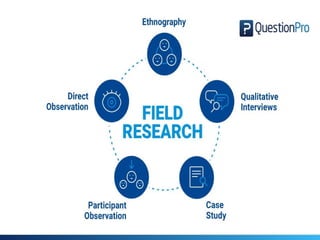
Transect Walk
Observation
Interview
Focus Group Discussion
Participatory Rural Appraisal (PRA)
Participatory Learning and Action (PLA)
Participatory Learning and Action (PLA)
Diagramming
Interviewing
Preference Ranking
Mapping and Modelling
Diagramming
1.Transect Walk
2.Seasonal Calendar
3.Venn Diagram
4.Daily Routine Charts
5.Flow Diagram
Interviewing
1.Structured – Questionnaire and Interview
2.Semi Structured
 Individual Interview
Group Interview
Key Informant Interview
Focus Group Discussion
Preference Ranking
1.Matrix Ranking (Prioritise)
2.Proportional Piling (Income, expenditure)
3.Poverty Ranking
Mapping and Modelling
1.Social Map
2.Resource Map
3.Topical Maps (Area, Crop, Population)
4.Hazard Map
Challenges for students during Field Work
1.Language Barriers
2.Gender
3.Caste and Class Biasness
4.Bias and Prejudice
5.Health and Hygiene condition
6.Continous Travel
7.Age Gap
8.Understanding Gap
Solution
1.Learn Local Language
2.Create rappourt with everyone
3.Always smile
4.Be Polite
5.Participate in their festivals, rituals & customs
6.Develop strong will power
Thank You

Working with People in Community: Field Reflections

  • 1.
    Working with People inCommunity: Field Reflections Pradeep Kumar Panda pradeep25687@yahoo.co.in Whatsapp: 9951178889 www.pradeepkumarpanda.weebly.com
  • 2.
    Community work isthe profession bestowed with missions of tackling social problems, and eliminating societal deprivation, discrimination and exploitation. It is concerned with bringing about positive changes in the wider socio-political arena. It relates to changes in social policies and practices, structural institutional changes, as well as changes in the values and attitudes of the wider public. The ability to feel the pain of the people who are suffering, the possession of knowledge required to design appropriate interventions and the skills in bringing about change are all essential qualities of an effective community worker.
  • 4.
    OVERALL PURPOSE OFFIELD PRACTICE Interaction Learning Trust Transparency Relatability Application of Knowledge Communication Need Assessment Conflict Navigation Solutions of Community Problems
  • 6.
    ETHICAL GUIDELINES FORSUCCESSFUL FIELD PRACTICE Respect local culture. Respect local faith and belief. Do not refuse to participate.
  • 7.
    ETHICAL GUIDELINES FORSUCCESSFUL FIELD PRACTICE Do make an attempt to learn a few words of the local language. Never call them by their first names. Likewise for all other individuals of a community. It is best to use the local expressions like Bhai, Ben, Dada, Ji, Anna as used in different places.
  • 8.
    ETHICAL GUIDELINES FORSUCCESSFUL FIELD PRACTICE Make sure that the tone of speech when communicating with the villagers or any other stakeholders is always polite and respectful. Make sure that body language must be respectful.
  • 9.
    ETHICAL GUIDELINES FORSUCCESSFUL FIELD PRACTICE Please remember to be accepting of a different kind of living, environment and people. While being aware of cultural sensitivities, be friendly and open with community residents.
  • 10.
    ETHICAL GUIDELINES FORSUCCESSFUL FIELD PRACTICE Always sit at the same level with the individual or the community. Politely refuse and take your seat with them on the ground.
  • 12.
    ETHICAL GUIDELINES FORSUCCESSFUL FIELD PRACTICE Do not drink or smoke while interacting with the individuals and communities. Never use ‘Tum‘ or ‘Tu‘ or its other Indian language equivalent while talking to any individual or community or any other stakeholder.
  • 13.
    ETHICAL GUIDELINES FORSUCCESSFUL FIELD PRACTICE Do not react to social and political environments in the surrounding. Remember that you are a student in this scenario. Do not engage in arguments about party politics.
  • 14.
    ETHICAL GUIDELINES FORSUCCESSFUL FIELD PRACTICE Do not come across as condescending and superior. Do not laugh at any answer or response you receive. That will alienate you from the community.
  • 15.
    ETHICAL GUIDELINES FORSUCCESSFUL FIELD PRACTICE Do not wear sun glasses while talking. The other person(s) will not trust you if they do not see your eyes. Don’t wear stylish/ much fashionable clothes
  • 16.
    Norms with regardto data collection An ethical orientation towards data collection requires you to be aware of the history of research malpractice, committed to ensuring that your research intervention does not deliberately or inadvertently compound the vulnerability of respondents like child, victims etc. Be clear about the laws governing research with respective subjects Prior Consent Confidentiality of data
  • 17.
    Tools of datacollection Transect Walk Observation Interview Focus Group Discussion Participatory Rural Appraisal (PRA) Participatory Learning and Action (PLA)
  • 18.
    Participatory Learning andAction (PLA) Diagramming Interviewing Preference Ranking Mapping and Modelling
  • 19.
    Diagramming 1.Transect Walk 2.Seasonal Calendar 3.VennDiagram 4.Daily Routine Charts 5.Flow Diagram
  • 20.
    Interviewing 1.Structured – Questionnaireand Interview 2.Semi Structured  Individual Interview Group Interview Key Informant Interview Focus Group Discussion
  • 21.
    Preference Ranking 1.Matrix Ranking(Prioritise) 2.Proportional Piling (Income, expenditure) 3.Poverty Ranking
  • 22.
    Mapping and Modelling 1.SocialMap 2.Resource Map 3.Topical Maps (Area, Crop, Population) 4.Hazard Map
  • 23.
    Challenges for studentsduring Field Work 1.Language Barriers 2.Gender 3.Caste and Class Biasness 4.Bias and Prejudice 5.Health and Hygiene condition 6.Continous Travel 7.Age Gap 8.Understanding Gap
  • 24.
    Solution 1.Learn Local Language 2.Createrappourt with everyone 3.Always smile 4.Be Polite 5.Participate in their festivals, rituals & customs 6.Develop strong will power
  • 25.