N3 PEDICURE
Level 2 beauty Therapy
LESSON AIMS
 Identify & Explain the different contra-indications
that prevent and restrict treatment
 Explain the different Contra-actions
 Observe a demonstration of a Pedicure
 Perform a Pedicure
 Set yourself a target on your feedback from last week
SERVICE TIMES
Treatment Time
Mini Pedicure (File & Paint ) 25 mins
Standard Pedicure 45mins
Luxury Pedicure 1hr 15mins
French Pedicure Extra 15mins
WHAT IS A
CONTRA-INDICATION?
 It is something that prevents or restricts the way in
which the treatment is carried out.
 It is important that you can recognise a contra-
indication so to prevent any further harm to the
client or yourself, and to prevent cross-infection and
secondary infection.
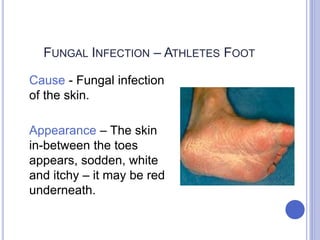
FUNGAL INFECTION – ATHLETES FOOT
Cause - Fungal infection
of the skin.
Appearance – The skin
in-between the toes
appears, sodden, white
and itchy – it may be red
underneath.
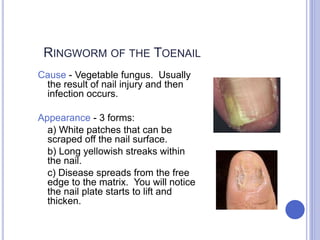
RINGWORM OF THE TOENAIL
Cause - Vegetable fungus. Usually
the result of nail injury and then
infection occurs.
Appearance - 3 forms:
a) White patches that can be
scraped off the nail surface.
b) Long yellowish streaks within
the nail.
c) Disease spreads from the free
edge to the matrix. You will notice
the nail plate starts to lift and
thicken.
PARONYCHIA
Cause – Bacteria Infection
Picking the skin at the side of
the toenails, or a break in the
skin becoming infected. It often
accompanies ingrowing toenails.
Appearance – Inflammation,
redness and pus occurs in the
tissue.
IMPETIGO
Cause – Bacterial infection
or unsanitary habits.
Appearance – Small red
blemishes form which start
to weep and spread.
Honey coloured crusts then
form.
VERRUCA
Cause - Viral infection.
Appearance – Small
circular core that is flat
and will often have black
dots in its centre, it can
sometimes be white
around the edges. It
indents into the sole of
the foot.
PARASITIC INFESTATIONS – SCABIES
Cause – Infestation of
an itch mite that burrows
under the skin.
Appearance – Small red
papules occur and they
then fill with dirt and give
a greyish zig-zag
appearance.
SEVERE NAIL SEPARATION
Cause – Bacterial/fungal infection, trauma or
illness.
Appearance - This may be infectious and the
nail will visibly separate from the nail bed.
Some discoloration or streaks will be present in
the nail and the nail surface will be irregular.
SEVERE ECZEMA
Cause - Internal or
external irritant, may be
genetic.
Appearance -
Reddening of the skin,
with swelling, cracks
and possibly blisters.
These blisters leak fluid
that form scabs. Quite
often present in the joint
areas.
SEVERE PSORIASIS
Cause - No real cause is
known. It is thought to be
hereditary or stress related.
Appearance - Red patches
of skin appear with scale like
waxy cells covering the area.
Bleeding will occur if the
area is scratched, removing
the scales, and secondary
infection may then occur.
SEVERE BRUISING
Cause - Trauma to the skin tissues, usually
resulting from banging. The blood vessels
under the skin burst which allows the blood to
seep under the skins surface.
Appearance - May appear blue or black and
then fade to a yellowy green.
CONTRA-INDICATIONS THAT RESTRICT THE WAY IN
WHICH YOU CARRY OUT THE TREATMENT
 Minor nail separation.
 Minor eczema and psoriasis (not active).
 Damaged nails.
 Broken bones.
 Bunions.
MINOR NAIL SEPARATION
Cause - Usually damage to the nail, however could be
related to illness.
Appearance - Nail will lift slightly from the nail bed and
will appear a creamy, yellow colour where it has lifted.
DAMAGED NAILS
Cause – Could be a variety of causes such as: injury to
the nail, or trauma i.e. running or playing lots of sport
causes the trainers to rub against the toenails.
Appearance – Split or broken nails.
BROKEN BONES
Cause – Injury.
Appearance – Client would normally be wearing a
plaster cast, if fingers are broken they would be
strapped up.
BUNIONS
Cause – Tight fitting shoes or
genetic. Bunions develop as
a result of pressure on the
side of the big toe.
Appearance - As a result the
toe is pushed out of line
towards the other toes. The
joint is more prominent it can
become sore and red. Quite
often a hammer toe can
accompany this condition.
CONTRA-ACTIONS
What is a Contra-action?
CONTRA-ACTIONS
 What is the most likely cause of an adverse
reaction during a manicure or a pedicure?
 Allergic Reaction
 What could the skin look like?
 Erythema
 Swelling
 Inflammation
 What Action should you take?
 Remove the products
 Apply cold compress
 Advise to seek medical advice if the symptoms persist
Wk1 Pedicure

Wk1 Pedicure

  • 1.
    N3 PEDICURE Level 2beauty Therapy
  • 2.
    LESSON AIMS  Identify& Explain the different contra-indications that prevent and restrict treatment  Explain the different Contra-actions  Observe a demonstration of a Pedicure  Perform a Pedicure  Set yourself a target on your feedback from last week
  • 3.
    SERVICE TIMES Treatment Time MiniPedicure (File & Paint ) 25 mins Standard Pedicure 45mins Luxury Pedicure 1hr 15mins French Pedicure Extra 15mins
  • 4.
    WHAT IS A CONTRA-INDICATION? It is something that prevents or restricts the way in which the treatment is carried out.  It is important that you can recognise a contra- indication so to prevent any further harm to the client or yourself, and to prevent cross-infection and secondary infection.
  • 5.
    FUNGAL INFECTION –ATHLETES FOOT Cause - Fungal infection of the skin. Appearance – The skin in-between the toes appears, sodden, white and itchy – it may be red underneath.
  • 6.
    RINGWORM OF THETOENAIL Cause - Vegetable fungus. Usually the result of nail injury and then infection occurs. Appearance - 3 forms: a) White patches that can be scraped off the nail surface. b) Long yellowish streaks within the nail. c) Disease spreads from the free edge to the matrix. You will notice the nail plate starts to lift and thicken.
  • 7.
    PARONYCHIA Cause – BacteriaInfection Picking the skin at the side of the toenails, or a break in the skin becoming infected. It often accompanies ingrowing toenails. Appearance – Inflammation, redness and pus occurs in the tissue.
  • 8.
    IMPETIGO Cause – Bacterialinfection or unsanitary habits. Appearance – Small red blemishes form which start to weep and spread. Honey coloured crusts then form.
  • 9.
    VERRUCA Cause - Viralinfection. Appearance – Small circular core that is flat and will often have black dots in its centre, it can sometimes be white around the edges. It indents into the sole of the foot.
  • 10.
    PARASITIC INFESTATIONS –SCABIES Cause – Infestation of an itch mite that burrows under the skin. Appearance – Small red papules occur and they then fill with dirt and give a greyish zig-zag appearance.
  • 11.
    SEVERE NAIL SEPARATION Cause– Bacterial/fungal infection, trauma or illness. Appearance - This may be infectious and the nail will visibly separate from the nail bed. Some discoloration or streaks will be present in the nail and the nail surface will be irregular.
  • 12.
    SEVERE ECZEMA Cause -Internal or external irritant, may be genetic. Appearance - Reddening of the skin, with swelling, cracks and possibly blisters. These blisters leak fluid that form scabs. Quite often present in the joint areas.
  • 13.
    SEVERE PSORIASIS Cause -No real cause is known. It is thought to be hereditary or stress related. Appearance - Red patches of skin appear with scale like waxy cells covering the area. Bleeding will occur if the area is scratched, removing the scales, and secondary infection may then occur.
  • 14.
    SEVERE BRUISING Cause -Trauma to the skin tissues, usually resulting from banging. The blood vessels under the skin burst which allows the blood to seep under the skins surface. Appearance - May appear blue or black and then fade to a yellowy green.
  • 15.
    CONTRA-INDICATIONS THAT RESTRICTTHE WAY IN WHICH YOU CARRY OUT THE TREATMENT  Minor nail separation.  Minor eczema and psoriasis (not active).  Damaged nails.  Broken bones.  Bunions.
  • 16.
    MINOR NAIL SEPARATION Cause- Usually damage to the nail, however could be related to illness. Appearance - Nail will lift slightly from the nail bed and will appear a creamy, yellow colour where it has lifted.
  • 17.
    DAMAGED NAILS Cause –Could be a variety of causes such as: injury to the nail, or trauma i.e. running or playing lots of sport causes the trainers to rub against the toenails. Appearance – Split or broken nails.
  • 18.
    BROKEN BONES Cause –Injury. Appearance – Client would normally be wearing a plaster cast, if fingers are broken they would be strapped up.
  • 19.
    BUNIONS Cause – Tightfitting shoes or genetic. Bunions develop as a result of pressure on the side of the big toe. Appearance - As a result the toe is pushed out of line towards the other toes. The joint is more prominent it can become sore and red. Quite often a hammer toe can accompany this condition.
  • 20.
  • 21.
    CONTRA-ACTIONS  What isthe most likely cause of an adverse reaction during a manicure or a pedicure?  Allergic Reaction  What could the skin look like?  Erythema  Swelling  Inflammation  What Action should you take?  Remove the products  Apply cold compress  Advise to seek medical advice if the symptoms persist