WINGS PLAN FORM SHAPES
PREAPARD BY:
RAJ SEVAK
(150410101046)
SUBMITTED TO:
MR. ANAND DARJI
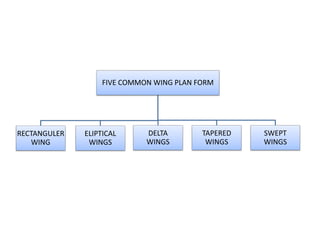
FIVE COMMON WING PLAN FORM
RECTANGULER
WING
ELIPTICAL
WINGS
TAPERED
WINGS
SWEPT
WINGS
DELTA
WINGS
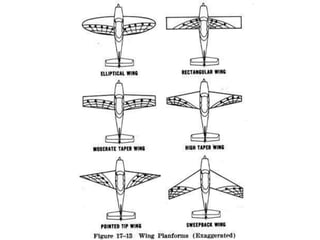
RECTANGULAR WING
The simplest wing planform from a manufacturing point of view, the rectangular
wing is a straight, untapered wing.
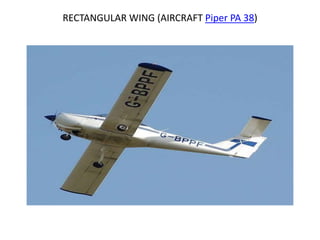
A good example would be the light general aircraft like Piper PA 38.
The main disadvantage of this wing is that it is aerodynamically inefficient.
RECTANGULAR WING (AIRCRAFT Piper PA 38)
The elliptical planform is the most efficient as elliptical spanwise lift distribution
has the lowest possible induced drag (as given by thin airfoil theory).
However, the most important disadvantage of the elliptical wing is that
its manufacturability is poor.
ELIPTICAL WINGS
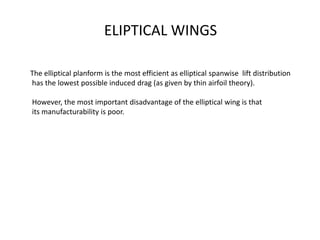
The most famous aircraft with elliptical
planform is the Supermarine Spitfire, used
in Battle of Britan.
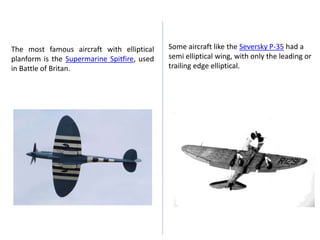
Some aircraft like the Seversky P-35 had a
semi elliptical wing, with only the leading or
trailing edge elliptical.
TAPERED WINGS
This is a modification of the rectangular wing where the chord is varied across the
span to approximate the elliptical lift distribution.
While not as efficient as the elliptical lift distribution, it offers a compromise between
manufacturability and efficiency.
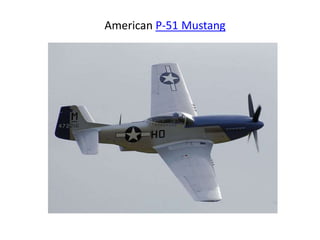
A very good example of aircraft using this type of wing is the North American P-51
Mustang, which became the premier USAAF escort fighter against the Luftwaffe.
American P-51 Mustang
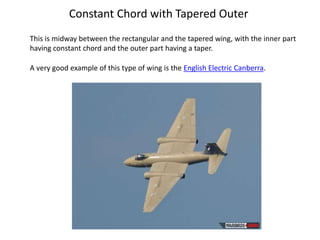
Constant Chord with Tapered Outer
This is midway between the rectangular and the tapered wing, with the inner part
having constant chord and the outer part having a taper.
A very good example of this type of wing is the English Electric Canberra.
DELTA WINGS
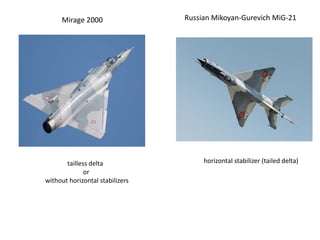
The delta is a very low aspect ratio wing used in supersonic aircraft, most notably in the
European designs.
The main advantages of the delta wing is that is efficient in all the flight regimes
(subsonic, transonic and supersonic). Also, the wing offers a large wing area for the
shape, reducing wing loading and improving maneuverability.
The delta wing design is also very strong structurally, offering large volume for internal
fuel. The delta wings are also quite simple to build and maintain.
The main disadvantages are that they have high induced drag due to low aspect ratio
and also that they should have high angle of attack at low speeds (takeoff and landing),
mainly due to fact that at these speeds, lift is generated by vortices. To compensate for
this, they have high stall angles.
Mirage 2000
tailless delta
or
without horizontal stabilizers
Russian Mikoyan-Gurevich MiG-21
horizontal stabilizer (tailed delta)
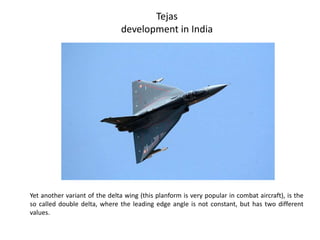
Tejas
development in India
Yet another variant of the delta wing (this planform is very popular in combat aircraft), is the
so called double delta, where the leading edge angle is not constant, but has two different
values.
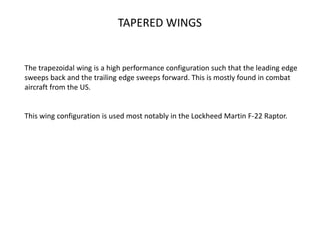
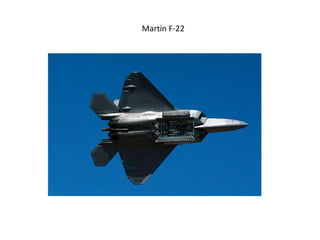
The trapezoidal wing is a high performance configuration such that the leading edge
sweeps back and the trailing edge sweeps forward. This is mostly found in combat
aircraft from the US.
This wing configuration is used most notably in the Lockheed Martin F-22 Raptor.
TAPERED WINGS
Martin F-22
OGIVE WINGS
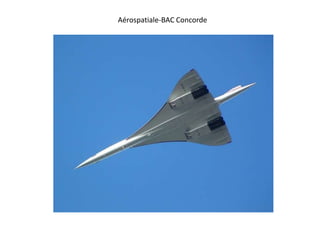
The Ogive is a type of supersonic wing used in high speed aircraft.
This is a complex mathematical shape derived for minimizing drag, especially
at supersonic speeds.
They offer excellent supersonic performance, with minimal drag.
However, they are extremely complex and manufacturing is difficult while
their subsonic performance is poor in comparison.
Aérospatiale-BAC Concorde
The wing planforms can also be classified on their sweep and variability.
1. SWEPT WINGS
a) SWEPT BACK WINGS
b) SWEPT FORWORD WINGS
2. VARIBLE SWEEP WINGS
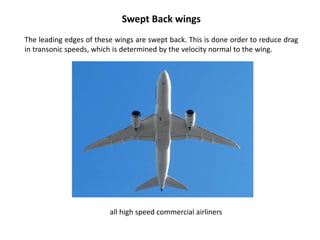
Swept Back wings
The leading edges of these wings are swept back. This is done order to reduce drag
in transonic speeds, which is determined by the velocity normal to the wing.
all high speed commercial airliners
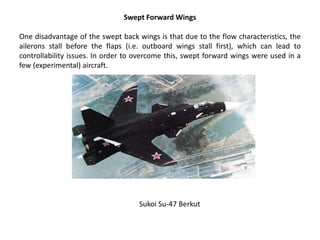
Swept Forward Wings
One disadvantage of the swept back wings is that due to the flow characteristics, the
ailerons stall before the flaps (i.e. outboard wings stall first), which can lead to
controllability issues. In order to overcome this, swept forward wings were used in a
few (experimental) aircraft.
Sukoi Su-47 Berkut
Variable Sweep Wings
For high speeds (transonic and supersonic), the swept wing is most suitable while for
low speed (subsonic) flight, unswept wings are better. Variable sweep wings were
used to optimize the wing planform over a wide range of speeds. The main problem
with this type of wing is the mechanical complexity.
The first aircraft to enter service with the variable sweep wing was the General
Dynamics F-111 Aardvak.
Thank you..

Wings plan form shapes

  • 1.
    WINGS PLAN FORMSHAPES PREAPARD BY: RAJ SEVAK (150410101046) SUBMITTED TO: MR. ANAND DARJI
  • 2.
    FIVE COMMON WINGPLAN FORM RECTANGULER WING ELIPTICAL WINGS TAPERED WINGS SWEPT WINGS DELTA WINGS
  • 4.
    RECTANGULAR WING The simplestwing planform from a manufacturing point of view, the rectangular wing is a straight, untapered wing. A good example would be the light general aircraft like Piper PA 38. The main disadvantage of this wing is that it is aerodynamically inefficient.
  • 5.
  • 6.
    The elliptical planformis the most efficient as elliptical spanwise lift distribution has the lowest possible induced drag (as given by thin airfoil theory). However, the most important disadvantage of the elliptical wing is that its manufacturability is poor. ELIPTICAL WINGS
  • 7.
    The most famousaircraft with elliptical planform is the Supermarine Spitfire, used in Battle of Britan. Some aircraft like the Seversky P-35 had a semi elliptical wing, with only the leading or trailing edge elliptical.
  • 8.
    TAPERED WINGS This isa modification of the rectangular wing where the chord is varied across the span to approximate the elliptical lift distribution. While not as efficient as the elliptical lift distribution, it offers a compromise between manufacturability and efficiency. A very good example of aircraft using this type of wing is the North American P-51 Mustang, which became the premier USAAF escort fighter against the Luftwaffe.
  • 9.
  • 10.
    Constant Chord withTapered Outer This is midway between the rectangular and the tapered wing, with the inner part having constant chord and the outer part having a taper. A very good example of this type of wing is the English Electric Canberra.
  • 11.
    DELTA WINGS The deltais a very low aspect ratio wing used in supersonic aircraft, most notably in the European designs. The main advantages of the delta wing is that is efficient in all the flight regimes (subsonic, transonic and supersonic). Also, the wing offers a large wing area for the shape, reducing wing loading and improving maneuverability. The delta wing design is also very strong structurally, offering large volume for internal fuel. The delta wings are also quite simple to build and maintain. The main disadvantages are that they have high induced drag due to low aspect ratio and also that they should have high angle of attack at low speeds (takeoff and landing), mainly due to fact that at these speeds, lift is generated by vortices. To compensate for this, they have high stall angles.
  • 12.
    Mirage 2000 tailless delta or withouthorizontal stabilizers Russian Mikoyan-Gurevich MiG-21 horizontal stabilizer (tailed delta)
  • 13.
    Tejas development in India Yetanother variant of the delta wing (this planform is very popular in combat aircraft), is the so called double delta, where the leading edge angle is not constant, but has two different values.
  • 14.
    The trapezoidal wingis a high performance configuration such that the leading edge sweeps back and the trailing edge sweeps forward. This is mostly found in combat aircraft from the US. This wing configuration is used most notably in the Lockheed Martin F-22 Raptor. TAPERED WINGS
  • 15.
  • 16.
    OGIVE WINGS The Ogiveis a type of supersonic wing used in high speed aircraft. This is a complex mathematical shape derived for minimizing drag, especially at supersonic speeds. They offer excellent supersonic performance, with minimal drag. However, they are extremely complex and manufacturing is difficult while their subsonic performance is poor in comparison.
  • 17.
  • 18.
    The wing planformscan also be classified on their sweep and variability. 1. SWEPT WINGS a) SWEPT BACK WINGS b) SWEPT FORWORD WINGS 2. VARIBLE SWEEP WINGS
  • 19.
    Swept Back wings Theleading edges of these wings are swept back. This is done order to reduce drag in transonic speeds, which is determined by the velocity normal to the wing. all high speed commercial airliners
  • 20.
    Swept Forward Wings Onedisadvantage of the swept back wings is that due to the flow characteristics, the ailerons stall before the flaps (i.e. outboard wings stall first), which can lead to controllability issues. In order to overcome this, swept forward wings were used in a few (experimental) aircraft. Sukoi Su-47 Berkut
  • 21.
    Variable Sweep Wings Forhigh speeds (transonic and supersonic), the swept wing is most suitable while for low speed (subsonic) flight, unswept wings are better. Variable sweep wings were used to optimize the wing planform over a wide range of speeds. The main problem with this type of wing is the mechanical complexity. The first aircraft to enter service with the variable sweep wing was the General Dynamics F-111 Aardvak.
  • 22.