WIDE AREA NETWORK (WAN)
Introduction
A wide area network or WAN, spans a
    large geographical area, often a
country or continent. WAN (Wide Area
 Network) connects two or more LANs
         and other networks so
  that computers at one location can
 communicate to the computers at far
away some other location. It contains a
  collection of machines intended for
      running user (i.e. application)
 programs. We call these machines as
                 hosts.
The hosts are connected by
  communication subnet or just subnet for
  short. The host are owned by costumers
           (e.g. people’s personal
  computers), whereas the communication
 subnet is typically owned and operated by
  a telephone company or Internet service
    provider. The job of subnet is to carry
      message from host to host, just as
    telephone system carries words from
              speaker to listener.
   In most wide area networks, the subnet
     consists of two distinct components:
transmission lines and switching elements.
    Transmission lines move bits between
                   machines.
They can be made of copper
  wire, optical fiber, or even radio links.
   Switching elements are specialized
 computers that connect three or more
transmission lines. When data arrive on
an incoming line, the switching element
must choose an outgoing line on which
  to forward them. Nowadays router is
   most commonly used as switching
                  element.
Host              Subnet
                                                Router


  LAN


       Fig:Relation between hosts on LANs and the subnet.
(Subnet means the collection of routers
   and communication lines that moved
    packets from the source host to the
               destination host.)
 In this model, shown in fig, each host is
frequently connected to a LAN on which
   a router is present, although in some
 cases a host can be connected directly
        to a router. The collections of
communication lines and routers (but not
      from the hosts) form the subnet.
Subnet
                       Router                                        Receiving host
Sending host

                                B           D
                                                       E
                           A
                                        C


    Sending process         Packet                               Receiving process


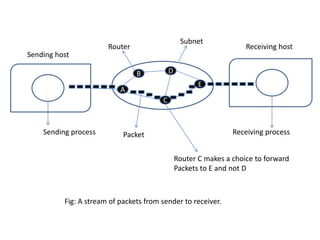
                                                Router C makes a choice to forward
                                                Packets to E and not D


          Fig: A stream of packets from sender to receiver.
OBJECTIVES
1.To build a uniform multiservice network
 for data, voice, and video consolidation.
2.To reduce recurring network operation
        costs (such as bandwidth).
   3.To reduce management costs and
       focus on core competencies.
    4.Performance can be improved by
           optimization of WAN.
Scope
Integrated services in digital networks
       Network managements
     Multimedia communications
            Wireless WAN
              Developer
Limitation
  WAN is difficult for businesses as cloud
       computing and other emerging
 technologies converge upon the network.
Cost effectiveness is a major problem when
    it comes to WAN upgrades, in large
  part, because the network format is not
   built for such large amounts of traffic.
    Harder to manage since the solution
   typically involves multiple vendors &
      reliability of solution goes down

Wide area network (wan)

  • 1.
  • 2.
    Introduction A wide areanetwork or WAN, spans a large geographical area, often a country or continent. WAN (Wide Area Network) connects two or more LANs and other networks so that computers at one location can communicate to the computers at far away some other location. It contains a collection of machines intended for running user (i.e. application) programs. We call these machines as hosts.
  • 3.
    The hosts areconnected by communication subnet or just subnet for short. The host are owned by costumers (e.g. people’s personal computers), whereas the communication subnet is typically owned and operated by a telephone company or Internet service provider. The job of subnet is to carry message from host to host, just as telephone system carries words from speaker to listener. In most wide area networks, the subnet consists of two distinct components: transmission lines and switching elements. Transmission lines move bits between machines.
  • 4.
    They can bemade of copper wire, optical fiber, or even radio links. Switching elements are specialized computers that connect three or more transmission lines. When data arrive on an incoming line, the switching element must choose an outgoing line on which to forward them. Nowadays router is most commonly used as switching element.
  • 5.
    Host Subnet Router LAN Fig:Relation between hosts on LANs and the subnet.
  • 6.
    (Subnet means thecollection of routers and communication lines that moved packets from the source host to the destination host.) In this model, shown in fig, each host is frequently connected to a LAN on which a router is present, although in some cases a host can be connected directly to a router. The collections of communication lines and routers (but not from the hosts) form the subnet.
  • 7.
    Subnet Router Receiving host Sending host B D E A C Sending process Packet Receiving process Router C makes a choice to forward Packets to E and not D Fig: A stream of packets from sender to receiver.
  • 8.
    OBJECTIVES 1.To build auniform multiservice network for data, voice, and video consolidation. 2.To reduce recurring network operation costs (such as bandwidth). 3.To reduce management costs and focus on core competencies. 4.Performance can be improved by optimization of WAN.
  • 9.
    Scope Integrated services indigital networks Network managements Multimedia communications Wireless WAN Developer
  • 10.
    Limitation WANis difficult for businesses as cloud computing and other emerging technologies converge upon the network. Cost effectiveness is a major problem when it comes to WAN upgrades, in large part, because the network format is not built for such large amounts of traffic. Harder to manage since the solution typically involves multiple vendors & reliability of solution goes down