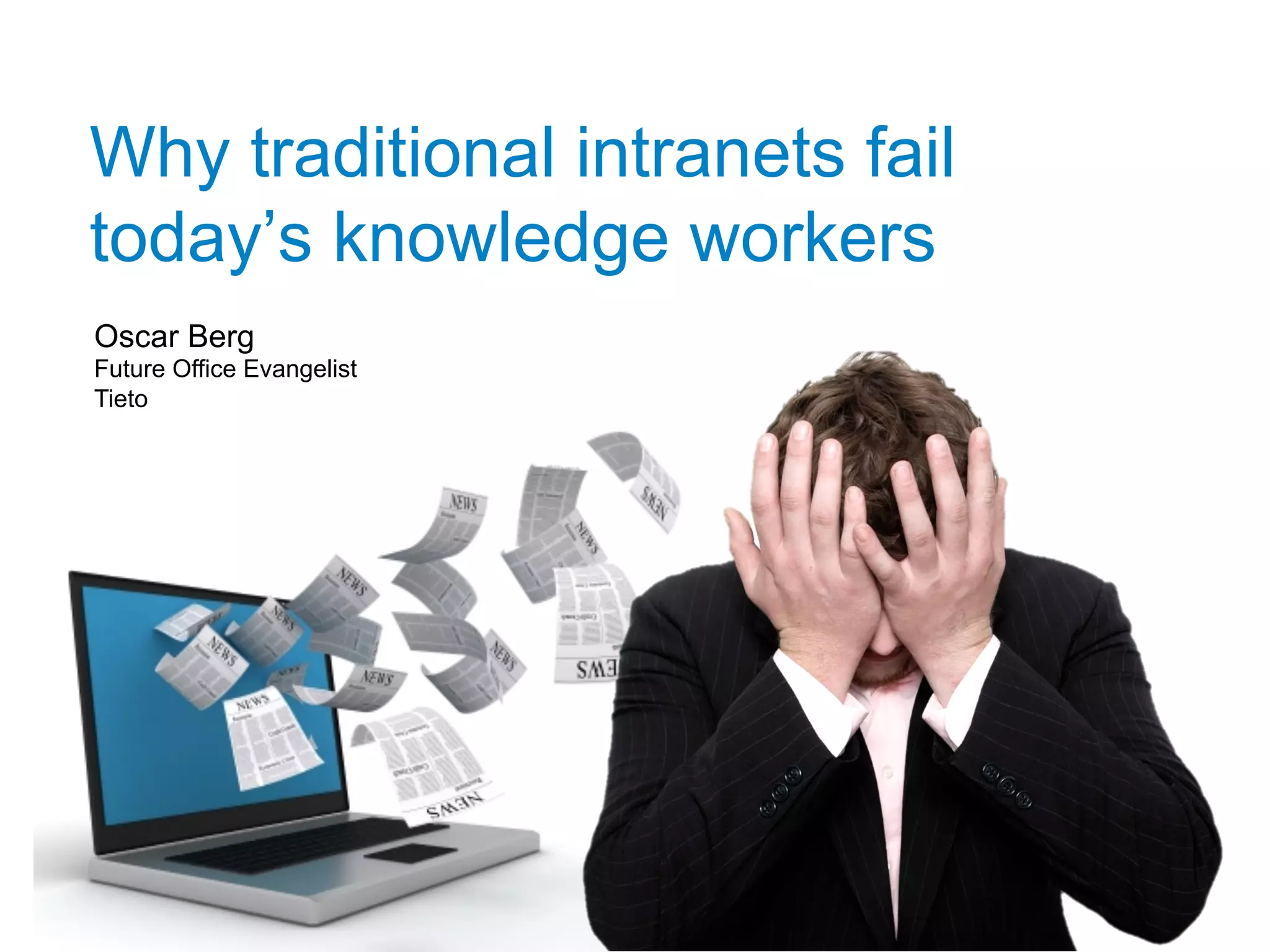



Why traditional intranets fail
today’s knowledge workers
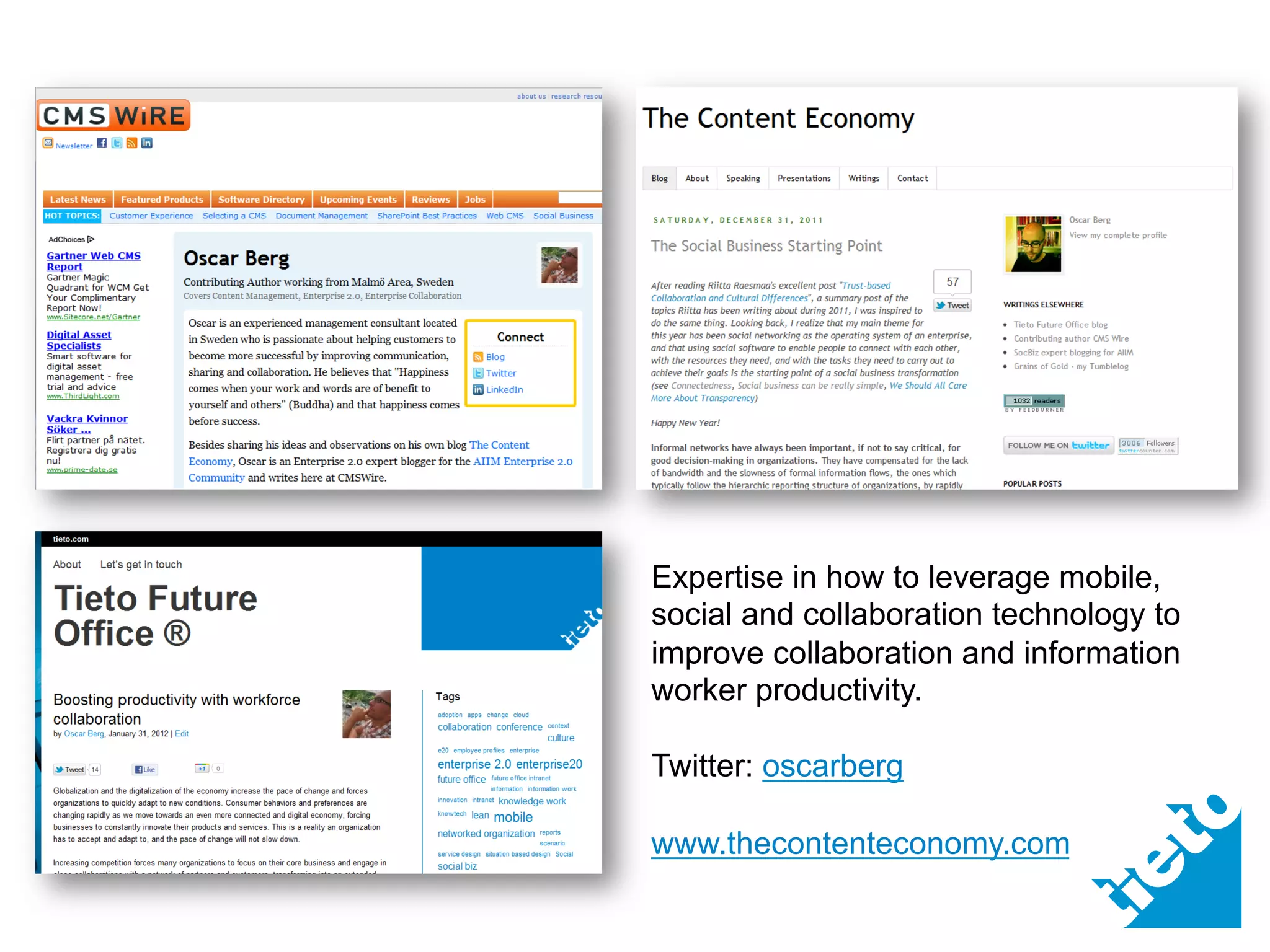
Oscar Berg
Future Office Evangelist
Tieto
Expertise in how to leverage mobile,
social and collaboration technology to
improve collaboration and information
worker productivity.

Twitter: oscarberg

www.thecontenteconomy.com
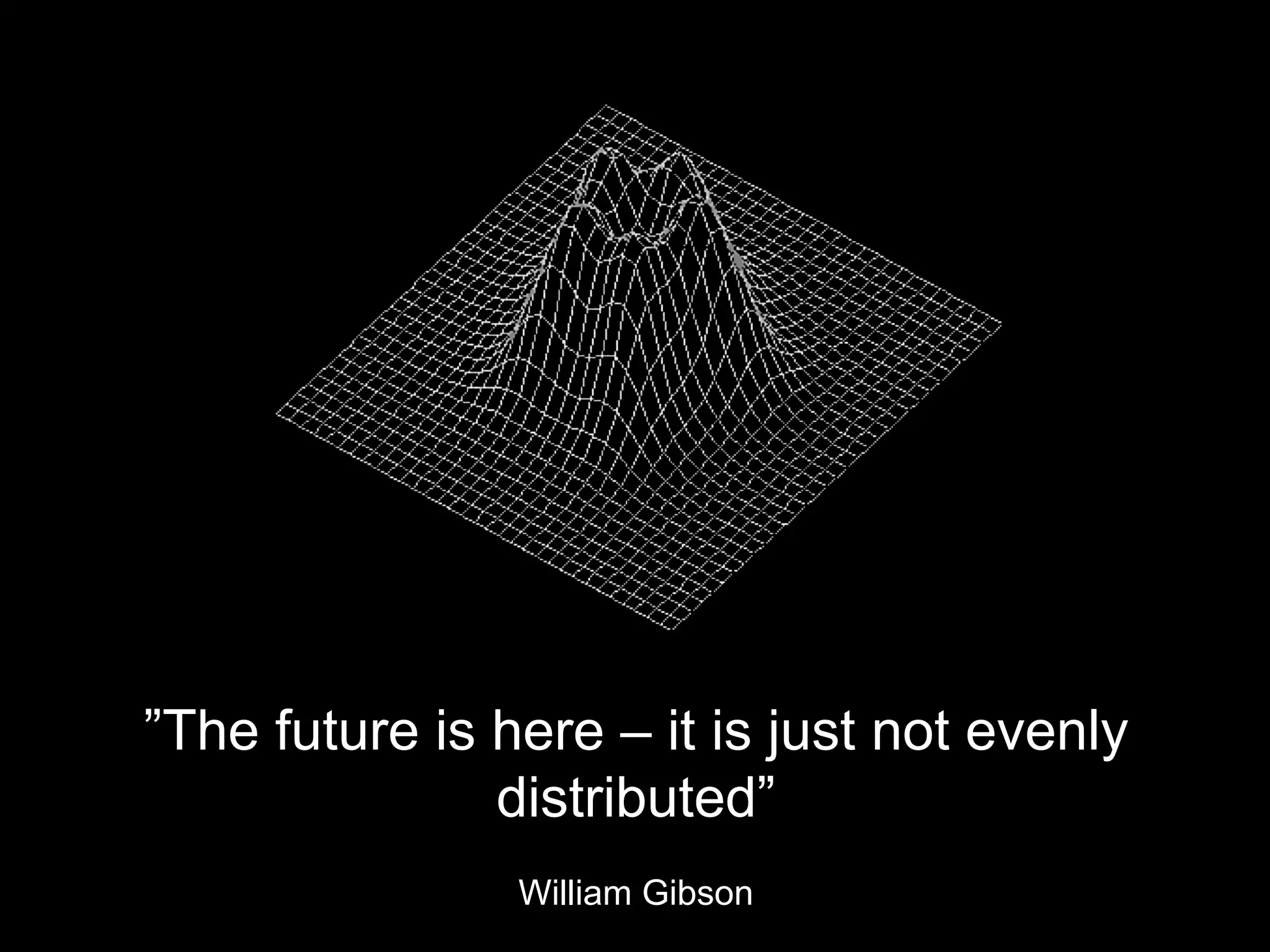
”The future is here – it is just not evenly
                   distributed”
                    William Gibson
3
”Why are we so
powerful as
consumers
but so lame as
employees?”
Geoffrey Moore,
TCG Advisors
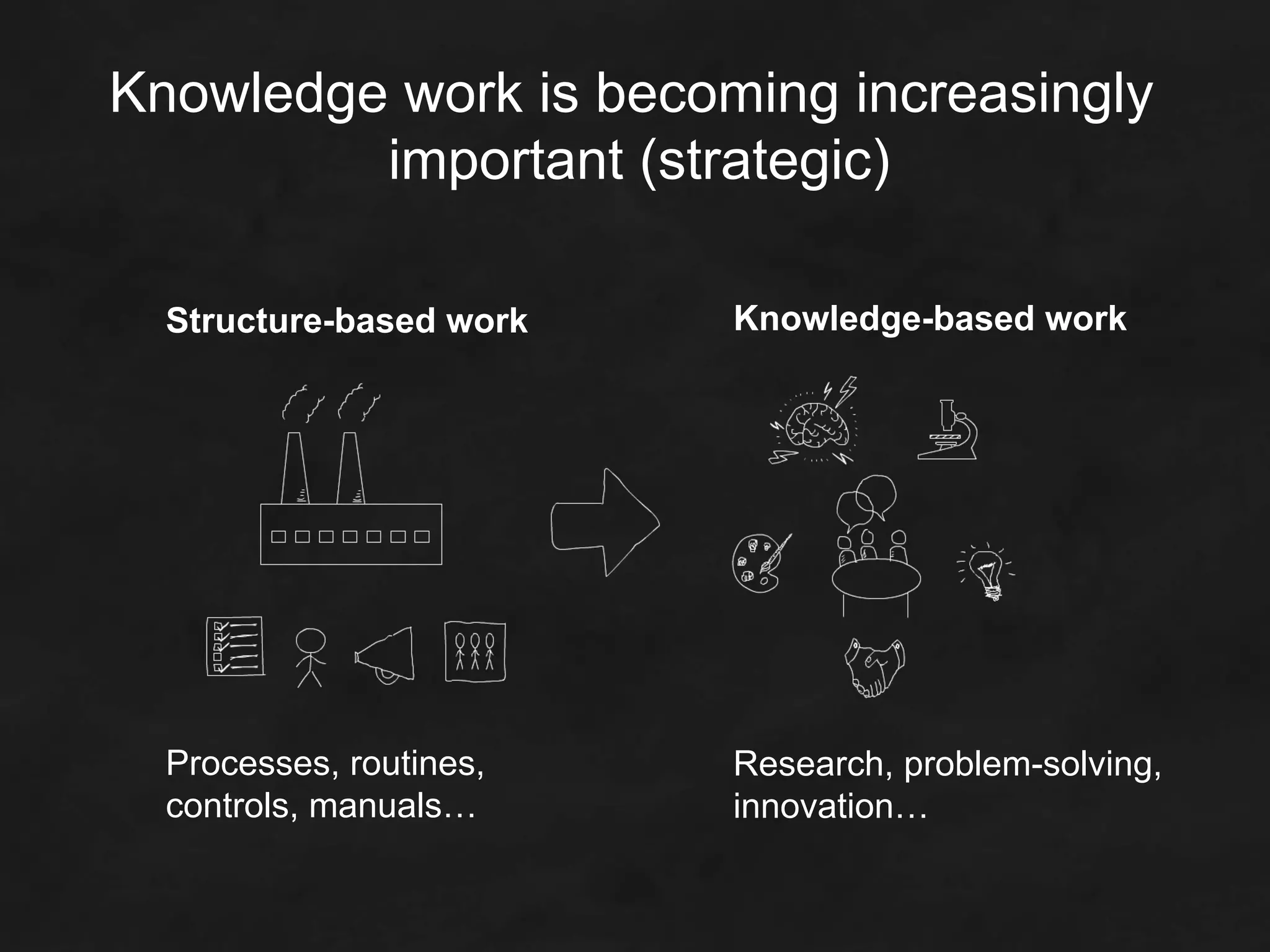
Knowledge work is becoming increasingly
         important (strategic)

  Structure-based work   Knowledge-based work


  Processes, routines,   Research, problem-solving,
  controls, manuals…     innovation…
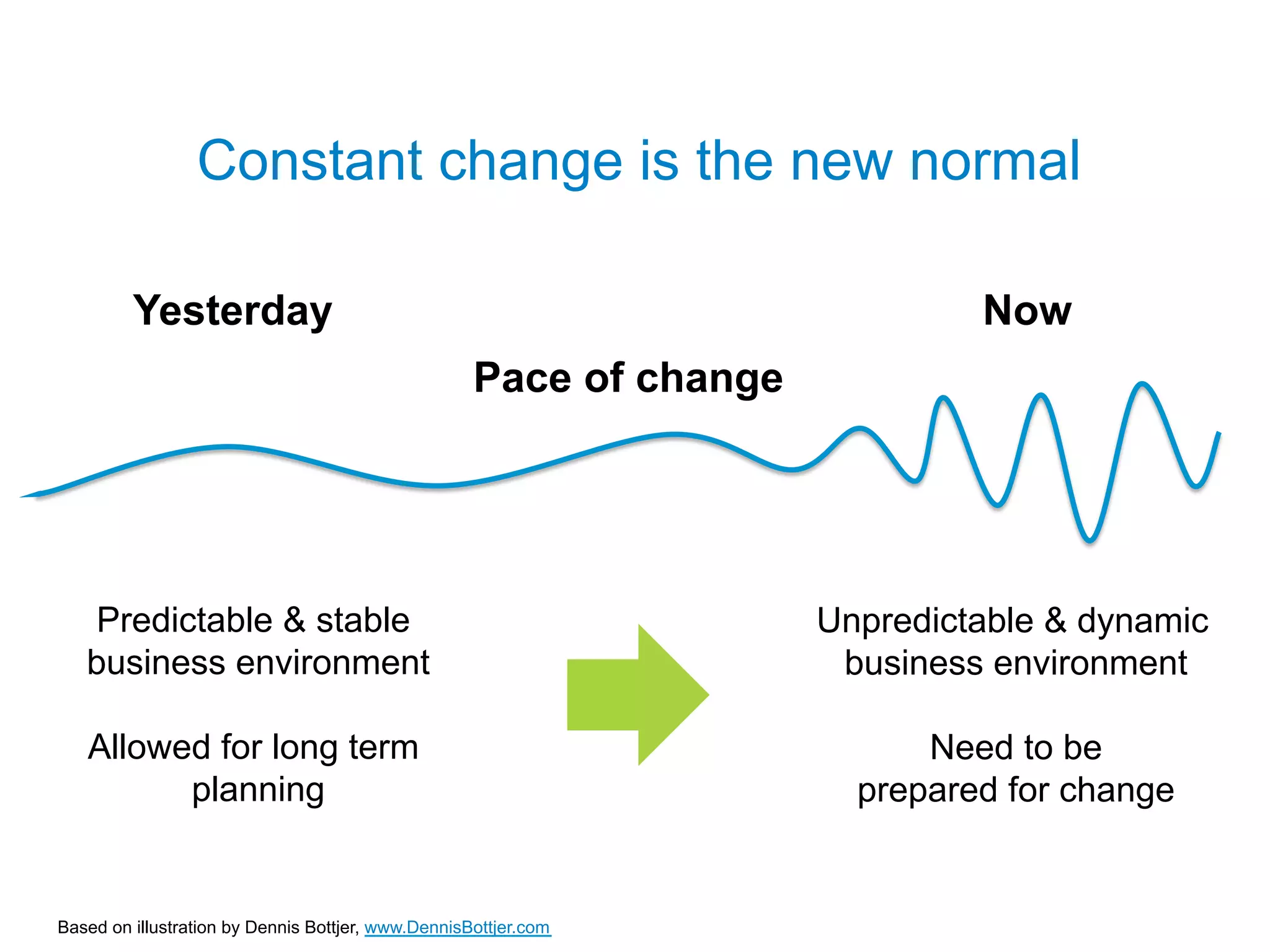
Constant change is the new normal

         Yesterday                                                            Now
                                                    Pace of change


   Predictable & stable                                              Unpredictable & dynamic
   business environment                                               business environment

   Allowed for long term                                                   Need to be
         planning                                                      prepared for change


Based on illustration by Dennis Bottjer, www.DennisBottjer.com
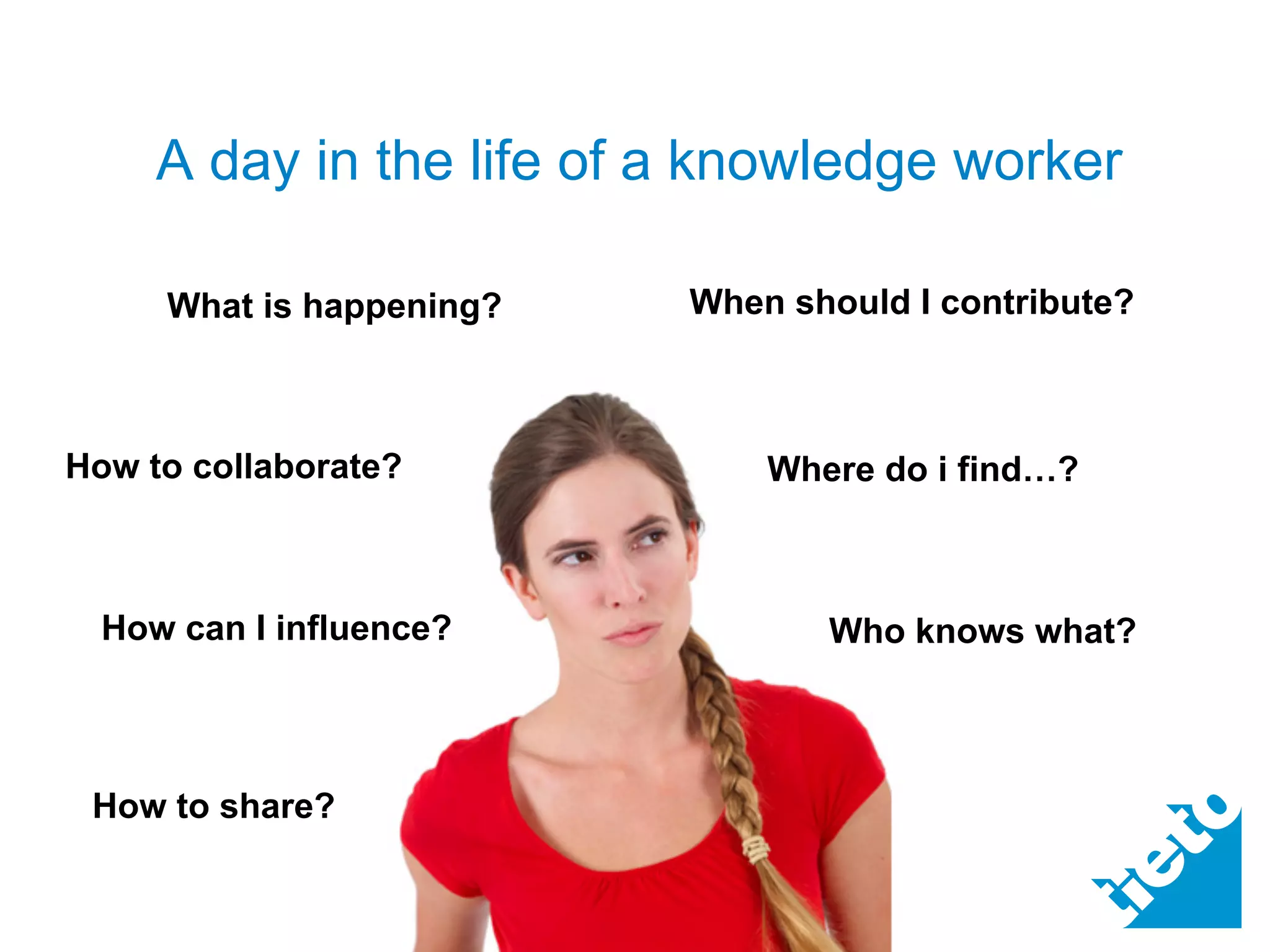
A day in the life of a knowledge worker

     What is happening?   When should I contribute?


How to collaborate?           Where do i find…?


  How can I influence?           Who knows what?


 How to share?
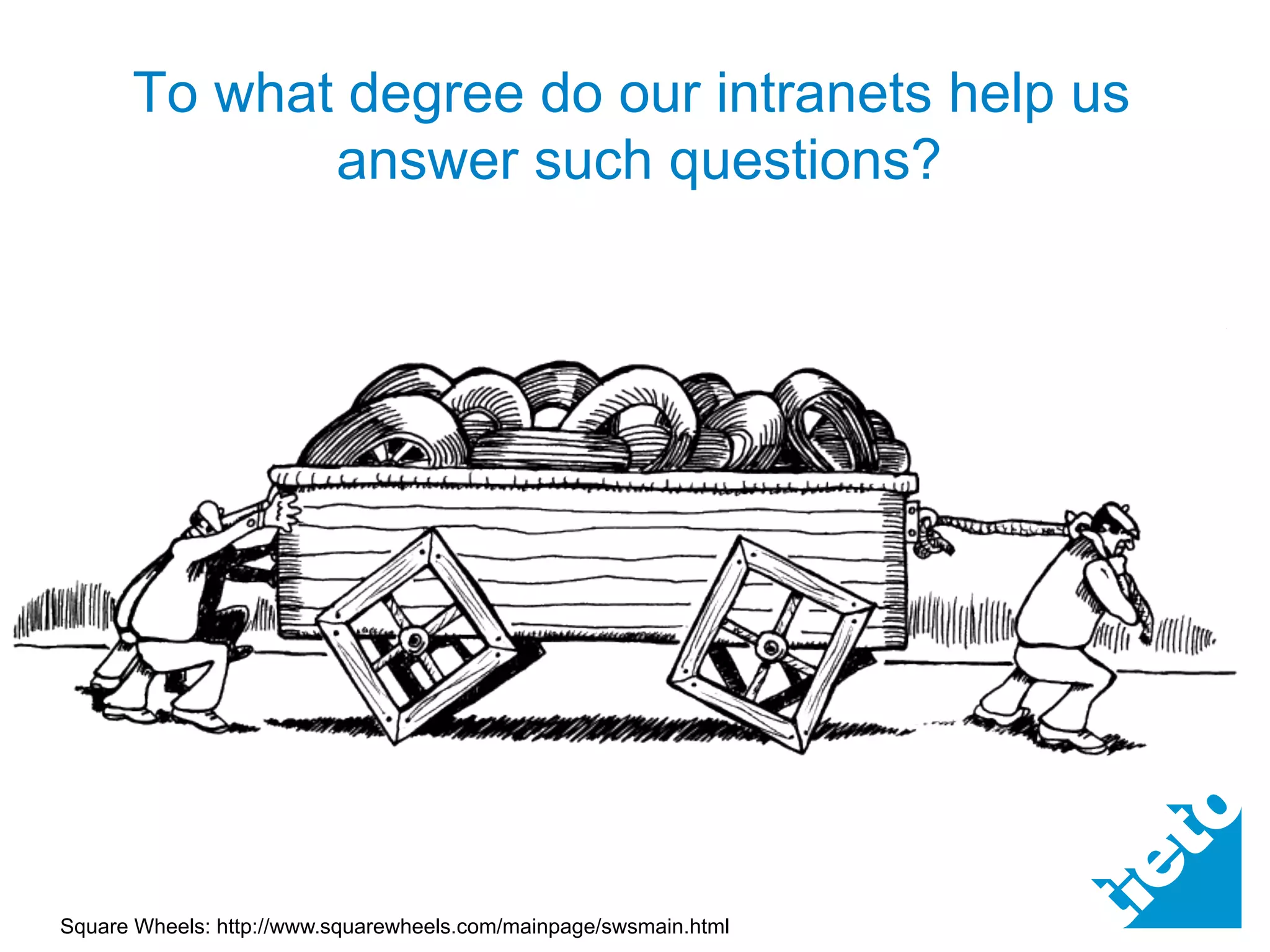
To what degree do our intranets help us
             answer such questions?


Square Wheels: http://www.squarewheels.com/mainpage/swsmain.html
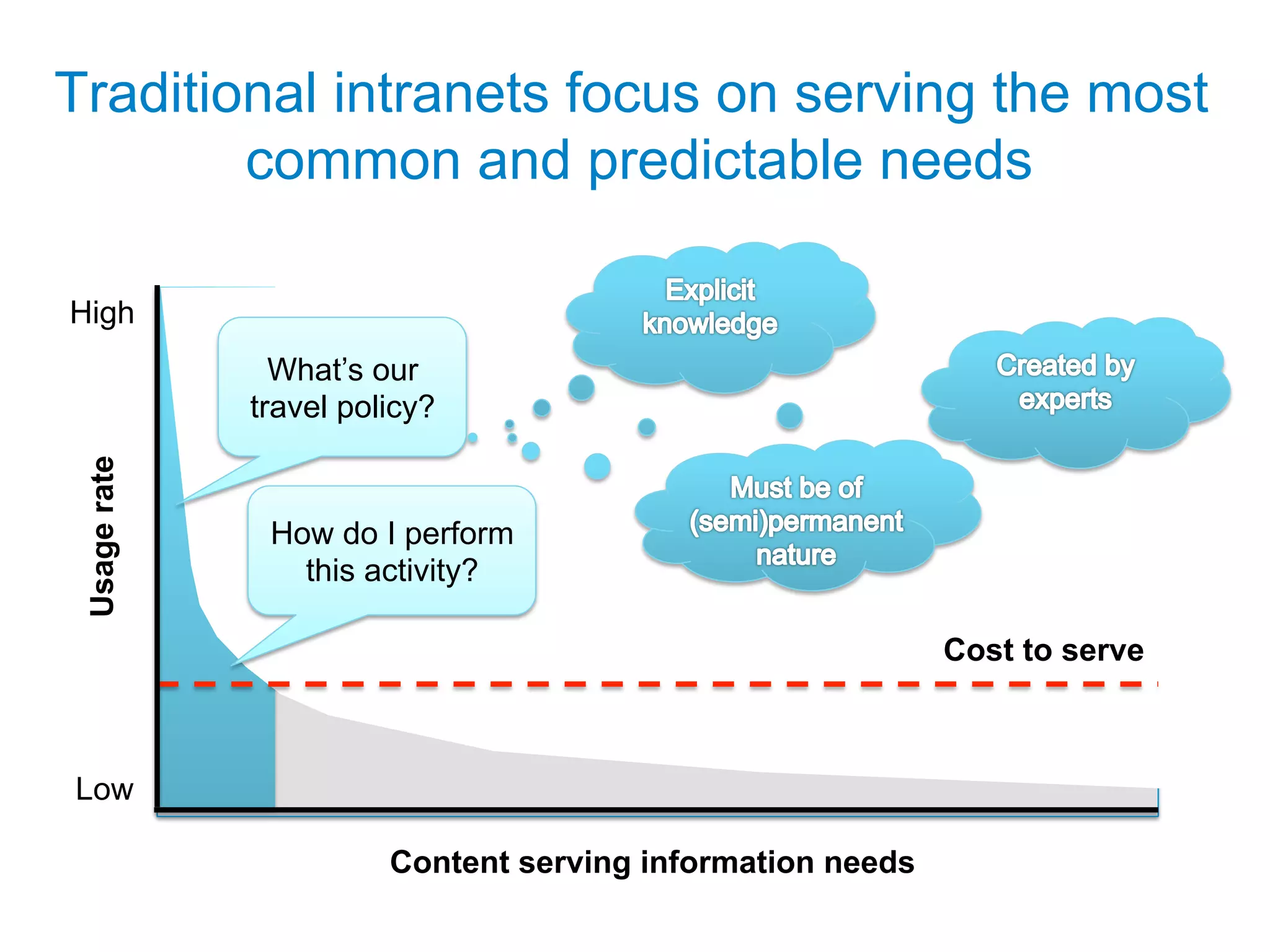
Traditional intranets focus on serving the most
        common and predictable needs

High
                What’s our
              travel policy?
 Usage rate


               How do I perform
                 this activity?

                                                            Cost to serve


Low

                        Content serving information needs
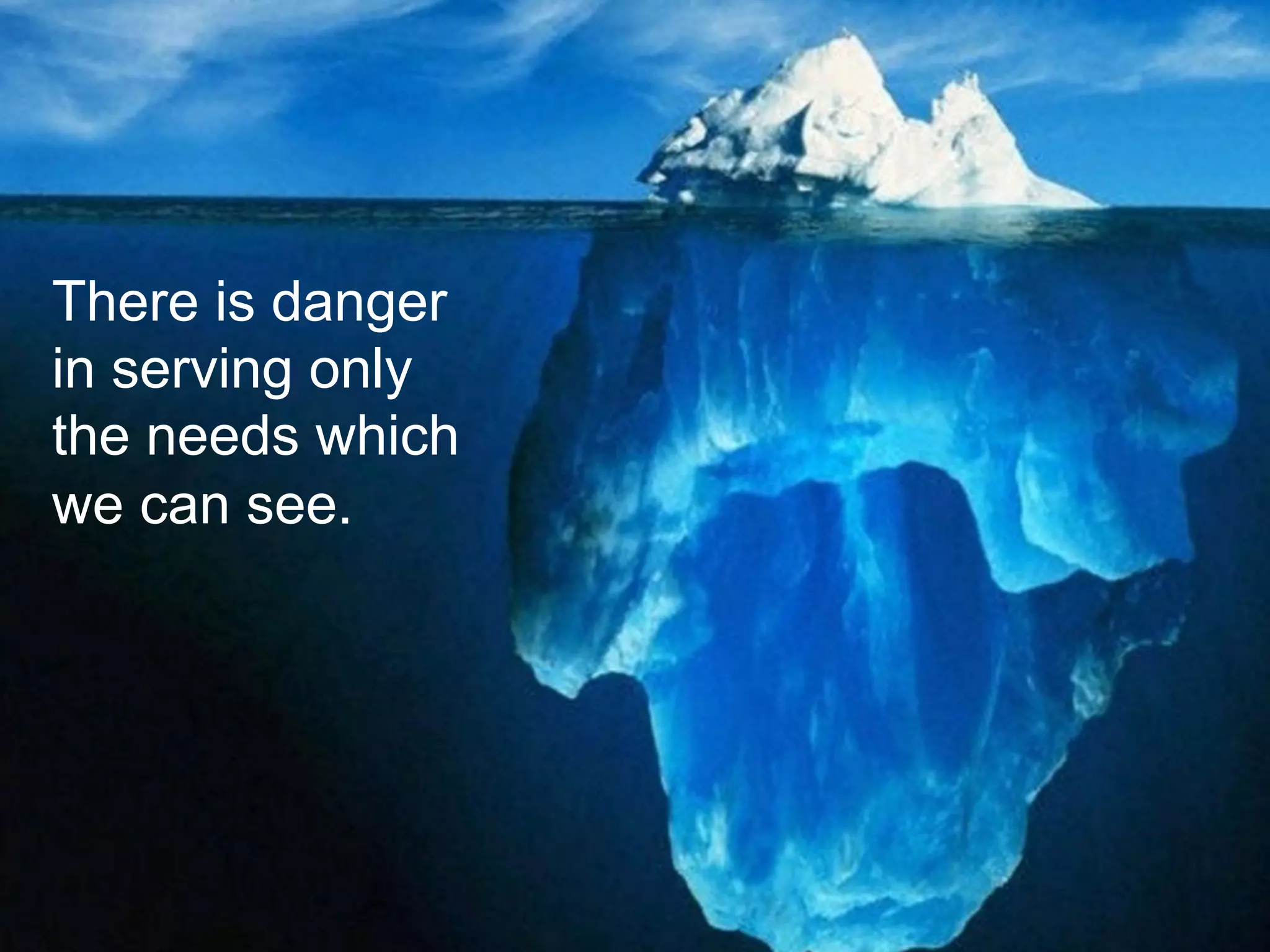
There is danger
in serving only
the needs which
we can see.
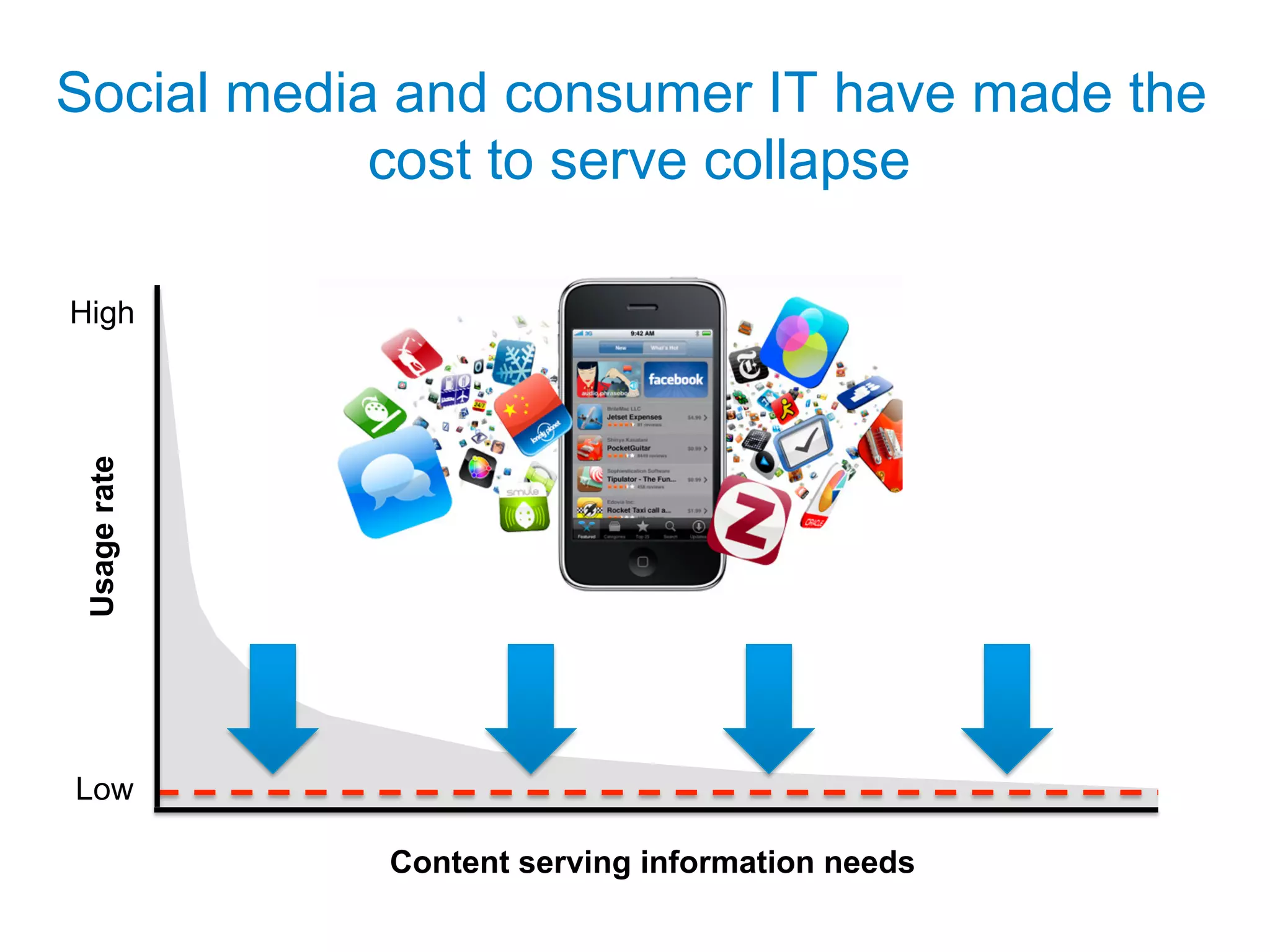
Social media and consumer IT have made the
            cost to serve collapse

High
 Usage rate


Low

              Content serving information needs
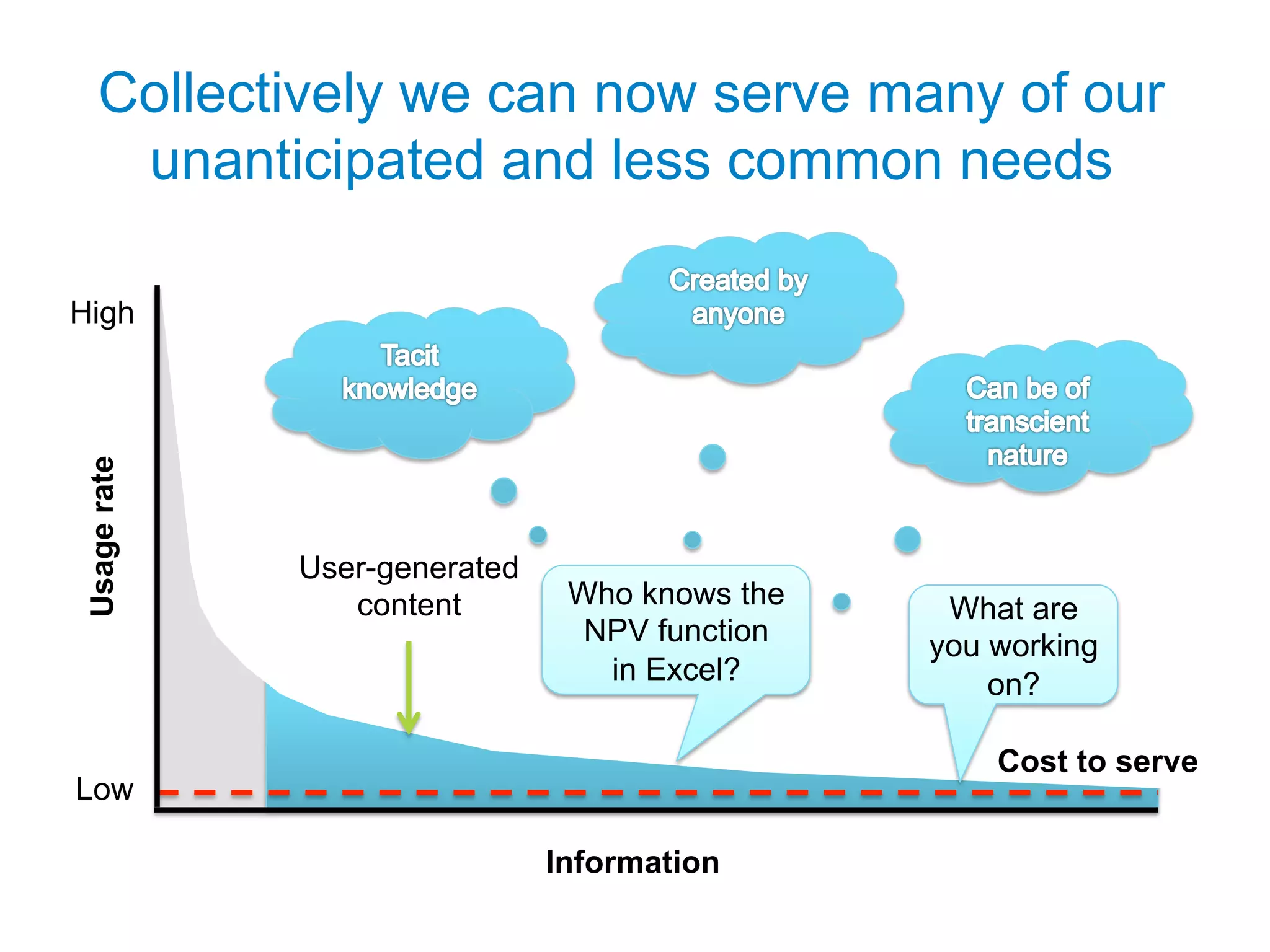
Collectively we can now serve many of our
    unanticipated and less common needs

High
Usage rate


             User-generated
                content        Who knows the    What are
                                NPV function   you working
                                 in Excel?         on?

                                                   Cost to serve
Low

                              Information
So what then about
information overload?
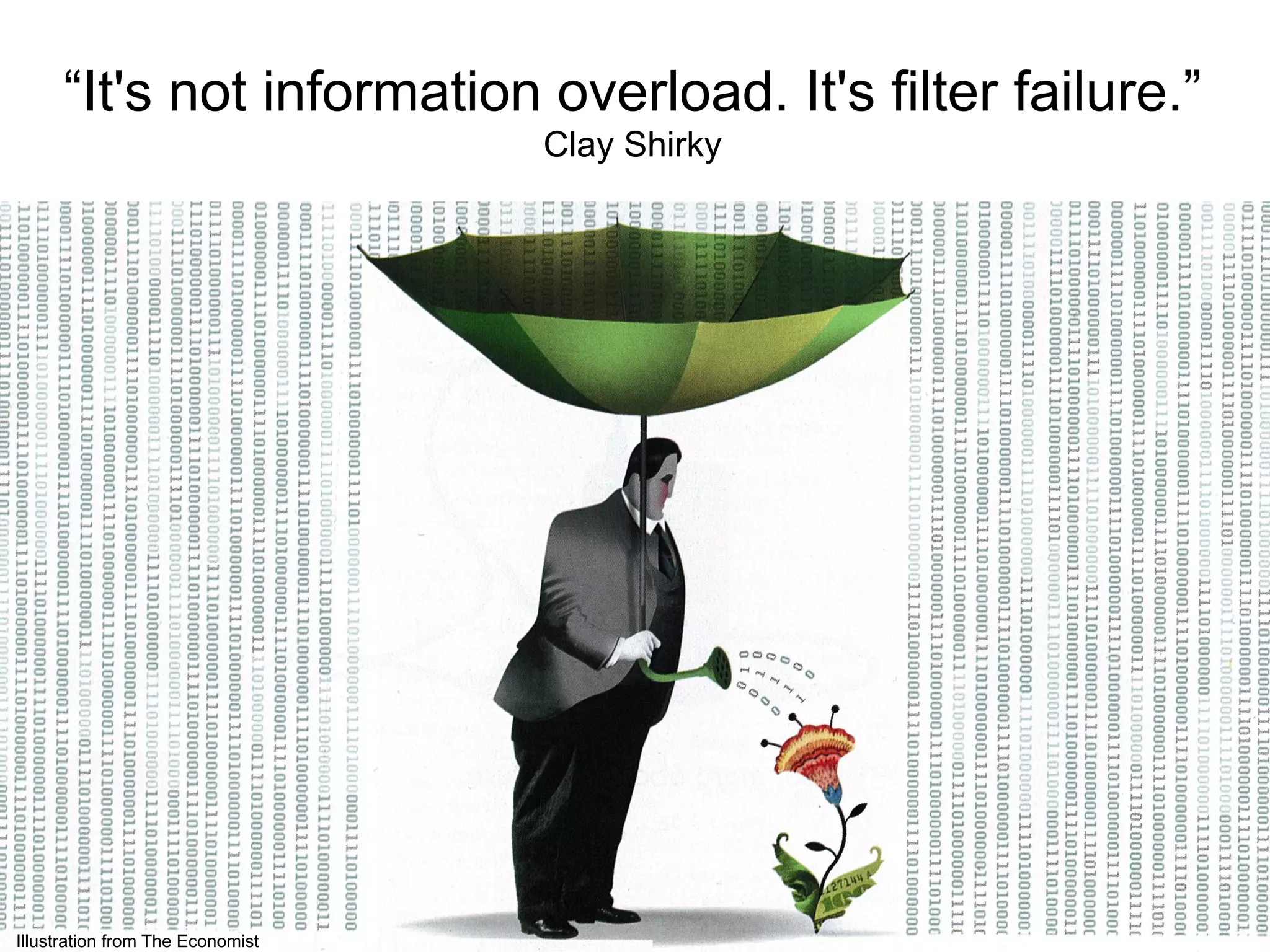
“It's not information overload. It's filter failure.”
                                  Clay Shirky


Illustration from The Economist
#fail
   Trying to ”solve” information overload
by cutting supply instead of improving filters

      è Important information needs
            cannot be served
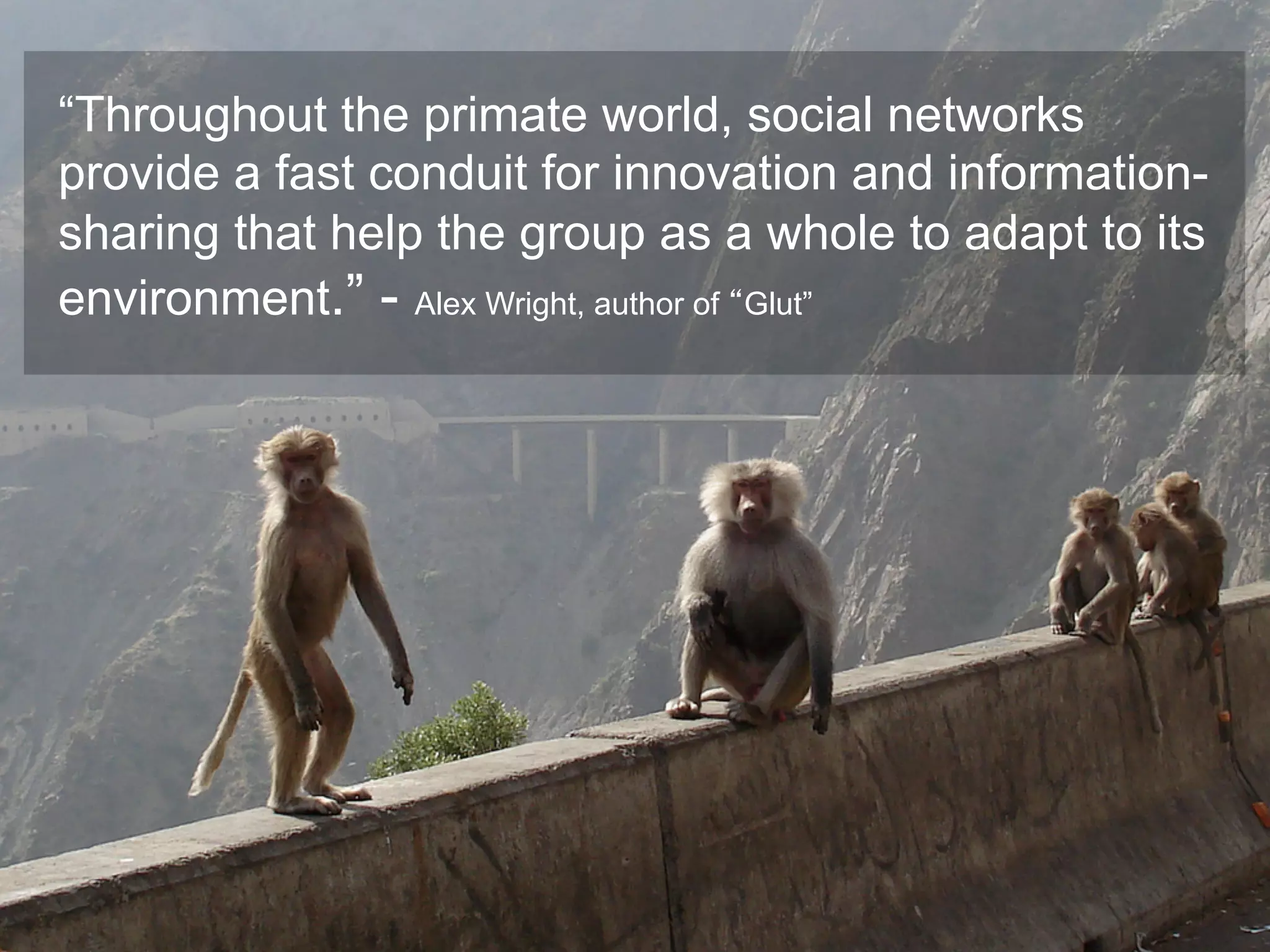
“Throughout the primate world, social networks
provide a fast conduit for innovation and information-
sharing that help the group as a whole to adapt to its
environment.” - Alex Wright, author of “Glut”
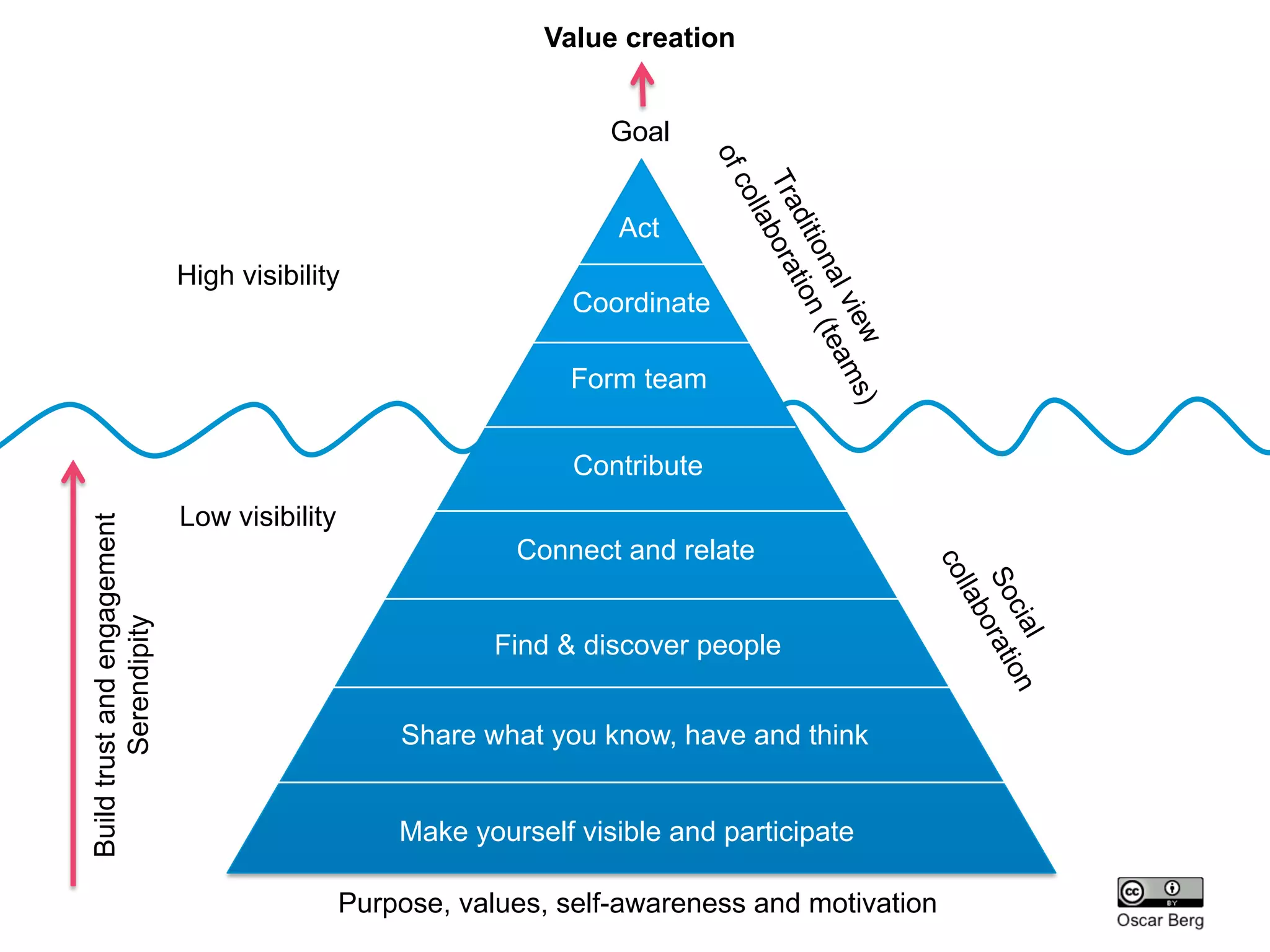
Value creation


                                                                   Goal


                                                                   Act
                             High visibility
                                                                Coordinate

                                                               Form team


                                                                Contribute
                             Low visibility
Build trust and engagement


                                                           Connect and relate
         Serendipity


                                                         Find & discover people


                                                  Share what you know, have and think


                                                  Make yourself visible and participate

                                              Purpose, values, self-awareness and motivation
#fail
Not understanding or supporting the social
    activities that enable collaboration

è  collaboration does not happen naturally
             across boundaries
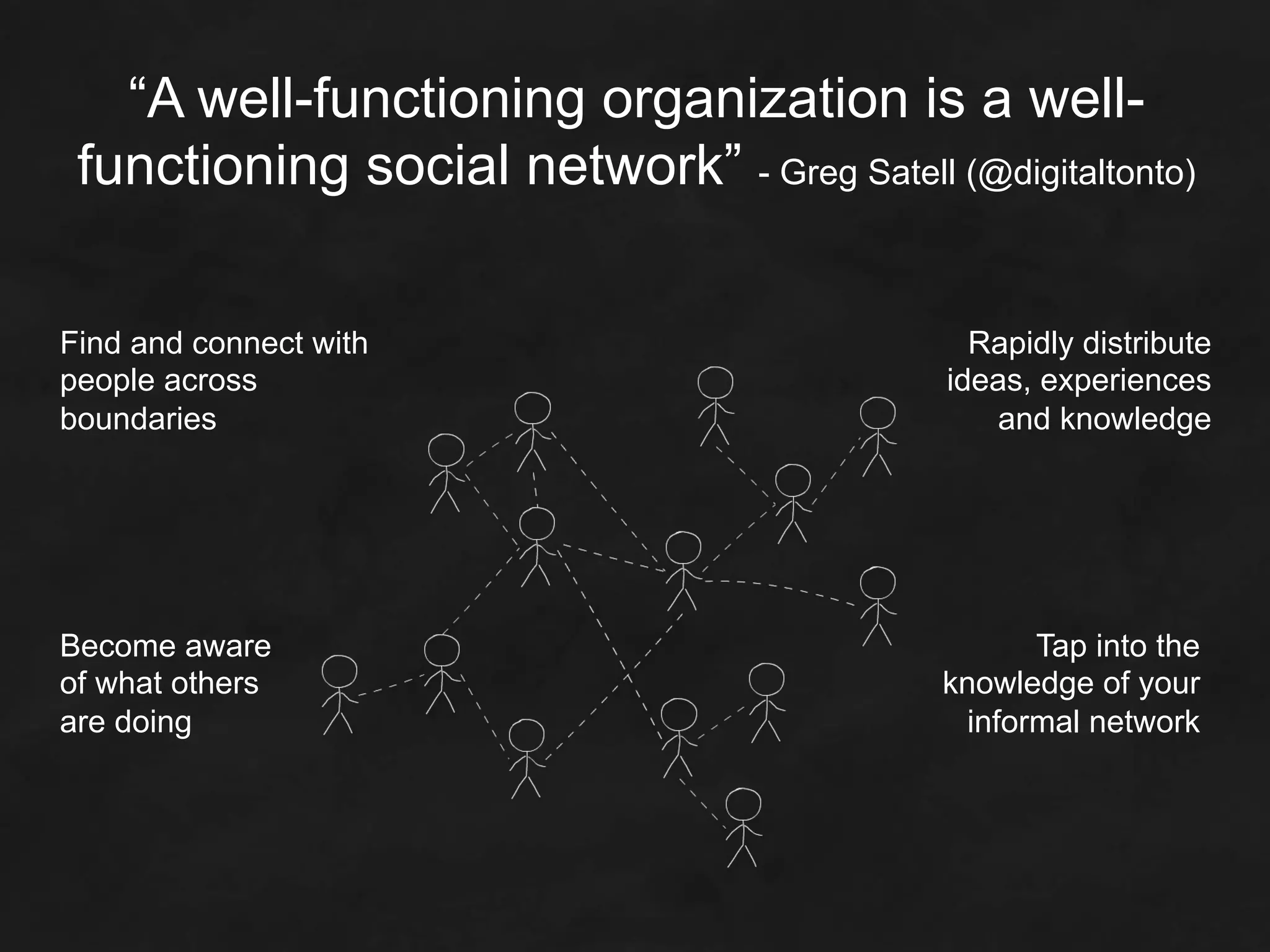
“A well-functioning organization is a well-
 functioning social network” - Greg Satell (@digitaltonto)


Find and connect with                          Rapidly distribute
people across                                ideas, experiences
boundaries                                      and knowledge


Become aware                                        Tap into the
of what others                               knowledge of your
are doing                                      informal network
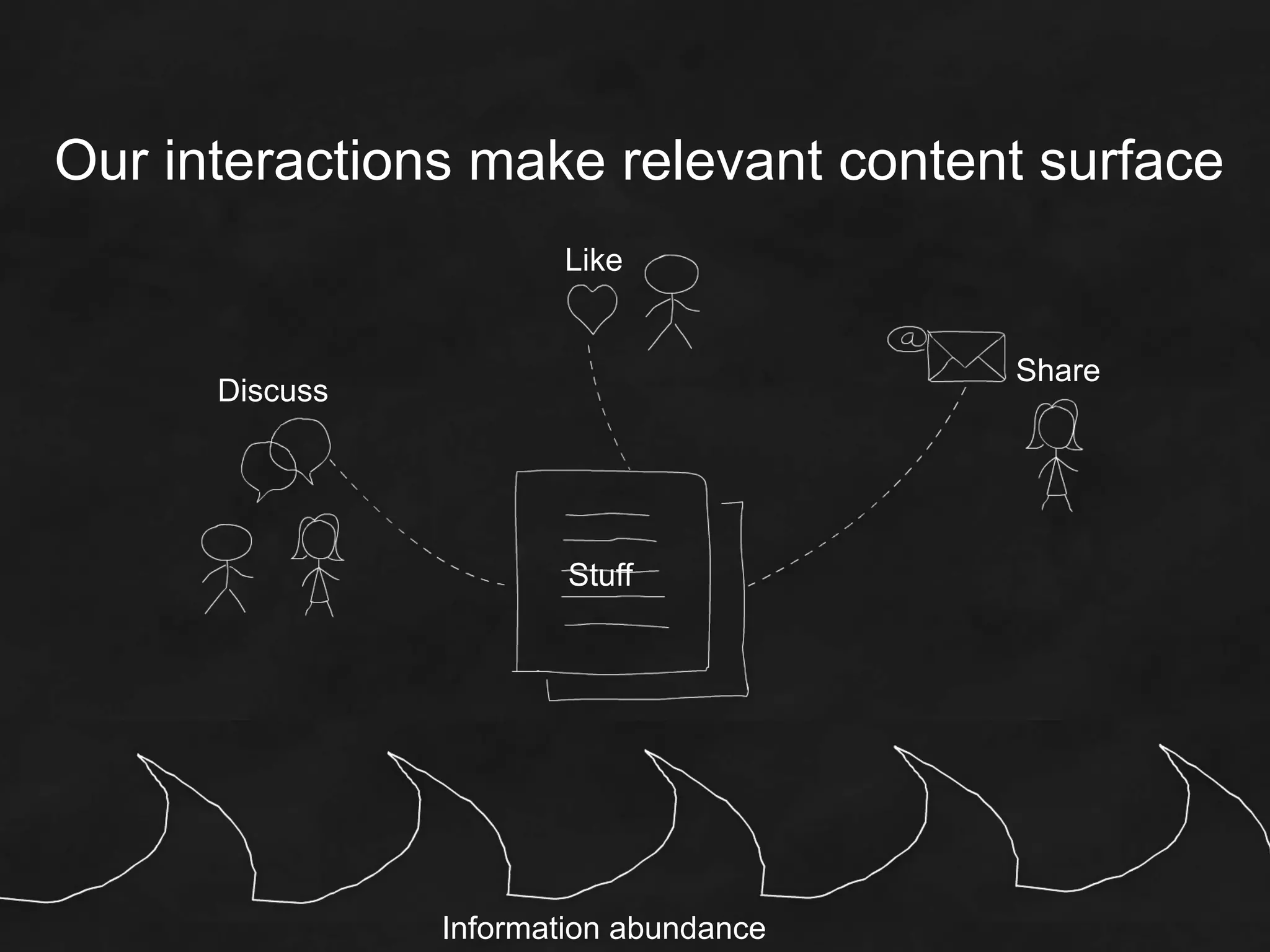
Our interactions make relevant content surface
                       Like


                                        Share
      Discuss


                        Stuff


                Information abundance
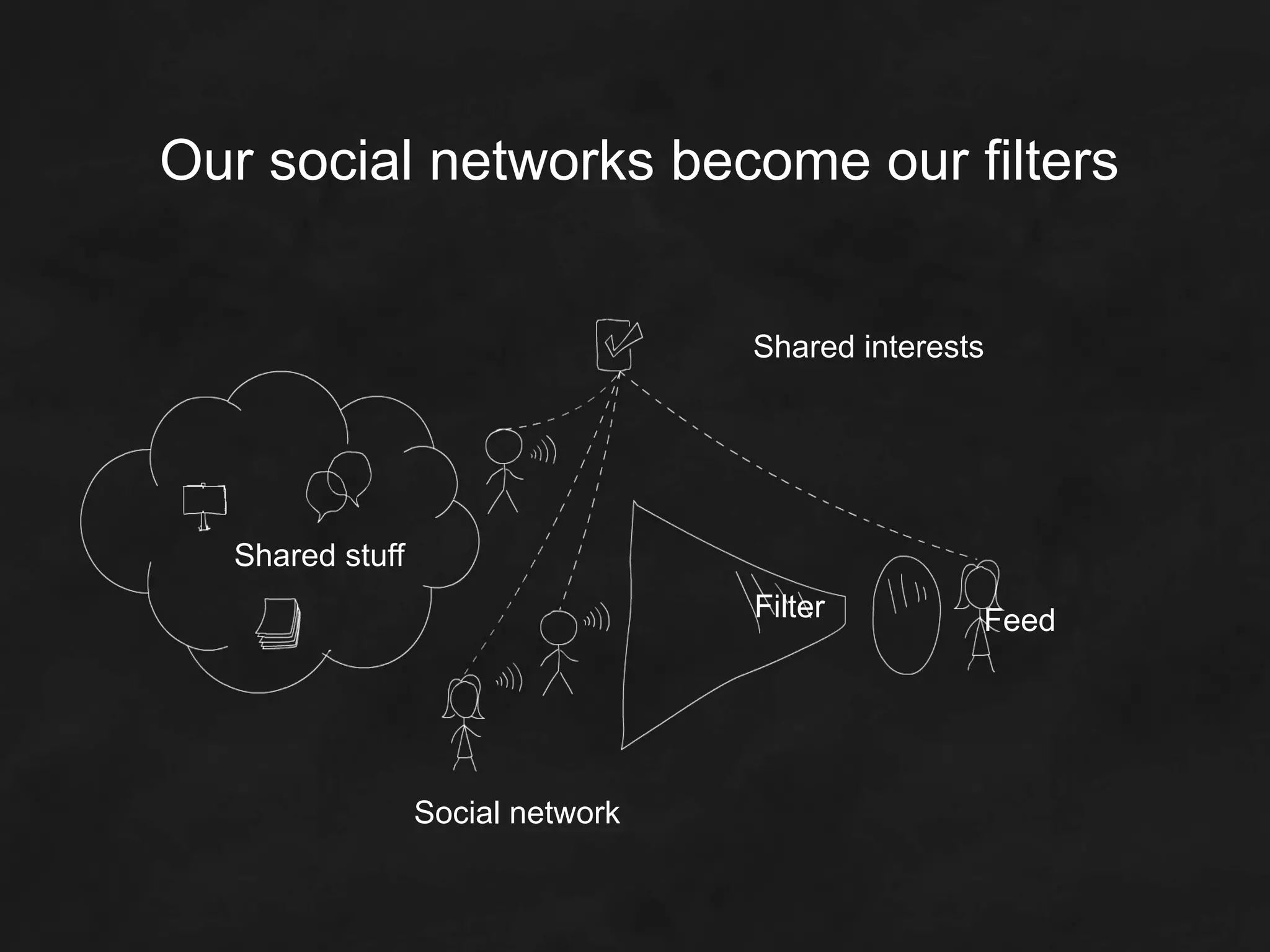
Our social networks become our filters


                                  Shared interests


  Shared stuff
                                  Filter         Feed


                 Social network
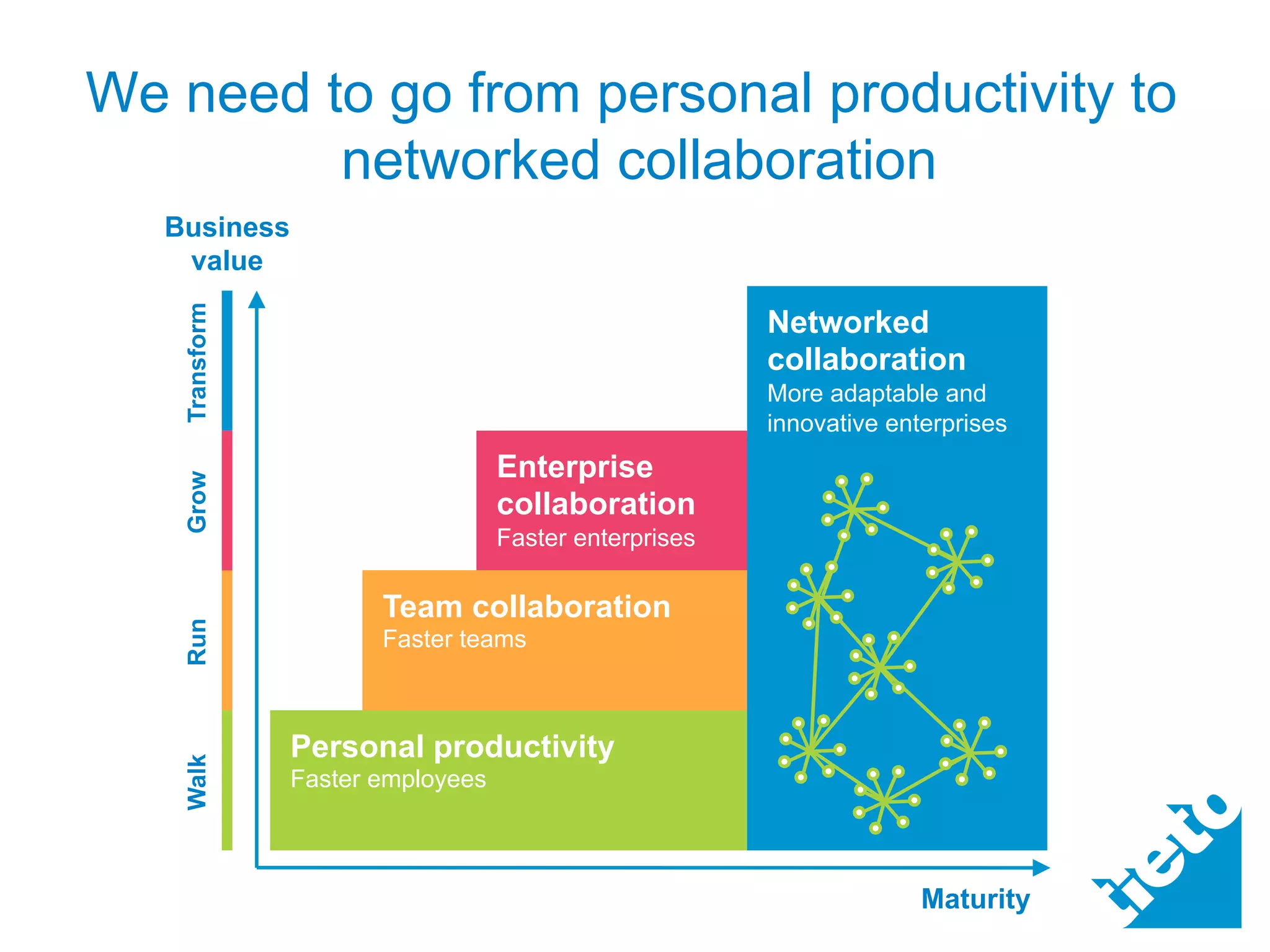
We need to go from personal productivity to
         networked collaboration
   Business
    value
    Transform


                                                        Networked
                                                        collaboration
                                                        More adaptable and
                                                        innovative enterprises
                                   Enterprise
    Grow


                                   collaboration
                                   Faster enterprises

                       Team collaboration
    Run


                       Faster teams


                Personal productivity
    Walk


                Faster employees


                                                                      Maturity
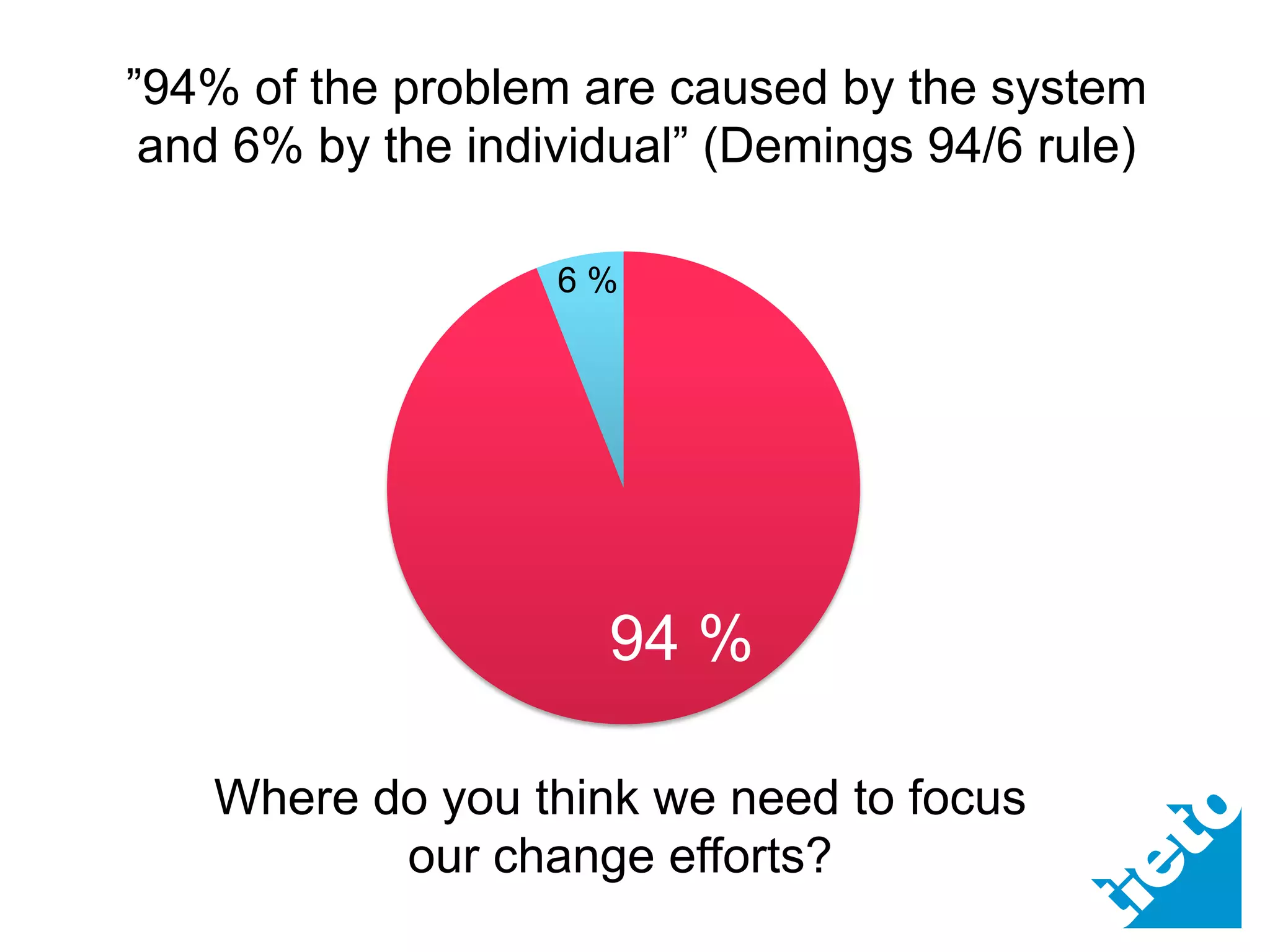
”94% of the problem are caused by the system
 and 6% by the individual” (Demings 94/6 rule)

                   6%


                     94 %

   Where do you think we need to focus
          our change efforts?
Image credits

                           http://www.sxc.hu/browse.phtml?f=download&id=1171398
                           http://www.flickr.com/photos/zachklein/54389823/sizes/o/in/photostream/
                           http://en.wikipedia.org/wiki/File:aWilliam_Gibson_by_FredArmitage.jpg
                           http://www.enriquemartinezlozano.com/images/iceberg2.jpg
                           http://www.flickr.com/photos/pinksherbet/3524897367/sizes/l/in/photostream/
                           http://www.squarewheels.com/mainpage/swsmain.html
                           http://www.flickr.com/photos/64184605@N00/2713094290/sizes/l/in/photostream/
© 2012 Tieto Corporation

Why Traditional Intranets Fail Today's Knowledge Workers

  • 1.
    Why traditional intranetsfail today’s knowledge workers Oscar Berg Future Office Evangelist Tieto
  • 2.
    Expertise in howto leverage mobile, social and collaboration technology to improve collaboration and information worker productivity. Twitter: oscarberg www.thecontenteconomy.com
  • 3.
    ”The future ishere – it is just not evenly distributed” William Gibson 3
  • 4.
    ”Why are weso powerful as consumers but so lame as employees?” Geoffrey Moore, TCG Advisors
  • 5.
    Knowledge work isbecoming increasingly important (strategic) Structure-based work Knowledge-based work Processes, routines, Research, problem-solving, controls, manuals… innovation…
  • 6.
    Constant change isthe new normal Yesterday Now Pace of change Predictable & stable Unpredictable & dynamic business environment business environment Allowed for long term Need to be planning prepared for change Based on illustration by Dennis Bottjer, www.DennisBottjer.com
  • 7.
    A day inthe life of a knowledge worker What is happening? When should I contribute? How to collaborate? Where do i find…? How can I influence? Who knows what? How to share?
  • 8.
    To what degreedo our intranets help us answer such questions? Square Wheels: http://www.squarewheels.com/mainpage/swsmain.html
  • 9.
    Traditional intranets focuson serving the most common and predictable needs High What’s our travel policy? Usage rate How do I perform this activity? Cost to serve Low Content serving information needs
  • 10.
    There is danger inserving only the needs which we can see.
  • 11.
    Social media andconsumer IT have made the cost to serve collapse High Usage rate Low Content serving information needs
  • 12.
    Collectively we cannow serve many of our unanticipated and less common needs High Usage rate User-generated content Who knows the What are NPV function you working in Excel? on? Cost to serve Low Information
  • 13.
    So what thenabout information overload?
  • 14.
    “It's not informationoverload. It's filter failure.” Clay Shirky Illustration from The Economist
  • 15.
    #fail Trying to ”solve” information overload by cutting supply instead of improving filters è Important information needs cannot be served
  • 16.
    “Throughout the primateworld, social networks provide a fast conduit for innovation and information- sharing that help the group as a whole to adapt to its environment.” - Alex Wright, author of “Glut”
  • 17.
    Value creation Goal Act High visibility Coordinate Form team Contribute Low visibility Build trust and engagement Connect and relate Serendipity Find & discover people Share what you know, have and think Make yourself visible and participate Purpose, values, self-awareness and motivation
  • 18.
    #fail Not understanding orsupporting the social activities that enable collaboration è  collaboration does not happen naturally across boundaries
  • 19.
    “A well-functioning organizationis a well- functioning social network” - Greg Satell (@digitaltonto) Find and connect with Rapidly distribute people across ideas, experiences boundaries and knowledge Become aware Tap into the of what others knowledge of your are doing informal network
  • 20.
    Our interactions makerelevant content surface Like Share Discuss Stuff Information abundance
  • 21.
    Our social networksbecome our filters Shared interests Shared stuff Filter Feed Social network
  • 22.
    We need togo from personal productivity to networked collaboration Business value Transform Networked collaboration More adaptable and innovative enterprises Enterprise Grow collaboration Faster enterprises Team collaboration Run Faster teams Personal productivity Walk Faster employees Maturity
  • 24.
    ”94% of theproblem are caused by the system and 6% by the individual” (Demings 94/6 rule) 6% 94 % Where do you think we need to focus our change efforts?
  • 25.
    Image credits http://www.sxc.hu/browse.phtml?f=download&id=1171398 http://www.flickr.com/photos/zachklein/54389823/sizes/o/in/photostream/ http://en.wikipedia.org/wiki/File:aWilliam_Gibson_by_FredArmitage.jpg http://www.enriquemartinezlozano.com/images/iceberg2.jpg http://www.flickr.com/photos/pinksherbet/3524897367/sizes/l/in/photostream/ http://www.squarewheels.com/mainpage/swsmain.html http://www.flickr.com/photos/64184605@N00/2713094290/sizes/l/in/photostream/ © 2012 Tieto Corporation