Routman (1991)
Froese (1991)
Whole language is someway to band
view about language, about learning
and about people the interesting in
learning.
1. Reading aloud
2. Journal writing
3. Sustained silent reading
4. Shared reading
5. Guided reading
6. Guided writing
7. Independent reading
8. Independent writing
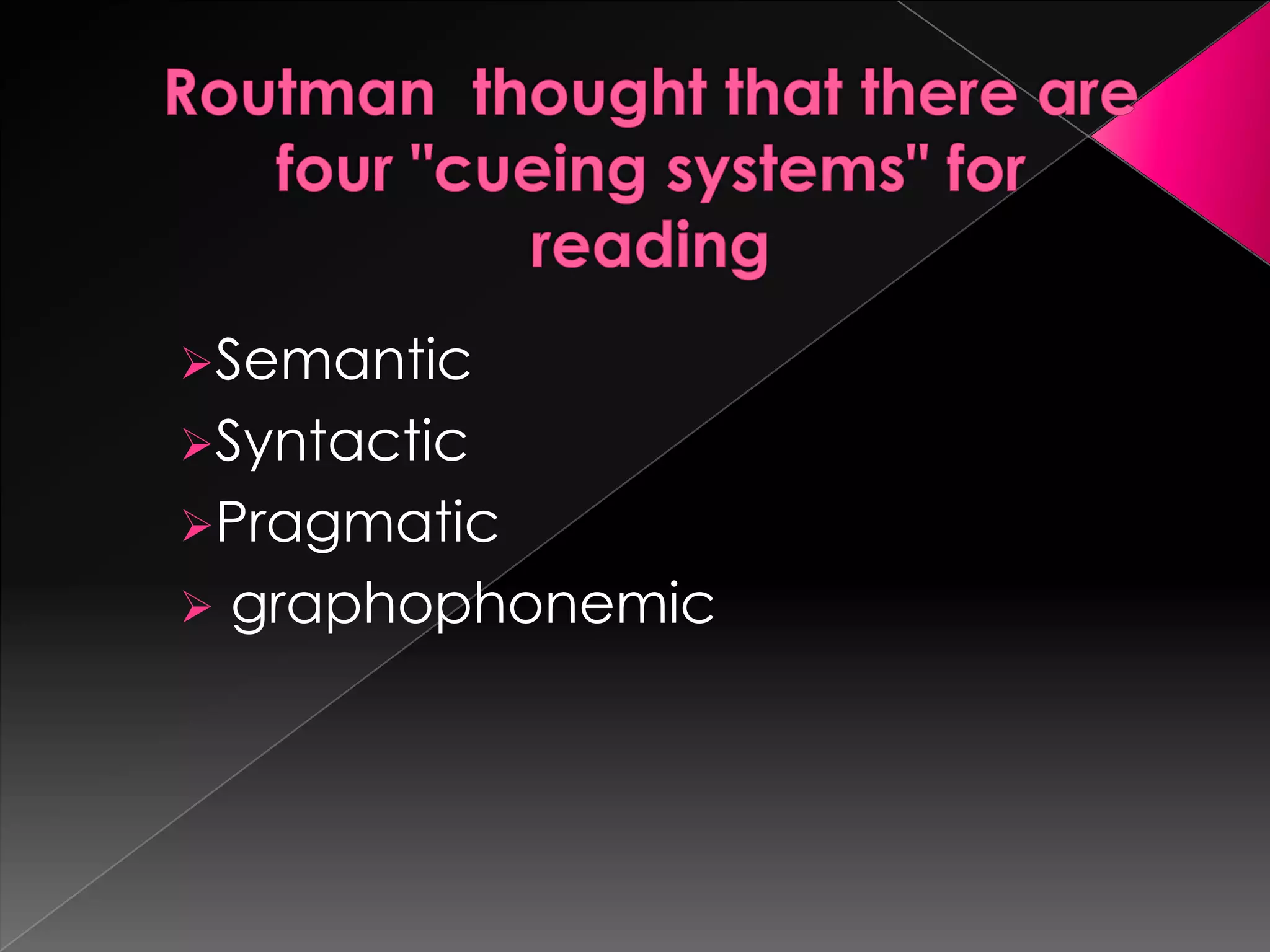
Semantic
Syntactic
Pragmatic
 graphophonemic
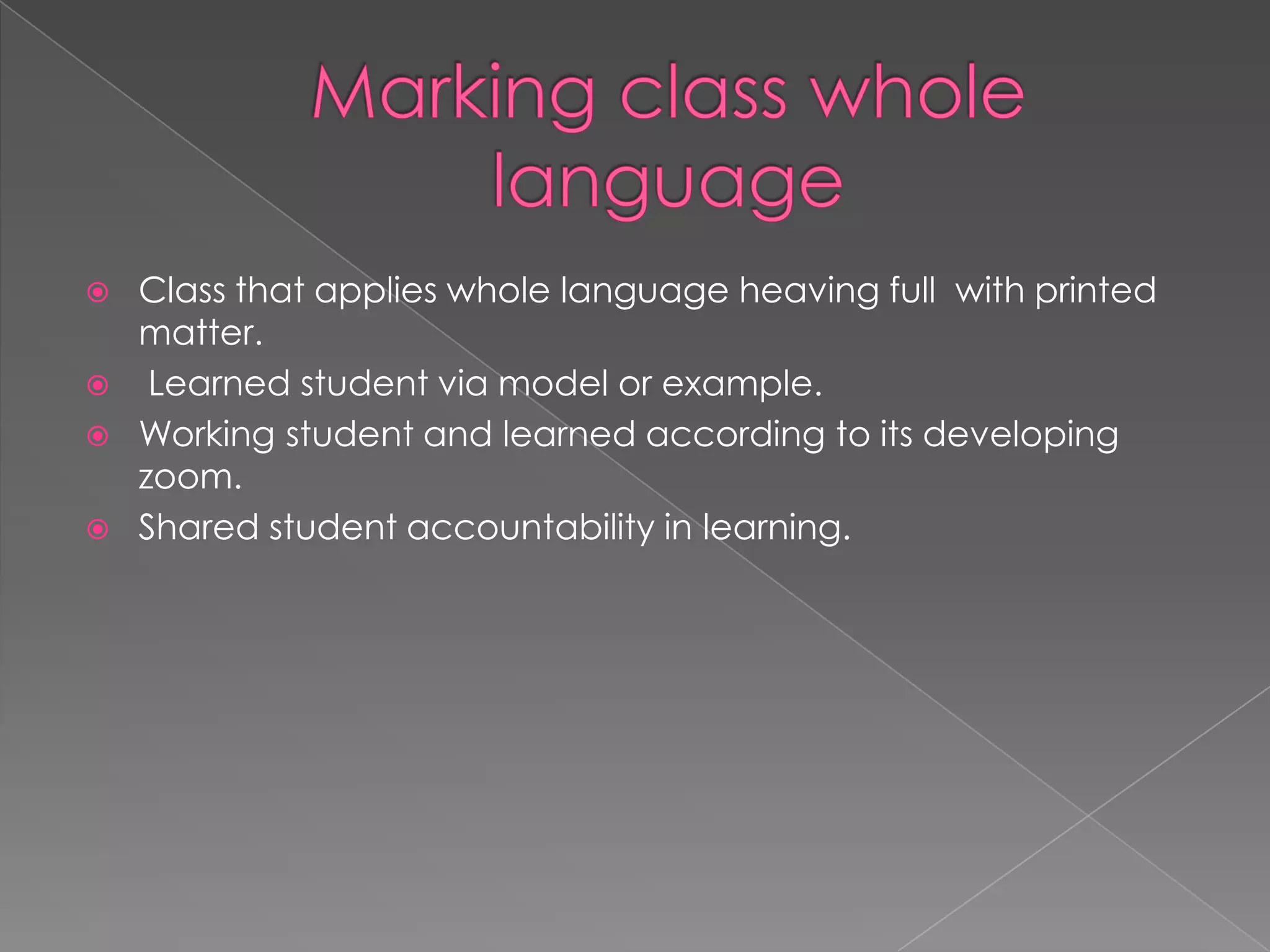
 Class that applies whole language heaving full with printed
matter.
 Learned student via model or example.
 Working student and learned according to its developing
zoom.
 Shared student accountability in learning.
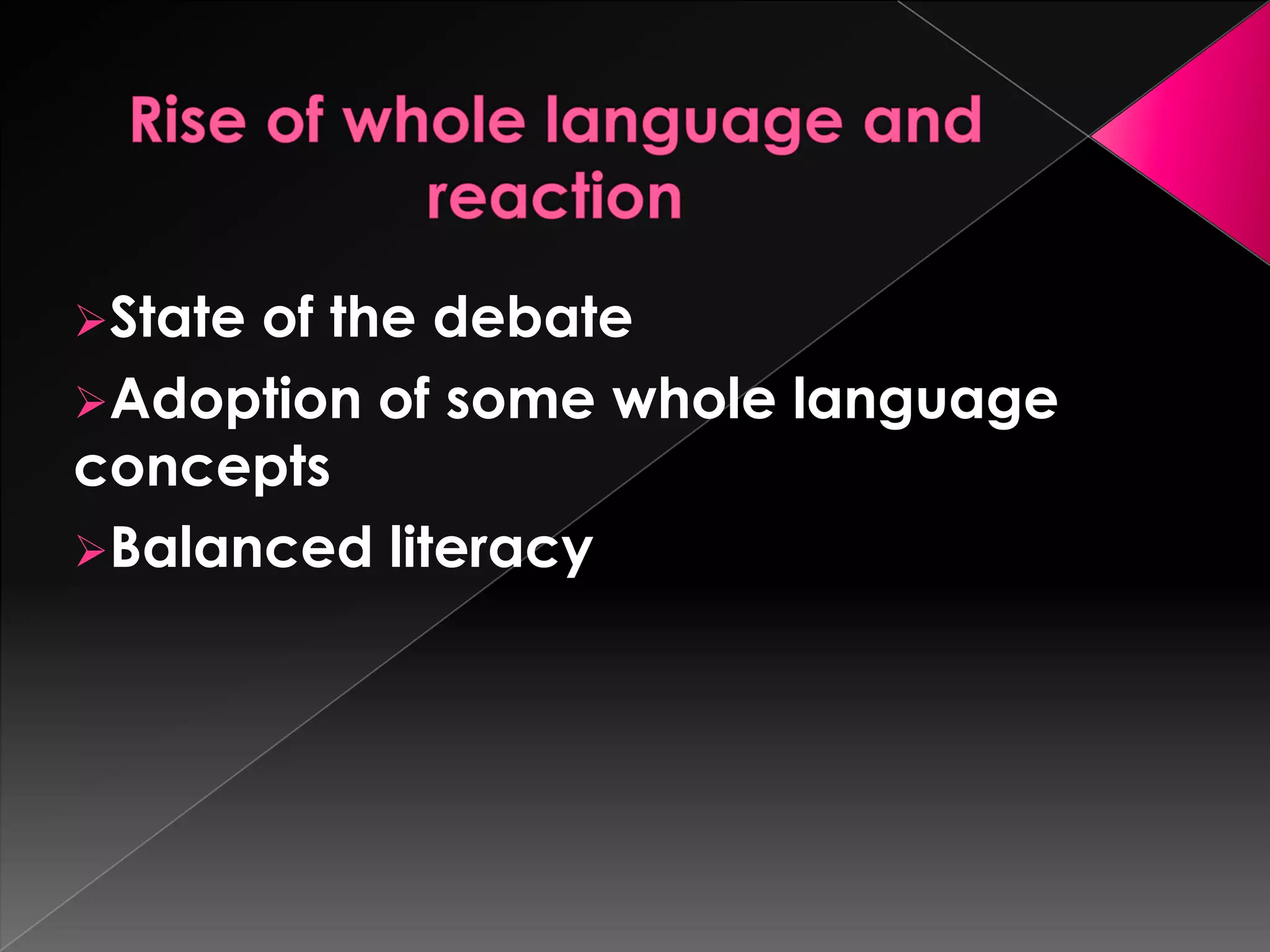
State of the debate
Adoption of some whole language
concepts
Balanced literacy
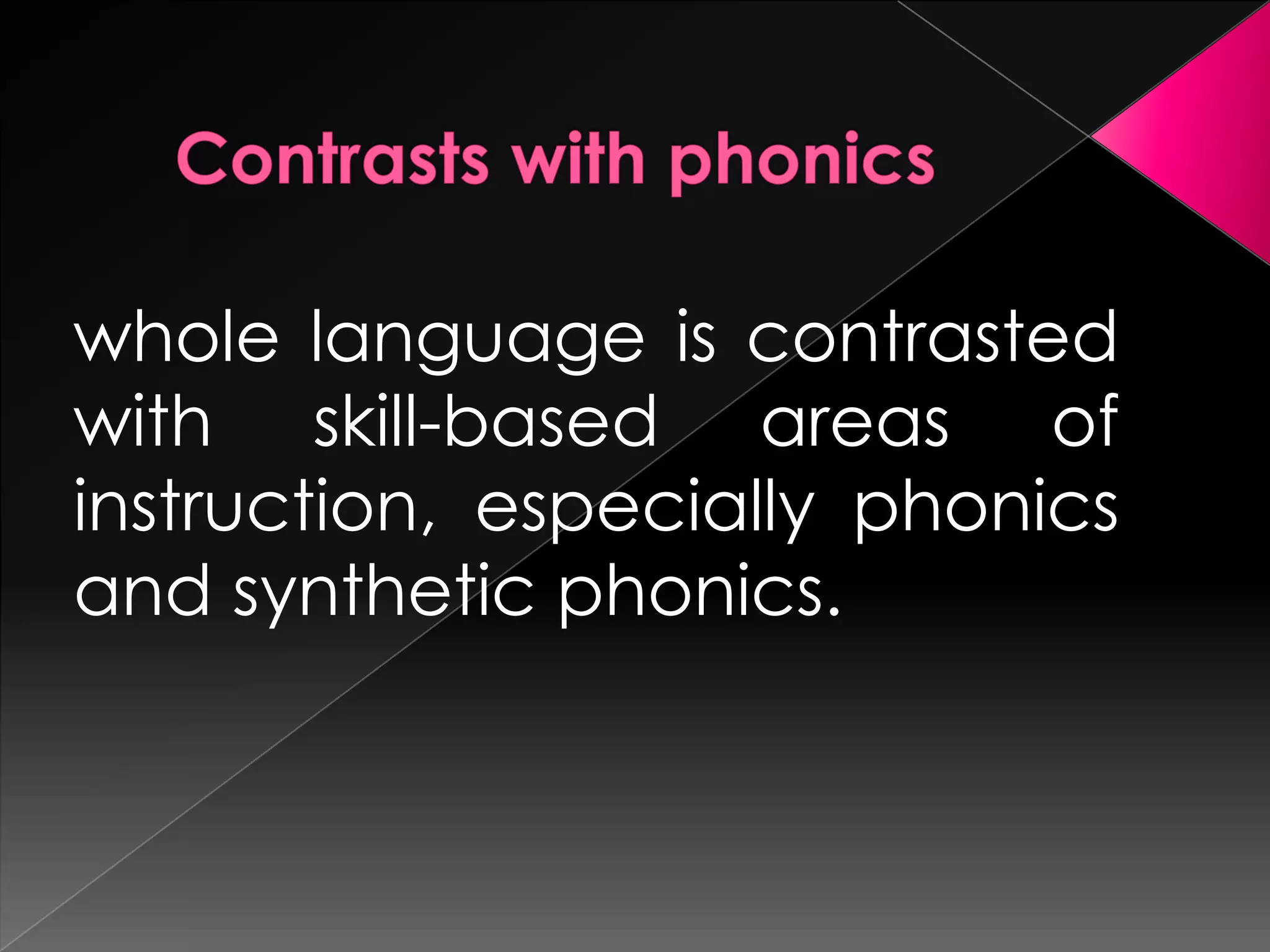
whole language is contrasted
with skill-based areas of
instruction, especially phonics
and synthetic phonics.
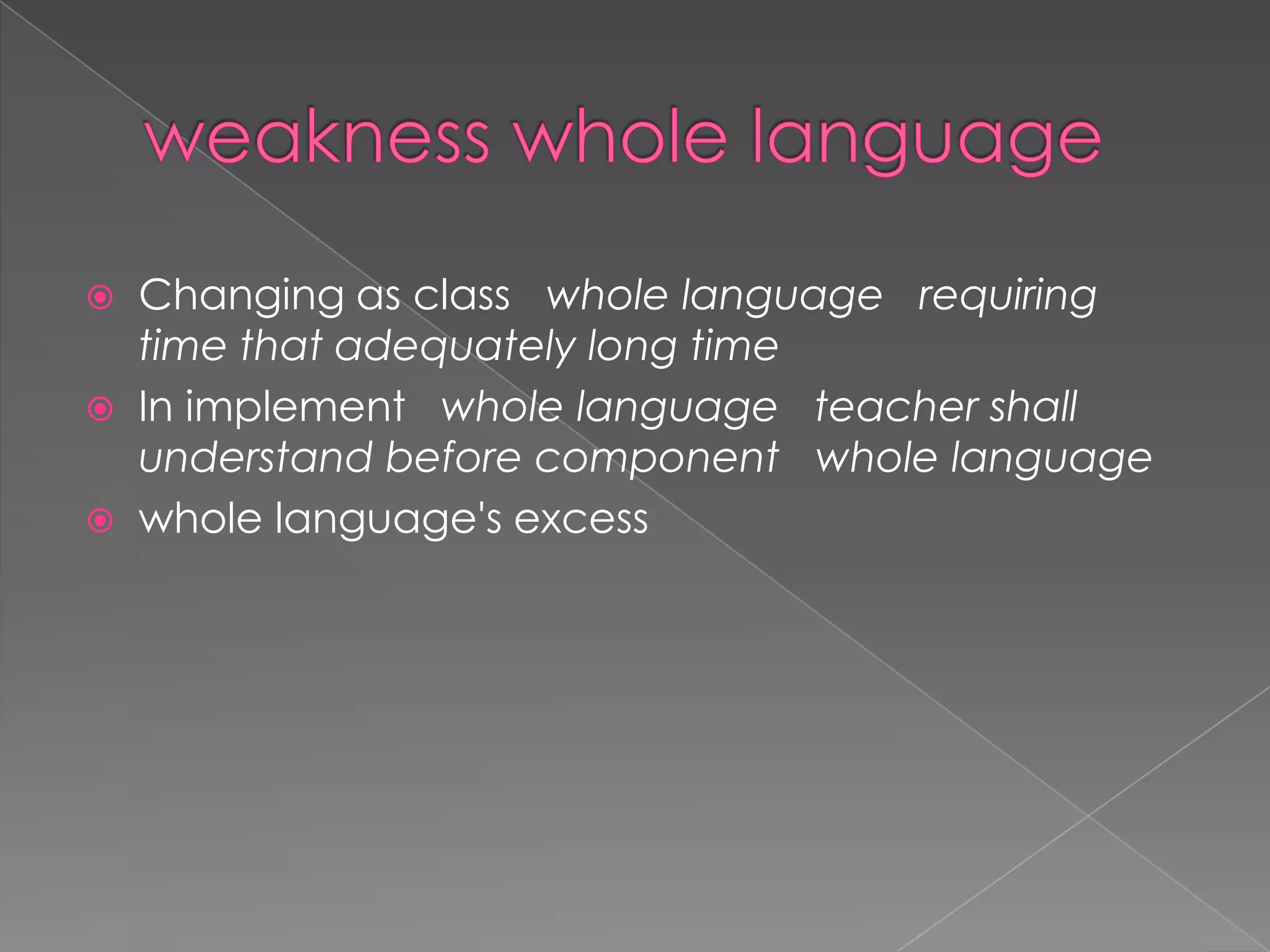
 Changing as class whole language requiring
time that adequately long time
 In implement whole language teacher shall
understand before component whole language
 whole language's excess
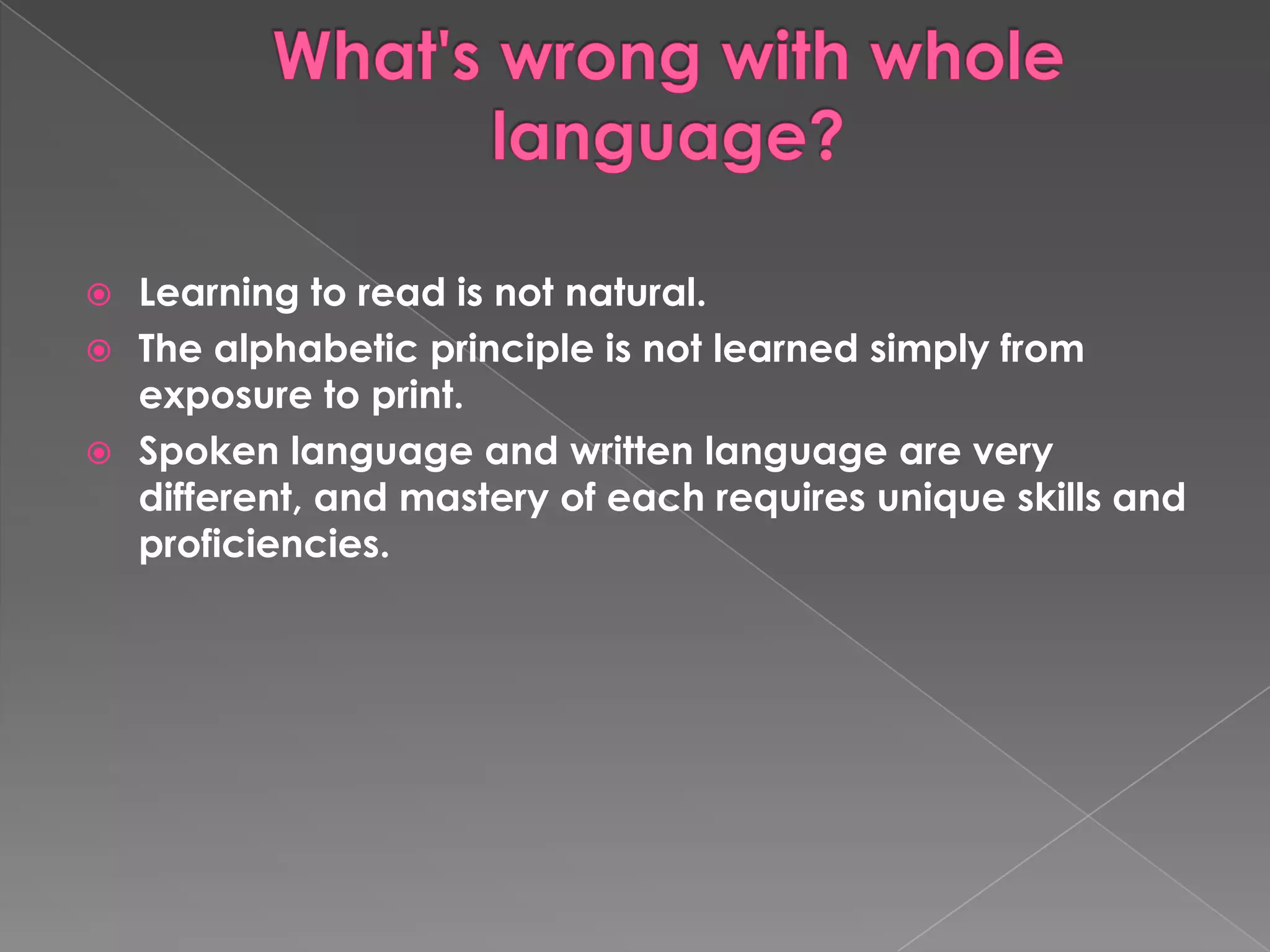
 Learning to read is not natural.
 The alphabetic principle is not learned simply from
exposure to print.
 Spoken language and written language are very
different, and mastery of each requires unique skills and
proficiencies.
 Whole Language is a method of
teaching reading and language arts.
Whole Language teachers believe in
teaching reading in context, looking
at the "whole" word versus breaking
the word into parts.

Whole language eka

  • 2.
  • 3.
    Whole language issomeway to band view about language, about learning and about people the interesting in learning.
  • 4.
    1. Reading aloud 2.Journal writing 3. Sustained silent reading 4. Shared reading 5. Guided reading 6. Guided writing 7. Independent reading 8. Independent writing
  • 6.
  • 7.
     Class thatapplies whole language heaving full with printed matter.  Learned student via model or example.  Working student and learned according to its developing zoom.  Shared student accountability in learning.
  • 9.
    State of thedebate Adoption of some whole language concepts Balanced literacy
  • 10.
    whole language iscontrasted with skill-based areas of instruction, especially phonics and synthetic phonics.
  • 11.
     Changing asclass whole language requiring time that adequately long time  In implement whole language teacher shall understand before component whole language  whole language's excess
  • 12.
     Learning toread is not natural.  The alphabetic principle is not learned simply from exposure to print.  Spoken language and written language are very different, and mastery of each requires unique skills and proficiencies.
  • 13.
     Whole Languageis a method of teaching reading and language arts. Whole Language teachers believe in teaching reading in context, looking at the "whole" word versus breaking the word into parts.