Pur pose of WHMIS

  System of symbols, labels, and
   materials safety data sheets
   (MSDS)
  Identify all hazardous products
   (in the workplace)
  Prevent worker injuries
Classification

 1. Compressed   1. Toxic
    Gas
                 2. Biological
 2. Flammable       Hazard
 3. Oxidizing    3. Corrosive
 4. Poisonous    4. Reactive
Compr essed Gas

 Gas under pressure
 Hazard: Could explode if heated
 Examples: spray cans, oxygen,
  propane, acetylene
Flammable /
Combustible
 Can catch fire easily
 Hazard: Can cause a fire
 Examples: Gasoline, heating
  fuel, propane, alcohol products
Oxidizing materials

  Gives off oxygen; could help in
   burning other materials
  Hazard: Can cause fires
  Examples: Oxygen, Ozone,
   Bleach, Peroxide
Poisonous & Infectious

  Poisonous; immediate toxic effects
  Hazard: serious toxic effects / death
  Examples: Cyanide, Hydrogen
   sulfide, Chlorine, Carbon Monoxide
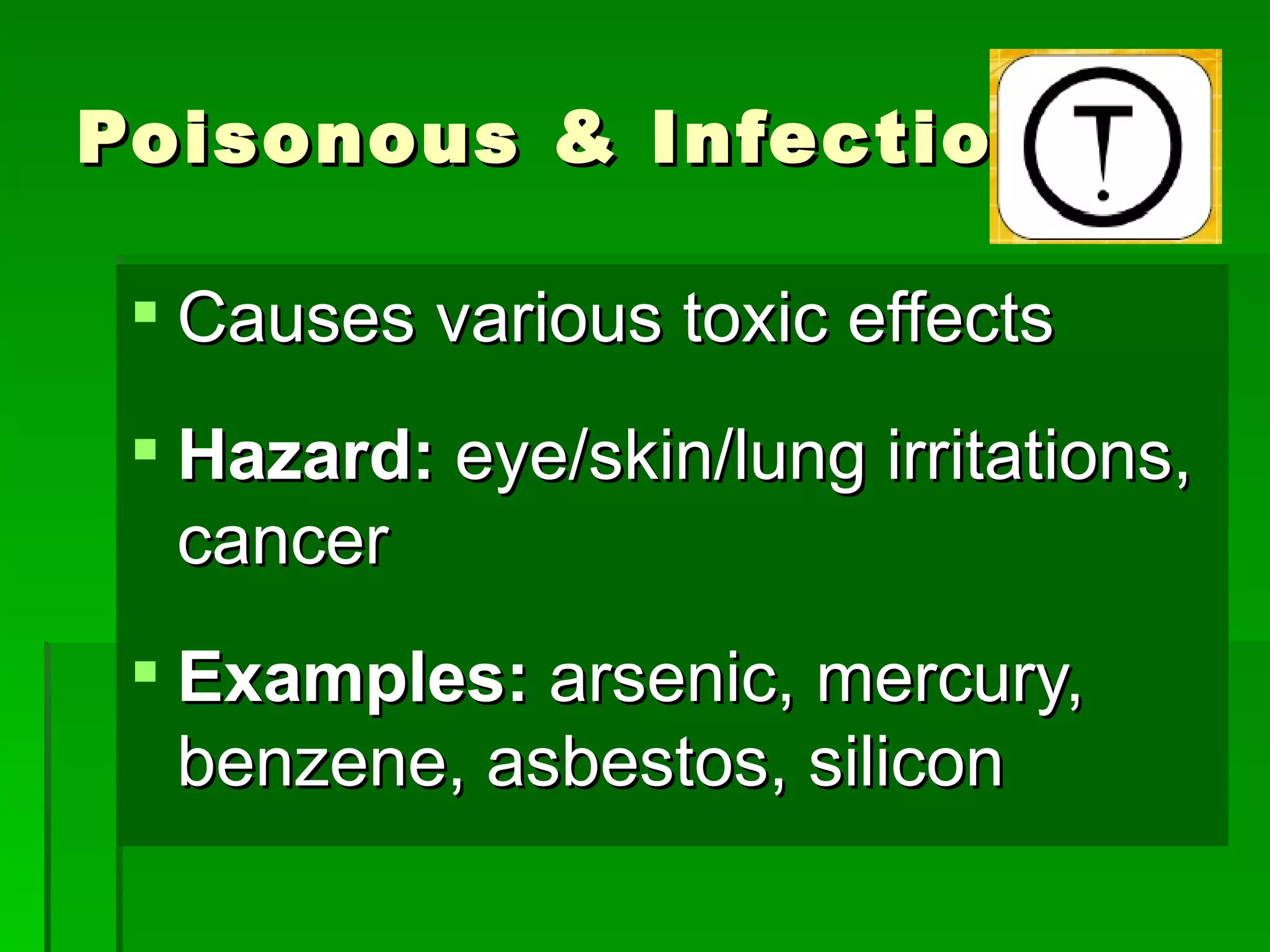
Poisonous & Infectious

  Causes various toxic effects
  Hazard: eye/skin/lung irritations,
   cancer
  Examples: arsenic, mercury,
   benzene, asbestos, silicon
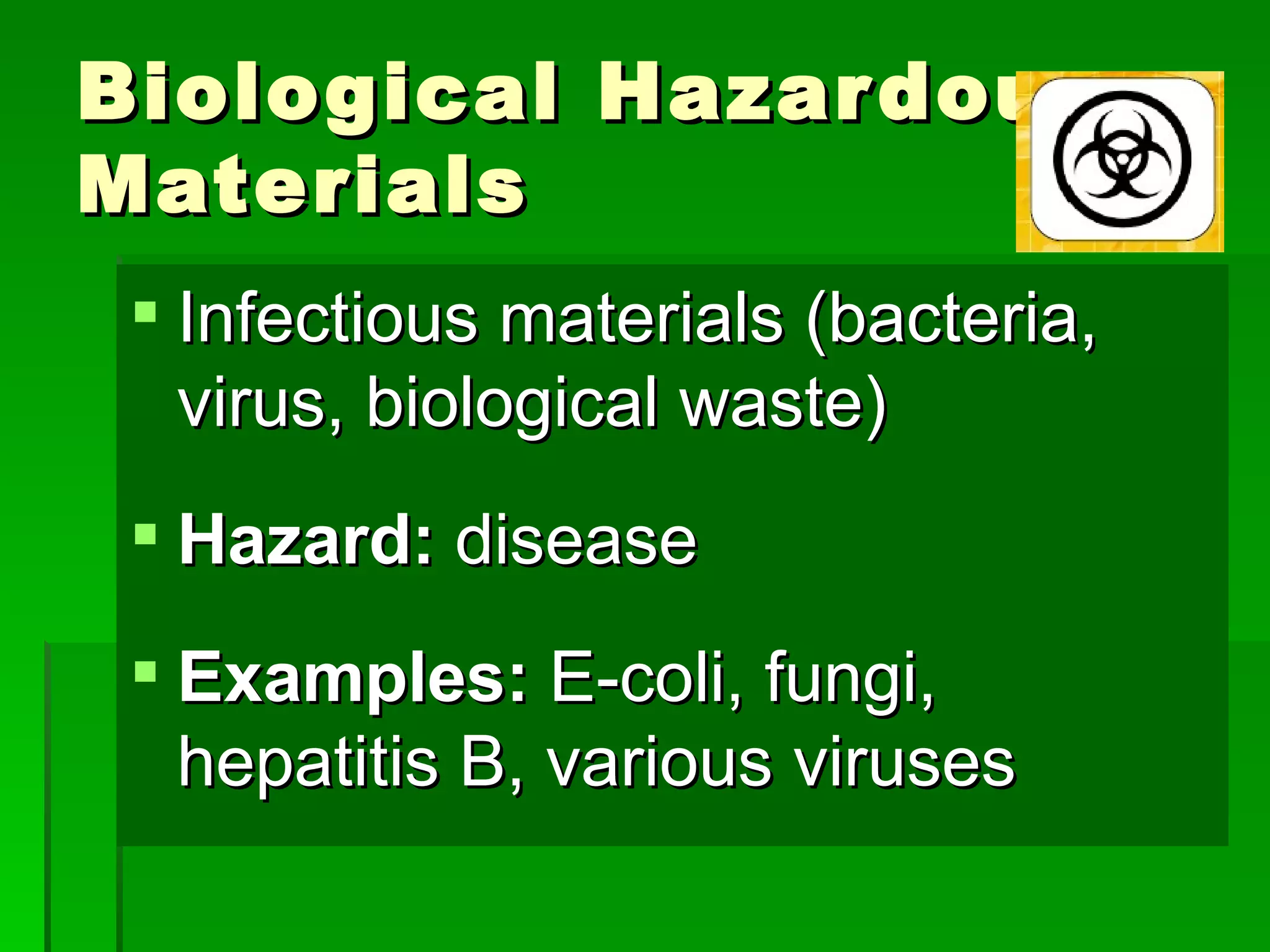
Biological Hazar dous
Materials
  Infectious materials (bacteria,
   virus, biological waste)
  Hazard: disease
  Examples: E-coli, fungi,
   hepatitis B, various viruses
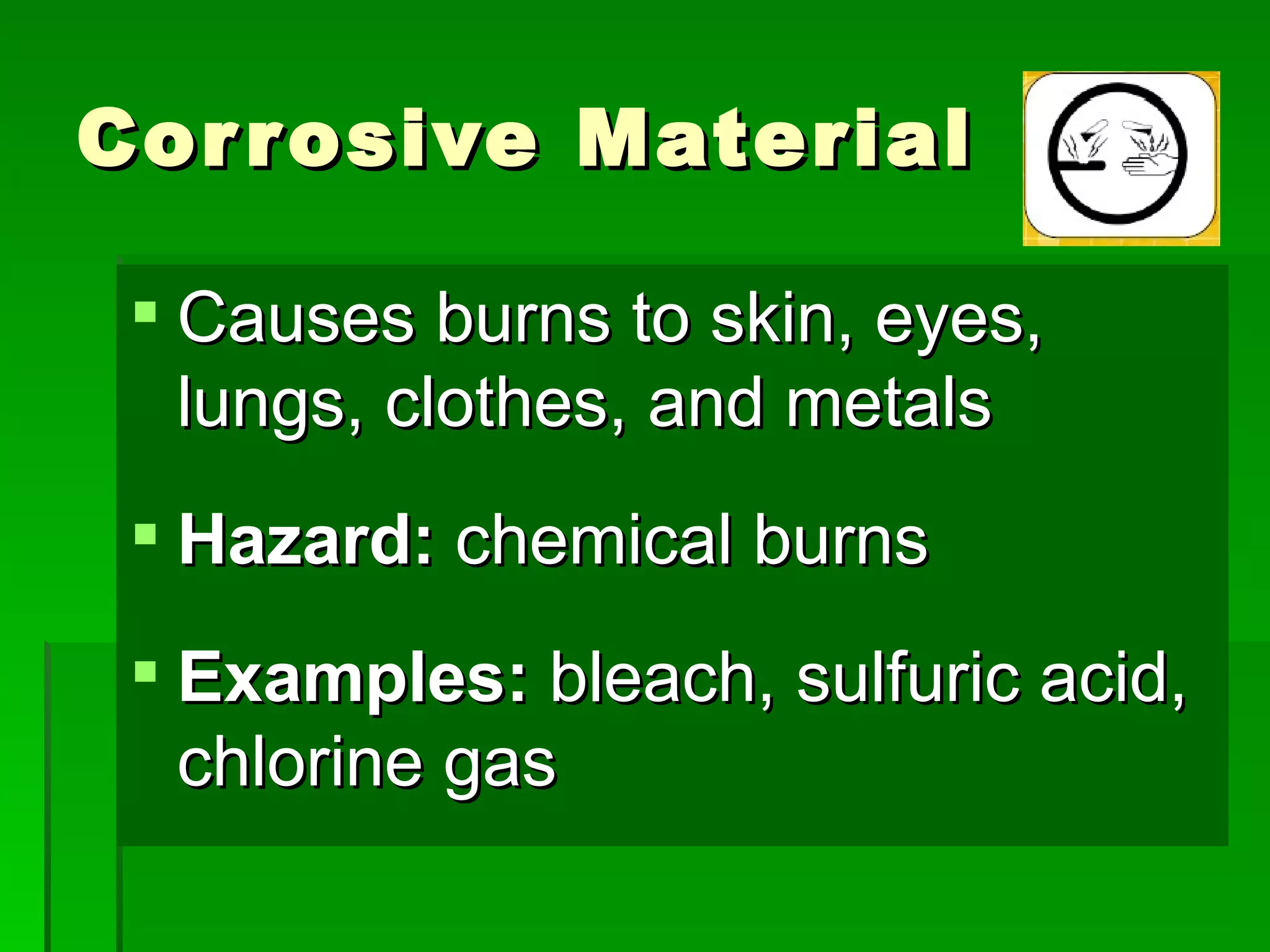
Cor r osive Material

  Causes burns to skin, eyes,
   lungs, clothes, and metals
  Hazard: chemical burns
  Examples: bleach, sulfuric acid,
   chlorine gas
Reactive Materials
  Can react (burn, explode) vigorously
   (if shaken or mixed with other
   chemicals/water)
  Hazard: sudden & quick reaction
   (fire, explosion)
  Examples: Nitroglycerine, Aluminum
   chloride, Calcium carbide
Household Hazar dous
Pr oduct Symbols
(HHPS)
Whmis symbols
Whmis symbols

Whmis symbols

  • 2.
    Pur pose ofWHMIS  System of symbols, labels, and materials safety data sheets (MSDS)  Identify all hazardous products (in the workplace)  Prevent worker injuries
  • 3.
    Classification 1. Compressed 1. Toxic Gas 2. Biological 2. Flammable Hazard 3. Oxidizing 3. Corrosive 4. Poisonous 4. Reactive
  • 4.
    Compr essed Gas Gas under pressure  Hazard: Could explode if heated  Examples: spray cans, oxygen, propane, acetylene
  • 5.
    Flammable / Combustible  Cancatch fire easily  Hazard: Can cause a fire  Examples: Gasoline, heating fuel, propane, alcohol products
  • 6.
    Oxidizing materials Gives off oxygen; could help in burning other materials  Hazard: Can cause fires  Examples: Oxygen, Ozone, Bleach, Peroxide
  • 7.
    Poisonous & Infectious  Poisonous; immediate toxic effects  Hazard: serious toxic effects / death  Examples: Cyanide, Hydrogen sulfide, Chlorine, Carbon Monoxide
  • 8.
    Poisonous & Infectious  Causes various toxic effects  Hazard: eye/skin/lung irritations, cancer  Examples: arsenic, mercury, benzene, asbestos, silicon
  • 9.
    Biological Hazar dous Materials  Infectious materials (bacteria, virus, biological waste)  Hazard: disease  Examples: E-coli, fungi, hepatitis B, various viruses
  • 10.
    Cor r osiveMaterial  Causes burns to skin, eyes, lungs, clothes, and metals  Hazard: chemical burns  Examples: bleach, sulfuric acid, chlorine gas
  • 11.
    Reactive Materials Can react (burn, explode) vigorously (if shaken or mixed with other chemicals/water)  Hazard: sudden & quick reaction (fire, explosion)  Examples: Nitroglycerine, Aluminum chloride, Calcium carbide
  • 12.
    Household Hazar dous Product Symbols (HHPS)