

Lai Yoong Seng
Systems Engineer
What’s Next: Veeam Backup for
Microsoft Office 365 2.0
Demo: Ransomware Attack
Veeam Backup
for Microsoft Office 365
changes
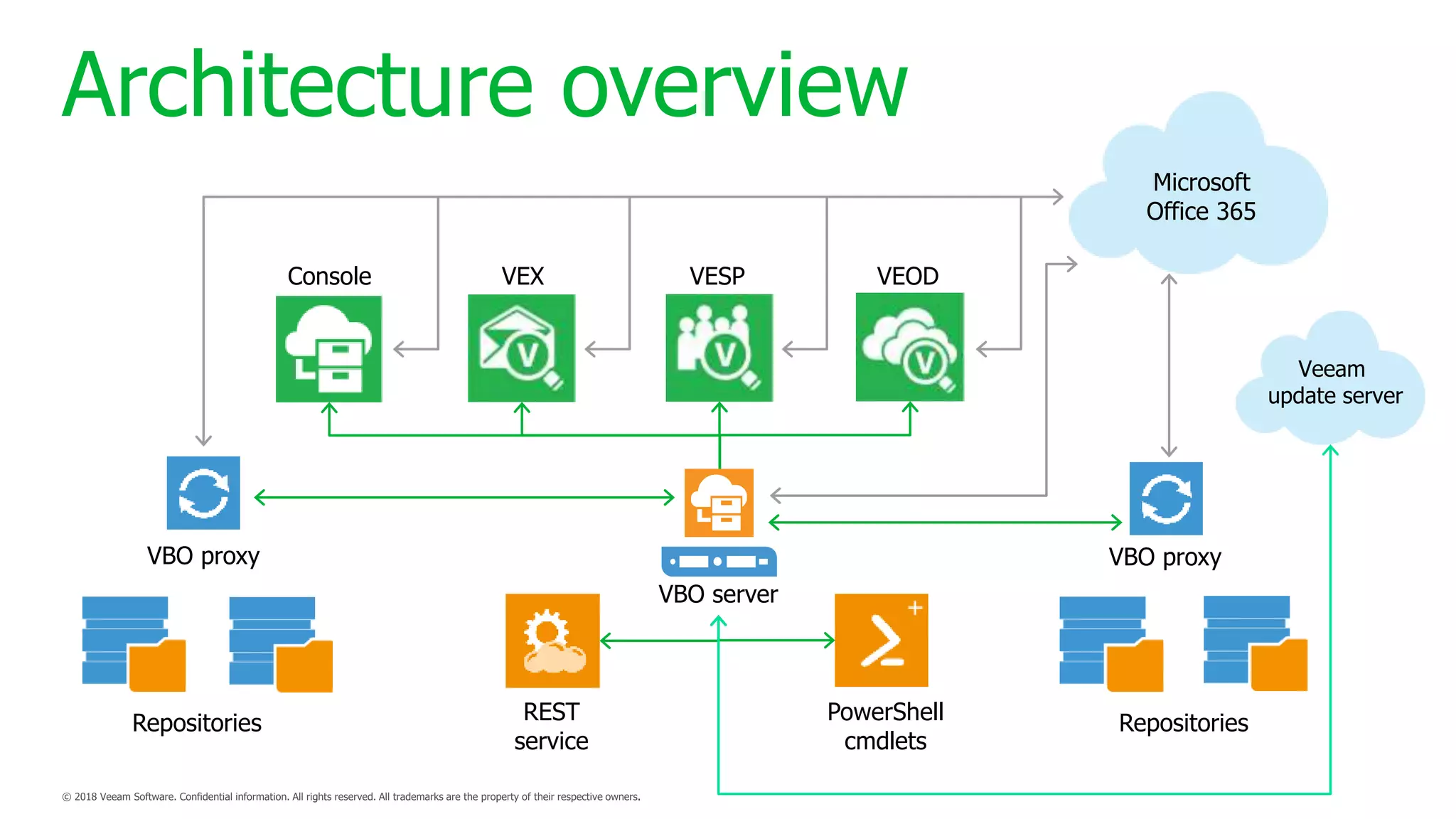
Microsoft
Office 365
Repositories Repositories
Console VEX
REST
service
PowerShell
cmdlets
VBO server
VESP VEOD
Veeam
update server
Architecture overview
VBO proxy VBO proxy
Exchange Online
backup changes
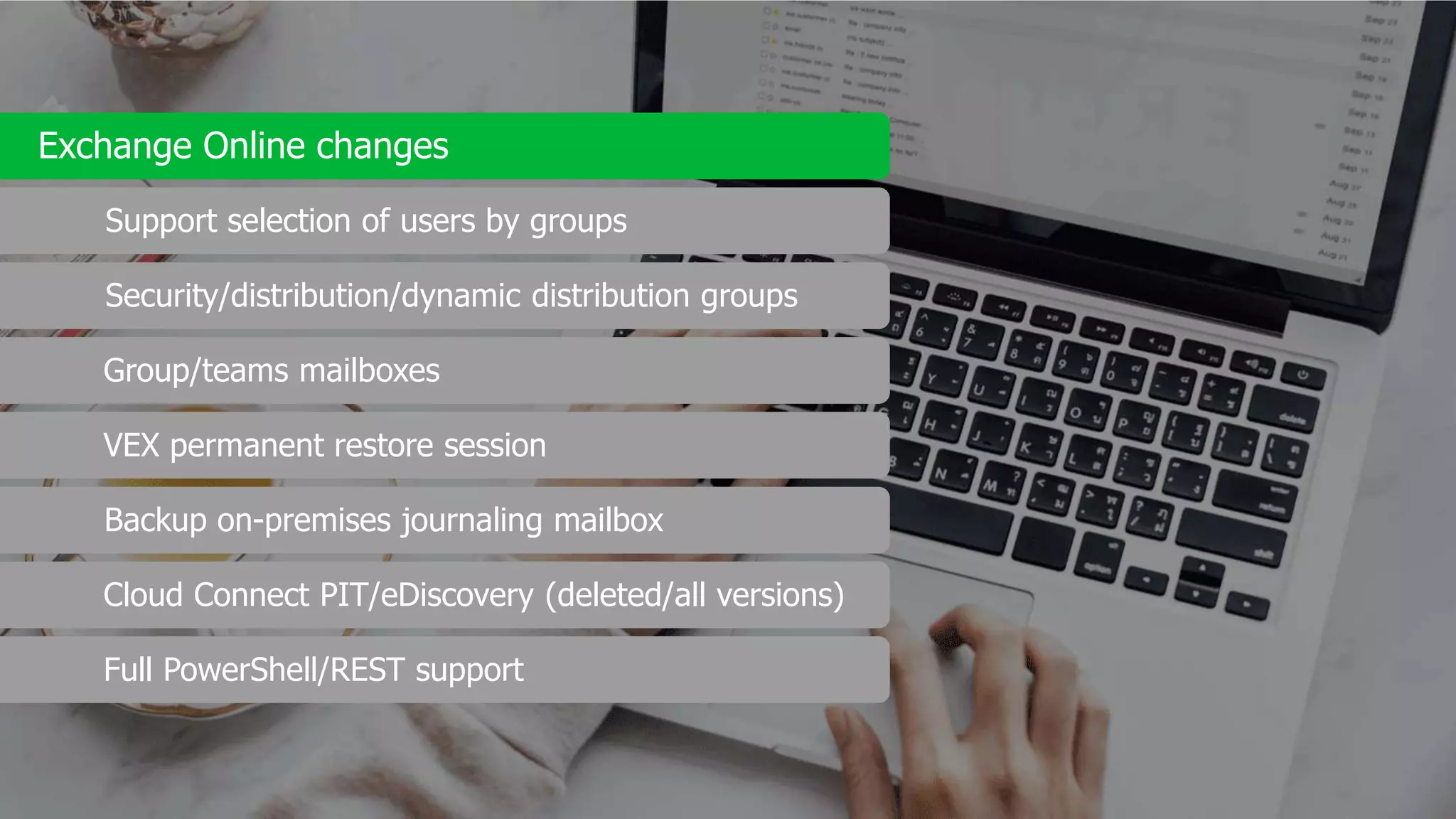
Exchange Online changes
Support selection of users by groups
Security/distribution/dynamic distribution groups
Group/teams mailboxes
VEX permanent restore session
Backup on-premises journaling mailbox
Cloud Connect PIT/eDiscovery (deleted/all versions)
Full PowerShell/REST support
Demo: Exchange Protection
SharePoint Online
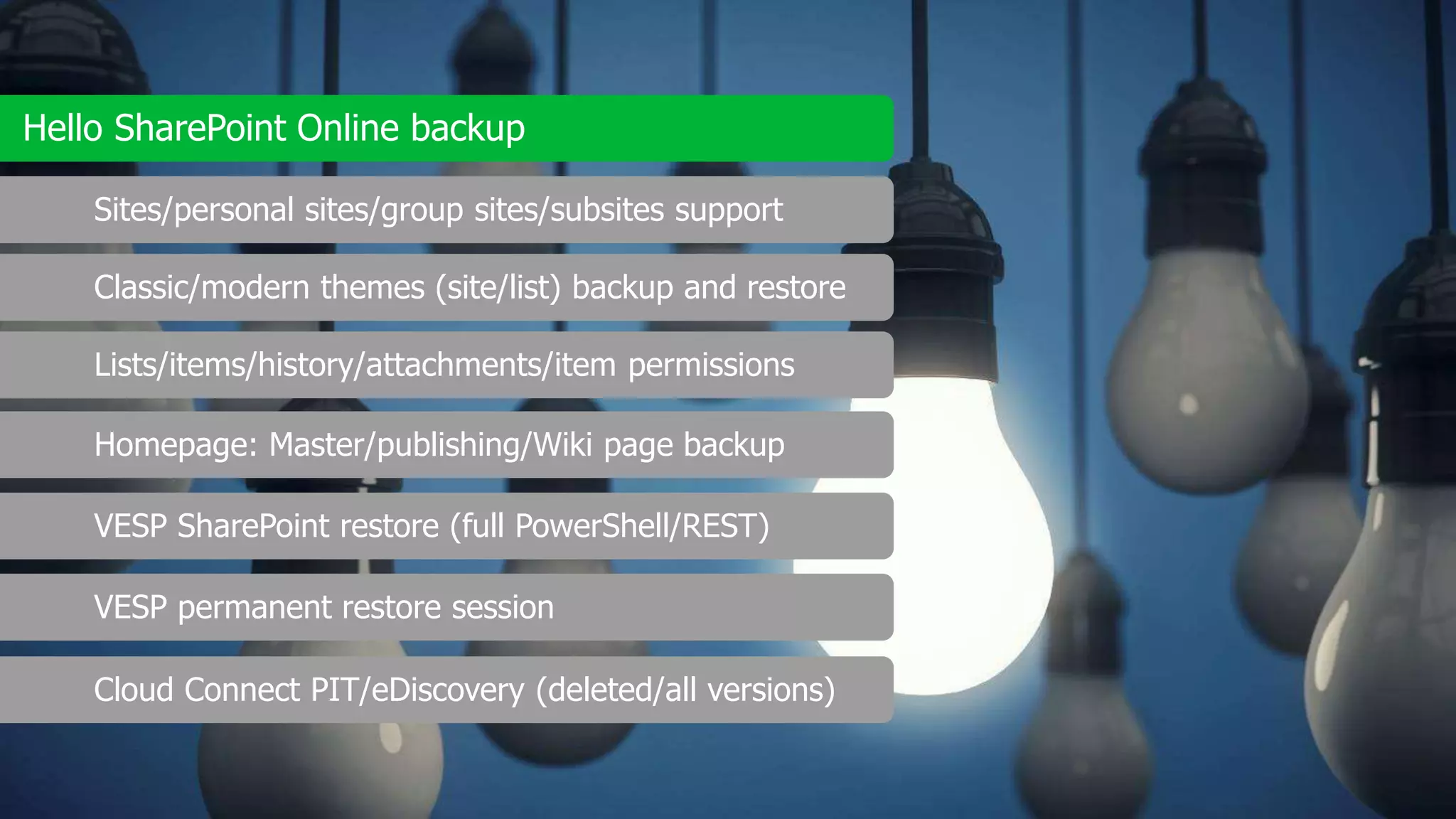
Lists/items/history/attachments/item permissions
VESP SharePoint restore (full PowerShell/REST)
VESP permanent restore session
Sites/personal sites/group sites/subsites support
Hello SharePoint Online backup
Homepage: Master/publishing/Wiki page backup
Cloud Connect PIT/eDiscovery (deleted/all versions)
Classic/modern themes (site/list) backup and restore
Demo : Sharepoint
Protection
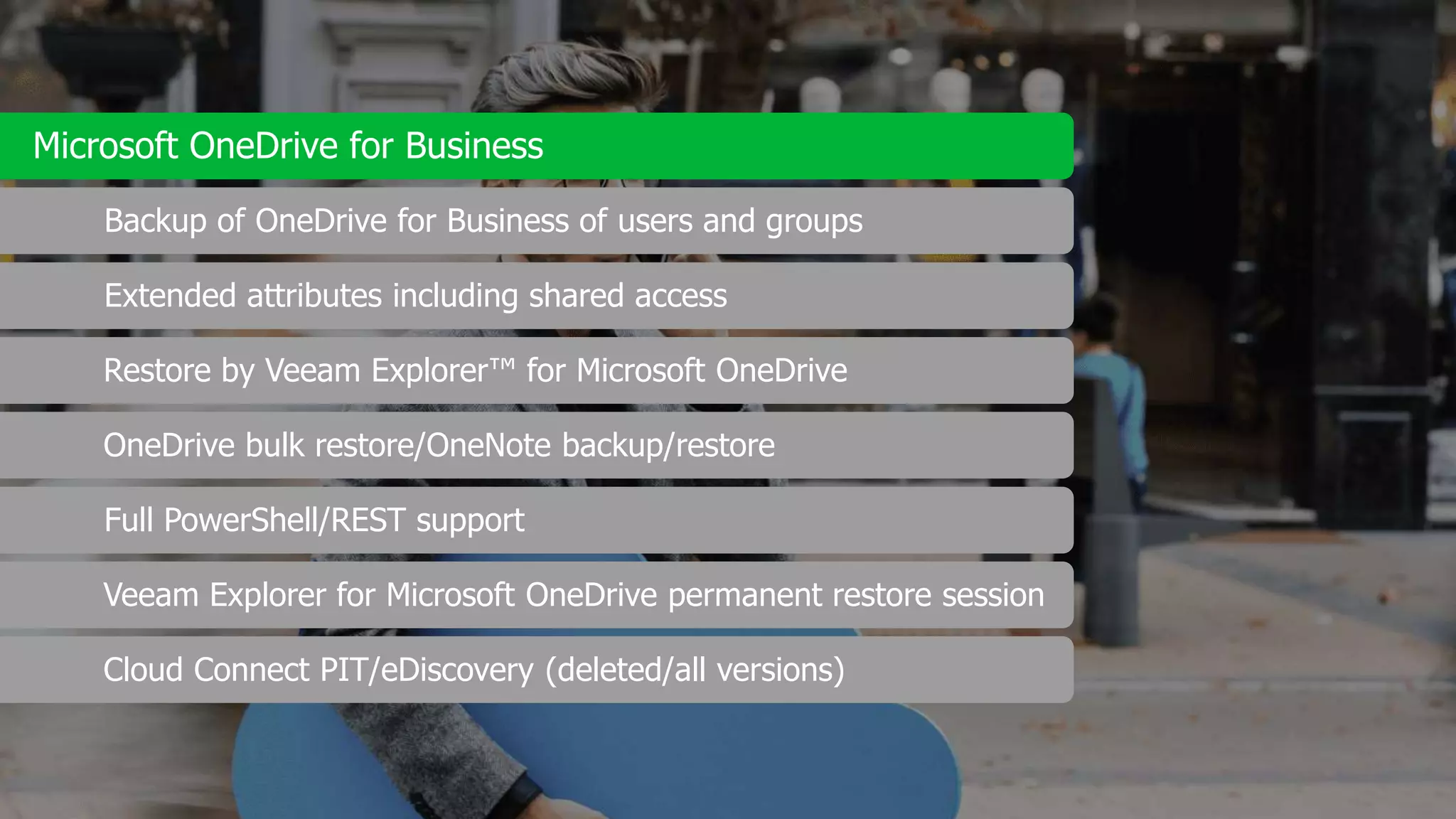
Microsoft OneDrive for Business
Backup of OneDrive for Business of users and groups
Extended attributes including shared access
Restore by Veeam Explorer™ for Microsoft OneDrive
OneDrive bulk restore/OneNote backup/restore
Full PowerShell/REST support
Veeam Explorer for Microsoft OneDrive permanent restore session
Cloud Connect PIT/eDiscovery (deleted/all versions)
Demo: OneDrive Protection
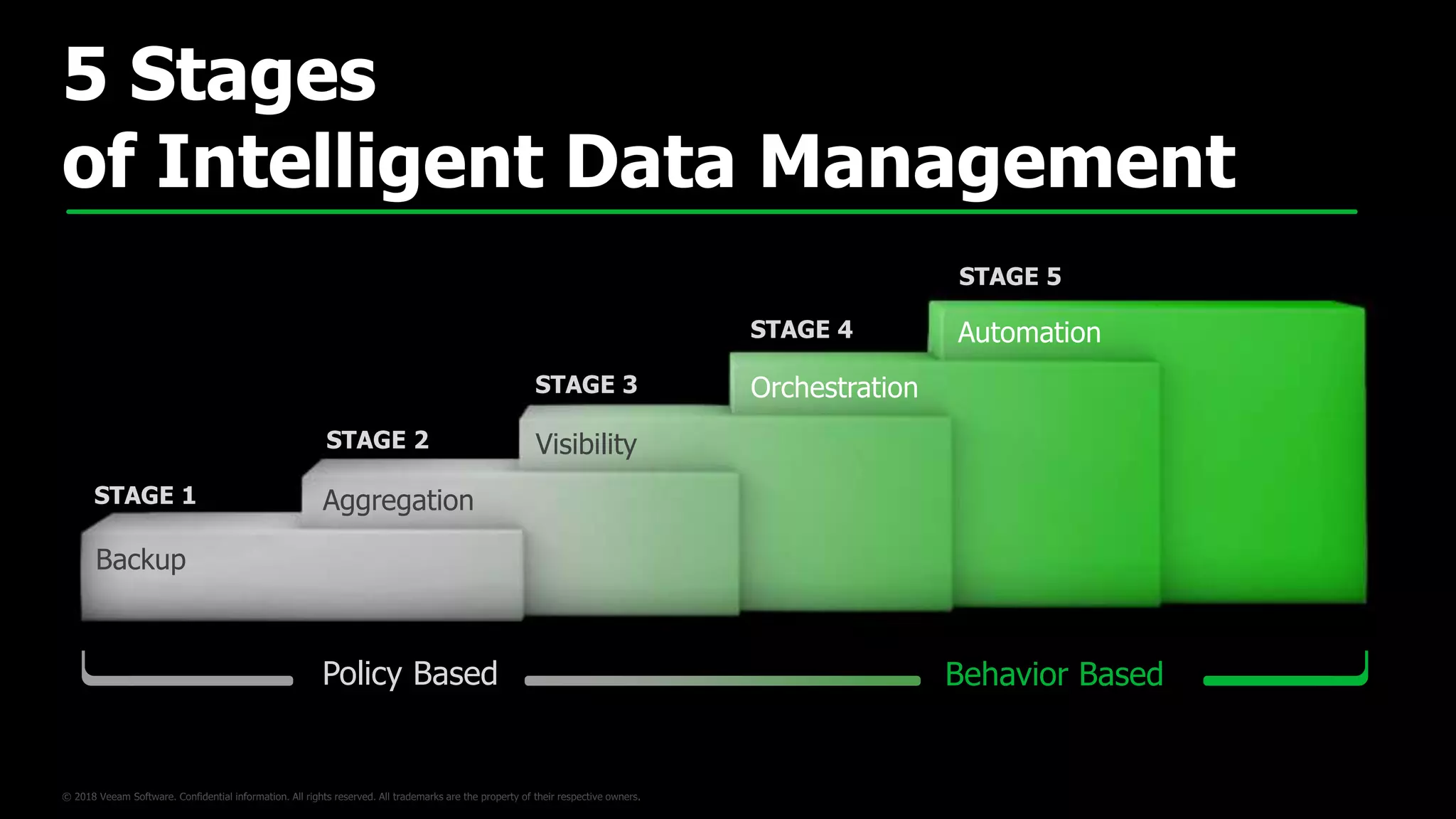
STAGE 1 Aggregation
Backup
STAGE 2
Orchestration
Automation
Visibility
STAGE 3
STAGE 4
STAGE 5
Behavior BasedPolicy Based
5 Stages
of Intelligent Data Management
Thank you

What's next: Veeam Backup for Microsoft O365 2.0

Editor's Notes

  • #15 And it’s based around the 5 stages of intelligent data management Stage 1, Backup: Back up all workloads and ensure they are always recoverable in the event of outages, attack, loss, or theft. Stage 2, Aggregation: Ensure protection and availability of data across multi-cloud environments to drive digital services and ensure the aggregated view of service level compliance. Stage 3, Visibility: Improve management of data across multi-cloud environments with clear, unified visibility and control into usage, performance issues, and operations; data management begins to evolve from reactive to proactive, preventing any loss of data availability through advanced monitoring, resource optimization, capacity planning, and built-in intelligence. Stage 4, Orchestration: Seamlessly move data to the best location across multi-cloud environments to ensure business continuity, compliance, security, and optimal use of resources for business operations. This requires an orchestration engine that enables enterprises to easily and non-disruptively execute, test, and document disaster recovery (DR) plans in a highly-automated fashion. Stage 5, Automation: Data becomes self-managing by learning to back itself up, migrate to ideal locations based on business needs, secure itself during anomalous activity, and recover instantaneously. This stage brings new levels of automation to enterprise data management via a combination of data analysis, pattern recognition, and machine learning. [Transition] Let’s take a look at a Veeam customer that is harnessing the power of our platform, and embracing the five stages of intelligent data management to meet business demands