What to Do Once You Have an
            Idea
                   1

            FAST START STUDIO
        SERGEY SUNDUKOVSKIY PH.D.
Introduction
     2
Background
    3
Agenda
                           4

Visualizing Your Idea
Putting Together a Deck
Finding Co-Founders/Mentors/Advisors
Building a Prototype
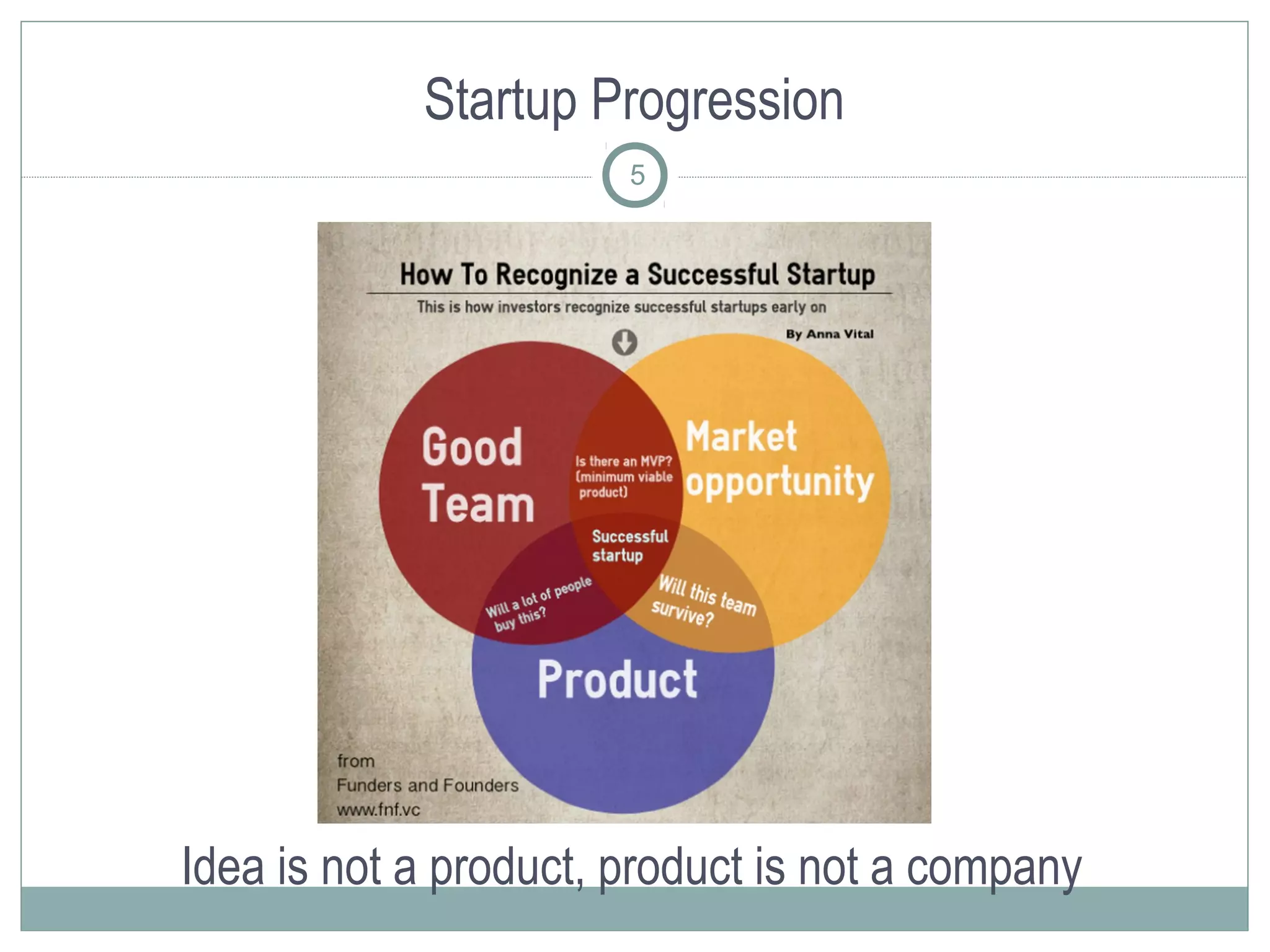
Startup Progression
                       5


Idea is not a product, product is not a company
Visuals
                            6

Idea Description
Idea Visualization
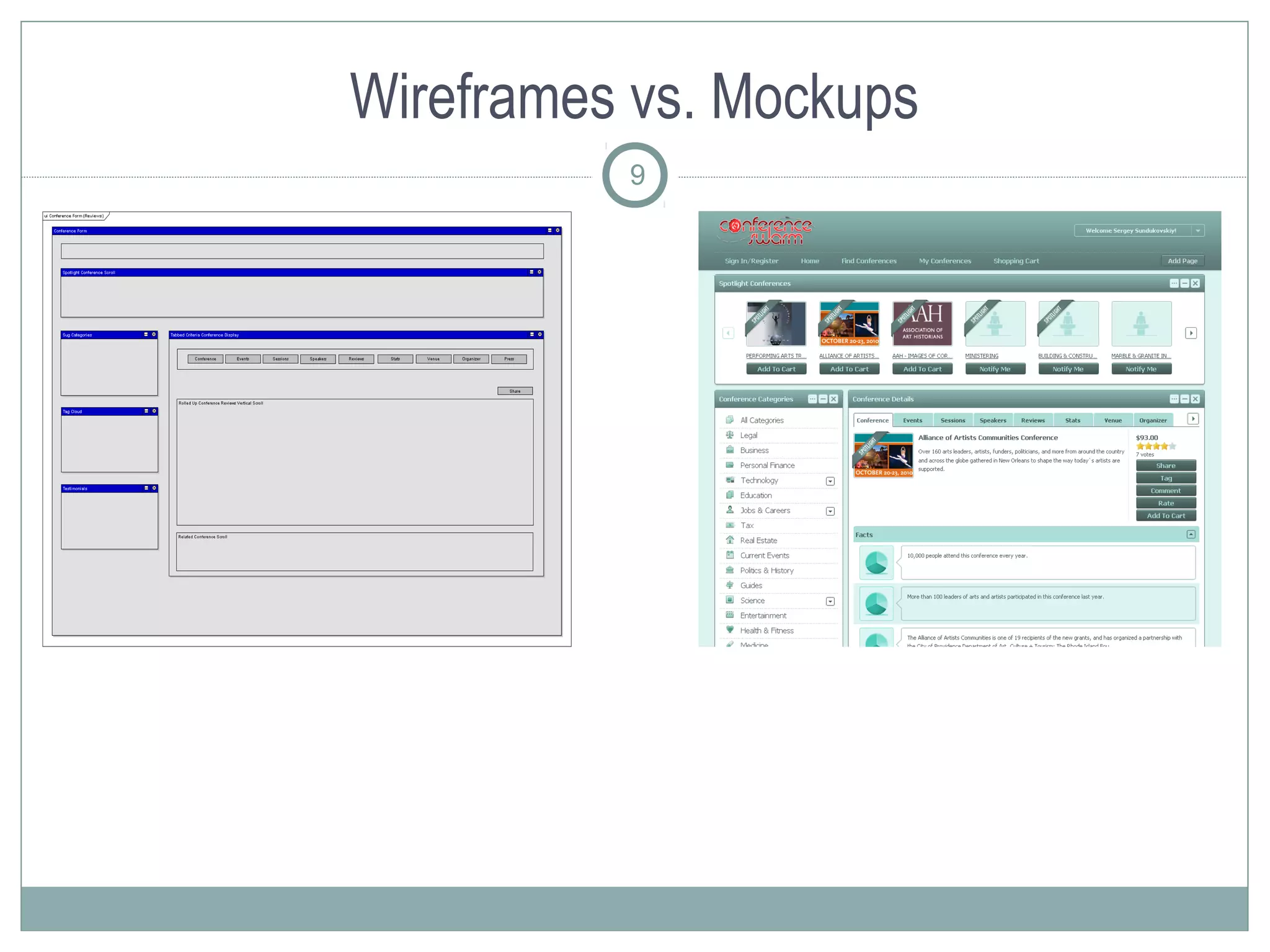
Wireframes
Mockups (UI)
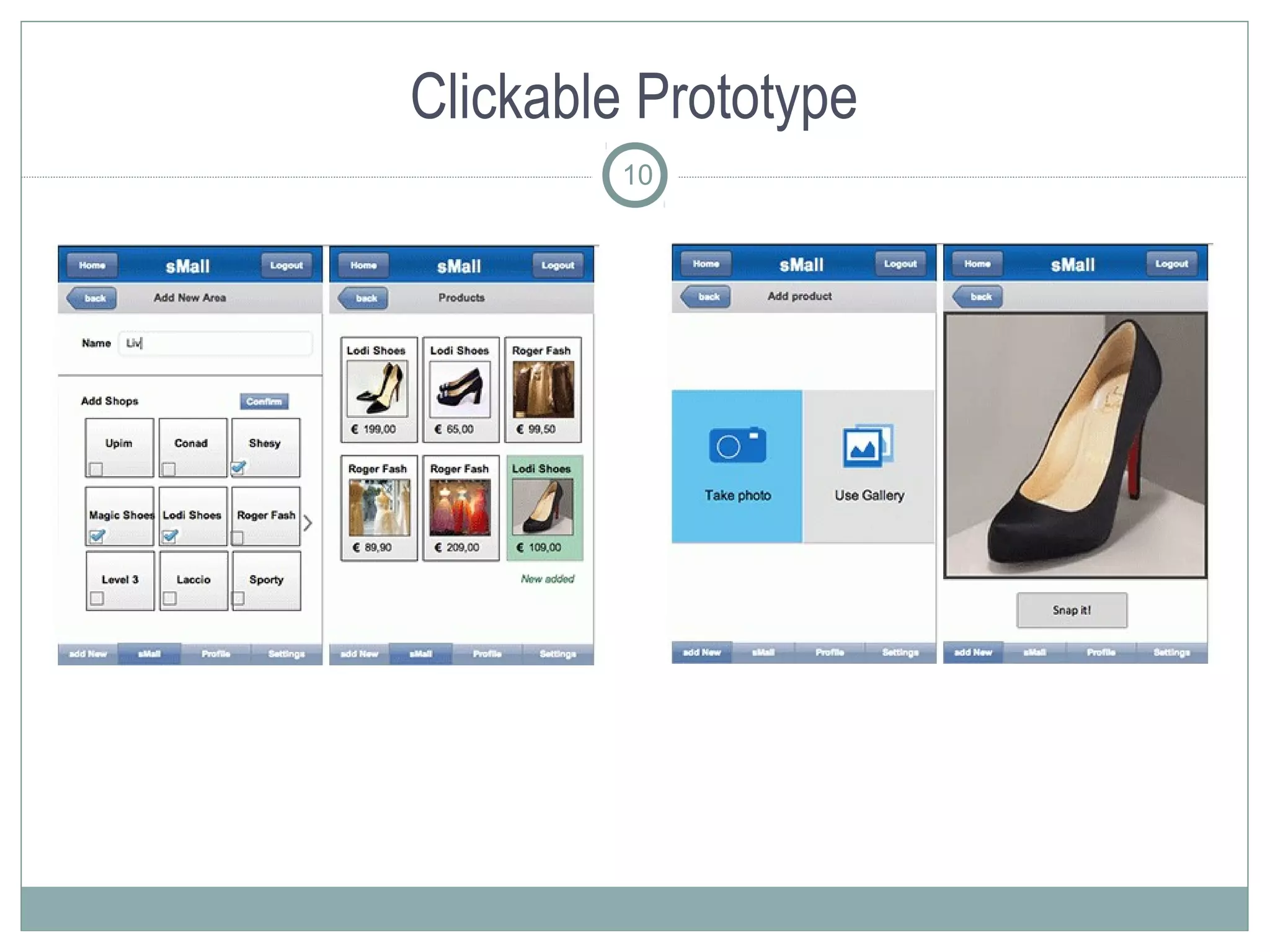
Clickable Prototype (UX)
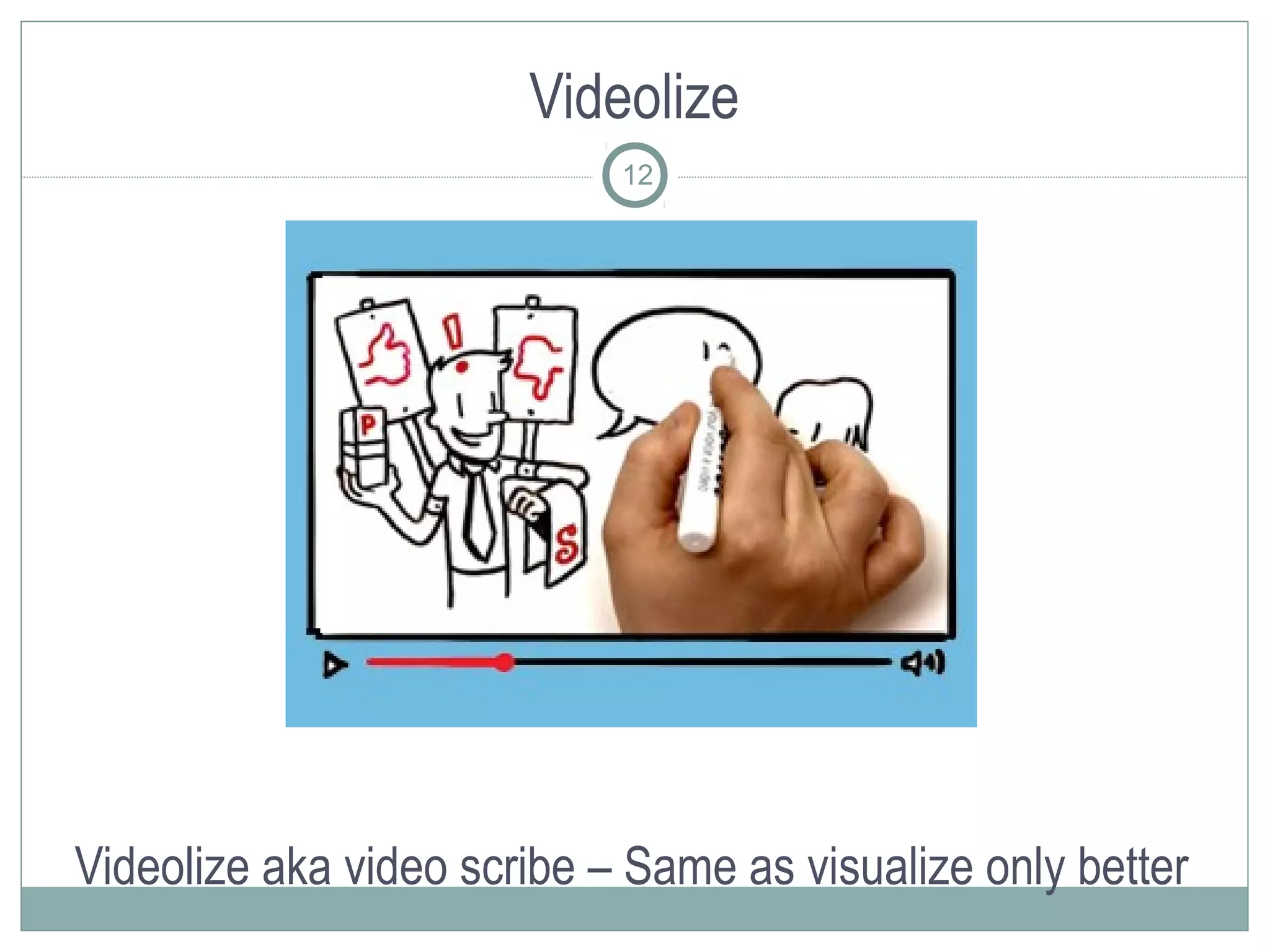
Videolize
Mind Mapping
Idea Description
                                     7

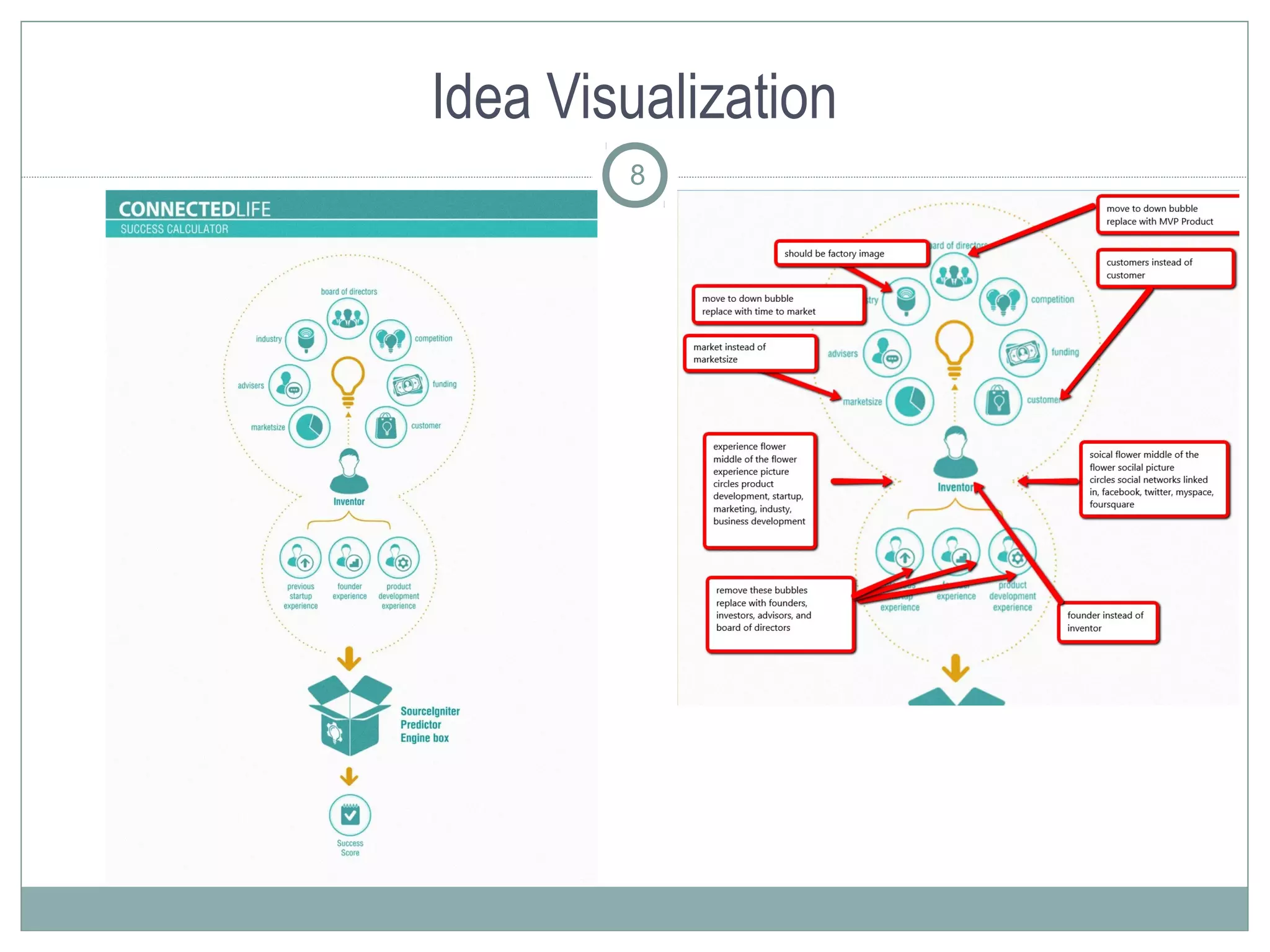
Idea Description
    Success Calculator: Inventor (cloud over the head). Many factors
     represented by circles (founder experience circle, previous startup
     experience circle, competition circle, funding circle, customer circle,
     market size, industry circle, board of directors circle, product
     development experience, advisers circle) go into the SourceIgniter
     Predictor Engine box, what comes out is a Success Score
Idea Visualization
        8
Wireframes vs. Mockups
          9
Clickable Prototype
        10
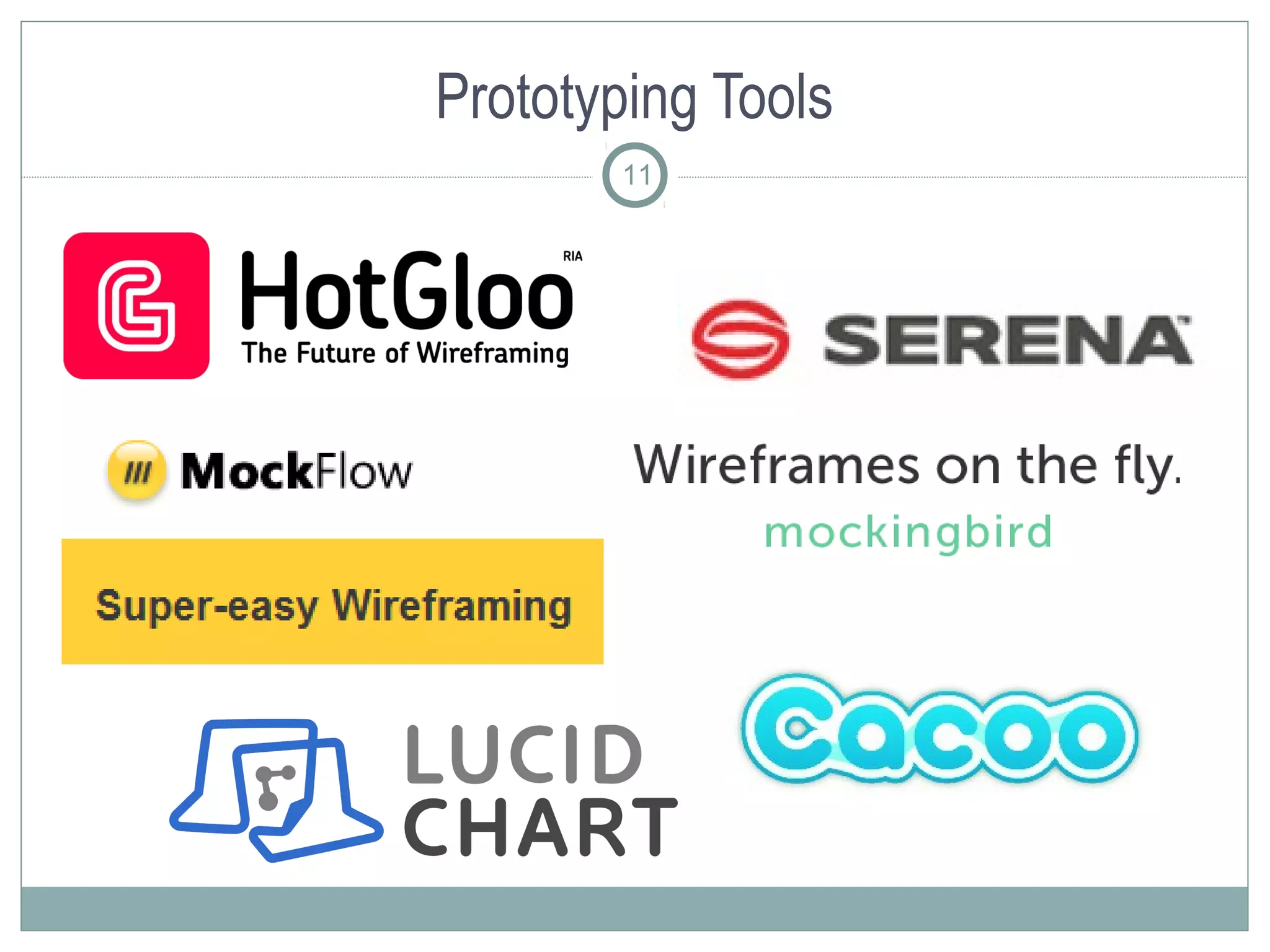
Prototyping Tools
       11
Videolize
                            12


Videolize aka video scribe – Same as visualize only better
Putting Together a Deck
                           13

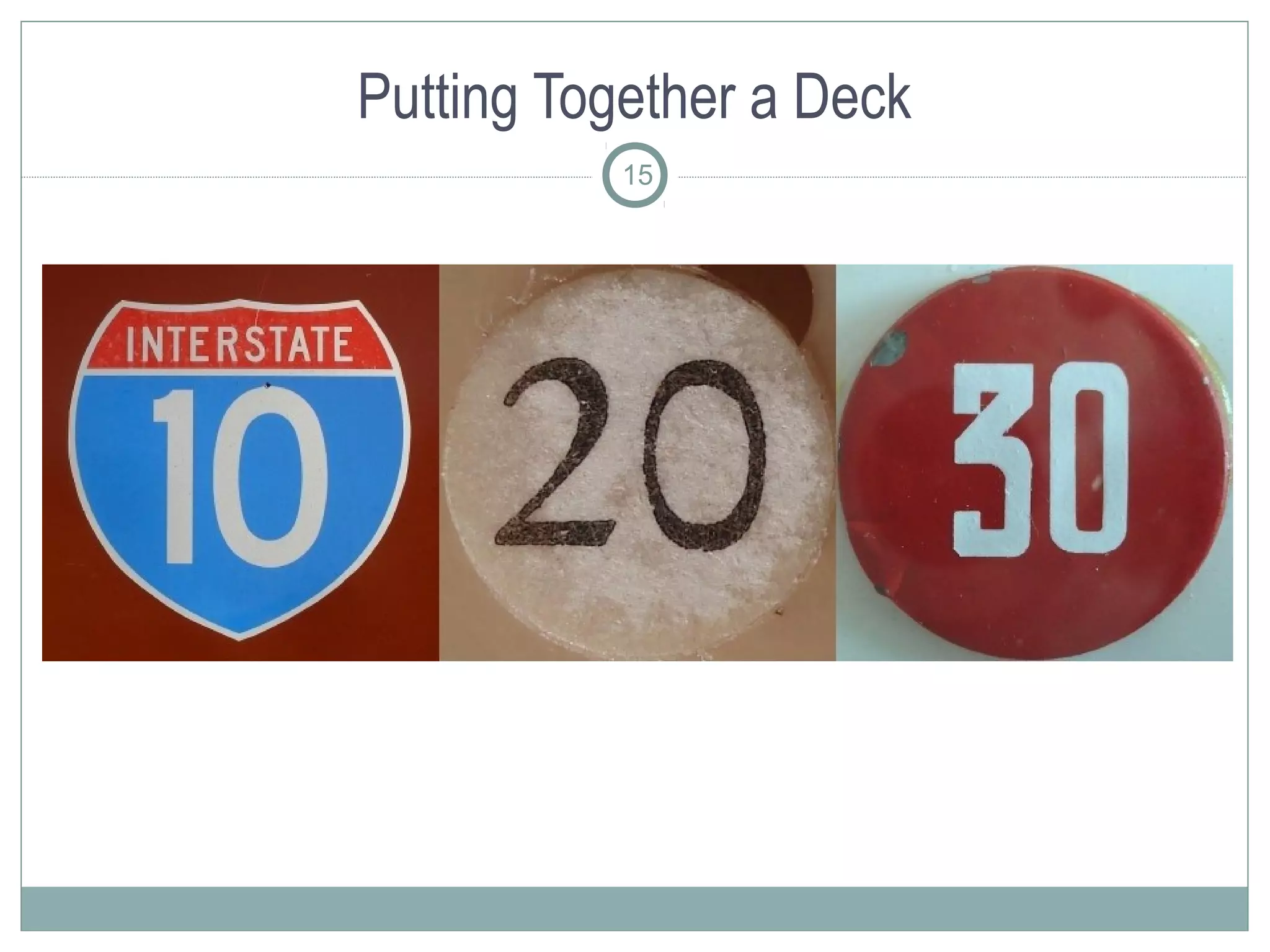
10-20-30 Rule
Show Do Not Tell
Taxicab and Elevator Pitches
Target Customer
Market Analysis
Differentiation and JUD
Pressure Testing
Competitive Advantages
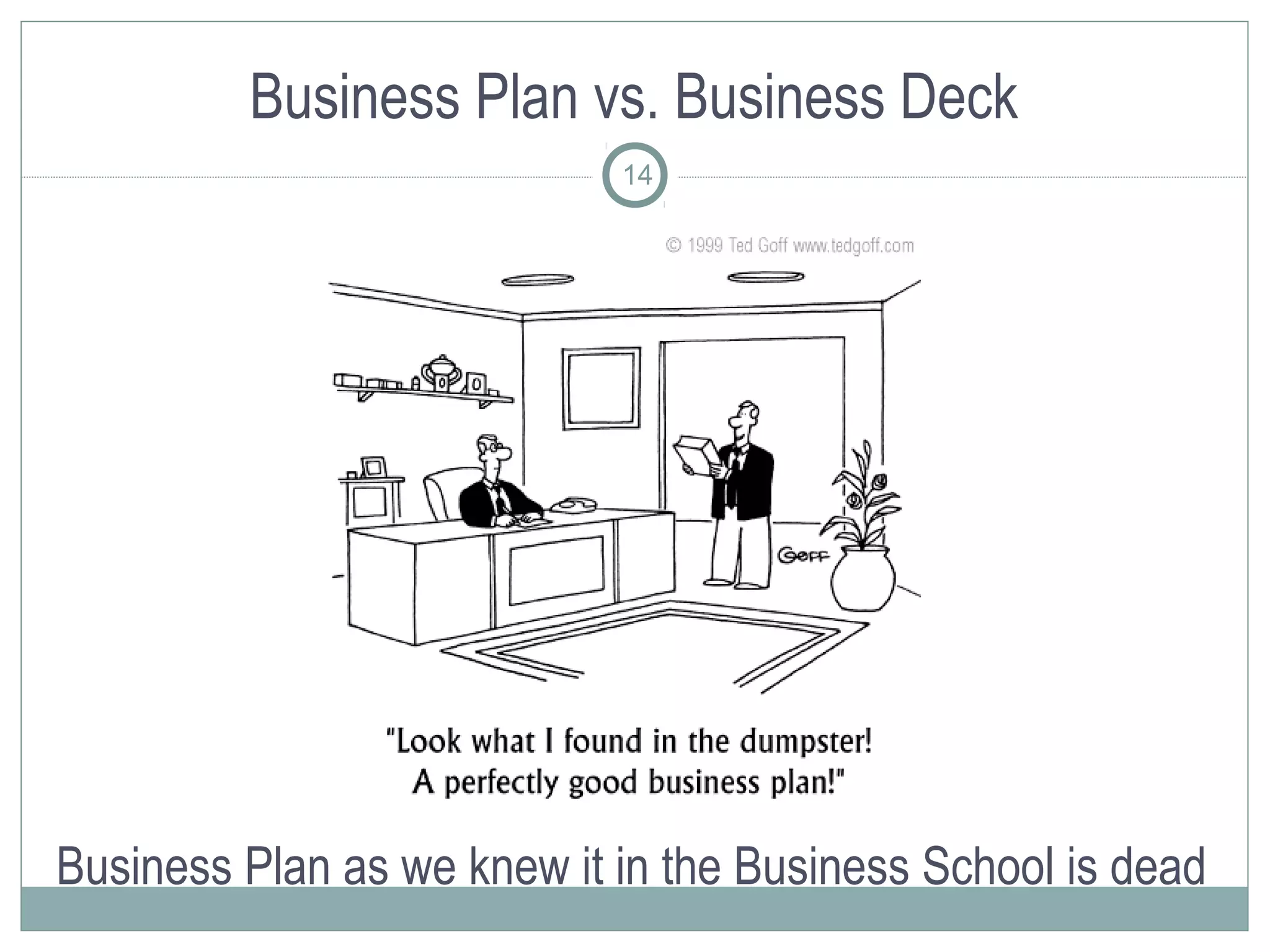
Business Plan vs. Business Deck
                            14


Business Plan as we knew it in the Business School is dead
Putting Together a Deck
          15
Deck Rules
                                      16

10 slides
    In reality it is 3 (others are used as reference)
20 min
    In reality it is 5 (at most)
30 point font
  Last guy from the end of the table
  Too much information
Deck Rules
              17


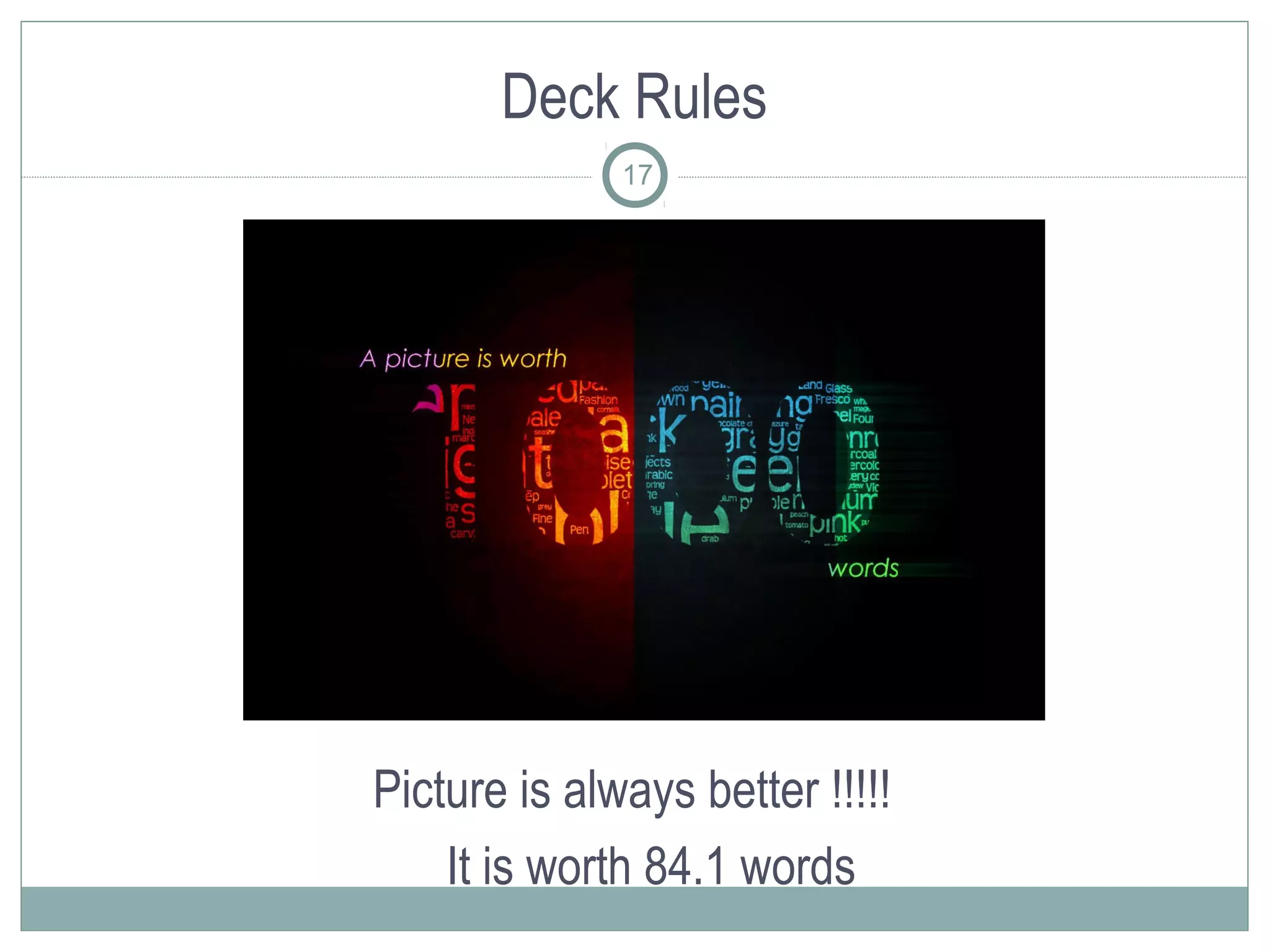
Picture is always better !!!!!
    It is worth 84.1 words
Deck Structure
                        18
Executive Summary           Financial Projections
Problem                     Competitors
Solution                    Differentiation
Platform                    Competitive Advantages
Market Opportunity          Team
Business Model              Milestones/Roadmap
Pricing
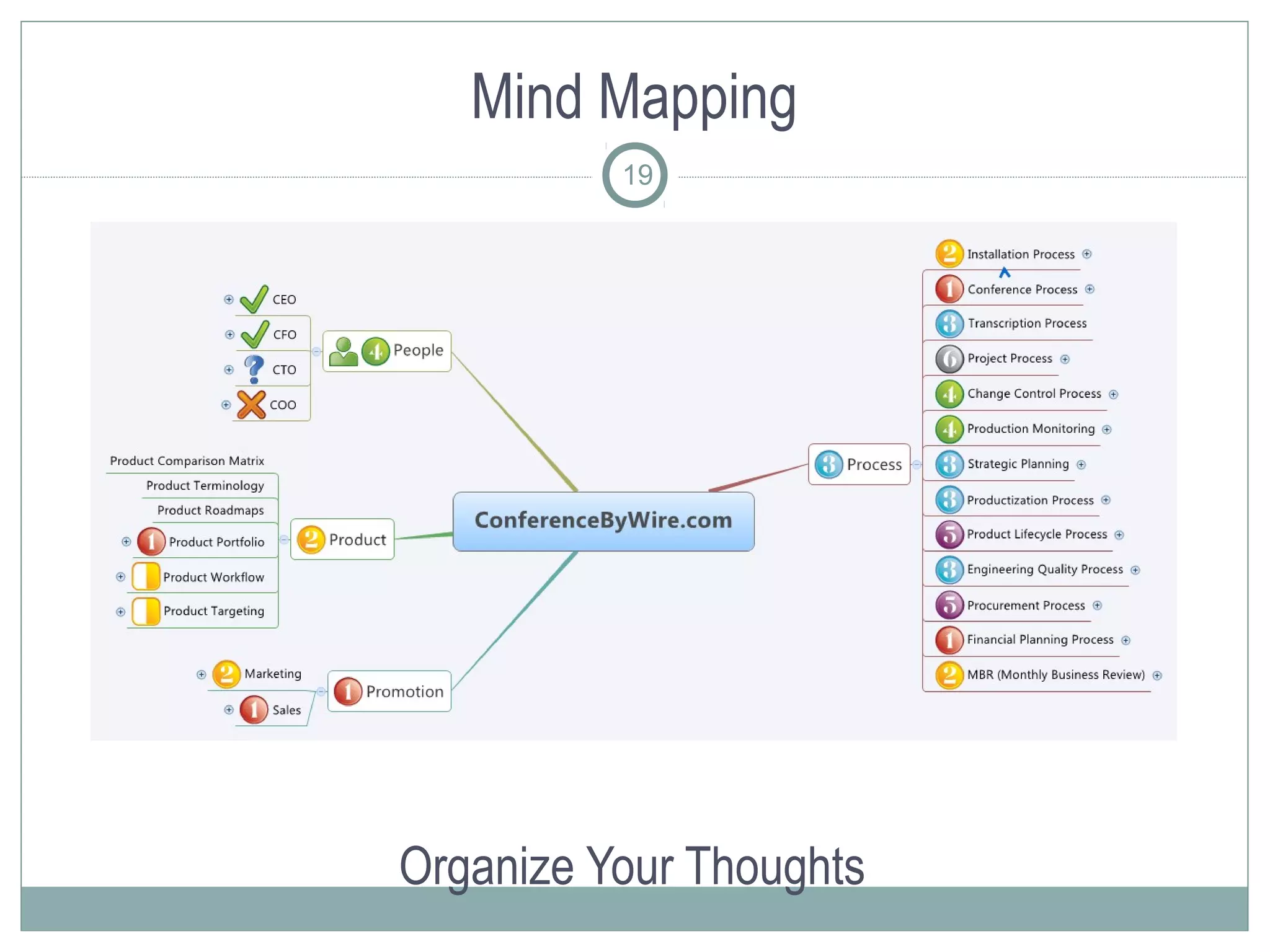
Mind Mapping
          19


Organize Your Thoughts
Mind Mapping Tools
        20
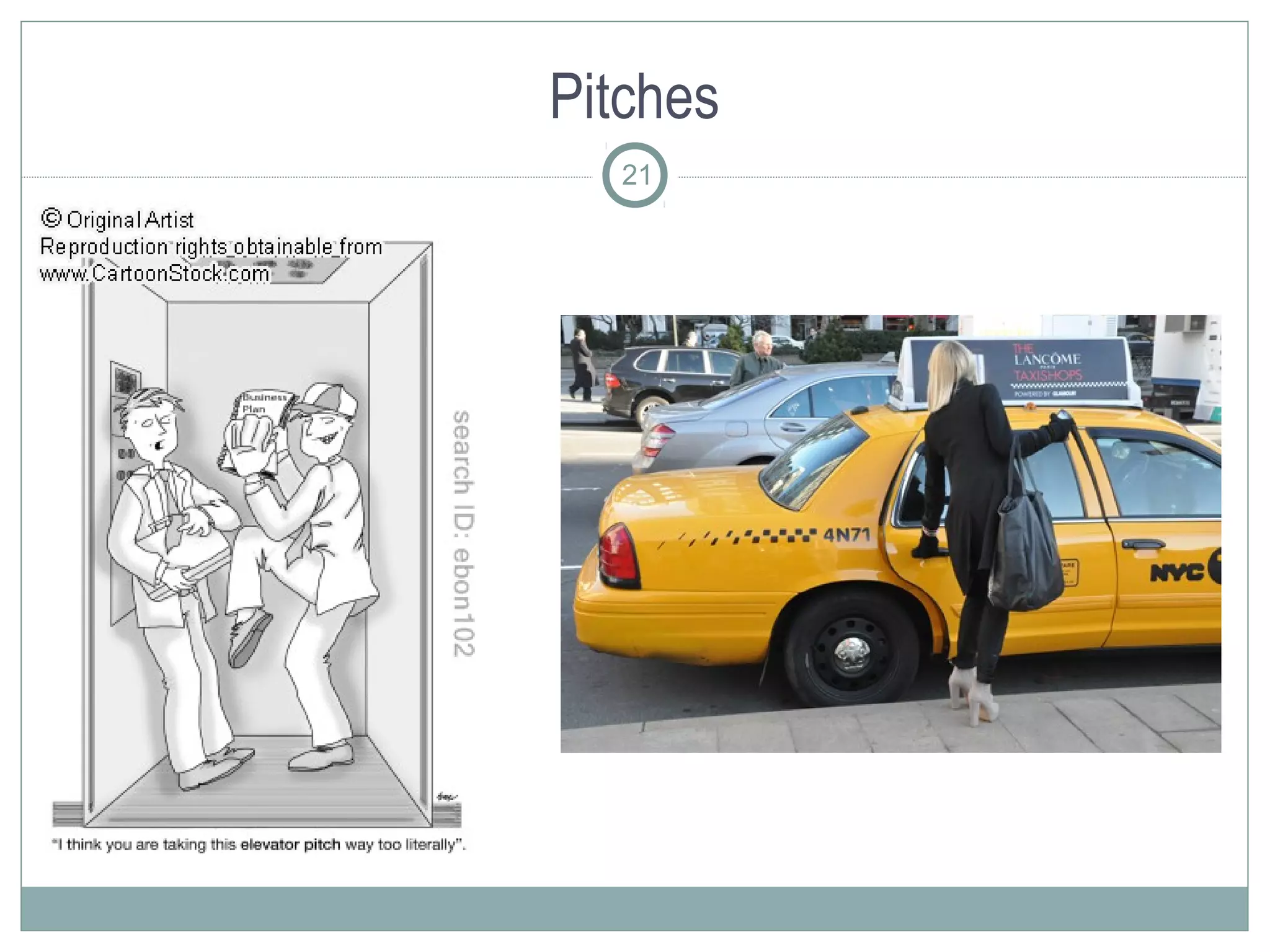
Pitches
  21
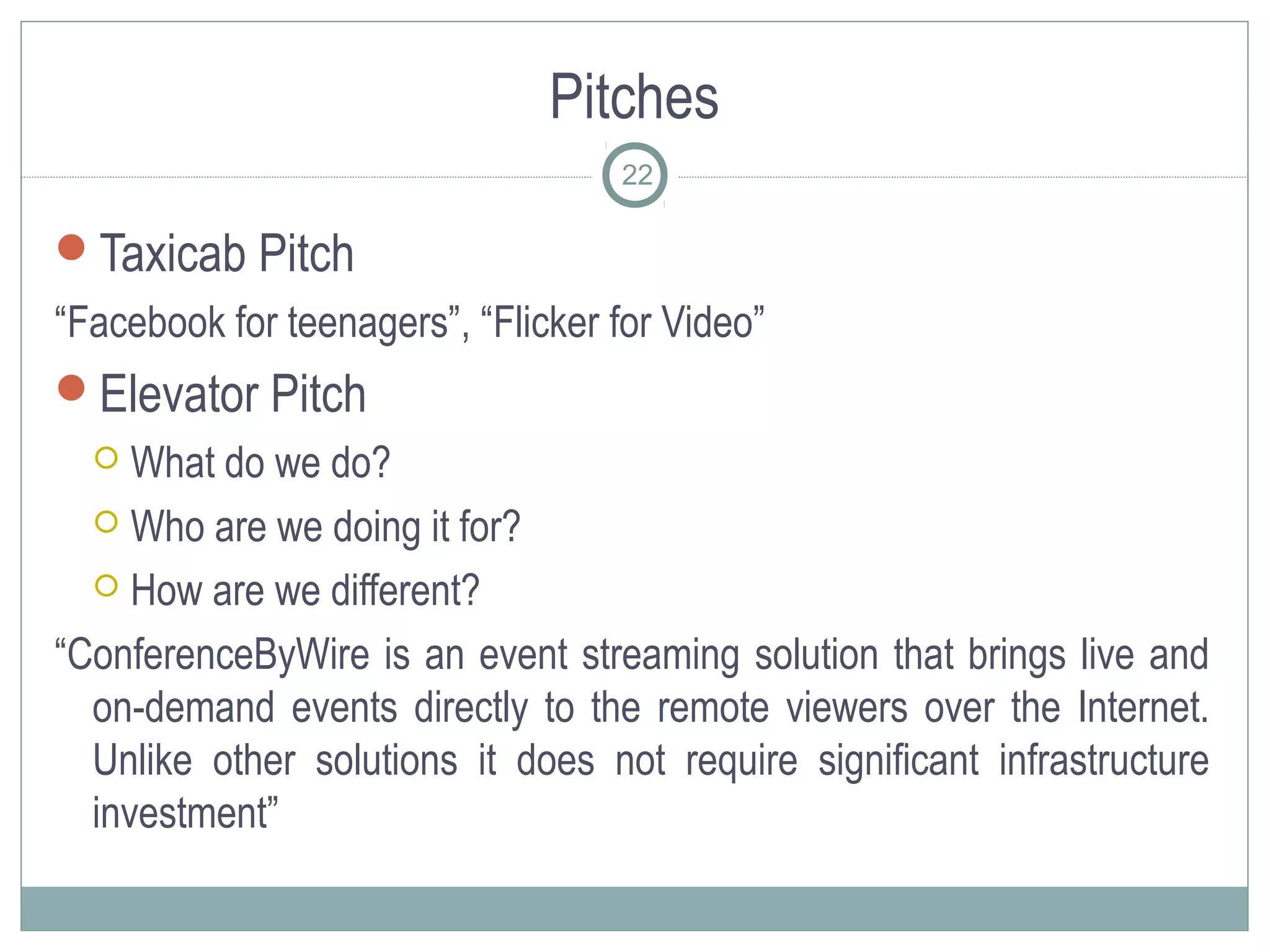
Pitches
                                   22

Taxicab Pitch
“Facebook for teenagers”, “Flicker for Video”
Elevator Pitch
    What do we do?
   Who are we doing it for?

   How are we different?

“ConferenceByWire is an event streaming solution that brings live and
  on-demand events directly to the remote viewers over the Internet.
  Unlike other solutions it does not require significant infrastructure
  investment”
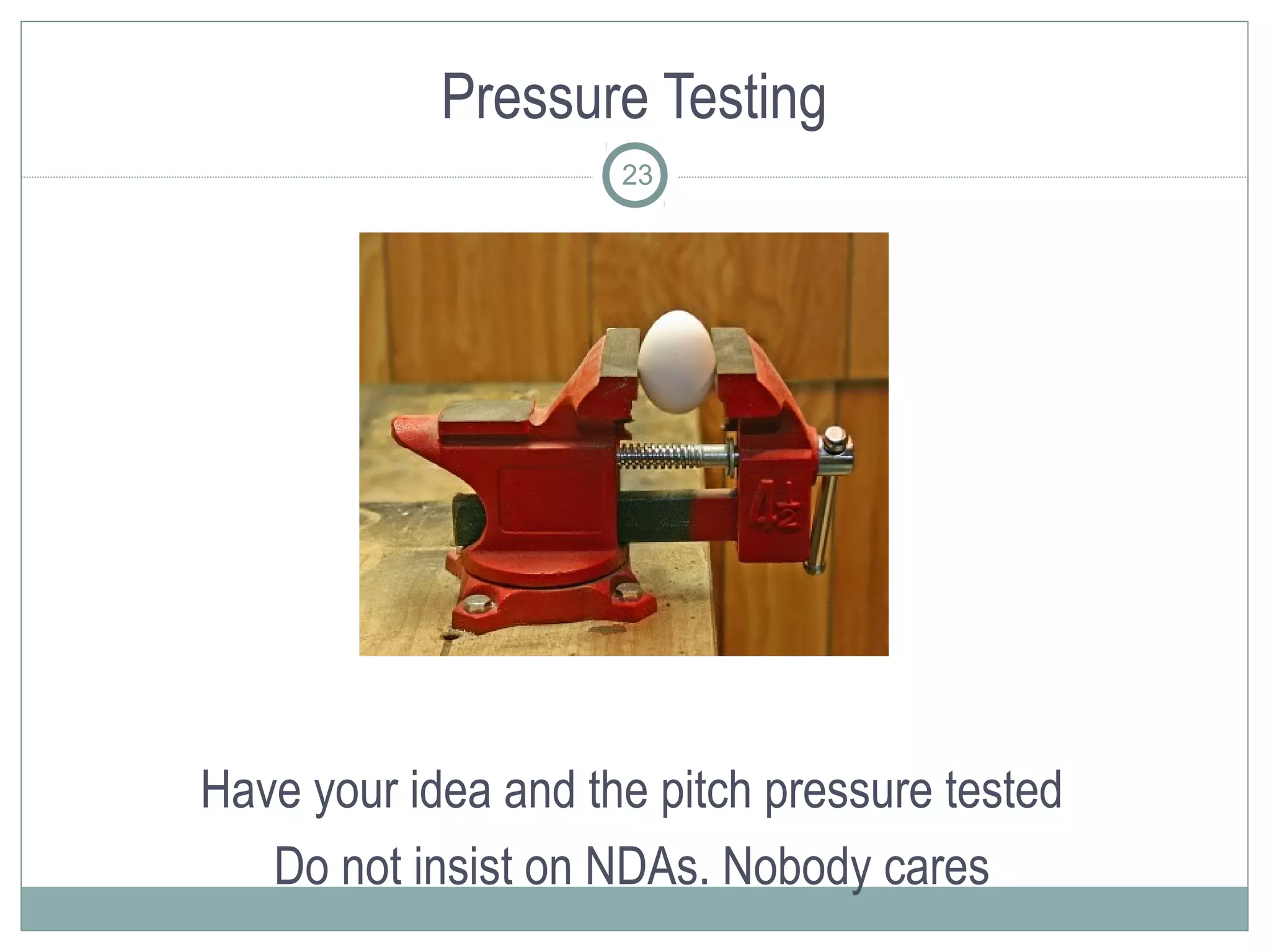
Pressure Testing
                     23


Have your idea and the pitch pressure tested
   Do not insist on NDAs. Nobody cares
Market and Customer
         24
Differentiation
              25


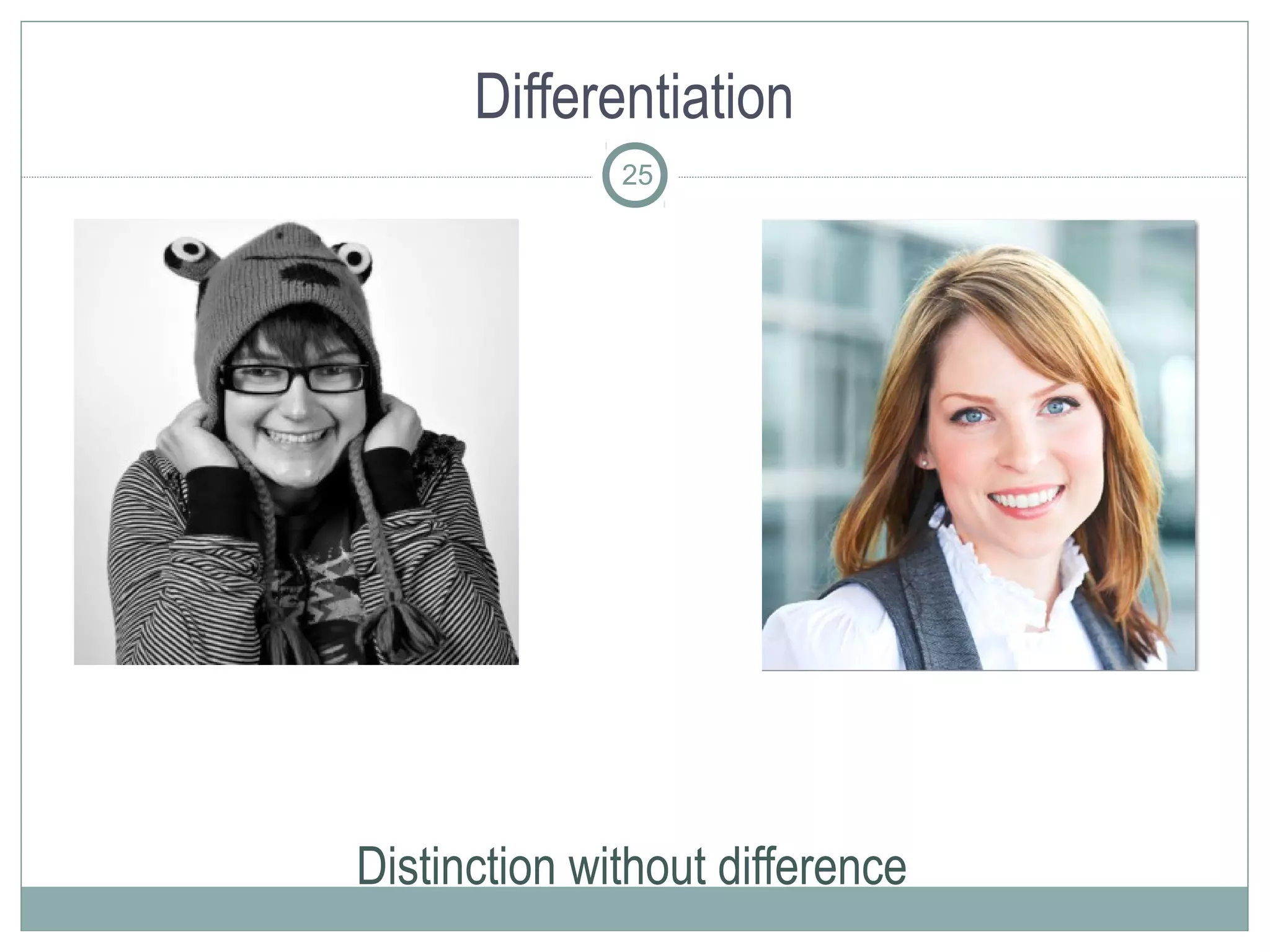
Distinction without difference
Differentiation
       26


   Features
Business Model
Target Audience
Differentiation and JUD
                                    27

What Investors Are Looking For?
  JUD – Just Enough Difference
  Different Enough

  Not Too Different

Valid Question
    “Why existing competitors are not focused in ‘this’ area?”
Invalid Question
    “Why wouldn’t existing competitors replicate ‘this’?”
Competitive Strategies
                                     28

Prices
    We are just like that only cheaper
Differentiation
    We are just like that with following differences
Niche
    We are just like that only verticalized
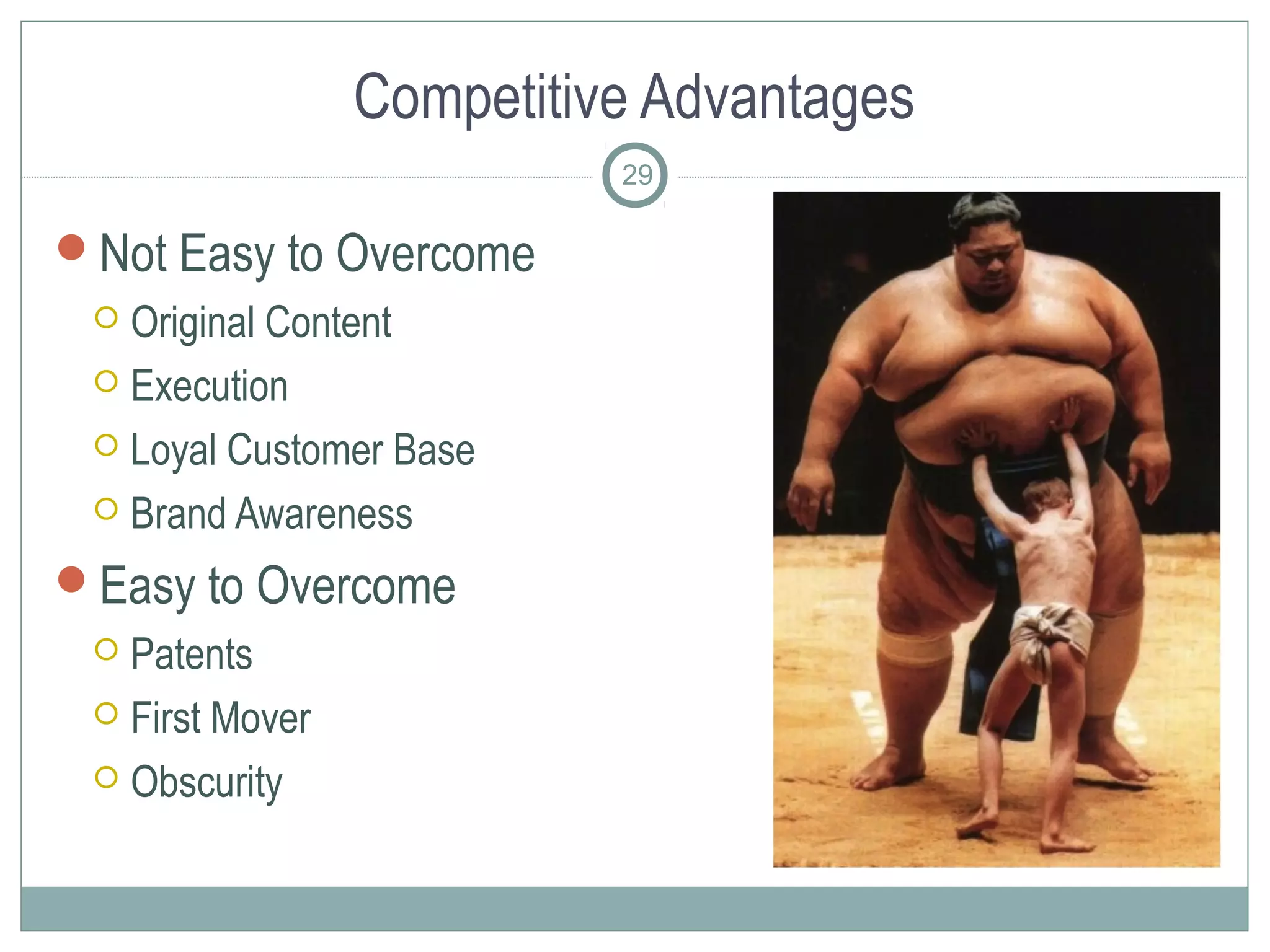
Competitive Advantages
                           29

Not Easy to Overcome
  Original Content
  Execution

  Loyal Customer Base

  Brand Awareness

Easy to Overcome
  Patents
  First Mover

  Obscurity
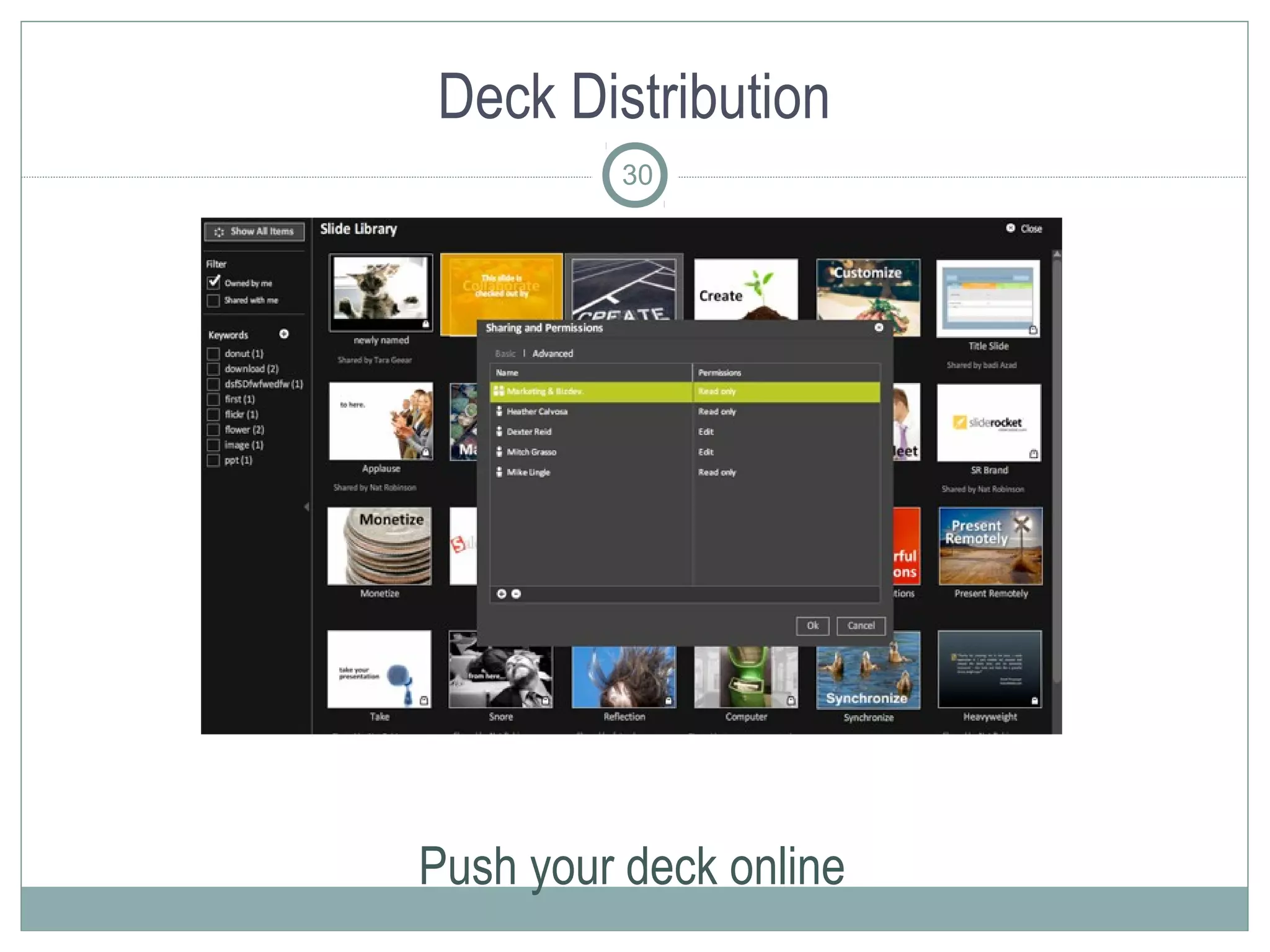
Deck Distribution
          30


Push your deck online
Finding Co-Founders/Mentors/Advisors
                            31

Co-Founder Selection Criteria
Finding Co-Founders
Commitment vs. Involvement
Mentor/Advisor Selection Criteria
Mentor/Advisor Expectations
Incubators
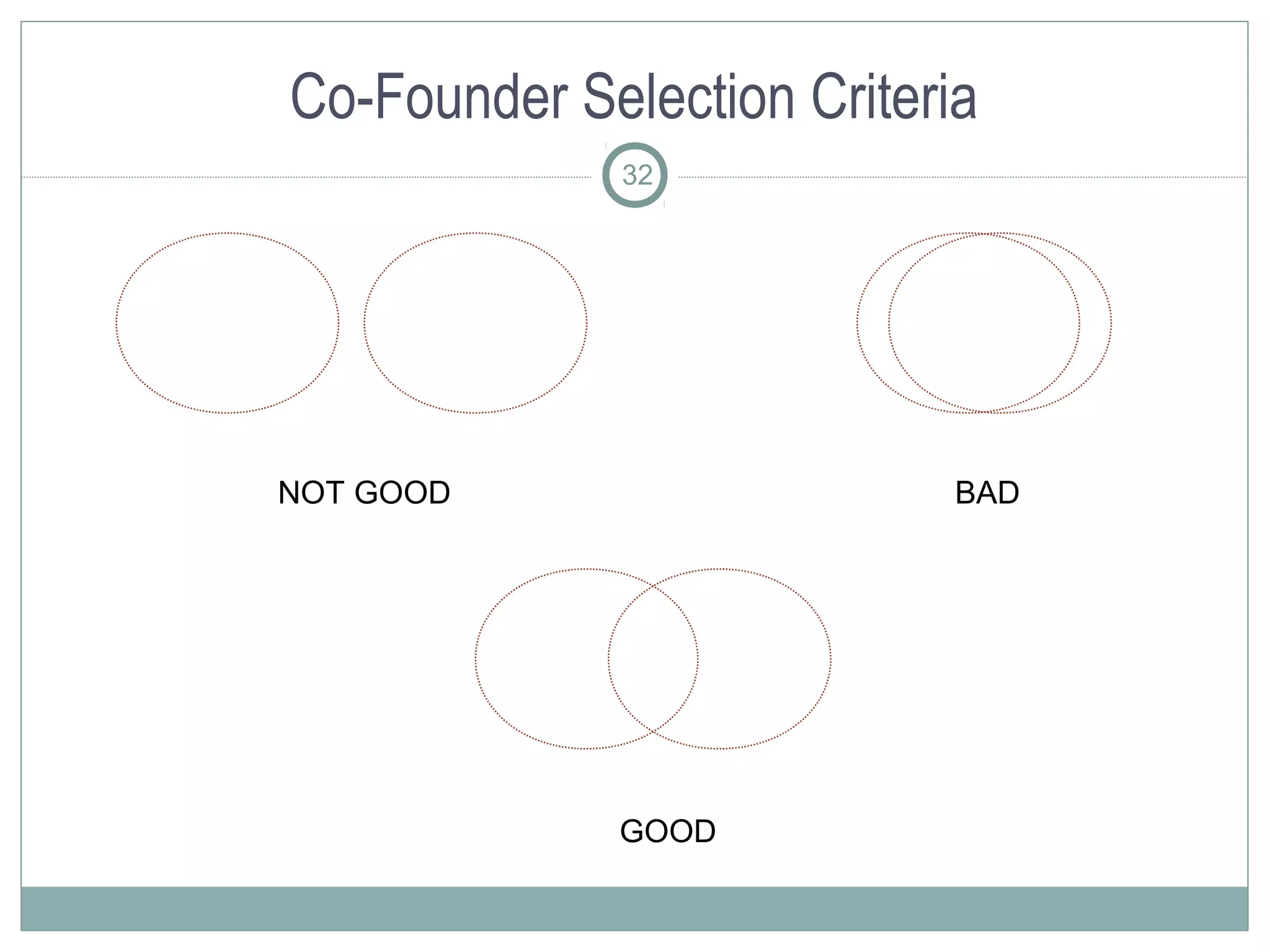
Co-Founder Selection Criteria
             32


NOT GOOD                    BAD


             GOOD
Where to Find One?
        33
Co-Founder Selection Criteria (cont.)
                             34

Complementary Skillset
Worked Together Before
Similar Work Ethic
Similar Commitment Level
Similar Conflict Resolution Style
Can Disagree and Commit
Ideal Number of Co-Founders is 3
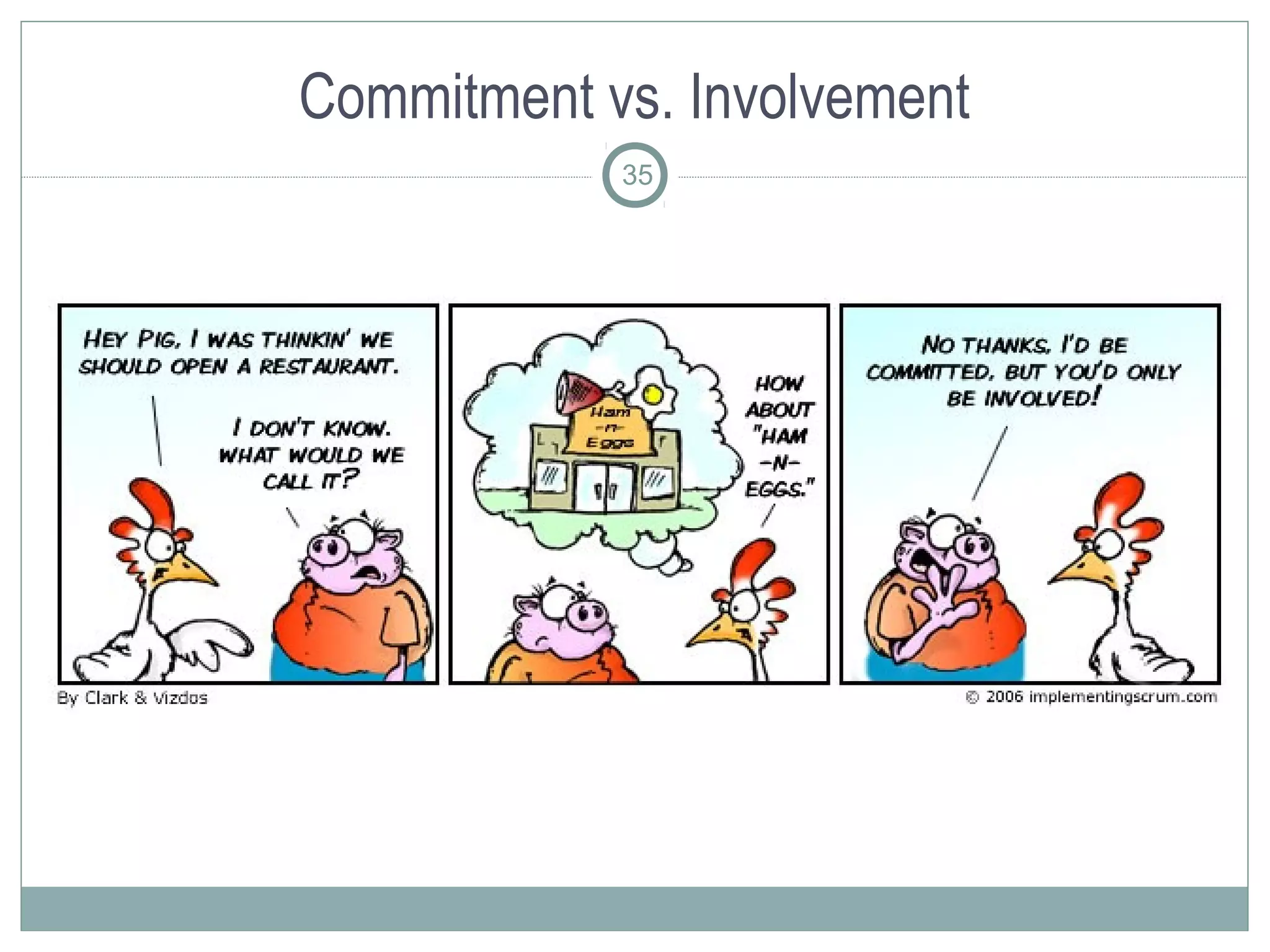
Commitment vs. Involvement
            35
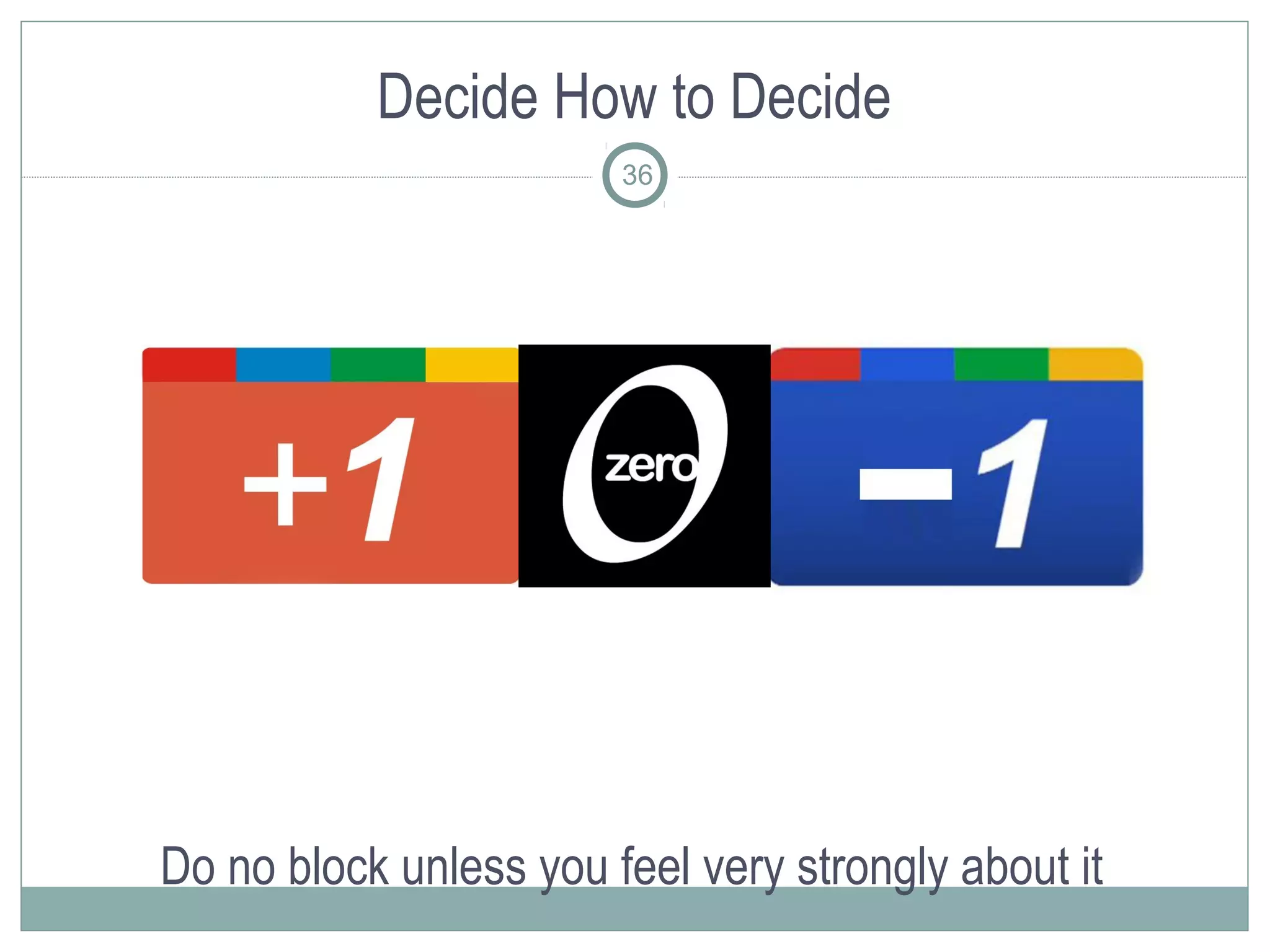
Decide How to Decide
                        36


Do no block unless you feel very strongly about it
Mentor vs. Advisor
                                 37

Expectation Setting
    Hands On vs. Not Hands On
Mentor
    Advice
Advisor
  Cover Gaps
  Pressure Testing

  Industry IQ

  Introductions
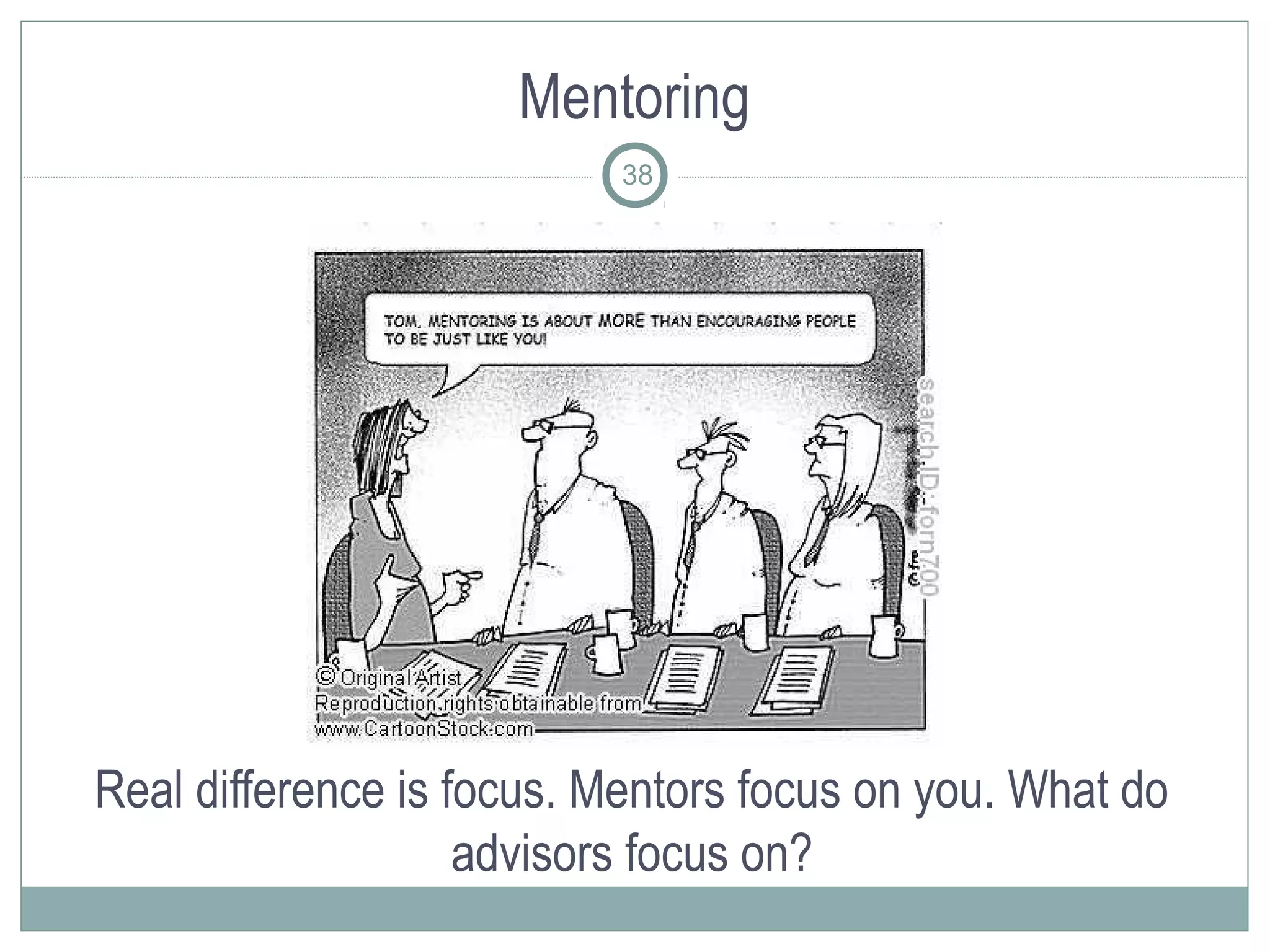
Mentoring
                           38


Real difference is focus. Mentors focus on you. What do
                    advisors focus on?
Incubators
                             39

Help Getting Started
Learning the Ropes
Good Mentors
Great Advisors
Helpful Introductions
Right Atmosphere
Place to “Hang Your Hat”
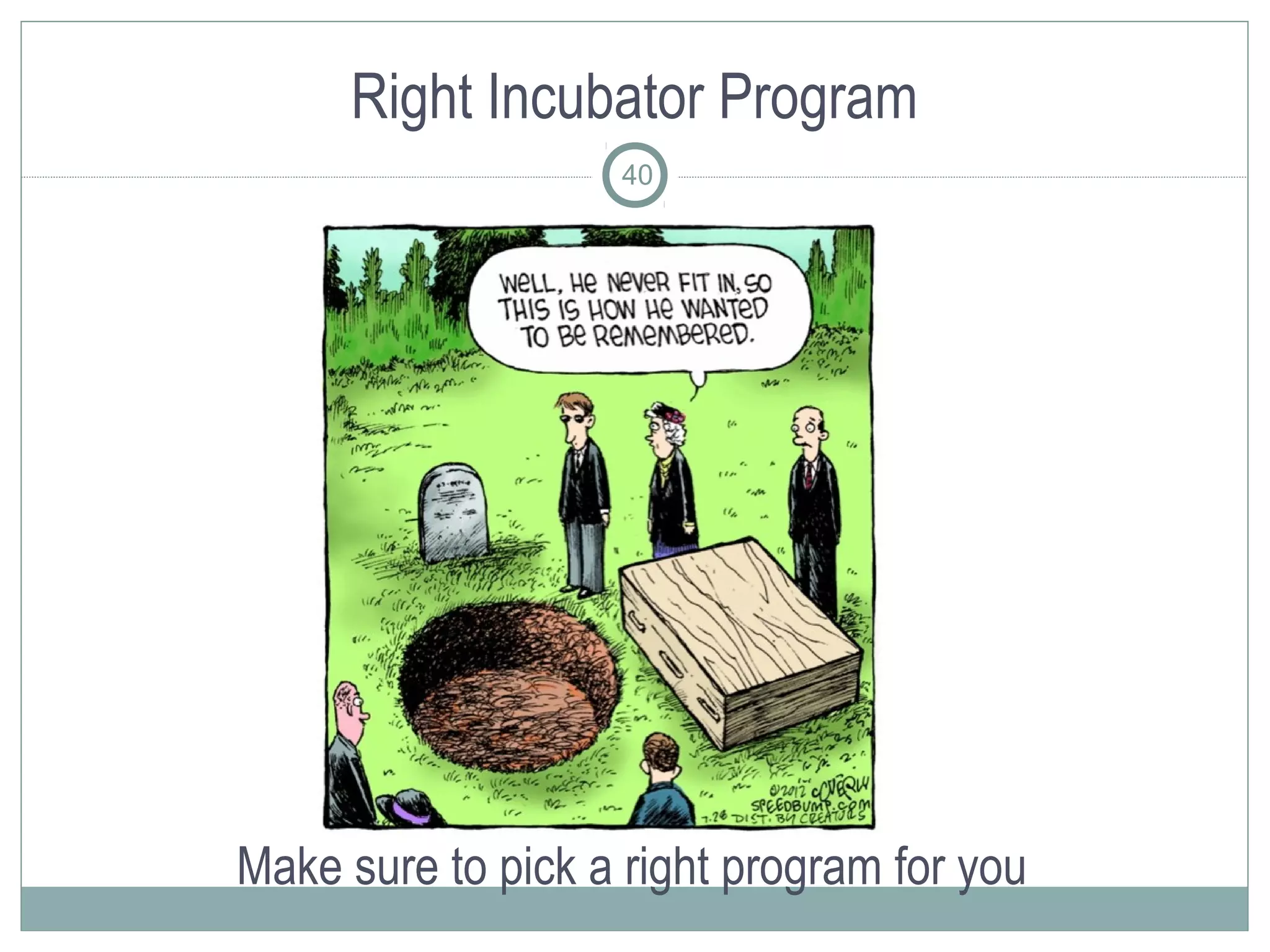
Right Incubator Program
                   40


Make sure to pick a right program for you
Building a Prototype
                            41

Prototype Purpose
Prototype Features
Prototype Duration
Prototype Starting Point
Evolutionary vs. Throwaway
Fine Line
                         42


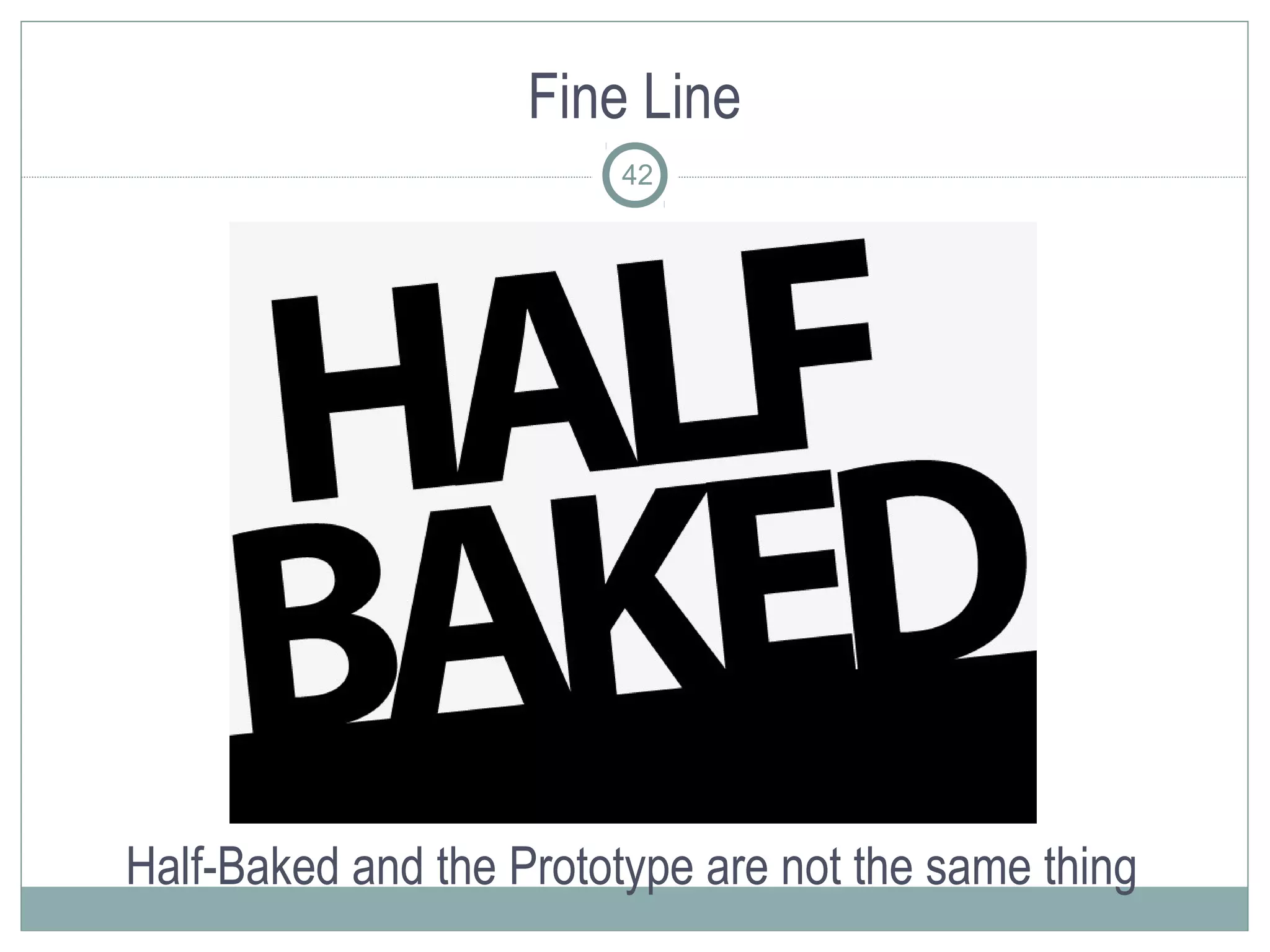
Half-Baked and the Prototype are not the same thing
Building a Prototype
                         43


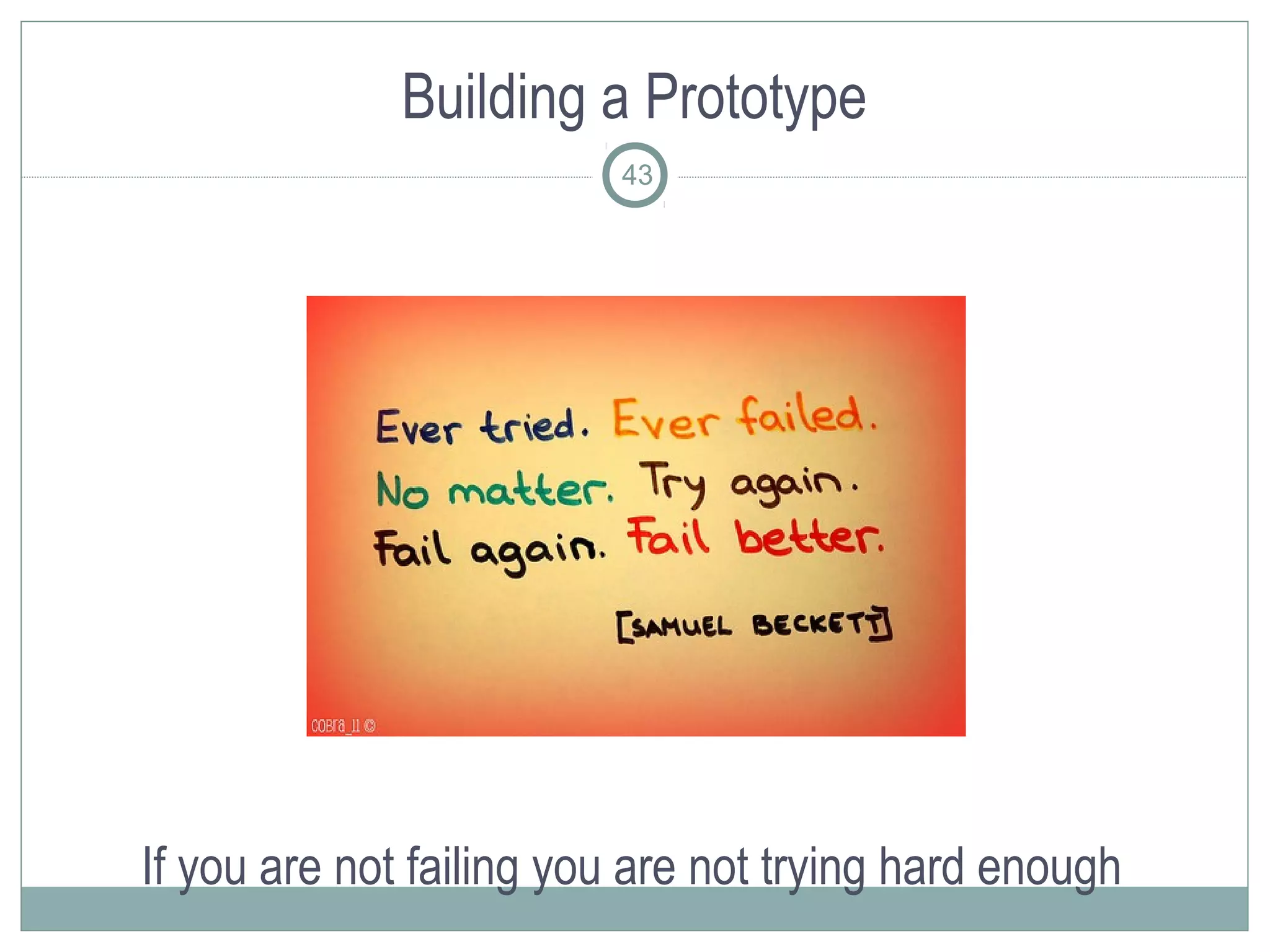
If you are not failing you are not trying hard enough
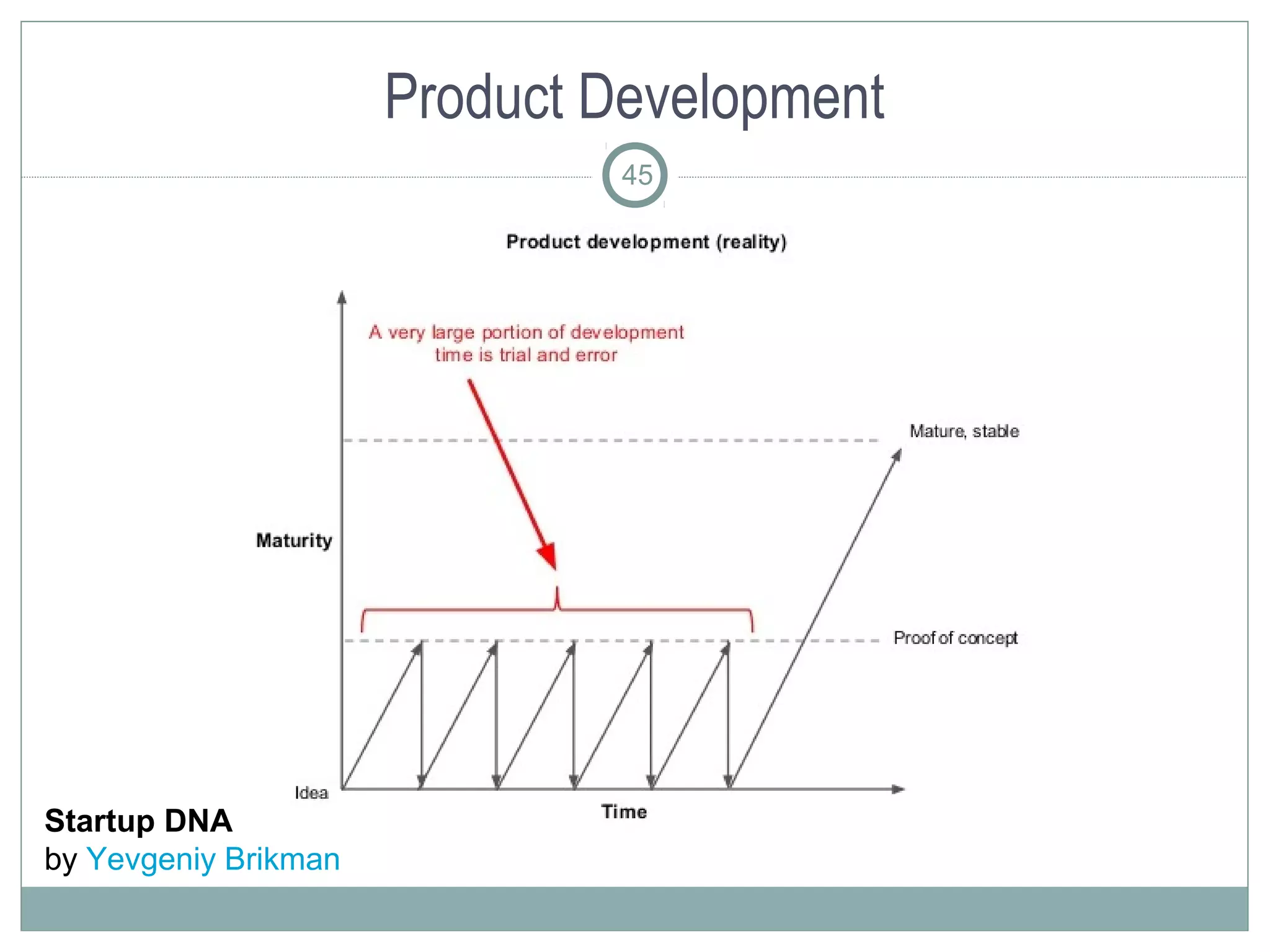
Product Development
                               44


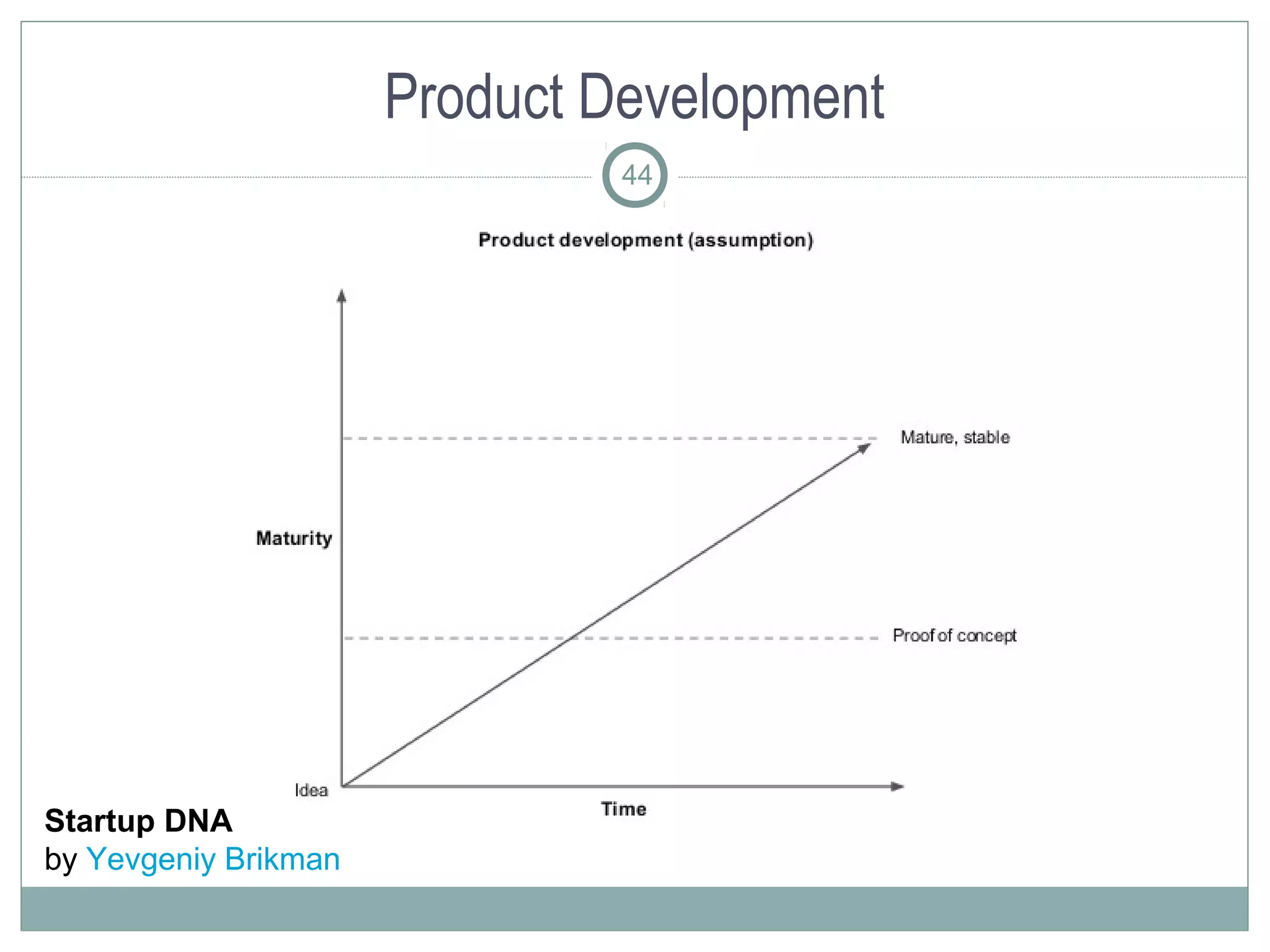
Startup DNA
by Yevgeniy Brikman
Product Development
                               45


Startup DNA
by Yevgeniy Brikman
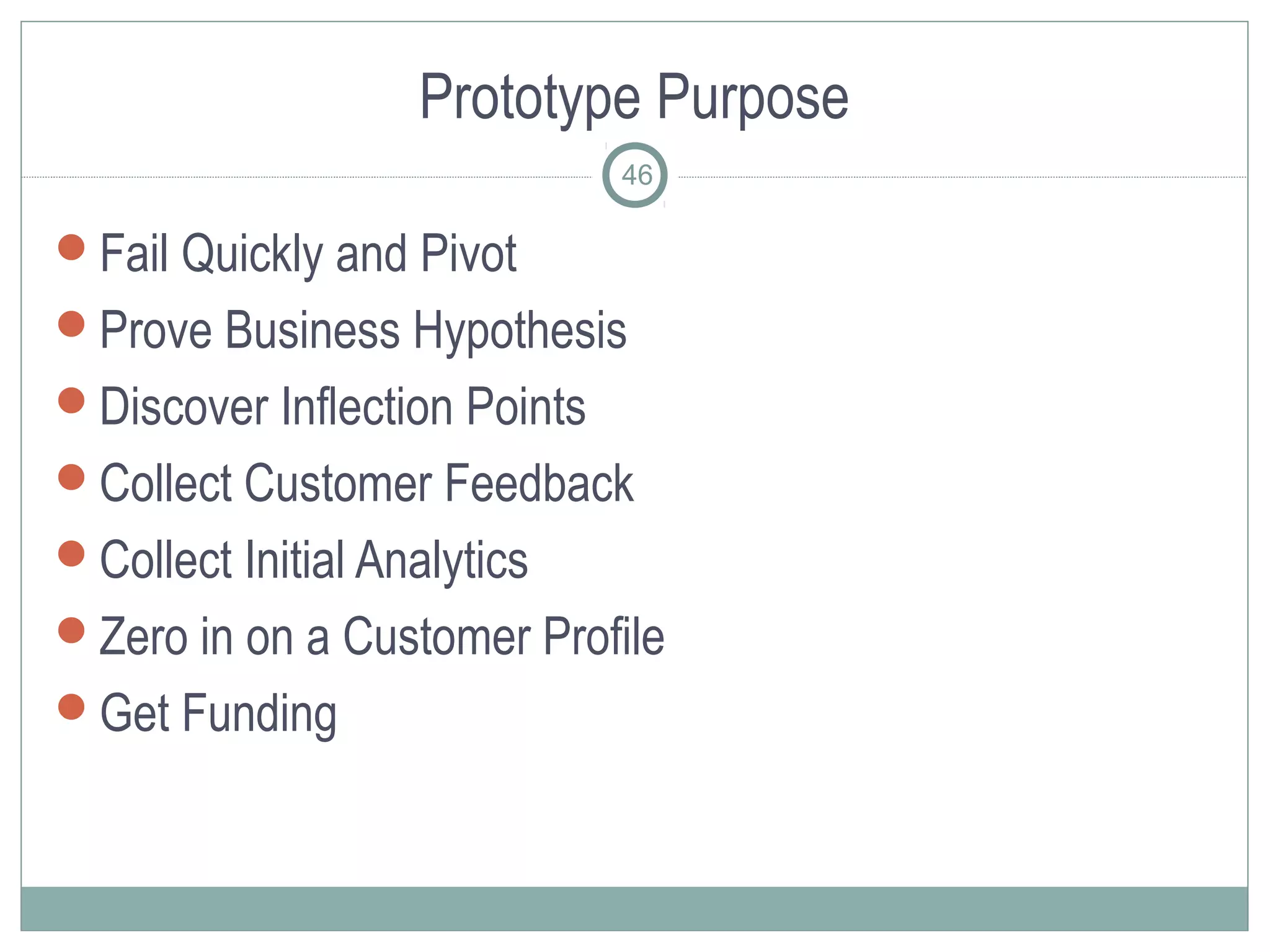
Prototype Purpose
                              46

Fail Quickly and Pivot
Prove Business Hypothesis
Discover Inflection Points
Collect Customer Feedback
Collect Initial Analytics
Zero in on a Customer Profile
Get Funding
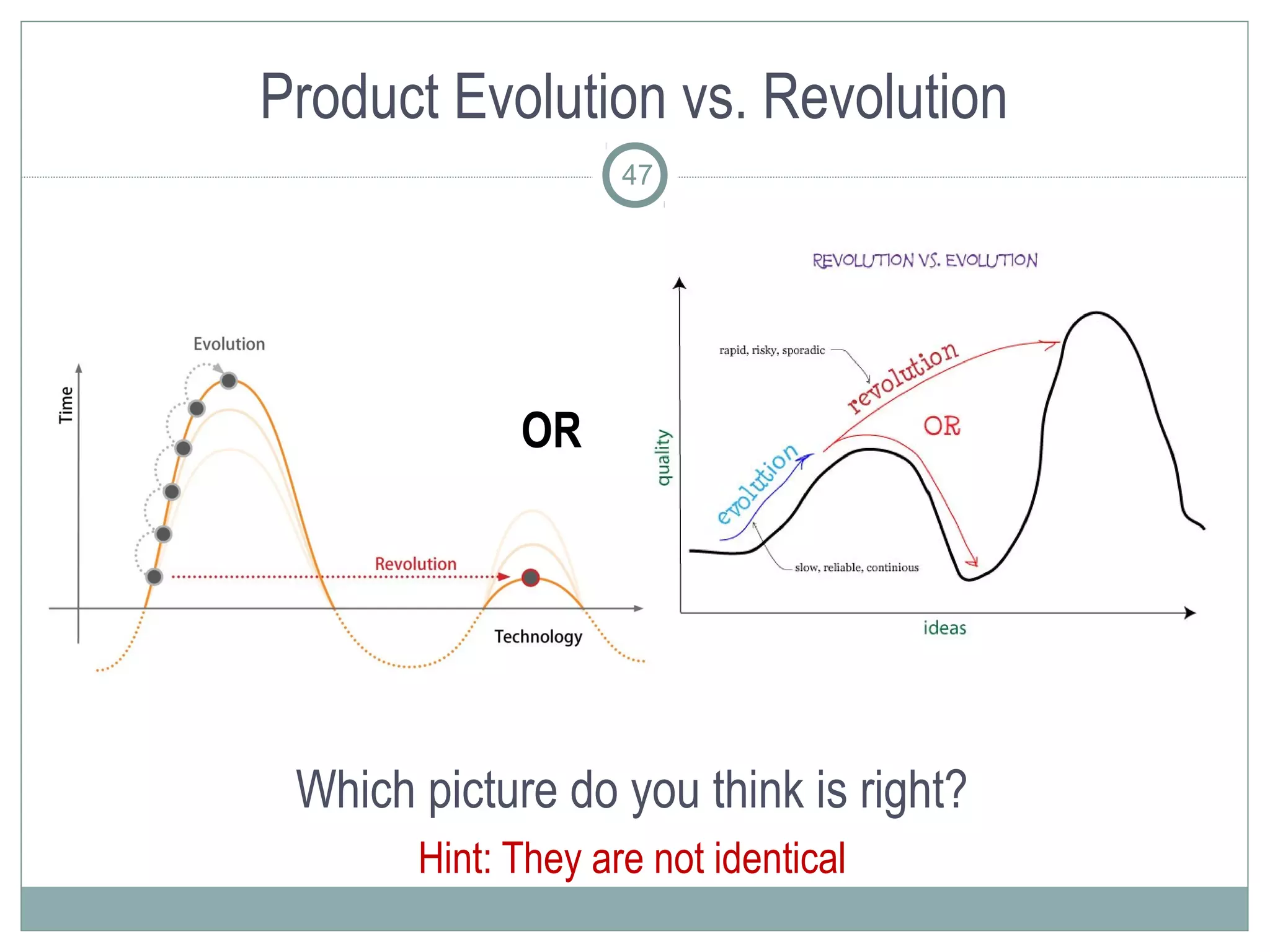
Product Evolution vs. Revolution
                    47


             OR


 Which picture do you think is right?
       Hint: They are not identical
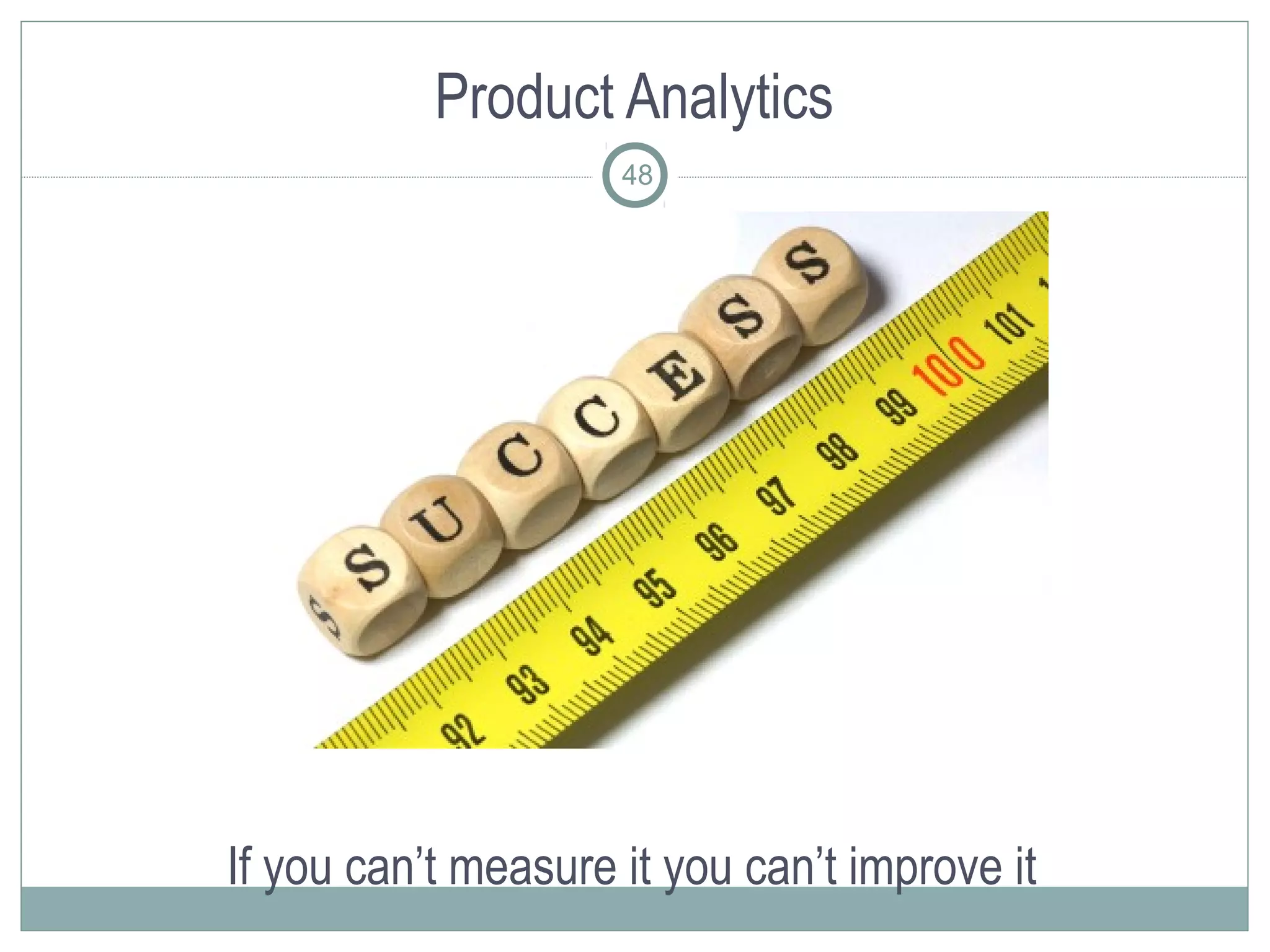
Product Analytics
                     48


If you can’t measure it you can’t improve it
Analytical Tools
       49
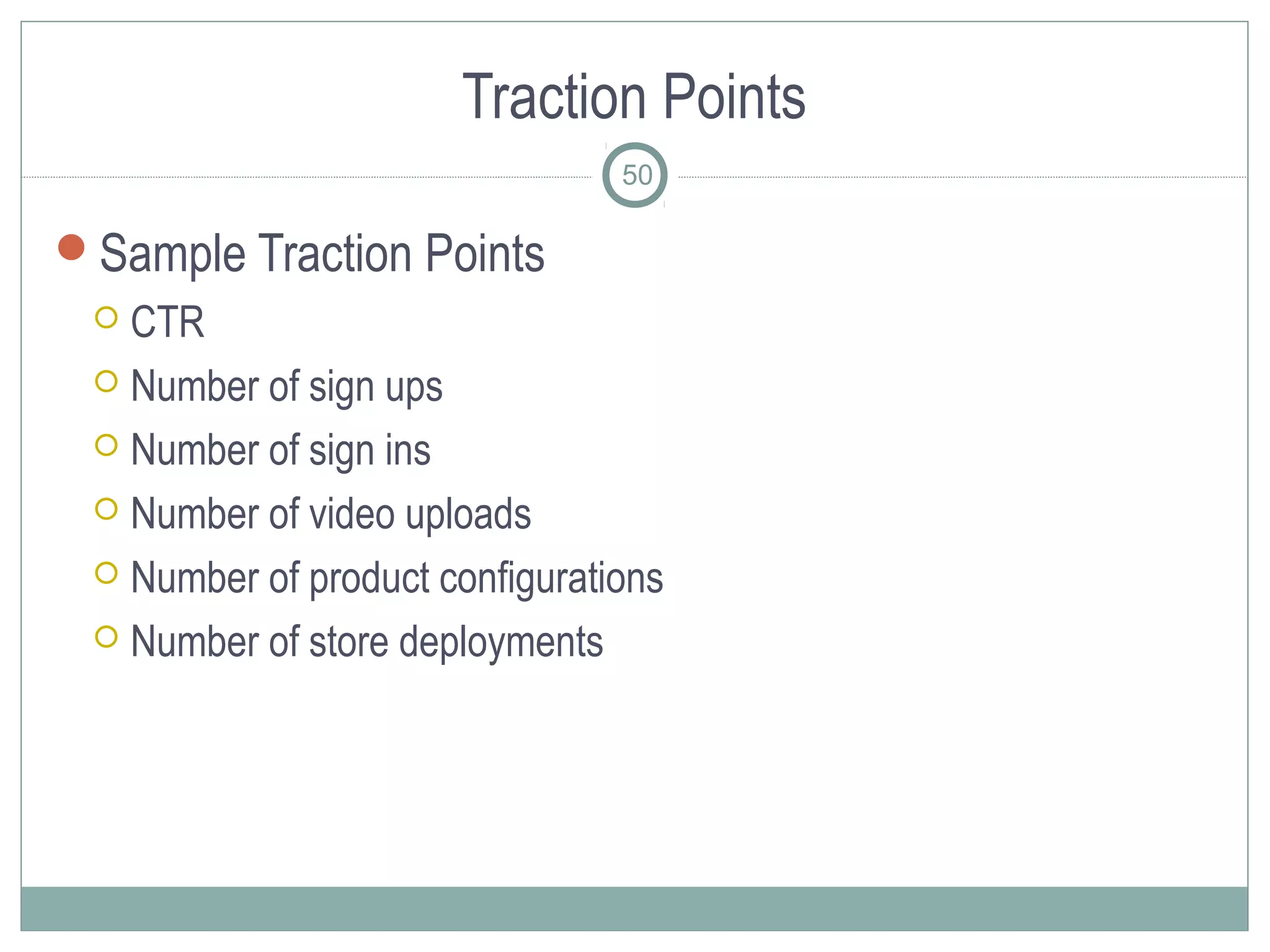
Traction Points
                                50

Sample Traction Points
  CTR
  Number of sign ups

  Number of sign ins

  Number of video uploads

  Number of product configurations

  Number of store deployments
User Testing
           51


ABT – Always Be Testing
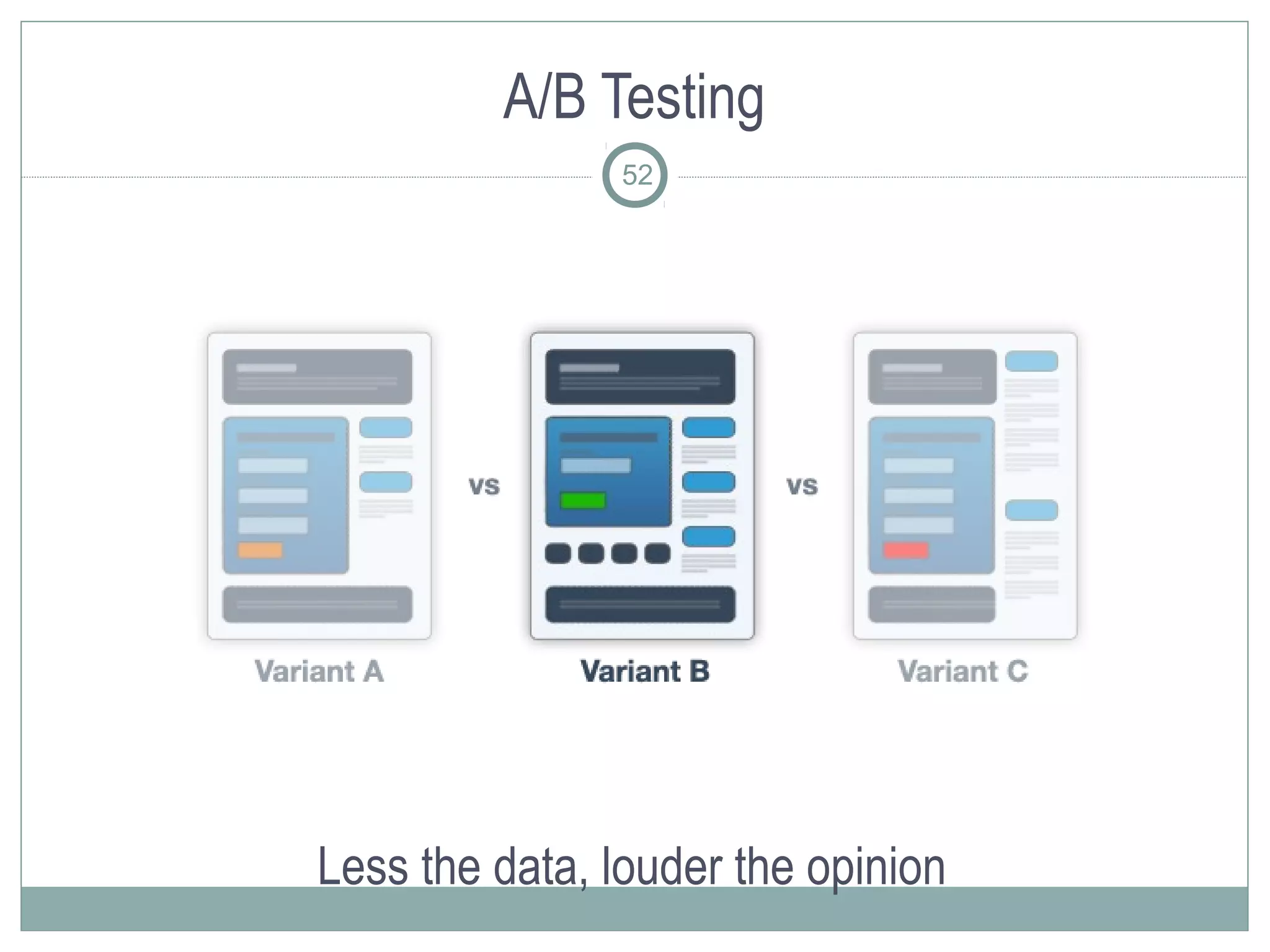
A/B Testing
               52


Less the data, louder the opinion
What Can Be A/B Tested?
                          53

Headline
Lead (first sentence)
Hero Shot
Font
Color
Call To Action
Number of Steps in the Funnel
Algorithm
A/B Testing Tools
       54
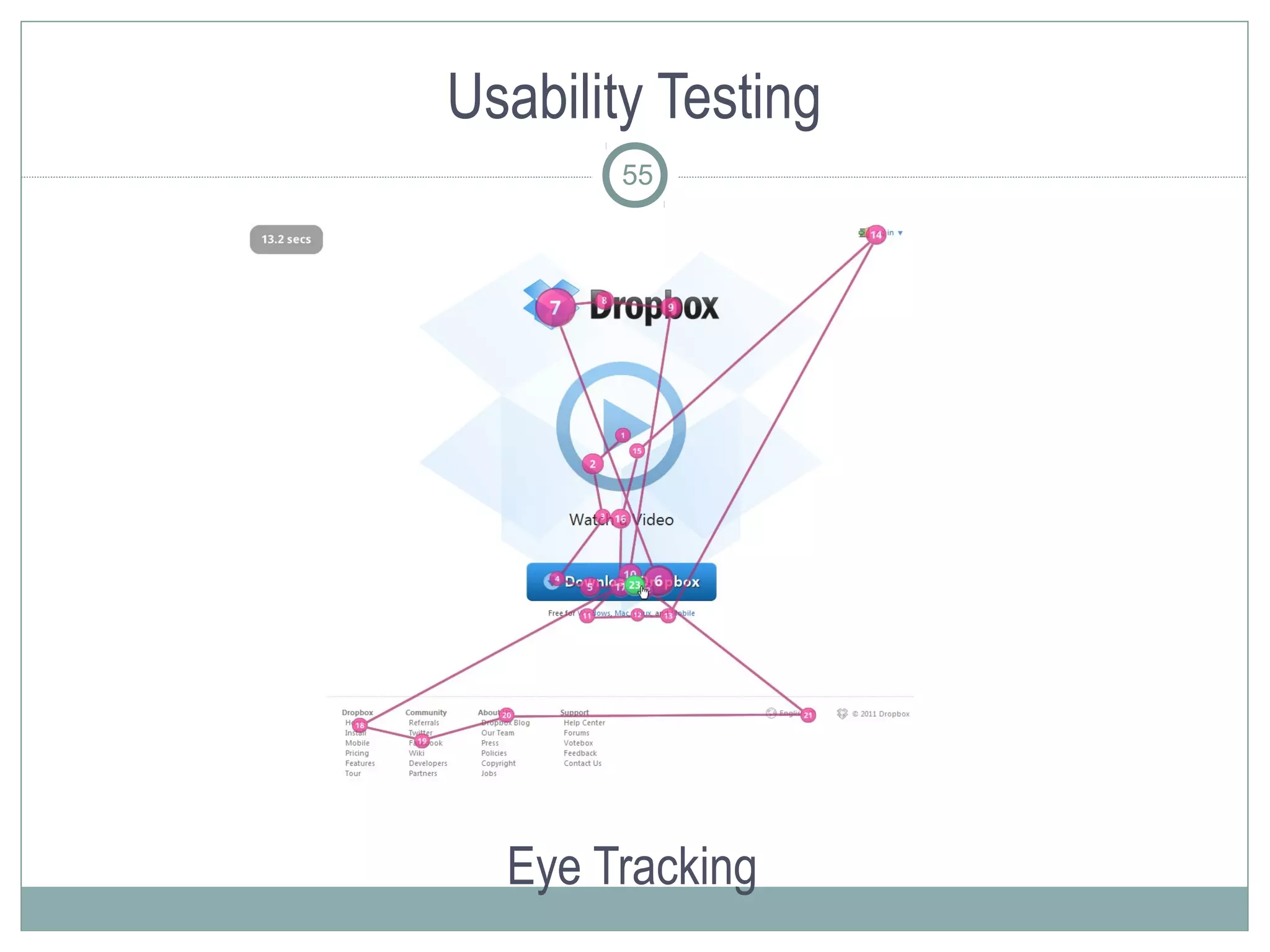
Usability Testing
       55


  Eye Tracking
What Are They Measuring?
                          56

Attention
Emotion
Task Completion Time
Hovering
Clicks
Hotspotting
Path
Usability Testing Tools
          57
Business Metrics
                               58

Sample Business Metrics
  CPA (Cost Per Acquisition)
  Churn

  Break Even Duration

  TOC (Total Cost of Ownership)

  LTV (Live Time Value)

  Average Support Contracts
Prototype Starting Point
                      59


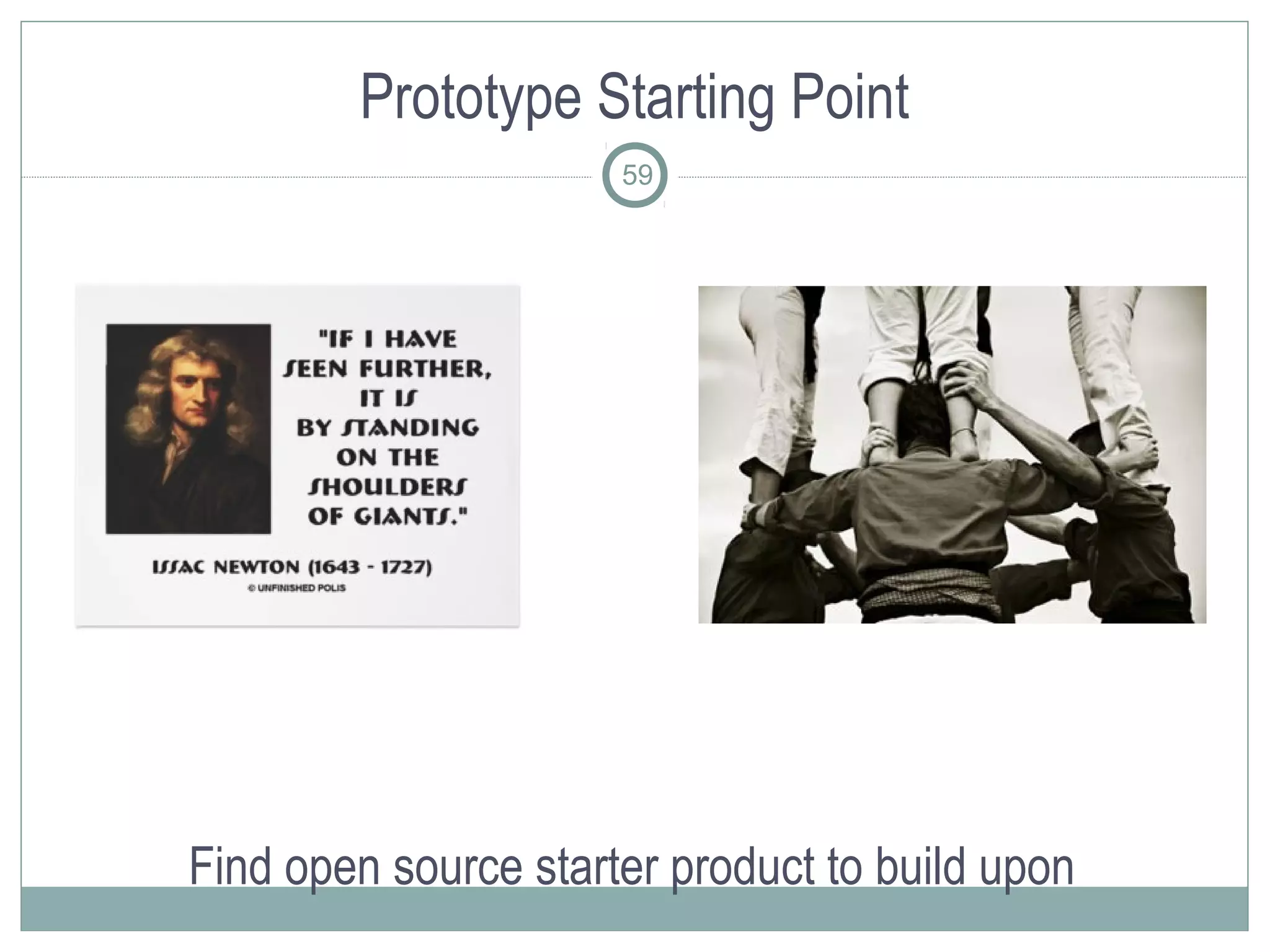
Find open source starter product to build upon
Prototype Features
        60
Prototype Features
                                   61

Features need to prove business hypothesis aka core
 functionality
  Usability trumps completeness
  Speed trumps completeness

Some Business models are too complex for an
 evolutionary prototype. You might have to settle for throw
 away prototype
  Too much technical debt to remedy
  Too expensive to evolve

  Can’t find needed resources

What to do once you have an idea

  • 1.
    What to DoOnce You Have an Idea 1 FAST START STUDIO SERGEY SUNDUKOVSKIY PH.D.
  • 2.
  • 3.
  • 4.
    Agenda 4 Visualizing Your Idea Putting Together a Deck Finding Co-Founders/Mentors/Advisors Building a Prototype
  • 5.
    Startup Progression 5 Idea is not a product, product is not a company
  • 6.
    Visuals 6 Idea Description Idea Visualization Wireframes Mockups (UI) Clickable Prototype (UX) Videolize Mind Mapping
  • 7.
    Idea Description 7 Idea Description  Success Calculator: Inventor (cloud over the head). Many factors represented by circles (founder experience circle, previous startup experience circle, competition circle, funding circle, customer circle, market size, industry circle, board of directors circle, product development experience, advisers circle) go into the SourceIgniter Predictor Engine box, what comes out is a Success Score
  • 8.
  • 9.
  • 10.
  • 11.
  • 12.
    Videolize 12 Videolize aka video scribe – Same as visualize only better
  • 13.
    Putting Together aDeck 13 10-20-30 Rule Show Do Not Tell Taxicab and Elevator Pitches Target Customer Market Analysis Differentiation and JUD Pressure Testing Competitive Advantages
  • 14.
    Business Plan vs.Business Deck 14 Business Plan as we knew it in the Business School is dead
  • 15.
  • 16.
    Deck Rules 16 10 slides  In reality it is 3 (others are used as reference) 20 min  In reality it is 5 (at most) 30 point font  Last guy from the end of the table  Too much information
  • 17.
    Deck Rules 17 Picture is always better !!!!! It is worth 84.1 words
  • 18.
    Deck Structure 18 Executive Summary Financial Projections Problem Competitors Solution Differentiation Platform Competitive Advantages Market Opportunity Team Business Model Milestones/Roadmap Pricing
  • 19.
    Mind Mapping 19 Organize Your Thoughts
  • 20.
  • 21.
  • 22.
    Pitches 22 Taxicab Pitch “Facebook for teenagers”, “Flicker for Video” Elevator Pitch  What do we do?  Who are we doing it for?  How are we different? “ConferenceByWire is an event streaming solution that brings live and on-demand events directly to the remote viewers over the Internet. Unlike other solutions it does not require significant infrastructure investment”
  • 23.
    Pressure Testing 23 Have your idea and the pitch pressure tested Do not insist on NDAs. Nobody cares
  • 24.
  • 25.
    Differentiation 25 Distinction without difference
  • 26.
    Differentiation 26 Features Business Model Target Audience
  • 27.
    Differentiation and JUD 27 What Investors Are Looking For?  JUD – Just Enough Difference  Different Enough  Not Too Different Valid Question  “Why existing competitors are not focused in ‘this’ area?” Invalid Question  “Why wouldn’t existing competitors replicate ‘this’?”
  • 28.
    Competitive Strategies 28 Prices  We are just like that only cheaper Differentiation  We are just like that with following differences Niche  We are just like that only verticalized
  • 29.
    Competitive Advantages 29 Not Easy to Overcome  Original Content  Execution  Loyal Customer Base  Brand Awareness Easy to Overcome  Patents  First Mover  Obscurity
  • 30.
    Deck Distribution 30 Push your deck online
  • 31.
    Finding Co-Founders/Mentors/Advisors 31 Co-Founder Selection Criteria Finding Co-Founders Commitment vs. Involvement Mentor/Advisor Selection Criteria Mentor/Advisor Expectations Incubators
  • 32.
    Co-Founder Selection Criteria 32 NOT GOOD BAD GOOD
  • 33.
  • 34.
    Co-Founder Selection Criteria(cont.) 34 Complementary Skillset Worked Together Before Similar Work Ethic Similar Commitment Level Similar Conflict Resolution Style Can Disagree and Commit Ideal Number of Co-Founders is 3
  • 35.
  • 36.
    Decide How toDecide 36 Do no block unless you feel very strongly about it
  • 37.
    Mentor vs. Advisor 37 Expectation Setting  Hands On vs. Not Hands On Mentor  Advice Advisor  Cover Gaps  Pressure Testing  Industry IQ  Introductions
  • 38.
    Mentoring 38 Real difference is focus. Mentors focus on you. What do advisors focus on?
  • 39.
    Incubators 39 Help Getting Started Learning the Ropes Good Mentors Great Advisors Helpful Introductions Right Atmosphere Place to “Hang Your Hat”
  • 40.
    Right Incubator Program 40 Make sure to pick a right program for you
  • 41.
    Building a Prototype 41 Prototype Purpose Prototype Features Prototype Duration Prototype Starting Point Evolutionary vs. Throwaway
  • 42.
    Fine Line 42 Half-Baked and the Prototype are not the same thing
  • 43.
    Building a Prototype 43 If you are not failing you are not trying hard enough
  • 44.
    Product Development 44 Startup DNA by Yevgeniy Brikman
  • 45.
    Product Development 45 Startup DNA by Yevgeniy Brikman
  • 46.
    Prototype Purpose 46 Fail Quickly and Pivot Prove Business Hypothesis Discover Inflection Points Collect Customer Feedback Collect Initial Analytics Zero in on a Customer Profile Get Funding
  • 47.
    Product Evolution vs.Revolution 47 OR Which picture do you think is right? Hint: They are not identical
  • 48.
    Product Analytics 48 If you can’t measure it you can’t improve it
  • 49.
  • 50.
    Traction Points 50 Sample Traction Points  CTR  Number of sign ups  Number of sign ins  Number of video uploads  Number of product configurations  Number of store deployments
  • 51.
    User Testing 51 ABT – Always Be Testing
  • 52.
    A/B Testing 52 Less the data, louder the opinion
  • 53.
    What Can BeA/B Tested? 53 Headline Lead (first sentence) Hero Shot Font Color Call To Action Number of Steps in the Funnel Algorithm
  • 54.
  • 55.
    Usability Testing 55 Eye Tracking
  • 56.
    What Are TheyMeasuring? 56 Attention Emotion Task Completion Time Hovering Clicks Hotspotting Path
  • 57.
  • 58.
    Business Metrics 58 Sample Business Metrics  CPA (Cost Per Acquisition)  Churn  Break Even Duration  TOC (Total Cost of Ownership)  LTV (Live Time Value)  Average Support Contracts
  • 59.
    Prototype Starting Point 59 Find open source starter product to build upon
  • 60.
  • 61.
    Prototype Features 61 Features need to prove business hypothesis aka core functionality  Usability trumps completeness  Speed trumps completeness Some Business models are too complex for an evolutionary prototype. You might have to settle for throw away prototype  Too much technical debt to remedy  Too expensive to evolve  Can’t find needed resources

Editor's Notes

  • #11 http://underdoggraphics.com/app1/
  • #12 http://underdoggraphics.com/app1/
  • #13 http://wecarpool.com/ http://www.conferencebywire.com/
  • #21 http://underdoggraphics.com/app1/