the Learning Startup
From Business_Idea to Company_Creation

Customer_Problem_Solution
           Market_Competitive_Landscape
            Master of Complex Actions, SISSA, Trieste
                     Leonardo Zangrando, MBA, MSc
                                 February 26th, 2011
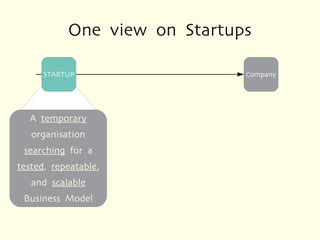
One view on Startups

      STARTUP                 Company


  A temporary
   organisation
 searching for a
tested, repeatable,
   and scalable
 Business Model
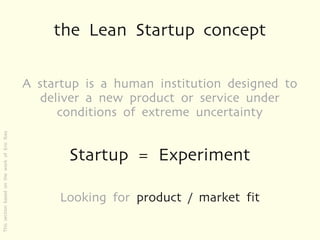
the Lean Startup concept

                                              A startup is a human institution designed to
                                                 deliver a new product or service under
                                                    conditions of extreme uncertainty
This section based on the work of Eric Ries


                                                     Startup = Experiment

                                                    Looking for product / market fit
the Lean Startup concept
               Pivot
  change direction but stay ground
     in what you have learned


If we can reduce time between pivots
we can increase our odds of success
    before we run out of money
the Lean Startup concept
                    Value
       Which activities create value
       and which are just a waste?


     In traditional business, value is created
by delivering a product or a service to customers
the Lean Startup concept
          Value in startups

 In a startup, the product and customer
            are still unknown


Validated learning about customers

      Looking for product / market fit
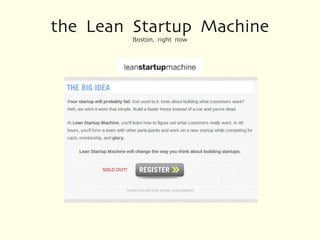
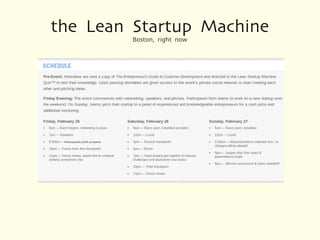
the Lean Startup Machine
        Boston, right now
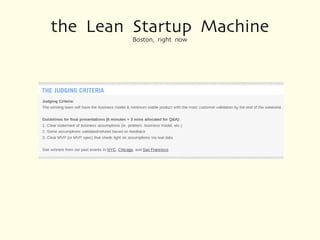
the Lean Startup Machine
        Boston, right now
the Lean Startup Machine
        Boston, right now
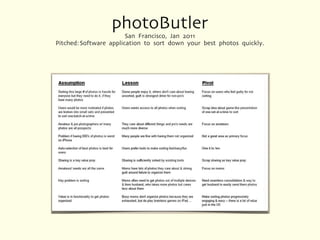
photoButler
                        San Francisco, Jan 2011
Pitched: Software application to sort down your best photos quickly.
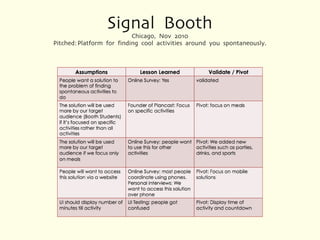
Signal Booth
                           Chicago, Nov 2010
Pitched: Platform for finding cool activities around you spontaneously.
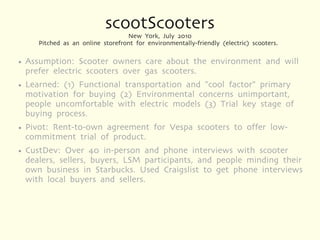
scootScooters
                                    New York, July 2010
       Pitched as an online storefront for environmentally-friendly (electric) scooters.

●   Assumption: Scooter owners care about the environment and will
    prefer electric scooters over gas scooters.
●   Learned: (1) Functional transportation and "cool factor" primary
    motivation for buying (2) Environmental concerns unimportant,
    people uncomfortable with electric models (3) Trial key stage of
    buying process.
●   Pivot: Rent-to-own agreement for Vespa scooters to offer low-
    commitment trial of product.
●   CustDev: Over 40 in-person and phone interviews with scooter
    dealers, sellers, buyers, LSM participants, and people minding their
    own business in Starbucks. Used Craigslist to get phone interviews
    with local buyers and sellers.
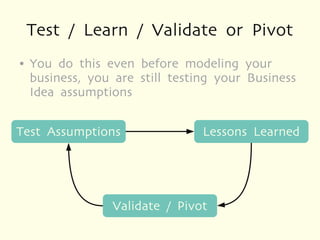
Test / Learn / Validate or Pivot
●   You do this even before modeling your
    business, you are still testing your Business
    Idea assumptions


Test Assumptions                 Lessons Learned


                 Validate / Pivot
Test Assumptions
●   What is the Minimum viable Product to test my
    assumption(s)?
●   Classic startup fallacy: “ship it and see what
    happens.” Whenever you use this plan, you are
    guaranteed to succeed – at seeing what happens.
●   You want to learn, and – most importantly,
●   get another turn through the feedback loop

●   Plan your MVP and measures so that you test/reject
    your assumption and in the process learn something
    that will allow you to proceed
Validate Business Idea
●   Business Idea assumptions
    ●   Customer / Problem / Solution
    ●   Competitive Landscape
    ●   Market
Customer / Problem / Solution
●   It's the key starting point
●   Iterate through this all the time
●   Objectives
    ●   Problem Statement
    ●   Product Requirements
    ●   Customer Archetype (a-day-in-the-life)
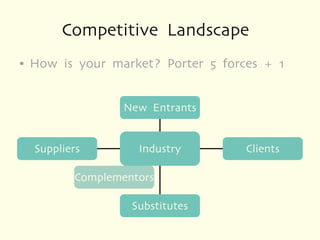
Competitive Landscape
●   How is your market? Porter 5 forces + 1


                   New Entrants


    Suppliers        Industry        Clients

           Complementors

                    Substitutes
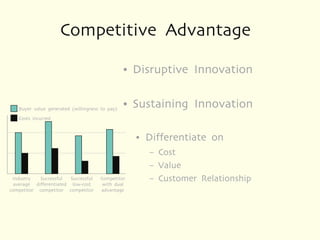
Competitive Advantage
                                                ●   Disruptive Innovation
                                                        → get market share
   Buyer value generated (willingness to pay)
                                                ●   Sustaining Innovation
   Costs incurred
                                                        → get market share
                                                    ●   Differentiate on
                                                        –   Cost
                                                        –   Value
 Industry   Successful  Successful   Competitor         –   Customer Relationship
 average differentiated low-cost      with dual
competitor competitor competitor     advantage
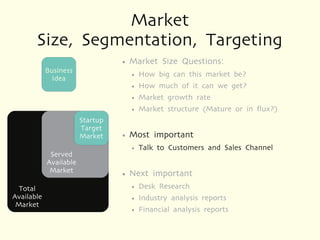
Market
       Size, Segmentation, Targeting
                                  ●   Market Size Questions:
            Business                  ●   How big can this market be?
              Idea
                                      ●   How much of it can we get?
                                      ●   Market growth rate
                                      ●   Market structure (Mature or in flux?)
                        Startup
                        Target
                        Market    ●   Most important
                                      ●   Talk to Customers and Sales Channel
             Served
            Available
             Market               ●   Next important
  Total                               ●   Desk Research
Available                             ●   Industry analysis reports
 Market
                                      ●   Financial analysis reports
the Learning Startup
From Business_Idea to Company_Creation

              thank you!
           Leonardo Zangrando
           the Learning Startup

            leo@zangrando.com

MCA lesson 2 presentation

  • 1.
    the Learning Startup FromBusiness_Idea to Company_Creation Customer_Problem_Solution Market_Competitive_Landscape Master of Complex Actions, SISSA, Trieste Leonardo Zangrando, MBA, MSc February 26th, 2011
  • 2.
    One view onStartups STARTUP Company A temporary organisation searching for a tested, repeatable, and scalable Business Model
  • 3.
    the Lean Startupconcept A startup is a human institution designed to deliver a new product or service under conditions of extreme uncertainty This section based on the work of Eric Ries Startup = Experiment Looking for product / market fit
  • 4.
    the Lean Startupconcept Pivot change direction but stay ground in what you have learned If we can reduce time between pivots we can increase our odds of success before we run out of money
  • 5.
    the Lean Startupconcept Value Which activities create value and which are just a waste? In traditional business, value is created by delivering a product or a service to customers
  • 6.
    the Lean Startupconcept Value in startups In a startup, the product and customer are still unknown Validated learning about customers Looking for product / market fit
  • 7.
    the Lean StartupMachine Boston, right now
  • 8.
    the Lean StartupMachine Boston, right now
  • 9.
    the Lean StartupMachine Boston, right now
  • 10.
    photoButler San Francisco, Jan 2011 Pitched: Software application to sort down your best photos quickly.
  • 11.
    Signal Booth Chicago, Nov 2010 Pitched: Platform for finding cool activities around you spontaneously.
  • 12.
    scootScooters New York, July 2010 Pitched as an online storefront for environmentally-friendly (electric) scooters. ● Assumption: Scooter owners care about the environment and will prefer electric scooters over gas scooters. ● Learned: (1) Functional transportation and "cool factor" primary motivation for buying (2) Environmental concerns unimportant, people uncomfortable with electric models (3) Trial key stage of buying process. ● Pivot: Rent-to-own agreement for Vespa scooters to offer low- commitment trial of product. ● CustDev: Over 40 in-person and phone interviews with scooter dealers, sellers, buyers, LSM participants, and people minding their own business in Starbucks. Used Craigslist to get phone interviews with local buyers and sellers.
  • 13.
    Test / Learn/ Validate or Pivot ● You do this even before modeling your business, you are still testing your Business Idea assumptions Test Assumptions Lessons Learned Validate / Pivot
  • 14.
    Test Assumptions ● What is the Minimum viable Product to test my assumption(s)? ● Classic startup fallacy: “ship it and see what happens.” Whenever you use this plan, you are guaranteed to succeed – at seeing what happens. ● You want to learn, and – most importantly, ● get another turn through the feedback loop ● Plan your MVP and measures so that you test/reject your assumption and in the process learn something that will allow you to proceed
  • 15.
    Validate Business Idea ● Business Idea assumptions ● Customer / Problem / Solution ● Competitive Landscape ● Market
  • 16.
    Customer / Problem/ Solution ● It's the key starting point ● Iterate through this all the time ● Objectives ● Problem Statement ● Product Requirements ● Customer Archetype (a-day-in-the-life)
  • 17.
    Competitive Landscape ● How is your market? Porter 5 forces + 1 New Entrants Suppliers Industry Clients Complementors Substitutes
  • 18.
    Competitive Advantage ● Disruptive Innovation → get market share Buyer value generated (willingness to pay) ● Sustaining Innovation Costs incurred → get market share ● Differentiate on – Cost – Value Industry Successful Successful Competitor – Customer Relationship average differentiated low-cost with dual competitor competitor competitor advantage
  • 19.
    Market Size, Segmentation, Targeting ● Market Size Questions: Business ● How big can this market be? Idea ● How much of it can we get? ● Market growth rate ● Market structure (Mature or in flux?) Startup Target Market ● Most important ● Talk to Customers and Sales Channel Served Available Market ● Next important Total ● Desk Research Available ● Industry analysis reports Market ● Financial analysis reports
  • 20.
    the Learning Startup FromBusiness_Idea to Company_Creation thank you! Leonardo Zangrando the Learning Startup leo@zangrando.com