What Makes a Predatory Journals and How to
Stop Publishing In it?
Vasantha Raju N.
Librarian
Govt. First Grade College
Talakadu-571 122
vasanthrz@gmail.com
Sham Rao
Librarian
Govt. First Grade College
Kamalapur-585 313
shamraosidle1972@gmail.com
Thimme Gowda
Librarian
LBS Govt. First Grade College
Bengaluru-560 032
How Predatory Journals Concept Was Emerged?
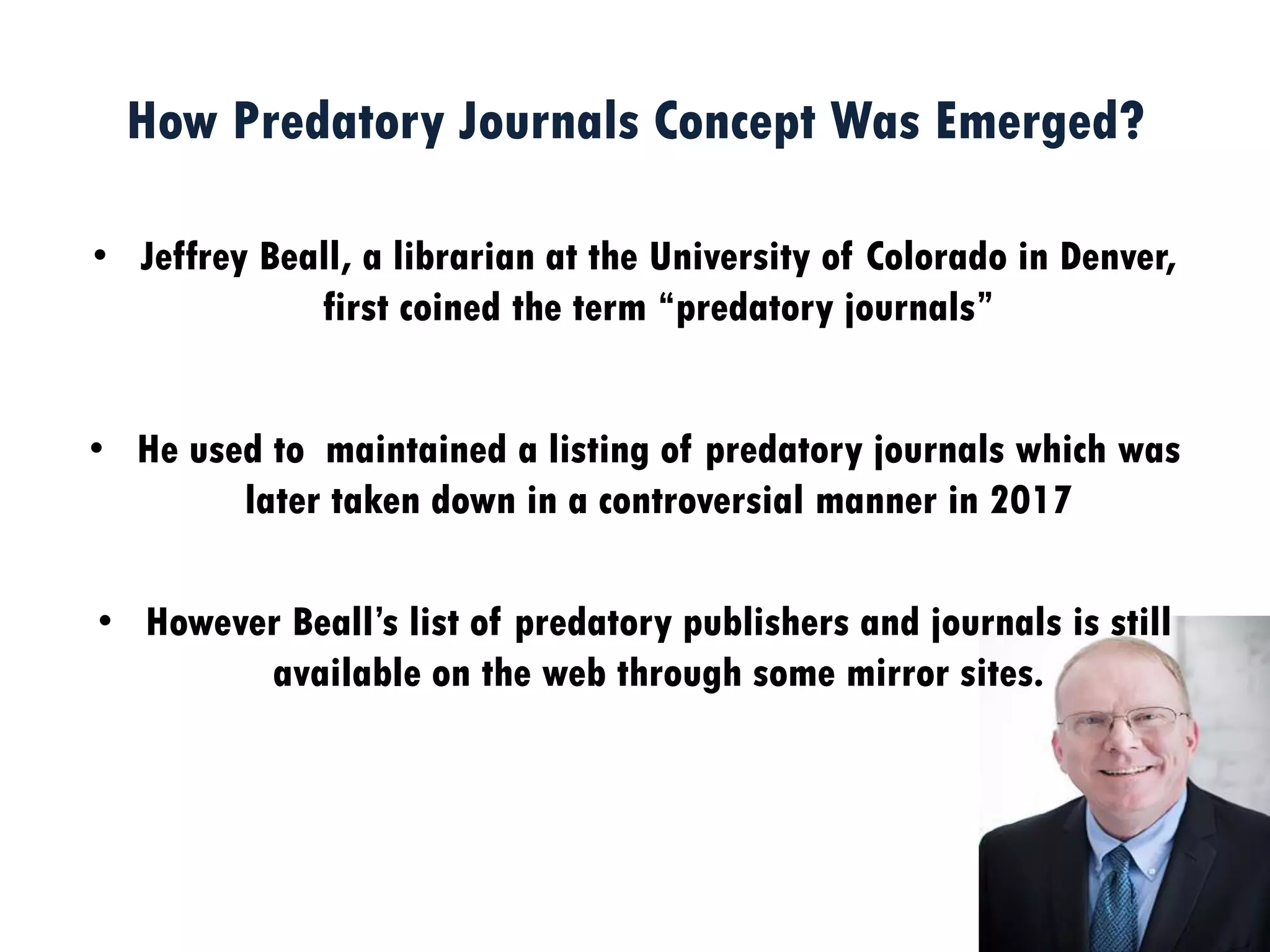
• Jeffrey Beall, a librarian at the University of Colorado in Denver,
first coined the term “predatory journals”
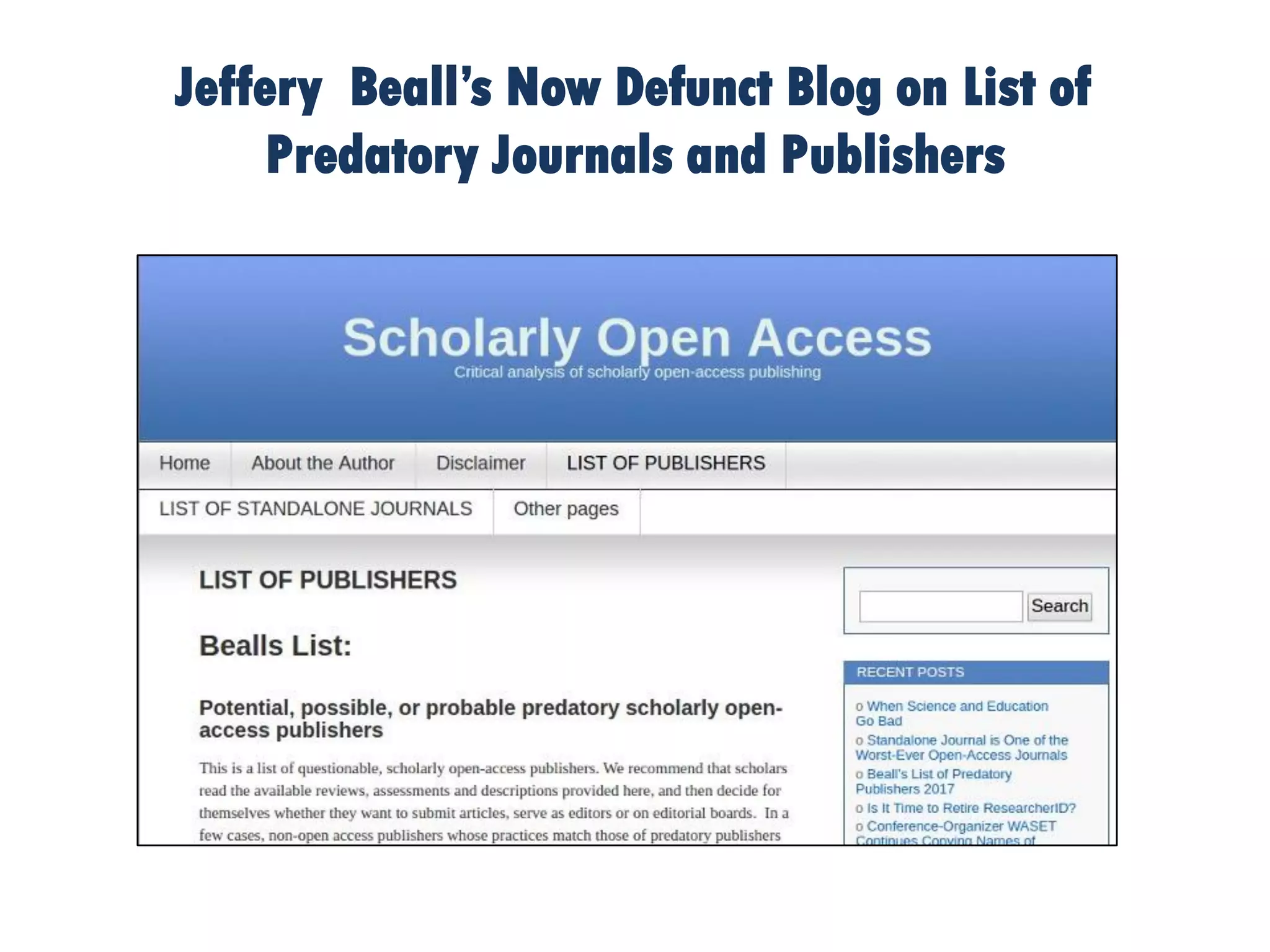
• He used to maintained a listing of predatory journals which was
later taken down in a controversial manner in 2017
• However Beall’s list of predatory publishers and journals is still
available on the web through some mirror sites.
Jeffery Beall’s Now Defunct Blog on List of
Predatory Journals and Publishers
What is Predatory or Fake Journals?
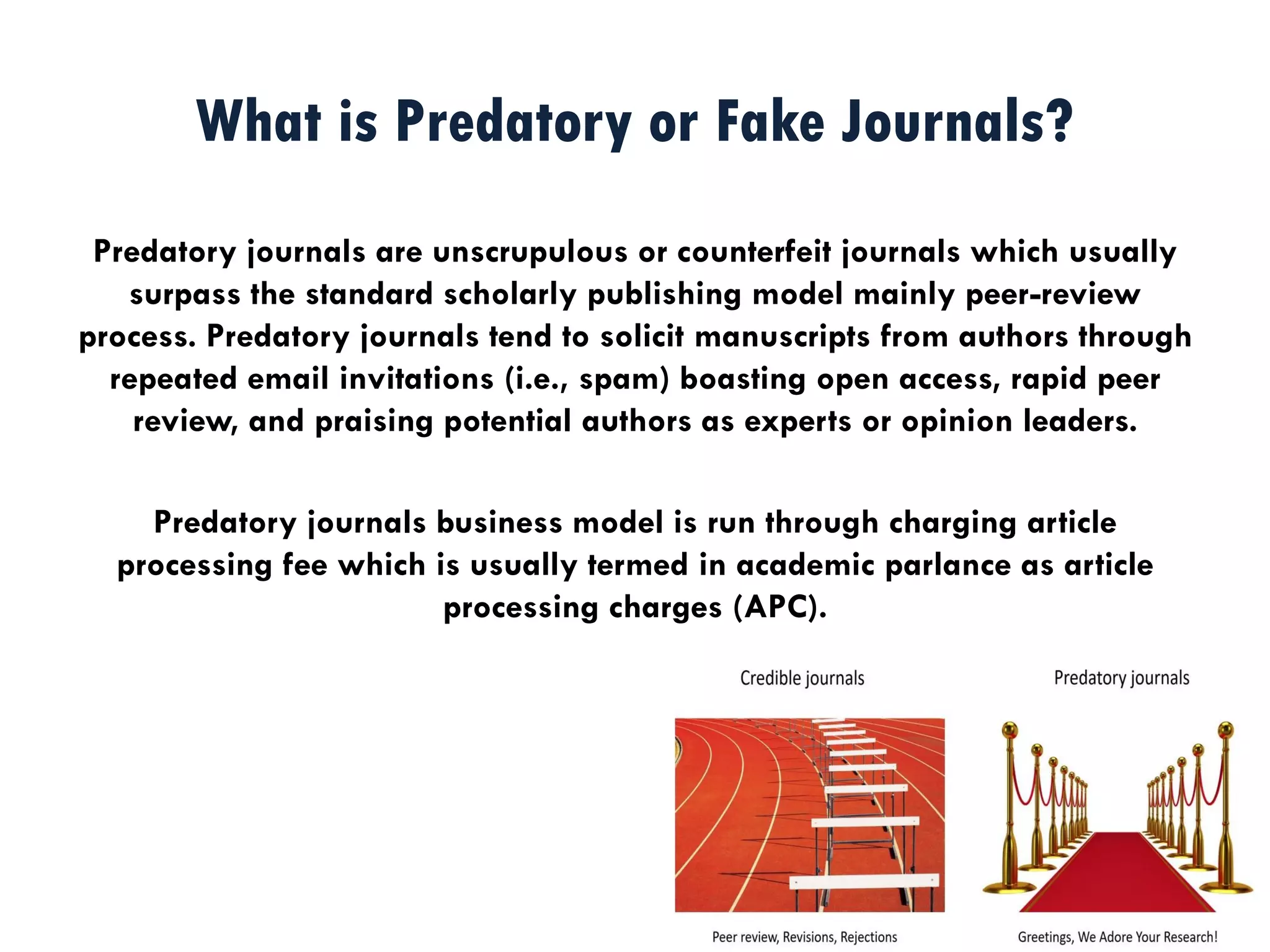
Predatory journals are unscrupulous or counterfeit journals which usually
surpass the standard scholarly publishing model mainly peer-review
process. Predatory journals tend to solicit manuscripts from authors through
repeated email invitations (i.e., spam) boasting open access, rapid peer
review, and praising potential authors as experts or opinion leaders.
Predatory journals business model is run through charging article
processing fee which is usually termed in academic parlance as article
processing charges (APC).
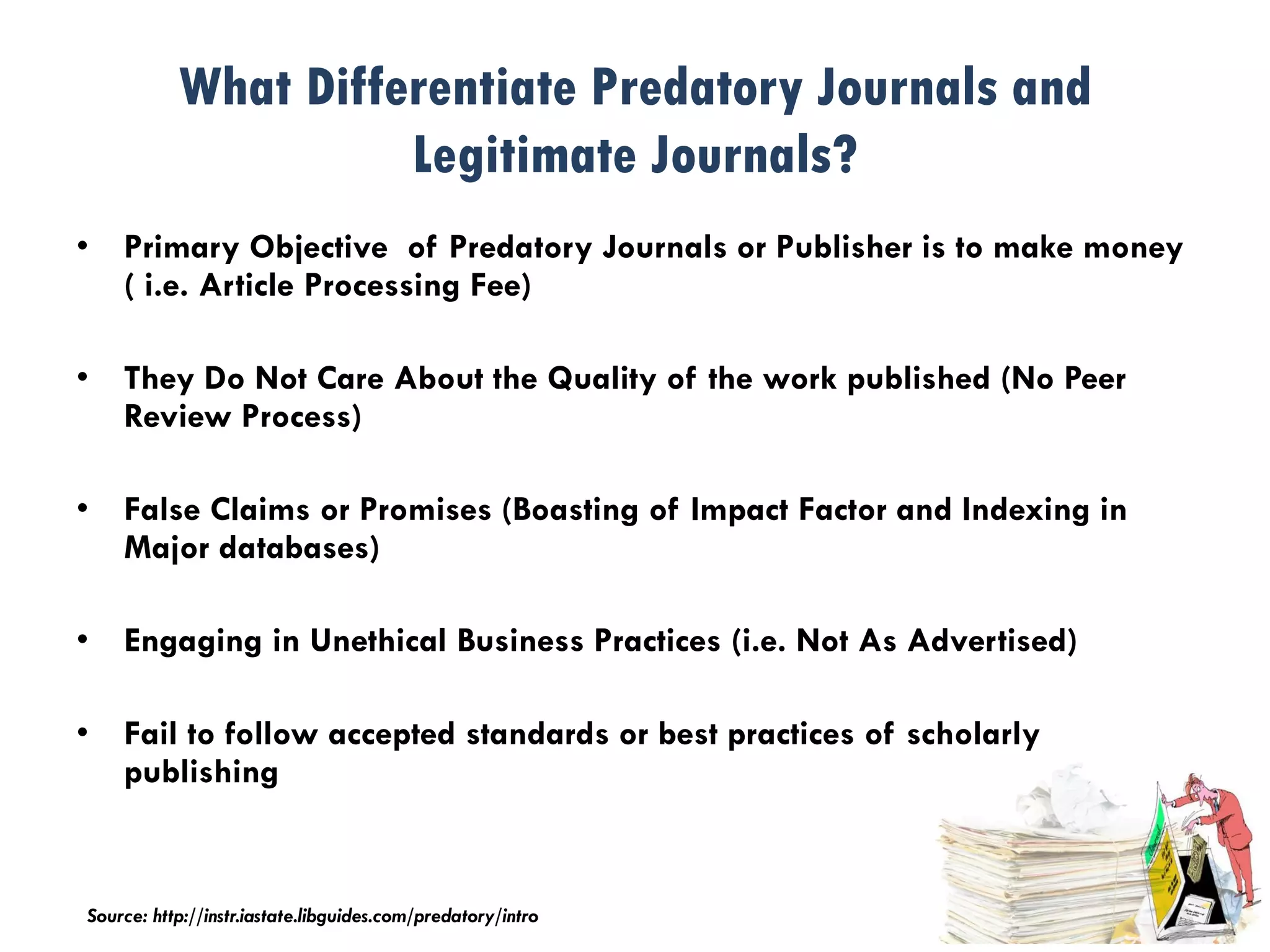
What Differentiate Predatory Journals and
Legitimate Journals?
• Primary Objective of Predatory Journals or Publisher is to make money
( i.e. Article Processing Fee)
• They Do Not Care About the Quality of the work published (No Peer
Review Process)
• False Claims or Promises (Boasting of Impact Factor and Indexing in
Major databases)
• Engaging in Unethical Business Practices (i.e. Not As Advertised)
• Fail to follow accepted standards or best practices of scholarly
publishing
Source: http://instr.iastate.libguides.com/predatory/intro
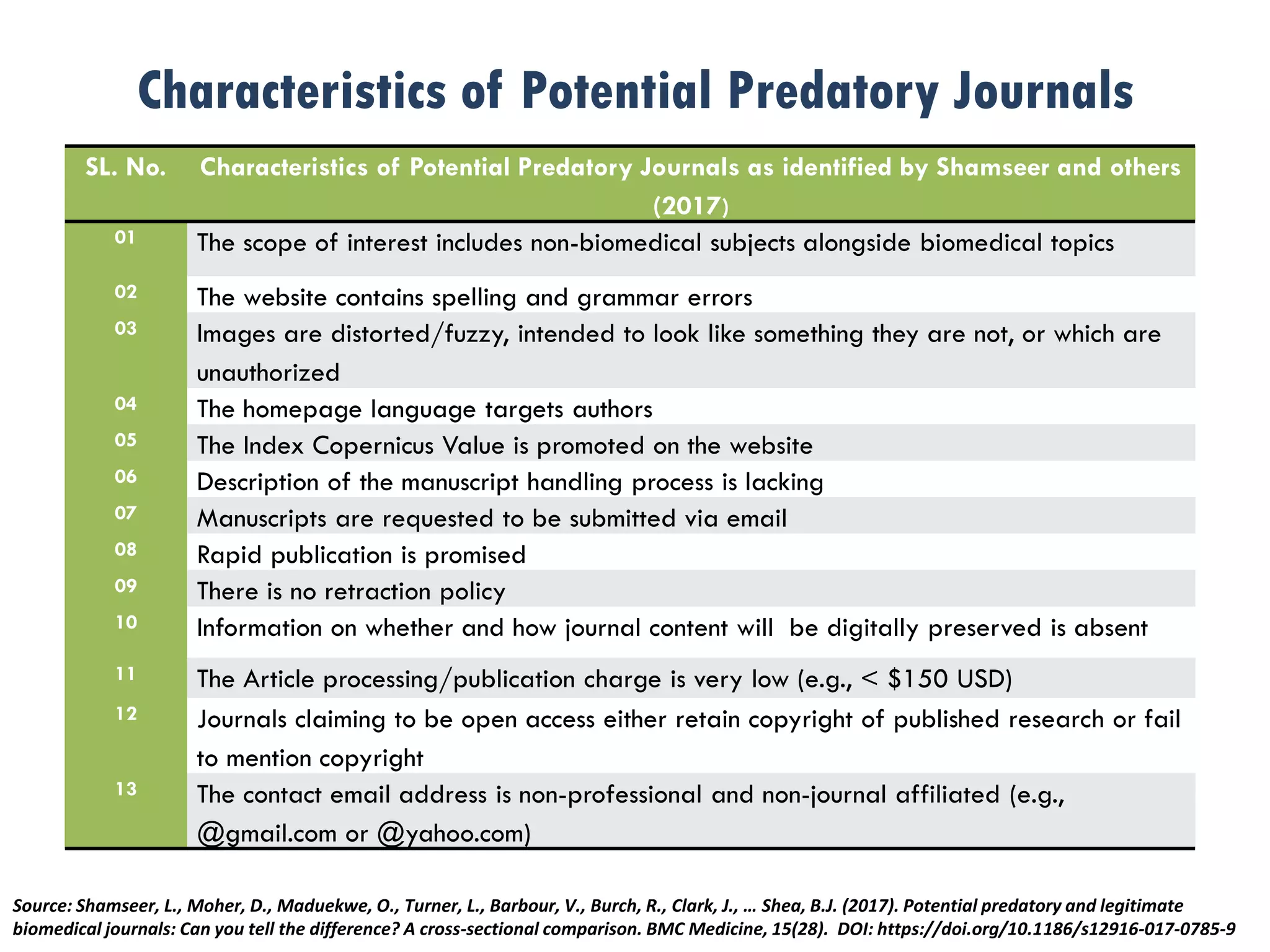
Characteristics of Potential Predatory Journals
SL. No. Characteristics of Potential Predatory Journals as identified by Shamseer and others
(2017)
01 The scope of interest includes non-biomedical subjects alongside biomedical topics
02 The website contains spelling and grammar errors
03 Images are distorted/fuzzy, intended to look like something they are not, or which are
unauthorized
04 The homepage language targets authors
05 The Index Copernicus Value is promoted on the website
06 Description of the manuscript handling process is lacking
07 Manuscripts are requested to be submitted via email
08 Rapid publication is promised
09 There is no retraction policy
10 Information on whether and how journal content will be digitally preserved is absent
11 The Article processing/publication charge is very low (e.g., < $150 USD)
12 Journals claiming to be open access either retain copyright of published research or fail
to mention copyright
13 The contact email address is non-professional and non-journal affiliated (e.g.,
@gmail.com or @yahoo.com)
Source: Shamseer, L., Moher, D., Maduekwe, O., Turner, L., Barbour, V., Burch, R., Clark, J., … Shea, B.J. (2017). Potential predatory and legitimate
biomedical journals: Can you tell the difference? A cross-sectional comparison. BMC Medicine, 15(28). DOI: https://doi.org/10.1186/s12916-017-0785-9
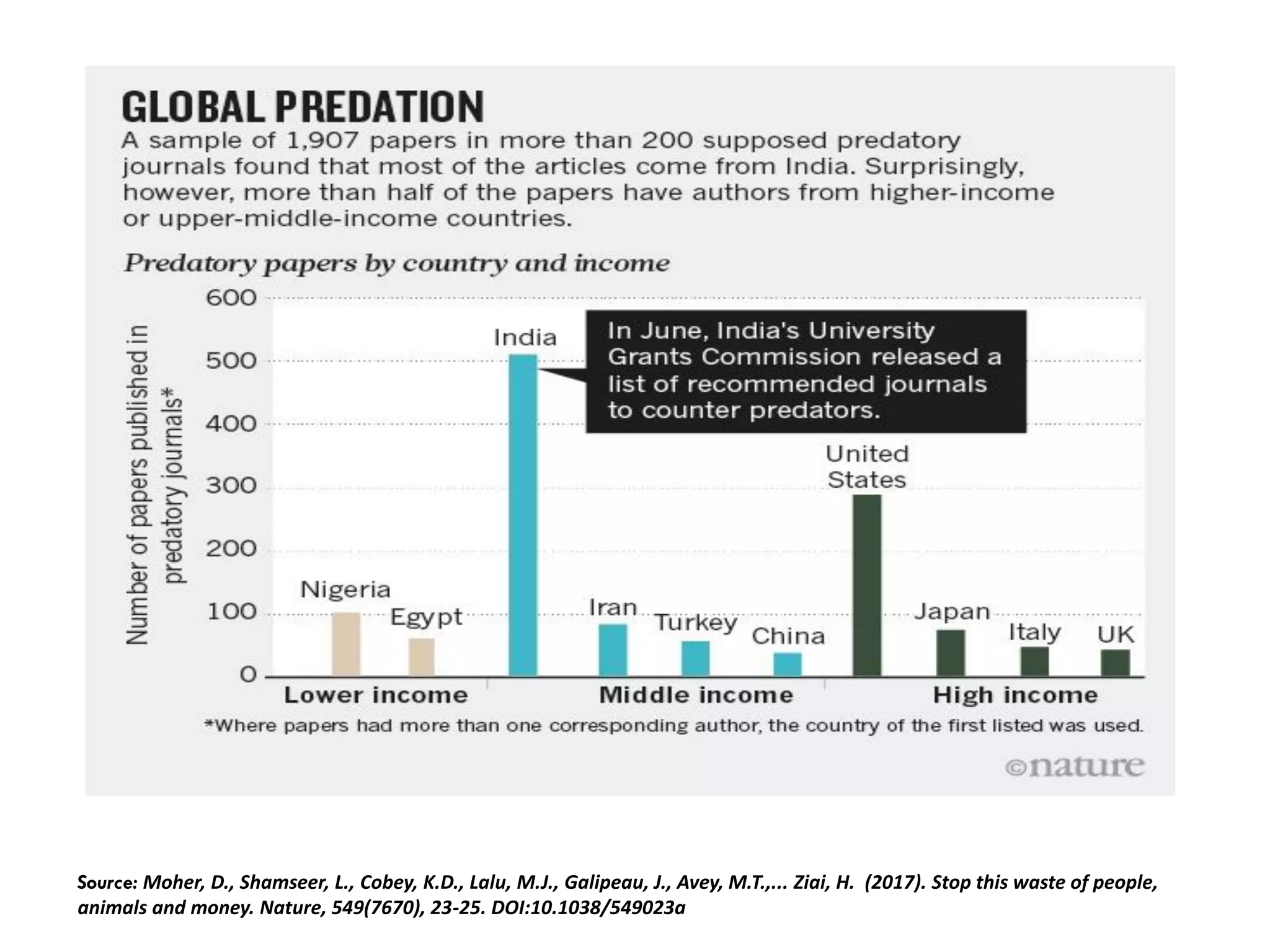
Source: Moher, D., Shamseer, L., Cobey, K.D., Lalu, M.J., Galipeau, J., Avey, M.T.,... Ziai, H. (2017). Stop this waste of people,
animals and money. Nature, 549(7670), 23-25. DOI:10.1038/549023a
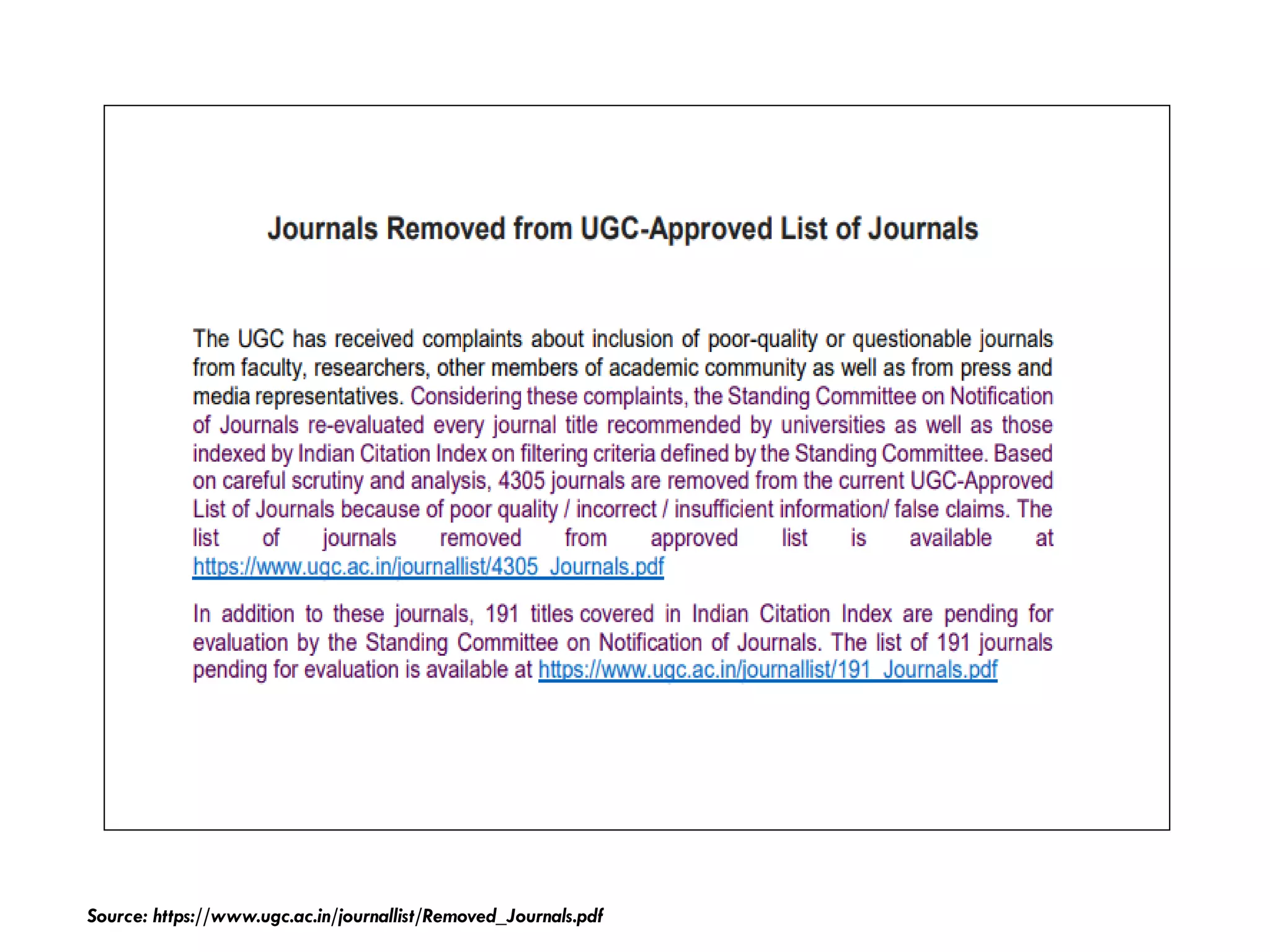
Source: https://www.ugc.ac.in/journallist/Removed_Journals.pdf
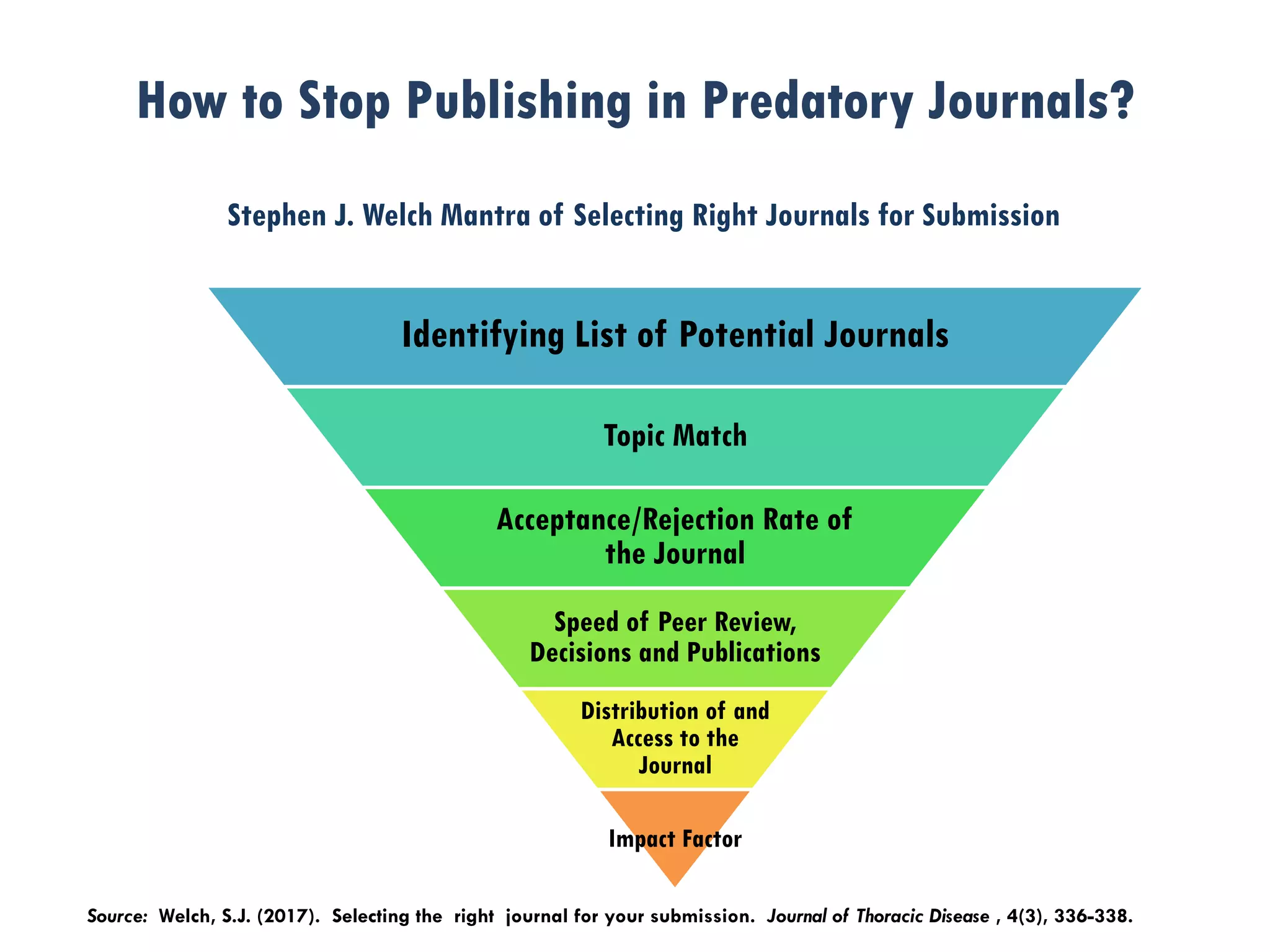
How to Stop Publishing in Predatory Journals?
Identifying List of Potential Journals
Topic Match
Acceptance/Rejection Rate of
the Journal
Speed of Peer Review,
Decisions and Publications
Distribution of and
Access to the
Journal
Impact Factor
Stephen J. Welch Mantra of Selecting Right Journals for Submission
Source: Welch, S.J. (2017). Selecting the right journal for your submission. Journal of Thoracic Disease , 4(3), 336-338.
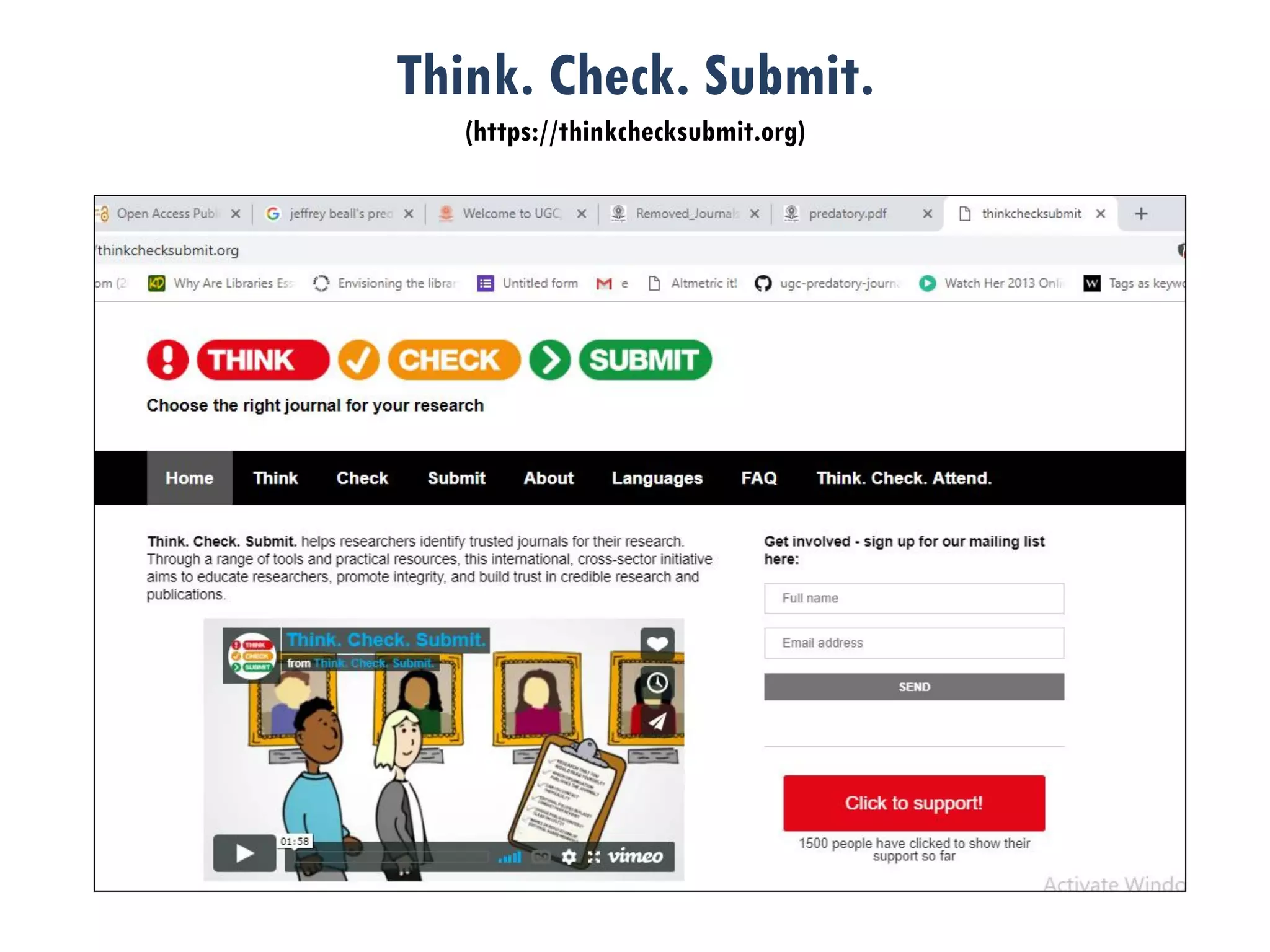
Think. Check. Submit.
(https://thinkchecksubmit.org)
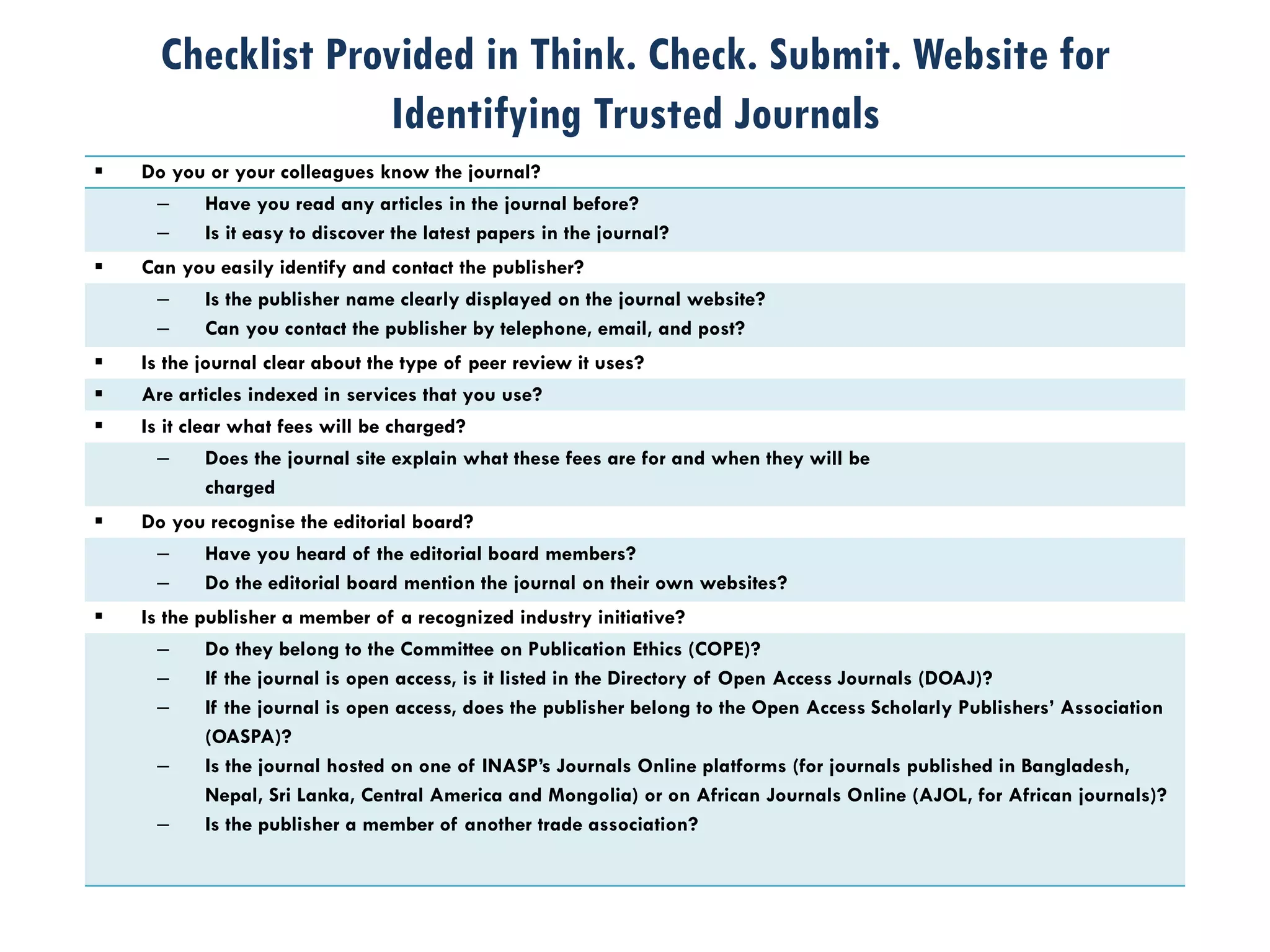
Checklist Provided in Think. Check. Submit. Website for
Identifying Trusted Journals
 Do you or your colleagues know the journal?
– Have you read any articles in the journal before?
– Is it easy to discover the latest papers in the journal?
 Can you easily identify and contact the publisher?
– Is the publisher name clearly displayed on the journal website?
– Can you contact the publisher by telephone, email, and post?
 Is the journal clear about the type of peer review it uses?
 Are articles indexed in services that you use?
 Is it clear what fees will be charged?
– Does the journal site explain what these fees are for and when they will be
charged
 Do you recognise the editorial board?
– Have you heard of the editorial board members?
– Do the editorial board mention the journal on their own websites?
 Is the publisher a member of a recognized industry initiative?
– Do they belong to the Committee on Publication Ethics (COPE)?
– If the journal is open access, is it listed in the Directory of Open Access Journals (DOAJ)?
– If the journal is open access, does the publisher belong to the Open Access Scholarly Publishers’ Association
(OASPA)?
– Is the journal hosted on one of INASP’s Journals Online platforms (for journals published in Bangladesh,
Nepal, Sri Lanka, Central America and Mongolia) or on African Journals Online (AJOL, for African journals)?
– Is the publisher a member of another trade association?
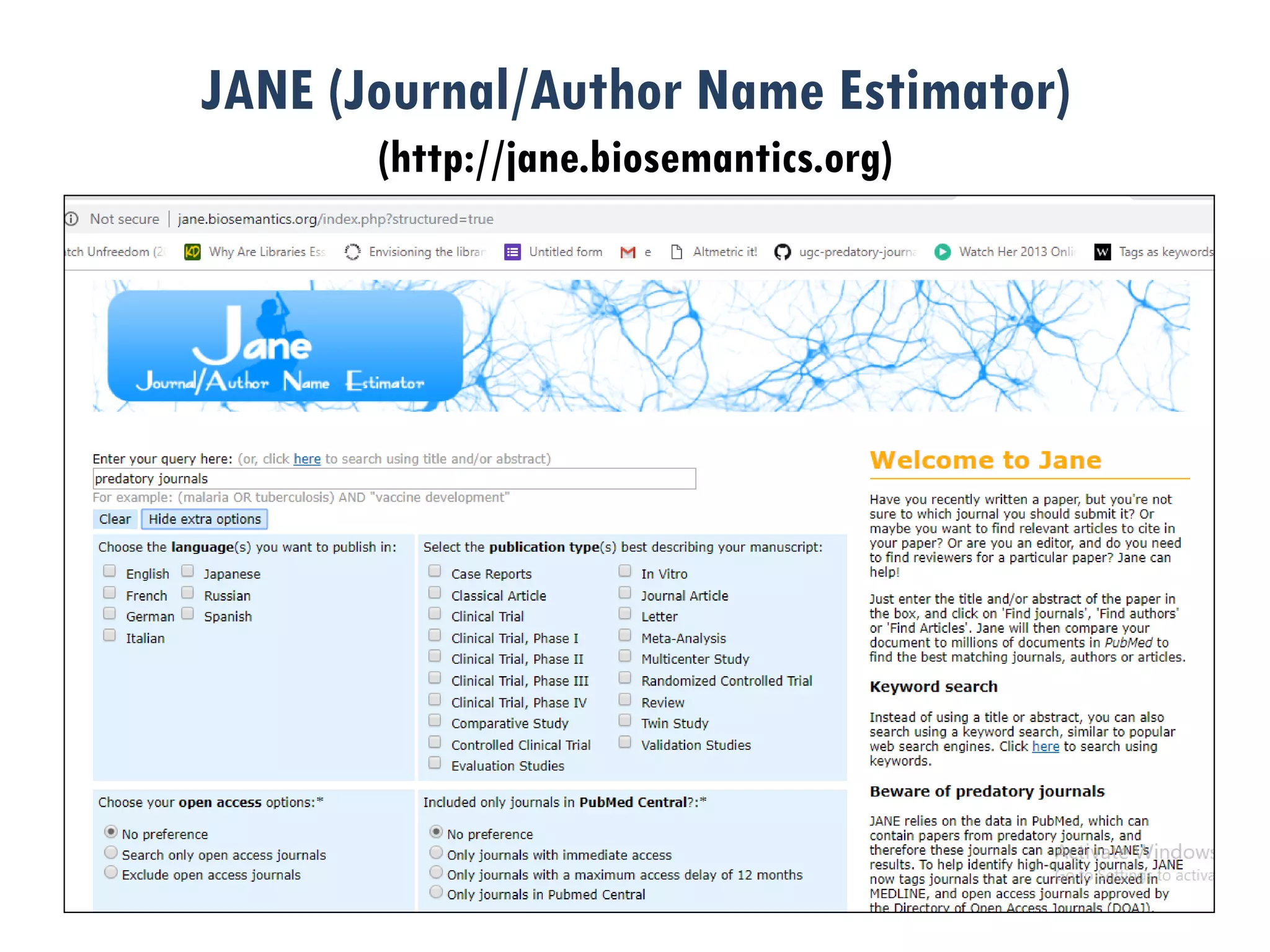
JANE (Journal/Author Name Estimator)
(http://jane.biosemantics.org)
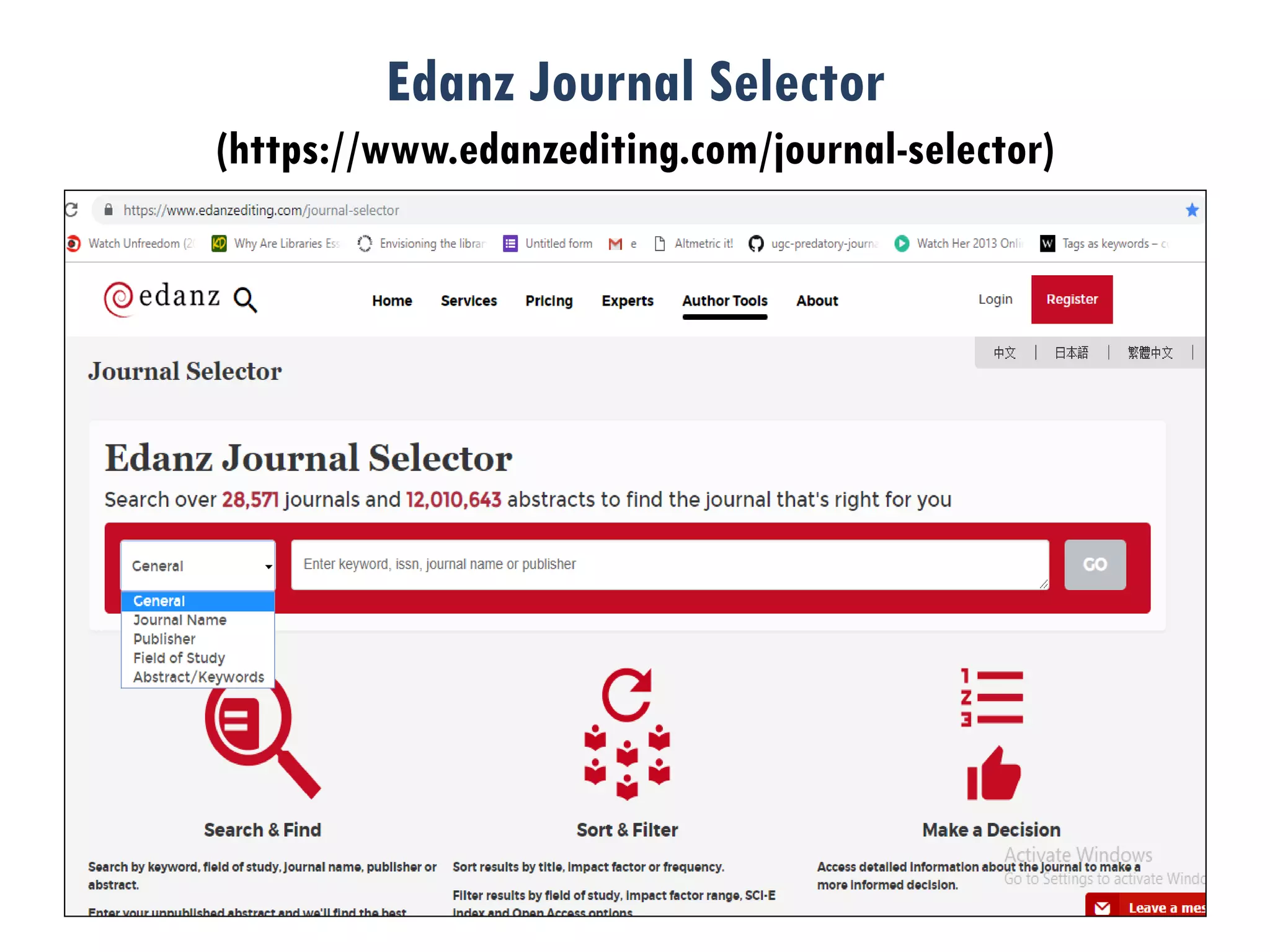
Edanz Journal Selector
(https://www.edanzediting.com/journal-selector)
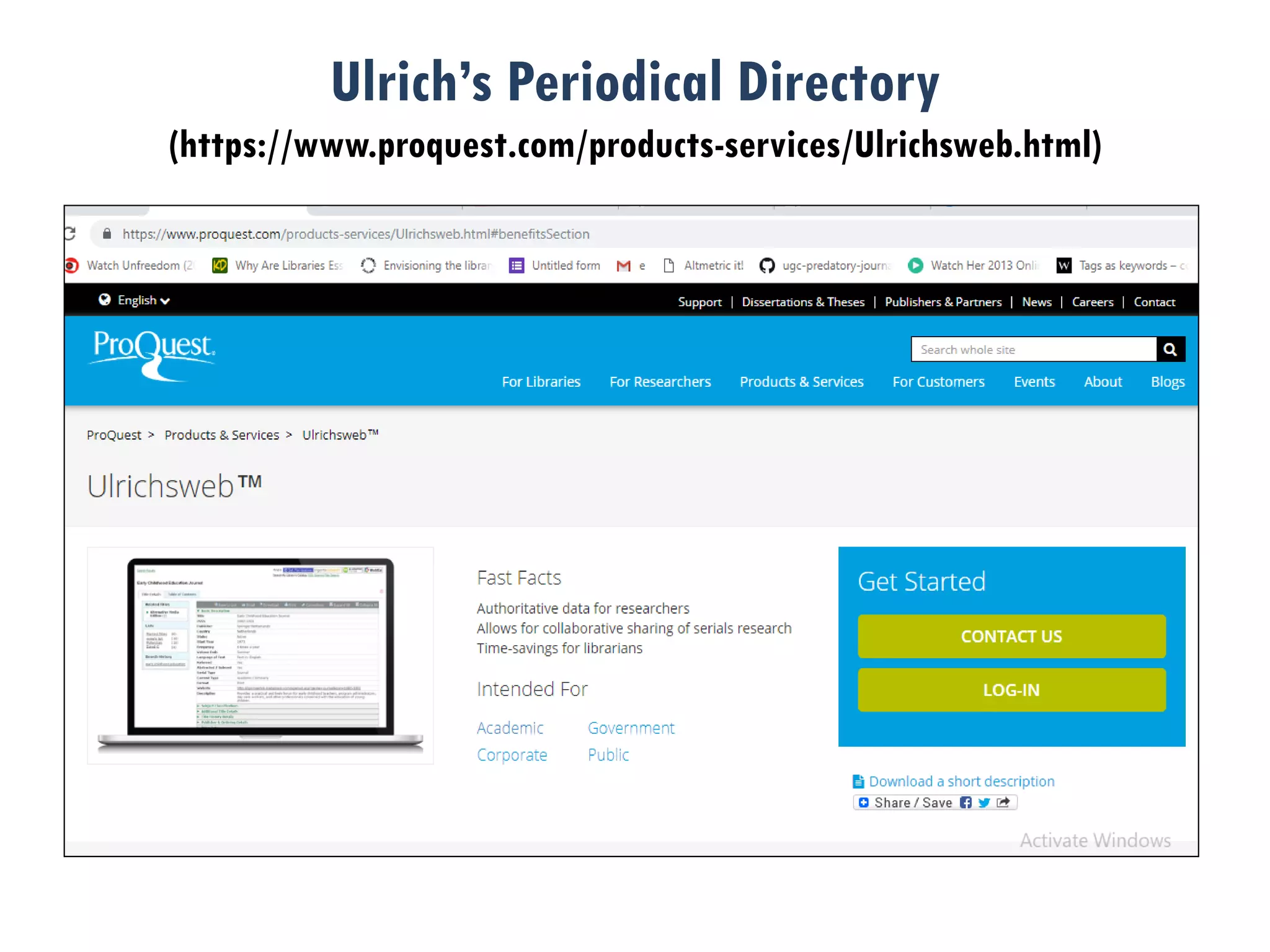
Ulrich’s Periodical Directory
(https://www.proquest.com/products-services/Ulrichsweb.html)
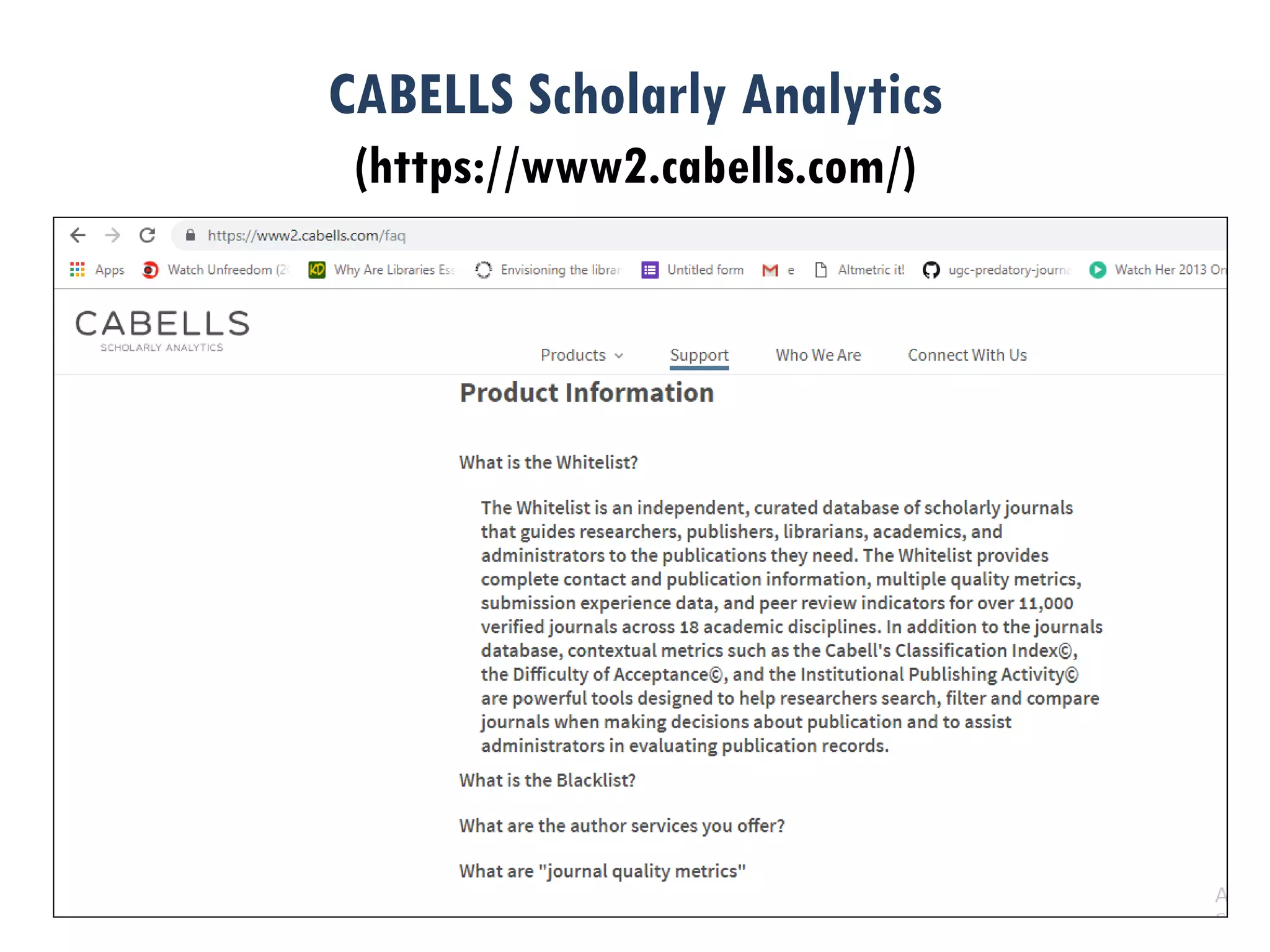
CABELLS Scholarly Analytics
(https://www2.cabells.com/)
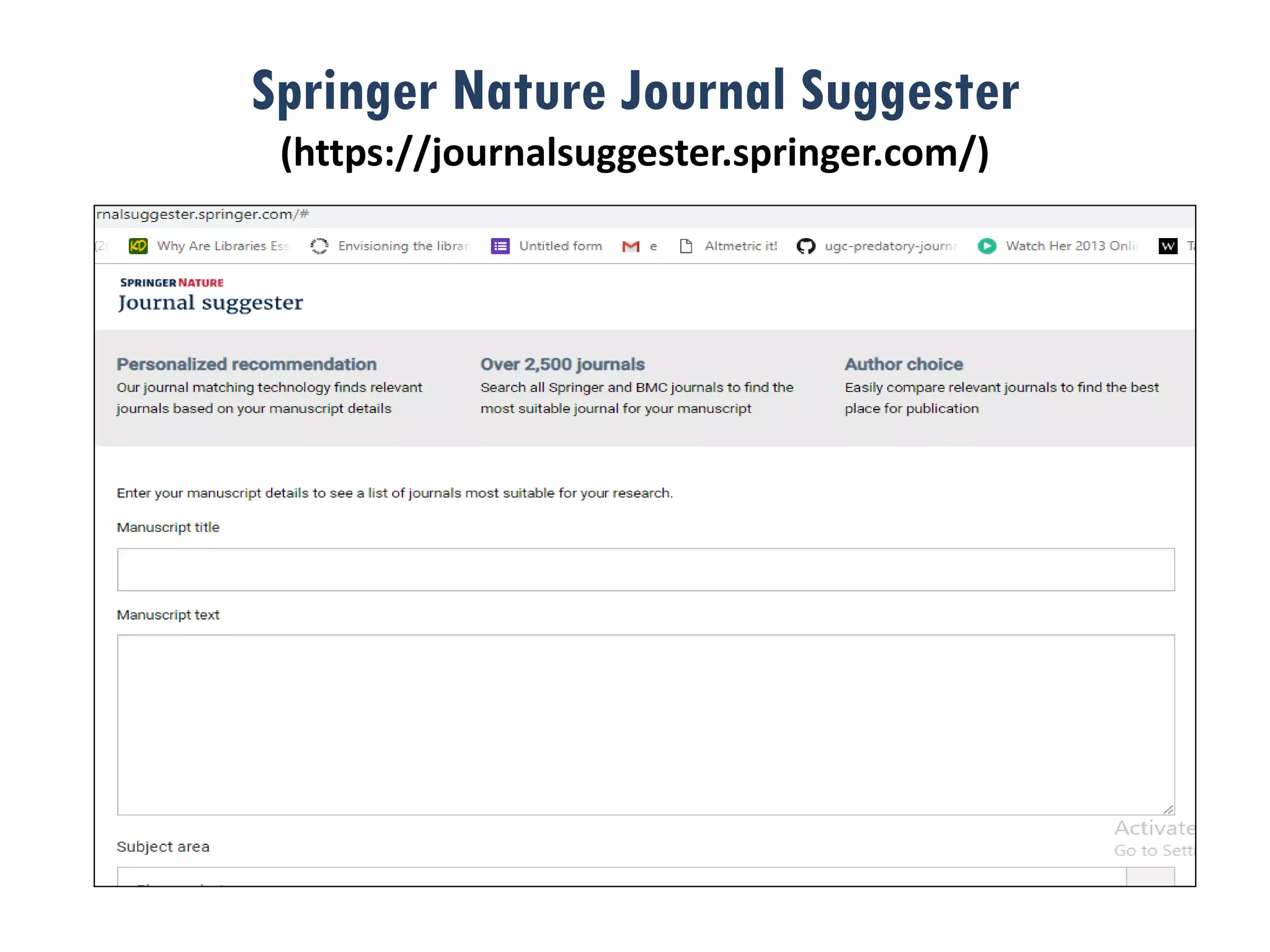
Springer Nature Journal Suggester
(https://journalsuggester.springer.com/)
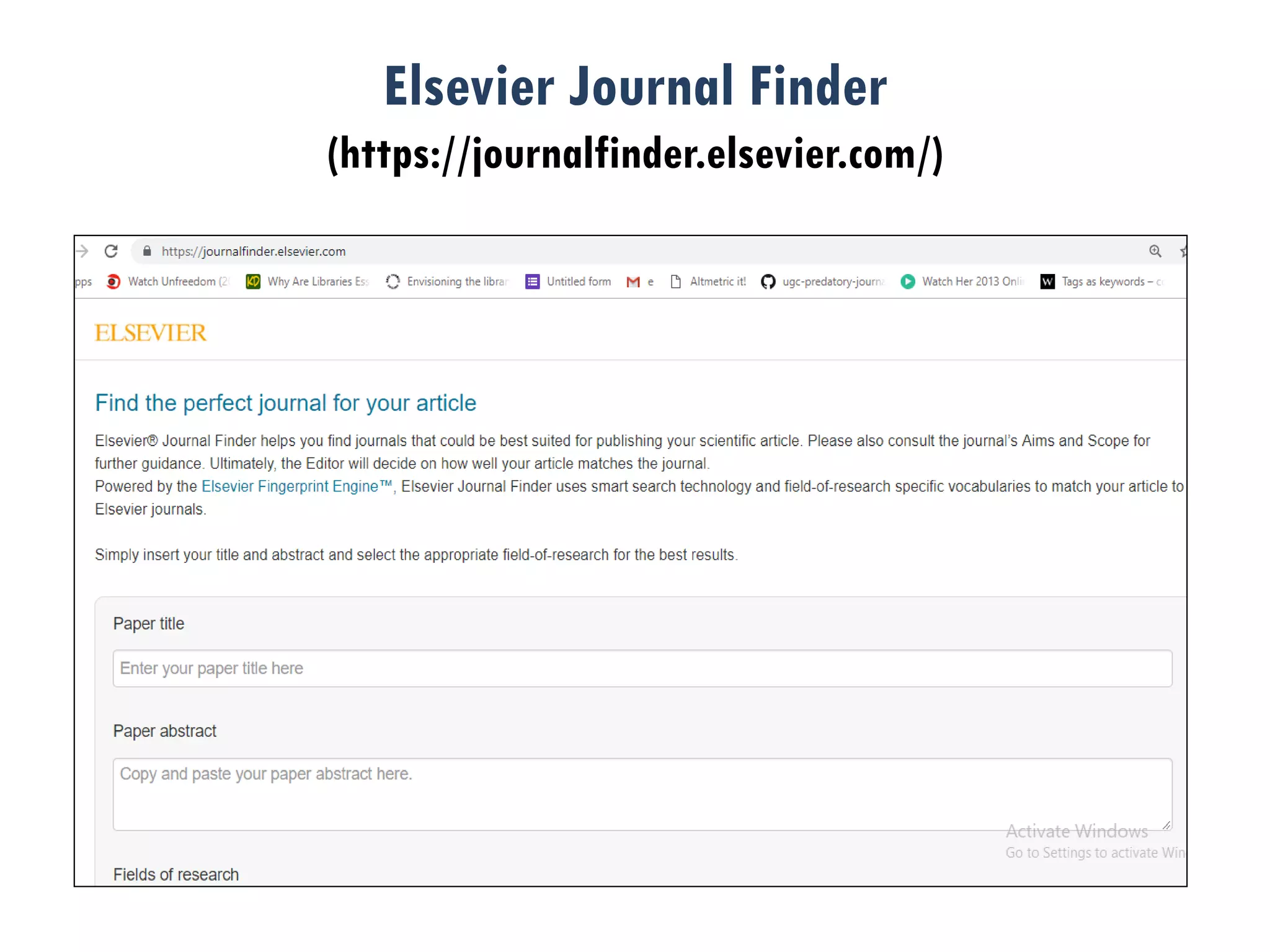
Elsevier Journal Finder
(https://journalfinder.elsevier.com/)
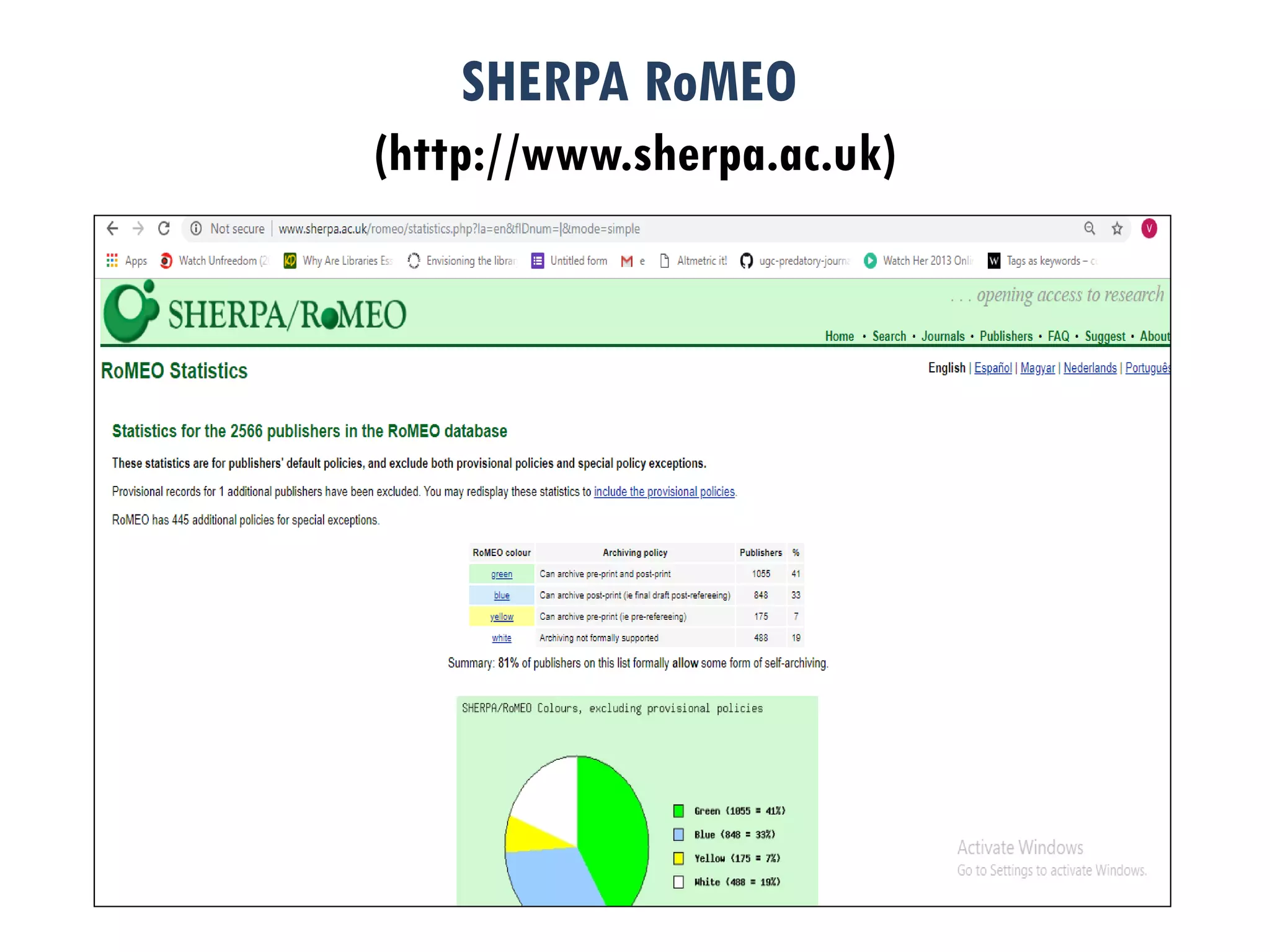
SHERPA RoMEO
(http://www.sherpa.ac.uk)
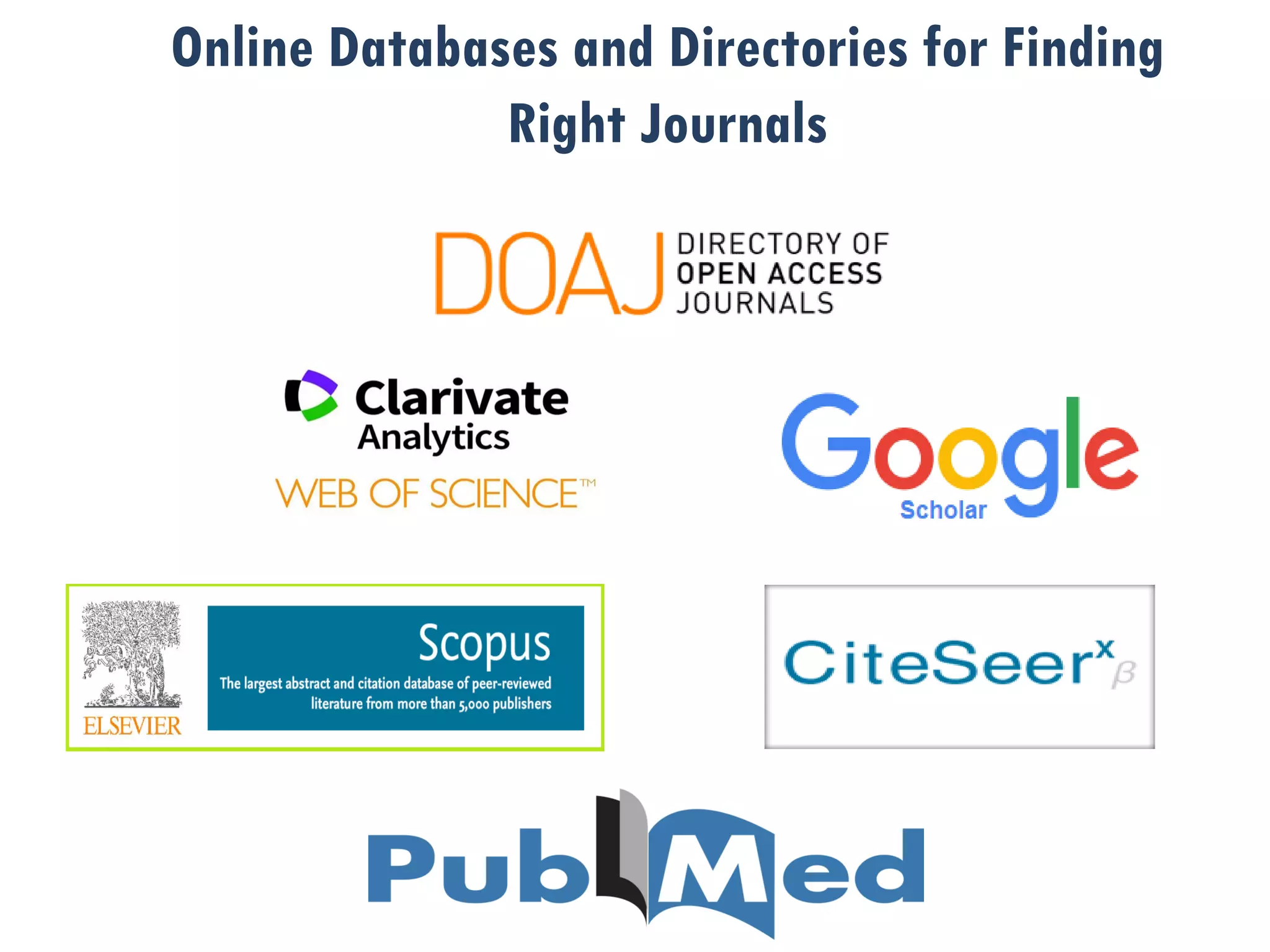
Online Databases and Directories for Finding
Right Journals
Improve Quality of Publications Not Quantity of
Publications
(Publish or Perish is a Myth)
Let Us Stop Publishing in Predatory Journals !
Thank You
?

What Makes a Predatory Journals and How to Stop Publishing In it?

  • 1.
    What Makes aPredatory Journals and How to Stop Publishing In it? Vasantha Raju N. Librarian Govt. First Grade College Talakadu-571 122 vasanthrz@gmail.com Sham Rao Librarian Govt. First Grade College Kamalapur-585 313 shamraosidle1972@gmail.com Thimme Gowda Librarian LBS Govt. First Grade College Bengaluru-560 032
  • 2.
    How Predatory JournalsConcept Was Emerged? • Jeffrey Beall, a librarian at the University of Colorado in Denver, first coined the term “predatory journals” • He used to maintained a listing of predatory journals which was later taken down in a controversial manner in 2017 • However Beall’s list of predatory publishers and journals is still available on the web through some mirror sites.
  • 3.
    Jeffery Beall’s NowDefunct Blog on List of Predatory Journals and Publishers
  • 4.
    What is Predatoryor Fake Journals? Predatory journals are unscrupulous or counterfeit journals which usually surpass the standard scholarly publishing model mainly peer-review process. Predatory journals tend to solicit manuscripts from authors through repeated email invitations (i.e., spam) boasting open access, rapid peer review, and praising potential authors as experts or opinion leaders. Predatory journals business model is run through charging article processing fee which is usually termed in academic parlance as article processing charges (APC).
  • 5.
    What Differentiate PredatoryJournals and Legitimate Journals? • Primary Objective of Predatory Journals or Publisher is to make money ( i.e. Article Processing Fee) • They Do Not Care About the Quality of the work published (No Peer Review Process) • False Claims or Promises (Boasting of Impact Factor and Indexing in Major databases) • Engaging in Unethical Business Practices (i.e. Not As Advertised) • Fail to follow accepted standards or best practices of scholarly publishing Source: http://instr.iastate.libguides.com/predatory/intro
  • 6.
    Characteristics of PotentialPredatory Journals SL. No. Characteristics of Potential Predatory Journals as identified by Shamseer and others (2017) 01 The scope of interest includes non-biomedical subjects alongside biomedical topics 02 The website contains spelling and grammar errors 03 Images are distorted/fuzzy, intended to look like something they are not, or which are unauthorized 04 The homepage language targets authors 05 The Index Copernicus Value is promoted on the website 06 Description of the manuscript handling process is lacking 07 Manuscripts are requested to be submitted via email 08 Rapid publication is promised 09 There is no retraction policy 10 Information on whether and how journal content will be digitally preserved is absent 11 The Article processing/publication charge is very low (e.g., < $150 USD) 12 Journals claiming to be open access either retain copyright of published research or fail to mention copyright 13 The contact email address is non-professional and non-journal affiliated (e.g., @gmail.com or @yahoo.com) Source: Shamseer, L., Moher, D., Maduekwe, O., Turner, L., Barbour, V., Burch, R., Clark, J., … Shea, B.J. (2017). Potential predatory and legitimate biomedical journals: Can you tell the difference? A cross-sectional comparison. BMC Medicine, 15(28). DOI: https://doi.org/10.1186/s12916-017-0785-9
  • 7.
    Source: Moher, D.,Shamseer, L., Cobey, K.D., Lalu, M.J., Galipeau, J., Avey, M.T.,... Ziai, H. (2017). Stop this waste of people, animals and money. Nature, 549(7670), 23-25. DOI:10.1038/549023a
  • 8.
  • 9.
    How to StopPublishing in Predatory Journals? Identifying List of Potential Journals Topic Match Acceptance/Rejection Rate of the Journal Speed of Peer Review, Decisions and Publications Distribution of and Access to the Journal Impact Factor Stephen J. Welch Mantra of Selecting Right Journals for Submission Source: Welch, S.J. (2017). Selecting the right journal for your submission. Journal of Thoracic Disease , 4(3), 336-338.
  • 10.
  • 11.
    Checklist Provided inThink. Check. Submit. Website for Identifying Trusted Journals  Do you or your colleagues know the journal? – Have you read any articles in the journal before? – Is it easy to discover the latest papers in the journal?  Can you easily identify and contact the publisher? – Is the publisher name clearly displayed on the journal website? – Can you contact the publisher by telephone, email, and post?  Is the journal clear about the type of peer review it uses?  Are articles indexed in services that you use?  Is it clear what fees will be charged? – Does the journal site explain what these fees are for and when they will be charged  Do you recognise the editorial board? – Have you heard of the editorial board members? – Do the editorial board mention the journal on their own websites?  Is the publisher a member of a recognized industry initiative? – Do they belong to the Committee on Publication Ethics (COPE)? – If the journal is open access, is it listed in the Directory of Open Access Journals (DOAJ)? – If the journal is open access, does the publisher belong to the Open Access Scholarly Publishers’ Association (OASPA)? – Is the journal hosted on one of INASP’s Journals Online platforms (for journals published in Bangladesh, Nepal, Sri Lanka, Central America and Mongolia) or on African Journals Online (AJOL, for African journals)? – Is the publisher a member of another trade association?
  • 12.
    JANE (Journal/Author NameEstimator) (http://jane.biosemantics.org)
  • 13.
  • 14.
  • 15.
  • 16.
    Springer Nature JournalSuggester (https://journalsuggester.springer.com/)
  • 17.
  • 18.
  • 19.
    Online Databases andDirectories for Finding Right Journals
  • 20.
    Improve Quality ofPublications Not Quantity of Publications (Publish or Perish is a Myth) Let Us Stop Publishing in Predatory Journals !
  • 21.