WHAT IS
STRATEGY
Manoj Patel
Asst. Professor
JHUNJHUNWALA BUSINESS SCHOOL
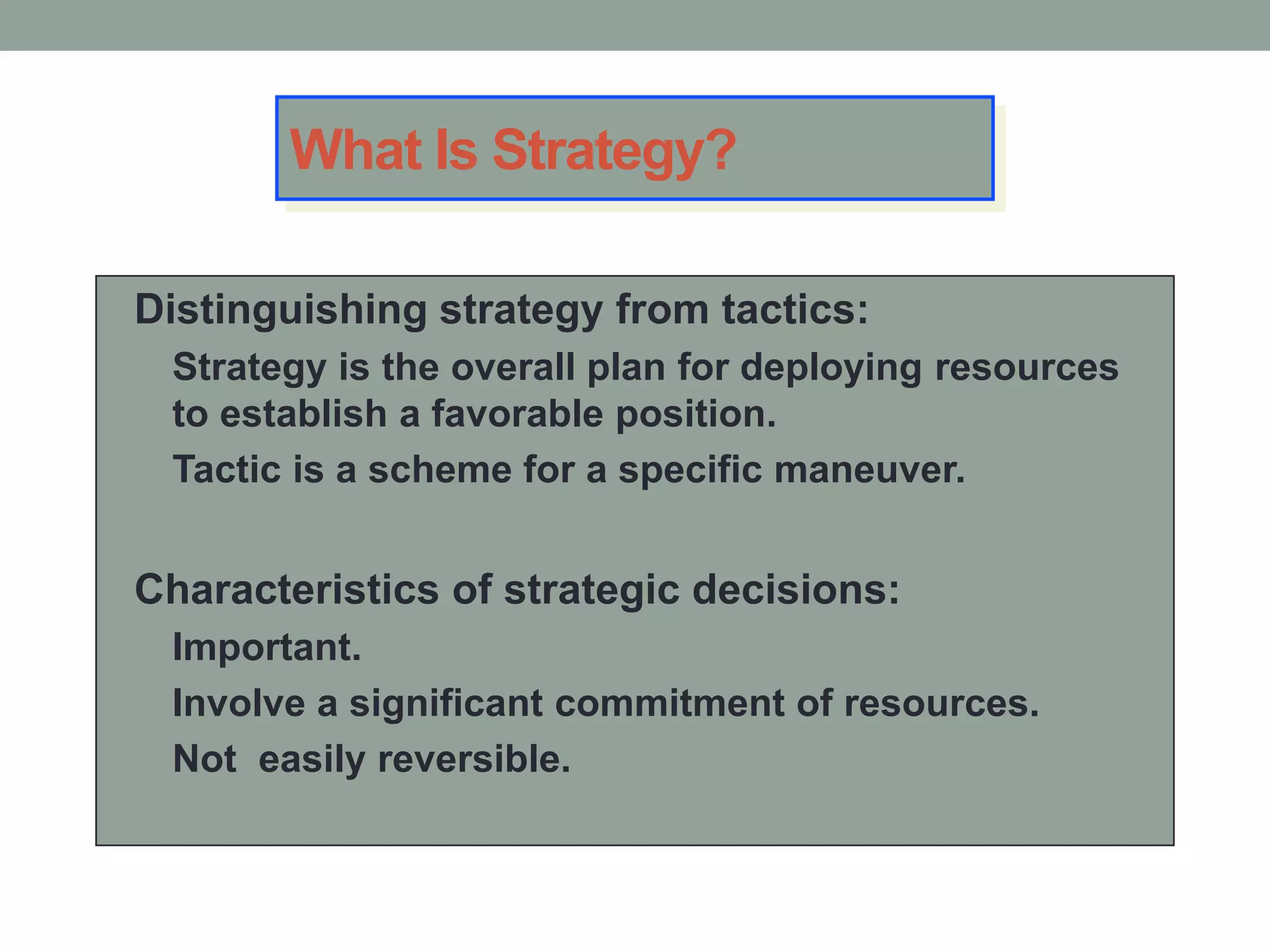
What Is Strategy?
• Distinguishing strategy from tactics:
• Strategy is the overall plan for deploying resources
to establish a favorable position.
• Tactic is a scheme for a specific maneuver.
• Characteristics of strategic decisions:
• Important.
• Involve a significant commitment of resources.
• Not easily reversible.
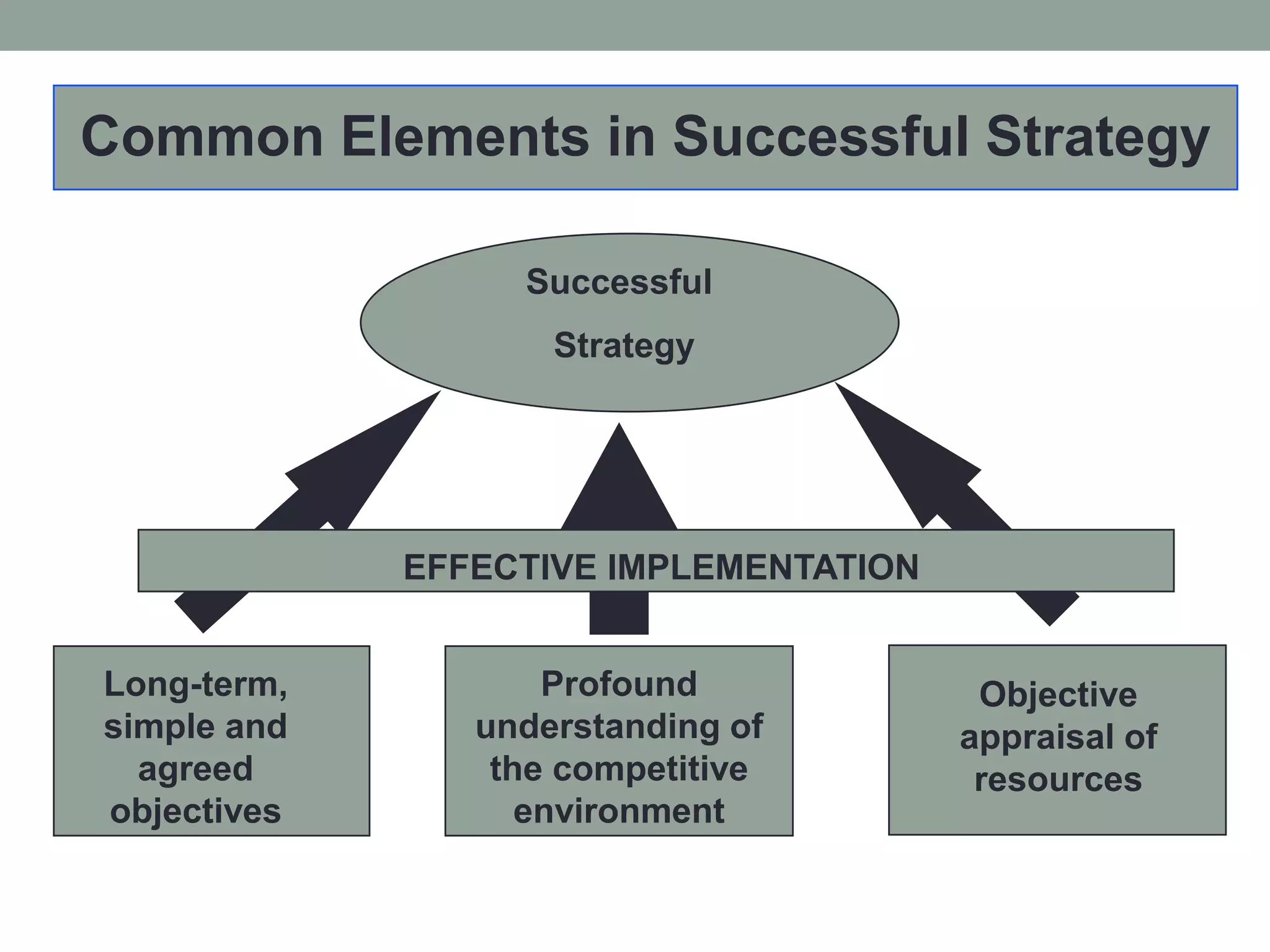
Successful
Strategy
Long-term,
simple and
agreed
objectives
Profound
understanding of
the competitive
environment
Objective
appraisal of
resources
Common Elements in Successful Strategy
EFFECTIVE IMPLEMENTATION
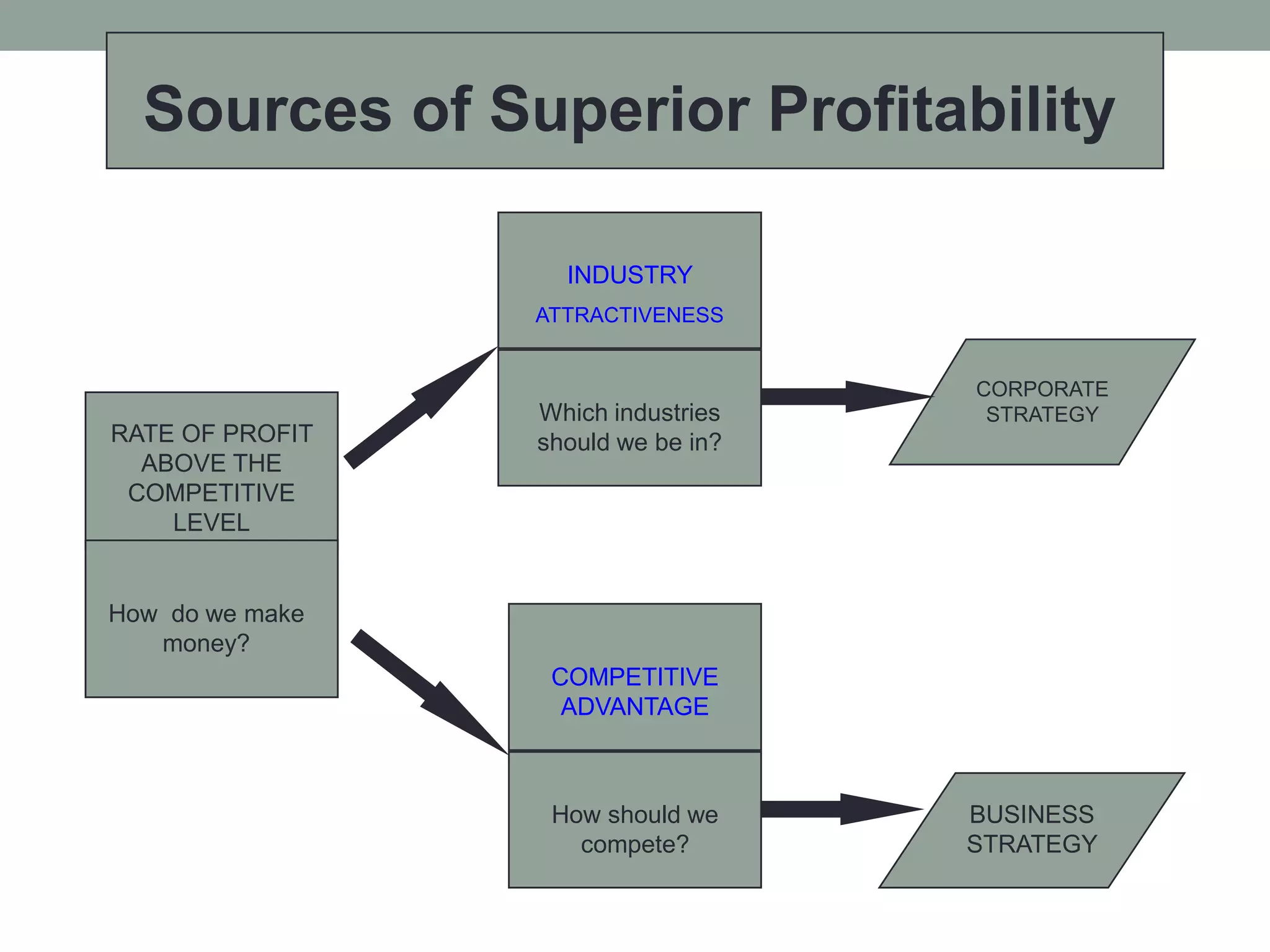
Sources of Superior Profitability
RATE OF PROFIT
ABOVE THE
COMPETITIVE
LEVEL
How do we make
money?
INDUSTRY
ATTRACTIVENESS
Which industries
should we be in?
COMPETITIVE
ADVANTAGE
How should we
compete?
CORPORATE
STRATEGY
BUSINESS
STRATEGY
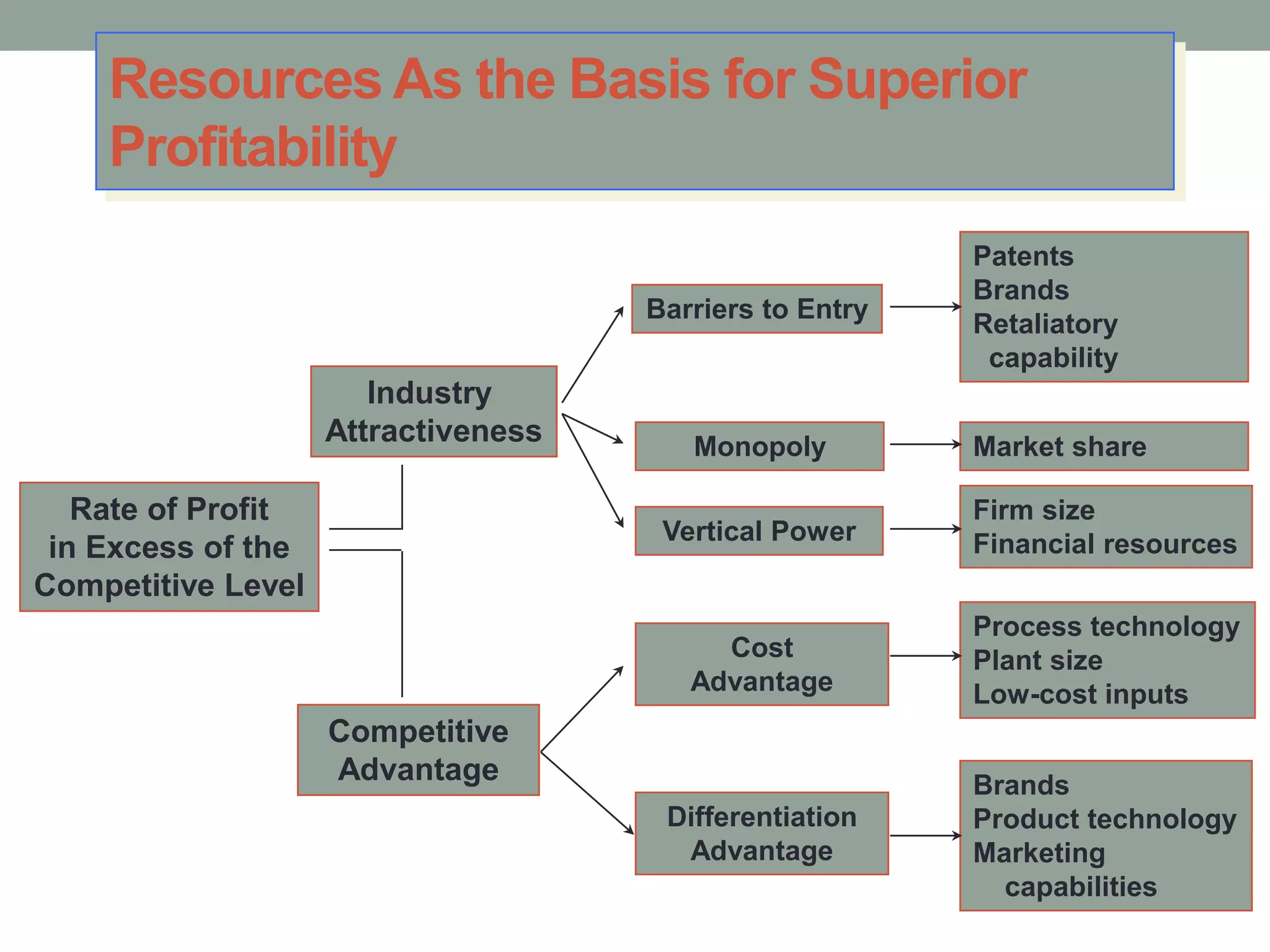
Resources As the Basis for Superior
Profitability
Rate of Profit
in Excess of the
Competitive Level
Industry
Attractiveness
Competitive
Advantage
Differentiation
Advantage
Cost
Advantage
Vertical Power
Monopoly
Barriers to Entry
Brands
Product technology
Marketing
capabilities
Process technology
Plant size
Low-cost inputs
Firm size
Financial resources
Market share
Patents
Brands
Retaliatory
capability
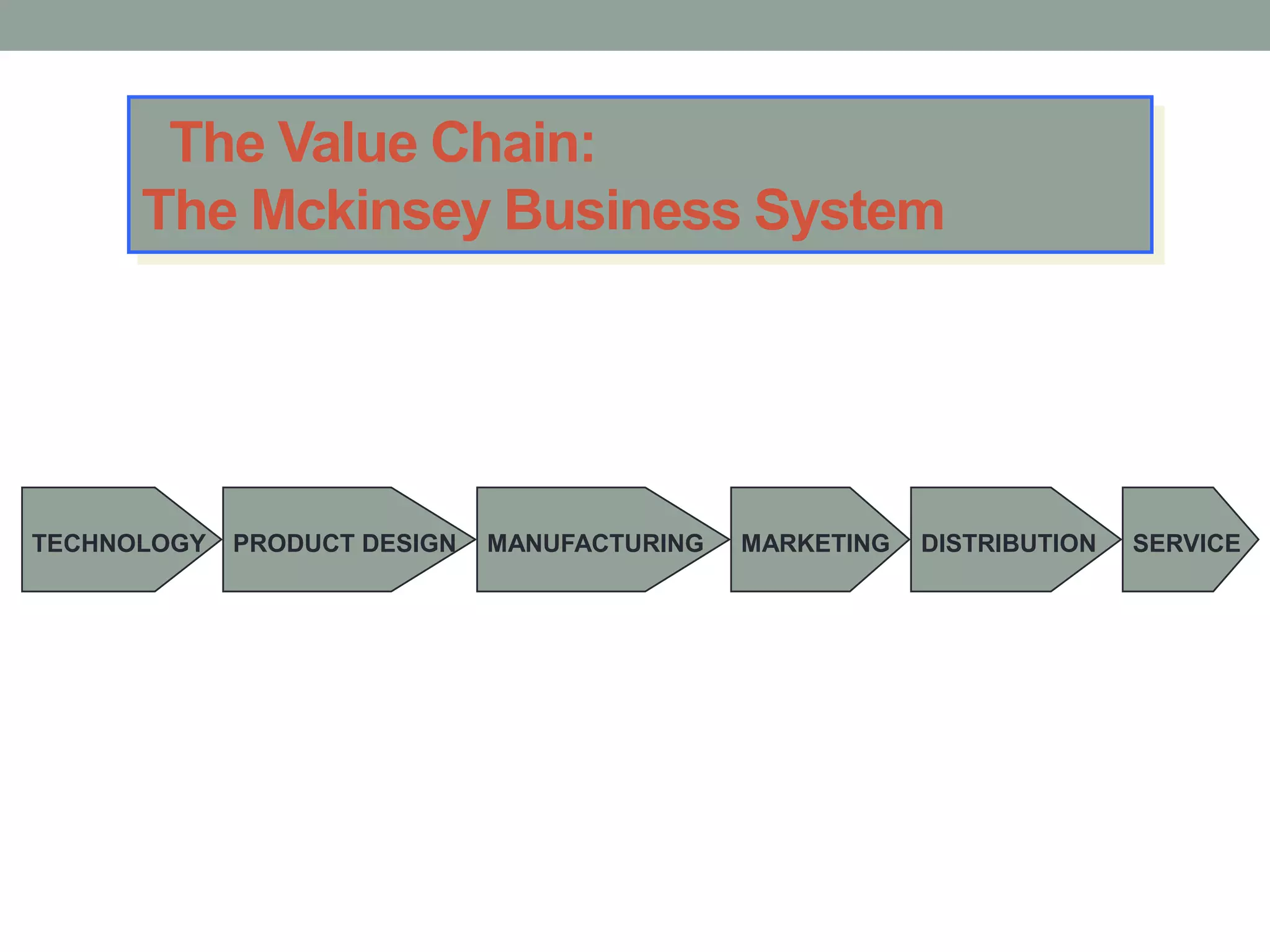
The Value Chain:
The Mckinsey Business System
TECHNOLOGY PRODUCT DESIGN MANUFACTURING MARKETING DISTRIBUTION SERVICE
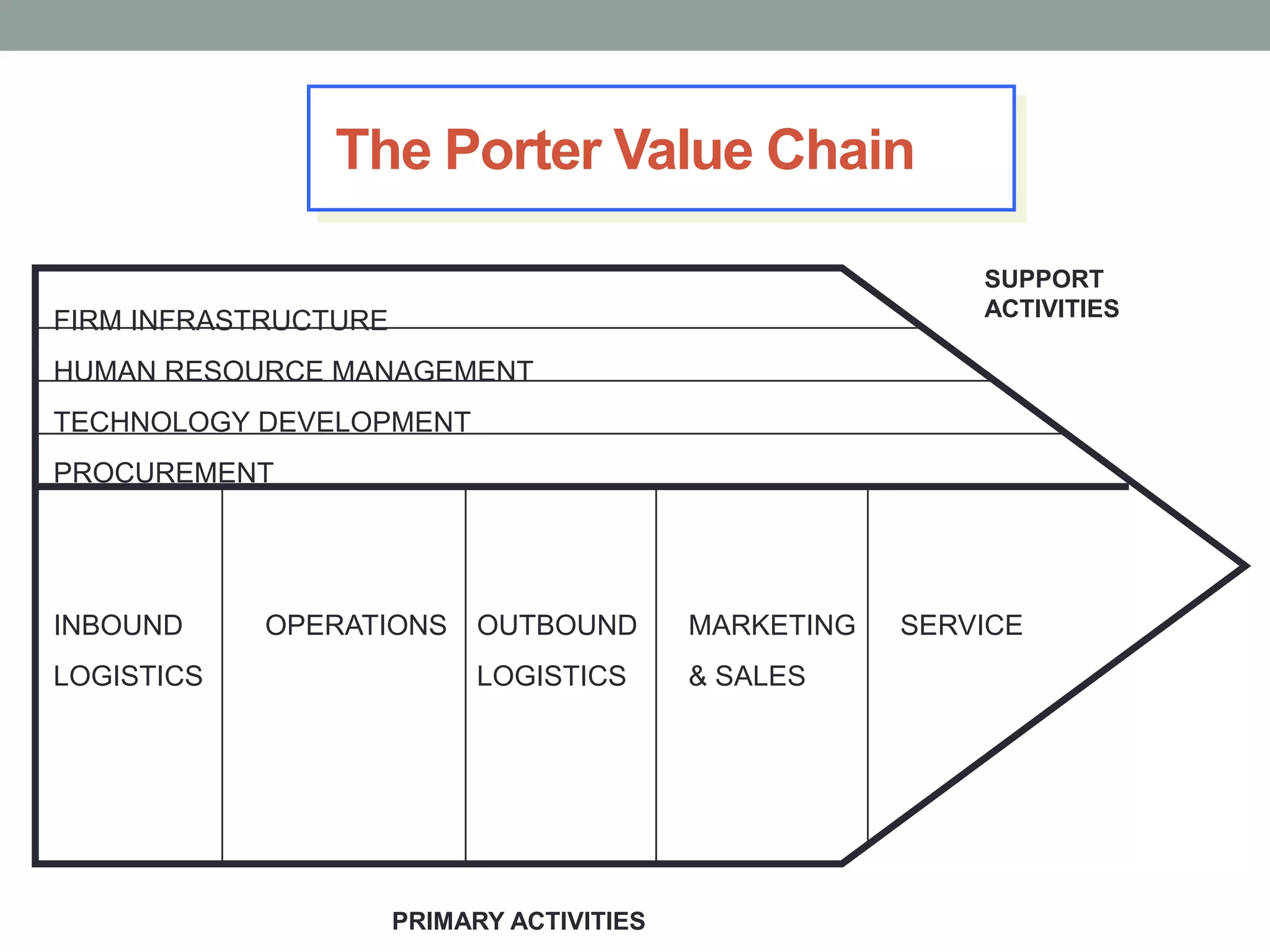
The Porter Value Chain
FIRM INFRASTRUCTURE
HUMAN RESOURCE MANAGEMENT
TECHNOLOGY DEVELOPMENT
PROCUREMENT
INBOUND OPERATIONS OUTBOUND MARKETING SERVICE
LOGISTICS LOGISTICS & SALES
PRIMARY ACTIVITIES
SUPPORT
ACTIVITIES
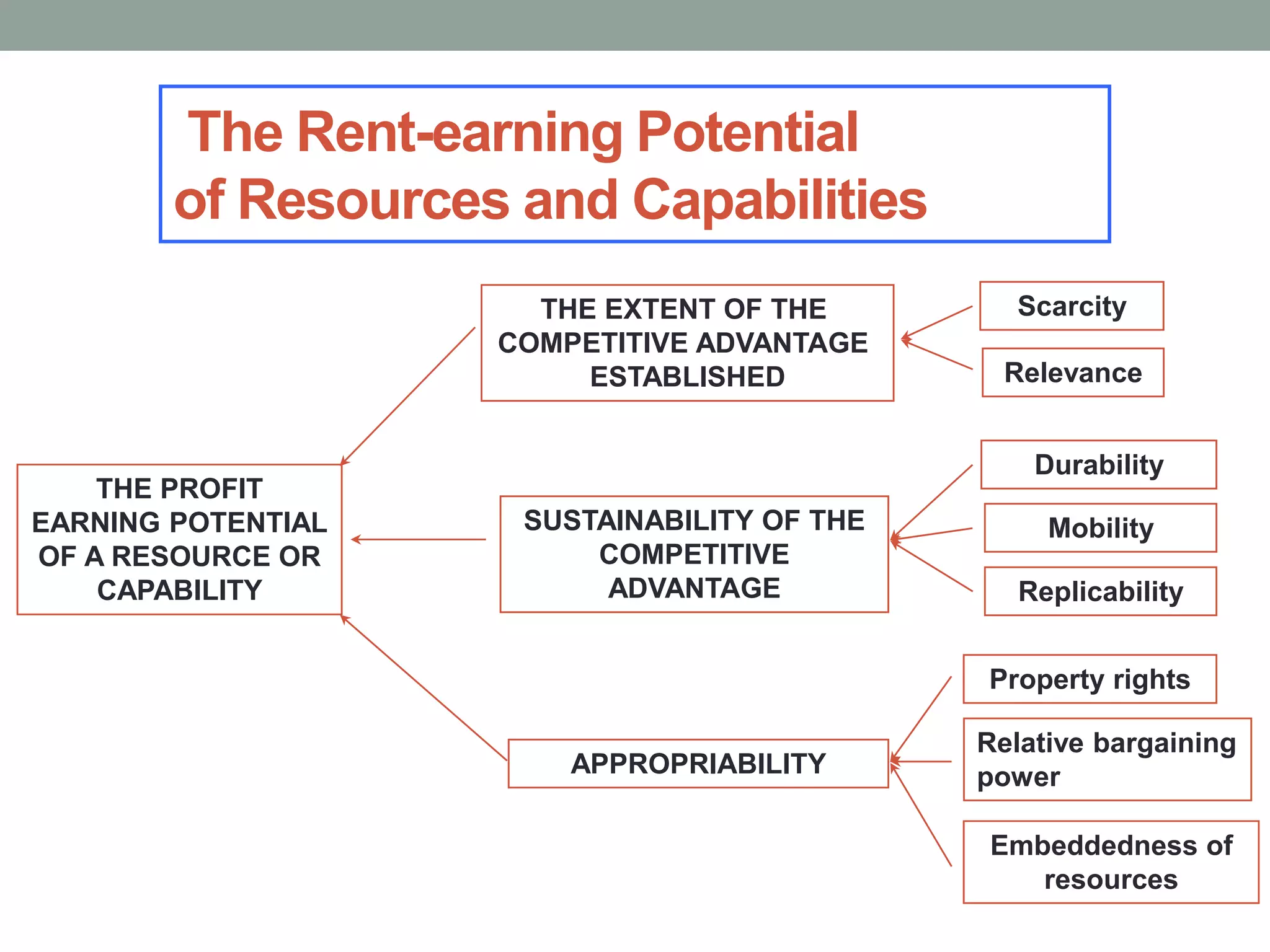
The Rent-earning Potential
of Resources and Capabilities
Scarcity
Relevance
Durability
Mobility
Replicability
Property rights
Relative bargaining
power
Embeddedness of
resources
THE EXTENT OF THE
COMPETITIVE ADVANTAGE
ESTABLISHED
SUSTAINABILITY OF THE
COMPETITIVE
ADVANTAGE
APPROPRIABILITY
THE PROFIT
EARNING POTENTIAL
OF A RESOURCE OR
CAPABILITY
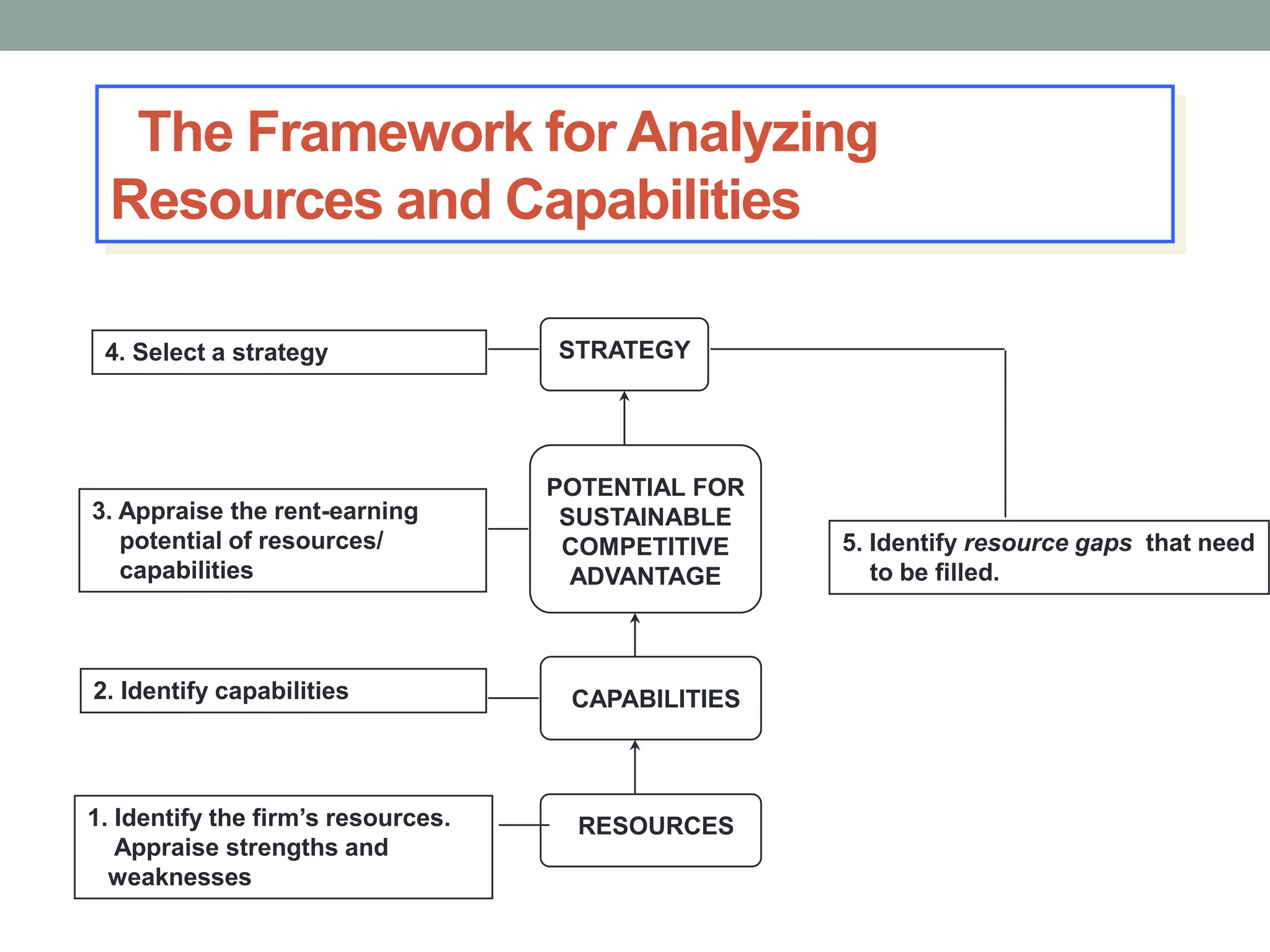
The Framework for Analyzing
Resources and Capabilities
5. Identify resource gaps that need
to be filled.
4. Select a strategy
3. Appraise the rent-earning
potential of resources/
capabilities
2. Identify capabilities
1. Identify the firm’s resources.
Appraise strengths and
weaknesses
STRATEGY
CAPABILITIES
RESOURCES
POTENTIAL FOR
SUSTAINABLE
COMPETITIVE
ADVANTAGE
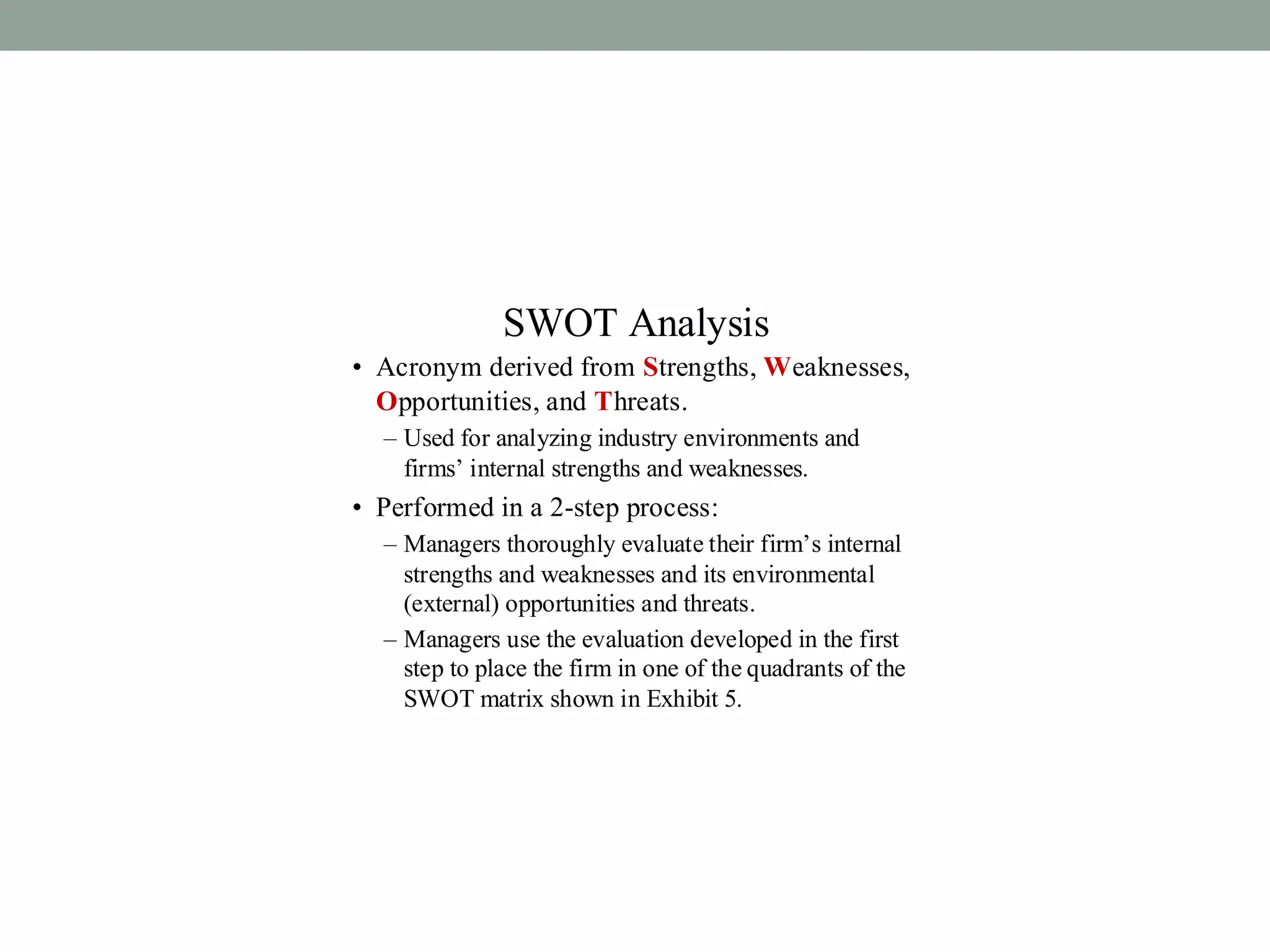
SWOT Analysis
• Acronym derived from Strengths, Weaknesses,
Opportunities, and Threats.
– Used for analyzing industry environments and
firms’ internal strengths and weaknesses.
• Performed in a 2-step process:
– Managers thoroughly evaluate their firm’s internal
strengths and weaknesses and its environmental
(external) opportunities and threats.
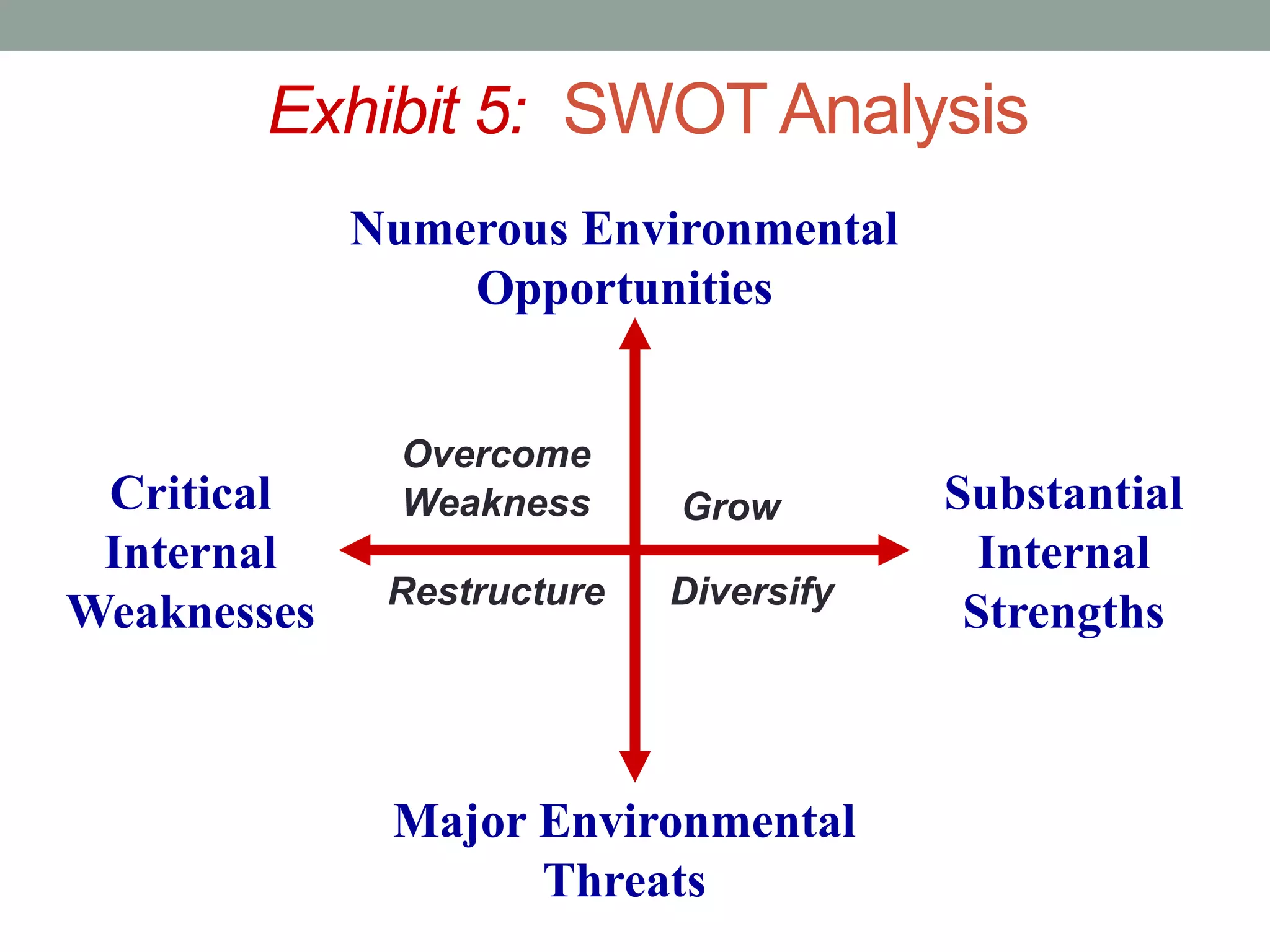
– Managers use the evaluation developed in the first
step to place the firm in one of the quadrants of the
SWOT matrix shown in Exhibit 5.
Exhibit 5: SWOT Analysis
Overcome
Weakness Grow
DiversifyRestructure
Numerous Environmental
Opportunities
Major Environmental
Threats
Substantial
Internal
Strengths
Critical
Internal
Weaknesses
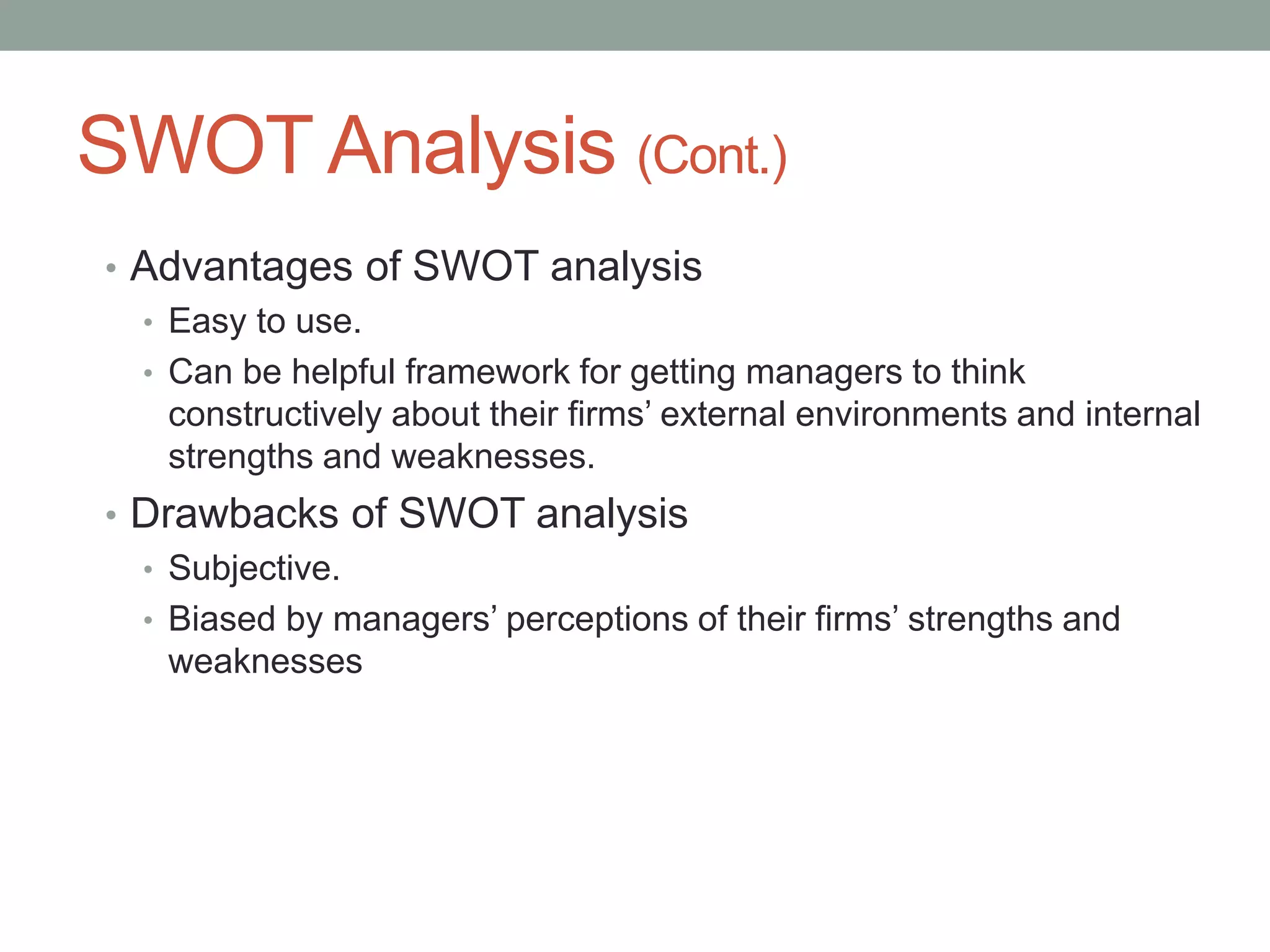
SWOT Analysis (Cont.)
• Advantages of SWOT analysis
• Easy to use.
• Can be helpful framework for getting managers to think
constructively about their firms’ external environments and internal
strengths and weaknesses.
• Drawbacks of SWOT analysis
• Subjective.
• Biased by managers’ perceptions of their firms’ strengths and
weaknesses
SWOT Analysis (Cont.)
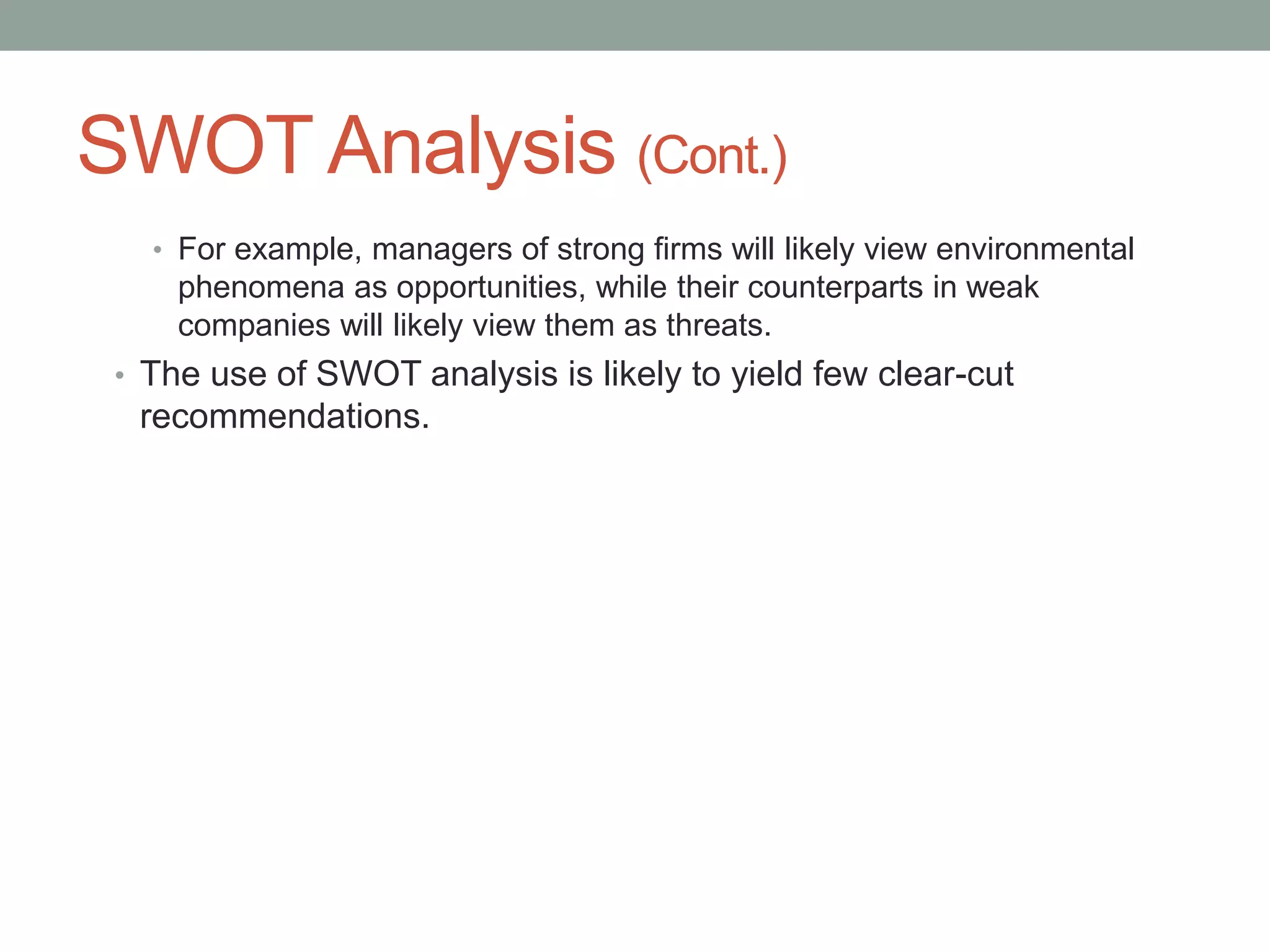
• For example, managers of strong firms will likely view environmental
phenomena as opportunities, while their counterparts in weak
companies will likely view them as threats.
• The use of SWOT analysis is likely to yield few clear-cut
recommendations.
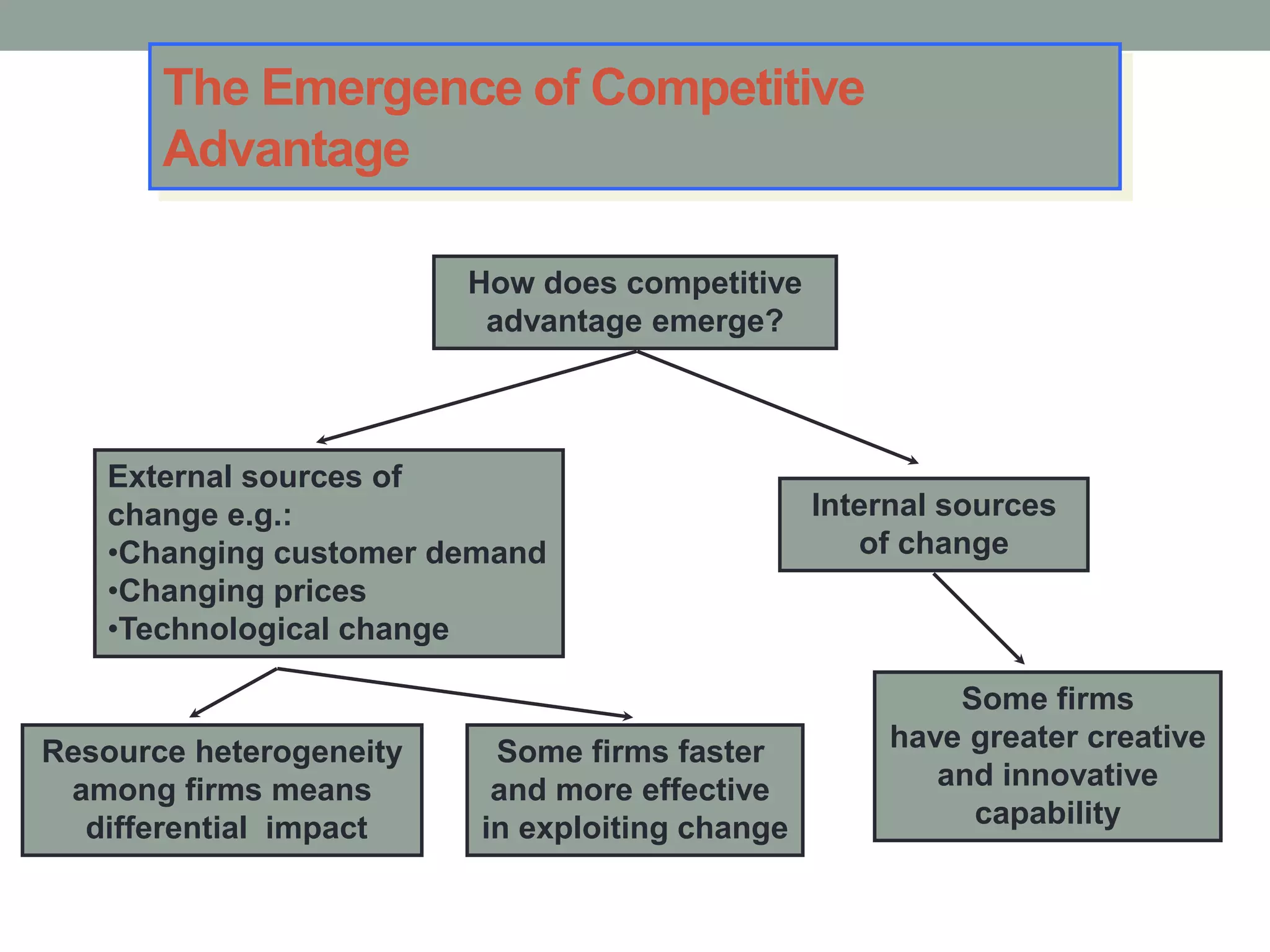
The Emergence of Competitive
Advantage
How does competitive
advantage emerge?
External sources of
change e.g.:
•Changing customer demand
•Changing prices
•Technological change
Internal sources
of change
Resource heterogeneity
among firms means
differential impact
Some firms faster
and more effective
in exploiting change
Some firms
have greater creative
and innovative
capability
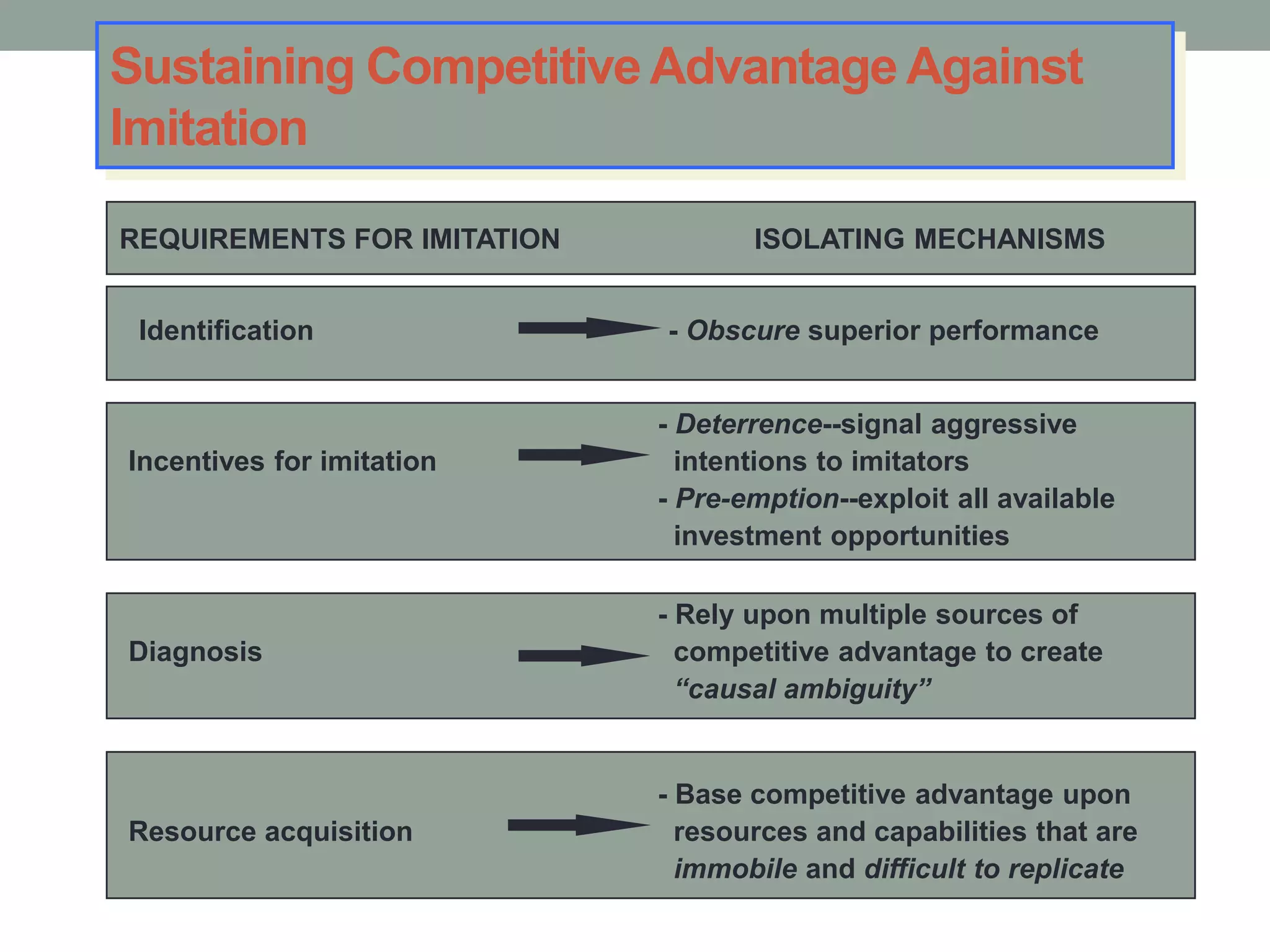
Sustaining Competitive Advantage Against
Imitation
REQUIREMENTS FOR IMITATION ISOLATING MECHANISMS
Identification - Obscure superior performance
- Deterrence--signal aggressive
Incentives for imitation intentions to imitators
- Pre-emption--exploit all available
investment opportunities
- Rely upon multiple sources of
Diagnosis competitive advantage to create
“causal ambiguity”
- Base competitive advantage upon
Resource acquisition resources and capabilities that are
immobile and difficult to replicate
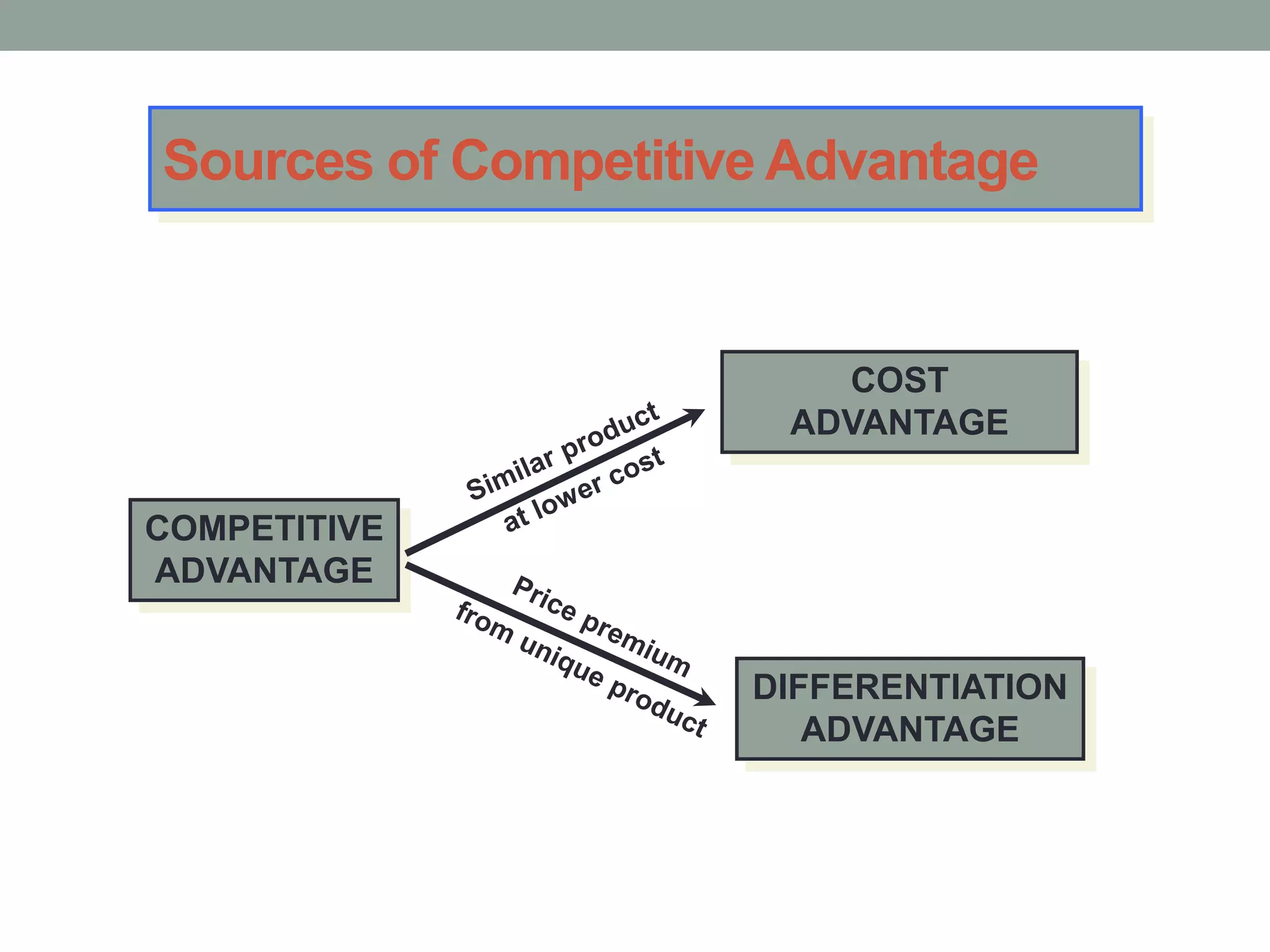
Sources of Competitive Advantage
COST
ADVANTAGE
DIFFERENTIATION
ADVANTAGE
COMPETITIVE
ADVANTAGE

What is strategy

  • 1.
    WHAT IS STRATEGY Manoj Patel Asst.Professor JHUNJHUNWALA BUSINESS SCHOOL
  • 2.
    What Is Strategy? •Distinguishing strategy from tactics: • Strategy is the overall plan for deploying resources to establish a favorable position. • Tactic is a scheme for a specific maneuver. • Characteristics of strategic decisions: • Important. • Involve a significant commitment of resources. • Not easily reversible.
  • 3.
    Successful Strategy Long-term, simple and agreed objectives Profound understanding of thecompetitive environment Objective appraisal of resources Common Elements in Successful Strategy EFFECTIVE IMPLEMENTATION
  • 4.
    Sources of SuperiorProfitability RATE OF PROFIT ABOVE THE COMPETITIVE LEVEL How do we make money? INDUSTRY ATTRACTIVENESS Which industries should we be in? COMPETITIVE ADVANTAGE How should we compete? CORPORATE STRATEGY BUSINESS STRATEGY
  • 5.
    Resources As theBasis for Superior Profitability Rate of Profit in Excess of the Competitive Level Industry Attractiveness Competitive Advantage Differentiation Advantage Cost Advantage Vertical Power Monopoly Barriers to Entry Brands Product technology Marketing capabilities Process technology Plant size Low-cost inputs Firm size Financial resources Market share Patents Brands Retaliatory capability
  • 6.
    The Value Chain: TheMckinsey Business System TECHNOLOGY PRODUCT DESIGN MANUFACTURING MARKETING DISTRIBUTION SERVICE
  • 7.
    The Porter ValueChain FIRM INFRASTRUCTURE HUMAN RESOURCE MANAGEMENT TECHNOLOGY DEVELOPMENT PROCUREMENT INBOUND OPERATIONS OUTBOUND MARKETING SERVICE LOGISTICS LOGISTICS & SALES PRIMARY ACTIVITIES SUPPORT ACTIVITIES
  • 8.
    The Rent-earning Potential ofResources and Capabilities Scarcity Relevance Durability Mobility Replicability Property rights Relative bargaining power Embeddedness of resources THE EXTENT OF THE COMPETITIVE ADVANTAGE ESTABLISHED SUSTAINABILITY OF THE COMPETITIVE ADVANTAGE APPROPRIABILITY THE PROFIT EARNING POTENTIAL OF A RESOURCE OR CAPABILITY
  • 9.
    The Framework forAnalyzing Resources and Capabilities 5. Identify resource gaps that need to be filled. 4. Select a strategy 3. Appraise the rent-earning potential of resources/ capabilities 2. Identify capabilities 1. Identify the firm’s resources. Appraise strengths and weaknesses STRATEGY CAPABILITIES RESOURCES POTENTIAL FOR SUSTAINABLE COMPETITIVE ADVANTAGE
  • 10.
    SWOT Analysis • Acronymderived from Strengths, Weaknesses, Opportunities, and Threats. – Used for analyzing industry environments and firms’ internal strengths and weaknesses. • Performed in a 2-step process: – Managers thoroughly evaluate their firm’s internal strengths and weaknesses and its environmental (external) opportunities and threats. – Managers use the evaluation developed in the first step to place the firm in one of the quadrants of the SWOT matrix shown in Exhibit 5.
  • 11.
    Exhibit 5: SWOTAnalysis Overcome Weakness Grow DiversifyRestructure Numerous Environmental Opportunities Major Environmental Threats Substantial Internal Strengths Critical Internal Weaknesses
  • 12.
    SWOT Analysis (Cont.) •Advantages of SWOT analysis • Easy to use. • Can be helpful framework for getting managers to think constructively about their firms’ external environments and internal strengths and weaknesses. • Drawbacks of SWOT analysis • Subjective. • Biased by managers’ perceptions of their firms’ strengths and weaknesses
  • 13.
    SWOT Analysis (Cont.) •For example, managers of strong firms will likely view environmental phenomena as opportunities, while their counterparts in weak companies will likely view them as threats. • The use of SWOT analysis is likely to yield few clear-cut recommendations.
  • 14.
    The Emergence ofCompetitive Advantage How does competitive advantage emerge? External sources of change e.g.: •Changing customer demand •Changing prices •Technological change Internal sources of change Resource heterogeneity among firms means differential impact Some firms faster and more effective in exploiting change Some firms have greater creative and innovative capability
  • 15.
    Sustaining Competitive AdvantageAgainst Imitation REQUIREMENTS FOR IMITATION ISOLATING MECHANISMS Identification - Obscure superior performance - Deterrence--signal aggressive Incentives for imitation intentions to imitators - Pre-emption--exploit all available investment opportunities - Rely upon multiple sources of Diagnosis competitive advantage to create “causal ambiguity” - Base competitive advantage upon Resource acquisition resources and capabilities that are immobile and difficult to replicate
  • 16.
    Sources of CompetitiveAdvantage COST ADVANTAGE DIFFERENTIATION ADVANTAGE COMPETITIVE ADVANTAGE