by
Col Mukteshwar Prasad(Retd),
Mtech(IIT Delhi),CE(I),FIE(I),FIETE,FISLE,FInstOD,AMCSI
Contact -+919007224278,
e-mail -muktesh_prasad@yahoo.co.in
for book ”Decoding Services Selection Board” and
SSB guidance and training at Shivnandani Edu and Defence Academy,Kolkata,India
What is Borderline Personality
Disorder (BPD)?
(Personality Disorder 1A)
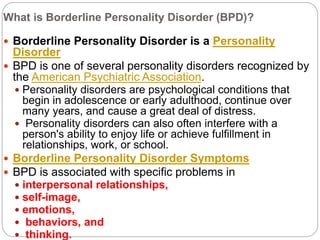
What is Borderline Personality Disorder (BPD)?
 Borderline Personality Disorder is a Personality
Disorder
 BPD is one of several personality disorders recognized by
the American Psychiatric Association.
 Personality disorders are psychological conditions that
begin in adolescence or early adulthood, continue over
many years, and cause a great deal of distress.
 Personality disorders can also often interfere with a
person's ability to enjoy life or achieve fulfillment in
relationships, work, or school.
 Borderline Personality Disorder Symptoms
 BPD is associated with specific problems in
 interpersonal relationships,
 self-image,
 emotions,
 behaviors, and
 thinking.
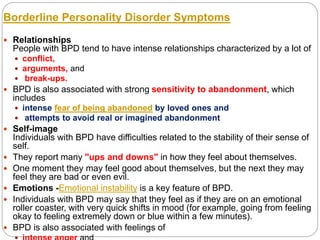
Borderline Personality Disorder Symptoms
 Relationships
People with BPD tend to have intense relationships characterized by a lot of
 conflict,
 arguments, and
 break-ups.
 BPD is also associated with strong sensitivity to abandonment, which
includes
 intense fear of being abandoned by loved ones and
 attempts to avoid real or imagined abandonment
 Self-image
Individuals with BPD have difficulties related to the stability of their sense of
self.
 They report many "ups and downs" in how they feel about themselves.
 One moment they may feel good about themselves, but the next they may
feel they are bad or even evil.
 Emotions -Emotional instability is a key feature of BPD.
 Individuals with BPD may say that they feel as if they are on an emotional
roller coaster, with very quick shifts in mood (for example, going from feeling
okay to feeling extremely down or blue within a few minutes).
 BPD is also associated with feelings of
Borderline Personality Disorder Symptoms
 Behaviors
BPD is associated with a tendency to engage in risky and impulsive
behaviors, such as
 going on shopping sprees,
 drinking excessive amounts of alcohol or abusing drugs,
 engaging in promiscuous sex, or
 binge eating.
 In addition, people with BPD are more prone to engage in self-harming
behaviors, such as cutting, or to attempt suicide.
 Stress-Related Changes in Thinking
Under conditions of stress, people with BPD may experience
 changes in thinking, including paranoid thoughts (for example, thoughts that
others may be trying to cause them harm), or
 dissociation (feeling spaced out or numb).
 Borderline Personality Disorder Causes
 Like most psychological disorders, the exact cause of BPD is not known.
 However, there is research to suggest that some combination of
 nature (biology or genetics) and
 nurture (environment) is at play.
Borderline Personality Disorder Symptoms
 Borderline Personality Disorder Causes….
nurture (environment) is at play.
 Research has shown that many people
diagnosed with BPD have experienced
 childhood abuse or neglect, or
 were separated from their caregivers at an early
age.
 However, not all people with BPD had one of
these childhood experiences (and, many people
who have had these experiences do not have
BPD).
 There is also evidence of
 genetic contributions and
 differences in brain structure and function in
Borderline Personality Disorder Treatment
Although at one time experts believed
that BPD was unlikely to respond to
treatment, research has now shown that
BPD is very treatable.
A variety of treatments are available for
BPD, and these treatments can be
delivered in outpatient or inpatient
(hospital) settings.
BPD is usually treated with a
combination of psychotherapy and
medication.
Hospitalization or more intensive
Living and Coping with Borderline Personality Disorder
 It can be very difficult to live with the symptoms of BPD.
 Intense emotional pain, and feelings of emptiness,
 desperation,
 anger,
 hopelessness, and
 loneliness are very common.
 As a result of these experiences, many people with BPD report that they
 think about suicide,or
 have made suicide attempts or gestures.
 Some individuals with BPD engage in self-harming behaviors such as
cutting or burning themselves in an attempt to reduce their emotional pain
(or, in the case of chronic emptiness, to "feel something.")
 The symptoms of BPD can affect a variety of areas, including
 work,
 school,
 relationships,
 legal status, and
 physical health.
 However, despite the suffering that BPD can cause, many people with BPD
lead normal, fulfilling lives. There are many success stories!
Living and Coping with Borderline Personality Disorder
 If you think that you or a loved one may suffer from BPD, it is very important
to seek the help of a licensed mental health professional, such as a mental
health counselor, social worker, psychologist, or psychiatrist.
 It is important to remember that many of the symptoms of BPD are symptoms
that everyone experiences from time to time.
 Also, some of the symptoms of BPD overlap with other mental and physical
conditions.
 Only a licensed professional can diagnose BPD.
 The good news is that once a diagnosis is made, there is hope.
 Your therapist or doctor can help to determine a plan of action, which may
include psychotherapy, medications, or other treatments.
 Research has shown that with good treatment, BPD symptoms can be
reduced significantly.
 Many people who were once diagnosed with BPD no longer meet criteria for
the disorder with treatment and time.
 Sources:
 American Psychiatric Association. Diagnostic and statistical manual of mental disorders, 4th ed,
text revision. Washington, DC, Author, 2000.
 Kraus, G, and Reynolds, DJ. "The A-B-C's of the Cluster B's: Identifying, Understanding, and Treating Cluster B Personality
Disorders." Clinical Psychology Review 21: 345-373, 2001.

What is borderline personality disorder (bpd)

  • 1.
    by Col Mukteshwar Prasad(Retd), Mtech(IITDelhi),CE(I),FIE(I),FIETE,FISLE,FInstOD,AMCSI Contact -+919007224278, e-mail -muktesh_prasad@yahoo.co.in for book ”Decoding Services Selection Board” and SSB guidance and training at Shivnandani Edu and Defence Academy,Kolkata,India What is Borderline Personality Disorder (BPD)? (Personality Disorder 1A)
  • 2.
    What is BorderlinePersonality Disorder (BPD)?  Borderline Personality Disorder is a Personality Disorder  BPD is one of several personality disorders recognized by the American Psychiatric Association.  Personality disorders are psychological conditions that begin in adolescence or early adulthood, continue over many years, and cause a great deal of distress.  Personality disorders can also often interfere with a person's ability to enjoy life or achieve fulfillment in relationships, work, or school.  Borderline Personality Disorder Symptoms  BPD is associated with specific problems in  interpersonal relationships,  self-image,  emotions,  behaviors, and  thinking.
  • 3.
    Borderline Personality DisorderSymptoms  Relationships People with BPD tend to have intense relationships characterized by a lot of  conflict,  arguments, and  break-ups.  BPD is also associated with strong sensitivity to abandonment, which includes  intense fear of being abandoned by loved ones and  attempts to avoid real or imagined abandonment  Self-image Individuals with BPD have difficulties related to the stability of their sense of self.  They report many "ups and downs" in how they feel about themselves.  One moment they may feel good about themselves, but the next they may feel they are bad or even evil.  Emotions -Emotional instability is a key feature of BPD.  Individuals with BPD may say that they feel as if they are on an emotional roller coaster, with very quick shifts in mood (for example, going from feeling okay to feeling extremely down or blue within a few minutes).  BPD is also associated with feelings of
  • 4.
    Borderline Personality DisorderSymptoms  Behaviors BPD is associated with a tendency to engage in risky and impulsive behaviors, such as  going on shopping sprees,  drinking excessive amounts of alcohol or abusing drugs,  engaging in promiscuous sex, or  binge eating.  In addition, people with BPD are more prone to engage in self-harming behaviors, such as cutting, or to attempt suicide.  Stress-Related Changes in Thinking Under conditions of stress, people with BPD may experience  changes in thinking, including paranoid thoughts (for example, thoughts that others may be trying to cause them harm), or  dissociation (feeling spaced out or numb).  Borderline Personality Disorder Causes  Like most psychological disorders, the exact cause of BPD is not known.  However, there is research to suggest that some combination of  nature (biology or genetics) and  nurture (environment) is at play.
  • 5.
    Borderline Personality DisorderSymptoms  Borderline Personality Disorder Causes…. nurture (environment) is at play.  Research has shown that many people diagnosed with BPD have experienced  childhood abuse or neglect, or  were separated from their caregivers at an early age.  However, not all people with BPD had one of these childhood experiences (and, many people who have had these experiences do not have BPD).  There is also evidence of  genetic contributions and  differences in brain structure and function in
  • 6.
    Borderline Personality DisorderTreatment Although at one time experts believed that BPD was unlikely to respond to treatment, research has now shown that BPD is very treatable. A variety of treatments are available for BPD, and these treatments can be delivered in outpatient or inpatient (hospital) settings. BPD is usually treated with a combination of psychotherapy and medication. Hospitalization or more intensive
  • 7.
    Living and Copingwith Borderline Personality Disorder  It can be very difficult to live with the symptoms of BPD.  Intense emotional pain, and feelings of emptiness,  desperation,  anger,  hopelessness, and  loneliness are very common.  As a result of these experiences, many people with BPD report that they  think about suicide,or  have made suicide attempts or gestures.  Some individuals with BPD engage in self-harming behaviors such as cutting or burning themselves in an attempt to reduce their emotional pain (or, in the case of chronic emptiness, to "feel something.")  The symptoms of BPD can affect a variety of areas, including  work,  school,  relationships,  legal status, and  physical health.  However, despite the suffering that BPD can cause, many people with BPD lead normal, fulfilling lives. There are many success stories!
  • 8.
    Living and Copingwith Borderline Personality Disorder  If you think that you or a loved one may suffer from BPD, it is very important to seek the help of a licensed mental health professional, such as a mental health counselor, social worker, psychologist, or psychiatrist.  It is important to remember that many of the symptoms of BPD are symptoms that everyone experiences from time to time.  Also, some of the symptoms of BPD overlap with other mental and physical conditions.  Only a licensed professional can diagnose BPD.  The good news is that once a diagnosis is made, there is hope.  Your therapist or doctor can help to determine a plan of action, which may include psychotherapy, medications, or other treatments.  Research has shown that with good treatment, BPD symptoms can be reduced significantly.  Many people who were once diagnosed with BPD no longer meet criteria for the disorder with treatment and time.  Sources:  American Psychiatric Association. Diagnostic and statistical manual of mental disorders, 4th ed, text revision. Washington, DC, Author, 2000.  Kraus, G, and Reynolds, DJ. "The A-B-C's of the Cluster B's: Identifying, Understanding, and Treating Cluster B Personality Disorders." Clinical Psychology Review 21: 345-373, 2001.