How to Create a
Competency-Based
  Training Program
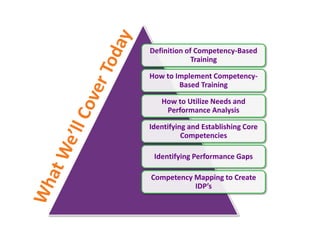
Definition of Competency-Based
             Training

How to Implement Competency-
        Based Training

   How to Utilize Needs and
    Performance Analysis

Identifying and Establishing Core
          Competencies

 Identifying Performance Gaps

Competency Mapping to Create
           IDP’s
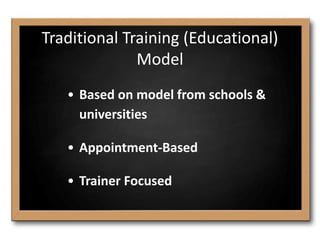
Traditional Training (Educational)
              Model
   • Based on model from schools &
     universities

   • Appointment-Based

   • Trainer Focused
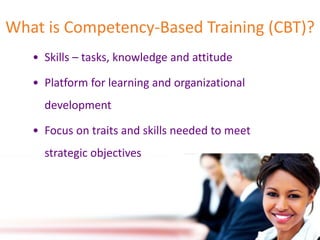
What is Competency-Based Training (CBT)?
   • Skills – tasks, knowledge and attitude

   • Platform for learning and organizational
     development

   • Focus on traits and skills needed to meet
     strategic objectives
Key Characteristics of CBT Programs
  • Competencies aligned to strategic goals

  • Knowledge to support performance

  • Training designed to affect behaviors tied to
    competencies

  • Success = achievement of specified competencies

  • Pre-assessment

  • Self-paced
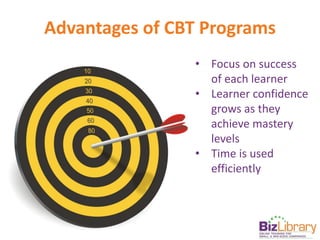
Advantages of CBT Programs
                • Focus on success
                  of each learner
                • Learner confidence
                  grows as they
                  achieve mastery
                  levels
                • Time is used
                  efficiently
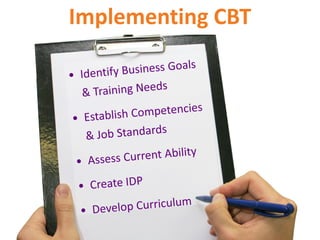
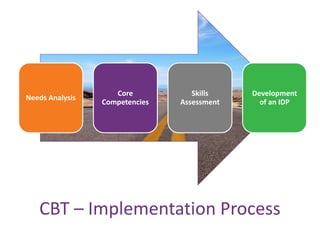
Implementing CBT
Core           Skills    Development
Needs Analysis
                 Competencies   Assessment     of an IDP


   CBT – Implementation Process
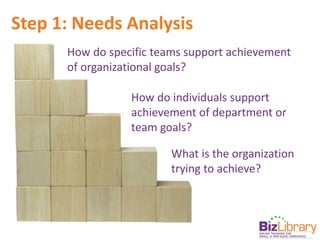
Step 1: Needs Analysis
      How do specific teams support achievement
      of organizational goals?

                 How do individuals support
                 achievement of department or
                 team goals?

                         What is the organization
                         trying to achieve?
Step 2:
Competencies
• What characteristics &
  capabilities are critical to
  the success of your
  organization’s overall
  mission & goals?
• For departments, groups
  and teams?
• What are the common
  traits and strengths of
  top performers?
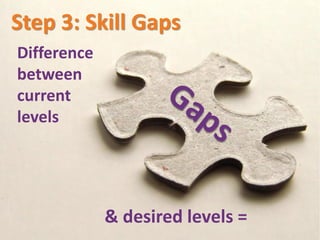
Step 3: Skill Gaps
Difference
between
current
levels


             & desired levels =
Collecting Skill Gap Data

• Interview managers
  & employees
• Interview top
  performers
• Questionnaires /
  Surveys
• Historical data
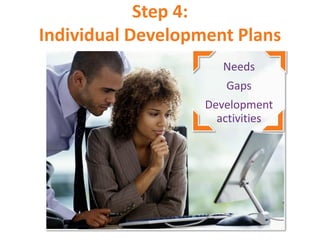
Step 4:
Individual Development Plans
                      Needs
                      Gaps
                   Development
                     activities
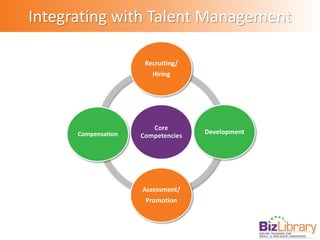
Integrating with Talent Management

                      Recruiting/
                        Hiring


                        Core
      Compensation                  Development
                     Competencies


                     Assessment/
                      Promotion
Competency Mapping to Create IDP’s
    Competency mapping provides a broad
    view of an employee’s individual strengths
    & weaknesses, as it relates to their
    personal career development, as well as
    organizational efficiency, and bottom-line
    results.
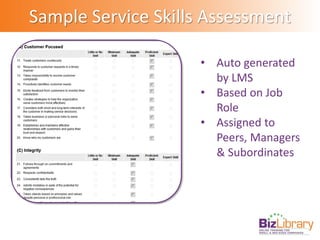
Sample Service Skills Assessment

                    • Auto generated
                      by LMS
                    • Based on Job
                      Role
                    • Assigned to
                      Peers, Managers
                      & Subordinates
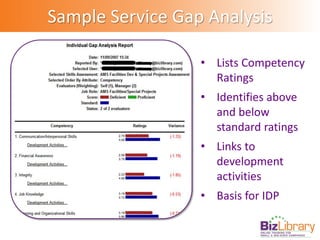
Sample Service Gap Analysis

                  • Lists Competency
                    Ratings
                  • Identifies above
                    and below
                    standard ratings
                  • Links to
                    development
                    activities
                  • Basis for IDP
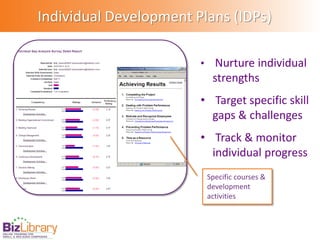
Individual Development Plans (IDPs)

                        •     Nurture individual
                             strengths
                        • Target specific skill
                          gaps & challenges
                        • Track & monitor
                          individual progress
                            Specific courses &
                            development
                            activities
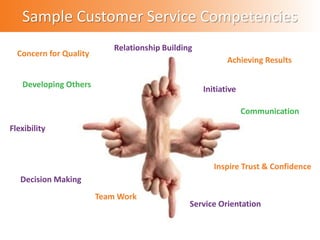
Sample Customer Service Competencies
                            Relationship Building
  Concern for Quality
                                                           Achieving Results

   Developing Others
                                                    Initiative

                                                                 Communication
Flexibility


                                                       Inspire Trust & Confidence
   Decision Making
                        Team Work
                                                Service Orientation
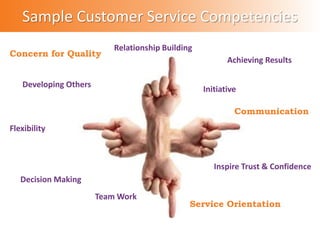
Sample Customer Service Competencies
                           Relationship Building
Concern for Quality
                                                          Achieving Results

   Developing Others
                                                   Initiative

                                                            Communication
Flexibility


                                                      Inspire Trust & Confidence
   Decision Making
                       Team Work
                                               Service Orientation
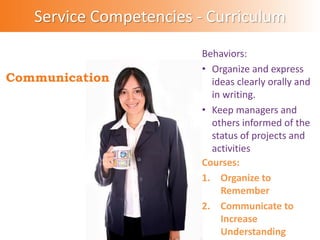
Service Competencies - Curriculum
                         Behaviors:
                         • Organize and express
Communication              ideas clearly orally and
                           in writing.
                         • Keep managers and
                           others informed of the
                           status of projects and
                           activities
                         Courses:
                         1. Organize to
                             Remember
                         2. Communicate to
                             Increase
                             Understanding
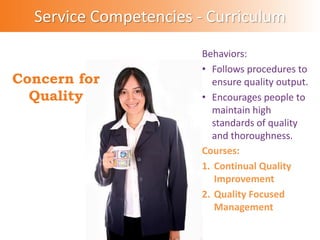
Service Competencies - Curriculum
                        Behaviors:
                        • Follows procedures to
Concern for               ensure quality output.
  Quality               • Encourages people to
                          maintain high
                          standards of quality
                          and thoroughness.
                        Courses:
                        1. Continual Quality
                           Improvement
                        2. Quality Focused
                           Management
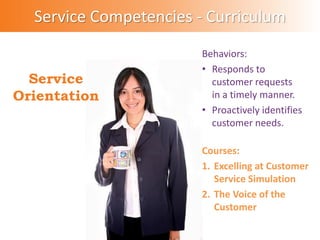
Service Competencies - Curriculum
                        Behaviors:
                        • Responds to
  Service                 customer requests
Orientation               in a timely manner.
                        • Proactively identifies
                          customer needs.

                        Courses:
                        1. Excelling at Customer
                           Service Simulation
                        2. The Voice of the
                           Customer
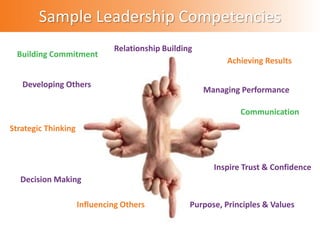
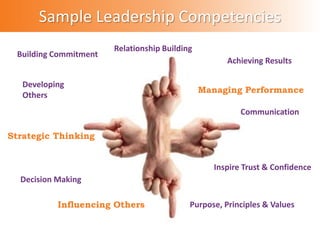
Sample Leadership Competencies
                              Relationship Building
  Building Commitment
                                                            Achieving Results

   Developing Others
                                                      Managing Performance

                                                               Communication
Strategic Thinking


                                                        Inspire Trust & Confidence
  Decision Making

                     Influencing Others           Purpose, Principles & Values
Sample Leadership Competencies
                       Relationship Building
 Building Commitment
                                                     Achieving Results

   Developing
                                               Managing Performance
   Others
                                                         Communication

Strategic Thinking


                                                  Inspire Trust & Confidence
  Decision Making

           Influencing Others              Purpose, Principles & Values
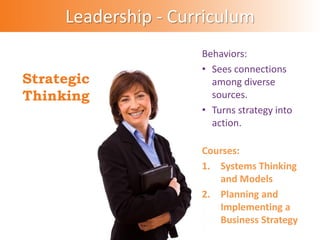
Leadership - Curriculum
                     Behaviors:
                     • Sees connections
Strategic              among diverse
Thinking               sources.
                     • Turns strategy into
                       action.

                     Courses:
                     1. Systems Thinking
                        and Models
                     2. Planning and
                        Implementing a
                        Business Strategy
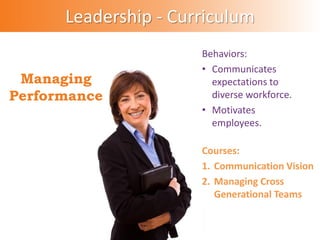
Leadership - Curriculum
                      Behaviors:
                      • Communicates
 Managing               expectations to
Performance             diverse workforce.
                      • Motivates
                        employees.

                      Courses:
                      1. Communication Vision
                      2. Managing Cross
                         Generational Teams
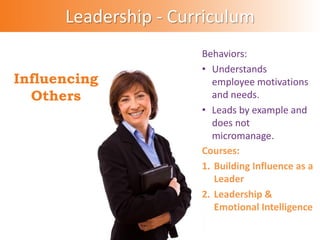
Leadership - Curriculum
                      Behaviors:
                      • Understands
Influencing             employee motivations
  Others                and needs.
                      • Leads by example and
                        does not
                        micromanage.
                      Courses:
                      1. Building Influence as a
                         Leader
                      2. Leadership &
                         Emotional Intelligence
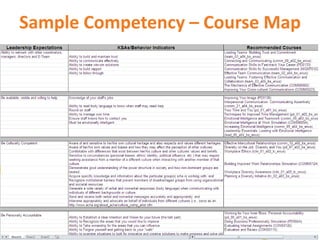
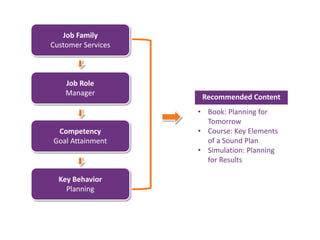
Sample Competency – Course Map
Job Family
Customer Services


    Job Role
    Manager
                     Recommended Content
                    • Book: Planning for
                      Tomorrow
 Competency         • Course: Key Elements
Goal Attainment       of a Sound Plan
                    • Simulation: Planning
                      for Results

  Key Behavior
    Planning
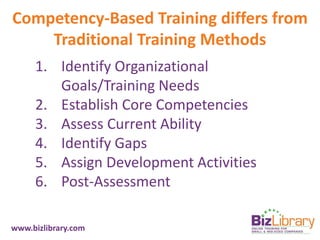
Competency-Based Training differs from
    Traditional Training Methods
     1. Identify Organizational
        Goals/Training Needs
     2. Establish Core Competencies
     3. Assess Current Ability
     4. Identify Gaps
     5. Assign Development Activities
     6. Post-Assessment

www.bizlibrary.com
questions?
    View and register for
 complimentary webinars here
For Additional Info.        Dean Pichee
www.bizlibrary.com      dean@bizlibrary.com
  888.432.3077         888.432.3077 ext. 106


                                   Thank
                                    you!

How to Create a Competency-Based Training Program

  • 1.
    How to Createa Competency-Based Training Program
  • 2.
    Definition of Competency-Based Training How to Implement Competency- Based Training How to Utilize Needs and Performance Analysis Identifying and Establishing Core Competencies Identifying Performance Gaps Competency Mapping to Create IDP’s
  • 3.
    Traditional Training (Educational) Model • Based on model from schools & universities • Appointment-Based • Trainer Focused
  • 4.
    What is Competency-BasedTraining (CBT)? • Skills – tasks, knowledge and attitude • Platform for learning and organizational development • Focus on traits and skills needed to meet strategic objectives
  • 5.
    Key Characteristics ofCBT Programs • Competencies aligned to strategic goals • Knowledge to support performance • Training designed to affect behaviors tied to competencies • Success = achievement of specified competencies • Pre-assessment • Self-paced
  • 6.
    Advantages of CBTPrograms • Focus on success of each learner • Learner confidence grows as they achieve mastery levels • Time is used efficiently
  • 7.
  • 8.
    Core Skills Development Needs Analysis Competencies Assessment of an IDP CBT – Implementation Process
  • 9.
    Step 1: NeedsAnalysis How do specific teams support achievement of organizational goals? How do individuals support achievement of department or team goals? What is the organization trying to achieve?
  • 10.
    Step 2: Competencies • Whatcharacteristics & capabilities are critical to the success of your organization’s overall mission & goals? • For departments, groups and teams? • What are the common traits and strengths of top performers?
  • 11.
    Step 3: SkillGaps Difference between current levels & desired levels =
  • 12.
    Collecting Skill GapData • Interview managers & employees • Interview top performers • Questionnaires / Surveys • Historical data
  • 13.
    Step 4: Individual DevelopmentPlans Needs Gaps Development activities
  • 14.
    Integrating with TalentManagement Recruiting/ Hiring Core Compensation Development Competencies Assessment/ Promotion
  • 15.
    Competency Mapping toCreate IDP’s Competency mapping provides a broad view of an employee’s individual strengths & weaknesses, as it relates to their personal career development, as well as organizational efficiency, and bottom-line results.
  • 16.
    Sample Service SkillsAssessment • Auto generated by LMS • Based on Job Role • Assigned to Peers, Managers & Subordinates
  • 17.
    Sample Service GapAnalysis • Lists Competency Ratings • Identifies above and below standard ratings • Links to development activities • Basis for IDP
  • 18.
    Individual Development Plans(IDPs) • Nurture individual strengths • Target specific skill gaps & challenges • Track & monitor individual progress Specific courses & development activities
  • 19.
    Sample Customer ServiceCompetencies Relationship Building Concern for Quality Achieving Results Developing Others Initiative Communication Flexibility Inspire Trust & Confidence Decision Making Team Work Service Orientation
  • 20.
    Sample Customer ServiceCompetencies Relationship Building Concern for Quality Achieving Results Developing Others Initiative Communication Flexibility Inspire Trust & Confidence Decision Making Team Work Service Orientation
  • 21.
    Service Competencies -Curriculum Behaviors: • Organize and express Communication ideas clearly orally and in writing. • Keep managers and others informed of the status of projects and activities Courses: 1. Organize to Remember 2. Communicate to Increase Understanding
  • 22.
    Service Competencies -Curriculum Behaviors: • Follows procedures to Concern for ensure quality output. Quality • Encourages people to maintain high standards of quality and thoroughness. Courses: 1. Continual Quality Improvement 2. Quality Focused Management
  • 23.
    Service Competencies -Curriculum Behaviors: • Responds to Service customer requests Orientation in a timely manner. • Proactively identifies customer needs. Courses: 1. Excelling at Customer Service Simulation 2. The Voice of the Customer
  • 24.
    Sample Leadership Competencies Relationship Building Building Commitment Achieving Results Developing Others Managing Performance Communication Strategic Thinking Inspire Trust & Confidence Decision Making Influencing Others Purpose, Principles & Values
  • 25.
    Sample Leadership Competencies Relationship Building Building Commitment Achieving Results Developing Managing Performance Others Communication Strategic Thinking Inspire Trust & Confidence Decision Making Influencing Others Purpose, Principles & Values
  • 26.
    Leadership - Curriculum Behaviors: • Sees connections Strategic among diverse Thinking sources. • Turns strategy into action. Courses: 1. Systems Thinking and Models 2. Planning and Implementing a Business Strategy
  • 27.
    Leadership - Curriculum Behaviors: • Communicates Managing expectations to Performance diverse workforce. • Motivates employees. Courses: 1. Communication Vision 2. Managing Cross Generational Teams
  • 28.
    Leadership - Curriculum Behaviors: • Understands Influencing employee motivations Others and needs. • Leads by example and does not micromanage. Courses: 1. Building Influence as a Leader 2. Leadership & Emotional Intelligence
  • 29.
  • 30.
    Job Family Customer Services Job Role Manager Recommended Content • Book: Planning for Tomorrow Competency • Course: Key Elements Goal Attainment of a Sound Plan • Simulation: Planning for Results Key Behavior Planning
  • 31.
    Competency-Based Training differsfrom Traditional Training Methods 1. Identify Organizational Goals/Training Needs 2. Establish Core Competencies 3. Assess Current Ability 4. Identify Gaps 5. Assign Development Activities 6. Post-Assessment www.bizlibrary.com
  • 32.
    questions? View and register for complimentary webinars here
  • 33.
    For Additional Info. Dean Pichee www.bizlibrary.com dean@bizlibrary.com 888.432.3077 888.432.3077 ext. 106 Thank you!