Guess who’s coming to dinner tonight?How to Remain Relevant When Communities Change.Salvador Acevedo, PresidentSeptember 19th, 2011
Guess who’s coming to dinner tonight?ffffffffffffffffffffChanged arts marketing forever!
Guess who’s coming to dinner tonight?How to Remain Relevant When Communities Change?ffffffffffffffffffff
Our societies are changing!A FEW FACTSA “New Mainstream” is emerging, as seen in younger populations (Census 2010).ffffffffffffffffffff
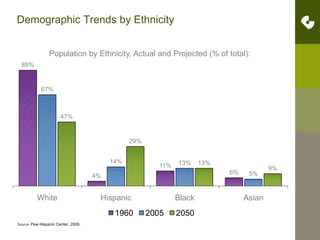
Demographic Trends by EthnicityffffffffffffffffffffSource: Pew Hispanic Center, 2009.
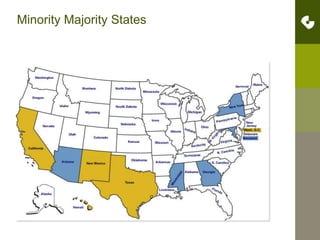
Minority Majority Statesffffffffffffffffffff
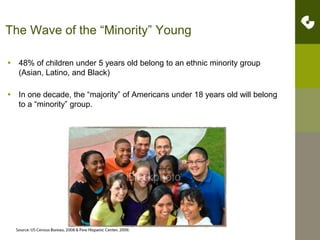
The Wave of the “Minority” Young48% of children under 5 years old belong to an ethnic minority group (Asian, Latino, and Black) In one decade, the “majority” of Americans under 18 years old will belong to a “minority” group.  7Source: US Census Bureau, 2008 & Pew Hispanic Center, 2009.
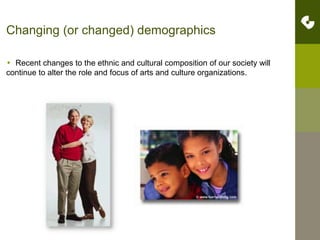
Changing (or changed) demographics  Recent changes to the ethnic and cultural composition of our society will continue to alter the role and focus of arts and culture organizations. 8
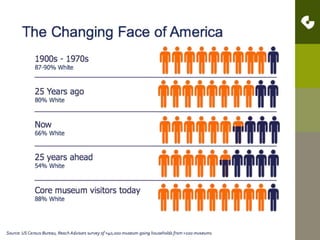
Our societies are changing!A FEW FACTSNegative substitution of current profile audiences (Reach Advisors, 2011).ffffffffffffffffffff
10
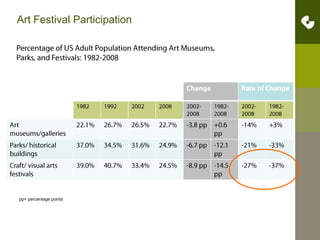
Art Festival ParticipationPercentage of US Adult Population Attending Art Museums,Parks, and Festivals: 1982-2008ffffffffffffffffffffpp= percentage points
Our societies are changing!A FEW FACTSCultural participation among Latinos and African Americans over-index that of non-Latino whites (GPCA, 2011).The economic powerof“minority” groups is growing faster than the general population (Selig Center for Economic Growth, 2009).ffffffffffffffffffff
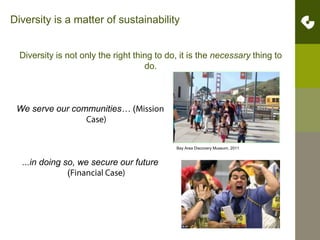
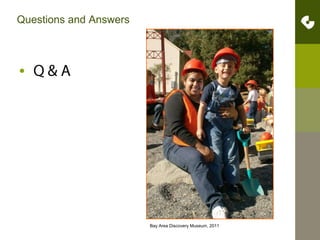
Diversity is a matter of sustainabilityDiversity is not only the right thing to do, it is the necessary thing to do.We serve our communities… (Mission Case)...in doing so, we secure our future (Financial Case)Bay Area Discovery Museum, 2011ffffffffffffffffffff
How to Remain Relevant When Communities Change?ffffffffffffffffffff
The Latino community is very interested in the arts. Do you agree? YesNo
The multi-dimensional diverse audienceEthnic and cultural self-identification plays a crucial role in cultural participation……but it is not the only factor at play. It is necessary to identify the sub-segments with higher potential for engagement.
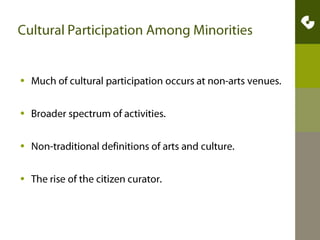
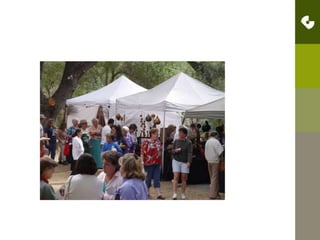
Cultural Participation Among MinoritiesMuch of cultural participation occurs at non-arts venues. Broader spectrum of activities.Non-traditional definitions of arts and culture. The rise of the citizen curator.
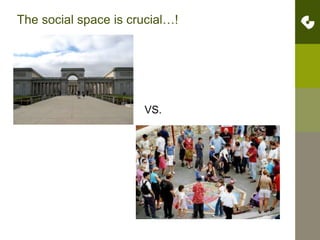
The social space is crucial…!VS.ffffffffffffffffffff
ffffffffffffffffffff
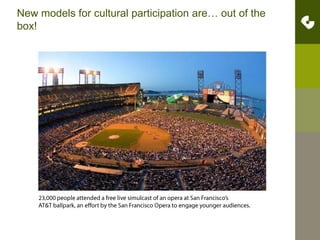
New models for cultural participation are… out of the box!ffffffffffffffffffff23,000 people attended a free live simulcast of an opera at San Francisco’sAT&T ballpark, an effort by the San Francisco Opera to engage younger audiences.
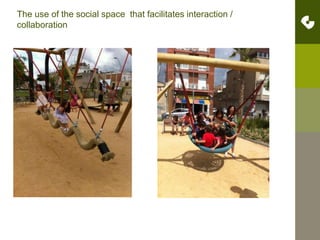
The use of the social space  that facilitates interaction / collaborationffffffffffffffffffff
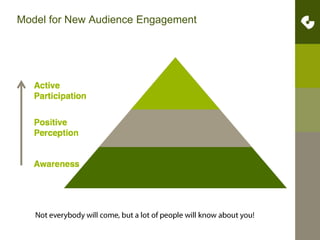
Model for New Audience EngagementffffffffffffffffffffNot everybody will come, but a lot of people will know about you!
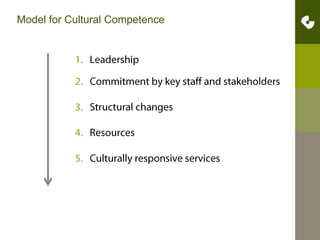
Model for Cultural CompetenceLeadershipCommitment by key staff and stakeholdersStructural changesResourcesCulturally responsive services ffffffffffffffffffff
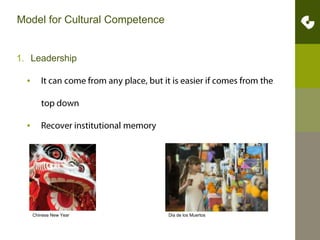
Model for Cultural CompetenceLeadershipIt can come from any place, but it is easier if comes from the top down
Recover institutional memoryChinese New YearDia de los Muertos
Model for Cultural CompetenceCommitment by key staff and stakeholdersResistance to change, internally and externally
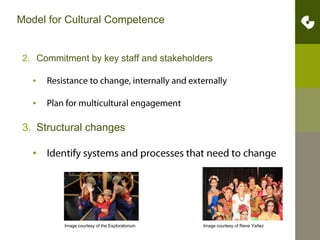
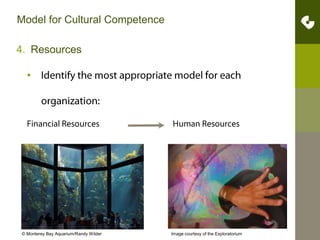
Plan for multicultural engagementStructural changesIdentify systems and processes that need to changeImage courtesy of the ExploratoriumImage courtesy of Rene Yañez
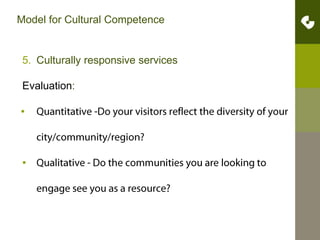
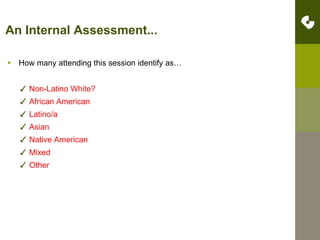
Model for Cultural CompetenceResourcesIdentify the most appropriate model for each organization:Financial Resources                                       Human Resources © Monterey Bay Aquarium/Randy WilderImage courtesy of the Exploratorium
Model for Cultural CompetenceCulturally responsive services Evaluation:Quantitative -Do your visitors reflect the diversity of your city/community/region?
Qualitative - Do the communities you are looking to engage see you as a resource?An Internal Assessment...How many attending this session identify as…Non-Latino White?African AmericanLatino/aAsianNative AmericanMixedOther28
An Internal Assessment...“…too many middle aged hyper educated (non-Latino) white people are going to limit the degree to which museums incorporate other points of view.” *
Eric Siegel, Director of New York Hall of Science.
“We don’t have enough people of color in leadership positions in the arts”

Westaf - ZAPP keynote presentation September 19, 2011

  • 1.
    Guess who’s comingto dinner tonight?How to Remain Relevant When Communities Change.Salvador Acevedo, PresidentSeptember 19th, 2011
  • 2.
    Guess who’s comingto dinner tonight?ffffffffffffffffffffChanged arts marketing forever!
  • 3.
    Guess who’s comingto dinner tonight?How to Remain Relevant When Communities Change?ffffffffffffffffffff
  • 4.
    Our societies arechanging!A FEW FACTSA “New Mainstream” is emerging, as seen in younger populations (Census 2010).ffffffffffffffffffff
  • 5.
    Demographic Trends byEthnicityffffffffffffffffffffSource: Pew Hispanic Center, 2009.
  • 6.
  • 7.
    The Wave ofthe “Minority” Young48% of children under 5 years old belong to an ethnic minority group (Asian, Latino, and Black) In one decade, the “majority” of Americans under 18 years old will belong to a “minority” group. 7Source: US Census Bureau, 2008 & Pew Hispanic Center, 2009.
  • 8.
    Changing (or changed)demographics Recent changes to the ethnic and cultural composition of our society will continue to alter the role and focus of arts and culture organizations. 8
  • 9.
    Our societies arechanging!A FEW FACTSNegative substitution of current profile audiences (Reach Advisors, 2011).ffffffffffffffffffff
  • 10.
  • 11.
    Art Festival ParticipationPercentageof US Adult Population Attending Art Museums,Parks, and Festivals: 1982-2008ffffffffffffffffffffpp= percentage points
  • 12.
    Our societies arechanging!A FEW FACTSCultural participation among Latinos and African Americans over-index that of non-Latino whites (GPCA, 2011).The economic powerof“minority” groups is growing faster than the general population (Selig Center for Economic Growth, 2009).ffffffffffffffffffff
  • 13.
    Diversity is amatter of sustainabilityDiversity is not only the right thing to do, it is the necessary thing to do.We serve our communities… (Mission Case)...in doing so, we secure our future (Financial Case)Bay Area Discovery Museum, 2011ffffffffffffffffffff
  • 14.
    How to RemainRelevant When Communities Change?ffffffffffffffffffff
  • 15.
    The Latino communityis very interested in the arts. Do you agree? YesNo
  • 16.
    The multi-dimensional diverseaudienceEthnic and cultural self-identification plays a crucial role in cultural participation……but it is not the only factor at play. It is necessary to identify the sub-segments with higher potential for engagement.
  • 17.
    Cultural Participation AmongMinoritiesMuch of cultural participation occurs at non-arts venues. Broader spectrum of activities.Non-traditional definitions of arts and culture. The rise of the citizen curator.
  • 18.
    The social spaceis crucial…!VS.ffffffffffffffffffff
  • 19.
  • 20.
    New models forcultural participation are… out of the box!ffffffffffffffffffff23,000 people attended a free live simulcast of an opera at San Francisco’sAT&T ballpark, an effort by the San Francisco Opera to engage younger audiences.
  • 21.
    The use ofthe social space that facilitates interaction / collaborationffffffffffffffffffff
  • 22.
    Model for NewAudience EngagementffffffffffffffffffffNot everybody will come, but a lot of people will know about you!
  • 23.
    Model for CulturalCompetenceLeadershipCommitment by key staff and stakeholdersStructural changesResourcesCulturally responsive services ffffffffffffffffffff
  • 24.
    Model for CulturalCompetenceLeadershipIt can come from any place, but it is easier if comes from the top down
  • 25.
    Recover institutional memoryChineseNew YearDia de los Muertos
  • 26.
    Model for CulturalCompetenceCommitment by key staff and stakeholdersResistance to change, internally and externally
  • 27.
    Plan for multiculturalengagementStructural changesIdentify systems and processes that need to changeImage courtesy of the ExploratoriumImage courtesy of Rene Yañez
  • 28.
    Model for CulturalCompetenceResourcesIdentify the most appropriate model for each organization:Financial Resources Human Resources © Monterey Bay Aquarium/Randy WilderImage courtesy of the Exploratorium
  • 29.
    Model for CulturalCompetenceCulturally responsive services Evaluation:Quantitative -Do your visitors reflect the diversity of your city/community/region?
  • 30.
    Qualitative - Dothe communities you are looking to engage see you as a resource?An Internal Assessment...How many attending this session identify as…Non-Latino White?African AmericanLatino/aAsianNative AmericanMixedOther28
  • 31.
    An Internal Assessment...“…toomany middle aged hyper educated (non-Latino) white people are going to limit the degree to which museums incorporate other points of view.” *
  • 32.
    Eric Siegel, Directorof New York Hall of Science.
  • 33.
    “We don’t haveenough people of color in leadership positions in the arts”

Editor's Notes

  • #3 This film was instrumental in largely ending the marketing consideration of how films featuring African-American characters and themes were assumed to be likely rejected by mainstream audiences in the Southern States of the USA. In that regard, the film was such a major widespread success throughout the entire USA, including the South, that the marketing factor would never again be considered a major problem for any major film release.