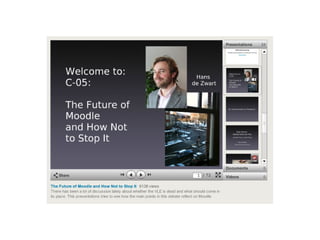
Werken = Leren & Leren ≠ Werken
         Hans de Zwart
       Moodlemoot NL 2012
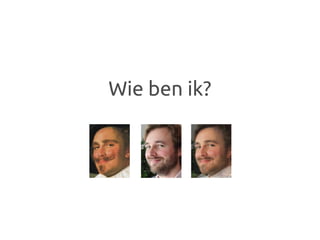
Wie ben ik?
Senior Innovation Adviser voor
   Global HR Technologies
    bij Shell International
Medicijn → Patiënt
Patiënt → Medicijn
Doen van experimenten
Strategisch nadenken
  over de toekomst
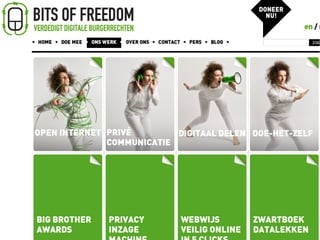
Vrijwilliger op het gebied van
   Internet & maatschappij
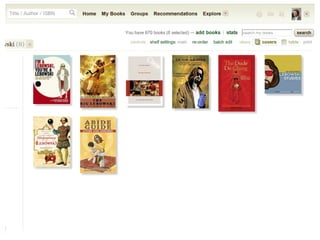
Ik heb twee obsessies
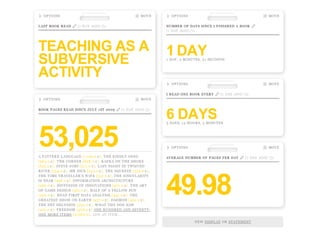
Lezen
(incl. KPI's op vakantie)
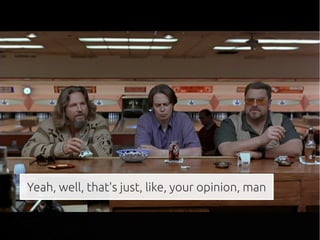
The Big Lebowski
Yeah, well, that's just, like, your opinion, man
Deze obsessies zijn
  te combineren
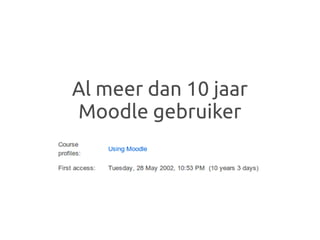
Al meer dan 10 jaar
Moodle gebruiker
Moodle nu al bijna 2 jaar
niet meer aangeraakt :-(
     (duikt weg voor de rotte tomaten)
Dus mijn laatste spreekbeurt
    op een Moodlemoot
“Vroeger was hij beter...”
Nog meer excuses vooraf:
   dit wordt een heel
  conceptueel verhaal
     met veel tekst
       Net als The Big Lebowski:
    de tweede keer wordt het beter
Een verhaal in drie delen:
1. Een kritiek op het onderwijs
2. Een kijk op kenniswerk
3. Wat betekent dit voor Moodle?
1. Een kritiek op het onderwijs
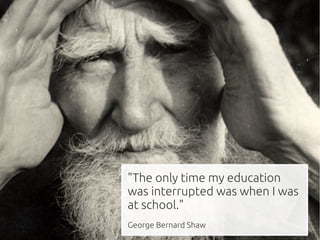
"The only time my education
was interrupted was when I was
at school."
George Bernard Shaw
Even diep ademhalen...
"It is the thesis of this book that
change - constant, accelerating,
ubiquitous - is the most striking
characteristic of the world we live
in and that our educational system
has not yet recognized this fact."
"One way of representing the present condition of
our educational system is as follows: It is as if we are
driving a multimillion dollar sports car, screaming
“Faster! Faster!” while peering fixedly into the
rearview mirror. It is an awkward way to try to tell
where we are, much less where we are going, and it
has been sheer dumb luck that we have not smashed
ourselves to bits – so far. We have paid almost
exclusive attention to the car, equipping it with all
sorts of fantastic gadgets and an engine that will
propel it at ever increasing speeds, but we seem to
have forgotten where we wanted to go in it."
We richten ons op het hoe
in plaats van op het waarom
      van het onderwijs
"The critical content of any
 learning experience is the
method or process through
which the learning occurs"
Simpeler gezegd...
"It is not what you say to
people that counts; it is
what you have them do."
Inquiry methode: het gaat om
de betekenis in het hoofd van
     de leerling/student
Teaching as a
      Subversive Activity
van Neil Postman & Charles Weingartner
Uit 1968 (!)
"[Once] you have learned how to ask questions -
relevant and appropriate and substantial questions- you
have learned how to learn and no one can keep you
from learning whatever you want or need to know."
Een klein uitstapje...
Er was mooi onderwijs
     in de jaren zeventig
(toen we nog geloofden in maakbaarheid)
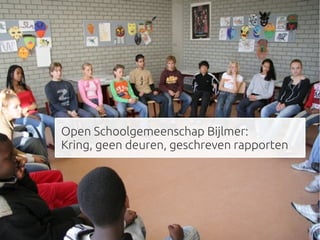
Open Schoolgemeenschap Bijlmer:
Kring, geen deuren, geschreven rapporten
2. Een kijk op kenniswerk
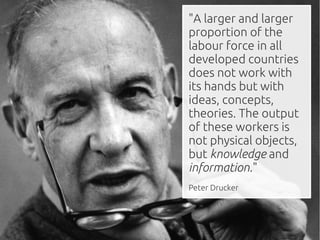
"A larger and larger
proportion of the
labour force in all
developed countries
does not work with
its hands but with
ideas, concepts,
theories. The output
of these workers is
not physical objects,
but knowledge and
information."
Peter Drucker
"Schooling traditionally stopped
when work began.
In the knowledge society
it never stops."
Zes factoren bepalen
de productiviteit van
 een kenniswerker:
1.
Knowledge-worker productivity
demands that we ask the question.
"What is the task?"
2.
It demands that we impose the
responsibility for their productivity on
the individual knowledge workers
themselves. Knowledge workers have
to manage themselves. They have to
have autonomy.
3.
Continuing innovation has to be part of
the work, the task and the
responsibility of knowledge workers.
4.
Knowledge work requires contineous
learning on the part of the knowledge
worker, but equally contineous
teaching on the part of the knowledge
worker.
5.
Productivity of the knowledge worker
is not - at least not primarily - a matter
of quantity of output. Quality is at
least as important.
6.
Finally, knowledge-worker productivity
requires that the knowledge worker is
both seen and treated as an "asset"
rather than a "cost". It requires that
knowledge workers want to work for
the organization in preference to all
other opportunities.
Je kunt dus geen curriculum
  voor deze mensen maken
(de vraag is zelfs of je nog wel
    in ze moet investeren)
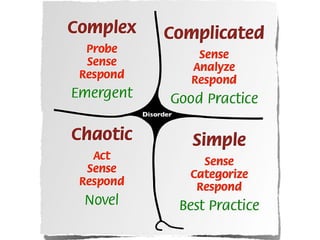
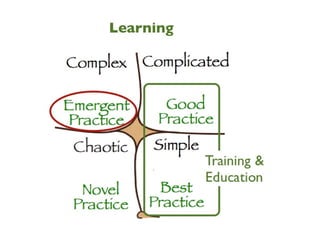
Dave Snowden's
Cynefin Framework
Jarche heeft dit
vertaald naar leren
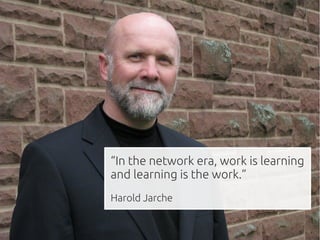
“In the network era, work is learning
and learning is the work.”
Harold Jarche
Nog een derde keer
  hetzelfde punt
Via een “transhuman futurist”
"[..] Our formal educational
methodologies seem to have
advanced less rapidly than many
other aspects of society. Our
formal education systems seem
out of step with rapid-growth hi-
tech industries and online
communities, and more akin to
those old-fashioned, fusty,
domains of industry that haven't
yet caught up with the times. [..]
Where this leads is to the end of
the distinction between education
and plain old everyday life. If you
learn by doing, and you need to
constantly learn while doing
anything due to the constant influx
of new information... then where
lies the distinction between
learning and living?"

Ben Goertzel, A Cosmist Manifesto
3. Wat betekent dit
   voor Moodle?
Gaat Moodle over het hoe of
     over het waarom?
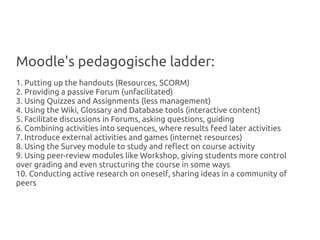
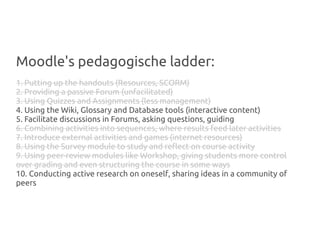
Moodle's pedagogische ladder:
1. Putting up the handouts (Resources, SCORM)
2. Providing a passive Forum (unfacilitated)
3. Using Quizzes and Assignments (less management)
4. Using the Wiki, Glossary and Database tools (interactive content)
5. Facilitate discussions in Forums, asking questions, guiding
6. Combining activities into sequences, where results feed later activities
7. Introduce external activities and games (internet resources)
8. Using the Survey module to study and reflect on course activity
9. Using peer-review modules like Workshop, giving students more control
over grading and even structuring the course in some ways
10. Conducting active research on oneself, sharing ideas in a community of
peers
Wat blijft nog relevant?
Moodle's pedagogische ladder:
1. Putting up the handouts (Resources, SCORM)
2. Providing a passive Forum (unfacilitated)
3. Using Quizzes and Assignments (less management)
4. Using the Wiki, Glossary and Database tools (interactive content)
5. Facilitate discussions in Forums, asking questions, guiding
6. Combining activities into sequences, where results feed later activities
7. Introduce external activities and games (internet resources)
8. Using the Survey module to study and reflect on course activity
9. Using peer-review modules like Workshop, giving students more control
over grading and even structuring the course in some ways
10. Conducting active research on oneself, sharing ideas in a community of
peers
Moodle moet als middel
     in de handen van de
leerling/kenniswerker komen
Een paar voorbeelden...
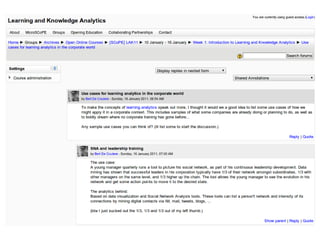
Massive Open Online Courses
         (MOOCs)
Learning Analytics
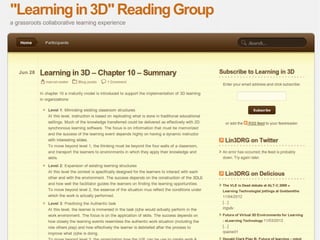
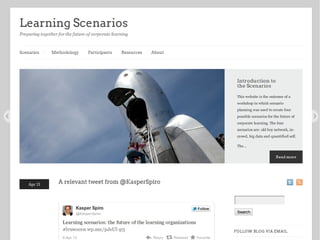
Een grassroots leesgroep
Een workshop door, voor en
    met professionals
Allebei gemaakt
met Wordpress
Waarom is Moodle nog niet
  als SaaS beschikbaar?
Met één druk op de knop
en 15 minuten configuratie
      te gebruiken...
Moodle is te ingewikkeld en
 moet worden versimpeld
"The majority of the time,
complexity can be traced to
a single design approach:
offering too much
flexibility. [..] Simplicity
comes from a basic
observation: all products
are used in much the same
way the vast majority of the
time. [..] Simplicity is about
lowering the priority of the
high-end functionality to
make sure the core tasks
work exceedingly well."
Scott Jenson, The Simplicity Shift
Een voordeel:
Moodle is open source
Geen licentiekosten
De mogelijkheid om zelf
   dingen te maken
Misschien een voorbeeld
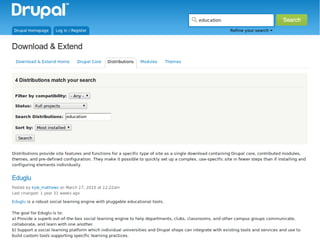
  nemen aan Drupal?
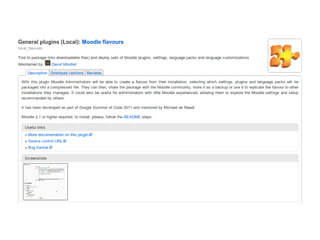
Simpele Moodle distributies
   lijken mij fantastisch
Moodle Flavours
Uitdaging:
   Wie maakt als eerste een
“flavour” met een versimpelde
theme en maar twee modules:
       forums en wikis?
Dat was het...
Ik kijk uit naar de rest van de dag!

Slides & links:
http://hdez.nl/mootnl12

Contact:
h@nsdezwart.nl of @hansdezwart
Waar komen de plaatjes vandaan?
George Bernard Shaw:
http://lib-1.lse.ac.uk/archivesblog/?p=82
Ben Goertzel:
http://wallpaperhqdownload.com/ben-goertzel.html
Neil Postman:
http://www.basenow.net/wp-content/Postman_head_300.jpg
Peter Drucker:
http://www.cgu.edu/images/drucker/peter_drucker/pages/PeterDrucker004_jpg.htm
Harold Jarche:
http://www.flickr.com/photos/jarche/5716568436/
Cynefin Framework:
http://en.wikipedia.org/wiki/Cynefin
Jarche's picture about learning and Cynefin:
http://www.jarche.com/2012/04/three-principles-for-net-work/
Scott Jenson:
http://www.netmagazine.com/opinions/mobile-apps-must-die
The Big Lebowski:
http://www.intuition-online.co.uk/article.php?id=2372

Werken = Leren & Leren ≠ Werken

  • 1.
    Werken = Leren& Leren ≠ Werken Hans de Zwart Moodlemoot NL 2012
  • 2.
  • 3.
    Senior Innovation Adviservoor Global HR Technologies bij Shell International
  • 4.
  • 5.
  • 6.
  • 7.
    Strategisch nadenken over de toekomst
  • 8.
    Vrijwilliger op hetgebied van Internet & maatschappij
  • 11.
    Ik heb tweeobsessies
  • 12.
  • 14.
  • 16.
    Yeah, well, that'sjust, like, your opinion, man
  • 17.
    Deze obsessies zijn te combineren
  • 19.
    Al meer dan10 jaar Moodle gebruiker
  • 21.
    Moodle nu albijna 2 jaar niet meer aangeraakt :-( (duikt weg voor de rotte tomaten)
  • 22.
    Dus mijn laatstespreekbeurt op een Moodlemoot
  • 23.
    “Vroeger was hijbeter...”
  • 26.
    Nog meer excusesvooraf: dit wordt een heel conceptueel verhaal met veel tekst Net als The Big Lebowski: de tweede keer wordt het beter
  • 27.
    Een verhaal indrie delen: 1. Een kritiek op het onderwijs 2. Een kijk op kenniswerk 3. Wat betekent dit voor Moodle?
  • 28.
    1. Een kritiekop het onderwijs
  • 29.
    "The only timemy education was interrupted was when I was at school." George Bernard Shaw
  • 30.
  • 31.
    "It is thethesis of this book that change - constant, accelerating, ubiquitous - is the most striking characteristic of the world we live in and that our educational system has not yet recognized this fact."
  • 32.
    "One way ofrepresenting the present condition of our educational system is as follows: It is as if we are driving a multimillion dollar sports car, screaming “Faster! Faster!” while peering fixedly into the rearview mirror. It is an awkward way to try to tell where we are, much less where we are going, and it has been sheer dumb luck that we have not smashed ourselves to bits – so far. We have paid almost exclusive attention to the car, equipping it with all sorts of fantastic gadgets and an engine that will propel it at ever increasing speeds, but we seem to have forgotten where we wanted to go in it."
  • 33.
    We richten onsop het hoe in plaats van op het waarom van het onderwijs
  • 34.
    "The critical contentof any learning experience is the method or process through which the learning occurs"
  • 35.
  • 36.
    "It is notwhat you say to people that counts; it is what you have them do."
  • 37.
    Inquiry methode: hetgaat om de betekenis in het hoofd van de leerling/student
  • 38.
    Teaching as a Subversive Activity van Neil Postman & Charles Weingartner
  • 39.
  • 40.
    "[Once] you havelearned how to ask questions - relevant and appropriate and substantial questions- you have learned how to learn and no one can keep you from learning whatever you want or need to know."
  • 41.
  • 42.
    Er was mooionderwijs in de jaren zeventig (toen we nog geloofden in maakbaarheid)
  • 43.
    Open Schoolgemeenschap Bijlmer: Kring,geen deuren, geschreven rapporten
  • 44.
    2. Een kijkop kenniswerk
  • 45.
    "A larger andlarger proportion of the labour force in all developed countries does not work with its hands but with ideas, concepts, theories. The output of these workers is not physical objects, but knowledge and information." Peter Drucker
  • 46.
    "Schooling traditionally stopped whenwork began. In the knowledge society it never stops."
  • 47.
    Zes factoren bepalen deproductiviteit van een kenniswerker:
  • 48.
    1. Knowledge-worker productivity demands thatwe ask the question. "What is the task?"
  • 49.
    2. It demands thatwe impose the responsibility for their productivity on the individual knowledge workers themselves. Knowledge workers have to manage themselves. They have to have autonomy.
  • 50.
    3. Continuing innovation hasto be part of the work, the task and the responsibility of knowledge workers.
  • 51.
    4. Knowledge work requirescontineous learning on the part of the knowledge worker, but equally contineous teaching on the part of the knowledge worker.
  • 52.
    5. Productivity of theknowledge worker is not - at least not primarily - a matter of quantity of output. Quality is at least as important.
  • 53.
    6. Finally, knowledge-worker productivity requiresthat the knowledge worker is both seen and treated as an "asset" rather than a "cost". It requires that knowledge workers want to work for the organization in preference to all other opportunities.
  • 54.
    Je kunt dusgeen curriculum voor deze mensen maken (de vraag is zelfs of je nog wel in ze moet investeren)
  • 55.
  • 57.
  • 59.
    “In the networkera, work is learning and learning is the work.” Harold Jarche
  • 60.
    Nog een derdekeer hetzelfde punt
  • 61.
  • 62.
    "[..] Our formaleducational methodologies seem to have advanced less rapidly than many other aspects of society. Our formal education systems seem out of step with rapid-growth hi- tech industries and online communities, and more akin to those old-fashioned, fusty, domains of industry that haven't yet caught up with the times. [..] Where this leads is to the end of the distinction between education and plain old everyday life. If you learn by doing, and you need to constantly learn while doing anything due to the constant influx of new information... then where lies the distinction between learning and living?" Ben Goertzel, A Cosmist Manifesto
  • 63.
    3. Wat betekentdit voor Moodle?
  • 64.
    Gaat Moodle overhet hoe of over het waarom?
  • 65.
    Moodle's pedagogische ladder: 1.Putting up the handouts (Resources, SCORM) 2. Providing a passive Forum (unfacilitated) 3. Using Quizzes and Assignments (less management) 4. Using the Wiki, Glossary and Database tools (interactive content) 5. Facilitate discussions in Forums, asking questions, guiding 6. Combining activities into sequences, where results feed later activities 7. Introduce external activities and games (internet resources) 8. Using the Survey module to study and reflect on course activity 9. Using peer-review modules like Workshop, giving students more control over grading and even structuring the course in some ways 10. Conducting active research on oneself, sharing ideas in a community of peers
  • 66.
    Wat blijft nogrelevant?
  • 67.
    Moodle's pedagogische ladder: 1.Putting up the handouts (Resources, SCORM) 2. Providing a passive Forum (unfacilitated) 3. Using Quizzes and Assignments (less management) 4. Using the Wiki, Glossary and Database tools (interactive content) 5. Facilitate discussions in Forums, asking questions, guiding 6. Combining activities into sequences, where results feed later activities 7. Introduce external activities and games (internet resources) 8. Using the Survey module to study and reflect on course activity 9. Using peer-review modules like Workshop, giving students more control over grading and even structuring the course in some ways 10. Conducting active research on oneself, sharing ideas in a community of peers
  • 68.
    Moodle moet alsmiddel in de handen van de leerling/kenniswerker komen
  • 69.
  • 70.
    Massive Open OnlineCourses (MOOCs)
  • 71.
  • 73.
  • 75.
    Een workshop door,voor en met professionals
  • 77.
  • 79.
    Waarom is Moodlenog niet als SaaS beschikbaar?
  • 80.
    Met één drukop de knop en 15 minuten configuratie te gebruiken...
  • 81.
    Moodle is teingewikkeld en moet worden versimpeld
  • 82.
    "The majority ofthe time, complexity can be traced to a single design approach: offering too much flexibility. [..] Simplicity comes from a basic observation: all products are used in much the same way the vast majority of the time. [..] Simplicity is about lowering the priority of the high-end functionality to make sure the core tasks work exceedingly well." Scott Jenson, The Simplicity Shift
  • 83.
  • 84.
  • 85.
    De mogelijkheid omzelf dingen te maken
  • 86.
    Misschien een voorbeeld nemen aan Drupal?
  • 88.
    Simpele Moodle distributies lijken mij fantastisch
  • 89.
  • 91.
    Uitdaging: Wie maakt als eerste een “flavour” met een versimpelde theme en maar twee modules: forums en wikis?
  • 92.
    Dat was het... Ikkijk uit naar de rest van de dag! Slides & links: http://hdez.nl/mootnl12 Contact: h@nsdezwart.nl of @hansdezwart
  • 93.
    Waar komen deplaatjes vandaan? George Bernard Shaw: http://lib-1.lse.ac.uk/archivesblog/?p=82 Ben Goertzel: http://wallpaperhqdownload.com/ben-goertzel.html Neil Postman: http://www.basenow.net/wp-content/Postman_head_300.jpg Peter Drucker: http://www.cgu.edu/images/drucker/peter_drucker/pages/PeterDrucker004_jpg.htm Harold Jarche: http://www.flickr.com/photos/jarche/5716568436/ Cynefin Framework: http://en.wikipedia.org/wiki/Cynefin Jarche's picture about learning and Cynefin: http://www.jarche.com/2012/04/three-principles-for-net-work/ Scott Jenson: http://www.netmagazine.com/opinions/mobile-apps-must-die The Big Lebowski: http://www.intuition-online.co.uk/article.php?id=2372