Download to read offline








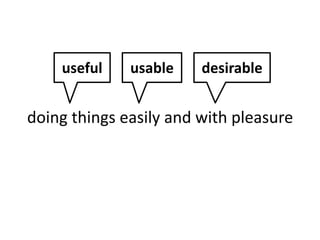
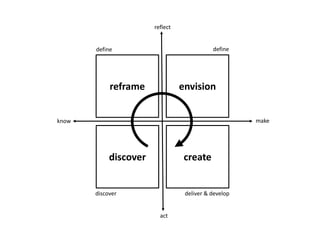
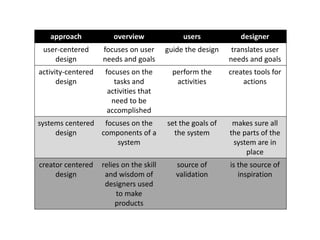
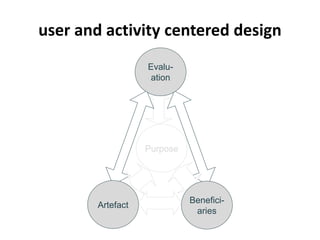
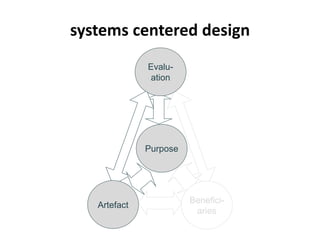
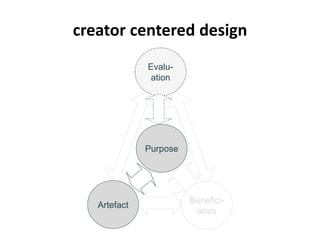
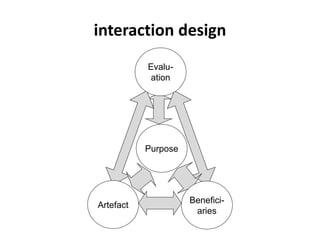
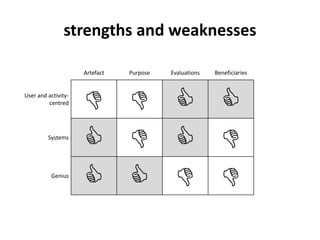

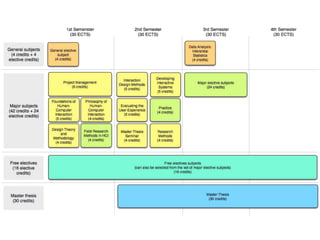
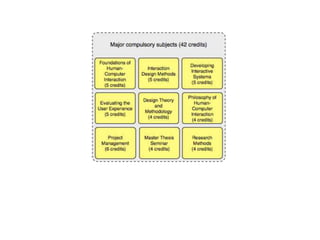
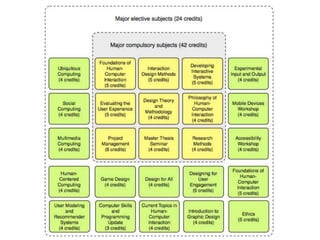
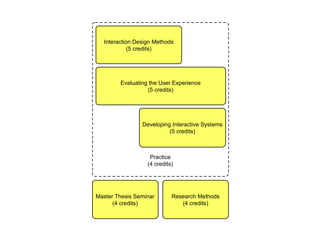


This document provides an overview of interaction design. It discusses that interaction design involves shaping digital products for people's use by addressing instrumental, technical, and aesthetic aspects. It also explores possible futures and involves sketching and other representations. The document then summarizes several design paradigms: user-centered design focuses on user needs; activity-centered design focuses on tasks; systems-centered design focuses on system components; and creator-centered design relies on designer skill. It notes that combining all of these paradigms allows interaction design to realize its full potential. Finally, it lists some core courses in the HCI master's program that cover interaction design, user experience evaluation, developing interactive systems, and research methods.


