PUBLIC RELATIONS PRACTICE
2014
Week 9
!
!
DR KANE HOPKINS
What is an event?
Events have been defined as a specific ritual,
presentation, performance or celebration.
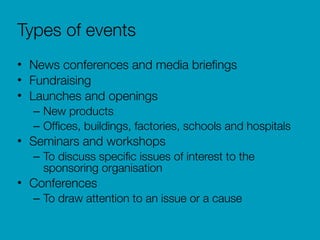
Types of events
• News conferences and media briefings
• Fundraising
• Launches and openings
– New products
– Offices, buildings, factories, schools and hospitals
• Seminars and workshops
– To discuss specific issues of interest to the
sponsoring organisation
• Conferences
– To draw attention to an issue or a cause
Types of events
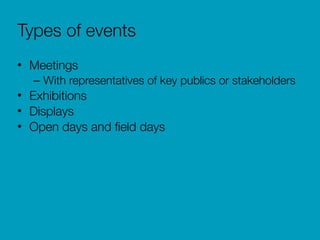
• Meetings
– With representatives of key publics or stakeholders
• Exhibitions
• Displays
• Open days and field days
Events as part of the PR function
• Natural extension of activities
• Often run by specialists
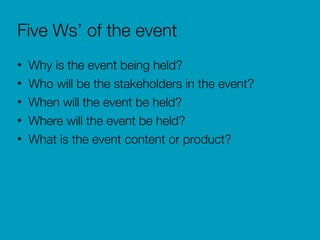
Five Ws’ of the event
• Why is the event being held?
• Who will be the stakeholders in the event?
• When will the event be held?
• Where will the event be held?
• What is the event content or product?
Why?
• There must be a compelling reason that confirm
the importance and viability of the event.
• The purpose of an event should drive all of the
planning.
• Think carefully before you commit to the event.
Who will be the stakeholders in the
event?
• Everyone concerned in the event.
• These include internal stakeholders.
When will the event be held?
• Is there sufficient time to research and plan the
event?
• Does the timing suit the audience?
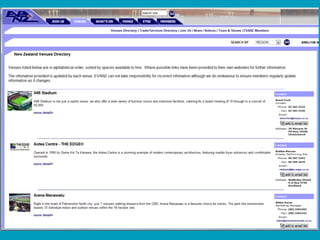
Where will the event be held?
• The choice of venue must represent the best
compromise between the organisational needs of
the event, audience comfort, accessibility and cost.
Venue
• This needs to be carefully considered
• Two main considerations
1. The functionality of the venue,
2. Suitability of the site for the event’s creative
purpose.
• Other issues
– Accessibility i.e. parking, lifts, toilets, ramps
– Fit with audience profile
– Venue safety
What is the event content or product?
• Must match needs, wants, desires and
expectations of the audience.
• Must synergise with the why, who, when and
where of the event.
Establishing event objectives
• Number of people attending
• Number of participants
• Contributions of sponsors
• Values of grants and donations
• Break-even or amount of profit
• Goals for charitable contributions
• Level of media exposure
Establishing event objectives
• Number of repeat visitors
• Value of merchandise sold
• Number of exhibitors
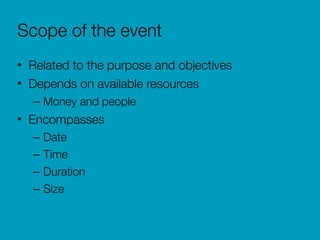
Scope of the event
• Related to the purpose and objectives
• Depends on available resources
– Money and people
• Encompasses
– Date
– Time
– Duration
– Size
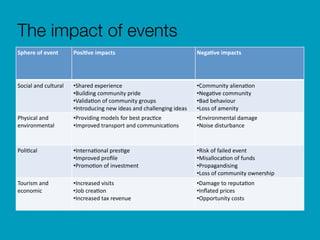
The impact of events
Sphere	
  of	
  event Posi/ve	
  impacts Nega/ve	
  impacts
Social	
  and	
  cultural •Shared	
  experience	
  
•Building	
  community	
  pride	
  
•Valida6on	
  of	
  community	
  groups	
  
•Introducing	
  new	
  ideas	
  and	
  challenging	
  ideas
•Community	
  aliena6on	
  
•Nega6ve	
  community	
  
•Bad	
  behaviour	
  
•Loss	
  of	
  amenity
Physical	
  and	
  
environmental
•Providing	
  models	
  for	
  best	
  prac6ce	
  
•Improved	
  transport	
  and	
  communica6ons
•Environmental	
  damage	
  
•Noise	
  disturbance
Poli6cal •Interna6onal	
  pres6ge	
  
•Improved	
  profile	
  
•Promo6on	
  of	
  investment
•Risk	
  of	
  failed	
  event	
  
•Misalloca6on	
  of	
  funds	
  
•Propagandising	
  
•Loss	
  of	
  community	
  ownership
Tourism	
  and	
  
economic
•Increased	
  visits	
  
•Job	
  crea6on	
  
•Increased	
  tax	
  revenue
•Damage	
  to	
  reputa6on	
  
•Inflated	
  prices	
  
•Opportunity	
  costs
Editorial/adver6sing
Acknowledgement
Entertainment/reward
Par6cipa6on/support
Payment/reward
Labour/support
Context
Host	
  community
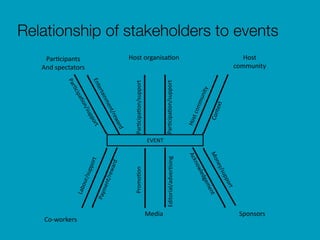
Relationship of stakeholders to events
Par6cipants	
  	
  
And	
  spectators
Host	
  organisa6on Host	
  	
  
community
EVENT
Media
Co-­‐workers
Sponsors
Money/support
Par6cipa6on/support
Par6cipa6on/supportPromo6on
Establish	
  a	
  vision	
  and	
  
mission	
  for	
  the	
  event
Formulate	
  SMART	
  
objec6ves	
  for	
  the	
  event
Scan	
  internal	
  and	
  	
  
external	
  environments
Develop	
  	
  
event	
  strategies
Redefine	
  
standing	
  plan	
  
•Policies	
  	
  
•Rules	
  
•Standard	
  
procedures	
  and	
  
methods
Redefine	
  single	
  
use	
  plan	
  
•Programmes	
  
•Projects	
  
•Budgets
Decide	
  org	
  
structure	
  
•Job	
  
descrip6ons
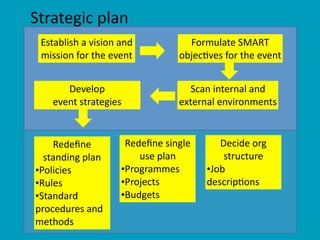
Strategic	
  plan
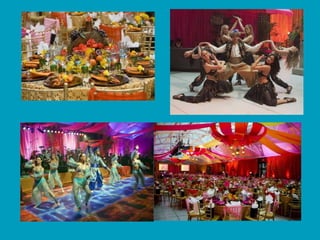
Theme
• Linked to the purpose.
• Compatible with guest/audience needs.
• Integrate with all items for the event
– Tickets
– Programs
• Should appeal to all senses… if the aim is to
transport the audience this is a must (Goldblatt,
2005).
People management
• Your key resource
– If your people are under prepared then the success
of the event is in question.
• Inform
– Briefings before and after shifts.
– If a single piece of information is missed and
hundreds of people are asking then same thing can
get stressful.
Other factors
• Technical requirements
• Security
– Crowd control
• Sound and video
– production
• Medical
• Catering
Run sheet
• Minute by minute timeline
• Everyone knows what to expect
If things can go wrong…
• If you don’t plan for it, you’re screwed when it
happens (or doesn’t happen)

Week 9: Events Management and Publicity

  • 1.
  • 2.
    What is anevent? Events have been defined as a specific ritual, presentation, performance or celebration.
  • 3.
    Types of events •News conferences and media briefings • Fundraising • Launches and openings – New products – Offices, buildings, factories, schools and hospitals • Seminars and workshops – To discuss specific issues of interest to the sponsoring organisation • Conferences – To draw attention to an issue or a cause
  • 4.
    Types of events •Meetings – With representatives of key publics or stakeholders • Exhibitions • Displays • Open days and field days
  • 5.
    Events as partof the PR function • Natural extension of activities • Often run by specialists
  • 6.
    Five Ws’ ofthe event • Why is the event being held? • Who will be the stakeholders in the event? • When will the event be held? • Where will the event be held? • What is the event content or product?
  • 7.
    Why? • There mustbe a compelling reason that confirm the importance and viability of the event. • The purpose of an event should drive all of the planning. • Think carefully before you commit to the event.
  • 8.
    Who will bethe stakeholders in the event? • Everyone concerned in the event. • These include internal stakeholders.
  • 9.
    When will theevent be held? • Is there sufficient time to research and plan the event? • Does the timing suit the audience?
  • 10.
    Where will theevent be held? • The choice of venue must represent the best compromise between the organisational needs of the event, audience comfort, accessibility and cost.
  • 11.
    Venue • This needsto be carefully considered • Two main considerations 1. The functionality of the venue, 2. Suitability of the site for the event’s creative purpose. • Other issues – Accessibility i.e. parking, lifts, toilets, ramps – Fit with audience profile – Venue safety
  • 13.
    What is theevent content or product? • Must match needs, wants, desires and expectations of the audience. • Must synergise with the why, who, when and where of the event.
  • 14.
    Establishing event objectives •Number of people attending • Number of participants • Contributions of sponsors • Values of grants and donations • Break-even or amount of profit • Goals for charitable contributions • Level of media exposure
  • 15.
    Establishing event objectives •Number of repeat visitors • Value of merchandise sold • Number of exhibitors
  • 16.
    Scope of theevent • Related to the purpose and objectives • Depends on available resources – Money and people • Encompasses – Date – Time – Duration – Size
  • 17.
    The impact ofevents Sphere  of  event Posi/ve  impacts Nega/ve  impacts Social  and  cultural •Shared  experience   •Building  community  pride   •Valida6on  of  community  groups   •Introducing  new  ideas  and  challenging  ideas •Community  aliena6on   •Nega6ve  community   •Bad  behaviour   •Loss  of  amenity Physical  and   environmental •Providing  models  for  best  prac6ce   •Improved  transport  and  communica6ons •Environmental  damage   •Noise  disturbance Poli6cal •Interna6onal  pres6ge   •Improved  profile   •Promo6on  of  investment •Risk  of  failed  event   •Misalloca6on  of  funds   •Propagandising   •Loss  of  community  ownership Tourism  and   economic •Increased  visits   •Job  crea6on   •Increased  tax  revenue •Damage  to  reputa6on   •Inflated  prices   •Opportunity  costs
  • 18.
    Editorial/adver6sing Acknowledgement Entertainment/reward Par6cipa6on/support Payment/reward Labour/support Context Host  community Relationship ofstakeholders to events Par6cipants     And  spectators Host  organisa6on Host     community EVENT Media Co-­‐workers Sponsors Money/support Par6cipa6on/support Par6cipa6on/supportPromo6on
  • 19.
    Establish  a  vision  and   mission  for  the  event Formulate  SMART   objec6ves  for  the  event Scan  internal  and     external  environments Develop     event  strategies Redefine   standing  plan   •Policies     •Rules   •Standard   procedures  and   methods Redefine  single   use  plan   •Programmes   •Projects   •Budgets Decide  org   structure   •Job   descrip6ons Strategic  plan
  • 20.
    Theme • Linked tothe purpose. • Compatible with guest/audience needs. • Integrate with all items for the event – Tickets – Programs • Should appeal to all senses… if the aim is to transport the audience this is a must (Goldblatt, 2005).
  • 23.
    People management • Yourkey resource – If your people are under prepared then the success of the event is in question. • Inform – Briefings before and after shifts. – If a single piece of information is missed and hundreds of people are asking then same thing can get stressful.
  • 24.
    Other factors • Technicalrequirements • Security – Crowd control • Sound and video – production • Medical • Catering
  • 25.
    Run sheet • Minuteby minute timeline • Everyone knows what to expect
  • 26.
    If things cango wrong… • If you don’t plan for it, you’re screwed when it happens (or doesn’t happen)