8P24: Week 6
2018
Reading 2
Professional Learning Conversations
• Week 6: Professional Reading 20 minutes
– Roehling, J. (2017). Text structure strategies for
improving expository reading comprehension
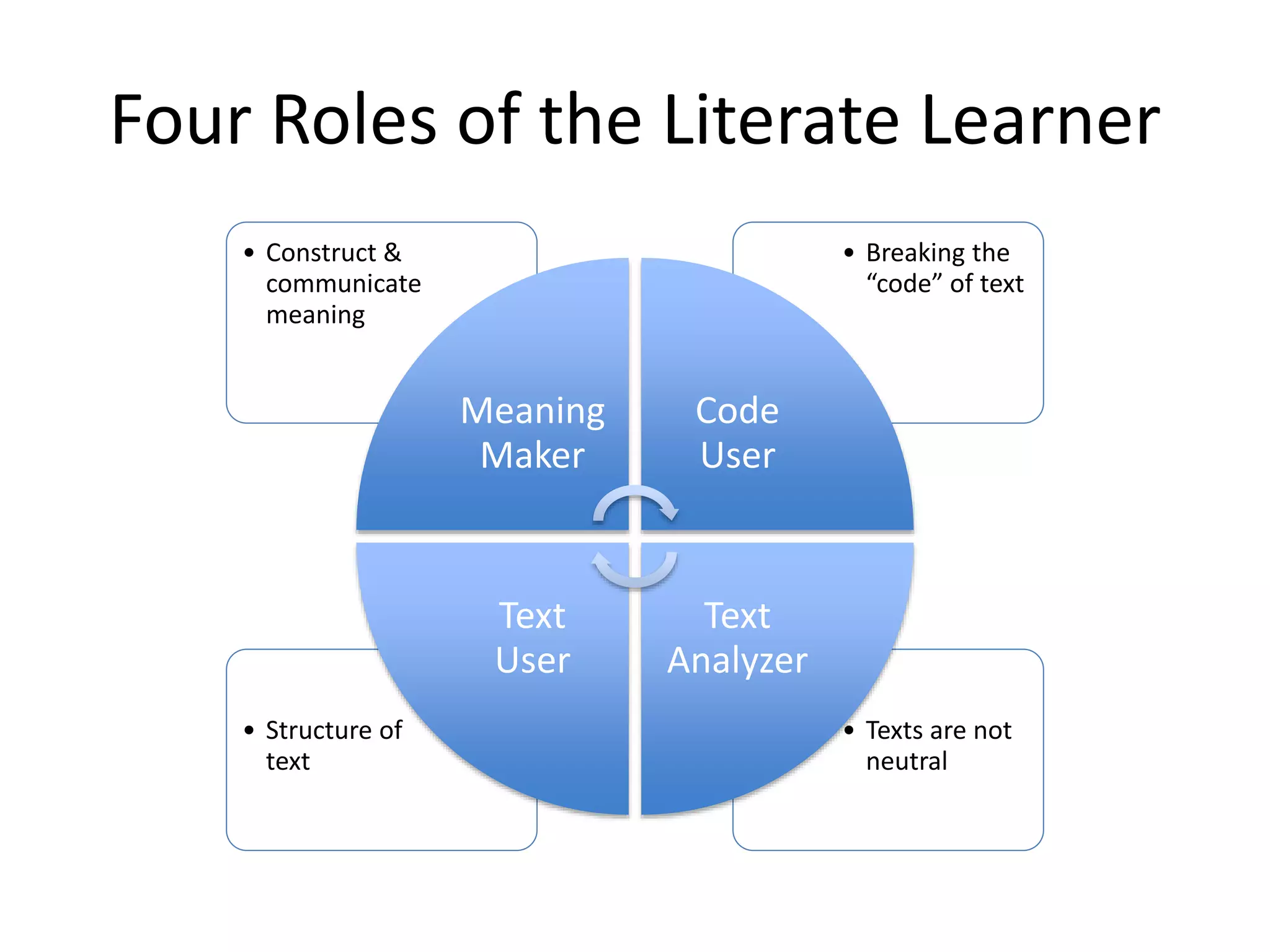
Four Roles of the Literate Learner
• Texts are not
neutral
• Structure of
text
• Breaking the
“code” of text
• Construct &
communicate
meaning
Meaning
Maker
Code
User
Text
Analyzer
Text
User
Ontario Curriculum: Language
• Read carefully the Overall and Specific
Expectations for Reading as found in the
Reading strand at a variety of grade levels (4-
8). Each person at your table is to choose a
different grade level.
• How are the various grades similar or
different? Is there any change from grade to
grade?
Your classroom
• Based on the expectations for reading in the
Ontario Curriculum list at least 5 “musts” for
teachers to include in their reading program:
• Teachers must:
1. _____
2. _____
3. _____
4. _____
5. _____
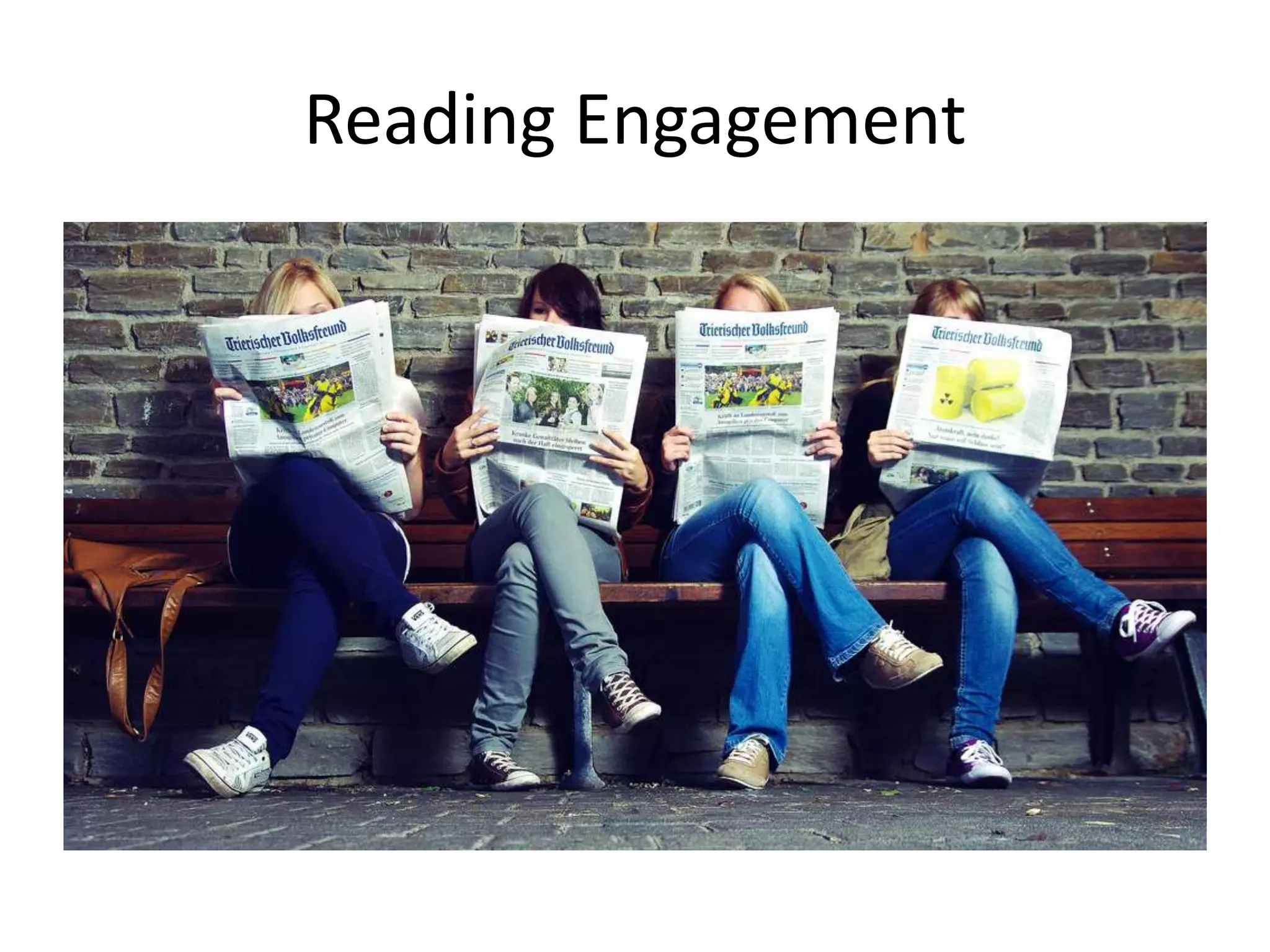
Reading Engagement
Video
Check out these sites!
(links on Sakai Week 6)
• Teaching Kids News
• Forest of Reading
• 2Titles
• Storyline
• Brain Space Magazine (you will need to
download app Blippar on your device)
• Epic!
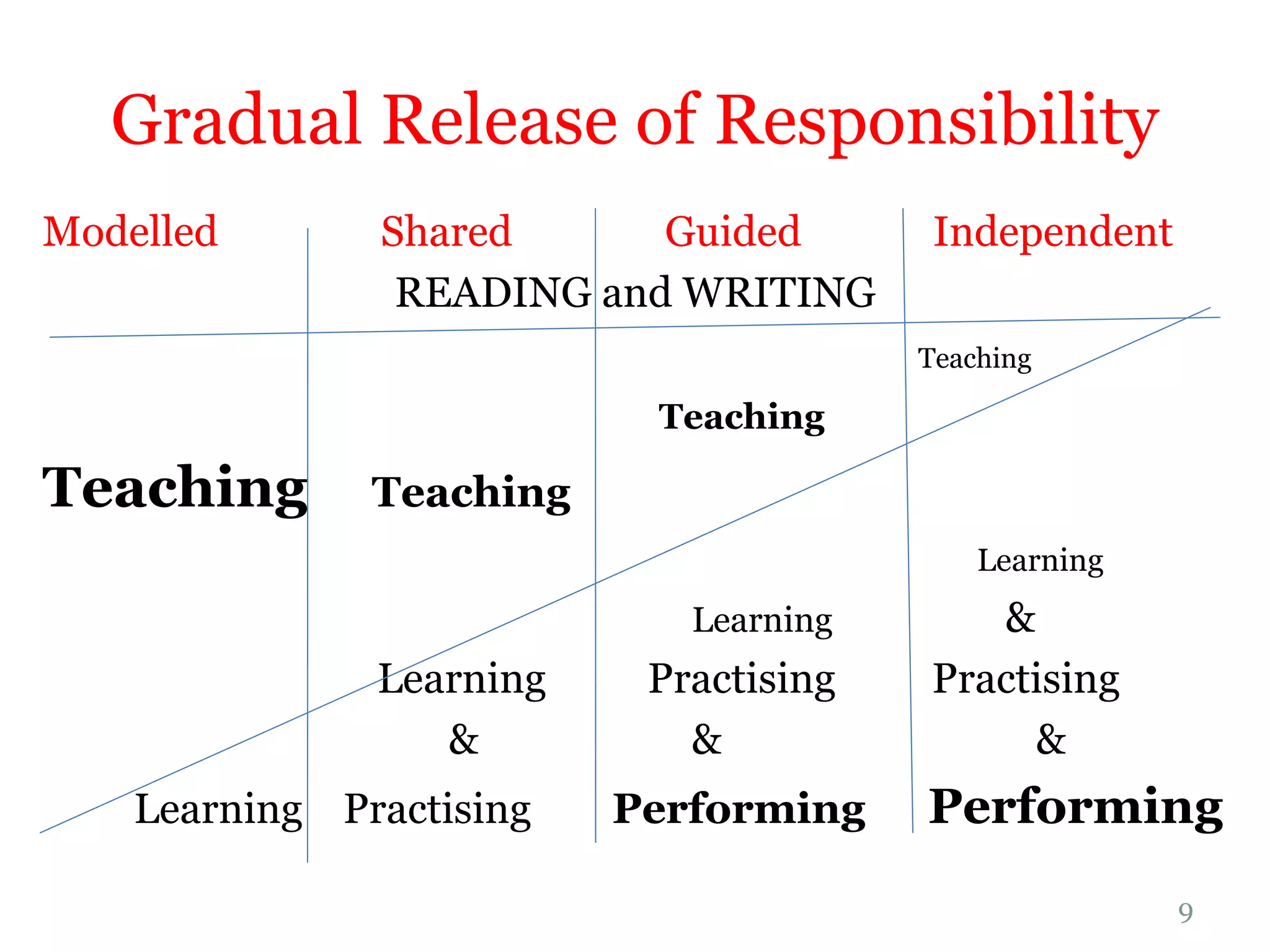
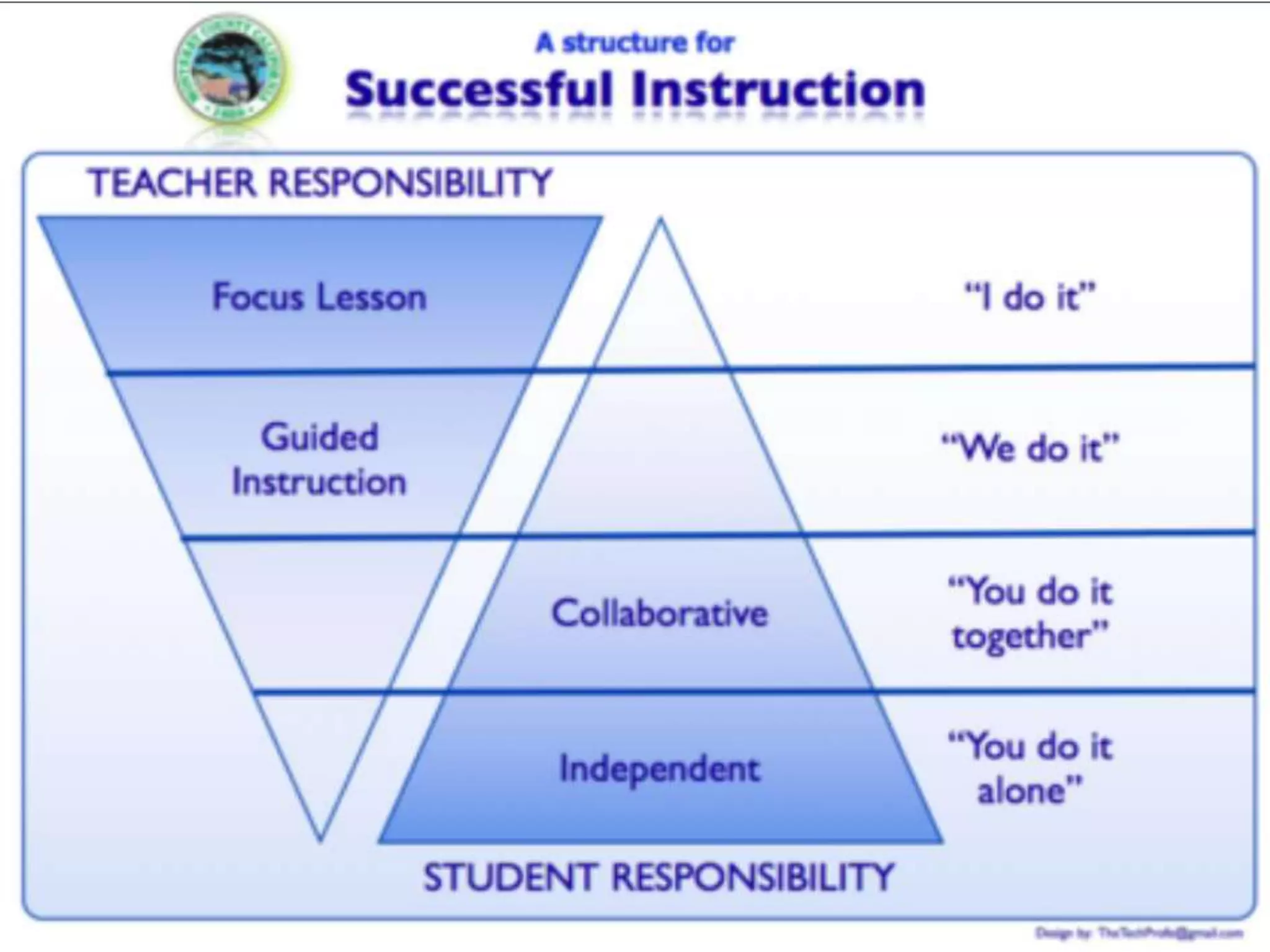
Gradual Release of Responsibility
Modelled Shared Guided Independent
READING and WRITING
Teaching
Teaching
Teaching Teaching
Learning
Learning &
Learning Practising Practising
& & &
Learning Practising Performing Performing
9
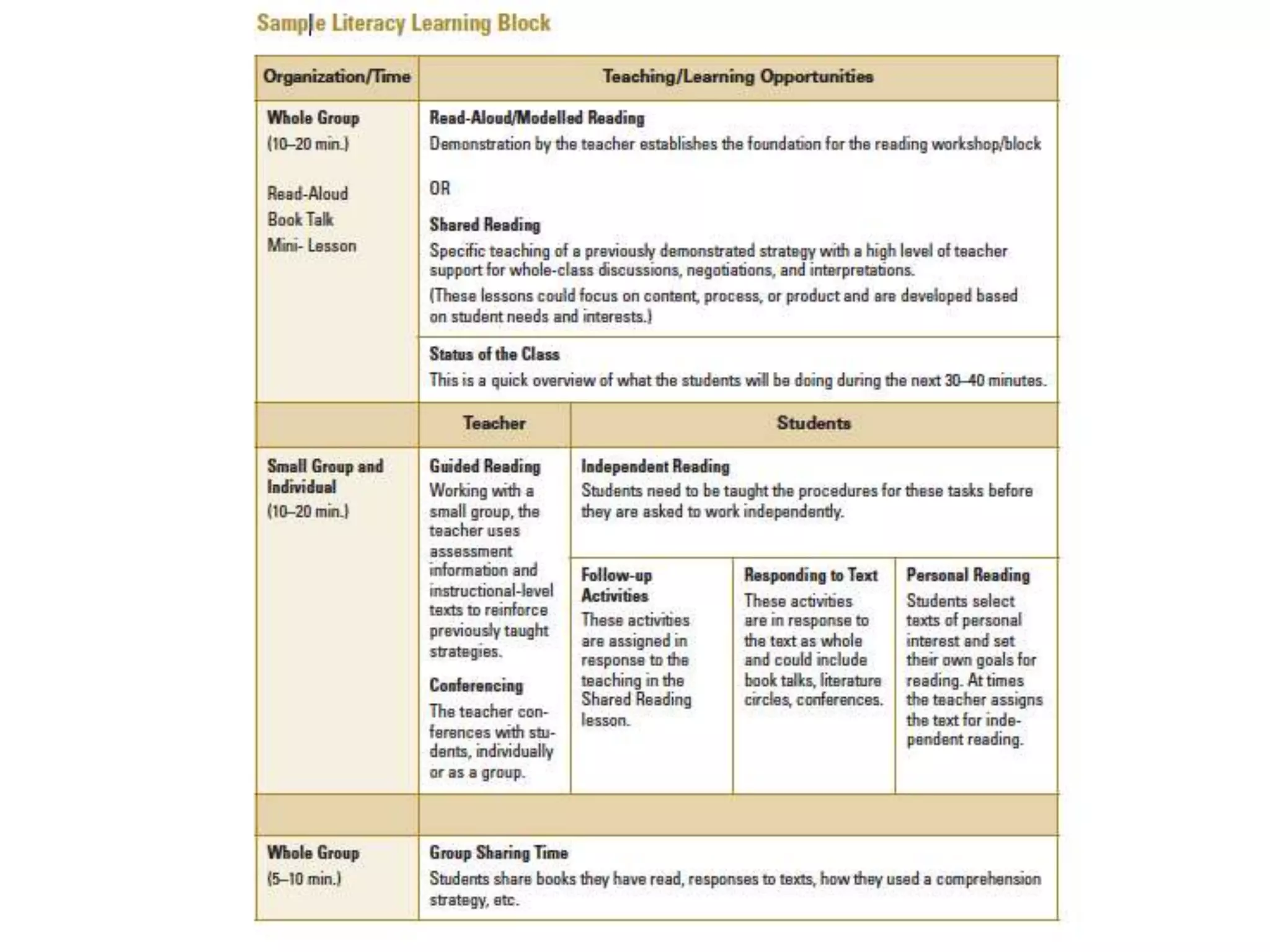
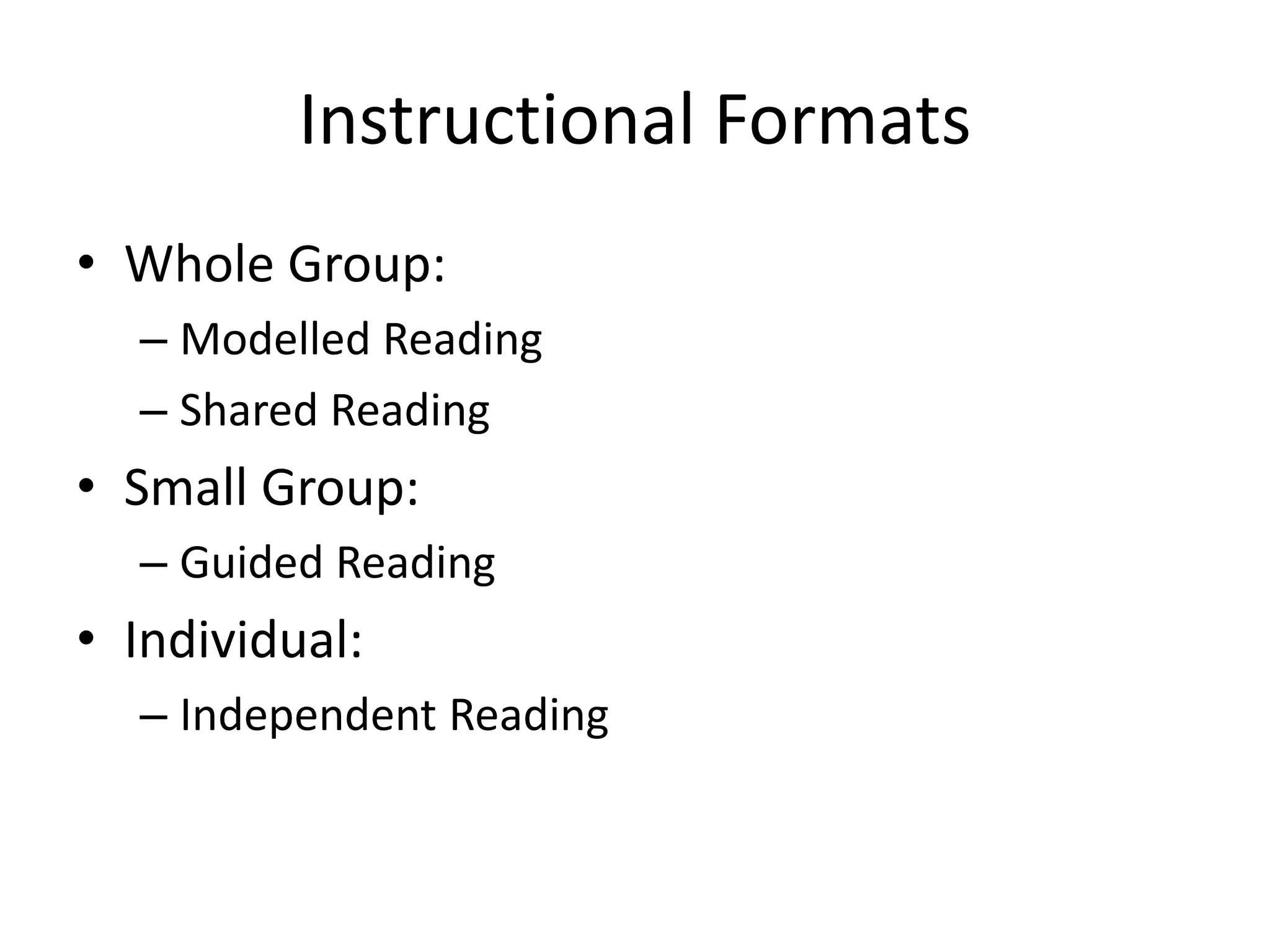
Instructional Formats
• Whole Group:
– Modelled Reading
– Shared Reading
• Small Group:
– Guided Reading
• Individual:
– Independent Reading
Guided Reading Prompts
• Scholastic Guided Reading Prompts for
Comprehension.
• https://www.scholastic.com/teachers/blog-
posts/genia-connell/guided-reading-prompts-
and-questions-improve-comprehension/
Guided Reading Webcast
http://thelearningexchange.ca/videos/guided-
practice-reading-informational-text/
Task
• Select one Guided Reading card from Nelson
Literacy (a copy for each person at your table)
• Determine one comprehension strategy that
could be taught or reinforced through this
card
• Design a series of questions you would ask a
guided reading group based specifically on the
card you have selected
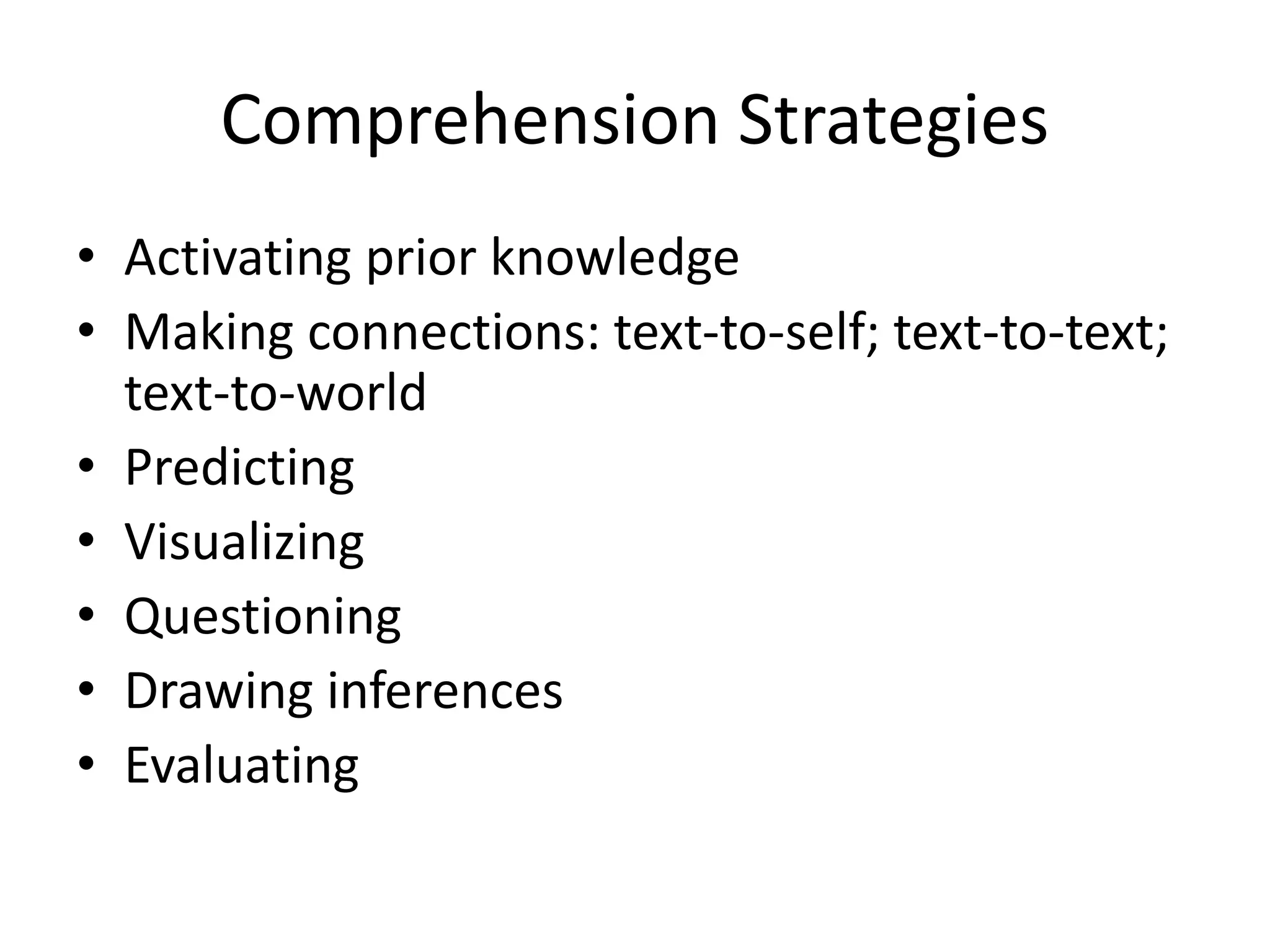
Comprehension Strategies
• Activating prior knowledge
• Making connections: text-to-self; text-to-text;
text-to-world
• Predicting
• Visualizing
• Questioning
• Drawing inferences
• Evaluating
Next Week
• Exploring Resources: Social Media
– Focus is on the Writing Strand

Week 6 reading 2 - 2018

  • 1.
  • 2.
    Professional Learning Conversations •Week 6: Professional Reading 20 minutes – Roehling, J. (2017). Text structure strategies for improving expository reading comprehension
  • 3.
    Four Roles ofthe Literate Learner • Texts are not neutral • Structure of text • Breaking the “code” of text • Construct & communicate meaning Meaning Maker Code User Text Analyzer Text User
  • 4.
    Ontario Curriculum: Language •Read carefully the Overall and Specific Expectations for Reading as found in the Reading strand at a variety of grade levels (4- 8). Each person at your table is to choose a different grade level. • How are the various grades similar or different? Is there any change from grade to grade?
  • 5.
    Your classroom • Basedon the expectations for reading in the Ontario Curriculum list at least 5 “musts” for teachers to include in their reading program: • Teachers must: 1. _____ 2. _____ 3. _____ 4. _____ 5. _____
  • 6.
  • 7.
  • 8.
    Check out thesesites! (links on Sakai Week 6) • Teaching Kids News • Forest of Reading • 2Titles • Storyline • Brain Space Magazine (you will need to download app Blippar on your device) • Epic!
  • 9.
    Gradual Release ofResponsibility Modelled Shared Guided Independent READING and WRITING Teaching Teaching Teaching Teaching Learning Learning & Learning Practising Practising & & & Learning Practising Performing Performing 9
  • 12.
    Instructional Formats • WholeGroup: – Modelled Reading – Shared Reading • Small Group: – Guided Reading • Individual: – Independent Reading
  • 15.
    Guided Reading Prompts •Scholastic Guided Reading Prompts for Comprehension. • https://www.scholastic.com/teachers/blog- posts/genia-connell/guided-reading-prompts- and-questions-improve-comprehension/
  • 16.
  • 17.
    Task • Select oneGuided Reading card from Nelson Literacy (a copy for each person at your table) • Determine one comprehension strategy that could be taught or reinforced through this card • Design a series of questions you would ask a guided reading group based specifically on the card you have selected
  • 18.
    Comprehension Strategies • Activatingprior knowledge • Making connections: text-to-self; text-to-text; text-to-world • Predicting • Visualizing • Questioning • Drawing inferences • Evaluating
  • 19.
    Next Week • ExploringResources: Social Media – Focus is on the Writing Strand

Editor's Notes

  • #4 Use this to connect reading and writing – show how all 4 roles apply to reading and to writing (and oral language etc.)
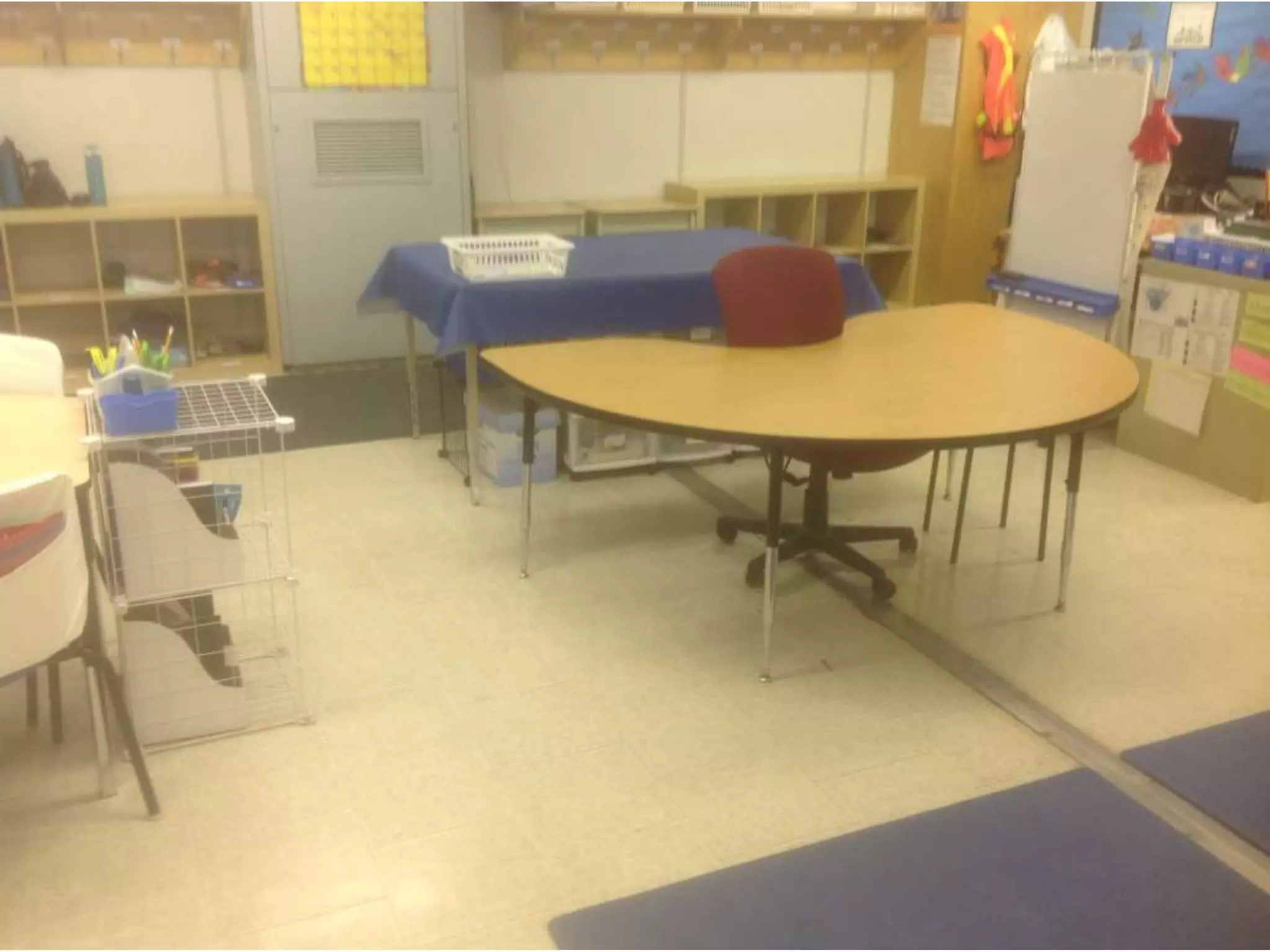
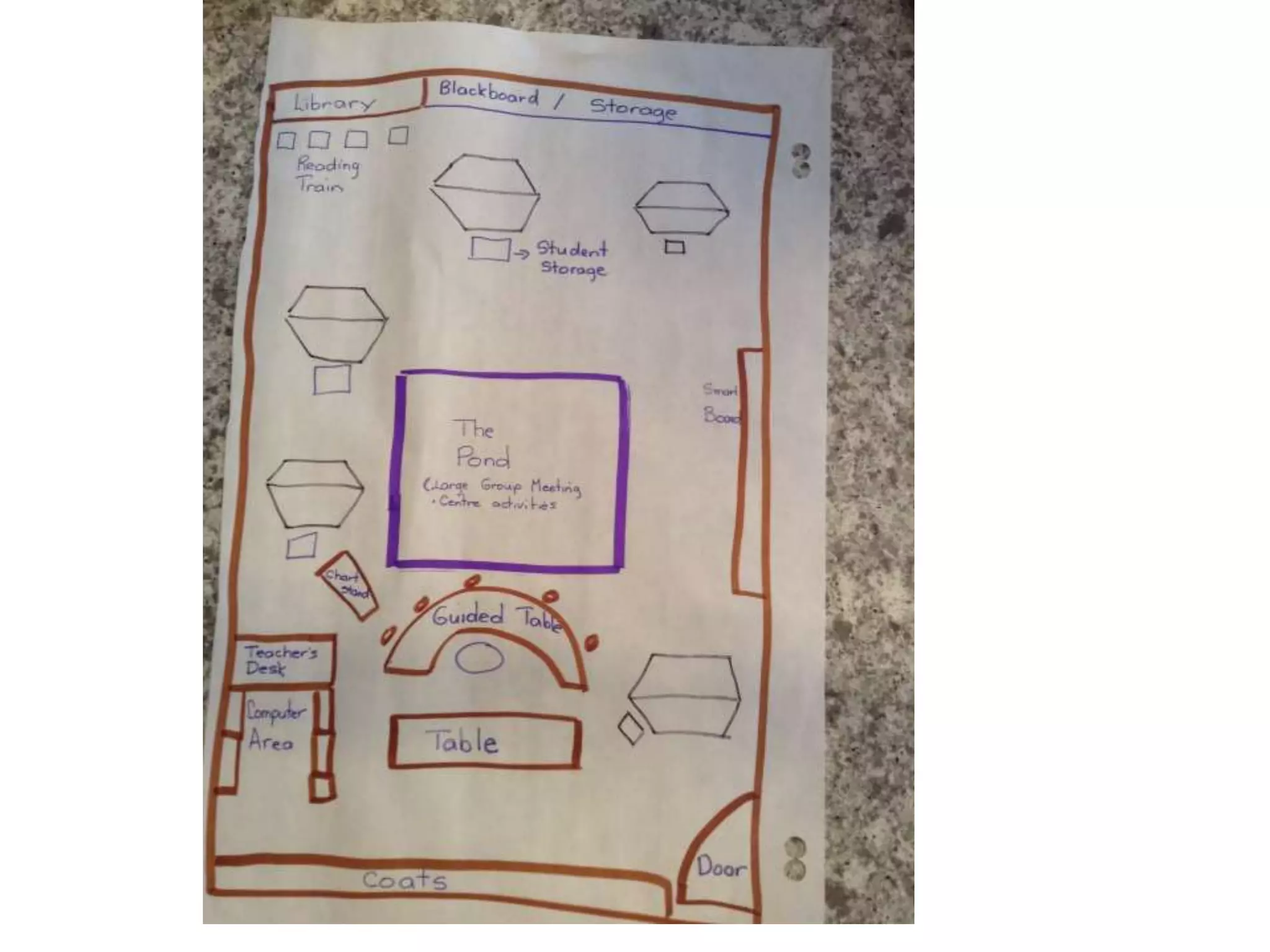
  • #14 Guided Reading table
  • #15 Floor plan of Nancy Meeussen’s gr. 3 classroom (portable)