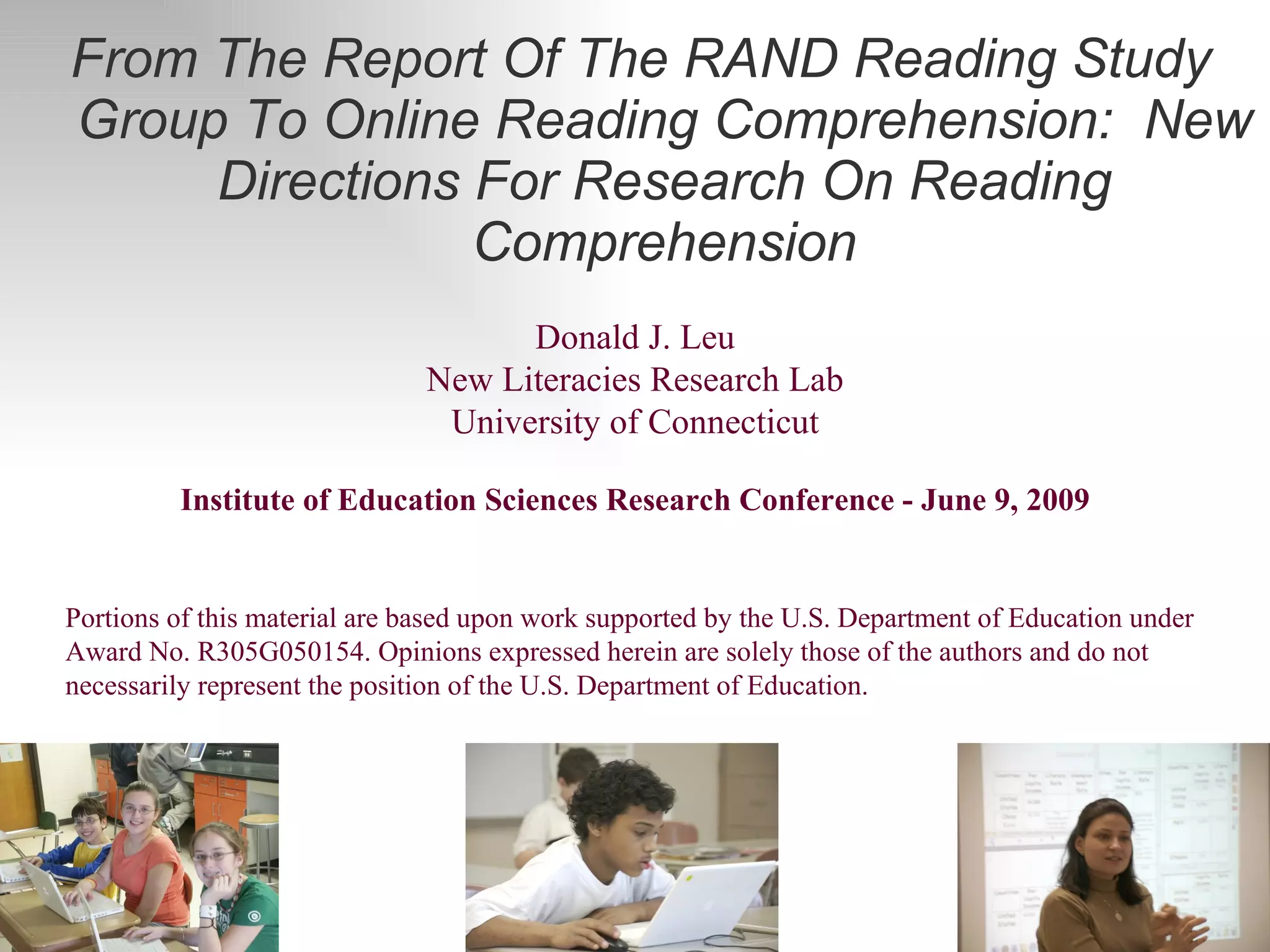
From The Report Of The RAND Reading Study Group To Online Reading Comprehension:  New Directions For Research On Reading Comprehension Donald J. Leu New Literacies Research Lab University of Connecticut Institute of Education Sciences Research Conference - June 9, 2009 Portions of this material are based upon work supported by the U.S. Department of Education under Award No. R305G050154. Opinions expressed herein are solely those of the authors and do not necessarily represent the position of the U.S. Department of Education.
Important Funding and Support From: Institute of Education Sciences, U.S. Department of Education Ray and Carole Neag The Carnegie Corporation of New York The National Science Foundation North Central Educational Research Lab PBS The Annenberg Foundation William and Flora Hewlett Foundation Bill and Melinda Gates Foundation Australian Council of Educational Research OECD Schools and teachers around the world.
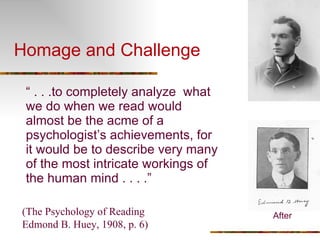
Homage and Challenge “  . . .to completely analyze  what we do when we read would almost be the acme of a psychologist’s achievements, for it would be to describe very many of the most intricate workings of the human mind . . . .”  (The Psychology of Reading Edmond B. Huey, 1908, p. 6) After
I.  Selected Summary: “ Reading for Understanding:  An R&D Program in Reading Comprehension” “… the current knowledge base on reading comprehension…is sizeable but sketchy, unfocused, and inadequate as a basis for reform…” (p. xii)
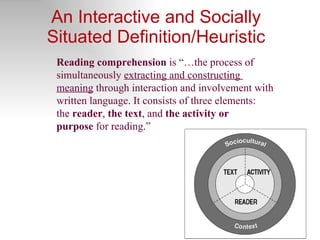
An Interactive and Socially Situated Definition/Heuristic Reading comprehension  is “…the process of simultaneously  extracting and constructing  meaning  through interaction and involvement with written language. It consists of three elements: the  reader ,  the text , and  the activity or  purpose  for reading.”
The Report Identified  “Priority Research Domains” Instruction “ Good instruction is the most powerful means of promoting the development of proficient comprehenders and preventing reading comprehension problems.” Teacher Preparation “… teaching is so complex that the current teacher education programs cannot adequately prepare novice teachers to engage in practice that reflects the existing knowledge base about reading.”
“Priority Research Domains” Professional Development “… students’ reading achievement will not improve unless teachers use that knowledge to improve their instruction.” Assessment “ All of the research recommended by the RRSG depends on having better instruments for assessing reading comprehension.”
It Defines Essential Elements For Evaluating Potential Research Projects Practical Knowledge “ A potential project should be judged not only by its methodological rigor but also by its capacity to generate improvements in classroom practices...” Multiple Methodologies :  “… a range of quantitative and qualitative methodologies is essential to ensure rigor.” Long-term and Cumulative Research Base :  “ High-quality research efforts should be long-term and cumulative.”
Other Essential Elements Links to Other Disciplines “… should create links across the now-distinct subfields and subgroups of research in this field.” Collaboration ensures “…a healthy forum for quality control and the judicious use of resources.” Community building  “… contribute to the task of forming a community of researchers linked by their common intellectual focus.”
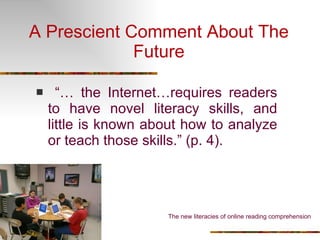
A Prescient Comment About The Future “…  the Internet…requires readers to have novel literacy skills, and little is known about how to analyze or teach those skills.” (p. 4).  The new literacies of online reading comprehension
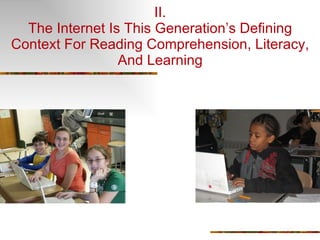
II. The Internet Is This Generation’s Defining Context For Reading Comprehension, Literacy, And Learning

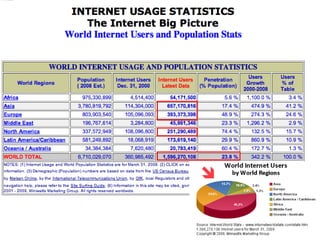
The Workplace Has Changed Recent productivity gains around the world are, at least partially, due to Internet use in the workplace to share information, communicate, and solve problems (van Ark, Inklaar, & McGuckin, 2003; Friedman, 2005; Matteucci, O’Mahony, Robinson, & Zwick, 2005). This generation’s defining technology for reading.
The World Has Changed: Nations Prepare Their Citizens for Work in an Information Economy Finland: teachers receive five weeks of paid, release time professional development at integrating the Internet into the classroom (Svedlin, Personal Correspondence) Japan: broadband in nearly every home that is 16 times faster than the broadband in US homes for $22 per month. (Bleha, 2005) This generation’s defining technology for reading.
The World Has Changed: Nations Prepare Their Citizens for Work in an Information Economy Mexico: e-Mexico, a policy designed to provide every citizen and every school with an Internet connection (Ludlow, 2006). OECD Assessment Initiatives in Online Reading Comprehension: 2009  PISA   International Assessment of Reading – Digital Literacies Programme for the International Assessment of Adult Competencies (PIAAC) – Problem Solving in Technologically Rich Environments
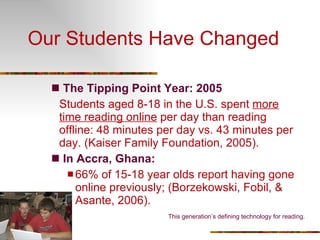
Our Students Have Changed The Tipping Point Year: 2005 Students aged 8-18 in the U.S. spent  more time reading online  per day than reading offline: 48 minutes per day vs. 43 minutes per day. (Kaiser Family Foundation, 2005).   In Accra, Ghana:  66% of 15-18 year olds report having gone online previously; (Borzekowski, Fobil, & Asante, 2006). This generation’s defining technology for reading.
The U.S. ? Not a single state assessment measures the ability to... … critically read online information to evaluate source reliability. …  read search engine results to select the best link for an  information problem. Nor, indeed, any aspect of reading online to solve information problems. This generation’s defining technology for reading.
National Assessment of Educational Progress (NAEP) NAEP decided to exclude online reading comprehension from the 2009 NAEP reading framework. This generation’s defining technology for reading.
III.  What Do We Know About Online Reading Comprehension? We have many more questions than answers. It often appears to be a problem solving task. Online readers construct the texts they read, through the links they follow. Reading comprehension is somewhat different online.  How it differs is not fully understood.
Possible Starting Points To Our Understanding
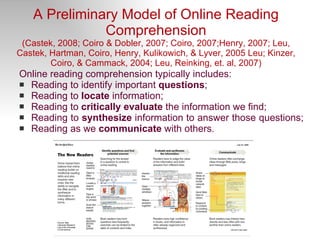
A Preliminary Model of Online Reading Comprehension (Castek, 2008; Coiro & Dobler, 2007; Coiro, 2007;Henry, 2007; Leu, Castek, Hartman, Coiro, Henry, Kulikowich, & Lyver, 2005 Leu; Kinzer, Coiro, & Cammack, 2004; Leu, Reinking, et. al, 2007) Online reading comprehension typically includes: Reading to identify important  questions ;  Reading to  locate  information;  Reading to  critically evaluate  the information we find; Reading to  synthesize  information to answer those questions;  Reading as we  communicate  with others .


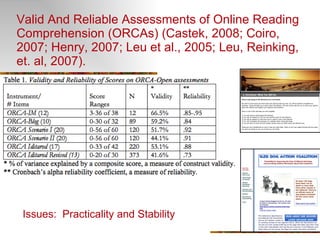
Valid And Reliable Assessments of Online Reading Comprehension (ORCAs) (Castek, 2008; Coiro, 2007; Henry, 2007; Leu et al., 2005; Leu, Reinking, et. al, 2007). Issues:  Practicality and Stability
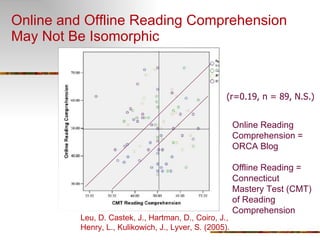
Online and Offline Reading Comprehension May Not Be Isomorphic (r=0.19, n = 89, N.S.) Leu, D. Castek, J., Hartman, D., Coiro, J.,  Henry, L., Kulikowich, J., Lyver, S. (2005). Online Reading Comprehension =  ORCA Blog Offline Reading =  Connecticut  Mastery Test (CMT) of Reading  Comprehension
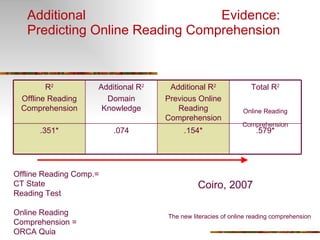
Additional Evidence: Predicting Online Reading Comprehension  Coiro, 2007 The new literacies of online reading comprehension Offline Reading Comp.= CT State Reading Test Online Reading Comprehension =  ORCA Quia R 2 Offline Reading Comprehension Additional R 2 Domain Knowledge Additional R 2 Previous Online Reading Comprehension Total R 2 Online Reading Comprehension .351* .074 .154* .579*
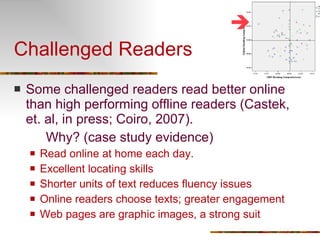
Challenged Readers Some challenged readers read better online than high performing offline readers (Castek, et. al, in press; Coiro, 2007). Why? (case study evidence)  Read online at home each day. Excellent locating skills Shorter units of text reduces fluency issues Online readers choose texts; greater engagement Web pages are graphic images, a strong suit 
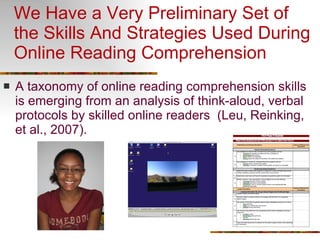
We Have a Very Preliminary Set of  the Skills And Strategies Used During Online Reading Comprehension A taxonomy of online reading comprehension skills is emerging from an analysis of think-aloud, verbal protocols by skilled online readers  (Leu, Reinking, et al., 2007).
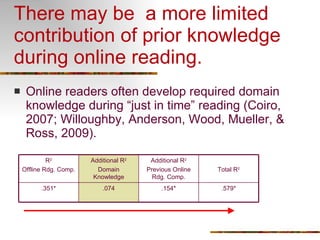
There may be  a more limited contribution of prior knowledge during online reading. Online readers often develop required domain knowledge during “just in time” reading (Coiro, 2007; Willoughby, Anderson, Wood, Mueller, & Ross, 2009). R 2 Offline Rdg. Comp. Additional R 2 Domain Knowledge Additional R 2 Previous Online Rdg. Comp. Total R 2 .351* .074 .154* .579*
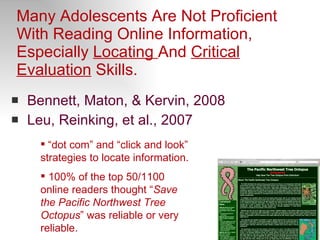
Many Adolescents Are Not Proficient With Reading Online Information, Especially  Locating  And  Critical Evaluation  Skills.  Bennett, Maton, & Kervin, 2008 Leu, Reinking, et al., 2007 “ dot com” and “click and look” strategies to locate information. 100% of the top 50/1100 online readers thought “ Save the Pacific Northwest Tree Octopus ” was reliable or very reliable.
An Initial Instructional Model Shows Modest Effects With Improving Online Reading Comprehension In 1-1 Laptop Classrooms Internet Reciprocal Teaching  (Leu, Coiro, Castek, Hartman, Henry, & Reinking, 2008) Three phases (Direct, Exchange, Online Collaborative Inquiry) Problem based  Distributes Online Reading Comprehension Strategy Knowledge
Challenging Information Problems, within IRT, Seem to Generate Greater Acquisition of Online Reading Comprehension Strategies Students appear to learn online reading comprehension skills best from other students within the context of more challenging activities (Castek, 2008).
IV.  What Do We Need To Know  About Online Reading  Comprehension? Online Comprehension Process Issues Instructional Issues Teacher Preparation Professional Development Assessment
Process Issues In Online  Reading  Comprehension “…the acme of a psychologist’s achievements…” We need better theories, more precisely defined constructs, better methodologies, and a critical mass of researchers to study the issue. What is the complete set of online reading comprehension skills and strategies? What are the limits of continuous change as we study this issue? How does online communication play a role in online reading comprehension?
Process Issues In Online  Reading  Comprehension “…the acme of a psychologist’s achievements…” Which online reading comprehension skills best predict performance? Why? How are online and offline reading comprehension both the same and different?  The Technology Continuum Hypothesis The Bottleneck Skill Hypothesis Locating Skills of Online Reading Comprehension Critical Evaluation Skills of Online Reading Comprehension The Problem-based Reading Hypothesis
Instructional Issues “Good instruction is the most powerful means of promoting the development of proficient comprehenders and preventing reading comprehension problems.” (RRSG, 2002, p. xvii) How do 1-1 Internet classrooms alter the terrain of possibilities for online reading comprehension instruction? How do we take advantage of students’ online literacy practices outside of school to foster the development of online reading comprehension and learning skills within school? How can we best adapt and evaluate effective instructional models from offline reading comprehension?
Teacher Preparation Issues “…teaching is so complex that the current teacher education programs cannot adequately prepare novice teachers to engage in practice that reflects the existing knowledge base about reading.”  (RRSG, 2002, p. 9) How do we support professors/instructors to include effective practices in online reading comprehension when some are not “newly literate” themselves? Which online strategies can be most effective in rapidly disseminating effective instructional practices in online reading comprehension?
Professional Development Issues “…students’ reading achievement will not improve unless teachers use that knowledge to improve their instruction.” (RRSG, 2002, p. xviii) What should we teach teachers? Instructional models vs. skills and strategies? Insights to foster continual learning in a changing context? How should we best conduct PD? Literacy coaches, peer coaches, online coaches, communities of learners? Should we use test beds like Maine to evaluate scalable models of professional development in reading comprehension within 1-1 Internet classrooms?
Assessment Issues “All of the research recommended by the RRSG depends on having better instruments for assessing reading comprehension.”  (RRSG, 2002, p. xix) What are the most valid, reliable, and practical ways to assess online reading comprehension?  How can we develop more sensitive assessment instruments that take less time to administer? How can assessments keep up with the deictic nature of our online reading contexts?
V.  Two Important  Policy Issues “How do national, state, and local policies and practices facilitate or impede the efforts of teachers to implement effective comprehension instruction?” (RRSG, 2002, p. 47) Neglecting research into online reading comprehension perpetuates public policies that help the rich get richer and the poor get poorer. 63% of children from households earning more than $75,000 annually reported that they used the Internet at school, but only 36% of children from households earning less than $15,000 annually (Lazarus, Wainer, and Lipper, 2005).
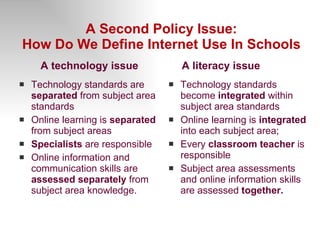
A Second Policy Issue: How Do We Define Internet Use In Schools A literacy issue Technology standards are  separated  from subject area standards  Online learning is  separated  from subject areas Specialists  are responsible Online information and communication skills are  assessed separately  from subject area knowledge.  Technology standards become  integrated  within subject area standards  Online learning is  integrated  into each subject area;  Every  classroom teacher  is responsible Subject area assessments and online information skills are assessed  together. A technology issue
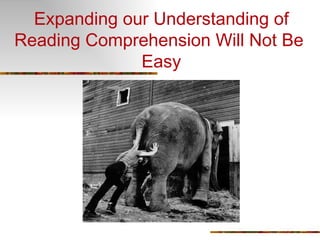
Expanding our Understanding of Reading Comprehension Will Not Be  Easy
From The Report Of The RAND Reading Study Group To Online Reading Comprehension:  New Directions For Research On Reading Comprehension Donald J. Leu New Literacies Research Lab University of Connecticut Institute of Education Sciences Research Conference - June 9, 2009 Portions of this material are based upon work supported by the U.S. Department of Education under Award No. R305G050154. Opinions expressed herein are solely those of the authors and do not necessarily represent the position of the U.S. Department of Education.

Leu Iespp Final

  • 1.
    From The ReportOf The RAND Reading Study Group To Online Reading Comprehension:  New Directions For Research On Reading Comprehension Donald J. Leu New Literacies Research Lab University of Connecticut Institute of Education Sciences Research Conference - June 9, 2009 Portions of this material are based upon work supported by the U.S. Department of Education under Award No. R305G050154. Opinions expressed herein are solely those of the authors and do not necessarily represent the position of the U.S. Department of Education.
  • 2.
    Important Funding andSupport From: Institute of Education Sciences, U.S. Department of Education Ray and Carole Neag The Carnegie Corporation of New York The National Science Foundation North Central Educational Research Lab PBS The Annenberg Foundation William and Flora Hewlett Foundation Bill and Melinda Gates Foundation Australian Council of Educational Research OECD Schools and teachers around the world.
  • 3.
    Homage and Challenge“ . . .to completely analyze what we do when we read would almost be the acme of a psychologist’s achievements, for it would be to describe very many of the most intricate workings of the human mind . . . .” (The Psychology of Reading Edmond B. Huey, 1908, p. 6) After
  • 4.
    I. SelectedSummary: “ Reading for Understanding: An R&D Program in Reading Comprehension” “… the current knowledge base on reading comprehension…is sizeable but sketchy, unfocused, and inadequate as a basis for reform…” (p. xii)
  • 5.
    An Interactive andSocially Situated Definition/Heuristic Reading comprehension is “…the process of simultaneously extracting and constructing meaning through interaction and involvement with written language. It consists of three elements: the reader , the text , and the activity or purpose for reading.”
  • 6.
    The Report Identified “Priority Research Domains” Instruction “ Good instruction is the most powerful means of promoting the development of proficient comprehenders and preventing reading comprehension problems.” Teacher Preparation “… teaching is so complex that the current teacher education programs cannot adequately prepare novice teachers to engage in practice that reflects the existing knowledge base about reading.”
  • 7.
    “Priority Research Domains”Professional Development “… students’ reading achievement will not improve unless teachers use that knowledge to improve their instruction.” Assessment “ All of the research recommended by the RRSG depends on having better instruments for assessing reading comprehension.”
  • 8.
    It Defines EssentialElements For Evaluating Potential Research Projects Practical Knowledge “ A potential project should be judged not only by its methodological rigor but also by its capacity to generate improvements in classroom practices...” Multiple Methodologies : “… a range of quantitative and qualitative methodologies is essential to ensure rigor.” Long-term and Cumulative Research Base : “ High-quality research efforts should be long-term and cumulative.”
  • 9.
    Other Essential ElementsLinks to Other Disciplines “… should create links across the now-distinct subfields and subgroups of research in this field.” Collaboration ensures “…a healthy forum for quality control and the judicious use of resources.” Community building “… contribute to the task of forming a community of researchers linked by their common intellectual focus.”
  • 10.
    A Prescient CommentAbout The Future “… the Internet…requires readers to have novel literacy skills, and little is known about how to analyze or teach those skills.” (p. 4). The new literacies of online reading comprehension
  • 11.
    II. The InternetIs This Generation’s Defining Context For Reading Comprehension, Literacy, And Learning
  • 12.
  • 13.
    The Workplace HasChanged Recent productivity gains around the world are, at least partially, due to Internet use in the workplace to share information, communicate, and solve problems (van Ark, Inklaar, & McGuckin, 2003; Friedman, 2005; Matteucci, O’Mahony, Robinson, & Zwick, 2005). This generation’s defining technology for reading.
  • 14.
    The World HasChanged: Nations Prepare Their Citizens for Work in an Information Economy Finland: teachers receive five weeks of paid, release time professional development at integrating the Internet into the classroom (Svedlin, Personal Correspondence) Japan: broadband in nearly every home that is 16 times faster than the broadband in US homes for $22 per month. (Bleha, 2005) This generation’s defining technology for reading.
  • 15.
    The World HasChanged: Nations Prepare Their Citizens for Work in an Information Economy Mexico: e-Mexico, a policy designed to provide every citizen and every school with an Internet connection (Ludlow, 2006). OECD Assessment Initiatives in Online Reading Comprehension: 2009 PISA International Assessment of Reading – Digital Literacies Programme for the International Assessment of Adult Competencies (PIAAC) – Problem Solving in Technologically Rich Environments
  • 16.
    Our Students HaveChanged The Tipping Point Year: 2005 Students aged 8-18 in the U.S. spent more time reading online per day than reading offline: 48 minutes per day vs. 43 minutes per day. (Kaiser Family Foundation, 2005). In Accra, Ghana: 66% of 15-18 year olds report having gone online previously; (Borzekowski, Fobil, & Asante, 2006). This generation’s defining technology for reading.
  • 17.
    The U.S. ?Not a single state assessment measures the ability to... … critically read online information to evaluate source reliability. … read search engine results to select the best link for an information problem. Nor, indeed, any aspect of reading online to solve information problems. This generation’s defining technology for reading.
  • 18.
    National Assessment ofEducational Progress (NAEP) NAEP decided to exclude online reading comprehension from the 2009 NAEP reading framework. This generation’s defining technology for reading.
  • 19.
    III. WhatDo We Know About Online Reading Comprehension? We have many more questions than answers. It often appears to be a problem solving task. Online readers construct the texts they read, through the links they follow. Reading comprehension is somewhat different online. How it differs is not fully understood.
  • 20.
    Possible Starting PointsTo Our Understanding
  • 21.
    A Preliminary Modelof Online Reading Comprehension (Castek, 2008; Coiro & Dobler, 2007; Coiro, 2007;Henry, 2007; Leu, Castek, Hartman, Coiro, Henry, Kulikowich, & Lyver, 2005 Leu; Kinzer, Coiro, & Cammack, 2004; Leu, Reinking, et. al, 2007) Online reading comprehension typically includes: Reading to identify important questions ; Reading to locate information; Reading to critically evaluate the information we find; Reading to synthesize information to answer those questions; Reading as we communicate with others .
  • 22.
  • 23.
  • 24.
  • 25.
    Valid And ReliableAssessments of Online Reading Comprehension (ORCAs) (Castek, 2008; Coiro, 2007; Henry, 2007; Leu et al., 2005; Leu, Reinking, et. al, 2007). Issues: Practicality and Stability
  • 26.
    Online and OfflineReading Comprehension May Not Be Isomorphic (r=0.19, n = 89, N.S.) Leu, D. Castek, J., Hartman, D., Coiro, J., Henry, L., Kulikowich, J., Lyver, S. (2005). Online Reading Comprehension = ORCA Blog Offline Reading = Connecticut Mastery Test (CMT) of Reading Comprehension
  • 27.
    Additional Evidence: PredictingOnline Reading Comprehension Coiro, 2007 The new literacies of online reading comprehension Offline Reading Comp.= CT State Reading Test Online Reading Comprehension = ORCA Quia R 2 Offline Reading Comprehension Additional R 2 Domain Knowledge Additional R 2 Previous Online Reading Comprehension Total R 2 Online Reading Comprehension .351* .074 .154* .579*
  • 28.
    Challenged Readers Somechallenged readers read better online than high performing offline readers (Castek, et. al, in press; Coiro, 2007). Why? (case study evidence) Read online at home each day. Excellent locating skills Shorter units of text reduces fluency issues Online readers choose texts; greater engagement Web pages are graphic images, a strong suit 
  • 29.
    We Have aVery Preliminary Set of the Skills And Strategies Used During Online Reading Comprehension A taxonomy of online reading comprehension skills is emerging from an analysis of think-aloud, verbal protocols by skilled online readers (Leu, Reinking, et al., 2007).
  • 30.
    There may be a more limited contribution of prior knowledge during online reading. Online readers often develop required domain knowledge during “just in time” reading (Coiro, 2007; Willoughby, Anderson, Wood, Mueller, & Ross, 2009). R 2 Offline Rdg. Comp. Additional R 2 Domain Knowledge Additional R 2 Previous Online Rdg. Comp. Total R 2 .351* .074 .154* .579*
  • 31.
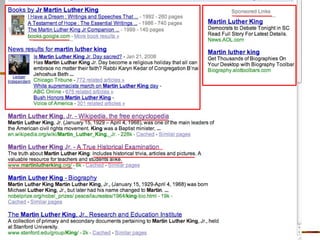
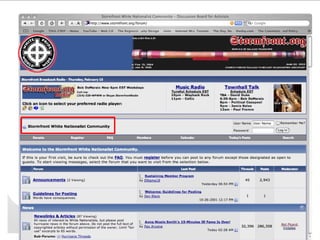
    Many Adolescents AreNot Proficient With Reading Online Information, Especially Locating And Critical Evaluation Skills. Bennett, Maton, & Kervin, 2008 Leu, Reinking, et al., 2007 “ dot com” and “click and look” strategies to locate information. 100% of the top 50/1100 online readers thought “ Save the Pacific Northwest Tree Octopus ” was reliable or very reliable.
  • 32.
    An Initial InstructionalModel Shows Modest Effects With Improving Online Reading Comprehension In 1-1 Laptop Classrooms Internet Reciprocal Teaching (Leu, Coiro, Castek, Hartman, Henry, & Reinking, 2008) Three phases (Direct, Exchange, Online Collaborative Inquiry) Problem based Distributes Online Reading Comprehension Strategy Knowledge
  • 33.
    Challenging Information Problems,within IRT, Seem to Generate Greater Acquisition of Online Reading Comprehension Strategies Students appear to learn online reading comprehension skills best from other students within the context of more challenging activities (Castek, 2008).
  • 34.
    IV. WhatDo We Need To Know About Online Reading Comprehension? Online Comprehension Process Issues Instructional Issues Teacher Preparation Professional Development Assessment
  • 35.
    Process Issues InOnline Reading Comprehension “…the acme of a psychologist’s achievements…” We need better theories, more precisely defined constructs, better methodologies, and a critical mass of researchers to study the issue. What is the complete set of online reading comprehension skills and strategies? What are the limits of continuous change as we study this issue? How does online communication play a role in online reading comprehension?
  • 36.
    Process Issues InOnline Reading Comprehension “…the acme of a psychologist’s achievements…” Which online reading comprehension skills best predict performance? Why? How are online and offline reading comprehension both the same and different? The Technology Continuum Hypothesis The Bottleneck Skill Hypothesis Locating Skills of Online Reading Comprehension Critical Evaluation Skills of Online Reading Comprehension The Problem-based Reading Hypothesis
  • 37.
    Instructional Issues “Goodinstruction is the most powerful means of promoting the development of proficient comprehenders and preventing reading comprehension problems.” (RRSG, 2002, p. xvii) How do 1-1 Internet classrooms alter the terrain of possibilities for online reading comprehension instruction? How do we take advantage of students’ online literacy practices outside of school to foster the development of online reading comprehension and learning skills within school? How can we best adapt and evaluate effective instructional models from offline reading comprehension?
  • 38.
    Teacher Preparation Issues“…teaching is so complex that the current teacher education programs cannot adequately prepare novice teachers to engage in practice that reflects the existing knowledge base about reading.” (RRSG, 2002, p. 9) How do we support professors/instructors to include effective practices in online reading comprehension when some are not “newly literate” themselves? Which online strategies can be most effective in rapidly disseminating effective instructional practices in online reading comprehension?
  • 39.
    Professional Development Issues“…students’ reading achievement will not improve unless teachers use that knowledge to improve their instruction.” (RRSG, 2002, p. xviii) What should we teach teachers? Instructional models vs. skills and strategies? Insights to foster continual learning in a changing context? How should we best conduct PD? Literacy coaches, peer coaches, online coaches, communities of learners? Should we use test beds like Maine to evaluate scalable models of professional development in reading comprehension within 1-1 Internet classrooms?
  • 40.
    Assessment Issues “Allof the research recommended by the RRSG depends on having better instruments for assessing reading comprehension.” (RRSG, 2002, p. xix) What are the most valid, reliable, and practical ways to assess online reading comprehension? How can we develop more sensitive assessment instruments that take less time to administer? How can assessments keep up with the deictic nature of our online reading contexts?
  • 41.
    V. TwoImportant Policy Issues “How do national, state, and local policies and practices facilitate or impede the efforts of teachers to implement effective comprehension instruction?” (RRSG, 2002, p. 47) Neglecting research into online reading comprehension perpetuates public policies that help the rich get richer and the poor get poorer. 63% of children from households earning more than $75,000 annually reported that they used the Internet at school, but only 36% of children from households earning less than $15,000 annually (Lazarus, Wainer, and Lipper, 2005).
  • 42.
    A Second PolicyIssue: How Do We Define Internet Use In Schools A literacy issue Technology standards are separated from subject area standards Online learning is separated from subject areas Specialists are responsible Online information and communication skills are assessed separately from subject area knowledge. Technology standards become integrated within subject area standards Online learning is integrated into each subject area; Every classroom teacher is responsible Subject area assessments and online information skills are assessed together. A technology issue
  • 43.
    Expanding our Understandingof Reading Comprehension Will Not Be Easy
  • 44.
    From The ReportOf The RAND Reading Study Group To Online Reading Comprehension:  New Directions For Research On Reading Comprehension Donald J. Leu New Literacies Research Lab University of Connecticut Institute of Education Sciences Research Conference - June 9, 2009 Portions of this material are based upon work supported by the U.S. Department of Education under Award No. R305G050154. Opinions expressed herein are solely those of the authors and do not necessarily represent the position of the U.S. Department of Education.