Consumer Behaviour WEEK 4
Decision Making Process Choose a recent, relatively large purchase that you made Jot down the different steps you went through to make your decision
1: Need Recognition “ Difference between ideal and actual state” Sources: Personally-Induced Need Recognition Marketer-Induced Need Recognition Reason for both  inbound  &  outbound  marketing tactics!
2: Information Search Internal Search Scan information stored in memory External Search Additional information through personal sources, online, browsing, salespeople, and trial Evoked Set : the subset of brands that a consumer is aware of and considers for purchase Get your company’s name ‘top of mind’
3: Alternative Evaluation Use of Rational Criteria Price Features/Function Recommendations/Ratings Attitudes Positive and Negative Influencers Tastes Beliefs & Loyalty
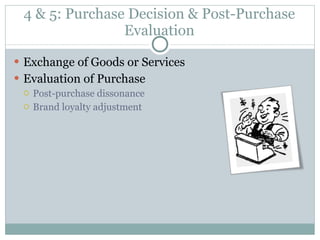
4 & 5: Purchase Decision & Post-Purchase Evaluation Exchange of Goods or Services Evaluation of Purchase Post-purchase dissonance Brand loyalty adjustment
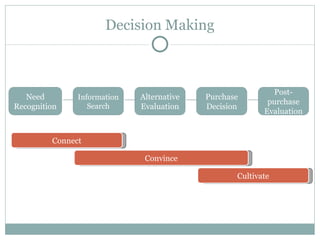
Decision Making Need Recognition Information Search Alternative Evaluation Purchase Decision Post-purchase Evaluation Connect Convince Cultivate
The Marketing Mix
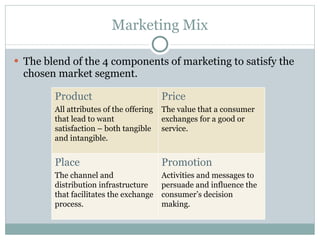
Marketing Mix The blend of the 4 components of marketing to satisfy the chosen market segment.  Product All attributes of the offering that lead to want satisfaction – both tangible and intangible. Price The value that a consumer exchanges for a good or service. Place The channel and distribution infrastructure that facilitates the exchange process. Promotion Activities and messages to persuade and influence the consumer’s decision making.
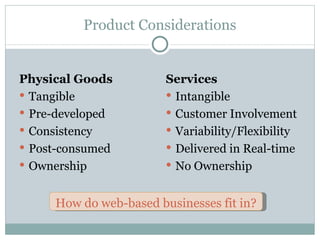
Product Considerations Physical Goods Tangible Pre-developed Consistency Post-consumed Ownership Services Intangible Customer Involvement Variability/Flexibility Delivered in Real-time No Ownership How do web-based businesses fit in?
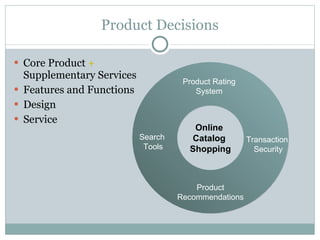
Product Decisions Core Product  +  Supplementary Services Features and Functions Design Service Online  Catalog  Shopping Product Recommendations Transaction Security Product Rating System Search  Tools
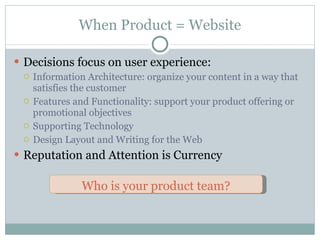
When Product = Website Decisions focus on user experience: Information Architecture: organize your content in a way that satisfies the customer Features and Functionality: support your product offering or promotional objectives Supporting Technology Design Layout and Writing for the Web Reputation and Attention is Currency Who is your product team?
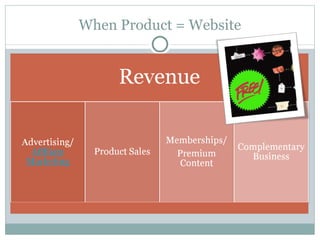
When Product = Website
Price Considerations Profitability – Target Return Volume – Maximize Sales/Market Share Competition Pricing Marketing Mix Consistency
Pricing Decisions Policies Skimming vs. Penetration Flexible Pricing (bargaining) Relative to Market (Winners) Price Lining (dollar stores) Promotional Pricing (liquidation centres) Prestige Pricing (BMW) Freemium Models (LinkedIn)
Distribution Decisions Direct vs. Indirect (Retail, etc.) Control Flexibility Positioning Cost/Risk Online vs. Offline “ Place” Value Chain & Fulfillment
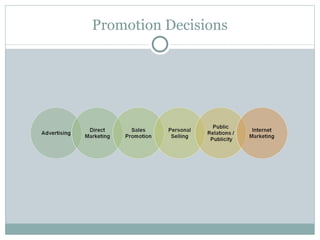
Promotion Decisions
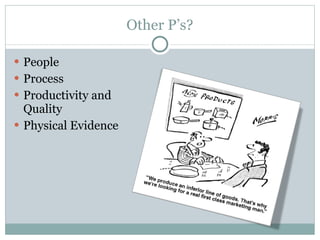
Other P’s? People Process Productivity and Quality Physical Evidence

Week 4

  • 1.
  • 2.
    Decision Making ProcessChoose a recent, relatively large purchase that you made Jot down the different steps you went through to make your decision
  • 3.
    1: Need Recognition“ Difference between ideal and actual state” Sources: Personally-Induced Need Recognition Marketer-Induced Need Recognition Reason for both inbound & outbound marketing tactics!
  • 4.
    2: Information SearchInternal Search Scan information stored in memory External Search Additional information through personal sources, online, browsing, salespeople, and trial Evoked Set : the subset of brands that a consumer is aware of and considers for purchase Get your company’s name ‘top of mind’
  • 5.
    3: Alternative EvaluationUse of Rational Criteria Price Features/Function Recommendations/Ratings Attitudes Positive and Negative Influencers Tastes Beliefs & Loyalty
  • 6.
    4 & 5:Purchase Decision & Post-Purchase Evaluation Exchange of Goods or Services Evaluation of Purchase Post-purchase dissonance Brand loyalty adjustment
  • 7.
    Decision Making NeedRecognition Information Search Alternative Evaluation Purchase Decision Post-purchase Evaluation Connect Convince Cultivate
  • 8.
  • 9.
    Marketing Mix Theblend of the 4 components of marketing to satisfy the chosen market segment. Product All attributes of the offering that lead to want satisfaction – both tangible and intangible. Price The value that a consumer exchanges for a good or service. Place The channel and distribution infrastructure that facilitates the exchange process. Promotion Activities and messages to persuade and influence the consumer’s decision making.
  • 10.
    Product Considerations PhysicalGoods Tangible Pre-developed Consistency Post-consumed Ownership Services Intangible Customer Involvement Variability/Flexibility Delivered in Real-time No Ownership How do web-based businesses fit in?
  • 11.
    Product Decisions CoreProduct + Supplementary Services Features and Functions Design Service Online Catalog Shopping Product Recommendations Transaction Security Product Rating System Search Tools
  • 12.
    When Product =Website Decisions focus on user experience: Information Architecture: organize your content in a way that satisfies the customer Features and Functionality: support your product offering or promotional objectives Supporting Technology Design Layout and Writing for the Web Reputation and Attention is Currency Who is your product team?
  • 13.
  • 14.
    Price Considerations Profitability– Target Return Volume – Maximize Sales/Market Share Competition Pricing Marketing Mix Consistency
  • 15.
    Pricing Decisions PoliciesSkimming vs. Penetration Flexible Pricing (bargaining) Relative to Market (Winners) Price Lining (dollar stores) Promotional Pricing (liquidation centres) Prestige Pricing (BMW) Freemium Models (LinkedIn)
  • 16.
    Distribution Decisions Directvs. Indirect (Retail, etc.) Control Flexibility Positioning Cost/Risk Online vs. Offline “ Place” Value Chain & Fulfillment
  • 17.
  • 18.
    Other P’s? PeopleProcess Productivity and Quality Physical Evidence