Ecommerce 2020
By
Ajeet Thakur
E-Commerce
 e-commerce, involves the sale of goods and services
via electronic means –
(i) Internet
(ii)Television (terrestrial, cable, and satellite)
 Further e-commerce can be divided into
(i) B2B & B2C
(ii) B2G & G2B
(iii) G2C & C2C
Indian e Commerce Market
 eCommerce in India is Growing Quickly
 Today’s online shopper in India has inflated
expectations
 Localization is Crucial
Industry Suitability
 grocery retailing is ideally suited than clothing to e-
commerce. Technology will change this e.g. Progress
in 3D avatars.
 Its penetration is often high in some sectors of
a given market, but low in others e.g. financial services.
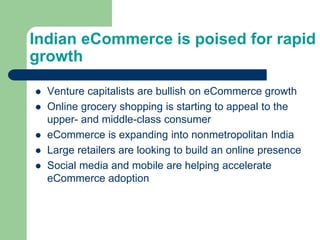
Indian eCommerce is poised for rapid
growth
 Venture capitalists are bullish on eCommerce growth
 Online grocery shopping is starting to appeal to the
upper- and middle-class consumer
 eCommerce is expanding into nonmetropolitan India
 Large retailers are looking to build an online presence
 Social media and mobile are helping accelerate
eCommerce adoption
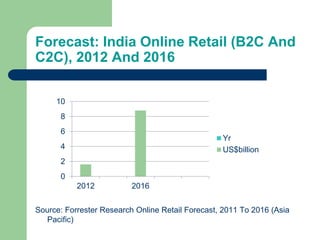
Forecast: India Online Retail (B2C And
C2C), 2012 And 2016
0
2
4
6
8
10
2012 2016
Yr
US$billion
Source: Forrester Research Online Retail Forecast, 2011 To 2016 (Asia
Pacific)
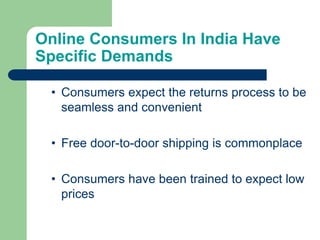
Online Consumers In India Have
Specific Demands
• Consumers expect the returns process to be
seamless and convenient
• Free door-to-door shipping is commonplace
• Consumers have been trained to expect low
prices
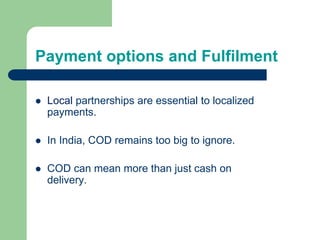
Payment options and Fulfilment
 Local partnerships are essential to localized
payments.
 In India, COD remains too big to ignore.
 COD can mean more than just cash on
delivery.
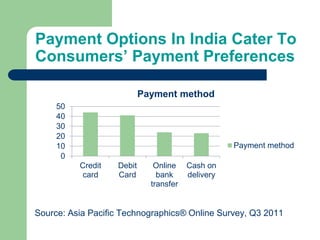
Payment Options In India Cater To
Consumers’ Payment Preferences
Source: Asia Pacific Technographics® Online Survey, Q3 2011
0
10
20
30
40
50
Credit
card
Debit
Card
Online
bank
transfer
Cash on
delivery
Payment method
Payment method
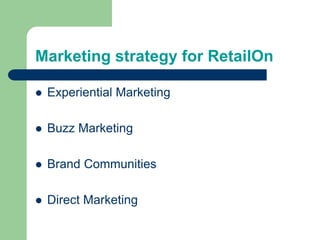
Marketing strategy for RetailOn
 Experiential Marketing
 Buzz Marketing
 Brand Communities
 Direct Marketing
Experiential Marketing
 marketing or advertising based on the principle
of marketing a product or brand through an
experience rather than the placement of
advertisements.
however holistic experiential
marketing considers the experience delivered
to the customer through the purchase or use of
the product or service.
Experiential Marketing
• Can be
– Festivals/Community Events
– Private Events - invitation only
– Galas/Parties/Productions
– Sales Meetings/Internal Events
– Consumer Intercept
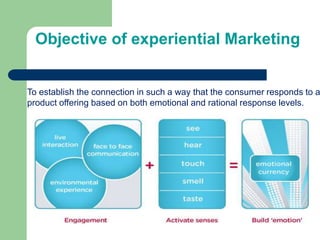
Objective of experiential Marketing
To establish the connection in such a way that the consumer responds to a
product offering based on both emotional and rational response levels.
Benefits of experiential marketing
 Supports and works in conjunction with other
aspects of the marketing mix
 Creates buzz
 Can touch a specific target audience
 Effective in reaching the influencers
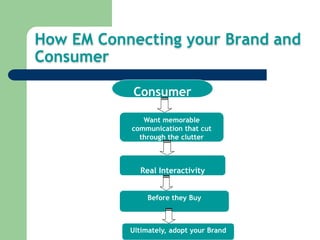
How EM Connecting your Brand and
Consumer
Consumer
Want memorable
communication that cut
through the clutter
Real Interactivity
Before they Buy
Ultimately, adopt your Brand
Buzz Marketing
• Word-of-mouth marketing
 Higher credibility
• Fast growth – now $1 billion annually
• Methods of generating buzz
 Consumers who like a brand
 Sponsored consumers
 Company or agency generated buzz
Buzz Marketing Stages
• Three stages
1. Inoculation, 2. Incubation, 3. infection
• Buzz marketing difficult during inoculation
stage
 Should be use brand ambassadors or customer
evangelists
• True customer-generated buzz occurs after
awareness
 Awareness generated through traditional
advertising
Buzz Marketing Precondition
• Brand must stand out
• Unique, New, Perform better
• Memorable advertising
• Intriguing, different, and unique
• Customers must get involved
• Buzz marketing works because
• People trust someone’s else’s opinion
• People like to give their opinion
Brand Communities
• Demonstration of Brand loyalty, devotion
• Symbolic meaning
• Interactions between brand and consumer
• Shared values and experiences
• Cannot be created by brands itself
• Marketing can enhance community experience
Enhancing a Brand Community
• Benefits to encourage new customers
• Provide materials not available anywhere else.
• Involve firm representatives in the groups.
• Sponsor meetings and special events.
• Promote communications among members.
• Build a strong brand reputation.
Value addition as a BDE
 Maintaining work ethics
 Identification of user’s real needs.
 Market segmentation (e.g. Urgent & important)
 Awareness of business issues and pressures
 knowledge of the industry in which the
organisation operates
 Evaluation and Feedback.
Flexible strategy is the key to
success
 Ebusinesses must be willing to work with many
different partners
 Savvy businesses will make mobile a part of
the eCommerce mix from the start
 Multi-brand retailers should be ready to launch
as soon as FDI constraints are lifted
 Be prepared to move beyond English to
differentiate longer term
Thank You!

Ecommerce2020

  • 1.
  • 2.
    E-Commerce  e-commerce, involvesthe sale of goods and services via electronic means – (i) Internet (ii)Television (terrestrial, cable, and satellite)  Further e-commerce can be divided into (i) B2B & B2C (ii) B2G & G2B (iii) G2C & C2C
  • 3.
    Indian e CommerceMarket  eCommerce in India is Growing Quickly  Today’s online shopper in India has inflated expectations  Localization is Crucial
  • 4.
    Industry Suitability  groceryretailing is ideally suited than clothing to e- commerce. Technology will change this e.g. Progress in 3D avatars.  Its penetration is often high in some sectors of a given market, but low in others e.g. financial services.
  • 5.
    Indian eCommerce ispoised for rapid growth  Venture capitalists are bullish on eCommerce growth  Online grocery shopping is starting to appeal to the upper- and middle-class consumer  eCommerce is expanding into nonmetropolitan India  Large retailers are looking to build an online presence  Social media and mobile are helping accelerate eCommerce adoption
  • 6.
    Forecast: India OnlineRetail (B2C And C2C), 2012 And 2016 0 2 4 6 8 10 2012 2016 Yr US$billion Source: Forrester Research Online Retail Forecast, 2011 To 2016 (Asia Pacific)
  • 7.
    Online Consumers InIndia Have Specific Demands • Consumers expect the returns process to be seamless and convenient • Free door-to-door shipping is commonplace • Consumers have been trained to expect low prices
  • 8.
    Payment options andFulfilment  Local partnerships are essential to localized payments.  In India, COD remains too big to ignore.  COD can mean more than just cash on delivery.
  • 9.
    Payment Options InIndia Cater To Consumers’ Payment Preferences Source: Asia Pacific Technographics® Online Survey, Q3 2011 0 10 20 30 40 50 Credit card Debit Card Online bank transfer Cash on delivery Payment method Payment method
  • 10.
    Marketing strategy forRetailOn  Experiential Marketing  Buzz Marketing  Brand Communities  Direct Marketing
  • 11.
    Experiential Marketing  marketingor advertising based on the principle of marketing a product or brand through an experience rather than the placement of advertisements. however holistic experiential marketing considers the experience delivered to the customer through the purchase or use of the product or service.
  • 12.
    Experiential Marketing • Canbe – Festivals/Community Events – Private Events - invitation only – Galas/Parties/Productions – Sales Meetings/Internal Events – Consumer Intercept
  • 13.
    Objective of experientialMarketing To establish the connection in such a way that the consumer responds to a product offering based on both emotional and rational response levels.
  • 14.
    Benefits of experientialmarketing  Supports and works in conjunction with other aspects of the marketing mix  Creates buzz  Can touch a specific target audience  Effective in reaching the influencers
  • 15.
    How EM Connectingyour Brand and Consumer Consumer Want memorable communication that cut through the clutter Real Interactivity Before they Buy Ultimately, adopt your Brand
  • 16.
    Buzz Marketing • Word-of-mouthmarketing  Higher credibility • Fast growth – now $1 billion annually • Methods of generating buzz  Consumers who like a brand  Sponsored consumers  Company or agency generated buzz
  • 17.
    Buzz Marketing Stages •Three stages 1. Inoculation, 2. Incubation, 3. infection • Buzz marketing difficult during inoculation stage  Should be use brand ambassadors or customer evangelists • True customer-generated buzz occurs after awareness  Awareness generated through traditional advertising
  • 18.
    Buzz Marketing Precondition •Brand must stand out • Unique, New, Perform better • Memorable advertising • Intriguing, different, and unique • Customers must get involved • Buzz marketing works because • People trust someone’s else’s opinion • People like to give their opinion
  • 19.
    Brand Communities • Demonstrationof Brand loyalty, devotion • Symbolic meaning • Interactions between brand and consumer • Shared values and experiences • Cannot be created by brands itself • Marketing can enhance community experience
  • 20.
    Enhancing a BrandCommunity • Benefits to encourage new customers • Provide materials not available anywhere else. • Involve firm representatives in the groups. • Sponsor meetings and special events. • Promote communications among members. • Build a strong brand reputation.
  • 21.
    Value addition asa BDE  Maintaining work ethics  Identification of user’s real needs.  Market segmentation (e.g. Urgent & important)  Awareness of business issues and pressures  knowledge of the industry in which the organisation operates  Evaluation and Feedback.
  • 22.
    Flexible strategy isthe key to success  Ebusinesses must be willing to work with many different partners  Savvy businesses will make mobile a part of the eCommerce mix from the start  Multi-brand retailers should be ready to launch as soon as FDI constraints are lifted  Be prepared to move beyond English to differentiate longer term
  • 23.