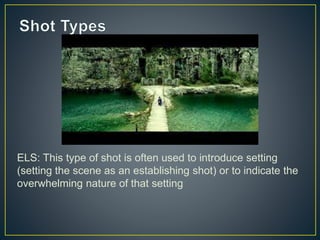
ELS: This type of shot is often used to introduce setting 
(setting the scene as an establishing shot) or to indicate the 
overwhelming nature of that setting
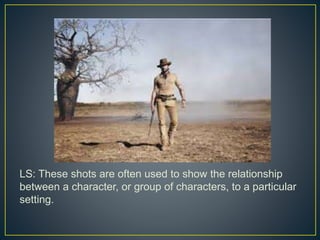
LS: These shots are often used to show the relationship 
between a character, or group of characters, to a particular 
setting.
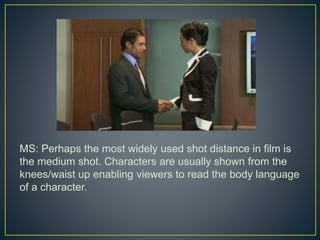
MS: Perhaps the most widely used shot distance in film is 
the medium shot. Characters are usually shown from the 
knees/waist up enabling viewers to read the body language 
of a character.
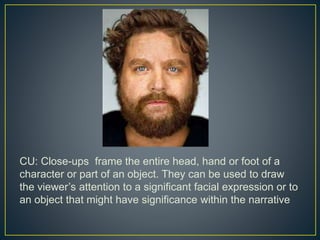
CU: Close-ups frame the entire head, hand or foot of a 
character or part of an object. They can be used to draw 
the viewer’s attention to a significant facial expression or to 
an object that might have significance within the narrative
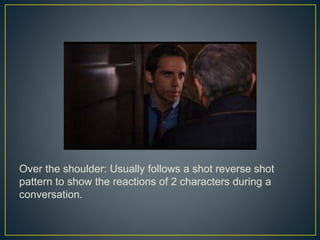
Over the shoulder: Usually follows a shot reverse shot 
pattern to show the reactions of 2 characters during a 
conversation.
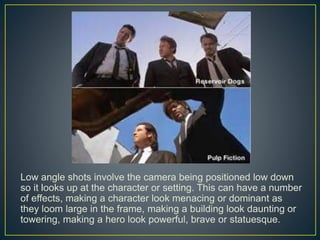
Low angle shots involve the camera being positioned low down 
so it looks up at the character or setting. This can have a number 
of effects, making a character look menacing or dominant as 
they loom large in the frame, making a building look daunting or 
towering, making a hero look powerful, brave or statuesque.
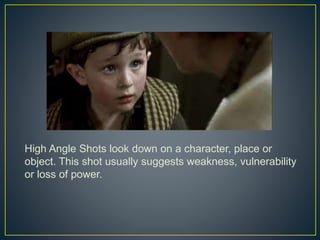
High Angle Shots look down on a character, place or 
object. This shot usually suggests weakness, vulnerability 
or loss of power.
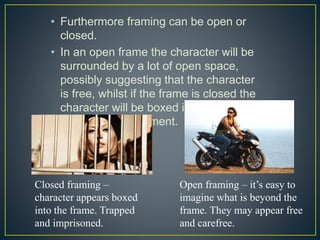
• Furthermore framing can be open or 
closed. 
• In an open frame the character will be 
surrounded by a lot of open space, 
possibly suggesting that the character 
is free, whilst if the frame is closed the 
character will be boxed in, prompting 
feelings of entrapment. 
Closed framing – 
character appears boxed 
into the frame. Trapped 
and imprisoned. 
Open framing – it’s easy to 
imagine what is beyond the 
frame. They may appear free 
and carefree.
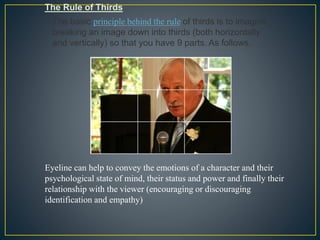
The Rule of Thirds 
The basic principle behind the rule of thirds is to imagine 
breaking an image down into thirds (both horizontally 
and vertically) so that you have 9 parts. As follows. 
Eyeline can help to convey the emotions of a character and their 
psychological state of mind, their status and power and finally their 
relationship with the viewer (encouraging or discouraging 
identification and empathy)
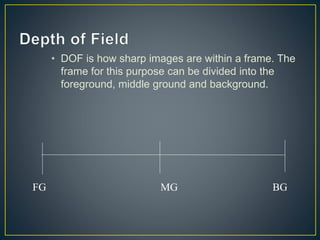
• DOF is how sharp images are within a frame. The 
frame for this purpose can be divided into the 
foreground, middle ground and background. 
FG MG BG
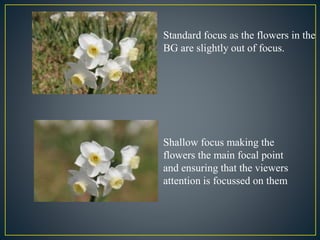
Standard focus as the flowers in the 
BG are slightly out of focus. 
Shallow focus making the 
flowers the main focal point 
and ensuring that the viewers 
attention is focussed on them
Activity 1 
Moving Image: 
1. Choose a film opening from your genre and identify the 
different cinematographic techniques that have been used 
and suggest why. Provide screen shots to support your 
points. 
2. Is there a range of techniques used? What impact will this 
have on your own film opening?
Activity 1 
Print: 
1. Choose a front cover, contents page and double page spread 
from a magazine in your chosen genre. Identify the different 
cinematographic techniques that have been used and suggest 
why. Provide screen shots to support your points. 
2. Is there a range of techniques used? What impact will this 
have on your own magazine pages?

Cinematography for Foundation Portfolio

  • 2.
    ELS: This typeof shot is often used to introduce setting (setting the scene as an establishing shot) or to indicate the overwhelming nature of that setting
  • 3.
    LS: These shotsare often used to show the relationship between a character, or group of characters, to a particular setting.
  • 4.
    MS: Perhaps themost widely used shot distance in film is the medium shot. Characters are usually shown from the knees/waist up enabling viewers to read the body language of a character.
  • 5.
    CU: Close-ups framethe entire head, hand or foot of a character or part of an object. They can be used to draw the viewer’s attention to a significant facial expression or to an object that might have significance within the narrative
  • 6.
    Over the shoulder:Usually follows a shot reverse shot pattern to show the reactions of 2 characters during a conversation.
  • 7.
    Low angle shotsinvolve the camera being positioned low down so it looks up at the character or setting. This can have a number of effects, making a character look menacing or dominant as they loom large in the frame, making a building look daunting or towering, making a hero look powerful, brave or statuesque.
  • 8.
    High Angle Shotslook down on a character, place or object. This shot usually suggests weakness, vulnerability or loss of power.
  • 9.
    • Furthermore framingcan be open or closed. • In an open frame the character will be surrounded by a lot of open space, possibly suggesting that the character is free, whilst if the frame is closed the character will be boxed in, prompting feelings of entrapment. Closed framing – character appears boxed into the frame. Trapped and imprisoned. Open framing – it’s easy to imagine what is beyond the frame. They may appear free and carefree.
  • 10.
    The Rule ofThirds The basic principle behind the rule of thirds is to imagine breaking an image down into thirds (both horizontally and vertically) so that you have 9 parts. As follows. Eyeline can help to convey the emotions of a character and their psychological state of mind, their status and power and finally their relationship with the viewer (encouraging or discouraging identification and empathy)
  • 11.
    • DOF ishow sharp images are within a frame. The frame for this purpose can be divided into the foreground, middle ground and background. FG MG BG
  • 12.
    Standard focus asthe flowers in the BG are slightly out of focus. Shallow focus making the flowers the main focal point and ensuring that the viewers attention is focussed on them
  • 13.
    Activity 1 MovingImage: 1. Choose a film opening from your genre and identify the different cinematographic techniques that have been used and suggest why. Provide screen shots to support your points. 2. Is there a range of techniques used? What impact will this have on your own film opening?
  • 14.
    Activity 1 Print: 1. Choose a front cover, contents page and double page spread from a magazine in your chosen genre. Identify the different cinematographic techniques that have been used and suggest why. Provide screen shots to support your points. 2. Is there a range of techniques used? What impact will this have on your own magazine pages?