Reading and Note Taking
Skills
Week 2
Outline
1. Helpful reading & note-taking strategies
2. How to become a more critical reader
3. How to take better notes
4. How to use what you’ve read
Reading – smarter & wiser
 You are going to spend a lot of your time reading.
Possibly more than you’ve ever done in your life before.
 You need to be a smart, savvy and efficient reader!
Effective Reading
 Academic texts are NOT meant to be read like a novel. they are
to be skimmed, scanned, searched and plundered for their
ideas, concepts and lines of thought.
 You do not have enough time for read everything word for word, so
engaging in time saving efficient reading practices is an absolute
must.
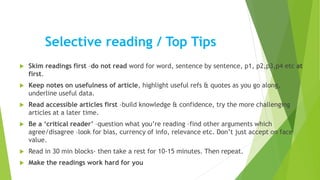
Selective reading / Top Tips
 Skim readings first –do not read word for word, sentence by sentence, p1, p2,p3,p4 etc at
first.
 Keep notes on usefulness of article, highlight useful refs & quotes as you go along,
underline useful data.
 Read accessible articles first –build knowledge & confidence, try the more challenging
articles at a later time.
 Be a ‘critical reader’ –question what you’re reading –find other arguments which
agree/disagree –look for bias, currency of info, relevance etc. Don’t just accept on face
value.
 Read in 30 min blocks- then take a rest for 10-15 minutes. Then repeat.
 Make the readings work hard for you
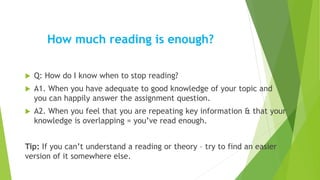
How much reading is enough?
 Q: How do I know when to stop reading?
 A1. When you have adequate to good knowledge of your topic and
you can happily answer the assignment question.
 A2. When you feel that you are repeating key information & that your
knowledge is overlapping = you’ve read enough.
Tip: If you can’t understand a reading or theory – try to find an easier
version of it somewhere else.
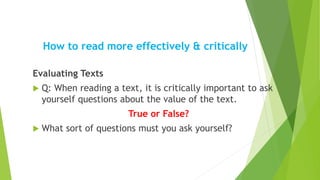
How to read more effectively & critically
Evaluating Texts
 Q: When reading a text, it is critically important to ask
yourself questions about the value of the text.
True or False?
 What sort of questions must you ask yourself?
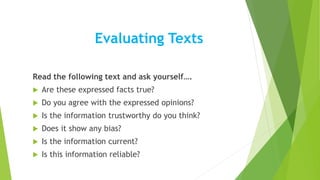
Evaluating Texts
Read the following text and ask yourself….
 Are these expressed facts true?
 Do you agree with the expressed opinions?
 Is the information trustworthy do you think?
 Does it show any bias?
 Is the information current?
 Is this information reliable?
Managing your reading at Uni
Academic material is not meant to be simply read.
It is meant to be searched and scanned for essential content.
 Be selective with what you read
 Set a realistic time frame for any reading task.
 Never read without specific questions you want to answer.
 Never start reading at page 1 of the text, but look for the summary, conclusion,
subheadings, etc.
 Read only as much as you need to get the information you are after.
 Always keep in mind what you need, what is relevant to the question you are asking the
text
Reading Strategies
 Focus on the Question: Search text for answers
 Preview text
 Skim & Scan text
 Take notes as you go along
 Use tables or diagrams to help understand the structure of the
text
 Summarize what you’ve read
What is Critical Reading?
The purpose of critical reading is to gain a deeper understanding of the
material. It involves reading in depth and between the lines.
Some further questions you should ask yourself while reading are:
 Has the writer backed up statements and ideas with credible evidence?
 Are logical arguments used?
 Does the writer present the two sides of a case even handedly?
 Is there any evident bias from the writer’s viewpoint?
Reading Tips
Efficient academic reading strategies are based on the structure of
academic writing. For instance, you should begin by:
 Reading the introduction to search for the thesis point or main
argument presented, and to verify the overview provided by the
contents page; also….
 Scanning by topic sentences, i.e. the sentence which makes the point
of the paragraph and which is usually the first sentence of the
paragraph.
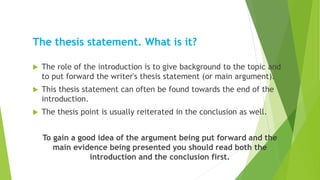
The thesis statement. What is it?
 The role of the introduction is to give background to the topic and
to put forward the writer's thesis statement (or main argument).
 This thesis statement can often be found towards the end of the
introduction.
 The thesis point is usually reiterated in the conclusion as well.
To gain a good idea of the argument being put forward and the
main evidence being presented you should read both the
introduction and the conclusion first.
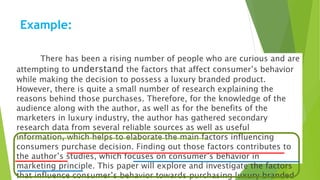
Example:
There has been a rising number of people who are curious and are
attempting to understand the factors that affect consumer’s behavior
while making the decision to possess a luxury branded product.
However, there is quite a small number of research explaining the
reasons behind those purchases. Therefore, for the knowledge of the
audience along with the author, as well as for the benefits of the
marketers in luxury industry, the author has gathered secondary
research data from several reliable sources as well as useful
information, which helps to elaborate the main factors influencing
consumers purchase decision. Finding out those factors contributes to
the author’s studies, which focuses on consumer’s behavior in
marketing principle. This paper will explore and investigate the factors
that influence consumer’s behavior towards purchasing luxury branded
Critical Reading
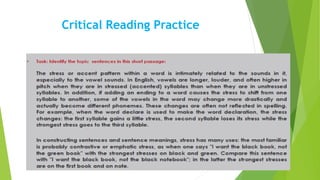
 A further strategy is to read topic sentences of
each paragraph.
 This can be particularly effective for difficult
articles or heavy academic texts.
Critical Reading Practice
More Tips:
How to become a more efficient reader
 Quickly skim and scan and read for general meaning.
 Look at the title of the paper- what is it about/ useful?
 Read the introduction and conclusion first.
 Read the topic sentences and concluding sentences of each
paragraph in the main body of the article.
How to become a critical reader?
 Is there clear credible evidence for arguments do you think?
 Is there any bias evident in the article?
 Who else agrees and disagrees with these arguments?
 Are there any included tables that give additional useful
information to enhance the article or its meaning?
 How would you summarise what the reading is about?
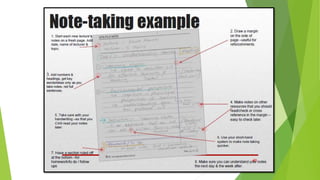
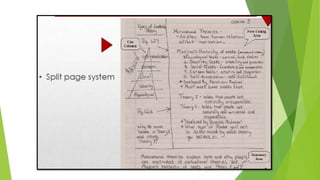
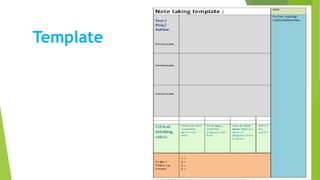
NOTE-TAKING STRATEGIES
 Buy a dedicated notebook for each subject
 Don’t write word for word- be selective!
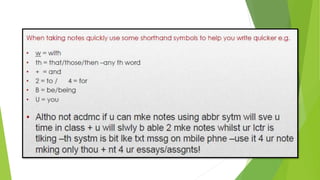
 Use bullet points / short phrases
 Make lists
 Abbreviate words –especially common words
 Develop individual ‘short-hand’ system
 Software is OK
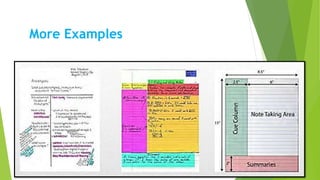
More Examples
Template
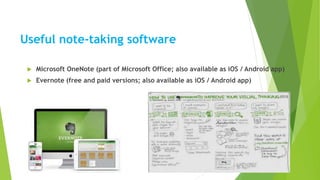
Useful note-taking software
 Microsoft OneNote (part of Microsoft Office; also available as iOS / Android app)
 Evernote (free and paid versions; also available as iOS / Android app)
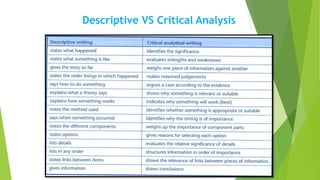
Descriptive VS Critical Analysis
Reflect on your Research
Once you have the relevant information:
 What have you discovered and learnt?
 •How does your new knowledge help your understanding?
 •What arguments or evidence have you discovered?
 •How have your ideas/opinions been influenced?
 •Do you now have a clearer understanding of the topic/ task?
What can you do if you don’t understand
something?
 Ask in class
 Go see your lecturer personally (take a draft)
 Go see another member of faculty
 Ask peers/classmates
 Email your lecturer for help
 See a HELPS advisor (drop-in consultation)
 ALWAYS seek help if you need it!!
Effective Critical Reading + Note-taking
Strategies for better critical reading.
 Inspect text first
 Scan rapidly / ascertain
 Question / Question / Question /
 Locate specifics quickly
 Read at the right speed for the task
 Recall / review / summarise through your notes
 Note-take / note references accurately
 Read SMART
 Save time!
 Achieve task

Week 2 - reading and note taking skills bb

  • 1.
    Reading and NoteTaking Skills Week 2
  • 2.
    Outline 1. Helpful reading& note-taking strategies 2. How to become a more critical reader 3. How to take better notes 4. How to use what you’ve read
  • 3.
    Reading – smarter& wiser  You are going to spend a lot of your time reading. Possibly more than you’ve ever done in your life before.  You need to be a smart, savvy and efficient reader!
  • 4.
    Effective Reading  Academictexts are NOT meant to be read like a novel. they are to be skimmed, scanned, searched and plundered for their ideas, concepts and lines of thought.  You do not have enough time for read everything word for word, so engaging in time saving efficient reading practices is an absolute must.
  • 5.
    Selective reading /Top Tips  Skim readings first –do not read word for word, sentence by sentence, p1, p2,p3,p4 etc at first.  Keep notes on usefulness of article, highlight useful refs & quotes as you go along, underline useful data.  Read accessible articles first –build knowledge & confidence, try the more challenging articles at a later time.  Be a ‘critical reader’ –question what you’re reading –find other arguments which agree/disagree –look for bias, currency of info, relevance etc. Don’t just accept on face value.  Read in 30 min blocks- then take a rest for 10-15 minutes. Then repeat.  Make the readings work hard for you
  • 6.
    How much readingis enough?  Q: How do I know when to stop reading?  A1. When you have adequate to good knowledge of your topic and you can happily answer the assignment question.  A2. When you feel that you are repeating key information & that your knowledge is overlapping = you’ve read enough. Tip: If you can’t understand a reading or theory – try to find an easier version of it somewhere else.
  • 7.
    How to readmore effectively & critically Evaluating Texts  Q: When reading a text, it is critically important to ask yourself questions about the value of the text. True or False?  What sort of questions must you ask yourself?
  • 8.
    Evaluating Texts Read thefollowing text and ask yourself….  Are these expressed facts true?  Do you agree with the expressed opinions?  Is the information trustworthy do you think?  Does it show any bias?  Is the information current?  Is this information reliable?
  • 9.
    Managing your readingat Uni Academic material is not meant to be simply read. It is meant to be searched and scanned for essential content.  Be selective with what you read  Set a realistic time frame for any reading task.  Never read without specific questions you want to answer.  Never start reading at page 1 of the text, but look for the summary, conclusion, subheadings, etc.  Read only as much as you need to get the information you are after.  Always keep in mind what you need, what is relevant to the question you are asking the text
  • 10.
    Reading Strategies  Focuson the Question: Search text for answers  Preview text  Skim & Scan text  Take notes as you go along  Use tables or diagrams to help understand the structure of the text  Summarize what you’ve read
  • 11.
    What is CriticalReading? The purpose of critical reading is to gain a deeper understanding of the material. It involves reading in depth and between the lines. Some further questions you should ask yourself while reading are:  Has the writer backed up statements and ideas with credible evidence?  Are logical arguments used?  Does the writer present the two sides of a case even handedly?  Is there any evident bias from the writer’s viewpoint?
  • 13.
    Reading Tips Efficient academicreading strategies are based on the structure of academic writing. For instance, you should begin by:  Reading the introduction to search for the thesis point or main argument presented, and to verify the overview provided by the contents page; also….  Scanning by topic sentences, i.e. the sentence which makes the point of the paragraph and which is usually the first sentence of the paragraph.
  • 14.
    The thesis statement.What is it?  The role of the introduction is to give background to the topic and to put forward the writer's thesis statement (or main argument).  This thesis statement can often be found towards the end of the introduction.  The thesis point is usually reiterated in the conclusion as well. To gain a good idea of the argument being put forward and the main evidence being presented you should read both the introduction and the conclusion first.
  • 15.
    Example: There has beena rising number of people who are curious and are attempting to understand the factors that affect consumer’s behavior while making the decision to possess a luxury branded product. However, there is quite a small number of research explaining the reasons behind those purchases. Therefore, for the knowledge of the audience along with the author, as well as for the benefits of the marketers in luxury industry, the author has gathered secondary research data from several reliable sources as well as useful information, which helps to elaborate the main factors influencing consumers purchase decision. Finding out those factors contributes to the author’s studies, which focuses on consumer’s behavior in marketing principle. This paper will explore and investigate the factors that influence consumer’s behavior towards purchasing luxury branded
  • 16.
    Critical Reading  Afurther strategy is to read topic sentences of each paragraph.  This can be particularly effective for difficult articles or heavy academic texts.
  • 17.
  • 18.
  • 19.
    How to becomea more efficient reader  Quickly skim and scan and read for general meaning.  Look at the title of the paper- what is it about/ useful?  Read the introduction and conclusion first.  Read the topic sentences and concluding sentences of each paragraph in the main body of the article.
  • 20.
    How to becomea critical reader?  Is there clear credible evidence for arguments do you think?  Is there any bias evident in the article?  Who else agrees and disagrees with these arguments?  Are there any included tables that give additional useful information to enhance the article or its meaning?  How would you summarise what the reading is about?
  • 21.
    NOTE-TAKING STRATEGIES  Buya dedicated notebook for each subject  Don’t write word for word- be selective!  Use bullet points / short phrases  Make lists  Abbreviate words –especially common words  Develop individual ‘short-hand’ system  Software is OK
  • 25.
  • 26.
  • 27.
    Useful note-taking software Microsoft OneNote (part of Microsoft Office; also available as iOS / Android app)  Evernote (free and paid versions; also available as iOS / Android app)
  • 28.
  • 29.
    Reflect on yourResearch Once you have the relevant information:  What have you discovered and learnt?  •How does your new knowledge help your understanding?  •What arguments or evidence have you discovered?  •How have your ideas/opinions been influenced?  •Do you now have a clearer understanding of the topic/ task?
  • 30.
    What can youdo if you don’t understand something?  Ask in class  Go see your lecturer personally (take a draft)  Go see another member of faculty  Ask peers/classmates  Email your lecturer for help  See a HELPS advisor (drop-in consultation)  ALWAYS seek help if you need it!!
  • 31.
    Effective Critical Reading+ Note-taking Strategies for better critical reading.  Inspect text first  Scan rapidly / ascertain  Question / Question / Question /  Locate specifics quickly  Read at the right speed for the task  Recall / review / summarise through your notes  Note-take / note references accurately  Read SMART  Save time!  Achieve task

Editor's Notes

  • #5 Plundered = take material from (artistic or academic work) for one's own purposes. "we shall plunder related sciences to assist our research"
  • #9 Bias : a personal and sometimes unreasoned judgment “ The decision was made without bias.”
  • #15 Reiterated:  to state or do over again or repeatedly sometimes with wearying effect