Presenting By
----------
12AAAAAA
Under the guidance of
######
WEB SERVICES ON MOBILE
PLATFORM
ABSTRACT
2
 Web services in present situation for fulfilling needs in web development along
with mobile accessibility. web services, role of web services in mobile
environment, types of web services, introduction of middle ware components, web
services on J2ME and web services on different mobile operating systems.
 Web services are applications which run externally at different locations like
Google provides web services from America similarly different organizations will
have their own web services under their control. Web services are not language
dependent they can run any applications which are developed in different
languages and different platforms which is developed as per the common web
service standards.
INTRODUCTION
3
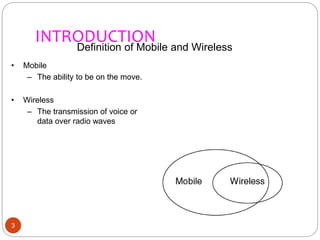
Definition of Mobile and Wireless
• Mobile
– The ability to be on the move.
• Wireless
– The transmission of voice or
data over radio waves
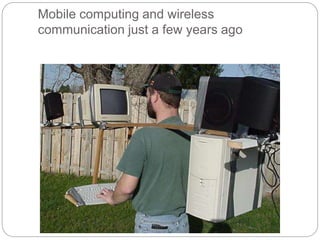
Mobile computing and wireless
communication just a few years ago
Why to choose mobile?
 Business Benefits
 Increased employee productivity
 Faster response time
 Improved competitive advantage
 Reducing costs
 End-user Benefits
Mobile/Wireless Application Options
 Wireless Internet (online only)
 Online access to Web content
 Typically used for consumer applications
 Limited user interface and capabilities
 Smart Client
 Allows for offline access to important data
 Works best in ‘occasionally connected’ environment
 Messaging
 Store and forward delivery of data
 Text messaging is very popular, multimedia the next thing
 Can be used on its own, or in addition to other architectures
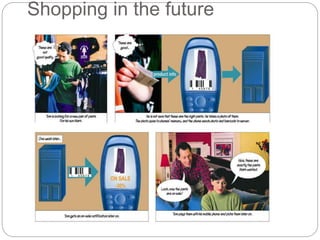
Shopping in the future
Services on the Web
8
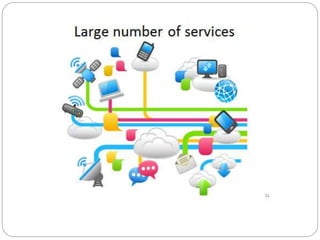
 Web Services provide data and services to other
applications.
 Thee applications access Web Services via standard
Web Formats (HTTP, HTML, XML, and SOAP), with
no need to know how the Web Service itself is
implemented.
 Web services provide a standard means of
interoperating between different software applications,
running on a variety of platforms and/or frameworks.
Web services building block
• SOAP
• WSDl
• UDDI
Wireless Environment
 Wireless Operators and Service Providers
 Device Manufacturers
 Hardware vendors
 Software infrastructure Providers
 Independent Software Vendors
 System Integrators
Variability of the mobile
environment
Mobile device capability
Mobility
Connectivity
M-Commerce
 Digital purchase
 Mobile Banking
 Information Services
 Location based services
 Mobile Shopping
 Mobile Advertisement
M-Business
 Mobile Office
 Field Sales
 Field Services
 Transportation and Logistics
Challenges
 Coverage and
penetration
 Bandwidth
 Reliability
 Cost
 Lack of Standards
 Roaming
Device characteristics
 Size and weight
 Memory
 Processors type and speed
 Screen
 Size and colour
 Indoor/Outdoor
 OS
 Software support
 Expansion capabilities
 Built-in functionality
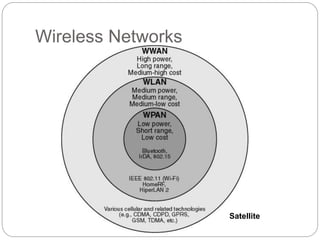
Wireless Networks
Satellite
WPAN Applications
 For business applications, anytime you would
use a cradle for a network connection, a WPAN
can work
 SQL Anywhere Studio can synchronize data wireless
over WPAN networks without modifying the application!
 In some confined environments, Bluetooth can
be used as a local area network
 As cable replacement for peripherals
 Future uses include many embedded devices
such as sensors, interactive toys, smart badges,
and home automation
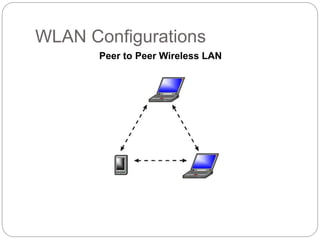
WLAN Configurations
Peer to Peer Wireless LAN
Wide Area Networks
 Main Characteristics:
 Long-range communication (national coverage)
 Data rates from 9.6 kbps to 2 Mbps
 WWANs were initially implemented for voice
communication, but data communication is a key
focus with the latest offerings
WWAN Applications
 WWANs are still primarily used for voice
communications
 Adoption of data services has been strong for
text messaging, and now, multimedia
messaging
 Consumer uses include wireless Internet
access, whereas corporate usage is often
focused on smart client synchronization and
PIM and email access
 The widespread deployment of 3G networks
has been hindered by Wi-Fi hotspots
Network issues
 Increased bandwidth
 Always-on capability
 Lower costs
 Enhanced services
 roaming
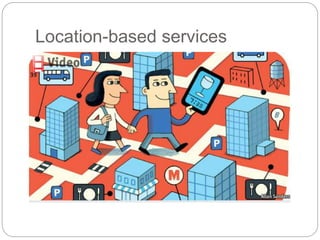
Location-based services
23
CONCLUSION
24
 So, I conclude by saying that by the usage of web
services on mobile devices any individual can
improve his performance and make efficient use
of resources .
REFERENCES
25
 Bent Thomsen. Aalborg University. 3rd and 4th of
June 2004. Welcome to a world. of. Fun. and.
THANK YOU
27
Any Queries?

WEB SERVICES ON MOBILE PLATFORM BY SAIKIRAN PANJALA

  • 1.
    Presenting By ---------- 12AAAAAA Under theguidance of ###### WEB SERVICES ON MOBILE PLATFORM
  • 2.
    ABSTRACT 2  Web servicesin present situation for fulfilling needs in web development along with mobile accessibility. web services, role of web services in mobile environment, types of web services, introduction of middle ware components, web services on J2ME and web services on different mobile operating systems.  Web services are applications which run externally at different locations like Google provides web services from America similarly different organizations will have their own web services under their control. Web services are not language dependent they can run any applications which are developed in different languages and different platforms which is developed as per the common web service standards.
  • 3.
    INTRODUCTION 3 Definition of Mobileand Wireless • Mobile – The ability to be on the move. • Wireless – The transmission of voice or data over radio waves
  • 4.
    Mobile computing andwireless communication just a few years ago
  • 5.
    Why to choosemobile?  Business Benefits  Increased employee productivity  Faster response time  Improved competitive advantage  Reducing costs  End-user Benefits
  • 6.
    Mobile/Wireless Application Options Wireless Internet (online only)  Online access to Web content  Typically used for consumer applications  Limited user interface and capabilities  Smart Client  Allows for offline access to important data  Works best in ‘occasionally connected’ environment  Messaging  Store and forward delivery of data  Text messaging is very popular, multimedia the next thing  Can be used on its own, or in addition to other architectures
  • 7.
  • 8.
    Services on theWeb 8  Web Services provide data and services to other applications.  Thee applications access Web Services via standard Web Formats (HTTP, HTML, XML, and SOAP), with no need to know how the Web Service itself is implemented.  Web services provide a standard means of interoperating between different software applications, running on a variety of platforms and/or frameworks.
  • 10.
    Web services buildingblock • SOAP • WSDl • UDDI
  • 11.
    Wireless Environment  WirelessOperators and Service Providers  Device Manufacturers  Hardware vendors  Software infrastructure Providers  Independent Software Vendors  System Integrators
  • 12.
    Variability of themobile environment Mobile device capability Mobility Connectivity
  • 13.
    M-Commerce  Digital purchase Mobile Banking  Information Services  Location based services  Mobile Shopping  Mobile Advertisement
  • 14.
    M-Business  Mobile Office Field Sales  Field Services  Transportation and Logistics
  • 15.
    Challenges  Coverage and penetration Bandwidth  Reliability  Cost  Lack of Standards  Roaming
  • 16.
    Device characteristics  Sizeand weight  Memory  Processors type and speed  Screen  Size and colour  Indoor/Outdoor  OS  Software support  Expansion capabilities  Built-in functionality
  • 17.
  • 18.
    WPAN Applications  Forbusiness applications, anytime you would use a cradle for a network connection, a WPAN can work  SQL Anywhere Studio can synchronize data wireless over WPAN networks without modifying the application!  In some confined environments, Bluetooth can be used as a local area network  As cable replacement for peripherals  Future uses include many embedded devices such as sensors, interactive toys, smart badges, and home automation
  • 19.
    WLAN Configurations Peer toPeer Wireless LAN
  • 20.
    Wide Area Networks Main Characteristics:  Long-range communication (national coverage)  Data rates from 9.6 kbps to 2 Mbps  WWANs were initially implemented for voice communication, but data communication is a key focus with the latest offerings
  • 21.
    WWAN Applications  WWANsare still primarily used for voice communications  Adoption of data services has been strong for text messaging, and now, multimedia messaging  Consumer uses include wireless Internet access, whereas corporate usage is often focused on smart client synchronization and PIM and email access  The widespread deployment of 3G networks has been hindered by Wi-Fi hotspots
  • 22.
    Network issues  Increasedbandwidth  Always-on capability  Lower costs  Enhanced services  roaming
  • 23.
  • 24.
    CONCLUSION 24  So, Iconclude by saying that by the usage of web services on mobile devices any individual can improve his performance and make efficient use of resources .
  • 25.
    REFERENCES 25  Bent Thomsen.Aalborg University. 3rd and 4th of June 2004. Welcome to a world. of. Fun. and.
  • 26.
  • 27.