WEATHERING
11
Grade
WEATHERING
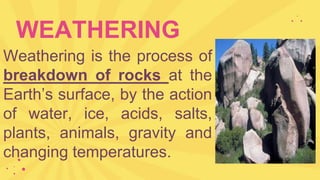
Weathering is the process of
breakdown of rocks at the
Earth’s surface, by the action
of water, ice, acids, salts,
plants, animals, gravity and
changing temperatures.
Three Types of Weathering
A. Physical Weathering
Physical weathering is caused by
the effects of changing temperatures
on rocks, causing the rock to break
apart. The process is sometimes
assisted by water.
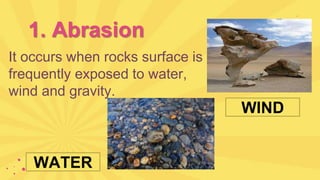
1. Abrasion
It occurs when rocks surface is
frequently exposed to water,
wind and gravity.
WIND
WATER
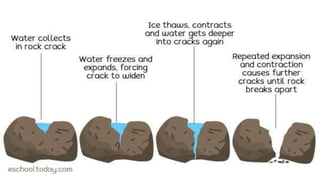
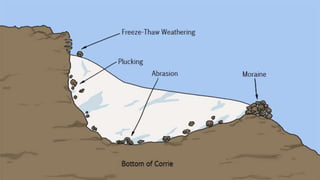
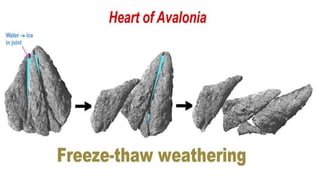
2. Freeze-thaw.
It occurs when water continually seeps into
cracks, freezes and expands, eventually breaking
the rock apart. It occurs in mountainous regions
like the Alps or Snowdonia.
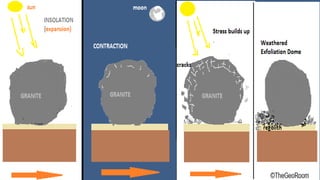
3. Exfoliation
It can happen as cracks develop parallel to the
land surface as a consequence of the reduction
in pressure during uplift and erosion. It occurs
typically in upland areas where there are
exposures of uniform coarsely crystalline
igneous rocks.
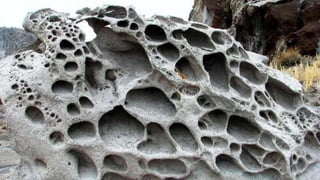
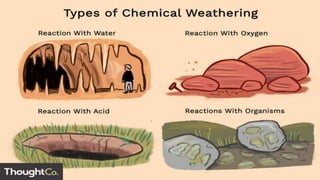
B. Chemical Weathering
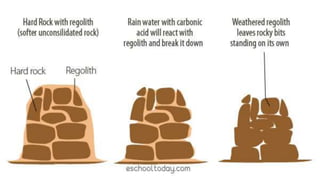
Chemical weathering is caused by rainwater
reacting with the mineral grains in rocks to
form new minerals (clays) and soluble salts.
These reactions occur particularly when the
water is slightly acidic. These chemical
processes need water, and occur more rapidly
at higher temperature, so warm, damp
climates are best.
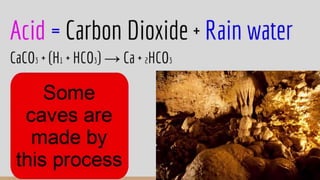
1. Carbonation
Carbon dioxide in the air dissolves in
rainwater and becomes weakly acidic. This
weak “carbonic acid” can dissolve
limestone as it seeps into cracks and
cavities. Over many years, solution of the
rock can form spectacular cave systems.
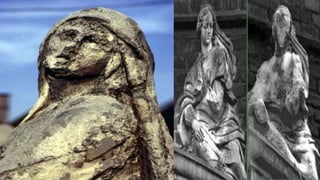
2. Acidification
Polluting gases, like sulfur dioxide and nitrogen
oxide dissolve in rainwater to make stronger
acids. When this rainwater falls, we get acid rain.
This acid attacks many rock types, both by
solution and hydrolysis, seriously damaging
buildings and monuments.
3. Hydrolysis
the breakdown of rock by acidic water to
produce clay and soluble salts. Hydrolysis
takes place when acid rain reacts with rock-
forming minerals such as feldspar to produce
clay and salts that are removed in solution.
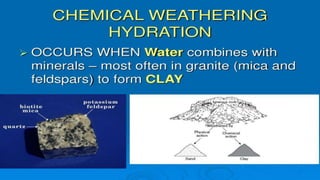
4. Hydration
A type of chemical weathering where water
reacts chemically with the rocks, modifying its
chemical structure. Example: H2O (water) is
added to CaSO4 (calcium sulfate) to create
CaSO4 + 2H2O (calcium sulfate dihydrate).
5. Oxidation
the breakdown of rock by oxygen and
water, often giving iron-rich rocks a
rusty-colored weathered surface.
`
Activity: 2
Write a tagline about weathering. (It could also
be a hugot line or a Pick up line) in a separate
sheet of paper.
_____________________________________
____________________________________
_____________________________________
____________________________________
_____________________________________
___________________________________
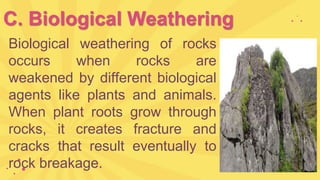
C. Biological Weathering
Biological weathering of rocks
occurs when rocks are
weakened by different biological
agents like plants and animals.
When plant roots grow through
rocks, it creates fracture and
cracks that result eventually to
rock breakage.
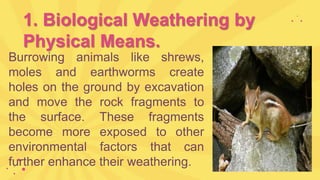
1. Biological Weathering by
Physical Means.
Burrowing animals like shrews,
moles and earthworms create
holes on the ground by excavation
and move the rock fragments to
the surface. These fragments
become more exposed to other
environmental factors that can
further enhance their weathering.
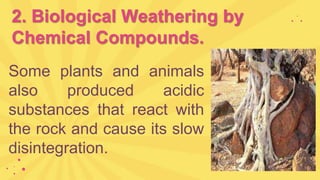
2. Biological Weathering by
Chemical Compounds.
Some plants and animals
also produced acidic
substances that react with
the rock and cause its slow
disintegration.
A. Directions: Write C if the
statement is correct and I if
the statement is incorrect.
__________1. Gravity is one of the agents of
weathering.
__________2. Exfoliation occurs when water
continually seeps into cracks, freezes and
expands eventually breaking the rock apart.
__________3. Carbonation occurs when carbon
dioxide dissolved in water makes acid
and reacts with rocks.
__________4. Burrowing animals cannot
contribute on weathering of rocks.
__________5. Hydrolysis takes place when acid
rain reacts with rock-forming minerals such as
feldspar to produce clay and salts that are
removed in solution.
__________6. Animals produce acidic
compounds that can cause rock disintegration.
__________7. Sulfur dioxide and nitrogen
oxide when mix with water produces basic
substance that can break down rocks’
components.
__________8. Humans indirectly contribute
on weathering.
__________9. Water alters chemical
components of rocks that cause
weathering.
__________10. Earthworms are
physical weathering agent.

Lesson-1-EA-1.ᴘᴘᴛxғᴜʀʜғᴊғᴊɢᴊғᴊɢᴊғᴊғᴊғᴊғᴊғᴊғᴊғ

  • 1.
  • 2.
    WEATHERING Weathering is theprocess of breakdown of rocks at the Earth’s surface, by the action of water, ice, acids, salts, plants, animals, gravity and changing temperatures.
  • 3.
    Three Types ofWeathering A. Physical Weathering Physical weathering is caused by the effects of changing temperatures on rocks, causing the rock to break apart. The process is sometimes assisted by water.
  • 5.
    1. Abrasion It occurswhen rocks surface is frequently exposed to water, wind and gravity. WIND WATER
  • 7.
    2. Freeze-thaw. It occurswhen water continually seeps into cracks, freezes and expands, eventually breaking the rock apart. It occurs in mountainous regions like the Alps or Snowdonia.
  • 9.
    3. Exfoliation It canhappen as cracks develop parallel to the land surface as a consequence of the reduction in pressure during uplift and erosion. It occurs typically in upland areas where there are exposures of uniform coarsely crystalline igneous rocks.
  • 11.
    B. Chemical Weathering Chemicalweathering is caused by rainwater reacting with the mineral grains in rocks to form new minerals (clays) and soluble salts. These reactions occur particularly when the water is slightly acidic. These chemical processes need water, and occur more rapidly at higher temperature, so warm, damp climates are best.
  • 13.
    1. Carbonation Carbon dioxidein the air dissolves in rainwater and becomes weakly acidic. This weak “carbonic acid” can dissolve limestone as it seeps into cracks and cavities. Over many years, solution of the rock can form spectacular cave systems.
  • 15.
    2. Acidification Polluting gases,like sulfur dioxide and nitrogen oxide dissolve in rainwater to make stronger acids. When this rainwater falls, we get acid rain. This acid attacks many rock types, both by solution and hydrolysis, seriously damaging buildings and monuments.
  • 17.
    3. Hydrolysis the breakdownof rock by acidic water to produce clay and soluble salts. Hydrolysis takes place when acid rain reacts with rock- forming minerals such as feldspar to produce clay and salts that are removed in solution.
  • 19.
    4. Hydration A typeof chemical weathering where water reacts chemically with the rocks, modifying its chemical structure. Example: H2O (water) is added to CaSO4 (calcium sulfate) to create CaSO4 + 2H2O (calcium sulfate dihydrate).
  • 21.
    5. Oxidation the breakdownof rock by oxygen and water, often giving iron-rich rocks a rusty-colored weathered surface.
  • 22.
  • 24.
    Activity: 2 Write atagline about weathering. (It could also be a hugot line or a Pick up line) in a separate sheet of paper. _____________________________________ ____________________________________ _____________________________________ ____________________________________ _____________________________________ ___________________________________
  • 25.
    C. Biological Weathering Biologicalweathering of rocks occurs when rocks are weakened by different biological agents like plants and animals. When plant roots grow through rocks, it creates fracture and cracks that result eventually to rock breakage.
  • 26.
    1. Biological Weatheringby Physical Means. Burrowing animals like shrews, moles and earthworms create holes on the ground by excavation and move the rock fragments to the surface. These fragments become more exposed to other environmental factors that can further enhance their weathering.
  • 27.
    2. Biological Weatheringby Chemical Compounds. Some plants and animals also produced acidic substances that react with the rock and cause its slow disintegration.
  • 28.
    A. Directions: WriteC if the statement is correct and I if the statement is incorrect.
  • 29.
    __________1. Gravity isone of the agents of weathering. __________2. Exfoliation occurs when water continually seeps into cracks, freezes and expands eventually breaking the rock apart.
  • 30.
    __________3. Carbonation occurswhen carbon dioxide dissolved in water makes acid and reacts with rocks. __________4. Burrowing animals cannot contribute on weathering of rocks.
  • 31.
    __________5. Hydrolysis takesplace when acid rain reacts with rock-forming minerals such as feldspar to produce clay and salts that are removed in solution. __________6. Animals produce acidic compounds that can cause rock disintegration.
  • 32.
    __________7. Sulfur dioxideand nitrogen oxide when mix with water produces basic substance that can break down rocks’ components. __________8. Humans indirectly contribute on weathering.
  • 33.
    __________9. Water alterschemical components of rocks that cause weathering. __________10. Earthworms are physical weathering agent.