What Is Extensive Reading?
 Brown (1989) explains that extensive reading is carried
out "to achieve a general understanding of a text."
 Long and Richards (1971, p.216) identify extensive
reading as "occurring when students read large
amounts of high interest material, usually out of class,
concentrating on meaning, "reading for gist" and
skipping unknown words."
 The aims of extensive reading are
a) to build reader confidence
b) enjoyment
c) to create fluency
d) to read
 Extensive reading is always done for the
comprehension of main ideas, not for specific details.
 Simply, extensive reading is reading a lot.
 Reading for pleasure.
 Reading at a comfortable “easy” level for the student.
 Students should not be reaching for a dictionary every
sentence or even every paragraph.
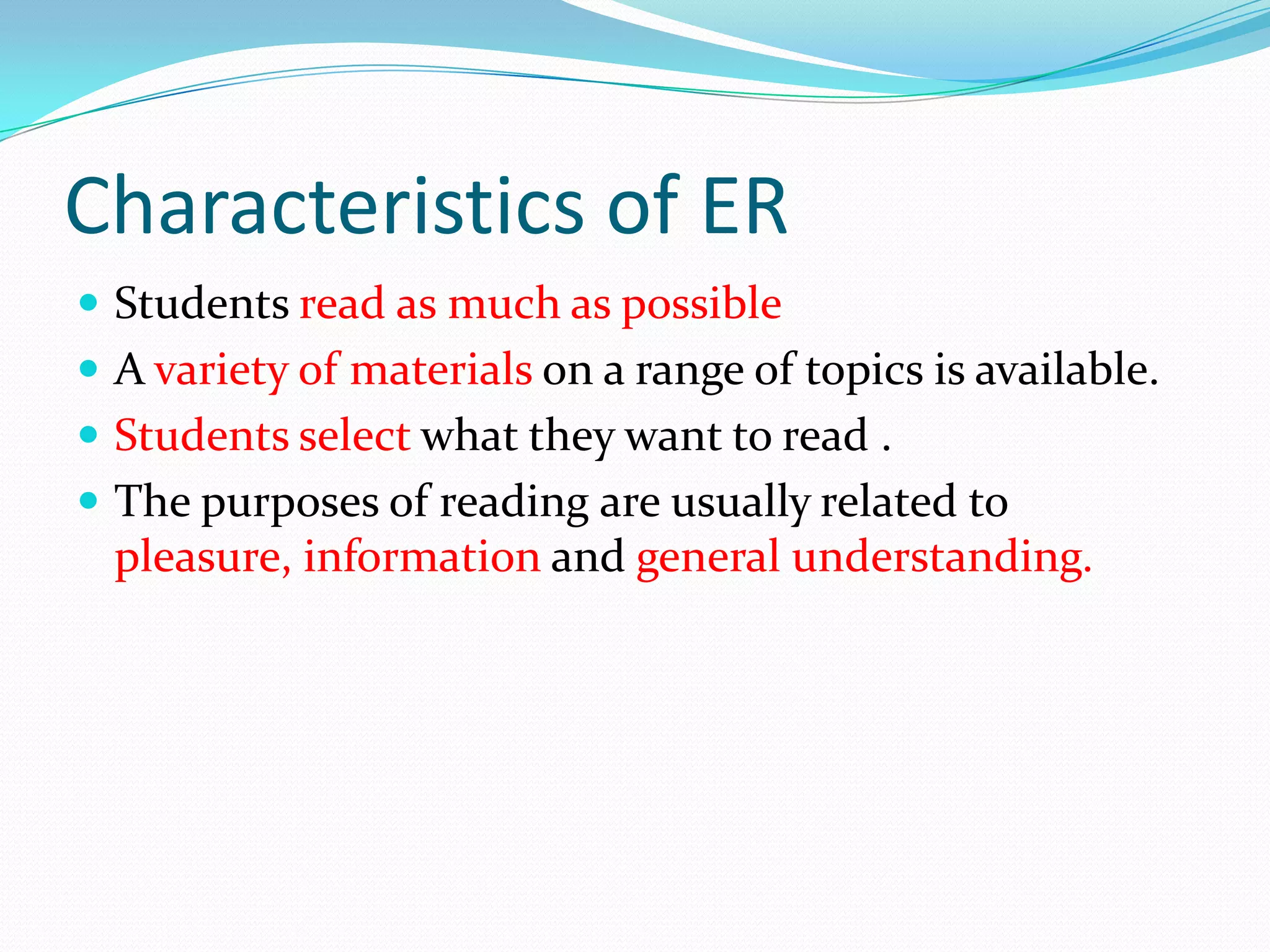
Characteristics of ER
 Students read as much as possible
 A variety of materials on a range of topics is available.
 Students select what they want to read .
 The purposes of reading are usually related to
pleasure, information and general understanding.
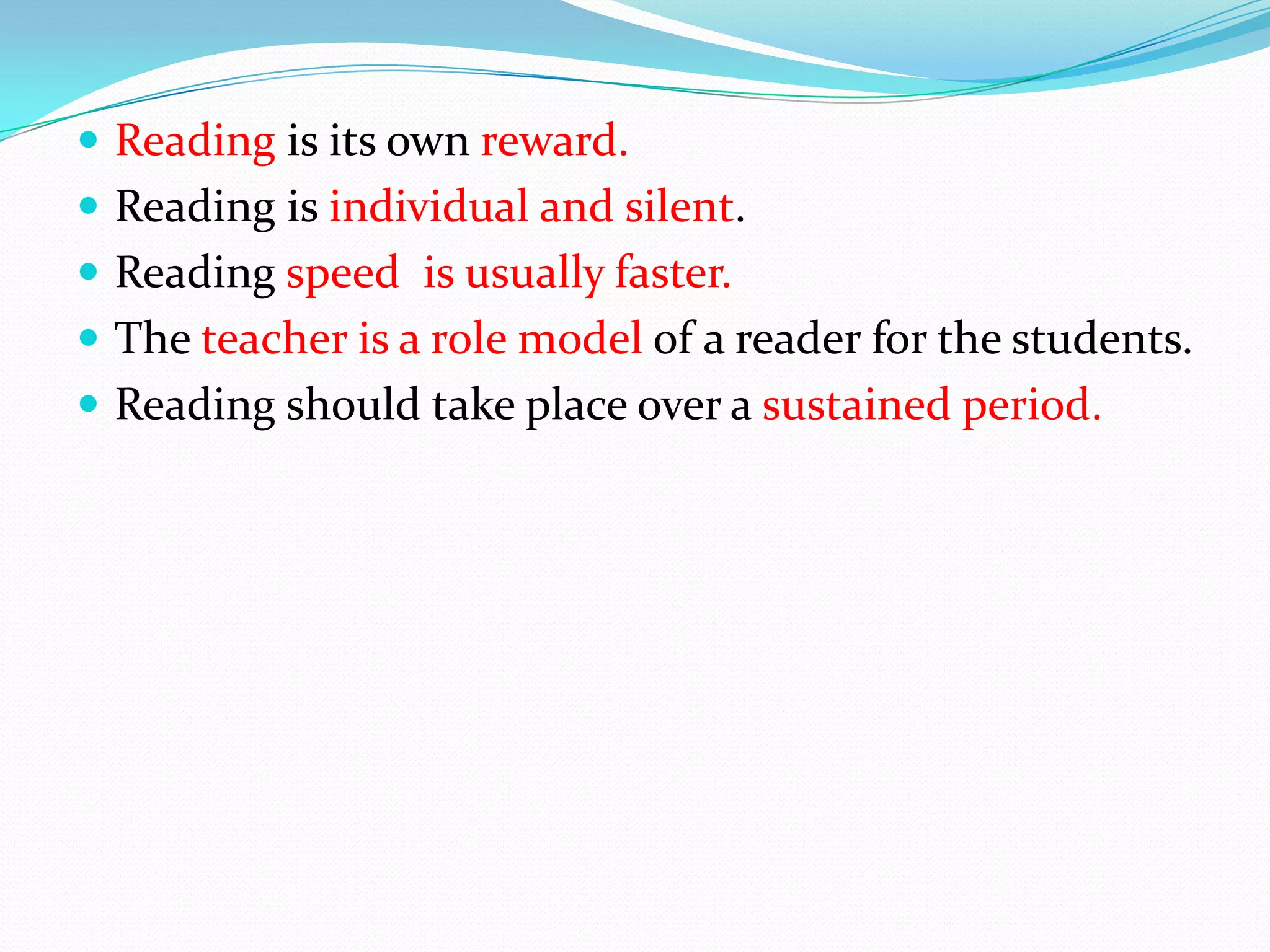
 Reading is its own reward.
 Reading is individual and silent.
 Reading speed is usually faster.
 The teacher is a role model of a reader for the students.
 Reading should take place over a sustained period.

Extensive reading

  • 1.
    What Is ExtensiveReading?  Brown (1989) explains that extensive reading is carried out "to achieve a general understanding of a text."
  • 2.
     Long andRichards (1971, p.216) identify extensive reading as "occurring when students read large amounts of high interest material, usually out of class, concentrating on meaning, "reading for gist" and skipping unknown words."
  • 3.
     The aimsof extensive reading are a) to build reader confidence b) enjoyment c) to create fluency d) to read  Extensive reading is always done for the comprehension of main ideas, not for specific details.
  • 4.
     Simply, extensivereading is reading a lot.  Reading for pleasure.  Reading at a comfortable “easy” level for the student.  Students should not be reaching for a dictionary every sentence or even every paragraph.
  • 5.
    Characteristics of ER Students read as much as possible  A variety of materials on a range of topics is available.  Students select what they want to read .  The purposes of reading are usually related to pleasure, information and general understanding.
  • 6.
     Reading isits own reward.  Reading is individual and silent.  Reading speed is usually faster.  The teacher is a role model of a reader for the students.  Reading should take place over a sustained period.