The International Federation of
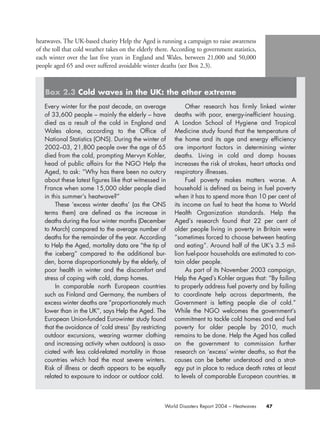
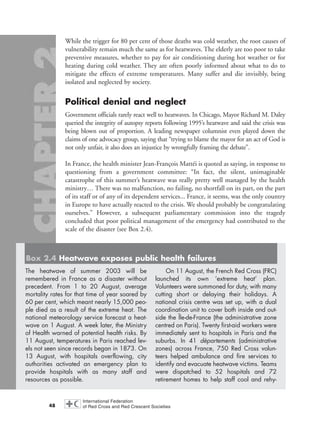
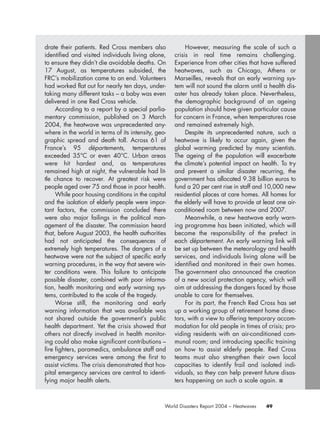
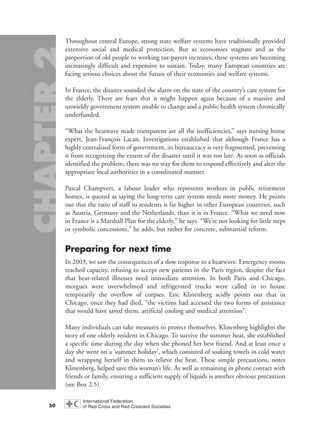
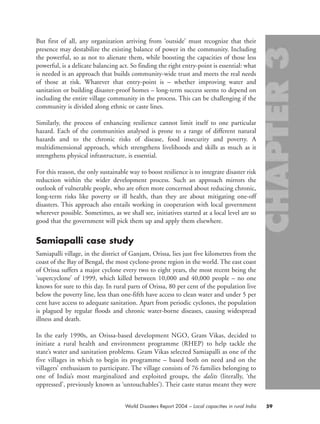
Red Cross and Red Crescent
Societies promotes the
humanitarian activities of
National Societies among
vulnerable people.
By coordinating international
disaster relief and encouraging
development support it seeks
to prevent and alleviate human
suffering.
The International Federation,
the National Societies and
the International Committee
of the Red Cross together
constitute the International
Red Cross and Red Crescent
Movement.
The World Disasters Report provides humanitarian
decision-makers with a unique combination of
compelling analysis and original insights from the field.
Its intellectual power has enriched UN debates.
Jan Egeland, United Nations’ Under-Secretary-General
for Humanitarian Affairs and Emergency Relief Coordinator
World Disasters Report 2004
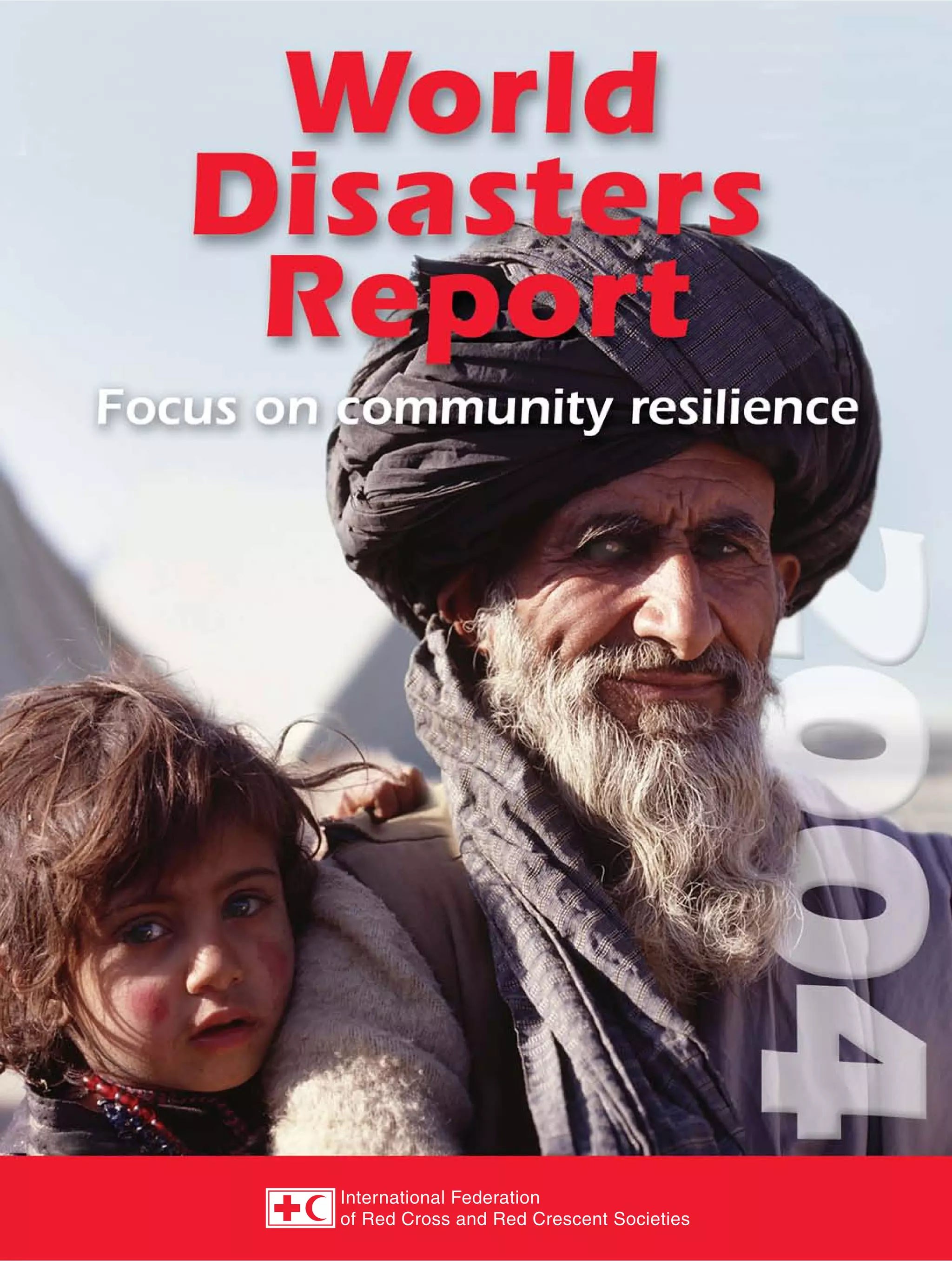
focuses on community resilience
In the hours after sudden disaster strikes, most lives are
saved by the courage and resourcefulness of friends and
neighbours. During slow-onset crises such as drought, some
rural societies have developed extraordinary capacities to cope
and bounce back. How can aid organisations strengthen
rather than undermine this local resilience?
Perceptions of disaster differ between those at risk and those
trying to help. Evidence suggests that everyday threats to
livelihoods are a greater concern to most poor communities
than ‘one-off’ disasters. Meanwhile, local consensus and
cooperation are as important in protecting communities as
concrete walls. The report argues that a more developmental
approach to creating disaster resilience is needed, which puts
communities in charge of defining their needs and crafting
the right solutions.
The World Disasters Report 2004 features:
■ From risk to resilience – helping communities cope with crisis
■ Heatwaves: the developed world’s hidden disaster
■ Harnessing local capacities in rural India
■ Bam sends warning to reduce future earthquake risks
■ Building community resilience to disaster in the Philippines
■ AIDS: Africa’s axis of evil
■ Surviving in the slums
■ Disaster data: key trends and statistics
Plus: photos, tables, maps, graphics, Red Cross Red Crescent
contacts and index.
Published annually since 1993, the
World Disasters Report brings together
the latest trends, facts and analysis of
contemporary crises – whether ‘natural’
or human-made, quick-onset or chronic.
”
“
WorldDisastersReport2004
WDR2004-pages 1 to 9 16.8.2004 10:43 Page 1
2
Copyright © 2004 by the International Federation of Red Cross and Red Crescent Societies.
ISBN 92-9139-108-5
All rights reserved. Except for quotation in a review of the work, no part of this
publication may be reproduced, stored in a retrieval system, or transmitted, in any form
or by any means, electronic, mechanical, photocopying, recording or otherwise, without
the prior permission of the International Federation of Red Cross and Red Crescent
Societies. This publication is copyright, but may be reproduced without fee for teaching
purposes but not for resale. Formal permission is required for all such uses. For copying
in any other circumstances, or for re-use in other publications, or for translation or
adaptation, prior written permission must be obtained from the publisher.
The opinions expressed in this publication do not necessarily represent the official policy
of the International Federation of Red Cross and Red Crescent Societies or of individual
national Red Cross or Red Crescent societies. The designations used do not imply the
expression of any opinion on the part of the International Federation or National Societies
concerning the legal status of a territory or of its authorities.
Editor: Jonathan Walter
Managing Editor: Eva von Oelreich
Design and Production Team: Jean-Charles Chamois, Aradhna Duggal-Chadha and
Serge Marin-Pache
External Reviewers: Yasemin Aysan, Tony Beck, Ailsa Holloway and Mark Pelling
We would also like to thank all those who assisted contributors during travel and research
for this issue.
Baseline maps by Geoatlas®
– ©
GRAPHI-OGRE, Hendaye, France
Typesetting by Strategic Communications SA, Geneva, Switzerland
Printed by ATAR Roto Presse, Satigny/Vernier, Switzerland
Contact details:
International Federation of Red Cross and Red Crescent Societies
17, chemin des Crêts, P.O. Box 372
CH-1211 Geneva 19, Switzerland
Tel.: + 41 (0)22 730 4222. Fax: + 41 (0)22 733 0395
E-mail: secretariat@ifrc.org; wdr@ifrc.org
Web: http://www.ifrc.org
To order the World Disasters Report, contact:
Kumarian Press Inc Eurospan
1294 Blue Hills Ave 3 Henrietta Street, Covent Garden
Bloomfield CT 06002, USA London WC2E 8LU, UK
Tel.: +1 860 243 2098 Tel.: +44 (0)20 7240 0856
Fax: +1 860 243 2867 Fax: +44 (0)20 7379 0609
E-mail: kpbooks@aol.com E-mail: orders@edspubs.co.uk
Web: http://www.kpbooks.com Web: http://www.eurospanonline.com
WDR2004-pages 1 to 9 16.8.2004 10:43 Page 2
The International Federation of Red Cross and Red Crescent Societies would like
to express its gratitude to the following for committing to and supporting this
publication:
AUSAID
British Red Cross
CIDA
DHL
Governement of Ireland
through Development
Cooperation Ireland
Japanese Red Cross
Netherlands Red Cross
Norwegian Red Cross
SIDA/Swedish Red Cross
Spanish Red Cross
3World Disasters Report 2004
WDR2004-pages 1 to 9 16.8.2004 10:43 Page 3
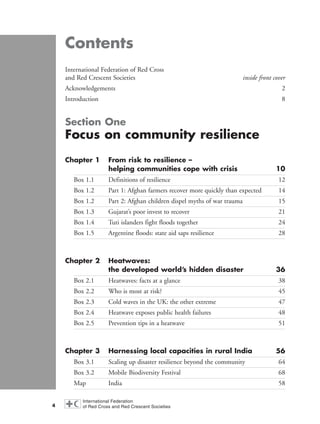
Contents
International Federation of Red Cross
and Red Crescent Societies inside front cover
Acknowledgements 2
Introduction 8
Section One
Focus on community resilience
Chapter 1 From risk to resilience –
helping communities cope with crisis 10
Box 1.1 Definitions of resilience 12
Box 1.2 Part 1: Afghan farmers recover more quickly than expected 14
Box 1.2 Part 2: Afghan children dispel myths of war trauma 15
Box 1.3 Gujarat’s poor invest to recover 21
Box 1.4 Tuti islanders fight floods together 24
Box 1.5 Argentine floods: state aid saps resilience 28
Chapter 2 Heatwaves:
the developed world’s hidden disaster 36
Box 2.1 Heatwaves: facts at a glance 38
Box 2.2 Who is most at risk? 45
Box 2.3 Cold waves in the UK: the other extreme 47
Box 2.4 Heatwave exposes public health failures 48
Box 2.5 Prevention tips in a heatwave 51
Chapter 3 Harnessing local capacities in rural India 56
Box 3.1 Scaling up disaster resilience beyond the community 64
Box 3.2 Mobile Biodiversity Festival 68
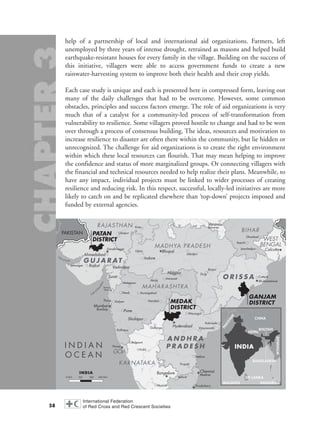
Map India 58
4
WDR2004-pages 1 to 9 16.8.2004 10:43 Page 4
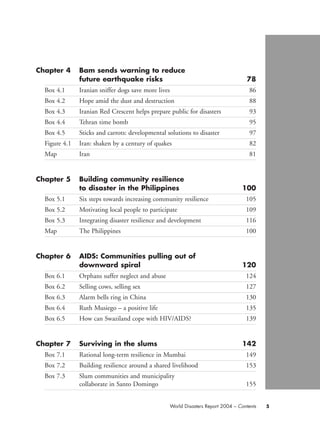
Chapter 4 Bam sends warning to reduce
future earthquake risks 78
Box 4.1 Iranian sniffer dogs save more lives 86
Box 4.2 Hope amid the dust and destruction 88
Box 4.3 Iranian Red Crescent helps prepare public for disasters 93
Box 4.4 Tehran time bomb 95
Box 4.5 Sticks and carrots: developmental solutions to disaster 97
Figure 4.1 Iran: shaken by a century of quakes 82
Map Iran 81
Chapter 5 Building community resilience
to disaster in the Philippines 100
Box 5.1 Six steps towards increasing community resilience 105
Box 5.2 Motivating local people to participate 109
Box 5.3 Integrating disaster resilience and development 116
Map The Philippines 100
Chapter 6 AIDS: Communities pulling out of
downward spiral 120
Box 6.1 Orphans suffer neglect and abuse 124
Box 6.2 Selling cows, selling sex 127
Box 6.3 Alarm bells ring in China 130
Box 6.4 Ruth Musiego – a positive life 135
Box 6.5 How can Swaziland cope with HIV/AIDS? 139
Chapter 7 Surviving in the slums 142
Box 7.1 Rational long-term resilience in Mumbai 149
Box 7.2 Building resilience around a shared livelihood 153
Box 7.3 Slum communities and municipality
collaborate in Santo Domingo 155
5World Disasters Report 2004 – Contents
WDR2004-pages 1 to 9 16.8.2004 10:43 Page 5
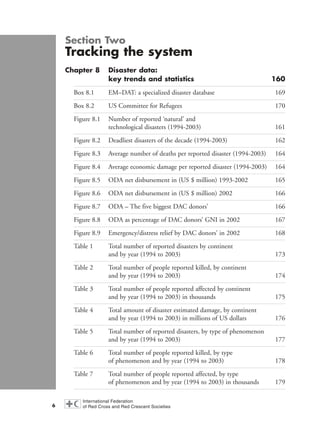
Section Two
Tracking the system
Chapter 8 Disaster data:
key trends and statistics 160
Box 8.1 EM–DAT: a specialized disaster database 169
Box 8.2 US Committee for Refugees 170
Figure 8.1 Number of reported ‘natural’ and
technological disasters (1994-2003) 161
Figure 8.2 Deadliest disasters of the decade (1994-2003) 162
Figure 8.3 Average number of deaths per reported disaster (1994-2003) 164
Figure 8.4 Average economic damage per reported disaster (1994-2003) 164
Figure 8.5 ODA net disbursement in (US $ million) 1993-2002 165
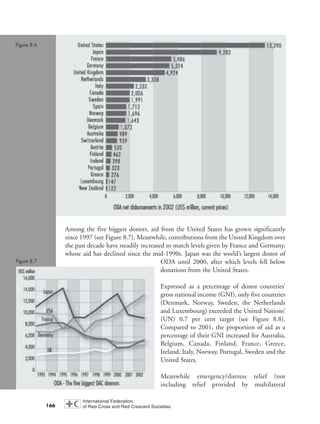
Figure 8.6 ODA net disbursement in (US $ million) 2002 166
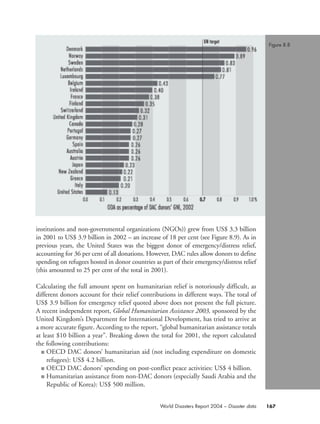
Figure 8.7 ODA – The five biggest DAC donors’ 166
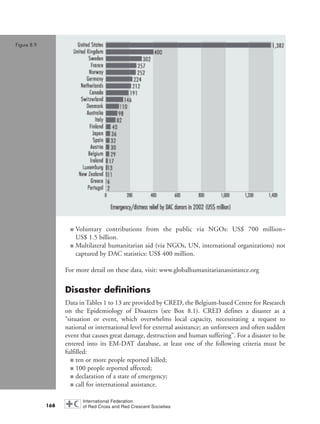
Figure 8.8 ODA as percentage of DAC donors’ GNI in 2002 167
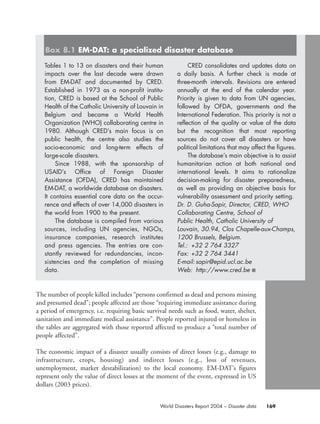
Figure 8.9 Emergency/distress relief by DAC donors’ in 2002 168
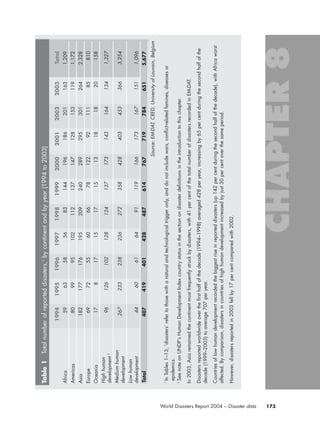
Table 1 Total number of reported disasters by continent
and by year (1994 to 2003) 173
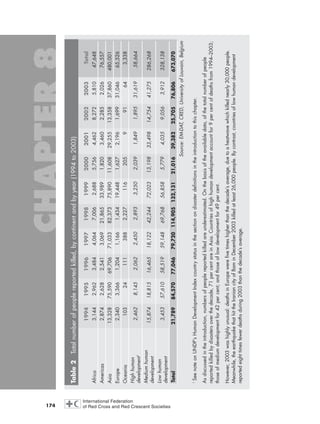
Table 2 Total number of people reported killed, by continent
and by year (1994 to 2003) 174
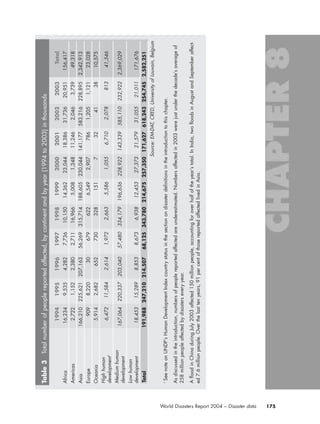
Table 3 Total number of people reported affected by continent
and by year (1994 to 2003) in thousands 175
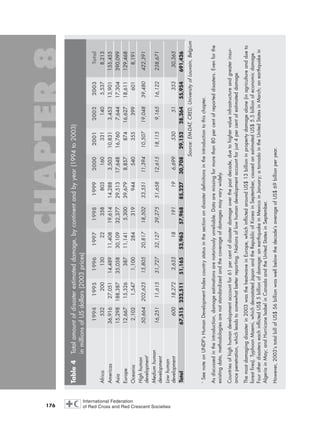
Table 4 Total amount of disaster estimated damage, by continent
and by year (1994 to 2003) in millions of US dollars 176
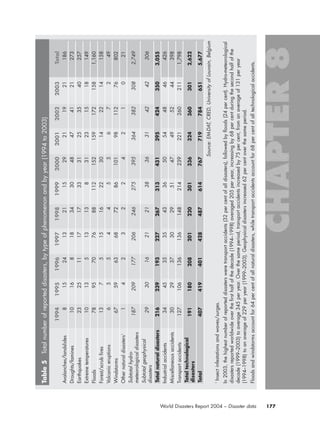
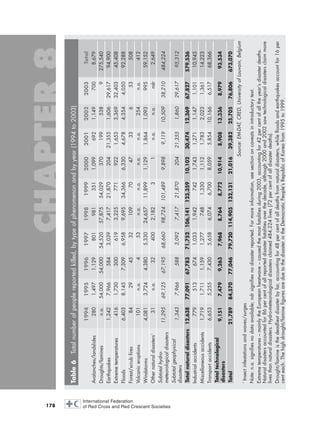
Table 5 Total number of reported disasters, by type of phenomenon
and by year (1994 to 2003) 177
Table 6 Total number of people reported killed, by type
of phenomenon and by year (1994 to 2003) 178
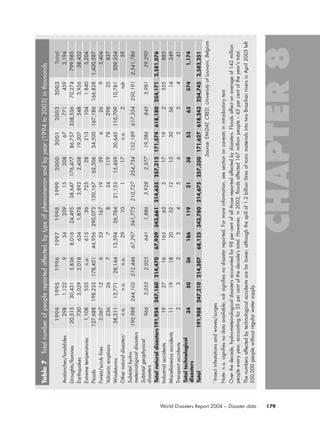
Table 7 Total number of people reported affected, by type
of phenomenon and by year (1994 to 2003) in thousands 179
6
WDR2004-pages 1 to 9 16.8.2004 10:43 Page 6
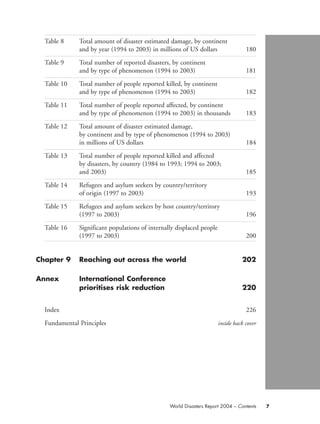
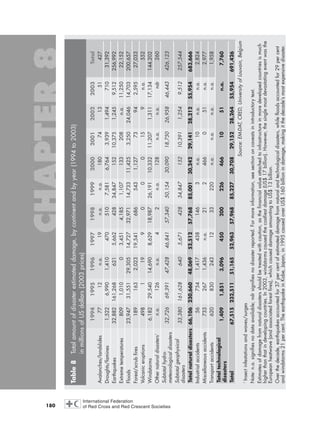
Table 8 Total amount of disaster estimated damage, by continent
and by year (1994 to 2003) in millions of US dollars 180
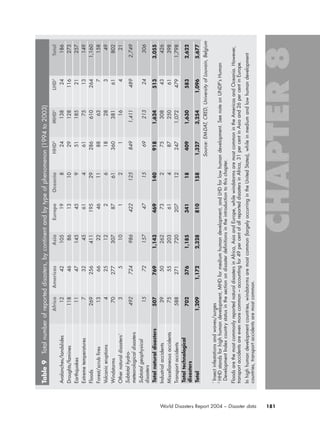
Table 9 Total number of reported disasters, by continent
and by type of phenomenon (1994 to 2003) 181
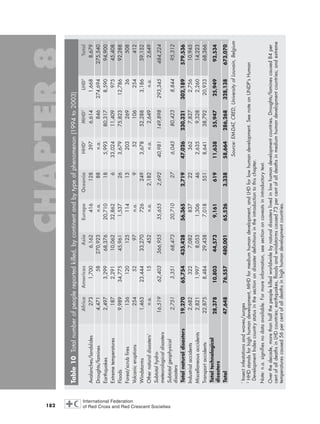
Table 10 Total number of people reported killed, by continent
and by type of phenomenon (1994 to 2003) 182
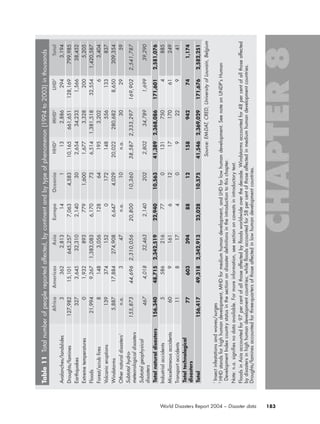
Table 11 Total number of people reported affected, by continent
and by type of phenomenon (1994 to 2003) in thousands 183
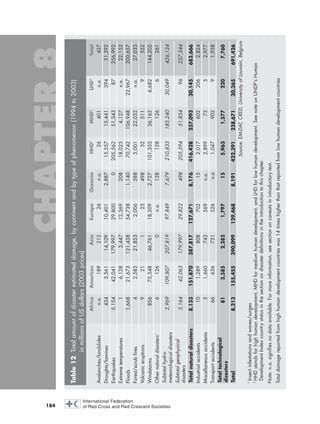
Table 12 Total amount of disaster estimated damage,
by continent and by type of phenomenon (1994 to 2003)
in millions of US dollars 184
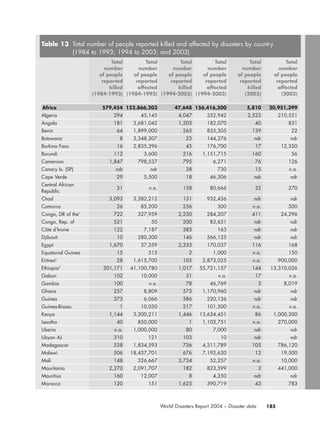
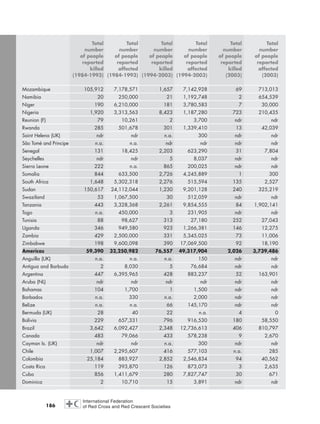
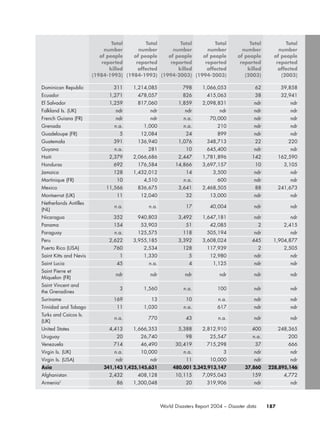
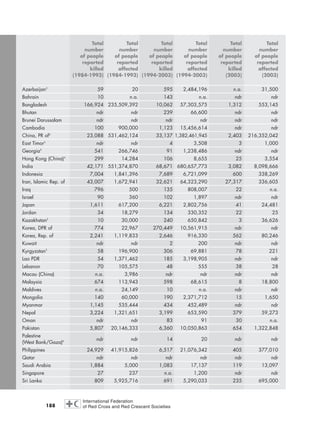
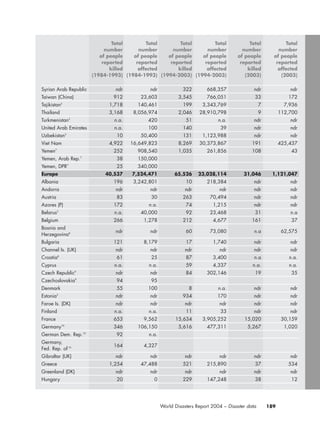
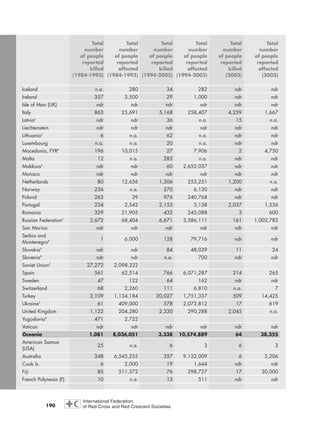
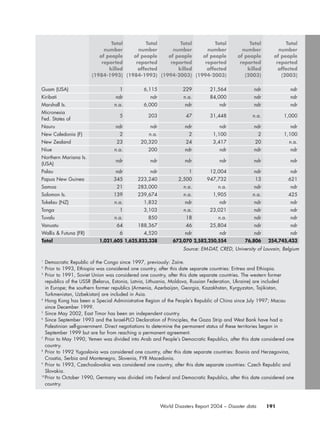
Table 13 Total number of people reported killed and affected
by disasters, by country (1984 to 1993; 1994 to 2003;
and 2003) 185
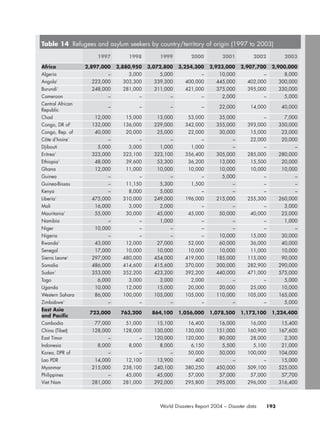
Table 14 Refugees and asylum seekers by country/territory
of origin (1997 to 2003) 193
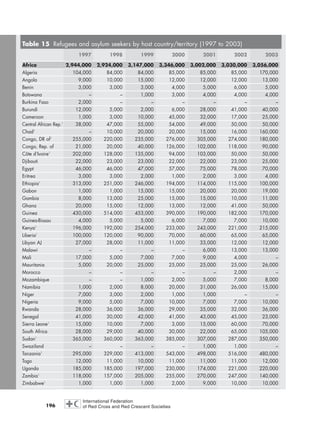
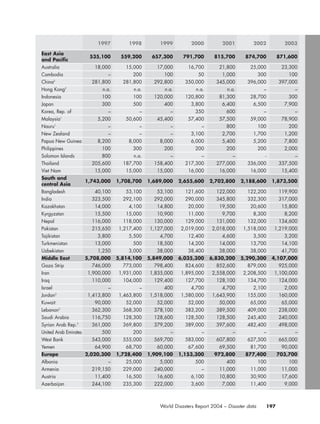
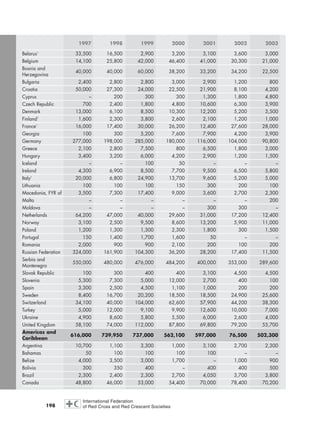
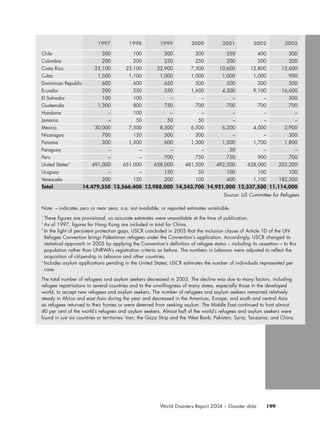
Table 15 Refugees and asylum seekers by host country/territory
(1997 to 2003) 196
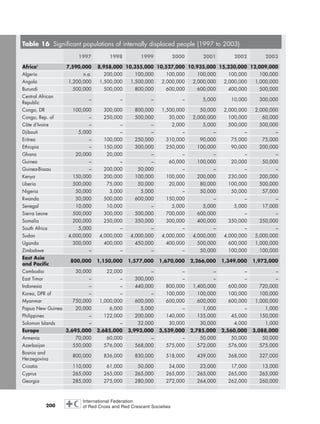
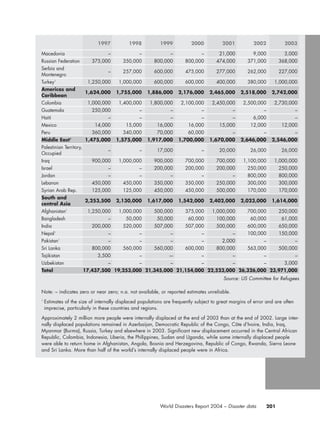
Table 16 Significant populations of internally displaced people
(1997 to 2003) 200
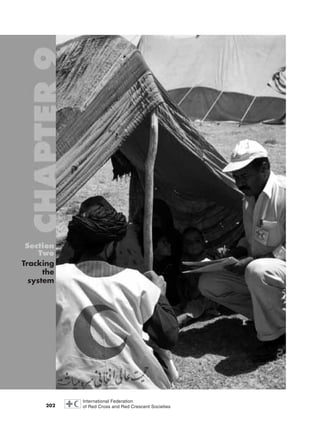
Chapter 9 Reaching out across the world 202
Annex International Conference
prioritises risk reduction 220
Index 226
Fundamental Principles inside back cover
World Disasters Report 2004 – Contents 7
WDR2004-pages 1 to 9 16.8.2004 10:43 Page 7
Building the capacity
to bounce back
The face of disasters is changing. Soaring urban populations, environmental
degradation, poverty and disease are compounding seasonal hazards such as droughts
and floods to create situations of chronic adversity. Old ways of coping are proving
inadequate. But equally, people at risk are finding new ways to respond on their own
initiative.
Aid organizations must keep up. We need new approaches that boost people’s resilience
to the full spectrum of physical, social and economic adversities they face. By resilience,
I mean people’s ability to cope with crisis and bounce back stronger than before. If we
fail to shift from short-term relief to longer-term support for communities in danger, we
risk wasting our money and undermining the resilience we seek to enhance.
Top-down interventions may prove less effective than many assume. Following last
December’s devastating earthquake in Bam, 34 search-and-rescue teams from 27
countries flew to the city and saved 22 lives. Meanwhile, local Red Crescent teams pulled
157 people alive from the rubble, using far fewer ‘sniffer’ dogs. Investing in local
response capacities saves lives and money.
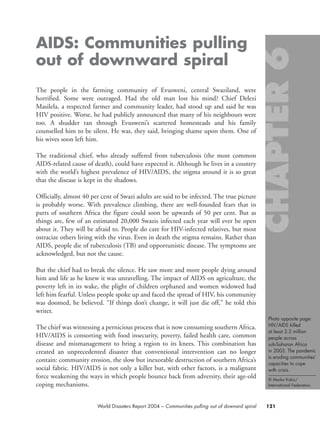
However, ‘natural’ disasters are not the biggest killers. In sub-Saharan Africa last year, 2.2
million people died from HIV/AIDS, while 25 million live with the infection. Disease,
drought, malnutrition, poor healthcare and poverty have together created a complex
catastrophe, demanding a more integrated response than simply food aid or drugs.
Meanwhile, the unplanned acceleration of urban areas is concentrating new risks.
Diseases from filthy water and sanitation kill over 2 million people a year – many of
them slum children. So why have national governments and aid organizations barely
addressed the issue?
The developed world faces new threats, too. Five degrees more summer heat than usual
triggered a disaster that shamed modern, wealthy societies across Europe in 2003. Up to
35,000 elderly and vulnerable people suffered silent, lonely deaths, abandoned by state
welfare systems in retreat.
Europe was caught off guard. Humanitarian organizations are more prepared for
sudden-impact, high-profile disasters. But as the nature of disaster changes, we must
change too. Instead of imposing definitions and solutions on people we consider
vulnerable, we should ask them what they define as a disaster. How are they adapting to
the new risks facing them?
8
WDR2004-pages 1 to 9 16.8.2004 10:43 Page 8
The answers can be surprising – and inspiring. In Swaziland, HIV/AIDS and drought are
conspiring to leave many perpetually hungry. But Chief Masilela informs us that his
community wants irrigation and seeds – not food aid – so they can grow crops, craft their
own recovery and retain their dignity. His government, meanwhile, is expanding access
to life-lengthening drugs and recruiting 10,000 women as ‘surrogate parents’ for
thousands of AIDS orphans.
Across the Indian Ocean in Mumbai, one woman we report on has rented out her
comfortable apartment and moved into a shack beneath a bridge, at risk of flooding and
fire. That way, she can pay for her daughter’s education. She’s decided the family’s long-
term resilience depends on investing in her daughter rather than living somewhere safer.
To the south, the low caste women of Andhra Pradesh have rediscovered indigenous,
hardy seeds to help farmers recover from debt and despair as their cash crops –
recommended by experts in distant capitals – wither in the drought.
The capacity for resilience in the face of adversity shines through all this year’s stories.
People continually adapt to crisis, coming up with creative solutions. They prioritise
livelihoods and household assets rather than the quick fix. Supporting resilience means
more than delivering relief or mitigating individual hazards. Local knowledge, skills,
determination, livelihoods, cooperation, access to resources and representation are all vital
factors enabling people to bounce back from disaster. This implies a paradigm shift in how
we approach aid. We must focus on the priorities and capacities of those we seek to help.
Mapping vulnerabilities and meeting needs is no longer enough. The idea is not new – it’s
been enshrined in The Code of Conduct for the International Red Cross and Red Crescent
Movement and NGOs in Disaster Relief for the past 10 years. So why do humanitarian
organizations still fail to assess – let alone harness – the capacities of those at risk?
Three things need to happen. First, we must understand what enables people to cope
with, recover from and adapt to the risks they face. Second, we must build our responses
on the community’s own priorities, knowledge and resources. Third, we must scale up
community responses, by creating new coalitions with governments and advocating
changes in policy and practice at all levels.
If we focus only on needs and vulnerabilities, we remain locked in the logic of repetitive
responses that fail to nurture the capacities for resilience contained deep within every
community. We have talked about building capacity and resilience for decades. It is now
time to turn rhetoric into reality: to dispel the myth of the helpless victim and the
infallible humanitarian, and to put disaster-affected people and their abilities at the centre
of our work.
Markku Niskala
Secretary General
9World Disasters Report 2004 – Introduction
WDR2004-pages 1 to 9 16.8.2004 10:43 Page 9
10
Section
One
Focus on
community
resilience
chap01 19.8.2004 12:02 Page 10
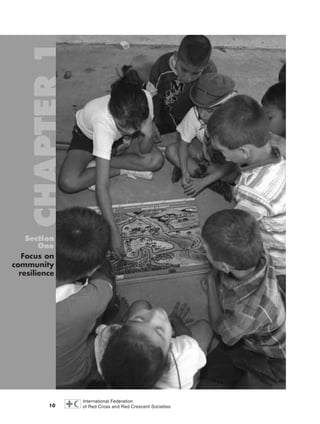
Photo opposite page:
Creating resilience
includes enhancing
the knowledge and
skills of everyone in
the community to cope
with and adapt to
disasters. This Red
Cross board game
aims to enhance
disaster awareness
among children in
Latin America.
© Marko Kokic/
International Federation.
11World Disasters Report 2004 – From risk to resilience
From risk to resilience –
helping communities cope
with crisis
To read the headlines, one would think that most disaster-affected communities are
paralysed and helpless – saved only by the aid of outsiders, whether from national
capitals or abroad. Yet the television images of disasters from Bam’s earthquake to
New York’s collapsed twin towers reveal, on careful inspection, what is concealed in
most headlines: survivors, family members and neighbours saving people from under
the rubble with their bare hands, salvaging what is left and counselling each other.
When all seems lost, the capacity of disaster-affected people to pull together and not
give up is both amazing and humbling.
Factors that enable people to cope with hardship and survive trauma have long been
of interest to social and behavioural scientists, covering a wide range of situations,
whether the death of a loved one, surviving an accident or the adaptation of Latino
immigrant teenagers to the United States. In the last two decades, ‘resilience’ has
become the ‘buzz’ word to describe this capacity to survive, adapt and bounce back –
applied freely to anything from ecosystems to business, at any level from households
to countries and global communities (see Box 1.1).
For example, battered by dramatic changes in markets, technology, environmental
legislation and the resource base, residents of the hundreds of small towns in the
Canadian province of British Columbia that owe their existence to harvesting,
extracting and processing natural resources found themselves presented with a stark
choice: change or die. Many, especially the young, abandoned their towns. A few,
however, bounced back. They formed a ‘community resilience project’ to assess and
strengthen their own capacity to adapt to these changes.
Since the attacks on New York on 11 September 2001, notions of corporate resilience
have been radically reappraised to take into account catastrophic events that had
previously not been contemplated. Often described as ‘business continuity’ planning,
senior executives from all over the world periodically discuss new models of resilience
to unexpected events and shocks, from economic downturn to terrorist attacks and
natural disasters.
The Resilience Alliance, a multidisciplinary research group, explores solutions to
coping with change and uncertainty in complex social-ecological systems through an
international programme connecting regional case studies. The idea is to contribute
chap01 16.8.2004 10:41 Page 11
to sustainable development through better management of nature and people as an
integrated system. Meanwhile, small island developing states consider that, to
implement a programme for sustainable development agreed in Barbados in 1994,
building social, economic and environmental resilience is at the core of sustaining
progress in fragile island communities.
Resilience is sometimes achieved over the long term at the expense of resilience in
the short term. The extreme tenacity of the poor in taking the long view to
preserve the basis for their future livelihood is starkly exemplified in a story related
by development analyst Alex de Waal. He told of a woman in Sudan’s Darfur
province who, during the 1985 famine, preserved her millet seed for planting by
mixing it with sand, to prevent her hungry children from eating it. During the
same disaster, famine-affected people were also reported to have left food-aid
centres to return home in time for planting. However, 20 years later, such coping
strategies are being corroded across sub-Saharan Africa as the impacts of
12
“Resilience is the capacity to cope with unan-
ticipated dangers after they have become
manifest, learning to bounce back.”
Wildavsky, A. Searching for Safety. New
Jersey, USA: Transaction Publishers, 1991.
“Researchers at the Disaster Research
Center and the Multidisciplinary Center for
Earthquake Engineering Research… have
identified several dimensions along which
resilience can be measured. These are
robustness, resourcefulness, redundancy,
and rapidity.”
Kendra, J. and Wachtendorf, T. Elements of
Community Resilience in the World Trade
Center Attack. Newark, USA: Disaster Research
Center, University of Delaware, 2002.
“Resilience, for social-ecological sys-
tems, is related to (a) the magnitude of
shock that the system can absorb and
remain within a given state, (b) the degree
to which the system is capable of self-
organization, and (c) the degree to which
the system can build capacity for learning
and adaptation.”
Government of Sweden. Resilience and
Sustainable Development: Building Adaptive
Capacity in a World of Transformations.
Scientific background paper on resilience for
the World Summit on Sustainable Development
on behalf of the Environmental Advisory Council
to the Swedish Government (April 2002).
“A resilient ecosystem can withstand
shocks and rebuild itself when necessary.
Resilience in social systems has the added
capacity of humans to anticipate and plan for
the future… ‘Resilience’ as applied to eco-
systems, or to integrated systems of people
and the natural environment, has three defin-
ing characteristics:
■ The amount of change the system can
undergo and still retain the same controls
on function and structure
■ The degree to which the system is capable
of self-organization
■ The ability to build and increase the capac-
ity for learning and adaptation.”
Resilience Alliance,
http://www.resalliance.org ■
Box 1.1 Definitions of resilience
chap01 16.8.2004 10:41 Page 12
HIV/AIDS force families to sell or eat the very assets that could enable them to
recover.
At the individual level, resilience is a common characteristic of all human beings. Yet
what is regarded as hardship in one context may be simply a way of life in another.
For example, power cuts across Europe and North America during the summer of
2003 created serious disruptions to everyday life. Those who depend on electricity for
cooking or cooling had no alternative provisions and found it difficult to adjust. In
many other parts of the world, however, searching for the raw materials with which
to cook a meal is a daily chore rather than a disaster. Clearly, supporting disaster
resilience requires different kinds of intervention in different contexts.
These varying examples point towards a common issue: the importance of
understanding the ability of individuals, communities or businesses not only to cope
with, but also to adapt to adverse conditions and to focus any interventions at
building on these strengths. The development community has made significant shifts
towards people-centred policies and approaches based on local capacities. Yet, how far
has the disaster community – in its delivery of humanitarian assistance or promotion
of disaster risk reduction – moved in this direction?
While conceptually the importance of people and their strengths are understood,
there is little analysis of how people survive in the face of disasters. And there is even
less programming that builds on the resilience strategies of disaster-prone
communities. Afghanistan is a case in point. Despite 25 years of conflict and four
years of drought, Afghans have dispelled the myth, subscribed to by many in the
West, that they are helpless victims, and have shown astonishing resilience in the face
of crisis (see Box 1.2).
This edition of the World Disasters Report examines community resilience with specific
reference to disasters, case studies and good practices. It advocates a stronger emphasis
on approaches to humanitarian, risk reduction and development work which put
resilience, rather than just need or vulnerability, at the heart of the debate.
Shift from vulnerability to capacity
Emergency appeals inevitably concentrate on identifying the vulnerable and their needs.
Far less attention is given to what affected communities can do for themselves and how
best to strengthen them. This lack of interest is not surprising given the complexity of
resilience strategies, which require in-depth research to understand. Equally complex are
the ways of linking household and community coping mechanisms to national and
international policy and practice. Many countries or organizations do not have
inclination or capacity for such research and most humanitarian operations do not allow
time for much beyond the traditional needs assessment approach. This is equally true of
13World Disasters Report 2004 – From risk to resilience
chap01 16.8.2004 10:41 Page 13
14
After the fall of the Taliban regime it was
assumed that Afghanistan was a food secur-
ity ‘basket case’, and that massive support
would be required from the international com-
munity for a number of years to prevent
famine. Since then, however, experience has
shown that although there are still a number
of areas of acute vulnerability, rural Afghans
have rebuilt their livelihoods far ahead of
schedule.
As the Taliban were leaving Kabul in late
2001, a ‘crisis narrative’ dominated the con-
tingency planning under way among donors
and operational agencies waiting at the bor-
der. They expected that farmers had ‘eaten
their seeds’, lost all productive capacity or
were simply too weak to farm.
They were wrong. By 2003, Afgha-
nistan’s cereal production was estimated to
be one of the largest ever recorded. Even
other crops, such as potatoes and melons,
were extremely successful. Seed distri-
butions and other aid programmes helped,
but the vast majority of farmers undoubtedly
ploughed, sowed and harvested without ever
seeing any aid. The assumption that food
security would require massive aid interven-
tions for a number of years ignored the
extraordinary latent dynamism among
Afghanistan’s farmers. Agencies found it eas-
ier to speculate about losses than to try and
understand how people pull together to
rebound in the wake of a crisis.
The current version of the ‘crisis narra-
tive’ focuses on the threat of too much
agricul- tural production – in the form of
opium. Afghanistan is said to be in danger of
becoming a ‘narco-mafia state’. The estab-
lishment of a strong licit economy and a mod-
estly well-functioning government are essen-
tial bulwarks to protect Afghanistan from
again degenerating into a rogue and dan-
gerous state, threatening its citizens and the
world at large. Agricultural recovery has
been portrayed as both the fundamental
problem and the essential solution for
Afghanistan. The recovery of poppy produc-
tion is the primary threat, but it is at the same
time acknowledged that alternatives to the
illicit economy will primarily need to be
found in agriculture.
So far, however, the experience of
Afghan reconstruction does not support this
‘either-or’ narrative of a strong, healthy, licit
economy or the emergence of a narco-mafia
state. Afghanistan has proven surprisingly
capable of developing both licit and illicit
agricultural economies. It is apparent that
rural people have been getting on with bridg-
ing the relief/development continuum them-
selves, by rapidly increasing their production
of wheat, poppies and other cash crops. The
sum result shows that none of the assump-
tions of outsiders, be they of food security,
community resilience or agriculture-based
growth are really in tune with the efforts of
millions of Afghan farmers getting on with
their lives.
What then is the role of the international
community to support these processes?
Studies of rural livelihoods by the Kabul-
based Afghanistan Research and Evaluation
Unit and an international review of agricul-
tural rehabilitation programming by the
United Kingdom’s Overseas Development
Institute point to the importance of focusing
interventions much more on supporting the
markets and institutions through which rural
people rebuild their farming livelihoods.
Simply handing out seeds is not enough.
Box 1.2 Part 1: Afghan farmers recover more quickly than expected
chap01 16.8.2004 10:41 Page 14
the consolidated appeals of the United Nations Office for the Coordination of
Humanitarian Assistance (OCHA) as it is for the emergency appeals of the International
Federation of Red Cross and Red Crescent Societies.
It is no surprise that opportunities to go beyond needs assessment exist in recurrent,
seasonally predictable or slowly changing situations such as droughts or food security
15World Disasters Report 2004 – From risk to resilience
What has been the impact of 24 years of
war on children’s mental health? How can
they be healed when there are so few psy-
chiatrists? Is Afghanistan now burdened with
a generation of children who know only
what it is to kill and take revenge? These
questions – frequently asked by international
journalists and aid workers alike – spring
from assumptions that reflect only a fraction
of the reality in Afghanistan.
Of course, Afghan children have lived
through events that most of us would not wish
upon any child. There is something about chil-
dren that makes us want to protect them and
assume that any harm will affect them nega-
tively. But, as I work with Afghan children, I
am constantly amazed at their resilience and
fortitude. They have experienced terrible suf-
fering but are still able to live as children, to
play, to learn and to laugh. I do not, gener-
ally, find children overwhelmed by trauma
but children who have come through suffering
with their humanity and hope intact. Much of
the credit must go to Afghan parents. They
bear the brunt of difficult events to shield their
children, while teaching them how to cope
when bad things do happen. Research
among children and their families in Kabul
during 2002 revealed that children are
taught several key qualities to help them
cope:
■ First is courage. Children are expected
to learn how to overcome fear – by con-
fronting their fears and by being reassured
when they are afraid.
■ Second, they are taught how to be thankful
– for still being alive after an attack or for
being better off than others around them.
■ Third, children are encouraged to be
happy through playing, joking, picnicking,
going to school, being with friends.
Afghans understand that if children have
happiness in their life, they are much more
able to cope with sadness.
■ Fourth, children are expected to have reli-
gious faith. They are taught prayers to say
when they are scared. They are encour-
aged to understand that everything that
happens to them is in the hands of God,
beyond their control and therefore to be
accepted.
■ Finally, children are taught morality. As
parents in Kabul note, it is one thing to be
exposed to bad events but it is another to
know right from wrong. Children need not
automatically follow the paths of the
wrong.
Afghans know that children who have
such qualities will be affected by violence but
not permanently scarred by it. Exposure to
war might even enhance these positive traits.
Certainly in Afghanistan, the thirst for peace,
the hunger for knowledge, the strength and
motivation among young people will prove to
be a major resource in a country struggling to
get back on its feet for many years to come. ■
Box 1.2 Part 2: Afghan children dispel myths of war trauma
chap01 16.8.2004 10:41 Page 15
crises. International and local development actors have found a balance between the
anthropology on the one hand and more ‘quick and dirty’ methods (through
participatory rural appraisal) on the other. Rural development and famine studies of
the 1970s and 1980s have pioneered this approach in identifying how households
survive and how their resilience gradually breaks down. Strategies employed by poor
families to protect their assets by adapting to changing conditions formed the focus
of this work. Influenced by a people-centred approach to development, particularly in
the field of food security, the emphasis shifted from what people lacked towards what
actions they took, what their priorities were and how to build on what was already
there.
In the field of disasters, especially rapid-onset events such as earthquakes, windstorms
and floods, most emphasis has remained on needs assessment and risk-based
approaches. Identifying, assessing, recording, mapping and ranking hazard
characteristics, vulnerability indicators and risk factors still dominate the disaster
community’s practices – at the expense of analysing the strengths, skills and resources
available within communities to build resilience in the face of hazards. Even practice
concerned with mitigating, preventing or preparing for disasters is often defined
under the general rubric of disaster risk reduction, implying a certain level of risk and
ways of lowering it, rather than an equally explicit identification of levels of resilience
and ways of strengthening it.
In practice, vulnerability also means the deficit of capacities to cope with hazards, and
resilience exists only in the context of adversity, so these two concepts co-exist. But
capacities and resilience are often only implicitly assumed and not disaggregated or
analysed as systematically as needs, vulnerabilities or risks. For example, characterizing
Bangladesh as being at high risk from cyclones and floods conceals what has been
achieved and why life losses from disasters there have been reduced significantly over
the last ten years. Speculations are made, from the nature of cyclones to the role of
improved early warning systems or community-based disaster preparedness as
significant contributing factors. But even in a country like Bangladesh, where there is
a considerable amount of community development work, what has contributed to
increased resilience to cyclones is not analysed or understood nearly as thoroughly as
the hazard events themselves and vulnerabilities to those hazards.
Following on from earlier work in rural development, the systematic assessment of
capacities and vulnerabilities under the same framework was introduced into the
field of disasters at the end of 1980s, principally by Mary B. Anderson and Peter
J. Woodrow in their 1989 publication Rising From The Ashes. Their framework,
known as Capacities and Vulnerabilities Analysis (CVA), aimed to address the
more positive attributes of people caught up in disasters and developed a
systematic way of looking at physical, institutional, social, economic and gender-
based strengths.
16
chap01 16.8.2004 10:41 Page 16
A number of organizations, particularly non-governmental organizations (NGOs)
and the International Federation, have been employing frameworks that are
fundamentally based on the CVA approach. In practice, these assessments use
variations of the earlier ‘quick and dirty’ community-based appraisal methods which
place people, their participation and their priorities at the centre of development
work. Like its predecessors, the CVA framework – and the local capacities for peace
or ‘do no harm’ approach also promoted by Anderson – calls for an understanding
and recognition of what is already in place and why, before any external interventions
are foreseen.
It is noticeable, however, that humanitarian actors hardly ever use the CVA approach
– whether in preparing for disasters, alongside needs assessments to promote a better-
informed relief strategy or to inform appropriate post-disaster interventions.
Outsiders often admit much later that people have apparently demonstrated their
coping strategies and resilience. Of course they have been resilient – that is why they
are still there. But many more may have perished, the coping process may have
collapsed and resilience may mean bouncing back to a situation that is far worse than
before the disaster. Ideally, we need to know whether people can cope or be resilient
before the situation turns into a disaster.
Despite best intentions, however, identifying what is missing in a crisis situation (i.e.,
needs and vulnerabilities) is both more tempting and perhaps better rationalizes the
intervention than identifying what is already in place (i.e., capacities). This applies to
both humanitarian aid and community-level disaster preparedness and mitigation. A
recent meeting of international and local NGOs on CVA methods, organized by the
ProVention Consortium, once again highlighted the weakness of many programmes
in systematically identifying capacities, while mapping of hazards, risks and
vulnerabilities are routine work.
Meanwhile, just as dangerous as ignoring coping and adaptive capacities completely
is the danger that outsiders, impressed by the mere fact of survival, romanticize
community resilience. To some extent, this was the case in southern Africa over much
of the past decade, where the breakdown (due to many complex and new factors) of
traditional strategies for coping with droughts went unrecognized by the aid
community. The task is not to marvel at what communities can accomplish even
under the most adverse conditions, but rather to create the conditions that make
coping less destructive and resilience much more than simply a return to vulnerability.
It is an indictment of the disaster management system that it has not been able to
reorient itself in this way over the last 20 years, despite all the rhetoric and policies to
the contrary. While concepts have moved on, disaster management has little more
knowledge of how to build on livelihoods than it did during the first wave of
livelihoods research in the 1970s and 1980s. The question now is: what is needed for
17World Disasters Report 2004 – From risk to resilience
chap01 16.8.2004 10:41 Page 17
that kind of shift to take place and what are the best examples of building on the
strengths of disaster-affected communities?
Sustainable livelihoods: ‘layers of resilience’
The renewed emphasis on identifying and building strengths, rather than just
examining deficits, represents a paradigm shift in how to address issues of concern to
communities living with risk. In the development field, the sustainable livelihoods
(SL) approach – first promoted by Chambers and Conway in 1992 – has become an
important organizing framework for the efforts of a wide range of multilateral
agencies, donors, NGOs and government bodies. Based on the earlier work of the
1970s and 1980s in rural development, SL is concerned with the potential,
competence, capacities and strengths – rather than weaknesses and needs – of
communities. This does not mean that only the more able members of the
community get recognized. Rather, the assumption is that even the worst-off may
have some potential, so the focus of interventions must be on removing constraints to
the realization of this potential.
The SL approach recognizes a range of strengths or assets – which it calls ‘capitals’ –
as essential to sustain a livelihood. These include:
■ natural capital: water, land, rivers, forests and minerals;
■ financial capital: savings, income, remittances, pensions, credit, state transfers;
■ human capital: knowledge, skills, health, physical ability;
■ social capital: networks, relations, affiliations, reciprocity, trust, mutual exchange;
and
■ physical capital: infrastructure, shelter, tools, transport, water and sanitation,
energy.
In the SL approach, coping with adversities and change is seen as a normal part of life
that involves adapting to anything from seasonal floods or droughts to changing
family circumstances, economic cycles or political upheaval. As such, disasters –
including the capacity to resist their impact and bounce back – are part and parcel of
a wider development framework. This is a significant change from the traditional risk
reduction approach, which takes as its starting point hazards, vulnerability and
disaster risk – then looks for relationships and linkages with development and ways of
mainstreaming disasters into development.
These complex webs of assets, capacities, resources and strengths together provide
people with what Glavovic and others have called ‘layers of resilience’ to deal with
‘waves of adversity’ – including disasters. For the purpose of protecting people from
various adversities, each kind of capital has something vital to offer, although different
combinations of capital will be called upon to cope with and recover from different
kinds of risk and adversity.
18
chap01 16.8.2004 10:41 Page 18
Natural capital
Natural capital is essential for the survival of both rural and urban populations. These
assets are compromised by many factors, including population increase, deforestation,
overgrazing, climatic variability, ownership issues, poor water and soil management,
industrial and household waste, pollution, inadequate drainage and sanitation, and
poor governance. The relationship between hydro-meteorological disasters and
natural assets is well recognized. Environmental degradation can increase the impact
of floods and landslides. On the other hand, disasters such as fires, droughts and
floods can cause serious damage to forests, farmland and livestock.
Increasing environmental resilience is not an easy task as it takes a very long time and
the benefits may not be easily or quickly visible. Nevertheless, there are many small-scale
measures that can be taken at the community level to try and increase environmental
resilience, in turn reducing the impact of future disasters. Case studies from rural India
in Chapter 3 relate the work of local NGOs in supporting communities’ own ideas for
creating social forestry and fish-farming projects to recover from the impact of the
‘supercyclone’ that hit Orissa in 1999; rediscovering indigenous, drought-resistant seeds
and traditional farming techniques to boost resilience to drought and debt in Andhra
Pradesh; and rainwater harvesting as part of post-earthquake reconstruction in Gujarat,
to help address the problems of ongoing drought.
Meanwhile, Chapter 5 presents an innovative joint venture in the Philippines between
the government, a Filipino NGO and a local ‘people’s organization’ to establish a
community-based forestry project. The aim is to prevent illegal logging and soil
erosion, thereby protecting villagers from the threat of landslides while providing
them with an income from sustainable timber harvesting.
These examples of strengthening resilience highlight the importance of both helping
affected populations bounce back from disaster and building a stronger natural
resource base to prevent future disasters.
Financial capital
Access to financial capital such as income, savings, remittances and credit is a critical
resilience factor. However, accurately assessing and boosting financial capital in aid
programmes requires a great deal of skill and experience – as well as gender sensitivity,
since women and men access and control financial capital in different ways. The
availability of economic assets undoubtedly increases the resilience of people to
disasters and helps them recover more quickly. Aid organizations are increasingly
experimenting with post-disaster micro-finance and cash aid, instead of simply
distributing relief items. The advantage of cash is that disaster-affected people can
direct it towards their own highest recovery priorities.
19World Disasters Report 2004 – From risk to resilience
chap01 16.8.2004 10:41 Page 19
However, cash does not always protect people if the risks are not understood. Our
analysis of December 2003’s Bam earthquake in Chapter 4 reveals how money alone
did not make people safer: both rich and poor, the powerful and the powerless,
suffered during the quake, losing homes and family members. But during the post-
disaster period, the wealthier could access financial resources to recover faster.
Meanwhile, for the poor, aid handouts were soon replaced by cash-vouchers – an
innovative approach for Iran, which helped to speed up recovery and boost the local
economy at the same time.
Following the Gujarat earthquake of January 2001, one group of very poor
craftswomen found a way to make their lives even better than before the disaster. Key
to their success was membership of a union supported by the Self-Employed Women’s
Association (SEWA), an Indian NGO whose aim is to help its 220,000 members
strengthen their livelihoods. This enabled the craftswomen to access credit to buy raw
materials for their embroidery and tarpaulin covers under which to work. It also
helped them invest in rebuilding safer houses. Meanwhile, a recent survey in the
Gujarati town of Bhuj, at the epicentre of the quake, found that 9,800 slum-dwelling
families had invested nearly US$ 300,000 of their own money into improving their
homes and livelihoods in the two years following the disaster (see Box 1.3).
Supporting local commitment to recovery is one of the most useful contributions that
aid agencies can make. Lending money to communities at risk – or at least
guaranteeing loans – can prove more productive than simply building physical
structures. For example, rather than funding and implementing recovery projects
themselves, several local NGOs working in disaster-stricken parts of Gujarat and
Orissa have ensured that affected villagers can access government compensation
schemes and soft loans to help them rebuild their homes and lives themselves (see
Chapter 3).
During times of crisis, most of those at risk prioritize their ability to earn an income
above all else. Field research in the Philippines shows that when rural farming
communities and the agricultural labour on which they depend are hit by floods,
female household members will often seek paid employment in the cities or even
abroad, sometimes for years at a time, to enable their families to recover (see Chap-
ter 5). However, during the recent drought in southern Africa, the migration of
seasonal labourers to farms in Zimbabwe from neighbouring countries (a well-known
coping strategy in times of drought) was not widely possible, due to political tensions
and changes in the ownership of farmland.
Remittances from relations living and working in other parts of the country and
abroad are known to play a significant role in building resilience back home, as was
the case after both the Gujarat and the Turkey earthquakes. Migrant workers remit
about US$ 80 billion per year to developing countries – considerably more than the
20
chap01 16.8.2004 10:41 Page 20
21World Disasters Report 2004 – From risk to resilience
The poor were the first and most active
investors in their own coping and recovery
after the earthquake that shattered the
Indian town of Bhuj, Gujarat, in January
2001. Based on a study of 14 low-income
areas in Bhuj, the Ahmedabad-based
Disaster Mitigation Institute (DMI) found that
slum dwellers made rapid, cash investments
to replace earthquake-damaged homes and
revitalize their livelihoods.
The DMI study encompassed 9,800 fam-
ilies (42,000 people), of whom 40 per cent
depended for their livelihoods on casual
labour, while the remainder earned a living
through home-based work, vending or small
businesses. As well as losing their homes,
many families also lost small shops and
essential equipment, such as handcarts.
During the two years following the
earthquake, these families alone invested a
total of 13 million rupees (about US$
289,000) into post-disaster recovery. Of
this figure, they spent just over half on
improving their shelters and invested the
remainder into their livelihoods and busi-
nesses. Shelter improvements ranged from
adding reinforcement walls or extending
roof beams to rebuilding entire dwellings.
Their investment in economic recovery
included buying raw materials or new tools
and spending money on better marketing.
One Bhuj resident, Mohangar Goswami,
sold iced drinks before the earthquake. After
the disaster, he invested 2,000 rupees
(around US$ 44) in his business and now
earns 3,000 rupees a month. “I do not want
relief or compensation,” says Goswami, “if
I can run my business well, that is my best
coping.”
Another slum dweller, Keshubhai
Maheshwari, invested 5,000 rupees into his
shoe-making business in the two years fol-
lowing the quake. “Whatever I save, I invest
in my business – to buy tools, raw materials
and produce in bulk – to stand up on my two
feet,” he says with pride.
The study also found that the poor from
these 14 slums were willing to invest up to
20 million rupees (around US$ 444,000),
over a period of time, to repay the costs of
providing community infrastructure such as
clean water and sanitation facilities,
domestic electricity connections and pri-
mary health care. However, they need a
cost-recovery mechanism to pool their
resources.
The personal investments in recovery
made by the slum dwellers of Bhuj were
timely, came in suitable amounts and – most
remarkable of all – were in the form of
up-front cash. They also brought other
advantages:
■ The investments directly targeted recov-
ery and therefore helped alleviate pover-
ty.
■ The returns on these investments helped
to stimulate the local economy.
■ The investments cost the Indian taxpayer
almost nothing.
The Asian Development Bank, the gov-
ernment of Gujarat, businesses and individ-
ual citizens are also investing significant
resources in the recovery of Gujarat’s towns.
However, if the investment climate could be
improved to encourage poorer investors,
then far more local resources could be
attracted to promote recovery in earthquake-
struck towns across the state. ■
Box 1.3 Gujarat’s poor invest to recover
chap01 16.8.2004 10:41 Page 21
US$ 55 billion of aid from rich countries – although not all remittances are used for
humanitarian or development purposes.
Human capital
Human capital in the form of knowledge, skills, health and physical ability determine an
individual’s level of resilience more than any other asset. Ill-health or lack of education
are recognized as core dimensions of poverty as well as of vulnerability to disaster.
Our analysis in Chapter 6 of the crisis gripping southern Africa shows how the
HIV/AIDS pandemic has combined with drought and destitution to render
traditional ways of coping with food insecurity inadequate. As the virus targets Africa’s
most productive adults, rural households find it hard to continue farming. And the
burden of caring for sick family members means that otherwise healthy adults are not
free to seek wage labour in nearby towns. The hunger and poverty, which inevitably
follow, lower people’s resistance to opportunistic infections and force them to sell vital
livestock and even sex for food or cash. Children drop out of school, as their parents
cannot afford the fees or have already died, leaving the orphans to fend for themselves.
So the disease undermines the human capital of the next generation too.
Breaking this vicious downwards spiral and strengthening resilience to HIV/AIDS is
a colossal task, cutting across many different sectors. At an individual level,
antiretroviral drugs can prolong the lives of infected people by up to 20 years.
Governments in the region, such as Botswana, South Africa and Swaziland, are now
beginning to make such treatment available to those who could not normally afford
it. However, ensuring that the drugs are effectively and safely administered requires
investing in health-care facilities and trained professionals.
In addition, programmes that focus on boosting awareness of HIV/AIDS and
knowledge of its causes and consequences are particularly important to help break
down stigma and prevent the disease’s spread. In the Kenyan town of Mombasa, for
example, local Islamic leaders now raise HIV/AIDS issues in public at evening prayers.
In Swaziland, the World Food Programme is providing schools with food to encourage
children from families weakened by disease and poverty to return to education.
People at risk from disasters may sometimes view education as more important than
other, traditional risk reduction measures. Chapter 7, which analyses urban risk and
resilience in the slums of India, describes how one woman, interviewed in her poorly-
built shack under a bridge in Mumbai, appeared to be living at great risk from floods
and water-borne diseases. However, it emerged that she owned an apartment in
another part of the city, which she rented out so that she could afford to give her
daughter a good education. She decided her family’s long-term resilience was best
served by investing in the human capital of her only child.
22
chap01 16.8.2004 10:41 Page 22
Our case study in Chapter 3 of drought-affected communities in India’s Andhra
Pradesh (AP) state reveals that the knowledge vital for resilience is not necessarily
related to power or wealth. A combination of drought and pest attacks has decimated
cash crops – such as wheat, rice and cotton – across the state, leading to widespread
destitution and thousands of farmer suicides. This prompted a local NGO to promote
community ‘gene’ funds, to rediscover and store local varieties of drought-resistant
food grains. They found that dalit (low-caste) women had a detailed knowledge of
indigenous sorghum and millet seeds. The women were put in charge of the gene
funds and soon found that both their livelihoods and their status in the community
were improving, as farmers – including wealthy and high-caste men – approached
them to purchase the seeds.
Knowledge and well-being are equally important assets in developed countries.
Chapter 2 analyses the impact of heatwaves that killed up to 35,000 mainly elderly
people across Europe in summer 2003 in one of the continent’s most deadly disasters
of recent decades. Yet a little basic knowledge – such as wrapping yourself in damp
cloths or drinking enough cold water – could greatly boost the resilience of elderly
people to excess heat. Knowledge in the form of early warning about unusually hot
weather from meteorologists could help medical staff and carers prevent tragedies like
this from happening again.
In all this report’s case studies, knowledge of risks and responses provides a vital
underpinning to resilience. Adaptive capacity is closely related to learning, but the
knowledge generated must be relevant. Often, it is international aid organizations
themselves that must listen to communities at risk and learn the ways in which they
cope with crisis, so that programmes to create resilience can build on those human
skills and resources. The World Bank’s Voices of the Poor project was one such
approach, which chronicled the struggles and aspirations of more than 60,000 poor
women and men from 60 countries. The next challenge is ensuring that surveys like
this feed into policy and influence practice.
Social capital
There is much debate about what exactly is meant by the term ‘social capital’. In the
sustainable livelihoods context it is taken to mean the forms of mutual social
assistance upon which people draw. These include networks such as clan or caste;
membership of more formalized groups such as women’s associations; or affiliations
of religion or ethnicity. These social networks can provide an informal safety net
during difficult times and often play a pivotal role in helping people access resources
urgently needed after disaster, such as credit or labour.
One of the most significant characteristics of resilient communities is the extent to
which they work together towards a common aim – a function of their social cohesion.
23World Disasters Report 2004 – From risk to resilience
chap01 16.8.2004 10:41 Page 23
It is important not to romanticize the extent to which all communities share this
characteristic. What makes a community cohere has long been the subject of debate.
Groups that are homogenous in terms of class, ethnicity, livelihood or wealth are more
likely to cooperate in building resilience to disaster than communities divided by those
attributes. Community cohesion may be a function of individual education. Or it may
derive from the extent to which the group is aware of a common threat which
galvanizes them to seek a common response – as is the case for inhabitants of flood-
threatened Tuti island on the River Nile in Khartoum, Sudan (see Box 1.4).
24
Tuti island lies in the heart of the Sudanese
capital Khartoum, at the confluence of the
White Nile and the Blue Nile. Around 15,000
residents live on the 8-square-kilometre island,
including farmers, businessmen and govern-
ment employees. People have lived on Tuti for
more than five centuries and the inhabitants
have a strong sense of community identity and
independence from Khartoum. A ferry is the
only link with the mainland.
Tuti is highly flood-prone. Floods in 1946,
1988, 1998 and 2001 engulfed parts of the
island, destroying homes, farms and livelihoods.
The Sudanese government has repeatedly
urged the Tuti islanders to move permanently to
higher ground on the mainland, but they have
always vehemently resisted relocation. Not only
has Tuti been the ancestral home for many gen-
erations of islanders, it is a rural, tranquil haven
in the centre of a busy city. Yet it is also a
high-risk environment. To protect themselves,
islanders have developed a number of ingen-
ious coping strategies, spanning the whole dis-
aster management cycle, from mitigation and
preparedness to response and reconstruction.
The islanders practise various traditional
mitigation measures. To prevent flood waters
entering their houses, they elevate the walls
and entrances to their homes. External walls
are plastered to make them waterproof. To
prevent erosion, villagers join forces to shore
up the riverbanks with sandbags and tree
saplings. The community is responsible for
planting and taking care of the trees, as well
as for maintaining the river banks.
Villagers have developed a sophisticated
system of disaster planning and prepared-
ness. When the flood season approaches,
local leaders set up a flood-control committee
which is in charge of contingency planning,
coordinating emergency operations and pro-
viding material assistance. Local subcommit-
tees deal with aid stocks and disbursement,
communications and coordination, food sup-
plies, health and finance. Volunteers run all
these committees. The flood-control committee
classifies risk areas on the island according to
three categories: high, medium and low risk.
The island is also subdivided into river
observation units (tayat), to which volunteers
are assigned. Each taya has a leader, some
of whom are chosen by the people while oth-
ers are appointed by the flood-control com-
mittee. Every taya consists of a headquarters
tent and two auxiliary tents, one for providing
health services and the other for preparing
meals. Taya leaders identify the needs of the
group they are in charge of and supervise
the work of their volunteers, reporting back to
the flood committee on a regular basis. In
Box 1.4 Tuti islanders fight floods together
chap01 16.8.2004 10:41 Page 24
25World Disasters Report 2004 – From risk to resilience
addition, schools and clubs in Tuti are used
as stores – complete with storekeeper – to
stock sackcloth for sandbags, shovels and
hoes. Food stores are established, and the
local branch of the Sudanese Red Crescent
Society stocks medicines, particularly anti-
malaria tablets.
When river levels start to rise, the flood
committee coordinates 24-hour river patrol
teams. Residents heap up sandbags along
the shore to keep the floods at bay. Youth
teams distribute hoes, shovels and sackcloth
for sandbags to the most threatened parts of
the island. When the Nile threatens to break
through the first defences, river patrol volun-
teers use drums and the megaphone on the
mosque’s minaret to warn the population of
impending disaster. If parts of the island suc-
cumb to the flood waters, local Red Crescent
volunteers organize search and rescue, pro-
vide first aid, conduct disease surveillance
and distribute drinking water.
Those affected by floods will usually be
sheltered by family members who live on high-
er ground. Others seek refuge in the mosque or
primary school or live on the roofs of their flood-
ed homes until the river waters recede. Local
inhabitants shoulder the bulk of post-disaster
reconstruction. Homes are often rebuilt through
mutual assistance, while public buildings are
reconstructed through collective action.
Using inventive, well-organized coping
mechanisms, the people of Tuti have man-
aged to withstand the major floods in Sudan’s
recent history without suffering major casual-
ties. External assistance has been limited to
an absolute minimum. Tuti island may not be
a unique case in Sudan, but certain specific
conditions have undoubtedly contributed to
the effectiveness of local flood resilience:
■ The island’s population is culturally very
homogeneous. Families have lived here for
many generations and the strong social
cohesion of these closely-knit groups great-
ly contributes to resilience and resource-
fulness in the face of floods.
■ The islanders’ independence and pride – as
well as fear of eviction – has stimulated them
to find local solutions to the threats they face
without depending on external assistance.
■ The islanders’ detailed knowledge of their
specific local environment plays a large
part in explaining their ability to resist
recurrent hazards.
■ The constant risk of flooding and seasonal
fluctuations in river levels have made
islanders highly risk-aware and committed to
maintaining successful coping mechanisms.
Although the Tuti island experience may
not easily be replicated in other flood-prone
areas, this case study shows that under par-
ticular circumstances it is possible for highly
risk-prone communities successfully to miti-
gate, prepare for, cope with and recover
from the impacts of natural hazards without
being dependent on external aid.
Learning the lessons of Tuti, the Sudanese
Red Crescent, with support from the Pro-
Vention Consortium and the International
Federation, is introducing a community-based
self-reliance training programme in Khartoum
and Kassala states. The training provides
local leaders with the knowledge to develop
effective disaster preparedness plans, com-
mittees and risk reduction activities in their
communities. The programme helps communi-
ties put these plans into practice using locally
available resources and promotes coordina-
tion among local organizations and individu-
als involved in disaster management. The
long-term aim is to strengthen community
resilience and reduce the level of external
assistance required to protect these communi-
ties each time disaster strikes. ■
chap01 16.8.2004 10:41 Page 25
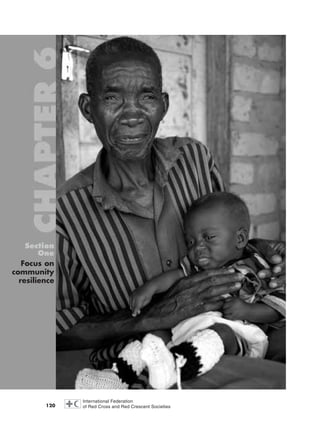
One Indian NGO engaged in supporting the resilience of rural villages in Orissa puts
so much emphasis on the need to create social cohesion that they insist on working
with everyone in the community or no one (see Chapter 3). The months of village
meetings it can take to create the required consensus are considered to be as valuable
as any subsequent investments in physical infrastructure.
Equally, however, community cohesion can be undermined by poorly conceived aid
interventions – whether by governments or NGOs. Recent evidence from Santa Fe
province in Argentina, following the worst floods there for a century, suggests that too
much in the form of state welfare handouts, combined with too little progress or
transparency in the authorities’ rehabilitation plans, generated a sense of dependency
among flood-affected working-class people, as they waited – with mounting
expectation and frustration – for the government to deliver on its promises.
Meanwhile, middle-class residents who received few state benefits organized
themselves into mutual support groups (see Box 1.5).
The critical role of social networks in coping with hazards is evident in all our case
studies. Elderly people in close social contact with their friends and neighbours are
more likely to survive heatwaves, as their vulnerability is recognized earlier, while
those people ‘invisible’ to society suffer most (see Chapter 2). Social cohesion erodes
more easily in urban areas, where extended family structures fragment and the bonds
of common livelihoods break down. Research into slum dwellers in Mumbai reveals
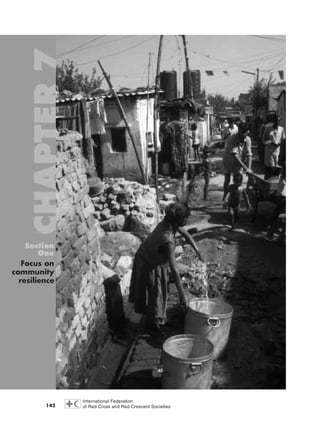
both the breakdown of social resilience in urban settings and its possible re-creation
through joint ownership and protection of physical assets, such as pottery kilns
needed to generate a communal income (see Chapter 7, Box 7.2).
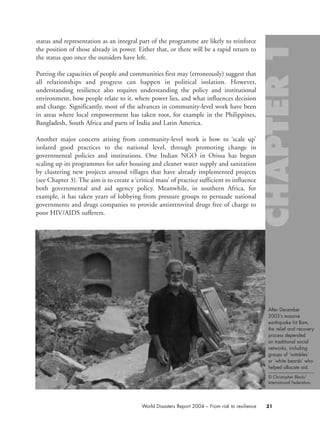
Following December 2003’s colossal earthquake in Bam, the whole relief and
recovery process depended on traditional, informal social networks: city groups of
‘notables’ or ‘white beards’ proved a useful medium for distributing aid, while
every province in Iran adopted a neighbourhood in Bam to help meet the needs
of survivors (see Chapter 4). The experience of Bam also reveals the importance
of the cultural dimension of resilience, which, although often neglected in the SL
approach, can prove to be one of the strongest assets in creating mutual support.
Within a month of the earthquake, for example, 90 per cent of the 1,850 children
orphaned by the disaster had been taken into the homes of their extended
families.
In some societies, culture and religion can create complacency and fatalism, leading
people to regard a disaster as an act of God rather than the result of human
negligence. But fatalism and religious faith can also be comforting and healing when
hope has diminished, giving survivors the strength to externalize the tragedy and
face up to its consequences – as was the case in Bam. Hence, faith is a form of
psychological and communal resilience in times of hardship.
26
chap01 16.8.2004 10:41 Page 26
Physical capital
Physical capital comprises the basic infrastructure, goods and services needed to
support sustainable livelihoods, including secure shelter and buildings, clean water
supply, sanitation, adequate tools, affordable transport and energy, and access to
information and communications. ‘Lifeline’ infrastructure in disaster-prone areas,
such as hospitals, government offices, emergency services’ headquarters and stores,
schools and cyclone shelters, needs to be strong enough to withstand any natural
hazards. However, Bam’s three hospitals collapsed or were badly damaged during the
earthquake, which meant injured people had to be airlifted to other hospitals –
costing more lives and money (see Chapter 4).
Building stronger homes in Orissa before the ‘supercyclone’ struck in 1999 proved life-
saving for the people of Samiapalli, while investing in a water harvesting and
irrigation system in the Gujarati village of Patanka has greatly improved community
recovery and livelihoods since the earthquake of 2001 (see Chapter 3). Meanwhile,
more than 2.2 million people a year, in urban and rural areas, die from water and
sanitation-related diseases – many of them children in urban slums. Improving
physical infrastructure such as piped clean water, covered toilets and sewage disposal
could save thousands of lives (see Chapter 7).
Physical mitigation measures – such as seawalls, dykes to contain flooding rivers or
terraces to prevent soil erosion – are particularly popular with donors keen to display the
visible effects of their aid. While such ‘hardware’ measures should always be accompanied
by ‘software’ measures (e.g., training, awareness, strengthening social cohesion), physical
structures serve important protective and symbolic purposes. In the Philippines, for
example, concrete walls built to reduce the impact of coastal storm surges are seen as
embodying the achievements of participating villagers as well as providing a focus around
which to build cooperation with local authorities (see Chapter 5).
Challenges of community-level action
Most poverty analysis, including the sustainable livelihoods framework, starts with the
household as the basic unit of analysis. While the concept of resilience applies to every
level from individual to global, the main focus of our case studies is on the
community level. Understanding how communities work is considered key to
understanding resilience and a precondition for helping strengthen people’s capacities
to cope with and recover from disaster.
But how valid is this level of analysis, how true is the notion of ‘community’ as a
homogeneous, caring, moral and cooperative group of people attached to a place? Is
it just wishful thinking? Are there dangers in assuming that such communities exist,
that they are the ‘place’ or ‘group’ of people where something should be done? Where
27World Disasters Report 2004 – From risk to resilience
chap01 16.8.2004 10:41 Page 27
28
Torrential rains during April 2003 precipitat-
ed the worst floods Argentina has witnessed
for a century. The poorer farming provinces
in the north were hardest hit and a third of
Santa Fe city was inundated, forcing
150,000 people to evacuate their homes
within the space of a few hours. The disaster
followed close behind a four-year economic
and social crisis, which plunged 22 million
Argentinians – more than half the population
– into poverty and saw unemployment soar to
25 per cent.
During the flooding, the Argentine public
showed great solidarity in their concern for those
affected. Some 6,000 Red Cross volunteers and
staff helped rescue survivors and distribute sup-
plies of food and clothing donated from across
the country. In Santa Fe itself, fellow citizens used
their boats and canoes to help over 75,000 peo-
ple to safety. The rising waters had, in just a few
hours, equalized a socially stratified population
of business people, intellectuals, workers, impov-
erished middle classes, the ‘structurally’ (long-
term) poor and the unemployed.
What prompted this display of solidarity?
Was it simply momentary human compassion in
the face of sudden flooding, or were other factors
at work? Did the social cohesion displayed in the
face of disaster develop into longer-term resilience
or did it subside as swiftly as the flood waters?
Resilience among the newly impoverished
middle classes continued to be evident as
people began to rebuild their homes. Much
of their cooperation in recovery could be
attributed to the solidarity developed during
the years of social crisis. Following the coun-
try’s financial collapse in December 2001,
there was unprecedented and almost con-
stant social mobilization across different sec-
tors. Both the unemployed and the middle
classes took to the streets. The cacelorazos,
groups of the urban middle class who lost
their savings due to devaluation, were large-
ly responsible for bringing down the govern-
ment of Fernando de la Rúa. These groups
then transformed themselves into neighbour-
hood associations and new organizations for
the unemployed. The number of NGOs
soared and a nationwide network of over
500 bartering clubs sprang up. Social
resilience flourished in the arid soil of a fail-
ing economic and political system.
After the 2003 floods, the government
offered the newly poor middle classes little in
the way of financial aid. So with support from
family, friends and neighbourhood associa-
tions, they began the process of physical,
emotional and financial recovery themselves.
They improved their organizing capacity and
demanded that the government answer why
there was so much destruction in Santa Fe
and what it was doing to ensure that such
floods would never affect the city again. The
provincial authorities have been forced to
both listen to their citizenry and be much
more accountable in their decisions and
actions.
However, the structurally poor did not
display the same levels of resilience and
organization. A visit to the district of San
Lorenzo, where the Red Cross and other
NGOs were working in reconstruction proj-
ects, proved revealing. Several community
members criticized Red Cross volunteers for
not caring about their well-being – even
though they were standing in the doorways
of new homes that had just been built for
them. One woman shouted at two Red Cross
volunteers: “We are not dogs. We have
rights.” Rubbish was strewn across the streets
Box 1.5 Argentine floods: state aid saps resilience
chap01 16.8.2004 10:41 Page 28
29World Disasters Report 2004 – From risk to resilience
around her and children were playing in
stagnant, dirty water – but she did nothing
about it. People were simply waiting for aid
distributions or for someone else to come
and solve their problems.
Volunteers recalled similar attitudes in some
of the emergency shelters. They described how
survivors waited for volunteers to arrive to cook
and clean. Teachers complained that schools
used as shelters were left in disarray, while
chairs and desks were stolen.
So, despite the solidarity shown during the
height of the floods, why did the newly impov-
erished middle classes continue to display such
resilience in the aftermath of disaster, while the
poor felt like the victims of injustice? One could
argue that the middle classes are better edu-
cated and have more opportunities. But there
are countless examples throughout the world of
marginalized, ‘uneducated’ people organiz-
ing themselves to improve their quality of life.
Why did some Argentinians complain about
the treatment they received, while not taking
steps to improve their own lives?
In the aftermath of the Santa Fe floods, the
government took a leading role in providing
for the poorest sectors of society. “Along the
way,” says Liliana Pantano, an Argentine socio-
logist, “the traditional solidarity was weak-
ened as the government began to institute
social programmes.” For example, every poor
family waiting for new or rehabilitated homes
in the disaster-struck districts of La Tablada
and San Lorenzo received monthly govern-
ment subsidies through a programme, created
in April 2002, which gives 150 pesos (about
US$ 50) per month to unemployed heads of
households who have families with children.
Although the subsidy is supposed to be in
return for working on community projects, the
programme compares favourably with the
120 pesos per month that most families in La
Tablada used to earn through the laborious
process of brick-making.
However, the risk of creating dependency
is very real when communities become used to
receiving generous, ongoing state subsidies.
The incentive for working together to solve
common problems is undermined by social
welfare programmes and handouts. Further-
more, the poorest members of society lack the
skills or education needed to enter the main-
stream economy. Many of those hardest hit by
the floods now sit and wait. The government’s
welfare programmes provide them with more
than they had in the past – as well as the
prospect of receiving better housing.
A lack of transparency and urgency in
the government’s response has further embit-
tered many of those affected by the Santa Fe
floods. “Everything was politicized – who got
what and even where houses were built,”
complains Jorge Fernández, director of pro-
grammes for the Argentine Red Cross. The
flood occurred in the middle of elections and
was used by candidates for criticizing oppo-
nents. Once the media spotlight on the
disaster faded, government rehabilitation
programmes were slow to unfold.
A year after the disaster, land allocation
and housing construction for the poor have
not been finalized. In La Tablada, 20 home-
less families are still living in tents. Entering
one, the smell of rotting canvas is almost
overbearing. The children and elderly are
suffering from respiratory illnesses. The look
on most of their faces is one of defeat rather
than defiance. Resilience often thrives when
people are forced to assume responsibility
for their own well-being. But a combination
of joblessness, government subsidies and
unfulfilled promises following disaster has
sapped community resilience among Santa
Fe’s poorest. ■
chap01 16.8.2004 10:41 Page 29
social ties are bound tightly together by common history and interest, then disparities
of class, gender and income seem to matter less. But in many cases of community-
based disaster preparedness (DP) and mitigation, the idea of community is reduced
simply to those people who will cooperate and doesn’t necessarily include everyone in
a particular location.
One DP project in Cambodia, described by a researcher from the United Kingdom’s
Coventry University, found considerable difficulties dealing with the internal tensions in
the ‘community’. As the project leader said: “The more powerful in society may not want
the most vulnerable to participate. Therefore changing this may require advocacy by the
NGO, which is not really compatible with a participatory research methodology, or
bypassing the more powerful in society, which is not sustainable once the NGO has left.
Doing this may actually endanger the most vulnerable, putting them at risk of reprisals.”
In sociology, the problem has been known for many years, as sociologist Steven Brint
pointed out recently: “An often repeated message of the community studies’ literature
is that communities are not very community-like. They are as rife with interest,
power, and divisions as any market, corporation, or city government.” Brint reports
on sociological studies from more than 50 years ago that show “the comforting image
of community-centred governance” was acknowledged to be an illusion and that,
instead, supposed communities had “a self-interested and self-reproducing power
structure ruling from behind the scenes”.
Communities may well encompass areas of common interest, but power relations and
existing structures of inequality must also be understood. In southern Africa, for
example, the impacts of the HIV/AIDS pandemic are aggravated by people neglecting
or abusing spouses or orphans within their own extended families (see Chapter 6,
Box 6.1). And people living in urban slums are perpetually exposed to risk as long as
they remain outside the system of legal governance. For example, the fear of eviction
is a major disincentive for slum dwellers to invest in measures to disaster-proof
their homes or improve their environments. Any capacity-building approach has to
recognize that existing community structures do not necessarily provide the most
amenable contexts within which to improve disaster resilience for all.
Sometimes it takes the wider ‘community’ of outsiders to break down the barriers to
change which keep communities vulnerable. Outside organizations can act as catalysts
for creating resilience by building awareness and consensus for action through
meetings with community members, engaging local government and inspiring others
to act by celebrating the examples of individuals or communities who have embraced
change for the better.
However, community work like this may only be possible in situations where the poor
and less powerful feel safe from reprisal. Approaches that do not aim to enhance social
30
chap01 16.8.2004 10:41 Page 30
status and representation as an integral part of the programme are likely to reinforce
the position of those already in power. Either that, or there will be a rapid return to
the status quo once the outsiders have left.
Putting the capacities of people and communities first may (erroneously) suggest that
all relationships and progress can happen in political isolation. However,
understanding resilience also requires understanding the policy and institutional
environment, how people relate to it, where power lies, and what influences decision
and change. Significantly, most of the advances in community-level work have been
in areas where local empowerment has taken root, for example in the Philippines,
Bangladesh, South Africa and parts of India and Latin America.
Another major concern arising from community-level work is how to ‘scale up’
isolated good practices to the national level, through promoting change in
governmental policies and institutions. One Indian NGO in Orissa has begun
scaling up its programmes for safer housing and cleaner water supply and sanitation
by clustering new projects around villages that have already implemented projects
(see Chapter 3). The aim is to create a ‘critical mass’ of practice sufficient to influence
both governmental and aid agency policy. Meanwhile, in southern Africa, for
example, it has taken years of lobbying from pressure groups to persuade national
governments and drugs companies to provide antiretroviral drugs free of charge to
poor HIV/AIDS sufferers.
31World Disasters Report 2004 – From risk to resilience
After December
2003’s massive
earthquake hit Bam,
the relief and recovery
process depended
on traditional social
networks, including
groups of ‘notables’
or ‘white beards’ who
helped allocate aid.
© Christopher Black/
International Federation.
chap01 16.8.2004 10:41 Page 31
Conclusions
The pro-poor focus of the recent aid policies of most donor governments, and the
shift towards identifying and supporting livelihoods, makes it timely to re-explore
both the concept of resilience and the ways in which outsiders can build on the
strengths of at-risk women and men for improved disaster preparedness, mitigation
and response. If we, as outsiders, cannot understand these capacities and build on
them, then we perpetuate the idea that ‘we know best’ and that only ‘risk’ matters. We
thereby ignore the most important resource that currently exists in managing disasters
and risks: people’s own strategies to cope and adapt. Understanding and enhancing
local resilience to risks is a responsibility for all actors in the aid community. It is not
a question of leaving it to either humanitarian or development agencies. Rather, it is
about a people-centred, developmental way of working – in relief, recovery, disaster
risk reduction or development. Six key conclusions – relevant for local, national and
international actors – can be drawn:
1. Sytematic assessment of what enables people to cope with, recover from and
adapt to various risks and adversities – at household and community level – is
badly needed. This will provide emergency planners, disaster risk managers and
development actors with a clearer understanding of the foundations on which to build
interventions that support resilience. Coping strategies of at-risk populations are
poorly understood. Many people, especially the poor, tend to focus on their problems
and weaknesses – as evident from the personal accounts reported in our case studies.
But through confronting crisis or engaging in communal activities, people can begin
to see their strengths in helping themselves and their neighbours. Equally, outsiders –
even those working at community level – may recognize people’s capacities without
really understanding them. Our knowledge of what makes up resilience, how it can
be measured and, above all, how it can be strengthened is still limited compared to
our understanding of what constitutes need, hazard, risk or vulnerability.
2. Strengthening social capital should be the key objective of all disaster
interventions, whether in relief, recovery or risk reduction – rather than a by-
product. Our case studies reveal that unlocking the potential of communities to overcome
traditional barriers and work together for a common cause is the key to increasing disaster
resilience. But there is a lack of systematic analysis of how humanitarian aid and longer-
term community programmes can either erode or enhance resilience. Building the social
capital needed to ensure the success of any community action is often treated as an after-
thought or by-product of programmes supporting risk reduction, rather than the main
objective. The fundamental challenge is to change the mindsets of all actors in this field to
prioritize strengthening social capital as the key objective of all interventions.
3. People-centred approaches to development provide models that can improve
humanitarian aid and disaster risk management. In the field of development, there
32
chap01 16.8.2004 10:41 Page 32
has been a significant paradigm shift over the last two decades towards a much more
people-centred approach to aid that builds on strengths at household and community
levels. The sustainable livelihoods framework incorporates shocks and disasters as part
of the wider challenges facing development, rather than as adjuncts to it. Key assets
that help poor people lift themselves out of poverty are also the basis for increasing
their capacities to reduce, cope with and recover from the impacts of disaster. More
systematic work is required to assess the value of these developmental approaches in
improving humanitarian aid as well as disaster risk management.
4. New institutional strategies and cross-sectoral coalitions are required to boost
the resilience of local livelihoods in the face of multidimensional risks. Recent
research – including that from our case studies – suggests that people living with risk
do not necessarily regard one-off disasters as the greatest hazard facing them. The
security of their livelihoods is usually paramount. Threats to those livelihoods come
in many forms – not only natural hazards, but also ill-health, lack of infrastructure,
social discrimination and stigma, unaffordable credit or misguided government
policies. So any attempts to increase community resilience to such a complex range of
risks need to enhance the full range of natural, financial, human, social and physical
assets. No single agency or institution – whether at local, national or international
level – can deliver in all these areas. Hence, new context-specific coalitions between
different actors (e.g., government, municipality, private sector, NGOs, community
groups) and cutting across different sectors must be formed to meet the challenge.
5. Good governance is essential to create the environment in which more resilient
communities can thrive. Just as many communities are vulnerable to risks across a
range of sectors, so all communities are inevitably caught up in a larger web of
relationships, where actions taken by different actors at different levels can hinder or
help the resilience of their livelihoods. No community is an island. Some government
policies can limit community empowerment while, conversely, an active civil society
can invigorate community resilience. At-risk households need to gain access to
political representation – at every level from community upwards – in order to
influence the decisions that affect their lives. Aid organizations can facilitate this
process by creating opportunities for dialogue between communities, local
government, urban municipalities and the private sector, to ensure that the voices and
needs of those at greatest risk are not marginalized.
6. Scaling up strategies based on the aspirations and capacities of people at risk
remains the greatest challenge. The key to ensuring people’s lives and livelihoods are
resilient over the long term is through detailed assessment and people-centred programming
at the community level. But replicating this approach across all communities and groups at
risk is a colossal challenge. The incorporation of disaster risks into development planning
through the sustainable livelihoods framework offers a promising way of scaling up issues
of resilience into policy. The role for both domestic and international aid organizations is
33World Disasters Report 2004 – From risk to resilience
chap01 16.8.2004 10:41 Page 33
twofold: to ensure their humanitarian and development strategies are informed by the
experiences and priorities of those at risk; and to represent those priorities at international
and national levels to influence the policies of donors and national governments for the
better. Ultimately, however, the successful scaling-up of programmes to promote
community resilience depends on national actors taking a lead role.
Policy and practice that aim to build proactively on people’s strengths – rather than
simply targeting their vulnerabilities – could offer the positive paradigm shift badly
needed to help the world’s poor and marginalized cope with today’s increasingly
complex and interrelated risks and adversities.
Principal contributor was Yasemin Aysan, independent analyst of humanitarian and
development issues, with additional contributions from Terry Cannon, co-author of At Risk:
Natural hazards, people’s vulnerability and disasters, and Jonathan Walter, editor of the
World Disasters Report. Box 1.1 was contributed by Jonathan Walter; Box 1.3 by Mihir R.
Bhatt, Honorary Director, Disaster Mitigation Institute, Ahmedabad, India; Box 1.4 by Bruno
Haghebaert, Senior Officer, ProVention Consortium Secretariat; and Box 1.5 by Jan Gelfand,
an independent humanitarian and development consultant based in La Paz, Bolivia. Part 1
of Box 1.2 was contributed by Ian Christoplos, a consultant specializing in humanitarian and
rural development issues; part 2, which first appeared in the Crosslines Essential Field Guide
to Afghanistan, was contributed by Joanna de Berry, Save the Children (USA), Kabul.
Sources and further information
Adger, Q.N. ‘Social and ecological resilience: Are they related?’ in Progress in Human
Geography, vol. 3, no. 24, pp. 347-364.
Anderson,M.B.andWoodrow,P.J.RisingfromtheAshes:developmentstrategiesintimesofdisaster.
Boulder, CO: Intermediate Technology Publications/Lynne Rienner, 1998 (reprint).
Bebbington, A. ‘Capitals and capabilities: a framework for analysing peasant viability, rural
livelihoods and poverty’ in World Development, vol. 27, no. 12, pp. 2021-2044, 1999.
Berkes, F., Colding, J. and Folke, C. (eds). Navigating Social-Ecological Systems: Building
Resilience for Complexity and Change. Cambridge: Cambridge University Press, 2003.
Blaikie, P., Cannon, T., Davis, I. and Wisner, B. At Risk: Natural hazards, people’s
vulnerability and disasters. London: Routledge, 2004 (second edition).
Brint, S. ‘Gemeinschaft revisited: a critique and reconstruction of the community
concept’ in Sociological Theory, vol. 19, no.1, pp. 1-23, 2001.
Cannon, T., Twigg, J. and Rowell, J. Social Vulnerability, Sustainable Livelihoods and
Disasters. Report to DFID Conflict and Humanitarian Assistance Department
(CHAD) and Sustainable Livelihoods Support Office, 2003.
Carney, D. Livelihood Approaches Compared. London: Department of International
Development (DFID), 1999.
Carpenter, S., et al. ‘From Metaphor to Measurement: Resilience of What to What?’
in Ecosystems, no. 4, pp. 765-781, 2001.
34
chap01 16.8.2004 10:42 Page 34
Chambers, R. (ed.). ‘Vulnerability: How the Poor Cope’ in IDS Bulletin, vol. 20,
no. 2, April 1989.
Chambers, R. and Conway, G. R. Sustainable Rural Livelihoods: Practical Concepts for
the 21st
Century. IDS Discussion Paper No. 296, Institute for Development
Studies, University of Sussex, 1992.
Christoplos, I. Out of Step? Agricultural Policy and Afghan Livelihoods. Kabul:
Afghanistan Research and Evaluation Unit, 2004.
Comfort, L. Shared Risk: Complex Systems in Seismic Response. New York: Pergamon, 1999.
De Waal, A. Famine that Kills: Darfur, Sudan, 1984-1985, Oxford: Clarendon Press, 1989.
Dreze, J. and Sen, A., Hunger and Public Action, Oxford: Clarendon Press, 1989.
Girardet, E. and Walter, J. Crosslines Essential Field Guide to Afghanistan. Geneva:
Media Action International, 2004 (second edition).
Glavovic, B.C., Scheyvens, R. and Overton J. ‘Waves of Adversity, Layers of
Resilience: Exploring the Sustainable Livelihoods Approach’ in Proceedings of the
3rd Biennial Conference of the International Development Studies Network of
Aotearoa New Zealand, Massey University, 5–7 December 2002.
Holling, C.S., ‘Resilience and Stability of Ecological Systems’ in Annual Review of
Ecological Systems, no. 4, pp. 1-23, 1973.
Kendra, J. and Wachtendorf, T. Elements of community resilience in theWorld Trade Center
attack. Newark, NJ: University of Delaware, Disaster Research Center, 2002.
Klein, R.J.T., Nicholls, R.J. and Thomalla, F. ‘Resilience to natural hazards: How
useful is this concept?’ in Environmental Hazards, no. 5, pp. 35-45, 2003.
Narayan, D. et al., Voices of the Poor: Can Anyone Hear Us? New York: Oxford
University Press/World Bank, 2000.
Scoones, I. Sustainable Rural Livelihoods: A Framework for Analysis. Institute of
Development Studies, Sussex, 1998.
Twigg, J. ‘Disaster risk reduction: Mitigation and preparedness in development and
emergency planning’ in Good Practice Review, No. 9, March 2004. Humanitarian
Practice Network, Overseas Development Institute, London.
Williams, A. The viability of integrating community based disaster management within
NGO strategic management. Unpublished coursework, Coventry University, 2003.
Web sites
Downtown Community Resource Center, New York City
http://www.communityresilience.org
Livelihoods Connect http://www.livelihoods.org
ProVention Consortium http://wwwproventionconsortium.org
Resilience Alliance http://www.resalliance.org
Small island developing states http://www.sidsnet.org
World Bank Voices of the Poor http://www.worldbank.org/poverty/voices
35World Disasters Report 2004 – From risk to resilience
chap01 16.8.2004 10:42 Page 35
36
Section
One
Focus on
community
resilience
chap02 16.8.2004 10:40 Page 36
Photo opposite page:
A street thermometer
in Bucharest, Romania.
Europe’s summer
heatwave was the
continent’s most
deadly disaster for
at least a decade.
Radu Sigheti/Reuters.
37World Disasters Report 2004 – Heatwaves
Heatwaves: the developed
world’s hidden disaster
How does one of 2003’s most fatal disasters occur in one of the most developed
regions in the world? During August 2003, between 22,000 and 35,000 people died
across Europe as a result of a scorching heatwave (see Box 2.1). Lives lost were
calculated using the average number of deaths for that month of the year and
attributing excess deaths to the heat.
In France, the national health ministry put the death toll at 14,802. In England and
Wales, authorities estimated over 2,000 people died. In both Portugal and the
Netherlands, the heatwave claimed at least 1,300 lives, while authorities in Italy and
Spain indicated that 4,000 people died in each country. Reports in the press estimated
that Germany suffered some 7,000 heat-related deaths.
On top of this catastrophic death toll, economic losses to agriculture and business
from the summer drought totalled in excess of US$ 13 billion, according to the global
reinsurance group, Munich Re.
Many government figures throughout Europe sought to shift responsibility for the
heatwave onto global warming and nature’s unpredictability. But for public health
professionals, the heatwave served as a natural trigger for a disaster which exposed a
breakdown in social networks, political failure to support an ageing population, and
overwhelmed and run-down public health services.
This chapter will analyse the unnatural root causes behind one of Europe’s worst
disasters for decades. Why were authorities and communities so poorly prepared? How
likely are more heatwaves in the future? What can be done to support those most at risk?
Silent, invisible killer
People in temperate countries find it hard to imagine heat as a disaster. With floods or
hurricanes you can see the damage in a matter of minutes or hours. With heat, usually
the worst to happen is that roads buckle, trains derail and livestock die. So who would
have thought a bit of summer heat would kill so many people and cost so much in
Europe? As the Associated Press wrote: “Europe’s heatwave of 2003 stands as one of the
deadliest weather phenomena in the last century. The intense heat caused billions of
euro in damage, withering crops, sparking wildfires, decimating livestock and melting
Alpine glaciers. But the greatest loss was human, mostly the frail and elderly who died
alone in their homes because they were unable to cope with the temperatures.”
chap02 16.8.2004 10:40 Page 37
Europe is not alone. Heatwaves kill more people in the United States than
hurricanes, tornadoes, earthquakes and floods combined. The heatwave that hit
Chicago in 1995 killed 739 people. In Australia, heatwaves are the most
underrated natural disaster. According to government figures, they caused more
deaths there than any other natural hazard during the 20th century. But response
programmes are limited and few people are aware of the widespread dangers of
heatwaves.
Heatwaves are not a typical natural hazard. The response is not high profile or high
tech, as in the case of earthquakes, floods, hurricanes or even prolonged droughts. It
is very much low profile – home visits and bottles of water. It falls into the gap
between short-term emergency
relief and long-term social care.
As a result, heatwaves trigger
unrecognized disasters, which
explains why most governments
and public health authorities
frequently fail to raise the alarm
in time. They are silent disasters
in which those who suffer are
the elderly and the margina-
lized. As Eric Klinenberg,
author of Heatwave: A social
autopsy of disaster in Chicago,
writes: “Heatwaves are slow,
silent, and invisible killers of
silent and invisible people.”
The dread factor
Why are heatwaves missing
from disaster or public health
policies? Klinenberg points out:
“The introduction to a recent
anthology of essays on urban
disasters, for example, lists the
most deadly urban events in
the 1980s and 1990s, but inex-
plicably excludes the Chicago
heatwave – and indeed all other
American heatwaves – even
though the 1995 catastrophe
killed more than ten times the
38
Deaths from Europe’s 2003 heatwave
(heatstroke and excess mortality)
WHO EPI
France 14,802 14,802
Germany — 7,000
Spain 59* 4,230
Italy 3,134 4,175
Portugal 2,106 1,316
England and Wales 2,045 2,045
Netherlands — 1,400
Belgium — 150
Total 22,146 35,118
*According to WHO, more than 6,000 excess deaths
were informally reported during the heatwave in Spain, but
only 59 were accepted as being caused by the heatwave.
Sources: World Health Organization (WHO), 2004;
Earth Policy Institute (EPI), 2003
Financial cost of Europe’s 2003 heatwave:
US$ 13 billion
Source: Munich Re
Summer 2003 was the hottest in Europe
for at least 500 years
Source: Juerg Luterbacher, University of Bern, Switzerland
Heatwaves kill roughly 1,500 Americans a
year; the combined toll from hurricanes, tornadoes,
earthquakes and floods is less than 200
Source: Eric Klinenberg, The Guardian, 20 August 2002
Box 2.1 Heatwaves:
facts at a glance
chap02 16.8.2004 10:40 Page 38
number of people as the deadliest disaster in the table, the 1989 San Francisco earth-
quake.”
In India, the National Disaster Management Cell does not categorize a heatwave as a
natural disaster. This is despite mounting evidence that, as India’s population rises and
climate change sets in, thousands of people are dying each year from heatwaves. In
May 2003, for example, temperatures reached between 45 and 49 degress Celsius in
the Indian state of Andhra Pradesh, claiming some 1,200 lives. The chief minister of
Andhra Pradesh at the time, Chandrababu Naidu, said the tragedy was unparalleled
in the state’s history, although 1,000 people died a year earlier during another one-
week heatwave.
More widely, the lack of public recognition of the dangers of extreme temperatures
has led to increasing losses. As witnessed in Europe, heatwave warnings received less
attention than other natural disaster alerts. And, as Klinenberg points out, most
health professionals fail to identify heat-related deaths, while local authorities rarely
keep records of them.
Risk perception studies over the past 20 years have provided some insight into why
heatwaves fail to register as a devastating natural disaster or serious public health
threat. These studies showed an apparent contradiction in the perceived level of threat
posed by different risks. In the 2002 World Health Report, the World Health
Organization (WHO) explained: “An early approach to study and map people’s
understanding of risks was to ask them to estimate the number of deaths for
40 different hazards and to compare these with known statistical estimates. This
showed that people tend to overestimate the number of deaths from rarer and
infrequent risks, while underestimating considerably those from common and
frequent causes, such as cancers and diabetes.”
To measure it better, the United Nations (UN) Disaster Management Training
Programme (DMTP) identifies in its training module, Vulnerability and Risk
Assessment, four factors that influence human perceptions of risk:
■ Exposure: Actual quantitative risk level.
■ Familiarity: Personal experience of the hazardous event.
■ Preventability: The degree to which the hazard is perceived as controllable or its
effects preventable.
■ Dread: The horror of the hazard, its scale and its consequences.
The ‘dread factor’, according to the DMTP, has the greatest impact on perceptions of
risk, with exposure levels or personal familiarity affecting perceptions on a less direct
and more general level. For instance, earthquakes tend to evoke a higher dread factor
than road accidents, despite the scientific evidence that more people are injured or
killed in road accidents annually than in earthquakes.
39World Disasters Report 2004 – Heatwaves
chap02 16.8.2004 10:40 Page 39
The higher the dread factor and the higher the perceived unknown risks, the more
people want action to reduce those risks, including through stricter government
regulation and legislative controls. However, such action can divert limited resources
towards perceived risks that are actually remote and infrequent, rather than addressing
more urgent social problems.
The challenge for health professionals and disaster mitigation specialists is to begin
working together and raising awareness, among themselves and the general public, of
the potential harm caused by extreme temperatures. One lesson learned in Europe is
that heatwaves can kill thousands of people and destroy livelihoods when insufficient
attention is paid to the underlying vulnerabilities of those most affected.
The next step is to take this knowledge about at-risk communities and develop
programmes to prevent losses when nature’s sometimes-harsh climate sets in motion
a catastrophe. But in order “to develop effective information and communication
strategies and policies about natural risks, the perception and evaluation of these risks
and influencing factors should be known,” explains WHO.
A future summer
Over the last 25 years, according to the UN’s Intergovernmental Panel on Climate
Change, the average global surface temperature rose by 0.56°C. By the end of the
century, it is projected to rise by a further 1.4–5.8°C. As the mercury rises, heatwaves
are set to become more common and severe.
For the WHO, the public health implications are worrying. By 2030, “we see an
approximate doubling in deaths and in the burden in healthy life years lost,” says
WHO scientist Diarmid Campbell-Lendrum. The World Meteorological Organi-
zation believes that in the United States alone, the number of annual heat-related
deaths could rise from 1,500 (in 2000) to 3,000–4,000 by 2020.
The summer of 2003 was a record-breaker in Europe. The average temperature was
more than 3.5°C above normal for that time of year. “From a statistical point of view
such a summer should never have happened,” says Christoph Schär, professor at the
Institute for Atmospheric and Climate Science in Zürich, Switzerland. But what is
abnormal now may become the norm within the near future.
As part of a national research project, Schär and his colleagues compared the
temperatures from 2003 with data from the past 150 years. The results of their
research, published in the journal Nature, indicate that summer 2003 provided clear
evidence that the climate is changing. “Since 1975,” they note, “we have observed a
pronounced warming of the climate in the northern hemisphere. If we assume a not-
too-optimistic scenario, based on a doubling of the current level of the concentration
40
chap02 16.8.2004 10:40 Page 40
of greenhouse gases in the Earth’s atmosphere, average summer temperatures in
central Europe will be around 4.6°C higher at the end of the century.”
Another factor, more important than an average rise in temperature, will be the
increase in temperature variability. As Schär says, “The past two summers were very
different. While drought was very widespread last year, floods grabbed the headlines
in the summer of 2002. According to our results the standard variation of summer
temperatures in central Europe will increase by up to 100 per cent. This means that
towards the end of the century the climate in summer will be extremely different from
year to year.”
The kind of uncertain climate that Schär predicts would cause major problems for
central Europe in particular. “In principle one can become accustomed to a warmer
climate if it’s more or less constant. Farmers, for example, can cultivate other plants
that do well in a warmer climate,” he says. “But if mean temperatures become erratic
and change greatly from one year to the next, it can be far more difficult to adjust to
the unpredictable conditions.”
Is the future already here? Thomas Loster, a geographer and expert in weather-related
losses with Munich Re, explains: “We used to talk in terms of floods and heatwaves
being one-in-100-year events, but in the south of France this year [2003] we have had
a one-in-100-year heatwave, and in December one-in-100-year floods – all in the
same year. This is climate change happening now and a big headache for the insurance
industry.” He adds: “The summer of 2003, with its extensive losses, is a glimpse into
the future, a ‘future summer’.”
Europe bakes and burns
Sudden variations in temperature can prove more deadly than sustained heat, as the
human body needs time to acclimatize. “A heatwave is a very relative factor,” explains
Laurence S. Kalkstein, a climatologist at the University of Delaware Center for
Climatic Research, in an interview with the New York Times. A heatwave in Riyadh,
Saudi Arabia is different from a heatwave in London. As Dr Kalkstein points out: “We
respond to the normal weather conditions of wherever we live.”
A heatwave is a deviation from average temperatures. According to Kalkstein, people
living in areas with occasional but intense variability – like Paris or New York, where
summer and winter temperatures can change significantly in a few days – suffer more
than in places like Miami or Rio de Janeiro, where the weather is warmer but with
fewer fluctuations.
It does not take a lot of extra heat to kill the vulnerable. In extreme heat, the body
maintains its temperature of 37°C by circulating blood to the skin and perspiring.
41World Disasters Report 2004 – Heatwaves
chap02 16.8.2004 10:40 Page 41
As the body temperature rises, the heart has to work harder, putting it and other
vital organs at risk. This is why anyone who tries to do too much in the heat is
vulnerable to heatstroke. However, elderly people are particularly at risk, since they
may already suffer from cardiovascular disease – which hot weather further
exacerbates.
August 2003 was the hottest August on record in the northern hemisphere, according
to the Earth Policy Institute, a US-based environmental group. The heatwave in
Europe officially began in June when the mercury exceeded average temperatures by
4–5°C and remained very high until mid-August. Drought-parched countries
stretching from Russia to Portugal suffered the consequences, as forest fires spread and
agricultural output tumbled.
In Spain, more than 12,000 hectares of woodland were reportedly destroyed by fire.
In Portugal, the prime minister declared a state of emergency after 60 forest blazes
scorched the country. Wildfires regularly flare across Portugal during the summer, but
in 2003 unusually hot, dry air and strong winds combined to make many
unmanageable.
Volunteers from the Portuguese Red Cross (CVP) took part in government-led
emergency operations. When the fires first broke out, 100 volunteers used 25 am-
bulances to help evacuate victims in the Castelo Branco, Portalegre, Santarém and
Lisbon regions, transporting them to hospitals or temporary shelters.
On 6 August temperatures from London to Lisbon exceeded 37°C. Over the next
week, the heat baked most of central Europe. Worse still, temperatures did not drop
during the night. The cooling-off period after sunset usually allows the body to
recuperate. As temperatures remained above 30°C at night, people were not able to
recover, setting in motion the catastrophe.
Urban disaster
Heatwaves are primarily an urban disaster. In cities, the dominant features are heat-
absorbing black roofs and pavements, rather than cool green areas. These ‘heat islands’
can be as much as 5–6°C warmer than rural areas.
In 2003, people in Paris and surrounding urban areas suffered significantly more than
those in rural regions, with the bulk of the 14,800 deaths taking place in and around
the capital. According to figures from France’s National Institute for Public Health
Surveillance, there was a 130 per cent increase in death rates in Île-de-France (Paris
and surrounding suburbs) over the same time the previous year. Meanwhile, in the
southern rural region of Languedoc-Roussillon, for example, death rates were just
20 per cent higher than in 2002.
42
chap02 16.8.2004 10:40 Page 42
The majority of deaths in the United Kingdom took place in London and in the
densely populated areas of the south-east and east. From 4 to 13 August, 1,314 deaths
more than the five-year average for that time of year were recorded in these areas –
28 per cent higher than normal. Of this figure, 900 died in London alone.
Climate scientists and meteorologists have long understood that cities compound the
difficulties, costs and pain of a summer heatwave. To offset this effect and as part of
a micro climate change study, the New York Climate and Health Project is identifying
the local heat sources that aggravate summer temperatures in New York. The aim is
to look at the smaller-scale impact of climate change and develop local methods of
reducing it.
According to project mangers, the heat islands in New York are a collection of
industrial areas in New Jersey and Long Island. To counteract these islands, the
project is planting a ‘green roof’ of drought-resistant grasses, and is measuring its
impact. The goal is to create a model that can be replicated and even to foster a new
industry. Long Island City is one of New York’s last industrial strongholds – but it has
43World Disasters Report 2004 – Heatwaves
The elderly are at
greatest risk during
heatwaves. Daily
home visits or phone
calls from carers can
prove life saving for
those living alone.
J.-P. Porcher/
French Red Cross.
chap02 16.8.2004 10:40 Page 43
enough flat roof space to build a green roof almost the size of Brooklyn’s Prospect
Park. This, say the project leaders, could form “a huge heat-absorbing sponge of
roughly 500 acres [200 hectares], all at roof height”.
However, while climate scientists debate what impacts climate change will have,
where and when, it is crucial to view heatwaves as more than simply a climate issue.
They are first and foremost a health and care issue. As Eric Klinenberg explains:
“Heatwaves are like urban particle accelerators. They speed up and make visible
conditions that are always there but are difficult to perceive. Living and dying alone
is one of those conditions.” The social ecology of an urban area often has a far greater
impact on death rates than the effect of physical structures.
In his study of the Chicago heatwave of 1995, Klinenberg found that not all urban
communities suffered equally. One poor neighbourhood, with a high percentage of
violence and abandoned buildings, had a death rate ten times higher than that of a
similarly poor adjacent area (with the same proportion of elderly, solitary residents),
which had a more active street life. “The areas of the city that had high concentrations
of deaths are areas that had lost the viable public spaces, the busy sidewalks, the
commercial streets,” Dr Klinenberg says. “Those are the things that draw people out
of the home and into social contact.”
Isolated elderly suffer most
Those worst affected by heatwaves live in urban areas, and for complex and often
different reasons, elderly people tend to make up the bulk of them. In many cases,
they are likely to be disproportionately invisible to researchers and aid workers alike,
rarely willing or able to call much attention to their plight. As proof of this, a study
of the 1995 Chicago heatwave confirmed that those people most at risk were in
poor health, unable to care for themselves, isolated and lacking air-conditioning
(see Box 2.2).
The 2003 heatwave in France affected primarily those over 75 years of age, who
accounted for 70 per cent of the 14,802 deaths. But the 45- to 74-year-old age group
also suffered, accounting for 30 per cent of deaths. Women died in higher proportions
than men, as they form the largest part of this population group. But in most studies
on heatwaves, gender has little impact on who is at risk.
Researchers from other countries have confirmed the high vulnerability of the elderly
to heatwaves. The National Institute of Environmental Health in Hungary studied
heatwaves in Budapest from 1993 to 2000. They found that mortality was highest
among the population aged over 75 years. And in Chicago in 1995, government
authorities indicated that 73 per cent of the 739 heat-related victims were older than
65 years. In contrast to Europe, men in the Chicago heatwave were more than twice
44
chap02 16.8.2004 10:40 Page 44
as likely to die as women. The reason for this, according to some experts, is the higher
number of elderly men living isolated from social contact. Several studies have shown
a direct correlation between levels of social contact and heatwave vulnerability.
Europe’s population is ageing. According to the UN’s Population Division (UNFPA),
by 2050 there will be 2.4 older persons for every child, and more than one in three
people will be aged 60 years or over in the region. UNFPA points out that the fastest-
growing segment of the global population in 2000 was aged 80 or over. In France,
government figures show that the segment of the population aged 75 and over is
increasing by 3 per cent each year.
As the world grows older, more people will become vulnerable to heatwaves. UNFPA
estimates that, globally, the number of older people (60 years or over) will nearly
triple, from 606 million today to almost 2 billion by 2050. By then, the number of
older people in the world will exceed the number of young. Europe is particularly
threatened, as climate predictions indicate that the frequency and severity of
heatwaves are likely to increase, and it is home to the world’s largest aged population.
But what matters is not only who dies. How and where they die point to the social
failures that lead to disaster. In France, according to the National Institute for Public
Health Surveillance, more than 60 per cent of those who lost their lives in the 2003
heatwave died in hospitals, private health-care institutions and retirement homes. In
Chicago in 1995, most died alone, locked in their apartments, forgotten by family,
friends and neighbours.
Death and illness from heatwaves are, as sociologist Paul Farmer notes, “biological
reflections of social fault lines”. Events in Chicago and Europe signify a catastrophic
45World Disasters Report 2004 – Heatwaves
The World Health Organization, in its 2004
publication Heat-waves: risks and re-
sponses, explains that vulnerability to heat
depends on “climate factors (such as the fre-
quency of heat-waves) and on individual risk
factors, including medical, behavioural and
environmental factors”. It lists a number of
situations or characteristics that are predic-
tive of heatstroke and heat-related death and
illnesses:
■ being elderly, overweight, unfit or tired;
■ impaired cognition, such as dementia;
■ pre-existing disease, especially cardio-
vascular;
■ use of certain medications, which affect
the body’s temperature regulation;
■ dehydration;
■ living alone;
■ housing (such as living in a certain type of
building or on a higher floor); and
■ absence of air-conditioning in the home or
residential institution. ■
Box 2.2 Who is most at risk?
chap02 16.8.2004 10:40 Page 45
failure in the care and treatment of the elderly. And as Klinenberg writes: “We have
collectively created the conditions that made it possible for so many Chicago residents
to die in the summer of 1995… We can collectively unmake them too, but only once
we recognize and scrutinize the cracks in our social foundations that we customarily
take for granted and put out of sight.”
Hot climate, cold society
The high human toll of 2003’s heatwave caused a public uproar in France. In a
commentary entitled “French barbarity”, the French newspaper Le Figaro said the
country had witnessed during the summer of 2003, “such a reversal of values that
vacations have become more sacred than the respect we owe our elders”. The article
was referring to the habit of French officials, professionals and their families to take
summer holidays en masse during August. This left government departments and
public health and emergency services poorly equipped to deal with the emergency.
More in France than other places, the heatwave made visible cultural attitudes that
isolate the elderly. “Here, the status of an elderly person is very bad,” Jean-François
Lacan, a French author and nursing home industry watchdog, is quoted as saying.
“They’re basically rejects of society.” During the heatwave, French health professionals
repeatedly tried to point out that the problem was less the heat and more an elderly
care system in crisis, with services habitually underfunded and understaffed,
combined with, as one report notes, “a national habit of shutting senior citizens out
of sight and mind”.
And why in other European countries, particularly in the south, was the loss of life
considerably less? Most experts attribute it to the fact that elderly people are more
integrated into the daily life of a family. As Stéphane Mantion, an official with the
French Red Cross, is quoted as saying in Time magazine: “The French family
structure is more dislocated than elsewhere in Europe, and prevailing social attitudes
hold that once older people are closed behind their apartment doors or in nursing
homes, they are someone else’s problem. These thousands of elderly victims didn’t die
from a heatwave as such, but from the isolation and insufficient assistance they lived
with day in and out, and which almost any crisis situation could render fatal.”
As Klinenberg notes in his study of the Chicago heatwave, the considerable loss of life
there was a result of “an increasingly hot climate and a cold society that turns its back
on the vulnerable, threatening the growing population of elderly and isolated urban
residents”.
Crucially, the problem is less about the hazard and more about vulnerability. The
marginalization and poverty of the elderly are the root causes of disaster – extreme
temperatures are simply the natural trigger. Cold waves can be even deadlier than
46
chap02 16.8.2004 10:40 Page 46
heatwaves. The UK-based charity Help the Aged is running a campaign to raise awareness
of the toll that cold weather takes on the elderly there. According to government statistics,
each winter over the last five years in England and Wales, between 21,000 and 50,000
people aged 65 and over suffered avoidable winter deaths (see Box 2.3).
47World Disasters Report 2004 – Heatwaves
Every winter for the past decade, an average
of 33,600 people – mainly the elderly – have
died as a result of the cold in England and
Wales alone, according to the Office of
National Statistics (ONS). During the winter of
2002–03, 21,800 people over the age of 65
died from the cold, prompting Mervyn Kohler,
head of public affairs for the NGO Help the
Aged, to ask: “Why has there been no outcry
about these latest figures like that witnessed in
France when some 15,000 older people died
in this summer’s heatwave?”
These ‘excess winter deaths’ (as the ONS
terms them) are defined as the increase in
deaths during the four winter months (December
to March) compared to the average number of
deaths for the remainder of the year. According
to Help the Aged, mortality data are “the tip of
the iceberg” compared to the additional bur-
den, borne disproportionately by the elderly, of
poor health in winter and the discomfort and
stress of coping with cold, damp homes.
In comparable north European countries
such as Finland and Germany, the numbers of
excess winter deaths are “proportionately much
lower than in the UK”, says Help the Aged. The
European Union-funded Eurowinter study found
that the avoidance of ‘cold stress’ (by restricting
outdoor excursions, wearing warmer clothing
and increasing activity when outdoors) is asso-
ciated with less cold-related mortality in those
countries which had the most severe winters.
Risk of illness or death appears to be equally
related to exposure to indoor or outdoor cold.
Other research has firmly linked winter
deaths with poor, energy-inefficient housing.
A London School of Hygiene and Tropical
Medicine study found that the temperature of
the home and its age and energy efficiency
are important factors in determining winter
deaths. Living in cold and damp houses
increases the risk of strokes, heart attacks and
respiratory illnesses.
Fuel poverty makes matters worse. A
household is defined as being in fuel poverty
when it has to spend more than 10 per cent of
its income on fuel to heat the home to World
Health Organization standards. Help the
Aged’s research found that 22 per cent of
older people living in poverty in Britain were
“sometimes forced to choose between heating
and eating”. Around half of the UK’s 3.5 mil-
lion fuel-poor households are estimated to con-
tain older people.
As part of its November 2003 campaign,
Help the Aged’s Kohler argues that: “By failing
to properly address fuel poverty and by failing
to coordinate help across departments, the
Government is letting people die of cold.”
While the NGO welcomes the government’s
commitment to tackle cold homes and end fuel
poverty for older people by 2010, much
remains to be done. Help the Aged has called
on the government to commission further
research on ‘excess’ winter deaths, so that the
causes can be better understood and a strat-
egy put in place to reduce death rates at least
to levels of comparable European countries. ■
Box 2.3 Cold waves in the UK: the other extreme
chap02 16.8.2004 10:40 Page 47
While the trigger for 80 per cent of those deaths was cold weather, the root causes of
vulnerability remain much the same as for heatwaves. The elderly are too poor to take
preventive measures, whether to pay for air conditioning during hot weather or for
heating during cold weather. They are often poorly informed about what to do to
mitigate the effects of extreme temperatures. Many suffer and die invisibly, being
isolated and neglected by society.
Political denial and neglect
Government officials rarely react well to heatwaves. In Chicago, Mayor Richard M. Daley
queried the integrity of autopsy reports following 1995’s heatwave and said the crisis was
being blown out of proportion. A leading newspaper columnist even played down the
claims of one advocacy group, saying that “trying to blame the mayor for an act of God is
not only unfair, it also does an injustice by wrongfully framing the debate”.
In France, the health minister Jean-François Mattéi is quoted as saying, in response to
questioning from a government committee: “In fact, the silent, unimaginable
catastrophe of this summer’s heatwave was really pretty well managed by the health
ministry… There was no malfunction, no failing, no shortfall on its part, on the part
of its staff or of any of its dependent services... France, it seems, was the only country
in Europe to have actually reacted to the crisis. We should probably be congratulating
ourselves.” However, a subsequent parliamentary commission into the tragedy
concluded that poor political management of the emergency had contributed to the
scale of the disaster (see Box 2.4).
48
Box 2.4 Heatwave exposes public health failures
The heatwave of summer 2003 will be
remembered in France as a disaster without
precedent. From 1 to 20 August, average
mortality rates for that time of year soared by
60 per cent, which meant nearly 15,000 peo-
ple died as a result of the extreme heat. The
national meteorology service forecast a heat-
wave on 1 August. A week later, the Ministry
of Health warned of potential health risks. By
11 August, temperatures in Paris reached lev-
els not seen since records began in 1873. On
13 August, with hospitals overflowing, city
authorities activated an emergency plan to
provide hospitals with as many staff and
resources as possible.
On 11 August, the French Red Cross (FRC)
launched its own ‘extreme heat’ plan.
Volunteers were summoned for duty, with many
cutting short or delaying their holidays. A
national crisis centre was set up, with a dual
coordination unit to cover both inside and out-
side the Île-de-France (the administrative zone
centred on Paris). Twenty first-aid workers were
immediately sent to hospitals in Paris and the
suburbs. In 41 départements (administrative
zones) across France, 750 Red Cross volun-
teers helped ambulance and fire services to
identify and evacuate heatwave victims. Teams
were dispatched to 52 hospitals and 72
retirement homes to help staff cool and rehy-
chap02 16.8.2004 10:41 Page 48
49World Disasters Report 2004 – Heatwaves
drate their patients. Red Cross members also
identified and visited individuals living alone,
to ensure they didn’t die avoidable deaths. On
17 August, as temperatures subsided, the
FRC’s mobilization came to an end. Volunteers
had worked flat out for nearly ten days, under-
taking many different tasks – a baby was even
delivered in one Red Cross vehicle.
According to a report by a special parlia-
mentary commission, published on 3 March
2004, the heatwave was unprecedented any-
where in the world in terms of its intensity, geo-
graphic spread and death toll. Across 61 of
France’s 95 départements, temperatures
exceeded 35°C or even 40°C. Urban areas
were hit hardest and, as temperatures
remained high at night, the vulnerable had lit-
tle chance to recover. At greatest risk were
people aged over 75 and those in poor health.
While poor housing conditions in the capital
and the isolation of elderly people were impor-
tant factors, the commission concluded there
were also major failings in the political man-
agement of the disaster. The commission heard
that, before August 2003, the health authorities
had not anticipated the consequences of
extremely high temperatures. The dangers of a
heatwave were not the subject of specific early
warning procedures, in the way that severe win-
ter conditions were. This failure to anticipate
possible disaster, combined with poor informa-
tion, health monitoring and early warning sys-
tems, contributed to the scale of the tragedy.
Worse still, the monitoring and early
warning information that was available was
not shared outside the government’s public
health department. Yet the crisis showed that
others not directly involved in health monitor-
ing could also make significant contributions –
fire fighters, paramedics, ambulance staff and
emergency services were among the first to
assist victims. The crisis demonstrated that hos-
pital emergency services are central to identi-
fying major health alerts.
However, measuring the scale of such a
crisis in real time remains challenging.
Experience from other cities that have suffered
heatwaves, such as Chicago, Athens or
Marseilles, reveals that an early warning sys-
tem will not sound the alarm until a health dis-
aster has already taken place. Nevertheless,
the demographic background of an ageing
population should have given particular cause
for concern in France, when temperatures rose
and remained extremely high.
Despite its unprecedented nature, such a
heatwave is likely to occur again, given the
global warming predicted by many scientists.
The ageing of the population will exacerbate
the climate’s potential impact on health. To try
and prevent a similar disaster recurring, the
government has allocated 9.38 billion euros to
fund a 20 per cent rise in staff and 10,000 new
residential places at care homes. All homes for
the elderly will have to provide at least one air-
conditioned room between now and 2007.
Meanwhile, a new heatwave early warn-
ing programme has been initiated, which will
become the responsibility of the prefect in
each département. An early warning link will
be set up between the meteorology and health
services, and individuals living alone will be
identified and monitored in their own homes.
The government also announced the creation
of a new social protection agency, which will
aim at addressing the dangers faced by those
unable to care for themselves.
For its part, the French Red Cross has set
up a working group of retirement home direc-
tors, with a view to offering temporary accom-
modation for old people in times of crisis; pro-
viding residents with an air-conditioned com-
munal room; and introducing specific training
on how to assist elderly people. Red Cross
teams must also strengthen their own local
capacities to identify frail and isolated indi-
viduals, so they can help prevent future disas-
ters happening on such a scale again. ■
chap02 16.8.2004 10:41 Page 49
Throughout central Europe, strong state welfare systems have traditionally provided
extensive social and medical protection. But as economies stagnate and as the
proportion of old people to working tax-payers increases, these systems are becoming
increasingly difficult and expensive to sustain. Today, many European countries are
facing serious choices about the future of their economies and welfare systems.
In France, the disaster sounded the alarm on the state of the country’s care system for
the elderly. There are fears that it might happen again because of a massive and
unwieldy government system unable to change and a public health system chronically
underfunded.
“What the heatwave made transparent are all the inefficiencies,” says nursing home
expert, Jean-François Lacan. Investigations established that although France has a
highly centralized form of government, its bureaucracy is very fragmented, preventing
it from recognizing the extent of the disaster until it was too late. As soon as officials
identified the problem, there was no way for them to respond effectively and alert the
appropriate local authorities in a coordinated manner.
Pascal Champvert, a labour leader who represents workers in public retirement
homes, is quoted as saying the long-term care system needs more money. He points
out that the ratio of staff to residents is far higher in other European countries, such
as Austria, Germany and the Netherlands, than it is in France. “What we need now
in France is a Marshall Plan for the elderly,” he says. “We’re not looking for little steps
or symbolic concessions,” he adds, but rather for concrete, substantial reform.
Preparing for next time
In 2003, we saw the consequences of a slow response to a heatwave. Emergency rooms
reached capacity, refusing to accept new patients in the Paris region, despite the fact
that heat-related illnesses need immediate attention. In both Paris and Chicago,
morgues were overwhelmed and refrigerated trucks were called in to house
temporarily the overflow of corpses. Eric Klinenberg acidly points out that in
Chicago, once they had died, “the victims had accessed the two forms of assistance
that would have saved them, artificial cooling and medical attention”.
Many individuals can take measures to protect themselves. Klinenberg highlights the
story of one elderly resident in Chicago. To survive the summer heat, she established
a specific time during the day when she phoned her best friend. And at least once a
day she went on a ‘summer holiday’, which consisted of soaking towels in cold water
and wrapping herself in them to relieve the heat. These simple precautions, notes
Klinenberg, helped save this woman’s life. As well as remaining in phone contact with
friends or family, ensuring a sufficient supply of liquids is another obvious precaution
(see Box 2.5).
50
chap02 16.8.2004 10:41 Page 50
However, for many elderly people, their vulnerability arises because they are
incapacitated or poorly informed. It is in these cases that the community, which
includes family, friends, public health authorities and elderly-care professionals, must
intervene to ensure the safety of elderly people.
Mitigating and preparing for the effects of extreme temperatures require a multi-
dimensional approach, with action at both a practical and a policy level. A ‘lessons
learned’ exercise is going on throughout Europe among climate specialists, disaster
response organizations, governments and public health institutions as a result of the
2003 heatwave. While few conclusions are being drawn at this point, it is apparent
that practical preparedness measures need to take place in conjunction with a
fundamental change in attitudes towards the elderly.
On a practical level, communities and individuals can prepare for a heatwave, as long
as they are warned in time. “Information about an oncoming heatwave is available as
much as three days in advance, and they take two days to start killing,” says
Dr Lawrence Robinson, deputy health commissioner of the US city of Philadelphia,
in the New York Times. Heat-related death rates there have dropped since an early
warning system was established seven years ago.
Philadelphia’s Hot Weather Health Watch and Warning System is one of the most
effective of its kind. An evaluation found that from 1995 to 1998, the system is
51World Disasters Report 2004 – Heatwaves
Although anyone at any time can suffer from
heat-related illness, some people are at
greater risk than others. Check regularly on:
■ infants and young children;
■ people aged 65 or older;
■ people who have a mental illness; and
■ those who are physically ill, especially with
heart disease or high blood pressure.
Visit adults at risk at least twice a day and
watch them closely for signs of heat exhaus-
tion or heatstroke. Infants and young chil-
dren, of course, need much more frequent
watching. If you must be out in the heat
yourself:
■ Limit your outdoor activity to morning and
evening hours.
■ Cut down on exercise. If you must exer-
cise, drink two to four glasses of cool, non-
alcoholic fluids every hour. A sports bever-
age can replace the salt and minerals you
lose in sweat. Warning: if you are on a
low-salt diet, talk with your doctor before
drinking a sports beverage and limit your
outdoor activity during the heat of the day.
■ Try to rest often in shady areas.
■ Protect yourself from the sun by wearing a
wide-brimmed hat (also keeps you cooler)
and sunglasses and by putting on sun-
screen of SPF 15 or higher (the most effec-
tive products say ‘broad spectrum’ or
‘UVA/UVB protection’ on their labels). ■
Source: World Health Organization, 2004.
Box 2.5 Prevention tips in a heatwave
chap02 16.8.2004 10:41 Page 51
believed to have saved 117 people. Its effectiveness stems from close coordination
between different meteorological and health agencies, both public and private. The
system includes:
■ promoting a ‘buddy’ system through mass media announcements, which
encourage friends, relatives, neighbours and other volunteers to make daily visits
to elderly people during hot weather;
■ activating a ‘heat’ telephone hotline to provide information and counselling to the
general public on how to avoid heat stress;
■ visits by local health authorities to people requiring attention that cannot be
provided over the phone;
■ directly informing care and nursing home facilities of a high-risk heat situation;
■ increasing fire department and hospital emergency staffing during heatwaves; and
■ implementing daytime outreach services to homeless people.
In general, most specialists agree that preparedness plans must be tailored to local
needs and should involve multiple public and private authorities, including city
managers, public health and social services workers, and emergency medical
officers.
In Europe, preparedness measures are being established and strengthened. French
hospitals and residences for the elderly are installing air-conditioning in selected
rooms to provide momentary relief for the most acute cases. “Ultimately, faced by
extreme heat, air-conditioning in hospitals and old people’s homes is the only solution
– just as heating is the only solution in winter,” explains Lucien Abenhaim, France’s
former director general for health.
In addition, holidays for medical and residence care staff are to be better managed to
prevent the mass exodus in August, which in the past left a significantly reduced staff
on duty to respond to emergencies. Local authorities are now required to establish lists
of particularly vulnerable elderly and disabled people and to ensure regular personal
contact, especially during a heat or cold wave.
A ‘heatwave action plan’ has been drawn up which includes a heat watch warning
system, using historical data on mortality rates as indicators in 13 French cities. The
plan will also try to calculate the impact smog levels had on the death rate in 2003,
and build models to predict mortality under extreme weather conditions.
In Italy, the Ministry of Health has initiated a pilot ‘buddy’ programme in three
Italian cities: Turin, Milan and Genoa. Within two years, an analysis will be made of
the programme by studying its impact on those people who took part, compared to
others who did not. The German government has developed a more sophisticated
approach to issuing heat warnings that now takes into account the human body’s
short-term acclimatization to heat.
52
chap02 16.8.2004 10:41 Page 52
For its part, the Red Cross, whose staff and volunteers comprise the largest
humanitarian network on the ground, is looking at ways to reinforce and expand
its programmes for the elderly. As a vulnerable group, elderly people benefit from
numerous Red Cross initiatives. But while there was widespread praise for the
work of European National Societies during the heatwave, there is agreement
among Red Cross leadership that stronger preparedness measures should be put in
place.
One model could be that of the Swedish Red Cross, which assists elderly people who
are isolated and housebound, by offering social activities and home visits. This
programme and others like it in Sweden and beyond have systematically proven that
efforts to reduce the isolation of the elderly have a direct impact on their quality of
life and health. Interventions during heatwaves that use both mass media and local
networks to inform and contact vulnerable residents directly are the most effective
form of disaster prevention.
Politics of ageing
The heatwave of August 2003 has served as a catalyst in France to bring about change
in care for the elderly from practical to policy levels. Previously, government officials
were looking at ways to reduce the cost of health care, including for the elderly. While
financial pressures to reduce staffing and restructure the system remain, there is
recognition of the chronic shortage of space in and staffing for retirement homes. As
a result, within the heatwave action plan, French authorities will hire 13,200 more
care workers and add 10,000 new places by 2007. Additionally, the government is
planning on upgrading retirement home buildings, which in many instances are
poorly constructed and maintained.
But this falls short of Pascal Champvert’s call for a Marshall Plan. Hindering efforts
in France and elsewhere are the lack of civil society organizations advocating on behalf
of the elderly. In the UK, Help the Aged is raising awareness on issues of concern, as
well as leading campaigns to pressure governmental authorities for action. In the US,
AARP (formerly known as the American Association of Retired Persons) is a major
non-governmental organization (NGO), influencing legislation and policy related to
ageing. In central Europe, however, NGOs advocating on behalf of the elderly are
noticeably few. But this is set to change. The heatwave last year served as a wake-up
call to Europe’s ageing population, and to those who care for them, that all is not well.
And it is not just Europe that is facing a crisis. Events in Chicago in 1995 clearly
showed the failure of certain US policies related to ageing.
When heatwaves become human-made disasters in some of the richest countries on
Earth, it is time for the developed world to reconsider its policies and values. There is
little doubt that, as governments struggle to balance shrinking health budgets with
53World Disasters Report 2004 – Heatwaves
chap02 16.8.2004 10:41 Page 53
rising costs for elderly care, the politics of ageing are becoming a global concern. The
heatwave of 2003 highlighted what happens when the problem is ignored.
Jean Milligan, a freelance writer specializing in humanitarian and development issues,
was the major contributor to this chapter and Boxes 2.2 and 2.5. Jonathan Walter, editor
of the World Disasters Report, contributed Boxes 2.1 and 2.3. Box 2.4 was contributed
by Pierre Kremer and Marie Gustin of the French Red Cross.
Sources and further information
Abenhaim, Lucien. Canicules: La santé publique en question. Paris: Arthème Fayard,
2003.
Abenhaim, Lucien. Decision under uncertainty. Lessons from the heatwave epidemic in
France. Presentation at the World Health Organization meeting, Bratislava,
9 February 2004.
Bahrampour, Tara. ‘Most deadly of the natural disasters: The heat wave’ in New York
Times, 13 August 2002.
Crumley, Bruce. ‘Elder careless’ in Time, 25 August 2003.
Department of Environmental Health and the French Institute of Public Health.
Health impact of 2003 heatwave in France. Presentation at the World Health
Organization meeting, Bratislava, 9 February 2004.
Farmer, Paul. Infections and inequalities: The modern plagues. Berkeley and Los
Angeles: University of California Press, 1999.
Help the Aged. Cold homes: The UK’s winter death scandal. Help the Aged Policy
Statement. London, 2003.
Klinenberg, Eric. ‘Baked to death’ in The Guardian, 20 August 2002.
Klinenberg, Eric. ‘Victims of a hot climate and a cold society’ in International Herald
Tribune, 22 August 2003.
Klinenberg, Eric. Heat Wave. Chicago: University of Chicago Press, 2002.
Larsen, Janet. Record heat wave in Europe takes 35,000 lives. Earth Policy Institute.
9 October 2003.
Paldy, Anna, Bobvos, Janos and Kovats, Sari. Heat waves in Hungary. Presentation at
the World Health Organization meeting, Bratislava, 9 February 2004.
United Nations Disaster Management Training Programme. Vulnerability and Risk
Assessment Training Module. Module prepared by A.W. Coburn, R.J.S. Spence,
A. Pomonis at the Cambridge Architectural Research Limited, UK, 1994.
United Nations Population Division. World Population Prospects: The 2002 Revision.
New York: United Nations, 2002.
World Health Organization (WHO). The World Health Report 2002. Geneva: WHO,
2002.
54
chap02 16.8.2004 10:41 Page 54
WHO Regional Office for Europe, German Weather Service and London School of
Hygiene and Tropical Medicine. Heat-waves: Risks and responses. Copenhagen:
WHO/Europe, 2004. Available at http://www.who.dk/ccashh/HeatCold/
20040331_1
Würsten, Felix. Harbinger of climate change. Swiss Federal Institute of Technology
Zurich (ETH Life) weekly web journal, Zurich, 15 January 2004. Available at
http://www.ethlife.ethz.ch
Web sites
French Institute of Public Health http://www.invs.sante.fr
French Red Cross http://www.croix.rouge.fr
Help the Aged, UK http://www.helptheaged.org.uk
United Kingdom Office of National Statistics http://www.statistics.gov.uk
United Nations Disaster Management Training Programme
http://www.undmtp.org
United Nations Population Division
http://www.un.org/esa/population/unpop.html
World Health Organization http://www.who.int
55World Disasters Report 2004 – Heatwaves
chap02 16.8.2004 10:41 Page 55
56
Section
One
Focus on
community
resilience
chap03 16.8.2004 10:51 Page 56
Photo opposite page:
Orissa is prone
to both floods
and cyclones –
and it is the state’s
poorest people
who are hit hardest.
Bijoy Patro/
International Federation.
57World Disasters Report 2004 – Local capacities in rural India
Harnessing local capacities
in rural India
Disasters are posing an ever-greater threat to the lives and livelihoods of millions of
people in India. Droughts and floods, earthquakes and cyclones hit the country with
grim regularity year after year. Between 1994 and 2003, disasters – both ‘natural’ and
technological – claimed 68,671 Indian lives and affected an average of 68 million
people every year of the decade, according to the Belgium-based Centre for Research
on the Epidemiology of Disasters (CRED). This toll is worse than for the previous ten
years, from 1984 to 1993, when disasters claimed 42,171 lives and, every year,
affected an average of 55 million people. Meanwhile, catastrophes in India during the
1990s claimed US$1.9 billion annually in direct economic costs alone.
In the face of such devastating impacts, the task of supporting the resilience of Indian
communities to disasters has never been more urgent. Resilience is taken to mean the
capacity to mitigate, prepare for, respond to and recover from the impacts of disaster
– in a way which leaves communities less at risk than before. This chapter presents
three case studies from across the subcontinent, illustrating ways of enhancing
resilience before, during and after disaster. Although the case studies themselves are
small scale, they reveal the potential to be ‘scaled up’ across the region.
Our first study, which focuses on the village of Samiapalli in the highly disaster-prone
state of Orissa, reveals how prioritizing risk reduction before disaster strikes pays
dividends in the future. During the 1990s, the people of Samiapalli, with the help of
a local non-governmental organization (NGO), embarked on a long process of
development, one element of which was to construct disaster-proof homes. When the
‘supercyclone’ of October 1999 struck the village, these houses saved both lives and
livelihoods, while tens of thousands of people in weaker homes perished around them.
Our second study highlights the plight of subsistence farmers in the drought-
stricken, semi-arid Zaheerabad region of Andhra Pradesh. Since at least the mid-
1990s, the area has been suffering an ongoing disaster of chronic food insecurity,
driven by drought and the failure of pest-prone cash crops such as wheat, rice and
cotton. However, inspired by a local development agency, some of the state’s poorest
and most marginalized communities have rediscovered traditional, drought-proof
seeds and farming techniques in a bid for self-sufficiency. This initiative has now
spread to 65 villages.
Our third study describes how, following the devastating earthquake of 2001, villagers
from Patanka in the state of Gujarat rebuilt their homes stronger than before, with the
chap03 16.8.2004 10:51 Page 57
help of a partnership of local and international aid organizations. Farmers, left
unemployed by three years of intense drought, retrained as masons and helped build
earthquake-resistant houses for every family in the village. Building on the success of
this initiative, villagers were able to access government funds to create a new
rainwater-harvesting system to improve both their health and their crop yields.
Each case study is unique and each is presented here in compressed form, leaving out
many of the daily challenges that had to be overcome. However, some common
obstacles, principles and success factors emerge. The role of aid organizations is very
much that of a catalyst for a community-led process of self-transformation from
vulnerability to resilience. Some villagers proved hostile to change and had to be won
over through a process of consensus building. The ideas, resources and motivation to
increase resilience to disaster are often there within the community, but lie hidden or
unrecognized. The challenge for aid organizations is to create the right environment
within which these local resources can flourish. That may mean helping to improve
the confidence and status of more marginalized groups. Or connecting villagers with
the financial and technical resources needed to help realize their plans. Meanwhile, to
have any impact, individual projects must be linked to wider processes of creating
resilience and reducing risk. In this respect, successful, locally-led initiatives are more
likely to catch on and be replicated elsewhere than ‘top-down’ projects imposed and
funded by external agencies.
58
I N D I A N
O C E A N
N
Bay of Bengal
M
Gulf of K
hambhat
G
ulf of Kutch
Chennai
MadrasBangalore
Hyderabad
Pondicherry
Mumbai
Bombay
Daman
Silvassa
Panaji
Calcutta
Bhubaneshwar
Bhopal
Gandhinagar
Kakinada
Vijayawada
Warangal
Nellore
Tirupati
Vishakhapatman
Vellore
Mysore
Hubli
KalyanThane
Nasik
Malegaon
Aurangabad
Nanded
Akola
Amravati
Kolhapur
Gulbarga
Belgaum
Pune
Nagpur
Sholapur
Cuttack
Jamshedpur
Varanasi
Benares
Ranchi
Dhanbad
Jamnagar
Jabalpur
Raipur
Durg
Kota
Udaipur
Ujjain
Indore
Ahmedabad
VadodaraRajkot
Surat
PAKISTAN
MAHARASHTRA
BIHAR
WEST
BENGAL
RAJASTHAN
GOA
A N D H R A
P R A D E S H
KARNATAKA
O R I S S A
MADHYA PRADESH
G U J A R AT
MEDAK
DISTRICT
GANJAM
DISTRICT
PATAN
DISTRICT
INDIA
CHINA
BANGLADESH
NEPAL
BHUTAN
MYANMAR
SRI LANKA
MALDIVES INDONESIA
PAKISTAN
chap03 16.8.2004 10:51 Page 58
But first of all, any organization arriving from ‘outside’ must recognize that their
presence may destabilize the existing balance of power in the community. Including
the powerful, so as not to alienate them, while boosting the capacities of those less
powerful, is a delicate balancing act. So finding the right entry-point is essential: what
is needed is an approach that builds community-wide trust and meets the real needs
of those at risk. Whatever that entry-point is – whether improving water and
sanitation or building disaster-proof homes – long-term success seems to depend on
including the entire village community in the process. This can be challenging if the
community is divided along ethnic or caste lines.
Similarly, the process of enhancing resilience cannot limit itself to one particular
hazard. Each of the communities analysed is prone to a range of different natural
hazards and to the chronic risks of disease, food insecurity and poverty. A
multidimensional approach, which strengthens livelihoods and skills as much as it
strengthens physical infrastructure, is essential.
For this reason, the only sustainable way to boost resilience is to integrate disaster risk
reduction within the wider development process. Such an approach mirrors the
outlook of vulnerable people, who are often more concerned about reducing chronic,
long-term risks like poverty or ill health, than they are about mitigating one-off
disasters. This approach also entails working in cooperation with local government
wherever possible. Sometimes, as we shall see, initiatives started at a local level are so
good that the government will pick them up and apply them elsewhere.
Samiapalli case study
Samiapalli village, in the district of Ganjam, Orissa, lies just five kilometres from the
coast of the Bay of Bengal, the most cyclone-prone region in the world. The east coast
of Orissa suffers a major cyclone every two to eight years, the most recent being the
‘supercyclone’ of 1999, which killed between 10,000 and 40,000 people – no one
knows for sure to this day. In rural parts of Orissa, 80 per cent of the population live
below the poverty line, less than one-fifth have access to clean water and under 5 per
cent have access to adequate sanitation. Apart from periodic cyclones, the population
is plagued by regular floods and chronic water-borne diseases, causing widespread
illness and death.
In the early 1990s, an Orissa-based development NGO, Gram Vikas, decided to
initiate a rural health and environment programme (RHEP) to help tackle the
state’s water and sanitation problems. Gram Vikas selected Samiapalli as one of the
five villages in which to begin its programme – based both on need and on the
villagers’ enthusiasm to participate. The village consists of 76 families belonging to
one of India’s most marginalized and exploited groups, the dalits (literally, ‘the
oppressed’, previously known as ‘untouchables’). Their caste status meant they were
59World Disasters Report 2004 – Local capacities in rural India
chap03 16.8.2004 10:51 Page 59
landless and lacked control over productive resources such as livestock. This in turn
left them dependent on a few wealthy landlords for jobs and income. Some
alternative work could be found constructing roads and crushing stones. However,
as unskilled labourers, their livelihoods were unpredictable and subject to seasonal
fluctuations.
Initial discussions had shown that the women of Samiapalli were highly motivated to
improve clean water supplies to the village, since they were spending much time and
energy collecting water each day from the community source. However, some of the
village’s men were less keen to get involved, as they feared it would cost them money
and effort. Many of the men were heavy drinkers, and incidents of domestic violence
were common. Samiapalli’s women not only felt oppressed by their husbands, but had
to struggle to earn a living for the family as well. “More than anything else we were
deeply worried about the future of our children,” recalls Malla Pradhan, one of the
women of the village. The men’s drinking habits were driving families to starvation
and threatening to set a pattern for the next generation.
Gram Vikas’ precondition for assisting with water and sanitation projects is to insist
that every family in the village is involved, to ensure that diseases are not spread by
unclean practices. So the NGO’s first challenge was to help Samiapalli’s women realize
that there was plenty they could do themselves to bring about the necessary changes
in their community. On the basis of experience from other villages where they had
worked, the NGO persuaded Samiapalli’s women to form self-help groups, to
encourage saving money and discuss ways of improving village life. This initiative
helped create the space for women to reflect together on their day-to-day lives and
problems. For any significant change to be achieved in their village, the women
realized that first of all they had to address the problem of alcoholism. This shared
realization created a sense of unity among them.
In 1994, the women, who by this stage had formed a committee, decided to punish
men who were abusing their wives, for example by levying fines. The committee
encouraged individual women, who suffered from domestic violence, to refuse to
collect water or cook for their husbands. In fear of fines or reprisals, many men
stopped drinking. For those who didn’t quit, the women, backed by the local police,
smashed the barrels in which locally-brewed liquor was stored and beat and chased the
liquor peddlers out of their village. In a highly patriarchal society, the social stigma
attached to a man being beaten and chased away by a group of women proved a very
effective deterrent.
Though the process was by no means straightforward, the women’s threat of
sanctions, combined with much discussion and awareness-raising, helped Samiapalli’s
men to realize the ills of alcohol abuse, and how it destroyed not only individuals, but
families and even the community’s social fabric. Liquor is no longer brewed or sold
60
chap03 16.8.2004 10:51 Page 60
within the village, resulting in much lower alcohol consumption. “Fortunately it was
not too late for us before we quit drinking. Now I can say that liquor is a sure recipe
for self-destruction,” says Purno Pradhan, a reformed heavy drinker.
From conflict to consensus
Having helped initiate an answer to the problem of alcoholism, Gram Vikas sought
to build consensus around addressing Samiapalli’s most pressing need – providing
clean drinking water and sanitation facilities. This process took months of awareness-
raising and debate, as Gram Vikas’ core principle is to include every adult male and
female in the meetings and decision-making process. This principle is non-negotiable,
even in the case of multi-caste villages. It took at least 20 meetings with village leaders
and a further 40 meetings with the entire community to arrive at 100 per cent
consensus on how to proceed with the project.
The need to work with ‘everyone or no one’ put the onus on the community itself
to convince every resident of the opportunities offered by working with Gram Vikas.
To prove their commitment, each family had to raise Rs 1,000 (about US$ 31 at the
time) before the water and sanitation (watsan) project could begin. Richer families
helped pay for those in real hardship. Initially, the men of the village had been
sceptical about raising the money. But these disagreements were slowly overcome
once women – empowered from the success of their anti-liquor action – became
involved.
Once agreement was reached, the entire village selected an executive committee –
with men and women equally represented – which took responsibility for maintaining
the watsan system and extending it to new families in the future, using money set
aside in the reserve fund. The creation of this organizational infrastructure, in which
women played a lead role, helped transform the social fabric of the community and
proved as important as the construction of the physical infrastructure.
Construction consisted of building a community water tank supplied from a safe
source, with piped connections and bathrooms in each house. The total cost of the
infrastructure was Rs 3.4 million (about US$ 105,000 at the time), of which the
community contributed 38 per cent in cash and kind (labour and materials), with the
remainder financed by loans (39 per cent) and grants (23 per cent).
The benefits were instantly tangible – every woman in the village was freed from the
hard work and drudgery of fetching water from far away. They could irrigate their
kitchen gardens with waste water, increasing the amount of nutritious food available.
The incidence of water-borne diseases dropped, while skin diseases and
gynaecological problems decreased as the polluted village pond was no longer used for
bathing.
61World Disasters Report 2004 – Local capacities in rural India
chap03 16.8.2004 10:51 Page 61
Stronger homes save lives and livelihoods
Samiapalli’s new water and sanitation system was not the end of the story. The
villagers now decided that they needed stronger homes. They lived in mud and thatch
houses of less than 10 square metres, which had to be repaired each year. Four months
of torrential monsoon rain and wind would destroy the leaf and grass roofs. Recurrent
floods would inundate living quarters. Termites would nibble through the timber
frames. Their new toilets were better than their houses.
The villagers decided to rebuild their homes on a larger site nearby. Gram Vikas helped
them raise a bank loan to buy the land, which they repaid from their community fund.
Armed with loan support arranged by Gram Vikas of Rs 22,500 (about US$ 700 at
the time) per house, the villagers built their own permanent, disaster-proof homes,
with new water and sanitation facilities. These houses, around 40 square metres in area,
are brick built with reinforced concrete roofs to ensure they are resistant to cyclones
and floods. Since local masons already knew the necessary construction techniques,
Gram Vikas’ role was to help villagers access loans from the government’s Housing
Development Finance Corporation and to act as guarantor of those loans. As a result,
the formerly impoverished dalit stone-crushers began a new life in new, safer homes.
When the one of the most powerful cyclones in India’s history slammed into Orissa in
October 1999, its 300 km/h winds whipped up a tidal surge seven metres high which
swept 20 km inland. The mud and thatch houses across most of Orissa’s coastline
collapsed. Tens of thousands lost their lives. Millions more people lost all their
possessions – cows, pigs, chickens, tools, cooking utensils – their livelihoods swept away
in a single storm. But Samiapalli was prepared. Villagers sought safety in their new
houses. No one died. And, as survivors in neighbouring villages waited for relief supplies
in makeshift shelters, the people of Samiapalli were able to resume their lives and
livelihoods with far less disruption. Their water tank and piped supplies ensured that,
unlike in neighbouring villages, their drinking water supply was not contaminated by
dead bodies or detritus. The community proved equally resilient to the 2003 floods.
Today, the village committee, which Gram Vikas helped create, has replaced the NGO
as the villagers’ interface with the outside world. They have learned to use the savings
in the village community fund as collateral to obtain loans for more development
projects, such as raising cattle and selling cashew and coconuts grown on 12 hectares
of social forestry. They are now represented at local government level, through which
they were able to access public funds to build a village road and a temple. They have
turned the village pond – no longer contaminated by bathing – into a profitable fish
farm. Some previously landless dalit families have purchased land for cultivation.
Villagers do not depend on contractors or stone-crushing to earn a living. The
committee even supervises village education, which has led to an increase in school
attendance. With these developments, a new sense of dignity has begun to emerge.
62
chap03 16.8.2004 10:51 Page 62
Inspiration to others
Samiapalli’s safer homes and watsan programmes have proved very powerful in their
demonstration effect with other communities. Villagers who worked with Gram
Vikas have become ambassadors for the programme, motivating and influencing
other communities to start similar initiatives. Whereas in the past, Gram Vikas would
be engaged in dozens of meetings spread over several years to encourage villagers to
improve their infrastructure, now communities are approaching the NGO directly to
get involved. Local families even want their daughters to marry into villages with
improved watsan facilities. By 2004, around 12,000 families in more than
150 villages across Orissa had cooperated with Gram Vikas on projects to build
clean water facilities and disaster-resistant homes. Meanwhile, nearly 5,000 people
(mostly women) had formed 319 savings groups in 91 different villages.
Gram Vikas has realized that in order to scale up such initiatives across a wider range
of communities, it is essential to integrate their interventions with similar government
schemes (see Box 3.1). The NGO’s aim is to reach 100,000 poor families across rural
Orissa (about 1 per cent of the state’s population) by 2015. Safer housing, water
supply and sanitation are now developed simultaneously. By clustering new projects
in villages around communities that have already implemented projects, Gram Vikas
hopes to create a ‘critical mass’ of practice sufficient to influence policy at government
level as well as among NGOs and the private sector.
Zaheerabad case study
The following example from Andhra Pradesh in southern India reveals how, with the
right help, rural communities can build their resilience in the midst of ongoing
disaster, in this case drought. Zaheerabad, in Medak district, is one of the most
neglected areas of Andhra Pradesh, close to the Karnataka state border. Low rainfall
and deforestation have left soils arid and eroded. Unemployment and indebtedness
are rife. Many of the region’s poor people – especially the dalit communities – suffer
from chronic food insecurity.
As with many other crises, man-made factors have turned hazard into disaster. The
‘green revolution’ technology, advocated by the Indian government (and Andhra
Pradesh’s state government in particular) in a bid to ‘modernize’ agriculture, has been
heavily biased in favour of wheat, rice and cotton. These cash crops were assumed to
be more profitable, but they are prone to pests and require expensive fertilizers and
pesticides to succeed. Moreover, their introduction has come at the expense of food
grains like sorghum and millet, which are native to the rain-fed regions of India and
have traditionally been the primary source of nutrition for over 40 per cent of the
rural population. The dominance of rice and wheat has eroded the food culture of
‘dryland’ India, which constitutes almost 70 per cent of all agricultural land.
63World Disasters Report 2004 – Local capacities in rural India
chap03 16.8.2004 10:51 Page 63
64
Building disaster resilience at community level
is only a start. To have widespread impact on
mitigating the impact of disasters on lives and
livelihoods, the message – and practice – of
risk reduction needs to spread beyond the
confines of individual villages. The challenge
is to scale up micro-level initiatives to the
point where the policies and practices of gov-
ernment and the wider public are influenced.
The concept of community-based disaster
mitigation task forces, launched by some
NGOs in India’s Orissa state, provides one
example of how this challenge was
addressed. One of the NGOs is CASA
(Church’s Auxiliary for Social Action), an
Indian NGO with a nationwide relief, reha-
bilitation and development remit, which
works with the poor irrespective of creed.
With 10 to 15 years’ development experi-
ence in Orissa, CASA provided emergency
relief following the ‘supercyclone’ that devas-
tated the state in 1999. The CASA team real-
ized that, in such a disaster-prone region,
much of their development work could prove
futile without appropriate disaster prepared-
ness and mitigation measures. So the organi-
zation set up a disaster mitigation training
centre at Banamalipur in coastal Khurda dis-
trict. Over one year, it provides a seven-
phase training programme for rural commu-
nity members and local NGOs. The training
covers disaster awareness, formation of dis-
aster mitigation task forces (DMTFs), capacity
building, income generation, mitigation
measures, advocacy, lobbying and maintain-
ing data banks.
The newly trained participants then return
to their villages to set up DMTFs, which in turn
run training programmes for villagers on dis-
aster early warning, rescue and evacuation.
Community members are also taught about
first aid and medical support, sanitation,
relief operations, carcass disposal, and are
given counselling. They are trained to draw
up village contingency plans and to develop
procedures for assessing damage. A key ele-
ment of the DMTF’s role is to create a disaster
fund. They agree how much community mem-
bers will regularly contribute, manage the
bank account and purchase emergency
stocks and equipment as appropriate.
Another responsibility of the DMTF is to
maintain cyclone shelters constructed by
CASA with combined government and inter-
national donor funding. These are usually
reinforced concrete buildings constructed on
two floors and raised on stilts to withstand the
powerful tidal surges that accompany
cyclones. They are capable of sheltering
about 1,000 to 1,500 people and have safe
drinking water and toilet facilities. CASA’s
work builds on the experiences of the
Bangladesh Red Crescent Society among simi-
larly cyclone-prone communities around the
Bay of Bengal (see World Disasters Report
2002).
From the outset, CASA engages the com-
munity in extensive discussion about the
shelters’ locations, round-the-year usage and
maintenance. The DMTF then ensures that
maintenance of the shelter is effectively man-
aged and that the community makes the
widest possible use of it. Shelters are often
used for women’s and youth groups, crèches,
primary health care services, space for addi-
tional school classes, community events and
celebrations such as weddings.
In 2002, CASA’s centre at Banamalipur
provided training to 180 DMTF members,
covering 30 villages across three districts.
Box 3.1 Scaling up disaster resilience beyond the community
chap03 16.8.2004 10:51 Page 64
Many farmers, who took out loans to cover the high costs of inputs necessary for
cash crops, have become bankrupt as their crops fail to grow or sell well. Suicides
among Andhra Pradesh’s 12 million farmers have been rising. Trapped by debt
and driven by despair, an estimated 4,000 to 5,000 farmers have killed
themselves across the state in the last six years, according to P. Chengala Reddy,
honorary chairperson of Andhra Pradesh’s Federation of Farmers Associations.
“While the suicides in the past were confined to a few districts and regions, this
year every district is witnessing the deaths,” said Reddy during an interview in
May 2004.
65World Disasters Report 2004 – Local capacities in rural India
The second batch to undergo training includ-
ed 200 trainees from 40 villages in four dis-
tricts. Community commitment to the DMTFs is
strong, as villagers already recognize the
value of their existing village development
committees. Moreover, memories of 1999’s
devastating cyclone are still fresh.
During the floods of 2003, task force mem-
bers were key to ensuring that possible
embankment breach points were sandbagged,
stranded people were rescued, first aid was
administered and the shelters, which were con-
structed following the 1999 disaster, were
effectively managed. As Birabar Mohapatra of
Khursia village in Kendrapara district says:
“Children of my village have saved me and my
family, otherwise in the last flood we wouldn’t
even have got the dry food.”
Building on the success of the task forces
in Orissa, CASA, with support from Britain’s
Department for International Development,
promoted DMTFs as an integral part of their
flood rehabilitation programme in the neigh-
bouring state of West Bengal. As a result,
DMTFs now play a key role in 110 villages
across the 22 catchment areas of the pro-
gramme.
From the success at village level demon-
strated by CASA, the value of DMTFs has
been widely recognized. They now form an
important part of community-based disaster
management initiatives implemented by the
United Nations Development Programme
(UNDP), notably in its recently completed
Orissa pilot project working with 1,603 vil-
lages in ten blocks to create community con-
tingency plans and mitigation solutions
through participatory risk assessment and
mapping.
UNDP’s aim was “to reduce social, eco-
nomic and physical vulnerabilities” by pro-
moting “disaster preparedness as a socio-
economic development process to prevent
loss of development gains and to empower
the community with appropriate skills and
access to all development institutions”. In
order to organize and systematize disaster
response at the local level, UNDP trained dis-
aster management committees and task
forces not only within communities but also at
higher administrative levels.
According to a recent impact assessment
study: “The [UNDP] project has been suc-
cessful in putting disaster preparedness on
the agenda of local government and the
Panchayati Raj Institutions (PRIs)… [it] has
built capacity in disaster preparedness and in
the integration of disaster management into
the development programming process at the
Block and Gram Panchayat levels to support
disaster preparedness and mitigation at the
community level.” ■
chap03 16.8.2004 10:51 Page 65
Community grain fund
The Deccan Development Society (DDS) is a local NGO which began working in
rural communities of Andhra Pradesh 20 years ago. DDS now works actively in
65 villages, focusing on building up the livelihood base and food security of local
farming families. Securing better food supplies in the face of drought and debt has
proved the key issue around which communities agree to cooperate. DDS employs
various strategies to help increase local resilience:
■ Forming women’s sanghams (collectives) and encouraging collective farming by
women.
■ Initiating programmes to restore arid land back into a productive asset.
■ Promoting afforestation and mini-watershed management.
■ Creating community gene and grain funds.
Rural communities once held stores of grain to sustain themselves during times of
need, but the practice has largely died out. However, DDS has revived the idea in the
form of the community grain fund, promoted as an alternative and very effective
system of distributing food to the poor. The official public distribution system (PDS)
managed by the Indian government makes five key staples (wheat, rice, kerosene,
cooking oil and sugar) available to poor people at subsidized rates. The significant
impact of this welfare measure on rural poverty has long been recognized. However,
by building the PDS on rice and wheat, grown primarily in irrigated areas, it has
discouraged the cultivation of other food grains on which families in semi-arid regions
used to subsist. This in turn has undermined whatever limited food security poorer
households once had, leaving them dependent on government welfare.
DDS works with local communities to develop an alternative system – the community
grain fund – based on two key elements: cultivating idle land and reintroducing
customary farming practices. First, DDS helps each village to identify land that lies
uncultivated. Landowners are given a loan to bring this fallow land back under
cultivation and become project partners. They are encouraged to grow local food grains
– which are more drought-resistant and less dependent on expensive, external inputs than
the cash crops encouraged by the government. Secondly, DDS encourages the use of
cultivation methods that rely on customary wisdom and practices. The result has been a
return to cropping patterns and food production systems that are more sustainable.
Formal agreements are drawn up so that the partner-landowners can repay their loans
in kind by giving back to the community an annual quantity of food grains for four
years. This grain is stored in each village and becomes the community grain fund
(CGF). Each community identifies the poorest households using participatory
methods, grades each family’s poverty on a scale from one to five, and decides on how
much grain they are eligible to receive from the CGF. No one receives free food, but
the poorest families are entitled to buy their allocation at a subsidized rate (in 2004
66
chap03 16.8.2004 10:51 Page 66
this was Rs 3 per kilo of sorghum, compared to Rs 5.50 on the open market). The
money earned through sales goes into a village bank account that becomes a revolving
fund. Interest earned on the fund pays to subsidize grain for the poor, ensuring the
programme becomes sustainable within three to four years.
Three principles distinguish DDS’s strategy from the government-managed PDS:
local production, local storage and local consumption. Through the alternative public
distribution system built on the CGF, farmers are once again able to produce local,
drought-resistant food grains – giving them control over their own food culture and
nutrition. And the system promotes grain diversity, as it encourages the production of
numerous varieties of sorghum and millet in areas where these grains are indigenous.
Rediscovering local biodiversity
To further boost the capacity of farming families to withstand drought, DDS
promoted the innovative idea of a seed bank to rescue traditional crop varieties that
thrive in arid conditions. Within five years, the seed bank – known as the community
gene fund – had attracted 500 local women members.
DDS achieved this by inviting people from 60 villages to collect as many different kinds
of seeds as possible – through organizing competitions or exhibitions. Many of these
forgotten seeds were known only to the older generation, as the government’s ‘green
revolution’ had led to the disappearance of varieties such as foxtail millet, pearl millet,
little millet and kodo millet. Since 2000, the community gene fund has grown into a
movement across the region. Every February, DDS organizes the Biodiversity Festival, a
mobile exhibition of ‘treasured seeds’ collected from various villages in the region and
preserved in the gene fund. The seeds are ceremoniously carried in a convoy of 30 or 40
decorated bullock carts, moving from village to village, where public meetings and
awareness-raising events about sustainable agriculture are held (see Box 3.2).
Through their involvement with the gene fund, women have regained control of
family farming. Seed keeping is not just a physical activity, but also an intellectual
activity and a vital defence against drought. For dalit women, it has enabled them to
struggle out of the triple jeopardy of being social outcasts, poor and female. Now, they
are managers of a scheme to revive traditional seed diversity for the community.
Upper-caste rich men are even coming to them seeking seeds – a measure of the social
revolution caused by a simple seed bank.
A study carried out in 2003 by the National Institute of Rural Development in
Hyderabad shows that the impact of DDS’s food security programme has been very
significant. Areas cultivated have increased, producing more food and fodder crops.
More jobs have been generated, which means more marginal households have
returned to farming rather than migrating in search of wage labour to survive.
67World Disasters Report 2004 – Local capacities in rural India
chap03 16.8.2004 10:51 Page 67
As the changes brought about in these villages are based on knowledge, skills and
resources largely internal to the community, rather than being dependent on large
investments of external money or technology, this is a path that other communities in
semi-arid regions can follow to create a more resilient future. Already, campaigning on
the issues of biodiversity and genetically modified crops – inspired by DDS and
partner agencies – has reached more than 300 villages in the area. However, the
success of DDS’s approach rests on enhancing the solidarity and community
consensus needed to convert awareness into concrete actions. In this respect, the
catalytic role of aid organizations is crucial.
Patanka case study
Our third case study is from Patanka in Patan district, Gujarat – a village of
250 families hit by 2001’s devastating earthquake. It shows how the recovery phase
68
The Patha Pantala Panduga (festival of tradi-
tional crops) is a colourful annual event,
organized by the Deccan Development So-
ciety since 1999. Over a period of 28 days
in January/February each year, 20 specially
decorated bullock carts carry the seed wealth
of the region around more than 50 villages to
renew people’s faith and confidence in their
own agriculture and the amazing biodiversity
that it harbours.
The event includes food festivals under
the theme of “Millet: God’s own food”. Folk
dances, kolatams (mythological dramas per-
formed by women dancing with sticks), songs
and a variety of rituals add to the festival’s
colour and enjoyment. The 2003 festival was
particularly significant:
■ The principles and issues that have been
expressed by farmers in the Zaheerabad
region for the last four years, during
previous biodiversity festivals, have now
become a national plan, included in the
Indian government’s National Biodiversity
Strategy and Action Plan. This is probably
the first time in the country’s history that
farmers from a very poor and backward
region have proved that they not only have
the capacity to contribute to a national
plan but are also able to draft a plan.
■ The 2003 festival has been making some
very significant contributions towards ways
in which agricultural concerns can be
addressed by the Andhra Pradesh state
government.
■ In a sign of the strength of their biodiversity-
based agriculture, the farmers of the
Zaheerabad region, particularly dalit
women, have achieved total food self-
sufficiency. It is exhilarating to note that,
when the rest of Andhra Pradesh is strug-
gling to meet its food needs by depending
upon the rice supply of the central govern-
ment, the women farmers of Zaheerabad
say that their own agriculture can feed them
and they do not need to depend on anyone.
■ At the local government’s headquarters, spe-
cial celebratory sadassus (farmers’ forums)
were held in which the farmers who have led
their communities in enhancing the biodiver-
sity of their crops were specially honoured. ■
Box 3.2 Mobile Biodiversity Festival
chap03 16.8.2004 10:51 Page 68
after disaster can provide an opportunity to rebuild community infrastructure
and livelihoods stronger than before – thereby boosting resilience to future risks.
On the morning of 26 January 2001, a massive tremor (7.6 magnitude) shook the state
of Gujarat. It proved to be one of the two most deadly earthquakes to hit India in its
recorded history. According to figures released by the Indian government one month
after the quake, 20,000 people were killed and 166,000 injured.
The quake completely destroyed around 350,000 houses and damaged nearly
900,000 more (both temporary and permanent). Out of a population of 38 million
people, 16 million were affected by the disaster. The impact on livelihoods was equally
devastating. More than 20,000 cattle were reported lost. The government estimated
direct economic losses at US$ 1.3 billion – but other estimates put the figure nearer
US$ 5 billion.
Patanka was one of 7,904 villages affected across 21 districts. However, being outside
Kutch district (the earthquake’s epicentre), Patanka received minimal external aid –
just some food aid and tents. Worse still, three years of severe drought and crop failure
had eroded the community’s capacity to cope.
The villagers retrieved a few assets from their collapsed houses, such as dried food,
cooking utensils and clothes, and set up home in tents or under makeshift roofs
amidst the rubble. They wanted to access government compensation schemes to help
them rebuild their homes, but needed clarification on how to apply.
In the meantime, Patanka’s villagers took the initiative and approached SEEDS
(Sustainable Environmental and Ecological Development Society), an NGO started
in New Delhi by a group of architects, which was itself looking for suitable villages in
which to begin rehabilitation. The villagers told SEEDS they were trying to recover
on their own, but needed assistance. Their motivation appealed to the architects, so
both sides agreed to cooperate.
The SEEDS team joined forces with some partner NGOs from India and Japan, plus
the United Nations Centre for Regional Development (UNCRD), to establish a
project called Patanka Navjeevan Yojana (Patanka New Life, or PNY). Their aim was
to develop a model of building stronger houses and community infrastructure, which
could be replicated across the region.
Building consensus first
Unlike Samiapalli, Patanka is a mixed caste village, which presented particular challenges
for SEEDS.The village is split into two political factions, although there is relative harmony
between the groups. However, difficulties arose as the initial agreement to work in the
69World Disasters Report 2004 – Local capacities in rural India
chap03 16.8.2004 10:51 Page 69
village had been negotiated with the village head, who belonged to one of the factions. So
SEEDS had to ensure constant transparency over the even-handedness of its approach.
First of all, SEEDS organized a series of community planning exercises, with groups of
men, women and local government officials, to assess local needs and capacities.
Different reconstruction plans were presented and debated until there was consensus
on the need to rebuild the village’s collapsed houses stronger than before. A series of
discussions followed, focusing on the most appropriate earthquake-safe construction
methods. Participants experimented with different cardboard and clay models, which
were subjected to the ‘shake table test’. Three different model houses were shaken. The
first, traditional-style house completely collapsed; the second, slightly sturdier house
partially collapsed; and the third, earthquake-proof design remained undamaged. This
visual demonstration proved a highly effective form of communication.
The SEEDS team then built a model house to demonstrate earthquake-safe
technology. Having tested a number of variations on the traditional housing
construction of boulders and mud, they concluded that safer construction need not
depend exclusively on cement and steel. But considerable care was needed to find the
right ways of combining elements of modern and traditional materials and techniques
to bring out the best features of both:
■ Rubble was re-used from collapsed buildings to save resources.
■ Stone masonry was employed, rather than brick or cement concrete blocks, as it
was both vernacular and provided better thermal insulation.
■ Traditional tile roofs were used rather than slab roofs, as tiles ‘breathe’, keeping
inside temperatures during the hot summers up to 5 degrees Celsius lower than
in buildings with slab roofs.
■ Key seismic safety elements were integrated into the design, such as reinforced
concrete plinths and lintels, and steel reinforcing gable bands and corner ‘stitches’.
■ Houses were set in traditional rural configurations, surrounded by open spaces,
rather than in city-style terraces, which are unsuitable for rural lifestyles and more
susceptible to earthquake damage.
Once the model house was built – and donated to the poorest person in the village,
by group decision – building across the rest of the village began. Entire families got
involved, with women carrying building materials and children fetching water for
curing the concrete, while the men got on with construction. Villagers were free to
decide on the location, design and size of their new homes, within the overall
principles of seismically safer building. The average cost per house was Rs 40,000
(around US$ 1,000), of which Rs 10,000 was provided by SEEDS in the form of
cement and steel reinforcements. Although in theory the government offered
compensation to families whose homes had been completely destroyed, very few
families in the region received their full entitlement, because the government insisted
on seismic safety measures with which many villagers were not familiar. A key aspect
70
Photo opposite page:
For recovery after
disaster to be safe
and sustainable,
building community
consensus is as
important as building
disaster-resistant
infrastructure.
Patrick Fuller/
International Federation.
chap03 16.8.2004 10:51 Page 70
of SEEDS strategy was to help Patanka’s inhabitants receive the maximum
government compensation possible.
The project’s strategy was to build on local skills by training village masons in
earthquake-resistant construction and employing them to supervise rebuilding
Patanka’s houses. Some local farmers, unemployed due to the drought, were also
trained as masons. This not only met the high demand for masons, but also provided
vital alternative livelihoods for drought-affected families. SEEDS trained the masons
to work with wood and steel, as well as stone. Masons were trained two or three at a
time, while working onsite with tools and materials. This ‘show and tell’ technique
proved far more effective than classroom sessions. SEEDS organized an exchange with
Nepali masons, trained by the Nepal Society for Earthquake Technology, which
proved both instructive and inspiring for Patanka’s trainee masons.
Potential tensions were avoided by SEEDS’s decision to work with every family
willing to rebuild its own house – and almost all families were willing. The common
interests of families involved in housing construction, together with their agreement
on the evolving community-wide plan for rehabilitation, gradually helped to build
greater community consensus across factional divides. This led to villagers building
some shared community infrastructure and facilities.
71World Disasters Report 2004 – Local capacities in rural India
chap03 16.8.2004 10:51 Page 71
Nevertheless, the overall process was very slow. Houses were worked on in batches of
20, decided through a lottery system, and convincing people to be patient was very
difficult. Meanwhile, the project’s early successes raised expectations and demands –
especially from neighbouring villages, which pressed SEEDS to include them.
From safer homes to better lives
The initial aim of SEEDS was to solve the immediate problem of new, safer housing.
But having established credibility and rapport through their reconstruction
programme, they began to discuss other common concerns with the community and
how these could be addressed through developmental means. Senior citizens, the
disabled and children were all involved in the discussions. Villagers were determined to
improve their overall quality of life. This would mean working across the full range of
critical needs – not just housing, but health, education, environment and livelihoods.
The first priority was water – a major problem for Patanka as well as for adjoining
areas. SEEDS formulated a programme to access government funds to build a
rainwater-harvesting system. The programme involved the community undertaking
watershed development and water conservation work to ensure their use of rainwater
became more efficient. Their work included deepening village water tanks, building
dykes and plugging the gullies down which rainwater ran.
Local livelihoods have also benefited from SEEDS’s involvement. Many of the masons
trained by the project have continued in that trade. According to Ramesh Dharsi, one
of the newly trained masons: “After the earthquake, masons were in short supply.
People started building their houses without any technical skills. Through the project
many people got trained as masons and are now working. Patanka used to have four
or five masons. Now it has about 30.”
SEEDS built a good relationship with local government and assisted the district
administration in getting compensation forms completed by each household, to
release resources for reconstruction. The local government was so impressed with the
strengthening work carried out in Patanka that they asked SEEDS to retrofit about
50 more buildings in the region and to implement a disaster mitigation and
preparedness programme in over 30 villages, both under contract to the government.
This provided more work for Patanka’s masons, trained under the PNY project. The
masons are now working to establish a guild, to expand the scope of their seismic-
resistant building skills from the village to the region.
However, with well over a million houses across Gujarat needing to be rebuilt or
repaired, scaling-up is a major issue. The reconstruction and recovery programme is one
of the largest of its kind in the world, attracting nearly US$ 1.2 billion of resources from
the World Bank and a further US$ 650 million from the state and federal governments.
72
chap03 16.8.2004 10:51 Page 72
According to the Gujarat State Disaster Management Authority, almost 847,000 houses
have been repaired and 239,000 houses reconstructed, while 15,000 masons and
3,000 engineers have been traied. Meanwhile over 80 NGOs are involved in rebuilding
around 50,000 houses across 473 villages. There is clearly a danger that consistent
standards of construction and coordination may not be maintained.
SEEDS’s approach towards scaling-up is to concentrate less on physical building and
more on sharing knowledge and lessons learned. They have developed publications
and materials based on the experience of Patanka, for use in training workshops and
awareness campaigns in Gujarat – as well as in the hill states of northern India that
are vulnerable to earthquakes. According to SEEDS’s director, Anshu Sharma: “We
are currently trying to lay greater stress on developing and delivering knowledge
resources as a strategic up-scaling measure rather than simply replicating the physical
process in a number of locations.”
Challenges and success factors
While each of the three case studies outlined above addressed different kinds of
disasters, and external agencies became involved at different stages in the disaster cycle,
some common challenges and success factors in creating community resilience emerge.
In each of the communities we have studied, aid organizations had to overcome the
initial scepticism of some villagers that it was possible to work together to improve
their common infrastructure. A balance had to be struck between building on existing
knowledge and finding acceptance for the benefits of new ideas and practices. Low
levels of literacy and lack of exposure to alternative practices made this harder. Many
of the villagers with most initiative had already left their communities to seek a better
life elsewhere. Addressing the powerlessness of marginalized villagers – without
alienating those in positions of power – proved a key challenge.
Meanwhile within every community there were conflicting perspectives – particularly
around the tension between today’s immediate needs (enough to eat, saving money)
and longer-term issues of protection from risk (clean water, safer homes). Reaching
consensus over joint community action often took many months. Having achieved
agreement on the way ahead, meeting the rising expectations of villagers (and their
neighbours) then became a major challenge. However, ten principles are common to
the success of the case studies we have presented:
1. Find the right entry point into the community
■ Samiapalli: Gram Vikas recognized how delicate their work was, given the
problems with alcoholism and landlessness. By encouraging a women’s savings
group, they enabled women to take responsibility for challenging the root causes
of vulnerability.
73World Disasters Report 2004 – Local capacities in rural India
chap03 16.8.2004 10:51 Page 73
■ Zaheerabad: DDS’s entry point into each community was based on meeting their
most immediate and urgent needs – working towards food security.
■ Patanka: SEEDS started by meeting the community’s most pressing need –
earthquake-safe homes
2. Create community consensus
■ Samiapalli: Gram Vikas’ core principle is to work with everyone in the village or
no one. After months of raising awareness and building consensus, the NGO
helped villagers agree on their greatest needs and how to meet them. Gram Vikas
believes that only if people stand together can they address their vulnerabilities,
whether social, economic, political or physical.
■ Zaheerabad: DDS enhanced village cohesion through community grain and gene
funds. Communities decided which of the poorest families should receive grain.
The Biodiversity Festival expanded consensus around traditional solutions to food
insecurity.
■ Patanka: Despite being a divided community, SEEDS worked with individual
families to generate debate and build community consensus on the best ways to
reconstruct their homes. Transparency was key to building trust across factional
divides.
3. Build on local skills and knowledge
■ Samiapalli: Gram Vikas built on the villagers’ desire to improve their situation –
starting with the women’s determination to root out alcoholism in their
community. Later, community masons were employed to build the watsan and
housing projects.
■ Zaheerabad: As an alternative to the government’s top-down distribution of
inappropriate handouts, DDS championed self-reliance through local
production, local storage and local consumption – using traditional sustainable
farming techniques that do not depend on external inputs.
■ Patanka: SEEDS seized on the motivation of Patanka villagers to recover. They
incorporated locally available materials to reconstruct houses, but adapted the
design to improve its strength. They trained local masons in new techniques – but
in a low-tech way.
4. Empower women
■ Samiapalli: Key to building community consensus and sustaining development is
creating the space for women to take on responsibility in a patriarchal society.
Samiapalli’s savings groups gave women the courage to confront alcoholism,
reduced their dependence on extortionate local moneylenders, and provided them
with a forum for learning about and monitoring family nutrition, health and
education.
■ Zaheerabad: The collectives initiated by DDS enabled women to play a central
role in producing their families’ food. Ownership of the traditional seed banks has
74
chap03 16.8.2004 10:51 Page 74
given women a new-found status in society, but through a practical rather than
an overtly political way.
■ Patanka: Women and children played a full part in helping rebuild their homes.
5. Facilitate rather than fund – external agencies as catalysts
■ Samiapalli: Gram Vikas acted as facilitator rather than funder, enabling villagers
to access government loans, guaranteeing those loans and encouraging villagers to
save money themselves. Villagers provided their own labour and many raw
materials for building disaster-resistant homes.
■ Zaheerabad: Rather than operating a welfare system, DDS chose to make loans –
repayable in food grants to the poor. More important than any financial
contribution was DDS’s role as catalyst in creating the community consensus
needed for the project to succeed and sustain itself.
■ Patanka: Whole families had to contribute towards rebuilding their homes using
local materials. SEEDS helped villagers access government compensation funds.
6. Provide tangible results to establish authority for future projects
■ Samiapalli: The watsan system significantly improved villagers’ health and
nutrition. This success won Gram Vikas the trust of the community for
implementing future risk reduction initiatives.
■ Patanka: After achieving rapport and respect through rebuilding homes, SEEDS
helped villagers identify other developmental needs, such as rainwater
harvesting.
7. Strengthen local livelihoods
■ Samiapalli: Enabling the village to negotiate funds from the state helped villagers
to strengthen and diversify their livelihoods, through buying more livestock
(sheep, goats and cows), learning about veterinary care, learning new masonry
skills, turning the pond into a fish farm and planting a community forest to
harvest cash crops. As a result, migration away from the village in search of work
was reduced.
■ Zaheerabad: Through introducing the community gene fund, dozens of diverse
traditional crop varieties were rescued from obscurity, providing local farmers
with more nutritious, disaster-resistant food grains than the monoculture offered
by the ‘green revolution’.
■ Patanka: the organization provided drought-affected, unemployed farmers with new
training and employment as masons – offering them a vital alternative livelihood.
8. Find ways of replicating resilience beyond single communities
■ Samiapalli: Gram Vikas engaged local government as partners and enhanced their
capacities as well as those of the villagers. The demonstration effect of early
projects has led to 12,000 families in over 150 villages benefiting from improved
watsan and stronger homes.
75World Disasters Report 2004 – Local capacities in rural India
chap03 16.8.2004 10:51 Page 75
■ Zaheerabad: DDS’s approach builds on local knowledge and is locally led,
requiring very little external input or investment. It has replicated its programme
in 65 villages.
■ Patanka: SEEDS built up a good relationship with local government, which
contracted the organization to retrofit 50 more buildings in the area. SEEDS’s
programme of training and awareness is spreading across Gujarat to India’s
northern hill states.
9. Software as important as hardware
■ Samiapalli: During the 2003 floods, villagers were protected by their safer homes.
They were able to respond and recover swiftly, thanks to their efficient village
organization and strong contacts with local government officials. Transforming
Samiapalli’s social fabric and creating community unity proved as important as
building physical infrastructure.
■ Zaheerabad: As well as encouraging physical mitigation measures such as
restoring farmland and planting more trees, DDS promoted greater awareness of
agricultural issues through its annual Biodiversity Festival.
■ Patanka: Building the disaster awareness of villagers through the ‘shake table test’
proved a graphic form of communication. Training masons and building
awareness is seen as more important than one-off reconstruction projects.
10. Integrate risk reduction with development
■ Samiapalli: Gram Vikas believes development is the best way to boost resilience
to disasters. Helping villagers build new, disaster-resistant homes was an integral
part of a wider development programme.
■ Zaheerabad: When vulnerability is the result of low rainfall, eroded soil,
unemployment and indebtedness, a long-term developmental approach to
building community resilience is the only option likely to succeed.
■ Patanka: Reducing disaster risk was never an explicit aim of the community,
despite its recent experiences. But for SEEDS, it was essential to ensure that local
awareness of risks became an integral part of their programme.
Above all, these case studies illustrate that success is based on a people-centred
approach, building on existing knowledge and resourcefulness, and upgrading the
skills and status of those at risk, so they can cope with and recover from the full range
of hazards which confront them.
Principal contributors to this chapter and boxes were Tom Palakudiyil, Mary Todd and
Jonathan Walter, editor of the World Disasters Report. Todd is an independent
consultant on disaster risk reduction and management. Palakudiyil is Christian Aid’s
regional manager for south Asia. Box 3.2 was compiled with information from the Deccan
Development Society, India.
76
chap03 16.8.2004 10:51 Page 76
Sources and further information
Blaikie, Piers; Cannon, Terry; Davis, Ian; and Wisner, Ben. At Risk: Natural Hazards,
People’s Vulnerability and Disasters. London: Routledge, 2004 (second edition).
Department for International Development (DFID) (UK). Sustainable livelihoods
guidance sheets. London: DFID, 1999/2000.
Disasters Emergency Committee (DEC). Independent evaluation of expenditure of
DEC Mozambique floods appeal funds. London: DEC, 2001.
DEC. A stitch in time? Independent evaluation of southern Africa crisis appeal. London:
DEC, 2003.
DEC. Independent evaluation: the DEC response to the earthquake in Gujarat. London:
DEC, 2001.
International Federation of Red Cross and Red Crescent Societies. World Disasters
Report 2003: focus on ethics in aid. Geneva: International Federation, 2003.
International Federation of Red Cross and Red Crescent Societies. World Disasters
Report 2002: focus on reducing risk. Geneva: International Federation, 2002.
Palakudiyil, Tom and Todd, Mary. Facing up to the storm, how local communities can
cope with disasters: lessons from Orissa and Gujarat. London, Christian Aid, 2003.
Available at: http://www.christianaid.org.uk/storm
Pelling, M. The vulnerability of cities, natural disasters and social resilience. London,
Earthscan, 2003.
Sanderson, D. ‘Cities, disasters and livelihoods’ in Environment and Urbanisation,
Vol. 12, No. 2, October 2000.
Tearfund. Before disaster strikes: why thousands are dying needlessly each year in
preventable disasters. London: Tearfund, 2004.
Twigg, John. ‘The human factor in early warnings: risk perception and appropriate
communications’ in Zschau, J. and Kueppers, A. (eds), Early Warning Systems for
National Disaster Reduction. Berlin: Springer Verlag, 2002.
Web sites
AlertNet http://www.alertnet.org
Code of Conduct for the International Red Cross and Red Crescent Movement
and NGOs in Disaster Relief http://www.ifrc.org/publicat/conduct/
Deccan Development Society http://www.ddsindia.org
Disasters Emergency Committee http://www.dec.org.uk
Gram Vikas http://www.gramvikas.org
International Federation http://www.ifrc.org
Resilience Alliance http://www.resalliance.org
Sphere Project http://www.sphereproject.org
Sustainable Environment and Ecological Development Society (SEEDS)
http://www.seedsindia.org
Voluntary Health Association of India http://www.vhai.org
77World Disasters Report 2004 – Local capacities in rural India
chap03 16.8.2004 10:51 Page 77
78
Section
One
Focus on
community
resilience
chap04 16.8.2004 10:42 Page 78
Photo opposite page:
Hundreds of lives
were saved by
neighbours using
their bare hands.
The resilience of local
people provides
the foundation on
which to build
disaster preparedness
and response.
Farooq Burney/
International Federation.
79World Disasters Report 2004 – Bam earthquake
Bam sends warning to reduce
future earthquake risks
A mound of bare earth. An old lady gently pats it, her fingers moving up and down,
up and down. Rhythmically. Endlessly repeating the same name in a high-pitched
voice. Motionless, her husband stands hunched at the foot of the grave. Nearby, a
bulldozer claws holes in the ground. But the noise fails to drown out her lament.
The cemetery of Bam is divided into two parts. In the first are orderly rows of well-
constructed tombs, bearing photos of the deceased. The second section is no more
than freshly turned soil, improvised graves bearing a jumble of names, some traced by
hand in wet cement. Others are marked simply with some humble object – a blue
plastic bowl or a piece of cloth tied round a stick in the ground. Dirty, broken
stretchers have been thrown into a corner. This is the earthquake section.
It took a mere 12 seconds, at dawn on 26 December 2003, to annihilate a city. Of the
120,000 inhabitants of Bam and nearby villages, between 30,000 and 40,000 people
were killed. The government’s February estimate of 43,200 deaths was revised down
to 26,271 the following month. The difference in death toll was put down to double
counting of bodies during the chaotic aftermath of the disaster, although many aid
workers and Bam survivors expressed disbelief at the new figures. Meanwhile, another
30,000 were injured. Practically all the survivors, some 75,000 people, were left
homeless, as 85 per cent of the city’s buildings had been destroyed. According to the
World Bank, total economic damage was estimated at around US$ 1.5 billion.
Was this an unpredictable ‘natural’ disaster or a man-made tragedy that could have
been avoided? Was Bam an isolated incident, or are the same factors at work elsewhere
in Iran, secretly conspiring to create more catastrophes in the future? How did the
survivors of Bam cope and what lessons can be drawn? Experts warn that millions
more lives are threatened by fault lines beneath other Iranian cities, including the
capital Tehran. What should be done to protect ordinary people and increase their
resilience in the face of such risks?
Rich and poor suffer together
A number of factors combined to crush the city of Bam and its inhabitants. Firstly,
the earthquake itself had an enormous impact – not because of its intensity (a
‘moderate’ 6.5 on the Richter scale) – but because its epicentre was located just
beneath the city at a depth of barely ten kilometres. This was the shallowest
earthquake Iran had ever known. The quake’s timing also had tragic consequences:
chap04 16.8.2004 10:42 Page 79
05:28 on Friday morning, a holiday, when almost everyone was asleep in bed. A third
key factor was Bam’s traditional architecture: houses with over-heavy roofs and over-
thick walls, built of mud bricks, which crumbled as they collapsed, leaving no air
pockets and suffocating those inside.
“What can you expect? It was an old city,” say the Iranians. They mention the citadel
which had made Bam world famous, some parts of which were 2,000 years old. This
jewel in the tourism crown, a legacy of the Silk Route, collapsed like a sandcastle at high
tide. But while it may be understandable for a building several hundred years old to
succumb, can the same be said of modern concrete and steel constructions? The offices
of the governor and the municipality, Bam’s three hospitals, its schools, the central bank
building: all were less than 30 years old, yet were badly damaged, if not completely
destroyed. Expensive residences suffered the same fate as the hovels of illegal Afghan
workers. For once, rich and poor found themselves in the same boat. Bam’s governor,
who lost his sister and two nephews in the quake, was among the homeless.
And yet, some buildings remain standing. Very close to the epicentre, the youth centre
of the Iranian Red Crescent Society (IRCS) is intact, apart from some plaster coming
away from the walls. The IRCS closely supervised its construction in 2002 – it was
built to resist an earthquake of 8 on the Richter scale. Not far away, virtually alone in
a street resembling the aftermath of a bomb blast, stands a fine mosque. Not a single
brick dislodged. Behind it, the scaffolding for an extension project remains intact. A
smartly dressed, bearded man introduces himself: “Hossein Zakeri. I’m the person
who built this mosque in 1994, using earthquake-resistant standards.” Not a single
one of Bam’s mosques, whether new or old, collapsed.
Poorly prepared
Surrounded by her three children, Farzane shivers in front of the tent which is now
her only shelter. Small and slim, she makes a visible effort to master her shattered
nerves. Farzane is one of the lucky ones: she panicked when the earth shook, nearly
an hour before disaster struck. She dragged her family into the street and refused to
return. She watched her home collapse onto all her possessions. She lists what she lost:
refrigerator; television; the wages her husband – a building worker – had just brought
home. But at least Farzane and her family are alive.
Earthquakes cannot be predicted and, according to most experts, the three small
tremors which preceded the disaster did not justify launching an evacuation.
Mahmud Ranjbar would not have agreed. When the earth shook at about 04:45 on
the morning of 26 December, he decided it was time to raise the alarm. Two minor
tremors had already taken place the previous afternoon and evening. Mahmud, an
IRCS volunteer, started phoning people he knew. “Get out of your house, and, if
possible, gather in front of the Red Crescent building,” he told them. He managed to
80
chap04 16.8.2004 10:42 Page 80
reach at least 25 families – about 100 people – before the fatal quake at 05:28. His
body, along with those of his wife and two children, was found under the rubble of
his house. He was still clutching the phone in his hand.
So could more have been done by local authorities to prepare and warn residents
about the impending disaster? One Tehran-based earthquake scientist revealed that
Iran has a large stock of ‘accelerograms’, sensitive seismic instruments which are
triggered by tremors. If such a device had been operational in Bam – and crucially, if
it had been connected via a computer and human operator to an efficient siren system
– then an alarm to evacuate could have been raised. The problem is: what level of
tremor is strong enough to justify evacuation? Then of course, an efficient evacuation
system would be needed. But Akbar Alavi, the representative in Bam of the governor
of Kerman (the provincial capital) said that no such system was in place in Bam.
What was well known, however, was the existence of an active fault, 120 kilometres
long, right on the outskirts of Bam (see map). “Why were the hospitals in this city
not reinforced?” asks Manuel Berberian, the geophysicist who identified the fault in
1976. It was shown on all the maps. Four years before the tragedy another
seismologist, Mehdi Zare of Tehran’s International Institute of Earthquake
Engineering and Seismology (IIEES), had announced publicly that Bam would be the
victim of a major disaster one day. “People laughed in my face,” he recalls.
81World Disasters Report 2004 – Bam earthquake
chap04 16.8.2004 10:42 Page 81
Why was nothing done to protect the city? Dr Alavi, the governor’s envoy, sighs,
summing up what most people in the area thought before 26 December. “Because the
citadel, which is built of mud bricks, had been here for 2,000 years, we knew that
there had never been a major earthquake in the region. Everyone thought there never
would be.”
Yet a cursory glance at Iran’s earthquake record over the last century reveals that between
143,000 and 178,000 Iranians have lost their lives in 19 major earthquakes since 1909
(see Figure 4.1). With such a history and such an array of national and international
experts issuing constant warnings, how could the country fail to be better prepared?
How can such a gap between the experts and the policy-makers be explained?
Fatalism and greed
“Look at this!” says Sassan Eshghi of the IIEES in Tehran, “Kimia was the most
modern building in Bam, brand-new and expensive.” He points to a photo of a black
and red building, all steel and glass, which seems to have fallen to its knees. “But the
welding was really bad – workers from the villages, no proper training. When the
earth shook, the welding gave way and everything collapsed like a pack of cards.” Of
82
Figure 4.1
Iran: shaken by a
century of quakes.
Source: US Geological
Survey, 2004.
chap04 16.8.2004 10:42 Page 82
the five original floors, only two remain, the three lower floors crushed under the
weight of the upper ones. The Ministry of Housing fared no better – 120 of its brand-
new housing units, destined for underprivileged families, were badly damaged. They
were yet to be occupied. Incredibly, points out Dr Eshghi, even the building housing
Tehran’s earthquake institute would not itself survive a strong tremor – its pillars are
too weak, he says.
Building well costs more, obviously. But spending money is no guarantee of safety.
“There are plenty of grand buildings around, with a beautiful façade, but which
are just like a sword of Damocles hanging over their inhabitants,” says Dr Eshghi.
Bam was far from poor: the city thrived thanks to its date palms (famous
throughout the country), the tourism its citadel attracted and its light industry,
which drew in workers from far and wide, including Afghanistan. “You often see
the ruins of beautiful houses,” remarks Jamie Richardson, an engineer with the
International Federation of Red Cross and Red Crescent Societies. “So, if you go
to all that expense, why not do it properly? There is both poor workmanship and
tolerance of it.”
Legislation is simply not applied. Iran adopted a seismic building code in 1989, but
all too often it remains theoretical. To house a population that has more than doubled
in 25 years – from 27 million in 1979 to 68 million in 2003 – Iran has been gripped
by building fever. It’s a lucrative market. “Construction brings a profit of between
50 and 100 per cent. There are even investors from neighbouring countries who come
here. This is a hot business, you cannot interrupt it,” warns Dr Eshghi, adding:
“There is some corruption, and enormous ignorance.” Iranian sources claim that the
inspectors sent to examine new public and commercial buildings are often paid off by
developers to certify their constructions as conforming to earthquake norms, without
carrying out a thorough inspection.
Ultimately, there are no credible sanctions. “In the United Kingdom, I am legally
responsible if there is a structural fault in a building I constructed,” points out
Richardson. Iran’s seismic building code theoretically holds the engineer responsible,
if the building was constructed after the code’s introduction in 1989. But
prosecutions of individuals are almost non-existent, and there are no laws against
negligent municipalities which fail to protect their infrastructure through retrofitting.
That said, blame for weak construction may be often shared. People who occupy well-
constructed buildings may add floors or remove supporting columns and internal
walls without first seeking permission or expert advice.
In the aftermath of the Bam tragedy, there were vague mutterings about an enquiry
– but it never actually happened. Public protests in Bam turned into riots on
4 March 2004. But they were prompted by the slow pace of relief, rather than by
anger at the government or at building contractors for failing to ensure that houses
83World Disasters Report 2004 – Bam earthquake
chap04 16.8.2004 10:42 Page 83
were earthquake-proof in the first place. This reveals a lack of awareness among
many Bam inhabitants of the systemic weaknesses that caused the disaster.
Lack of disaster awareness may in turn fuel or feed off a wider sense of fatalism.
According to Dr Eshghi: “Nobody thinks this is an earthquake country! We live
outwardly in a modern style, but we think in a fatalistic way. Maybe it [fatalism] is
linked to religion, but it is wrong: God is merciful! Our religious people should
remind the population of this.”
It should be said that fatalism is common in many other countries – including the
West. Psychologically, it is an attitude that helps at-risk or traumatized populations to
accept the status quo, rather than taking responsibility (to mitigate the risk) or blame
(for not doing more to mitigate the risk) upon their own shoulders. Fatalism may also
help people, who are unaware of the technical reasons for structural failure, to explain
why some buildings survive a quake while other apparently similar buildings nearby
collapse.
In a highly centralized country like Iran, a strong government has, in principle, the
capability to enforce building codes, fight corruption and spread disaster awareness, if
it so chooses. Given Iran’s history of devastating earthquakes, why weren’t more
measures taken to reduce the risk? Dr Eshghi suggests that perhaps part of the fault
lies with people like himself: “We have failed to communicate to the public in a
proper way,” he says. Wherever the blame lies, a lethal combination of ignorance,
fatalism and greed conspired with the forces of nature beneath Bam to create a
massive disaster.
Iranians lead disaster response
On the morning of 26 December 2003, Bam found itself deprived of water, electricity
and all means of communication with the outside world. Its government structures
were destroyed, its streets littered with corpses. Nearly half the doctors and nurses
were dead and not a single medical centre was left to take in the injured. At night,
temperatures fell to freezing.
Barely two hours after the quake, the first Iranian Red Crescent teams arrived by road
from Kerman, 190 km away. The army followed. By the afternoon, the airport was
again operational, thanks to three mobile control towers. Around 10,000 seriously
injured people were evacuated – by air or overland – to 72 hospitals throughout the
country. Enormous traffic jams built up, as thousands of citizens from outside Bam
responded to the appeal of Kerman’s governor and rushed in to help.
Around 8,500 Red Crescent staff and volunteers – trained and experienced in disaster
response – were deployed. Survivors’ most pressing needs were met by IRCS
84
chap04 16.8.2004 10:42 Page 84
emergency supplies, stocked both in Bam and across the country. “After four days,
everybody had a tent and a blanket, which is quite remarkable under the
circumstances,” says Steve McAndrew of the American Red Cross.
In the afternoon of 26 December, the Iranian authorities launched an appeal for
international aid and even waived visa requirements for foreign aid workers – both
unprecedented decisions in a country normally very protective of its borders.
A few foreign teams arrived within 24 hours, most within 48 hours. Strikingly, a
major international effort in search and rescue yielded meagre results: 34 teams from
27 countries found just 22 people alive. Meanwhile, local IRCS search-and-rescue
teams deployed within minutes, despite losing four team members and their
headquarters in the disaster: they saved 157 lives with just ten sniffer dogs (see Box
4.1). Neighbours saved hundreds more people using their bare hands. As Mostafa
Mohaghegh, the Red Crescent’s director of international affairs at the time, points
out: “Undoubtedly, training and preparing local search-and-rescue teams is far more
effective than bringing external teams into the operation. It is not only cost-effective,
but rather more importantly it is time-effective. In search and rescue, the first
minutes, hours and days are vital.”
The international response was massive and not limited to search and rescue: 1,800 aid
workers arrived from 44 countries, but the Iranian Red Crescent took the lead role in
coordination. Some things went wrong – inevitable perhaps, given the overwhelming
scale of the catastrophe. Thousands of victims were buried too hastily in communal
pits without being recorded, through a mistaken fear that dead bodies spread disease.
Apart from the consequent psychological trauma for relatives, the lack of burial
records will cause them administrative problems when claiming inheritance or
pension rights.
The crisis also exposed serious failures in the country’s disaster management,
including competition between the army and the Red Crescent during the first few
days of response. According to a legislative code passed in May 2003, the IRCS should
play the lead role in disaster response, acting like civil defence bodies in other
countries. However, tensions arose between the army, which wanted to restrict aircraft
to evacuating the injured, and the Red Crescent, which requested that aircraft bring
back emergency equipment on their return. “There had not been enough time for the
new code to be absorbed, and for everyone to know their responsibilities,” says
Mohaghegh.
At the root of the problem is the lack of a clear chain of command going right to the
head of state. The director of the national disaster response committee lacked the
authority to resolve the conflict. “In the light of the evaluation of the operation at
Bam, there is talk that in the future it will be the first deputy president of the republic
85World Disasters Report 2004 – Bam earthquake
chap04 16.8.2004 10:42 Page 85
who will be in charge,” notes Mohaghegh. Another problem is that high staff turnover
in the ministries and IRCS since 1990, when the last major earthquake hit Iran,
means that valuable lessons learned about disaster management were forgotten.
86
In 1990, during the deadly Gilan earthquake
in north-west Iran, the use of dogs by foreign
search-and-rescue teams trying to save people
buried under the rubble was a sticking point:
in Islam, dogs are considered impure. But,
13 years later, in Bam, Iranian Red Crescent
Society teams with Iranian sniffer dogs were at
work less than five hours after disaster struck,
and hardly anyone objected. They saved
around 157 lives – seven times the number
saved by 34 international teams combined.
In between Gilan and Bam is the story of
a remarkable change in attitudes. It all start-
ed by chance: “In 2000, one of our chair-
persons donated eight German shepherd
dogs to us,” recalls Farshid Towfighi, deputy
head of planning and training at the IRCS.
“We immediately thought it would be an
excellent opportunity to reinforce our own
capacity in search-and-rescue operations. In
a country that is as vulnerable to disasters as
Iran, this makes much more sense than rely-
ing on outside help.”
The German Red Cross, which has con-
siderable experience in this field, was asked
to train the Iranian teams. But the German
experts came back from Tehran with a nega-
tive assessment. The dogs could not live with
the handler’s family, they could not search
‘off-lead’, and they would never reach the
(very high) German testing and performance
standards. Applying German standards to
Iran resulted in the project being frozen.
But two years later, the idea was resur-
rected during a German Red Cross disaster
management training session in Tehran.
There was a new assessment and a more
realistic programme was designed, to raise
the dogs’ performance to the highest pos-
sible standards taking account of local circum-
stances. In parallel, the IRCS advocated the
idea with the Supreme Islamic Council,
which declared that working with dogs was
acceptable in the interests of saving human
lives. From then on, the IRCS kept on pro-
moting the dog as a rescuer and frequently,
the Red Crescent’s president would be seen
alongside a sniffer dog when attending pub-
lic events.
With compromises on both sides, the two-
year programme started in January 2003.
Costs were kept to an absolute minimum, by
limiting training to a series of learning steps.
The German trainer spends no more than
14 days at a time in Iran. After each visit, the
IRCS dog handlers have two or three months
to reach an intermediate goal. At the end of
2004, the dogs will be tested according to
slightly adapted German standards.
“We now have 20 teams and would like
to further strengthen our capacity in the
future,” says Dr Towfighi proudly. A six-day
search-and-rescue mission from Europe to
Iran (six people with five dogs) costs a mini-
mum of US$ 50,000. The same amount of
money provides a two-year training pro-
gramme for three Iranian dogs and their han-
dlers (US$ 15,000 per dog). They can inter-
vene hours rather than days after a disaster.
And they are in the country to stay. ■
Box 4.1 Iranian sniffer dogs save more lives
chap04 16.8.2004 10:42 Page 86
Provinces ‘sponsor’ relief and recovery
When Hossein Ashrafi arrives, he is besieged with requests – for extra blankets, for
toilets and showers to be erected as quickly as possible, for a sick child to be treated,
for a hot meal after three weeks of baked beans. Ashrafi, who has 23 years of
disaster experience with the IRCS, comes from Hamadan province in north-west
Iran, which was struck by an earthquake in 2002. He embodies the system,
introduced to Bam by the IRCS, of dividing the city into 13 sectors, each
‘sponsored’ by an Iranian province. In the ‘Hamadan camp’, with its neat rows of
tents reserved for the families of the seriously injured, Hossein Ashrafi has
undeniable authority.
Members of the Red Crescent, ministry representatives, medical staff, engineers and
even imams arrived from across Iran to take over local positions of responsibility from
those who were dead, injured or simply burnt out (see Box 4.2). Hamadan province
sent 100 IRCS members, four civil servants and 80 volunteers to its sector of Bam –
plus practical relief aid such as food, clothing and logistical support. They were helped
by the recovery efforts of traditional neighbourhood networks: the ‘notables’ or ‘white
beards’, five or six men of influence who, based around the local mosque, would
organize the local community.
“This is the first time I’ve seen something like that. The largest sector has a maximum
of 3,000 to 4,000 families, and they get help from a whole Iranian province!” says the
American Red Cross’s McAndrew enthusiastically. “The sheer volume of response
outweighs the disadvantages.”
For there are undeniable disadvantages. Coordination is one. Equality between
sectors another. There are ‘five-star’ sectors, such as the one sponsored by East
Azerbaijan province, which features a network of 160 clean water standpipes, while
elsewhere water is delivered in tankers. Another problem is that the provincial
authorities and the IRCS initially rotated key workers every two to three weeks.
According to the International Federation’s senior health officer, Hakan
Sandbladh, this practice “put extraordinary strain on the expatriate health
professionals” in the emergency referral hospital, since they had “to train and
introduce new people all the time, leaving less time for essential patient work”. The
situation later improved.
Meanwhile, as Iran has 28 provinces and Bam 13 sectors, the ‘sponsorships’ change
frequently. This exacerbates the already chronic loss of ‘municipal memory’, in a city
where it is very difficult to find senior figures who understand what is going on or
who is responsible. When talking to these troubleshooters from as far away as Tehran,
Hamadan and Yazd, it is hard to avoid the conclusion that it will take a long time for
the inhabitants of Bam to take control of their own destiny again.
87World Disasters Report 2004 – Bam earthquake
chap04 16.8.2004 10:42 Page 87
As with the influx of international aid agencies, there is a danger that too much
external assistance could undermine local resilience. Knowing how and when to hand
back responsibility for recovery to local people is crucial. During March and April
2004, the provinces began a gradual withdrawal, prompting one humanitarian worker
to predict “a challenging transition period”.
88
In Bam, at the welfare organization (the gov-
ernment agency dealing with social affairs),
Mojtaba Babaey is at a loss to find the num-
ber of people on welfare before the disaster.
Like many of those in charge these days, he
comes from Tehran. His only records are a
few figures, neatly handwritten on one single
sheet of paper. His predecessor, says
Babaey, knew many things by heart. But,
after working for ten days after the earth-
quake, he couldn’t carry on any more. He
had lost his whole family.
Dr Babaey’s ‘office’ – a prefab contain-
er – consists of a few rugs, a kerosene stove
and a large samovar of hot tea. He almost
has to shout to make himself heard over the
sound of the bulldozer clearing rubble just
outside. Orange dust rises in the air, infil-
trates his office, settles on his sheet of paper.
There is dust everywhere. On the palm
trees, which have all withstood the quake,
on the cars, on people’s clothes, in their nos-
trils, in their throats. Everyone in Bam keeps
choking and sneezing. Some wear a surgi-
cal mask, in the hope of protecting their
lungs.
It is a sunny day, but the bitter January
wind brings tears to the eyes of the little boy
who is selling apples and oranges at a large
crossroads, just in front of the stadium. His
thin sweater is no match for the biting cold.
His young uncle explains that the boy’s
parents died when their house collapsed. The
vegetable shop they owned together, on the
ground floor, was lost along with everything
else. When asked, he lists his dead relatives:
brother, sister, father, uncles. He complains
he cannot sleep at night under his nearby
tent: “I have to keep an eye on the fruit,
otherwise it will get stolen.” Does he have
any close relatives left? “There was my wife
and my 1-year-old son. He is dead.” Why
didn’t he mention the baby before? He looks
away: “It bothers me.”
There is a small queue in front of a ship-
ping container. Bank Keshavarzi, the agricul-
tural bank, has reopened three weeks after
the disaster. Some civil servants and busi-
nessmen are drawing money. A man in his
thirties, with a thin moustache, has lost his
brand-new house: “I knew it was not really
well built.” The money in his account will last
for just two weeks, he says. Customers of his
spare-parts shop had paid him with cheques,
“but now they are dead, no one will reim-
burse me”. Does he believe the government
will help him? He gives an empty stare. “My
mind doesn’t work.”
As the sun sets, groups are huddling
around small fires on the street. It is freezing.
A car with a damaged bonnet drives by.
A sign on its back windscreen says, in Farsi
and English: “Our dear city is alive and will
be alive.” ■
Box 4.2 Hope amid the dust and destruction
chap04 16.8.2004 10:42 Page 88
Helping survivors to help themselves
“What is unique in Bam is the fact that a whole town has been destroyed,” says Rikke
Gormsen, a psychosocial delegate with the International Federation. “The structures
and people one can link with – leaders, hospitals, shops – everything has been lost.
There is no experience as to how to re-establish such a place.” Gormsen can find
nothing to compare with Bam, despite a long and varied career. Others on the spot
stress that it took over two weeks for inhabitants to take tentative steps towards
recovery, such as selling fruit, vegetables or cigarettes – steps which, following ‘lesser’
disasters, can emerge overnight.
The Ministry of Health estimates that 25,000 people will need long-term
psychological support. The Iranian Red Crescent, which has a very strong
psychosocial department – a legacy of the war against Iraq and a long series of
disasters – dispatched 85 well-trained volunteers the day after the quake. Moving
from tent to tent, they play with the children and listen to the women, giving them
a few basic toiletries and some simple advice. “We have to listen, to sympathize, to
accept anger too,” says Aghdas Kafi, head of psychosocial support for the IRCS. The
team has just recruited a bereaved young woman, previously consumed by her rage
and resentment. “If people are busy, it separates them from their pain,” she says. “We
want to give them responsibilities. And the people of Bam can help themselves
better.”
Social links (between families, friends and neighbours) are particularly strong and
justify a community-based approach. In late January, only 200 of the 1,850 children
left unaccompanied by the disaster were in orphanages – all the others had been taken
in by their extended families. The Red Crescent and other non-governmental
organizations (NGOs) are helping women to practise skills they used before the
disaster, by providing sewing-machines, material or bread-baking ovens. This helps
survivors to recover their self-esteem and may eventually provide them with an
income.
Psychosocial support programming (PSP) includes a major religious dimension,
fundamental in this society. “One of our biggest problems is that people could not
bury and mourn their dead properly,” says Aghdas Kafi. In addition to hasty burials,
the scale of the devastation prevented the ritual slaughter of a lamb, the sharing of
dates around the tomb and the giving of alms to the poor. The IRCS, helped by
clerics, was careful to organize joint ceremonies on 4 February, 40 days after the
tragedy, in accordance with Muslim tradition. “People need to be able to cry,” says
Kafi.
“PSP is a long-term commitment,” warns Rikke Gormsen, “otherwise, it makes no
sense.” If Bam’s torn social fabric is not repaired, family violence, adolescent
89World Disasters Report 2004 – Bam earthquake
chap04 16.8.2004 10:42 Page 89
delinquency and drug addiction could soon follow. There is no shortage of drugs in
Bam, which straddles the opium route from Afghanistan. And there are already signs
of an increase in drug abuse. However, argues Gormsen, the IRCS can manage on its
own: “It is important we don’t interfere. There is no need for expatriates, we should
simply provide financial support and technical feedback.” Gormsen herself left Bam
at the end of January, confident that donors would provide long-term funding for
psychosocial recovery.
Reconstruction to boost local livelihoods
Iran is watchful of its independence. The sudden invasion of 1,800 foreigners into a
small city like Bam was an unprecedented influx which Tehran rapidly wanted to
reverse. The authorities announced restrictions on the number of expatriates allowed
to continue working in Bam from April 2004 onwards. Given that Iran has qualified
professionals in many fields, this decision is understandable. Most aid programmes are
being implemented through Iranian (usually governmental) organizations. In theory
this should help avoid dependence on external aid and ensure that local capacities are
boosted.
The reconstruction task ahead is daunting. The irrigation system has been seriously
damaged, jeopardizing valuable date and citrus fruit plantations. Provided repairs
proceed well, a harvest should be possible this year, although quality and quantity will
be less than normal. Only the rebuilding of the citadel itself can resurrect tourism.
The surrounding countryside has been seriously affected: the city was its market, its
pool of doctors and the provider of jobs for 250 villages. Many schools have had to
close because their teachers, originally from Bam, have been killed.
Two months after the quake, inhabitants started to leave the tents erected near their
homes for the temporary camps on the outskirts of the city, to make way for clearance
work. Before rebuilding permanently, prefabricated shelters are set up, as only these
offer protection against sandstorms and the intense desert heat. If a mass exodus of
survivors is to be avoided, not only do they need decent shelters, but they must restore
their livelihoods, too.
Although the Iranian Red Crescent promised to provide subsistence supplies for
six months, by late January, survivors were already demanding “the opportunity to
work”, not only to maintain their dignity but to enable them to buy more than the
very basic relief goods handed out. They should get the chance to work on
government construction sites. In April, the IRCS introduced a cash voucher
system, replacing the distribution of all relief items except for hygiene kits. This
has enabled disaster-affected people to choose what they most want and need,
which in turn has prompted traders to set up stalls selling shoes, clothes and fresh
fruit.
90
chap04 16.8.2004 10:42 Page 90
Some international NGOs, including World Vision and Medair, are providing locals
with ‘cash for work’ to clean and repair the traditional irrigation channels blocked by
debris. This builds resilience in two ways: in restoring the lifelines for agriculture,
Bam’s most essential economic sector, and in providing employment for survivors who
would otherwise be out of work.
The International Labour Organization has started a US$ 200,000 community-based
project to provide socio-economic support for 5,000 vulnerable women (widows,
displaced women and household heads). The aim is to encourage them to form self-
help groups, and then to provide training in generating income (through agriculture,
food processing, handicrafts), building savings, raising credit and accessing available
financial resources.
Meanwhile, in May 2004, the World Bank proposed a loan of US$ 300 million
to help the Iranian government rebuild Bam’s shattered infrastructure. Of this
loan, US$ 42 million is earmarked for economic recovery, by restoring irrigation
systems, replenishing livestock losses, building cattle breeding centres, re-
establishing facilities to store, wash and package dates, reforestation and protecting
watersheds.
Will recovery improve resilience?
The authorities have estimated that reconstruction will take two years;
observers believe that five years is nearer the mark. Despite the huge sums
required – around US$ 1 billion according to the United Nations (UN) –
funding is not the main problem. The money will come from the Iranian
government, with help from the private sector and international donors. As
after other disasters, the authorities will provide loans, partly non-reimbursable,
for the reconstruction of private houses. The real question is: will Bam rise from
the ashes more resilient than before?
The early signs allow cautious optimism. Foreign stakeholders, such as
Dr Unnikrishnan of the NGO ActionAid, point out that the “active involvement of
the affected people will make or break a rehabilitation programme”. At the suggestion
of the UN, a series of consultations with affected communities, local NGOs and the
private sector took place in March and April, entitled “The Bam we want”. Their
suggestions should be taken into account in reconstruction policy.
Two key areas are being addressed:
■ Training in sound building practices.
■ Promoting public awareness of disasters.
The Iranian Red Crescent, which has an excellent construction department, will
highlight the importance of safe building by showcasing the reconstruction of two of
91World Disasters Report 2004 – Bam earthquake
chap04 16.8.2004 10:43 Page 91
its destroyed offices. The Swiss Agency for Development and Cooperation has a
construction training project which aims to “restore the links between theory and
practice”. Its representative in Bam, Tom Schacher, insists on “using local technology,
i.e. bricks and concrete, so that people can carry on the day we’re no longer here”. The
Swiss aim to publish an easily understandable, illustrated building manual for
Iranians.
Meanwhile, the World Bank aims at targeting US$ 140 million of its US$ 300 million
loan at reconstructing domestic housing and commercial buildings “with improved
standards and less vulnerability to future earthquakes”. The Bank points out that
one of the major benefits of its proposed loan will be to provide “training on
self-construction and quality assurance [which] will enhance the confidence of the
population to deal with natural disasters”.
The Bank has also set aside US$ 15 million of its loan for disaster preparedness in
Kerman province. This would finance the retrofitting of essential infrastructure
such as hospitals, local administration buildings and emergency stores to resist
earthquakes, as well as to buy emergency search-and-rescue equipment for the
province.
The IRCS has had an ambitious programme of awareness-raising and disaster
preparedness for several years (see Box 4.3). They conduct emergency drills three
times a year in public places such as town squares and parks. Through its provincial
branches, the Red Crescent is able to provide children and young adults in almost
every school and university across the country with courses in disaster awareness and
preparedness. The courses include training on first aid, how to evacuate the injured,
and immediate actions in the event of fire or earthquake. The IRCS also uses
television and radio media to get its messages across. The programme has already
reached 3 million Iranians. Ultimately the aim is to train one person per family. “We
can and should do more,” asserts Farshid Towfighi, the deputy head of planning and
training at the IRCS. “After all, it is our mandate. Disasters like this one will happen
again.”
The IRCS had conducted community-based disaster preparedness (CBDP)
training at their youth centre in Bam before the earthquake struck. When asked
how those who were trained had fared in the earthquake, the Red Crescent’s
Hassan Esfandira said: “The situation was very chaotic and many people that had
been trained for an emergency had actually been killed. But yes, those who had
been trained for rescue performed better than others, especially for rescuing their
families.” Clearly, in the event of a quake as massive as Bam’s, CBDP alone is not
enough to protect lives. A complete transformation of building practices is
required. Nevertheless, the role of CBDP in spreading disaster awareness is a very
valuable start.
92
chap04 16.8.2004 10:43 Page 92
93World Disasters Report 2004 – Bam earthquake
Since the devastating Gilan earthquake in
north-west Iran in 1990, which killed
40,000–50,000 people, the Iranian Red
Crescent Society has invested considerable
resources to train the public in disaster aware-
ness and preparedness. One of its key aims is
to create an atmosphere in which young
Iranians can acquire the skills and resources
to plan and implement their own humanitari-
an programmes.
In close cooperation with the Ministry of
Education, the IRCS has encouraged the for-
mation of Red Crescent student committees in
15,000 high schools across the country. The
students establish the committees themselves
and select one contact person to liase with the
Red Crescent. The committees plan their activ-
ities based on the humanitarian principles of
the International Red Cross and Red Crescent
Movement, and propose their programmes to
the IRCS for support with implementation.
Activities usually consist of first-aid and disas-
ter preparedness (DP) training, including
earthquake awareness, charity services and
the dissemination of humanitar-ian principles.
The committees also organize sports competi-
tions and other social events. The IRCS holds
meetings during the year when the commit-
tees’ contact persons can coordinate their
activities.
At tertiary level, the IRCS, in cooperation
with the Ministry of Science, Research and
Technology, has helped establish similar com-
mittees in 300 universities. The activities of
these committees are more specialized and
focus on: disaster management training; dis-
semination of and training in international
humanitarian law; promotion of peace,
tolerance and friendship; and voluntary
services in the community. The IRCS also runs
a higher institute for applied sciences, author-
ized by the government, which offers an
undergraduate degree in disaster manage-
ment and rehabilitation.
Training in disaster preparedness is not
limited to students. The IRCS provides DP
training at national, provincial and local lev-
els to three groups: its relief workers; its youth
and volunteers; and the general public. The
training is graded from level 1 to 3, where
level 1 is for very experienced relief man-
agers who will become DP trainers. Red
Crescent volunteers are sent on training cours-
es throughout the year, while any member of
the public can register on one of the society’s
first-aid and DP training courses.
In addition, the IRCS runs special training
courses for workers in government offices,
factories and companies.
The IRCS’s long-term objective is to ensure
that at least one member of every Iranian fam-
ily has been trained in first aid and DP.
Although the society is one of Iran’s largest
volunteer organizations, it is making increas-
ing use of mass media, particularly television
and radio, to reach more people.
The devastating earthquake in Bam taught
the IRCS several important lessons in terms of
disaster awareness and DP training. First, the
rapid response by Red Crescent volunteers
and local people in the aftermath of the earth-
quake has shown that the society’s communi-
ty-based approach to awareness-raising and
preparedness training was correct and should
be continued. A second lesson is that organ-
izing good training courses is not enough to
prevent disaster. There should be more public
advocacy by the Red Crescent to promote
standardized techniques for earthquake-resist-
ant house construction. ■
Box 4.3 Iranian Red Crescent helps prepare public for disasters
chap04 16.8.2004 10:43 Page 93
Creating a culture of prevention
The shock of Bam has been enormous, but the window of opportunity which it has
opened will nevertheless close fast. The policy responses to earthquakes are familiar
the world over: countless studies and international conferences on the ‘lessons
learned’. In the wake of Bam, a whole series of similar initiatives has been announced.
But as the IIEES’s Sassan Eshghi puts it: “Earthquakes in Iran are not a technical
matter. They are a sociological, an economic, a political matter.” Money alone cannot
buy protection: Bam has shown that being rich and powerful does not shield you
from a catastrophe which could have been largely avoided. Nevertheless, the richer
and more powerful you are, the quicker you are likely to recover.
There will probably be sufficiently strong pressure for Bam to be rebuilt, as promised
by President Khatami, “stronger than before”. But what about the rest of Iran? Bam
will not be Iran’s last major earthquake – the country is criss-crossed with fault lines,
many of them near large population centres. According to Mehdi Zare of the IIEES:
“There is an important seismological risk in most of the country.” A 1994 study by
his centre determined that there are “24 large Iranian cities”, including the capital,
which are exposed to “immediate” or “important” risk. Earthquakes expert Manuel
Berberian adds that the vulnerability of Tehran, Mashhad and Tabriz is “scary”,
because these cities are located next to fault lines with a documented history of large-
94
Building codes have
not been sufficiently
enforced in Iran,
putting many of the
country’s major cities
at risk of disaster.
Iranian Red Crescent.
chap04 16.8.2004 10:43 Page 94
95World Disasters Report 2004 – Bam earthquake
Mehdi Zare points out the elegant buildings
sprawling across the snow-capped slopes of
northern Tehran. With its beautiful views, no
wonder this district is where the wealthy
choose to build their homes. But living here car-
ries a high risk – just under their expensive res-
idences runs a major fault line. “Building on the
slope should simply be forbidden,” says Zare,
a seismologist at Tehran’s International Institute
of Earthquake Engineering and Seismology.
“But in spite of repeated statements on the
issue, nothing is being done.” The price for one
square metre of land here is
US$ 2,000. “With such money to be made,
investors are of course rushing in,” he adds.
Tehran was hit by a major earthquake in
1830. The fault line running beneath the city’s
northern district generated earthquakes to the
west of Tehran in 1962 and 2002. Along with
other seismologists, Zare is concerned that
“there is a great risk that this fault will move one
day”. After disaster struck Bam, experts made
some chilling predictions. Bahram Akasheh, a
professor of geophysics at Tehran University,
wrote to President Khatami to say that if an earth-
quake similar in magnitude to Bam’s were to
strike Tehran, it would kill over 700,000 people,
destroy government buildings and paralyse the
country. According to the New York Times, the
head of Iran’s union for construction engineers,
Alireza Sarhadi, said such a quake would
destroy 70 per cent of Tehran’s buildings.
Professor Akasheh proposed moving the
capital back to Isfahan, which was supplanted
by Tehran in the 18th century. ‘Moving the cap-
ital’ is an issue that is raised in government cir-
cles after any earthquake strikes. Bam’s
tragedy sharpened the debate again: in
January 2004, Hassan Rohani, the head of the
country’s Supreme National Security Council,
announced that the issue would be discussed
and a conclusion reached later in the year.
But most experts don’t treat it as a serious
possibility, arguing that there is no earthquake-
safe place in Iran. “Moving the capital? What
about the other cities, towns and villages?
What about moving the whole country?” asks
geophysicist Manuel Berberian ironically.
Fatemi Aghda, who directs Iran’s Research
Institute for Natural Disasters (affiliated to the
government’s powerful Housing Foundation)
agrees. “Running away from danger makes
no sense – Tehran is too big an economic cen-
tre for that,” he argues. “What we suggest
instead is strengthening lifelines, rebuilding
certain areas which are too dilapidated, and
training both the managers and the public in
disaster-related issues.”
The government has allocated US$ 300
million for retrofitting key infrastructure in
Tehran and six other cities, such as government
offices, schools, hospitals, telecoms installa-
tions, gas and oil pipelines, and some large
hotels and housing complexes. Since early
2003, Dr Aghda and his staff have supervised
vulnerability assessments and reinforcement of
buildings in Tehran. They also train city coun-
cils and mayors in disaster management.
Ironically, the training in Bam’s home province
of Kerman was planned for March 2004. ■
Box 4.4 Tehran time bomb
magnitude earthquakes. A major quake in Tehran could kill 700,000 people. Some
analysts have even suggested moving the capital, but there is hardly anywhere in Iran
that is not earthquake-prone (see Box 4.4).
chap04 16.8.2004 10:43 Page 95
Preventing catastrophes on the scale of December 2003 requires action on many
levels. Key measures at a national level to reduce the risk of future disasters
include:
■ Reinforce existing public infrastructure, especially hospitals, health clinics,
schools, government offices, power utilities and emergency services (‘lifeline
infrastructure’).
■ Reform the construction industry: introduce earthquake classes into university
curricula, enforce a strict inspection system, and impose heavy penalties on those
who fail to comply with the law.
■ Implement a disaster insurance scheme to include research into probable losses
and pricing of insurance, preparation of a natural disasters insurance law, and
training Iranian insurance professionals in assessing property damage.
■ Strengthen Iran’s national disaster management system by anchoring it to a
single, indisputable source of authority at cabinet level, and ensuring it addresses
not only earthquakes but also droughts and flash floods.
According to an official Iranian report, between 1993 and 2001, 600,000 dwellings
(5 per cent of the country’s total housing stock) were severely damaged or destroyed
by disasters, causing over US$ 10 billion in damage. From 1999 to 2001, government
subsidies to homeowners affected by disasters exceeded US$ 1 billion or about 1.3 per
cent of gross domestic product (GDP).
Against this background of mounting disaster damage, investing in risk reduction
will pay dividends. And the money is there. Iran is home to 7 per cent of the
world’s proven oil reserves and huge supplies of natural gas. In 2002, it exported
US$ 19.2 billion worth of petroleum products. In 2003, its GDP (real prices) was
US$ 135 billion, according to the International Monetary Fund. Disasters will
continue to inflict unnecessary suffering and damage, unless policy-makers and
donors insist on integrating disaster risk within development plans (see Box 4.5).
Harnessing community resilience
However, reducing risk cannot be left to the government alone. Much can be done at
a local level too, whether through municipalities, communities, schools or
households. Amid the devastation of Bam, it may seem unrealistic to speak of
‘community resilience’ to disaster. What could any Iranian community do in the face
of such a colossal threat? However, creating resilient communities means seeking out
whatever local capacities are already there and building on them.
In Bam, we have seen the selfless devotion of Red Crescent volunteers, such as
Mahmud Ranjbar, who lost his own life while warning others to save theirs. We have
seen the solidarity shown by thousands of Iranians across the country as they
descended, province by province, on Bam to offer their aid and administrative
96
chap04 16.8.2004 10:43 Page 96
support. We have seen the power of religion, which inspired the people of Bam to
build mosques that survived one of the most devastating earthquakes in Iran’s
history.
The challenge now is to transform these humanitarian urges and religious values into
a force for disaster prevention. Bam has created a tremendous opportunity for change:
it has raised the awareness of earthquake risk across the country. It is clear that the
97World Disasters Report 2004 – Bam earthquake
Several radical suggestions to get risk reduc-
tion on the development agenda are currently
circulating. Geophysicist Manuel Berberian
argues that the “unacceptable death toll” of
the Bam earthquake “resembles a nuclear
explosion”. He says new ways must be found
to break the disaster cycle and advocates
that: “There should be specific criteria for
granting financial aid to the governments who
comply with hazard minimization and serious
consequences for those that do not.”
So, is a five-year disaster reduction plan
– complete with carrots and sticks – a realis-
tic way of cajoling reluctant governments into
taking disaster risks more seriously? Ideas like
this are in danger of stalling in the face of
political hurdles. At the World Bank’s Hazard
Management Unit, Margaret Arnold obser-
ves: “It would be difficult for donors not to
respond to disasters. But yes, we do some-
times try sticks. In at least one case, when
support started for disaster recovery, there
was a clause saying there would be no help
if nothing was done for prevention.”
Why not make this normal practice? To
begin with, more donors would need, in the
words of Margaret Arnold, to start seeing “dis-
aster risk as a development issue and not as a
humanitarian one”. The realization that poorly
planned development can turn recurring natu-
ral phenomena such as floods and earth-
quakes into human and economic disasters is
slowly dawning. But reducing the risk of dis-
asters must become a higher priority for devel-
opment programmers in the years ahead, if
unacceptable losses are to be avoided.
Meanwhile, Ilan Kelman, deputy director
of the Cambridge University Centre for Risk in
the Built Environment, has been lobbying for
a long time to “build a culture of prevention”.
One of his many suggestions is that donors to
an earthquake relief operation should commit
themselves to allocate 10 per cent of the
value of their aid to earthquake mitigation for
schools and hospitals. The mitigation projects
would be in another earthquake-prone part of
the same country, to be chosen by consensus
with the national authorities. Spending the
money on mitigation measures in other at-risk
areas outside the immediate disaster zone
would, according to Kelman, “make a politi-
cal point that mitigation should happen
before (not after) we see the dead bodies”.
One obstacle would be charity laws,
which often state that money raised for an
emergency has to be spent on that particular
emergency. “Change the rules,” answers
Dr Kelman, “by defining the ‘emergency’ as
including the long-term sustainability of the
society.” He insists operational and legal def-
initions should take into account the more and
more widely accepted link between emer-
gency on one hand and mitigation, disaster
reduction and sustainability on the other. ■
Box 4.5 Sticks and carrots: developmental solutions to disaster
chap04 16.8.2004 10:43 Page 97
knowledge, expertise and resources exist to make Iran far more earthquake-safe than
it is now. What has been missing is the sense of urgency and awareness needed to
overturn the complacent ‘business as usual’ model of development. Key measures to
build disaster resilience at the local level include:
■ Invest in the public’s awareness of disaster risks and of what they can do to
mitigate these risks. More support for the awareness-raising work of the Red
Crescent and other NGOs, through mass media as well as in schools and
universities across the country, is urgently needed.
■ Promote community values of safety and responsibility among local
construction companies and political leaders. Those who construct substandard
buildings, or fail to inspect them rigorously enough, are at as great a risk as
everyone else in the community. Encouraging public debate of such values could
help outlaw unsafe planning and building practices.
■ Engage traditional neighbourhood networks, such as the ‘notables’ or ‘white
beards’, in disaster preparedness and mitigation. This includes capturing the positive
role religion could play in reducing disaster risks. Why did Bam’s mosques survive
the earthquake? Are there lessons about the design of mosques or the ways in which
communities build them which can be applied to secular contexts?
■ Invest in local search and rescue. The Red Crescent’s sniffer-dog teams have
proved that they are far more effective in saving lives than costly international
teams. More local dog teams are needed – as well as search-and-rescue equipment,
to be stored at provincial level.
■ Strengthen local disaster preparedness and response within at-risk
neighbourhoods, through emergency drills, training and equipping local response
teams and first-aid training. This should extend beyond the Red Crescent and
include other community-based networks. Psychosocial support, in particular, is
a long-term need and should be conducted by local people, with international
intervention limited to funding.
■ Support local livelihoods. A deluge of international relief can undermine local
resilience. Linking rehabilitation to ‘cash for work’ schemes and issuing cash
vouchers rather than distributing relief items can help stimulate local traders back
into business as well as giving those affected by disaster more choice and dignity.
■ Develop long-term partnerships between domestic and international aid
agencies, especially given the high level of knowledge and preparation among aid
groups such as the 120,000-strong Iran Nursing Organization or the Iranian Red
Crescent.
Iolanda Jaquemet, an independent journalist presently based in Jakarta, Indonesia, was
principal contributor to this chapter and Boxes 4.2, 4.4 and 4.5. She collaborated with
Gert Venghaus, the German Red Cross’s head of international disaster relief, on Box 4.1.
Box 4.3 was contributed by Mostafa Mohaghegh, the Iranian Red Crescent Society’s
director of international affairs at the time of the Bam earthquake. Figure 4.1 was
compiled by Jonathan Walter, editor of the World Disasters Report.
98
chap04 16.8.2004 10:43 Page 98
Sources and further information
Blaikie, Piers; Cannon, Terry; Davis, Ian; and Wisner, Ben. At Risk: Natural Hazards,
People’s Vulnerability and Disasters. London: Routledge, 2004 (second edition).
Fathi, Nazila. ‘With Capital at High Risk of Quakes, Iran Weighs Moving It to a Safer
Place’ in New York Times, 6 January 2004. Available at http://www.nytimes.com/
2004/01/06/international/middleeast/06IRAN.html
International Federation of Red Cross and Red Crescent Societies. Psychosocial
Support Assessment Mission to Bam. 7–26 January 2004. Geneva: International
Federation, 2004.
International Federation. Recovery Advisory Team. Recommendations. 3 February 2004.
Geneva: International Federation, 2004.
United Nations (UN). From Emergency Humanitarian Assistance to Reconstruction and
Risk Management: A United Nations Strategy for Support to the Government of the
Islamic Republic of Iran following the Bam Earthquake of 26 December 2003.
Geneva: United Nations, 2004.
UN Development Programme (UNDP) Bureau for Crisis Prevention and Recovery.
Reducing Disaster Risk. A Challenge for Development. New York: UNDP, 2004.
UN Office for the Coordination of Humanitarian Affairs (OCHA). United Nations
Disaster Assessment Coordination (UNDAC) Mission following the Bam Earthquake
of 26 December 2003. 26 December 2003–9 January 2004. Geneva: OCHA,
2004.
World Bank. Technical Annex for a Proposed Loan of US$ 180 million to the Islamic
Republic of Iran for an Earthquake Emergency Recovery Project. Washington DC:
World Bank, 2004.
Web sites
AlertNet http://www.alertnet.org
Earthquakes and Megacities Initiative
http://www-megacities.physik.uni-karlsruhe.de/
International Federation http://www.ifrc.org
International Institute of Earthquake Engineering and Seismology (IIEES)
http://www.iiees.ac.ir
Iranian Red Crescent Society http://www.rcs.ir
Provention Consortium http://www.proventionconsortium.org
Radix, Radical Interpretation on Disasters
http://online.northumbria.ac.uk/geography_research/radix/
United Nations Inter-Agency Secretariat for the International Strategy for Disaster
Reduction (UN/ISDR) http://www.unisdr.org
World Bank http://www.worldbank.org
99World Disasters Report 2004 – Bam earthquake
chap04 16.8.2004 10:43 Page 99
100
Section
One
Focus on
community
resilience
chap05 16.8.2004 10:50 Page 100
Photos opposite page:
Typhoons lash
the Philippines once
a month during
the storm season.
But seawalls, built
with the participation
of coastal communities,
can help protect lives
and livelihoods.
Knud Falk/
Danish Red Cross.
101World Disasters Report 2004 – Community resilience in the Philippines
Building community
resilience to disaster
in the Philippines
Until last year, Punta San Francisco was a quiet seaside town of 500 people, situated
on Leyte island in the southern Philippines. Then on 19 December 2003, after
five days of torrential monsoon rains, disaster struck. A massive mudslide swept down
the mountain behind the town, destroying all but three of the town’s 90 houses and
claiming 105 victims. Many who survived were left with almost nothing.
Gregorio Dangoy, 27, lost his wife Maria Liza and three-month-old son, Greg Louize.
His coconut plantation was destroyed. “My small plantation was all I had to build
a bright future for my family,” said Gregorio to a Red Cross worker, adding: “Now
that it’s gone, our future is shattered.”
The devastating landslides that engulfed villages across the southern Philippines
in December 2003 killed around 200 people and left thousands homeless. Once
again, the issues of disaster prevention and preparedness hit the headlines. But,
as the press and local residents were quick to point out, these events were
tragically predictable, given decades of deforestation. Although the landslides
were triggered by heavy rainfall, the level was not unprecedented for the time
of year.
The Philippines is one of the most disaster-prone countries in the world. From 1971
to 2000, nearly 300 ‘natural’ disasters – including typhoons, floods, landslides,
earthquakes and volcanic eruptions – killed around 34,000 Filipinos, according to the
United Nations Environment Programme. And from 1990 to 2000, a total of
35 million people across the country were “severely affected by natural disasters”,
according to The Philippine National Red Cross (PNRC). Typhoons accounted for
85 per cent of those affected.
This chapter seeks to analyse the role that community-based disaster preparedness
(CBDP) can play in strengthening the resilience of vulnerable Filipinos to the range
of recurrent hazards which threaten their lives and livelihoods. What are the
potential pitfalls of CBDP as well as its advantages? What are the limits to
community-based action – in terms of its ability to address factors underlying
vulnerability? How can CBDP play its part in a broader nationwide strategy of
disaster risk reduction? In the Filipino context, CBDP includes activities to mitigate
as well as prepare for disasters.
chap05 16.8.2004 10:50 Page 101
Recurrent disasters arrest development
Disaster data fail to capture the full extent of the damage inflicted by smaller,
recurrent hazards in the Philippines. In the majority of cases, few people lose their
lives – precisely because individuals and communities are used to coping with hazards,
with limited (if any) outside assistance. Even so, ‘ordinary’ typhoons and floods that
do not hit the international headlines still have devastating consequences for many
people.
On average, the country experiences one typhoon per month during the storm season.
Typhoons cause considerable damage to property and infrastructure. High winds and
heavy rainfall cause direct damage to crops and property, while storm surges from the
sea threaten coastal communities. The flash floods that often accompany typhoons
cause soil erosion and landslides, and litter agricultural land with silt and stone
deposits.
In poor rural areas, estimates of the economic costs of disasters give us little idea of
the relative impacts on the lives and livelihoods of those affected. For instance, relative
to the destruction of large-scale commercial assets, the loss of a hectare of rice crop
and a few banana trees does not amount to much in economic terms. However, for
the household that depends on these assets for its survival, the loss can be devastating.
The livelihood repercussions of damage to agricultural land, crops, infrastructure,
livestock and property are often felt for months after the initial event.
Farmers usually suffer more than others from typhoons and floods. Retreating flood
waters deposit debris which has to be cleared before the fields can be prepared and
seeded. Replanting requires adjusting cropping seasons which, depending on the time
of year, increases the likelihood of further damage from floods, droughts or pests. “My
rice fields were flooded twice during 1998 and I had to replant twice,” says Candido
Bautista, a farmer from Mindoro province, adding: “Plants that survived the floods
were attacked by rats after the waters receded. My entire crop was destroyed. In some
areas, fields were covered in thick silt, in others the plants had been completely
washed out.”
Risks are increasing, not decreasing, adds Bautista: “We have always experienced
flooding but not as frequently as nowadays. The floods are making us all poor. We
spend so much time planting and then the floods come, and we have to start all over
again. We use up all of our resources, including our food stocks, repairing the damage
and replanting. Even minor floods can be hugely damaging.”
Tenant farmers tend to suffer more than landowners as they often bear the brunt of
costs and losses. However, worst off are the agricultural labourers who work for a share
of the harvest rather than a daily rate. When harvests are small, they may not be paid
102
chap05 16.8.2004 10:50 Page 102
their full quota. Despite the need for replanting following a flood, the demand for
agricultural labour tends to drop as small farmers seek to economize. “After flooding
there are always far too many workers chasing too little work… those are hard times,”
says Candido Macalipay, a labourer from Mayabig village in Mindoro.
Typhoons and floods have repercussions for almost all the members of agricultural
communities. Plantation crops such as coconuts and bananas are prone to wind, as well
as to damage from floods and landslides. This cuts the demand for labour in the copra-
producing sector, among others. Experience of typhoon damage has discouraged many
farmers from investing resources in maintaining or improving their plantations, for fear
of wasting money. Traders in agricultural and other produce, as well as trades such as
carpentry, generally experience a downturn in business in the months following a
severe typhoon, particularly where harvests have been badly affected.
Meanwhile, typhoon winds and storm surges frequently damage or destroy housing
constructed of light materials. The homes at greatest risk tend to belong to the poor.
Those who can afford to, build their houses of robust materials in (relatively) safe
locations and with features such as raised platforms for safe storage during floods.
Although most disaster damage could be repaired within a week or two, in practice
there are lengthy delays in acquiring the necessary materials. Demand outstrips supply
for raw materials such as nipa palm for roofing in the aftermath of typhoons. Many
people cannot afford to buy the materials they need or pay for carpenters. To make
matters worse, income-earning opportunities are in short supply following a disaster.
So, many households delay repairing their homes until they have the necessary
resources. Some economize by using materials collected from the wild and carrying
out the work themselves. However, family members often cannot offer financial
assistance as they have themselves suffered losses.
In addition to the destruction of homes, buildings and agricultural assets, recurrent
disasters also lead to outbreaks of disease and shortages of necessities such as food and
medicine, driving up prices. In the aftermath of flooding, water-borne diseases such
as bilharzia and diarrhoea are common. These disaster impacts aggravate pre-existing
poverty, creating a downward spiral of vulnerability. As village captain Sonny Bautista
from Mayabig, Mindoro says: “The number one obstacle to development is calamities
– especially floods.”
Communities mitigate and prepare
Since the mid-1990s, the Philippine Red Cross has been transforming its approach to
disasters, shifting the focus from post-disaster response and service-delivery towards
encouraging proactive measures at community level to mitigate and prepare for the
impacts of disaster.
103World Disasters Report 2004 – Community resilience in the Philippines
chap05 16.8.2004 10:50 Page 103
104
The Red Cross strategy is to work with and through vulnerable communities, and
vulnerable people within those communities. With the help of local volunteers, their
stated aim is to provide a “space where people can come together to achieve solutions
to community problems”. The PNRC says their community disaster planning “has an
ultimate goal of reducing vulnerabilities by increasing the capacity of the communities
as well as the local government units to prevent, mitigate and prepare for disasters”. In
practice, most of the Red Cross’s efforts in CBDP have been directed towards
alleviating the effects of typhoons, seasonal flooding, and poor water and sanitation.
Since 1994, the PNRC, whose network extends to all of the Philippines’ 76 provinces,
has implemented community disaster preparedness across the country under several
different programmes. Despite variations in emphasis and funding, the projects share
similar objectives and approaches. This chapter is based on first-hand field research
into two of these projects, one implemented in Oriental Mindoro province, the other
in Southern Leyte province (see map).
The projects began by identifying villages prone to floods and storm surges, in which
to train local volunteers in disaster preparedness (DP) skills. Training sessions
included elements of disaster management theory and procedures, first aid and local
hazard mapping. Once trained, teams of local participants were charged with
implementing village-level DP activities.
Physical mitigation
measures not only
protect houses and
land at risk – they are
symbols of the priority
local communities
and authorities
place on reducing
disaster risks.
Knud Falk/
Danish Red Cross.
chap05 16.8.2004 10:50 Page 104
In Leyte, village officials and DP trainees were encouraged to produce a disaster action
plan, which would be integrated with local development planning (see Box 5.1).
Emphasis was placed on putting the theory taught into practice by implementing small,
local mitigation measures in collaboration with local government bodies, such as:
■ mangrove planting to limit coastal erosion and protect against storm-surges;
■ planting trees to limit soil erosion and mark evacuation routes during floods;
■ construction of seawalls;
■ river dyke construction and repair;
105World Disasters Report 2004 – Community resilience in the Philippines
The approach adopted by The Philippine
National Red Cross in Benguet, Southern
Leyte, Surigao del Norte and Palawan is
known as the Integrated Community Disaster
Planning Programme (ICDPP). Six closely
linked steps aim to ensure that communities
(barangays) are encouraged to identify the
risks they face and take measures to mitigate
them. Integrating risk reduction measures into
the development plans and budgets of local
government is seen as critical to the long-term
sustainability of the programme.
1. Partnership with municipal and
provincial government units. It is impera-
tive from the very beginning to ensure colla-
boration with local authorities in order to
ground the preparedness concept firmly in
local planning, gain technical and financial
support for implementing mitigation measures,
and ensure long-term sustainability.
2. Barangay disaster action team
(BDAT) formation and training. At the
heart of the programme is the group of com-
munity volunteers who receive training in
hazard management, spread information
and work with the whole community to pre-
pare a barangay disaster action plan, which
is the basis for deciding how to improve the
safety of community resources.
3. Risk and resources mapping. It
is necessary to map the most important local
hazards, showing who and what they are
jeopardizing. The maps are used to identify
suitable mitigation measures to protect the
community, and also as land use planning
tools for the local government units (LGUs).
4. Community mitigation meas-
ures. Based on the disaster action plan, the
community establishes some kind of mitigation
measures to reduce the impact from potentially
relevant natural hazards. Mitigation measures
may be physical structures such as seawalls
and evacuation centres, health-related meas-
ures such as water supply, or less tangible
elements such as land-use and evacuation
plans.
5. Training and education. Important
both for the BDAT training and for raising
awareness within the whole community,
training and education is applied in all steps
of the ICDPP.
6. Sustainability. The last step is linked
to the first step – the long-term impact can only
be ensured by fully integrating the ICDPP con-
cept in the LGUs. This includes taking hazard
preparedness into account and incorporating
the main barangay disaster action plan recom-
mendations into LGU land-use planning and
annual budgeting. Sustainability also implies
regular updating and training of the BDAT,
so that the disaster action plan becomes a
continuous risk reduction effort. ■
Box 5.1 Six steps towards increasing community resilience
chap05 16.8.2004 10:50 Page 105
■ diverting or containing river channels;
■ clearing irrigation channels and other waterways of plant growth, silt deposits and
debris;
■ sandbagging sections of rivers prone to flooding to protect property and
farmland; and
■ construction of evacuation centres (used as day-care centres and health posts
between disasters).
These initiatives were selected and planned with the participation of community
members and local government units (LGUs). Although the PNRC supplied the
financial and managerial support to get the initiatives going, they also sought
contributions – in cash or in kind – from LGUs and the community. LGUs control
local development funds, and for eight of the Red Cross projects they covered more
than half the costs.
For example, to construct a seawall in the village of Tigbao in Southern Leyte
province, community volunteers offered their labour for free, while local government
provided a municipal engineer and the loan of heavy equipment. This collaborative
approach is an integral part of the projects, designed to reinforce other capacity-
building elements. Monitoring and evaluation of activities ensured the Red Cross
maintained contact with participating communities throughout the course of the
project. This also provided a mechanism for supporting the spin-off activities of local
volunteers in Leyte, such as mangrove planting.
Process as important as product
Physical mitigation measures have had some positive impacts on community
resilience to disasters, according to the Philippine Red Cross.
In the Southern Leyte village of Catublian, a concrete dyke was built to control the
dangers posed to homes and rice fields by the erosion of a river bank. When a typhoon
lashed the area with heavy rains in February 2001, the dyke prevented the river from
damaging an estimated 100 hectares of agricultural land on which 200 farmers
depended for their livelihoods.
In the mountainous village of Gusaran in Benguet province, typhoon rains used to
contaminate drinking water in the village well every year. After the community built
a small concrete wall to divert the surface runoff, they suffered far fewer cases of
serious diarrhoea during the rainy season.
In the village of Tigbao in Southern Leyte, part of the area behind a new concrete
seawall has been planted with trees as a public space, while crops are now being
cultivated where floods had previously made this impossible.
106
chap05 16.8.2004 10:50 Page 106
However, for the PNRC, the main value of community-based disaster preparedness
lies not so much in the physical products themselves as in the process by which they
are implemented:
■ Concrete project outputs have symbolic value. They illustrate both the
achievements of participating villagers and the recognition by disaster managers
of vulnerability in the community concerned.
■ Participating in these activities increases knowledge and skills in the community.
■ Project outputs provide a focus for the introduction of new forms of local-specific
planning and organization.
■ Implementing projects raises awareness of what can be done locally, both among
people living in neighbouring settlements and among local officials, creating a
‘ripple effect’ in the area.
■ Building mitigation measures provides the Red Cross with an opportunity to
consolidate links with the community concerned. This increases the ability of the
PNRC to continue to influence community decisions and assert the values that
underpin CBDP.
■ When implemented in collaboration with local government, the focus on project
outputs provides an opportunity to improve communication between the
community and government officials, as well as between the PNRC and
government.
107World Disasters Report 2004 – Community resilience in the Philippines
The process of
building resilience
to disasters is
as important as
the physical product.
Creating local hazard
and vulnerability maps
boosts the disaster
awareness of exposed
communities.
Knud Falk/
Danish Red Cross.
chap05 16.8.2004 10:50 Page 107
Reactions of participants have been largely positive. In Mindoro, local officials who
received DP training used their newly acquired organizational skills during
subsequent floods, for example, community-wide monitoring, flood warning,
information dissemination, stockpiling necessities and evacuation procedures. They
claimed that training had “increased awareness” of disaster management issues and
practices in the community and had fostered “unity of purpose” among participants.
Where previously the community in Mindoro reacted to floods as and when they
occurred, since being trained by the Red Cross, village leaders have focused more on
preparedness. They have sent letters encouraging the village day-care centre to prepare
for flooding, and requesting the school, church and houses in elevated areas to be
prepared to act as evacuation centres in an emergency.
In Leyte, local volunteers said they had “learnt the importance of community
organizing activities”. They found training sessions fun and informative, and enjoyed
meeting others from outside their community, as well as learning disaster
management and community organizing skills. Many felt empowered. Volunteer
Efren Saldivar described how the training helped him become “convinced of the
power that individual DP volunteers and community members have” to change their
situation.
Obstacles to greater resilience
Despite the strengths and achievements of the PNRC projects, there have been
various difficulties associated with the implementation of community-based disaster
mitigation and preparedness.
Projects tend to focus on short-term outputs, rather than long-term outcomes.
This is a common problem, caused largely by funding constraints and pressure to
provide evidence of tangible project successes within short-term deadlines. Much of
the responsibility lies with donors who have tended to provide funds for monitoring
and evaluation only during the implementation phase of short-term projects. This
increases the pressure on PNRC to declare that projects have been ‘successfully’
completed and move on to the next project site, before the long-term impacts on
vulnerability and resilience can be seriously evaluated. Moreover, communities often
feel they’ve ‘done their bit’ once the physical mitigation measure is installed. This issue
has been partly addressed in Leyte, for example, where donor funding has been
extended beyond the initial time frame.
CBDP’s focus on the need for local people to reduce their own vulnerability can
place heavy demands on their time and livelihoods. According to one villager from
Mindoro: “I have no time for activities such as the organized river cleaning – however
good the outcome – because I cannot afford a day without paid work.” The priority
108
chap05 16.8.2004 10:50 Page 108
of most community members is to ensure or enhance their family’s livelihood security.
This means a large sector of the population may not want – or be able – to participate
in unpaid community activities. Persuading people to volunteer their labour for the
sake of a project which may only bear fruit in months or years to come can prove
challenging (see Box 5.2).
Viewed in this context, CBDP can become a burden, requiring participants to
sacrifice their time, energy and opportunities of more remunerative work in the short
term. This situation is compounded by the fact that communities often suffer
divisions between individuals, families, political factions and socio-economic or
ethnic groups. Community leaders often have to work hard to persuade groups with
opposing interests to work together.
Even income-generating community initiatives can be held back by the widespread
inability of people to invest their time and resources in communal projects. This can
have a negative impact on any community-based initiative. It increases the pressure
on village officials to find external sources of funding for repairs or development
activities, from government programmes (often under-resourced) or non-
governmental organizations (NGOs).
Several factors compromise project sustainability and momentum. A number of
young DP volunteers in Leyte migrated in search of employment within a few months
of their training. Meanwhile in Mindoro, although DP volunteers recalled the disaster
109World Disasters Report 2004 – Community resilience in the Philippines
Community-based disaster preparedness
projects can make great demands on the time
and resources of local community members.
Democrito Hermogino, captain of the coastal
village of Tigbao in Southern Leyte province,
describes how he turned reluctant villagers
into enthusiastic participants (paraphrased
below):
“Workers were not paid for their labour to
gather and haul boulders for the construction of
the seawall. It was difficult to recruit workers
during the early stages of the project because
the need for voluntary participation was poor-
ly understood. The seawall project began with
only 15 instead of the planned 20 workers
because most felt they would be losing out on
other, well-paid job opportunities.
“As the project got under way, under-
standing of its aims and objectives spread in
the community. Village officials took turns to
provide snacks to the workers during their
breaks. These were paid for partly from the
proceeds of a benefit dance (which also
raised funds to purchase shovels) and partly
from officials’ personal contributions. This ges-
ture helped to inspire the workers with partic-
ipatory spirit. After a few weeks of implemen-
tation, people became very coopera-tive, to
the extent that they were quarrelling about
who should be picked to work.” ■
Box 5.2 Motivating local people to participate
chap05 16.8.2004 10:50 Page 109
management procedures they had been taught a year earlier, first-aid skills were only
partially remembered and could only be applied with confidence by those with
previous training, such as health workers. Volunteers in Leyte reported mixed
reactions to their efforts to disseminate information on topics such as the protection
offered by mangroves in coastal areas and the causes and prevention of dengue fever.
Often, few community members attended their meetings and those who did tended
to be people who were already supportive. Their biggest impact was through informal
interaction with family and friends.
The emphasis on physical mitigation structures does not adequately address
local livelihood vulnerability. In Tigbao, Southern Leyte, some of the villagers
whose homes and land the seawall was intended to protect expressed doubts about its
usefulness: “I don’t think it brings any benefits,” remarked one villager. “Its presence
makes it difficult for us to take our boats out to sea.”
The Philippine Red Cross’s approach to CBDP tends to focus more on hazards than
vulnerabilities. The process followed in Southern Leyte of hazard mapping using
GPS and GIS technology built up an accurate picture of hazard risk, but did not
capture all the factors that make individuals and households vulnerable to such
hazards. The mitigation measures that result from hazard mapping, such as seawalls
or dykes, therefore tend to be ‘event-centric’. While physical structures may protect
villagers from flooding, they only address one dimension of overall livelihood
vulnerability.
The CBDP approach can be disempowering, as it may raise expectations that the
risk of disasters will be reduced without increasing the community’s capacity to
address the root causes of vulnerability. CBDP does recognize local people as
capable actors, rather than portraying them as victims. However, many measures to
reduce vulnerability and prevent disasters fall outside the areas over which local people
have influence. Patterns of urban development or upland deforestation, for example,
which have a direct impact on the vulnerability of local communities, are often the
result of decisions taken outside the community.
Participants may be steered away from linking the DP agenda of a project to the
bigger, more politically contentious issues that drive vulnerability (e.g., land-use
planning). There is a danger that politicians will use CBDP projects (whoever they are
implemented by) to deflect attention away from their own responsibilities for
vulnerability and disaster reduction.
The projects implemented with Red Cross support fall within the area of
responsibility of local government agencies. PNRC’s approach is based on the
premise that local government can be motivated to act by disaster-aware
communities volunteering to help themselves. In practice, however, community
110
chap05 16.8.2004 10:50 Page 110
leaders can find themselves burdened with more responsibilities, without the
resources or decision-making powers needed to address the wider political causes of
vulnerability.
Causes of vulnerability
Underlying the concerns raised above about CBDP is the allegation that it addresses
the symptoms of disaster rather than the cause. Of course, small-scale community DP
projects cannot be expected to solve all the root causes of vulnerability. However, a
clearer assessment of the factors that lie behind vulnerability (and resilience) to
disaster could lead to more effective interventions – as well as to advocacy around
issues that prove difficult for the community itself to influence.
Although disasters threaten to derail development, field research makes clear that
unequal opportunities and misguided development are responsible for turning
natural hazard events such as floods or landslides into disaster situations. As
John Twigg, honorary research fellow at University College London’s Benfield
Greig Hazard Research Centre, made clear in a recent working paper on disaster
mitigation: “To understand what makes people vulnerable, we have to move away
from the hazard itself to look at a much wider, and a much more diverse, set of
influences: the whole range of economic, social, cultural, institutional, political and
even psychological factors that shape people’s lives and create the environment that
they live in.”
Filipinos are vulnerable to the effects of floods and typhoons for three key reasons:
1. Their livelihoods are vulnerable. Villagers’ accounts of their experiences of
vulnerability share a strong emphasis on livelihood insecurity. Where local
economies are dependent on agriculture, poverty is widespread – partly because of
climatic variability and the cumulative impacts of recurring typhoons and floods.
However, the main causes of vulnerable livelihoods are:
■ shortage of employment opportunities for a fast-growing population;
■ dependence on the business of a limited number of poor local customers;
■ low wages;
■ declining natural resources (e.g., fish stocks);
■ decreasing profitability of rice farming; and
■ inequitable tenancy arrangements.
In such a context, a flood (or other hazard) simply brings submerged forms of
vulnerability to the surface.
2. Patterns of natural resource use are changing. Urban development and the
expansion of commercial quarrying and logging activities (with or without
111World Disasters Report 2004 – Community resilience in the Philippines
chap05 16.8.2004 10:50 Page 111
government permits) are degrading the environment. The consequent deforestation
of upland slopes and coastal mangroves is exposing people to disasters.
3. People are poor and marginalized. The poor and marginalized find it difficult to
access resources such as development loans or land, reducing their ability to build
resilient livelihoods. Their interests tend to be under-represented in policy-making
circles.
Insecure land tenure, in particular, discourages people from investing in more
disaster-resilient crops, as the following tenant farmer from Mayabig in Mindoro
province makes clear: “The rice field we farm is low-lying and is flooded on a more-
or-less annual basis… Flooding greatly reduces our harvest… This land would be
better suited to growing plantation trees. However, as tenant farmers, we cannot plant
trees. Even if we got permission, as tenants we would have no guarantee that the
landowner would not reclaim the land (and trees)… We have no tenancy contract –
landowners do not need to give notice or compensation to their tenants if they wish
to reclaim their land.”
How do local people cope?
An understanding of the factors lying behind vulnerability to disaster must be
complemented by an analysis of how local people cope with and recover from
disaster. When faced with disaster or crisis, those at risk often find creative ways
of coping and recovering. The strength of individual and household livelihoods
emerges as the most critical factor in determining both vulnerability and
resilience.
An important part of this analysis will be to understand how different groups of
people within the community experience different levels of vulnerability and have
different options or skills available to address their situation. For example, during
times of stress, women can diversify their livelihoods through working as domestic
helpers, while men are more able to find work as labourers or carpenters.
Divisions in terms of needs, priorities and capacities within the community must be
carefully analysed, so that different groups – whether women, men, youth, the elderly,
ethnic minorities or the poor – can all be engaged in the process of building
community consensus around the need to create resilience to disasters.
During difficult times, many Filipino households change their eating habits. They
eat cheaper home-grown produce such as bananas and root crops, rather than more
valuable crops such as rice and fish. After being trapped by flood waters in December
1998, and having to eat bananas for days on end, Florian Alba from Mayabig in
Mindoro province says: “I’ve learnt the importance of keeping the house well-
112
chap05 16.8.2004 10:50 Page 112
stocked from these experiences. It is important to grow not only rice, but also
coconuts, bananas, vegetables and root crops so that we can be self-sufficient if
necessary.”
Disaster-affected people often call on networks of family and friends – crossing
provincial, regional and even national boundaries – for financial support or help
finding work. One agricultural labourer from Mayabig says: “I have a friend in
another area of the province where the land is more elevated. This friend helps me to
obtain work on farms in this area during times when the rest of the province has been
badly affected by flooding, and little farm work is available.”
Filipinos seek to diversify their livelihoods to protect themselves during hard times,
sometimes even looking for work in other countries. As Patricia Beri, also from
Mayabig, points out: “My husband and I set up a business raising ducks… We are
tenant farmers and this has always been our main livelihood activity but the ducks
provided a supplementary cash income. We also raised pigs and had established a
small store.”
Unfortunately, Mindoro was struck by three severe typhoons in quick succession
during 1993, bringing devastating floods and destruction. “During the floods,” says
Patricia, “most of our stock was drowned or swept away. Our farmland was also badly
affected, and due to our lack of resources we were unable to continue to stock the
store.” As a result, “I left my husband and children and worked abroad as a care
worker for almost two-and-a-half years.”
At-risk households often get involved in local cooperatives and micro-credit
initiatives, which offer members low-cost goods, savings schemes and loans for micro-
enterprise. During dangerous times, local organizations adapt to provide members
with financial or other aid. For instance, rice farmers’ cooperatives may offer their
members access to seeds and other agricultural inputs, on credit, to replant rice fields
when flooding has destroyed crops.
Integrating DP with development
No single aid programme or organization can hope to address all the factors that lie
behind vulnerability to disaster. However, for CBDP initiatives to have a real
impact on reducing local vulnerability, they need to be positioned within wider
development planning and debates. Equally, a clear understanding of the ways in
which local people cope with and recover from disaster is essential, if aid
interventions are to strengthen, rather than undermine, community resilience. Just
as CBDP cannot address the causes of vulnerability without reference to
developmental factors such as livelihoods, natural resource use or marginalization,
so development cannot be fully sustainable unless it is integrated with disaster
113World Disasters Report 2004 – Community resilience in the Philippines
chap05 16.8.2004 10:50 Page 113
mitigation and preparedness. Disaster reduction and sustainable development go
hand-in-hand.
In the Philippines, infrastructure has been a major focus of development. Yet,
although flooding drains local resources through a continuous cycle of damage and
repair to infrastructure, disaster preparedness is not a priority funding area for the
government. However, ensuring DP measures are integrated with development goals
greatly increases the likelihood of accessing funding for disaster reduction. For
instance, evacuation shelters can double as community centres, while developing
irrigation systems could improve agricultural efficiency as well as controlling sudden
influxes of water.
The Philippine Red Cross’s CBDP projects aim to promote the integration of DP in
local development planning through producing detailed, electronic hazard maps.
Although the focus is on village-level planning, the Red Cross hopes that elements of
the CBDP approach will filter into the local government system as planning and
funding applications are made. In addition, the Red Cross promotes DP through its
presence on national, regional and provincial disaster coordinating councils. Their
priority is to maintain a cooperative – yet politically impartial – working relationship
with local government institutions, in order to influence decision-making.
However, as we have seen, the PNRC’s approach to community-based disaster
preparedness has focused more on hazards than on the factors underlying people’s
vulnerability to those hazards, such as weak livelihoods. There are several practical
reasons why CBDP projects have not been more integrated with developmental
concerns. In particular, the divide between disaster management and development is
very real for the donors, NGOs and government agencies that provide funding and
set the agenda for vulnerability reduction initiatives.
For example, the donor to a PNRC pilot project in Benguet province prematurely cut
back financial support, after concluding that the project did not include adequate
‘disaster mitigation’ measures. However, in the eyes of local participants, officials and
project staff, the project initiatives were valid because they addressed wider aspects of
vulnerability. The most controversial project elements concerned income-generation,
including a women’s loom-weaving initiative and plans to introduce a goat-raising
scheme and start up a small enterprise producing herbal medicine. Other project
measures included constructing public latrines and improving mountain footpaths
and bridges, to reduce the risk of accidents as well as the time taken to reach local
markets.
Support for this project has since been renewed. Although the other income-
generating schemes have not materialized, the loom-weaving enterprise initiated
under the project has continued and is now a profitable business. In fact, the
114
chap05 16.8.2004 10:50 Page 114
incorporation of this livelihood element is now considered a particular strength of
the project. From their experience of implementing CBDP, the Philippine Red
Cross has learnt the importance of engaging local participants in livelihood
initiatives.
According to the PNRC’s Danny Atienza, people cannot be expected to participate in
DP when they do not have enough income to sustain their families or send their
children to school. Unfortunately, funding to implement livelihoods-based initiatives
in a CBDP context remains scarce. This is partly due to the relatively high expense of
livelihoods projects compared to traditional DP measures and partly because donors
(including government) want to maintain the divide between disaster management
and development.
Showing the way, sharing the burden
The participatory process by which humanitarian organizations help communities
mitigate and prepare for disasters offers a valuable opportunity to form a clearer
picture of the vulnerabilities, capacities and priorities that exist at a local level –
thereby pointing the way for other actors to play a role in building resilience.
The challenge for humanitarian organizations is to avoid imposing on communities a
preconceived agenda of physical mitigation measures, to be completed within donor-
driven timelines. Only a careful analysis of the nature of vulnerability and resilience
at community level – which accounts both for hazards and for the social, political and
economic reasons underlying vulnerability – can provide the basis for framing the
right interventions.
Inevitably, however, such an analysis will identify far more problems – and raise far
more expectations – than any single organization can solve. However, the value of
CBDP lies in opening the door to these issues and encouraging other actors – whether
community-based organizations, development agencies, government authorities or
private sector companies – to integrate their efforts in a wider approach to reducing
vulnerability, of which hazard reduction is just a small part. This does not mean
humanitarian organizations need to abandon their areas of expertise to take on
entirely new roles, but rather to increase cooperation with other agents who have
expertise in different areas.
Attempts to strengthen resilience to disasters can only succeed and be sustained
within the context of a developmental approach, which integrates not only different
sectors (e.g. hazard management, health, water and sanitation, education, livelihoods)
but also different levels (local, municipal, national, regional and international). The
Philippine government is currently piloting such an approach, through a community-
based forest management programme in Southern Leyte (see Box 5.3).
115World Disasters Report 2004 – Community resilience in the Philippines
chap05 16.8.2004 10:50 Page 115
116
The Philippine government’s department of
the environment and natural resources
(DENR) has combined vulnerability-reduc-
tion goals with livelihood-centred sustain-
able development objectives in its communi-
ty-based resource management programme.
Under this programme, a forestry project
has been established in Southern Leyte with
national government funding. The upland
project site was selected as a ‘hot spot’ for
illegal logging activities.
Under the scheme, participants formed
a local people’s organization and were allo-
cated individual parcels of (government-
controlled) land of up to five hectares. For
each plot, 80 per cent was planted with
designated types of seedling trees, and the
remaining 20 per cent set aside for growing
cash crops or vegetables.
Once the trees have fully matured (in 20
to 25 years), participants will be allowed to
fell them. For each plot, 70 per cent of the
logging proceeds will go to the people’s
organization; the remaining 30 per cent
belongs to the government. Of this 30 per
cent, half is to be invested in expanding the
programme into new areas, while the
national treasury will claim the remainder.
Participants in the project may also be peri-
odically paid to plant seedlings provided by
DENR in designated areas, for a normal
daily labouring wage. Members of the peo-
ple’s organization are expected to patrol
the project area to deter illegal logging
activities.
Behind the programme lies a recogni-
tion that DENR can neither carry out refor-
estation alone, nor maintain sustainable
upland management practices. Rather than
enforcing the protection of upland areas by
driving settlers out, the government has
decided instead to endorse land use that
meets its project criteria.
Working through local organizations
provides a network of participants and a
monitoring structure. An NGO called
‘LABRADOR’ (Leyte and Samar rural devel-
opment workers’ association) has organized
the community and given local participants
technical training. Other government agen-
cies, such as the department of agriculture
and the department of health, have also pro-
vided technical assistance. Agricultural
training has included the prevention of soil
erosion through ‘alley farming’ techniques
and the establishment of hedgerows and ter-
races. Organic farming methods and health
service provision have also been included.
Project elements designed to prevent soil
erosion not only contribute to more effective
agricultural practice, but also lessen the like-
lihood or severity of landslides in upland
regions. Other forms of disaster prepared-
ness have been incorporated in the project.
These include regulating the flow of water in
irrigation canals to alleviate flooding, and
the introduction of drought-resistant upland
rice varieties as an alternative source of
food in times of water scarcity. Following
recommendations from the Philippine Red
Cross, forest firebreaks were established,
lined with fire-resistant trees. Such risk
reduction measures are more likely to be
sustained by the community if they are inte-
grated into a broader developmental
approach than if they were simply stand-
alone features of a hazard-focused pro-
gramme. ■
Box 5.3 Integrating disaster resilience and development
chap05 16.8.2004 10:50 Page 116
The government of the Philippines has realized that its intervention will be required
to prevent the recurrence of tragedies such as the December 2003 landslides.
Following those disasters, President Arroyo directed the government’s department of
the environment and natural resources to “get a comprehensive plan in place to restore
ecological stability in the areas affected by this recent tragedy”. Reforestation has
become a government priority and responsibility. “We have to sustain the
environment and, at the same time, provide alternative sources of income for the
people so they will be encouraged to plant trees and build forests,” said President
Arroyo on 23 December 2003, according to the Philippine Star newspaper. This
approach implicitly recognizes the reality that, in order to reduce the risks of disaster,
local people need the long-term support of government and other powerful agencies
across a range of development issues.
Within this context, CBDP clearly does not provide a complete solution – nor does
it claim to. But it has the potential to play an important role in enabling local
communities to protect themselves from disaster. This can be achieved partly by self-
help but also, crucially, by helping local people to promote their needs among policy-
makers and resource-holders in government and non-governmental circles.
Community-based disaster preparedness goes much further than traditional disaster
management in focusing on locally specific vulnerabilities, coping strategies and
resilience. However, in practice, CBDP approaches have tended to address the
symptoms of vulnerability rather than its root causes. Ensuring that disaster
mitigation and preparedness measures are both appropriate and sustainable will
require rooting vulnerability reduction within a wider developmental approach. Some
recommendations for humanitarian actors, based on field research in the Philippines,
include:
■ Analyse the root causes of vulnerability to disaster. Start by assessing
vulnerability to disaster, not simply the recurrence of natural hazards. Ensure
donor support for this approach.
■ Understand the strengths of local livelihoods and capacities. Analyse local
capacities to cope with and recover from crisis. Understand the cumulative impact
on livelihoods of recurrent events such as floods. Ensure disaster preparedness
measures do not undermine people’s livelihoods or capacities.
■ Listen to community perspectives and priorities. Resist the urge to impose
definitions of vulnerability upon community actors. Build consensus around
what needs to be done – ensuring all the different groups within the community
are engaged. Consulting communities is not enough: projects must be people-
centred and community-led to succeed.
■ Include other actors from the start, so that the burden of risk reduction can be
shared. Collaboration across sectors and between different government and non-
governmental agents is very important.
117World Disasters Report 2004 – Community resilience in the Philippines
chap05 16.8.2004 10:50 Page 117
■ Advocate around issues that the community itself cannot tackle, such as
insecure land tenure, environmental degradation or representing the priorities of
the marginalized. Collaboration between different actors could lead to joint
advocacy for change in such areas.
■ Advocate the integration of risk reduction into development planning at all
levels of government and with development policy-makers and planners. This will
address the potentially disempowering effect of local disaster preparedness.
Community capacity building should not be allowed to release the government,
development agencies or donors from their responsibilities to address the root
causes of disaster. Make clear the limitations of CBDP – it is not a panacea, but
a place to start.
The principal contributor to this chapter and Boxes 5.2 and 5.3 was Katrina Allen, a
research associate in the sociology department at the University of Leicester, UK. The
Philippine National Red Cross contributed Box 5.1. The chapter draws primarily on
research carried out during 1998-2002. The project was funded by the International
Federation and supported by the PNRC and the Flood Hazard Research Centre, Middlesex
University, UK.
Sources and further information
Bankoff, G., Frerks, G. and Hilhorst, D. (eds) Mapping Vulnerability. Disasters,
Development and People. London: Earthscan, 2004.
Blaikie, P., Cannon, T., Davis, I. and Wisner, B. At Risk: natural hazards, people’s
vulnerability, and disasters. London: Routledge, 1994.
Christie, F. and Hanlon, J. African Issues: Mozambique and the Great Flood of 2000.
Oxford and Bloomington, IN: James Currey and Indiana University Press, in
association with the African International Institute, 2000.
Eade, D. Capacity-Building: An Approach to People-Centred Development. Oxford:
Oxfam, 1997.
Government of the Philippines. (1999). The Philippines’ Initial National Communication
on Climate Change: December 1999. Manila: Inter-Agency Committee on Climate
Change, Department of the Environment and Natural Resources, 1999.
Hewitt, K. (ed.) Interpretations of Calamity from the Viewpoint of Human Ecology.
London: Allen and Unwin, 1983.
Hewitt, K. (ed.) Regions of Risk: A Geographical Introduction to Disasters. Harlow:
Longman, 1997.
Hewitt, K. ‘Excluded Perspectives in the Social Construction of Disaster’ in
Quarantelli (ed.), What is a Disaster? London: Routledge, 1998.
International Federation of Red Cross and Red Crescent Societies. Strategy 2010: To
improve the lives of vulnerable people by mobilizing the power of humanity. Geneva:
International Federation, 1999.
118
chap05 16.8.2004 10:50 Page 118
International Institute for Disaster Risk Management (IDRM). Cambodian Red Cross
Community-Based Disaster Preparedness Program (CRC-CBDP) Evaluation Report.
Makati City, Philippines: IDRM, 2002.
Lavell, A. ‘Prevention and Mitigation of Disasters in Central America: Vulnerability
to Disasters at the Local Level’ in Varley, A. (ed.), Disasters, Development and
Environment. Chichester: John Wiley and Sons, 1994.
Lewis, J. Development in Disaster Prone Places: Studies of Vulnerability. London:
Intermediate Technology Publications, 1999.
Mahmud, N. ‘Disasters and Population Displacement: the case of Ormoc City, the
Philippines’ in Parker, D.J. (ed.), Floods (Vol. I). London: Routledge, Hazards and
Disasters Series, 2000.
Ozerdem, A. and Barakat, S. ‘After the Marmara Earthquake: lessons for avoiding
short cuts to disasters’ in Third World Quarterly, 21(3), 2000.
Pelling, M. (ed.) Natural Disasters and Development in a Globalizing World. London:
Routledge, 2003.
Rocha, J.L. and Christoplos, I. ‘Disaster Mitigation and Preparedness on the
Nicaraguan Post-Mitch Agenda’ in Disasters, 25(3), 2001.
The Philippine National Red Cross (PNRC). A Report and Proceedings of the ICDPP-
DMS Integration Workshop, July 12-16, 1999. Manila: PNRC, 1999.
Tobin, G. A. (1999). ‘Sustainability and Community Resilience: the holy grail of
hazards planning?’ in Environmental Hazards 1, 1999.
Twigg, J. and Bhatt, M.R. (eds) Understanding Vulnerability: South Asian Perspectives.
London: Intermediate Technology Publications (on behalf of Duryog Nivaran),
1998.
Twigg, J. Physician Heal Thyself? The politics of disaster mitigation. Disaster Management
Working Paper 1/2001. Available online at: http://www.anglia.ac.uk/geography/
radix.htm
Web sites
Asia Disaster Preparedness Center (ADPC)
http://www.adpc.ait.ac.th/AUDMP/cambodia.html
Manila Bulletin http://www.mb.co.ph
Manila Times http://www.manilatimes.net
Philippine Star http://www.philstar.com
119World Disasters Report 2004 – Community resilience in the Philippines
chap05 16.8.2004 10:50 Page 119
120
Section
One
Focus on
community
resilience
chap06 16.8.2004 10:45 Page 120
Photo opposite page:
HIV/AIDS killed
at least 2.2 million
people across
sub-Saharan Africa
in 2003. The pandemic
is eroding communities’
capacities to cope
with crisis.
© Marko Kokic/
International Federation.
121World Disasters Report 2004 – Communities pulling out of downard spiral
AIDS: Communities pulling
out of downward spiral
The people in the farming community of Evusweni, central Swaziland, were
horrified. Some were outraged. Had the old man lost his mind? Chief Delezi
Masilela, a respected farmer and community leader, had stood up and said he was
HIV positive. Worse, he had publicly announced that many of his neighbours were
too. A shudder ran through Evusweni’s scattered homesteads and his family
counselled him to be silent. He was, they said, bringing shame upon them. One of
his wives soon left him.
The traditional chief, who already suffered from tuberculosis (the most common
AIDS-related cause of death), could have expected it. Although he lives in a country
with the world’s highest prevalence of HIV/AIDS, the stigma around it is so great
that the disease is kept in the shadows.
Officially, almost 40 per cent of Swazi adults are said to be infected. The true picture
is probably worse. With prevalence climbing, there are well-founded fears that in
parts of southern Africa the figure could soon be upwards of 50 per cent. But as
things are, few of an estimated 20,000 Swazis infected each year will ever be open
about it. They will be afraid to. People do care for HIV-infected relatives, but most
ostracize others living with the virus. Even in death the stigma remains. Rather than
AIDS, people die of tuberculosis (TB) and opportunistic disease. The symptoms are
acknowledged, but not the cause.
But the chief had to break the silence. He saw more and more people dying around
him and life as he knew it was unravelling. The impact of AIDS on agriculture, the
poverty left in its wake, the plight of children orphaned and women widowed had
left him fearful. Unless people spoke up and faced the spread of HIV, his community
was doomed, he believed. “If things don’t change, it will just die off,” he told this
writer.
The chief was witnessing a pernicious process that is now consuming southern Africa.
HIV/AIDS is consorting with food insecurity, poverty, failed health care, common
disease and mismanagement to bring a region to its knees. This combination has
created an unprecedented disaster that conventional intervention can no longer
contain: community erosion, the slow but inexorable destruction of southern Africa’s
social fabric. HIV/AIDS is not only a killer but, with other factors, is a malignant
force weakening the ways in which people bounce back from adversity, their age-old
coping mechanisms.
chap06 16.8.2004 10:45 Page 121
Poor and worsening access to health care, the accelerated spread of TB, malaria and
other disease, a widespread shortage of safe water and sanitation, uncontrolled
urbanization and ineffective agriculture are among the aggravating factors. If
something is bad, HIV finds it and joins forces. It is an alliance of ills, covertly
conspiring, feeding and exploiting one another.
Chief Masilela saw the evidence every day. He spelt out what AIDS does to farming.
“The people who are dying should be out there ploughing and planting the fields,”
he said. “Swazi culture is such that when a farmer dies, others in the community
step in, help work the land. But even they have died. There is no one to assist
anymore.” Land lies idle as a consequence. From his own hillside homestead, the
old man pointed to the households of troubled neighbours. Nothing bothered him
more than women and children plunged into chronic poverty by the loss of
husbands and parents. He was doing what he could to assist them. But the truth
facing Evusweni is the truth facing much of southern Africa: life is becoming
unsustainable.
Scenarios are familiar, rural and urban. When farmers fall ill with AIDS, wives leave
the fields to nurse them. Fewer hands mean fewer crops and, coupled with drought,
may bring famine. But rain or no rain, there is poverty because the farmers who die
leave their widows with little but a virus. They struggle on until their own health
fails, wondering how to feed their children and pay for their education. With the
land producing little, they fall into debt or destitution.
When they are gone, the eldest child takes over. Many of southern Africa’s 4 million
children orphaned by AIDS are in ‘child-headed households’, where neither
tomorrow’s meal nor education is certain. These ‘sibling families’ account for 10 per
cent of all households in Swaziland alone. “Of course, that’s not a family,” says
Stephen Lewis, the United Nations (UN) Secretary-General’s Special Envoy for
HIV/AIDS in Africa, “it’s a brutal rupture of the family constellation, where every
child is vulnerable and at risk, and no child has a childhood.” Schools exclude those
who cannot pay the fees or buy exercise books and uniforms. While one generation
dies of AIDS, another is denied a future (see Box 6.1).
Corroding the capacity to cope
Many youngsters drift to towns, where the greedy and perverse wait to exploit them
as cheap, casual labour or as sex workers. But other urban ills are growing as well. In
the humanitarian crisis gripping the region, aid efforts (although still inadequate)
have been greatest in rural areas. The needs of urban and shanty populations have
been overshadowed, although often they are more acute. The capacity to care has
been saturated, structures have been overwhelmed and the consequences for
community life are devastating. Social anarchy is taking over.
122
chap06 16.8.2004 10:45 Page 122
123World Disasters Report 2004 – Communities pulling out of downard spiral
According to Pierson Ntata, senior programme officer at the Learning Support Office
in Malawi: “While in the past households may have coped using various strategies,
they are no longer able to do so in the face of HIV/AIDS.” Previously, during the
‘hungry season’ or in emergencies, by far the most important coping strategy for
Malawian families was ganyu (paid casual work), followed by reducing the number of
meals per day, sending children to stay with wealthier relatives in the cities, or selling
some livestock. Significantly, however, none of these coping strategies undermined
the household’s ability to recover its normal livelihood status after the crisis.
HIV/AIDS has changed all this (see Box 6.2). By weakening and removing the
families’ strongest members in the prime of their lives, the pandemic not only
jeopardizes the household’s capacity to produce food but also prevents them from
adopting the coping strategies that in the past would have sustained them in times
of food shortage. As Ntata points out: “Chronic illness and the amount of time
needed to look after the sick result in both patients and carers not being in a position
to engage effectively in ganyu. Sending children to urban areas is increasingly being
undermined by high rates of death of relatives resulting from the high HIV
infections in these areas.”
Irrespective of calamitous climatic hazards and their influence on food supply, the
grip on southern Africa of chronic and enduring disaster is tightening. The scarcity
of labour means more people depend on fewer and fewer breadwinners. Zimbabwe
will have lost a fifth of its workforce by 2005. As agricultural production falls, HIV-
affected households are hit hardest, because among them the burden of care is
causing an average 60 per cent reduction in crops, compounded by the loss of
productive family members. Moreover, as access to food falls, so too does the life
expectancy of people living with HIV.
Women are disproportionately affected. They are infected at twice the rate of men,
and account for more than half the people who live with the virus. Yet they are the
sustaining force of the family and form 70 per cent of the agricultural labour force.
It is they who nurse the sick and they who are plunged into poverty as their
husbands become ill and die. Widows struggle not only to put food on the family
table, but to pay for their children’s education. Whether the youngsters should eat
or continue their schooling is often a desperate dilemma for their mothers. What
they must pay in school fees, and for obligatory books and uniforms, can buy a
significant amount of maize.
All sections of society are affected. Household poverty and debt are increasing –
driven partly by the costs of health care and medicine (if they are available). School
dropouts (currently 25 per cent in Zimbabwe) are rising. Skills and knowledge in
agriculture are being lost, and people with no other options to survive are being
forced to migrate.
chap06 16.8.2004 10:45 Page 123
124
The orphans’ crime had been that they were
hungry. For much of the day, they had
laboured at a well – a slight 12-year-old boy
and his younger sister, drawing water for vil-
lagers in the Berea district of Lesotho. They
were paid in food for their services.
At home the youngsters, who had lost
their parents to AIDS, waited for their uncle,
a guardian who cared little for them and vent-
ed his displeasure in ill-treatment. The man
was often away, drinking with his cronies, but
the children were forbidden from eating
unless he was present at the table. As the
hours passed their hunger increased and
eventually they ate from the day’s food tak-
ings. When the uncle returned, drunk as
usual, and discovered the misdemeanour, he
beat the children savagely.
Such tales are common in southern Africa
where more than 4 million children orphaned
by AIDS bring a new definition to the term
‘most vulnerable’. Alongside the trauma and
poverty that the loss of parents brings, abuse
and exploitation are increasingly disturbing
problems. Red Cross National Societies
report that, without the protection of parents,
cruelty, food for sex, cheap or forced child
labour, child rape and even coerced com-
mercial sex are blighting the lives of more
and more young people.
Bongai Mundeta, the International Fed-
eration’s Harare-based HIV/AIDS coordi-
nator, has catalogued orphan abuse and mis-
ery across the region and condemns the slow
pace of intervention. In the Lesotho case, the
Red Cross reported the abuse to the local
chief and saw to it that the uncle got a warn-
ing: stop or face prosecution. The beatings
ended and so did their toil at the well. Now
the children are assisted by an integrated
home-based care programme that provides
structured support to orphans.
But Mundeta says, “When you compare
what is being done and the enormous num-
ber of children, you must conclude there is a
great deal more talking going on than action.
We need to mobilize communities.”
Her case is backed by chilling evidence,
such as the story of three little girls living
alone since the death of their parents in
Zambia’s Copper Belt. An 11-year-old girl
and her sisters, aged 9 and 4, were sexually
abused daily by a neighbour. Red Cross
appeals to intervene were rejected by the
police. The man was too influential, they
said. A legal process was initiated to get the
children into sanctuary, but it was so agoniz-
ingly slow that the sisters were traumatized
by the time the Red Cross could complete it.
It didn’t end there. The man was HIV positive
and had infected them.
When asked, urban orphans place their
safety above all else, and sexual abuse is one
of their greatest fears. The scenario can only
get worse. Zimbabwe alone had 980,000
children orphaned by AIDS in 2003 and
the figure is expected to rise to more than
1.1 million by 2005.
Sometimes the suffering comes from
simply being unwanted. Spiwa was 8, an
orphan and HIV positive through mother-to-
child transmission. She weighed just 14 kilos.
What was happening to her in the industrial
town of Chitungwiza, south of Harare, was a
gross denial of children’s rights – yet she was
not even living on the streets.
She and her three elder sisters had been
found by Ruth Mutukwa, a Red Cross home-
care volunteer, who became a frequent caller
and brought them food, clothing, blankets
Box 6.1 Orphans suffer neglect and abuse
chap06 16.8.2004 10:45 Page 124
Analyst Alex de Waal makes clear the consequences for communities across southern
Africa: “Afflicted households do not ‘cope’ in the sense of succeeding to preserve an
acceptable livelihood, but rather they ‘struggle’ and in fact commonly dissolve
entirely. The very concept of ‘coping’ distracts policy-makers from the enormity of the
crisis.”
Policy outpaced – new paradigm needed
Humanitarian organizations are deep inside uncharted territory and doing business as
usual will not halt the slide. The map from the past will not serve as a guide through
the future. Aid policy – whether of agencies, donors or governments – is lagging
125World Disasters Report 2004 – Communities pulling out of downard spiral
and some auntie-like attention. Then she dis-
covered that half the food was being taken
from them – by their grandfather. “It’s terri-
ble,” she said. “What can these children do
against a full-grown man?” She would inter-
vene, but carefully. She did not want him
harming the children as a consequence.
Spiwa shared one small room with
Florence, 18, Jane, 17, Ottile, 16, and the
eldest girl’s own toddler in what used to be
the family home. Their father had died in
1996, their mother four years later. After that,
their grandfather, who lived elsewhere in the
neighbourhood, had rented out the rest of the
place. He made a profit from the tenants but
didn’t share the money with his grandchil-
dren. Florence was working on a food stall to
earn a little cash. She was hoping to make
the equivalent of US$ 3 or 4 a month.
The room was two metres by one and a
half. Newspaper pages were taped to the
wall as decoration. There was one small
plant in a corner. The girls hadn’t got much,
but they were trying to make a home of it.
Jane looked after Spiwa. When their
mother died, they had all moved up one in
the family hierarchy. Florence had become
the breadwinner and Jane had taken her
place caring for the youngest children. She
had taken Spiwa to hospital after the Red
Cross suspected she had tuberculosis. If the
sputum tests confirmed it, treatment would be
free. The system would take care of that.
What it would not take care of was the
severe skin infection over much of her body.
She was in pain and had been for the past
month. The sores on her face and head were
awful. The hospital had prescribed treatment,
but someone had to pay for the ointment and
medication before it could be dispensed. A
social welfare letter could exempt her from
payment, but she needed a birth certificate
for that and, through no fault of her own, she
didn’t have one.
Couldn’t her grandfather pay? Jane had
asked and reluctantly he had said he would,
when he felt like it. The child sat on the floor
of her concrete room and waited. Appalled,
Red Cross workers gave Jane the money
themselves but they knew they hadn’t solved
the problem. There were far too many similar
cases.
Child negligence is a criminal act. Except,
it seems, in southern Africa where – hastened
by the burden of HIV/AIDS, uncaring bureau-
cracy, underfunding and mismanagement –
health care is falling apart and access for the
poor and orphaned gets ever worse. ■
chap06 16.8.2004 10:45 Page 125
behind the accelerating challenges. Despite knowing about the gravity of the
HIV/AIDS pandemic since at least the mid-1990s, aid organizations have been very
slow to respond.
Since 2002–2003, when a pre-emptive intervention of food aid helped to fend off
widespread starvation in southern Africa, responsible voices have been crying out that
the analysis must change. Prompt international action lifted the threat of famine for
an estimated 14 million people, but it only postponed disaster. Hunger was not the
root problem, only a symptom of a wider, complex crisis that remains untouched to
this day. All the food aid in the world cannot stop it.
Alex de Waal characterized the implications of an HIV/AIDS epidemic interacting
with acute food insecurity as “new variant famine”. He argued that the disease left
international models of food security in need of dramatic revision. “The basic
assumptions built into economic and development analysis, farming systems research,
livelihoods studies, and coping strategies research, that a household can command
basic food entitlements in ‘normal’ times, need to be questioned,” he and co-author
Joseph Tumushabe warned in a report last year to the United Kingdom’s Department
for International Development (DFID).
De Waal and Tumushabe said the disproportionate effect of HIV/AIDS on agriculture
was not due to higher rates of the disease among agricultural workers, but because the
sector was less able than others to absorb the impacts of lost labour. With over 70 per
cent of Africa’s population dependent on agriculture for their livelihood, the impact
would be far reaching. HIV/AIDS was intensifying labour bottlenecks, increasing
malnutrition, proving a barrier to traditional support mechanisms, massively adding
to the problems of rural women and deepening macroeconomic crises by reducing
agricultural exports. Referring to the pre-existing fragility of most African farming
systems, distortions built into international markets in agricultural produce and the
role of agriculture as an unacknowledged social safety net, they went on: “Under the
strain of the HIV/AIDS epidemic, the more vulnerable farming systems are simply
breaking down, threatening a social calamity on a scale not witnessed before in the
continent.”
The emergency continues to revolve in ever more vicious circles. “AIDS has changed
the face of disaster in southern Africa,” says Dr Hakan Sandbladh, head of relief
health for the International Federation of Red Cross and Red Crescent Societies.
“Everyone must change with it. Unless they do, the apocalypse of AIDS will soon be
unstoppable.”
Sandbladh is the co-author (with Khanya Mabuza, secretary general of the Swaziland
Red Cross, and Richard Blewitt of the British Red Cross) of an options assessment
entitled Not Business As Usual, the basis of the International Federation’s regional
126
chap06 16.8.2004 10:45 Page 126
127World Disasters Report 2004 – Communities pulling out of downard spiral
The cattle trucks heading north for the meat
markets of Zambia’s Copper Belt bore tes-
timony to the corrosion of ‘coping’ stra-
tegies. By selling off their last and most
precious assets, farming families were
denying themselves the chance of recov-
ery. The cows sold for a pittance and, fat-
tened up in the north, made a fortune for
middlemen.
But what were the farmers’ options? A
third consecutive failed harvest neared and
even the relatively well-off were in trouble.
Farmer Leonard Njoolo glumly surveyed the
nine hectares he had planted with maize and
sorghum. The parched earth had failed to
produce anything. Now, years of hard work
and careful development were being wiped
out because he had nothing to fall back on.
He was selling his cows, he said, to feed his
family. Less proud neighbours were asking
for food aid.
Failing struggle was evident in the
graves behind Belita’s hut in Zambia’s
Sinazonge village. Her son, a daughter and
a son-in-law were buried there. Close by lay
a second, ailing daughter. Like the others
before her, she had AIDS and when she died
Belita would mourn a whole generation. A
divorcee in her seventies, Belita was already
caring for her seven grandchildren and her
own blind mother. With the breadwinners
gone she was penniless and, in the enduring
food shortage, depended entirely on food
rations the Red Cross planned as supple-
mentary. She simply had nothing for the
rations to supplement.
She had seen bad times before, she said,
and a serious drought had occurred in the
early 1990s. Only then the men were there,
her children pulled together – somehow they
coped. “Now when the food runs out we go
to the woods and search for roots and wild
vegetables,” she said. For infirm, elderly peo-
ple living alone because AIDS has robbed
them of their caregivers, the predicament is
worse still. Even neighbours who would once
have helped them are now struggling and no
longer able to assist.
Unless something changes, Belita’s posi-
tion will worsen. Food is only one of her
problems. HIV/AIDS has done more than
exacerbate the consequences of erratic cli-
mate. It has thrown her into chronic poverty
that now threatens her grandchildren’s future.
School fees must be paid, books and uni-
forms bought, and there is no exemption on
the grounds of poverty. Like many of her
friends, Belita’s granddaughter Prisca
stopped going to school when she could no
longer pay the fees. Like them she has been
jobless since. “I am sad about it,” she said. “I
liked school and did well.” Once she had
hopes of becoming a nurse, but today has
lost hope of anything. “I think of my parents
and feel helpless.”
Other girls in Sinazonge have lost
more than hope. Authorities report a rise in
prostitution. In the coal-mining township of
Maamba, Dr Isaac Kasaro, executive
director of the district hospital and social
advisor to the Zambia Red Cross, said
AIDS-related poverty was driving women
to it. “Before, you could count the prosti-
tutes on the fingers of your hand,” he said.
“Now they are all over and the tragedy is
there are school-age girls among them.”
They spread the disease, completing a
vicious circle. ■
Box 6.2 Selling cows, selling sex
chap06 16.8.2004 10:45 Page 127
strategy since summer 2003. “The combined effect of the interacting elements is
horrifying,” he says. “No one can accurately predict what the future holds and at every
level, be it household, community or government, people are struggling and unable
to cope. Southern Africa is caught in a dangerous downward spiral which is further
fuelling the spread of HIV/AIDS and making people ever more vulnerable to
common diseases and poverty.”
Adds Sandbladh: “Above all, it has become painfully clear that HIV/AIDS efforts to
prevent further new infections have failed to have any major impact. But then how is
it possible to reduce the number of new HIV infections when families in deepest
distress and desperation, their coping mechanisms exhausted, are forced to send their
women into prostitution?” By the same token, how can anyone expect a hungry
person living in appalling, unsanitary conditions – and with no access to care – to
prioritize changes in sexual behaviour? Unfortunately the policy of the world’s donors
and their agents suggests that many of them expect exactly that. Desist or be damned
is the attitude.
The facts suggest this approach is failing to work. Where HIV prevalence is highest,
projections foresee life expectancy dropping below 20 years by 2020. Between a fifth
and a third of all children below the age of 15 will have lost one or both of their
parents by 2010. The UN’s human development indicators reveal a rapid slide into
128
Across sub-Saharan
Africa, 12-3 million
children have been
orphaned by AIDS
(4 million of them
in southern Africa).
They are among the
continent’s most
vulnerable people.
Many fall prey to
abuse or sexual
exploitation.
© Marko Kokic/
International Federation.
chap06 16.8.2004 10:45 Page 128
deep poverty. More than 87 per cent of the Zambian population now lives in abject
poverty and Zimbabwe has seen the fastest fall in gross domestic product in the world.
Life expectancy is 38 in Malawi, 34 in Zimbabwe, less than 33 in Zambia and is
expected to continue falling.
An even gloomier picture emerges as the indicators reveal increased vulnerability
to common diseases such as respiratory tract infections, measles, malaria and TB,
all of which are spreading like wildfire. Meanwhile, government investment in
national health-care systems is very low – less than US$ 50 per person per year –
making it almost impossible to vaccinate all children and meet the increasing
demand for basic health care and prevention of disease. Poor and sometimes absent
health-care structures present problems over the management of antiretroviral
drugs if, as is hoped, they are made widely available to African people living with
HIV/AIDS.
If people receive the right drug treatment at the right time, they may live for another
20 years. But people living with AIDS in developing countries can only expect to last
a maximum of five years at present. Many governments and multinational drug
companies have been far too slow in making affordable drugs available to extend the
lives of those infected in sub-Saharan Africa – as well as to prevent the transmission
of the virus from mother to child.
The bottom line is that without fresh approaches to tackle the HIV/AIDS pandemic,
a dramatic fall in life expectancy, a decimation of the workforce and agricultural
production, and the destitution of whole communities are inevitable. “It is critical
that the full scenario is understood when we look at how to respond. We must
challenge our own thinking. There is need of more sophisticated analysis of the
situation,” says Sandbladh. “A new paradigm is required.” And not only for sub-
Saharan Africa – the HIV/AIDS pandemic is threatening to get out of control on
other continents too (see Box 6.3).
Food aid – false sense of relief
Supporting households at community level is vital to contain the crisis and develop
long-term strategies to return places like Evusweni to normality. Chief Masilela would
concur. His own quest is for fundamental change and part of the same equation.
The removal of stigma around HIV/AIDS is but a first step that leads to new cultural
standards and practices in a traditionally polygamous society. Multiple sexual partners
are the norm in Swaziland, casual sex is highly prevalent and pre-marital sex starts
young – all habits from a time when life expectancy was low and infant mortality
high. Things that assisted community survival then are now the seeds of its
destruction.
129World Disasters Report 2004 – Communities pulling out of downard spiral
chap06 16.8.2004 10:45 Page 129
130
An HIV/AIDS epidemic is spreading rapidly
through China, the world’s most populous
nation. Unless it can be effectively controlled,
not only will social stability and economic
development be affected, but national secu-
rity and prosperity will be threatened.
The assessment is official. According to a
joint report from China’s Ministry of Health
and the UN theme group on HIV/AIDS in
China, the virus has not been contained
among high-risk groups and is now reaching
the general population, threatening a wide-
spread epidemic. Already, severe social and
economic burdens are being felt.
Cesar Chelala, a public health consultant
for the UN, wrote in the South China Morning
Post recently: “The mainland is now facing an
emergency of titanic proportions.” The coun-
try’s health minister, Wu Yi, has warned that
without greater efforts, “the consequences
will be very grievous”.
China’s leaders are making enormous
efforts to mobilize the country. If the author-
ities were in the past seen as reticent to
acknowledge publicly the extent of the dis-
ease, their language is now forthright. The
official China Daily newspaper quoted one
Beijing health official as saying, “This is what
we have all been waiting for.”
Ever since World AIDS Day 2003, when
prime minister Wen Jiabao and health minis-
ter Wu made a much-publicized visit to AIDS
patients, open discussion has increased
remarkably. Wu’s subsequent high-profile
visit to AIDS-devastated villages in Henan
province, where HIV prevalence among
former blood plasma donors has reached
60 per cent in some communities, further
energized debate. In May, China’s state
council called for more urgency in fighting
the disease. A circular said prevention should
be taught in schools and colleges, and infor-
mation campaigns should target “entertain-
ment venues”. The language was combative,
particularly for recalcitrant officials. Anyone
“hiding epidemic reports will be severely pun-
ished”, the circular warned.
The minister herself has maintained the
tough talking. China must continue to crack
down on illegal blood collection, do more to
limit prostitution and drug use, and promote
the use of condoms and clean syringes,
she has said. Until last year, a ban on sex
in advertising precluded even condom
commercials.
China is responding to what one official
report described as the need “to seize the fast-
disappearing window of opportunity for pre-
vention and control, to keep the economic and
personal losses caused by HIV/AIDS as low
as possible”. Another, unofficial assessment
from experts was less circumspect. “China is
on the verge of a catastrophe that could result
in unimaginable human suffering, economic
loss and social devastation,” it warned.
Some 840,000 Chinese are said to be
living with HIV/AIDS, 80,000 of them AIDS
patients. But, as often with this pandemic, offi-
cial statistics tell little of what is really hap-
pening. The absence of good data is a major
challenge for the central government, as it
endeavours to convert policy into practice in
provinces where some authorities still turn a
blind eye, harass activists and suppress infor-
mation for fear that it will reflect badly on
them. The most useful figure is an indicative
one from UNAIDS, which says the number of
infected people could rise to 10 million by
2010 – unless much greater action is under-
taken.
Box 6.3 Alarm bells ring in China
chap06 16.8.2004 10:45 Page 130
131World Disasters Report 2004 – Communities pulling out of downard spiral
All 31 provinces have reported HIV infec-
tion. Transmission has been mainly through
intravenous drug use and the sale of blood
and plasma that has infected both recipients
and donors, due to unsafe practices. Now
the proportion of sexually-transmitted infec-
tions is growing.
The Ministry of Health/UN assessment
pointed to the impact on China’s social fabric
in provinces like Henan and Anhui, where
AIDS cases have been particularly high. The
epidemic would drain health and social wel-
fare resources, it warned. The numbers of the
poor would increase, as would the disparity
between richest and poorest. “Most people
living with HIV/AIDS in China live in under-
developed areas where there are few natural
resources, where health and education
resources are in short supply and where
poverty is relatively high,” the assessment
said.
Poverty is exacerbated by AIDS-affected
families having lower incomes and higher
medical bills. Evidence shows that people
who had risen out of poverty and begun to
enjoy a secure income have been plunged
back into poverty by the epidemic. The dis-
crimination that the disease brings, combined
with the loss of jobs and schooling, threaten
to bring about social instability.
The public’s misunderstanding of what is
popularly perceived to be a self-inflicted dis-
ease encourages stigma and silence, which
in turn accelerates the epidemic’s spread.
“While many people in China are aware
of AIDS, few understand the routes of trans-
mission and means of prevention,” says
Audrey Swift, the International Federation’s
HIV/AIDS coordinator in east Asia. “Worse,
even those who do understand the transmis-
sion have incorrect beliefs about non-trans-
mission. They assume that casual contact or
proximity to people living with HIV/AIDS
can transmit the virus. Accompanying the
HIV/AIDS pandemic are epidemics of isola-
tion and rejection, and of self-isolation and
fear of rejection.”
Survey findings are appalling. One
among sex workers discovered that while
most knew sexual intercourse could spread
HIV, few knew a condom could protect them.
And 88 per cent of people questioned in a
Sichuan survey said those with the virus
should not be in contact with other people.
Breaking down ignorance requires mas-
sive investment. Present budgets are far short
of requirements in both prevention and care.
The Chinese Red Cross has been working on
prevention, care and support for people liv-
ing with the disease since 1994, and has a
government mandate to recruit and retain vol-
untary, unpaid blood donors. “What China
needs is more than information campaigns,”
Swift says. “It needs people with the skills to
change perceptions and behaviour.”
Much Red Cross focus is on peer educa-
tion, particularly youth education. “Research
has shown that education and behaviour
change is most effective and sustainable
when it is delivered by peers passing on life
skills,” Swift argues. “Peer educators require
training and confidence to raise sensitive top-
ics and to address the others’ risks construc-
tively.”
In Yunnan and Xinjiang provinces, the
Red Cross is developing peer education by
and for people living with HIV/AIDS. Swift
describes it as China’s first project to support
their development, as educators and as peo-
ple who have something to give to their
communities. “It trains them to educate
their neighbours, friends and family about
HIV/AIDS and caring for those who are
infected.” ■
chap06 16.8.2004 10:45 Page 131
Some people are listening, although general surveys in Swaziland show risk-taking
behaviour has not altered despite information campaigns that have supposedly
brought widespread awareness. The chief has found success in another area. He
persuaded the elders to set aside land to feed the growing number of orphans and has
advocated communal farming and crop sharing, making the most of idle or poorly
used land to help the ailing and infected. “I know how difficult it is,” he said. “I am
no longer able to plough my own land myself and must rely on other people.”
He is also concerned about water. Irrigation would end farmers’ dependence on erratic
rains, and there is tremendous need for safe domestic water. Cholera is now endemic,
diarrhoeal disease rampant and with other common ills they compound catastrophe.
Outside help with water schemes would be welcome. The chief is not a lover of food
aid. Humanitarian assistance, he said, could far better focus on helping the
community to help itself. The recovery of agriculture and the introduction of
irrigation were high on his agenda. Chief Masilela knows the needs of his own
community and if Evusweni is to recover, he and his neighbours – or those who
survive them – will be central to the solution. It is a simple premise all too often
forgotten.
An evaluation, on behalf of the UK-based Disasters Emergency Committee, of the
humanitarian response to the 2002–2003 food crisis argued that, although the
response successfully reduced suffering and deferred deaths, aid agencies “did not
always have a deep enough understanding of the communities in which they worked”.
For example, international organizations’ attempts to target food aid at the most
vulnerable households in southern Africa backfired, as villagers subsequently
redistributed the food to everyone in the community. A number of evaluations have
found that aid agencies’ targeting actually undermined the cohesion and cooperation
of rural communities, which traditionally share resources during times of hardship. A
report by Save the Children, a British non-governmental organization (NGO),
provided evidence from village members that those villagers who had not been
targeted for food aid were then unwilling to fulfil other community responsibilities.
No one talked to Rhoda Siamena before providing assistance to her village in the
Sinazongwe region of Zambia’s southern province. Rhoda, a mother of four still in her
twenties, came to the attention of a Catholic priest as she sought to pacify her
youngest, malnourished daughter when her crying disrupted Sunday service. She tried
to suckle the child but her breasts were withered and the infant only howled the
louder. With nothing else at hand, Rhoda broke clay from the wall of the church and
desperately fed it to her.
Life has always been hard in Sinazongwe and villages like Rhoda’s are not new to food
shortages. Before, though, they had managed to cope. She and her husband would eat
less in order to feed the children. She would supplement meals with wild plants she
132
chap06 16.8.2004 10:45 Page 132
gathered and neighbours would help one another. Not any more. Everyone was
struggling and there were days when all she had to eat were grass and leaves. Had
AIDS tipped the balance? No one mentioned the disease, but people said TB was now
common. They had long lived life on the edge and something was finally pushing
them over.
Food aid did reach Sinazongwe. An international agency was delivering maize, a
standard amount per family per month, regardless of family numbers. The food kept
them alive but covered at most two-thirds of the month – insufficient to dull their
hunger. The women struggled on, walking all day, searching for something to bridge
the gap and ease the pain of their children’s malnutrition.
After two consecutive failed harvests, they had planted maize and sorghum as usual
when the rain began in November 2002. It ceased before the end of the month,
enough to germinate the seed and set plants growing but not enough to sustain them.
Another long, dry spell followed, stunting, scorching and shrivelling what in March
and April would have been a harvest. Fresh hope had come with rain at the end of
January. The women dug into the earth again, planting maize from the food aid,
sacrificing a meal in a desperate attempt to claw themselves back from crisis. Their
efforts were in vain. Even if the maize had germinated, what was left of the growing
season was too short ever to produce a harvest.
Rhoda took to setting out at dawn, her youngest child on her back, walking several
hours to the shore of Lake Kariba. She sometimes found work there, in a few small,
irrigated fields. When in luck, she would weed through the heat of day and be paid
at the end with some pumpkins. She would then have enough for an evening meal
and perhaps to see her family through tomorrow.
If ever a picture were false, it is of Africa waiting with its hand out. No struggle was
ever greater, no people more determined, more deserving of assistance that doesn’t
simply dump food then run when the crisis momentarily seems to subside.
Together we can go far
What Chief Masilela and Rhoda illustrate to would-be helpers prepared to change is
that a people-centred approach involving the community is crucial for success. This
means that vertical, sector-specific aid programming should end. Hakan Sandbladh
argues: “We must recognize that the pandemic affects everyone in the community and
all aspects of people’s lives, not just their health. It follows that the responsibility for
tackling epidemics like HIV/AIDS will no longer be borne solely by the health
sector.” Tackling hunger, strengthening livelihoods, spreading awareness, dispelling
stigma and changing behaviour are equally vital tools in building resilience to the
disease and its impacts.
133World Disasters Report 2004 – Communities pulling out of downard spiral
chap06 16.8.2004 10:45 Page 133
It’s not enough for aid organizations alone to wield these tools – every community
member has a role to play. The courage, determination and resilience of ordinary people
are the foundations upon which a solution to the pandemic must be built. People like
Ruth Musiego from Kenya, who considered the day when she first accepted her HIV-
positive status as the start of her new life. Ruth trained as a home-based carer and peer
educator, and went on to tell schoolchildren her story (see Box 6.4).
The leap from greater awareness to changing behaviour is unlikely to happen unless
the message is delivered in a culturally appropriate way. Mombasa, for example, is a
predominantly Moslem city on the coast of Kenya, where religious leaders have
become increasingly vocal in countering the stigma attached to HIV/AIDS. Sheikh
Khitamy is imam of the Mandhry mosque, the oldest in Mombasa: “Nobody can
advocate things to these communities effectively from their ivory towers in Nairobi or
faraway foreign cities. Things will have to happen here, right here, to have an effect,”
he says, adding: “Change in our Muslim communities starts from the mosques. Our
people deal with their issues through the mosques, through their religious leaders.”
Sheikh Khitamy uses the opportunity of evening prayers to address the faithful on the
subject of the pandemic. “These are our sons and daughters, our neighbours, us who
are infected, affected and dying. We need to speak up, especially we, the religious
leaders.”
For the Red Cross, Sandbladh advocates a programme of comprehensive community
support, incorporating income generation and community self-help into existing
home-based care and disease prevention programmes – as well as long-term safety nets
for affected families. Three key issues must be addressed:
■ Stop the accelerating trend towards poverty.
■ Reduce the incidence of new HIV infections.
■ Start reducing vulnerability to disease and disasters.
The major causes of the slide from well-being to poverty are clear: HIV/AIDS,
tuberculosis, malaria, other common diseases, poor water and sanitation, the burden
of care related to orphans and vulnerable children, insecurity and lack of protection,
failing agriculture, unplanned urbanization, and poor access to schooling and health
care.
Creating the right kind of aid programme means carrying out multi-sectoral
vulnerability and capacity assessments. Translating such assessments into programmes
requires a commitment by donors to holistic rather than sectoral programming. And
dealing with such a range of risks requires a comprehensive package of measures,
implemented by a consortium of partners with special interests and capacities.
The comparative advantage of National Red Cross or Red Crescent Societies is their
closeness and access to the community. They can deliver, when it comes to mobilizing
134
chap06 16.8.2004 10:45 Page 134
community resources and volunteers, or providing such things as basic public health
education, home-based care or local first aid to target common diseases. They can also
provide water and sanitation, targeted food aid, seeds and tools.
135World Disasters Report 2004 – Communities pulling out of downard spiral
Ruth had a nasty rash on her arms and legs
when I saw her for the first time. Three weeks
later, it is worse. Her spirits, upbeat during
the first visit, are low. One of the mantras of
HIV-positive people is to live positively. They
talk about it all the time, and it is drummed
into them by counsellors and pamphlets. But
it isn’t always easy.
Ruth’s husband was big and strong. With
hindsight, he may already have been HIV
positive when they met. But a year or so after
they tied the knot, he grew frailer and started
getting sick. “He was drinking a lot, so I
thought that was what was eating into him,”
Ruth says. “He never told me about dying or
having HIV. One day, four years ago, he just
passed away. We were left with absolutely
nothing to lean on to.
“I started having these questions, since I
had heard about AIDS, but I never believed it
was the reason for me being sick, too. I had
rashes. I had blisters. People around me start-
ed telling me that I had AIDS,” Ruth says. She
confides that she was shy and never left the
house. Her friends abandoned her. “Finally,
in 2002, I went to a voluntary counselling
and testing clinic and got tested. I was
shocked: it was positive. I felt like dying then
and there. I was thinking about killing myself.
“It was my children who dragged me out
of this black hole. Who would care for them
if I took my life? I decide to fight back. I went
to counselling and asked the counsellor about
half-a-million questions,” she says. Ruth was
directed to a man called Hassan Musa, who
is not only an HIV/AIDS counsellor, but also
responsible for a ground-breaking Kenya
Red Cross home-based care project in the
Mombasa district of Majengo. “He got me to
accept my status. He told me it is senseless to
waste my life on thoughts that will change
nothing. If it had not been for him, I might still
be in some stage of denial. Or dead – who
knows!
“I will die anyway one day. There is no
reason for me to act dead before my time
actually comes. That was the start of my new
life,” says Ruth.
Ruth believes she has been HIV positive
for at least five years. “I had already passed
through stigma, passed through discrimina-
tion. My family, my friends, employers… You
name it. I reckoned I was qualified to come
out in the open.” When she met Hassan
Musa for the first time, she had only told two
other people of her status. Her mother was
one – and she continued to love her daughter
despite what others chose to do.
Hassan told Ruth about the Majengo proj-
ect, and she enthusiastically volunteered to
join it. She was the first participant to go
public about being HIV positive, later becoming
one of the first to be trained as a home-based
caregiver by the Red Cross’s Mombasa
branch. The three-week training gave her
new skills and a new meaning to life. Since
then, she has been trained as peer educator
by another organization. Now she visits
schools, telling children her story and dissem-
inating information about HIV/AIDS. ■
Box 6.4 Ruth Musiego – a positive life
chap06 16.8.2004 10:45 Page 135
The Rwandan Red Cross (RRC), for example, has encouraged groups of people living
with HIV/AIDS to form self-help associations. One 46-member group has given itself
the name ‘Let’s preserve life’. Their aims are to provide each other with moral support,
start breaking down the stigma associated with HIV/AIDS in their community, and
strengthen their livelihoods. To this end, the RRC is supporting the association by
buying them goats to breed and sell, providing seeds, tools and fertilizer for a market
garden, and giving school materials to their children.
For more complicated programmes, however, partnership is crucial. The Swaziland Red
Cross has developed partnerships with food security specialists, universities and the
government in order to implement a programme that combines home-based care,
improved farming methods through irrigation, and income-generation activities such as
poultry breeding and vegetable gardening. Meanwhile in Zimbabwe, the International
Federation is working with nutritionists at the University of Zimbabwe to develop an
ideal food basket for infected people, since better nutrition significantly boosts the
immune systems of people living with HIV/AIDS and greatly reduces loss of life.
Partners will also be needed for technical support in areas such as large-scale
agriculture, veterinary services, sustained behavioural change, strategies for TB
control, voluntary testing and counselling for HIV, and preventing mother-to-child
transmission of the virus. Any or all of these factors could be essential elements of the
approach needed to help communities pull themselves out of a downward spiral and
get back on their feet. Where it has no expertise, the Red Cross Red Crescent can help
identify needs and introduce partners to meet those needs. A Zen tenet is required in
southern Africa: “Together we can go far.”
Ray of hope?
Interest in Chief Masilela and millions of others like him has waned. The news last year
that mass starvation in southern Africa had apparently been averted left an impression
that the emergency was over. The very success of a humanitarian intervention that for
once was ahead of the game seemed to be backfiring. Indeed, there were those who
questioned whether 14 million people had ever been in grave danger, as aid agencies
had estimated. Had the humanitarians hyped it? No bodies, no disaster.
The television images had been missing, the ones that have always defined disaster in
Africa. There were no skeletal figures traipsing across the landscape, no agonizing
evidence of malnutrition, no hunger camps, no endless lines of fly-eyed, wasting
children.
God forbid, they may come again, but those are yesterday’s images. Today’s disaster is
a silent one and most of those dying are dying at home. A ubiquitous disaster has
befallen them. There is no escape so no mass migration is happening, except to the
136
chap06 16.8.2004 10:45 Page 136
place where people were born. Care can be found more easily there and the funerals
won’t be expensive.
Out of sight and out of mind of a world largely indifferent, if response is any
indicator, millions of people are dying. People like Abraham, a 45-year-old sugar-cane
cutter. When AIDS began to debilitate him, he went back to the family homestead of
earth and stone dwellings in southern Swaziland. His ailing younger sister,
Ntombikayise, did too, taking her children with her. Muzi, three, a gaunt little boy,
was already ill and five-month-old Valesa soon would be.
Abraham died on a clear March morning. As he succumbed in one hut, his sister and
the youngsters lay chronically ill in another. Valesa, her little body wasted, died the
very same day. Muzi went a week later. Grace, their doting old grandmother was
inconsolable, the grief in the homestead dreadful. But in no way was this exceptional.
Such is the face of contemporary disaster in southern Africa. Within the next ten
years, Swaziland can expect that half its working-age population will die of AIDS.
Besides the grief, they will leave ever more orphans and unturned land, and a poorly
skilled generation facing social meltdown.
Yet even in such a scenario, a ray of hope can emerge. The day Abraham died,
Mummsy Sithebe, a 38-year-old Red Cross volunteer, was in the compound. In her
unpaid job providing home care to her scattered rural community, particularly to
people infected and affected by HIV/AIDS, she sees more than her fair share of
funerals. By week’s end three more clients would be gone.
But all was not lost. Each morning she continued to walk down the rocky hillside
track to the homestead. Through the long dark weeks that followed the deaths, she
cared for Ntombikayise. She nursed, cooked, cleaned, listened and counselled. She
helped the stricken Grace through her anguish. She brought food, hygiene parcels and
medicine which she ensured Ntombikayise took on time.
The woman survived. Three months later she could stand again. There were good days
and bad. Her steps were measured. But she could take a bus to the nearest hospital, visit
a doctor and be dispensed a supply of drugs. It wasn’t a miracle. What laid her low was
TB. Up to 50 per cent of people living with HIV/AIDS develop it, but treatment is
effective if timely and consistent. It needs to be. HIV is largely responsible for the
accelerated spread of TB in sub-Saharan Africa and, in the course of a year, one case of
open pulmonaryTB can, if untreated, affect another 10 to 15 people. It calls for vigilance
and the home-based care programme that the Swaziland Red Cross has introduced to the
region has made care facilitators like Mummsy the eyes and ears of the community.
Most of their clients are chronically ill with AIDS-related problems, but the wider
well-being of the community – its health and welfare – is what they are there to
137World Disasters Report 2004 – Communities pulling out of downard spiral
chap06 16.8.2004 10:45 Page 137
protect. The provision of health education is part of it, whether on HIV or hygiene.
The care programme is centred on a clinic in the small community of Silele, which
serves ten districts in a radius of 40 kilometres. Importantly, the home care is linked
to targeted food distribution and much-needed water and sanitation programmes.
“Most people have no latrines,” said water and sanitation officer Mduduzi Nkonyane.
“People defecate in the bush. They do not cover their faeces and do not wash their
hands because water isn’t close. When it rains the faeces are washed into the rivers.
People drink from the rivers, the water is dirty, it is kept in dirty containers and
nothing is done to purify it. Often homesteads do not have refuse pits. You find cow
dung all over the yard. Food like vegetables isn’t washed before cooking or eating and
flies are everywhere.”
Nkonyane was busy changing things. In the hills close by, streams were fed into
filtration and purification tanks and a pipeline carried water down to the clinic. A
mountain of coiled pipe revealed other plans: to take the clean water into hundreds
of homesteads. The digging of trenches had started. It was the first such project in the
area and other communities were interested – evidence that health information
campaigns were paying dividends.
But other needs loomed – agricultural, infrastructural – and given community
momentum, it was time for new partners to step in and support the Red Cross. If it
is the coping capacity of the whole community that needs to be strengthened, not
simply that of the most vulnerable, who would be the partners?
According to Milly Katana, a member of the Commission on HIV/AIDS and
Governance in Africa (established last year by UN Secretary-General Kofi Annan):
“In Africa it’s only governments that have the capacity to do things [nationally]. The
NGOs have good intentions, but their capacity just cannot match the needs.” For its
part, Swaziland’s government has taken some proactive steps to combat the pandemic
(see Box 6.5).
Build response on local resilience
The HIV/AIDS pandemic has exposed a weak link in the chain of international aid
– the link between relief and development. The colossal US$ 600 million intervention
during 2002–2003 to provide 14 million people across sub-Saharan Africa with food
aid was hailed as a successful new form of pre-emptive humanitarian action. Yet it
achieved little more than deferring death. At worst, it sent the wrong signal to the
international community that ‘disaster’ was averted – when in fact, an ongoing,
chronic disaster continues day in, day out across the continent. Last year, AIDS
claimed over 3 million victims worldwide, according to UNAIDS, of whom between
2.2 million and 2.4 million died in sub-Saharan Africa alone.
138
chap06 16.8.2004 10:45 Page 138
139World Disasters Report 2004 – Communities pulling out of downard spiral
To ask the question is to recognize that
Swaziland is a vivid microcosm of all the sim-
ilarly afflicted countries of southern Africa. At
the grass roots, where it counts, there’s a
superhuman determination to bring the pan-
demic to heel, and to overcome the tremen-
dous assault on the human condition. I’m not
romanticizing: in the midst of the worst the
world has to offer, the people of Swaziland
simply refuse to succumb, and they’re fighting
back with every means available. In three
areas in particular, the response is inspired.
First, Swaziland intends to put between
4,000 and 4,500 people into antiretroviral
treatment by the end of this year (there are
about 1,500 in treatment now); 10,000 to
13,000 by the end of next year. That will rep-
resent almost 50 per cent of those who are
eligible for treatment, a much higher ratio
than most other countries. Can they pull it off?
The answer would appear to be yes, because
the National Emergency Response Council
on HIV/AIDS (NERCHA) is extraordinarily
impressive, well led and single-minded.
More, it has devised a computer tracking sys-
tem for drugs and adherence and side
effects, available to physicians in the public
and private sectors to follow patients, while
sealed in absolute confidentiality.
Second, in order to deal with the vast
numbers of orphans, NERCHA is proposing
to establish a cadre of 10,000 women to act
as a kind of surrogate parent for the children.
These are women who have families of their
own, still do all of the tasks related to those
families, still care for the others who are vul-
nerable in their villages, but on top of all of
that, will somehow find several hours of the
day to feed and support the orphans. It’s a
classic example of how women sustain
African society, usually unheralded and
uncompensated. NERCHA is asking donors
that the 10,000 women be paid for the spe-
cific work they will undertake with the
orphans. Predictably, it’s a very modest
stipend, roughly US$ 40 a month. But it’s
explicitly in recognition of the additional
work over and above all the other work that
is normally done. It will be monitored careful-
ly, and the money will be paid.
Third, given the surfeit of orphans, school-
ing and feeding are vital. In Swaziland, you
have the predicament characteristic of many
other countries: school fees prevent school
attendance. In response, NERCHA, UNICEF
and WFP, working with powerful local chiefs,
have fashioned a truly imaginative initiative,
serving as a model in a number of communi-
ties. The communities are offered a grant
(through UNICEF) to be used as they see fit
(including school fees, but sometimes teach-
ers or materials or refurbishing of class-
rooms), and the entire purpose is to get kids
back into school. Tens of thousands of chil-
dren are currently out of school.
It’s working. The children are returning in
large numbers; WFP feeds them a couple of
meals a day; school gardens are planted to
give the children some agricultural experi-
ence and to enhance the diet; it’s organized
around ‘neighbourhood care points’ – points
in a chiefdom where villagers gather for
the purpose of attending to children, and
NERCHA is overseeing the construction of a
number of social centres to serve as a focal
point for all community and orphan activity.
It’s quite the model, and it’s giving joy and
hope to a lot of orphan kids. ■
Box 6.5 How can Swaziland cope with HIV/AIDS?
chap06 16.8.2004 10:45 Page 139
Of all contemporary catastrophes, HIV/AIDS most powerfully exposes the futility of
applying a temporary ‘band-aid’ solution to a complex but deadly problem. Food aid
is certainly a vital reinforcement for communities on the cusp of crisis – but stopping
at food aid is simply not enough. As James Morris, the executive director of the
World Food Programme and special envoy of the UN Secretary-General for
humanitarian needs in Southern Africa, wrote in 2002, in relation to the HIV/AIDS
pandemic: “The traditional pattern of humanitarian assistance, which at times may
attempt to replace a weakened government sector in order to achieve its lifesaving
objectives, is simply not a viable option for Southern Africa at this time, as it would
merely postpone an eventual collapse.”
Much closer cooperation between humanitarian and development actors – and
governments – is needed to create a long-term strategy of response and recovery.
HIV/AIDS raises humanitarian challenges for development, such as welfare support
for those left destitute. But only a developmental, participatory approach to this
long-term crisis, with a detailed understanding of local needs and capacities at its
heart, can ensure that interventions are appropriate, effective and sustainable. To
achieve the depth of analysis and engagement needed, international aid organizations
will have to seek the partnership of community groups, local NGOs, churches,
mosques, local authorities and governments in tackling this crisis. The crucial
challenge is to establish working connections between the actors and develop strong
regional partnerships.
Meanwhile, a focus that isolates HIV/AIDS prevention and treatment alone is
unlikely to succeed. Recent revision of the Sphere handbook recognizes that
HIV/AIDS is a cross-cutting issue. A multi-dimensional response is needed, which
incorporates support for local economies and livelihoods, agricultural irrigation and
production, urban food security, education, clean water and sanitation – as well as
prevention of the disease and care for those who succumb to its effects.
Above all, among the many voices that are raised around the world demanding that
something be done, we must seek out the voices of those at greatest risk. The voice
of Chief Masilela, who spoke out about his own illness to help save his village, who
called not for food aid but for irrigation – so that his village could feed itself. Success
in the war on AIDS will be based on the courage and skills of those who wake up to
the disease’s impacts every day of their lives. People like Rhoda Siamena, who walked
for hours each dawn and dusk to till fields in return for a pumpkin to feed her family,
or Red Cross volunteer Mummsy Sithebe, who has devoted her life to caring for the
sick and dying. These are the human qualities of resilience on which every
intervention must build.
140
chap06 16.8.2004 10:45 Page 140
John Sparrow, the International Federation’s regional information delegate in east Asia
and formerly based in southern Africa, was principal contributor to this chapter and
Boxes 6.1, 6.2 and 6.3. Pekka Reinikainen of the International Federation contributed
Box 6.4. Box 6.5 is an excerpt from a press briefing delivered on 31 March 2004 by
Stephen Lewis, UN Secretary-General’s Special Envoy for HIV/AIDS in Africa.
Sources and further information
Active Learning Network for Accountability and Performance in Humanitarian Action
(ALNAP). Review of Humanitarian Action in 2003. London: ALNAP, 2004.
de Waal, Alex and Tumushabe, Joseph. HIV/AIDS and food security in Africa. A report
for DFID, 2003. Available at: http://www.sarpn.org.za/documents/d0000235/
P227_AIDS_Food_Security.pdf
Harvey, Paul. HIV/AIDS and humanitarian action. HPG Research Report 16.
London: Overseas Development Institute, 2004.
Inter-Agency Standing Committee (IASC). Guidelines for HIV/AIDS interventions in
emergency settings. IASC, 2003. Available at: http://www.humanitarianinfo.org/
iasc/publications.asp
Joint United Nations Programme on HIV/AIDS (UNAIDS). AIDS Epidemic Update
2003. Geneva: UNAIDS, 2003.
Lewis, Stephen. Report Back on Swaziland. Notes for press briefing, United Nations,
New York, 31 March 2004. Available at: http://www.stephenlewisfoundation.org/
docs/2004-03-31-PressBriefingSwaziland.doc
Morris, James. Report on the First Mission to Lesotho, Malawi, Mozambique, Swaziland,
Zimbabwe, and Zambia 3–15 September 2002. Rome: World Food Programme,
2002.
Ntata, Pierson. Improving the Emergency Programme’s Focus on the Needs of Individuals,
Households and Communities Affected by the HIV/AIDS Pandemic in Malawi.
Learning Support Office, Malawi, 2003.
Sandbladh, Hakan, Mabuza, Khanya and Blewitt, Richard. Not Business As Usual,
Geneva: International Federation, 2003.
Valid International. A Stitch in Time? Independent Evaluation of the Disasters
Emergency Committee’s Southern Africa Crisis Appeal, July 2002 to June 2003.
London: Valid International, 2003.
Web sites
Averting HIV/AIDS http://www.avert.org
International Federation http://www.ifrc.org
South Africa: The Official Gateway http://www.southafrica.info
South African Regional Poverty Network http://www.sarpn.org.za
UN-OCHA Integrated Regional Information Network http://www.plusnews.org
141World Disasters Report 2004 – Communities pulling out of downard spiral
chap06 16.8.2004 10:45 Page 141
142
Section
One
Focus on
community
resilience
chap07 16.8.2004 10:49 Page 142
Photo opposite page:
Worldwide, 2.2 million
people a year die
from diseases due
to dirty water and
sanitation – many
of them children
in urban slums.
© Charles Page/
International Federation.
143World Disasters Report 2004 – Surviving in the slums
Surviving in the slums
“When we first came here, the settlements were at a distance from the riverbed,
and seasonal change in the water levels wasn’t a concern,” says Azlam, who
brought his family to Delhi from the state of West Bengal in the early 1960s.
“But over the years,” he continues, “overcrowding has led to soil erosion, with
slums virtually kissing the river. Even normal monsoon rains now result in
floods.”
Nor are the floods as they used to be. The overflowing river now carries the
sewage, garbage and industrial waste that the city produces but cannot dispose of
properly. This pollutes people’s daily water supply, as well as making annual
floods more hazardous, threatening the well-being of local residents all year
round.
Although it may seem the obvious solution, moving away is not as easy or attractive
as it sounds. There is no safer land – or land of any kind – available to Azlam within
many miles of his work. Low-income families lack the money to compete in the
property market, leaving them no option but to reside as informal squatters on land
owned by the government or private individuals.
The ‘illegal’ status of Azlam and his neighbours increases the risks they face. They
cannot ask the government to help them mitigate the impacts of floods. If they try to
protect themselves from polluted flood waters by raising their homes or creating a
community drainage system, they will arouse the attention of the authorities,
increasing the risk of eviction. Whereas the floods occur once a year, the possibility of
eviction is ever present. Between the two kinds of risk, avoiding eviction is what
informal settlers usually prioritize. They keep a low profile and deal with the floods
through adapting as best they can when the rains come. Meanwhile, the polluted
water supply just becomes part of daily life, inevitably leading to illness and missed
days from work or school.
Azlam’s story is not unique. Millions more like him around the world have similar
tales to tell. Their stories may feature different risks, but two common elements will
remain:
■ The process of rapid, unplanned urbanization is altering the nature and
magnitude of ‘traditional’ environmental risks, sometimes creating new risks
altogether.
■ The same process of urbanization, while rendering people’s traditional coping
mechanisms less effective, can also provide new, alternative ways of coping
with risk.
chap07 16.8.2004 10:49 Page 143
While the growth of ‘mega-cities’ and ‘mega-risks’ like earthquakes capture the
headlines, far more lives are lost to smaller, everyday disasters caused by dirty
drinking water and inadequate sanitation. If governments and aid organizations
are successfully to enhance the resilience of slum dwellers to disaster, they will
have to understand how risk and coping in the city have themselves become
urbanized, and plan their actions accordingly. Some fundamental questions must
be asked. What is distinctive about risks and opportunities in urban settings?
Which risks do slum dwellers themselves prioritize and how do they cope with
them? What are the implications for governments, municipalities and aid
organizations?
This chapter aims to start exploring these important questions, drawing on field
research undertaken in Mumbai, India, which examined the relationship between
community coping and livelihood strategies for slum dwellers. Although the research
is specific to Mumbai, its conclusions may be applicable to city slums in other
developing countries. As we shall discover below, despite the overwhelming risks that
slum dwellers face, there are opportunities for (and examples of) poor urban
communities creating joint partnerships with local municipalities to begin crafting a
safer and healthier future.
Southern cities soaring in size
Nearly half the world lives in urban areas, and the numbers are accelerating. Why?
Globalization, the perception of new opportunities in the ‘big bright city’, the quest
to diversify stressed rural livelihoods: these are just a few reasons. The United
Nations (UN) estimates that, by 2007, every third urban dweller will live in
poverty, with little or no access to shelter, basic services and social amenities. In
another decade, there may be more people living in urban slums than there were
people on this planet a century ago. And increasingly, urban and rural areas are
starting to overlap.
Over the next two decades, 90 per cent of population growth in developing countries
will be urban – a trend that is already well under way. From 1970 to 1985, India
contributed the largest absolute increase in urban population of any country:
87 million. Some estimates suggest that Indian cities are growing by 600,000 people
each month. In Mumbai alone, an estimated 500 families are believed to enter the city
each day.
Many municipalities, such as Mumbai, have found it impossible to keep up. City
authorities often lack the financial, human or technical capacity necessary to ensure
that adequate and appropriate space is prepared for the right number of families; that
homes, schools and infrastructure are built to sufficient standards; that enough jobs
are available; that industrial areas remain apart from living areas; and so on. Systems
144
chap07 16.8.2004 10:49 Page 144
of governance needed to help communities manage their own growth, in partnership
with the city, are frequently not in place.
So urban expansion is usually uncontrolled and informal, with too many people
occupying too small a space, depending on inadequate water, sanitation and
drainage services. Urban planning becomes, instead, urban ‘catch-up’ in pursuit of
the spontaneous and often chaotic growth that has already occurred. In Mumbai,
60 per cent of the city’s 23 million inhabitants occupy just 6 per cent of its total
area – implying an average density of around 2,000 people per hectare (200,000 per
square kilometre). In some of these slums, as many as 50 families have to share a
single toilet.
Urban slums’ distinctive risks
Rapid and uncontrolled urban growth not only exacerbates the scope and scale of
hazard events, it also increases the vulnerability of many city inhabitants
(especially slum dwellers) to those hazards. The enormous pressures placed on
living space by the convergence of so many people means that the rich tend to
buy homes in safer and more desirable areas, while the poor have no choice but
to live in densely packed districts, often located on inappropriate and unsafe land.
Slum settlements in Mumbai have sprung up wherever land could be found: on
steep slopes, by open gutters and streams, on low-lying flood plains, under high-
voltage wires, beneath stone quarries, along railway lines and highways, and
inside industrial zones.
‘Catch-up’ urban planning normally reaches slum communities too late to be
effective. In some of Mumbai’s hill communities, remarks Dr Subramanyam, a
geologist from the Indian Institute of Technology, you can no longer see the slopes
to be able to determine what kind of techniques would have been required to
stabilize them.
Natural hazards become more destructive as a result. For example, the crowded and
unplanned spread of buildings and roads alters natural watershed patterns. Rainwater
can no longer soak into the earth and, if drainage infrastructure is inadequate, it
simply flows through the city’s streets, alleys and homes, often creating floods where
none existed before. As nearby wooded slopes become denuded by people seeking fuel
or building materials, the consequent erosion and landslides add to the hazards facing
those below.
In Mumbai, the monsoon’s flood waters may only remain for a few days in well-
planned and well-serviced areas of the city. But the same flood waters can stay for
a month at a time in the informal, un-serviced districts, where the earth is
vanishing beneath the slums and storm drains are nowhere to be seen. In
145World Disasters Report 2004 – Surviving in the slums
chap07 16.8.2004 10:49 Page 145
Kumbharwadi slum, monsoon floods have been getting worse. Every year the
community raises the height of the concrete blocks that dam the waters threatening
their homes.
Meanwhile, the dirty drinking water and poor sanitation characteristic of slums are
not just inconveniences – they are killers. Worldwide, more than 2.2 million people,
in urban and rural areas, die from water and sanitation-related diseases every year –
many of them children in slums. Garbage and sewage are often left out in the open,
since the municipality either lacks the resources to remove it or refuses to provide
those services in an ‘illegal’ area. As a result, the land and water table become polluted,
and the prevalence of bacteria and communicable diseases, especially in children,
increases dramatically.
The infant mortality rate in Bangladesh’s squatter settlements during 1991 was more
than twice the rural rate. The crude death rate in central Mumbai during the 1990s
was twice that of the suburbs, and three times higher than in well-to-do districts.
Similarly, unregulated air pollution, created by congested traffic and industrial
emissions, causes chronic bronchial infections which shorten lives and reduce people’s
strength and well-being.
In Mumbai’s slums, natural and technological hazards can quickly combine. In the
same square kilometre where 150,000 or 200,000 people live, you could easily find a
school right next to a tanning factory, spilling acids and industrial waste into the open
gutter; meanwhile, the lack of adequate toilets, drainage and rubbish collection means
waste of all descriptions builds up. As flood waters rise in that same square kilometre,
they now carry with them a hazardous mixture of chemicals, sewage, garbage and
housing debris – flowing through an area already congested by innumerable living
and working spaces. This uniquely urban combination of risks can be devastating for
slum dwellers’ health, safety and livelihoods – as well as having knock-on effects such
as reducing the time children spend at school.
The sheer density of poorly built structures exacerbates the vulnerability of those
living and working in such slums. A relatively minor earth tremor can wreak
widespread destruction. Small fires can rapidly spread out of control. In the
densely populated Delhi slum of Yamuna Pushta, a savage fire destroyed 2,000
squatter homes in November 2002 – just 20 days after a smaller fire destroyed
200–300 homes in the same area. In both cases, the cause was a small fire, built by
inhabitants to counter the chill of the winter night, which was left momentarily
unattended. Since most dwellers use highly inflammable polythene sheets on their
roofs to keep the rain out, it only takes a moment of negligence to spark a full-
scale disaster. What’s more, the lack of urban planning means slums can trap their
inhabitants in a labyrinth of alleys and dead ends, beyond the reach of rescue
vehicles.
146
chap07 16.8.2004 10:49 Page 146
Livelihoods tied to market and money
The lives and livelihoods of Mumbai’s informal settlers are inextricably bound to the
marketplace. With so many people concentrated in a small area, the immediate
environment cannot produce the resources (such as food, water and fuel) that every
household needs. So resources have to be brought in, rather than being found or
produced within the household. This usually costs money.
Moreover, poor urban families often lack the space or security to keep stocks of goods
for consumption at a later date. Instead, they tend to buy things when they need
them, which exposes them to the risk of unpredictable price rises. As a result, slum
dwellers may be unable to access vital supplies during times of crisis. Their high
dependence on the ability to buy and sell clearly puts greater emphasis on money and
income generation than on any other livelihood asset.
Typically, urban dwellers will have fewer kinds of livelihood assets (or a weaker
balance of assets) than many inhabitants of rural areas, who may have access to some
cash, subsistence farming, livestock, forms of communal exchange, savings and family
land. The poorest rural households across the world rely on the natural resource base
of their surrounding area for up to 25 per cent of their yearly household income. But
in urban areas, these resources are far less available (although the potential for urban
farming has grown considerably in the past 20 years, especially in Africa). Meanwhile,
the change from rural, communal livelihoods to more of a market-based strategy
reduces the scope for social cohesion among urban neighbours and even extended
family members, as people’s household livelihoods are no longer inextricably linked.
Dependence on the market means that financial poverty can be a crippling factor in
urban vulnerability, simply because so few other assets are available in emergencies.
Many urban dwellers are dependent on a single source of income – for example,
rickshaw driving, hawking, petty trading or working on a building site. If the market
sustains a shock and the local currency devalues, if companies or industries go out of
business, if the family breadwinner falls ill, or if the make-up of income-generation
activities within a household changes, people can lose the foundation of their entire
livelihood strategy.
One slum-dwelling woman interviewed in Mumbai earned her income selling tea on
the streets. A year before, she had caught malaria from mosquitoes breeding in
stagnant monsoon flood waters near her home. She was so ill that her husband stayed
in the city to care for her, instead of travelling back to his village to sell his labour
during the harvest, as he normally does. Although many of their belongings were
seriously damaged in the monsoon, neither of them considered the flood to be the
disaster. The disaster was their devastating loss of income due to her illness, at just the
time when they needed it most.
147World Disasters Report 2004 – Surviving in the slums
chap07 16.8.2004 10:49 Page 147
Meanwhile, many rural migrants seeking new opportunities in the city often find
themselves ill-prepared to find employment, even if the city offers a wider range of
possible livelihoods. They may not have the appropriate urban experience or
income-generating skills needed to compete for jobs; they may lack the financial
capital or access to affordable credit needed to start a business; or the day-labour
market may simply be saturated – leaving them more vulnerable to risks and
shocks.
Money-based livelihoods can also lead to environmental degradation. In rural areas,
there is an incentive to look after the land on which your livestock grazes or in which
your crops grow. In urban slums, your livelihood depends less on the land, so that
incentive disappears. And the resources (e.g., time, money and energy) it takes to look
after your surrounding area are probably needed elsewhere, so the environment may
deteriorate as a result.
Different ways to protect livelihoods
Given the dependence of slum dwellers on the market, it will come as no surprise that
they attach a very high priority to protecting their ability to earn money. However,
the measures necessary to safeguard an income can vary widely from household to
household.
The house, as a physical location in which to earn a living and maintain as healthy a
lifestyle as possible, is very important to many slum dwellers. One Mumbai woman,
interviewed in a particularly flood-prone slum, had decided two years earlier to invest
her livelihood assets into raising the floor of her house above the flood level, despite
the enormous expense. She did so because her sole method of earning an income was
beading fabric in her one-room home, and she needed the assurance of being able to
continue working throughout the monsoon season. Direct mitigation against the
floods was, for her, a strategic method of maintaining or increasing her livelihood
capability.
Her neighbour, on the other hand, worked outside the home as a housekeeper for
a wealthy family. Raising the floor of her home would not have been such a strategic
move, as her livelihood did not depend on it. She decided to invest her assets in
other directions that would be of greater use in protecting her own livelihood
outcomes. To the naked eye, the apparent risk experienced by the households was
identical, but in fact the difference was great – and led to different ways of coping
and adapting.
Clearly, the way in which slum dwellers choose to boost their resilience depends
fundamentally on how they perceive the risks that threaten them. This is an
important point to highlight. If the risk is seen as lost earnings rather than a physical
148
chap07 16.8.2004 10:49 Page 148
event, then people will not necessarily try to prevent the flood itself, but rather try
to reduce future losses of income – and there are many more ways of going about
that than by building a flood defence. So, just as many disasters are unrecognizable
or ‘hidden’ to the uninformed eye, so many strategies to strengthen resilience are
equally hidden.
In the case of the woman who raised her floor, the only reason researchers recognized
her strategy was because it happened to coincide with a widely held perception of
what a flood defence should look like. But a common problem with external actors is
that, when they observe that the flood isn’t being tackled directly, they assume that no
mitigation is being carried out, and therefore that increasing resilience to disasters is
not a priority. But things often are happening – they are simply beyond the observers’
perception (see Box 7.1).
149World Disasters Report 2004 – Surviving in the slums
During research in the slums of Mumbai, one
of the people interviewed was a woman who
lived by herself in a derelict plastic-sheet tent
under a bridge. Nevertheless, among her
personal possessions was a television, pow-
ered by a clandestine electrical connection
wired into the city’s main power line. Her liv-
ing situation seemed highly precarious – at
risk from flooding, fire or eviction. A hasty
appraisal of her condition would probably
conclude that the woman was either ignorant
of the risks she faced or simply didn’t priori-
tize risk reduction.
On the contrary, the woman had a very
conscious and coherent risk mitigation strat-
egy. She was the owner of a simple, yet
well-built flat in an established neighbour-
hood somewhere else in Mumbai. Having a
school-aged daughter, and relying on rela-
tively few skills herself with which to com-
pete for employment, she placed the
greatest importance on protecting the one
specific livelihood asset that could assure a
better future for herself and her family –
her daughter.
In order to afford sending her daughter
away to school, she rented out her safe home
and lived in a dwelling which, although pre-
carious, would be easy to replace if dam-
aged by a natural hazard. By opting to live
in a place of increased short-term risk, she
was actually decreasing her long-term risk.
Researchers had approached the woman
in search of a case study which exposed a
poor mitigation strategy. Instead, they discov-
ered one of the most successful examples of
long-term resilience. It was an important les-
son. It illustrated that external actors are
bound to overlook the inherently rational cop-
ing strategies that slum dwellers employ,
unless they understand:
■ which risks slum dwellers prioritize;
■ what they are doing or would like to do to
mitigate those risks; and
■ how they are using their livelihood assets
to achieve those goals. ■
Box 7.1 Rational long-term resilience in Mumbai
chap07 16.8.2004 10:49 Page 149
Urban governance – agent of disaster?
Urban governance is all about how a city is run. Rather than simply being a synonym
for ‘government’, governance is the arena in which everyone in the city (including the
government, civil society and the private sector) negotiates for their share of space,
resources and entitlements to fulfil their needs and develop their interests. Governance
is about who gets to make decisions, how those decisions are made and for whose
benefit. Equally, it is the arena in which citizens share responsibilities for ensuring
equitable health and well-being. Urban lives and livelihoods are closely intertwined with
urban governance. In slums, most people rely on access to resources, such as fuel and
food, rather than on their ability to produce those resources themselves – and governance
is all about who controls access to resources and how they manage that control.
However, the poor often find themselves excluded from a place at the negotiating
table, so their needs and livelihood constraints are not taken into consideration when
city policies are made. If, for example, enough land is not made available at prices the
poor can afford, they find themselves with no option but to squat in informal
settlements outside legal boundaries. Similarly, to register a new business requires time
and financial resources that the poor all too often lack. As economist Hernando de
Soto puts it: “Migrants do not so much break the law as the law breaks them – and
they opt out of the system.” In Mumbai, members of this informal sector comprise
an estimated 92 per cent of the city’s population.
So starts a downwards spiral. ‘Illegal’ status renders slum dwellers unable to negotiate
their interests and participate in the development process. It seriously affects their
ability to raise loans, voice concerns with the police, call emergency services, vote for
the person who would best represent their interests, or even send their child to the
local school or clinic. And, being outside the law, households often have no way of
claiming basic amenities, services or infrastructure from the formal system. In
Mumbai, entire neighbourhoods of thousands of inhabitants function without
electricity, locally available water, drainage or appropriate sanitation, because they
have no recognized right to ask for it or install it themselves.
Poor governance keeps slum dwellers vulnerable, because it denies them access to the
kinds of support, such as credit or basic services, that they need to help enhance their
resilience to risks. For example, they lack the option of raising a loan to pay for better
housing materials or designs, often making slum dwellings risky places to live. Studies
estimate that only 9 per cent of Mumbai’s 3 million slum dwellings are made of
reinforced concrete (and many of these may not be up to acceptable standards).
According to the officer in charge of the disaster management plan for Mumbai, an
earthquake measuring just 6 on the Richter scale would be enough to bring down
most of the city’s informal housing. Yet these slum pockets do not even fall within his
jurisdiction because of their extra-legal status. For the same reason, municipalities
150
chap07 16.8.2004 10:49 Page 150
often refuse to provide informal settlements with the refuse collection, clean water
and sanitation services vital to people’s health and well-being.
City authorities often perpetuate or increase risk by failing to take responsibility for
imposing high construction standards. For example, Mumbai’s public works
department does not conduct risk analyses or environmental impact assessments
before initiating major infrastructure projects. Building codes only specify
earthquake-resistant standards for government buildings, and pollution control
remains minimal, for fear of driving away big industry.
A similar lack of oversight is evident in public-private partnerships in Mumbai. One
disturbing example is a shelter scheme, initiated by the state government in the 1990s,
through which private developers are contracted to provide tower-block housing for
authorized slum dwellers. The developers make their profit from the private sale of
any additional flats they build. Mr Malvankar, secretary of the state of Maharashtra’s
slum rehabilitation authority (SRA), admitted to the research team that the
government absolves itself of all responsibility for the quality and safety standards of
the work they have contracted out in this programme. Everything from the choice of
construction materials to the strength and earthquake resistance of the building
design is left to the discretion of the profit-driven developer.
151World Disasters Report 2004 – Surviving in the slums
Slum dwellers account
for 92 per cent of
Mumbai’s 23 million
inhabitants. Population
densities reach
200,000 per square km
and 50 families may
share a single toilet.
© Mark Henley/
Panos.
chap07 16.8.2004 10:49 Page 151
Even when households may be capable and willing to reduce their own risks, poor
governance can undermine this capacity for resilience. For example, a number of
skilled Mumbai masons living in informal settlements were interviewed to discover
why their homes were not better protected against monsoon floods, when homes just
a couple of alleys back (well hidden from the main road) had been successfully raised
above the flood level. They said they had built their homes without legal permission.
If the authorities saw that improvements were being made to the homes, they would
evict the masons and rent out the dwellings to other people willing to pay good
money for the extra protection. The masons’ argument was, “If you fear eviction, why
invest in something that you can’t take with you when you’re forced out?”
Herein lies the sad irony of the relationship between poor urban governance and
coping: not only is the municipality often unable or unwilling to invest in mitigation
measures on behalf of, or in partnership with, informal settlers, but it actually
incapacitates these communities (sometimes unwittingly, sometimes in full
knowledge) from coping with and adapting to risk on their own initiative. Such
exclusionary urban governance makes more work for the municipality itself – since
the very partners whose resources the authorities could harness to reduce urban risks
are denied the chance to cooperate, leaving all the city’s colossal problems on the
doorstep of the municipality.
Barriers to coping and adapting
Apart from – or perhaps because of – the failure of urban municipalities to increase
resilience to risk, there are social and psychological barriers to better coping and
adapting. The attitude towards risk reduction of those slum dwellers interviewed by
researchers has turned progressively more pessimistic, due to the very magnitude of
urban risk and the lack of municipal commitment to tackle it.
In the case of Azlam and his neighbours at the riverside, they had long-since accepted
that some of the most pervasive and chronic disasters they faced – ill health and even
premature death from polluted water – were simply facts of life. A sad yet
understandable outlook: it is very hard to keep your open gutters clean and your
drinking water unpolluted, when those gutters are clogged with the rubbish of
hundreds of thousands of other urban residents living outside your neighbourhood,
and when there is no authority willing to coordinate clean-up and maintenance.
Individuals and households feel as if they have few options, when the capacity for
effectively improving their neighbourhood shifts out of their hands in this way. So
people tend to make minor adjustments to cope with immediate risk (e.g., buying
water at extortionate prices from the black market) or adapt to the consequences of
that risk within their livelihood strategy (e.g., taking a child out of school to make up
for the reduced income entering the home). While such strategies may be examples of
152
chap07 16.8.2004 10:49 Page 152
individual resilience in the face of inescapable risks, they do not address the causes of
those risks.
Urban slum communities are often marked by less social cohesion than rural villages,
as people become more focused on developing their individual ability to exchange
goods or services in the marketplace. In some informal urban settlements, where space
is particularly scarce, families will not risk returning to their rural villages to
participate in the harvest for fear that, while they are away, their neighbours will
occupy the dwellings they have tenuously claimed for themselves.
This means slum households don’t naturally group together to share disaster
preparedness measures or to develop communal support mechanisms. So, although
communities may have a latent capacity to enhance their resilience to the risks
threatening them, their own lack of social cohesion is the barrier preventing that
from taking place. There are, of course, some notable exceptions; for example, the
potters of Kumbharwadi slum in Mumbai, whose shared source of livelihood
motivated them to cooperate in protecting themselves from the hazards around them
(see Box 7.2).
153World Disasters Report 2004 – Surviving in the slums
Kumbharwadi is a district of Mumbai’s
Dharavi slum, where families of Gujarati pot-
ters have lived for over a century. These arti-
sans have nurtured a sense of social cohe-
sion, rooted in their shared livelihoods, as a
way of increasing their resilience to risk.
The potters of Kumbharwadi have five
bhalties (kilns) between them, which they have
jointly protected with tin roofs. This means
they can continue working during the rainy
monsoon season, albeit at a reduced rate of
production. Similarly, the families have
agreed on a bond of trust to store a number
of their wares for trading during the heaviest
rains, when production suffers the most –
thereby reducing the risk to their livelihoods
during that time.
To further protect themselves from the
precariousness of their situation, a ‘chit fund’
and rotating loan have been set up between
families (without any external support), to be
accessed by their households in times of
trouble. The families also collect an extra
5 rupees per month from each household to
pay for cleaning the gutters in the area, safe-
guarding their health and livelihood assets.
The success factor behind the resilience of
the potters of Kumbharwadi is not that they are
wealthier than other families in the area. In
fact, other neighbourhoods with stronger finan-
cial resources are far less proactive in mitigat-
ing the risks they face. For the Kumbharwadi
potters, risk mitigation has become an integral
part of their livelihoods, because:
■ hazard mitigation measures were identi-
fied as the optimal use of resources to pro-
tect and enhance their livelihoods; and
■ they have the social cohesion required to
make it happen – based on their shared
source of livelihood. ■
Box 7.2 Building resilience around a shared livelihood
chap07 16.8.2004 10:49 Page 153
However, across Mumbai’s slums, public areas and communal buildings remain
dangerous or vulnerable, even when the only asset missing to improve them is team
labour or the collection of a few rupees per household. The inevitable floods will
continue to take lives unnecessarily, as long as slum communities lack the consensus
and resources needed to establish early warning systems or evacuation plans.
Meanwhile, the continued absence of a waste management system will be blamed on
the municipality, yet the slum dwellers’ own social organization won’t be strong
enough to begin one of its own accord.
Change for the better
Yet experience from other urban slums suggests that community cohesion can be
generated and harnessed for the better. Numerous aid organizations have found they
can play a key role as catalysts for change. From Lusaka to Manila, from Cairo to
Santo Domingo, there are success stories of slum communities and non-governmental
organizations (NGOs) cooperating in waste management, recycling or income-
generating initiatives. For example, the Orangi Pilot Project in Karachi, Pakistan is a
long-term community-based sanitation initiative, which harnessed the skills and
resources of the urban poor to build a low-cost underground sewer system. In the
space of ten years, infant mortality rates in Orangi district fell from 130 to 37 per
1,000 live births.
Nevertheless, the sheer magnitude and complexity of urban risk – which combines
inadequate infrastructure, poor water and sanitation, pollution, deforestation, high
population density, recurrent natural hazards, fragile livelihoods and weak governance
– means that the responsibility for building resilience to risk cannot be left to either
at-risk communities or municipalities alone. While slum households may be able to
protect themselves in very localized ways (such as raising their homes above flood
waters), the degree to which they can build wider resilience to risk fundamentally
depends on the way in which they relate to the municipality.
The rules of engagement between urban stakeholders have to change, to unlock
the doors currently barring people from addressing their own risks and assuming
their roles as responsible caretakers of the city. This is a key role that ‘external’
organizations can take on: helping improve the relationship between authorities
and slum dwellers to transform the nature of urban governance. Often, this may
entail overcoming mutual mistrust between the city’s bureaucrats and its citizens
(see Box 7.3).
It also means that donors and aid organizations must not only work with citizens’
associations, but also support, rather than circumvent, municipal authorities. For,
despite its failings, the municipality remains the authority best placed to coordinate
and facilitate large-scale urban development and risk reduction. And, as Mark Pelling,
154
chap07 16.8.2004 10:49 Page 154
155World Disasters Report 2004 – Surviving in the slums
Santo Domingo is the capital of the
Dominican Republic in the Caribbean and
home to about 5 million people. The city is
exposed to episodic shocks from hurricanes
and earthquakes. With two-thirds of the city’s
population unable to access adequate hous-
ing and basic services, vulnerability to chron-
ic environmental health hazards is also high.
The city and country have long histories of
authoritarian government. Civil society is
vibrant but political violence has left little trust
between community groups and the state. The
municipality is under-financed and unable to
meet the basic service needs of a growing
population. Despite these structural constraints,
the commitment for change in the city has led
to constructive, collaborative governance and
disaster resilience. Two examples, responding
to episodic and chronic risk, follow.
Following Hurricane Georges in September
1998, about 4,000 of the 10,000 households
in Sabana Perdida, one of the capital’s rapidly
growing informal settlements or barrios, were
made homeless. Before the hurricane, a number
of local groups existed in the barrio. In devising
a response strategy, the United Nations
Development Programme encouraged these
community groups and political activists to col-
laborate on a local action plan, which led to the
reconstruction of 530 homes, a seamstress’s
school for women and a sports court. The
municipality contributed building materials from
part of its reconstruction budget. Early inter-
vention and the involvement of local actors,
including the municipality, gave the programme
legitimacy and allowed people to continue
living and working in the barrio, thereby
avoiding displacement and homelessness.
In Los Manguitos, an informal settlement
of 33,000 people, environmental health risks
were high, mainly because of uncollected
household waste. In 1992, six community-
based organizations came together – with the
help of IDDI (a Dominican NGO), initial
financial support from the United States
Agency for International Development and
collaboration from the city municipality – to
form UCOREBAM, a community-managed
household waste collection business. That
these nine organizations, from across the
social and political spectrum, were able to
come together to address a risk issue shows
what can be done when the will for collabo-
ration is mobilized. Not only has the environ-
mental health hazard been reduced, but the
project has also generated livelihood oppor-
tunities for waste collectors and increased the
management expertise of the community
groups in Los Manguitos.
Across Santo Domingo, there are many
more examples of collaboration between
local and non-local actors, as well as
between civil society and the public sector,
leading to greater disaster resilience – build-
ing trust and increasing the skills and experi-
ence of those involved. But there is more to be
done. Not all the most vulnerable are repre-
sented in community groups. Political parti-
sanship continues to distort local and munici-
pal agendas. And regulation of construction
standards and land-use remains problematic.
Meanwhile, the twin goals of international
donors – to support civil society groups and
strengthen democracy through an effective
and transparent municipal government –
have created tensions. Finally, the private sec-
tor has so far played only a limited role in
supporting disaster resilience, despite the sec-
tor’s involvement in water, waste manage-
ment and communications. ■
Box 7.3 Slum communities and municipality collaborate
in Santo Domingo
chap07 16.8.2004 10:49 Page 155
author of The vulnerability of cities, points out: “The municipality is a democratically
governed body, which many [organizations] in civil society are not.”
“Now we’re unstoppable”
Where this support to municipalities has been tried, there have been some promising
results. For example, the Slum Sanitation Programme in Greater Mumbai was created
in 1997 to provide a number of slum pockets with proper sanitation facilities. The
critical state of health among some of the city’s more crowded slums made the
intervention an urgent priority. The programme sought to introduce a community-
based approach to toilet provision, which was different from anything previously
attempted.
The World Bank sponsored the building of the physical infrastructure, while local
community-based organizations (CBOs) took responsibility for the ownership,
administration and management of the facilities. During the process of planning and
construction, the municipality helped enhance the CBOs’ administration and
management skills, based on the needs and capacities of each individual group. The
municipality also supported the development of the project design, the user payment
scheme and the management strategy, according to the particular needs of each
community.
The toilets are now administered by CBOs on a pay-per-use or monthly fee basis.
Unlike municipality-owned facilities, the money never leaves the community. Any
funds left over from repairs and upkeep are reinvested into the neighbourhood,
through new or ongoing local projects of the community’s choosing.
A similar grass-roots approach was adopted with the Slum Adoption Scheme, which
aims to tackle the chronic problems of garbage and waste matter contaminating
Mumbai’s slums, exacerbating flood and fire risks, and contributing to chronic ill-
health. In this scheme, each household pays a local CBO a certain amount per month
for the removal of garbage and the maintenance of clean gutters and drains. Usually,
unemployed youths or marginalized community members are hired to do the work,
thereby creating a source of income for the poorest in the community.
The money raised is matched on a one-to-one basis by the municipality, which
supplies basic equipment and helps to enhance local administration and management
capacities. As with the Slum Sanitation Programme, the profit made each month by
the scheme is reinvested into the community, through the creation of local projects
chosen by the participants.
Both schemes have increased resilience in slum areas by stimulating the growth of
social cohesion and creating a mechanism for that unity to begin producing tangible
156
chap07 16.8.2004 10:49 Page 156
results. The schemes draw on community money and then reinvest it back into
projects of communal benefit. The resources unlocked have been used for both direct
and indirect risk reduction measures. Communal buildings have been reinforced;
businesses and other income-generating ventures have been started up; counselling
services have appeared; and political participation is increasing.
When asked about the future of one particularly proactive CBO participating in the
Slum Sanitation Programme, a community leader responded: “We started with
toilets, now we’re unstoppable.”
The principal lesson to be learned from these two cases is that, while poor governance
practices shift power to manage risk out of the household, good governance has the
ability to put it back. The burden on the municipality to design, implement and
maintain tens of thousands of new toilets effectively would have been overwhelming
– and the results would probably have been poor. Changing the rules of engagement
to create joint ownership of that process with the end-users resulted in a successful
sanitation programme that created community coping benefits beyond the sum of its
parts. The catalytic role of the external agency in facilitating this relationship was
crucial.
It is worth emphasizing the need for joint ownership, as too much decentralization of
responsibility for the provision of services from municipal to community level could
simply be seen as another form of privatization and rolling back of the state.
Supporting resilience in urban slums
Based on research in Mumbai into urban risks and coping strategies, a number of
implications arise for ‘external’ humanitarian and development actors, as well as for
governments and municipalities, seeking to support community resilience in urban
areas:
■ Understand what urban dwellers perceive as disasters. How are they already
coping with and adapting to these threats? The answers are not as obvious as
one might assume. Slum dwellers make rational decisions in the face of different
risks, based on what’s best for their long-term livelihoods. A mitigation measure
that is useful for one household may be irrelevant for a neighbouring
household. So donor strategies must enable local actors to shape their own
agendas.
■ Explore barriers that constrain people from coping. This too may not be as
obvious as it initially appears. Is the barrier internal to the household (e.g., lack
of knowledge, funds, social unity) or is it external (e.g., threat of eviction, inability
to access public support, lack of a recognized right to improve safety in an area)?
Given the risks of eviction, aid organizations must be aware that some types of
support may put slum communities at greater risk.
157World Disasters Report 2004 – Surviving in the slums
chap07 16.8.2004 10:49 Page 157
■ Link measures supporting resilience to income generation. Research has
shown that slum dwellers are more willing to dedicate time, energy and
commitment to increasing their resilience to risks, if it directly contributes to the
security of their incomes. The creation of savings groups, for example,
simultaneously boosts financial stability and creates community cohesion.
■ Improve relations between municipalities and slum dwellers, so that
responsibility for creating resilience to urban risks does not fall completely on the
shoulders of one party or the other, but rests rather on a dynamic partnership
between authorities and end-users. While not every aid organization can address
structural governance problems, all agencies should aim to get beyond bilateral
relationships with either communities or governments and strive to create a
culture of engagement between all those with a stake in creating a healthier, safer
city.
Jennifer Rowell, urban technical adviser at CARE International (UK), was principal
contributor to this chapter and Boxes 7.1 and 7.2. Mark Pelling, author of The
vulnerability of cities: natural disasters and social resilience, contributed Box 7.3.
Sources and further information
Blaikie, Piers; Cannon, Terry; Davis, Ian; and Wisner, Ben. At Risk: Natural Hazards,
People’s Vulnerability and Disasters. London: Routledge, 2004 (second edition).
Devas, Nick and Rakodi, Carole. ‘The Urban Challenge’ in Devas and Radoki (eds),
Managing Fast Growing Cities. Essex, UK and New York: Longman Group and
John Wiley & Sons, Inc., 1993.
Kreimer, A. and Munasingle, M. Environmental Management and Urban Vulnerability.
Discussion Paper. Washington DC: World Bank, 1992.
Pelling, Mark. The vulnerability of cities: natural disasters and social resilience. London:
Earthscan, 2003.
Rahman, S.U. ‘The Plight of Slum Dwellers in Delhi’ in The Milli Gazette. New
Delhi, 26 November 2002.
Rowell, Jennifer. Mainstreaming Risk Management in the Slums of Mumbai: A
Livelihoods Perspective. Unpublished Masters thesis; Cranfield University, UK,
2002.
Sanderson, David. The Urbanisation of Poverty. London: CARE International UK,
2002. Available at: http://www.careinternational.org.uk/resource_centre/urban.htm
Twigg, John. ‘Disaster risk reduction: Mitigation and preparedness in development
and emergency planning’ in Good Practice Review, Number 9, March 2004.
Humanitarian Practice Network, Overseas Development Institute, London.
United Nations Human Settlements Programme (UN-HABITAT). Slums of the World:
The face of urban poverty in the new millennium. Nairobi: UN-HABITAT, 2003.
158
chap07 16.8.2004 10:49 Page 158
Web sites
CARE International UK http://www.careinternational.org.uk
Overseas Development Institute http://www.odi.org.uk
UN-HABITAT http://www.unhabitat.org
World Bank http://www.worldbank.org
159World Disasters Report 2004 – Surviving in the slums
chap07 16.8.2004 10:49 Page 159
160
Section
Two
Tracking
the system
From 1994 to 2003,
deaths per reported
disaster were on
average seven times
higher in countries
of low human
development than
in highly developed
countries.
© Marko Kokic,
International Federation.
chap08 19.8.2004 11:58 Page 160
161World Disasters Report 2004 – Disaster data
Disaster data:
key trends and statistics
As in previous years, the World Disasters Report features the latest reported data on
disasters with a natural or technological trigger from the past decade (1994–2003).
However, our statistics do not cover the effects of war, conflict-related famine, disease
or epidemics such as HIV/AIDS.
Our ‘natural’ disaster data are divided into hydro-meteorological and geophysical
disasters, in order to track the changing impact of weather-related hazards. We
analyse the data not only by country and continent, but according to levels of
human development, to highlight the relationship between development and
disasters.
All disasters on the rise
Over the past decade, the number of natural and technological disasters has
inexorably climbed (see Figure 8.1). From 1994 to 1998, reported disasters averaged
428 per year – from 1999 to 2003, this figure shot up by two-thirds to an average 707
disaster events each year. The biggest rise was in countries of low human development,
which suffered an increase of 142 per cent.
A closer analysis of the figures reveals that transport accidents registered the biggest
rise, climbing 75 per cent during the second half of the decade to average 229 events
per year. Transport accidents now account for
half of all natural and technological disasters
reported in Africa. However, our tables only
account for reported transport accidents where at
least ten people have been killed or 100 affected
by a single incident (see disaster definitions
below). Hence, the full number and impact of
global road traffic accidents, for example, is not
captured by the data.
Both hydro-meteorological and geophysical
disasters have become more common, becoming
respectively 68 per cent and 62 per cent more
frequent over the decade. This reflects longer-
term trends: between 1960 and 2003, the number
of reported hydro-meteorological disasters has
Figure 8.1
chap08 16.8.2004 10:46 Page 161
multiplied more than seven times, while geophysical disasters have multiplied
five times.
However, reported weather-related disasters still outnumber geophysical disasters by
nine to one over the past ten years. Among natural disasters, floods are the most
common event in Africa, Asia and Europe, while windstorms are the most reported
disaster in the Americas and Oceania.
Famine, earthquake, heat: the deadliest
Last year’s death toll of nearly 77,000 was triple the total for 2002 – with countries
of medium and high development hit hardest. Disasters cost around 31,000 lives
in Europe last year – mainly due to the August heatwave. This figure was eight
times higher than the average annual death toll from disasters in Europe for the
previous nine years. The earthquake that devastated the Iranian city of Bam
claimed at least 26,000 lives. Meanwhile, deaths in countries of low human
development (LHD) last year fell to their lowest level for nine years. However, over
the decade, more than half of those killed by natural disasters lived in LHD
countries.
162
Figure 8.2
chap08 16.8.2004 10:46 Page 162
Drought and famine have proved the deadliest disaster of the decade worldwide,
accounting for at least 275,000 deaths since 1994 – nearly half the total for all natural
disasters (see Figure 8.2). The food crisis in the Democratic People’s Republic of
Korea from 1995 to 1999 accounted for much of this figure. Comparing data on the
frequency and mortality of disasters over the past decade, drought/famine was again
the deadliest, claiming over 1,000 lives per reported disaster. Earthquakes killed an
average of 370 people per disaster, while extreme temperatures claimed over 300 lives
per disaster. By contrast, each windstorm and flood which was reported killed an
average of 70 to 80 people. Nearly three-quarters of all reported deaths over the last
ten years occurred during hydro-meteorological disasters.
Deaths drop, numbers affected climb
Despite the increased number of disasters reported over the decade, average annual
death tolls dropped from over 75,000 per year (1994–1998) to 59,000 per year
(1999–2003). However, over the same period, the numbers affected continued to
climb. For the first five years of the decade, an average of 213 million people were
affected – almost all by natural disasters. The second half of the decade saw this figure
rise by over 40 per cent to an average of 303 million per year, driven by the colossal
numbers reported affected in 2002 (when drought in India affected 300 million
people). Last year, 150 million Chinese were affected by one flood in July alone. Asia
is the most disaster-prone continent, accounting for 91 per cent of those reported
affected.
Analysing the past two decades of data reveals similar trends. Deaths reported from
natural and technological disasters between 1984 and 1993 averaged 102,000 per
year. This toll dropped by a third to average around 67,000 deaths per year from 1994
to 2003. Over the same 20 years, the numbers of people reported affected by disasters
climbed by 59 per cent from an average of 163 million per year (1984–1993) to
258 million per year (1994–2003).
The reason less people are dying from hydro-meteorological disasters, in particular,
may be partly explained by better satellite forecasting and early warning systems,
which enable those in the path of disaster to seek shelter or evacuate before it is too
late. Equally, systematic disaster preparedness at community level, in countries such
as Bangladesh and India where seasonal disasters are frequent, has helped reduce
death tolls.
The fact that more people are being affected by disasters reflects a range of factors.
Overall numbers of reported disasters are increasing, driven partly by a more variable
global climate. Meanwhile, a rapid increase of population in poorer parts of the world
– combined with rapid, unplanned development (particularly in urban areas) – is
putting more people at risk.
163World Disasters Report 2004 – Disaster data
chap08 16.8.2004 10:46 Page 163
Development level
determines disaster costs
Impacts vary enormously according to the level
of human development achieved in the country
where disaster strikes. Levels of development for
each country are taken from the United Nations
Development Programme’s (UNDP) Human
Development Index (HDI). One simple way of
analysing disaster impacts is to compare reported
deaths and costs against the number of disasters
reported. Over the past decade, this calculation
reveals that natural and technological disasters in
countries of high human development (HHD)
killed an average of 44 people per event, while
disasters in LHD countries killed an average of
300 people each (see Figure 8.3).
Estimated costs of damage, however, play the
other way. Disasters in HHD countries inflicted
an average of US$ 318 million worth of damage
per event – over 11 times higher than the
US$ 28 million recorded per disaster in LHD
countries (see Figure 8.4). These figures reflect
the fact that rich countries have more high-value
infrastructure exposed to disasters than poorer
countries. However, the statistics fail to capture
the fact that disasters have a far more devastating
impact on gross domestic product (GDP) in
poor countries than in rich countries.
Over the past decade, HHD countries were most commonly afflicted by windstorms
(mainly in the United States), which accounted for nearly half of all those affected by
disasters. However, extreme temperatures (particularly 2003’s heatwave in Europe)
caused more than half of all deaths reported in highly developed countries since 1994.
Meanwhile earthquakes (particularly Japan’s Kobe quake) inflicted at least US$206
billion of damage over the ten-year period, double the cost of windstorms, the next
most expensive disaster.
In countries of medium human development (MHD), transport accidents proved
most common from 1994 to 2003, driven by a more mobile population and
accelerating economic development in countries such as India and China. However,
a combination of earthquakes, floods and windstorms accounted for nearly three-
164
Figure 8.3
Figure 8.4
chap08 16.8.2004 10:46 Page 164
quarters of all disaster deaths in MHD countries over the decade. Of all those
reported affected by disasters in MHD countries, 58 per cent suffered from floods,
which caused at least US$ 107 billion of damage over the period.
Transport accidents also accounted for the highest number of disasters reported in
LHD countries. However, drought and famine proved by far the most devastating
disaster in these countries, accounting for 84 per cent of the decade’s death toll and
three-quarters of all those affected. Floods, meanwhile, cost LHD countries the most,
accounting for three-quarters of all reported economic damage.
Aid flows climb
Official development assistance (ODA) from members of the Development
Assistance Committee (DAC) of the Organisation for Economic Co-operation and
Development (OECD) grew significantly to US$ 58.3 billion in 2002 (the latest year
for which statistics are available), a gross increase of 11.3 per cent compared to 2001
(see Figure 8.5). When taking into account both inflation and exchange rate
movements, the rise is still a significant 7.2 per cent in real terms. Canada, France,
Greece, Ireland and Italy increased their contributions by more than 30 per cent (see
Figure 8.6). The biggest individual increases came from France (up US$ 1.28 billion)
and the United States (up US$ 1.86 billion).
165World Disasters Report 2004 – Disaster data
Figure 8.5
chap08 16.8.2004 10:46 Page 165
Among the five biggest donors, aid from the United States has grown significantly
since 1997 (see Figure 8.7). Meanwhile, contributions from the United Kingdom over
the past decade have steadily increased to match levels given by France and Germany,
whose aid has declined since the mid-1990s. Japan was the world’s largest donor of
ODA until 2000, after which levels fell below
donations from the United States.
Expressed as a percentage of donor countries’
gross national income (GNI), only five countries
(Denmark, Norway, Sweden, the Netherlands
and Luxembourg) exceeded the United Nations’
(UN) 0.7 per cent target (see Figure 8.8).
Compared to 2001, the proportion of aid as a
percentage of their GNI increased for Australia,
Belgium, Canada, Finland, France, Greece,
Ireland, Italy, Norway, Portugal, Sweden and the
United States.
Meanwhile emergency/distress relief (not
including relief provided by multilateral
166
Figure 8.6
Figure 8.7
chap08 16.8.2004 10:46 Page 166
institutions and non-governmental organizations (NGOs)) grew from US$ 3.3 billion
in 2001 to US$ 3.9 billion in 2002 – an increase of 18 per cent (see Figure 8.9). As in
previous years, the United States was the biggest donor of emergency/distress relief,
accounting for 36 per cent of all donations. However, DAC rules allow donors to define
spending on refugees hosted in donor countries as part of their emergency/distress relief
(this amounted to 25 per cent of the total in 2001).
Calculating the full amount spent on humanitarian relief is notoriously difficult, as
different donors account for their relief contributions in different ways. The total of
US$ 3.9 billion for emergency relief quoted above does not present the full picture.
A recent independent report, Global Humanitarian Assistance 2003, sponsored by the
United Kingdom’s Department for International Development, has tried to arrive at
a more accurate figure. According to the report, “global humanitarian assistance totals
at least $10 billion a year”. Breaking down the total for 2001, the report calculated
the following contributions:
■ OECD DAC donors’ humanitarian aid (not including expenditure on domestic
refugees): US$ 4.2 billion.
■ OECD DAC donors’ spending on post-conflict peace activities: US$ 4 billion.
■ Humanitarian assistance from non-DAC donors (especially Saudi Arabia and the
Republic of Korea): US$ 500 million.
167World Disasters Report 2004 – Disaster data
Figure 8.8
chap08 16.8.2004 10:46 Page 167
■ Voluntary contributions from the public via NGOs: US$ 700 million–
US$ 1.5 billion.
■ Multilateral humanitarian aid (via NGOs, UN, international organizations) not
captured by DAC statistics: US$ 400 million.
For more detail on these data, visit: www.globalhumanitarianassistance.org
Disaster definitions
Data in Tables 1 to 13 are provided by CRED, the Belgium-based Centre for Research
on the Epidemiology of Disasters (see Box 8.1). CRED defines a disaster as a
“situation or event, which overwhelms local capacity, necessitating a request to
national or international level for external assistance; an unforeseen and often sudden
event that causes great damage, destruction and human suffering”. For a disaster to be
entered into its EM-DAT database, at least one of the following criteria must be
fulfilled:
■ ten or more people reported killed;
■ 100 people reported affected;
■ declaration of a state of emergency;
■ call for international assistance.
168
Figure 8.9
chap08 16.8.2004 10:46 Page 168
The number of people killed includes “persons confirmed as dead and persons missing
and presumed dead”; people affected are those “requiring immediate assistance during
a period of emergency, i.e. requiring basic survival needs such as food, water, shelter,
sanitation and immediate medical assistance”. People reported injured or homeless in
the tables are aggregated with those reported affected to produce a “total number of
people affected”.
The economic impact of a disaster usually consists of direct losses (e.g., damage to
infrastructure, crops, housing) and indirect losses (e.g., loss of revenues,
unemployment, market destabilization) to the local economy. EM-DAT’s figures
represent only the value of direct losses at the moment of the event, expressed in US
dollars (2003 prices).
169World Disasters Report 2004 – Disaster data
Tables 1 to 13 on disasters and their human
impacts over the last decade were drawn
from EM-DAT and documented by CRED.
Established in 1973 as a non-profit institu-
tion, CRED is based at the School of Public
Health of the Catholic University of Louvain in
Belgium and became a World Health
Organization (WHO) collaborating centre in
1980. Although CRED’s main focus is on
public health, the centre also studies the
socio-economic and long-term effects of
large-scale disasters.
Since 1988, with the sponsorship of
USAID’s Office of Foreign Disaster
Assistance (OFDA), CRED has maintained
EM-DAT, a worldwide database on disasters.
It contains essential core data on the occur-
rence and effects of over 14,000 disasters in
the world from 1900 to the present.
The database is compiled from various
sources, including UN agencies, NGOs,
insurance companies, research institutes
and press agencies. The entries are con-
stantly reviewed for redundancies, incon-
sistencies and the completion of missing
data.
CRED consolidates and updates data on
a daily basis. A further check is made at
three-month intervals. Revisions are entered
annually at the end of the calendar year.
Priority is given to data from UN agencies,
followed by OFDA, governments and the
International Federation. This priority is not a
reflection of the quality or value of the data
but the recognition that most reporting
sources do not cover all disasters or have
political limitations that may affect the figures.
The database’s main objective is to assist
humanitarian action at both national and
international levels. It aims to rationalize
decision-making for disaster preparedness,
as well as providing an objective basis for
vulnerability assessment and priority setting.
Dr. D. Guha-Sapir, Director, CRED, WHO
Collaborating Centre, School of
Public Health, Catholic University of
Louvain, 30.94, Clos Chapelle-aux-Champs,
1200 Brussels, Belgium.
Tel.: +32 2 764 3327
Fax: +32 2 764 3441
E-mail:sapir@epid.ucl.ac.be
Web: http://www.cred.be ■
Box 8.1 EM-DAT: a specialized disaster database
chap08 16.8.2004 10:46 Page 169
170
The United States Committee for Refugees
(USCR) is the public information and advo-
cacy arm of Immigration and Refugee
Services of America, a non-governmental
organization. USCR’s activities are twofold: it
reports on issues affecting refugees, asylum
seekers and internally displaced people; and
encourages the public, policy-makers and the
international community to respond appropri-
ately and effectively to the needs of uprooted
populations.
USCR travels to the scene of refugee
emergencies to gather testimony from up-
rooted people, to assess their needs and to
gauge governmental and international
response. The committee conducts public
briefings to present its findings and recom-
mendations, testifies before the United States
Congress, communicates concerns directly to
governments and provides first-hand assess-
ments to the media. USCR publishes the
annual World Refugee Survey, the monthly
Refugee Reports and issue papers.
The data in Tables 14–16 were provided
by USCR. The quality of the data in these
tables is affected by the less-than-ideal condi-
tions often associated with flight. Unsettled
conditions, the biases of governments and
opposition groups, and the need to use popu-
lation estimates to plan for providing
humanitarian assistance can each contribute
to inaccurate estimates. The estimates repro-
duced in these tables are USCR’s preliminary
year-end figures for 2003.
Table 14 lists refugees and asylum seek-
ers by country of origin, while Table 15 lists
the two groups by host country. Refugees are
people who are outside their home country
and are unable or unwilling to return to that
country because they fear persecution or
armed conflict. Asylum seekers are people
who claim to be refugees; many are awaiting
a determination of their refugee status. While
not all asylum seekers are refugees, they are
nonetheless entitled to certain protections
under international refugee law, at least until
they are determined not to be refugees.
USCR also includes persons granted various
forms of humanitarian relief if that relief is
based on factors related to the UN refugee
definition, as distinct from, for example, relief
granted because of natural disaster.
Table 16 concerns internally displaced
people (IDPs). Like refugees and asylum seek-
ers, IDPs have fled their homes, but have
remained in their home country. No univer-
sally accepted definition of IDPs exists. USCR
generally considers people who are up-
rooted within their country because of armed
conflict or persecution – and thus would be
refugees if they were to cross an inter-
national border – to be internally displaced.
Broader definitions are employed by some
agencies, however, who sometimes include
people who are uprooted by natural or
human-made disasters or other causes not
directly related to human rights. IDPs often
live in war-torn areas and are neither regis-
tered nor counted in any systematic way.
Estimates of the size of IDP populations are
frequently subject to great margins of error.
US Committee for Refugees,
1717 Massachusetts Avenue NW, Suite 200,
Washington DC 20036, USA.
Tel.: +1 202 347 3507
Fax: +1 202 347 3418
E-mail:uscr@irsa-uscr.org
Web: http://www.refugees.org ■
Box 8.2 US Committee for Refugees
chap08 16.8.2004 10:46 Page 170
EM-DAT distinguishes two generic categories for disasters (natural and
technological), divided into 15 main categories, each themselves covering more
than 50 sub-categories. For these tables, natural disasters are split into
hydro-meteorological disasters (avalanches/landslides; droughts/famines; extreme
temperatures; floods; forest/scrub fires; windstorms; and other disasters: insect
infestations and waves/surges) and geophysical disasters (earthquakes and volcanic
eruptions). Meanwhile, technological disasters include industrial accidents (chemical
spills; collapses of industrial infrastructure; explosions; fires; gas leaks; poisoning;
radiation), transport accidents (by air, rail, road or water) and miscellaneous accidents
(collapses of domestic/non-industrial structures; explosions; fires). In Tables 1 to 13,
“disasters” refer to disasters with a natural and technological trigger only, and do not
include wars, conflict-related famines, diseases or epidemics.
The classification of countries as high, medium or low human development is based
on UNDP’s 2003 HDI. To classify countries not listed in the HDI, the World Bank’s
2004 Development Indicators are used, classing low-income countries as low human
development, lower middle income and upper middle income as medium human
development, and high income as high human development. Islands and territories
that are dependencies of a state are classed in the same category as the state. Niue and
Tuvalu are classed according to the World Bank’s 1998 Development Indicators.
Caveats
Key problems with disaster data include the lack of standardized collection methodologies
and definitions. The original information, collected from a variety of public sources, is not
specifically gathered for statistical purposes. So, even when the compilation applies strict
definitions for disaster events and parameters, the original suppliers of information may
not. Moreover, data are not always complete for each disaster. The completeness may vary
according the type of disaster (e.g., the number of people injured or affected by transport
accidents is rarely reported) or its country of occurrence.
For natural disasters over the last decade, data on deaths are missing for one-tenth of
disasters; data on numbers affected are missing for one-fifth of disasters; and data on
economic damage are missing for 70 per cent of disasters. Meanwhile, data on
economic damage inflicted by technological disasters are missing for 97 per cent of
reported disasters. The figures should therefore be regarded as indicative. Relative
changes and trends are more useful to look at than absolute, isolated figures.
Information systems have improved vastly in the past 25 years and statistical data are
now more easily available. However, despite efforts to verify and review data, the
quality of disaster databases can only be as good as the reporting system. The lack of
systematization and standardization of data collection is proving a major problem for
long-term planning. Fortunately, due to increased pressures for accountability from
171World Disasters Report 2004 – Disaster data
chap08 16.8.2004 10:46 Page 171
various sources, many donors and development agencies have started to prioritize data
collection and methodologies.
Data can be skewed because of the rationale behind data gathering. Reinsurance
companies, for instance, systematically gather data on disaster occurrence to assess
insurance risk, but only in countries where disaster insurance is widespread. Their
data may miss out poor disaster-affected regions where insurance is unaffordable or
unavailable.
Data on the numbers of people affected by a disaster can provide some of the most
potentially useful figures, for planning disaster preparedness and response, yet these
are sometimes poorly reported. Moreover, the definition of “affected” is open to
interpretation, political or otherwise. Even if manipulation is absent, data are often
extrapolated from old census information, with assumptions being made about the
percentage of an area’s population affected.
Dates can be a source of ambiguity. For example, a declared date for a famine is both
necessary and meaningless – famines do not occur on a single day. In such cases, the
date the appropriate body declares an official emergency has been used. Changes in
national boundaries also cause ambiguities in the data and may make the analysis of
long-term trends more complicated.
Part of the solution to this data problem lies in retrospective analysis. Data are most
often publicly quoted and reported during a disaster, but it is only long after the
event, once the relief operation is over, that estimates of damage and death can be
verified. Some data gatherers, like CRED, do this, which means retrospective annual
disaster figures can change one, two or even three years after the event.
A more detailed analysis of the challenges facing the gathering, standardizing
and assessing of disaster data can be found in Chapter 7 of the World Disasters
Report 2003.
In the following tables, some totals may not correspond due to rounding.
This analysis was contributed by Jonathan Walter, editor of the World Disasters Report,
and by CRED team members Philippe Hoyois, senior research fellow; Regina Below,
EM-DAT disaster database manager; and Debarati Guha-Sapir, director.
172
chap08 16.8.2004 10:46 Page 172
173World Disasters Report 2004 – Disaster data
Table1Totalnumberofreporteddisasters,1
bycontinentandbyyear(1994to2003)
1994199519961997199819992000200120022003Total
Africa59635856831441961862011631,209
Americas8099951021121371471281531191,172
Asia1821771761952092402892953012642,328
Europe6972556066781229211185810
Oceania1781715171513181820158
Highhuman
development2961261021281241371731431641341,327
Mediumhuman
development
2672332382362723584284034533663,254
Lowhuman
development44606164911191661731671511,096
Total4074194014284876147677197846515,677
Source:EM-DAT,CRED,UniversityofLouvain,Belgium
1
InTables1–13,‘disasters’refertothosewithanaturalandtechnologicaltriggeronly,anddonotincludewars,conflict-relatedfamines,diseasesor
epidemics.
2
SeenoteonUNDP’sHumanDevelopmentIndexcountrystatusinthesectionondisasterdefinitionsintheintroductiontothischapter.
In2003,Asiaremainedthecontinentmostfrequentlystruckbydisasters,with41percentofthetotalnumberofdisastersrecordedinEM-DAT.
Disastersreportedworldwideoverthefirsthalfofthedecade(1994–1998)averaged428peryear,increasingby65percentduringthesecondhalfofthe
decade(1999–2003)toaverage707peryear.
Countriesoflowhumandevelopmentrecordedthebiggestriseinreporteddisasters(up142percentduringthesecondhalfofthedecade),withAfricaworst
affected.Bycomparison,disastersincountriesofhighhumandevelopmentincreasedbyjust30percentoverthesameperiod.
However,disastersreportedin2003fellby17percentcomparedwith2002.
chap08 16.8.2004 10:46 Page 173
174
Table2Totalnumberofpeoplereportedkilled,bycontinentandbyyear(1994to2003)
1994199519961997199819992000200120022003Total
Africa3,1442,9623,4844,0647,0062,6885,7564,4628,2725,81047,648
Americas2,8742,6282,5413,06921,86533,9891,8203,4602,2852,02676,557
Asia13,32875,59069,70671,03382,37375,89011,60829,25513,35837,860480,001
Europe2,3403,3661,2041,1661,43419,4481,6272,1961,69931,04665,526
Oceania103241113882,227116205991643,338
Highhuman
development12,4628,1452,0622,4502,8933,2502,0391,8491,89531,61958,664
Mediumhuman
development
15,87418,81516,46518,12242,24472,02313,19833,49814,75441,275286,268
Lowhuman
development
3,45357,61058,51959,14869,76856,8585,7794,0359,0563,912328,138
Total21,78984,57077,04679,720114,905132,13121,01639,38225,70576,806673,070
Source:EM-DAT,CRED,UniversityofLouvain,Belgium
1
SeenoteonUNDP’sHumanDevelopmentIndexcountrystatusinthesectionondisasterdefinitionsintheintroductiontothischapter.
Asdiscussedintheintroduction,numbersofpeoplereportedkilledareunderestimated.Onthebasisoftheavailabledata,ofthetotalnumberofpeople
reportedkilledbydisastersoverthedecade,71percentareinAsia.Countriesofhighhumandevelopmentaccountfor9percentofdeathsfrom1994–2003;
thoseofmediumdevelopmentfor42percent;andthoseoflowdevelopmentfor49percent.
However,2003washighlyunusual:deathsinEuropewerefivetimeshigherthanthedecade’saverage,duetoaheatwavewhichkillednearly30,000people.
Meanwhile,theearthquakethathittheIraniancityofBaminDecember2003killedatleast26,000people.Bycontrast,countriesoflowhumandevelopment
reportedeighttimesfewerdeathsduring2003thanthedecade’saverage.
chap08 16.8.2004 10:46 Page 174
175World Disasters Report 2004 – Disaster data
Table3Totalnumberofpeoplereportedaffected,bycontinentandbyyear(1994to2003)inthousands
1994199519961997199819992000200120022003Total
Africa16,2349,5354,2827,73610,15014,36223,04418,38631,73620,951156,417
Americas2,7221,1522,3802,71116,9665,0081,34811,2462,0463,73949,318
Asia166,210225,621207,16356,269315,714188,605230,044141,177583,216228,8952,342,913
Europe9098,220306796226,5492,9077861,2051,12123,028
Oceania5,9142,682652730328151732413810,575
Highhuman
development16,47211,5842,6141,9722,6635,5861,0556,7102,07881341,546
Mediumhuman
development
167,064220,337203,04057,480334,179196,636228,922143,339585,110232,9222,369,029
Lowhuman
development18,45315,2898,8538,6736,93812,45327,37321,57931,05521,011171,676
Total191,988247,210214,50768,125343,780214,675257,350171,627618,243254,7452,582,251
Source:EM-DAT,CRED,UniversityofLouvain,Belgium
1
SeenoteonUNDP’sHumanDevelopmentIndexcountrystatusinthesectionondisasterdefinitionsintheintroductiontothischapter.
Asdiscussedintheintroduction,numbersofpeoplereportedaffectedareunderestimated.Numbersaffectedin2003werejustunderthedecade’saverageof
258millionpeopleaffectedbydisasterseveryyear.
AfloodinChinaduringJuly2003affected150millionpeople,accountingforoverhalfoftheyear’stotal.InIndia,twofloodsinAugustandSeptemberaffect-
ed7.6millionpeople.Overthelasttenyears,91percentofthosereportedaffectedlivedinAsia.
chap08 16.8.2004 10:46 Page 175
176
Table4Totalamountofdisasterestimateddamage,bycontinentandbyyear(1994to2003)
inmillionsofUSdollars(2003prices)
1994199519961997199819992000200120022003Total
Africa532200130223588031603311405,5378,213
Americas36,91627,05114,48911,40819,61414,2883,50310,8313,45313,901155,455
Asia15,298188,38735,05830,10932,37729,51317,64816,7607,64417,304390,099
Europe12,66715,32638711,1415,30039,6798,85787416,62718,611129,468
Oceania2,1021,5471,1002843199445403553996018,191
Highhuman
development150,664202,62515,80520,81718,50233,55111,39410,50719,04839,480422,391
Mediumhuman
development
16,25111,61531,72732,12739,27551,65812,61518,1159,16516,122238,671
Lowhuman
development60018,2723,63318191196,6995305135330,365
Total67,515232,51151,16552,96357,96885,22730,70829,15228,26455,954691,426
Source:EM-DAT,CRED,UniversityofLouvain,Belgium
1
SeenoteonUNDP’sHumanDevelopmentIndexcountrystatusinthesectionondisasterdefinitionsintheintroductiontothischapter.
Asdiscussedintheintroduction,damageestimationsarenotoriouslyunreliable.Dataaremissingformorethan80percentofreporteddisasters.Evenforthe
existingdata,methodologiesarenotstandardizedandthecoverageofdamagesmayvarywidely.
Countriesofhighhumandevelopmentaccountfor61percentofdisasterdamageoverthepastdecade,duetohighervalueinfrastructureandgreaterinsur-
ancepenetration,whichleadstosomewhatbetterreporting.Nationsoflowhumandevelopmentaccountforjust4percentofestimateddamage.
Themostdamagingdisasterin2003wastheheatwaveinEurope,whichinflictedaroundUS$13billioninpropertydamagealone(inagricultureanddueto
forestfires).TyphoonMaemi,whichdevastatedJapanandtheRepublicofKoreainSeptember,causedanestimatedUS$5.5billionofeconomicdamage.
FourotherdisasterseachinflictedUS$5billionofdamage:anearthquakeinMexicoinJanuary;atornadointheUnitedStatesinMarch;anearthquakein
AlgeriainMay;andHurricaneIsabelinCanadaandtheUnitedStatesinSeptember.
However,2003’stotalbillofUS$56billionwaswellbelowthedecade’saverageofUS$69billionperyear.
chap08 16.8.2004 10:46 Page 176
177World Disasters Report 2004 – Disaster data
Table5Totalnumberofreporteddisasters,bytypeofphenomenonandbyyear(1994to2003)
1994199519961997199819992000200120022003Total
Avalanches/landslides8152413211529211921186
Droughts/famines1016818343048474121273
Earthquakes23251117173331253540257
Extremetemperatures101351313831231518149
Floods78957076881121521591721581,160
Forest/scrubfires137515162230142214158
Volcaniceruptions655445567249
Windstorms6759636872861019811276802
Othernaturaldisasters1
142322421021
Subtotalhydro-
meteorologicaldisasters
1872091772062462753953643823082,749
Subtotalgeophysical
disasters
29301621213836314242306
Totalnaturaldisasters2162391932272673134313954243503,055
Industrialaccidents34453535433650544846426
Miscellaneousaccidents30293730295147495244398
Transportaccidents1271061361361482142392212602111,798
Totaltechnological
disasters
1911802082012203013363243603012,622
Total4074194014284876147677197846515,677
Source:EM-DAT,CRED,UniversityofLouvain,Belgium
1
Insectinfestationsandwaves/surges.
In2003,thehighestnumberofreporteddisastersweretransportaccidents(32percentofalldisasters),followedbyfloods(24percent).Hydro-meteorological
disastersreportedworldwideoverthefirsthalfofthedecade(1994–1998)averaged205peryear,increasingby68percentduringthesecondhalfofthe
decade(1999–2003)toaverage345peryear.Overthesameperiod,transportaccidentsincreasedby75percent,fromanaverageof131peryear
(1994–1998)toanaverageof229peryear(1999–2003).Geophysicaldisastersincreased62percentoverthesameperiod.
Floodsandwindstormsaccountfor64percentofallnaturaldisasters,whiletransportaccidentsaccountfor68percentofalltechnologicalaccidents.
chap08 16.8.2004 10:46 Page 177
178
Table6Totalnumberofpeoplereportedkilled,bytypeofphenomenonandbyyear(1994to2003)
1994199519961997199819992000200120022003Total
Avalanches/landslides2801,4971,1298019813511,0996921,1497008,679
Droughts/faminesn.a.54,00054,00054,52057,87554,0293701995389275,540
Earthquakes1,2427,9665843,0397,41721,87020421,3551,60629,61794,900
Extremetemperatures4161,7303006193,2257719221,6533,36932,40345,408
Floods6,4038,1457,3096,9589,69534,3666,3304,6784,3544,05092,288
Forest/scrubfires84294532109704733653508
Volcaniceruptions101n.a.453n.a.n.a.n.a.n.a.254n.a.412
Windstorms4,0813,7244,3805,33024,65711,8991,1291,8641,09399559,152
Othernaturaldisasters1
31n.a.324002,18231n.a.n.a.ndr2,649
Subtotalhydro-
meteorologicaldisasters
11,29569,12567,19568,66098,724101,4899,8989,11910,50938,210484,224
Subtotalgeophysical
disasters
1,3437,9665883,0927,41721,87020421,3551,86029,61795,312
Totalnaturaldisasters12,63877,09167,78371,752106,141123,35910,10230,47412,36967,827579,536
Industrialaccidents7795136741,0331,9427421,7431,2711,1471,10110,945
Miscellaneousaccidents1,7191,7111,1591,2777481,3301,1121,7832,0231,36114,223
Transportaccidents6,6535,2557,4305,6586,0746,7008,0595,85410,1666,51768,366
Totaltechnological
disasters
9,1517,4799,2637,9688,7648,77210,9148,90813,3368,97993,534
Total21,78984,57077,04679,720114,905132,13121,01639,38225,70576,806673,070
Source:EM-DAT,CRED,UniversityofLouvain,Belgium
1
Insectinfestationsandwaves/surges
Note:n.a.signifiesnodataavailable;ndrsignifiesnodisasterreported.Formoreinformation,seesectiononcaveatsinintroductorytext.
Extremetemperatures–mainlytheEuropeanheatwave–causedthemostfatalitiesduring2003,accountingfor42percentofalltheyear’sdisasterdeaths.
Naturaldisastersaccountedfor86percentofallreporteddisasterfatalitiesoverthedecade,although2000and2002sawtechnologicaldisastersclaimmore
livesthannaturaldisasters.Hydro-meteorologicaldisastersclaimed484,224lives(72percentofalldisasterdeaths).
Drought/famineisthedeadliestdisasterbyfar,accountingfor48percentofalldeathsfromnaturaldisasters,whilefloodsandearthquakesaccountfor16per
centeach.Thehighdrought/faminefiguresareduetothedisasterintheDemocraticPeople’sRepublicofKoreafrom1995to1999.
chap08 16.8.2004 10:46 Page 178
179World Disasters Report 2004 – Disaster data
Table7Totalnumberofpeoplereportedaffected,bytypeofphenomenonandbyyear(1994to2003)inthousands
1994199519961997199819992000200120022003Total
Avalanches/landslides2981,12293420915208677714593,194
Droughts/famines20,51530,4315,8368,01624,49538,647176,47786,757338,53670,274799,985
Earthquakes7303,0292,0186341,8783,8932,45819,3075483,95638,452
Extremetemperatures1,108535n.a.61536725282131041,8405,204
Floods127,688198,233178,45144,956290,073150,16762,50634,500167,186166,8281,420,587
Forest/scrubfires3,06712653167193962693,404
Volcaniceruptions23626778341197829825837
Windstorms38,31113,77128,14413,59426,78421,15315,45930,645110,70910,781309,354
Othernaturaldisasters1
n.a.n.a.n.a.2910117n.a.2ndr59
Subtotalhydro-
meteorologicaldisasters
190,988244,105212,44667,297341,775210,727254,734152,189617,334250,1912,541,786
Subtotalgeophysical
disasters
9663,0552,0256411,8863,9282,57719,3868453,98139,290
Totalnaturaldisasters191,954247,160214,47067,939343,661214,655257,312171,574618,180254,1712,581,076
Industrialaccidents19271616363317192555885
Miscellaneousaccidents11191820521215305614249
Transportaccidents333345635441
Totaltechnological
disasters
345036186119213853635741,174
Total191,988247,210214,50768,125343,780214,675257,350171,627618,243254,7452,582,251
Source:EM-DAT,CRED,UniversityofLouvain,Belgium
1
Insectinfestationsandwaves/surges
Note:n.a.signifiesnodataavailable;ndrsignifiesnodisasterreported.Formoreinformation,seesectiononcaveatsinintroductorytext.
Overthedecade,hydro-meteorologicaldisastersaccountedfor98percentofallthosereportedaffectedbydisasters.Floodsaffectanaverageof142million
peopleeveryyear,accountingfor55percentofthedecade’stotal.However,in2003,floodsaffected167millionpeople–65percentoftheyear’stotal.
Thenumbersaffectedbytechnologicalaccidentsarefarlower,althoughthespillof1.2billionlitresoftoxicmaterialsintotwoBrazilianriversinApril2003left
550,000peoplewithoutregularwatersupply.
chap08 16.8.2004 10:46 Page 179
180
Table8Totalamountofdisasterestimateddamage,bycontinentandbyyear(1994to2003)
inmillionsofUSdollars(2003prices)
1994199519961997199819992000200120022003Total
Avalanches/landslides7712n.a.19n.a.n.a.180741351427
Droughts/famines1,5226,9901,4104705107,5816,7643,9391,49471031,392
Earthquakes32,882161,2686215,66242834,84715210,3751,2459,512256,992
Extremetemperatures8091,01003,4514,1851,107133208n.a.11,25022,152
Floods23,94731,55129,30514,72732,97114,73311,4253,25024,04614,703200,657
Forest/scrubfires1891632,02319,5416865431,12773942,59527,033
Volcaniceruptions4981199000159n.a.552
Windstorms6,18229,54014,6908,62918,98726,19110,33211,2071,31117,134144,202
Othernaturaldisasters1
n.a.126n.a.42n.a.128n.a.n.a.ndr260
Subtotalhydro-
meteorologicaldisasters
32,72669,39147,42846,84157,34050,15430,09018,75026,95846,443426,123
Subtotalgeophysical
disasters
33,380161,6286405,67142834,84715210,3911,2549,512257,544
Totalnaturaldisasters66,106230,66048,06952,51257,76885,00130,24229,14128,21255,954683,666
Industrialaccidents567541,4174381463n.a.10n.a.n.a.2,824
Miscellaneousaccidents7332671,436n.a.212466051n.a.2,977
Transportaccidents6208302431233220n.a.n.a.n.a.n.a.1,958
Totaltechnological
disasters
1,4091,8513,0964502002264661051n.a.7,760
Total67,515232,51151,16552,96357,96885,22730,70829,15228,26455,954691,426
Source:EM-DAT,CRED,UniversityofLouvain,Belgium
1
Insectinfestationsandwaves/surges
Note:n.a.signifiesnodataavailable;ndrsignifiesnodisasterreported.Formoreinformation,seesectiononcaveatsinintroductorytext.
Estimatesofdamagefromnaturaldisastersshouldbetreatedwithcaution,asthefinancialvalueattachedtoinfrastructureinmoredevelopedcountriesismuch
higherthanthatindevelopingcountries.In2003,windstormscausedthecostliestdamage(US$17billion).However,thesinglemostdevastatingeventwasthe
Europeanheatwave(andassociatedforestfires),whichcauseddamageamountingtoUS$13billion.
Overthedecade,earthquakesaccountedfor37percentofestimateddamagefromnaturalandtechnologicaldisasters,whilefloodsaccountedfor29percent
andwindstorms21percent.TheearthquakeinKobe,Japan,in1995causedoverUS$160billionindamage,makingitthedecade’smostexpensivedisaster.
chap08 16.8.2004 10:47 Page 180
181World Disasters Report 2004 – Disaster data
Table9Totalnumberofreporteddisasters,bycontinentandbytypeofphenomenon(1994to2003)
AfricaAmericasAsiaEuropeOceaniaHHD2
MHD2
LHD2
Total
Avalanches/landslides12421051982413824186
Droughts/famines1184686131029128116273
Earthquakes11471454595118521257
Extremetemperatures73245614617513149
Floods269256411195292866102641,160
Forest/scrubfires136622461188637158
Volcaniceruptions42512261828349
Windstorms70277307876136038161802
Othernaturaldisasters1
351012116421
Subtotalhydro-
meteorologicaldisasters
4927249864221258491,4114892,749
Subtotalgeophysical
disasters
157215747156921324306
Totalnaturaldisasters5077691,1434691409181,6245133,055
Industrialaccidents39502627327530843426
Miscellaneousaccidents75552036148725061398
Transportaccidents588271720207122471,0724791,798
Totaltechnological
disasters
7023761,185341184091,6305832,622
Total1,2091,1722,3288101581,3273,2541,0965,677
Source:EM-DAT,CRED,UniversityofLouvain,Belgium
1
Insectinfestationsandwaves/surges
2
HHDstandsforhighhumandevelopment,MHDformediumhumandevelopment,andLHDforlowhumandevelopment.SeenoteonUNDP’sHuman
DevelopmentIndexcountrystatusinthesectionondisasterdefinitionsintheintroductiontothischapter.
FloodsarethemostcommonlyreportednaturaldisastersinAfrica,AsiaandEurope,whilewindstormsaremostcommonintheAmericasandOceania.However,
transportaccidentsareevenmorecommon–accountingfor49percentofallreporteddisastersinAfrica,31percentinAsiaand26percentinEurope.
Inhighhumandevelopmentcountries,windstormsaremostcommon(largelyoccurringintheUnitedStates),whileinmediumandlowhumandevelopment
countries,transportaccidentsaremostcommon.
chap08 16.8.2004 10:47 Page 181
182
Table10Totalnumberofpeoplereportedkilled,bycontinentandbytypeofphenomenon(1994to2003)
AfricaAmericasAsiaEuropeOceaniaHHD2
MHD2
LHD2
Total
Avalanches/landslides2731,7006,1624161283976,6141,6688,679
Droughts/famines4,47158270,923n.a.88n.a.846274,694275,540
Earthquakes2,4973,29968,37620,710185,99380,3178,59094,900
Extremetemperatures1872,29110,06232,862633,02411,40997545,408
Floods9,98934,77545,9611,537263,67975,82312,78692,288
Forest/scrubfires1361201251141320326936508
Volcaniceruptions2545297n.a.952106254412
Windstorms1,46323,44433,2707262493,67852,2883,18659,152
Othernaturaldisasters1
n.a.15452n.a.2,182n.a.2,649n.a.2,649
Subtotalhydro-
meteorologicaldisasters
16,51962,403366,95535,6552,69240,981149,898293,345484,224
Subtotalgeophysical
disasters
2,7513,35168,47320,710276,04580,4238,84495,312
Totalnaturaldisasters19,27065,754435,42856,3652,71947,026230,321302,189579,536
Industrialaccidents2,6823227,082837223627,8272,75610,945
Miscellaneousaccidents2,8211,9978,0531,306462,6359,3282,26014,223
Transportaccidents22,8758,48429,4387,0185518,64138,79220,93368,366
Totaltechnological
disasters
28,37810,80344,5739,16161911,63855,94725,94993,534
Total47,64876,557480,00165,5263,33858,664286,268328,138673,070
Source:EM-DAT,CRED,UniversityofLouvain,Belgium
1
Insectinfestationsandwaves/surges
2
HHDstandsforhighhumandevelopment,MHDformediumhumandevelopment,andLHDforlowhumandevelopment.SeenoteonUNDP’sHuman
DevelopmentIndexcountrystatusinthesectionondisasterdefinitionsintheintroductiontothischapter.
Note:n.a.signifiesnodataavailable.Formoreinformation,seesectiononcaveatsinintroductorytext.
Overthedecade,morethanhalfthepeoplekilledworldwidebynaturaldisasterslivedinlowhumandevelopmentcountries.Droughts/faminescaused84per
centofalldeathsinLHDcountries;earthquakes,floodsandwindstormscaused73percentofalldeathsinmediumhumandevelopmentcountries;andextreme
temperaturescaused56percentofalldeathsinhighhumandevelopmentcountries.
chap08 16.8.2004 10:47 Page 182
183World Disasters Report 2004 – Disaster data
Table11Totalnumberofpeoplereportedaffected,bycontinentandbytypeofphenomenon(1994to2003)inthousands
AfricaAmericasAsiaEuropeOceaniaHHD2
MHD2
LHD2
Total
Avalanches/landslides33622,813141132,8862943,194
Droughts/famines127,98215,101645,2577,0634,58310,165661,651128,169799,985
Earthquakes3273,64532,3102,140302,65434,2331,56638,452
Extremetemperatures01,9328937791,6001,6773,3282005,205
Floods21,9949,2671,383,0836,170736,5141,381,51832,5541,420,587
Forest/scrubfires81483,056128641953,20263,404
Volcaniceruptions1393741520172148556133837
Windstorms5,88717,884274,9086,6474,02920,022280,6828,650309,354
Othernaturaldisasters1
n.a.347n.a.10n.a.302959
Subtotalhydro-
meteorologicaldisasters
155,873155,87344,69644,6962,310,0562,310,05620,80020,80010,36010,36038,58738,5872,333,2972,333,297169,902169,9022,541,7872,541,787
Subtotalgeophysical
disasters
4674,01832,4632,1402022,80234,7891,69939,290
Totalnaturaldisasters156,34048,7152,342,51922,94010,56341,3892,368,086171,6012,581,076
Industrialaccidents55862167701317504885
Miscellaneousaccidents6091616121717061249
Transportaccidents1181740922941
Totaltechnological
disasters
776033948812158942741,174
Total156,41749,3182,342,91323,02810,57541,5462,369,029171,6762,582,251
Source:EM-DAT,CRED,UniversityofLouvain,Belgium
1
Insectinfestationsandwaves/surges
2
HHDstandsforhighhumandevelopment,MHDformediumhumandevelopment,andLHDforlowhumandevelopment.SeenoteonUNDP’sHuman
DevelopmentIndexcountrystatusinthesectionondisasterdefinitionsintheintroductiontothischapter.
Note:n.a.signifiesnodataavailable.Formoreinformation,seesectiononcaveatsinintroductorytext.
FloodsinAsiaaccountedfor97percentofallthoseaffectedbyfloodsworldwideoverthedecade.Windstormsaccountedfor48percentofallthoseaffected
bydisastersinhighhumandevelopmentcountries;whilefloodsaccountedfor58percentofthoseaffectedinmediumhumandevelopmentcountries.
Droughts/faminesaccountedforthree-quartersofthoseaffectedinlowhumandevelopmentcountries.
chap08 16.8.2004 10:47 Page 183
184
Table12Totalamountofdisasterestimateddamage,bycontinentandbytypeofphenomenon(1994to2003)
inmillionsofUSdollars(2003prices)
AfricaAmericasAsiaEuropeOceaniaHHD2
MHD2
LHD2
Total
Avalanches/landslidesn.a.18921226n.a.26401n.a.427
Droughts/famines4343,56114,10910,4012,88715,55715,44139431,392
Earthquakes5,15442,041179,99729,8000205,56251,34387256,992
Extremetemperatures16,1283,44712,36920818,0254,127n.a.22,152
Floods1,66821,673121,43854,7381,14070,742106,94822,967200,657
Forest/scrubfires42,58321,8532,0065885,00122,032n.a.27,033
Volcaniceruptions921123498325119552
Windstorms85675,54846,76118,3092,727101,35536,1656,682144,202
Othernaturaldisasters1
61260n.a.1281281266261
Subtotalhydro-
meteorologicaldisasters
2,969109,807207,81997,8497,679210,835185,24030,049426,124
Subtotalgeophysical
disasters
5,16442,063179,99729,822498205,59451,85496257,544
Totalnaturaldisasters8,133151,870387,817127,6718,176416,428237,09330,145683,666
Industrialaccidents101,289808702152,0176022062,824
Miscellaneousaccidents51,660743569n.a.2,8997352,977
Transportaccidents66636731526n.a1,04790291,958
Totaltechnological
disasters
813,5852,2821,797155,9631,5772207,760
Total8,213155,455390,099129,4688,191422,391238,67130,365691,426
Source:EM-DAT,CRED,UniversityofLouvain,Belgium
1
Insectinfestationsandwaves/surges
2
HHDstandsforhighhumandevelopment,MHDformediumhumandevelopment,andLHDforlowhumandevelopment.SeenoteonUNDP’sHuman
DevelopmentIndexcountrystatusinthesectionondisasterdefinitionsintheintroductiontothischapter.
Note:n.a.signifiesnodataavailable.Formoreinformation,seesectiononcaveatsinintroductorytext.
Totaldamagereportedfromhighhumandevelopmentcountrieswas14timeshigherthanthatreportedfromlowhumandevelopmentcountries
chap08 16.8.2004 10:47 Page 184
185World Disasters Report 2004 – Disaster data
Table 13 Total number of people reported killed and affected by disasters by country
(1984 to 1993; 1994 to 2003; and 2003)
Total Total Total Total Total Total
number number number number number number
of people of people of people of people of people of people
reported reported reported reported reported reported
killed affected killed affected killed affected
(1984-1993) (1984-1993) (1994-2003) (1994-2003) (2003) (2003)
Africa 579,454 152,866,203 47,648 156,416,500 5,810 20,951,399
Algeria 294 45,145 4,047 352,942 2,523 210,551
Angola 181 3,681,042 1,203 182,070 40 831
Benin 64 1,899,000 265 835,305 139 22
Botswana 8 3,348,307 23 144,276 ndr ndr
Burkina Faso 16 2,835,396 45 176,700 17 12,350
Burundi 112 3,600 216 1,151,715 160 56
Cameroon 1,847 798,537 795 6,271 76 126
Canary Is. (SP) ndr ndr 38 730 15 n.a.
Cape Verde 29 5,500 18 46,306 ndr ndr
Central African
Republic
31 n.a. 158 80,666 32 270
Chad 3,093 3,382,212 131 932,436 ndr ndr
Comoros 26 85,200 256 300 n.a. 300
Congo, DR of the1
722 327,959 2,250 284,207 411 24,296
Congo, Rep. of 521 50 200 83,631 ndr ndr
Côte d’Ivoire 122 7,187 383 163 ndr ndr
Djibouti 10 280,300 146 566,125 ndr ndr
Egypt 1,670 37,359 2,333 170,037 116 168
Equatorial Guinea 15 313 2 1,000 n.a. 150
Eritrea2
28 1,615,700 105 2,873,025 n.a. 900,000
Ethiopia2
301,171 41,100,780 1,017 55,721,157 144 13,310,026
Gabon 102 10,000 31 n.a. 17 n.a.
Gambia 100 n.a. 78 46,769 3 8,019
Ghana 257 8,809 573 1,170,960 ndr ndr
Guinea 373 6,066 386 220,136 ndr ndr
Guinea-Bissau 1 10,050 217 101,500 n.a. n.a.
Kenya 1,144 3,300,211 1,446 13,634,451 86 1,000,300
Lesotho 40 850,000 1 1,103,751 n.a. 270,000
Liberia n.a. 1,000,000 80 7,000 ndr ndr
Libyan AJ 310 121 103 10 ndr ndr
Madagascar 538 1,834,593 736 4,311,789 105 786,120
Malawi 506 18,437,701 676 7,192,630 12 19,500
Mali 148 326,667 3,734 52,257 n.a. 10,000
Mauritania 2,270 2,091,707 182 823,599 3 441,000
Mauritius 160 12,007 8 4,350 ndr ndr
Morocco 120 151 1,625 390,719 43 783
chap08 16.8.2004 10:47 Page 185
186
Total Total Total Total Total Total
number number number number number number
of people of people of people of people of people of people
reported reported reported reported reported reported
killed affected killed affected killed affected
(1984-1993) (1984-1993) (1994-2003) (1994-2003) (2003) (2003)
Mozambique 105,912 7,178,571 1,657 7,142,928 69 713,013
Namibia 20 250,000 21 1,192,748 2 654,539
Niger 190 6,210,000 181 3,780,583 7 30,000
Nigeria 1,920 3,313,563 8,423 1,187,280 723 210,435
Reunion (F) 79 10,261 2 3,700 ndr ndr
Rwanda 285 501,678 301 1,339,410 13 42,039
Saint Helena (UK) ndr ndr n.a. 300 ndr ndr
São Tomé and Principe n.a. n.a. ndr ndr ndr ndr
Senegal 131 18,425 2,203 623,290 31 7,804
Seychelles ndr ndr 5 8,037 ndr ndr
Sierra Leone 222 n.a. 865 200,025 ndr ndr
Somalia 844 633,500 2,726 4,245,889 1 300
South Africa 1,648 5,302,318 2,276 515,594 135 2,527
Sudan 150,617 24,112,044 1,230 9,201,128 240 325,219
Swaziland 53 1,067,500 30 512,059 ndr ndr
Tanzania 443 3,328,368 2,261 9,854,555 84 1,902,141
Togo n.a. 450,000 3 231,905 ndr ndr
Tunisia 88 98,627 313 27,180 252 27,043
Uganda 346 949,580 923 1,266,381 146 12,275
Zambia 429 2,500,000 331 5,345,025 73 11,006
Zimbabwe 198 9,600,098 390 17,069,500 92 18,190
Americas 59,390 32,250,982 76,557 49,317,904 2,026 3,739,486
Anguilla (UK) n.a. n.a. n.a. 150 ndr ndr
Antigua and Barbuda 2 8,030 5 76,684 ndr ndr
Argentina 447 6,395,965 428 883,237 52 163,901
Aruba (NL) ndr ndr ndr ndr ndr ndr
Bahamas 104 1,700 1 1,500 ndr ndr
Barbados n.a. 330 n.a. 2,000 ndr ndr
Belize n.a. n.a. 66 145,170 ndr ndr
Bermuda (UK) 28 40 22 n.a. 4 0
Bolivia 229 657,331 796 916,530 180 58,550
Brazil 3,642 6,092,427 2,348 12,736,613 406 810,797
Canada 483 79,066 433 578,238 9 2,670
Cayman Is. (UK) ndr ndr n.a. 300 ndr ndr
Chile 1,007 2,295,607 416 577,103 n.a. 285
Colombia 25,184 883,927 2,852 2,546,834 94 40,562
Costa Rica 119 393,870 126 873,073 3 2,635
Cuba 856 1,411,679 280 7,827,747 30 671
Dominica 2 10,710 15 3,891 ndr ndr
chap08 16.8.2004 10:47 Page 186
187World Disasters Report 2004 – Disaster data
Total Total Total Total Total Total
number number number number number number
of people of people of people of people of people of people
reported reported reported reported reported reported
killed affected killed affected killed affected
(1984-1993) (1984-1993) (1994-2003) (1994-2003) (2003) (2003)
Dominican Republic 311 1,214,085 798 1,066,053 62 59,858
Ecuador 1,271 478,057 826 415,063 38 32,941
El Salvador 1,259 817,060 1,859 2,098,831 ndr ndr
Falkland Is. (UK) ndr ndr ndr ndr ndr ndr
French Guiana (FR) ndr ndr n.a. 70,000 ndr ndr
Grenada n.a. 1,000 n.a. 210 ndr ndr
Guadeloupe (FR) 5 12,084 24 899 ndr ndr
Guatemala 391 136,940 1,076 348,713 22 220
Guyana n.a. 281 10 645,400 ndr ndr
Haiti 2,379 2,066,686 2,447 1,781,896 142 162,590
Honduras 692 176,584 14,866 3,697,157 10 3,105
Jamaica 128 1,432,012 14 3,500 ndr ndr
Martinique (FR) 10 4,510 n.a. 600 ndr ndr
Mexico 11,566 836,675 3,641 2,468,505 88 241,673
Montserrat (UK) 11 12,040 32 13,000 ndr ndr
Netherlands Antilles
(NL)
n.a. n.a. 17 40,004 ndr ndr
Nicaragua 352 940,803 3,492 1,647,181 ndr ndr
Panama 154 53,903 51 42,085 2 2,415
Paraguay n.a. 125,575 118 505,194 ndr ndr
Peru 2,622 3,955,185 3,392 3,608,024 445 1,904,877
Puerto Rico (USA) 760 2,534 128 117,939 2 2,505
Saint Kitts and Nevis 1 1,330 5 12,980 ndr ndr
Saint Lucia 45 n.a. 4 1,125 ndr ndr
Saint Pierre et
Miquelon (FR)
ndr ndr ndr ndr ndr ndr
Saint Vincent and
the Grenadines
3 1,560 n.a. 100 ndr ndr
Suriname 169 13 10 n.a. ndr ndr
Trinidad and Tobago 11 1,030 n.a. 617 ndr ndr
Turks and Caicos Is.
(UK)
n.a. 770 43 n.a. ndr ndr
United States 4,413 1,666,353 5,388 2,812,910 400 248,365
Uruguay 20 26,740 98 25,547 n.a. 200
Venezuela 714 46,490 30,419 715,298 37 666
Virgin Is. (UK) n.a. 10,000 n.a. 3 ndr ndr
Virgin Is. (USA) ndr ndr 11 10,000 ndr ndr
Asia 341,143 1,425,145,631 480,001 2,342,913,147 37,860 228,895,146
Afghanistan 2,432 408,128 10,115 7,095,043 159 4,772
Armenia3
86 1,300,048 20 319,906 ndr ndr
chap08 16.8.2004 10:47 Page 187
188
Total Total Total Total Total Total
number number number number number number
of people of people of people of people of people of people
reported reported reported reported reported reported
killed affected killed affected killed affected
(1984-1993) (1984-1993) (1994-2003) (1994-2003) (2003) (2003)
Azerbaijan3
59 20 595 2,484,196 n.a. 31,500
Bahrain 10 n.a. 143 n.a. ndr ndr
Bangladesh 166,924 235,509,392 10,062 57,303,575 1,312 553,145
Bhutan ndr ndr 239 66,600 ndr ndr
Brunei Darussalam ndr ndr ndr ndr ndr ndr
Cambodia 100 900,000 1,123 15,456,614 ndr ndr
China, PR of4
23,088 531,462,124 33,137 1,382,461,945 2,403 216,352,042
East Timor5
ndr ndr 4 3,508 3 1,000
Georgia3
541 266,746 91 1,238,486 ndr ndr
Hong Kong (China)4
299 14,284 106 8,655 25 3,554
India 42,171 551,374,870 68,671 680,657,773 3,082 8,098,666
Indonesia 7,004 1,841,396 7,689 6,721,099 600 338,269
Iran, Islamic Rep. of 43,007 1,672,941 32,621 64,323,290 27,317 336,605
Iraq 796 500 135 808,007 22 n.a.
Israel 90 360 102 1,897 ndr ndr
Japan 1,611 617,200 6,221 2,802,756 41 24,481
Jordan 34 18,279 134 330,352 22 25
Kazakhstan3
10 30,000 240 650,842 3 36,626
Korea, DPR of 774 22,967 270,449 10,561,915 ndr ndr
Korea, Rep. of 2,241 1,119,833 2,646 916,330 562 80,246
Kuwait ndr ndr 2 200 ndr ndr
Kyrgyzstan3
58 196,900 306 69,881 78 221
Lao PDR 54 1,371,462 185 3,198,905 ndr ndr
Lebanon 70 105,575 48 555 38 28
Macau (China) n.a. 3,986 ndr ndr ndr ndr
Malaysia 674 113,943 598 68,615 8 18,800
Maldives n.a. 24,149 10 n.a. ndr ndr
Mongolia 140 60,000 190 2,371,712 15 1,650
Myanmar 1,145 535,444 434 452,489 ndr ndr
Nepal 3,224 1,321,651 3,199 653,590 379 59,273
Oman ndr ndr 83 91 30 n.a.
Pakistan 5,807 20,146,333 6,360 10,050,863 654 1,322,848
Palestine
(West Bank/Gaza)6 ndr ndr 14 20 ndr ndr
Philippines 24,929 41,915,826 6,517 21,076,342 405 377,010
Qatar ndr ndr ndr ndr ndr ndr
Saudi Arabia 1,884 5,000 1,083 17,137 119 13,097
Singapore 27 237 n.a. 1,200 ndr ndr
Sri Lanka 809 5,925,716 691 5,290,033 235 695,000
chap08 16.8.2004 10:47 Page 188
189World Disasters Report 2004 – Disaster data
Total Total Total Total Total Total
number number number number number number
of people of people of people of people of people of people
reported reported reported reported reported reported
killed affected killed affected killed affected
(1984-1993) (1984-1993) (1994-2003) (1994-2003) (2003) (2003)
Syrian Arab Republic ndr ndr 322 668,357 ndr ndr
Taiwan (China) 912 23,603 3,545 766,051 33 172
Tajikistan3
1,718 140,461 199 3,343,769 7 7,936
Thailand 3,168 8,056,974 2,046 28,910,798 9 112,700
Turkmenistan3
n.a. 420 51 n.a. ndr ndr
United Arab Emirates n.a. 100 140 39 ndr ndr
Uzbekistan3
10 50,400 131 1,123,988 ndr ndr
Viet Nam 4,922 16,649,823 8,269 30,373,867 191 425,437
Yemen7
252 908,540 1,035 261,856 108 43
Yemen, Arab Rep.7
38 150,000
Yemen, DPR7
25 340,000
Europe 40,537 7,524,471 65,526 23,028,114 31,046 1,121,047
Albania 196 3,242,801 10 218,384 ndr ndr
Andorra ndr ndr ndr ndr ndr ndr
Austria 83 30 263 70,494 ndr ndr
Azores (P) 172 n.a. 74 1,215 ndr ndr
Belarus3
n.a. 40,000 92 23,468 31 n.a
Belgium 266 1,278 212 4,677 161 37
Bosnia and
Herzegovina8 ndr ndr 60 73,080 n.a 62,575
Bulgaria 121 8,179 17 1,740 ndr ndr
Channel Is. (UK) ndr ndr ndr ndr ndr ndr
Croatia8
61 25 87 3,400 n.a n.a.
Cyprus n.a. n.a. 59 4,337 n.a. n.a.
Czech Republic9
ndr ndr 84 302,146 19 35
Czechoslovakia9
94 95
Denmark 55 100 8 n.a. ndr ndr
Estonia3
ndr ndr 934 170 ndr ndr
Faroe Is. (DK) ndr ndr ndr ndr ndr ndr
Finland n.a. n.a. 11 33 ndr ndr
France 653 9,562 15,634 3,905,252 15,020 30,159
Germany10
346 106,150 5,616 477,311 5,267 1,020
German Dem. Rep.10
92 n.a.
Germany,
Fed. Rep. of10 164 4,327
Gibraltar (UK) ndr ndr ndr ndr ndr ndr
Greece 1,254 47,488 521 215,890 37 534
Greenland (DK) ndr ndr ndr ndr ndr ndr
Hungary 20 0 229 147,248 38 12
chap08 16.8.2004 10:47 Page 189
190
Total Total Total Total Total Total
number number number number number number
of people of people of people of people of people of people
reported reported reported reported reported reported
killed affected killed affected killed affected
(1984-1993) (1984-1993) (1994-2003) (1994-2003) (2003) (2003)
Iceland n.a. 280 34 282 ndr ndr
Ireland 357 3,500 29 1,000 ndr ndr
Isle of Man (UK) ndr ndr ndr ndr ndr ndr
Italy 863 25,691 5,168 258,407 4,259 1,667
Latvia3
ndr ndr 36 n.a. 15 n.a.
Liechtenstein ndr ndr ndr ndr ndr ndr
Lithuania3
6 n.a. 62 n.a. ndr ndr
Luxembourg n.a. n.a. 20 n.a. ndr ndr
Macedonia, FYR8
196 10,015 27 7,906 2 4,750
Malta 12 n.a. 283 n.a. ndr ndr
Moldova3
ndr ndr 60 2,655,037 ndr ndr
Monaco ndr ndr ndr ndr ndr ndr
Netherlands 80 12,656 1,306 253,251 1,200 n.a.
Norway 236 n.a. 270 6,130 ndr ndr
Poland 263 39 976 240,768 ndr ndr
Portugal 234 2,542 2,153 3,138 2,037 1,536
Romania 329 21,905 432 245,088 3 600
Russian Federation3
2,672 68,404 6,671 3,586,111 161 1,002,782
San Marino ndr ndr ndr ndr ndr ndr
Serbia and
Montenegro8 1 6,000 128 79,716 ndr ndr
Slovakia9
ndr ndr 84 48,039 11 24
Slovenia8
ndr ndr n.a. 700 ndr ndr
Soviet Union3
27,272 2,098,322
Spain 561 62,514 766 6,071,287 214 265
Sweden 47 122 64 162 ndr ndr
Switzerland 68 2,260 111 6,810 n.a. 7
Turkey 2,109 1,134,184 20,027 1,751,337 509 14,425
Ukraine3
61 409,000 578 2,073,812 17 619
United Kingdom 1,122 204,280 2,330 290,288 2,045 n.a.
Yugoslavia8
471 2,722
Vatican ndr ndr ndr ndr ndr ndr
Oceania 1,081 8,036,051 3,338 10,574,889 64 38,355
American Samoa
(USA)
25 n.a. 6 3 6 3
Australia 348 6,545,255 357 9,122,009 6 5,206
Cook Is. 6 2,000 19 1,644 ndr ndr
Fiji 85 511,372 76 298,727 17 30,000
French Polynesia (F) 10 n.a. 13 511 ndr ndr
chap08 16.8.2004 10:47 Page 190
191World Disasters Report 2004 – Disaster data
Total Total Total Total Total Total
number number number number number number
of people of people of people of people of people of people
reported reported reported reported reported reported
killed affected killed affected killed affected
(1984-1993) (1984-1993) (1994-2003) (1994-2003) (2003) (2003)
Guam (USA) 1 6,115 229 21,564 ndr ndr
Kiribati ndr ndr n.a. 84,000 ndr ndr
Marshall Is. n.a. 6,000 ndr ndr ndr ndr
Micronesia
Fed. States of
5 203 47 31,448 n.a. 1,000
Nauru ndr ndr ndr ndr ndr ndr
New Caledonia (F) 2 n.a. 2 1,100 2 1,100
New Zealand 23 20,320 24 3,417 20 n.a.
Niue n.a. 200 ndr ndr ndr ndr
Northern Mariana Is.
(USA)
ndr ndr ndr ndr ndr ndr
Palau ndr ndr 1 12,004 ndr ndr
Papua New Guinea 345 223,240 2,500 947,732 13 621
Samoa 21 283,000 n.a. n.a. ndr ndr
Solomon Is. 139 239,674 n.a. 1,905 n.a. 425
Tokelau (NZ) n.a. 1,832 ndr ndr ndr ndr
Tonga 1 3,103 n.a. 23,021 ndr ndr
Tuvalu n.a. 850 18 n.a. ndr ndr
Vanuatu 64 188,367 46 25,804 ndr ndr
Wallis & Futuna (FR) 6 4,520 ndr ndr ndr ndr
Total 1,021,605 1,625,823,338 673,070 2,582,250,554 76,806 254,745,433
Source: EM-DAT, CRED, University of Louvain, Belgium
1
Democratic Republic of the Congo since 1997, previously: Zaire.
2
Prior to 1993, Ethiopia was considered one country, after this date separate countries: Eritrea and Ethiopia.
3
Prior to 1991, Soviet Union was considered one country, after this date separate countries. The western former
republics of the USSR (Belarus, Estonia, Latvia, Lithuania, Moldova, Russian Federation, Ukraine) are included
in Europe; the southern former republics (Armenia, Azerbaijan, Georgia, Kazakhstan, Kyrgyzstan, Tajikistan,
Turkmenistan, Uzbekistan) are included in Asia.
4
Hong Kong has been a Special Administrative Region of the People’s Republic of China since July 1997; Macau
since December 1999.
5
Since May 2002, East Timor has been an independent country.
6
Since September 1993 and the Israel-PLO Declaration of Principles, the Gaza Strip and West Bank have had a
Palestinian self-government. Direct negotiations to determine the permanent status of these territories began in
September 1999 but are far from reaching a permanent agreement.
7
Prior to May 1990, Yemen was divided into Arab and People’s Democratic Republics, after this date considered one
country.
8
Prior to 1992 Yugoslavia was considered one country, after this date separate countries: Bosnia and Herzegovina,
Croatia, Serbia and Montenegro, Slovenia, FYR Macedonia.
9
Prior to 1993, Czechoslovakia was considered one country, after this date separate countries: Czech Republic and
Slovakia.
10
Prior to October 1990, Germany was divided into Federal and Democratic Republics, after this date considered one
country.
chap08 16.8.2004 10:47 Page 191
192
Note: n.a. signifies no data available; ndr signifies no disaster reported. For more information, see section on caveats in
introductory text.
From 1984–1993, deaths reported from natural and technological disasters averaged 102,000 per year; this dropped
by a third to an average of 67,000 deaths a year from 1994–2003. Over the same period, those reported affected by
disasters rose 59 per cent from an average of 163 million per year (1984–1993) to 258 million per year (1994–2003).
In 2003, two disasters inflicted three-quarters of all global deaths: the heatwave in Western Europe (39 per cent) and
the earthquake in the Bam region of Iran (36 per cent).
Disasters in China accounted for 85 per cent of all those reported affected during 2003.
chap08 16.8.2004 10:47 Page 192
193World Disasters Report 2004 – Disaster data
Table 14 Refugees and asylum seekers by country/territory of origin (1997 to 2003)
1997 1998 1999 2000 2001 2002 2003
Africa 2,897,000 2,880,950 3,072,800 3,254,300 2,923,000 2,907,700 2,900,000
Algeria – 3,000 5,000 – 10,000 – 8,000
Angola1
223,000 303,300 339,300 400,000 445,000 402,000 300,000
Burundi1
248,000 281,000 311,000 421,000 375,000 395,000 330,000
Cameroon – – – – 2,000 – 5,000
Central African
Republic
– – – – 22,000 14,000 40,000
Chad 12,000 15,000 13,000 53,000 35,000 – 7,000
Congo, DR of1
132,000 136,000 229,000 342,000 355,000 393,000 350,000
Congo, Rep. of 40,000 20,000 25,000 22,000 30,000 15,000 23,000
Côte d’Ivoire1
– – – – – 22,000 20,000
Djibouti 5,000 3,000 1,000 1,000 – – –
Eritrea1
323,000 323,100 323,100 356,400 305,000 285,000 280,000
Ethiopia1
48,000 39,600 53,300 36,200 13,000 15,500 20,000
Ghana 12,000 11,000 10,000 10,000 10,000 10,000 10,000
Guinea – – – – 5,000 – –
Guinea-Bissau – 11,150 5,300 1,500 – – –
Kenya – 8,000 5,000 – – – –
Liberia1
475,000 310,000 249,000 196,000 215,000 255,300 260,000
Mali 16,000 3,000 2,000 – – – 3,000
Mauritania1
55,000 30,000 45,000 45,000 50,000 40,000 23,000
Namibia – – 1,000 – – – 1,000
Niger 10,000 – – – – – –
Nigeria – – – – 10,000 15,000 30,000
Rwanda1
43,000 12,000 27,000 52,000 60,000 36,000 40,000
Senegal 17,000 10,000 10,000 10,000 10,000 11,000 10,000
Sierra Leone1
297,000 480,000 454,000 419,000 185,000 115,000 90,000
Somalia 486,000 414,600 415,600 370,000 300,000 282,900 290,000
Sudan1
353,000 352,200 423,200 392,200 440,000 471,000 575,000
Togo 6,000 3,000 3,000 2,000 – – 5,000
Uganda 10,000 12,000 15,000 20,000 20,000 25,000 10,000
Western Sahara 86,000 100,000 105,000 105,000 110,000 105,000 165,000
Zimbabwe1
– – – – – – 5,000
East Asia
and Pacific
723,000 763,200 864,100 1,056,000 1,078,500 1,172,100 1,224,400
Cambodia 77,000 51,000 15,100 16,400 16,000 16,000 15,400
China (Tibet) 128,000 128,000 130,000 130,000 151,000 160,900 167,600
East Timor – – 120,000 120,000 80,000 28,000 2,300
Indonesia 8,000 8,000 8,000 6,150 5,500 5,100 21,000
Korea, DPR of – – – 50,000 50,000 100,000 104,000
Lao PDR 14,000 12,100 13,900 400 – – 15,000
Myanmar 215,000 238,100 240,100 380,250 450,000 509,100 525,000
Philippines – 45,000 45,000 57,000 57,000 57,000 57,700
Viet Nam 281,000 281,000 292,000 295,800 295,000 296,000 316,400
chap08 16.8.2004 10:47 Page 193
194
1997 1998 1999 2000 2001 2002 2003
South and
central Asia
2,966,000 2,928,700 2,906,750 3,832,700 4,961,500 3,878,600 2,752,000
Afghanistan 2,622,000 2,628,600 2,561,050 3,520,350 4,500,000 3,532,900 2,400,000
Bangladesh 40,000 – – – – – 7,000
Bhutan 113,000 115,000 125,000 124,000 126,000 127,000 129,000
India 13,000 15,000 15,000 17,000 17,000 18,000 36,000
Kazakhstan – – – 100 – – –
Pakistan – – – – 10,000 – 14,000
Sri Lanka 100,000 110,000 110,000 110,000 144,000 148,100 106,000
Tajikistan 32,000 15,100 62,500 59,750 55,000 52,600 60,000
Uzbekistan 46,000 45,000 33,200 1,500 – – –
Middle East 4,304,000 4,397,700 3,987,050 5,426,500 4,428,000 3,244,500 3,335,000
Iran 35,000 30,800 31,200 30,600 34,000 24,800 35,000
Iraq 526,000 555,800 534,450 409,300 300,000 237,400 300,000
Lebanon – – – 4,400 – 1,200 –
Palestinian Territory,
Occupied2 3,743,000 3,811,100 3,931,400 4,982,100 4,123,000 2,981,100 300,000
Syrian Arab Rep. – – – 100 – – –
Europe 1,343,100 1,241,300 1,238,100 755,900 674,000 517,500 583,400
Albania – – – – – – 8,200
Armenia 188,000 180,000 188,400 – 9,000 – 7,800
Azerbaijan 218,000 218,000 230,000 – – – 4,300
Belarus – – – – – – 3,600
Bosnia and
Herzegovina
342,600 80,350 250,000 234,600 210,000 156,100 142,200
Croatia 335,000 329,000 336,000 314,700 272,000 250,000 209,100
Georgia 11,000 23,000 2,800 22,400 21,000 11,400 25,000
Macedonia, FYR of – – – – 23,000 3,000 4,100
Romania – – – – – – 3,500
Russian Federation – 500 12,350 22,700 18,000 27,900 51,000
Serbia and
Montenegro
3,100 136,900 376,400 148,900 60,000 52,200 70,000
Slovakia – – – – – – 3,000
Slovenia – – – 4,400 – – –
Turkey 11,000 11,300 11,800 12,600 43,000 16,900 40,000
Ukraine – – – – 10,000 – 11,600
Americas and
Caribbean
521,300 442,550 393,800 366,750 428,000 454,200 346,900
Argentina – – – – – – 1,400
Brazil – – – – – – 1,400
Colombia 300 600 – 2,300 23,000 42,900 223,600
Costa Rica – – – – – – 1,500
Cuba 600 300 850 1,200 3,000 31,500 29,500
Dominican Republic – – – – – – 100
Ecuador – – – – – – 500
El Salvador3
12,000 250,150 253,000 235,500 217,000 203,000 8,900
chap08 16.8.2004 10:47 Page 194
195World Disasters Report 2004 – Disaster data
1997 1998 1999 2000 2001 2002 2003
Guatemala3
30,000 251,300 146,000 102,600 129,000 129,000 11,600
Haiti – 600 23,000 20,600 25,000 30,800 25,900
Honduras – – – – – – 1,400
Jamaica – – – – – – 500
Mexico – – – – 11,000 – 20,700
Nicaragua3
19,000 18,000 18,000 3,800 13,000 15,800 12,700
Panama – – – – – – 100
Peru – 350 1,700 750 – 1,200 3,200
United States – – – – – – 300
Uruguay – – – – – – 600
Venezuela – – – – – – 3,000
Total 12,295,000 12,733,150 12,511,350 14,692,150 14,493,000 12,174,600 11,142,000
Source: US Committee for Refugees
Note: – indicates zero or near zero.
1
These figures are provisional, as accurate estimates were unavailable at the time of publication.
2
See note 3, Table 15.
3
The Nicaraguan Adjustment and Central American Relief Act of 1997 (NACARA) covers many long-pending
Salvadorean and Guatemalan asylum applicants. Those who apply under NACARA are granted permanent residence
at a rate of 96 per cent. Those denied can still pursue asylum pursuant to a federal court settlement. USCR, therefore,
considers that these populations have a durable solution and should no longer be counted as people in need of inter-
national protection.
Almost half of the world’s refugees and asylum seekers in 2003 were either Palestinians or Afghans, despite the repatri-
ation of more than 500,000 Afghans during the year. The number of refugees and asylum seekers from Colombia, Côte
d'Ivoire, Myanmar (Burma), Liberia, Sudan and other countries increased during the year, while the number of refugees
from Afghanistan, Angola, Bosnia and Herzegovina, Croatia, East Timor, Sierra Leone and other countries declined dur-
ing the year.
chap08 16.8.2004 10:47 Page 195
196
Table 15 Refugees and asylum seekers by host country/territory (1997 to 2003)
1997 1998 1999 2000 2001 2002 2003
Africa 2,944,000 2,924,000 3,147,000 3,346,000 3,002,000 3,030,000 3,056,000
Algeria 104,000 84,000 84,000 85,000 85,000 85,000 170,000
Angola 9,000 10,000 15,000 12,000 12,000 12,000 13,000
Benin 3,000 3,000 3,000 4,000 5,000 6,000 5,000
Botswana – – 1,000 3,000 4,000 4,000 4,000
Burkina Faso 2,000 – – – – – –
Burundi 12,000 5,000 2,000 6,000 28,000 41,000 40,000
Cameroon 1,000 3,000 10,000 45,000 32,000 17,000 25,000
Central African Rep.1
38,000 47,000 55,000 54,000 49,000 50,000 50,000
Chad1
– 10,000 20,000 20,000 15,000 16,000 160,000
Congo, DR of1
255,000 220,000 235,000 276,000 305,000 274,000 180,000
Congo, Rep. of 21,000 20,000 40,000 126,000 102,000 118,000 90,000
Côte d’Ivoire1
202,000 128,000 135,000 94,000 103,000 50,000 50,000
Djibouti 22,000 23,000 23,000 22,000 22,000 23,000 25,000
Egypt 46,000 46,000 47,000 57,000 75,000 78,000 70,000
Eritrea 3,000 3,000 2,000 1,000 2,000 3,000 4,000
Ethiopia1
313,000 251,000 246,000 194,000 114,000 115,000 100,000
Gabon 1,000 1,000 15,000 15,000 20,000 20,000 19,000
Gambia 8,000 13,000 25,000 15,000 15,000 10,000 11,000
Ghana 20,000 15,000 12,000 13,000 12,000 41,000 50,000
Guinea 430,000 514,000 453,000 390,000 190,000 182,000 170,000
Guinea-Bissau 4,000 5,000 5,000 6,000 7,000 7,000 10,000
Kenya1
196,000 192,000 254,000 233,000 243,000 221,000 215,000
Liberia1
100,000 120,000 90,000 70,000 60,000 65,000 65,000
Libyan AJ 27,000 28,000 11,000 11,000 33,000 12,000 12,000
Malawi – – – – 6,000 13,000 13,000
Mali 17,000 5,000 7,000 7,000 9,000 4,000 –
Mauritania 5,000 20,000 25,000 25,000 25,000 25,000 26,000
Morocco – – – – – 2,000 –
Mozambique – – 1,000 2,000 5,000 7,000 8,000
Namibia 1,000 2,000 8,000 20,000 31,000 26,000 15,000
Niger 7,000 3,000 2,000 1,000 1,000 – –
Nigeria 9,000 5,000 7,000 10,000 7,000 7,000 10,000
Rwanda 28,000 36,000 36,000 29,000 35,000 32,000 36,000
Senegal 41,000 30,000 42,000 41,000 43,000 45,000 23,000
Sierra Leone1
15,000 10,000 7,000 3,000 15,000 60,000 70,000
South Africa 28,000 29,000 40,000 30,000 22,000 65,000 105,000
Sudan1
365,000 360,000 363,000 385,000 307,000 287,000 350,000
Swaziland – – – – 1,000 1,000 –
Tanzania1
295,000 329,000 413,000 543,000 498,000 516,000 480,000
Togo 12,000 11,000 10,000 11,000 11,000 11,000 12,000
Uganda 185,000 185,000 197,000 230,000 174,000 221,000 220,000
Zambia1
118,000 157,000 205,000 255,000 270,000 247,000 140,000
Zimbabwe1
1,000 1,000 1,000 2,000 9,000 10,000 10,000
chap08 16.8.2004 10:47 Page 196
197World Disasters Report 2004 – Disaster data
1997 1998 1999 2000 2001 2002 2003
East Asia
and Pacific
535,100 559,200 657,300 791,700 815,700 874,700 871,600
Australia 18,000 15,000 17,000 16,700 21,800 25,000 23,300
Cambodia – 200 100 50 1,000 300 100
China2
281,800 281,800 292,800 350,000 345,000 396,000 397,000
Hong Kong2
n.a. n.a. n.a. n.a. n.a. – –
Indonesia 100 100 120,000 120,800 81,300 28,700 300
Japan 300 500 400 3,800 6,400 6,500 7,900
Korea, Rep. of – – – 350 600 – –
Malaysia1
5,200 50,600 45,400 57,400 57,500 59,000 78,900
Nauru1
– – – – 800 100 200
New Zealand – – – 3,100 2,700 1,700 1,200
Papua New Guinea 8,200 8,000 8,000 6,000 5,400 5,200 7,800
Philippines 100 300 200 200 200 200 2,000
Solomon Islands 800 n.a. – – – - –
Thailand 205,600 187,700 158,400 217,300 277,000 336,000 337,500
Viet Nam 15,000 15,000 15,000 16,000 16,000 16,000 15,400
South and
central Asia
1,743,000 1,708,700 1,689,000 2,655,600 2,702,800 2,188,600 1,873,500
Bangladesh 40,100 53,100 53,100 121,600 122,000 122,200 119,900
India 323,500 292,100 292,000 290,000 345,800 332,300 317,000
Kazakhstan 14,000 4,100 14,800 20,000 19,500 20,600 15,800
Kyrgyzstan 15,500 15,000 10,900 11,000 9,700 8,300 8,200
Nepal 116,000 118,000 130,000 129,000 131,000 132,000 134,600
Pakistan 215,650 1,217,400 1,127,000 2,019,000 2,018,000 1,518,000 1,219,000
Tajikistan 3,800 5,500 4,700 12,400 4,600 3,500 3,200
Turkmenistan 13,000 500 18,500 14,200 14,000 13,700 14,100
Uzbekistan 1,250 3,000 38,000 38,400 38,000 38,000 41,700
Middle East 5,708,000 5,814,100 5,849,000 6,035,300 6,830,200 5,290,300 4,107,000
Gaza Strip 746,000 773,000 798,400 824,600 852,600 879,000 925,000
Iran 1,900,000 1,931,000 1,835,000 1,895,000 2,558,000 2,208,500 1,100,000
Iraq 110,000 104,000 129,400 127,700 128,100 134,700 124,000
Israel – – 400 4,700 4,700 2,100 2,000
Jordan3
1,413,800 1,463,800 1,518,000 1,580,000 1,643,900 155,000 160,000
Kuwait 90,000 52,000 52,000 52,000 50,000 65,000 65,000
Lebanon3
362,300 368,300 378,100 383,200 389,500 409,000 238,000
Saudi Arabia 116,750 128,300 128,600 128,500 128,500 245,400 240,000
Syrian Arab Rep.3
361,000 369,800 379,200 389,000 397,600 482,400 498,000
United Arab Emirates 500 200 – – – – –
West Bank 543,000 555,000 569,700 583,000 607,800 627,500 665,000
Yemen 64,900 68,700 60,000 67,600 69,500 81,700 90,000
Europe 2,020,300 1,728,400 1,909,100 1,153,300 972,800 877,400 703,700
Albania – 25,000 5,000 500 400 100 100
Armenia 219,150 229,000 240,000 – 11,000 11,000 11,000
Austria 11,400 16,500 16,600 6,100 10,800 30,900 17,600
Azerbaijan 244,100 235,300 222,000 3,600 7,000 11,400 9,000
chap08 16.8.2004 10:47 Page 197
198
1997 1998 1999 2000 2001 2002 2003
Belarus1
33,500 16,500 2,900 3,200 3,100 3,600 3,000
Belgium 14,100 25,800 42,000 46,400 41,000 30,300 21,000
Bosnia and
Herzegovina
40,000 40,000 60,000 38,200 33,200 34,200 22,500
Bulgaria 2,400 2,800 2,800 3,000 2,900 1,200 800
Croatia 50,000 27,300 24,000 22,500 21,900 8,100 4,200
Cyprus – 200 300 300 1,300 1,800 4,800
Czech Republic 700 2,400 1,800 4,800 10,600 6,300 3,900
Denmark 13,000 6,100 8,500 10,300 12,200 5,200 3,500
Finland1
1,600 2,300 3,800 2,600 2,100 1,200 1,000
France1
16,000 17,400 30,000 26,200 12,400 27,600 28,000
Georgia 100 300 5,200 7,600 7,900 4,200 3,900
Germany 277,000 198,000 285,000 180,000 116,000 104,000 90,800
Greece 2,100 2,800 7,500 800 6,500 1,800 3,000
Hungary 3,400 3,200 6,000 4,200 2,900 1,200 1,500
Iceland – – 100 50 – – –
Ireland 4,300 6,900 8,500 7,700 9,500 6,500 5,800
Italy1
20,000 6,800 24,900 13,700 9,600 5,200 5,000
Lithuania 100 100 100 150 300 200 100
Macedonia, FYR of 3,500 7,300 17,400 9,000 3,600 2,700 2,300
Malta – – – – – – 200
Moldova – – – – 300 300 –
Netherlands 64,200 47,000 40,000 29,600 31,000 17,200 12,400
Norway 3,100 2,500 9,500 8,600 13,200 5,900 11,000
Poland 1,200 1,300 1,300 2,300 1,800 300 1,500
Portugal 150 1,400 1,700 1,600 50 – –
Romania 2,000 900 900 2,100 200 100 200
Russian Federation 324,000 161,900 104,300 36,200 28,200 17,400 11,500
Serbia and
Montenegro
550,000 480,000 476,000 484,200 400,000 353,000 289,600
Slovak Republic 100 300 400 400 3,100 4,500 4,500
Slovenia 5,300 7,300 5,000 12,000 2,700 400 100
Spain 3,300 2,500 4,500 1,100 1,000 200 200
Sweden 8,400 16,700 20,200 18,500 18,500 24,900 25,600
Switzerland 34,100 40,000 104,000 62,600 57,900 44,200 38,300
Turkey 5,000 12,000 9,100 9,900 12,600 10,000 7,000
Ukraine 4,900 8,600 5,800 5,500 6,000 3,600 4,000
United Kingdom 58,100 74,000 112,000 87,800 69,800 79,200 55,700
Americas and
Caribbean
616,000 739,950 737,000 562,100 597,000 76,500 502,300
Argentina 10,700 1,100 3,300 1,000 3,100 2,700 2,300
Bahamas 50 100 100 100 100 – –
Belize 4,000 3,500 3,000 1,700 – 1,000 900
Bolivia 300 350 400 – 400 400 500
Brazil 2,300 2,400 2,300 2,700 4,050 3,700 3,800
Canada 48,800 46,000 53,000 54,400 70,000 78,400 70,200
chap08 16.8.2004 10:47 Page 198
199World Disasters Report 2004 – Disaster data
1997 1998 1999 2000 2001 2002 2003
Chile 300 100 300 300 550 400 500
Colombia 200 200 250 250 200 200 200
Costa Rica 23,100 23,100 22,900 7,300 10,600 12,800 13,600
Cuba 1,500 1,100 1,000 1,000 1,000 1,000 900
Dominican Republic 600 600 650 500 500 300 500
Ecuador 200 250 350 1,600 4,300 9,100 16,600
El Salvador 100 100 – – – – 300
Guatemala 1,300 800 750 700 700 700 700
Honduras – 100 – – – – –
Jamaica – 50 50 50 – – –
Mexico 30,000 7,500 8,500 6,500 6,200 4,000 2,900
Nicaragua 700 150 500 300 – – 300
Panama 300 1,300 600 1,300 1,500 1,700 1,800
Paraguay – – – – 50 – –
Peru – – 700 750 750 900 700
United States4
491,000 651,000 638,000 481,500 492,500 638,000 203,200
Uruguay – – 150 50 100 100 100
Venezuela 300 150 200 100 400 1,100 182,300
Total 14,479,550 13,566,400 13,988,000 14,543,700 14,921,000 12,337,500 11,114,000
Source: US Committee for Refugees
Note: – indicates zero or near zero; n.a. not available, or reported estimates unreliable.
1
These figures are provisional, as accurate estimates were unavailable at the time of publication.
2
As of 1997, figures for Hong Kong are included in total for China.
3
In the light of persistent protection gaps, USCR concluded in 2003 that the inclusion clause of Article 1D of the UN
Refugee Convention brings Palestinian refugees under the Convention’s application. Accordingly, USCR changed its
statistical approach in 2003 by applying the Convention’s definition of refugee status – including its cessation – to this
population rather than UNRWA’s registration criteria as before. The numbers in Lebanon were adjusted to reflect the
acquisition of citizenship in Lebanon and other countries.
4
Includes asylum applications pending in the United States; USCR estimates the number of individuals represented per
case.
The total number of refugees and asylum seekers decreased in 2003. The decline was due to many factors, including
refugee repatriations to several countries and to the unwillingness of many states, especially those in the developed
world, to accept new refugees and asylum seekers. The number of refugees and asylum seekers remained relatively
steady in Africa and east Asia during the year and decreased in the Americas, Europe, and south and central Asia
as refugees returned to their homes or were deterred from seeking asylum. The Middle East continued to host almost
40 per cent of the world’s refugees and asylum seekers. Almost half of the world’s refugees and asylum seekers were
found in just six countries or territories: Iran; the Gaza Strip and the West Bank; Pakistan; Syria; Tanzania; and China.
chap08 16.8.2004 10:47 Page 199
200
Table 16 Significant populations of internally displaced people (1997 to 2003)
1997 1998 1999 2000 2001 2002 2003
Africa1
7,590,000 8,958,000 10,355,000 10,527,000 10,935,000 15,230,000 12,009,000
Algeria n.a. 200,000 100,000 100,000 100,000 100,000 100,000
Angola 1,200,000 1,500,000 1,500,000 2,000,000 2,000,000 2,000,000 1,000,000
Burundi 500,000 500,000 800,000 600,000 600,000 400,000 500,000
Central African
Republic
– – – – 5,000 10,000 300,000
Congo, DR 100,000 300,000 800,000 1,500,000 50,000 2,000,000 2,000,000
Congo, Rep. of – 250,000 500,000 30,000 2,000,000 100,000 60,000
Côte d’Ivoire – – – 2,000 5,000 500,000 500,000
Djibouti 5,000 – – – – – –
Eritrea – 100,000 250,000 310,000 90,000 75,000 75,000
Ethiopia – 150,000 300,000 250,000 100,000 90,000 200,000
Ghana 20,000 20,000 – – – – –
Guinea – – – 60,000 100,000 20,000 50,000
Guinea-Bissau – 200,000 50,000 – – – –
Kenya 150,000 200,000 100,000 100,000 200,000 230,000 200,000
Liberia 500,000 75,000 50,000 20,000 80,000 100,000 500,000
Nigeria 50,000 3,000 5,000 – 50,000 50,000 57,000
Rwanda 50,000 500,000 600,000 150,000 – – –
Senegal 10,000 10,000 – 5,000 5,000 5,000 17,000
Sierra Leone 500,000 300,000 500,000 700,000 600,000 – –
Somalia 200,000 250,000 350,000 300,000 400,000 350,000 350,000
South Africa 5,000 – – – – – –
Sudan 4,000,000 4,000,000 4,000,000 4,000,000 4,000,000 4,000,000 5,000,000
Uganda 300,000 400,000 450,000 400,000 500,000 600,000 1,000,000
Zimbabwe – – – – 50,000 100,000 100,000
East Asia
and Pacific
800,000 1,150,000 1,577,000 1,670,000 2,266,000 1,349,000 1,972,000
Cambodia 30,000 22,000 – – – – –
East Timor – – 300,000 – – – –
Indonesia – – 440,000 800,000 1,400,000 600,000 720,000
Korea, DPR of – – – 100,000 100,000 100,000 100,000
Myanmar 750,000 1,000,000 600,000 600,000 600,000 600,000 1,000,000
Papua New Guinea 20,000 6,000 5,000 – 1,000 – 1,000
Philippines – 122,000 200,000 140,000 135,000 45,000 150,000
Solomon Islands – – 32,000 30,000 30,000 4,000 1,000
Europe 3,695,000 3,685,000 3,993,000 3,539,000 2,785,000 2,560,000 3,088,000
Armenia 70,000 60,000 – – 50,000 50,000 50,000
Azerbaijan 550,000 576,000 568,000 575,000 572,000 576,000 575,000
Bosnia and
Herzegovina
800,000 836,000 830,000 518,000 439,000 368,000 327,000
Croatia 110,000 61,000 50,000 34,000 23,000 17,000 13,000
Cyprus 265,000 265,000 265,000 265,000 265,000 265,000 265,000
Georgia 285,000 275,000 280,000 272,000 264,000 262,000 260,000
chap08 16.8.2004 10:47 Page 200
201World Disasters Report 2004 – Disaster data
1997 1998 1999 2000 2001 2002 2003
Macedonia – – – – 21,000 9,000 3,000
Russian Federation 375,000 350,000 800,000 800,000 474,000 371,000 368,000
Serbia and
Montenegro
– 257,000 600,000 475,000 277,000 262,000 227,000
Turkey1
1,250,000 1,000,000 600,000 600,000 400,000 380,000 1,000,000
Americas and
Caribbean
1,624,000 1,755,000 1,886,000 2,176,000 2,465,000 2,518,000 2,742,000
Colombia 1,000,000 1,400,000 1,800,000 2,100,000 2,450,000 2,500,000 2,730,000
Guatemala 250,000 – – – – – –
Haiti – – – – – 6,000 –
Mexico 14,000 15,000 16,000 16,000 15,000 12,000 12,000
Peru 360,000 340,000 70,000 60,000 – – –
Middle East1
1,475,000 1,575,000 1,917,000 1,700,000 1,670,000 2,646,000 2,546,000
Palestinian Territory,
Occupied
– – 17,000 – 20,000 26,000 26,000
Iraq 900,000 1,000,000 900,000 700,000 700,000 1,100,000 1,000,000
Israel – – 200,000 200,000 200,000 250,000 250,000
Jordan – – – – – 800,000 800,000
Lebanon 450,000 450,000 350,000 350,000 250,000 300,000 300,000
Syrian Arab Rep. 125,000 125,000 450,000 450,000 500,000 170,000 170,000
South and
central Asia
2,253,500 2,130,000 1,617,000 1,542,000 2,402,000 2,023,000 1,614,000
Afghanistan1
1,250,000 1,000,000 500,000 375,000 1,000,000 700,000 250,000
Bangladesh – 50,000 50,000 60,000 100,000 60,000 61,000
India 200,000 520,000 507,000 507,000 500,000 600,000 650,000
Nepal1
– – – – – 100,000 150,000
Pakistan1
– – – – 2,000 – –
Sri Lanka 800,000 560,000 560,000 600,000 800,000 563,000 500,000
Tajikistan 3,500 – –- – – – –
Uzbekistan – – – – – – 3,000
Total 17,437,500 19,253,000 21,345,000 21,154,000 22,523,000 26,326,000 23,971,000
Source: US Committee for Refugees
Note: – indicates zero or near zero; n.a. not available, or reported estimates unreliable.
1
Estimates of the size of internally displaced populations are frequently subject to great margins of error and are often
imprecise, particularly in these countries and regions.
Approximately 2 million more people were internally displaced at the end of 2003 than at the end of 2002. Large inter-
nally displaced populations remained in Azerbaijan, Democratic Republic of the Congo, Côte d’Ivoire, India, Iraq,
Myanmar (Burma), Russia, Turkey and elsewhere in 2003. Significant new displacement occurred in the Central African
Republic, Colombia, Indonesia, Liberia, the Philippines, Sudan and Uganda, while some internally displaced people
were able to return home in Afghanistan, Angola, Bosnia and Herzegovina, Republic of Congo, Rwanda, Sierra Leone
and Sri Lanka. More than half of the world’s internally displaced people were in Africa.
chap08 16.8.2004 10:47 Page 201
202
Section
Two
Tracking
the
system
chap09 16.8.2004 10:48 Page 202
Reaching out across
the world
This chapter contains contact details for the members of the International Red Cross
and Red Crescent Movement (the International Federation, ICRC and National
Societies) and the International Federation’s network of regional and country
delegations. Information correct as of 1 May 2004.
National Red Cross and Red Crescent Societies are listed alphabetically by
International Organization for Standardization Codes for the Representation of
Names of Countries, English spelling.
203World Disasters Report 2004 – Reaching out across the world
Afghan Red Crescent
Society
Afshar
P.O. Box 3066
Shar-e-Now
Kabul
Afghanistan
Tel. +93 702 80698
Fax +93 229 0097
Albanian Red Cross
Rruga “Muhammet Gjollesha”
Sheshi “Karl Topia”
C.P. 1511
Tirana
Albania
Tel. +355 42 57532
Fax +355 42 25855
Web http://www.kksh.org
Algerian Red Crescent
15 bis, Boulevard Mohammed V
Alger 16000
Algeria
Tel. +213 21 633952
Fax +213 21 633690
E-mail cra@algeriainfo.com
Web http://www.cra-dz.org
National Red Cross and Red Crescent Societies
International Federation of
Red Cross and Red Crescent Societies
P.O. Box 372
1211 Geneva 19
Switzerland
Tel. +41 22 7304222
Fax +41 22 7330395
E-mail secretariat@ifrc.org
Web http://www.ifrc.org
Red Cross/European Union Office
Rue Belliard 65, bte 7
1040 – Brussels
Belgium
Tel. +32 2 2350680
Fax +32 2 2305465
E-mail infoboard@redcross-eu.net
International Committee
of the Red Cross
19 avenue de la Paix
1202 Geneva
Switzerland
Tel. +41 22 7346001
Fax +41 22 7332057
E-mail icrc.gva@gwn.icrc.org
Web http://www.icrc.org
Office of the Permanent Observer
for the International Federation
of Red Cross and Red Crescent
Societies to the United Nations
800 Second Avenue
Third floor
New York, NY 10019
United States
Tel. +1 212 3380161
Fax +1 212 3389832
E-mail ifrcny02@ifrc.org
Photo opposite page:
Global and local:
the largest humanitarian
network in the world
links 181 National
Societies.
Marko Kokic/
International Federation.
chap09 16.8.2004 10:48 Page 203
204
Andorra Red Cross
Prat de la Creu 22
Andorra la Vella
Andorra
Tel. +376 808225
Fax +376 808240
E-mail creuroja@creuroja.ad
Web http://www.creuroja.ad
Angola Red Cross
Rua 1° Congresso no 21
Caixa Postal 927
Luanda
Angola
Tel. +244 2 336543
Fax +244 2 372868
E-mail cruzvermelhangola@
netangola.com
Antigua and Barbuda
Red Cross Society
Old Parham Road
P.O. Box 727
St. Johns, Antigua W.I.
Antigua and Barbuda
Tel. +1 268 4620800
Fax +1 268 4609595
E-mail redcross@candw.org
Argentine Red Cross
Hipólito Yrigoyen 2068
1089 Buenos Aires
Argentina
Tel. +54 114 9527200
Fax +54 114 9527715
E-mail info@cruzroja.org.ar
Web http://www.cruzroja.org.ar
Armenian Red Cross
Society
21 Paronian Street
375015 Yerevan
Armenia
Tel. +374 1 538367
Fax +374 1 583630
E-mail redcross@redcross.am
Australian Red Cross
155 Pelham Street
P.O. Box 196
Carlton South, VIC 3053
Australia
Tel. +61 3 93451800
Fax +61 3 93482513
E-mail redcross@nat.redcross.org.au
Web http://www.redcross.org.au
Austrian Red Cross
Wiedner Hauptstrasse 32
Postfach 39
1041 Wien
Austria
Tel. +43 1 589000
Fax +43 1 58900199
E-mail oerk@redcross.or.at
Web http://www.roteskreuz.at
Red Crescent Society
of Azerbaijan
S. Safarov Street 2
Baku, Nesimi district
PC 370010
Azerbaijan
Tel. +994 12 938481
Fax +994 12 931578
E-mail azerb.redcrescent@azdata.net
The Bahamas Red Cross
Society
John F. Kennedy Drive
P.O. Box N-8331
Nassau
Bahamas
Tel. +1 242 3237370
Fax +1 242 3237404
E-mail redcross@bahamas.net.bs
Bahrain Red Crescent
Society
P.O. Box 882
Manama
Bahrain
Tel. +973 293171
Fax +973 291797
E-mail hilal@batelco.com.bh
Web http://www.batelco.com.bh/brcs
Bangladesh Red Crescent
Society
684-686 Bara Maghbazar
G.P.O. Box 579
Dhaka – 1217
Bangladesh
Tel. +880 2 9330188
Fax +880 2 9352303
E-mail bdrcs@bdonline.com
Web http://www.bdrcs.org
The Barbados Red Cross
Society
Red Cross House
Jemmotts Lane
P.O. Box 300
Bridgetown
Barbados
Tel. +1 246 4333889
Fax +1 246 4262052
E-mail bdosredcross@caribsurf.com
Belarusian Red Cross
35, Karl Marx Str.
220030 Minsk
Belarus
Tel. +375 17 2272620
Fax +375 17 2272620
E-mail brc@home.by
Belgian Red Cross
Ch. de Vleurgat 98
1050 Bruxelles
Belgium
Tel. +32 2 6454545
Fax +32 2 6454675 French;
6456041 Flemish
E-mail info@redcross-fr.be
documentatie@redcross-fl.be
Web http://www.redcross.be
Belize Red Cross Society
1 Gabourel Lane
P.O. Box 413
Belize City
Belize
Tel. +501 2 273319
Fax +501 2 230998
E-mail bzercshq@btl.net
chap09 16.8.2004 10:48 Page 204
205World Disasters Report 2004 – Reaching out across the world
Red Cross of Benin
B.P. No. 1
Porto-Novo
Benin
Tel. +229 212886
Fax +229 214927
E-mail crbenin@leland.bj
Bolivian Red Cross
Avenida Simón Bolívar N° 1515
Casilla N° 741
La Paz
Bolivia
Tel. +591 2 202930
Fax +591 2 359102
E-mail cruzrobo@caoba.entelnet.bo
Web http://www.come.to/
cruzroja.org.bo
The Red Cross Society of
Bosnia and Herzegovina
Titova 7
71000 Sarajevo
Bosnia and Herzegovina
Tel. +387 33 269 930
Fax +387 33 200 148
E-mail rcsbihhq@bih.net.ba
Botswana Red Cross
Society
135 Independance Avenue
P.O. Box 485
Gaborone
Botswana
Tel. +267 352465
Fax +267 312352
E-mail brcs@info.bw
Brazilian Red Cross
Praça Cruz Vermelha No. 10/12
20230-130 Rio de Janeiro RJ
Brazil
Tel. +55 21 22210658
Fax +55 21 5071594
E-mail cvdobrasil@ig.com.br
Brunei Darussalam
Red Crescent Society
P.O. Box 3065
KA1131 Kuala Belait
Brunei Darussalam
Tel. +673 2 380635
Fax +673 2 382797
E-mail bdrcs@netcad.com.bn
Bulgarian Red Cross
76, James Boucher Boulevard
1407 Sofia
Bulgaria
Tel. +359 2 8650595
Fax +359 2 8656937
E-mail secretariat@redcross.bg
Web http://www.redcross.bg
Burkinabe Red Cross
Society
01 B.P. 4404
Ouagadougou 01
Burkina Faso
Tel. +226 361340
Fax +226 363121
E-mail croixrouge.bf@fasonet.bf
Burundi Red Cross
18, Av. de la Croix-Rouge
B.P. 324
Bujumbura
Burundi
Tel. +257 216246
Fax +257 211101
E-mail croixrougebdi@usan.net
Cambodian Red Cross
Society
17, Vithei de la Croix-Rouge
Cambodgienne
Phnom-Penh
Cambodia
Tel. +855 23 212876
Fax +855 23 212875
E-mail communications@crc.org.kh
Cameroon Red Cross
Society
Rue Henri Dunant 2005
B.P. 631
Yaoundé
Cameroon
Tel. +237 2224177
Fax +237 2224177
E-mail croixrouge@camnet.com
The Canadian Red Cross
Society
170 Metcalfe Street, Suite 300
Ottawa
Ontario K2P 2P2
Canada
Tel. +1 613 7401900
Fax +1 613 7401911
E-mail cancross@redcross.ca
Web http://www.redcross.ca
Red Cross of Cape Verde
Rua Andrade Corvo
Caixa Postal 119
Praia
Cape Verde
Tel. +238 611701
Fax +238 614174
E-mail cruzvermelhasg@
mail.cvtelecom.cv
Central African Red Cross
Society
Avenue Koudoukou Km, 5
B.P. 1428
Bangui
Central African Republic
Tel. +236 612223
Fax +236 613561
E-mail sida_crca@yahoo.fr
Red Cross of Chad
B.P. 449
N’Djamena
Chad
Tel. +235 523434
E-mail crftchad@intnet.td
chap09 16.8.2004 10:48 Page 205
206
Chilean Red Cross
Avenida Santa María No. 150
Providencia
Comuna Providencia
Correo 21, Casilla 246 V
Santiago de Chile
Chile
Tel. +56 2 7771448
Fax +56 2 7370270
E-mail cruzroja@entelchile.net
Red Cross Society
of China
53 Ganmian Hutong
100010 Beijing
China
Tel. +86 10 65124447
Fax +86 10 64029928
E-mail rcsc@chineseredcross.org.cn
Web http://www.chineseredcross.
org.cn
Colombian Red Cross
Society
Avenida 68 N° 66-31
Apartado Aéreo 11’110
Bogotá D.C.
Colombia
Tel. +57 1 4376339
Fax +57 1 4376365
E-mail mundo@
cruzrojacolombiana.org
Web http://www.cruzrojacolombiana.
org/cruzroja.html
Congolese Red Cross
8 rue Lucien Fourneau
Face Ministère de la Santé et
Fonction Publique
Brazzaville
Congo
Tel. +242 688249
E-mail croixrouge_congobzv@
yahoo.fr
Red Cross of the
Democratic Republic
of the Congo
41, Avenue de la Justice
Zone de la Gombe
B.P. 1712
Kinshasa I
Congo, D.R. of the
Tel. +243 1234897
Fax +243 8804151
E-mail secretariat@crrdc.aton.cd
Cook Islands Red Cross
P.O. Box 888
Rarotonga
Cook Islands
Tel. +682 22598
Fax +682 22598
E-mail nikratt@redcross.org.ck
Costa Rican Red Cross
Calle 14, Avenida 8
Apartado 1025
1000 San José
Costa Rica
Tel. +506 2337033
Fax +506 2337279
E-mail info@cruzroja.or.cr
Web http://www.cruzroja.or.cr
Red Cross Society
of Côte d’Ivoire
P.O. Box 1244
Abidjan 01
Côte d’Ivoire
Tel. +225 20321335
Fax +225 20324381
E-mail crci@afnet.net
Croatian Red Cross
Ulica Crvenog kriza 14
10000 Zagreb
Croatia
Tel. +385 1 4655814
Fax +385 1 4655365
E-mail redcross@hck.hr
Web http://www.hck.hr
Cuban Red Cross
Calle 20#707
C.P. 10300
Ciudad de la Habana
Cuba
Tel. +53 7 228272
Fax +53 7 228272
E-mail crsn@infomed.sld.cu
Czech Red Cross
Thunovska 18
CZ-118 04 Praha 1
Czech Republic
Tel. +420 2 51104111
Fax +420 2 51104271
E-mail cck.zahranicni@iol.cz
Danish Red Cross
Blegdamsvej 27
P.O. Box 2600
DK-2100 Copenhagen Ö
Denmark
Tel. +45 35259200
Fax +45 35259292
E-mail drc@redcross.dk
Web http://www.redcross.dk
Red Crescent Society
of Djibouti
B.P. 8
Djibouti
Djibouti
Tel. +253 352270
Fax +253 352451
E-mail crd@intnet.dj
Dominica Red Cross
Society
Federation Drive
Goodwill
Dominica
Tel. +1 767 4488280
Fax +1 767 4487708
E-mail redcross@cwdom.dm
chap09 16.8.2004 10:48 Page 206
207World Disasters Report 2004 – Reaching out across the world
Dominican Red Cross
Calle Juan E. Dunant No. 51
Ens. Miraflores
Apartado Postal 1293
Santo Domingo, D.N.
Dominican Republic
Tel. +1 809 6824545
Fax +1 809 6823793
E-mail cruzrojadom@codetel.net.do
Ecuadorian Red Cross
Antonio Elizalde E 4-31
y Av. Colombia (esq.)
Casilla 1701
2119 Quito
Ecuador
Tel. +593 2 2954587
Fax +593 2 2570424
E-mail difusio@attglobal.net
Web http://www.cruzroja-
ecuador.org
Egyptian Red Crescent
Society
Abd El Razek Al Sanhoury Street
8th District, Nasr City
7516 Cairo
Egypt
Tel. +20 2 6703979
Fax +20 2 6703967
E-mail erc@brainy1.ie-eg.com
Salvadorean Red Cross
Society
17 C. Pte. y Av. Henri Dunant
Apartado Postal 2672
San Salvador
El Salvador
Tel. +503 2227749
Fax +503 2227758
E-mail crsalvador@vianet.com.sv
Web http://www.elsalvador.
cruzroja.org
Red Cross of Equatorial
Guinea
Alcalde Albilio Balboa 92
Apartado postal 460
Malabo
Equatorial Guinea
Tel. +240 9 3701
Fax +240 9 3701
E-mail crge@intnet.gq
Estonia Red Cross
Lai Street 17
0001 Tallinn
Estonia
Tel. +372 6411644
Fax +372 6411641
E-mail haide.laanemets@recross.ee
Ethiopian Red Cross
Society
Ras Desta Damtew Avenue
P.O. Box 195
Addis Ababa
Ethiopia
Tel. +251 1 519074
Fax +251 1 512643
E-mail ercs@telecom.net.et
Fiji Red Cross Society
22 Gorrie Street
G.P.O. Box 569
Suva
Fiji
Tel. +679 3314133
Fax +679 3303818
E-mail redcross@connect.com.fj
Finnish Red Cross
Tehtaankatu 1a
P.O. Box 168
FIN-00141 Helsinki
Finland
Tel. +358 9 12931
Fax +358 9 1293226
E-mail forename.surname@redcross.fi
Web http://www.redcross.fi
French Red Cross
1, Place Henry-Dunant
F-75384 Paris Cedex 08
France
Tel. +33 1 44431100
Fax +33 1 44431101
E-mail communication@
croix-rouge.net
Web http://www.croix-rouge.fr
Gabonese Red Cross
Society
Place de l’Indépendance
Derrière le Mont de Cristal
Boîte Postale 2274
Libreville
Gabon
Tel. +241 766159
Fax +241 766160
E-mail gab.cross@internetgabon.com
The Gambia Red Cross
Society
Kanifing Industrial Area
P.O. Box 472
Banjul
Gambia
Tel. +220 392405
Fax +220 394921
E-mail redcrossgam@gamtel.gm
Red Cross Society
of Georgia
15, Krilov St.
380002 Tbilisi
Georgia
Tel. +995 32 961534
Fax +995 32 953304
E-mail georcs@hotmail.com
German Red Cross
General Sekretariat
Carstennstrasse 58
D-12205 Berlin
Germany
Tel. +49 30 85404-0
Fax +49 30 85404470
E-mail drk@drk.de
Web http://www.rotkreuz.de
chap09 16.8.2004 10:48 Page 207
208
Ghana Red Cross Society
Ministries Annex Block A3
Off Liberia Road Extension
P.O. Box 835
Accra
Ghana
Tel. +233 21 662298
Fax +233 21 661491
E-mail grcs@idngh.com
Hellenic Red Cross
Rue Lycavittou 1
Athens 106 72
Greece
Tel. +30 210 3621681
Fax +30 210 3615606
E-mail ir@redcross.gr
Web http://www.redcross.gr
Grenada Red Cross
Society
Upper Lucas Street
P.O. Box 551
St. George’s
Grenada
Tel. +1 473 4401483
Fax +1 473 4401829
E-mail grercs@caribsurf.com
Guatemalan Red Cross
3a Calle 8-40, Zona 1
Guatemala, C.A.
Guatemala
Tel. +502 25322027
Fax +502 25324649
E-mail crg@guate.net
Web http://www.guatemala.
cruzroja.org
Red Cross Society
of Guinea
B.P. 376
Conakry
Guinea
Tel. +224 13405237
Fax +224 414255
E-mail belly1961@yahoo.fr
Red Cross Society
of Guinea-Bissau
Parça Herios Avacionais
Bissau
Guinea-Bissau
Tel. +245 201361
Fax +245 205202
E-mail cvgb@mail.gtelecom.gv
The Guyana Red Cross
Society
Eve Leary
P.O. Box 10524
Georgetown
Guyana
Tel. +592 2 65174
Fax +592 2 77099
E-mail redcross@sdnp.org.gy
Web http://www.sdnp.org.gy/
redcross/
Haitian National Red
Cross Society
1, rue Eden
Bicentenaire
CRH–B.P. 1337
Port-au-Prince
Haiti
Tel. +509 5109813
Fax +509 2231054
E-mail croroha@haitiworld.com
Honduran Red Cross
7a Calle
entre 1a. y 2a. Avenidas
Comayagüela D.C.
Honduras
Tel. +504 2378876
Fax +504 2380185
E-mail honducruz@datum.hn
Web http://www.honduras.
cruzroja.org/
Hungarian Red Cross
Magyar Vöröskereszt
1367 Budapest 5, Pf. 121
Hungary
Tel. +36 1 3741338
Fax +36 1 3741312
E-mail intdept@hrc.hu
Icelandic Red Cross
Efstaleiti 9
103 Reykjavik
Iceland
Tel. +354 5704000
Fax +354 5704010
E-mail central@redcross.is
Web http://www.redcross.is
Indian Red Cross Society
Red Cross Building
1 Red Cross Road
110001 New Delhi
India
Tel. +91 112 3716424
Fax +91 112 3717454
E-mail indcross@vsnl.com
Web http://www.indianredcross.org
Indonesian Red Cross
Society
Jl. Jenderal Datot Subroto Kav. 96
P.O. Box 2009
Jakarta
Indonesia
Tel. +62 21 7992325
Fax +62 21 7995188
Red Crescent Society
of the Islamic Republic
of Iran
Ostad Nejatolahi Ave.
Tehran
Iran, Islamic Republic of
Tel. +98 21 8849077
Fax +98 21 8849079
E-mail helal@mail.dci.co.ir
Web http://www.redcrescent.ir
Iraqi Red Crescent Society
Al-Mansour
P.O. Box 6143
Baghdad
Iraq
Tel. +964 1 8862191
Fax +964 1 5372519
chap09 16.8.2004 10:48 Page 208
209World Disasters Report 2004 – Reaching out across the world
Irish Red Cross Society
16, Merrion Square
Dublin 2
Ireland
Tel. +353 1 6765135
Fax +353 1 6614461
E-mail reception@redcross.ie
Web http://www.redcross.ie
Italian Red Cross
Via Toscana, 12
00187 Roma – RM
Italy
Tel. +39 06 4759263
Fax +39 06 4759223
E-mail webmaster@cri.rupa.it
Web http://www.cri.it
Jamaica Red Cross
Central Village, Spanish Town
St. Catherine
Kingston 5
Jamaica
Tel. +1 876 9847860
Fax +1 876 9848272
E-mail jrcs@infochan.com
Japanese Red Cross
Society
1-3 Shiba Daimon, 1-Chome,
Minato-ku
Tokyo-105-8521
Japan
Tel. +81 3 34377087
Fax +81 3 34358509
E-mail kokusai@jrc.or.jp
Web http://www.jrc.or.jp
Jordan National Red
Crescent Society
Madaba Street
P.O. Box 10001
Amman 11151
Jordan
Tel. +962 64 773141
Fax +962 64 750815
E-mail jrc@index.com.jo
Kazakh Red Crescent
Society
Kunaev Street 86
480100 Almaty
Kazakhstan, Republic of
Tel. +73272 916291
Fax +73272 918172
E-mail Kazrc2@yahoo.co.k
Kenya Red Cross Society
Nairobi South “C”
Belle Vue, off Mombasa Road
P.O. Box 40712
Nairobi
Kenya
Tel. +254 20 603593
Fax +254 20 603589
E-mail kenyaredcross@kenyaweb.org
Kiribati Red Cross Society
P.O. Box 213
Bikenibeu
Tarawa
Kiribati
Tel. +686 28128
Fax +686 21416
E-mail redcross@tskl.net.ki
Red Cross Society of
the Democratic People’s
Republic of Korea
Ryonwa 1, Central District
Pyongyang
Korea, Democratic People’s
Republic of
Tel. +850 2 18333
Fax +850 2 3814644
The Republic of Korea
National Red Cross
32 - 3ka, Namsan-dong
Choong-Ku
Seoul 100 – 043
Korea, Republic of
Tel. +82 2 37053705
Fax +82 2 37053667
E-mail knrc@redcross.or.kr
Web http://www.redcross.or.kr
Kuwait Red Crescent
Society
Al-Jahra Street, Shuweek
P.O. Box 1359
Kuwait
Tel. +965 4815478
Fax +965 4839114
E-mail krcs@kuwait.net
Red Crescent Society
of Kyrgyzstan
10, prospekt Erkindik
720040 Bishkek
Kyrgyzstan
Tel. +996 312 624814
Fax +996 312 662181
E-mail redcross@elcat.kg
Lao Red Cross
Impasse XiengNhune
Avenue Sethathirath
B.P. 650
Vientiane
Lao People’s Democratic Republic
Tel. +856 21 242467
Fax +856 21 212128
E-mail lrchqod@laotel.com
Latvian Red Cross
1, Skolas Street
Riga, LV-1010
Latvia
Tel. +371 7336651
Fax +371 7336652
E-mail secretariat@redcross.lv
Lebanese Red Cross
Rue Spears
Beyrouth
Lebanon
Tel. +961 1 372802
Fax +961 1 378207
E-mail redcross@dm.net.lb
Web http://www.dm.net.lb/
redcross/
chap09 16.8.2004 10:48 Page 209
210
Lesotho Red Cross Society
23 Mabile Road
Old Europe
Maseru 100
Lesotho
Tel. +266 22 313911
Fax +266 22 310166
E-mail redcross@redcross.org.ls
Liberian Red Cross Society
National Headquarters
107 Lynch Street
P.O. Box 20-5081
1000 Monrovia 20
Liberia
Tel. +888 330125
Fax +231 330125
E-mail lnrc@Liberia.net
Libyan Red Crescent
General Secretariat
P.O. Box 541
Benghazi
Libyan Arab Jamahiriya
Tel. +218 61 9095202
Fax +218 61 9095829
E-mail libyan_redcrescent@
libyamail.net
Liechtenstein Red Cross
Heiligkreuz 25
FL-9490 Vaduz
Liechtenstein
Tel. +423 2322294
Fax +423 2322240
E-mail info@lieredcross.li
Lithuanian Red Cross
Society
Gedimino ave. 3a
2600 Vilnius
Lithuania
Tel. +370 52 628037
Fax +370 52 619923
E-mail international@redcross.lt
Web http://www.redcross.lt
Luxembourg Red Cross
44 Bd Joseph II
L - 2014 Luxembourg
Tel. +352 450202
Fax +352 457269
E-mail siege@croix-rouge.lu
Web http://www.croix-rouge.lu/
The Red Cross of
The Former Yugoslav
Republic of Macedonia
No. 13
Bul. Koco Racin
91000 Skopje
Macedonia, The Former Yugoslav
Republic of
Tel. +389 23 114355
Fax +389 23 230542
E-mail mrc@mol.com.mk
Malagasy Red Cross
Society
1, rue Patrice Lumumba
Tsaralalana
B.P. 1168
Antananarivo
Madagascar
Tel. +261 20 2222111
Fax +261 20 2266739
E-mail crm@dts.mg
Malawi Red Cross Society
Red Cross House
Along Presidential Way
P.O. Box 30096
Lilongwe
Malawi
Tel. +265 1 775377
Fax +265 1 775590
E-mail mrcs@eomw.net
Malaysian Red Crescent
Society
JKR 32, Jalan Nipah
Off Jalan Ampang
55000 Kuala Lumpur
Malaysia
Tel. +60 3 42578122
Fax +60 3 4533191
E-mail mrcs@po.jaring.my
Web http://www.redcrescent.org.my/
Mali Red Cross
Route Koulikoro
B.P. 280
Bamako
Mali
Tel. +223 244569
Fax +223 240414
E-mail crmalienne@afribone.net.ml
Malta Red Cross Society
104 St Ursula Street
Valletta VLT 05
Malta
Tel. +356 21222645
Fax +356 21243664
E-mail redcross@redcross.org.mt
Web http://www.redcross.org.mt
Mauritanian Red Crescent
Avenue Gamal Abdel Nasser
B.P. 344
Nouakchott
Mauritania
Tel. +222 5251249
Fax +222 5291221
E-mail crossant_mau@yahoo.fr
Mauritius Red Cross
Society
Ste. Thérèse Street
Curepipe
Mauritius
Tel. +230 6763604
Fax +230 6748855
E-mail redcross@intnet.mu
Mexican Red Cross
Calle Luis Vives 200
Colonia Polanco
México, D.F. 11510
Mexico
Tel. +52 55 53955605
Fax +52 55 55575529
E-mail cruzroja@mexporta.com
Web http://www.mexico.
cruzroja.org
chap09 16.8.2004 10:48 Page 210
211World Disasters Report 2004 – Reaching out across the world
Micronesia Red Cross
P.O. Box 2405, Kolonia
Pohnpei
Micronesia, Federated States of
Tel. +691 3207077
Fax +691 3206531
E-mail mrcs@mail.fm
Red Cross Society of
the Republic of Moldova
67a, Ulitsa Asachi
MD-277028 Chisinau
Moldova, Republic of
Tel. +373 2 729644
Fax +373 2 729700
E-mail moldova-RC@mdl.net
Red Cross of Monaco
27, Boulevard de Suisse
98000 Monte Carlo
Monaco
Tel. +377 97 976800
Fax +377 93 159047
E-mail redcross@croix-rouge.mc
Web http://www.croix-rouge.mc
Mongolian Red Cross
Society
Central Post Office
Post Box 537
Ulaanbaatar 13
Mongolia
Tel. +976 11 312578
Fax +976 11 320934
E-mail redcross@magicnet.mn
Moroccan Red Crescent
Palais Mokri
Takaddoum
B.P. 189
Rabat
Morocco
Tel. +212 37 650898
Fax +212 37 653280
E-mail crm@iam.net.ma
Mozambique Red Cross
Society
Avenida Agostinho Neto 284
Caixa Postal 2986
Maputo
Mozambique
Tel. +258 1 490943
Fax +258 1 497725
E-mail cvm@redcross.org.mz
Myanmar Red Cross
Society
Red Cross Building
42 Strand Road
Yangon
Myanmar
Tel. +95 1 296552
Fax +95 1 296551
E-mail mrcsem@mptmail.mm
Namibia Red Cross
Red Cross House
Erf 2128, Independence Avenue
Katutura
P.O. Box 346
Windhoek
Namibia
Tel. +264 61 235216
Fax +264 61 228949
E-mail namcross@redcross.org.na
Nepal Red Cross Society
Red Cross Marg
Kalimati
P.O. Box 217
Kathmandu
Nepal
Tel. +977 1 4270650
Fax +977 1 4271915
E-mail nrcs@nrcs.org
Web http://www.nrcs.org
The Netherlands Red
Cross
Leeghwaterplein 27
2502 KC The Hague
Netherlands
Tel. +31 70 4455666
Fax +31 70 4455777
E-mail hq@redcross.nl
Web http://www.rodekruis.nl
New Zealand Red Cross
69 Molesworth Street
Thorndon
Wellington 6038
New Zealand
Tel. +64 4 4723750
Fax +64 4 4730315
E-mail national@redcross.org.nz
Web http://www.redcross.org.nz
Nicaraguan Red Cross
Reparto Belmonte
Carretera Sur, km 7
Apartado 3279
Managua
Nicaragua
Tel. +505 2 650380
Fax +505 2 651643
E-mail crnsalud@ibw.ni
Web http://www.nicaragua.
cruzroja.org
Red Cross Society
of Niger
B.P. 11386
N° 655, rue NB 045
Niamey
Niger
Tel. +227 733037
Fax +227 732461
E-mail crniger@intnet.ne
Nigerian Red Cross
Society
11, Eko Akete Close
Off St. Gregory’s Road
South West Ikoyi
P.O. Box 764
Lagos
Nigeria
Tel. +234 1 2695188
Fax +234 1 2691599
E-mail nrcs@wananet.net
chap09 16.8.2004 10:48 Page 211
212
Norwegian Red Cross
Hausmannsgate 7
Postbox 1 – Gronland
0133 Oslo
Norway
Tel. +47 22054000
Fax +47 22054040
E-mail documentation.center@
redcross.no
Web http://www.redcross.no
Pakistan Red Crescent
Society
Sector H-8
Islamabad
Pakistan
Tel. +92 51 9257404
Fax +92 51 9257408
E-mail hilal@comsats.net.pk
Web http://www.prcs.org.pk
Palau Red Cross Society
P.O. Box 6043
Koror 96940
Republic of Palau
Tel. +680 4885780
Fax +680 4884540
E-mail palredcross@palaunet.com
Red Cross Society
of Panama
Albrook, Areas Revertidas
Calle Principal
Edificio # 453
Apartado 668
Zona 1
Panama
Tel. +507 3151389
Fax +507 3151401
E-mail cruzroja@pan.gbm.net
Web http://www.panama.
cruzroja.org
Papua New Guinea
Red Cross Society
Taurama Road
Port Moresby
P.O. Box 6545
Boroko
Papua New Guinea
Tel. +675 3258577
Fax +675 3259714
E-mail hqpngrcs@online.net.pg
Paraguayan Red Cross
Brasil 216 esq. José Berges
Asunción
Paraguay
Tel. +595 21 222797
Fax +595 21 211560
E-mail crpveids@uninet.com.py
Web http://www.cruzroja.org.py
Peruvian Red Cross
Av. Arequipa N° 1285
Lima
Peru
Tel. +51 1 2658783
Fax +51 1 4710701
E-mail cruzrojaperuana@
cruzroja.org.pe
Web http://www.cruzroja.org.pe
The Philippine National
Red Cross
Bonifacio Drive
Port Area
P.O. Box 280
Manila 2803
Philippines
Tel. +63 2 5278386
Fax +63 2 5270857
E-mail pnrcnhq@redcross.org.ph
Polish Red Cross
Mokotowska 14
P.O. Box 47
00-950 Warsaw
Poland
Tel. +48 22 3261286
Fax +48 22 6284168
E-mail head.office@pck.org.pl
Web http://www.pck.org.pl
Portuguese Red Cross
Campo Grande, 28-6th
1700-093 Lisboa
Portugal
Tel. +351 21 3905571
Fax +351 21 7822454
E-mail internacional@
cruzvermelha.org.pt
Qatar Red Crescent
Society
P.O. Box 5449
Doha
Qatar
Tel. +974 4 435111
Fax +974 4 439950
E-mail info@qrcs.net
Romanian Red Cross
Strada Biserica Amzei, 29
Sector 1
Bucarest
Romania
Tel. +40 21 2129862
Fax +40 21 3128452
E-mail crr@xnet.ro
The Russian Red Cross
Society
Tcheryomushkinski Proezd 5
117036 Moscow
Russian Federation
Tel. +7 095 1265731
Fax +7 095 3107048
E-mail mail@redcross.ru
Rwandan Red Cross
B.P. 425, Kacyiru
Kigali
Rwanda
Tel. +250 585446
Fax +250 585449
E-mail rrc@rwandate11.com
chap09 16.8.2004 10:48 Page 212
213World Disasters Report 2004 – Reaching out across the world
Saint Kitts and Nevis
Red Cross Society
National Headquarters
Horsford Road
P.O. Box 62
Basseterre
Saint Kitts and Nevis
Tel. +1 869 4652584
Fax +1 869 4668129
E-mail skbredcr@caribsurf.com
Saint Lucia Red Cross
Vigie
P.O. Box 271
Castries St Lucia, W.I.
Saint Lucia
Tel. +1 758 4525582
Fax +1 758 4537811
E-mail sluredcross@candw.lc
Saint Vincent and the
Grenadines Red Cross
Halifax Street
Minister of Education Compound
Kingstown
P.O. Box 431
Saint Vincent and the Grenadines
Tel. +1 784 4561888
Fax +1 784 4856210
E-mail svgredcross@caribsurf.com
Samoa Red Cross Society
P.O. Box 1616
Apia
Samoa
Tel. +685 23686
Fax +685 22676
E-mail samoaredcross@samoa.ws
Red Cross of the Republic
of San Marino
Via Scialoja, Cailungo
Republic of San Marino 47031
Tel. +37 8 994360
Fax +37 8 994360
E-mail crs@omniway.sm
Web http://www.tradecenter.sm/crs
São Tomé and Principe
Red Cross
Avenida 12 de Julho No.11
B.P. 96
São Tomé
São Tomé and Principe
Tel. +239 12 22469
Fax +239 12 22305
E-mail cvstp@sol.stome.telepac.net
Saudi Arabian
Red Crescent Society
General Headquarters
Riyadh 11129
Saudi Arabia
Tel. +966 1 4740027
Fax +966 1 4740430
E-mail redcrescent@zajil.net
Senegalese Red Cross
Society
Boulevard F. Roosevelt
B.P. 299
Dakar
Senegal
Tel. +221 8233992
Fax +221 8225369
E-mail crspsc@sentoo.sn
The Red Cross of Serbia
and Montenegro
Simina 19
11000 Belgrade
Serbia and Montenegro
Tel. +381 11 2623564
Fax +381 11 2622965
E-mail indep@jck.org.yu
Web http://www.jck.org/yu
Seychelles Red Cross
Society
Place de la République
B.P. 53
Victoria, Mahé
Seychelles
Tel. +248 324646
Fax +248 321663
E-mail redcross@seychelles.net
Web http://www.seychelles.net/
redcross
Sierra Leone Red Cross
Society
6 Liverpool Street
P.O. Box 427
Freetown
Sierra Leone
Tel. +232 22 229854
Fax +232 22 229083
E-mail slrcs@sierratel.sl
Singapore Red Cross
Society
Red Cross House
15 Penang Lane
Singapore 238486
Tel. +65 6 3360269
Fax +65 6 3374360
E-mail redcross@starhub.net.sg
Web http://www.redcross.org.sg
Slovak Red Cross
Grösslingova 24
814 46 Bratislava
Slovakia
Tel. +421 2 5296518
Fax +421 2 5292356
E-mail headq@redcross.sk
Slovenian Red Cross
Mirje 19
P.O. Box 236
SI-61000 Ljubljana
Slovenia
Tel. +386 1 2414300
Fax +386 1 2414344
E-mail rdeci.kriz@rks.si
The Solomon Islands
Red Cross
P.O. Box 187
Honiara
Solomon Islands
Tel. +677 22682
Fax +677 25299
E-mail sirc@solomon.com.sb
chap09 16.8.2004 10:48 Page 213
214
Somali Red Crescent
Society
c/o ICRC Box 73226
Nairobi
Kenya
Tel. +252 1 216049 Mogadishu
+254 2 2713785 Nairobi
Fax +252 5943880 Mogadishu
+254 2 2718 862 Nairobi
E-mail srcsnai@iconnect.co.ke
Web http://www.bishacas.org
The South African
Red Cross Society
1st Floor, Helen Bowden Bldg
Beach Road, Granger Bay
P.O. Box 50696, Waterfront
Cape Town 8002
South Africa
Tel. +27 21 4186640
Fax +27 21 4186644
E-mail sarcs@redcross.org.za
Web http://www.redcross.org.za
Spanish Red Cross
Rafael Villa, s/n Vuelta Ginés
Navarro
28023 El Plantio
Madrid
Spain
Tel. +34 91 3354637
Fax +34 91 3354455
E-mail informa@cruzroja.es
Web http://www.cruzroja.es
The Sri Lanka Red Cross
Society
307, 2/1 T.B. Jayah Mawatha
P.O. Box 375
Colombo 10
Sri Lanka
Tel. +94 75 370725
Fax +94 75 367462
E-mail slrc@sri.lanka.net
The Sudanese Red
Crescent
P.O. Box 235
Khartoum
Sudan
Tel. +249 11 772011
Fax +249 11 772877
E-mail srcs@sudanmail.net
Suriname Red Cross
Gravenberchstraat 2
Postbus 2919
Paramaribo
Suriname
Tel. +597 498410
Fax +597 464780
E-mail surcross@sr.net
Baphalali Swaziland
Red Cross Society
104 Johnstone Street
P.O. Box 377
Mbabane
Swaziland
Tel. +268 4042532
Fax +268 4046108
E-mail bsrcs@redcross.sz
Swedish Red Cross
Hornsgatan 54
Box 17563
SE-118 91 Stockholm
Sweden
Tel. +46 8 4524600
Fax +46 8 4524761
E-mail postmaster@redcross.se
Web http://www.redcross.se
Swiss Red Cross
Rainmattstrasse 10
Postfach
3001 Bern
Switzerland
Tel. +41 31 3877111
Fax +41 31 3877122
E-mail info@redcross.ch
Web http://www.redcross.ch
Syrian Arab Red Crescent
Al Malek Aladel Street
Damascus
Syrian Arab Republic
Tel. +963 11 4429662
Fax +963 11 4425677
E-mail SARC@net.sy
Red Crescent Society
of Tajikistan
120, Omari Khayom St.
734017 Dushanbe
Tajikistan
Tel. +7 3772 240374
Fax +7 3772 245378
E-mail rcstj@yahoo.com
Tanzania Red Cross
National Society
Ali Hassan Mwinyi Road
Plot 294/295
P.O. Box 1133
Dar es Salaam
Tanzania, United Republic of
Tel. +255 22 2150881
Fax +255 22 2150147
E-mail logistics@raha.com
The Thai Red Cross
Society
Terd Prakiat Building, 4th Floor
1871 Henry Dunant Road
Bangkok 10330
Thailand
Tel. +66 2 2564037
Fax +66 2 2553064
E-mail wmaster@redcross.or.th
Web http://www.redcross.or.th
Togolese Red Cross
51, rue Boko Soga
Amoutivé
B.P. 655
Lome
Togo
Tel. +228 2212110
Fax +228 2215228
E-mail crtogol@syfed.tg.refer.org
chap09 16.8.2004 10:48 Page 214
215World Disasters Report 2004 – Reaching out across the world
Tonga Red Cross Society
P.O. Box 456
Nuku’Alofa
South West Pacific
Tonga
Tel. +676 21360
Fax +676 21508
E-mail redcross@kalianet.to
The Trinidad and Tobago
Red Cross Society
7A, Fitz Blackman Drive
Wrightson Road
P.O. Box 357
Port of Spain
Trinidad and Tobago
Tel. +1 868 6278128
Fax +1 868 6278215
E-mail ttrcs@carib-link.net
Tunisian Red Crescent
19, Rue d’Angleterre
Tunis 1000
Tunisia
Tel. +216 71 325572
Fax +216 71 320151
E-mail hilal.ahmar@planet.tn
Turkish Red Crescent
Society
Atac Sokak 1 No. 32
Yenisehir, Ankara
Turkey
Tel. +90 312 4302300
Fax +90 312 4300175
E-mail international@kizilay.org.tr
Web http://www.kizilay.org.tr
Red Crescent Society
of Turkmenistan
48 A. Novoi str.
744000 Ashgabat
Turkmenistan
Tel. +993 12 395511
Fax +993 12 351750
E-mail nrcst@online.tm
The Uganda Red Cross
Society
Plot 28/30 Lumumba Avenue
Kampala
Uganda
Tel. +256 41 258701
Fax +256 41 258184
E-mail sgurcs@redcross.org
Ukrainian Red Cross
Society
30, Pushkinskaya St.
252004 Kiev
Ukraine
Tel. +380 44 2350157
Fax +380 44 2465658
E-mail redcross@ukrpack.net
Web http://www.redcross.org.ua
Red Crescent Society of
the United Arab Emirates
P.O. Box 3324
Abu Dhabi
United Arab Emirates
Tel. +9 712 6419000
Fax +9 712 6420101
E-mail hilalrc@emirates.net.ae
British Red Cross
9 Grosvenor Crescent
London SW1X 7EJ
United Kingdom
Tel. +44 207 2355454
Fax +44 207 2456315
E-mail information@redcross.org.uk
Web http://www.redcross.org.uk
American Red Cross
2025 E Street NW, 8th Floor
NW 8088C
Washington, DC 20006
United States of America
Tel. +1 202 3035279
Fax +1 202 3030054
E-mail postmaster@usa.redcross.org
Web http://www.redcross.org
Uruguayan Red Cross
Avenida 8 de Octubre, 2990
11600 Montevideo
Uruguay
Tel. +598 2 4802112
Fax +598 2 4800714
E-mail cruzroja@adinet.com.uy
Web http://www.uruguay.
cruzroja.org
Red Crescent Society
of Uzbekistan
30, Yusuf Hos Hojib St.
700031 Tashkent
Uzbekistan
Tel. +988 712 563741
Fax +988 712 561801
E-mail RCUZ@uzpak.uz
Web http://www.redcrescent.uz
Vanuatu Red Cross
Society
P.O. Box 618
Port Vila
Vanuatu
Tel. +678 27418
Fax +678 22599
E-mail redcross@vanuatu.com.vu
Venezuelan Red Cross
Avenida Andrés Bello, 4
Apartado 3185
Caracas 1010
Venezuela
Tel. +58 212 5714380
Fax +58 212 5761042
E-mail dirnacsoc@cantv.net
Web http://www.venezuela.
cruzroja.org
Red Cross of Viet Nam
82, Nguyen Du Street
Hanoï
Viet Nam
Tel. +844 8 225157
Fax +844 9 424285
E-mail vnrchq@netnam.org.vn
Web http://www.vnrc.org.vn
chap09 16.8.2004 10:48 Page 215
216
Yemen Red Crescent
Society
Head Office, Building No. 10
26 September Street
P.O. Box 1257
Sanaa
Yemen
Tel. +967 1 283132
Fax +967 1 283131
Zambia Red Cross Society
2837 Los Angeles Boulevard
Longacres
P.O. Box 50001 Ridgeway 15101
Lusaka
Zambia
Tel. +260 1 253661
Fax +260 1 252219
E-mail zrcs@zamnet.zm
Zimbabwe Red Cross
Society
Red Cross House
98 Cameron Street
P.O. Box 1406
Harare
Zimbabwe
Tel. +263 4 775416
Fax +263 4 751739
E-mail zrcs@ecoweb.co.zw
Yaoundé
Rue Mini-Prix Bastos
BP 11507
Yaoundé
Cameroon
Tel. +237 2217437
Fax +237 2217439
E-mail ifrccm04@ifrc.org
Beijing
Apt. 4-2-51 Building 4, Entrance 2,
Floor 5, Apt.1
Jianguomenwai Diplomatic
Compound
Chaoyang District
Beijing 100600
China
Tel. +8610 65327162
Fax +8610 65327166
E-mail ifrccn14@ifrc.org
Suva
P.O. Box 2507
Government Building
Suva
Fiji
Tel. +679 311855
Fax +679 311406
E-mail ifrcrds@is.com.fj
Budapest
Zolyomi Lepcso Ut 22
1124 Budapest
Hungary
Tel. +361 2483300
Fax +361 2483322
E-mail ifrchu01@ifrc.org
New Delhi
C-1/35 Safdarjung Development
Area
New Delhi 110 016
India
Tel. +9111 26858671
Fax +9111 26857567
E-mail ifrcin01@ifrc.org
Amman
Al Shmeisani
Maroof Al Rasafi Street
Building No. 19
P.O. Box 830511 / Zahran
Amman
Jordan
Tel. +962 6 5681060
Fax +962 6 5694556
E-mail ifrcjo01@ifrc.org
Almaty
86, Kunaeva Street
480100 Almaty
Kazakhstan, Republic of
Tel. +732 72 918838
Fax +732 72 914267
E-mail ifrckz01@ifrc.org
Nairobi
Woodlands Road (off State House
Road)
P.O. Box 41275
Nairobi
Kenya
Tel. +254 20 2714255
Fax +254 20 2718415
E-mail ifrcke01@ifrc.org
Panama
Clayton, Ciudad del Saber # 804 A/B
Ciudad de Panamá
Panama, República de Panamá
Tel. +507 317 1300
Fax +507 317 1304
E-mail ifrcpa50@ifrc.org
Lima
Los Naranjos 351
San Isidro, Lima
Peru
Tel. +511 2219006
Fax +511 4413607
E-mail ifrcpe07@ifrc.org
Dakar
VDN x Ancienne Piste, Mermoz
Pyrotechnie
Boite Postale 25956
Dakar – Fann
Senegal
Tel. +221 869 36 40
Fax +221 860 20 02
E-mail ifrcsn20@ ifrc.org
International Federation regional delegations
chap09 16.8.2004 10:48 Page 216
217World Disasters Report 2004 – Reaching out across the world
Afghanistan
Estgah Dawa Khana
Shash Darak, House 61
Kabul
Afghanistan
Tel. +873 382280530
Fax +873 382280534
E-mail kabuldel@wireless.ifrc.org
Angola
Caixa Postal 3324
Rua 1 Congresso de MPLA 27/27
Luanda
Angola
Tel. +2442 393652
Fax +2442 372868
E-mail ifrcao01@ifrc.org
Armenia
Gevorg Chaush St. 50/1
Yerevan 375088
Armenia
Tel. +3741 354649
Fax +3741 400491
E-mail ifrcam03@ifrc.org
Azerbaijan
S. Safarov Street 2
Baku, Nesimi District
PC 370010
Azerbaijan
Tel. +99412 983772
Fax +99412 985501
E-mail ifrcaz01@ifrc.org
Bangladesh
c/o Bangladesh Red Crescent
Society
684-686 Bara Magh Bazar
Dhaka – 1217
Bangladesh
Tel. +8802 8315401
Fax +8802 9341631
E-mail ifrcbd@citecho.net
Belarus
Ulitsa Mayakovkosgo 14
Minsk 220006
Belarus
Tel. +375172 217237
Fax +375172 219060
E-mail ifrcby01@ifrc.org
Burundi
Avenue des Etats-Unis 3674A
B.P. 324
Bujumbura
Burundi
Tel. +254 20 2714255
Fax +257 20 2718415
E-mail ifrcke01@ifrc.org
Cambodia
17 Deo, Street Croix-Rouge
Central Post Office/P.O. Box 620
Phnom Penh
Cambodia
Tel. +855 23 210162
Fax +855 23 210163
E-mail ifrckh01@ifrc.org
Congo, Democratic
Republic of the
21 Avenue Flamboyant
Place de Sefoutiers
Gombe, Kinshasa
Democratic Republic of the Congo
Tel. +871 763050365
Fax +871 763050366
E-mail hod@ficr.aton.cd
East Timor
Bidau-Santana Rua de Cristo Rei s/n
Dili
East Timor
Tel. +670 390 322778
Fax +670 390 322778
E-mail ifrc_east_timor01@ifrc.org
El Salvador
c/o Salvadorean Red Cross Society
Apartado Postal 1401
17 calle Poniente y
Av. Henry Dunant
Centro de Gobierno, San Salvador
El Salvador
Tel. +503 2222166
Fax +503 2811932
E-mail ifrcsv11@ifrc.org
Eritrea
c/o Red Cross Society of Eritrea
Andnet Street
P.O. Box 575
Asmara
Eritrea
Tel. +2911 150550
Fax +2911 151859
E-mail ifrc@eol.com.er
International Federation country delegations
Bangkok
18th Floor, Ocean Tower 2
75/26 Sukhumvit 19
Wattana
Bangkok 10110
Thailand
Tel. +662 6616933
Fax +662 6616937
E-mail ifrcth02@ifrc.org
Ankara
Cemal Nadir Sokak, No.9
Cankaya
Ankara 06680
Turkey
Tel. +90312 441 42 92
Fax +90312 441 3866
E-mail ifrctr06@ifrc.org
Harare
42 Bates Street
Milton Park
Harare
Zimbabwe
Tel. +2634 705166
Fax +2634 708784
E-mail ifrczw01@ifrc.org
chap09 16.8.2004 10:48 Page 217
218
Ethiopia
Ras Desta Damtew Avenue
P.O. Box 195
Addis Ababa
Ethiopia
Tel. +2511 514571
Fax +2511 512888
E-mail ifrcet04@ifrc.org
Georgia
54, Chavchavadze Ave., Apt. 18
380079 Tbilisi
Georgia
Tel. +99532 922248
Fax +99532 922248
E-mail ifrcge01@ifrc.org
Guatemala
c/o Guatemala Red Cross
3A Calle 8-40, Zona 1, 2no Nivel
Guatemala, C.A.
Guatemala
Tel. +502 2537351
Fax +502 2380091
E-mail fedecng@intelnet.net.gt
Guinea
Coleah, route du Niger
(derrière la station Shell)
Près de l’Ambassade
de Yougoslavie
B.P. No 376
Conakry
Guinea
Tel. +224 413825
Fax +224 414255
E-mail ifrc.gn01@ifrc.org
India
Red Cross Building
1 Red Cross Road
110001 New Delhi
India
Tel. +9111 23324203
Fax +9111 23324235
E-mail ifrcin65@ifrc.org
Indonesia
c/o Indonesian Red Cross Society
P.O. Box 2009
Jakarta
Indonesia
Tel. +6221 79191841
Fax +6221 79180905
E-mail ifrcid01@ifrc.org
Iran
c/o Iranian Red Crescent Society
Ostad Nejatollahi Avenue
Tehran
Islamic Republic of Iran
Tel. +98 21 889 0567
Fax +98 21 889 5346
E-mail ifrcir01@ifrc.org
Iraq
c/o Iraqi Red Crescent Society
P.O. Box 6143
Baghdad
Iraq
Tel. +964 1 7783628
Fax +964 1 5372519
E-mail ifrciq10@ifrc.org
Korea, DPR
c/o Red Cross Society of the
DPR Korea
Ryonwa 1, Central District
Pyongyang
Korea, Democratic People’s
Republic of
Tel. +8502 3814350
Fax +8502 3813490
Laos
c/o Lao Red Cross
P.O. Box 2948
Setthatirath Road, Xiengnhune
Vientiane
Lao People’s Democratic Republic
Tel. +856 21215762
Fax +856 21215935
E-mail laoifrc@laotel.com
Lebanon
c/o Lebanese Red Cross
Rue Spears
Beyrouth
Lebanon
Tel. +961 1 365 374
Fax +961 1 365 046
E-mail ifrclb03@ifrc.org
Mongolia
c/o Red Cross Society of Mongolia
Central Post Office
Post Box 537
Ulaanbaatar
Mongolia
Tel. +97611 321684
Fax +97611 321684
E-mail ifrcmongol@magicnet.mn
Myanmar
c/o Myanmar Red Cross Society
42 Strand Road
Yangon
Myanmar
Tel. +951 297877
Fax +951 297877
E-mail ifrc@mptmail.net.mm
Nicaragua
c/o Nicaraguan Red Cross
Reparto Belmonte, Carretera Sur
Km 71/2
Apartado Postal P-48
Las Piedrecitas
Managua
Nicaragua
Tel. +505 2650186
Fax +505 2652069
Nigeria
c/o Nigerian Red Cross Society
11, Eko Akete Close
Off St. Gregory’s Road
South West Ikoyi
P.O. Box 764
Lagos
Nigeria
Tel. +2341 2695228
Fax +2341 2695229
E-mail ifrcng02@ifrc.org
chap09 16.8.2004 10:48 Page 218
219World Disasters Report 2004 – Reaching out across the world
Pakistan
c/o Pakistan Red Crescent Society
National Headquarters
Sector H-8
Islamabad
Pakistan
Tel. +9251 9257122
Fax +9251 4430745
E-mail ifrcpk@ifrc.org
Palestine
P.O.Box 18646
Jerusalem 91184
Israel
Tel. +972 2 2400485
Fax +972 2 2400484
E-mail ifrcpal01@ifrc.org
Papua New Guinea
c/o PNG Red Cross
P.O. Box 6545
Boroko
Papua New Guinea
Tel. +675 3112277
Fax +675 3230731
Russian Federation
c/o Russian Red Cross Society
Tcheryomushkinski Proezd 5
117036 Moscow
Russian Federation
Tel. +7095 9375267
Fax +70959375263
E-mail moscow@ifrc.org
Rwanda
c/o Rwandan Red Cross
B.P. 425, Kacyiru
Kigali
Rwanda
Tel. +250 585447
Fax +250 585447
E-mail ifrcrw01@ifrc.org
Serbia and Montenegro
Simina Ulica Broj 21
11000 Belgrade
Serbia and Montenegro
Tel. +381 11 3282202
Fax +381 11 3281791
E-mail telecom@ifrc.org.yu
Sierra Leone
c/o Sierra Leone Red Cross Society
6, Liverpool Street
P.O. Box 427
Freetown
Sierra Leone
Tel. +23222 227772
Fax +23222 228180
E-mail ifrcsl01@ifrc.org
Somalia
c/o Regional Delegation Nairobi
Woodlands Road, off
State House Road
P.O. Box 41275
Nairobi
Kenya
Tel. +254 20 2728294
Fax +254 20 2718415
E-mail ifrcso01@ifrc.org
South Africa
c/o South African Red Cross
1st Floor, Helen Bowden Bldg
Beach Road, Granger Bay
P.O. Box 50696, Waterfront
Cape Town 8002
South Africa
Tel. +27 21 4186640
Fax +27 21 4186644
E-mail ifrcsa15@ifrc.org
Sri Lanka
3rd floor, 307 T B Jayah Mawatha
LK Colombo
Sri Lanka
Tel. +9411 4715977
Fax +9411 4715978
E-mail ifrclk01@srilanka.net
Sudan
Al Mak Nimir Street/
Gamhouria Street
Plot No 1, Block No 4
P.O. Box 10697
East Khartoum
Sudan
Tel. +24911 771033
Fax +24911 770484
E-mail ifrcsd01@ifrc.org
Tajikistan
c/o Tajikistan Red Crescent Society
120, Omar Khayom St.
734017 Dushanbe
Tajikistan
Tel. +992372 245981
Fax +992372 248520
E-mail ifrcdsb@ifrc.org
Tanzania
c/o Tanzania Red Cross Society
Ali Hassan Mwinyi Road
Plot No. 294/295
P.O. Box 1133
Dar es Salaam
Tanzania, United Republic of
Tel. +255 22 2116514
Fax +255 22 2117308
E-mail ifrctz02@ifrc.org
Viet Nam
19 Mai Hac De Street
Hanoï
Viet Nam
Tel. +844 9438250
Fax +844 9436177
E-mail ifrc@hn.vnn.vn
chap09 16.8.2004 10:48 Page 219
220
58000-WDR2004-Annex 16.8.2004 10:44 Page 220
International Conference
prioritizes risk reduction
The 28th International Conference of the Red Cross and Red Crescent took place in
Geneva from 6 to 8 December 2003. The International Conference brings together
all the components of the Red Cross and Red Crescent Movement: 181 National
Societies, their International Federation, the International Committee of the Red
Cross (ICRC) and the 191 states party to the Geneva Conventions. Together they
examine and decide upon humanitarian matters of common interest and any other
related matter.
The International Conference resulted in a declaration, an “Agenda for Humanitarian
Action” and pledges on individual or collective action. The Agenda for Humanitarian
Action focuses on the main theme and overall goal of the International Conference,
namely “Protecting Human Dignity”, and sets out action-oriented goals and measures
that states and the components of the International Red Cross and Red Crescent
Movement can undertake to protect human dignity.
Four humanitarian concerns are addressed in the Agenda, the third of which is “to
reduce the risk and impact of disasters and improve preparedness and response
mechanisms”.
This concern builds on long Red Cross and Red Crescent experience of the
importance of improving disaster preparedness and response, and at the same time
reducing risk and increasing capacity in a national context. Reducing risk was the
theme explored and analysed in the World Disasters Report 2002: Focus on risk
reduction. This year’s World Disasters Report develops the same theme by arguing that
building on people’s capacity and supporting resilience is an underestimated area,
demanding increased attention.
The objective, goals and actions for reducing disaster risks and impacts proposed in
the Agenda for Humanitarian Action are quoted in full below. They form a strong
recommendation to the United Nations’ World Conference on Disaster Reduction, to
be held in Kobe/Hyogo, Japan, in January 2005, ten years after the first World
Conference on Disaster Reduction in Yokohama.
Photo opposite page:
Devastating floods
swept through Haiti
and the Dominican
Republic in late
May 2004, killing
at least 2,000 people
and destroying crops
and homes.
Reducing disaster
risks through better
preparedness and
response is vital
to safeguard
development in
the world’s poorest
regions.
Marko Kokic/
International Federation.
221World Disasters Report 2004 – Annex
58000-WDR2004-Annex 16.8.2004 10:44 Page 221
Reducing the risk
and impact of disasters
General Objective 3 – Minimize the impact of disasters
through implementation of disaster risk reduction
measures and improving preparedness and response
mechanisms
The aim is to protect human dignity, lives and livelihoods from the devastating
impact of disasters:
■ by fully integrating disaster risk reduction into national and international
planning and policy instruments and implementing appropriate operational
measures to reduce risks, and
■ by implementing appropriate legal, policy and operational measures to facilitate
and expedite effective responses to disasters,
■ in order to reduce the risks and effects of disasters on marginalized and vulnerable
populations.
Final Goal 3.1 – Acknowledge the importance of disaster
risk reduction and undertake measures to minimize
the impact of disasters on vulnerable populations
Comprehensive disaster risk reduction, including disaster management, prevention
and mitigation can be achieved through education and awareness-raising activities.
Other measures to minimize the impact of disasters include: effective management of
natural resources and protection of the environment; the implementation of early
warning systems; ensuring that building codes, particularly in disaster prone
countries, are implemented and enforced to limit suffering caused by structural
damage; supporting sustainable recovery; and optimising capacity-building
opportunities for vulnerable populations.
Of particular importance is directing such efforts towards populations that are most
at risk, including those marginalized because of poverty, discrimination or social
exclusion, or those that do not have access to disaster preparedness and response
services as a consequence of their circumstances or legal status.
Actions proposed
3.1.1 States should, in accordance with the United Nations International Strategy for
Disaster Reduction, review their existing legislation and policies to fully integrate
disaster risk reduction strategies into all relevant legal, policy and planning
instruments in order to address the social, economic, political and environmental
dimensions that influence vulnerability to disasters.
222
58000-WDR2004-Annex 16.8.2004 10:44 Page 222
3.1.2 State authorities should take appropriate operational measures to reduce disaster
risks at the local and national levels, including sustainable natural resource,
environmental and land-use management, appropriate urban planning, and enforced
building codes. States should, in cooperation with National Societies and other
concerned agencies, implement disaster risk awareness programmes, public education
programmes, early-warning systems, contingency planning, disaster management
training and other mitigation and preparedness measures, based on risk, vulnerability
and capacity assessments.
3.1.3 States, in cooperation with National Societies, are urged to incorporate risk
reduction as a central feature in national development plans, poverty-reduction
strategies and post-disaster recovery plans, be it on their own territory or through
their development and cooperation assistance in a bilateral, multilateral or regional
context, with a special emphasis on reducing the vulnerability of populations in
hazard-prone areas or otherwise at risk owing to poverty, marginalization, social
exclusion or discrimination.
3.1.4 States are strongly encouraged to prioritise and provide resources to implement
comprehensive disaster risk reduction measures, including measures to address issues
relating to climate change and variability. National Societies will increase their
cooperation with States and experts in the area of climate change in order to limit the
potential negative impact on vulnerable populations. In so doing, they may draw on
the recommendations outlined in the report “Preparedness for climate change” as
requested by the Plan of Action of the 27th International Conference in 1999.
3.1.5 States, recognizing the importance of the independent and auxiliary role of
National Societies with respect to the public authorities in providing humanitarian
services in the field of disaster management, should negotiate clearly defined roles and
responsibilities with their respective National Societies in risk reduction and disaster
management activities. This may include National Society representation on relevant
national policy and coordination bodies as collaborative partners with States. States
should also take specific legal and policy measures to support and assist National
Societies in building sustainable volunteer and community capacity, particularly
promoting the participation of women, in the areas of risk reduction and disaster
management.
3.1.6 The components of the Movement, in cooperation with States, will prioritise
and scale up efforts to build sustainable capacity and improve performance in the area
of disaster risk reduction, including disaster management, awareness-raising and
advocacy activities at the local, national and regional levels. This will include an
emphasis on building effective and inclusive partnerships with populations that live
in hazard-prone areas or are otherwise vulnerable owing to poverty, marginalization,
social exclusion or other forms of discrimination and will involve all relevant partners.
223World Disasters Report 2004 – Annex
58000-WDR2004-Annex 16.8.2004 10:44 Page 223
3.1.7 The International Federation will support the efforts of National Societies
to strengthen their capacity in the field of disaster risk reduction through
continued knowledge sharing on best practices, resource mobilization and
advocacy on disaster risk reduction issues with States and other relevant
international, regional and national actors, including with the private sector.
Final Goal 3.2 – Enhance international disaster
response through support for the compilation
and application of the laws, rules and principles
applicable to international disaster response
It is essential to provide neutral and impartial assistance to all populations affected
by disasters, without discrimination and on the basis of vulnerability and need.
Experience has shown that achieving this goal depends to a significant extent on
improved understanding of the regulatory framework within which international
disaster response is provided. Global research conducted as part of the
International Federation’s IDRL Project identified that there are many
instruments aimed at improving international disaster response but that awareness
of them is often lacking and implementation inconsistent.
Actions proposed
3.2.1 All members of the Conference welcome the work undertaken by the
International Federation in cooperation with National Societies, States, the
United Nations and other bodies to collate and examine the effectiveness of laws,
rules and principles applicable to international disaster response, as noted in
United Nations General Assembly Resolution on strengthening the effectiveness
and coordination of international urban search and rescue assistance
(A/RES/57/150).
3.2.2 All members of the Conference recognize that improved awareness,
clarification, application and development of laws, rules and principles applicable
to international disaster response will assist in facilitating and improving the
coordination, timeliness, quality and accountability of international disaster
response activities and can therefore make a major contribution to the protection
of human dignity in situations of disasters.
3.2.3 States and the components of the Movement are encouraged to work together
to ensure the fullest possible consideration and application, where appropriate, of the
laws, rules and principles that pertain to international disaster response, as well as the
recommendations of Resolution 6 of the 23rd International Conference of the Red
Cross and Red Crescent on measures to expedite international relief and United
Nations General Assembly Resolution on strengthening the coordination of
224
58000-WDR2004-Annex 16.8.2004 10:44 Page 224
emergency humanitarian assistance of the United Nations and its accompanying
Annex (A/RES/46/182).
3.2.4 States, recognizing the importance of the independent and auxiliary role of
National Societies with respect to the public authorities in providing humanitarian
services in the event of disaster, are encouraged to work in cooperation with their
respective National Societies and the International Federation to review existing
disaster management laws and operational instruments at the national, regional and
international levels so as to enhance harmonization with relevant laws, rules and
principles, and where feasible, guidelines applicable to international disaster response.
3.2.5 States that have not yet done so are encouraged to consider acceding to and
implementing the Tampere Convention on the Provision of Telecommunication
Resources for Disaster Mitigation and Relief Operations in order to facilitate the
effective use of telecommunications in disaster and emergency relief operations. States
will, as appropriate, also implement the relevant resolutions of the International
Conference of the Red Cross and Red Crescent, International Telecommunication
Union and United Nations related to the use of telecommunications in disasters, as
well as access and protection of disaster response and mitigation workers.
3.2.6 The International Federation and National Societies will continue to lead
collaborative efforts, involving States, the United Nations and other relevant bodies,
in conducting research and advocacy activities relating to the compilation of the laws,
rules and principles applicable to international disaster response. This includes
identifying any outstanding needs in terms of the legal and regulatory framework and
the development of models, tools and guidelines for practical use in international
disaster response activities. This also includes the active promotion of the awareness,
dissemination, clarification and application, where appropriate, of the laws, rules and
principles applicable to international disaster response, as well as applicable guidelines
by States and the international community at all levels. The International Federation
will submit a progress report to the International Conference of the Red Cross and
Red Crescent in 2007.
World Disasters Report 2004 – Annex 225
58000-WDR2004-Annex 16.8.2004 10:44 Page 225
Index
abuse(s) 60, 90, 124, 128
see also human rights
advocacy 30, 48, 64, 93, 108, 111, 170,
223-225
Afghanistan 13, 15, 35, 83, 90, 187, 194,
195, 201
Africa 12, 17, 20, 22, 30, 31, 128, 129,
133, 132, 135, 136, 138, 139, 147, 161,
162, 173-176, 181-186, 193, 196, 199-201
see also sub-Saharan Africa
see also southern Africa
Agenda for Humanitarian Action 221
aid 11, 12, 14, 15, 17, 19, 20, 22-29, 31-
33, 44, 48, 58, 64, 65, 68, 69, 73, 79, 85,
87, 88, 90, 92, 93, 96-98, 113, 140, 144,
154, 157, 158, 165-168
see also humanitarian aid
see also food aid
aid agency(ies)/organization(s) 19, 20, 23,
31, 33, 58, 68, 73, 88, 98, 140, 144, 154,
157, 158
aid worker(s) 15, 44, 48, 79, 85
see also humanitarians
Alavi, Akbar 81, 82
America 13, 170
see also United States of America
American Red Cross 85, 87
see also United States of America
Americas 162, 173-176, 181-184, 186,
194, 199-200
Andhra Pradesh 19, 23, 39, 57, 58, 63, 65,
66, 68
see also India
Argentina 26, 28
Argentine Red Cross 29
Asia 131, 162, 162, 173-176, 181-184,
187, 191, 193, 194, 197, 199-201
Asian Development Bank 21
Associated Press 37
Bam 11, 20, 26, 27, 31, 79-98, 162, 174,
192
see also Iran
building code(s) 84, 94, 151
capacity building 30, 64, 118
see also local capacity(ies)
Capacities and Vulnerabilities Analysis
(CVA) 16, 17
caste(s) 23, 59, 61, 67, 69
see also dalits
central Europe 41, 42, 50, 53
Centre for the Epidemiology of Disasters
(CRED) 57, 168, 169, 172-184, 191
see also EM-DAT
Chicago 38, 44-46, 48-50, 53
China 130, 131, 164, 175,188, 189, 191-
193, 197, 199
child negligence 125
child(ren) 11, 12, 15, 22, 26, 27, 29, 51,
60, 65, 70, 72, 75, 80, 81, 87, 89, 92, 113,
115, 121-129, 132-136, 139, 143, 146,
150, 152
see also southern Africa
see also orphans
cholera 132
climate change 39-41, 43, 44
see also global warming
community(ies) 11-34, 51, 87, 89, 91-93,
96, 98, 101-118, 121, 122, 128, 129, 132-
140, 143, 144, 146, 154-158, 163, 170,
223, 225
community development 16
community-based disaster preparedness 16,
30, 92, 101, 107, 109-111, 113-115, 117,
118
community-based disaster management 65
community-based disaster mitigation 64,
108
community-based organizations (COBs)
156, 157
226
58000-WDR2004-Index 16.8.2004 10:44 Page 226
community grain fund(s) 66, 67
community-led 58, 117
cold waves 46, 47
see also extreme temperatures
coping strategies 12, 17, 24, 32, 117, 123,
126, 127, 149, 157
conflict(s) 13, 85, 161, 167, 170, 171, 173
cyclone(s) 16, 27, 57, 59, 62, 64, 65
dalit(s) 23, 59
see also caste(s)
Deccan Development Society (DDS) 66-
68, 74-76
deforestation 19, 63, 101, 110, 112, 154
Department for International Development
(DFID) 126, 167
development 18, 21, 22, 32-34, 57, 59, 62,
64-69, 72, 75, 92, 96-98, 102, 103, 105,
106, 109-117, 126-128, 130, 131, 138, 150,
154-157, 173-176, 181-184, 221, 223-225
see also economic development
see also sustainable development
development agency(ies) 57
see also aid agency(ies)/organization(s)
see also humanitarian
agency(ies)/organization(s)
Development Assistance Committee (DAC)
165, 167, 168
see also Organisation for Economic
Co-operation and Development
(OECD)
de Waal, Alex 12, 125, 126
disaster(s) 11-33, 57, 59, 64, 73, 86, 88,
89, 91-93, 95-97, 101-104, 106, 107,110-
112, 115, 117, 144, 149, 152, 157, 161-
201, 221, 222, 224, 225
see also hazards
see also natural disaster(s)
see also technological disaster(s)
disaster data 102, 161, 171, 172
disaster management 17, 24, 25, 65, 73,
85, 86, 93, 95, 96, 104, 108, 114, 115,
117, 150, 222, 223, 225
disaster mitigation 21, 64, 72, 108, 111,
114, 117, 225
Disaster Mitigation Institute (DMI) 21
disaster preparedness (DP) 16, 17, 25, 30,
32, 64, 65, 79, 92, 93, 98, 101, 104, 105,
107-109, 113-117, 153, 163, 169, 172,
221, 222
disaster prevention 53
see also risk reduction
disaster-proof 30, 57, 59, 62
disaster response 65, 84, 85, 103, 224, 225
see also search and rescue
disease(s) 22, 25, 27, 59, 60 61, 85, 103,
128, 129, 134, 135, 143, 146, 161, 171,
173
donor(s) 14, 18, 27, 32, 34, 90, 91, 96, 97,
108, 114, 115, 118, 125, 128, 130, 131,
134, 139, 154, 155, 166, 167, 172
drought(s) 13, 15, 17-20, 22, 23, 57, 58,
63, 66, 67, 69, 71, 75, 96, 102, 116, 122,
127, 163, 165, 171, 177-184
drought-resistant 19, 23, 66, 67, 116
early warning system(s) 16, 154, 163
earthquake(s) 11, 12, 16, 19, 20, 21, 26,
27, 31, 57, 69, 73, 79-98, 101, 144, 150,
151, 155, 162-164, 171, 174, 176-184,
192
earthquake-safe 70, 74, 98
economic development 65, 130, 164
see also development
see also sustainable development
elderly 23, 26, 29, 112, 127
EM-DAT 169, 171-184
see also Centre for the Epidemiology of
Disasters (CRED)
epidemic(s) 131, 133, 161, 171, 173
see also HIV/AIDS
Eshghi Sassan 82-84, 94
Europe 13, 23, 37-53, 86, 162, 164, 173-
176, 180-184, 189, 191, 192, 194, 197,
199, 200
European Union (EU) 47
227World Disasters Report 2004 – Index
58000-WDR2004-Index 16.8.2004 10:44 Page 227
extreme temperatures 39, 40, 46, 48, 51,
163, 164, 171, 177-184
see also heatwave(s)
see also cold wave(s)
famine(s) 12, 14, 16, 172, 173, 177-184
see also malnutrition
see also starvation
flood(s) 16, 18-20, 22, 24-26, 28, 29, 57,
59, 62, 65, 76, 96, 97, 101-106, 108, 111,
117, 143, 145-149, 152, 154, 156, 162-
165, 171, 175, 177-184
food aid 12, 69, 126-129, 132, 133, 135,
138, 140
see also aid
see also humanitarian aid
food insecurity 22, 57, 59, 63, 75, 121,
126
food security 14-16, 66, 67, 74, 126, 136
France 37, 38, 41, 42, 44-50, 52, 53, 165,
166, 189, 198
see also Europe
see also French Red Cross
French Red Cross 46, 48, 49
global warming 37, 39
Ganjam District 58, 59
see also Orissa
see also India
German Red Cross 86
Gram Vikas 59-63, 73-76
Gujarat 19-21, 27, 57, 58, 68, 69, 72, 73
see also India
see also Patan District
hazards 16-18, 25-27, 32, 39, 59, 76, 101,
102, 105, 110, 114, 115, 117, 123, 145,
146, 153-155, 161
see also disaster(s)
health care 21, 22, 45,48, 121, 123, 125,
129, 134
heatwave(s) 23, 26, 37-54, 162, 164, 174,
176, 178, 180, 192
see also extreme tempratures
Help the Aged 47, 53, 52-54
HIV/AIDS 13, 22, 30, 31, 134-139, 161
see also epidemic(s)
see also pandemic
humanitarian aid 17, 32, 33, 167, 168
see also aid
see also food aid
humanitarian agency(ies)/organization(s)
115, 125
see also aid agency(ies)/organization(s)
humanitarian assistance 13, 15, 132, 140,
167, 170, 225
humanitarian principle(s) 93
humanitarian response 132
humanitarian(s) 88, 136
see also aid worker(s)
human rights 170
see also abuse(s)
hurricane(s) 37, 38, 155, 176
India 19-23, 26, 31, 34, 39, 57, 59, 62-64,
66, 68, 69, 73, 144, 145, 163, 164, 175,
188, 194, 197, 201
see also Andhra Pradesh
see also Gujarat
see also Mumbai
see also Orissa
internally displaced people (IDPs) 170,
200, 201
see also refugee(s)
international aid 23, 33, 85, 88, 98, 138,
140
see also humanitarian aid
International Committee of Red Cross and
Red Crescent Societies (ICRC) 221
see also International Federation of Red
Cross and Red Crescent Societies
see also International Conference of
Red Cross and Red Crescent
see also International Red Cross and
Red Crescent Movement
International Conference of Red Cross and
Red Crescent 221
see also International Committee of
Red Cross and Red Crescent Societies
see also International Federation of Red
Cross and Red Crescent
228
58000-WDR2004-Index 16.8.2004 10:44 Page 228
see also International Red Cross and
Red Crescent Movement
International Federation of Red Cross and
Red Crescent Societies 15, 83, 126
see also International Committee of
Red Cross and Red Crescent Societies
see also International Conference of
Red Cross and Red Crescent
see also International Red Cross and
Red Crescent Movement
international humanitarian law (IHL) 93
International Institute of Earthquake
Engineering and Seismology (IIEES) 81,
82, 94, 95
International Labour Organization (ILO)
91
International Monetary Fund (IMF) 96
International Red Cross and Red Crescent
Movement 93, 221
see also International Committee of
Red Cross and Red Crescent Societies
see also International Conference of
Red Cross and Red Crescent
see also International Federation of
Red Cross and Red Crescent Societies
international refugee law 170
Iran 20, 26, 79-98, 188, 192, 194, 196,
199
Iranian Red Crescent Society (IRCS) 80,
84-87, 89-93
Kerman 81, 84, 92, 95
see also Iran
Khartoum 24, 25
see also Sudan
Klinenberg, Eric 38, 39, 44, 46, 50
landslide(s) 19, 101-103, 111, 116, 117,
145, 171, 177-184
Latin America 11, 31
Lewis, Stephen 122
livelihoods 14, 17, 18, 20, 21, 23, 25-27,
32, 33, 40, 57, 59, 60, 62, 64, 69, 71, 72,
75, 90, 98, 101, 102, 106, 108, 111-
115,117, 126, 133, 136, 140, 144, 146-
148, 150, 153, 154, 157, 222
see also sustainable livelihoods
local capacity(ies) 49, 90, 96, 168
see also capacity building
mangroves 110, 112
malaria 25, 121, 129, 134, 147
Malawi 123, 129, 185, 196
malnutrition 126, 133, 136
see also famine(s)
see also starvation
Masilela Delezi 121, 122, 129, 132, 133,
136, 140
Medak District 58, 63
see also Andhra Pradesh
see also India
mega-cities 144
micro-credit 113
Mindoro 102-104, 108, 109 112, 113
see also Philippines
Mohaghegh, Mostafa 85, 86
Mumbai 22, 26, 144-157
see also India
Musiego Ruth 134, 135
National Emergency Response Council
(NERCHA) 139
natural disaster(s) 11, 38, 39, 57, 59, 60,
79, 92, 95, 96, 161-163, 170, 171, 177-
184
see also disaster(s)
see also technological disaster(s)
non-governmental organization(s) (NGOs)
17-20, 23, 26, 28, 30, 31, 33, 47, 53, 57,
62-64, 66, 69, 73, 74, 89, 91, 98, 109,
114, 132, 138, 140, 154, 155, 167-169
Official Development Assistance (ODA)
165, 166
Organisation for Economic Co-operation
and Development (OECD) 165, 167
see also Development Assistance
Committee (DAC)
Orissa 19, 20, 26, 27, 33, 57-59, 62-65
see also India
World Disasters Report 2004 – Index 229
58000-WDR2004-Index 16.8.2004 10:44 Page 229
orphans 22, 30, 124, 132, 134, 137, 139
see also children
pandemic 22, 30, 121, 123, 126, 129-131,
133, 134, 138, 139,
see also HIV/AIDS
Patan District 58, 68
see also Gujarat
see also India
Philippines 19, 20, 27, 31, 101, 102, 104,
114, 117, 188, 193, 197, 100, 201
The Philippine National Red Cross
(PNRC) 101, 103-108, 110, 114-116
Portuguese Red Cross (CVP) 42
poverty 21, 22, 27, 28, 33, 46, 47, 59, 66,
103, 111, 121-124, 127-129, 131, 134,
144, 147, 222, 223
poverty line 59
ProVention Consortium 17, 25
public health 37-40, 42, 45, 46, 48-52,
130, 135, 169
refugee(s) 167, 170, 193, 195, 196, 199,
201
see also data
Richardson, Jamie 83
risk reduction 13, 16, 18, 22, 25, 32, 57,
59, 63, 75, 76, 96, 97, 101, 105, 116-118,
149, 152, 154, 157, 221-224
see also disaster prevention
Samiapalli 27, 57, 59-63, 69, 73-75
see also Orissa
see also India
Sandbladh, Hakan 87, 126, 128, 129, 133,
134
Schär Christoph 40, 41
search and rescue 25, 85, 86, 92, 98
see also disaster response
Self-Employed Women’s Association
(SEWA) 20
Sustainable Environment and Ecological
Development Society (SEEDS) 69-76
shanty 122
slum(s) 143-158
South Africa 22, 31, 186, 196, 200
southern Africa 17, 20, 22, 30, 31, 121-
126, 128, 132, 136, 137, 139,
see also Africa
see also HIV/AIDS
southern Leyte 104, 106, 109, 110, 115,
116
see also Philippines
starvation 60, 126, 136
see also famine(s)
see also malnutrition
sub-Saharan Africa 12, 121, 128, 129, 137,
138
see also Africa
Sudan 12, 24, 25
see also Khartoum
Sudanese Red Crescent 25
sustainable development 12, 114, 116
see also development
see also economic development
sustainable livelihoods 18, 23, 27, 33
Swaziland 22, 121, 122, 126, 129, 132,
137-139, 186, 196
Swaziland Red Cross 126, 136, 137
Swedish Red Cross 43
technological disaster(s) 161, 163, 164,
171, 177-184, 192
see also disaster(s)
see also natural disaster(s)
Tehran 79, 81-83, 86-88, 90, 94, 95
see also Iran
tuberclosis (TB) 121, 129, 133, 136, 137
typhoon(s) 101-104, 111, 113, 176
United Kingdom (UK) 14, 30, 43, 47, 53,
83, 126, 132, 166, 167, 190, 198
see also Department for International
Development (DFID)
United Nations (UN)15, 39, 40, 45, 65,
69, 91, 101, 122, 138, 139, 144, 155, 162,
166, 221
UNAIDS 138
UN Centre for Regional Development
(UNCRD) 69
230
58000-WDR2004-Index 16.8.2004 10:44 Page 230
UN Children’s Fund (UNICEF) 139
UN Development Programme (UNDP) 65
UN Disaster Management Training
Programme DMPT) 39
UN Intergovernmental Panel on Climate
Change 40
UN Office for the Coordination of
Humanitarian Assistance (OCHA) 15
UN Population Division (UNFPA) 45
US Committee for Refugees 170, 195, 199,
201
United States of America (US) 12, 38, 53,
164-167, 170, 178, 181, 187, 195, 199
see also American Red Cross
urban development 110, 111, 154
violence 15, 44, 60, 89, 155
volunteer(s) 24, 25, 28, 29, 42, 48, 49, 52,
53, 84, 87, 89, 93, 96, 104-106, 108-110,
135, 223
vulnerability 13, 14, 16-18, 22, 26, 32, 39,
44-46, 48, 51, 58, 73, 92, 94, 95, 101,
103, 107, 108, 110-117, 129, 134, 145-
147, 155, 156, 169, 222-224
vulnerable 13, 30, 33, 41, 42, 45, 46, 49,
52, 53, 59, 73, 86, 91, 101, 104, 110, 111,
122, 124, 126, 128, 132, 134, 138, 139,
148, 150, 154, 155, 222, 223
war 15, 89, 140, 161, 170, 171, 173
see also conflict(s)
water-borne diseases 22, 59, 61, 103
water and sanitation 18, 21, 27, 59-62,
104, 115, 121, 135, 138, 140, 143, 146,
151, 154
western Europe 192
see also Europe
windstorm(s) 16, 162-164, 171, 177-184
World Bank 23, 72, 79, 91, 92, 97, 156,
171
World Food Programme (WFP) 22, 139,
140
World Health Organization (WHO) 38-40,
45, 47, 51, 169
World Meteorological Organization
(WMO) 40
Zambia 124, 127, 129, 132, 186, 196
Zaheerabad 57, 63, 68, 74-76
see also Andhra Pradesh
see also India
see also Medak District
Zare, Mehdi 81, 94, 95
Zimbabwe 20, 123, 124, 129, 136, 186,
193, 196, 200
231World Disasters Report 2004 – Index
58000-WDR2004-Index 16.8.2004 10:44 Page 231
58000-WDR2004-Index 16.8.2004 10:44 Page 232
The International Federation of
Red Cross and Red Crescent
Societies promotes the
humanitarian activities of
National Societies among
vulnerable people.
By coordinating international
disaster relief and encouraging
development support it seeks
to prevent and alleviate human
suffering.
The International Federation,
the National Societies and
the International Committee
of the Red Cross together
constitute the International
Red Cross and Red Crescent
Movement.
The World Disasters Report provides humanitarian
decision-makers with a unique combination of
compelling analysis and original insights from the field.
Its intellectual power has enriched UN debates.
Jan Egeland, United Nations’ Under-Secretary-General
for Humanitarian Affairs and Emergency Relief Coordinator
World Disasters Report 2004
focuses on community resilience
In the hours after sudden disaster strikes, most lives are
saved by the courage and resourcefulness of friends and
neighbours. During slow-onset crises such as drought, some
rural societies have developed extraordinary capacities to cope
and bounce back. How can aid organisations strengthen
rather than undermine this local resilience?
Perceptions of disaster differ between those at risk and those
trying to help. Evidence suggests that everyday threats to
livelihoods are a greater concern to most poor communities
than ‘one-off’ disasters. Meanwhile, local consensus and
cooperation are as important in protecting communities as
concrete walls. The report argues that a more developmental
approach to creating disaster resilience is needed, which puts
communities in charge of defining their needs and crafting
the right solutions.
The World Disasters Report 2004 features:
■ From risk to resilience – helping communities cope with crisis
■ Heatwaves: the developed world’s hidden disaster
■ Harnessing local capacities in rural India
■ Bam sends warning to reduce future earthquake risks
■ Building community resilience to disaster in the Philippines
■ AIDS: Communities pulling out of downward spiral
■ Surviving in the slums
■ Disaster data: key trends and statistics
Plus: photos, tables, maps, graphics, Red Cross Red Crescent
contacts and index.
Published annually since 1993, the
World Disasters Report brings together
the latest trends, facts and analysis of
contemporary crises – whether ‘natural’
or human-made, quick-onset or chronic.
”
“
WorldDisastersReport2004
58000-WDR2004-cover-final 19.8.2004 14:27 Page 1

Wdr 2004

  • 1.
    The International Federationof Red Cross and Red Crescent Societies promotes the humanitarian activities of National Societies among vulnerable people. By coordinating international disaster relief and encouraging development support it seeks to prevent and alleviate human suffering. The International Federation, the National Societies and the International Committee of the Red Cross together constitute the International Red Cross and Red Crescent Movement. The World Disasters Report provides humanitarian decision-makers with a unique combination of compelling analysis and original insights from the field. Its intellectual power has enriched UN debates. Jan Egeland, United Nations’ Under-Secretary-General for Humanitarian Affairs and Emergency Relief Coordinator World Disasters Report 2004 focuses on community resilience In the hours after sudden disaster strikes, most lives are saved by the courage and resourcefulness of friends and neighbours. During slow-onset crises such as drought, some rural societies have developed extraordinary capacities to cope and bounce back. How can aid organisations strengthen rather than undermine this local resilience? Perceptions of disaster differ between those at risk and those trying to help. Evidence suggests that everyday threats to livelihoods are a greater concern to most poor communities than ‘one-off’ disasters. Meanwhile, local consensus and cooperation are as important in protecting communities as concrete walls. The report argues that a more developmental approach to creating disaster resilience is needed, which puts communities in charge of defining their needs and crafting the right solutions. The World Disasters Report 2004 features: ■ From risk to resilience – helping communities cope with crisis ■ Heatwaves: the developed world’s hidden disaster ■ Harnessing local capacities in rural India ■ Bam sends warning to reduce future earthquake risks ■ Building community resilience to disaster in the Philippines ■ AIDS: Africa’s axis of evil ■ Surviving in the slums ■ Disaster data: key trends and statistics Plus: photos, tables, maps, graphics, Red Cross Red Crescent contacts and index. Published annually since 1993, the World Disasters Report brings together the latest trends, facts and analysis of contemporary crises – whether ‘natural’ or human-made, quick-onset or chronic. ” “ WorldDisastersReport2004
  • 2.
    WDR2004-pages 1 to9 16.8.2004 10:43 Page 1
  • 3.
    2 Copyright © 2004by the International Federation of Red Cross and Red Crescent Societies. ISBN 92-9139-108-5 All rights reserved. Except for quotation in a review of the work, no part of this publication may be reproduced, stored in a retrieval system, or transmitted, in any form or by any means, electronic, mechanical, photocopying, recording or otherwise, without the prior permission of the International Federation of Red Cross and Red Crescent Societies. This publication is copyright, but may be reproduced without fee for teaching purposes but not for resale. Formal permission is required for all such uses. For copying in any other circumstances, or for re-use in other publications, or for translation or adaptation, prior written permission must be obtained from the publisher. The opinions expressed in this publication do not necessarily represent the official policy of the International Federation of Red Cross and Red Crescent Societies or of individual national Red Cross or Red Crescent societies. The designations used do not imply the expression of any opinion on the part of the International Federation or National Societies concerning the legal status of a territory or of its authorities. Editor: Jonathan Walter Managing Editor: Eva von Oelreich Design and Production Team: Jean-Charles Chamois, Aradhna Duggal-Chadha and Serge Marin-Pache External Reviewers: Yasemin Aysan, Tony Beck, Ailsa Holloway and Mark Pelling We would also like to thank all those who assisted contributors during travel and research for this issue. Baseline maps by Geoatlas® – © GRAPHI-OGRE, Hendaye, France Typesetting by Strategic Communications SA, Geneva, Switzerland Printed by ATAR Roto Presse, Satigny/Vernier, Switzerland Contact details: International Federation of Red Cross and Red Crescent Societies 17, chemin des Crêts, P.O. Box 372 CH-1211 Geneva 19, Switzerland Tel.: + 41 (0)22 730 4222. Fax: + 41 (0)22 733 0395 E-mail: secretariat@ifrc.org; wdr@ifrc.org Web: http://www.ifrc.org To order the World Disasters Report, contact: Kumarian Press Inc Eurospan 1294 Blue Hills Ave 3 Henrietta Street, Covent Garden Bloomfield CT 06002, USA London WC2E 8LU, UK Tel.: +1 860 243 2098 Tel.: +44 (0)20 7240 0856 Fax: +1 860 243 2867 Fax: +44 (0)20 7379 0609 E-mail: kpbooks@aol.com E-mail: orders@edspubs.co.uk Web: http://www.kpbooks.com Web: http://www.eurospanonline.com WDR2004-pages 1 to 9 16.8.2004 10:43 Page 2
  • 4.
    The International Federationof Red Cross and Red Crescent Societies would like to express its gratitude to the following for committing to and supporting this publication: AUSAID British Red Cross CIDA DHL Governement of Ireland through Development Cooperation Ireland Japanese Red Cross Netherlands Red Cross Norwegian Red Cross SIDA/Swedish Red Cross Spanish Red Cross 3World Disasters Report 2004 WDR2004-pages 1 to 9 16.8.2004 10:43 Page 3
  • 5.
    Contents International Federation ofRed Cross and Red Crescent Societies inside front cover Acknowledgements 2 Introduction 8 Section One Focus on community resilience Chapter 1 From risk to resilience – helping communities cope with crisis 10 Box 1.1 Definitions of resilience 12 Box 1.2 Part 1: Afghan farmers recover more quickly than expected 14 Box 1.2 Part 2: Afghan children dispel myths of war trauma 15 Box 1.3 Gujarat’s poor invest to recover 21 Box 1.4 Tuti islanders fight floods together 24 Box 1.5 Argentine floods: state aid saps resilience 28 Chapter 2 Heatwaves: the developed world’s hidden disaster 36 Box 2.1 Heatwaves: facts at a glance 38 Box 2.2 Who is most at risk? 45 Box 2.3 Cold waves in the UK: the other extreme 47 Box 2.4 Heatwave exposes public health failures 48 Box 2.5 Prevention tips in a heatwave 51 Chapter 3 Harnessing local capacities in rural India 56 Box 3.1 Scaling up disaster resilience beyond the community 64 Box 3.2 Mobile Biodiversity Festival 68 Map India 58 4 WDR2004-pages 1 to 9 16.8.2004 10:43 Page 4
  • 6.
    Chapter 4 Bamsends warning to reduce future earthquake risks 78 Box 4.1 Iranian sniffer dogs save more lives 86 Box 4.2 Hope amid the dust and destruction 88 Box 4.3 Iranian Red Crescent helps prepare public for disasters 93 Box 4.4 Tehran time bomb 95 Box 4.5 Sticks and carrots: developmental solutions to disaster 97 Figure 4.1 Iran: shaken by a century of quakes 82 Map Iran 81 Chapter 5 Building community resilience to disaster in the Philippines 100 Box 5.1 Six steps towards increasing community resilience 105 Box 5.2 Motivating local people to participate 109 Box 5.3 Integrating disaster resilience and development 116 Map The Philippines 100 Chapter 6 AIDS: Communities pulling out of downward spiral 120 Box 6.1 Orphans suffer neglect and abuse 124 Box 6.2 Selling cows, selling sex 127 Box 6.3 Alarm bells ring in China 130 Box 6.4 Ruth Musiego – a positive life 135 Box 6.5 How can Swaziland cope with HIV/AIDS? 139 Chapter 7 Surviving in the slums 142 Box 7.1 Rational long-term resilience in Mumbai 149 Box 7.2 Building resilience around a shared livelihood 153 Box 7.3 Slum communities and municipality collaborate in Santo Domingo 155 5World Disasters Report 2004 – Contents WDR2004-pages 1 to 9 16.8.2004 10:43 Page 5
  • 7.
    Section Two Tracking thesystem Chapter 8 Disaster data: key trends and statistics 160 Box 8.1 EM–DAT: a specialized disaster database 169 Box 8.2 US Committee for Refugees 170 Figure 8.1 Number of reported ‘natural’ and technological disasters (1994-2003) 161 Figure 8.2 Deadliest disasters of the decade (1994-2003) 162 Figure 8.3 Average number of deaths per reported disaster (1994-2003) 164 Figure 8.4 Average economic damage per reported disaster (1994-2003) 164 Figure 8.5 ODA net disbursement in (US $ million) 1993-2002 165 Figure 8.6 ODA net disbursement in (US $ million) 2002 166 Figure 8.7 ODA – The five biggest DAC donors’ 166 Figure 8.8 ODA as percentage of DAC donors’ GNI in 2002 167 Figure 8.9 Emergency/distress relief by DAC donors’ in 2002 168 Table 1 Total number of reported disasters by continent and by year (1994 to 2003) 173 Table 2 Total number of people reported killed, by continent and by year (1994 to 2003) 174 Table 3 Total number of people reported affected by continent and by year (1994 to 2003) in thousands 175 Table 4 Total amount of disaster estimated damage, by continent and by year (1994 to 2003) in millions of US dollars 176 Table 5 Total number of reported disasters, by type of phenomenon and by year (1994 to 2003) 177 Table 6 Total number of people reported killed, by type of phenomenon and by year (1994 to 2003) 178 Table 7 Total number of people reported affected, by type of phenomenon and by year (1994 to 2003) in thousands 179 6 WDR2004-pages 1 to 9 16.8.2004 10:43 Page 6
  • 8.
    Table 8 Totalamount of disaster estimated damage, by continent and by year (1994 to 2003) in millions of US dollars 180 Table 9 Total number of reported disasters, by continent and by type of phenomenon (1994 to 2003) 181 Table 10 Total number of people reported killed, by continent and by type of phenomenon (1994 to 2003) 182 Table 11 Total number of people reported affected, by continent and by type of phenomenon (1994 to 2003) in thousands 183 Table 12 Total amount of disaster estimated damage, by continent and by type of phenomenon (1994 to 2003) in millions of US dollars 184 Table 13 Total number of people reported killed and affected by disasters, by country (1984 to 1993; 1994 to 2003; and 2003) 185 Table 14 Refugees and asylum seekers by country/territory of origin (1997 to 2003) 193 Table 15 Refugees and asylum seekers by host country/territory (1997 to 2003) 196 Table 16 Significant populations of internally displaced people (1997 to 2003) 200 Chapter 9 Reaching out across the world 202 Annex International Conference prioritises risk reduction 220 Index 226 Fundamental Principles inside back cover World Disasters Report 2004 – Contents 7 WDR2004-pages 1 to 9 16.8.2004 10:43 Page 7
  • 9.
    Building the capacity tobounce back The face of disasters is changing. Soaring urban populations, environmental degradation, poverty and disease are compounding seasonal hazards such as droughts and floods to create situations of chronic adversity. Old ways of coping are proving inadequate. But equally, people at risk are finding new ways to respond on their own initiative. Aid organizations must keep up. We need new approaches that boost people’s resilience to the full spectrum of physical, social and economic adversities they face. By resilience, I mean people’s ability to cope with crisis and bounce back stronger than before. If we fail to shift from short-term relief to longer-term support for communities in danger, we risk wasting our money and undermining the resilience we seek to enhance. Top-down interventions may prove less effective than many assume. Following last December’s devastating earthquake in Bam, 34 search-and-rescue teams from 27 countries flew to the city and saved 22 lives. Meanwhile, local Red Crescent teams pulled 157 people alive from the rubble, using far fewer ‘sniffer’ dogs. Investing in local response capacities saves lives and money. However, ‘natural’ disasters are not the biggest killers. In sub-Saharan Africa last year, 2.2 million people died from HIV/AIDS, while 25 million live with the infection. Disease, drought, malnutrition, poor healthcare and poverty have together created a complex catastrophe, demanding a more integrated response than simply food aid or drugs. Meanwhile, the unplanned acceleration of urban areas is concentrating new risks. Diseases from filthy water and sanitation kill over 2 million people a year – many of them slum children. So why have national governments and aid organizations barely addressed the issue? The developed world faces new threats, too. Five degrees more summer heat than usual triggered a disaster that shamed modern, wealthy societies across Europe in 2003. Up to 35,000 elderly and vulnerable people suffered silent, lonely deaths, abandoned by state welfare systems in retreat. Europe was caught off guard. Humanitarian organizations are more prepared for sudden-impact, high-profile disasters. But as the nature of disaster changes, we must change too. Instead of imposing definitions and solutions on people we consider vulnerable, we should ask them what they define as a disaster. How are they adapting to the new risks facing them? 8 WDR2004-pages 1 to 9 16.8.2004 10:43 Page 8
  • 10.
    The answers canbe surprising – and inspiring. In Swaziland, HIV/AIDS and drought are conspiring to leave many perpetually hungry. But Chief Masilela informs us that his community wants irrigation and seeds – not food aid – so they can grow crops, craft their own recovery and retain their dignity. His government, meanwhile, is expanding access to life-lengthening drugs and recruiting 10,000 women as ‘surrogate parents’ for thousands of AIDS orphans. Across the Indian Ocean in Mumbai, one woman we report on has rented out her comfortable apartment and moved into a shack beneath a bridge, at risk of flooding and fire. That way, she can pay for her daughter’s education. She’s decided the family’s long- term resilience depends on investing in her daughter rather than living somewhere safer. To the south, the low caste women of Andhra Pradesh have rediscovered indigenous, hardy seeds to help farmers recover from debt and despair as their cash crops – recommended by experts in distant capitals – wither in the drought. The capacity for resilience in the face of adversity shines through all this year’s stories. People continually adapt to crisis, coming up with creative solutions. They prioritise livelihoods and household assets rather than the quick fix. Supporting resilience means more than delivering relief or mitigating individual hazards. Local knowledge, skills, determination, livelihoods, cooperation, access to resources and representation are all vital factors enabling people to bounce back from disaster. This implies a paradigm shift in how we approach aid. We must focus on the priorities and capacities of those we seek to help. Mapping vulnerabilities and meeting needs is no longer enough. The idea is not new – it’s been enshrined in The Code of Conduct for the International Red Cross and Red Crescent Movement and NGOs in Disaster Relief for the past 10 years. So why do humanitarian organizations still fail to assess – let alone harness – the capacities of those at risk? Three things need to happen. First, we must understand what enables people to cope with, recover from and adapt to the risks they face. Second, we must build our responses on the community’s own priorities, knowledge and resources. Third, we must scale up community responses, by creating new coalitions with governments and advocating changes in policy and practice at all levels. If we focus only on needs and vulnerabilities, we remain locked in the logic of repetitive responses that fail to nurture the capacities for resilience contained deep within every community. We have talked about building capacity and resilience for decades. It is now time to turn rhetoric into reality: to dispel the myth of the helpless victim and the infallible humanitarian, and to put disaster-affected people and their abilities at the centre of our work. Markku Niskala Secretary General 9World Disasters Report 2004 – Introduction WDR2004-pages 1 to 9 16.8.2004 10:43 Page 9
  • 11.
  • 12.
    Photo opposite page: Creatingresilience includes enhancing the knowledge and skills of everyone in the community to cope with and adapt to disasters. This Red Cross board game aims to enhance disaster awareness among children in Latin America. © Marko Kokic/ International Federation. 11World Disasters Report 2004 – From risk to resilience From risk to resilience – helping communities cope with crisis To read the headlines, one would think that most disaster-affected communities are paralysed and helpless – saved only by the aid of outsiders, whether from national capitals or abroad. Yet the television images of disasters from Bam’s earthquake to New York’s collapsed twin towers reveal, on careful inspection, what is concealed in most headlines: survivors, family members and neighbours saving people from under the rubble with their bare hands, salvaging what is left and counselling each other. When all seems lost, the capacity of disaster-affected people to pull together and not give up is both amazing and humbling. Factors that enable people to cope with hardship and survive trauma have long been of interest to social and behavioural scientists, covering a wide range of situations, whether the death of a loved one, surviving an accident or the adaptation of Latino immigrant teenagers to the United States. In the last two decades, ‘resilience’ has become the ‘buzz’ word to describe this capacity to survive, adapt and bounce back – applied freely to anything from ecosystems to business, at any level from households to countries and global communities (see Box 1.1). For example, battered by dramatic changes in markets, technology, environmental legislation and the resource base, residents of the hundreds of small towns in the Canadian province of British Columbia that owe their existence to harvesting, extracting and processing natural resources found themselves presented with a stark choice: change or die. Many, especially the young, abandoned their towns. A few, however, bounced back. They formed a ‘community resilience project’ to assess and strengthen their own capacity to adapt to these changes. Since the attacks on New York on 11 September 2001, notions of corporate resilience have been radically reappraised to take into account catastrophic events that had previously not been contemplated. Often described as ‘business continuity’ planning, senior executives from all over the world periodically discuss new models of resilience to unexpected events and shocks, from economic downturn to terrorist attacks and natural disasters. The Resilience Alliance, a multidisciplinary research group, explores solutions to coping with change and uncertainty in complex social-ecological systems through an international programme connecting regional case studies. The idea is to contribute chap01 16.8.2004 10:41 Page 11
  • 13.
    to sustainable developmentthrough better management of nature and people as an integrated system. Meanwhile, small island developing states consider that, to implement a programme for sustainable development agreed in Barbados in 1994, building social, economic and environmental resilience is at the core of sustaining progress in fragile island communities. Resilience is sometimes achieved over the long term at the expense of resilience in the short term. The extreme tenacity of the poor in taking the long view to preserve the basis for their future livelihood is starkly exemplified in a story related by development analyst Alex de Waal. He told of a woman in Sudan’s Darfur province who, during the 1985 famine, preserved her millet seed for planting by mixing it with sand, to prevent her hungry children from eating it. During the same disaster, famine-affected people were also reported to have left food-aid centres to return home in time for planting. However, 20 years later, such coping strategies are being corroded across sub-Saharan Africa as the impacts of 12 “Resilience is the capacity to cope with unan- ticipated dangers after they have become manifest, learning to bounce back.” Wildavsky, A. Searching for Safety. New Jersey, USA: Transaction Publishers, 1991. “Researchers at the Disaster Research Center and the Multidisciplinary Center for Earthquake Engineering Research… have identified several dimensions along which resilience can be measured. These are robustness, resourcefulness, redundancy, and rapidity.” Kendra, J. and Wachtendorf, T. Elements of Community Resilience in the World Trade Center Attack. Newark, USA: Disaster Research Center, University of Delaware, 2002. “Resilience, for social-ecological sys- tems, is related to (a) the magnitude of shock that the system can absorb and remain within a given state, (b) the degree to which the system is capable of self- organization, and (c) the degree to which the system can build capacity for learning and adaptation.” Government of Sweden. Resilience and Sustainable Development: Building Adaptive Capacity in a World of Transformations. Scientific background paper on resilience for the World Summit on Sustainable Development on behalf of the Environmental Advisory Council to the Swedish Government (April 2002). “A resilient ecosystem can withstand shocks and rebuild itself when necessary. Resilience in social systems has the added capacity of humans to anticipate and plan for the future… ‘Resilience’ as applied to eco- systems, or to integrated systems of people and the natural environment, has three defin- ing characteristics: ■ The amount of change the system can undergo and still retain the same controls on function and structure ■ The degree to which the system is capable of self-organization ■ The ability to build and increase the capac- ity for learning and adaptation.” Resilience Alliance, http://www.resalliance.org ■ Box 1.1 Definitions of resilience chap01 16.8.2004 10:41 Page 12
  • 14.
    HIV/AIDS force familiesto sell or eat the very assets that could enable them to recover. At the individual level, resilience is a common characteristic of all human beings. Yet what is regarded as hardship in one context may be simply a way of life in another. For example, power cuts across Europe and North America during the summer of 2003 created serious disruptions to everyday life. Those who depend on electricity for cooking or cooling had no alternative provisions and found it difficult to adjust. In many other parts of the world, however, searching for the raw materials with which to cook a meal is a daily chore rather than a disaster. Clearly, supporting disaster resilience requires different kinds of intervention in different contexts. These varying examples point towards a common issue: the importance of understanding the ability of individuals, communities or businesses not only to cope with, but also to adapt to adverse conditions and to focus any interventions at building on these strengths. The development community has made significant shifts towards people-centred policies and approaches based on local capacities. Yet, how far has the disaster community – in its delivery of humanitarian assistance or promotion of disaster risk reduction – moved in this direction? While conceptually the importance of people and their strengths are understood, there is little analysis of how people survive in the face of disasters. And there is even less programming that builds on the resilience strategies of disaster-prone communities. Afghanistan is a case in point. Despite 25 years of conflict and four years of drought, Afghans have dispelled the myth, subscribed to by many in the West, that they are helpless victims, and have shown astonishing resilience in the face of crisis (see Box 1.2). This edition of the World Disasters Report examines community resilience with specific reference to disasters, case studies and good practices. It advocates a stronger emphasis on approaches to humanitarian, risk reduction and development work which put resilience, rather than just need or vulnerability, at the heart of the debate. Shift from vulnerability to capacity Emergency appeals inevitably concentrate on identifying the vulnerable and their needs. Far less attention is given to what affected communities can do for themselves and how best to strengthen them. This lack of interest is not surprising given the complexity of resilience strategies, which require in-depth research to understand. Equally complex are the ways of linking household and community coping mechanisms to national and international policy and practice. Many countries or organizations do not have inclination or capacity for such research and most humanitarian operations do not allow time for much beyond the traditional needs assessment approach. This is equally true of 13World Disasters Report 2004 – From risk to resilience chap01 16.8.2004 10:41 Page 13
  • 15.
    14 After the fallof the Taliban regime it was assumed that Afghanistan was a food secur- ity ‘basket case’, and that massive support would be required from the international com- munity for a number of years to prevent famine. Since then, however, experience has shown that although there are still a number of areas of acute vulnerability, rural Afghans have rebuilt their livelihoods far ahead of schedule. As the Taliban were leaving Kabul in late 2001, a ‘crisis narrative’ dominated the con- tingency planning under way among donors and operational agencies waiting at the bor- der. They expected that farmers had ‘eaten their seeds’, lost all productive capacity or were simply too weak to farm. They were wrong. By 2003, Afgha- nistan’s cereal production was estimated to be one of the largest ever recorded. Even other crops, such as potatoes and melons, were extremely successful. Seed distri- butions and other aid programmes helped, but the vast majority of farmers undoubtedly ploughed, sowed and harvested without ever seeing any aid. The assumption that food security would require massive aid interven- tions for a number of years ignored the extraordinary latent dynamism among Afghanistan’s farmers. Agencies found it eas- ier to speculate about losses than to try and understand how people pull together to rebound in the wake of a crisis. The current version of the ‘crisis narra- tive’ focuses on the threat of too much agricul- tural production – in the form of opium. Afghanistan is said to be in danger of becoming a ‘narco-mafia state’. The estab- lishment of a strong licit economy and a mod- estly well-functioning government are essen- tial bulwarks to protect Afghanistan from again degenerating into a rogue and dan- gerous state, threatening its citizens and the world at large. Agricultural recovery has been portrayed as both the fundamental problem and the essential solution for Afghanistan. The recovery of poppy produc- tion is the primary threat, but it is at the same time acknowledged that alternatives to the illicit economy will primarily need to be found in agriculture. So far, however, the experience of Afghan reconstruction does not support this ‘either-or’ narrative of a strong, healthy, licit economy or the emergence of a narco-mafia state. Afghanistan has proven surprisingly capable of developing both licit and illicit agricultural economies. It is apparent that rural people have been getting on with bridg- ing the relief/development continuum them- selves, by rapidly increasing their production of wheat, poppies and other cash crops. The sum result shows that none of the assump- tions of outsiders, be they of food security, community resilience or agriculture-based growth are really in tune with the efforts of millions of Afghan farmers getting on with their lives. What then is the role of the international community to support these processes? Studies of rural livelihoods by the Kabul- based Afghanistan Research and Evaluation Unit and an international review of agricul- tural rehabilitation programming by the United Kingdom’s Overseas Development Institute point to the importance of focusing interventions much more on supporting the markets and institutions through which rural people rebuild their farming livelihoods. Simply handing out seeds is not enough. Box 1.2 Part 1: Afghan farmers recover more quickly than expected chap01 16.8.2004 10:41 Page 14
  • 16.
    the consolidated appealsof the United Nations Office for the Coordination of Humanitarian Assistance (OCHA) as it is for the emergency appeals of the International Federation of Red Cross and Red Crescent Societies. It is no surprise that opportunities to go beyond needs assessment exist in recurrent, seasonally predictable or slowly changing situations such as droughts or food security 15World Disasters Report 2004 – From risk to resilience What has been the impact of 24 years of war on children’s mental health? How can they be healed when there are so few psy- chiatrists? Is Afghanistan now burdened with a generation of children who know only what it is to kill and take revenge? These questions – frequently asked by international journalists and aid workers alike – spring from assumptions that reflect only a fraction of the reality in Afghanistan. Of course, Afghan children have lived through events that most of us would not wish upon any child. There is something about chil- dren that makes us want to protect them and assume that any harm will affect them nega- tively. But, as I work with Afghan children, I am constantly amazed at their resilience and fortitude. They have experienced terrible suf- fering but are still able to live as children, to play, to learn and to laugh. I do not, gener- ally, find children overwhelmed by trauma but children who have come through suffering with their humanity and hope intact. Much of the credit must go to Afghan parents. They bear the brunt of difficult events to shield their children, while teaching them how to cope when bad things do happen. Research among children and their families in Kabul during 2002 revealed that children are taught several key qualities to help them cope: ■ First is courage. Children are expected to learn how to overcome fear – by con- fronting their fears and by being reassured when they are afraid. ■ Second, they are taught how to be thankful – for still being alive after an attack or for being better off than others around them. ■ Third, children are encouraged to be happy through playing, joking, picnicking, going to school, being with friends. Afghans understand that if children have happiness in their life, they are much more able to cope with sadness. ■ Fourth, children are expected to have reli- gious faith. They are taught prayers to say when they are scared. They are encour- aged to understand that everything that happens to them is in the hands of God, beyond their control and therefore to be accepted. ■ Finally, children are taught morality. As parents in Kabul note, it is one thing to be exposed to bad events but it is another to know right from wrong. Children need not automatically follow the paths of the wrong. Afghans know that children who have such qualities will be affected by violence but not permanently scarred by it. Exposure to war might even enhance these positive traits. Certainly in Afghanistan, the thirst for peace, the hunger for knowledge, the strength and motivation among young people will prove to be a major resource in a country struggling to get back on its feet for many years to come. ■ Box 1.2 Part 2: Afghan children dispel myths of war trauma chap01 16.8.2004 10:41 Page 15
  • 17.
    crises. International andlocal development actors have found a balance between the anthropology on the one hand and more ‘quick and dirty’ methods (through participatory rural appraisal) on the other. Rural development and famine studies of the 1970s and 1980s have pioneered this approach in identifying how households survive and how their resilience gradually breaks down. Strategies employed by poor families to protect their assets by adapting to changing conditions formed the focus of this work. Influenced by a people-centred approach to development, particularly in the field of food security, the emphasis shifted from what people lacked towards what actions they took, what their priorities were and how to build on what was already there. In the field of disasters, especially rapid-onset events such as earthquakes, windstorms and floods, most emphasis has remained on needs assessment and risk-based approaches. Identifying, assessing, recording, mapping and ranking hazard characteristics, vulnerability indicators and risk factors still dominate the disaster community’s practices – at the expense of analysing the strengths, skills and resources available within communities to build resilience in the face of hazards. Even practice concerned with mitigating, preventing or preparing for disasters is often defined under the general rubric of disaster risk reduction, implying a certain level of risk and ways of lowering it, rather than an equally explicit identification of levels of resilience and ways of strengthening it. In practice, vulnerability also means the deficit of capacities to cope with hazards, and resilience exists only in the context of adversity, so these two concepts co-exist. But capacities and resilience are often only implicitly assumed and not disaggregated or analysed as systematically as needs, vulnerabilities or risks. For example, characterizing Bangladesh as being at high risk from cyclones and floods conceals what has been achieved and why life losses from disasters there have been reduced significantly over the last ten years. Speculations are made, from the nature of cyclones to the role of improved early warning systems or community-based disaster preparedness as significant contributing factors. But even in a country like Bangladesh, where there is a considerable amount of community development work, what has contributed to increased resilience to cyclones is not analysed or understood nearly as thoroughly as the hazard events themselves and vulnerabilities to those hazards. Following on from earlier work in rural development, the systematic assessment of capacities and vulnerabilities under the same framework was introduced into the field of disasters at the end of 1980s, principally by Mary B. Anderson and Peter J. Woodrow in their 1989 publication Rising From The Ashes. Their framework, known as Capacities and Vulnerabilities Analysis (CVA), aimed to address the more positive attributes of people caught up in disasters and developed a systematic way of looking at physical, institutional, social, economic and gender- based strengths. 16 chap01 16.8.2004 10:41 Page 16
  • 18.
    A number oforganizations, particularly non-governmental organizations (NGOs) and the International Federation, have been employing frameworks that are fundamentally based on the CVA approach. In practice, these assessments use variations of the earlier ‘quick and dirty’ community-based appraisal methods which place people, their participation and their priorities at the centre of development work. Like its predecessors, the CVA framework – and the local capacities for peace or ‘do no harm’ approach also promoted by Anderson – calls for an understanding and recognition of what is already in place and why, before any external interventions are foreseen. It is noticeable, however, that humanitarian actors hardly ever use the CVA approach – whether in preparing for disasters, alongside needs assessments to promote a better- informed relief strategy or to inform appropriate post-disaster interventions. Outsiders often admit much later that people have apparently demonstrated their coping strategies and resilience. Of course they have been resilient – that is why they are still there. But many more may have perished, the coping process may have collapsed and resilience may mean bouncing back to a situation that is far worse than before the disaster. Ideally, we need to know whether people can cope or be resilient before the situation turns into a disaster. Despite best intentions, however, identifying what is missing in a crisis situation (i.e., needs and vulnerabilities) is both more tempting and perhaps better rationalizes the intervention than identifying what is already in place (i.e., capacities). This applies to both humanitarian aid and community-level disaster preparedness and mitigation. A recent meeting of international and local NGOs on CVA methods, organized by the ProVention Consortium, once again highlighted the weakness of many programmes in systematically identifying capacities, while mapping of hazards, risks and vulnerabilities are routine work. Meanwhile, just as dangerous as ignoring coping and adaptive capacities completely is the danger that outsiders, impressed by the mere fact of survival, romanticize community resilience. To some extent, this was the case in southern Africa over much of the past decade, where the breakdown (due to many complex and new factors) of traditional strategies for coping with droughts went unrecognized by the aid community. The task is not to marvel at what communities can accomplish even under the most adverse conditions, but rather to create the conditions that make coping less destructive and resilience much more than simply a return to vulnerability. It is an indictment of the disaster management system that it has not been able to reorient itself in this way over the last 20 years, despite all the rhetoric and policies to the contrary. While concepts have moved on, disaster management has little more knowledge of how to build on livelihoods than it did during the first wave of livelihoods research in the 1970s and 1980s. The question now is: what is needed for 17World Disasters Report 2004 – From risk to resilience chap01 16.8.2004 10:41 Page 17
  • 19.
    that kind ofshift to take place and what are the best examples of building on the strengths of disaster-affected communities? Sustainable livelihoods: ‘layers of resilience’ The renewed emphasis on identifying and building strengths, rather than just examining deficits, represents a paradigm shift in how to address issues of concern to communities living with risk. In the development field, the sustainable livelihoods (SL) approach – first promoted by Chambers and Conway in 1992 – has become an important organizing framework for the efforts of a wide range of multilateral agencies, donors, NGOs and government bodies. Based on the earlier work of the 1970s and 1980s in rural development, SL is concerned with the potential, competence, capacities and strengths – rather than weaknesses and needs – of communities. This does not mean that only the more able members of the community get recognized. Rather, the assumption is that even the worst-off may have some potential, so the focus of interventions must be on removing constraints to the realization of this potential. The SL approach recognizes a range of strengths or assets – which it calls ‘capitals’ – as essential to sustain a livelihood. These include: ■ natural capital: water, land, rivers, forests and minerals; ■ financial capital: savings, income, remittances, pensions, credit, state transfers; ■ human capital: knowledge, skills, health, physical ability; ■ social capital: networks, relations, affiliations, reciprocity, trust, mutual exchange; and ■ physical capital: infrastructure, shelter, tools, transport, water and sanitation, energy. In the SL approach, coping with adversities and change is seen as a normal part of life that involves adapting to anything from seasonal floods or droughts to changing family circumstances, economic cycles or political upheaval. As such, disasters – including the capacity to resist their impact and bounce back – are part and parcel of a wider development framework. This is a significant change from the traditional risk reduction approach, which takes as its starting point hazards, vulnerability and disaster risk – then looks for relationships and linkages with development and ways of mainstreaming disasters into development. These complex webs of assets, capacities, resources and strengths together provide people with what Glavovic and others have called ‘layers of resilience’ to deal with ‘waves of adversity’ – including disasters. For the purpose of protecting people from various adversities, each kind of capital has something vital to offer, although different combinations of capital will be called upon to cope with and recover from different kinds of risk and adversity. 18 chap01 16.8.2004 10:41 Page 18
  • 20.
    Natural capital Natural capitalis essential for the survival of both rural and urban populations. These assets are compromised by many factors, including population increase, deforestation, overgrazing, climatic variability, ownership issues, poor water and soil management, industrial and household waste, pollution, inadequate drainage and sanitation, and poor governance. The relationship between hydro-meteorological disasters and natural assets is well recognized. Environmental degradation can increase the impact of floods and landslides. On the other hand, disasters such as fires, droughts and floods can cause serious damage to forests, farmland and livestock. Increasing environmental resilience is not an easy task as it takes a very long time and the benefits may not be easily or quickly visible. Nevertheless, there are many small-scale measures that can be taken at the community level to try and increase environmental resilience, in turn reducing the impact of future disasters. Case studies from rural India in Chapter 3 relate the work of local NGOs in supporting communities’ own ideas for creating social forestry and fish-farming projects to recover from the impact of the ‘supercyclone’ that hit Orissa in 1999; rediscovering indigenous, drought-resistant seeds and traditional farming techniques to boost resilience to drought and debt in Andhra Pradesh; and rainwater harvesting as part of post-earthquake reconstruction in Gujarat, to help address the problems of ongoing drought. Meanwhile, Chapter 5 presents an innovative joint venture in the Philippines between the government, a Filipino NGO and a local ‘people’s organization’ to establish a community-based forestry project. The aim is to prevent illegal logging and soil erosion, thereby protecting villagers from the threat of landslides while providing them with an income from sustainable timber harvesting. These examples of strengthening resilience highlight the importance of both helping affected populations bounce back from disaster and building a stronger natural resource base to prevent future disasters. Financial capital Access to financial capital such as income, savings, remittances and credit is a critical resilience factor. However, accurately assessing and boosting financial capital in aid programmes requires a great deal of skill and experience – as well as gender sensitivity, since women and men access and control financial capital in different ways. The availability of economic assets undoubtedly increases the resilience of people to disasters and helps them recover more quickly. Aid organizations are increasingly experimenting with post-disaster micro-finance and cash aid, instead of simply distributing relief items. The advantage of cash is that disaster-affected people can direct it towards their own highest recovery priorities. 19World Disasters Report 2004 – From risk to resilience chap01 16.8.2004 10:41 Page 19
  • 21.
    However, cash doesnot always protect people if the risks are not understood. Our analysis of December 2003’s Bam earthquake in Chapter 4 reveals how money alone did not make people safer: both rich and poor, the powerful and the powerless, suffered during the quake, losing homes and family members. But during the post- disaster period, the wealthier could access financial resources to recover faster. Meanwhile, for the poor, aid handouts were soon replaced by cash-vouchers – an innovative approach for Iran, which helped to speed up recovery and boost the local economy at the same time. Following the Gujarat earthquake of January 2001, one group of very poor craftswomen found a way to make their lives even better than before the disaster. Key to their success was membership of a union supported by the Self-Employed Women’s Association (SEWA), an Indian NGO whose aim is to help its 220,000 members strengthen their livelihoods. This enabled the craftswomen to access credit to buy raw materials for their embroidery and tarpaulin covers under which to work. It also helped them invest in rebuilding safer houses. Meanwhile, a recent survey in the Gujarati town of Bhuj, at the epicentre of the quake, found that 9,800 slum-dwelling families had invested nearly US$ 300,000 of their own money into improving their homes and livelihoods in the two years following the disaster (see Box 1.3). Supporting local commitment to recovery is one of the most useful contributions that aid agencies can make. Lending money to communities at risk – or at least guaranteeing loans – can prove more productive than simply building physical structures. For example, rather than funding and implementing recovery projects themselves, several local NGOs working in disaster-stricken parts of Gujarat and Orissa have ensured that affected villagers can access government compensation schemes and soft loans to help them rebuild their homes and lives themselves (see Chapter 3). During times of crisis, most of those at risk prioritize their ability to earn an income above all else. Field research in the Philippines shows that when rural farming communities and the agricultural labour on which they depend are hit by floods, female household members will often seek paid employment in the cities or even abroad, sometimes for years at a time, to enable their families to recover (see Chap- ter 5). However, during the recent drought in southern Africa, the migration of seasonal labourers to farms in Zimbabwe from neighbouring countries (a well-known coping strategy in times of drought) was not widely possible, due to political tensions and changes in the ownership of farmland. Remittances from relations living and working in other parts of the country and abroad are known to play a significant role in building resilience back home, as was the case after both the Gujarat and the Turkey earthquakes. Migrant workers remit about US$ 80 billion per year to developing countries – considerably more than the 20 chap01 16.8.2004 10:41 Page 20
  • 22.
    21World Disasters Report2004 – From risk to resilience The poor were the first and most active investors in their own coping and recovery after the earthquake that shattered the Indian town of Bhuj, Gujarat, in January 2001. Based on a study of 14 low-income areas in Bhuj, the Ahmedabad-based Disaster Mitigation Institute (DMI) found that slum dwellers made rapid, cash investments to replace earthquake-damaged homes and revitalize their livelihoods. The DMI study encompassed 9,800 fam- ilies (42,000 people), of whom 40 per cent depended for their livelihoods on casual labour, while the remainder earned a living through home-based work, vending or small businesses. As well as losing their homes, many families also lost small shops and essential equipment, such as handcarts. During the two years following the earthquake, these families alone invested a total of 13 million rupees (about US$ 289,000) into post-disaster recovery. Of this figure, they spent just over half on improving their shelters and invested the remainder into their livelihoods and busi- nesses. Shelter improvements ranged from adding reinforcement walls or extending roof beams to rebuilding entire dwellings. Their investment in economic recovery included buying raw materials or new tools and spending money on better marketing. One Bhuj resident, Mohangar Goswami, sold iced drinks before the earthquake. After the disaster, he invested 2,000 rupees (around US$ 44) in his business and now earns 3,000 rupees a month. “I do not want relief or compensation,” says Goswami, “if I can run my business well, that is my best coping.” Another slum dweller, Keshubhai Maheshwari, invested 5,000 rupees into his shoe-making business in the two years fol- lowing the quake. “Whatever I save, I invest in my business – to buy tools, raw materials and produce in bulk – to stand up on my two feet,” he says with pride. The study also found that the poor from these 14 slums were willing to invest up to 20 million rupees (around US$ 444,000), over a period of time, to repay the costs of providing community infrastructure such as clean water and sanitation facilities, domestic electricity connections and pri- mary health care. However, they need a cost-recovery mechanism to pool their resources. The personal investments in recovery made by the slum dwellers of Bhuj were timely, came in suitable amounts and – most remarkable of all – were in the form of up-front cash. They also brought other advantages: ■ The investments directly targeted recov- ery and therefore helped alleviate pover- ty. ■ The returns on these investments helped to stimulate the local economy. ■ The investments cost the Indian taxpayer almost nothing. The Asian Development Bank, the gov- ernment of Gujarat, businesses and individ- ual citizens are also investing significant resources in the recovery of Gujarat’s towns. However, if the investment climate could be improved to encourage poorer investors, then far more local resources could be attracted to promote recovery in earthquake- struck towns across the state. ■ Box 1.3 Gujarat’s poor invest to recover chap01 16.8.2004 10:41 Page 21
  • 23.
    US$ 55 billionof aid from rich countries – although not all remittances are used for humanitarian or development purposes. Human capital Human capital in the form of knowledge, skills, health and physical ability determine an individual’s level of resilience more than any other asset. Ill-health or lack of education are recognized as core dimensions of poverty as well as of vulnerability to disaster. Our analysis in Chapter 6 of the crisis gripping southern Africa shows how the HIV/AIDS pandemic has combined with drought and destitution to render traditional ways of coping with food insecurity inadequate. As the virus targets Africa’s most productive adults, rural households find it hard to continue farming. And the burden of caring for sick family members means that otherwise healthy adults are not free to seek wage labour in nearby towns. The hunger and poverty, which inevitably follow, lower people’s resistance to opportunistic infections and force them to sell vital livestock and even sex for food or cash. Children drop out of school, as their parents cannot afford the fees or have already died, leaving the orphans to fend for themselves. So the disease undermines the human capital of the next generation too. Breaking this vicious downwards spiral and strengthening resilience to HIV/AIDS is a colossal task, cutting across many different sectors. At an individual level, antiretroviral drugs can prolong the lives of infected people by up to 20 years. Governments in the region, such as Botswana, South Africa and Swaziland, are now beginning to make such treatment available to those who could not normally afford it. However, ensuring that the drugs are effectively and safely administered requires investing in health-care facilities and trained professionals. In addition, programmes that focus on boosting awareness of HIV/AIDS and knowledge of its causes and consequences are particularly important to help break down stigma and prevent the disease’s spread. In the Kenyan town of Mombasa, for example, local Islamic leaders now raise HIV/AIDS issues in public at evening prayers. In Swaziland, the World Food Programme is providing schools with food to encourage children from families weakened by disease and poverty to return to education. People at risk from disasters may sometimes view education as more important than other, traditional risk reduction measures. Chapter 7, which analyses urban risk and resilience in the slums of India, describes how one woman, interviewed in her poorly- built shack under a bridge in Mumbai, appeared to be living at great risk from floods and water-borne diseases. However, it emerged that she owned an apartment in another part of the city, which she rented out so that she could afford to give her daughter a good education. She decided her family’s long-term resilience was best served by investing in the human capital of her only child. 22 chap01 16.8.2004 10:41 Page 22
  • 24.
    Our case studyin Chapter 3 of drought-affected communities in India’s Andhra Pradesh (AP) state reveals that the knowledge vital for resilience is not necessarily related to power or wealth. A combination of drought and pest attacks has decimated cash crops – such as wheat, rice and cotton – across the state, leading to widespread destitution and thousands of farmer suicides. This prompted a local NGO to promote community ‘gene’ funds, to rediscover and store local varieties of drought-resistant food grains. They found that dalit (low-caste) women had a detailed knowledge of indigenous sorghum and millet seeds. The women were put in charge of the gene funds and soon found that both their livelihoods and their status in the community were improving, as farmers – including wealthy and high-caste men – approached them to purchase the seeds. Knowledge and well-being are equally important assets in developed countries. Chapter 2 analyses the impact of heatwaves that killed up to 35,000 mainly elderly people across Europe in summer 2003 in one of the continent’s most deadly disasters of recent decades. Yet a little basic knowledge – such as wrapping yourself in damp cloths or drinking enough cold water – could greatly boost the resilience of elderly people to excess heat. Knowledge in the form of early warning about unusually hot weather from meteorologists could help medical staff and carers prevent tragedies like this from happening again. In all this report’s case studies, knowledge of risks and responses provides a vital underpinning to resilience. Adaptive capacity is closely related to learning, but the knowledge generated must be relevant. Often, it is international aid organizations themselves that must listen to communities at risk and learn the ways in which they cope with crisis, so that programmes to create resilience can build on those human skills and resources. The World Bank’s Voices of the Poor project was one such approach, which chronicled the struggles and aspirations of more than 60,000 poor women and men from 60 countries. The next challenge is ensuring that surveys like this feed into policy and influence practice. Social capital There is much debate about what exactly is meant by the term ‘social capital’. In the sustainable livelihoods context it is taken to mean the forms of mutual social assistance upon which people draw. These include networks such as clan or caste; membership of more formalized groups such as women’s associations; or affiliations of religion or ethnicity. These social networks can provide an informal safety net during difficult times and often play a pivotal role in helping people access resources urgently needed after disaster, such as credit or labour. One of the most significant characteristics of resilient communities is the extent to which they work together towards a common aim – a function of their social cohesion. 23World Disasters Report 2004 – From risk to resilience chap01 16.8.2004 10:41 Page 23
  • 25.
    It is importantnot to romanticize the extent to which all communities share this characteristic. What makes a community cohere has long been the subject of debate. Groups that are homogenous in terms of class, ethnicity, livelihood or wealth are more likely to cooperate in building resilience to disaster than communities divided by those attributes. Community cohesion may be a function of individual education. Or it may derive from the extent to which the group is aware of a common threat which galvanizes them to seek a common response – as is the case for inhabitants of flood- threatened Tuti island on the River Nile in Khartoum, Sudan (see Box 1.4). 24 Tuti island lies in the heart of the Sudanese capital Khartoum, at the confluence of the White Nile and the Blue Nile. Around 15,000 residents live on the 8-square-kilometre island, including farmers, businessmen and govern- ment employees. People have lived on Tuti for more than five centuries and the inhabitants have a strong sense of community identity and independence from Khartoum. A ferry is the only link with the mainland. Tuti is highly flood-prone. Floods in 1946, 1988, 1998 and 2001 engulfed parts of the island, destroying homes, farms and livelihoods. The Sudanese government has repeatedly urged the Tuti islanders to move permanently to higher ground on the mainland, but they have always vehemently resisted relocation. Not only has Tuti been the ancestral home for many gen- erations of islanders, it is a rural, tranquil haven in the centre of a busy city. Yet it is also a high-risk environment. To protect themselves, islanders have developed a number of ingen- ious coping strategies, spanning the whole dis- aster management cycle, from mitigation and preparedness to response and reconstruction. The islanders practise various traditional mitigation measures. To prevent flood waters entering their houses, they elevate the walls and entrances to their homes. External walls are plastered to make them waterproof. To prevent erosion, villagers join forces to shore up the riverbanks with sandbags and tree saplings. The community is responsible for planting and taking care of the trees, as well as for maintaining the river banks. Villagers have developed a sophisticated system of disaster planning and prepared- ness. When the flood season approaches, local leaders set up a flood-control committee which is in charge of contingency planning, coordinating emergency operations and pro- viding material assistance. Local subcommit- tees deal with aid stocks and disbursement, communications and coordination, food sup- plies, health and finance. Volunteers run all these committees. The flood-control committee classifies risk areas on the island according to three categories: high, medium and low risk. The island is also subdivided into river observation units (tayat), to which volunteers are assigned. Each taya has a leader, some of whom are chosen by the people while oth- ers are appointed by the flood-control com- mittee. Every taya consists of a headquarters tent and two auxiliary tents, one for providing health services and the other for preparing meals. Taya leaders identify the needs of the group they are in charge of and supervise the work of their volunteers, reporting back to the flood committee on a regular basis. In Box 1.4 Tuti islanders fight floods together chap01 16.8.2004 10:41 Page 24
  • 26.
    25World Disasters Report2004 – From risk to resilience addition, schools and clubs in Tuti are used as stores – complete with storekeeper – to stock sackcloth for sandbags, shovels and hoes. Food stores are established, and the local branch of the Sudanese Red Crescent Society stocks medicines, particularly anti- malaria tablets. When river levels start to rise, the flood committee coordinates 24-hour river patrol teams. Residents heap up sandbags along the shore to keep the floods at bay. Youth teams distribute hoes, shovels and sackcloth for sandbags to the most threatened parts of the island. When the Nile threatens to break through the first defences, river patrol volun- teers use drums and the megaphone on the mosque’s minaret to warn the population of impending disaster. If parts of the island suc- cumb to the flood waters, local Red Crescent volunteers organize search and rescue, pro- vide first aid, conduct disease surveillance and distribute drinking water. Those affected by floods will usually be sheltered by family members who live on high- er ground. Others seek refuge in the mosque or primary school or live on the roofs of their flood- ed homes until the river waters recede. Local inhabitants shoulder the bulk of post-disaster reconstruction. Homes are often rebuilt through mutual assistance, while public buildings are reconstructed through collective action. Using inventive, well-organized coping mechanisms, the people of Tuti have man- aged to withstand the major floods in Sudan’s recent history without suffering major casual- ties. External assistance has been limited to an absolute minimum. Tuti island may not be a unique case in Sudan, but certain specific conditions have undoubtedly contributed to the effectiveness of local flood resilience: ■ The island’s population is culturally very homogeneous. Families have lived here for many generations and the strong social cohesion of these closely-knit groups great- ly contributes to resilience and resource- fulness in the face of floods. ■ The islanders’ independence and pride – as well as fear of eviction – has stimulated them to find local solutions to the threats they face without depending on external assistance. ■ The islanders’ detailed knowledge of their specific local environment plays a large part in explaining their ability to resist recurrent hazards. ■ The constant risk of flooding and seasonal fluctuations in river levels have made islanders highly risk-aware and committed to maintaining successful coping mechanisms. Although the Tuti island experience may not easily be replicated in other flood-prone areas, this case study shows that under par- ticular circumstances it is possible for highly risk-prone communities successfully to miti- gate, prepare for, cope with and recover from the impacts of natural hazards without being dependent on external aid. Learning the lessons of Tuti, the Sudanese Red Crescent, with support from the Pro- Vention Consortium and the International Federation, is introducing a community-based self-reliance training programme in Khartoum and Kassala states. The training provides local leaders with the knowledge to develop effective disaster preparedness plans, com- mittees and risk reduction activities in their communities. The programme helps communi- ties put these plans into practice using locally available resources and promotes coordina- tion among local organizations and individu- als involved in disaster management. The long-term aim is to strengthen community resilience and reduce the level of external assistance required to protect these communi- ties each time disaster strikes. ■ chap01 16.8.2004 10:41 Page 25
  • 27.
    One Indian NGOengaged in supporting the resilience of rural villages in Orissa puts so much emphasis on the need to create social cohesion that they insist on working with everyone in the community or no one (see Chapter 3). The months of village meetings it can take to create the required consensus are considered to be as valuable as any subsequent investments in physical infrastructure. Equally, however, community cohesion can be undermined by poorly conceived aid interventions – whether by governments or NGOs. Recent evidence from Santa Fe province in Argentina, following the worst floods there for a century, suggests that too much in the form of state welfare handouts, combined with too little progress or transparency in the authorities’ rehabilitation plans, generated a sense of dependency among flood-affected working-class people, as they waited – with mounting expectation and frustration – for the government to deliver on its promises. Meanwhile, middle-class residents who received few state benefits organized themselves into mutual support groups (see Box 1.5). The critical role of social networks in coping with hazards is evident in all our case studies. Elderly people in close social contact with their friends and neighbours are more likely to survive heatwaves, as their vulnerability is recognized earlier, while those people ‘invisible’ to society suffer most (see Chapter 2). Social cohesion erodes more easily in urban areas, where extended family structures fragment and the bonds of common livelihoods break down. Research into slum dwellers in Mumbai reveals both the breakdown of social resilience in urban settings and its possible re-creation through joint ownership and protection of physical assets, such as pottery kilns needed to generate a communal income (see Chapter 7, Box 7.2). Following December 2003’s colossal earthquake in Bam, the whole relief and recovery process depended on traditional, informal social networks: city groups of ‘notables’ or ‘white beards’ proved a useful medium for distributing aid, while every province in Iran adopted a neighbourhood in Bam to help meet the needs of survivors (see Chapter 4). The experience of Bam also reveals the importance of the cultural dimension of resilience, which, although often neglected in the SL approach, can prove to be one of the strongest assets in creating mutual support. Within a month of the earthquake, for example, 90 per cent of the 1,850 children orphaned by the disaster had been taken into the homes of their extended families. In some societies, culture and religion can create complacency and fatalism, leading people to regard a disaster as an act of God rather than the result of human negligence. But fatalism and religious faith can also be comforting and healing when hope has diminished, giving survivors the strength to externalize the tragedy and face up to its consequences – as was the case in Bam. Hence, faith is a form of psychological and communal resilience in times of hardship. 26 chap01 16.8.2004 10:41 Page 26
  • 28.
    Physical capital Physical capitalcomprises the basic infrastructure, goods and services needed to support sustainable livelihoods, including secure shelter and buildings, clean water supply, sanitation, adequate tools, affordable transport and energy, and access to information and communications. ‘Lifeline’ infrastructure in disaster-prone areas, such as hospitals, government offices, emergency services’ headquarters and stores, schools and cyclone shelters, needs to be strong enough to withstand any natural hazards. However, Bam’s three hospitals collapsed or were badly damaged during the earthquake, which meant injured people had to be airlifted to other hospitals – costing more lives and money (see Chapter 4). Building stronger homes in Orissa before the ‘supercyclone’ struck in 1999 proved life- saving for the people of Samiapalli, while investing in a water harvesting and irrigation system in the Gujarati village of Patanka has greatly improved community recovery and livelihoods since the earthquake of 2001 (see Chapter 3). Meanwhile, more than 2.2 million people a year, in urban and rural areas, die from water and sanitation-related diseases – many of them children in urban slums. Improving physical infrastructure such as piped clean water, covered toilets and sewage disposal could save thousands of lives (see Chapter 7). Physical mitigation measures – such as seawalls, dykes to contain flooding rivers or terraces to prevent soil erosion – are particularly popular with donors keen to display the visible effects of their aid. While such ‘hardware’ measures should always be accompanied by ‘software’ measures (e.g., training, awareness, strengthening social cohesion), physical structures serve important protective and symbolic purposes. In the Philippines, for example, concrete walls built to reduce the impact of coastal storm surges are seen as embodying the achievements of participating villagers as well as providing a focus around which to build cooperation with local authorities (see Chapter 5). Challenges of community-level action Most poverty analysis, including the sustainable livelihoods framework, starts with the household as the basic unit of analysis. While the concept of resilience applies to every level from individual to global, the main focus of our case studies is on the community level. Understanding how communities work is considered key to understanding resilience and a precondition for helping strengthen people’s capacities to cope with and recover from disaster. But how valid is this level of analysis, how true is the notion of ‘community’ as a homogeneous, caring, moral and cooperative group of people attached to a place? Is it just wishful thinking? Are there dangers in assuming that such communities exist, that they are the ‘place’ or ‘group’ of people where something should be done? Where 27World Disasters Report 2004 – From risk to resilience chap01 16.8.2004 10:41 Page 27
  • 29.
    28 Torrential rains duringApril 2003 precipitat- ed the worst floods Argentina has witnessed for a century. The poorer farming provinces in the north were hardest hit and a third of Santa Fe city was inundated, forcing 150,000 people to evacuate their homes within the space of a few hours. The disaster followed close behind a four-year economic and social crisis, which plunged 22 million Argentinians – more than half the population – into poverty and saw unemployment soar to 25 per cent. During the flooding, the Argentine public showed great solidarity in their concern for those affected. Some 6,000 Red Cross volunteers and staff helped rescue survivors and distribute sup- plies of food and clothing donated from across the country. In Santa Fe itself, fellow citizens used their boats and canoes to help over 75,000 peo- ple to safety. The rising waters had, in just a few hours, equalized a socially stratified population of business people, intellectuals, workers, impov- erished middle classes, the ‘structurally’ (long- term) poor and the unemployed. What prompted this display of solidarity? Was it simply momentary human compassion in the face of sudden flooding, or were other factors at work? Did the social cohesion displayed in the face of disaster develop into longer-term resilience or did it subside as swiftly as the flood waters? Resilience among the newly impoverished middle classes continued to be evident as people began to rebuild their homes. Much of their cooperation in recovery could be attributed to the solidarity developed during the years of social crisis. Following the coun- try’s financial collapse in December 2001, there was unprecedented and almost con- stant social mobilization across different sec- tors. Both the unemployed and the middle classes took to the streets. The cacelorazos, groups of the urban middle class who lost their savings due to devaluation, were large- ly responsible for bringing down the govern- ment of Fernando de la Rúa. These groups then transformed themselves into neighbour- hood associations and new organizations for the unemployed. The number of NGOs soared and a nationwide network of over 500 bartering clubs sprang up. Social resilience flourished in the arid soil of a fail- ing economic and political system. After the 2003 floods, the government offered the newly poor middle classes little in the way of financial aid. So with support from family, friends and neighbourhood associa- tions, they began the process of physical, emotional and financial recovery themselves. They improved their organizing capacity and demanded that the government answer why there was so much destruction in Santa Fe and what it was doing to ensure that such floods would never affect the city again. The provincial authorities have been forced to both listen to their citizenry and be much more accountable in their decisions and actions. However, the structurally poor did not display the same levels of resilience and organization. A visit to the district of San Lorenzo, where the Red Cross and other NGOs were working in reconstruction proj- ects, proved revealing. Several community members criticized Red Cross volunteers for not caring about their well-being – even though they were standing in the doorways of new homes that had just been built for them. One woman shouted at two Red Cross volunteers: “We are not dogs. We have rights.” Rubbish was strewn across the streets Box 1.5 Argentine floods: state aid saps resilience chap01 16.8.2004 10:41 Page 28
  • 30.
    29World Disasters Report2004 – From risk to resilience around her and children were playing in stagnant, dirty water – but she did nothing about it. People were simply waiting for aid distributions or for someone else to come and solve their problems. Volunteers recalled similar attitudes in some of the emergency shelters. They described how survivors waited for volunteers to arrive to cook and clean. Teachers complained that schools used as shelters were left in disarray, while chairs and desks were stolen. So, despite the solidarity shown during the height of the floods, why did the newly impov- erished middle classes continue to display such resilience in the aftermath of disaster, while the poor felt like the victims of injustice? One could argue that the middle classes are better edu- cated and have more opportunities. But there are countless examples throughout the world of marginalized, ‘uneducated’ people organiz- ing themselves to improve their quality of life. Why did some Argentinians complain about the treatment they received, while not taking steps to improve their own lives? In the aftermath of the Santa Fe floods, the government took a leading role in providing for the poorest sectors of society. “Along the way,” says Liliana Pantano, an Argentine socio- logist, “the traditional solidarity was weak- ened as the government began to institute social programmes.” For example, every poor family waiting for new or rehabilitated homes in the disaster-struck districts of La Tablada and San Lorenzo received monthly govern- ment subsidies through a programme, created in April 2002, which gives 150 pesos (about US$ 50) per month to unemployed heads of households who have families with children. Although the subsidy is supposed to be in return for working on community projects, the programme compares favourably with the 120 pesos per month that most families in La Tablada used to earn through the laborious process of brick-making. However, the risk of creating dependency is very real when communities become used to receiving generous, ongoing state subsidies. The incentive for working together to solve common problems is undermined by social welfare programmes and handouts. Further- more, the poorest members of society lack the skills or education needed to enter the main- stream economy. Many of those hardest hit by the floods now sit and wait. The government’s welfare programmes provide them with more than they had in the past – as well as the prospect of receiving better housing. A lack of transparency and urgency in the government’s response has further embit- tered many of those affected by the Santa Fe floods. “Everything was politicized – who got what and even where houses were built,” complains Jorge Fernández, director of pro- grammes for the Argentine Red Cross. The flood occurred in the middle of elections and was used by candidates for criticizing oppo- nents. Once the media spotlight on the disaster faded, government rehabilitation programmes were slow to unfold. A year after the disaster, land allocation and housing construction for the poor have not been finalized. In La Tablada, 20 home- less families are still living in tents. Entering one, the smell of rotting canvas is almost overbearing. The children and elderly are suffering from respiratory illnesses. The look on most of their faces is one of defeat rather than defiance. Resilience often thrives when people are forced to assume responsibility for their own well-being. But a combination of joblessness, government subsidies and unfulfilled promises following disaster has sapped community resilience among Santa Fe’s poorest. ■ chap01 16.8.2004 10:41 Page 29
  • 31.
    social ties arebound tightly together by common history and interest, then disparities of class, gender and income seem to matter less. But in many cases of community- based disaster preparedness (DP) and mitigation, the idea of community is reduced simply to those people who will cooperate and doesn’t necessarily include everyone in a particular location. One DP project in Cambodia, described by a researcher from the United Kingdom’s Coventry University, found considerable difficulties dealing with the internal tensions in the ‘community’. As the project leader said: “The more powerful in society may not want the most vulnerable to participate. Therefore changing this may require advocacy by the NGO, which is not really compatible with a participatory research methodology, or bypassing the more powerful in society, which is not sustainable once the NGO has left. Doing this may actually endanger the most vulnerable, putting them at risk of reprisals.” In sociology, the problem has been known for many years, as sociologist Steven Brint pointed out recently: “An often repeated message of the community studies’ literature is that communities are not very community-like. They are as rife with interest, power, and divisions as any market, corporation, or city government.” Brint reports on sociological studies from more than 50 years ago that show “the comforting image of community-centred governance” was acknowledged to be an illusion and that, instead, supposed communities had “a self-interested and self-reproducing power structure ruling from behind the scenes”. Communities may well encompass areas of common interest, but power relations and existing structures of inequality must also be understood. In southern Africa, for example, the impacts of the HIV/AIDS pandemic are aggravated by people neglecting or abusing spouses or orphans within their own extended families (see Chapter 6, Box 6.1). And people living in urban slums are perpetually exposed to risk as long as they remain outside the system of legal governance. For example, the fear of eviction is a major disincentive for slum dwellers to invest in measures to disaster-proof their homes or improve their environments. Any capacity-building approach has to recognize that existing community structures do not necessarily provide the most amenable contexts within which to improve disaster resilience for all. Sometimes it takes the wider ‘community’ of outsiders to break down the barriers to change which keep communities vulnerable. Outside organizations can act as catalysts for creating resilience by building awareness and consensus for action through meetings with community members, engaging local government and inspiring others to act by celebrating the examples of individuals or communities who have embraced change for the better. However, community work like this may only be possible in situations where the poor and less powerful feel safe from reprisal. Approaches that do not aim to enhance social 30 chap01 16.8.2004 10:41 Page 30
  • 32.
    status and representationas an integral part of the programme are likely to reinforce the position of those already in power. Either that, or there will be a rapid return to the status quo once the outsiders have left. Putting the capacities of people and communities first may (erroneously) suggest that all relationships and progress can happen in political isolation. However, understanding resilience also requires understanding the policy and institutional environment, how people relate to it, where power lies, and what influences decision and change. Significantly, most of the advances in community-level work have been in areas where local empowerment has taken root, for example in the Philippines, Bangladesh, South Africa and parts of India and Latin America. Another major concern arising from community-level work is how to ‘scale up’ isolated good practices to the national level, through promoting change in governmental policies and institutions. One Indian NGO in Orissa has begun scaling up its programmes for safer housing and cleaner water supply and sanitation by clustering new projects around villages that have already implemented projects (see Chapter 3). The aim is to create a ‘critical mass’ of practice sufficient to influence both governmental and aid agency policy. Meanwhile, in southern Africa, for example, it has taken years of lobbying from pressure groups to persuade national governments and drugs companies to provide antiretroviral drugs free of charge to poor HIV/AIDS sufferers. 31World Disasters Report 2004 – From risk to resilience After December 2003’s massive earthquake hit Bam, the relief and recovery process depended on traditional social networks, including groups of ‘notables’ or ‘white beards’ who helped allocate aid. © Christopher Black/ International Federation. chap01 16.8.2004 10:41 Page 31
  • 33.
    Conclusions The pro-poor focusof the recent aid policies of most donor governments, and the shift towards identifying and supporting livelihoods, makes it timely to re-explore both the concept of resilience and the ways in which outsiders can build on the strengths of at-risk women and men for improved disaster preparedness, mitigation and response. If we, as outsiders, cannot understand these capacities and build on them, then we perpetuate the idea that ‘we know best’ and that only ‘risk’ matters. We thereby ignore the most important resource that currently exists in managing disasters and risks: people’s own strategies to cope and adapt. Understanding and enhancing local resilience to risks is a responsibility for all actors in the aid community. It is not a question of leaving it to either humanitarian or development agencies. Rather, it is about a people-centred, developmental way of working – in relief, recovery, disaster risk reduction or development. Six key conclusions – relevant for local, national and international actors – can be drawn: 1. Sytematic assessment of what enables people to cope with, recover from and adapt to various risks and adversities – at household and community level – is badly needed. This will provide emergency planners, disaster risk managers and development actors with a clearer understanding of the foundations on which to build interventions that support resilience. Coping strategies of at-risk populations are poorly understood. Many people, especially the poor, tend to focus on their problems and weaknesses – as evident from the personal accounts reported in our case studies. But through confronting crisis or engaging in communal activities, people can begin to see their strengths in helping themselves and their neighbours. Equally, outsiders – even those working at community level – may recognize people’s capacities without really understanding them. Our knowledge of what makes up resilience, how it can be measured and, above all, how it can be strengthened is still limited compared to our understanding of what constitutes need, hazard, risk or vulnerability. 2. Strengthening social capital should be the key objective of all disaster interventions, whether in relief, recovery or risk reduction – rather than a by- product. Our case studies reveal that unlocking the potential of communities to overcome traditional barriers and work together for a common cause is the key to increasing disaster resilience. But there is a lack of systematic analysis of how humanitarian aid and longer- term community programmes can either erode or enhance resilience. Building the social capital needed to ensure the success of any community action is often treated as an after- thought or by-product of programmes supporting risk reduction, rather than the main objective. The fundamental challenge is to change the mindsets of all actors in this field to prioritize strengthening social capital as the key objective of all interventions. 3. People-centred approaches to development provide models that can improve humanitarian aid and disaster risk management. In the field of development, there 32 chap01 16.8.2004 10:41 Page 32
  • 34.
    has been asignificant paradigm shift over the last two decades towards a much more people-centred approach to aid that builds on strengths at household and community levels. The sustainable livelihoods framework incorporates shocks and disasters as part of the wider challenges facing development, rather than as adjuncts to it. Key assets that help poor people lift themselves out of poverty are also the basis for increasing their capacities to reduce, cope with and recover from the impacts of disaster. More systematic work is required to assess the value of these developmental approaches in improving humanitarian aid as well as disaster risk management. 4. New institutional strategies and cross-sectoral coalitions are required to boost the resilience of local livelihoods in the face of multidimensional risks. Recent research – including that from our case studies – suggests that people living with risk do not necessarily regard one-off disasters as the greatest hazard facing them. The security of their livelihoods is usually paramount. Threats to those livelihoods come in many forms – not only natural hazards, but also ill-health, lack of infrastructure, social discrimination and stigma, unaffordable credit or misguided government policies. So any attempts to increase community resilience to such a complex range of risks need to enhance the full range of natural, financial, human, social and physical assets. No single agency or institution – whether at local, national or international level – can deliver in all these areas. Hence, new context-specific coalitions between different actors (e.g., government, municipality, private sector, NGOs, community groups) and cutting across different sectors must be formed to meet the challenge. 5. Good governance is essential to create the environment in which more resilient communities can thrive. Just as many communities are vulnerable to risks across a range of sectors, so all communities are inevitably caught up in a larger web of relationships, where actions taken by different actors at different levels can hinder or help the resilience of their livelihoods. No community is an island. Some government policies can limit community empowerment while, conversely, an active civil society can invigorate community resilience. At-risk households need to gain access to political representation – at every level from community upwards – in order to influence the decisions that affect their lives. Aid organizations can facilitate this process by creating opportunities for dialogue between communities, local government, urban municipalities and the private sector, to ensure that the voices and needs of those at greatest risk are not marginalized. 6. Scaling up strategies based on the aspirations and capacities of people at risk remains the greatest challenge. The key to ensuring people’s lives and livelihoods are resilient over the long term is through detailed assessment and people-centred programming at the community level. But replicating this approach across all communities and groups at risk is a colossal challenge. The incorporation of disaster risks into development planning through the sustainable livelihoods framework offers a promising way of scaling up issues of resilience into policy. The role for both domestic and international aid organizations is 33World Disasters Report 2004 – From risk to resilience chap01 16.8.2004 10:41 Page 33
  • 35.
    twofold: to ensuretheir humanitarian and development strategies are informed by the experiences and priorities of those at risk; and to represent those priorities at international and national levels to influence the policies of donors and national governments for the better. Ultimately, however, the successful scaling-up of programmes to promote community resilience depends on national actors taking a lead role. Policy and practice that aim to build proactively on people’s strengths – rather than simply targeting their vulnerabilities – could offer the positive paradigm shift badly needed to help the world’s poor and marginalized cope with today’s increasingly complex and interrelated risks and adversities. Principal contributor was Yasemin Aysan, independent analyst of humanitarian and development issues, with additional contributions from Terry Cannon, co-author of At Risk: Natural hazards, people’s vulnerability and disasters, and Jonathan Walter, editor of the World Disasters Report. Box 1.1 was contributed by Jonathan Walter; Box 1.3 by Mihir R. Bhatt, Honorary Director, Disaster Mitigation Institute, Ahmedabad, India; Box 1.4 by Bruno Haghebaert, Senior Officer, ProVention Consortium Secretariat; and Box 1.5 by Jan Gelfand, an independent humanitarian and development consultant based in La Paz, Bolivia. Part 1 of Box 1.2 was contributed by Ian Christoplos, a consultant specializing in humanitarian and rural development issues; part 2, which first appeared in the Crosslines Essential Field Guide to Afghanistan, was contributed by Joanna de Berry, Save the Children (USA), Kabul. Sources and further information Adger, Q.N. ‘Social and ecological resilience: Are they related?’ in Progress in Human Geography, vol. 3, no. 24, pp. 347-364. Anderson,M.B.andWoodrow,P.J.RisingfromtheAshes:developmentstrategiesintimesofdisaster. Boulder, CO: Intermediate Technology Publications/Lynne Rienner, 1998 (reprint). Bebbington, A. ‘Capitals and capabilities: a framework for analysing peasant viability, rural livelihoods and poverty’ in World Development, vol. 27, no. 12, pp. 2021-2044, 1999. Berkes, F., Colding, J. and Folke, C. (eds). Navigating Social-Ecological Systems: Building Resilience for Complexity and Change. Cambridge: Cambridge University Press, 2003. Blaikie, P., Cannon, T., Davis, I. and Wisner, B. At Risk: Natural hazards, people’s vulnerability and disasters. London: Routledge, 2004 (second edition). Brint, S. ‘Gemeinschaft revisited: a critique and reconstruction of the community concept’ in Sociological Theory, vol. 19, no.1, pp. 1-23, 2001. Cannon, T., Twigg, J. and Rowell, J. Social Vulnerability, Sustainable Livelihoods and Disasters. Report to DFID Conflict and Humanitarian Assistance Department (CHAD) and Sustainable Livelihoods Support Office, 2003. Carney, D. Livelihood Approaches Compared. London: Department of International Development (DFID), 1999. Carpenter, S., et al. ‘From Metaphor to Measurement: Resilience of What to What?’ in Ecosystems, no. 4, pp. 765-781, 2001. 34 chap01 16.8.2004 10:42 Page 34
  • 36.
    Chambers, R. (ed.).‘Vulnerability: How the Poor Cope’ in IDS Bulletin, vol. 20, no. 2, April 1989. Chambers, R. and Conway, G. R. Sustainable Rural Livelihoods: Practical Concepts for the 21st Century. IDS Discussion Paper No. 296, Institute for Development Studies, University of Sussex, 1992. Christoplos, I. Out of Step? Agricultural Policy and Afghan Livelihoods. Kabul: Afghanistan Research and Evaluation Unit, 2004. Comfort, L. Shared Risk: Complex Systems in Seismic Response. New York: Pergamon, 1999. De Waal, A. Famine that Kills: Darfur, Sudan, 1984-1985, Oxford: Clarendon Press, 1989. Dreze, J. and Sen, A., Hunger and Public Action, Oxford: Clarendon Press, 1989. Girardet, E. and Walter, J. Crosslines Essential Field Guide to Afghanistan. Geneva: Media Action International, 2004 (second edition). Glavovic, B.C., Scheyvens, R. and Overton J. ‘Waves of Adversity, Layers of Resilience: Exploring the Sustainable Livelihoods Approach’ in Proceedings of the 3rd Biennial Conference of the International Development Studies Network of Aotearoa New Zealand, Massey University, 5–7 December 2002. Holling, C.S., ‘Resilience and Stability of Ecological Systems’ in Annual Review of Ecological Systems, no. 4, pp. 1-23, 1973. Kendra, J. and Wachtendorf, T. Elements of community resilience in theWorld Trade Center attack. Newark, NJ: University of Delaware, Disaster Research Center, 2002. Klein, R.J.T., Nicholls, R.J. and Thomalla, F. ‘Resilience to natural hazards: How useful is this concept?’ in Environmental Hazards, no. 5, pp. 35-45, 2003. Narayan, D. et al., Voices of the Poor: Can Anyone Hear Us? New York: Oxford University Press/World Bank, 2000. Scoones, I. Sustainable Rural Livelihoods: A Framework for Analysis. Institute of Development Studies, Sussex, 1998. Twigg, J. ‘Disaster risk reduction: Mitigation and preparedness in development and emergency planning’ in Good Practice Review, No. 9, March 2004. Humanitarian Practice Network, Overseas Development Institute, London. Williams, A. The viability of integrating community based disaster management within NGO strategic management. Unpublished coursework, Coventry University, 2003. Web sites Downtown Community Resource Center, New York City http://www.communityresilience.org Livelihoods Connect http://www.livelihoods.org ProVention Consortium http://wwwproventionconsortium.org Resilience Alliance http://www.resalliance.org Small island developing states http://www.sidsnet.org World Bank Voices of the Poor http://www.worldbank.org/poverty/voices 35World Disasters Report 2004 – From risk to resilience chap01 16.8.2004 10:42 Page 35
  • 37.
  • 38.
    Photo opposite page: Astreet thermometer in Bucharest, Romania. Europe’s summer heatwave was the continent’s most deadly disaster for at least a decade. Radu Sigheti/Reuters. 37World Disasters Report 2004 – Heatwaves Heatwaves: the developed world’s hidden disaster How does one of 2003’s most fatal disasters occur in one of the most developed regions in the world? During August 2003, between 22,000 and 35,000 people died across Europe as a result of a scorching heatwave (see Box 2.1). Lives lost were calculated using the average number of deaths for that month of the year and attributing excess deaths to the heat. In France, the national health ministry put the death toll at 14,802. In England and Wales, authorities estimated over 2,000 people died. In both Portugal and the Netherlands, the heatwave claimed at least 1,300 lives, while authorities in Italy and Spain indicated that 4,000 people died in each country. Reports in the press estimated that Germany suffered some 7,000 heat-related deaths. On top of this catastrophic death toll, economic losses to agriculture and business from the summer drought totalled in excess of US$ 13 billion, according to the global reinsurance group, Munich Re. Many government figures throughout Europe sought to shift responsibility for the heatwave onto global warming and nature’s unpredictability. But for public health professionals, the heatwave served as a natural trigger for a disaster which exposed a breakdown in social networks, political failure to support an ageing population, and overwhelmed and run-down public health services. This chapter will analyse the unnatural root causes behind one of Europe’s worst disasters for decades. Why were authorities and communities so poorly prepared? How likely are more heatwaves in the future? What can be done to support those most at risk? Silent, invisible killer People in temperate countries find it hard to imagine heat as a disaster. With floods or hurricanes you can see the damage in a matter of minutes or hours. With heat, usually the worst to happen is that roads buckle, trains derail and livestock die. So who would have thought a bit of summer heat would kill so many people and cost so much in Europe? As the Associated Press wrote: “Europe’s heatwave of 2003 stands as one of the deadliest weather phenomena in the last century. The intense heat caused billions of euro in damage, withering crops, sparking wildfires, decimating livestock and melting Alpine glaciers. But the greatest loss was human, mostly the frail and elderly who died alone in their homes because they were unable to cope with the temperatures.” chap02 16.8.2004 10:40 Page 37
  • 39.
    Europe is notalone. Heatwaves kill more people in the United States than hurricanes, tornadoes, earthquakes and floods combined. The heatwave that hit Chicago in 1995 killed 739 people. In Australia, heatwaves are the most underrated natural disaster. According to government figures, they caused more deaths there than any other natural hazard during the 20th century. But response programmes are limited and few people are aware of the widespread dangers of heatwaves. Heatwaves are not a typical natural hazard. The response is not high profile or high tech, as in the case of earthquakes, floods, hurricanes or even prolonged droughts. It is very much low profile – home visits and bottles of water. It falls into the gap between short-term emergency relief and long-term social care. As a result, heatwaves trigger unrecognized disasters, which explains why most governments and public health authorities frequently fail to raise the alarm in time. They are silent disasters in which those who suffer are the elderly and the margina- lized. As Eric Klinenberg, author of Heatwave: A social autopsy of disaster in Chicago, writes: “Heatwaves are slow, silent, and invisible killers of silent and invisible people.” The dread factor Why are heatwaves missing from disaster or public health policies? Klinenberg points out: “The introduction to a recent anthology of essays on urban disasters, for example, lists the most deadly urban events in the 1980s and 1990s, but inex- plicably excludes the Chicago heatwave – and indeed all other American heatwaves – even though the 1995 catastrophe killed more than ten times the 38 Deaths from Europe’s 2003 heatwave (heatstroke and excess mortality) WHO EPI France 14,802 14,802 Germany — 7,000 Spain 59* 4,230 Italy 3,134 4,175 Portugal 2,106 1,316 England and Wales 2,045 2,045 Netherlands — 1,400 Belgium — 150 Total 22,146 35,118 *According to WHO, more than 6,000 excess deaths were informally reported during the heatwave in Spain, but only 59 were accepted as being caused by the heatwave. Sources: World Health Organization (WHO), 2004; Earth Policy Institute (EPI), 2003 Financial cost of Europe’s 2003 heatwave: US$ 13 billion Source: Munich Re Summer 2003 was the hottest in Europe for at least 500 years Source: Juerg Luterbacher, University of Bern, Switzerland Heatwaves kill roughly 1,500 Americans a year; the combined toll from hurricanes, tornadoes, earthquakes and floods is less than 200 Source: Eric Klinenberg, The Guardian, 20 August 2002 Box 2.1 Heatwaves: facts at a glance chap02 16.8.2004 10:40 Page 38
  • 40.
    number of peopleas the deadliest disaster in the table, the 1989 San Francisco earth- quake.” In India, the National Disaster Management Cell does not categorize a heatwave as a natural disaster. This is despite mounting evidence that, as India’s population rises and climate change sets in, thousands of people are dying each year from heatwaves. In May 2003, for example, temperatures reached between 45 and 49 degress Celsius in the Indian state of Andhra Pradesh, claiming some 1,200 lives. The chief minister of Andhra Pradesh at the time, Chandrababu Naidu, said the tragedy was unparalleled in the state’s history, although 1,000 people died a year earlier during another one- week heatwave. More widely, the lack of public recognition of the dangers of extreme temperatures has led to increasing losses. As witnessed in Europe, heatwave warnings received less attention than other natural disaster alerts. And, as Klinenberg points out, most health professionals fail to identify heat-related deaths, while local authorities rarely keep records of them. Risk perception studies over the past 20 years have provided some insight into why heatwaves fail to register as a devastating natural disaster or serious public health threat. These studies showed an apparent contradiction in the perceived level of threat posed by different risks. In the 2002 World Health Report, the World Health Organization (WHO) explained: “An early approach to study and map people’s understanding of risks was to ask them to estimate the number of deaths for 40 different hazards and to compare these with known statistical estimates. This showed that people tend to overestimate the number of deaths from rarer and infrequent risks, while underestimating considerably those from common and frequent causes, such as cancers and diabetes.” To measure it better, the United Nations (UN) Disaster Management Training Programme (DMTP) identifies in its training module, Vulnerability and Risk Assessment, four factors that influence human perceptions of risk: ■ Exposure: Actual quantitative risk level. ■ Familiarity: Personal experience of the hazardous event. ■ Preventability: The degree to which the hazard is perceived as controllable or its effects preventable. ■ Dread: The horror of the hazard, its scale and its consequences. The ‘dread factor’, according to the DMTP, has the greatest impact on perceptions of risk, with exposure levels or personal familiarity affecting perceptions on a less direct and more general level. For instance, earthquakes tend to evoke a higher dread factor than road accidents, despite the scientific evidence that more people are injured or killed in road accidents annually than in earthquakes. 39World Disasters Report 2004 – Heatwaves chap02 16.8.2004 10:40 Page 39
  • 41.
    The higher thedread factor and the higher the perceived unknown risks, the more people want action to reduce those risks, including through stricter government regulation and legislative controls. However, such action can divert limited resources towards perceived risks that are actually remote and infrequent, rather than addressing more urgent social problems. The challenge for health professionals and disaster mitigation specialists is to begin working together and raising awareness, among themselves and the general public, of the potential harm caused by extreme temperatures. One lesson learned in Europe is that heatwaves can kill thousands of people and destroy livelihoods when insufficient attention is paid to the underlying vulnerabilities of those most affected. The next step is to take this knowledge about at-risk communities and develop programmes to prevent losses when nature’s sometimes-harsh climate sets in motion a catastrophe. But in order “to develop effective information and communication strategies and policies about natural risks, the perception and evaluation of these risks and influencing factors should be known,” explains WHO. A future summer Over the last 25 years, according to the UN’s Intergovernmental Panel on Climate Change, the average global surface temperature rose by 0.56°C. By the end of the century, it is projected to rise by a further 1.4–5.8°C. As the mercury rises, heatwaves are set to become more common and severe. For the WHO, the public health implications are worrying. By 2030, “we see an approximate doubling in deaths and in the burden in healthy life years lost,” says WHO scientist Diarmid Campbell-Lendrum. The World Meteorological Organi- zation believes that in the United States alone, the number of annual heat-related deaths could rise from 1,500 (in 2000) to 3,000–4,000 by 2020. The summer of 2003 was a record-breaker in Europe. The average temperature was more than 3.5°C above normal for that time of year. “From a statistical point of view such a summer should never have happened,” says Christoph Schär, professor at the Institute for Atmospheric and Climate Science in Zürich, Switzerland. But what is abnormal now may become the norm within the near future. As part of a national research project, Schär and his colleagues compared the temperatures from 2003 with data from the past 150 years. The results of their research, published in the journal Nature, indicate that summer 2003 provided clear evidence that the climate is changing. “Since 1975,” they note, “we have observed a pronounced warming of the climate in the northern hemisphere. If we assume a not- too-optimistic scenario, based on a doubling of the current level of the concentration 40 chap02 16.8.2004 10:40 Page 40
  • 42.
    of greenhouse gasesin the Earth’s atmosphere, average summer temperatures in central Europe will be around 4.6°C higher at the end of the century.” Another factor, more important than an average rise in temperature, will be the increase in temperature variability. As Schär says, “The past two summers were very different. While drought was very widespread last year, floods grabbed the headlines in the summer of 2002. According to our results the standard variation of summer temperatures in central Europe will increase by up to 100 per cent. This means that towards the end of the century the climate in summer will be extremely different from year to year.” The kind of uncertain climate that Schär predicts would cause major problems for central Europe in particular. “In principle one can become accustomed to a warmer climate if it’s more or less constant. Farmers, for example, can cultivate other plants that do well in a warmer climate,” he says. “But if mean temperatures become erratic and change greatly from one year to the next, it can be far more difficult to adjust to the unpredictable conditions.” Is the future already here? Thomas Loster, a geographer and expert in weather-related losses with Munich Re, explains: “We used to talk in terms of floods and heatwaves being one-in-100-year events, but in the south of France this year [2003] we have had a one-in-100-year heatwave, and in December one-in-100-year floods – all in the same year. This is climate change happening now and a big headache for the insurance industry.” He adds: “The summer of 2003, with its extensive losses, is a glimpse into the future, a ‘future summer’.” Europe bakes and burns Sudden variations in temperature can prove more deadly than sustained heat, as the human body needs time to acclimatize. “A heatwave is a very relative factor,” explains Laurence S. Kalkstein, a climatologist at the University of Delaware Center for Climatic Research, in an interview with the New York Times. A heatwave in Riyadh, Saudi Arabia is different from a heatwave in London. As Dr Kalkstein points out: “We respond to the normal weather conditions of wherever we live.” A heatwave is a deviation from average temperatures. According to Kalkstein, people living in areas with occasional but intense variability – like Paris or New York, where summer and winter temperatures can change significantly in a few days – suffer more than in places like Miami or Rio de Janeiro, where the weather is warmer but with fewer fluctuations. It does not take a lot of extra heat to kill the vulnerable. In extreme heat, the body maintains its temperature of 37°C by circulating blood to the skin and perspiring. 41World Disasters Report 2004 – Heatwaves chap02 16.8.2004 10:40 Page 41
  • 43.
    As the bodytemperature rises, the heart has to work harder, putting it and other vital organs at risk. This is why anyone who tries to do too much in the heat is vulnerable to heatstroke. However, elderly people are particularly at risk, since they may already suffer from cardiovascular disease – which hot weather further exacerbates. August 2003 was the hottest August on record in the northern hemisphere, according to the Earth Policy Institute, a US-based environmental group. The heatwave in Europe officially began in June when the mercury exceeded average temperatures by 4–5°C and remained very high until mid-August. Drought-parched countries stretching from Russia to Portugal suffered the consequences, as forest fires spread and agricultural output tumbled. In Spain, more than 12,000 hectares of woodland were reportedly destroyed by fire. In Portugal, the prime minister declared a state of emergency after 60 forest blazes scorched the country. Wildfires regularly flare across Portugal during the summer, but in 2003 unusually hot, dry air and strong winds combined to make many unmanageable. Volunteers from the Portuguese Red Cross (CVP) took part in government-led emergency operations. When the fires first broke out, 100 volunteers used 25 am- bulances to help evacuate victims in the Castelo Branco, Portalegre, Santarém and Lisbon regions, transporting them to hospitals or temporary shelters. On 6 August temperatures from London to Lisbon exceeded 37°C. Over the next week, the heat baked most of central Europe. Worse still, temperatures did not drop during the night. The cooling-off period after sunset usually allows the body to recuperate. As temperatures remained above 30°C at night, people were not able to recover, setting in motion the catastrophe. Urban disaster Heatwaves are primarily an urban disaster. In cities, the dominant features are heat- absorbing black roofs and pavements, rather than cool green areas. These ‘heat islands’ can be as much as 5–6°C warmer than rural areas. In 2003, people in Paris and surrounding urban areas suffered significantly more than those in rural regions, with the bulk of the 14,800 deaths taking place in and around the capital. According to figures from France’s National Institute for Public Health Surveillance, there was a 130 per cent increase in death rates in Île-de-France (Paris and surrounding suburbs) over the same time the previous year. Meanwhile, in the southern rural region of Languedoc-Roussillon, for example, death rates were just 20 per cent higher than in 2002. 42 chap02 16.8.2004 10:40 Page 42
  • 44.
    The majority ofdeaths in the United Kingdom took place in London and in the densely populated areas of the south-east and east. From 4 to 13 August, 1,314 deaths more than the five-year average for that time of year were recorded in these areas – 28 per cent higher than normal. Of this figure, 900 died in London alone. Climate scientists and meteorologists have long understood that cities compound the difficulties, costs and pain of a summer heatwave. To offset this effect and as part of a micro climate change study, the New York Climate and Health Project is identifying the local heat sources that aggravate summer temperatures in New York. The aim is to look at the smaller-scale impact of climate change and develop local methods of reducing it. According to project mangers, the heat islands in New York are a collection of industrial areas in New Jersey and Long Island. To counteract these islands, the project is planting a ‘green roof’ of drought-resistant grasses, and is measuring its impact. The goal is to create a model that can be replicated and even to foster a new industry. Long Island City is one of New York’s last industrial strongholds – but it has 43World Disasters Report 2004 – Heatwaves The elderly are at greatest risk during heatwaves. Daily home visits or phone calls from carers can prove life saving for those living alone. J.-P. Porcher/ French Red Cross. chap02 16.8.2004 10:40 Page 43
  • 45.
    enough flat roofspace to build a green roof almost the size of Brooklyn’s Prospect Park. This, say the project leaders, could form “a huge heat-absorbing sponge of roughly 500 acres [200 hectares], all at roof height”. However, while climate scientists debate what impacts climate change will have, where and when, it is crucial to view heatwaves as more than simply a climate issue. They are first and foremost a health and care issue. As Eric Klinenberg explains: “Heatwaves are like urban particle accelerators. They speed up and make visible conditions that are always there but are difficult to perceive. Living and dying alone is one of those conditions.” The social ecology of an urban area often has a far greater impact on death rates than the effect of physical structures. In his study of the Chicago heatwave of 1995, Klinenberg found that not all urban communities suffered equally. One poor neighbourhood, with a high percentage of violence and abandoned buildings, had a death rate ten times higher than that of a similarly poor adjacent area (with the same proportion of elderly, solitary residents), which had a more active street life. “The areas of the city that had high concentrations of deaths are areas that had lost the viable public spaces, the busy sidewalks, the commercial streets,” Dr Klinenberg says. “Those are the things that draw people out of the home and into social contact.” Isolated elderly suffer most Those worst affected by heatwaves live in urban areas, and for complex and often different reasons, elderly people tend to make up the bulk of them. In many cases, they are likely to be disproportionately invisible to researchers and aid workers alike, rarely willing or able to call much attention to their plight. As proof of this, a study of the 1995 Chicago heatwave confirmed that those people most at risk were in poor health, unable to care for themselves, isolated and lacking air-conditioning (see Box 2.2). The 2003 heatwave in France affected primarily those over 75 years of age, who accounted for 70 per cent of the 14,802 deaths. But the 45- to 74-year-old age group also suffered, accounting for 30 per cent of deaths. Women died in higher proportions than men, as they form the largest part of this population group. But in most studies on heatwaves, gender has little impact on who is at risk. Researchers from other countries have confirmed the high vulnerability of the elderly to heatwaves. The National Institute of Environmental Health in Hungary studied heatwaves in Budapest from 1993 to 2000. They found that mortality was highest among the population aged over 75 years. And in Chicago in 1995, government authorities indicated that 73 per cent of the 739 heat-related victims were older than 65 years. In contrast to Europe, men in the Chicago heatwave were more than twice 44 chap02 16.8.2004 10:40 Page 44
  • 46.
    as likely todie as women. The reason for this, according to some experts, is the higher number of elderly men living isolated from social contact. Several studies have shown a direct correlation between levels of social contact and heatwave vulnerability. Europe’s population is ageing. According to the UN’s Population Division (UNFPA), by 2050 there will be 2.4 older persons for every child, and more than one in three people will be aged 60 years or over in the region. UNFPA points out that the fastest- growing segment of the global population in 2000 was aged 80 or over. In France, government figures show that the segment of the population aged 75 and over is increasing by 3 per cent each year. As the world grows older, more people will become vulnerable to heatwaves. UNFPA estimates that, globally, the number of older people (60 years or over) will nearly triple, from 606 million today to almost 2 billion by 2050. By then, the number of older people in the world will exceed the number of young. Europe is particularly threatened, as climate predictions indicate that the frequency and severity of heatwaves are likely to increase, and it is home to the world’s largest aged population. But what matters is not only who dies. How and where they die point to the social failures that lead to disaster. In France, according to the National Institute for Public Health Surveillance, more than 60 per cent of those who lost their lives in the 2003 heatwave died in hospitals, private health-care institutions and retirement homes. In Chicago in 1995, most died alone, locked in their apartments, forgotten by family, friends and neighbours. Death and illness from heatwaves are, as sociologist Paul Farmer notes, “biological reflections of social fault lines”. Events in Chicago and Europe signify a catastrophic 45World Disasters Report 2004 – Heatwaves The World Health Organization, in its 2004 publication Heat-waves: risks and re- sponses, explains that vulnerability to heat depends on “climate factors (such as the fre- quency of heat-waves) and on individual risk factors, including medical, behavioural and environmental factors”. It lists a number of situations or characteristics that are predic- tive of heatstroke and heat-related death and illnesses: ■ being elderly, overweight, unfit or tired; ■ impaired cognition, such as dementia; ■ pre-existing disease, especially cardio- vascular; ■ use of certain medications, which affect the body’s temperature regulation; ■ dehydration; ■ living alone; ■ housing (such as living in a certain type of building or on a higher floor); and ■ absence of air-conditioning in the home or residential institution. ■ Box 2.2 Who is most at risk? chap02 16.8.2004 10:40 Page 45
  • 47.
    failure in thecare and treatment of the elderly. And as Klinenberg writes: “We have collectively created the conditions that made it possible for so many Chicago residents to die in the summer of 1995… We can collectively unmake them too, but only once we recognize and scrutinize the cracks in our social foundations that we customarily take for granted and put out of sight.” Hot climate, cold society The high human toll of 2003’s heatwave caused a public uproar in France. In a commentary entitled “French barbarity”, the French newspaper Le Figaro said the country had witnessed during the summer of 2003, “such a reversal of values that vacations have become more sacred than the respect we owe our elders”. The article was referring to the habit of French officials, professionals and their families to take summer holidays en masse during August. This left government departments and public health and emergency services poorly equipped to deal with the emergency. More in France than other places, the heatwave made visible cultural attitudes that isolate the elderly. “Here, the status of an elderly person is very bad,” Jean-François Lacan, a French author and nursing home industry watchdog, is quoted as saying. “They’re basically rejects of society.” During the heatwave, French health professionals repeatedly tried to point out that the problem was less the heat and more an elderly care system in crisis, with services habitually underfunded and understaffed, combined with, as one report notes, “a national habit of shutting senior citizens out of sight and mind”. And why in other European countries, particularly in the south, was the loss of life considerably less? Most experts attribute it to the fact that elderly people are more integrated into the daily life of a family. As Stéphane Mantion, an official with the French Red Cross, is quoted as saying in Time magazine: “The French family structure is more dislocated than elsewhere in Europe, and prevailing social attitudes hold that once older people are closed behind their apartment doors or in nursing homes, they are someone else’s problem. These thousands of elderly victims didn’t die from a heatwave as such, but from the isolation and insufficient assistance they lived with day in and out, and which almost any crisis situation could render fatal.” As Klinenberg notes in his study of the Chicago heatwave, the considerable loss of life there was a result of “an increasingly hot climate and a cold society that turns its back on the vulnerable, threatening the growing population of elderly and isolated urban residents”. Crucially, the problem is less about the hazard and more about vulnerability. The marginalization and poverty of the elderly are the root causes of disaster – extreme temperatures are simply the natural trigger. Cold waves can be even deadlier than 46 chap02 16.8.2004 10:40 Page 46
  • 48.
    heatwaves. The UK-basedcharity Help the Aged is running a campaign to raise awareness of the toll that cold weather takes on the elderly there. According to government statistics, each winter over the last five years in England and Wales, between 21,000 and 50,000 people aged 65 and over suffered avoidable winter deaths (see Box 2.3). 47World Disasters Report 2004 – Heatwaves Every winter for the past decade, an average of 33,600 people – mainly the elderly – have died as a result of the cold in England and Wales alone, according to the Office of National Statistics (ONS). During the winter of 2002–03, 21,800 people over the age of 65 died from the cold, prompting Mervyn Kohler, head of public affairs for the NGO Help the Aged, to ask: “Why has there been no outcry about these latest figures like that witnessed in France when some 15,000 older people died in this summer’s heatwave?” These ‘excess winter deaths’ (as the ONS terms them) are defined as the increase in deaths during the four winter months (December to March) compared to the average number of deaths for the remainder of the year. According to Help the Aged, mortality data are “the tip of the iceberg” compared to the additional bur- den, borne disproportionately by the elderly, of poor health in winter and the discomfort and stress of coping with cold, damp homes. In comparable north European countries such as Finland and Germany, the numbers of excess winter deaths are “proportionately much lower than in the UK”, says Help the Aged. The European Union-funded Eurowinter study found that the avoidance of ‘cold stress’ (by restricting outdoor excursions, wearing warmer clothing and increasing activity when outdoors) is asso- ciated with less cold-related mortality in those countries which had the most severe winters. Risk of illness or death appears to be equally related to exposure to indoor or outdoor cold. Other research has firmly linked winter deaths with poor, energy-inefficient housing. A London School of Hygiene and Tropical Medicine study found that the temperature of the home and its age and energy efficiency are important factors in determining winter deaths. Living in cold and damp houses increases the risk of strokes, heart attacks and respiratory illnesses. Fuel poverty makes matters worse. A household is defined as being in fuel poverty when it has to spend more than 10 per cent of its income on fuel to heat the home to World Health Organization standards. Help the Aged’s research found that 22 per cent of older people living in poverty in Britain were “sometimes forced to choose between heating and eating”. Around half of the UK’s 3.5 mil- lion fuel-poor households are estimated to con- tain older people. As part of its November 2003 campaign, Help the Aged’s Kohler argues that: “By failing to properly address fuel poverty and by failing to coordinate help across departments, the Government is letting people die of cold.” While the NGO welcomes the government’s commitment to tackle cold homes and end fuel poverty for older people by 2010, much remains to be done. Help the Aged has called on the government to commission further research on ‘excess’ winter deaths, so that the causes can be better understood and a strat- egy put in place to reduce death rates at least to levels of comparable European countries. ■ Box 2.3 Cold waves in the UK: the other extreme chap02 16.8.2004 10:40 Page 47
  • 49.
    While the triggerfor 80 per cent of those deaths was cold weather, the root causes of vulnerability remain much the same as for heatwaves. The elderly are too poor to take preventive measures, whether to pay for air conditioning during hot weather or for heating during cold weather. They are often poorly informed about what to do to mitigate the effects of extreme temperatures. Many suffer and die invisibly, being isolated and neglected by society. Political denial and neglect Government officials rarely react well to heatwaves. In Chicago, Mayor Richard M. Daley queried the integrity of autopsy reports following 1995’s heatwave and said the crisis was being blown out of proportion. A leading newspaper columnist even played down the claims of one advocacy group, saying that “trying to blame the mayor for an act of God is not only unfair, it also does an injustice by wrongfully framing the debate”. In France, the health minister Jean-François Mattéi is quoted as saying, in response to questioning from a government committee: “In fact, the silent, unimaginable catastrophe of this summer’s heatwave was really pretty well managed by the health ministry… There was no malfunction, no failing, no shortfall on its part, on the part of its staff or of any of its dependent services... France, it seems, was the only country in Europe to have actually reacted to the crisis. We should probably be congratulating ourselves.” However, a subsequent parliamentary commission into the tragedy concluded that poor political management of the emergency had contributed to the scale of the disaster (see Box 2.4). 48 Box 2.4 Heatwave exposes public health failures The heatwave of summer 2003 will be remembered in France as a disaster without precedent. From 1 to 20 August, average mortality rates for that time of year soared by 60 per cent, which meant nearly 15,000 peo- ple died as a result of the extreme heat. The national meteorology service forecast a heat- wave on 1 August. A week later, the Ministry of Health warned of potential health risks. By 11 August, temperatures in Paris reached lev- els not seen since records began in 1873. On 13 August, with hospitals overflowing, city authorities activated an emergency plan to provide hospitals with as many staff and resources as possible. On 11 August, the French Red Cross (FRC) launched its own ‘extreme heat’ plan. Volunteers were summoned for duty, with many cutting short or delaying their holidays. A national crisis centre was set up, with a dual coordination unit to cover both inside and out- side the Île-de-France (the administrative zone centred on Paris). Twenty first-aid workers were immediately sent to hospitals in Paris and the suburbs. In 41 départements (administrative zones) across France, 750 Red Cross volun- teers helped ambulance and fire services to identify and evacuate heatwave victims. Teams were dispatched to 52 hospitals and 72 retirement homes to help staff cool and rehy- chap02 16.8.2004 10:41 Page 48
  • 50.
    49World Disasters Report2004 – Heatwaves drate their patients. Red Cross members also identified and visited individuals living alone, to ensure they didn’t die avoidable deaths. On 17 August, as temperatures subsided, the FRC’s mobilization came to an end. Volunteers had worked flat out for nearly ten days, under- taking many different tasks – a baby was even delivered in one Red Cross vehicle. According to a report by a special parlia- mentary commission, published on 3 March 2004, the heatwave was unprecedented any- where in the world in terms of its intensity, geo- graphic spread and death toll. Across 61 of France’s 95 départements, temperatures exceeded 35°C or even 40°C. Urban areas were hit hardest and, as temperatures remained high at night, the vulnerable had lit- tle chance to recover. At greatest risk were people aged over 75 and those in poor health. While poor housing conditions in the capital and the isolation of elderly people were impor- tant factors, the commission concluded there were also major failings in the political man- agement of the disaster. The commission heard that, before August 2003, the health authorities had not anticipated the consequences of extremely high temperatures. The dangers of a heatwave were not the subject of specific early warning procedures, in the way that severe win- ter conditions were. This failure to anticipate possible disaster, combined with poor informa- tion, health monitoring and early warning sys- tems, contributed to the scale of the tragedy. Worse still, the monitoring and early warning information that was available was not shared outside the government’s public health department. Yet the crisis showed that others not directly involved in health monitor- ing could also make significant contributions – fire fighters, paramedics, ambulance staff and emergency services were among the first to assist victims. The crisis demonstrated that hos- pital emergency services are central to identi- fying major health alerts. However, measuring the scale of such a crisis in real time remains challenging. Experience from other cities that have suffered heatwaves, such as Chicago, Athens or Marseilles, reveals that an early warning sys- tem will not sound the alarm until a health dis- aster has already taken place. Nevertheless, the demographic background of an ageing population should have given particular cause for concern in France, when temperatures rose and remained extremely high. Despite its unprecedented nature, such a heatwave is likely to occur again, given the global warming predicted by many scientists. The ageing of the population will exacerbate the climate’s potential impact on health. To try and prevent a similar disaster recurring, the government has allocated 9.38 billion euros to fund a 20 per cent rise in staff and 10,000 new residential places at care homes. All homes for the elderly will have to provide at least one air- conditioned room between now and 2007. Meanwhile, a new heatwave early warn- ing programme has been initiated, which will become the responsibility of the prefect in each département. An early warning link will be set up between the meteorology and health services, and individuals living alone will be identified and monitored in their own homes. The government also announced the creation of a new social protection agency, which will aim at addressing the dangers faced by those unable to care for themselves. For its part, the French Red Cross has set up a working group of retirement home direc- tors, with a view to offering temporary accom- modation for old people in times of crisis; pro- viding residents with an air-conditioned com- munal room; and introducing specific training on how to assist elderly people. Red Cross teams must also strengthen their own local capacities to identify frail and isolated indi- viduals, so they can help prevent future disas- ters happening on such a scale again. ■ chap02 16.8.2004 10:41 Page 49
  • 51.
    Throughout central Europe,strong state welfare systems have traditionally provided extensive social and medical protection. But as economies stagnate and as the proportion of old people to working tax-payers increases, these systems are becoming increasingly difficult and expensive to sustain. Today, many European countries are facing serious choices about the future of their economies and welfare systems. In France, the disaster sounded the alarm on the state of the country’s care system for the elderly. There are fears that it might happen again because of a massive and unwieldy government system unable to change and a public health system chronically underfunded. “What the heatwave made transparent are all the inefficiencies,” says nursing home expert, Jean-François Lacan. Investigations established that although France has a highly centralized form of government, its bureaucracy is very fragmented, preventing it from recognizing the extent of the disaster until it was too late. As soon as officials identified the problem, there was no way for them to respond effectively and alert the appropriate local authorities in a coordinated manner. Pascal Champvert, a labour leader who represents workers in public retirement homes, is quoted as saying the long-term care system needs more money. He points out that the ratio of staff to residents is far higher in other European countries, such as Austria, Germany and the Netherlands, than it is in France. “What we need now in France is a Marshall Plan for the elderly,” he says. “We’re not looking for little steps or symbolic concessions,” he adds, but rather for concrete, substantial reform. Preparing for next time In 2003, we saw the consequences of a slow response to a heatwave. Emergency rooms reached capacity, refusing to accept new patients in the Paris region, despite the fact that heat-related illnesses need immediate attention. In both Paris and Chicago, morgues were overwhelmed and refrigerated trucks were called in to house temporarily the overflow of corpses. Eric Klinenberg acidly points out that in Chicago, once they had died, “the victims had accessed the two forms of assistance that would have saved them, artificial cooling and medical attention”. Many individuals can take measures to protect themselves. Klinenberg highlights the story of one elderly resident in Chicago. To survive the summer heat, she established a specific time during the day when she phoned her best friend. And at least once a day she went on a ‘summer holiday’, which consisted of soaking towels in cold water and wrapping herself in them to relieve the heat. These simple precautions, notes Klinenberg, helped save this woman’s life. As well as remaining in phone contact with friends or family, ensuring a sufficient supply of liquids is another obvious precaution (see Box 2.5). 50 chap02 16.8.2004 10:41 Page 50
  • 52.
    However, for manyelderly people, their vulnerability arises because they are incapacitated or poorly informed. It is in these cases that the community, which includes family, friends, public health authorities and elderly-care professionals, must intervene to ensure the safety of elderly people. Mitigating and preparing for the effects of extreme temperatures require a multi- dimensional approach, with action at both a practical and a policy level. A ‘lessons learned’ exercise is going on throughout Europe among climate specialists, disaster response organizations, governments and public health institutions as a result of the 2003 heatwave. While few conclusions are being drawn at this point, it is apparent that practical preparedness measures need to take place in conjunction with a fundamental change in attitudes towards the elderly. On a practical level, communities and individuals can prepare for a heatwave, as long as they are warned in time. “Information about an oncoming heatwave is available as much as three days in advance, and they take two days to start killing,” says Dr Lawrence Robinson, deputy health commissioner of the US city of Philadelphia, in the New York Times. Heat-related death rates there have dropped since an early warning system was established seven years ago. Philadelphia’s Hot Weather Health Watch and Warning System is one of the most effective of its kind. An evaluation found that from 1995 to 1998, the system is 51World Disasters Report 2004 – Heatwaves Although anyone at any time can suffer from heat-related illness, some people are at greater risk than others. Check regularly on: ■ infants and young children; ■ people aged 65 or older; ■ people who have a mental illness; and ■ those who are physically ill, especially with heart disease or high blood pressure. Visit adults at risk at least twice a day and watch them closely for signs of heat exhaus- tion or heatstroke. Infants and young chil- dren, of course, need much more frequent watching. If you must be out in the heat yourself: ■ Limit your outdoor activity to morning and evening hours. ■ Cut down on exercise. If you must exer- cise, drink two to four glasses of cool, non- alcoholic fluids every hour. A sports bever- age can replace the salt and minerals you lose in sweat. Warning: if you are on a low-salt diet, talk with your doctor before drinking a sports beverage and limit your outdoor activity during the heat of the day. ■ Try to rest often in shady areas. ■ Protect yourself from the sun by wearing a wide-brimmed hat (also keeps you cooler) and sunglasses and by putting on sun- screen of SPF 15 or higher (the most effec- tive products say ‘broad spectrum’ or ‘UVA/UVB protection’ on their labels). ■ Source: World Health Organization, 2004. Box 2.5 Prevention tips in a heatwave chap02 16.8.2004 10:41 Page 51
  • 53.
    believed to havesaved 117 people. Its effectiveness stems from close coordination between different meteorological and health agencies, both public and private. The system includes: ■ promoting a ‘buddy’ system through mass media announcements, which encourage friends, relatives, neighbours and other volunteers to make daily visits to elderly people during hot weather; ■ activating a ‘heat’ telephone hotline to provide information and counselling to the general public on how to avoid heat stress; ■ visits by local health authorities to people requiring attention that cannot be provided over the phone; ■ directly informing care and nursing home facilities of a high-risk heat situation; ■ increasing fire department and hospital emergency staffing during heatwaves; and ■ implementing daytime outreach services to homeless people. In general, most specialists agree that preparedness plans must be tailored to local needs and should involve multiple public and private authorities, including city managers, public health and social services workers, and emergency medical officers. In Europe, preparedness measures are being established and strengthened. French hospitals and residences for the elderly are installing air-conditioning in selected rooms to provide momentary relief for the most acute cases. “Ultimately, faced by extreme heat, air-conditioning in hospitals and old people’s homes is the only solution – just as heating is the only solution in winter,” explains Lucien Abenhaim, France’s former director general for health. In addition, holidays for medical and residence care staff are to be better managed to prevent the mass exodus in August, which in the past left a significantly reduced staff on duty to respond to emergencies. Local authorities are now required to establish lists of particularly vulnerable elderly and disabled people and to ensure regular personal contact, especially during a heat or cold wave. A ‘heatwave action plan’ has been drawn up which includes a heat watch warning system, using historical data on mortality rates as indicators in 13 French cities. The plan will also try to calculate the impact smog levels had on the death rate in 2003, and build models to predict mortality under extreme weather conditions. In Italy, the Ministry of Health has initiated a pilot ‘buddy’ programme in three Italian cities: Turin, Milan and Genoa. Within two years, an analysis will be made of the programme by studying its impact on those people who took part, compared to others who did not. The German government has developed a more sophisticated approach to issuing heat warnings that now takes into account the human body’s short-term acclimatization to heat. 52 chap02 16.8.2004 10:41 Page 52
  • 54.
    For its part,the Red Cross, whose staff and volunteers comprise the largest humanitarian network on the ground, is looking at ways to reinforce and expand its programmes for the elderly. As a vulnerable group, elderly people benefit from numerous Red Cross initiatives. But while there was widespread praise for the work of European National Societies during the heatwave, there is agreement among Red Cross leadership that stronger preparedness measures should be put in place. One model could be that of the Swedish Red Cross, which assists elderly people who are isolated and housebound, by offering social activities and home visits. This programme and others like it in Sweden and beyond have systematically proven that efforts to reduce the isolation of the elderly have a direct impact on their quality of life and health. Interventions during heatwaves that use both mass media and local networks to inform and contact vulnerable residents directly are the most effective form of disaster prevention. Politics of ageing The heatwave of August 2003 has served as a catalyst in France to bring about change in care for the elderly from practical to policy levels. Previously, government officials were looking at ways to reduce the cost of health care, including for the elderly. While financial pressures to reduce staffing and restructure the system remain, there is recognition of the chronic shortage of space in and staffing for retirement homes. As a result, within the heatwave action plan, French authorities will hire 13,200 more care workers and add 10,000 new places by 2007. Additionally, the government is planning on upgrading retirement home buildings, which in many instances are poorly constructed and maintained. But this falls short of Pascal Champvert’s call for a Marshall Plan. Hindering efforts in France and elsewhere are the lack of civil society organizations advocating on behalf of the elderly. In the UK, Help the Aged is raising awareness on issues of concern, as well as leading campaigns to pressure governmental authorities for action. In the US, AARP (formerly known as the American Association of Retired Persons) is a major non-governmental organization (NGO), influencing legislation and policy related to ageing. In central Europe, however, NGOs advocating on behalf of the elderly are noticeably few. But this is set to change. The heatwave last year served as a wake-up call to Europe’s ageing population, and to those who care for them, that all is not well. And it is not just Europe that is facing a crisis. Events in Chicago in 1995 clearly showed the failure of certain US policies related to ageing. When heatwaves become human-made disasters in some of the richest countries on Earth, it is time for the developed world to reconsider its policies and values. There is little doubt that, as governments struggle to balance shrinking health budgets with 53World Disasters Report 2004 – Heatwaves chap02 16.8.2004 10:41 Page 53
  • 55.
    rising costs forelderly care, the politics of ageing are becoming a global concern. The heatwave of 2003 highlighted what happens when the problem is ignored. Jean Milligan, a freelance writer specializing in humanitarian and development issues, was the major contributor to this chapter and Boxes 2.2 and 2.5. Jonathan Walter, editor of the World Disasters Report, contributed Boxes 2.1 and 2.3. Box 2.4 was contributed by Pierre Kremer and Marie Gustin of the French Red Cross. Sources and further information Abenhaim, Lucien. Canicules: La santé publique en question. Paris: Arthème Fayard, 2003. Abenhaim, Lucien. Decision under uncertainty. Lessons from the heatwave epidemic in France. Presentation at the World Health Organization meeting, Bratislava, 9 February 2004. Bahrampour, Tara. ‘Most deadly of the natural disasters: The heat wave’ in New York Times, 13 August 2002. Crumley, Bruce. ‘Elder careless’ in Time, 25 August 2003. Department of Environmental Health and the French Institute of Public Health. Health impact of 2003 heatwave in France. Presentation at the World Health Organization meeting, Bratislava, 9 February 2004. Farmer, Paul. Infections and inequalities: The modern plagues. Berkeley and Los Angeles: University of California Press, 1999. Help the Aged. Cold homes: The UK’s winter death scandal. Help the Aged Policy Statement. London, 2003. Klinenberg, Eric. ‘Baked to death’ in The Guardian, 20 August 2002. Klinenberg, Eric. ‘Victims of a hot climate and a cold society’ in International Herald Tribune, 22 August 2003. Klinenberg, Eric. Heat Wave. Chicago: University of Chicago Press, 2002. Larsen, Janet. Record heat wave in Europe takes 35,000 lives. Earth Policy Institute. 9 October 2003. Paldy, Anna, Bobvos, Janos and Kovats, Sari. Heat waves in Hungary. Presentation at the World Health Organization meeting, Bratislava, 9 February 2004. United Nations Disaster Management Training Programme. Vulnerability and Risk Assessment Training Module. Module prepared by A.W. Coburn, R.J.S. Spence, A. Pomonis at the Cambridge Architectural Research Limited, UK, 1994. United Nations Population Division. World Population Prospects: The 2002 Revision. New York: United Nations, 2002. World Health Organization (WHO). The World Health Report 2002. Geneva: WHO, 2002. 54 chap02 16.8.2004 10:41 Page 54
  • 56.
    WHO Regional Officefor Europe, German Weather Service and London School of Hygiene and Tropical Medicine. Heat-waves: Risks and responses. Copenhagen: WHO/Europe, 2004. Available at http://www.who.dk/ccashh/HeatCold/ 20040331_1 Würsten, Felix. Harbinger of climate change. Swiss Federal Institute of Technology Zurich (ETH Life) weekly web journal, Zurich, 15 January 2004. Available at http://www.ethlife.ethz.ch Web sites French Institute of Public Health http://www.invs.sante.fr French Red Cross http://www.croix.rouge.fr Help the Aged, UK http://www.helptheaged.org.uk United Kingdom Office of National Statistics http://www.statistics.gov.uk United Nations Disaster Management Training Programme http://www.undmtp.org United Nations Population Division http://www.un.org/esa/population/unpop.html World Health Organization http://www.who.int 55World Disasters Report 2004 – Heatwaves chap02 16.8.2004 10:41 Page 55
  • 57.
  • 58.
    Photo opposite page: Orissais prone to both floods and cyclones – and it is the state’s poorest people who are hit hardest. Bijoy Patro/ International Federation. 57World Disasters Report 2004 – Local capacities in rural India Harnessing local capacities in rural India Disasters are posing an ever-greater threat to the lives and livelihoods of millions of people in India. Droughts and floods, earthquakes and cyclones hit the country with grim regularity year after year. Between 1994 and 2003, disasters – both ‘natural’ and technological – claimed 68,671 Indian lives and affected an average of 68 million people every year of the decade, according to the Belgium-based Centre for Research on the Epidemiology of Disasters (CRED). This toll is worse than for the previous ten years, from 1984 to 1993, when disasters claimed 42,171 lives and, every year, affected an average of 55 million people. Meanwhile, catastrophes in India during the 1990s claimed US$1.9 billion annually in direct economic costs alone. In the face of such devastating impacts, the task of supporting the resilience of Indian communities to disasters has never been more urgent. Resilience is taken to mean the capacity to mitigate, prepare for, respond to and recover from the impacts of disaster – in a way which leaves communities less at risk than before. This chapter presents three case studies from across the subcontinent, illustrating ways of enhancing resilience before, during and after disaster. Although the case studies themselves are small scale, they reveal the potential to be ‘scaled up’ across the region. Our first study, which focuses on the village of Samiapalli in the highly disaster-prone state of Orissa, reveals how prioritizing risk reduction before disaster strikes pays dividends in the future. During the 1990s, the people of Samiapalli, with the help of a local non-governmental organization (NGO), embarked on a long process of development, one element of which was to construct disaster-proof homes. When the ‘supercyclone’ of October 1999 struck the village, these houses saved both lives and livelihoods, while tens of thousands of people in weaker homes perished around them. Our second study highlights the plight of subsistence farmers in the drought- stricken, semi-arid Zaheerabad region of Andhra Pradesh. Since at least the mid- 1990s, the area has been suffering an ongoing disaster of chronic food insecurity, driven by drought and the failure of pest-prone cash crops such as wheat, rice and cotton. However, inspired by a local development agency, some of the state’s poorest and most marginalized communities have rediscovered traditional, drought-proof seeds and farming techniques in a bid for self-sufficiency. This initiative has now spread to 65 villages. Our third study describes how, following the devastating earthquake of 2001, villagers from Patanka in the state of Gujarat rebuilt their homes stronger than before, with the chap03 16.8.2004 10:51 Page 57
  • 59.
    help of apartnership of local and international aid organizations. Farmers, left unemployed by three years of intense drought, retrained as masons and helped build earthquake-resistant houses for every family in the village. Building on the success of this initiative, villagers were able to access government funds to create a new rainwater-harvesting system to improve both their health and their crop yields. Each case study is unique and each is presented here in compressed form, leaving out many of the daily challenges that had to be overcome. However, some common obstacles, principles and success factors emerge. The role of aid organizations is very much that of a catalyst for a community-led process of self-transformation from vulnerability to resilience. Some villagers proved hostile to change and had to be won over through a process of consensus building. The ideas, resources and motivation to increase resilience to disaster are often there within the community, but lie hidden or unrecognized. The challenge for aid organizations is to create the right environment within which these local resources can flourish. That may mean helping to improve the confidence and status of more marginalized groups. Or connecting villagers with the financial and technical resources needed to help realize their plans. Meanwhile, to have any impact, individual projects must be linked to wider processes of creating resilience and reducing risk. In this respect, successful, locally-led initiatives are more likely to catch on and be replicated elsewhere than ‘top-down’ projects imposed and funded by external agencies. 58 I N D I A N O C E A N N Bay of Bengal M Gulf of K hambhat G ulf of Kutch Chennai MadrasBangalore Hyderabad Pondicherry Mumbai Bombay Daman Silvassa Panaji Calcutta Bhubaneshwar Bhopal Gandhinagar Kakinada Vijayawada Warangal Nellore Tirupati Vishakhapatman Vellore Mysore Hubli KalyanThane Nasik Malegaon Aurangabad Nanded Akola Amravati Kolhapur Gulbarga Belgaum Pune Nagpur Sholapur Cuttack Jamshedpur Varanasi Benares Ranchi Dhanbad Jamnagar Jabalpur Raipur Durg Kota Udaipur Ujjain Indore Ahmedabad VadodaraRajkot Surat PAKISTAN MAHARASHTRA BIHAR WEST BENGAL RAJASTHAN GOA A N D H R A P R A D E S H KARNATAKA O R I S S A MADHYA PRADESH G U J A R AT MEDAK DISTRICT GANJAM DISTRICT PATAN DISTRICT INDIA CHINA BANGLADESH NEPAL BHUTAN MYANMAR SRI LANKA MALDIVES INDONESIA PAKISTAN chap03 16.8.2004 10:51 Page 58
  • 60.
    But first ofall, any organization arriving from ‘outside’ must recognize that their presence may destabilize the existing balance of power in the community. Including the powerful, so as not to alienate them, while boosting the capacities of those less powerful, is a delicate balancing act. So finding the right entry-point is essential: what is needed is an approach that builds community-wide trust and meets the real needs of those at risk. Whatever that entry-point is – whether improving water and sanitation or building disaster-proof homes – long-term success seems to depend on including the entire village community in the process. This can be challenging if the community is divided along ethnic or caste lines. Similarly, the process of enhancing resilience cannot limit itself to one particular hazard. Each of the communities analysed is prone to a range of different natural hazards and to the chronic risks of disease, food insecurity and poverty. A multidimensional approach, which strengthens livelihoods and skills as much as it strengthens physical infrastructure, is essential. For this reason, the only sustainable way to boost resilience is to integrate disaster risk reduction within the wider development process. Such an approach mirrors the outlook of vulnerable people, who are often more concerned about reducing chronic, long-term risks like poverty or ill health, than they are about mitigating one-off disasters. This approach also entails working in cooperation with local government wherever possible. Sometimes, as we shall see, initiatives started at a local level are so good that the government will pick them up and apply them elsewhere. Samiapalli case study Samiapalli village, in the district of Ganjam, Orissa, lies just five kilometres from the coast of the Bay of Bengal, the most cyclone-prone region in the world. The east coast of Orissa suffers a major cyclone every two to eight years, the most recent being the ‘supercyclone’ of 1999, which killed between 10,000 and 40,000 people – no one knows for sure to this day. In rural parts of Orissa, 80 per cent of the population live below the poverty line, less than one-fifth have access to clean water and under 5 per cent have access to adequate sanitation. Apart from periodic cyclones, the population is plagued by regular floods and chronic water-borne diseases, causing widespread illness and death. In the early 1990s, an Orissa-based development NGO, Gram Vikas, decided to initiate a rural health and environment programme (RHEP) to help tackle the state’s water and sanitation problems. Gram Vikas selected Samiapalli as one of the five villages in which to begin its programme – based both on need and on the villagers’ enthusiasm to participate. The village consists of 76 families belonging to one of India’s most marginalized and exploited groups, the dalits (literally, ‘the oppressed’, previously known as ‘untouchables’). Their caste status meant they were 59World Disasters Report 2004 – Local capacities in rural India chap03 16.8.2004 10:51 Page 59
  • 61.
    landless and lackedcontrol over productive resources such as livestock. This in turn left them dependent on a few wealthy landlords for jobs and income. Some alternative work could be found constructing roads and crushing stones. However, as unskilled labourers, their livelihoods were unpredictable and subject to seasonal fluctuations. Initial discussions had shown that the women of Samiapalli were highly motivated to improve clean water supplies to the village, since they were spending much time and energy collecting water each day from the community source. However, some of the village’s men were less keen to get involved, as they feared it would cost them money and effort. Many of the men were heavy drinkers, and incidents of domestic violence were common. Samiapalli’s women not only felt oppressed by their husbands, but had to struggle to earn a living for the family as well. “More than anything else we were deeply worried about the future of our children,” recalls Malla Pradhan, one of the women of the village. The men’s drinking habits were driving families to starvation and threatening to set a pattern for the next generation. Gram Vikas’ precondition for assisting with water and sanitation projects is to insist that every family in the village is involved, to ensure that diseases are not spread by unclean practices. So the NGO’s first challenge was to help Samiapalli’s women realize that there was plenty they could do themselves to bring about the necessary changes in their community. On the basis of experience from other villages where they had worked, the NGO persuaded Samiapalli’s women to form self-help groups, to encourage saving money and discuss ways of improving village life. This initiative helped create the space for women to reflect together on their day-to-day lives and problems. For any significant change to be achieved in their village, the women realized that first of all they had to address the problem of alcoholism. This shared realization created a sense of unity among them. In 1994, the women, who by this stage had formed a committee, decided to punish men who were abusing their wives, for example by levying fines. The committee encouraged individual women, who suffered from domestic violence, to refuse to collect water or cook for their husbands. In fear of fines or reprisals, many men stopped drinking. For those who didn’t quit, the women, backed by the local police, smashed the barrels in which locally-brewed liquor was stored and beat and chased the liquor peddlers out of their village. In a highly patriarchal society, the social stigma attached to a man being beaten and chased away by a group of women proved a very effective deterrent. Though the process was by no means straightforward, the women’s threat of sanctions, combined with much discussion and awareness-raising, helped Samiapalli’s men to realize the ills of alcohol abuse, and how it destroyed not only individuals, but families and even the community’s social fabric. Liquor is no longer brewed or sold 60 chap03 16.8.2004 10:51 Page 60
  • 62.
    within the village,resulting in much lower alcohol consumption. “Fortunately it was not too late for us before we quit drinking. Now I can say that liquor is a sure recipe for self-destruction,” says Purno Pradhan, a reformed heavy drinker. From conflict to consensus Having helped initiate an answer to the problem of alcoholism, Gram Vikas sought to build consensus around addressing Samiapalli’s most pressing need – providing clean drinking water and sanitation facilities. This process took months of awareness- raising and debate, as Gram Vikas’ core principle is to include every adult male and female in the meetings and decision-making process. This principle is non-negotiable, even in the case of multi-caste villages. It took at least 20 meetings with village leaders and a further 40 meetings with the entire community to arrive at 100 per cent consensus on how to proceed with the project. The need to work with ‘everyone or no one’ put the onus on the community itself to convince every resident of the opportunities offered by working with Gram Vikas. To prove their commitment, each family had to raise Rs 1,000 (about US$ 31 at the time) before the water and sanitation (watsan) project could begin. Richer families helped pay for those in real hardship. Initially, the men of the village had been sceptical about raising the money. But these disagreements were slowly overcome once women – empowered from the success of their anti-liquor action – became involved. Once agreement was reached, the entire village selected an executive committee – with men and women equally represented – which took responsibility for maintaining the watsan system and extending it to new families in the future, using money set aside in the reserve fund. The creation of this organizational infrastructure, in which women played a lead role, helped transform the social fabric of the community and proved as important as the construction of the physical infrastructure. Construction consisted of building a community water tank supplied from a safe source, with piped connections and bathrooms in each house. The total cost of the infrastructure was Rs 3.4 million (about US$ 105,000 at the time), of which the community contributed 38 per cent in cash and kind (labour and materials), with the remainder financed by loans (39 per cent) and grants (23 per cent). The benefits were instantly tangible – every woman in the village was freed from the hard work and drudgery of fetching water from far away. They could irrigate their kitchen gardens with waste water, increasing the amount of nutritious food available. The incidence of water-borne diseases dropped, while skin diseases and gynaecological problems decreased as the polluted village pond was no longer used for bathing. 61World Disasters Report 2004 – Local capacities in rural India chap03 16.8.2004 10:51 Page 61
  • 63.
    Stronger homes savelives and livelihoods Samiapalli’s new water and sanitation system was not the end of the story. The villagers now decided that they needed stronger homes. They lived in mud and thatch houses of less than 10 square metres, which had to be repaired each year. Four months of torrential monsoon rain and wind would destroy the leaf and grass roofs. Recurrent floods would inundate living quarters. Termites would nibble through the timber frames. Their new toilets were better than their houses. The villagers decided to rebuild their homes on a larger site nearby. Gram Vikas helped them raise a bank loan to buy the land, which they repaid from their community fund. Armed with loan support arranged by Gram Vikas of Rs 22,500 (about US$ 700 at the time) per house, the villagers built their own permanent, disaster-proof homes, with new water and sanitation facilities. These houses, around 40 square metres in area, are brick built with reinforced concrete roofs to ensure they are resistant to cyclones and floods. Since local masons already knew the necessary construction techniques, Gram Vikas’ role was to help villagers access loans from the government’s Housing Development Finance Corporation and to act as guarantor of those loans. As a result, the formerly impoverished dalit stone-crushers began a new life in new, safer homes. When the one of the most powerful cyclones in India’s history slammed into Orissa in October 1999, its 300 km/h winds whipped up a tidal surge seven metres high which swept 20 km inland. The mud and thatch houses across most of Orissa’s coastline collapsed. Tens of thousands lost their lives. Millions more people lost all their possessions – cows, pigs, chickens, tools, cooking utensils – their livelihoods swept away in a single storm. But Samiapalli was prepared. Villagers sought safety in their new houses. No one died. And, as survivors in neighbouring villages waited for relief supplies in makeshift shelters, the people of Samiapalli were able to resume their lives and livelihoods with far less disruption. Their water tank and piped supplies ensured that, unlike in neighbouring villages, their drinking water supply was not contaminated by dead bodies or detritus. The community proved equally resilient to the 2003 floods. Today, the village committee, which Gram Vikas helped create, has replaced the NGO as the villagers’ interface with the outside world. They have learned to use the savings in the village community fund as collateral to obtain loans for more development projects, such as raising cattle and selling cashew and coconuts grown on 12 hectares of social forestry. They are now represented at local government level, through which they were able to access public funds to build a village road and a temple. They have turned the village pond – no longer contaminated by bathing – into a profitable fish farm. Some previously landless dalit families have purchased land for cultivation. Villagers do not depend on contractors or stone-crushing to earn a living. The committee even supervises village education, which has led to an increase in school attendance. With these developments, a new sense of dignity has begun to emerge. 62 chap03 16.8.2004 10:51 Page 62
  • 64.
    Inspiration to others Samiapalli’ssafer homes and watsan programmes have proved very powerful in their demonstration effect with other communities. Villagers who worked with Gram Vikas have become ambassadors for the programme, motivating and influencing other communities to start similar initiatives. Whereas in the past, Gram Vikas would be engaged in dozens of meetings spread over several years to encourage villagers to improve their infrastructure, now communities are approaching the NGO directly to get involved. Local families even want their daughters to marry into villages with improved watsan facilities. By 2004, around 12,000 families in more than 150 villages across Orissa had cooperated with Gram Vikas on projects to build clean water facilities and disaster-resistant homes. Meanwhile, nearly 5,000 people (mostly women) had formed 319 savings groups in 91 different villages. Gram Vikas has realized that in order to scale up such initiatives across a wider range of communities, it is essential to integrate their interventions with similar government schemes (see Box 3.1). The NGO’s aim is to reach 100,000 poor families across rural Orissa (about 1 per cent of the state’s population) by 2015. Safer housing, water supply and sanitation are now developed simultaneously. By clustering new projects in villages around communities that have already implemented projects, Gram Vikas hopes to create a ‘critical mass’ of practice sufficient to influence policy at government level as well as among NGOs and the private sector. Zaheerabad case study The following example from Andhra Pradesh in southern India reveals how, with the right help, rural communities can build their resilience in the midst of ongoing disaster, in this case drought. Zaheerabad, in Medak district, is one of the most neglected areas of Andhra Pradesh, close to the Karnataka state border. Low rainfall and deforestation have left soils arid and eroded. Unemployment and indebtedness are rife. Many of the region’s poor people – especially the dalit communities – suffer from chronic food insecurity. As with many other crises, man-made factors have turned hazard into disaster. The ‘green revolution’ technology, advocated by the Indian government (and Andhra Pradesh’s state government in particular) in a bid to ‘modernize’ agriculture, has been heavily biased in favour of wheat, rice and cotton. These cash crops were assumed to be more profitable, but they are prone to pests and require expensive fertilizers and pesticides to succeed. Moreover, their introduction has come at the expense of food grains like sorghum and millet, which are native to the rain-fed regions of India and have traditionally been the primary source of nutrition for over 40 per cent of the rural population. The dominance of rice and wheat has eroded the food culture of ‘dryland’ India, which constitutes almost 70 per cent of all agricultural land. 63World Disasters Report 2004 – Local capacities in rural India chap03 16.8.2004 10:51 Page 63
  • 65.
    64 Building disaster resilienceat community level is only a start. To have widespread impact on mitigating the impact of disasters on lives and livelihoods, the message – and practice – of risk reduction needs to spread beyond the confines of individual villages. The challenge is to scale up micro-level initiatives to the point where the policies and practices of gov- ernment and the wider public are influenced. The concept of community-based disaster mitigation task forces, launched by some NGOs in India’s Orissa state, provides one example of how this challenge was addressed. One of the NGOs is CASA (Church’s Auxiliary for Social Action), an Indian NGO with a nationwide relief, reha- bilitation and development remit, which works with the poor irrespective of creed. With 10 to 15 years’ development experi- ence in Orissa, CASA provided emergency relief following the ‘supercyclone’ that devas- tated the state in 1999. The CASA team real- ized that, in such a disaster-prone region, much of their development work could prove futile without appropriate disaster prepared- ness and mitigation measures. So the organi- zation set up a disaster mitigation training centre at Banamalipur in coastal Khurda dis- trict. Over one year, it provides a seven- phase training programme for rural commu- nity members and local NGOs. The training covers disaster awareness, formation of dis- aster mitigation task forces (DMTFs), capacity building, income generation, mitigation measures, advocacy, lobbying and maintain- ing data banks. The newly trained participants then return to their villages to set up DMTFs, which in turn run training programmes for villagers on dis- aster early warning, rescue and evacuation. Community members are also taught about first aid and medical support, sanitation, relief operations, carcass disposal, and are given counselling. They are trained to draw up village contingency plans and to develop procedures for assessing damage. A key ele- ment of the DMTF’s role is to create a disaster fund. They agree how much community mem- bers will regularly contribute, manage the bank account and purchase emergency stocks and equipment as appropriate. Another responsibility of the DMTF is to maintain cyclone shelters constructed by CASA with combined government and inter- national donor funding. These are usually reinforced concrete buildings constructed on two floors and raised on stilts to withstand the powerful tidal surges that accompany cyclones. They are capable of sheltering about 1,000 to 1,500 people and have safe drinking water and toilet facilities. CASA’s work builds on the experiences of the Bangladesh Red Crescent Society among simi- larly cyclone-prone communities around the Bay of Bengal (see World Disasters Report 2002). From the outset, CASA engages the com- munity in extensive discussion about the shelters’ locations, round-the-year usage and maintenance. The DMTF then ensures that maintenance of the shelter is effectively man- aged and that the community makes the widest possible use of it. Shelters are often used for women’s and youth groups, crèches, primary health care services, space for addi- tional school classes, community events and celebrations such as weddings. In 2002, CASA’s centre at Banamalipur provided training to 180 DMTF members, covering 30 villages across three districts. Box 3.1 Scaling up disaster resilience beyond the community chap03 16.8.2004 10:51 Page 64
  • 66.
    Many farmers, whotook out loans to cover the high costs of inputs necessary for cash crops, have become bankrupt as their crops fail to grow or sell well. Suicides among Andhra Pradesh’s 12 million farmers have been rising. Trapped by debt and driven by despair, an estimated 4,000 to 5,000 farmers have killed themselves across the state in the last six years, according to P. Chengala Reddy, honorary chairperson of Andhra Pradesh’s Federation of Farmers Associations. “While the suicides in the past were confined to a few districts and regions, this year every district is witnessing the deaths,” said Reddy during an interview in May 2004. 65World Disasters Report 2004 – Local capacities in rural India The second batch to undergo training includ- ed 200 trainees from 40 villages in four dis- tricts. Community commitment to the DMTFs is strong, as villagers already recognize the value of their existing village development committees. Moreover, memories of 1999’s devastating cyclone are still fresh. During the floods of 2003, task force mem- bers were key to ensuring that possible embankment breach points were sandbagged, stranded people were rescued, first aid was administered and the shelters, which were con- structed following the 1999 disaster, were effectively managed. As Birabar Mohapatra of Khursia village in Kendrapara district says: “Children of my village have saved me and my family, otherwise in the last flood we wouldn’t even have got the dry food.” Building on the success of the task forces in Orissa, CASA, with support from Britain’s Department for International Development, promoted DMTFs as an integral part of their flood rehabilitation programme in the neigh- bouring state of West Bengal. As a result, DMTFs now play a key role in 110 villages across the 22 catchment areas of the pro- gramme. From the success at village level demon- strated by CASA, the value of DMTFs has been widely recognized. They now form an important part of community-based disaster management initiatives implemented by the United Nations Development Programme (UNDP), notably in its recently completed Orissa pilot project working with 1,603 vil- lages in ten blocks to create community con- tingency plans and mitigation solutions through participatory risk assessment and mapping. UNDP’s aim was “to reduce social, eco- nomic and physical vulnerabilities” by pro- moting “disaster preparedness as a socio- economic development process to prevent loss of development gains and to empower the community with appropriate skills and access to all development institutions”. In order to organize and systematize disaster response at the local level, UNDP trained dis- aster management committees and task forces not only within communities but also at higher administrative levels. According to a recent impact assessment study: “The [UNDP] project has been suc- cessful in putting disaster preparedness on the agenda of local government and the Panchayati Raj Institutions (PRIs)… [it] has built capacity in disaster preparedness and in the integration of disaster management into the development programming process at the Block and Gram Panchayat levels to support disaster preparedness and mitigation at the community level.” ■ chap03 16.8.2004 10:51 Page 65
  • 67.
    Community grain fund TheDeccan Development Society (DDS) is a local NGO which began working in rural communities of Andhra Pradesh 20 years ago. DDS now works actively in 65 villages, focusing on building up the livelihood base and food security of local farming families. Securing better food supplies in the face of drought and debt has proved the key issue around which communities agree to cooperate. DDS employs various strategies to help increase local resilience: ■ Forming women’s sanghams (collectives) and encouraging collective farming by women. ■ Initiating programmes to restore arid land back into a productive asset. ■ Promoting afforestation and mini-watershed management. ■ Creating community gene and grain funds. Rural communities once held stores of grain to sustain themselves during times of need, but the practice has largely died out. However, DDS has revived the idea in the form of the community grain fund, promoted as an alternative and very effective system of distributing food to the poor. The official public distribution system (PDS) managed by the Indian government makes five key staples (wheat, rice, kerosene, cooking oil and sugar) available to poor people at subsidized rates. The significant impact of this welfare measure on rural poverty has long been recognized. However, by building the PDS on rice and wheat, grown primarily in irrigated areas, it has discouraged the cultivation of other food grains on which families in semi-arid regions used to subsist. This in turn has undermined whatever limited food security poorer households once had, leaving them dependent on government welfare. DDS works with local communities to develop an alternative system – the community grain fund – based on two key elements: cultivating idle land and reintroducing customary farming practices. First, DDS helps each village to identify land that lies uncultivated. Landowners are given a loan to bring this fallow land back under cultivation and become project partners. They are encouraged to grow local food grains – which are more drought-resistant and less dependent on expensive, external inputs than the cash crops encouraged by the government. Secondly, DDS encourages the use of cultivation methods that rely on customary wisdom and practices. The result has been a return to cropping patterns and food production systems that are more sustainable. Formal agreements are drawn up so that the partner-landowners can repay their loans in kind by giving back to the community an annual quantity of food grains for four years. This grain is stored in each village and becomes the community grain fund (CGF). Each community identifies the poorest households using participatory methods, grades each family’s poverty on a scale from one to five, and decides on how much grain they are eligible to receive from the CGF. No one receives free food, but the poorest families are entitled to buy their allocation at a subsidized rate (in 2004 66 chap03 16.8.2004 10:51 Page 66
  • 68.
    this was Rs3 per kilo of sorghum, compared to Rs 5.50 on the open market). The money earned through sales goes into a village bank account that becomes a revolving fund. Interest earned on the fund pays to subsidize grain for the poor, ensuring the programme becomes sustainable within three to four years. Three principles distinguish DDS’s strategy from the government-managed PDS: local production, local storage and local consumption. Through the alternative public distribution system built on the CGF, farmers are once again able to produce local, drought-resistant food grains – giving them control over their own food culture and nutrition. And the system promotes grain diversity, as it encourages the production of numerous varieties of sorghum and millet in areas where these grains are indigenous. Rediscovering local biodiversity To further boost the capacity of farming families to withstand drought, DDS promoted the innovative idea of a seed bank to rescue traditional crop varieties that thrive in arid conditions. Within five years, the seed bank – known as the community gene fund – had attracted 500 local women members. DDS achieved this by inviting people from 60 villages to collect as many different kinds of seeds as possible – through organizing competitions or exhibitions. Many of these forgotten seeds were known only to the older generation, as the government’s ‘green revolution’ had led to the disappearance of varieties such as foxtail millet, pearl millet, little millet and kodo millet. Since 2000, the community gene fund has grown into a movement across the region. Every February, DDS organizes the Biodiversity Festival, a mobile exhibition of ‘treasured seeds’ collected from various villages in the region and preserved in the gene fund. The seeds are ceremoniously carried in a convoy of 30 or 40 decorated bullock carts, moving from village to village, where public meetings and awareness-raising events about sustainable agriculture are held (see Box 3.2). Through their involvement with the gene fund, women have regained control of family farming. Seed keeping is not just a physical activity, but also an intellectual activity and a vital defence against drought. For dalit women, it has enabled them to struggle out of the triple jeopardy of being social outcasts, poor and female. Now, they are managers of a scheme to revive traditional seed diversity for the community. Upper-caste rich men are even coming to them seeking seeds – a measure of the social revolution caused by a simple seed bank. A study carried out in 2003 by the National Institute of Rural Development in Hyderabad shows that the impact of DDS’s food security programme has been very significant. Areas cultivated have increased, producing more food and fodder crops. More jobs have been generated, which means more marginal households have returned to farming rather than migrating in search of wage labour to survive. 67World Disasters Report 2004 – Local capacities in rural India chap03 16.8.2004 10:51 Page 67
  • 69.
    As the changesbrought about in these villages are based on knowledge, skills and resources largely internal to the community, rather than being dependent on large investments of external money or technology, this is a path that other communities in semi-arid regions can follow to create a more resilient future. Already, campaigning on the issues of biodiversity and genetically modified crops – inspired by DDS and partner agencies – has reached more than 300 villages in the area. However, the success of DDS’s approach rests on enhancing the solidarity and community consensus needed to convert awareness into concrete actions. In this respect, the catalytic role of aid organizations is crucial. Patanka case study Our third case study is from Patanka in Patan district, Gujarat – a village of 250 families hit by 2001’s devastating earthquake. It shows how the recovery phase 68 The Patha Pantala Panduga (festival of tradi- tional crops) is a colourful annual event, organized by the Deccan Development So- ciety since 1999. Over a period of 28 days in January/February each year, 20 specially decorated bullock carts carry the seed wealth of the region around more than 50 villages to renew people’s faith and confidence in their own agriculture and the amazing biodiversity that it harbours. The event includes food festivals under the theme of “Millet: God’s own food”. Folk dances, kolatams (mythological dramas per- formed by women dancing with sticks), songs and a variety of rituals add to the festival’s colour and enjoyment. The 2003 festival was particularly significant: ■ The principles and issues that have been expressed by farmers in the Zaheerabad region for the last four years, during previous biodiversity festivals, have now become a national plan, included in the Indian government’s National Biodiversity Strategy and Action Plan. This is probably the first time in the country’s history that farmers from a very poor and backward region have proved that they not only have the capacity to contribute to a national plan but are also able to draft a plan. ■ The 2003 festival has been making some very significant contributions towards ways in which agricultural concerns can be addressed by the Andhra Pradesh state government. ■ In a sign of the strength of their biodiversity- based agriculture, the farmers of the Zaheerabad region, particularly dalit women, have achieved total food self- sufficiency. It is exhilarating to note that, when the rest of Andhra Pradesh is strug- gling to meet its food needs by depending upon the rice supply of the central govern- ment, the women farmers of Zaheerabad say that their own agriculture can feed them and they do not need to depend on anyone. ■ At the local government’s headquarters, spe- cial celebratory sadassus (farmers’ forums) were held in which the farmers who have led their communities in enhancing the biodiver- sity of their crops were specially honoured. ■ Box 3.2 Mobile Biodiversity Festival chap03 16.8.2004 10:51 Page 68
  • 70.
    after disaster canprovide an opportunity to rebuild community infrastructure and livelihoods stronger than before – thereby boosting resilience to future risks. On the morning of 26 January 2001, a massive tremor (7.6 magnitude) shook the state of Gujarat. It proved to be one of the two most deadly earthquakes to hit India in its recorded history. According to figures released by the Indian government one month after the quake, 20,000 people were killed and 166,000 injured. The quake completely destroyed around 350,000 houses and damaged nearly 900,000 more (both temporary and permanent). Out of a population of 38 million people, 16 million were affected by the disaster. The impact on livelihoods was equally devastating. More than 20,000 cattle were reported lost. The government estimated direct economic losses at US$ 1.3 billion – but other estimates put the figure nearer US$ 5 billion. Patanka was one of 7,904 villages affected across 21 districts. However, being outside Kutch district (the earthquake’s epicentre), Patanka received minimal external aid – just some food aid and tents. Worse still, three years of severe drought and crop failure had eroded the community’s capacity to cope. The villagers retrieved a few assets from their collapsed houses, such as dried food, cooking utensils and clothes, and set up home in tents or under makeshift roofs amidst the rubble. They wanted to access government compensation schemes to help them rebuild their homes, but needed clarification on how to apply. In the meantime, Patanka’s villagers took the initiative and approached SEEDS (Sustainable Environmental and Ecological Development Society), an NGO started in New Delhi by a group of architects, which was itself looking for suitable villages in which to begin rehabilitation. The villagers told SEEDS they were trying to recover on their own, but needed assistance. Their motivation appealed to the architects, so both sides agreed to cooperate. The SEEDS team joined forces with some partner NGOs from India and Japan, plus the United Nations Centre for Regional Development (UNCRD), to establish a project called Patanka Navjeevan Yojana (Patanka New Life, or PNY). Their aim was to develop a model of building stronger houses and community infrastructure, which could be replicated across the region. Building consensus first Unlike Samiapalli, Patanka is a mixed caste village, which presented particular challenges for SEEDS.The village is split into two political factions, although there is relative harmony between the groups. However, difficulties arose as the initial agreement to work in the 69World Disasters Report 2004 – Local capacities in rural India chap03 16.8.2004 10:51 Page 69
  • 71.
    village had beennegotiated with the village head, who belonged to one of the factions. So SEEDS had to ensure constant transparency over the even-handedness of its approach. First of all, SEEDS organized a series of community planning exercises, with groups of men, women and local government officials, to assess local needs and capacities. Different reconstruction plans were presented and debated until there was consensus on the need to rebuild the village’s collapsed houses stronger than before. A series of discussions followed, focusing on the most appropriate earthquake-safe construction methods. Participants experimented with different cardboard and clay models, which were subjected to the ‘shake table test’. Three different model houses were shaken. The first, traditional-style house completely collapsed; the second, slightly sturdier house partially collapsed; and the third, earthquake-proof design remained undamaged. This visual demonstration proved a highly effective form of communication. The SEEDS team then built a model house to demonstrate earthquake-safe technology. Having tested a number of variations on the traditional housing construction of boulders and mud, they concluded that safer construction need not depend exclusively on cement and steel. But considerable care was needed to find the right ways of combining elements of modern and traditional materials and techniques to bring out the best features of both: ■ Rubble was re-used from collapsed buildings to save resources. ■ Stone masonry was employed, rather than brick or cement concrete blocks, as it was both vernacular and provided better thermal insulation. ■ Traditional tile roofs were used rather than slab roofs, as tiles ‘breathe’, keeping inside temperatures during the hot summers up to 5 degrees Celsius lower than in buildings with slab roofs. ■ Key seismic safety elements were integrated into the design, such as reinforced concrete plinths and lintels, and steel reinforcing gable bands and corner ‘stitches’. ■ Houses were set in traditional rural configurations, surrounded by open spaces, rather than in city-style terraces, which are unsuitable for rural lifestyles and more susceptible to earthquake damage. Once the model house was built – and donated to the poorest person in the village, by group decision – building across the rest of the village began. Entire families got involved, with women carrying building materials and children fetching water for curing the concrete, while the men got on with construction. Villagers were free to decide on the location, design and size of their new homes, within the overall principles of seismically safer building. The average cost per house was Rs 40,000 (around US$ 1,000), of which Rs 10,000 was provided by SEEDS in the form of cement and steel reinforcements. Although in theory the government offered compensation to families whose homes had been completely destroyed, very few families in the region received their full entitlement, because the government insisted on seismic safety measures with which many villagers were not familiar. A key aspect 70 Photo opposite page: For recovery after disaster to be safe and sustainable, building community consensus is as important as building disaster-resistant infrastructure. Patrick Fuller/ International Federation. chap03 16.8.2004 10:51 Page 70
  • 72.
    of SEEDS strategywas to help Patanka’s inhabitants receive the maximum government compensation possible. The project’s strategy was to build on local skills by training village masons in earthquake-resistant construction and employing them to supervise rebuilding Patanka’s houses. Some local farmers, unemployed due to the drought, were also trained as masons. This not only met the high demand for masons, but also provided vital alternative livelihoods for drought-affected families. SEEDS trained the masons to work with wood and steel, as well as stone. Masons were trained two or three at a time, while working onsite with tools and materials. This ‘show and tell’ technique proved far more effective than classroom sessions. SEEDS organized an exchange with Nepali masons, trained by the Nepal Society for Earthquake Technology, which proved both instructive and inspiring for Patanka’s trainee masons. Potential tensions were avoided by SEEDS’s decision to work with every family willing to rebuild its own house – and almost all families were willing. The common interests of families involved in housing construction, together with their agreement on the evolving community-wide plan for rehabilitation, gradually helped to build greater community consensus across factional divides. This led to villagers building some shared community infrastructure and facilities. 71World Disasters Report 2004 – Local capacities in rural India chap03 16.8.2004 10:51 Page 71
  • 73.
    Nevertheless, the overallprocess was very slow. Houses were worked on in batches of 20, decided through a lottery system, and convincing people to be patient was very difficult. Meanwhile, the project’s early successes raised expectations and demands – especially from neighbouring villages, which pressed SEEDS to include them. From safer homes to better lives The initial aim of SEEDS was to solve the immediate problem of new, safer housing. But having established credibility and rapport through their reconstruction programme, they began to discuss other common concerns with the community and how these could be addressed through developmental means. Senior citizens, the disabled and children were all involved in the discussions. Villagers were determined to improve their overall quality of life. This would mean working across the full range of critical needs – not just housing, but health, education, environment and livelihoods. The first priority was water – a major problem for Patanka as well as for adjoining areas. SEEDS formulated a programme to access government funds to build a rainwater-harvesting system. The programme involved the community undertaking watershed development and water conservation work to ensure their use of rainwater became more efficient. Their work included deepening village water tanks, building dykes and plugging the gullies down which rainwater ran. Local livelihoods have also benefited from SEEDS’s involvement. Many of the masons trained by the project have continued in that trade. According to Ramesh Dharsi, one of the newly trained masons: “After the earthquake, masons were in short supply. People started building their houses without any technical skills. Through the project many people got trained as masons and are now working. Patanka used to have four or five masons. Now it has about 30.” SEEDS built a good relationship with local government and assisted the district administration in getting compensation forms completed by each household, to release resources for reconstruction. The local government was so impressed with the strengthening work carried out in Patanka that they asked SEEDS to retrofit about 50 more buildings in the region and to implement a disaster mitigation and preparedness programme in over 30 villages, both under contract to the government. This provided more work for Patanka’s masons, trained under the PNY project. The masons are now working to establish a guild, to expand the scope of their seismic- resistant building skills from the village to the region. However, with well over a million houses across Gujarat needing to be rebuilt or repaired, scaling-up is a major issue. The reconstruction and recovery programme is one of the largest of its kind in the world, attracting nearly US$ 1.2 billion of resources from the World Bank and a further US$ 650 million from the state and federal governments. 72 chap03 16.8.2004 10:51 Page 72
  • 74.
    According to theGujarat State Disaster Management Authority, almost 847,000 houses have been repaired and 239,000 houses reconstructed, while 15,000 masons and 3,000 engineers have been traied. Meanwhile over 80 NGOs are involved in rebuilding around 50,000 houses across 473 villages. There is clearly a danger that consistent standards of construction and coordination may not be maintained. SEEDS’s approach towards scaling-up is to concentrate less on physical building and more on sharing knowledge and lessons learned. They have developed publications and materials based on the experience of Patanka, for use in training workshops and awareness campaigns in Gujarat – as well as in the hill states of northern India that are vulnerable to earthquakes. According to SEEDS’s director, Anshu Sharma: “We are currently trying to lay greater stress on developing and delivering knowledge resources as a strategic up-scaling measure rather than simply replicating the physical process in a number of locations.” Challenges and success factors While each of the three case studies outlined above addressed different kinds of disasters, and external agencies became involved at different stages in the disaster cycle, some common challenges and success factors in creating community resilience emerge. In each of the communities we have studied, aid organizations had to overcome the initial scepticism of some villagers that it was possible to work together to improve their common infrastructure. A balance had to be struck between building on existing knowledge and finding acceptance for the benefits of new ideas and practices. Low levels of literacy and lack of exposure to alternative practices made this harder. Many of the villagers with most initiative had already left their communities to seek a better life elsewhere. Addressing the powerlessness of marginalized villagers – without alienating those in positions of power – proved a key challenge. Meanwhile within every community there were conflicting perspectives – particularly around the tension between today’s immediate needs (enough to eat, saving money) and longer-term issues of protection from risk (clean water, safer homes). Reaching consensus over joint community action often took many months. Having achieved agreement on the way ahead, meeting the rising expectations of villagers (and their neighbours) then became a major challenge. However, ten principles are common to the success of the case studies we have presented: 1. Find the right entry point into the community ■ Samiapalli: Gram Vikas recognized how delicate their work was, given the problems with alcoholism and landlessness. By encouraging a women’s savings group, they enabled women to take responsibility for challenging the root causes of vulnerability. 73World Disasters Report 2004 – Local capacities in rural India chap03 16.8.2004 10:51 Page 73
  • 75.
    ■ Zaheerabad: DDS’sentry point into each community was based on meeting their most immediate and urgent needs – working towards food security. ■ Patanka: SEEDS started by meeting the community’s most pressing need – earthquake-safe homes 2. Create community consensus ■ Samiapalli: Gram Vikas’ core principle is to work with everyone in the village or no one. After months of raising awareness and building consensus, the NGO helped villagers agree on their greatest needs and how to meet them. Gram Vikas believes that only if people stand together can they address their vulnerabilities, whether social, economic, political or physical. ■ Zaheerabad: DDS enhanced village cohesion through community grain and gene funds. Communities decided which of the poorest families should receive grain. The Biodiversity Festival expanded consensus around traditional solutions to food insecurity. ■ Patanka: Despite being a divided community, SEEDS worked with individual families to generate debate and build community consensus on the best ways to reconstruct their homes. Transparency was key to building trust across factional divides. 3. Build on local skills and knowledge ■ Samiapalli: Gram Vikas built on the villagers’ desire to improve their situation – starting with the women’s determination to root out alcoholism in their community. Later, community masons were employed to build the watsan and housing projects. ■ Zaheerabad: As an alternative to the government’s top-down distribution of inappropriate handouts, DDS championed self-reliance through local production, local storage and local consumption – using traditional sustainable farming techniques that do not depend on external inputs. ■ Patanka: SEEDS seized on the motivation of Patanka villagers to recover. They incorporated locally available materials to reconstruct houses, but adapted the design to improve its strength. They trained local masons in new techniques – but in a low-tech way. 4. Empower women ■ Samiapalli: Key to building community consensus and sustaining development is creating the space for women to take on responsibility in a patriarchal society. Samiapalli’s savings groups gave women the courage to confront alcoholism, reduced their dependence on extortionate local moneylenders, and provided them with a forum for learning about and monitoring family nutrition, health and education. ■ Zaheerabad: The collectives initiated by DDS enabled women to play a central role in producing their families’ food. Ownership of the traditional seed banks has 74 chap03 16.8.2004 10:51 Page 74
  • 76.
    given women anew-found status in society, but through a practical rather than an overtly political way. ■ Patanka: Women and children played a full part in helping rebuild their homes. 5. Facilitate rather than fund – external agencies as catalysts ■ Samiapalli: Gram Vikas acted as facilitator rather than funder, enabling villagers to access government loans, guaranteeing those loans and encouraging villagers to save money themselves. Villagers provided their own labour and many raw materials for building disaster-resistant homes. ■ Zaheerabad: Rather than operating a welfare system, DDS chose to make loans – repayable in food grants to the poor. More important than any financial contribution was DDS’s role as catalyst in creating the community consensus needed for the project to succeed and sustain itself. ■ Patanka: Whole families had to contribute towards rebuilding their homes using local materials. SEEDS helped villagers access government compensation funds. 6. Provide tangible results to establish authority for future projects ■ Samiapalli: The watsan system significantly improved villagers’ health and nutrition. This success won Gram Vikas the trust of the community for implementing future risk reduction initiatives. ■ Patanka: After achieving rapport and respect through rebuilding homes, SEEDS helped villagers identify other developmental needs, such as rainwater harvesting. 7. Strengthen local livelihoods ■ Samiapalli: Enabling the village to negotiate funds from the state helped villagers to strengthen and diversify their livelihoods, through buying more livestock (sheep, goats and cows), learning about veterinary care, learning new masonry skills, turning the pond into a fish farm and planting a community forest to harvest cash crops. As a result, migration away from the village in search of work was reduced. ■ Zaheerabad: Through introducing the community gene fund, dozens of diverse traditional crop varieties were rescued from obscurity, providing local farmers with more nutritious, disaster-resistant food grains than the monoculture offered by the ‘green revolution’. ■ Patanka: the organization provided drought-affected, unemployed farmers with new training and employment as masons – offering them a vital alternative livelihood. 8. Find ways of replicating resilience beyond single communities ■ Samiapalli: Gram Vikas engaged local government as partners and enhanced their capacities as well as those of the villagers. The demonstration effect of early projects has led to 12,000 families in over 150 villages benefiting from improved watsan and stronger homes. 75World Disasters Report 2004 – Local capacities in rural India chap03 16.8.2004 10:51 Page 75
  • 77.
    ■ Zaheerabad: DDS’sapproach builds on local knowledge and is locally led, requiring very little external input or investment. It has replicated its programme in 65 villages. ■ Patanka: SEEDS built up a good relationship with local government, which contracted the organization to retrofit 50 more buildings in the area. SEEDS’s programme of training and awareness is spreading across Gujarat to India’s northern hill states. 9. Software as important as hardware ■ Samiapalli: During the 2003 floods, villagers were protected by their safer homes. They were able to respond and recover swiftly, thanks to their efficient village organization and strong contacts with local government officials. Transforming Samiapalli’s social fabric and creating community unity proved as important as building physical infrastructure. ■ Zaheerabad: As well as encouraging physical mitigation measures such as restoring farmland and planting more trees, DDS promoted greater awareness of agricultural issues through its annual Biodiversity Festival. ■ Patanka: Building the disaster awareness of villagers through the ‘shake table test’ proved a graphic form of communication. Training masons and building awareness is seen as more important than one-off reconstruction projects. 10. Integrate risk reduction with development ■ Samiapalli: Gram Vikas believes development is the best way to boost resilience to disasters. Helping villagers build new, disaster-resistant homes was an integral part of a wider development programme. ■ Zaheerabad: When vulnerability is the result of low rainfall, eroded soil, unemployment and indebtedness, a long-term developmental approach to building community resilience is the only option likely to succeed. ■ Patanka: Reducing disaster risk was never an explicit aim of the community, despite its recent experiences. But for SEEDS, it was essential to ensure that local awareness of risks became an integral part of their programme. Above all, these case studies illustrate that success is based on a people-centred approach, building on existing knowledge and resourcefulness, and upgrading the skills and status of those at risk, so they can cope with and recover from the full range of hazards which confront them. Principal contributors to this chapter and boxes were Tom Palakudiyil, Mary Todd and Jonathan Walter, editor of the World Disasters Report. Todd is an independent consultant on disaster risk reduction and management. Palakudiyil is Christian Aid’s regional manager for south Asia. Box 3.2 was compiled with information from the Deccan Development Society, India. 76 chap03 16.8.2004 10:51 Page 76
  • 78.
    Sources and furtherinformation Blaikie, Piers; Cannon, Terry; Davis, Ian; and Wisner, Ben. At Risk: Natural Hazards, People’s Vulnerability and Disasters. London: Routledge, 2004 (second edition). Department for International Development (DFID) (UK). Sustainable livelihoods guidance sheets. London: DFID, 1999/2000. Disasters Emergency Committee (DEC). Independent evaluation of expenditure of DEC Mozambique floods appeal funds. London: DEC, 2001. DEC. A stitch in time? Independent evaluation of southern Africa crisis appeal. London: DEC, 2003. DEC. Independent evaluation: the DEC response to the earthquake in Gujarat. London: DEC, 2001. International Federation of Red Cross and Red Crescent Societies. World Disasters Report 2003: focus on ethics in aid. Geneva: International Federation, 2003. International Federation of Red Cross and Red Crescent Societies. World Disasters Report 2002: focus on reducing risk. Geneva: International Federation, 2002. Palakudiyil, Tom and Todd, Mary. Facing up to the storm, how local communities can cope with disasters: lessons from Orissa and Gujarat. London, Christian Aid, 2003. Available at: http://www.christianaid.org.uk/storm Pelling, M. The vulnerability of cities, natural disasters and social resilience. London, Earthscan, 2003. Sanderson, D. ‘Cities, disasters and livelihoods’ in Environment and Urbanisation, Vol. 12, No. 2, October 2000. Tearfund. Before disaster strikes: why thousands are dying needlessly each year in preventable disasters. London: Tearfund, 2004. Twigg, John. ‘The human factor in early warnings: risk perception and appropriate communications’ in Zschau, J. and Kueppers, A. (eds), Early Warning Systems for National Disaster Reduction. Berlin: Springer Verlag, 2002. Web sites AlertNet http://www.alertnet.org Code of Conduct for the International Red Cross and Red Crescent Movement and NGOs in Disaster Relief http://www.ifrc.org/publicat/conduct/ Deccan Development Society http://www.ddsindia.org Disasters Emergency Committee http://www.dec.org.uk Gram Vikas http://www.gramvikas.org International Federation http://www.ifrc.org Resilience Alliance http://www.resalliance.org Sphere Project http://www.sphereproject.org Sustainable Environment and Ecological Development Society (SEEDS) http://www.seedsindia.org Voluntary Health Association of India http://www.vhai.org 77World Disasters Report 2004 – Local capacities in rural India chap03 16.8.2004 10:51 Page 77
  • 79.
  • 80.
    Photo opposite page: Hundredsof lives were saved by neighbours using their bare hands. The resilience of local people provides the foundation on which to build disaster preparedness and response. Farooq Burney/ International Federation. 79World Disasters Report 2004 – Bam earthquake Bam sends warning to reduce future earthquake risks A mound of bare earth. An old lady gently pats it, her fingers moving up and down, up and down. Rhythmically. Endlessly repeating the same name in a high-pitched voice. Motionless, her husband stands hunched at the foot of the grave. Nearby, a bulldozer claws holes in the ground. But the noise fails to drown out her lament. The cemetery of Bam is divided into two parts. In the first are orderly rows of well- constructed tombs, bearing photos of the deceased. The second section is no more than freshly turned soil, improvised graves bearing a jumble of names, some traced by hand in wet cement. Others are marked simply with some humble object – a blue plastic bowl or a piece of cloth tied round a stick in the ground. Dirty, broken stretchers have been thrown into a corner. This is the earthquake section. It took a mere 12 seconds, at dawn on 26 December 2003, to annihilate a city. Of the 120,000 inhabitants of Bam and nearby villages, between 30,000 and 40,000 people were killed. The government’s February estimate of 43,200 deaths was revised down to 26,271 the following month. The difference in death toll was put down to double counting of bodies during the chaotic aftermath of the disaster, although many aid workers and Bam survivors expressed disbelief at the new figures. Meanwhile, another 30,000 were injured. Practically all the survivors, some 75,000 people, were left homeless, as 85 per cent of the city’s buildings had been destroyed. According to the World Bank, total economic damage was estimated at around US$ 1.5 billion. Was this an unpredictable ‘natural’ disaster or a man-made tragedy that could have been avoided? Was Bam an isolated incident, or are the same factors at work elsewhere in Iran, secretly conspiring to create more catastrophes in the future? How did the survivors of Bam cope and what lessons can be drawn? Experts warn that millions more lives are threatened by fault lines beneath other Iranian cities, including the capital Tehran. What should be done to protect ordinary people and increase their resilience in the face of such risks? Rich and poor suffer together A number of factors combined to crush the city of Bam and its inhabitants. Firstly, the earthquake itself had an enormous impact – not because of its intensity (a ‘moderate’ 6.5 on the Richter scale) – but because its epicentre was located just beneath the city at a depth of barely ten kilometres. This was the shallowest earthquake Iran had ever known. The quake’s timing also had tragic consequences: chap04 16.8.2004 10:42 Page 79
  • 81.
    05:28 on Fridaymorning, a holiday, when almost everyone was asleep in bed. A third key factor was Bam’s traditional architecture: houses with over-heavy roofs and over- thick walls, built of mud bricks, which crumbled as they collapsed, leaving no air pockets and suffocating those inside. “What can you expect? It was an old city,” say the Iranians. They mention the citadel which had made Bam world famous, some parts of which were 2,000 years old. This jewel in the tourism crown, a legacy of the Silk Route, collapsed like a sandcastle at high tide. But while it may be understandable for a building several hundred years old to succumb, can the same be said of modern concrete and steel constructions? The offices of the governor and the municipality, Bam’s three hospitals, its schools, the central bank building: all were less than 30 years old, yet were badly damaged, if not completely destroyed. Expensive residences suffered the same fate as the hovels of illegal Afghan workers. For once, rich and poor found themselves in the same boat. Bam’s governor, who lost his sister and two nephews in the quake, was among the homeless. And yet, some buildings remain standing. Very close to the epicentre, the youth centre of the Iranian Red Crescent Society (IRCS) is intact, apart from some plaster coming away from the walls. The IRCS closely supervised its construction in 2002 – it was built to resist an earthquake of 8 on the Richter scale. Not far away, virtually alone in a street resembling the aftermath of a bomb blast, stands a fine mosque. Not a single brick dislodged. Behind it, the scaffolding for an extension project remains intact. A smartly dressed, bearded man introduces himself: “Hossein Zakeri. I’m the person who built this mosque in 1994, using earthquake-resistant standards.” Not a single one of Bam’s mosques, whether new or old, collapsed. Poorly prepared Surrounded by her three children, Farzane shivers in front of the tent which is now her only shelter. Small and slim, she makes a visible effort to master her shattered nerves. Farzane is one of the lucky ones: she panicked when the earth shook, nearly an hour before disaster struck. She dragged her family into the street and refused to return. She watched her home collapse onto all her possessions. She lists what she lost: refrigerator; television; the wages her husband – a building worker – had just brought home. But at least Farzane and her family are alive. Earthquakes cannot be predicted and, according to most experts, the three small tremors which preceded the disaster did not justify launching an evacuation. Mahmud Ranjbar would not have agreed. When the earth shook at about 04:45 on the morning of 26 December, he decided it was time to raise the alarm. Two minor tremors had already taken place the previous afternoon and evening. Mahmud, an IRCS volunteer, started phoning people he knew. “Get out of your house, and, if possible, gather in front of the Red Crescent building,” he told them. He managed to 80 chap04 16.8.2004 10:42 Page 80
  • 82.
    reach at least25 families – about 100 people – before the fatal quake at 05:28. His body, along with those of his wife and two children, was found under the rubble of his house. He was still clutching the phone in his hand. So could more have been done by local authorities to prepare and warn residents about the impending disaster? One Tehran-based earthquake scientist revealed that Iran has a large stock of ‘accelerograms’, sensitive seismic instruments which are triggered by tremors. If such a device had been operational in Bam – and crucially, if it had been connected via a computer and human operator to an efficient siren system – then an alarm to evacuate could have been raised. The problem is: what level of tremor is strong enough to justify evacuation? Then of course, an efficient evacuation system would be needed. But Akbar Alavi, the representative in Bam of the governor of Kerman (the provincial capital) said that no such system was in place in Bam. What was well known, however, was the existence of an active fault, 120 kilometres long, right on the outskirts of Bam (see map). “Why were the hospitals in this city not reinforced?” asks Manuel Berberian, the geophysicist who identified the fault in 1976. It was shown on all the maps. Four years before the tragedy another seismologist, Mehdi Zare of Tehran’s International Institute of Earthquake Engineering and Seismology (IIEES), had announced publicly that Bam would be the victim of a major disaster one day. “People laughed in my face,” he recalls. 81World Disasters Report 2004 – Bam earthquake chap04 16.8.2004 10:42 Page 81
  • 83.
    Why was nothingdone to protect the city? Dr Alavi, the governor’s envoy, sighs, summing up what most people in the area thought before 26 December. “Because the citadel, which is built of mud bricks, had been here for 2,000 years, we knew that there had never been a major earthquake in the region. Everyone thought there never would be.” Yet a cursory glance at Iran’s earthquake record over the last century reveals that between 143,000 and 178,000 Iranians have lost their lives in 19 major earthquakes since 1909 (see Figure 4.1). With such a history and such an array of national and international experts issuing constant warnings, how could the country fail to be better prepared? How can such a gap between the experts and the policy-makers be explained? Fatalism and greed “Look at this!” says Sassan Eshghi of the IIEES in Tehran, “Kimia was the most modern building in Bam, brand-new and expensive.” He points to a photo of a black and red building, all steel and glass, which seems to have fallen to its knees. “But the welding was really bad – workers from the villages, no proper training. When the earth shook, the welding gave way and everything collapsed like a pack of cards.” Of 82 Figure 4.1 Iran: shaken by a century of quakes. Source: US Geological Survey, 2004. chap04 16.8.2004 10:42 Page 82
  • 84.
    the five originalfloors, only two remain, the three lower floors crushed under the weight of the upper ones. The Ministry of Housing fared no better – 120 of its brand- new housing units, destined for underprivileged families, were badly damaged. They were yet to be occupied. Incredibly, points out Dr Eshghi, even the building housing Tehran’s earthquake institute would not itself survive a strong tremor – its pillars are too weak, he says. Building well costs more, obviously. But spending money is no guarantee of safety. “There are plenty of grand buildings around, with a beautiful façade, but which are just like a sword of Damocles hanging over their inhabitants,” says Dr Eshghi. Bam was far from poor: the city thrived thanks to its date palms (famous throughout the country), the tourism its citadel attracted and its light industry, which drew in workers from far and wide, including Afghanistan. “You often see the ruins of beautiful houses,” remarks Jamie Richardson, an engineer with the International Federation of Red Cross and Red Crescent Societies. “So, if you go to all that expense, why not do it properly? There is both poor workmanship and tolerance of it.” Legislation is simply not applied. Iran adopted a seismic building code in 1989, but all too often it remains theoretical. To house a population that has more than doubled in 25 years – from 27 million in 1979 to 68 million in 2003 – Iran has been gripped by building fever. It’s a lucrative market. “Construction brings a profit of between 50 and 100 per cent. There are even investors from neighbouring countries who come here. This is a hot business, you cannot interrupt it,” warns Dr Eshghi, adding: “There is some corruption, and enormous ignorance.” Iranian sources claim that the inspectors sent to examine new public and commercial buildings are often paid off by developers to certify their constructions as conforming to earthquake norms, without carrying out a thorough inspection. Ultimately, there are no credible sanctions. “In the United Kingdom, I am legally responsible if there is a structural fault in a building I constructed,” points out Richardson. Iran’s seismic building code theoretically holds the engineer responsible, if the building was constructed after the code’s introduction in 1989. But prosecutions of individuals are almost non-existent, and there are no laws against negligent municipalities which fail to protect their infrastructure through retrofitting. That said, blame for weak construction may be often shared. People who occupy well- constructed buildings may add floors or remove supporting columns and internal walls without first seeking permission or expert advice. In the aftermath of the Bam tragedy, there were vague mutterings about an enquiry – but it never actually happened. Public protests in Bam turned into riots on 4 March 2004. But they were prompted by the slow pace of relief, rather than by anger at the government or at building contractors for failing to ensure that houses 83World Disasters Report 2004 – Bam earthquake chap04 16.8.2004 10:42 Page 83
  • 85.
    were earthquake-proof inthe first place. This reveals a lack of awareness among many Bam inhabitants of the systemic weaknesses that caused the disaster. Lack of disaster awareness may in turn fuel or feed off a wider sense of fatalism. According to Dr Eshghi: “Nobody thinks this is an earthquake country! We live outwardly in a modern style, but we think in a fatalistic way. Maybe it [fatalism] is linked to religion, but it is wrong: God is merciful! Our religious people should remind the population of this.” It should be said that fatalism is common in many other countries – including the West. Psychologically, it is an attitude that helps at-risk or traumatized populations to accept the status quo, rather than taking responsibility (to mitigate the risk) or blame (for not doing more to mitigate the risk) upon their own shoulders. Fatalism may also help people, who are unaware of the technical reasons for structural failure, to explain why some buildings survive a quake while other apparently similar buildings nearby collapse. In a highly centralized country like Iran, a strong government has, in principle, the capability to enforce building codes, fight corruption and spread disaster awareness, if it so chooses. Given Iran’s history of devastating earthquakes, why weren’t more measures taken to reduce the risk? Dr Eshghi suggests that perhaps part of the fault lies with people like himself: “We have failed to communicate to the public in a proper way,” he says. Wherever the blame lies, a lethal combination of ignorance, fatalism and greed conspired with the forces of nature beneath Bam to create a massive disaster. Iranians lead disaster response On the morning of 26 December 2003, Bam found itself deprived of water, electricity and all means of communication with the outside world. Its government structures were destroyed, its streets littered with corpses. Nearly half the doctors and nurses were dead and not a single medical centre was left to take in the injured. At night, temperatures fell to freezing. Barely two hours after the quake, the first Iranian Red Crescent teams arrived by road from Kerman, 190 km away. The army followed. By the afternoon, the airport was again operational, thanks to three mobile control towers. Around 10,000 seriously injured people were evacuated – by air or overland – to 72 hospitals throughout the country. Enormous traffic jams built up, as thousands of citizens from outside Bam responded to the appeal of Kerman’s governor and rushed in to help. Around 8,500 Red Crescent staff and volunteers – trained and experienced in disaster response – were deployed. Survivors’ most pressing needs were met by IRCS 84 chap04 16.8.2004 10:42 Page 84
  • 86.
    emergency supplies, stockedboth in Bam and across the country. “After four days, everybody had a tent and a blanket, which is quite remarkable under the circumstances,” says Steve McAndrew of the American Red Cross. In the afternoon of 26 December, the Iranian authorities launched an appeal for international aid and even waived visa requirements for foreign aid workers – both unprecedented decisions in a country normally very protective of its borders. A few foreign teams arrived within 24 hours, most within 48 hours. Strikingly, a major international effort in search and rescue yielded meagre results: 34 teams from 27 countries found just 22 people alive. Meanwhile, local IRCS search-and-rescue teams deployed within minutes, despite losing four team members and their headquarters in the disaster: they saved 157 lives with just ten sniffer dogs (see Box 4.1). Neighbours saved hundreds more people using their bare hands. As Mostafa Mohaghegh, the Red Crescent’s director of international affairs at the time, points out: “Undoubtedly, training and preparing local search-and-rescue teams is far more effective than bringing external teams into the operation. It is not only cost-effective, but rather more importantly it is time-effective. In search and rescue, the first minutes, hours and days are vital.” The international response was massive and not limited to search and rescue: 1,800 aid workers arrived from 44 countries, but the Iranian Red Crescent took the lead role in coordination. Some things went wrong – inevitable perhaps, given the overwhelming scale of the catastrophe. Thousands of victims were buried too hastily in communal pits without being recorded, through a mistaken fear that dead bodies spread disease. Apart from the consequent psychological trauma for relatives, the lack of burial records will cause them administrative problems when claiming inheritance or pension rights. The crisis also exposed serious failures in the country’s disaster management, including competition between the army and the Red Crescent during the first few days of response. According to a legislative code passed in May 2003, the IRCS should play the lead role in disaster response, acting like civil defence bodies in other countries. However, tensions arose between the army, which wanted to restrict aircraft to evacuating the injured, and the Red Crescent, which requested that aircraft bring back emergency equipment on their return. “There had not been enough time for the new code to be absorbed, and for everyone to know their responsibilities,” says Mohaghegh. At the root of the problem is the lack of a clear chain of command going right to the head of state. The director of the national disaster response committee lacked the authority to resolve the conflict. “In the light of the evaluation of the operation at Bam, there is talk that in the future it will be the first deputy president of the republic 85World Disasters Report 2004 – Bam earthquake chap04 16.8.2004 10:42 Page 85
  • 87.
    who will bein charge,” notes Mohaghegh. Another problem is that high staff turnover in the ministries and IRCS since 1990, when the last major earthquake hit Iran, means that valuable lessons learned about disaster management were forgotten. 86 In 1990, during the deadly Gilan earthquake in north-west Iran, the use of dogs by foreign search-and-rescue teams trying to save people buried under the rubble was a sticking point: in Islam, dogs are considered impure. But, 13 years later, in Bam, Iranian Red Crescent Society teams with Iranian sniffer dogs were at work less than five hours after disaster struck, and hardly anyone objected. They saved around 157 lives – seven times the number saved by 34 international teams combined. In between Gilan and Bam is the story of a remarkable change in attitudes. It all start- ed by chance: “In 2000, one of our chair- persons donated eight German shepherd dogs to us,” recalls Farshid Towfighi, deputy head of planning and training at the IRCS. “We immediately thought it would be an excellent opportunity to reinforce our own capacity in search-and-rescue operations. In a country that is as vulnerable to disasters as Iran, this makes much more sense than rely- ing on outside help.” The German Red Cross, which has con- siderable experience in this field, was asked to train the Iranian teams. But the German experts came back from Tehran with a nega- tive assessment. The dogs could not live with the handler’s family, they could not search ‘off-lead’, and they would never reach the (very high) German testing and performance standards. Applying German standards to Iran resulted in the project being frozen. But two years later, the idea was resur- rected during a German Red Cross disaster management training session in Tehran. There was a new assessment and a more realistic programme was designed, to raise the dogs’ performance to the highest pos- sible standards taking account of local circum- stances. In parallel, the IRCS advocated the idea with the Supreme Islamic Council, which declared that working with dogs was acceptable in the interests of saving human lives. From then on, the IRCS kept on pro- moting the dog as a rescuer and frequently, the Red Crescent’s president would be seen alongside a sniffer dog when attending pub- lic events. With compromises on both sides, the two- year programme started in January 2003. Costs were kept to an absolute minimum, by limiting training to a series of learning steps. The German trainer spends no more than 14 days at a time in Iran. After each visit, the IRCS dog handlers have two or three months to reach an intermediate goal. At the end of 2004, the dogs will be tested according to slightly adapted German standards. “We now have 20 teams and would like to further strengthen our capacity in the future,” says Dr Towfighi proudly. A six-day search-and-rescue mission from Europe to Iran (six people with five dogs) costs a mini- mum of US$ 50,000. The same amount of money provides a two-year training pro- gramme for three Iranian dogs and their han- dlers (US$ 15,000 per dog). They can inter- vene hours rather than days after a disaster. And they are in the country to stay. ■ Box 4.1 Iranian sniffer dogs save more lives chap04 16.8.2004 10:42 Page 86
  • 88.
    Provinces ‘sponsor’ reliefand recovery When Hossein Ashrafi arrives, he is besieged with requests – for extra blankets, for toilets and showers to be erected as quickly as possible, for a sick child to be treated, for a hot meal after three weeks of baked beans. Ashrafi, who has 23 years of disaster experience with the IRCS, comes from Hamadan province in north-west Iran, which was struck by an earthquake in 2002. He embodies the system, introduced to Bam by the IRCS, of dividing the city into 13 sectors, each ‘sponsored’ by an Iranian province. In the ‘Hamadan camp’, with its neat rows of tents reserved for the families of the seriously injured, Hossein Ashrafi has undeniable authority. Members of the Red Crescent, ministry representatives, medical staff, engineers and even imams arrived from across Iran to take over local positions of responsibility from those who were dead, injured or simply burnt out (see Box 4.2). Hamadan province sent 100 IRCS members, four civil servants and 80 volunteers to its sector of Bam – plus practical relief aid such as food, clothing and logistical support. They were helped by the recovery efforts of traditional neighbourhood networks: the ‘notables’ or ‘white beards’, five or six men of influence who, based around the local mosque, would organize the local community. “This is the first time I’ve seen something like that. The largest sector has a maximum of 3,000 to 4,000 families, and they get help from a whole Iranian province!” says the American Red Cross’s McAndrew enthusiastically. “The sheer volume of response outweighs the disadvantages.” For there are undeniable disadvantages. Coordination is one. Equality between sectors another. There are ‘five-star’ sectors, such as the one sponsored by East Azerbaijan province, which features a network of 160 clean water standpipes, while elsewhere water is delivered in tankers. Another problem is that the provincial authorities and the IRCS initially rotated key workers every two to three weeks. According to the International Federation’s senior health officer, Hakan Sandbladh, this practice “put extraordinary strain on the expatriate health professionals” in the emergency referral hospital, since they had “to train and introduce new people all the time, leaving less time for essential patient work”. The situation later improved. Meanwhile, as Iran has 28 provinces and Bam 13 sectors, the ‘sponsorships’ change frequently. This exacerbates the already chronic loss of ‘municipal memory’, in a city where it is very difficult to find senior figures who understand what is going on or who is responsible. When talking to these troubleshooters from as far away as Tehran, Hamadan and Yazd, it is hard to avoid the conclusion that it will take a long time for the inhabitants of Bam to take control of their own destiny again. 87World Disasters Report 2004 – Bam earthquake chap04 16.8.2004 10:42 Page 87
  • 89.
    As with theinflux of international aid agencies, there is a danger that too much external assistance could undermine local resilience. Knowing how and when to hand back responsibility for recovery to local people is crucial. During March and April 2004, the provinces began a gradual withdrawal, prompting one humanitarian worker to predict “a challenging transition period”. 88 In Bam, at the welfare organization (the gov- ernment agency dealing with social affairs), Mojtaba Babaey is at a loss to find the num- ber of people on welfare before the disaster. Like many of those in charge these days, he comes from Tehran. His only records are a few figures, neatly handwritten on one single sheet of paper. His predecessor, says Babaey, knew many things by heart. But, after working for ten days after the earth- quake, he couldn’t carry on any more. He had lost his whole family. Dr Babaey’s ‘office’ – a prefab contain- er – consists of a few rugs, a kerosene stove and a large samovar of hot tea. He almost has to shout to make himself heard over the sound of the bulldozer clearing rubble just outside. Orange dust rises in the air, infil- trates his office, settles on his sheet of paper. There is dust everywhere. On the palm trees, which have all withstood the quake, on the cars, on people’s clothes, in their nos- trils, in their throats. Everyone in Bam keeps choking and sneezing. Some wear a surgi- cal mask, in the hope of protecting their lungs. It is a sunny day, but the bitter January wind brings tears to the eyes of the little boy who is selling apples and oranges at a large crossroads, just in front of the stadium. His thin sweater is no match for the biting cold. His young uncle explains that the boy’s parents died when their house collapsed. The vegetable shop they owned together, on the ground floor, was lost along with everything else. When asked, he lists his dead relatives: brother, sister, father, uncles. He complains he cannot sleep at night under his nearby tent: “I have to keep an eye on the fruit, otherwise it will get stolen.” Does he have any close relatives left? “There was my wife and my 1-year-old son. He is dead.” Why didn’t he mention the baby before? He looks away: “It bothers me.” There is a small queue in front of a ship- ping container. Bank Keshavarzi, the agricul- tural bank, has reopened three weeks after the disaster. Some civil servants and busi- nessmen are drawing money. A man in his thirties, with a thin moustache, has lost his brand-new house: “I knew it was not really well built.” The money in his account will last for just two weeks, he says. Customers of his spare-parts shop had paid him with cheques, “but now they are dead, no one will reim- burse me”. Does he believe the government will help him? He gives an empty stare. “My mind doesn’t work.” As the sun sets, groups are huddling around small fires on the street. It is freezing. A car with a damaged bonnet drives by. A sign on its back windscreen says, in Farsi and English: “Our dear city is alive and will be alive.” ■ Box 4.2 Hope amid the dust and destruction chap04 16.8.2004 10:42 Page 88
  • 90.
    Helping survivors tohelp themselves “What is unique in Bam is the fact that a whole town has been destroyed,” says Rikke Gormsen, a psychosocial delegate with the International Federation. “The structures and people one can link with – leaders, hospitals, shops – everything has been lost. There is no experience as to how to re-establish such a place.” Gormsen can find nothing to compare with Bam, despite a long and varied career. Others on the spot stress that it took over two weeks for inhabitants to take tentative steps towards recovery, such as selling fruit, vegetables or cigarettes – steps which, following ‘lesser’ disasters, can emerge overnight. The Ministry of Health estimates that 25,000 people will need long-term psychological support. The Iranian Red Crescent, which has a very strong psychosocial department – a legacy of the war against Iraq and a long series of disasters – dispatched 85 well-trained volunteers the day after the quake. Moving from tent to tent, they play with the children and listen to the women, giving them a few basic toiletries and some simple advice. “We have to listen, to sympathize, to accept anger too,” says Aghdas Kafi, head of psychosocial support for the IRCS. The team has just recruited a bereaved young woman, previously consumed by her rage and resentment. “If people are busy, it separates them from their pain,” she says. “We want to give them responsibilities. And the people of Bam can help themselves better.” Social links (between families, friends and neighbours) are particularly strong and justify a community-based approach. In late January, only 200 of the 1,850 children left unaccompanied by the disaster were in orphanages – all the others had been taken in by their extended families. The Red Crescent and other non-governmental organizations (NGOs) are helping women to practise skills they used before the disaster, by providing sewing-machines, material or bread-baking ovens. This helps survivors to recover their self-esteem and may eventually provide them with an income. Psychosocial support programming (PSP) includes a major religious dimension, fundamental in this society. “One of our biggest problems is that people could not bury and mourn their dead properly,” says Aghdas Kafi. In addition to hasty burials, the scale of the devastation prevented the ritual slaughter of a lamb, the sharing of dates around the tomb and the giving of alms to the poor. The IRCS, helped by clerics, was careful to organize joint ceremonies on 4 February, 40 days after the tragedy, in accordance with Muslim tradition. “People need to be able to cry,” says Kafi. “PSP is a long-term commitment,” warns Rikke Gormsen, “otherwise, it makes no sense.” If Bam’s torn social fabric is not repaired, family violence, adolescent 89World Disasters Report 2004 – Bam earthquake chap04 16.8.2004 10:42 Page 89
  • 91.
    delinquency and drugaddiction could soon follow. There is no shortage of drugs in Bam, which straddles the opium route from Afghanistan. And there are already signs of an increase in drug abuse. However, argues Gormsen, the IRCS can manage on its own: “It is important we don’t interfere. There is no need for expatriates, we should simply provide financial support and technical feedback.” Gormsen herself left Bam at the end of January, confident that donors would provide long-term funding for psychosocial recovery. Reconstruction to boost local livelihoods Iran is watchful of its independence. The sudden invasion of 1,800 foreigners into a small city like Bam was an unprecedented influx which Tehran rapidly wanted to reverse. The authorities announced restrictions on the number of expatriates allowed to continue working in Bam from April 2004 onwards. Given that Iran has qualified professionals in many fields, this decision is understandable. Most aid programmes are being implemented through Iranian (usually governmental) organizations. In theory this should help avoid dependence on external aid and ensure that local capacities are boosted. The reconstruction task ahead is daunting. The irrigation system has been seriously damaged, jeopardizing valuable date and citrus fruit plantations. Provided repairs proceed well, a harvest should be possible this year, although quality and quantity will be less than normal. Only the rebuilding of the citadel itself can resurrect tourism. The surrounding countryside has been seriously affected: the city was its market, its pool of doctors and the provider of jobs for 250 villages. Many schools have had to close because their teachers, originally from Bam, have been killed. Two months after the quake, inhabitants started to leave the tents erected near their homes for the temporary camps on the outskirts of the city, to make way for clearance work. Before rebuilding permanently, prefabricated shelters are set up, as only these offer protection against sandstorms and the intense desert heat. If a mass exodus of survivors is to be avoided, not only do they need decent shelters, but they must restore their livelihoods, too. Although the Iranian Red Crescent promised to provide subsistence supplies for six months, by late January, survivors were already demanding “the opportunity to work”, not only to maintain their dignity but to enable them to buy more than the very basic relief goods handed out. They should get the chance to work on government construction sites. In April, the IRCS introduced a cash voucher system, replacing the distribution of all relief items except for hygiene kits. This has enabled disaster-affected people to choose what they most want and need, which in turn has prompted traders to set up stalls selling shoes, clothes and fresh fruit. 90 chap04 16.8.2004 10:42 Page 90
  • 92.
    Some international NGOs,including World Vision and Medair, are providing locals with ‘cash for work’ to clean and repair the traditional irrigation channels blocked by debris. This builds resilience in two ways: in restoring the lifelines for agriculture, Bam’s most essential economic sector, and in providing employment for survivors who would otherwise be out of work. The International Labour Organization has started a US$ 200,000 community-based project to provide socio-economic support for 5,000 vulnerable women (widows, displaced women and household heads). The aim is to encourage them to form self- help groups, and then to provide training in generating income (through agriculture, food processing, handicrafts), building savings, raising credit and accessing available financial resources. Meanwhile, in May 2004, the World Bank proposed a loan of US$ 300 million to help the Iranian government rebuild Bam’s shattered infrastructure. Of this loan, US$ 42 million is earmarked for economic recovery, by restoring irrigation systems, replenishing livestock losses, building cattle breeding centres, re- establishing facilities to store, wash and package dates, reforestation and protecting watersheds. Will recovery improve resilience? The authorities have estimated that reconstruction will take two years; observers believe that five years is nearer the mark. Despite the huge sums required – around US$ 1 billion according to the United Nations (UN) – funding is not the main problem. The money will come from the Iranian government, with help from the private sector and international donors. As after other disasters, the authorities will provide loans, partly non-reimbursable, for the reconstruction of private houses. The real question is: will Bam rise from the ashes more resilient than before? The early signs allow cautious optimism. Foreign stakeholders, such as Dr Unnikrishnan of the NGO ActionAid, point out that the “active involvement of the affected people will make or break a rehabilitation programme”. At the suggestion of the UN, a series of consultations with affected communities, local NGOs and the private sector took place in March and April, entitled “The Bam we want”. Their suggestions should be taken into account in reconstruction policy. Two key areas are being addressed: ■ Training in sound building practices. ■ Promoting public awareness of disasters. The Iranian Red Crescent, which has an excellent construction department, will highlight the importance of safe building by showcasing the reconstruction of two of 91World Disasters Report 2004 – Bam earthquake chap04 16.8.2004 10:43 Page 91
  • 93.
    its destroyed offices.The Swiss Agency for Development and Cooperation has a construction training project which aims to “restore the links between theory and practice”. Its representative in Bam, Tom Schacher, insists on “using local technology, i.e. bricks and concrete, so that people can carry on the day we’re no longer here”. The Swiss aim to publish an easily understandable, illustrated building manual for Iranians. Meanwhile, the World Bank aims at targeting US$ 140 million of its US$ 300 million loan at reconstructing domestic housing and commercial buildings “with improved standards and less vulnerability to future earthquakes”. The Bank points out that one of the major benefits of its proposed loan will be to provide “training on self-construction and quality assurance [which] will enhance the confidence of the population to deal with natural disasters”. The Bank has also set aside US$ 15 million of its loan for disaster preparedness in Kerman province. This would finance the retrofitting of essential infrastructure such as hospitals, local administration buildings and emergency stores to resist earthquakes, as well as to buy emergency search-and-rescue equipment for the province. The IRCS has had an ambitious programme of awareness-raising and disaster preparedness for several years (see Box 4.3). They conduct emergency drills three times a year in public places such as town squares and parks. Through its provincial branches, the Red Crescent is able to provide children and young adults in almost every school and university across the country with courses in disaster awareness and preparedness. The courses include training on first aid, how to evacuate the injured, and immediate actions in the event of fire or earthquake. The IRCS also uses television and radio media to get its messages across. The programme has already reached 3 million Iranians. Ultimately the aim is to train one person per family. “We can and should do more,” asserts Farshid Towfighi, the deputy head of planning and training at the IRCS. “After all, it is our mandate. Disasters like this one will happen again.” The IRCS had conducted community-based disaster preparedness (CBDP) training at their youth centre in Bam before the earthquake struck. When asked how those who were trained had fared in the earthquake, the Red Crescent’s Hassan Esfandira said: “The situation was very chaotic and many people that had been trained for an emergency had actually been killed. But yes, those who had been trained for rescue performed better than others, especially for rescuing their families.” Clearly, in the event of a quake as massive as Bam’s, CBDP alone is not enough to protect lives. A complete transformation of building practices is required. Nevertheless, the role of CBDP in spreading disaster awareness is a very valuable start. 92 chap04 16.8.2004 10:43 Page 92
  • 94.
    93World Disasters Report2004 – Bam earthquake Since the devastating Gilan earthquake in north-west Iran in 1990, which killed 40,000–50,000 people, the Iranian Red Crescent Society has invested considerable resources to train the public in disaster aware- ness and preparedness. One of its key aims is to create an atmosphere in which young Iranians can acquire the skills and resources to plan and implement their own humanitari- an programmes. In close cooperation with the Ministry of Education, the IRCS has encouraged the for- mation of Red Crescent student committees in 15,000 high schools across the country. The students establish the committees themselves and select one contact person to liase with the Red Crescent. The committees plan their activ- ities based on the humanitarian principles of the International Red Cross and Red Crescent Movement, and propose their programmes to the IRCS for support with implementation. Activities usually consist of first-aid and disas- ter preparedness (DP) training, including earthquake awareness, charity services and the dissemination of humanitar-ian principles. The committees also organize sports competi- tions and other social events. The IRCS holds meetings during the year when the commit- tees’ contact persons can coordinate their activities. At tertiary level, the IRCS, in cooperation with the Ministry of Science, Research and Technology, has helped establish similar com- mittees in 300 universities. The activities of these committees are more specialized and focus on: disaster management training; dis- semination of and training in international humanitarian law; promotion of peace, tolerance and friendship; and voluntary services in the community. The IRCS also runs a higher institute for applied sciences, author- ized by the government, which offers an undergraduate degree in disaster manage- ment and rehabilitation. Training in disaster preparedness is not limited to students. The IRCS provides DP training at national, provincial and local lev- els to three groups: its relief workers; its youth and volunteers; and the general public. The training is graded from level 1 to 3, where level 1 is for very experienced relief man- agers who will become DP trainers. Red Crescent volunteers are sent on training cours- es throughout the year, while any member of the public can register on one of the society’s first-aid and DP training courses. In addition, the IRCS runs special training courses for workers in government offices, factories and companies. The IRCS’s long-term objective is to ensure that at least one member of every Iranian fam- ily has been trained in first aid and DP. Although the society is one of Iran’s largest volunteer organizations, it is making increas- ing use of mass media, particularly television and radio, to reach more people. The devastating earthquake in Bam taught the IRCS several important lessons in terms of disaster awareness and DP training. First, the rapid response by Red Crescent volunteers and local people in the aftermath of the earth- quake has shown that the society’s communi- ty-based approach to awareness-raising and preparedness training was correct and should be continued. A second lesson is that organ- izing good training courses is not enough to prevent disaster. There should be more public advocacy by the Red Crescent to promote standardized techniques for earthquake-resist- ant house construction. ■ Box 4.3 Iranian Red Crescent helps prepare public for disasters chap04 16.8.2004 10:43 Page 93
  • 95.
    Creating a cultureof prevention The shock of Bam has been enormous, but the window of opportunity which it has opened will nevertheless close fast. The policy responses to earthquakes are familiar the world over: countless studies and international conferences on the ‘lessons learned’. In the wake of Bam, a whole series of similar initiatives has been announced. But as the IIEES’s Sassan Eshghi puts it: “Earthquakes in Iran are not a technical matter. They are a sociological, an economic, a political matter.” Money alone cannot buy protection: Bam has shown that being rich and powerful does not shield you from a catastrophe which could have been largely avoided. Nevertheless, the richer and more powerful you are, the quicker you are likely to recover. There will probably be sufficiently strong pressure for Bam to be rebuilt, as promised by President Khatami, “stronger than before”. But what about the rest of Iran? Bam will not be Iran’s last major earthquake – the country is criss-crossed with fault lines, many of them near large population centres. According to Mehdi Zare of the IIEES: “There is an important seismological risk in most of the country.” A 1994 study by his centre determined that there are “24 large Iranian cities”, including the capital, which are exposed to “immediate” or “important” risk. Earthquakes expert Manuel Berberian adds that the vulnerability of Tehran, Mashhad and Tabriz is “scary”, because these cities are located next to fault lines with a documented history of large- 94 Building codes have not been sufficiently enforced in Iran, putting many of the country’s major cities at risk of disaster. Iranian Red Crescent. chap04 16.8.2004 10:43 Page 94
  • 96.
    95World Disasters Report2004 – Bam earthquake Mehdi Zare points out the elegant buildings sprawling across the snow-capped slopes of northern Tehran. With its beautiful views, no wonder this district is where the wealthy choose to build their homes. But living here car- ries a high risk – just under their expensive res- idences runs a major fault line. “Building on the slope should simply be forbidden,” says Zare, a seismologist at Tehran’s International Institute of Earthquake Engineering and Seismology. “But in spite of repeated statements on the issue, nothing is being done.” The price for one square metre of land here is US$ 2,000. “With such money to be made, investors are of course rushing in,” he adds. Tehran was hit by a major earthquake in 1830. The fault line running beneath the city’s northern district generated earthquakes to the west of Tehran in 1962 and 2002. Along with other seismologists, Zare is concerned that “there is a great risk that this fault will move one day”. After disaster struck Bam, experts made some chilling predictions. Bahram Akasheh, a professor of geophysics at Tehran University, wrote to President Khatami to say that if an earth- quake similar in magnitude to Bam’s were to strike Tehran, it would kill over 700,000 people, destroy government buildings and paralyse the country. According to the New York Times, the head of Iran’s union for construction engineers, Alireza Sarhadi, said such a quake would destroy 70 per cent of Tehran’s buildings. Professor Akasheh proposed moving the capital back to Isfahan, which was supplanted by Tehran in the 18th century. ‘Moving the cap- ital’ is an issue that is raised in government cir- cles after any earthquake strikes. Bam’s tragedy sharpened the debate again: in January 2004, Hassan Rohani, the head of the country’s Supreme National Security Council, announced that the issue would be discussed and a conclusion reached later in the year. But most experts don’t treat it as a serious possibility, arguing that there is no earthquake- safe place in Iran. “Moving the capital? What about the other cities, towns and villages? What about moving the whole country?” asks geophysicist Manuel Berberian ironically. Fatemi Aghda, who directs Iran’s Research Institute for Natural Disasters (affiliated to the government’s powerful Housing Foundation) agrees. “Running away from danger makes no sense – Tehran is too big an economic cen- tre for that,” he argues. “What we suggest instead is strengthening lifelines, rebuilding certain areas which are too dilapidated, and training both the managers and the public in disaster-related issues.” The government has allocated US$ 300 million for retrofitting key infrastructure in Tehran and six other cities, such as government offices, schools, hospitals, telecoms installa- tions, gas and oil pipelines, and some large hotels and housing complexes. Since early 2003, Dr Aghda and his staff have supervised vulnerability assessments and reinforcement of buildings in Tehran. They also train city coun- cils and mayors in disaster management. Ironically, the training in Bam’s home province of Kerman was planned for March 2004. ■ Box 4.4 Tehran time bomb magnitude earthquakes. A major quake in Tehran could kill 700,000 people. Some analysts have even suggested moving the capital, but there is hardly anywhere in Iran that is not earthquake-prone (see Box 4.4). chap04 16.8.2004 10:43 Page 95
  • 97.
    Preventing catastrophes onthe scale of December 2003 requires action on many levels. Key measures at a national level to reduce the risk of future disasters include: ■ Reinforce existing public infrastructure, especially hospitals, health clinics, schools, government offices, power utilities and emergency services (‘lifeline infrastructure’). ■ Reform the construction industry: introduce earthquake classes into university curricula, enforce a strict inspection system, and impose heavy penalties on those who fail to comply with the law. ■ Implement a disaster insurance scheme to include research into probable losses and pricing of insurance, preparation of a natural disasters insurance law, and training Iranian insurance professionals in assessing property damage. ■ Strengthen Iran’s national disaster management system by anchoring it to a single, indisputable source of authority at cabinet level, and ensuring it addresses not only earthquakes but also droughts and flash floods. According to an official Iranian report, between 1993 and 2001, 600,000 dwellings (5 per cent of the country’s total housing stock) were severely damaged or destroyed by disasters, causing over US$ 10 billion in damage. From 1999 to 2001, government subsidies to homeowners affected by disasters exceeded US$ 1 billion or about 1.3 per cent of gross domestic product (GDP). Against this background of mounting disaster damage, investing in risk reduction will pay dividends. And the money is there. Iran is home to 7 per cent of the world’s proven oil reserves and huge supplies of natural gas. In 2002, it exported US$ 19.2 billion worth of petroleum products. In 2003, its GDP (real prices) was US$ 135 billion, according to the International Monetary Fund. Disasters will continue to inflict unnecessary suffering and damage, unless policy-makers and donors insist on integrating disaster risk within development plans (see Box 4.5). Harnessing community resilience However, reducing risk cannot be left to the government alone. Much can be done at a local level too, whether through municipalities, communities, schools or households. Amid the devastation of Bam, it may seem unrealistic to speak of ‘community resilience’ to disaster. What could any Iranian community do in the face of such a colossal threat? However, creating resilient communities means seeking out whatever local capacities are already there and building on them. In Bam, we have seen the selfless devotion of Red Crescent volunteers, such as Mahmud Ranjbar, who lost his own life while warning others to save theirs. We have seen the solidarity shown by thousands of Iranians across the country as they descended, province by province, on Bam to offer their aid and administrative 96 chap04 16.8.2004 10:43 Page 96
  • 98.
    support. We haveseen the power of religion, which inspired the people of Bam to build mosques that survived one of the most devastating earthquakes in Iran’s history. The challenge now is to transform these humanitarian urges and religious values into a force for disaster prevention. Bam has created a tremendous opportunity for change: it has raised the awareness of earthquake risk across the country. It is clear that the 97World Disasters Report 2004 – Bam earthquake Several radical suggestions to get risk reduc- tion on the development agenda are currently circulating. Geophysicist Manuel Berberian argues that the “unacceptable death toll” of the Bam earthquake “resembles a nuclear explosion”. He says new ways must be found to break the disaster cycle and advocates that: “There should be specific criteria for granting financial aid to the governments who comply with hazard minimization and serious consequences for those that do not.” So, is a five-year disaster reduction plan – complete with carrots and sticks – a realis- tic way of cajoling reluctant governments into taking disaster risks more seriously? Ideas like this are in danger of stalling in the face of political hurdles. At the World Bank’s Hazard Management Unit, Margaret Arnold obser- ves: “It would be difficult for donors not to respond to disasters. But yes, we do some- times try sticks. In at least one case, when support started for disaster recovery, there was a clause saying there would be no help if nothing was done for prevention.” Why not make this normal practice? To begin with, more donors would need, in the words of Margaret Arnold, to start seeing “dis- aster risk as a development issue and not as a humanitarian one”. The realization that poorly planned development can turn recurring natu- ral phenomena such as floods and earth- quakes into human and economic disasters is slowly dawning. But reducing the risk of dis- asters must become a higher priority for devel- opment programmers in the years ahead, if unacceptable losses are to be avoided. Meanwhile, Ilan Kelman, deputy director of the Cambridge University Centre for Risk in the Built Environment, has been lobbying for a long time to “build a culture of prevention”. One of his many suggestions is that donors to an earthquake relief operation should commit themselves to allocate 10 per cent of the value of their aid to earthquake mitigation for schools and hospitals. The mitigation projects would be in another earthquake-prone part of the same country, to be chosen by consensus with the national authorities. Spending the money on mitigation measures in other at-risk areas outside the immediate disaster zone would, according to Kelman, “make a politi- cal point that mitigation should happen before (not after) we see the dead bodies”. One obstacle would be charity laws, which often state that money raised for an emergency has to be spent on that particular emergency. “Change the rules,” answers Dr Kelman, “by defining the ‘emergency’ as including the long-term sustainability of the society.” He insists operational and legal def- initions should take into account the more and more widely accepted link between emer- gency on one hand and mitigation, disaster reduction and sustainability on the other. ■ Box 4.5 Sticks and carrots: developmental solutions to disaster chap04 16.8.2004 10:43 Page 97
  • 99.
    knowledge, expertise andresources exist to make Iran far more earthquake-safe than it is now. What has been missing is the sense of urgency and awareness needed to overturn the complacent ‘business as usual’ model of development. Key measures to build disaster resilience at the local level include: ■ Invest in the public’s awareness of disaster risks and of what they can do to mitigate these risks. More support for the awareness-raising work of the Red Crescent and other NGOs, through mass media as well as in schools and universities across the country, is urgently needed. ■ Promote community values of safety and responsibility among local construction companies and political leaders. Those who construct substandard buildings, or fail to inspect them rigorously enough, are at as great a risk as everyone else in the community. Encouraging public debate of such values could help outlaw unsafe planning and building practices. ■ Engage traditional neighbourhood networks, such as the ‘notables’ or ‘white beards’, in disaster preparedness and mitigation. This includes capturing the positive role religion could play in reducing disaster risks. Why did Bam’s mosques survive the earthquake? Are there lessons about the design of mosques or the ways in which communities build them which can be applied to secular contexts? ■ Invest in local search and rescue. The Red Crescent’s sniffer-dog teams have proved that they are far more effective in saving lives than costly international teams. More local dog teams are needed – as well as search-and-rescue equipment, to be stored at provincial level. ■ Strengthen local disaster preparedness and response within at-risk neighbourhoods, through emergency drills, training and equipping local response teams and first-aid training. This should extend beyond the Red Crescent and include other community-based networks. Psychosocial support, in particular, is a long-term need and should be conducted by local people, with international intervention limited to funding. ■ Support local livelihoods. A deluge of international relief can undermine local resilience. Linking rehabilitation to ‘cash for work’ schemes and issuing cash vouchers rather than distributing relief items can help stimulate local traders back into business as well as giving those affected by disaster more choice and dignity. ■ Develop long-term partnerships between domestic and international aid agencies, especially given the high level of knowledge and preparation among aid groups such as the 120,000-strong Iran Nursing Organization or the Iranian Red Crescent. Iolanda Jaquemet, an independent journalist presently based in Jakarta, Indonesia, was principal contributor to this chapter and Boxes 4.2, 4.4 and 4.5. She collaborated with Gert Venghaus, the German Red Cross’s head of international disaster relief, on Box 4.1. Box 4.3 was contributed by Mostafa Mohaghegh, the Iranian Red Crescent Society’s director of international affairs at the time of the Bam earthquake. Figure 4.1 was compiled by Jonathan Walter, editor of the World Disasters Report. 98 chap04 16.8.2004 10:43 Page 98
  • 100.
    Sources and furtherinformation Blaikie, Piers; Cannon, Terry; Davis, Ian; and Wisner, Ben. At Risk: Natural Hazards, People’s Vulnerability and Disasters. London: Routledge, 2004 (second edition). Fathi, Nazila. ‘With Capital at High Risk of Quakes, Iran Weighs Moving It to a Safer Place’ in New York Times, 6 January 2004. Available at http://www.nytimes.com/ 2004/01/06/international/middleeast/06IRAN.html International Federation of Red Cross and Red Crescent Societies. Psychosocial Support Assessment Mission to Bam. 7–26 January 2004. Geneva: International Federation, 2004. International Federation. Recovery Advisory Team. Recommendations. 3 February 2004. Geneva: International Federation, 2004. United Nations (UN). From Emergency Humanitarian Assistance to Reconstruction and Risk Management: A United Nations Strategy for Support to the Government of the Islamic Republic of Iran following the Bam Earthquake of 26 December 2003. Geneva: United Nations, 2004. UN Development Programme (UNDP) Bureau for Crisis Prevention and Recovery. Reducing Disaster Risk. A Challenge for Development. New York: UNDP, 2004. UN Office for the Coordination of Humanitarian Affairs (OCHA). United Nations Disaster Assessment Coordination (UNDAC) Mission following the Bam Earthquake of 26 December 2003. 26 December 2003–9 January 2004. Geneva: OCHA, 2004. World Bank. Technical Annex for a Proposed Loan of US$ 180 million to the Islamic Republic of Iran for an Earthquake Emergency Recovery Project. Washington DC: World Bank, 2004. Web sites AlertNet http://www.alertnet.org Earthquakes and Megacities Initiative http://www-megacities.physik.uni-karlsruhe.de/ International Federation http://www.ifrc.org International Institute of Earthquake Engineering and Seismology (IIEES) http://www.iiees.ac.ir Iranian Red Crescent Society http://www.rcs.ir Provention Consortium http://www.proventionconsortium.org Radix, Radical Interpretation on Disasters http://online.northumbria.ac.uk/geography_research/radix/ United Nations Inter-Agency Secretariat for the International Strategy for Disaster Reduction (UN/ISDR) http://www.unisdr.org World Bank http://www.worldbank.org 99World Disasters Report 2004 – Bam earthquake chap04 16.8.2004 10:43 Page 99
  • 101.
  • 102.
    Photos opposite page: Typhoonslash the Philippines once a month during the storm season. But seawalls, built with the participation of coastal communities, can help protect lives and livelihoods. Knud Falk/ Danish Red Cross. 101World Disasters Report 2004 – Community resilience in the Philippines Building community resilience to disaster in the Philippines Until last year, Punta San Francisco was a quiet seaside town of 500 people, situated on Leyte island in the southern Philippines. Then on 19 December 2003, after five days of torrential monsoon rains, disaster struck. A massive mudslide swept down the mountain behind the town, destroying all but three of the town’s 90 houses and claiming 105 victims. Many who survived were left with almost nothing. Gregorio Dangoy, 27, lost his wife Maria Liza and three-month-old son, Greg Louize. His coconut plantation was destroyed. “My small plantation was all I had to build a bright future for my family,” said Gregorio to a Red Cross worker, adding: “Now that it’s gone, our future is shattered.” The devastating landslides that engulfed villages across the southern Philippines in December 2003 killed around 200 people and left thousands homeless. Once again, the issues of disaster prevention and preparedness hit the headlines. But, as the press and local residents were quick to point out, these events were tragically predictable, given decades of deforestation. Although the landslides were triggered by heavy rainfall, the level was not unprecedented for the time of year. The Philippines is one of the most disaster-prone countries in the world. From 1971 to 2000, nearly 300 ‘natural’ disasters – including typhoons, floods, landslides, earthquakes and volcanic eruptions – killed around 34,000 Filipinos, according to the United Nations Environment Programme. And from 1990 to 2000, a total of 35 million people across the country were “severely affected by natural disasters”, according to The Philippine National Red Cross (PNRC). Typhoons accounted for 85 per cent of those affected. This chapter seeks to analyse the role that community-based disaster preparedness (CBDP) can play in strengthening the resilience of vulnerable Filipinos to the range of recurrent hazards which threaten their lives and livelihoods. What are the potential pitfalls of CBDP as well as its advantages? What are the limits to community-based action – in terms of its ability to address factors underlying vulnerability? How can CBDP play its part in a broader nationwide strategy of disaster risk reduction? In the Filipino context, CBDP includes activities to mitigate as well as prepare for disasters. chap05 16.8.2004 10:50 Page 101
  • 103.
    Recurrent disasters arrestdevelopment Disaster data fail to capture the full extent of the damage inflicted by smaller, recurrent hazards in the Philippines. In the majority of cases, few people lose their lives – precisely because individuals and communities are used to coping with hazards, with limited (if any) outside assistance. Even so, ‘ordinary’ typhoons and floods that do not hit the international headlines still have devastating consequences for many people. On average, the country experiences one typhoon per month during the storm season. Typhoons cause considerable damage to property and infrastructure. High winds and heavy rainfall cause direct damage to crops and property, while storm surges from the sea threaten coastal communities. The flash floods that often accompany typhoons cause soil erosion and landslides, and litter agricultural land with silt and stone deposits. In poor rural areas, estimates of the economic costs of disasters give us little idea of the relative impacts on the lives and livelihoods of those affected. For instance, relative to the destruction of large-scale commercial assets, the loss of a hectare of rice crop and a few banana trees does not amount to much in economic terms. However, for the household that depends on these assets for its survival, the loss can be devastating. The livelihood repercussions of damage to agricultural land, crops, infrastructure, livestock and property are often felt for months after the initial event. Farmers usually suffer more than others from typhoons and floods. Retreating flood waters deposit debris which has to be cleared before the fields can be prepared and seeded. Replanting requires adjusting cropping seasons which, depending on the time of year, increases the likelihood of further damage from floods, droughts or pests. “My rice fields were flooded twice during 1998 and I had to replant twice,” says Candido Bautista, a farmer from Mindoro province, adding: “Plants that survived the floods were attacked by rats after the waters receded. My entire crop was destroyed. In some areas, fields were covered in thick silt, in others the plants had been completely washed out.” Risks are increasing, not decreasing, adds Bautista: “We have always experienced flooding but not as frequently as nowadays. The floods are making us all poor. We spend so much time planting and then the floods come, and we have to start all over again. We use up all of our resources, including our food stocks, repairing the damage and replanting. Even minor floods can be hugely damaging.” Tenant farmers tend to suffer more than landowners as they often bear the brunt of costs and losses. However, worst off are the agricultural labourers who work for a share of the harvest rather than a daily rate. When harvests are small, they may not be paid 102 chap05 16.8.2004 10:50 Page 102
  • 104.
    their full quota.Despite the need for replanting following a flood, the demand for agricultural labour tends to drop as small farmers seek to economize. “After flooding there are always far too many workers chasing too little work… those are hard times,” says Candido Macalipay, a labourer from Mayabig village in Mindoro. Typhoons and floods have repercussions for almost all the members of agricultural communities. Plantation crops such as coconuts and bananas are prone to wind, as well as to damage from floods and landslides. This cuts the demand for labour in the copra- producing sector, among others. Experience of typhoon damage has discouraged many farmers from investing resources in maintaining or improving their plantations, for fear of wasting money. Traders in agricultural and other produce, as well as trades such as carpentry, generally experience a downturn in business in the months following a severe typhoon, particularly where harvests have been badly affected. Meanwhile, typhoon winds and storm surges frequently damage or destroy housing constructed of light materials. The homes at greatest risk tend to belong to the poor. Those who can afford to, build their houses of robust materials in (relatively) safe locations and with features such as raised platforms for safe storage during floods. Although most disaster damage could be repaired within a week or two, in practice there are lengthy delays in acquiring the necessary materials. Demand outstrips supply for raw materials such as nipa palm for roofing in the aftermath of typhoons. Many people cannot afford to buy the materials they need or pay for carpenters. To make matters worse, income-earning opportunities are in short supply following a disaster. So, many households delay repairing their homes until they have the necessary resources. Some economize by using materials collected from the wild and carrying out the work themselves. However, family members often cannot offer financial assistance as they have themselves suffered losses. In addition to the destruction of homes, buildings and agricultural assets, recurrent disasters also lead to outbreaks of disease and shortages of necessities such as food and medicine, driving up prices. In the aftermath of flooding, water-borne diseases such as bilharzia and diarrhoea are common. These disaster impacts aggravate pre-existing poverty, creating a downward spiral of vulnerability. As village captain Sonny Bautista from Mayabig, Mindoro says: “The number one obstacle to development is calamities – especially floods.” Communities mitigate and prepare Since the mid-1990s, the Philippine Red Cross has been transforming its approach to disasters, shifting the focus from post-disaster response and service-delivery towards encouraging proactive measures at community level to mitigate and prepare for the impacts of disaster. 103World Disasters Report 2004 – Community resilience in the Philippines chap05 16.8.2004 10:50 Page 103
  • 105.
    104 The Red Crossstrategy is to work with and through vulnerable communities, and vulnerable people within those communities. With the help of local volunteers, their stated aim is to provide a “space where people can come together to achieve solutions to community problems”. The PNRC says their community disaster planning “has an ultimate goal of reducing vulnerabilities by increasing the capacity of the communities as well as the local government units to prevent, mitigate and prepare for disasters”. In practice, most of the Red Cross’s efforts in CBDP have been directed towards alleviating the effects of typhoons, seasonal flooding, and poor water and sanitation. Since 1994, the PNRC, whose network extends to all of the Philippines’ 76 provinces, has implemented community disaster preparedness across the country under several different programmes. Despite variations in emphasis and funding, the projects share similar objectives and approaches. This chapter is based on first-hand field research into two of these projects, one implemented in Oriental Mindoro province, the other in Southern Leyte province (see map). The projects began by identifying villages prone to floods and storm surges, in which to train local volunteers in disaster preparedness (DP) skills. Training sessions included elements of disaster management theory and procedures, first aid and local hazard mapping. Once trained, teams of local participants were charged with implementing village-level DP activities. Physical mitigation measures not only protect houses and land at risk – they are symbols of the priority local communities and authorities place on reducing disaster risks. Knud Falk/ Danish Red Cross. chap05 16.8.2004 10:50 Page 104
  • 106.
    In Leyte, villageofficials and DP trainees were encouraged to produce a disaster action plan, which would be integrated with local development planning (see Box 5.1). Emphasis was placed on putting the theory taught into practice by implementing small, local mitigation measures in collaboration with local government bodies, such as: ■ mangrove planting to limit coastal erosion and protect against storm-surges; ■ planting trees to limit soil erosion and mark evacuation routes during floods; ■ construction of seawalls; ■ river dyke construction and repair; 105World Disasters Report 2004 – Community resilience in the Philippines The approach adopted by The Philippine National Red Cross in Benguet, Southern Leyte, Surigao del Norte and Palawan is known as the Integrated Community Disaster Planning Programme (ICDPP). Six closely linked steps aim to ensure that communities (barangays) are encouraged to identify the risks they face and take measures to mitigate them. Integrating risk reduction measures into the development plans and budgets of local government is seen as critical to the long-term sustainability of the programme. 1. Partnership with municipal and provincial government units. It is impera- tive from the very beginning to ensure colla- boration with local authorities in order to ground the preparedness concept firmly in local planning, gain technical and financial support for implementing mitigation measures, and ensure long-term sustainability. 2. Barangay disaster action team (BDAT) formation and training. At the heart of the programme is the group of com- munity volunteers who receive training in hazard management, spread information and work with the whole community to pre- pare a barangay disaster action plan, which is the basis for deciding how to improve the safety of community resources. 3. Risk and resources mapping. It is necessary to map the most important local hazards, showing who and what they are jeopardizing. The maps are used to identify suitable mitigation measures to protect the community, and also as land use planning tools for the local government units (LGUs). 4. Community mitigation meas- ures. Based on the disaster action plan, the community establishes some kind of mitigation measures to reduce the impact from potentially relevant natural hazards. Mitigation measures may be physical structures such as seawalls and evacuation centres, health-related meas- ures such as water supply, or less tangible elements such as land-use and evacuation plans. 5. Training and education. Important both for the BDAT training and for raising awareness within the whole community, training and education is applied in all steps of the ICDPP. 6. Sustainability. The last step is linked to the first step – the long-term impact can only be ensured by fully integrating the ICDPP con- cept in the LGUs. This includes taking hazard preparedness into account and incorporating the main barangay disaster action plan recom- mendations into LGU land-use planning and annual budgeting. Sustainability also implies regular updating and training of the BDAT, so that the disaster action plan becomes a continuous risk reduction effort. ■ Box 5.1 Six steps towards increasing community resilience chap05 16.8.2004 10:50 Page 105
  • 107.
    ■ diverting orcontaining river channels; ■ clearing irrigation channels and other waterways of plant growth, silt deposits and debris; ■ sandbagging sections of rivers prone to flooding to protect property and farmland; and ■ construction of evacuation centres (used as day-care centres and health posts between disasters). These initiatives were selected and planned with the participation of community members and local government units (LGUs). Although the PNRC supplied the financial and managerial support to get the initiatives going, they also sought contributions – in cash or in kind – from LGUs and the community. LGUs control local development funds, and for eight of the Red Cross projects they covered more than half the costs. For example, to construct a seawall in the village of Tigbao in Southern Leyte province, community volunteers offered their labour for free, while local government provided a municipal engineer and the loan of heavy equipment. This collaborative approach is an integral part of the projects, designed to reinforce other capacity- building elements. Monitoring and evaluation of activities ensured the Red Cross maintained contact with participating communities throughout the course of the project. This also provided a mechanism for supporting the spin-off activities of local volunteers in Leyte, such as mangrove planting. Process as important as product Physical mitigation measures have had some positive impacts on community resilience to disasters, according to the Philippine Red Cross. In the Southern Leyte village of Catublian, a concrete dyke was built to control the dangers posed to homes and rice fields by the erosion of a river bank. When a typhoon lashed the area with heavy rains in February 2001, the dyke prevented the river from damaging an estimated 100 hectares of agricultural land on which 200 farmers depended for their livelihoods. In the mountainous village of Gusaran in Benguet province, typhoon rains used to contaminate drinking water in the village well every year. After the community built a small concrete wall to divert the surface runoff, they suffered far fewer cases of serious diarrhoea during the rainy season. In the village of Tigbao in Southern Leyte, part of the area behind a new concrete seawall has been planted with trees as a public space, while crops are now being cultivated where floods had previously made this impossible. 106 chap05 16.8.2004 10:50 Page 106
  • 108.
    However, for thePNRC, the main value of community-based disaster preparedness lies not so much in the physical products themselves as in the process by which they are implemented: ■ Concrete project outputs have symbolic value. They illustrate both the achievements of participating villagers and the recognition by disaster managers of vulnerability in the community concerned. ■ Participating in these activities increases knowledge and skills in the community. ■ Project outputs provide a focus for the introduction of new forms of local-specific planning and organization. ■ Implementing projects raises awareness of what can be done locally, both among people living in neighbouring settlements and among local officials, creating a ‘ripple effect’ in the area. ■ Building mitigation measures provides the Red Cross with an opportunity to consolidate links with the community concerned. This increases the ability of the PNRC to continue to influence community decisions and assert the values that underpin CBDP. ■ When implemented in collaboration with local government, the focus on project outputs provides an opportunity to improve communication between the community and government officials, as well as between the PNRC and government. 107World Disasters Report 2004 – Community resilience in the Philippines The process of building resilience to disasters is as important as the physical product. Creating local hazard and vulnerability maps boosts the disaster awareness of exposed communities. Knud Falk/ Danish Red Cross. chap05 16.8.2004 10:50 Page 107
  • 109.
    Reactions of participantshave been largely positive. In Mindoro, local officials who received DP training used their newly acquired organizational skills during subsequent floods, for example, community-wide monitoring, flood warning, information dissemination, stockpiling necessities and evacuation procedures. They claimed that training had “increased awareness” of disaster management issues and practices in the community and had fostered “unity of purpose” among participants. Where previously the community in Mindoro reacted to floods as and when they occurred, since being trained by the Red Cross, village leaders have focused more on preparedness. They have sent letters encouraging the village day-care centre to prepare for flooding, and requesting the school, church and houses in elevated areas to be prepared to act as evacuation centres in an emergency. In Leyte, local volunteers said they had “learnt the importance of community organizing activities”. They found training sessions fun and informative, and enjoyed meeting others from outside their community, as well as learning disaster management and community organizing skills. Many felt empowered. Volunteer Efren Saldivar described how the training helped him become “convinced of the power that individual DP volunteers and community members have” to change their situation. Obstacles to greater resilience Despite the strengths and achievements of the PNRC projects, there have been various difficulties associated with the implementation of community-based disaster mitigation and preparedness. Projects tend to focus on short-term outputs, rather than long-term outcomes. This is a common problem, caused largely by funding constraints and pressure to provide evidence of tangible project successes within short-term deadlines. Much of the responsibility lies with donors who have tended to provide funds for monitoring and evaluation only during the implementation phase of short-term projects. This increases the pressure on PNRC to declare that projects have been ‘successfully’ completed and move on to the next project site, before the long-term impacts on vulnerability and resilience can be seriously evaluated. Moreover, communities often feel they’ve ‘done their bit’ once the physical mitigation measure is installed. This issue has been partly addressed in Leyte, for example, where donor funding has been extended beyond the initial time frame. CBDP’s focus on the need for local people to reduce their own vulnerability can place heavy demands on their time and livelihoods. According to one villager from Mindoro: “I have no time for activities such as the organized river cleaning – however good the outcome – because I cannot afford a day without paid work.” The priority 108 chap05 16.8.2004 10:50 Page 108
  • 110.
    of most communitymembers is to ensure or enhance their family’s livelihood security. This means a large sector of the population may not want – or be able – to participate in unpaid community activities. Persuading people to volunteer their labour for the sake of a project which may only bear fruit in months or years to come can prove challenging (see Box 5.2). Viewed in this context, CBDP can become a burden, requiring participants to sacrifice their time, energy and opportunities of more remunerative work in the short term. This situation is compounded by the fact that communities often suffer divisions between individuals, families, political factions and socio-economic or ethnic groups. Community leaders often have to work hard to persuade groups with opposing interests to work together. Even income-generating community initiatives can be held back by the widespread inability of people to invest their time and resources in communal projects. This can have a negative impact on any community-based initiative. It increases the pressure on village officials to find external sources of funding for repairs or development activities, from government programmes (often under-resourced) or non- governmental organizations (NGOs). Several factors compromise project sustainability and momentum. A number of young DP volunteers in Leyte migrated in search of employment within a few months of their training. Meanwhile in Mindoro, although DP volunteers recalled the disaster 109World Disasters Report 2004 – Community resilience in the Philippines Community-based disaster preparedness projects can make great demands on the time and resources of local community members. Democrito Hermogino, captain of the coastal village of Tigbao in Southern Leyte province, describes how he turned reluctant villagers into enthusiastic participants (paraphrased below): “Workers were not paid for their labour to gather and haul boulders for the construction of the seawall. It was difficult to recruit workers during the early stages of the project because the need for voluntary participation was poor- ly understood. The seawall project began with only 15 instead of the planned 20 workers because most felt they would be losing out on other, well-paid job opportunities. “As the project got under way, under- standing of its aims and objectives spread in the community. Village officials took turns to provide snacks to the workers during their breaks. These were paid for partly from the proceeds of a benefit dance (which also raised funds to purchase shovels) and partly from officials’ personal contributions. This ges- ture helped to inspire the workers with partic- ipatory spirit. After a few weeks of implemen- tation, people became very coopera-tive, to the extent that they were quarrelling about who should be picked to work.” ■ Box 5.2 Motivating local people to participate chap05 16.8.2004 10:50 Page 109
  • 111.
    management procedures theyhad been taught a year earlier, first-aid skills were only partially remembered and could only be applied with confidence by those with previous training, such as health workers. Volunteers in Leyte reported mixed reactions to their efforts to disseminate information on topics such as the protection offered by mangroves in coastal areas and the causes and prevention of dengue fever. Often, few community members attended their meetings and those who did tended to be people who were already supportive. Their biggest impact was through informal interaction with family and friends. The emphasis on physical mitigation structures does not adequately address local livelihood vulnerability. In Tigbao, Southern Leyte, some of the villagers whose homes and land the seawall was intended to protect expressed doubts about its usefulness: “I don’t think it brings any benefits,” remarked one villager. “Its presence makes it difficult for us to take our boats out to sea.” The Philippine Red Cross’s approach to CBDP tends to focus more on hazards than vulnerabilities. The process followed in Southern Leyte of hazard mapping using GPS and GIS technology built up an accurate picture of hazard risk, but did not capture all the factors that make individuals and households vulnerable to such hazards. The mitigation measures that result from hazard mapping, such as seawalls or dykes, therefore tend to be ‘event-centric’. While physical structures may protect villagers from flooding, they only address one dimension of overall livelihood vulnerability. The CBDP approach can be disempowering, as it may raise expectations that the risk of disasters will be reduced without increasing the community’s capacity to address the root causes of vulnerability. CBDP does recognize local people as capable actors, rather than portraying them as victims. However, many measures to reduce vulnerability and prevent disasters fall outside the areas over which local people have influence. Patterns of urban development or upland deforestation, for example, which have a direct impact on the vulnerability of local communities, are often the result of decisions taken outside the community. Participants may be steered away from linking the DP agenda of a project to the bigger, more politically contentious issues that drive vulnerability (e.g., land-use planning). There is a danger that politicians will use CBDP projects (whoever they are implemented by) to deflect attention away from their own responsibilities for vulnerability and disaster reduction. The projects implemented with Red Cross support fall within the area of responsibility of local government agencies. PNRC’s approach is based on the premise that local government can be motivated to act by disaster-aware communities volunteering to help themselves. In practice, however, community 110 chap05 16.8.2004 10:50 Page 110
  • 112.
    leaders can findthemselves burdened with more responsibilities, without the resources or decision-making powers needed to address the wider political causes of vulnerability. Causes of vulnerability Underlying the concerns raised above about CBDP is the allegation that it addresses the symptoms of disaster rather than the cause. Of course, small-scale community DP projects cannot be expected to solve all the root causes of vulnerability. However, a clearer assessment of the factors that lie behind vulnerability (and resilience) to disaster could lead to more effective interventions – as well as to advocacy around issues that prove difficult for the community itself to influence. Although disasters threaten to derail development, field research makes clear that unequal opportunities and misguided development are responsible for turning natural hazard events such as floods or landslides into disaster situations. As John Twigg, honorary research fellow at University College London’s Benfield Greig Hazard Research Centre, made clear in a recent working paper on disaster mitigation: “To understand what makes people vulnerable, we have to move away from the hazard itself to look at a much wider, and a much more diverse, set of influences: the whole range of economic, social, cultural, institutional, political and even psychological factors that shape people’s lives and create the environment that they live in.” Filipinos are vulnerable to the effects of floods and typhoons for three key reasons: 1. Their livelihoods are vulnerable. Villagers’ accounts of their experiences of vulnerability share a strong emphasis on livelihood insecurity. Where local economies are dependent on agriculture, poverty is widespread – partly because of climatic variability and the cumulative impacts of recurring typhoons and floods. However, the main causes of vulnerable livelihoods are: ■ shortage of employment opportunities for a fast-growing population; ■ dependence on the business of a limited number of poor local customers; ■ low wages; ■ declining natural resources (e.g., fish stocks); ■ decreasing profitability of rice farming; and ■ inequitable tenancy arrangements. In such a context, a flood (or other hazard) simply brings submerged forms of vulnerability to the surface. 2. Patterns of natural resource use are changing. Urban development and the expansion of commercial quarrying and logging activities (with or without 111World Disasters Report 2004 – Community resilience in the Philippines chap05 16.8.2004 10:50 Page 111
  • 113.
    government permits) aredegrading the environment. The consequent deforestation of upland slopes and coastal mangroves is exposing people to disasters. 3. People are poor and marginalized. The poor and marginalized find it difficult to access resources such as development loans or land, reducing their ability to build resilient livelihoods. Their interests tend to be under-represented in policy-making circles. Insecure land tenure, in particular, discourages people from investing in more disaster-resilient crops, as the following tenant farmer from Mayabig in Mindoro province makes clear: “The rice field we farm is low-lying and is flooded on a more- or-less annual basis… Flooding greatly reduces our harvest… This land would be better suited to growing plantation trees. However, as tenant farmers, we cannot plant trees. Even if we got permission, as tenants we would have no guarantee that the landowner would not reclaim the land (and trees)… We have no tenancy contract – landowners do not need to give notice or compensation to their tenants if they wish to reclaim their land.” How do local people cope? An understanding of the factors lying behind vulnerability to disaster must be complemented by an analysis of how local people cope with and recover from disaster. When faced with disaster or crisis, those at risk often find creative ways of coping and recovering. The strength of individual and household livelihoods emerges as the most critical factor in determining both vulnerability and resilience. An important part of this analysis will be to understand how different groups of people within the community experience different levels of vulnerability and have different options or skills available to address their situation. For example, during times of stress, women can diversify their livelihoods through working as domestic helpers, while men are more able to find work as labourers or carpenters. Divisions in terms of needs, priorities and capacities within the community must be carefully analysed, so that different groups – whether women, men, youth, the elderly, ethnic minorities or the poor – can all be engaged in the process of building community consensus around the need to create resilience to disasters. During difficult times, many Filipino households change their eating habits. They eat cheaper home-grown produce such as bananas and root crops, rather than more valuable crops such as rice and fish. After being trapped by flood waters in December 1998, and having to eat bananas for days on end, Florian Alba from Mayabig in Mindoro province says: “I’ve learnt the importance of keeping the house well- 112 chap05 16.8.2004 10:50 Page 112
  • 114.
    stocked from theseexperiences. It is important to grow not only rice, but also coconuts, bananas, vegetables and root crops so that we can be self-sufficient if necessary.” Disaster-affected people often call on networks of family and friends – crossing provincial, regional and even national boundaries – for financial support or help finding work. One agricultural labourer from Mayabig says: “I have a friend in another area of the province where the land is more elevated. This friend helps me to obtain work on farms in this area during times when the rest of the province has been badly affected by flooding, and little farm work is available.” Filipinos seek to diversify their livelihoods to protect themselves during hard times, sometimes even looking for work in other countries. As Patricia Beri, also from Mayabig, points out: “My husband and I set up a business raising ducks… We are tenant farmers and this has always been our main livelihood activity but the ducks provided a supplementary cash income. We also raised pigs and had established a small store.” Unfortunately, Mindoro was struck by three severe typhoons in quick succession during 1993, bringing devastating floods and destruction. “During the floods,” says Patricia, “most of our stock was drowned or swept away. Our farmland was also badly affected, and due to our lack of resources we were unable to continue to stock the store.” As a result, “I left my husband and children and worked abroad as a care worker for almost two-and-a-half years.” At-risk households often get involved in local cooperatives and micro-credit initiatives, which offer members low-cost goods, savings schemes and loans for micro- enterprise. During dangerous times, local organizations adapt to provide members with financial or other aid. For instance, rice farmers’ cooperatives may offer their members access to seeds and other agricultural inputs, on credit, to replant rice fields when flooding has destroyed crops. Integrating DP with development No single aid programme or organization can hope to address all the factors that lie behind vulnerability to disaster. However, for CBDP initiatives to have a real impact on reducing local vulnerability, they need to be positioned within wider development planning and debates. Equally, a clear understanding of the ways in which local people cope with and recover from disaster is essential, if aid interventions are to strengthen, rather than undermine, community resilience. Just as CBDP cannot address the causes of vulnerability without reference to developmental factors such as livelihoods, natural resource use or marginalization, so development cannot be fully sustainable unless it is integrated with disaster 113World Disasters Report 2004 – Community resilience in the Philippines chap05 16.8.2004 10:50 Page 113
  • 115.
    mitigation and preparedness.Disaster reduction and sustainable development go hand-in-hand. In the Philippines, infrastructure has been a major focus of development. Yet, although flooding drains local resources through a continuous cycle of damage and repair to infrastructure, disaster preparedness is not a priority funding area for the government. However, ensuring DP measures are integrated with development goals greatly increases the likelihood of accessing funding for disaster reduction. For instance, evacuation shelters can double as community centres, while developing irrigation systems could improve agricultural efficiency as well as controlling sudden influxes of water. The Philippine Red Cross’s CBDP projects aim to promote the integration of DP in local development planning through producing detailed, electronic hazard maps. Although the focus is on village-level planning, the Red Cross hopes that elements of the CBDP approach will filter into the local government system as planning and funding applications are made. In addition, the Red Cross promotes DP through its presence on national, regional and provincial disaster coordinating councils. Their priority is to maintain a cooperative – yet politically impartial – working relationship with local government institutions, in order to influence decision-making. However, as we have seen, the PNRC’s approach to community-based disaster preparedness has focused more on hazards than on the factors underlying people’s vulnerability to those hazards, such as weak livelihoods. There are several practical reasons why CBDP projects have not been more integrated with developmental concerns. In particular, the divide between disaster management and development is very real for the donors, NGOs and government agencies that provide funding and set the agenda for vulnerability reduction initiatives. For example, the donor to a PNRC pilot project in Benguet province prematurely cut back financial support, after concluding that the project did not include adequate ‘disaster mitigation’ measures. However, in the eyes of local participants, officials and project staff, the project initiatives were valid because they addressed wider aspects of vulnerability. The most controversial project elements concerned income-generation, including a women’s loom-weaving initiative and plans to introduce a goat-raising scheme and start up a small enterprise producing herbal medicine. Other project measures included constructing public latrines and improving mountain footpaths and bridges, to reduce the risk of accidents as well as the time taken to reach local markets. Support for this project has since been renewed. Although the other income- generating schemes have not materialized, the loom-weaving enterprise initiated under the project has continued and is now a profitable business. In fact, the 114 chap05 16.8.2004 10:50 Page 114
  • 116.
    incorporation of thislivelihood element is now considered a particular strength of the project. From their experience of implementing CBDP, the Philippine Red Cross has learnt the importance of engaging local participants in livelihood initiatives. According to the PNRC’s Danny Atienza, people cannot be expected to participate in DP when they do not have enough income to sustain their families or send their children to school. Unfortunately, funding to implement livelihoods-based initiatives in a CBDP context remains scarce. This is partly due to the relatively high expense of livelihoods projects compared to traditional DP measures and partly because donors (including government) want to maintain the divide between disaster management and development. Showing the way, sharing the burden The participatory process by which humanitarian organizations help communities mitigate and prepare for disasters offers a valuable opportunity to form a clearer picture of the vulnerabilities, capacities and priorities that exist at a local level – thereby pointing the way for other actors to play a role in building resilience. The challenge for humanitarian organizations is to avoid imposing on communities a preconceived agenda of physical mitigation measures, to be completed within donor- driven timelines. Only a careful analysis of the nature of vulnerability and resilience at community level – which accounts both for hazards and for the social, political and economic reasons underlying vulnerability – can provide the basis for framing the right interventions. Inevitably, however, such an analysis will identify far more problems – and raise far more expectations – than any single organization can solve. However, the value of CBDP lies in opening the door to these issues and encouraging other actors – whether community-based organizations, development agencies, government authorities or private sector companies – to integrate their efforts in a wider approach to reducing vulnerability, of which hazard reduction is just a small part. This does not mean humanitarian organizations need to abandon their areas of expertise to take on entirely new roles, but rather to increase cooperation with other agents who have expertise in different areas. Attempts to strengthen resilience to disasters can only succeed and be sustained within the context of a developmental approach, which integrates not only different sectors (e.g. hazard management, health, water and sanitation, education, livelihoods) but also different levels (local, municipal, national, regional and international). The Philippine government is currently piloting such an approach, through a community- based forest management programme in Southern Leyte (see Box 5.3). 115World Disasters Report 2004 – Community resilience in the Philippines chap05 16.8.2004 10:50 Page 115
  • 117.
    116 The Philippine government’sdepartment of the environment and natural resources (DENR) has combined vulnerability-reduc- tion goals with livelihood-centred sustain- able development objectives in its communi- ty-based resource management programme. Under this programme, a forestry project has been established in Southern Leyte with national government funding. The upland project site was selected as a ‘hot spot’ for illegal logging activities. Under the scheme, participants formed a local people’s organization and were allo- cated individual parcels of (government- controlled) land of up to five hectares. For each plot, 80 per cent was planted with designated types of seedling trees, and the remaining 20 per cent set aside for growing cash crops or vegetables. Once the trees have fully matured (in 20 to 25 years), participants will be allowed to fell them. For each plot, 70 per cent of the logging proceeds will go to the people’s organization; the remaining 30 per cent belongs to the government. Of this 30 per cent, half is to be invested in expanding the programme into new areas, while the national treasury will claim the remainder. Participants in the project may also be peri- odically paid to plant seedlings provided by DENR in designated areas, for a normal daily labouring wage. Members of the peo- ple’s organization are expected to patrol the project area to deter illegal logging activities. Behind the programme lies a recogni- tion that DENR can neither carry out refor- estation alone, nor maintain sustainable upland management practices. Rather than enforcing the protection of upland areas by driving settlers out, the government has decided instead to endorse land use that meets its project criteria. Working through local organizations provides a network of participants and a monitoring structure. An NGO called ‘LABRADOR’ (Leyte and Samar rural devel- opment workers’ association) has organized the community and given local participants technical training. Other government agen- cies, such as the department of agriculture and the department of health, have also pro- vided technical assistance. Agricultural training has included the prevention of soil erosion through ‘alley farming’ techniques and the establishment of hedgerows and ter- races. Organic farming methods and health service provision have also been included. Project elements designed to prevent soil erosion not only contribute to more effective agricultural practice, but also lessen the like- lihood or severity of landslides in upland regions. Other forms of disaster prepared- ness have been incorporated in the project. These include regulating the flow of water in irrigation canals to alleviate flooding, and the introduction of drought-resistant upland rice varieties as an alternative source of food in times of water scarcity. Following recommendations from the Philippine Red Cross, forest firebreaks were established, lined with fire-resistant trees. Such risk reduction measures are more likely to be sustained by the community if they are inte- grated into a broader developmental approach than if they were simply stand- alone features of a hazard-focused pro- gramme. ■ Box 5.3 Integrating disaster resilience and development chap05 16.8.2004 10:50 Page 116
  • 118.
    The government ofthe Philippines has realized that its intervention will be required to prevent the recurrence of tragedies such as the December 2003 landslides. Following those disasters, President Arroyo directed the government’s department of the environment and natural resources to “get a comprehensive plan in place to restore ecological stability in the areas affected by this recent tragedy”. Reforestation has become a government priority and responsibility. “We have to sustain the environment and, at the same time, provide alternative sources of income for the people so they will be encouraged to plant trees and build forests,” said President Arroyo on 23 December 2003, according to the Philippine Star newspaper. This approach implicitly recognizes the reality that, in order to reduce the risks of disaster, local people need the long-term support of government and other powerful agencies across a range of development issues. Within this context, CBDP clearly does not provide a complete solution – nor does it claim to. But it has the potential to play an important role in enabling local communities to protect themselves from disaster. This can be achieved partly by self- help but also, crucially, by helping local people to promote their needs among policy- makers and resource-holders in government and non-governmental circles. Community-based disaster preparedness goes much further than traditional disaster management in focusing on locally specific vulnerabilities, coping strategies and resilience. However, in practice, CBDP approaches have tended to address the symptoms of vulnerability rather than its root causes. Ensuring that disaster mitigation and preparedness measures are both appropriate and sustainable will require rooting vulnerability reduction within a wider developmental approach. Some recommendations for humanitarian actors, based on field research in the Philippines, include: ■ Analyse the root causes of vulnerability to disaster. Start by assessing vulnerability to disaster, not simply the recurrence of natural hazards. Ensure donor support for this approach. ■ Understand the strengths of local livelihoods and capacities. Analyse local capacities to cope with and recover from crisis. Understand the cumulative impact on livelihoods of recurrent events such as floods. Ensure disaster preparedness measures do not undermine people’s livelihoods or capacities. ■ Listen to community perspectives and priorities. Resist the urge to impose definitions of vulnerability upon community actors. Build consensus around what needs to be done – ensuring all the different groups within the community are engaged. Consulting communities is not enough: projects must be people- centred and community-led to succeed. ■ Include other actors from the start, so that the burden of risk reduction can be shared. Collaboration across sectors and between different government and non- governmental agents is very important. 117World Disasters Report 2004 – Community resilience in the Philippines chap05 16.8.2004 10:50 Page 117
  • 119.
    ■ Advocate aroundissues that the community itself cannot tackle, such as insecure land tenure, environmental degradation or representing the priorities of the marginalized. Collaboration between different actors could lead to joint advocacy for change in such areas. ■ Advocate the integration of risk reduction into development planning at all levels of government and with development policy-makers and planners. This will address the potentially disempowering effect of local disaster preparedness. Community capacity building should not be allowed to release the government, development agencies or donors from their responsibilities to address the root causes of disaster. Make clear the limitations of CBDP – it is not a panacea, but a place to start. The principal contributor to this chapter and Boxes 5.2 and 5.3 was Katrina Allen, a research associate in the sociology department at the University of Leicester, UK. The Philippine National Red Cross contributed Box 5.1. The chapter draws primarily on research carried out during 1998-2002. The project was funded by the International Federation and supported by the PNRC and the Flood Hazard Research Centre, Middlesex University, UK. Sources and further information Bankoff, G., Frerks, G. and Hilhorst, D. (eds) Mapping Vulnerability. Disasters, Development and People. London: Earthscan, 2004. Blaikie, P., Cannon, T., Davis, I. and Wisner, B. At Risk: natural hazards, people’s vulnerability, and disasters. London: Routledge, 1994. Christie, F. and Hanlon, J. African Issues: Mozambique and the Great Flood of 2000. Oxford and Bloomington, IN: James Currey and Indiana University Press, in association with the African International Institute, 2000. Eade, D. Capacity-Building: An Approach to People-Centred Development. Oxford: Oxfam, 1997. Government of the Philippines. (1999). The Philippines’ Initial National Communication on Climate Change: December 1999. Manila: Inter-Agency Committee on Climate Change, Department of the Environment and Natural Resources, 1999. Hewitt, K. (ed.) Interpretations of Calamity from the Viewpoint of Human Ecology. London: Allen and Unwin, 1983. Hewitt, K. (ed.) Regions of Risk: A Geographical Introduction to Disasters. Harlow: Longman, 1997. Hewitt, K. ‘Excluded Perspectives in the Social Construction of Disaster’ in Quarantelli (ed.), What is a Disaster? London: Routledge, 1998. International Federation of Red Cross and Red Crescent Societies. Strategy 2010: To improve the lives of vulnerable people by mobilizing the power of humanity. Geneva: International Federation, 1999. 118 chap05 16.8.2004 10:50 Page 118
  • 120.
    International Institute forDisaster Risk Management (IDRM). Cambodian Red Cross Community-Based Disaster Preparedness Program (CRC-CBDP) Evaluation Report. Makati City, Philippines: IDRM, 2002. Lavell, A. ‘Prevention and Mitigation of Disasters in Central America: Vulnerability to Disasters at the Local Level’ in Varley, A. (ed.), Disasters, Development and Environment. Chichester: John Wiley and Sons, 1994. Lewis, J. Development in Disaster Prone Places: Studies of Vulnerability. London: Intermediate Technology Publications, 1999. Mahmud, N. ‘Disasters and Population Displacement: the case of Ormoc City, the Philippines’ in Parker, D.J. (ed.), Floods (Vol. I). London: Routledge, Hazards and Disasters Series, 2000. Ozerdem, A. and Barakat, S. ‘After the Marmara Earthquake: lessons for avoiding short cuts to disasters’ in Third World Quarterly, 21(3), 2000. Pelling, M. (ed.) Natural Disasters and Development in a Globalizing World. London: Routledge, 2003. Rocha, J.L. and Christoplos, I. ‘Disaster Mitigation and Preparedness on the Nicaraguan Post-Mitch Agenda’ in Disasters, 25(3), 2001. The Philippine National Red Cross (PNRC). A Report and Proceedings of the ICDPP- DMS Integration Workshop, July 12-16, 1999. Manila: PNRC, 1999. Tobin, G. A. (1999). ‘Sustainability and Community Resilience: the holy grail of hazards planning?’ in Environmental Hazards 1, 1999. Twigg, J. and Bhatt, M.R. (eds) Understanding Vulnerability: South Asian Perspectives. London: Intermediate Technology Publications (on behalf of Duryog Nivaran), 1998. Twigg, J. Physician Heal Thyself? The politics of disaster mitigation. Disaster Management Working Paper 1/2001. Available online at: http://www.anglia.ac.uk/geography/ radix.htm Web sites Asia Disaster Preparedness Center (ADPC) http://www.adpc.ait.ac.th/AUDMP/cambodia.html Manila Bulletin http://www.mb.co.ph Manila Times http://www.manilatimes.net Philippine Star http://www.philstar.com 119World Disasters Report 2004 – Community resilience in the Philippines chap05 16.8.2004 10:50 Page 119
  • 121.
  • 122.
    Photo opposite page: HIV/AIDSkilled at least 2.2 million people across sub-Saharan Africa in 2003. The pandemic is eroding communities’ capacities to cope with crisis. © Marko Kokic/ International Federation. 121World Disasters Report 2004 – Communities pulling out of downard spiral AIDS: Communities pulling out of downward spiral The people in the farming community of Evusweni, central Swaziland, were horrified. Some were outraged. Had the old man lost his mind? Chief Delezi Masilela, a respected farmer and community leader, had stood up and said he was HIV positive. Worse, he had publicly announced that many of his neighbours were too. A shudder ran through Evusweni’s scattered homesteads and his family counselled him to be silent. He was, they said, bringing shame upon them. One of his wives soon left him. The traditional chief, who already suffered from tuberculosis (the most common AIDS-related cause of death), could have expected it. Although he lives in a country with the world’s highest prevalence of HIV/AIDS, the stigma around it is so great that the disease is kept in the shadows. Officially, almost 40 per cent of Swazi adults are said to be infected. The true picture is probably worse. With prevalence climbing, there are well-founded fears that in parts of southern Africa the figure could soon be upwards of 50 per cent. But as things are, few of an estimated 20,000 Swazis infected each year will ever be open about it. They will be afraid to. People do care for HIV-infected relatives, but most ostracize others living with the virus. Even in death the stigma remains. Rather than AIDS, people die of tuberculosis (TB) and opportunistic disease. The symptoms are acknowledged, but not the cause. But the chief had to break the silence. He saw more and more people dying around him and life as he knew it was unravelling. The impact of AIDS on agriculture, the poverty left in its wake, the plight of children orphaned and women widowed had left him fearful. Unless people spoke up and faced the spread of HIV, his community was doomed, he believed. “If things don’t change, it will just die off,” he told this writer. The chief was witnessing a pernicious process that is now consuming southern Africa. HIV/AIDS is consorting with food insecurity, poverty, failed health care, common disease and mismanagement to bring a region to its knees. This combination has created an unprecedented disaster that conventional intervention can no longer contain: community erosion, the slow but inexorable destruction of southern Africa’s social fabric. HIV/AIDS is not only a killer but, with other factors, is a malignant force weakening the ways in which people bounce back from adversity, their age-old coping mechanisms. chap06 16.8.2004 10:45 Page 121
  • 123.
    Poor and worseningaccess to health care, the accelerated spread of TB, malaria and other disease, a widespread shortage of safe water and sanitation, uncontrolled urbanization and ineffective agriculture are among the aggravating factors. If something is bad, HIV finds it and joins forces. It is an alliance of ills, covertly conspiring, feeding and exploiting one another. Chief Masilela saw the evidence every day. He spelt out what AIDS does to farming. “The people who are dying should be out there ploughing and planting the fields,” he said. “Swazi culture is such that when a farmer dies, others in the community step in, help work the land. But even they have died. There is no one to assist anymore.” Land lies idle as a consequence. From his own hillside homestead, the old man pointed to the households of troubled neighbours. Nothing bothered him more than women and children plunged into chronic poverty by the loss of husbands and parents. He was doing what he could to assist them. But the truth facing Evusweni is the truth facing much of southern Africa: life is becoming unsustainable. Scenarios are familiar, rural and urban. When farmers fall ill with AIDS, wives leave the fields to nurse them. Fewer hands mean fewer crops and, coupled with drought, may bring famine. But rain or no rain, there is poverty because the farmers who die leave their widows with little but a virus. They struggle on until their own health fails, wondering how to feed their children and pay for their education. With the land producing little, they fall into debt or destitution. When they are gone, the eldest child takes over. Many of southern Africa’s 4 million children orphaned by AIDS are in ‘child-headed households’, where neither tomorrow’s meal nor education is certain. These ‘sibling families’ account for 10 per cent of all households in Swaziland alone. “Of course, that’s not a family,” says Stephen Lewis, the United Nations (UN) Secretary-General’s Special Envoy for HIV/AIDS in Africa, “it’s a brutal rupture of the family constellation, where every child is vulnerable and at risk, and no child has a childhood.” Schools exclude those who cannot pay the fees or buy exercise books and uniforms. While one generation dies of AIDS, another is denied a future (see Box 6.1). Corroding the capacity to cope Many youngsters drift to towns, where the greedy and perverse wait to exploit them as cheap, casual labour or as sex workers. But other urban ills are growing as well. In the humanitarian crisis gripping the region, aid efforts (although still inadequate) have been greatest in rural areas. The needs of urban and shanty populations have been overshadowed, although often they are more acute. The capacity to care has been saturated, structures have been overwhelmed and the consequences for community life are devastating. Social anarchy is taking over. 122 chap06 16.8.2004 10:45 Page 122
  • 124.
    123World Disasters Report2004 – Communities pulling out of downard spiral According to Pierson Ntata, senior programme officer at the Learning Support Office in Malawi: “While in the past households may have coped using various strategies, they are no longer able to do so in the face of HIV/AIDS.” Previously, during the ‘hungry season’ or in emergencies, by far the most important coping strategy for Malawian families was ganyu (paid casual work), followed by reducing the number of meals per day, sending children to stay with wealthier relatives in the cities, or selling some livestock. Significantly, however, none of these coping strategies undermined the household’s ability to recover its normal livelihood status after the crisis. HIV/AIDS has changed all this (see Box 6.2). By weakening and removing the families’ strongest members in the prime of their lives, the pandemic not only jeopardizes the household’s capacity to produce food but also prevents them from adopting the coping strategies that in the past would have sustained them in times of food shortage. As Ntata points out: “Chronic illness and the amount of time needed to look after the sick result in both patients and carers not being in a position to engage effectively in ganyu. Sending children to urban areas is increasingly being undermined by high rates of death of relatives resulting from the high HIV infections in these areas.” Irrespective of calamitous climatic hazards and their influence on food supply, the grip on southern Africa of chronic and enduring disaster is tightening. The scarcity of labour means more people depend on fewer and fewer breadwinners. Zimbabwe will have lost a fifth of its workforce by 2005. As agricultural production falls, HIV- affected households are hit hardest, because among them the burden of care is causing an average 60 per cent reduction in crops, compounded by the loss of productive family members. Moreover, as access to food falls, so too does the life expectancy of people living with HIV. Women are disproportionately affected. They are infected at twice the rate of men, and account for more than half the people who live with the virus. Yet they are the sustaining force of the family and form 70 per cent of the agricultural labour force. It is they who nurse the sick and they who are plunged into poverty as their husbands become ill and die. Widows struggle not only to put food on the family table, but to pay for their children’s education. Whether the youngsters should eat or continue their schooling is often a desperate dilemma for their mothers. What they must pay in school fees, and for obligatory books and uniforms, can buy a significant amount of maize. All sections of society are affected. Household poverty and debt are increasing – driven partly by the costs of health care and medicine (if they are available). School dropouts (currently 25 per cent in Zimbabwe) are rising. Skills and knowledge in agriculture are being lost, and people with no other options to survive are being forced to migrate. chap06 16.8.2004 10:45 Page 123
  • 125.
    124 The orphans’ crimehad been that they were hungry. For much of the day, they had laboured at a well – a slight 12-year-old boy and his younger sister, drawing water for vil- lagers in the Berea district of Lesotho. They were paid in food for their services. At home the youngsters, who had lost their parents to AIDS, waited for their uncle, a guardian who cared little for them and vent- ed his displeasure in ill-treatment. The man was often away, drinking with his cronies, but the children were forbidden from eating unless he was present at the table. As the hours passed their hunger increased and eventually they ate from the day’s food tak- ings. When the uncle returned, drunk as usual, and discovered the misdemeanour, he beat the children savagely. Such tales are common in southern Africa where more than 4 million children orphaned by AIDS bring a new definition to the term ‘most vulnerable’. Alongside the trauma and poverty that the loss of parents brings, abuse and exploitation are increasingly disturbing problems. Red Cross National Societies report that, without the protection of parents, cruelty, food for sex, cheap or forced child labour, child rape and even coerced com- mercial sex are blighting the lives of more and more young people. Bongai Mundeta, the International Fed- eration’s Harare-based HIV/AIDS coordi- nator, has catalogued orphan abuse and mis- ery across the region and condemns the slow pace of intervention. In the Lesotho case, the Red Cross reported the abuse to the local chief and saw to it that the uncle got a warn- ing: stop or face prosecution. The beatings ended and so did their toil at the well. Now the children are assisted by an integrated home-based care programme that provides structured support to orphans. But Mundeta says, “When you compare what is being done and the enormous num- ber of children, you must conclude there is a great deal more talking going on than action. We need to mobilize communities.” Her case is backed by chilling evidence, such as the story of three little girls living alone since the death of their parents in Zambia’s Copper Belt. An 11-year-old girl and her sisters, aged 9 and 4, were sexually abused daily by a neighbour. Red Cross appeals to intervene were rejected by the police. The man was too influential, they said. A legal process was initiated to get the children into sanctuary, but it was so agoniz- ingly slow that the sisters were traumatized by the time the Red Cross could complete it. It didn’t end there. The man was HIV positive and had infected them. When asked, urban orphans place their safety above all else, and sexual abuse is one of their greatest fears. The scenario can only get worse. Zimbabwe alone had 980,000 children orphaned by AIDS in 2003 and the figure is expected to rise to more than 1.1 million by 2005. Sometimes the suffering comes from simply being unwanted. Spiwa was 8, an orphan and HIV positive through mother-to- child transmission. She weighed just 14 kilos. What was happening to her in the industrial town of Chitungwiza, south of Harare, was a gross denial of children’s rights – yet she was not even living on the streets. She and her three elder sisters had been found by Ruth Mutukwa, a Red Cross home- care volunteer, who became a frequent caller and brought them food, clothing, blankets Box 6.1 Orphans suffer neglect and abuse chap06 16.8.2004 10:45 Page 124
  • 126.
    Analyst Alex deWaal makes clear the consequences for communities across southern Africa: “Afflicted households do not ‘cope’ in the sense of succeeding to preserve an acceptable livelihood, but rather they ‘struggle’ and in fact commonly dissolve entirely. The very concept of ‘coping’ distracts policy-makers from the enormity of the crisis.” Policy outpaced – new paradigm needed Humanitarian organizations are deep inside uncharted territory and doing business as usual will not halt the slide. The map from the past will not serve as a guide through the future. Aid policy – whether of agencies, donors or governments – is lagging 125World Disasters Report 2004 – Communities pulling out of downard spiral and some auntie-like attention. Then she dis- covered that half the food was being taken from them – by their grandfather. “It’s terri- ble,” she said. “What can these children do against a full-grown man?” She would inter- vene, but carefully. She did not want him harming the children as a consequence. Spiwa shared one small room with Florence, 18, Jane, 17, Ottile, 16, and the eldest girl’s own toddler in what used to be the family home. Their father had died in 1996, their mother four years later. After that, their grandfather, who lived elsewhere in the neighbourhood, had rented out the rest of the place. He made a profit from the tenants but didn’t share the money with his grandchil- dren. Florence was working on a food stall to earn a little cash. She was hoping to make the equivalent of US$ 3 or 4 a month. The room was two metres by one and a half. Newspaper pages were taped to the wall as decoration. There was one small plant in a corner. The girls hadn’t got much, but they were trying to make a home of it. Jane looked after Spiwa. When their mother died, they had all moved up one in the family hierarchy. Florence had become the breadwinner and Jane had taken her place caring for the youngest children. She had taken Spiwa to hospital after the Red Cross suspected she had tuberculosis. If the sputum tests confirmed it, treatment would be free. The system would take care of that. What it would not take care of was the severe skin infection over much of her body. She was in pain and had been for the past month. The sores on her face and head were awful. The hospital had prescribed treatment, but someone had to pay for the ointment and medication before it could be dispensed. A social welfare letter could exempt her from payment, but she needed a birth certificate for that and, through no fault of her own, she didn’t have one. Couldn’t her grandfather pay? Jane had asked and reluctantly he had said he would, when he felt like it. The child sat on the floor of her concrete room and waited. Appalled, Red Cross workers gave Jane the money themselves but they knew they hadn’t solved the problem. There were far too many similar cases. Child negligence is a criminal act. Except, it seems, in southern Africa where – hastened by the burden of HIV/AIDS, uncaring bureau- cracy, underfunding and mismanagement – health care is falling apart and access for the poor and orphaned gets ever worse. ■ chap06 16.8.2004 10:45 Page 125
  • 127.
    behind the acceleratingchallenges. Despite knowing about the gravity of the HIV/AIDS pandemic since at least the mid-1990s, aid organizations have been very slow to respond. Since 2002–2003, when a pre-emptive intervention of food aid helped to fend off widespread starvation in southern Africa, responsible voices have been crying out that the analysis must change. Prompt international action lifted the threat of famine for an estimated 14 million people, but it only postponed disaster. Hunger was not the root problem, only a symptom of a wider, complex crisis that remains untouched to this day. All the food aid in the world cannot stop it. Alex de Waal characterized the implications of an HIV/AIDS epidemic interacting with acute food insecurity as “new variant famine”. He argued that the disease left international models of food security in need of dramatic revision. “The basic assumptions built into economic and development analysis, farming systems research, livelihoods studies, and coping strategies research, that a household can command basic food entitlements in ‘normal’ times, need to be questioned,” he and co-author Joseph Tumushabe warned in a report last year to the United Kingdom’s Department for International Development (DFID). De Waal and Tumushabe said the disproportionate effect of HIV/AIDS on agriculture was not due to higher rates of the disease among agricultural workers, but because the sector was less able than others to absorb the impacts of lost labour. With over 70 per cent of Africa’s population dependent on agriculture for their livelihood, the impact would be far reaching. HIV/AIDS was intensifying labour bottlenecks, increasing malnutrition, proving a barrier to traditional support mechanisms, massively adding to the problems of rural women and deepening macroeconomic crises by reducing agricultural exports. Referring to the pre-existing fragility of most African farming systems, distortions built into international markets in agricultural produce and the role of agriculture as an unacknowledged social safety net, they went on: “Under the strain of the HIV/AIDS epidemic, the more vulnerable farming systems are simply breaking down, threatening a social calamity on a scale not witnessed before in the continent.” The emergency continues to revolve in ever more vicious circles. “AIDS has changed the face of disaster in southern Africa,” says Dr Hakan Sandbladh, head of relief health for the International Federation of Red Cross and Red Crescent Societies. “Everyone must change with it. Unless they do, the apocalypse of AIDS will soon be unstoppable.” Sandbladh is the co-author (with Khanya Mabuza, secretary general of the Swaziland Red Cross, and Richard Blewitt of the British Red Cross) of an options assessment entitled Not Business As Usual, the basis of the International Federation’s regional 126 chap06 16.8.2004 10:45 Page 126
  • 128.
    127World Disasters Report2004 – Communities pulling out of downard spiral The cattle trucks heading north for the meat markets of Zambia’s Copper Belt bore tes- timony to the corrosion of ‘coping’ stra- tegies. By selling off their last and most precious assets, farming families were denying themselves the chance of recov- ery. The cows sold for a pittance and, fat- tened up in the north, made a fortune for middlemen. But what were the farmers’ options? A third consecutive failed harvest neared and even the relatively well-off were in trouble. Farmer Leonard Njoolo glumly surveyed the nine hectares he had planted with maize and sorghum. The parched earth had failed to produce anything. Now, years of hard work and careful development were being wiped out because he had nothing to fall back on. He was selling his cows, he said, to feed his family. Less proud neighbours were asking for food aid. Failing struggle was evident in the graves behind Belita’s hut in Zambia’s Sinazonge village. Her son, a daughter and a son-in-law were buried there. Close by lay a second, ailing daughter. Like the others before her, she had AIDS and when she died Belita would mourn a whole generation. A divorcee in her seventies, Belita was already caring for her seven grandchildren and her own blind mother. With the breadwinners gone she was penniless and, in the enduring food shortage, depended entirely on food rations the Red Cross planned as supple- mentary. She simply had nothing for the rations to supplement. She had seen bad times before, she said, and a serious drought had occurred in the early 1990s. Only then the men were there, her children pulled together – somehow they coped. “Now when the food runs out we go to the woods and search for roots and wild vegetables,” she said. For infirm, elderly peo- ple living alone because AIDS has robbed them of their caregivers, the predicament is worse still. Even neighbours who would once have helped them are now struggling and no longer able to assist. Unless something changes, Belita’s posi- tion will worsen. Food is only one of her problems. HIV/AIDS has done more than exacerbate the consequences of erratic cli- mate. It has thrown her into chronic poverty that now threatens her grandchildren’s future. School fees must be paid, books and uni- forms bought, and there is no exemption on the grounds of poverty. Like many of her friends, Belita’s granddaughter Prisca stopped going to school when she could no longer pay the fees. Like them she has been jobless since. “I am sad about it,” she said. “I liked school and did well.” Once she had hopes of becoming a nurse, but today has lost hope of anything. “I think of my parents and feel helpless.” Other girls in Sinazonge have lost more than hope. Authorities report a rise in prostitution. In the coal-mining township of Maamba, Dr Isaac Kasaro, executive director of the district hospital and social advisor to the Zambia Red Cross, said AIDS-related poverty was driving women to it. “Before, you could count the prosti- tutes on the fingers of your hand,” he said. “Now they are all over and the tragedy is there are school-age girls among them.” They spread the disease, completing a vicious circle. ■ Box 6.2 Selling cows, selling sex chap06 16.8.2004 10:45 Page 127
  • 129.
    strategy since summer2003. “The combined effect of the interacting elements is horrifying,” he says. “No one can accurately predict what the future holds and at every level, be it household, community or government, people are struggling and unable to cope. Southern Africa is caught in a dangerous downward spiral which is further fuelling the spread of HIV/AIDS and making people ever more vulnerable to common diseases and poverty.” Adds Sandbladh: “Above all, it has become painfully clear that HIV/AIDS efforts to prevent further new infections have failed to have any major impact. But then how is it possible to reduce the number of new HIV infections when families in deepest distress and desperation, their coping mechanisms exhausted, are forced to send their women into prostitution?” By the same token, how can anyone expect a hungry person living in appalling, unsanitary conditions – and with no access to care – to prioritize changes in sexual behaviour? Unfortunately the policy of the world’s donors and their agents suggests that many of them expect exactly that. Desist or be damned is the attitude. The facts suggest this approach is failing to work. Where HIV prevalence is highest, projections foresee life expectancy dropping below 20 years by 2020. Between a fifth and a third of all children below the age of 15 will have lost one or both of their parents by 2010. The UN’s human development indicators reveal a rapid slide into 128 Across sub-Saharan Africa, 12-3 million children have been orphaned by AIDS (4 million of them in southern Africa). They are among the continent’s most vulnerable people. Many fall prey to abuse or sexual exploitation. © Marko Kokic/ International Federation. chap06 16.8.2004 10:45 Page 128
  • 130.
    deep poverty. Morethan 87 per cent of the Zambian population now lives in abject poverty and Zimbabwe has seen the fastest fall in gross domestic product in the world. Life expectancy is 38 in Malawi, 34 in Zimbabwe, less than 33 in Zambia and is expected to continue falling. An even gloomier picture emerges as the indicators reveal increased vulnerability to common diseases such as respiratory tract infections, measles, malaria and TB, all of which are spreading like wildfire. Meanwhile, government investment in national health-care systems is very low – less than US$ 50 per person per year – making it almost impossible to vaccinate all children and meet the increasing demand for basic health care and prevention of disease. Poor and sometimes absent health-care structures present problems over the management of antiretroviral drugs if, as is hoped, they are made widely available to African people living with HIV/AIDS. If people receive the right drug treatment at the right time, they may live for another 20 years. But people living with AIDS in developing countries can only expect to last a maximum of five years at present. Many governments and multinational drug companies have been far too slow in making affordable drugs available to extend the lives of those infected in sub-Saharan Africa – as well as to prevent the transmission of the virus from mother to child. The bottom line is that without fresh approaches to tackle the HIV/AIDS pandemic, a dramatic fall in life expectancy, a decimation of the workforce and agricultural production, and the destitution of whole communities are inevitable. “It is critical that the full scenario is understood when we look at how to respond. We must challenge our own thinking. There is need of more sophisticated analysis of the situation,” says Sandbladh. “A new paradigm is required.” And not only for sub- Saharan Africa – the HIV/AIDS pandemic is threatening to get out of control on other continents too (see Box 6.3). Food aid – false sense of relief Supporting households at community level is vital to contain the crisis and develop long-term strategies to return places like Evusweni to normality. Chief Masilela would concur. His own quest is for fundamental change and part of the same equation. The removal of stigma around HIV/AIDS is but a first step that leads to new cultural standards and practices in a traditionally polygamous society. Multiple sexual partners are the norm in Swaziland, casual sex is highly prevalent and pre-marital sex starts young – all habits from a time when life expectancy was low and infant mortality high. Things that assisted community survival then are now the seeds of its destruction. 129World Disasters Report 2004 – Communities pulling out of downard spiral chap06 16.8.2004 10:45 Page 129
  • 131.
    130 An HIV/AIDS epidemicis spreading rapidly through China, the world’s most populous nation. Unless it can be effectively controlled, not only will social stability and economic development be affected, but national secu- rity and prosperity will be threatened. The assessment is official. According to a joint report from China’s Ministry of Health and the UN theme group on HIV/AIDS in China, the virus has not been contained among high-risk groups and is now reaching the general population, threatening a wide- spread epidemic. Already, severe social and economic burdens are being felt. Cesar Chelala, a public health consultant for the UN, wrote in the South China Morning Post recently: “The mainland is now facing an emergency of titanic proportions.” The coun- try’s health minister, Wu Yi, has warned that without greater efforts, “the consequences will be very grievous”. China’s leaders are making enormous efforts to mobilize the country. If the author- ities were in the past seen as reticent to acknowledge publicly the extent of the dis- ease, their language is now forthright. The official China Daily newspaper quoted one Beijing health official as saying, “This is what we have all been waiting for.” Ever since World AIDS Day 2003, when prime minister Wen Jiabao and health minis- ter Wu made a much-publicized visit to AIDS patients, open discussion has increased remarkably. Wu’s subsequent high-profile visit to AIDS-devastated villages in Henan province, where HIV prevalence among former blood plasma donors has reached 60 per cent in some communities, further energized debate. In May, China’s state council called for more urgency in fighting the disease. A circular said prevention should be taught in schools and colleges, and infor- mation campaigns should target “entertain- ment venues”. The language was combative, particularly for recalcitrant officials. Anyone “hiding epidemic reports will be severely pun- ished”, the circular warned. The minister herself has maintained the tough talking. China must continue to crack down on illegal blood collection, do more to limit prostitution and drug use, and promote the use of condoms and clean syringes, she has said. Until last year, a ban on sex in advertising precluded even condom commercials. China is responding to what one official report described as the need “to seize the fast- disappearing window of opportunity for pre- vention and control, to keep the economic and personal losses caused by HIV/AIDS as low as possible”. Another, unofficial assessment from experts was less circumspect. “China is on the verge of a catastrophe that could result in unimaginable human suffering, economic loss and social devastation,” it warned. Some 840,000 Chinese are said to be living with HIV/AIDS, 80,000 of them AIDS patients. But, as often with this pandemic, offi- cial statistics tell little of what is really hap- pening. The absence of good data is a major challenge for the central government, as it endeavours to convert policy into practice in provinces where some authorities still turn a blind eye, harass activists and suppress infor- mation for fear that it will reflect badly on them. The most useful figure is an indicative one from UNAIDS, which says the number of infected people could rise to 10 million by 2010 – unless much greater action is under- taken. Box 6.3 Alarm bells ring in China chap06 16.8.2004 10:45 Page 130
  • 132.
    131World Disasters Report2004 – Communities pulling out of downard spiral All 31 provinces have reported HIV infec- tion. Transmission has been mainly through intravenous drug use and the sale of blood and plasma that has infected both recipients and donors, due to unsafe practices. Now the proportion of sexually-transmitted infec- tions is growing. The Ministry of Health/UN assessment pointed to the impact on China’s social fabric in provinces like Henan and Anhui, where AIDS cases have been particularly high. The epidemic would drain health and social wel- fare resources, it warned. The numbers of the poor would increase, as would the disparity between richest and poorest. “Most people living with HIV/AIDS in China live in under- developed areas where there are few natural resources, where health and education resources are in short supply and where poverty is relatively high,” the assessment said. Poverty is exacerbated by AIDS-affected families having lower incomes and higher medical bills. Evidence shows that people who had risen out of poverty and begun to enjoy a secure income have been plunged back into poverty by the epidemic. The dis- crimination that the disease brings, combined with the loss of jobs and schooling, threaten to bring about social instability. The public’s misunderstanding of what is popularly perceived to be a self-inflicted dis- ease encourages stigma and silence, which in turn accelerates the epidemic’s spread. “While many people in China are aware of AIDS, few understand the routes of trans- mission and means of prevention,” says Audrey Swift, the International Federation’s HIV/AIDS coordinator in east Asia. “Worse, even those who do understand the transmis- sion have incorrect beliefs about non-trans- mission. They assume that casual contact or proximity to people living with HIV/AIDS can transmit the virus. Accompanying the HIV/AIDS pandemic are epidemics of isola- tion and rejection, and of self-isolation and fear of rejection.” Survey findings are appalling. One among sex workers discovered that while most knew sexual intercourse could spread HIV, few knew a condom could protect them. And 88 per cent of people questioned in a Sichuan survey said those with the virus should not be in contact with other people. Breaking down ignorance requires mas- sive investment. Present budgets are far short of requirements in both prevention and care. The Chinese Red Cross has been working on prevention, care and support for people liv- ing with the disease since 1994, and has a government mandate to recruit and retain vol- untary, unpaid blood donors. “What China needs is more than information campaigns,” Swift says. “It needs people with the skills to change perceptions and behaviour.” Much Red Cross focus is on peer educa- tion, particularly youth education. “Research has shown that education and behaviour change is most effective and sustainable when it is delivered by peers passing on life skills,” Swift argues. “Peer educators require training and confidence to raise sensitive top- ics and to address the others’ risks construc- tively.” In Yunnan and Xinjiang provinces, the Red Cross is developing peer education by and for people living with HIV/AIDS. Swift describes it as China’s first project to support their development, as educators and as peo- ple who have something to give to their communities. “It trains them to educate their neighbours, friends and family about HIV/AIDS and caring for those who are infected.” ■ chap06 16.8.2004 10:45 Page 131
  • 133.
    Some people arelistening, although general surveys in Swaziland show risk-taking behaviour has not altered despite information campaigns that have supposedly brought widespread awareness. The chief has found success in another area. He persuaded the elders to set aside land to feed the growing number of orphans and has advocated communal farming and crop sharing, making the most of idle or poorly used land to help the ailing and infected. “I know how difficult it is,” he said. “I am no longer able to plough my own land myself and must rely on other people.” He is also concerned about water. Irrigation would end farmers’ dependence on erratic rains, and there is tremendous need for safe domestic water. Cholera is now endemic, diarrhoeal disease rampant and with other common ills they compound catastrophe. Outside help with water schemes would be welcome. The chief is not a lover of food aid. Humanitarian assistance, he said, could far better focus on helping the community to help itself. The recovery of agriculture and the introduction of irrigation were high on his agenda. Chief Masilela knows the needs of his own community and if Evusweni is to recover, he and his neighbours – or those who survive them – will be central to the solution. It is a simple premise all too often forgotten. An evaluation, on behalf of the UK-based Disasters Emergency Committee, of the humanitarian response to the 2002–2003 food crisis argued that, although the response successfully reduced suffering and deferred deaths, aid agencies “did not always have a deep enough understanding of the communities in which they worked”. For example, international organizations’ attempts to target food aid at the most vulnerable households in southern Africa backfired, as villagers subsequently redistributed the food to everyone in the community. A number of evaluations have found that aid agencies’ targeting actually undermined the cohesion and cooperation of rural communities, which traditionally share resources during times of hardship. A report by Save the Children, a British non-governmental organization (NGO), provided evidence from village members that those villagers who had not been targeted for food aid were then unwilling to fulfil other community responsibilities. No one talked to Rhoda Siamena before providing assistance to her village in the Sinazongwe region of Zambia’s southern province. Rhoda, a mother of four still in her twenties, came to the attention of a Catholic priest as she sought to pacify her youngest, malnourished daughter when her crying disrupted Sunday service. She tried to suckle the child but her breasts were withered and the infant only howled the louder. With nothing else at hand, Rhoda broke clay from the wall of the church and desperately fed it to her. Life has always been hard in Sinazongwe and villages like Rhoda’s are not new to food shortages. Before, though, they had managed to cope. She and her husband would eat less in order to feed the children. She would supplement meals with wild plants she 132 chap06 16.8.2004 10:45 Page 132
  • 134.
    gathered and neighbourswould help one another. Not any more. Everyone was struggling and there were days when all she had to eat were grass and leaves. Had AIDS tipped the balance? No one mentioned the disease, but people said TB was now common. They had long lived life on the edge and something was finally pushing them over. Food aid did reach Sinazongwe. An international agency was delivering maize, a standard amount per family per month, regardless of family numbers. The food kept them alive but covered at most two-thirds of the month – insufficient to dull their hunger. The women struggled on, walking all day, searching for something to bridge the gap and ease the pain of their children’s malnutrition. After two consecutive failed harvests, they had planted maize and sorghum as usual when the rain began in November 2002. It ceased before the end of the month, enough to germinate the seed and set plants growing but not enough to sustain them. Another long, dry spell followed, stunting, scorching and shrivelling what in March and April would have been a harvest. Fresh hope had come with rain at the end of January. The women dug into the earth again, planting maize from the food aid, sacrificing a meal in a desperate attempt to claw themselves back from crisis. Their efforts were in vain. Even if the maize had germinated, what was left of the growing season was too short ever to produce a harvest. Rhoda took to setting out at dawn, her youngest child on her back, walking several hours to the shore of Lake Kariba. She sometimes found work there, in a few small, irrigated fields. When in luck, she would weed through the heat of day and be paid at the end with some pumpkins. She would then have enough for an evening meal and perhaps to see her family through tomorrow. If ever a picture were false, it is of Africa waiting with its hand out. No struggle was ever greater, no people more determined, more deserving of assistance that doesn’t simply dump food then run when the crisis momentarily seems to subside. Together we can go far What Chief Masilela and Rhoda illustrate to would-be helpers prepared to change is that a people-centred approach involving the community is crucial for success. This means that vertical, sector-specific aid programming should end. Hakan Sandbladh argues: “We must recognize that the pandemic affects everyone in the community and all aspects of people’s lives, not just their health. It follows that the responsibility for tackling epidemics like HIV/AIDS will no longer be borne solely by the health sector.” Tackling hunger, strengthening livelihoods, spreading awareness, dispelling stigma and changing behaviour are equally vital tools in building resilience to the disease and its impacts. 133World Disasters Report 2004 – Communities pulling out of downard spiral chap06 16.8.2004 10:45 Page 133
  • 135.
    It’s not enoughfor aid organizations alone to wield these tools – every community member has a role to play. The courage, determination and resilience of ordinary people are the foundations upon which a solution to the pandemic must be built. People like Ruth Musiego from Kenya, who considered the day when she first accepted her HIV- positive status as the start of her new life. Ruth trained as a home-based carer and peer educator, and went on to tell schoolchildren her story (see Box 6.4). The leap from greater awareness to changing behaviour is unlikely to happen unless the message is delivered in a culturally appropriate way. Mombasa, for example, is a predominantly Moslem city on the coast of Kenya, where religious leaders have become increasingly vocal in countering the stigma attached to HIV/AIDS. Sheikh Khitamy is imam of the Mandhry mosque, the oldest in Mombasa: “Nobody can advocate things to these communities effectively from their ivory towers in Nairobi or faraway foreign cities. Things will have to happen here, right here, to have an effect,” he says, adding: “Change in our Muslim communities starts from the mosques. Our people deal with their issues through the mosques, through their religious leaders.” Sheikh Khitamy uses the opportunity of evening prayers to address the faithful on the subject of the pandemic. “These are our sons and daughters, our neighbours, us who are infected, affected and dying. We need to speak up, especially we, the religious leaders.” For the Red Cross, Sandbladh advocates a programme of comprehensive community support, incorporating income generation and community self-help into existing home-based care and disease prevention programmes – as well as long-term safety nets for affected families. Three key issues must be addressed: ■ Stop the accelerating trend towards poverty. ■ Reduce the incidence of new HIV infections. ■ Start reducing vulnerability to disease and disasters. The major causes of the slide from well-being to poverty are clear: HIV/AIDS, tuberculosis, malaria, other common diseases, poor water and sanitation, the burden of care related to orphans and vulnerable children, insecurity and lack of protection, failing agriculture, unplanned urbanization, and poor access to schooling and health care. Creating the right kind of aid programme means carrying out multi-sectoral vulnerability and capacity assessments. Translating such assessments into programmes requires a commitment by donors to holistic rather than sectoral programming. And dealing with such a range of risks requires a comprehensive package of measures, implemented by a consortium of partners with special interests and capacities. The comparative advantage of National Red Cross or Red Crescent Societies is their closeness and access to the community. They can deliver, when it comes to mobilizing 134 chap06 16.8.2004 10:45 Page 134
  • 136.
    community resources andvolunteers, or providing such things as basic public health education, home-based care or local first aid to target common diseases. They can also provide water and sanitation, targeted food aid, seeds and tools. 135World Disasters Report 2004 – Communities pulling out of downard spiral Ruth had a nasty rash on her arms and legs when I saw her for the first time. Three weeks later, it is worse. Her spirits, upbeat during the first visit, are low. One of the mantras of HIV-positive people is to live positively. They talk about it all the time, and it is drummed into them by counsellors and pamphlets. But it isn’t always easy. Ruth’s husband was big and strong. With hindsight, he may already have been HIV positive when they met. But a year or so after they tied the knot, he grew frailer and started getting sick. “He was drinking a lot, so I thought that was what was eating into him,” Ruth says. “He never told me about dying or having HIV. One day, four years ago, he just passed away. We were left with absolutely nothing to lean on to. “I started having these questions, since I had heard about AIDS, but I never believed it was the reason for me being sick, too. I had rashes. I had blisters. People around me start- ed telling me that I had AIDS,” Ruth says. She confides that she was shy and never left the house. Her friends abandoned her. “Finally, in 2002, I went to a voluntary counselling and testing clinic and got tested. I was shocked: it was positive. I felt like dying then and there. I was thinking about killing myself. “It was my children who dragged me out of this black hole. Who would care for them if I took my life? I decide to fight back. I went to counselling and asked the counsellor about half-a-million questions,” she says. Ruth was directed to a man called Hassan Musa, who is not only an HIV/AIDS counsellor, but also responsible for a ground-breaking Kenya Red Cross home-based care project in the Mombasa district of Majengo. “He got me to accept my status. He told me it is senseless to waste my life on thoughts that will change nothing. If it had not been for him, I might still be in some stage of denial. Or dead – who knows! “I will die anyway one day. There is no reason for me to act dead before my time actually comes. That was the start of my new life,” says Ruth. Ruth believes she has been HIV positive for at least five years. “I had already passed through stigma, passed through discrimina- tion. My family, my friends, employers… You name it. I reckoned I was qualified to come out in the open.” When she met Hassan Musa for the first time, she had only told two other people of her status. Her mother was one – and she continued to love her daughter despite what others chose to do. Hassan told Ruth about the Majengo proj- ect, and she enthusiastically volunteered to join it. She was the first participant to go public about being HIV positive, later becoming one of the first to be trained as a home-based caregiver by the Red Cross’s Mombasa branch. The three-week training gave her new skills and a new meaning to life. Since then, she has been trained as peer educator by another organization. Now she visits schools, telling children her story and dissem- inating information about HIV/AIDS. ■ Box 6.4 Ruth Musiego – a positive life chap06 16.8.2004 10:45 Page 135
  • 137.
    The Rwandan RedCross (RRC), for example, has encouraged groups of people living with HIV/AIDS to form self-help associations. One 46-member group has given itself the name ‘Let’s preserve life’. Their aims are to provide each other with moral support, start breaking down the stigma associated with HIV/AIDS in their community, and strengthen their livelihoods. To this end, the RRC is supporting the association by buying them goats to breed and sell, providing seeds, tools and fertilizer for a market garden, and giving school materials to their children. For more complicated programmes, however, partnership is crucial. The Swaziland Red Cross has developed partnerships with food security specialists, universities and the government in order to implement a programme that combines home-based care, improved farming methods through irrigation, and income-generation activities such as poultry breeding and vegetable gardening. Meanwhile in Zimbabwe, the International Federation is working with nutritionists at the University of Zimbabwe to develop an ideal food basket for infected people, since better nutrition significantly boosts the immune systems of people living with HIV/AIDS and greatly reduces loss of life. Partners will also be needed for technical support in areas such as large-scale agriculture, veterinary services, sustained behavioural change, strategies for TB control, voluntary testing and counselling for HIV, and preventing mother-to-child transmission of the virus. Any or all of these factors could be essential elements of the approach needed to help communities pull themselves out of a downward spiral and get back on their feet. Where it has no expertise, the Red Cross Red Crescent can help identify needs and introduce partners to meet those needs. A Zen tenet is required in southern Africa: “Together we can go far.” Ray of hope? Interest in Chief Masilela and millions of others like him has waned. The news last year that mass starvation in southern Africa had apparently been averted left an impression that the emergency was over. The very success of a humanitarian intervention that for once was ahead of the game seemed to be backfiring. Indeed, there were those who questioned whether 14 million people had ever been in grave danger, as aid agencies had estimated. Had the humanitarians hyped it? No bodies, no disaster. The television images had been missing, the ones that have always defined disaster in Africa. There were no skeletal figures traipsing across the landscape, no agonizing evidence of malnutrition, no hunger camps, no endless lines of fly-eyed, wasting children. God forbid, they may come again, but those are yesterday’s images. Today’s disaster is a silent one and most of those dying are dying at home. A ubiquitous disaster has befallen them. There is no escape so no mass migration is happening, except to the 136 chap06 16.8.2004 10:45 Page 136
  • 138.
    place where peoplewere born. Care can be found more easily there and the funerals won’t be expensive. Out of sight and out of mind of a world largely indifferent, if response is any indicator, millions of people are dying. People like Abraham, a 45-year-old sugar-cane cutter. When AIDS began to debilitate him, he went back to the family homestead of earth and stone dwellings in southern Swaziland. His ailing younger sister, Ntombikayise, did too, taking her children with her. Muzi, three, a gaunt little boy, was already ill and five-month-old Valesa soon would be. Abraham died on a clear March morning. As he succumbed in one hut, his sister and the youngsters lay chronically ill in another. Valesa, her little body wasted, died the very same day. Muzi went a week later. Grace, their doting old grandmother was inconsolable, the grief in the homestead dreadful. But in no way was this exceptional. Such is the face of contemporary disaster in southern Africa. Within the next ten years, Swaziland can expect that half its working-age population will die of AIDS. Besides the grief, they will leave ever more orphans and unturned land, and a poorly skilled generation facing social meltdown. Yet even in such a scenario, a ray of hope can emerge. The day Abraham died, Mummsy Sithebe, a 38-year-old Red Cross volunteer, was in the compound. In her unpaid job providing home care to her scattered rural community, particularly to people infected and affected by HIV/AIDS, she sees more than her fair share of funerals. By week’s end three more clients would be gone. But all was not lost. Each morning she continued to walk down the rocky hillside track to the homestead. Through the long dark weeks that followed the deaths, she cared for Ntombikayise. She nursed, cooked, cleaned, listened and counselled. She helped the stricken Grace through her anguish. She brought food, hygiene parcels and medicine which she ensured Ntombikayise took on time. The woman survived. Three months later she could stand again. There were good days and bad. Her steps were measured. But she could take a bus to the nearest hospital, visit a doctor and be dispensed a supply of drugs. It wasn’t a miracle. What laid her low was TB. Up to 50 per cent of people living with HIV/AIDS develop it, but treatment is effective if timely and consistent. It needs to be. HIV is largely responsible for the accelerated spread of TB in sub-Saharan Africa and, in the course of a year, one case of open pulmonaryTB can, if untreated, affect another 10 to 15 people. It calls for vigilance and the home-based care programme that the Swaziland Red Cross has introduced to the region has made care facilitators like Mummsy the eyes and ears of the community. Most of their clients are chronically ill with AIDS-related problems, but the wider well-being of the community – its health and welfare – is what they are there to 137World Disasters Report 2004 – Communities pulling out of downard spiral chap06 16.8.2004 10:45 Page 137
  • 139.
    protect. The provisionof health education is part of it, whether on HIV or hygiene. The care programme is centred on a clinic in the small community of Silele, which serves ten districts in a radius of 40 kilometres. Importantly, the home care is linked to targeted food distribution and much-needed water and sanitation programmes. “Most people have no latrines,” said water and sanitation officer Mduduzi Nkonyane. “People defecate in the bush. They do not cover their faeces and do not wash their hands because water isn’t close. When it rains the faeces are washed into the rivers. People drink from the rivers, the water is dirty, it is kept in dirty containers and nothing is done to purify it. Often homesteads do not have refuse pits. You find cow dung all over the yard. Food like vegetables isn’t washed before cooking or eating and flies are everywhere.” Nkonyane was busy changing things. In the hills close by, streams were fed into filtration and purification tanks and a pipeline carried water down to the clinic. A mountain of coiled pipe revealed other plans: to take the clean water into hundreds of homesteads. The digging of trenches had started. It was the first such project in the area and other communities were interested – evidence that health information campaigns were paying dividends. But other needs loomed – agricultural, infrastructural – and given community momentum, it was time for new partners to step in and support the Red Cross. If it is the coping capacity of the whole community that needs to be strengthened, not simply that of the most vulnerable, who would be the partners? According to Milly Katana, a member of the Commission on HIV/AIDS and Governance in Africa (established last year by UN Secretary-General Kofi Annan): “In Africa it’s only governments that have the capacity to do things [nationally]. The NGOs have good intentions, but their capacity just cannot match the needs.” For its part, Swaziland’s government has taken some proactive steps to combat the pandemic (see Box 6.5). Build response on local resilience The HIV/AIDS pandemic has exposed a weak link in the chain of international aid – the link between relief and development. The colossal US$ 600 million intervention during 2002–2003 to provide 14 million people across sub-Saharan Africa with food aid was hailed as a successful new form of pre-emptive humanitarian action. Yet it achieved little more than deferring death. At worst, it sent the wrong signal to the international community that ‘disaster’ was averted – when in fact, an ongoing, chronic disaster continues day in, day out across the continent. Last year, AIDS claimed over 3 million victims worldwide, according to UNAIDS, of whom between 2.2 million and 2.4 million died in sub-Saharan Africa alone. 138 chap06 16.8.2004 10:45 Page 138
  • 140.
    139World Disasters Report2004 – Communities pulling out of downard spiral To ask the question is to recognize that Swaziland is a vivid microcosm of all the sim- ilarly afflicted countries of southern Africa. At the grass roots, where it counts, there’s a superhuman determination to bring the pan- demic to heel, and to overcome the tremen- dous assault on the human condition. I’m not romanticizing: in the midst of the worst the world has to offer, the people of Swaziland simply refuse to succumb, and they’re fighting back with every means available. In three areas in particular, the response is inspired. First, Swaziland intends to put between 4,000 and 4,500 people into antiretroviral treatment by the end of this year (there are about 1,500 in treatment now); 10,000 to 13,000 by the end of next year. That will rep- resent almost 50 per cent of those who are eligible for treatment, a much higher ratio than most other countries. Can they pull it off? The answer would appear to be yes, because the National Emergency Response Council on HIV/AIDS (NERCHA) is extraordinarily impressive, well led and single-minded. More, it has devised a computer tracking sys- tem for drugs and adherence and side effects, available to physicians in the public and private sectors to follow patients, while sealed in absolute confidentiality. Second, in order to deal with the vast numbers of orphans, NERCHA is proposing to establish a cadre of 10,000 women to act as a kind of surrogate parent for the children. These are women who have families of their own, still do all of the tasks related to those families, still care for the others who are vul- nerable in their villages, but on top of all of that, will somehow find several hours of the day to feed and support the orphans. It’s a classic example of how women sustain African society, usually unheralded and uncompensated. NERCHA is asking donors that the 10,000 women be paid for the spe- cific work they will undertake with the orphans. Predictably, it’s a very modest stipend, roughly US$ 40 a month. But it’s explicitly in recognition of the additional work over and above all the other work that is normally done. It will be monitored careful- ly, and the money will be paid. Third, given the surfeit of orphans, school- ing and feeding are vital. In Swaziland, you have the predicament characteristic of many other countries: school fees prevent school attendance. In response, NERCHA, UNICEF and WFP, working with powerful local chiefs, have fashioned a truly imaginative initiative, serving as a model in a number of communi- ties. The communities are offered a grant (through UNICEF) to be used as they see fit (including school fees, but sometimes teach- ers or materials or refurbishing of class- rooms), and the entire purpose is to get kids back into school. Tens of thousands of chil- dren are currently out of school. It’s working. The children are returning in large numbers; WFP feeds them a couple of meals a day; school gardens are planted to give the children some agricultural experi- ence and to enhance the diet; it’s organized around ‘neighbourhood care points’ – points in a chiefdom where villagers gather for the purpose of attending to children, and NERCHA is overseeing the construction of a number of social centres to serve as a focal point for all community and orphan activity. It’s quite the model, and it’s giving joy and hope to a lot of orphan kids. ■ Box 6.5 How can Swaziland cope with HIV/AIDS? chap06 16.8.2004 10:45 Page 139
  • 141.
    Of all contemporarycatastrophes, HIV/AIDS most powerfully exposes the futility of applying a temporary ‘band-aid’ solution to a complex but deadly problem. Food aid is certainly a vital reinforcement for communities on the cusp of crisis – but stopping at food aid is simply not enough. As James Morris, the executive director of the World Food Programme and special envoy of the UN Secretary-General for humanitarian needs in Southern Africa, wrote in 2002, in relation to the HIV/AIDS pandemic: “The traditional pattern of humanitarian assistance, which at times may attempt to replace a weakened government sector in order to achieve its lifesaving objectives, is simply not a viable option for Southern Africa at this time, as it would merely postpone an eventual collapse.” Much closer cooperation between humanitarian and development actors – and governments – is needed to create a long-term strategy of response and recovery. HIV/AIDS raises humanitarian challenges for development, such as welfare support for those left destitute. But only a developmental, participatory approach to this long-term crisis, with a detailed understanding of local needs and capacities at its heart, can ensure that interventions are appropriate, effective and sustainable. To achieve the depth of analysis and engagement needed, international aid organizations will have to seek the partnership of community groups, local NGOs, churches, mosques, local authorities and governments in tackling this crisis. The crucial challenge is to establish working connections between the actors and develop strong regional partnerships. Meanwhile, a focus that isolates HIV/AIDS prevention and treatment alone is unlikely to succeed. Recent revision of the Sphere handbook recognizes that HIV/AIDS is a cross-cutting issue. A multi-dimensional response is needed, which incorporates support for local economies and livelihoods, agricultural irrigation and production, urban food security, education, clean water and sanitation – as well as prevention of the disease and care for those who succumb to its effects. Above all, among the many voices that are raised around the world demanding that something be done, we must seek out the voices of those at greatest risk. The voice of Chief Masilela, who spoke out about his own illness to help save his village, who called not for food aid but for irrigation – so that his village could feed itself. Success in the war on AIDS will be based on the courage and skills of those who wake up to the disease’s impacts every day of their lives. People like Rhoda Siamena, who walked for hours each dawn and dusk to till fields in return for a pumpkin to feed her family, or Red Cross volunteer Mummsy Sithebe, who has devoted her life to caring for the sick and dying. These are the human qualities of resilience on which every intervention must build. 140 chap06 16.8.2004 10:45 Page 140
  • 142.
    John Sparrow, theInternational Federation’s regional information delegate in east Asia and formerly based in southern Africa, was principal contributor to this chapter and Boxes 6.1, 6.2 and 6.3. Pekka Reinikainen of the International Federation contributed Box 6.4. Box 6.5 is an excerpt from a press briefing delivered on 31 March 2004 by Stephen Lewis, UN Secretary-General’s Special Envoy for HIV/AIDS in Africa. Sources and further information Active Learning Network for Accountability and Performance in Humanitarian Action (ALNAP). Review of Humanitarian Action in 2003. London: ALNAP, 2004. de Waal, Alex and Tumushabe, Joseph. HIV/AIDS and food security in Africa. A report for DFID, 2003. Available at: http://www.sarpn.org.za/documents/d0000235/ P227_AIDS_Food_Security.pdf Harvey, Paul. HIV/AIDS and humanitarian action. HPG Research Report 16. London: Overseas Development Institute, 2004. Inter-Agency Standing Committee (IASC). Guidelines for HIV/AIDS interventions in emergency settings. IASC, 2003. Available at: http://www.humanitarianinfo.org/ iasc/publications.asp Joint United Nations Programme on HIV/AIDS (UNAIDS). AIDS Epidemic Update 2003. Geneva: UNAIDS, 2003. Lewis, Stephen. Report Back on Swaziland. Notes for press briefing, United Nations, New York, 31 March 2004. Available at: http://www.stephenlewisfoundation.org/ docs/2004-03-31-PressBriefingSwaziland.doc Morris, James. Report on the First Mission to Lesotho, Malawi, Mozambique, Swaziland, Zimbabwe, and Zambia 3–15 September 2002. Rome: World Food Programme, 2002. Ntata, Pierson. Improving the Emergency Programme’s Focus on the Needs of Individuals, Households and Communities Affected by the HIV/AIDS Pandemic in Malawi. Learning Support Office, Malawi, 2003. Sandbladh, Hakan, Mabuza, Khanya and Blewitt, Richard. Not Business As Usual, Geneva: International Federation, 2003. Valid International. A Stitch in Time? Independent Evaluation of the Disasters Emergency Committee’s Southern Africa Crisis Appeal, July 2002 to June 2003. London: Valid International, 2003. Web sites Averting HIV/AIDS http://www.avert.org International Federation http://www.ifrc.org South Africa: The Official Gateway http://www.southafrica.info South African Regional Poverty Network http://www.sarpn.org.za UN-OCHA Integrated Regional Information Network http://www.plusnews.org 141World Disasters Report 2004 – Communities pulling out of downard spiral chap06 16.8.2004 10:45 Page 141
  • 143.
  • 144.
    Photo opposite page: Worldwide,2.2 million people a year die from diseases due to dirty water and sanitation – many of them children in urban slums. © Charles Page/ International Federation. 143World Disasters Report 2004 – Surviving in the slums Surviving in the slums “When we first came here, the settlements were at a distance from the riverbed, and seasonal change in the water levels wasn’t a concern,” says Azlam, who brought his family to Delhi from the state of West Bengal in the early 1960s. “But over the years,” he continues, “overcrowding has led to soil erosion, with slums virtually kissing the river. Even normal monsoon rains now result in floods.” Nor are the floods as they used to be. The overflowing river now carries the sewage, garbage and industrial waste that the city produces but cannot dispose of properly. This pollutes people’s daily water supply, as well as making annual floods more hazardous, threatening the well-being of local residents all year round. Although it may seem the obvious solution, moving away is not as easy or attractive as it sounds. There is no safer land – or land of any kind – available to Azlam within many miles of his work. Low-income families lack the money to compete in the property market, leaving them no option but to reside as informal squatters on land owned by the government or private individuals. The ‘illegal’ status of Azlam and his neighbours increases the risks they face. They cannot ask the government to help them mitigate the impacts of floods. If they try to protect themselves from polluted flood waters by raising their homes or creating a community drainage system, they will arouse the attention of the authorities, increasing the risk of eviction. Whereas the floods occur once a year, the possibility of eviction is ever present. Between the two kinds of risk, avoiding eviction is what informal settlers usually prioritize. They keep a low profile and deal with the floods through adapting as best they can when the rains come. Meanwhile, the polluted water supply just becomes part of daily life, inevitably leading to illness and missed days from work or school. Azlam’s story is not unique. Millions more like him around the world have similar tales to tell. Their stories may feature different risks, but two common elements will remain: ■ The process of rapid, unplanned urbanization is altering the nature and magnitude of ‘traditional’ environmental risks, sometimes creating new risks altogether. ■ The same process of urbanization, while rendering people’s traditional coping mechanisms less effective, can also provide new, alternative ways of coping with risk. chap07 16.8.2004 10:49 Page 143
  • 145.
    While the growthof ‘mega-cities’ and ‘mega-risks’ like earthquakes capture the headlines, far more lives are lost to smaller, everyday disasters caused by dirty drinking water and inadequate sanitation. If governments and aid organizations are successfully to enhance the resilience of slum dwellers to disaster, they will have to understand how risk and coping in the city have themselves become urbanized, and plan their actions accordingly. Some fundamental questions must be asked. What is distinctive about risks and opportunities in urban settings? Which risks do slum dwellers themselves prioritize and how do they cope with them? What are the implications for governments, municipalities and aid organizations? This chapter aims to start exploring these important questions, drawing on field research undertaken in Mumbai, India, which examined the relationship between community coping and livelihood strategies for slum dwellers. Although the research is specific to Mumbai, its conclusions may be applicable to city slums in other developing countries. As we shall discover below, despite the overwhelming risks that slum dwellers face, there are opportunities for (and examples of) poor urban communities creating joint partnerships with local municipalities to begin crafting a safer and healthier future. Southern cities soaring in size Nearly half the world lives in urban areas, and the numbers are accelerating. Why? Globalization, the perception of new opportunities in the ‘big bright city’, the quest to diversify stressed rural livelihoods: these are just a few reasons. The United Nations (UN) estimates that, by 2007, every third urban dweller will live in poverty, with little or no access to shelter, basic services and social amenities. In another decade, there may be more people living in urban slums than there were people on this planet a century ago. And increasingly, urban and rural areas are starting to overlap. Over the next two decades, 90 per cent of population growth in developing countries will be urban – a trend that is already well under way. From 1970 to 1985, India contributed the largest absolute increase in urban population of any country: 87 million. Some estimates suggest that Indian cities are growing by 600,000 people each month. In Mumbai alone, an estimated 500 families are believed to enter the city each day. Many municipalities, such as Mumbai, have found it impossible to keep up. City authorities often lack the financial, human or technical capacity necessary to ensure that adequate and appropriate space is prepared for the right number of families; that homes, schools and infrastructure are built to sufficient standards; that enough jobs are available; that industrial areas remain apart from living areas; and so on. Systems 144 chap07 16.8.2004 10:49 Page 144
  • 146.
    of governance neededto help communities manage their own growth, in partnership with the city, are frequently not in place. So urban expansion is usually uncontrolled and informal, with too many people occupying too small a space, depending on inadequate water, sanitation and drainage services. Urban planning becomes, instead, urban ‘catch-up’ in pursuit of the spontaneous and often chaotic growth that has already occurred. In Mumbai, 60 per cent of the city’s 23 million inhabitants occupy just 6 per cent of its total area – implying an average density of around 2,000 people per hectare (200,000 per square kilometre). In some of these slums, as many as 50 families have to share a single toilet. Urban slums’ distinctive risks Rapid and uncontrolled urban growth not only exacerbates the scope and scale of hazard events, it also increases the vulnerability of many city inhabitants (especially slum dwellers) to those hazards. The enormous pressures placed on living space by the convergence of so many people means that the rich tend to buy homes in safer and more desirable areas, while the poor have no choice but to live in densely packed districts, often located on inappropriate and unsafe land. Slum settlements in Mumbai have sprung up wherever land could be found: on steep slopes, by open gutters and streams, on low-lying flood plains, under high- voltage wires, beneath stone quarries, along railway lines and highways, and inside industrial zones. ‘Catch-up’ urban planning normally reaches slum communities too late to be effective. In some of Mumbai’s hill communities, remarks Dr Subramanyam, a geologist from the Indian Institute of Technology, you can no longer see the slopes to be able to determine what kind of techniques would have been required to stabilize them. Natural hazards become more destructive as a result. For example, the crowded and unplanned spread of buildings and roads alters natural watershed patterns. Rainwater can no longer soak into the earth and, if drainage infrastructure is inadequate, it simply flows through the city’s streets, alleys and homes, often creating floods where none existed before. As nearby wooded slopes become denuded by people seeking fuel or building materials, the consequent erosion and landslides add to the hazards facing those below. In Mumbai, the monsoon’s flood waters may only remain for a few days in well- planned and well-serviced areas of the city. But the same flood waters can stay for a month at a time in the informal, un-serviced districts, where the earth is vanishing beneath the slums and storm drains are nowhere to be seen. In 145World Disasters Report 2004 – Surviving in the slums chap07 16.8.2004 10:49 Page 145
  • 147.
    Kumbharwadi slum, monsoonfloods have been getting worse. Every year the community raises the height of the concrete blocks that dam the waters threatening their homes. Meanwhile, the dirty drinking water and poor sanitation characteristic of slums are not just inconveniences – they are killers. Worldwide, more than 2.2 million people, in urban and rural areas, die from water and sanitation-related diseases every year – many of them children in slums. Garbage and sewage are often left out in the open, since the municipality either lacks the resources to remove it or refuses to provide those services in an ‘illegal’ area. As a result, the land and water table become polluted, and the prevalence of bacteria and communicable diseases, especially in children, increases dramatically. The infant mortality rate in Bangladesh’s squatter settlements during 1991 was more than twice the rural rate. The crude death rate in central Mumbai during the 1990s was twice that of the suburbs, and three times higher than in well-to-do districts. Similarly, unregulated air pollution, created by congested traffic and industrial emissions, causes chronic bronchial infections which shorten lives and reduce people’s strength and well-being. In Mumbai’s slums, natural and technological hazards can quickly combine. In the same square kilometre where 150,000 or 200,000 people live, you could easily find a school right next to a tanning factory, spilling acids and industrial waste into the open gutter; meanwhile, the lack of adequate toilets, drainage and rubbish collection means waste of all descriptions builds up. As flood waters rise in that same square kilometre, they now carry with them a hazardous mixture of chemicals, sewage, garbage and housing debris – flowing through an area already congested by innumerable living and working spaces. This uniquely urban combination of risks can be devastating for slum dwellers’ health, safety and livelihoods – as well as having knock-on effects such as reducing the time children spend at school. The sheer density of poorly built structures exacerbates the vulnerability of those living and working in such slums. A relatively minor earth tremor can wreak widespread destruction. Small fires can rapidly spread out of control. In the densely populated Delhi slum of Yamuna Pushta, a savage fire destroyed 2,000 squatter homes in November 2002 – just 20 days after a smaller fire destroyed 200–300 homes in the same area. In both cases, the cause was a small fire, built by inhabitants to counter the chill of the winter night, which was left momentarily unattended. Since most dwellers use highly inflammable polythene sheets on their roofs to keep the rain out, it only takes a moment of negligence to spark a full- scale disaster. What’s more, the lack of urban planning means slums can trap their inhabitants in a labyrinth of alleys and dead ends, beyond the reach of rescue vehicles. 146 chap07 16.8.2004 10:49 Page 146
  • 148.
    Livelihoods tied tomarket and money The lives and livelihoods of Mumbai’s informal settlers are inextricably bound to the marketplace. With so many people concentrated in a small area, the immediate environment cannot produce the resources (such as food, water and fuel) that every household needs. So resources have to be brought in, rather than being found or produced within the household. This usually costs money. Moreover, poor urban families often lack the space or security to keep stocks of goods for consumption at a later date. Instead, they tend to buy things when they need them, which exposes them to the risk of unpredictable price rises. As a result, slum dwellers may be unable to access vital supplies during times of crisis. Their high dependence on the ability to buy and sell clearly puts greater emphasis on money and income generation than on any other livelihood asset. Typically, urban dwellers will have fewer kinds of livelihood assets (or a weaker balance of assets) than many inhabitants of rural areas, who may have access to some cash, subsistence farming, livestock, forms of communal exchange, savings and family land. The poorest rural households across the world rely on the natural resource base of their surrounding area for up to 25 per cent of their yearly household income. But in urban areas, these resources are far less available (although the potential for urban farming has grown considerably in the past 20 years, especially in Africa). Meanwhile, the change from rural, communal livelihoods to more of a market-based strategy reduces the scope for social cohesion among urban neighbours and even extended family members, as people’s household livelihoods are no longer inextricably linked. Dependence on the market means that financial poverty can be a crippling factor in urban vulnerability, simply because so few other assets are available in emergencies. Many urban dwellers are dependent on a single source of income – for example, rickshaw driving, hawking, petty trading or working on a building site. If the market sustains a shock and the local currency devalues, if companies or industries go out of business, if the family breadwinner falls ill, or if the make-up of income-generation activities within a household changes, people can lose the foundation of their entire livelihood strategy. One slum-dwelling woman interviewed in Mumbai earned her income selling tea on the streets. A year before, she had caught malaria from mosquitoes breeding in stagnant monsoon flood waters near her home. She was so ill that her husband stayed in the city to care for her, instead of travelling back to his village to sell his labour during the harvest, as he normally does. Although many of their belongings were seriously damaged in the monsoon, neither of them considered the flood to be the disaster. The disaster was their devastating loss of income due to her illness, at just the time when they needed it most. 147World Disasters Report 2004 – Surviving in the slums chap07 16.8.2004 10:49 Page 147
  • 149.
    Meanwhile, many ruralmigrants seeking new opportunities in the city often find themselves ill-prepared to find employment, even if the city offers a wider range of possible livelihoods. They may not have the appropriate urban experience or income-generating skills needed to compete for jobs; they may lack the financial capital or access to affordable credit needed to start a business; or the day-labour market may simply be saturated – leaving them more vulnerable to risks and shocks. Money-based livelihoods can also lead to environmental degradation. In rural areas, there is an incentive to look after the land on which your livestock grazes or in which your crops grow. In urban slums, your livelihood depends less on the land, so that incentive disappears. And the resources (e.g., time, money and energy) it takes to look after your surrounding area are probably needed elsewhere, so the environment may deteriorate as a result. Different ways to protect livelihoods Given the dependence of slum dwellers on the market, it will come as no surprise that they attach a very high priority to protecting their ability to earn money. However, the measures necessary to safeguard an income can vary widely from household to household. The house, as a physical location in which to earn a living and maintain as healthy a lifestyle as possible, is very important to many slum dwellers. One Mumbai woman, interviewed in a particularly flood-prone slum, had decided two years earlier to invest her livelihood assets into raising the floor of her house above the flood level, despite the enormous expense. She did so because her sole method of earning an income was beading fabric in her one-room home, and she needed the assurance of being able to continue working throughout the monsoon season. Direct mitigation against the floods was, for her, a strategic method of maintaining or increasing her livelihood capability. Her neighbour, on the other hand, worked outside the home as a housekeeper for a wealthy family. Raising the floor of her home would not have been such a strategic move, as her livelihood did not depend on it. She decided to invest her assets in other directions that would be of greater use in protecting her own livelihood outcomes. To the naked eye, the apparent risk experienced by the households was identical, but in fact the difference was great – and led to different ways of coping and adapting. Clearly, the way in which slum dwellers choose to boost their resilience depends fundamentally on how they perceive the risks that threaten them. This is an important point to highlight. If the risk is seen as lost earnings rather than a physical 148 chap07 16.8.2004 10:49 Page 148
  • 150.
    event, then peoplewill not necessarily try to prevent the flood itself, but rather try to reduce future losses of income – and there are many more ways of going about that than by building a flood defence. So, just as many disasters are unrecognizable or ‘hidden’ to the uninformed eye, so many strategies to strengthen resilience are equally hidden. In the case of the woman who raised her floor, the only reason researchers recognized her strategy was because it happened to coincide with a widely held perception of what a flood defence should look like. But a common problem with external actors is that, when they observe that the flood isn’t being tackled directly, they assume that no mitigation is being carried out, and therefore that increasing resilience to disasters is not a priority. But things often are happening – they are simply beyond the observers’ perception (see Box 7.1). 149World Disasters Report 2004 – Surviving in the slums During research in the slums of Mumbai, one of the people interviewed was a woman who lived by herself in a derelict plastic-sheet tent under a bridge. Nevertheless, among her personal possessions was a television, pow- ered by a clandestine electrical connection wired into the city’s main power line. Her liv- ing situation seemed highly precarious – at risk from flooding, fire or eviction. A hasty appraisal of her condition would probably conclude that the woman was either ignorant of the risks she faced or simply didn’t priori- tize risk reduction. On the contrary, the woman had a very conscious and coherent risk mitigation strat- egy. She was the owner of a simple, yet well-built flat in an established neighbour- hood somewhere else in Mumbai. Having a school-aged daughter, and relying on rela- tively few skills herself with which to com- pete for employment, she placed the greatest importance on protecting the one specific livelihood asset that could assure a better future for herself and her family – her daughter. In order to afford sending her daughter away to school, she rented out her safe home and lived in a dwelling which, although pre- carious, would be easy to replace if dam- aged by a natural hazard. By opting to live in a place of increased short-term risk, she was actually decreasing her long-term risk. Researchers had approached the woman in search of a case study which exposed a poor mitigation strategy. Instead, they discov- ered one of the most successful examples of long-term resilience. It was an important les- son. It illustrated that external actors are bound to overlook the inherently rational cop- ing strategies that slum dwellers employ, unless they understand: ■ which risks slum dwellers prioritize; ■ what they are doing or would like to do to mitigate those risks; and ■ how they are using their livelihood assets to achieve those goals. ■ Box 7.1 Rational long-term resilience in Mumbai chap07 16.8.2004 10:49 Page 149
  • 151.
    Urban governance –agent of disaster? Urban governance is all about how a city is run. Rather than simply being a synonym for ‘government’, governance is the arena in which everyone in the city (including the government, civil society and the private sector) negotiates for their share of space, resources and entitlements to fulfil their needs and develop their interests. Governance is about who gets to make decisions, how those decisions are made and for whose benefit. Equally, it is the arena in which citizens share responsibilities for ensuring equitable health and well-being. Urban lives and livelihoods are closely intertwined with urban governance. In slums, most people rely on access to resources, such as fuel and food, rather than on their ability to produce those resources themselves – and governance is all about who controls access to resources and how they manage that control. However, the poor often find themselves excluded from a place at the negotiating table, so their needs and livelihood constraints are not taken into consideration when city policies are made. If, for example, enough land is not made available at prices the poor can afford, they find themselves with no option but to squat in informal settlements outside legal boundaries. Similarly, to register a new business requires time and financial resources that the poor all too often lack. As economist Hernando de Soto puts it: “Migrants do not so much break the law as the law breaks them – and they opt out of the system.” In Mumbai, members of this informal sector comprise an estimated 92 per cent of the city’s population. So starts a downwards spiral. ‘Illegal’ status renders slum dwellers unable to negotiate their interests and participate in the development process. It seriously affects their ability to raise loans, voice concerns with the police, call emergency services, vote for the person who would best represent their interests, or even send their child to the local school or clinic. And, being outside the law, households often have no way of claiming basic amenities, services or infrastructure from the formal system. In Mumbai, entire neighbourhoods of thousands of inhabitants function without electricity, locally available water, drainage or appropriate sanitation, because they have no recognized right to ask for it or install it themselves. Poor governance keeps slum dwellers vulnerable, because it denies them access to the kinds of support, such as credit or basic services, that they need to help enhance their resilience to risks. For example, they lack the option of raising a loan to pay for better housing materials or designs, often making slum dwellings risky places to live. Studies estimate that only 9 per cent of Mumbai’s 3 million slum dwellings are made of reinforced concrete (and many of these may not be up to acceptable standards). According to the officer in charge of the disaster management plan for Mumbai, an earthquake measuring just 6 on the Richter scale would be enough to bring down most of the city’s informal housing. Yet these slum pockets do not even fall within his jurisdiction because of their extra-legal status. For the same reason, municipalities 150 chap07 16.8.2004 10:49 Page 150
  • 152.
    often refuse toprovide informal settlements with the refuse collection, clean water and sanitation services vital to people’s health and well-being. City authorities often perpetuate or increase risk by failing to take responsibility for imposing high construction standards. For example, Mumbai’s public works department does not conduct risk analyses or environmental impact assessments before initiating major infrastructure projects. Building codes only specify earthquake-resistant standards for government buildings, and pollution control remains minimal, for fear of driving away big industry. A similar lack of oversight is evident in public-private partnerships in Mumbai. One disturbing example is a shelter scheme, initiated by the state government in the 1990s, through which private developers are contracted to provide tower-block housing for authorized slum dwellers. The developers make their profit from the private sale of any additional flats they build. Mr Malvankar, secretary of the state of Maharashtra’s slum rehabilitation authority (SRA), admitted to the research team that the government absolves itself of all responsibility for the quality and safety standards of the work they have contracted out in this programme. Everything from the choice of construction materials to the strength and earthquake resistance of the building design is left to the discretion of the profit-driven developer. 151World Disasters Report 2004 – Surviving in the slums Slum dwellers account for 92 per cent of Mumbai’s 23 million inhabitants. Population densities reach 200,000 per square km and 50 families may share a single toilet. © Mark Henley/ Panos. chap07 16.8.2004 10:49 Page 151
  • 153.
    Even when householdsmay be capable and willing to reduce their own risks, poor governance can undermine this capacity for resilience. For example, a number of skilled Mumbai masons living in informal settlements were interviewed to discover why their homes were not better protected against monsoon floods, when homes just a couple of alleys back (well hidden from the main road) had been successfully raised above the flood level. They said they had built their homes without legal permission. If the authorities saw that improvements were being made to the homes, they would evict the masons and rent out the dwellings to other people willing to pay good money for the extra protection. The masons’ argument was, “If you fear eviction, why invest in something that you can’t take with you when you’re forced out?” Herein lies the sad irony of the relationship between poor urban governance and coping: not only is the municipality often unable or unwilling to invest in mitigation measures on behalf of, or in partnership with, informal settlers, but it actually incapacitates these communities (sometimes unwittingly, sometimes in full knowledge) from coping with and adapting to risk on their own initiative. Such exclusionary urban governance makes more work for the municipality itself – since the very partners whose resources the authorities could harness to reduce urban risks are denied the chance to cooperate, leaving all the city’s colossal problems on the doorstep of the municipality. Barriers to coping and adapting Apart from – or perhaps because of – the failure of urban municipalities to increase resilience to risk, there are social and psychological barriers to better coping and adapting. The attitude towards risk reduction of those slum dwellers interviewed by researchers has turned progressively more pessimistic, due to the very magnitude of urban risk and the lack of municipal commitment to tackle it. In the case of Azlam and his neighbours at the riverside, they had long-since accepted that some of the most pervasive and chronic disasters they faced – ill health and even premature death from polluted water – were simply facts of life. A sad yet understandable outlook: it is very hard to keep your open gutters clean and your drinking water unpolluted, when those gutters are clogged with the rubbish of hundreds of thousands of other urban residents living outside your neighbourhood, and when there is no authority willing to coordinate clean-up and maintenance. Individuals and households feel as if they have few options, when the capacity for effectively improving their neighbourhood shifts out of their hands in this way. So people tend to make minor adjustments to cope with immediate risk (e.g., buying water at extortionate prices from the black market) or adapt to the consequences of that risk within their livelihood strategy (e.g., taking a child out of school to make up for the reduced income entering the home). While such strategies may be examples of 152 chap07 16.8.2004 10:49 Page 152
  • 154.
    individual resilience inthe face of inescapable risks, they do not address the causes of those risks. Urban slum communities are often marked by less social cohesion than rural villages, as people become more focused on developing their individual ability to exchange goods or services in the marketplace. In some informal urban settlements, where space is particularly scarce, families will not risk returning to their rural villages to participate in the harvest for fear that, while they are away, their neighbours will occupy the dwellings they have tenuously claimed for themselves. This means slum households don’t naturally group together to share disaster preparedness measures or to develop communal support mechanisms. So, although communities may have a latent capacity to enhance their resilience to the risks threatening them, their own lack of social cohesion is the barrier preventing that from taking place. There are, of course, some notable exceptions; for example, the potters of Kumbharwadi slum in Mumbai, whose shared source of livelihood motivated them to cooperate in protecting themselves from the hazards around them (see Box 7.2). 153World Disasters Report 2004 – Surviving in the slums Kumbharwadi is a district of Mumbai’s Dharavi slum, where families of Gujarati pot- ters have lived for over a century. These arti- sans have nurtured a sense of social cohe- sion, rooted in their shared livelihoods, as a way of increasing their resilience to risk. The potters of Kumbharwadi have five bhalties (kilns) between them, which they have jointly protected with tin roofs. This means they can continue working during the rainy monsoon season, albeit at a reduced rate of production. Similarly, the families have agreed on a bond of trust to store a number of their wares for trading during the heaviest rains, when production suffers the most – thereby reducing the risk to their livelihoods during that time. To further protect themselves from the precariousness of their situation, a ‘chit fund’ and rotating loan have been set up between families (without any external support), to be accessed by their households in times of trouble. The families also collect an extra 5 rupees per month from each household to pay for cleaning the gutters in the area, safe- guarding their health and livelihood assets. The success factor behind the resilience of the potters of Kumbharwadi is not that they are wealthier than other families in the area. In fact, other neighbourhoods with stronger finan- cial resources are far less proactive in mitigat- ing the risks they face. For the Kumbharwadi potters, risk mitigation has become an integral part of their livelihoods, because: ■ hazard mitigation measures were identi- fied as the optimal use of resources to pro- tect and enhance their livelihoods; and ■ they have the social cohesion required to make it happen – based on their shared source of livelihood. ■ Box 7.2 Building resilience around a shared livelihood chap07 16.8.2004 10:49 Page 153
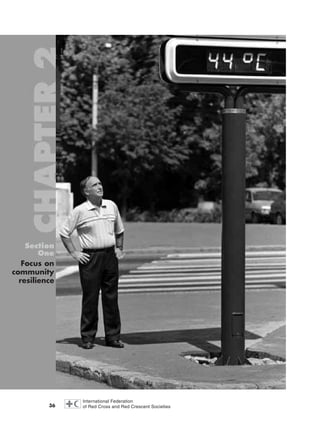
  • 155.
    However, across Mumbai’sslums, public areas and communal buildings remain dangerous or vulnerable, even when the only asset missing to improve them is team labour or the collection of a few rupees per household. The inevitable floods will continue to take lives unnecessarily, as long as slum communities lack the consensus and resources needed to establish early warning systems or evacuation plans. Meanwhile, the continued absence of a waste management system will be blamed on the municipality, yet the slum dwellers’ own social organization won’t be strong enough to begin one of its own accord. Change for the better Yet experience from other urban slums suggests that community cohesion can be generated and harnessed for the better. Numerous aid organizations have found they can play a key role as catalysts for change. From Lusaka to Manila, from Cairo to Santo Domingo, there are success stories of slum communities and non-governmental organizations (NGOs) cooperating in waste management, recycling or income- generating initiatives. For example, the Orangi Pilot Project in Karachi, Pakistan is a long-term community-based sanitation initiative, which harnessed the skills and resources of the urban poor to build a low-cost underground sewer system. In the space of ten years, infant mortality rates in Orangi district fell from 130 to 37 per 1,000 live births. Nevertheless, the sheer magnitude and complexity of urban risk – which combines inadequate infrastructure, poor water and sanitation, pollution, deforestation, high population density, recurrent natural hazards, fragile livelihoods and weak governance – means that the responsibility for building resilience to risk cannot be left to either at-risk communities or municipalities alone. While slum households may be able to protect themselves in very localized ways (such as raising their homes above flood waters), the degree to which they can build wider resilience to risk fundamentally depends on the way in which they relate to the municipality. The rules of engagement between urban stakeholders have to change, to unlock the doors currently barring people from addressing their own risks and assuming their roles as responsible caretakers of the city. This is a key role that ‘external’ organizations can take on: helping improve the relationship between authorities and slum dwellers to transform the nature of urban governance. Often, this may entail overcoming mutual mistrust between the city’s bureaucrats and its citizens (see Box 7.3). It also means that donors and aid organizations must not only work with citizens’ associations, but also support, rather than circumvent, municipal authorities. For, despite its failings, the municipality remains the authority best placed to coordinate and facilitate large-scale urban development and risk reduction. And, as Mark Pelling, 154 chap07 16.8.2004 10:49 Page 154
  • 156.
    155World Disasters Report2004 – Surviving in the slums Santo Domingo is the capital of the Dominican Republic in the Caribbean and home to about 5 million people. The city is exposed to episodic shocks from hurricanes and earthquakes. With two-thirds of the city’s population unable to access adequate hous- ing and basic services, vulnerability to chron- ic environmental health hazards is also high. The city and country have long histories of authoritarian government. Civil society is vibrant but political violence has left little trust between community groups and the state. The municipality is under-financed and unable to meet the basic service needs of a growing population. Despite these structural constraints, the commitment for change in the city has led to constructive, collaborative governance and disaster resilience. Two examples, responding to episodic and chronic risk, follow. Following Hurricane Georges in September 1998, about 4,000 of the 10,000 households in Sabana Perdida, one of the capital’s rapidly growing informal settlements or barrios, were made homeless. Before the hurricane, a number of local groups existed in the barrio. In devising a response strategy, the United Nations Development Programme encouraged these community groups and political activists to col- laborate on a local action plan, which led to the reconstruction of 530 homes, a seamstress’s school for women and a sports court. The municipality contributed building materials from part of its reconstruction budget. Early inter- vention and the involvement of local actors, including the municipality, gave the programme legitimacy and allowed people to continue living and working in the barrio, thereby avoiding displacement and homelessness. In Los Manguitos, an informal settlement of 33,000 people, environmental health risks were high, mainly because of uncollected household waste. In 1992, six community- based organizations came together – with the help of IDDI (a Dominican NGO), initial financial support from the United States Agency for International Development and collaboration from the city municipality – to form UCOREBAM, a community-managed household waste collection business. That these nine organizations, from across the social and political spectrum, were able to come together to address a risk issue shows what can be done when the will for collabo- ration is mobilized. Not only has the environ- mental health hazard been reduced, but the project has also generated livelihood oppor- tunities for waste collectors and increased the management expertise of the community groups in Los Manguitos. Across Santo Domingo, there are many more examples of collaboration between local and non-local actors, as well as between civil society and the public sector, leading to greater disaster resilience – build- ing trust and increasing the skills and experi- ence of those involved. But there is more to be done. Not all the most vulnerable are repre- sented in community groups. Political parti- sanship continues to distort local and munici- pal agendas. And regulation of construction standards and land-use remains problematic. Meanwhile, the twin goals of international donors – to support civil society groups and strengthen democracy through an effective and transparent municipal government – have created tensions. Finally, the private sec- tor has so far played only a limited role in supporting disaster resilience, despite the sec- tor’s involvement in water, waste manage- ment and communications. ■ Box 7.3 Slum communities and municipality collaborate in Santo Domingo chap07 16.8.2004 10:49 Page 155
  • 157.
    author of Thevulnerability of cities, points out: “The municipality is a democratically governed body, which many [organizations] in civil society are not.” “Now we’re unstoppable” Where this support to municipalities has been tried, there have been some promising results. For example, the Slum Sanitation Programme in Greater Mumbai was created in 1997 to provide a number of slum pockets with proper sanitation facilities. The critical state of health among some of the city’s more crowded slums made the intervention an urgent priority. The programme sought to introduce a community- based approach to toilet provision, which was different from anything previously attempted. The World Bank sponsored the building of the physical infrastructure, while local community-based organizations (CBOs) took responsibility for the ownership, administration and management of the facilities. During the process of planning and construction, the municipality helped enhance the CBOs’ administration and management skills, based on the needs and capacities of each individual group. The municipality also supported the development of the project design, the user payment scheme and the management strategy, according to the particular needs of each community. The toilets are now administered by CBOs on a pay-per-use or monthly fee basis. Unlike municipality-owned facilities, the money never leaves the community. Any funds left over from repairs and upkeep are reinvested into the neighbourhood, through new or ongoing local projects of the community’s choosing. A similar grass-roots approach was adopted with the Slum Adoption Scheme, which aims to tackle the chronic problems of garbage and waste matter contaminating Mumbai’s slums, exacerbating flood and fire risks, and contributing to chronic ill- health. In this scheme, each household pays a local CBO a certain amount per month for the removal of garbage and the maintenance of clean gutters and drains. Usually, unemployed youths or marginalized community members are hired to do the work, thereby creating a source of income for the poorest in the community. The money raised is matched on a one-to-one basis by the municipality, which supplies basic equipment and helps to enhance local administration and management capacities. As with the Slum Sanitation Programme, the profit made each month by the scheme is reinvested into the community, through the creation of local projects chosen by the participants. Both schemes have increased resilience in slum areas by stimulating the growth of social cohesion and creating a mechanism for that unity to begin producing tangible 156 chap07 16.8.2004 10:49 Page 156
  • 158.
    results. The schemesdraw on community money and then reinvest it back into projects of communal benefit. The resources unlocked have been used for both direct and indirect risk reduction measures. Communal buildings have been reinforced; businesses and other income-generating ventures have been started up; counselling services have appeared; and political participation is increasing. When asked about the future of one particularly proactive CBO participating in the Slum Sanitation Programme, a community leader responded: “We started with toilets, now we’re unstoppable.” The principal lesson to be learned from these two cases is that, while poor governance practices shift power to manage risk out of the household, good governance has the ability to put it back. The burden on the municipality to design, implement and maintain tens of thousands of new toilets effectively would have been overwhelming – and the results would probably have been poor. Changing the rules of engagement to create joint ownership of that process with the end-users resulted in a successful sanitation programme that created community coping benefits beyond the sum of its parts. The catalytic role of the external agency in facilitating this relationship was crucial. It is worth emphasizing the need for joint ownership, as too much decentralization of responsibility for the provision of services from municipal to community level could simply be seen as another form of privatization and rolling back of the state. Supporting resilience in urban slums Based on research in Mumbai into urban risks and coping strategies, a number of implications arise for ‘external’ humanitarian and development actors, as well as for governments and municipalities, seeking to support community resilience in urban areas: ■ Understand what urban dwellers perceive as disasters. How are they already coping with and adapting to these threats? The answers are not as obvious as one might assume. Slum dwellers make rational decisions in the face of different risks, based on what’s best for their long-term livelihoods. A mitigation measure that is useful for one household may be irrelevant for a neighbouring household. So donor strategies must enable local actors to shape their own agendas. ■ Explore barriers that constrain people from coping. This too may not be as obvious as it initially appears. Is the barrier internal to the household (e.g., lack of knowledge, funds, social unity) or is it external (e.g., threat of eviction, inability to access public support, lack of a recognized right to improve safety in an area)? Given the risks of eviction, aid organizations must be aware that some types of support may put slum communities at greater risk. 157World Disasters Report 2004 – Surviving in the slums chap07 16.8.2004 10:49 Page 157
  • 159.
    ■ Link measuressupporting resilience to income generation. Research has shown that slum dwellers are more willing to dedicate time, energy and commitment to increasing their resilience to risks, if it directly contributes to the security of their incomes. The creation of savings groups, for example, simultaneously boosts financial stability and creates community cohesion. ■ Improve relations between municipalities and slum dwellers, so that responsibility for creating resilience to urban risks does not fall completely on the shoulders of one party or the other, but rests rather on a dynamic partnership between authorities and end-users. While not every aid organization can address structural governance problems, all agencies should aim to get beyond bilateral relationships with either communities or governments and strive to create a culture of engagement between all those with a stake in creating a healthier, safer city. Jennifer Rowell, urban technical adviser at CARE International (UK), was principal contributor to this chapter and Boxes 7.1 and 7.2. Mark Pelling, author of The vulnerability of cities: natural disasters and social resilience, contributed Box 7.3. Sources and further information Blaikie, Piers; Cannon, Terry; Davis, Ian; and Wisner, Ben. At Risk: Natural Hazards, People’s Vulnerability and Disasters. London: Routledge, 2004 (second edition). Devas, Nick and Rakodi, Carole. ‘The Urban Challenge’ in Devas and Radoki (eds), Managing Fast Growing Cities. Essex, UK and New York: Longman Group and John Wiley & Sons, Inc., 1993. Kreimer, A. and Munasingle, M. Environmental Management and Urban Vulnerability. Discussion Paper. Washington DC: World Bank, 1992. Pelling, Mark. The vulnerability of cities: natural disasters and social resilience. London: Earthscan, 2003. Rahman, S.U. ‘The Plight of Slum Dwellers in Delhi’ in The Milli Gazette. New Delhi, 26 November 2002. Rowell, Jennifer. Mainstreaming Risk Management in the Slums of Mumbai: A Livelihoods Perspective. Unpublished Masters thesis; Cranfield University, UK, 2002. Sanderson, David. The Urbanisation of Poverty. London: CARE International UK, 2002. Available at: http://www.careinternational.org.uk/resource_centre/urban.htm Twigg, John. ‘Disaster risk reduction: Mitigation and preparedness in development and emergency planning’ in Good Practice Review, Number 9, March 2004. Humanitarian Practice Network, Overseas Development Institute, London. United Nations Human Settlements Programme (UN-HABITAT). Slums of the World: The face of urban poverty in the new millennium. Nairobi: UN-HABITAT, 2003. 158 chap07 16.8.2004 10:49 Page 158
  • 160.
    Web sites CARE InternationalUK http://www.careinternational.org.uk Overseas Development Institute http://www.odi.org.uk UN-HABITAT http://www.unhabitat.org World Bank http://www.worldbank.org 159World Disasters Report 2004 – Surviving in the slums chap07 16.8.2004 10:49 Page 159
  • 161.
    160 Section Two Tracking the system From 1994to 2003, deaths per reported disaster were on average seven times higher in countries of low human development than in highly developed countries. © Marko Kokic, International Federation. chap08 19.8.2004 11:58 Page 160
  • 162.
    161World Disasters Report2004 – Disaster data Disaster data: key trends and statistics As in previous years, the World Disasters Report features the latest reported data on disasters with a natural or technological trigger from the past decade (1994–2003). However, our statistics do not cover the effects of war, conflict-related famine, disease or epidemics such as HIV/AIDS. Our ‘natural’ disaster data are divided into hydro-meteorological and geophysical disasters, in order to track the changing impact of weather-related hazards. We analyse the data not only by country and continent, but according to levels of human development, to highlight the relationship between development and disasters. All disasters on the rise Over the past decade, the number of natural and technological disasters has inexorably climbed (see Figure 8.1). From 1994 to 1998, reported disasters averaged 428 per year – from 1999 to 2003, this figure shot up by two-thirds to an average 707 disaster events each year. The biggest rise was in countries of low human development, which suffered an increase of 142 per cent. A closer analysis of the figures reveals that transport accidents registered the biggest rise, climbing 75 per cent during the second half of the decade to average 229 events per year. Transport accidents now account for half of all natural and technological disasters reported in Africa. However, our tables only account for reported transport accidents where at least ten people have been killed or 100 affected by a single incident (see disaster definitions below). Hence, the full number and impact of global road traffic accidents, for example, is not captured by the data. Both hydro-meteorological and geophysical disasters have become more common, becoming respectively 68 per cent and 62 per cent more frequent over the decade. This reflects longer- term trends: between 1960 and 2003, the number of reported hydro-meteorological disasters has Figure 8.1 chap08 16.8.2004 10:46 Page 161
  • 163.
    multiplied more thanseven times, while geophysical disasters have multiplied five times. However, reported weather-related disasters still outnumber geophysical disasters by nine to one over the past ten years. Among natural disasters, floods are the most common event in Africa, Asia and Europe, while windstorms are the most reported disaster in the Americas and Oceania. Famine, earthquake, heat: the deadliest Last year’s death toll of nearly 77,000 was triple the total for 2002 – with countries of medium and high development hit hardest. Disasters cost around 31,000 lives in Europe last year – mainly due to the August heatwave. This figure was eight times higher than the average annual death toll from disasters in Europe for the previous nine years. The earthquake that devastated the Iranian city of Bam claimed at least 26,000 lives. Meanwhile, deaths in countries of low human development (LHD) last year fell to their lowest level for nine years. However, over the decade, more than half of those killed by natural disasters lived in LHD countries. 162 Figure 8.2 chap08 16.8.2004 10:46 Page 162
  • 164.
    Drought and faminehave proved the deadliest disaster of the decade worldwide, accounting for at least 275,000 deaths since 1994 – nearly half the total for all natural disasters (see Figure 8.2). The food crisis in the Democratic People’s Republic of Korea from 1995 to 1999 accounted for much of this figure. Comparing data on the frequency and mortality of disasters over the past decade, drought/famine was again the deadliest, claiming over 1,000 lives per reported disaster. Earthquakes killed an average of 370 people per disaster, while extreme temperatures claimed over 300 lives per disaster. By contrast, each windstorm and flood which was reported killed an average of 70 to 80 people. Nearly three-quarters of all reported deaths over the last ten years occurred during hydro-meteorological disasters. Deaths drop, numbers affected climb Despite the increased number of disasters reported over the decade, average annual death tolls dropped from over 75,000 per year (1994–1998) to 59,000 per year (1999–2003). However, over the same period, the numbers affected continued to climb. For the first five years of the decade, an average of 213 million people were affected – almost all by natural disasters. The second half of the decade saw this figure rise by over 40 per cent to an average of 303 million per year, driven by the colossal numbers reported affected in 2002 (when drought in India affected 300 million people). Last year, 150 million Chinese were affected by one flood in July alone. Asia is the most disaster-prone continent, accounting for 91 per cent of those reported affected. Analysing the past two decades of data reveals similar trends. Deaths reported from natural and technological disasters between 1984 and 1993 averaged 102,000 per year. This toll dropped by a third to average around 67,000 deaths per year from 1994 to 2003. Over the same 20 years, the numbers of people reported affected by disasters climbed by 59 per cent from an average of 163 million per year (1984–1993) to 258 million per year (1994–2003). The reason less people are dying from hydro-meteorological disasters, in particular, may be partly explained by better satellite forecasting and early warning systems, which enable those in the path of disaster to seek shelter or evacuate before it is too late. Equally, systematic disaster preparedness at community level, in countries such as Bangladesh and India where seasonal disasters are frequent, has helped reduce death tolls. The fact that more people are being affected by disasters reflects a range of factors. Overall numbers of reported disasters are increasing, driven partly by a more variable global climate. Meanwhile, a rapid increase of population in poorer parts of the world – combined with rapid, unplanned development (particularly in urban areas) – is putting more people at risk. 163World Disasters Report 2004 – Disaster data chap08 16.8.2004 10:46 Page 163
  • 165.
    Development level determines disastercosts Impacts vary enormously according to the level of human development achieved in the country where disaster strikes. Levels of development for each country are taken from the United Nations Development Programme’s (UNDP) Human Development Index (HDI). One simple way of analysing disaster impacts is to compare reported deaths and costs against the number of disasters reported. Over the past decade, this calculation reveals that natural and technological disasters in countries of high human development (HHD) killed an average of 44 people per event, while disasters in LHD countries killed an average of 300 people each (see Figure 8.3). Estimated costs of damage, however, play the other way. Disasters in HHD countries inflicted an average of US$ 318 million worth of damage per event – over 11 times higher than the US$ 28 million recorded per disaster in LHD countries (see Figure 8.4). These figures reflect the fact that rich countries have more high-value infrastructure exposed to disasters than poorer countries. However, the statistics fail to capture the fact that disasters have a far more devastating impact on gross domestic product (GDP) in poor countries than in rich countries. Over the past decade, HHD countries were most commonly afflicted by windstorms (mainly in the United States), which accounted for nearly half of all those affected by disasters. However, extreme temperatures (particularly 2003’s heatwave in Europe) caused more than half of all deaths reported in highly developed countries since 1994. Meanwhile earthquakes (particularly Japan’s Kobe quake) inflicted at least US$206 billion of damage over the ten-year period, double the cost of windstorms, the next most expensive disaster. In countries of medium human development (MHD), transport accidents proved most common from 1994 to 2003, driven by a more mobile population and accelerating economic development in countries such as India and China. However, a combination of earthquakes, floods and windstorms accounted for nearly three- 164 Figure 8.3 Figure 8.4 chap08 16.8.2004 10:46 Page 164
  • 166.
    quarters of alldisaster deaths in MHD countries over the decade. Of all those reported affected by disasters in MHD countries, 58 per cent suffered from floods, which caused at least US$ 107 billion of damage over the period. Transport accidents also accounted for the highest number of disasters reported in LHD countries. However, drought and famine proved by far the most devastating disaster in these countries, accounting for 84 per cent of the decade’s death toll and three-quarters of all those affected. Floods, meanwhile, cost LHD countries the most, accounting for three-quarters of all reported economic damage. Aid flows climb Official development assistance (ODA) from members of the Development Assistance Committee (DAC) of the Organisation for Economic Co-operation and Development (OECD) grew significantly to US$ 58.3 billion in 2002 (the latest year for which statistics are available), a gross increase of 11.3 per cent compared to 2001 (see Figure 8.5). When taking into account both inflation and exchange rate movements, the rise is still a significant 7.2 per cent in real terms. Canada, France, Greece, Ireland and Italy increased their contributions by more than 30 per cent (see Figure 8.6). The biggest individual increases came from France (up US$ 1.28 billion) and the United States (up US$ 1.86 billion). 165World Disasters Report 2004 – Disaster data Figure 8.5 chap08 16.8.2004 10:46 Page 165
  • 167.
    Among the fivebiggest donors, aid from the United States has grown significantly since 1997 (see Figure 8.7). Meanwhile, contributions from the United Kingdom over the past decade have steadily increased to match levels given by France and Germany, whose aid has declined since the mid-1990s. Japan was the world’s largest donor of ODA until 2000, after which levels fell below donations from the United States. Expressed as a percentage of donor countries’ gross national income (GNI), only five countries (Denmark, Norway, Sweden, the Netherlands and Luxembourg) exceeded the United Nations’ (UN) 0.7 per cent target (see Figure 8.8). Compared to 2001, the proportion of aid as a percentage of their GNI increased for Australia, Belgium, Canada, Finland, France, Greece, Ireland, Italy, Norway, Portugal, Sweden and the United States. Meanwhile emergency/distress relief (not including relief provided by multilateral 166 Figure 8.6 Figure 8.7 chap08 16.8.2004 10:46 Page 166
  • 168.
    institutions and non-governmentalorganizations (NGOs)) grew from US$ 3.3 billion in 2001 to US$ 3.9 billion in 2002 – an increase of 18 per cent (see Figure 8.9). As in previous years, the United States was the biggest donor of emergency/distress relief, accounting for 36 per cent of all donations. However, DAC rules allow donors to define spending on refugees hosted in donor countries as part of their emergency/distress relief (this amounted to 25 per cent of the total in 2001). Calculating the full amount spent on humanitarian relief is notoriously difficult, as different donors account for their relief contributions in different ways. The total of US$ 3.9 billion for emergency relief quoted above does not present the full picture. A recent independent report, Global Humanitarian Assistance 2003, sponsored by the United Kingdom’s Department for International Development, has tried to arrive at a more accurate figure. According to the report, “global humanitarian assistance totals at least $10 billion a year”. Breaking down the total for 2001, the report calculated the following contributions: ■ OECD DAC donors’ humanitarian aid (not including expenditure on domestic refugees): US$ 4.2 billion. ■ OECD DAC donors’ spending on post-conflict peace activities: US$ 4 billion. ■ Humanitarian assistance from non-DAC donors (especially Saudi Arabia and the Republic of Korea): US$ 500 million. 167World Disasters Report 2004 – Disaster data Figure 8.8 chap08 16.8.2004 10:46 Page 167
  • 169.
    ■ Voluntary contributionsfrom the public via NGOs: US$ 700 million– US$ 1.5 billion. ■ Multilateral humanitarian aid (via NGOs, UN, international organizations) not captured by DAC statistics: US$ 400 million. For more detail on these data, visit: www.globalhumanitarianassistance.org Disaster definitions Data in Tables 1 to 13 are provided by CRED, the Belgium-based Centre for Research on the Epidemiology of Disasters (see Box 8.1). CRED defines a disaster as a “situation or event, which overwhelms local capacity, necessitating a request to national or international level for external assistance; an unforeseen and often sudden event that causes great damage, destruction and human suffering”. For a disaster to be entered into its EM-DAT database, at least one of the following criteria must be fulfilled: ■ ten or more people reported killed; ■ 100 people reported affected; ■ declaration of a state of emergency; ■ call for international assistance. 168 Figure 8.9 chap08 16.8.2004 10:46 Page 168
  • 170.
    The number ofpeople killed includes “persons confirmed as dead and persons missing and presumed dead”; people affected are those “requiring immediate assistance during a period of emergency, i.e. requiring basic survival needs such as food, water, shelter, sanitation and immediate medical assistance”. People reported injured or homeless in the tables are aggregated with those reported affected to produce a “total number of people affected”. The economic impact of a disaster usually consists of direct losses (e.g., damage to infrastructure, crops, housing) and indirect losses (e.g., loss of revenues, unemployment, market destabilization) to the local economy. EM-DAT’s figures represent only the value of direct losses at the moment of the event, expressed in US dollars (2003 prices). 169World Disasters Report 2004 – Disaster data Tables 1 to 13 on disasters and their human impacts over the last decade were drawn from EM-DAT and documented by CRED. Established in 1973 as a non-profit institu- tion, CRED is based at the School of Public Health of the Catholic University of Louvain in Belgium and became a World Health Organization (WHO) collaborating centre in 1980. Although CRED’s main focus is on public health, the centre also studies the socio-economic and long-term effects of large-scale disasters. Since 1988, with the sponsorship of USAID’s Office of Foreign Disaster Assistance (OFDA), CRED has maintained EM-DAT, a worldwide database on disasters. It contains essential core data on the occur- rence and effects of over 14,000 disasters in the world from 1900 to the present. The database is compiled from various sources, including UN agencies, NGOs, insurance companies, research institutes and press agencies. The entries are con- stantly reviewed for redundancies, incon- sistencies and the completion of missing data. CRED consolidates and updates data on a daily basis. A further check is made at three-month intervals. Revisions are entered annually at the end of the calendar year. Priority is given to data from UN agencies, followed by OFDA, governments and the International Federation. This priority is not a reflection of the quality or value of the data but the recognition that most reporting sources do not cover all disasters or have political limitations that may affect the figures. The database’s main objective is to assist humanitarian action at both national and international levels. It aims to rationalize decision-making for disaster preparedness, as well as providing an objective basis for vulnerability assessment and priority setting. Dr. D. Guha-Sapir, Director, CRED, WHO Collaborating Centre, School of Public Health, Catholic University of Louvain, 30.94, Clos Chapelle-aux-Champs, 1200 Brussels, Belgium. Tel.: +32 2 764 3327 Fax: +32 2 764 3441 E-mail:sapir@epid.ucl.ac.be Web: http://www.cred.be ■ Box 8.1 EM-DAT: a specialized disaster database chap08 16.8.2004 10:46 Page 169
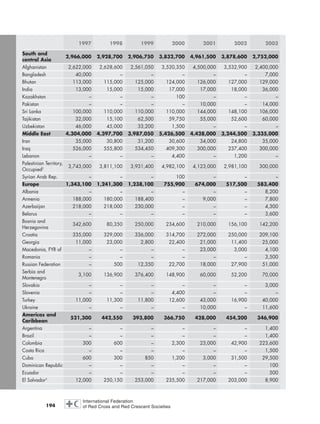
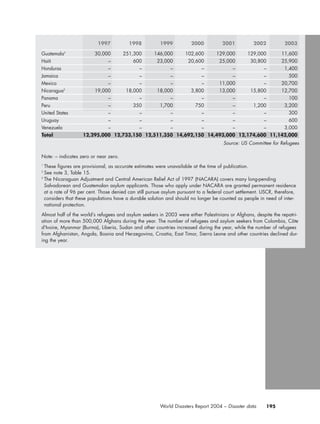
  • 171.
    170 The United StatesCommittee for Refugees (USCR) is the public information and advo- cacy arm of Immigration and Refugee Services of America, a non-governmental organization. USCR’s activities are twofold: it reports on issues affecting refugees, asylum seekers and internally displaced people; and encourages the public, policy-makers and the international community to respond appropri- ately and effectively to the needs of uprooted populations. USCR travels to the scene of refugee emergencies to gather testimony from up- rooted people, to assess their needs and to gauge governmental and international response. The committee conducts public briefings to present its findings and recom- mendations, testifies before the United States Congress, communicates concerns directly to governments and provides first-hand assess- ments to the media. USCR publishes the annual World Refugee Survey, the monthly Refugee Reports and issue papers. The data in Tables 14–16 were provided by USCR. The quality of the data in these tables is affected by the less-than-ideal condi- tions often associated with flight. Unsettled conditions, the biases of governments and opposition groups, and the need to use popu- lation estimates to plan for providing humanitarian assistance can each contribute to inaccurate estimates. The estimates repro- duced in these tables are USCR’s preliminary year-end figures for 2003. Table 14 lists refugees and asylum seek- ers by country of origin, while Table 15 lists the two groups by host country. Refugees are people who are outside their home country and are unable or unwilling to return to that country because they fear persecution or armed conflict. Asylum seekers are people who claim to be refugees; many are awaiting a determination of their refugee status. While not all asylum seekers are refugees, they are nonetheless entitled to certain protections under international refugee law, at least until they are determined not to be refugees. USCR also includes persons granted various forms of humanitarian relief if that relief is based on factors related to the UN refugee definition, as distinct from, for example, relief granted because of natural disaster. Table 16 concerns internally displaced people (IDPs). Like refugees and asylum seek- ers, IDPs have fled their homes, but have remained in their home country. No univer- sally accepted definition of IDPs exists. USCR generally considers people who are up- rooted within their country because of armed conflict or persecution – and thus would be refugees if they were to cross an inter- national border – to be internally displaced. Broader definitions are employed by some agencies, however, who sometimes include people who are uprooted by natural or human-made disasters or other causes not directly related to human rights. IDPs often live in war-torn areas and are neither regis- tered nor counted in any systematic way. Estimates of the size of IDP populations are frequently subject to great margins of error. US Committee for Refugees, 1717 Massachusetts Avenue NW, Suite 200, Washington DC 20036, USA. Tel.: +1 202 347 3507 Fax: +1 202 347 3418 E-mail:uscr@irsa-uscr.org Web: http://www.refugees.org ■ Box 8.2 US Committee for Refugees chap08 16.8.2004 10:46 Page 170
  • 172.
    EM-DAT distinguishes twogeneric categories for disasters (natural and technological), divided into 15 main categories, each themselves covering more than 50 sub-categories. For these tables, natural disasters are split into hydro-meteorological disasters (avalanches/landslides; droughts/famines; extreme temperatures; floods; forest/scrub fires; windstorms; and other disasters: insect infestations and waves/surges) and geophysical disasters (earthquakes and volcanic eruptions). Meanwhile, technological disasters include industrial accidents (chemical spills; collapses of industrial infrastructure; explosions; fires; gas leaks; poisoning; radiation), transport accidents (by air, rail, road or water) and miscellaneous accidents (collapses of domestic/non-industrial structures; explosions; fires). In Tables 1 to 13, “disasters” refer to disasters with a natural and technological trigger only, and do not include wars, conflict-related famines, diseases or epidemics. The classification of countries as high, medium or low human development is based on UNDP’s 2003 HDI. To classify countries not listed in the HDI, the World Bank’s 2004 Development Indicators are used, classing low-income countries as low human development, lower middle income and upper middle income as medium human development, and high income as high human development. Islands and territories that are dependencies of a state are classed in the same category as the state. Niue and Tuvalu are classed according to the World Bank’s 1998 Development Indicators. Caveats Key problems with disaster data include the lack of standardized collection methodologies and definitions. The original information, collected from a variety of public sources, is not specifically gathered for statistical purposes. So, even when the compilation applies strict definitions for disaster events and parameters, the original suppliers of information may not. Moreover, data are not always complete for each disaster. The completeness may vary according the type of disaster (e.g., the number of people injured or affected by transport accidents is rarely reported) or its country of occurrence. For natural disasters over the last decade, data on deaths are missing for one-tenth of disasters; data on numbers affected are missing for one-fifth of disasters; and data on economic damage are missing for 70 per cent of disasters. Meanwhile, data on economic damage inflicted by technological disasters are missing for 97 per cent of reported disasters. The figures should therefore be regarded as indicative. Relative changes and trends are more useful to look at than absolute, isolated figures. Information systems have improved vastly in the past 25 years and statistical data are now more easily available. However, despite efforts to verify and review data, the quality of disaster databases can only be as good as the reporting system. The lack of systematization and standardization of data collection is proving a major problem for long-term planning. Fortunately, due to increased pressures for accountability from 171World Disasters Report 2004 – Disaster data chap08 16.8.2004 10:46 Page 171
  • 173.
    various sources, manydonors and development agencies have started to prioritize data collection and methodologies. Data can be skewed because of the rationale behind data gathering. Reinsurance companies, for instance, systematically gather data on disaster occurrence to assess insurance risk, but only in countries where disaster insurance is widespread. Their data may miss out poor disaster-affected regions where insurance is unaffordable or unavailable. Data on the numbers of people affected by a disaster can provide some of the most potentially useful figures, for planning disaster preparedness and response, yet these are sometimes poorly reported. Moreover, the definition of “affected” is open to interpretation, political or otherwise. Even if manipulation is absent, data are often extrapolated from old census information, with assumptions being made about the percentage of an area’s population affected. Dates can be a source of ambiguity. For example, a declared date for a famine is both necessary and meaningless – famines do not occur on a single day. In such cases, the date the appropriate body declares an official emergency has been used. Changes in national boundaries also cause ambiguities in the data and may make the analysis of long-term trends more complicated. Part of the solution to this data problem lies in retrospective analysis. Data are most often publicly quoted and reported during a disaster, but it is only long after the event, once the relief operation is over, that estimates of damage and death can be verified. Some data gatherers, like CRED, do this, which means retrospective annual disaster figures can change one, two or even three years after the event. A more detailed analysis of the challenges facing the gathering, standardizing and assessing of disaster data can be found in Chapter 7 of the World Disasters Report 2003. In the following tables, some totals may not correspond due to rounding. This analysis was contributed by Jonathan Walter, editor of the World Disasters Report, and by CRED team members Philippe Hoyois, senior research fellow; Regina Below, EM-DAT disaster database manager; and Debarati Guha-Sapir, director. 172 chap08 16.8.2004 10:46 Page 172
  • 174.
    173World Disasters Report2004 – Disaster data Table1Totalnumberofreporteddisasters,1 bycontinentandbyyear(1994to2003) 1994199519961997199819992000200120022003Total Africa59635856831441961862011631,209 Americas8099951021121371471281531191,172 Asia1821771761952092402892953012642,328 Europe6972556066781229211185810 Oceania1781715171513181820158 Highhuman development2961261021281241371731431641341,327 Mediumhuman development 2672332382362723584284034533663,254 Lowhuman development44606164911191661731671511,096 Total4074194014284876147677197846515,677 Source:EM-DAT,CRED,UniversityofLouvain,Belgium 1 InTables1–13,‘disasters’refertothosewithanaturalandtechnologicaltriggeronly,anddonotincludewars,conflict-relatedfamines,diseasesor epidemics. 2 SeenoteonUNDP’sHumanDevelopmentIndexcountrystatusinthesectionondisasterdefinitionsintheintroductiontothischapter. In2003,Asiaremainedthecontinentmostfrequentlystruckbydisasters,with41percentofthetotalnumberofdisastersrecordedinEM-DAT. Disastersreportedworldwideoverthefirsthalfofthedecade(1994–1998)averaged428peryear,increasingby65percentduringthesecondhalfofthe decade(1999–2003)toaverage707peryear. Countriesoflowhumandevelopmentrecordedthebiggestriseinreporteddisasters(up142percentduringthesecondhalfofthedecade),withAfricaworst affected.Bycomparison,disastersincountriesofhighhumandevelopmentincreasedbyjust30percentoverthesameperiod. However,disastersreportedin2003fellby17percentcomparedwith2002. chap08 16.8.2004 10:46 Page 173
  • 175.
    174 Table2Totalnumberofpeoplereportedkilled,bycontinentandbyyear(1994to2003) 1994199519961997199819992000200120022003Total Africa3,1442,9623,4844,0647,0062,6885,7564,4628,2725,81047,648 Americas2,8742,6282,5413,06921,86533,9891,8203,4602,2852,02676,557 Asia13,32875,59069,70671,03382,37375,89011,60829,25513,35837,860480,001 Europe2,3403,3661,2041,1661,43419,4481,6272,1961,69931,04665,526 Oceania103241113882,227116205991643,338 Highhuman development12,4628,1452,0622,4502,8933,2502,0391,8491,89531,61958,664 Mediumhuman development 15,87418,81516,46518,12242,24472,02313,19833,49814,75441,275286,268 Lowhuman development 3,45357,61058,51959,14869,76856,8585,7794,0359,0563,912328,138 Total21,78984,57077,04679,720114,905132,13121,01639,38225,70576,806673,070 Source:EM-DAT,CRED,UniversityofLouvain,Belgium 1 SeenoteonUNDP’sHumanDevelopmentIndexcountrystatusinthesectionondisasterdefinitionsintheintroductiontothischapter. Asdiscussedintheintroduction,numbersofpeoplereportedkilledareunderestimated.Onthebasisoftheavailabledata,ofthetotalnumberofpeople reportedkilledbydisastersoverthedecade,71percentareinAsia.Countriesofhighhumandevelopmentaccountfor9percentofdeathsfrom1994–2003; thoseofmediumdevelopmentfor42percent;andthoseoflowdevelopmentfor49percent. However,2003washighlyunusual:deathsinEuropewerefivetimeshigherthanthedecade’saverage,duetoaheatwavewhichkillednearly30,000people. Meanwhile,theearthquakethathittheIraniancityofBaminDecember2003killedatleast26,000people.Bycontrast,countriesoflowhumandevelopment reportedeighttimesfewerdeathsduring2003thanthedecade’saverage. chap08 16.8.2004 10:46Page 174
  • 176.
    175World Disasters Report2004 – Disaster data Table3Totalnumberofpeoplereportedaffected,bycontinentandbyyear(1994to2003)inthousands 1994199519961997199819992000200120022003Total Africa16,2349,5354,2827,73610,15014,36223,04418,38631,73620,951156,417 Americas2,7221,1522,3802,71116,9665,0081,34811,2462,0463,73949,318 Asia166,210225,621207,16356,269315,714188,605230,044141,177583,216228,8952,342,913 Europe9098,220306796226,5492,9077861,2051,12123,028 Oceania5,9142,682652730328151732413810,575 Highhuman development16,47211,5842,6141,9722,6635,5861,0556,7102,07881341,546 Mediumhuman development 167,064220,337203,04057,480334,179196,636228,922143,339585,110232,9222,369,029 Lowhuman development18,45315,2898,8538,6736,93812,45327,37321,57931,05521,011171,676 Total191,988247,210214,50768,125343,780214,675257,350171,627618,243254,7452,582,251 Source:EM-DAT,CRED,UniversityofLouvain,Belgium 1 SeenoteonUNDP’sHumanDevelopmentIndexcountrystatusinthesectionondisasterdefinitionsintheintroductiontothischapter. Asdiscussedintheintroduction,numbersofpeoplereportedaffectedareunderestimated.Numbersaffectedin2003werejustunderthedecade’saverageof 258millionpeopleaffectedbydisasterseveryyear. AfloodinChinaduringJuly2003affected150millionpeople,accountingforoverhalfoftheyear’stotal.InIndia,twofloodsinAugustandSeptemberaffect- ed7.6millionpeople.Overthelasttenyears,91percentofthosereportedaffectedlivedinAsia. chap08 16.8.2004 10:46 Page 175
  • 177.
    176 Table4Totalamountofdisasterestimateddamage,bycontinentandbyyear(1994to2003) inmillionsofUSdollars(2003prices) 1994199519961997199819992000200120022003Total Africa532200130223588031603311405,5378,213 Americas36,91627,05114,48911,40819,61414,2883,50310,8313,45313,901155,455 Asia15,298188,38735,05830,10932,37729,51317,64816,7607,64417,304390,099 Europe12,66715,32638711,1415,30039,6798,85787416,62718,611129,468 Oceania2,1021,5471,1002843199445403553996018,191 Highhuman development150,664202,62515,80520,81718,50233,55111,39410,50719,04839,480422,391 Mediumhuman development 16,25111,61531,72732,12739,27551,65812,61518,1159,16516,122238,671 Lowhuman development60018,2723,63318191196,6995305135330,365 Total67,515232,51151,16552,96357,96885,22730,70829,15228,26455,954691,426 Source:EM-DAT,CRED,UniversityofLouvain,Belgium 1 SeenoteonUNDP’sHumanDevelopmentIndexcountrystatusinthesectionondisasterdefinitionsintheintroductiontothischapter. Asdiscussedintheintroduction,damageestimationsarenotoriouslyunreliable.Dataaremissingformorethan80percentofreporteddisasters.Evenforthe existingdata,methodologiesarenotstandardizedandthecoverageofdamagesmayvarywidely. Countriesofhighhumandevelopmentaccountfor61percentofdisasterdamageoverthepastdecade,duetohighervalueinfrastructureandgreaterinsur- ancepenetration,whichleadstosomewhatbetterreporting.Nationsoflowhumandevelopmentaccountforjust4percentofestimateddamage. Themostdamagingdisasterin2003wastheheatwaveinEurope,whichinflictedaroundUS$13billioninpropertydamagealone(inagricultureanddueto forestfires).TyphoonMaemi,whichdevastatedJapanandtheRepublicofKoreainSeptember,causedanestimatedUS$5.5billionofeconomicdamage. FourotherdisasterseachinflictedUS$5billionofdamage:anearthquakeinMexicoinJanuary;atornadointheUnitedStatesinMarch;anearthquakein AlgeriainMay;andHurricaneIsabelinCanadaandtheUnitedStatesinSeptember. However,2003’stotalbillofUS$56billionwaswellbelowthedecade’saverageofUS$69billionperyear. chap08 16.8.2004 10:46Page 176
  • 178.
    177World Disasters Report2004 – Disaster data Table5Totalnumberofreporteddisasters,bytypeofphenomenonandbyyear(1994to2003) 1994199519961997199819992000200120022003Total Avalanches/landslides8152413211529211921186 Droughts/famines1016818343048474121273 Earthquakes23251117173331253540257 Extremetemperatures101351313831231518149 Floods78957076881121521591721581,160 Forest/scrubfires137515162230142214158 Volcaniceruptions655445567249 Windstorms6759636872861019811276802 Othernaturaldisasters1 142322421021 Subtotalhydro- meteorologicaldisasters 1872091772062462753953643823082,749 Subtotalgeophysical disasters 29301621213836314242306 Totalnaturaldisasters2162391932272673134313954243503,055 Industrialaccidents34453535433650544846426 Miscellaneousaccidents30293730295147495244398 Transportaccidents1271061361361482142392212602111,798 Totaltechnological disasters 1911802082012203013363243603012,622 Total4074194014284876147677197846515,677 Source:EM-DAT,CRED,UniversityofLouvain,Belgium 1 Insectinfestationsandwaves/surges. In2003,thehighestnumberofreporteddisastersweretransportaccidents(32percentofalldisasters),followedbyfloods(24percent).Hydro-meteorological disastersreportedworldwideoverthefirsthalfofthedecade(1994–1998)averaged205peryear,increasingby68percentduringthesecondhalfofthe decade(1999–2003)toaverage345peryear.Overthesameperiod,transportaccidentsincreasedby75percent,fromanaverageof131peryear (1994–1998)toanaverageof229peryear(1999–2003).Geophysicaldisastersincreased62percentoverthesameperiod. Floodsandwindstormsaccountfor64percentofallnaturaldisasters,whiletransportaccidentsaccountfor68percentofalltechnologicalaccidents. chap08 16.8.2004 10:46 Page 177
  • 179.
    178 Table6Totalnumberofpeoplereportedkilled,bytypeofphenomenonandbyyear(1994to2003) 1994199519961997199819992000200120022003Total Avalanches/landslides2801,4971,1298019813511,0996921,1497008,679 Droughts/faminesn.a.54,00054,00054,52057,87554,0293701995389275,540 Earthquakes1,2427,9665843,0397,41721,87020421,3551,60629,61794,900 Extremetemperatures4161,7303006193,2257719221,6533,36932,40345,408 Floods6,4038,1457,3096,9589,69534,3666,3304,6784,3544,05092,288 Forest/scrubfires84294532109704733653508 Volcaniceruptions101n.a.453n.a.n.a.n.a.n.a.254n.a.412 Windstorms4,0813,7244,3805,33024,65711,8991,1291,8641,09399559,152 Othernaturaldisasters1 31n.a.324002,18231n.a.n.a.ndr2,649 Subtotalhydro- meteorologicaldisasters 11,29569,12567,19568,66098,724101,4899,8989,11910,50938,210484,224 Subtotalgeophysical disasters 1,3437,9665883,0927,41721,87020421,3551,86029,61795,312 Totalnaturaldisasters12,63877,09167,78371,752106,141123,35910,10230,47412,36967,827579,536 Industrialaccidents7795136741,0331,9427421,7431,2711,1471,10110,945 Miscellaneousaccidents1,7191,7111,1591,2777481,3301,1121,7832,0231,36114,223 Transportaccidents6,6535,2557,4305,6586,0746,7008,0595,85410,1666,51768,366 Totaltechnological disasters 9,1517,4799,2637,9688,7648,77210,9148,90813,3368,97993,534 Total21,78984,57077,04679,720114,905132,13121,01639,38225,70576,806673,070 Source:EM-DAT,CRED,UniversityofLouvain,Belgium 1 Insectinfestationsandwaves/surges Note:n.a.signifiesnodataavailable;ndrsignifiesnodisasterreported.Formoreinformation,seesectiononcaveatsinintroductorytext. Extremetemperatures–mainlytheEuropeanheatwave–causedthemostfatalitiesduring2003,accountingfor42percentofalltheyear’sdisasterdeaths. Naturaldisastersaccountedfor86percentofallreporteddisasterfatalitiesoverthedecade,although2000and2002sawtechnologicaldisastersclaimmore livesthannaturaldisasters.Hydro-meteorologicaldisastersclaimed484,224lives(72percentofalldisasterdeaths). Drought/famineisthedeadliestdisasterbyfar,accountingfor48percentofalldeathsfromnaturaldisasters,whilefloodsandearthquakesaccountfor16per centeach.Thehighdrought/faminefiguresareduetothedisasterintheDemocraticPeople’sRepublicofKoreafrom1995to1999. chap08 16.8.2004 10:46Page 178
  • 180.
    179World Disasters Report2004 – Disaster data Table7Totalnumberofpeoplereportedaffected,bytypeofphenomenonandbyyear(1994to2003)inthousands 1994199519961997199819992000200120022003Total Avalanches/landslides2981,12293420915208677714593,194 Droughts/famines20,51530,4315,8368,01624,49538,647176,47786,757338,53670,274799,985 Earthquakes7303,0292,0186341,8783,8932,45819,3075483,95638,452 Extremetemperatures1,108535n.a.61536725282131041,8405,204 Floods127,688198,233178,45144,956290,073150,16762,50634,500167,186166,8281,420,587 Forest/scrubfires3,06712653167193962693,404 Volcaniceruptions23626778341197829825837 Windstorms38,31113,77128,14413,59426,78421,15315,45930,645110,70910,781309,354 Othernaturaldisasters1 n.a.n.a.n.a.2910117n.a.2ndr59 Subtotalhydro- meteorologicaldisasters 190,988244,105212,44667,297341,775210,727254,734152,189617,334250,1912,541,786 Subtotalgeophysical disasters 9663,0552,0256411,8863,9282,57719,3868453,98139,290 Totalnaturaldisasters191,954247,160214,47067,939343,661214,655257,312171,574618,180254,1712,581,076 Industrialaccidents19271616363317192555885 Miscellaneousaccidents11191820521215305614249 Transportaccidents333345635441 Totaltechnological disasters 345036186119213853635741,174 Total191,988247,210214,50768,125343,780214,675257,350171,627618,243254,7452,582,251 Source:EM-DAT,CRED,UniversityofLouvain,Belgium 1 Insectinfestationsandwaves/surges Note:n.a.signifiesnodataavailable;ndrsignifiesnodisasterreported.Formoreinformation,seesectiononcaveatsinintroductorytext. Overthedecade,hydro-meteorologicaldisastersaccountedfor98percentofallthosereportedaffectedbydisasters.Floodsaffectanaverageof142million peopleeveryyear,accountingfor55percentofthedecade’stotal.However,in2003,floodsaffected167millionpeople–65percentoftheyear’stotal. Thenumbersaffectedbytechnologicalaccidentsarefarlower,althoughthespillof1.2billionlitresoftoxicmaterialsintotwoBrazilianriversinApril2003left 550,000peoplewithoutregularwatersupply. chap08 16.8.2004 10:46 Page 179
  • 181.
    180 Table8Totalamountofdisasterestimateddamage,bycontinentandbyyear(1994to2003) inmillionsofUSdollars(2003prices) 1994199519961997199819992000200120022003Total Avalanches/landslides7712n.a.19n.a.n.a.180741351427 Droughts/famines1,5226,9901,4104705107,5816,7643,9391,49471031,392 Earthquakes32,882161,2686215,66242834,84715210,3751,2459,512256,992 Extremetemperatures8091,01003,4514,1851,107133208n.a.11,25022,152 Floods23,94731,55129,30514,72732,97114,73311,4253,25024,04614,703200,657 Forest/scrubfires1891632,02319,5416865431,12773942,59527,033 Volcaniceruptions4981199000159n.a.552 Windstorms6,18229,54014,6908,62918,98726,19110,33211,2071,31117,134144,202 Othernaturaldisasters1 n.a.126n.a.42n.a.128n.a.n.a.ndr260 Subtotalhydro- meteorologicaldisasters 32,72669,39147,42846,84157,34050,15430,09018,75026,95846,443426,123 Subtotalgeophysical disasters 33,380161,6286405,67142834,84715210,3911,2549,512257,544 Totalnaturaldisasters66,106230,66048,06952,51257,76885,00130,24229,14128,21255,954683,666 Industrialaccidents567541,4174381463n.a.10n.a.n.a.2,824 Miscellaneousaccidents7332671,436n.a.212466051n.a.2,977 Transportaccidents6208302431233220n.a.n.a.n.a.n.a.1,958 Totaltechnological disasters 1,4091,8513,0964502002264661051n.a.7,760 Total67,515232,51151,16552,96357,96885,22730,70829,15228,26455,954691,426 Source:EM-DAT,CRED,UniversityofLouvain,Belgium 1 Insectinfestationsandwaves/surges Note:n.a.signifiesnodataavailable;ndrsignifiesnodisasterreported.Formoreinformation,seesectiononcaveatsinintroductorytext. Estimatesofdamagefromnaturaldisastersshouldbetreatedwithcaution,asthefinancialvalueattachedtoinfrastructureinmoredevelopedcountriesismuch higherthanthatindevelopingcountries.In2003,windstormscausedthecostliestdamage(US$17billion).However,thesinglemostdevastatingeventwasthe Europeanheatwave(andassociatedforestfires),whichcauseddamageamountingtoUS$13billion. Overthedecade,earthquakesaccountedfor37percentofestimateddamagefromnaturalandtechnologicaldisasters,whilefloodsaccountedfor29percent andwindstorms21percent.TheearthquakeinKobe,Japan,in1995causedoverUS$160billionindamage,makingitthedecade’smostexpensivedisaster. chap08 16.8.2004 10:47Page 180
  • 182.
    181World Disasters Report2004 – Disaster data Table9Totalnumberofreporteddisasters,bycontinentandbytypeofphenomenon(1994to2003) AfricaAmericasAsiaEuropeOceaniaHHD2 MHD2 LHD2 Total Avalanches/landslides12421051982413824186 Droughts/famines1184686131029128116273 Earthquakes11471454595118521257 Extremetemperatures73245614617513149 Floods269256411195292866102641,160 Forest/scrubfires136622461188637158 Volcaniceruptions42512261828349 Windstorms70277307876136038161802 Othernaturaldisasters1 351012116421 Subtotalhydro- meteorologicaldisasters 4927249864221258491,4114892,749 Subtotalgeophysical disasters 157215747156921324306 Totalnaturaldisasters5077691,1434691409181,6245133,055 Industrialaccidents39502627327530843426 Miscellaneousaccidents75552036148725061398 Transportaccidents588271720207122471,0724791,798 Totaltechnological disasters 7023761,185341184091,6305832,622 Total1,2091,1722,3288101581,3273,2541,0965,677 Source:EM-DAT,CRED,UniversityofLouvain,Belgium 1 Insectinfestationsandwaves/surges 2 HHDstandsforhighhumandevelopment,MHDformediumhumandevelopment,andLHDforlowhumandevelopment.SeenoteonUNDP’sHuman DevelopmentIndexcountrystatusinthesectionondisasterdefinitionsintheintroductiontothischapter. FloodsarethemostcommonlyreportednaturaldisastersinAfrica,AsiaandEurope,whilewindstormsaremostcommonintheAmericasandOceania.However, transportaccidentsareevenmorecommon–accountingfor49percentofallreporteddisastersinAfrica,31percentinAsiaand26percentinEurope. Inhighhumandevelopmentcountries,windstormsaremostcommon(largelyoccurringintheUnitedStates),whileinmediumandlowhumandevelopment countries,transportaccidentsaremostcommon. chap08 16.8.2004 10:47 Page 181
  • 183.
    182 Table10Totalnumberofpeoplereportedkilled,bycontinentandbytypeofphenomenon(1994to2003) AfricaAmericasAsiaEuropeOceaniaHHD2 MHD2 LHD2 Total Avalanches/landslides2731,7006,1624161283976,6141,6688,679 Droughts/famines4,47158270,923n.a.88n.a.846274,694275,540 Earthquakes2,4973,29968,37620,710185,99380,3178,59094,900 Extremetemperatures1872,29110,06232,862633,02411,40997545,408 Floods9,98934,77545,9611,537263,67975,82312,78692,288 Forest/scrubfires1361201251141320326936508 Volcaniceruptions2545297n.a.952106254412 Windstorms1,46323,44433,2707262493,67852,2883,18659,152 Othernaturaldisasters1 n.a.15452n.a.2,182n.a.2,649n.a.2,649 Subtotalhydro- meteorologicaldisasters 16,51962,403366,95535,6552,69240,981149,898293,345484,224 Subtotalgeophysical disasters 2,7513,35168,47320,710276,04580,4238,84495,312 Totalnaturaldisasters19,27065,754435,42856,3652,71947,026230,321302,189579,536 Industrialaccidents2,6823227,082837223627,8272,75610,945 Miscellaneousaccidents2,8211,9978,0531,306462,6359,3282,26014,223 Transportaccidents22,8758,48429,4387,0185518,64138,79220,93368,366 Totaltechnological disasters 28,37810,80344,5739,16161911,63855,94725,94993,534 Total47,64876,557480,00165,5263,33858,664286,268328,138673,070 Source:EM-DAT,CRED,UniversityofLouvain,Belgium 1 Insectinfestationsandwaves/surges 2 HHDstandsforhighhumandevelopment,MHDformediumhumandevelopment,andLHDforlowhumandevelopment.SeenoteonUNDP’sHuman DevelopmentIndexcountrystatusinthesectionondisasterdefinitionsintheintroductiontothischapter. Note:n.a.signifiesnodataavailable.Formoreinformation,seesectiononcaveatsinintroductorytext. Overthedecade,morethanhalfthepeoplekilledworldwidebynaturaldisasterslivedinlowhumandevelopmentcountries.Droughts/faminescaused84per centofalldeathsinLHDcountries;earthquakes,floodsandwindstormscaused73percentofalldeathsinmediumhumandevelopmentcountries;andextreme temperaturescaused56percentofalldeathsinhighhumandevelopmentcountries. chap08 16.8.2004 10:47Page 182
  • 184.
    183World Disasters Report2004 – Disaster data Table11Totalnumberofpeoplereportedaffected,bycontinentandbytypeofphenomenon(1994to2003)inthousands AfricaAmericasAsiaEuropeOceaniaHHD2 MHD2 LHD2 Total Avalanches/landslides33622,813141132,8862943,194 Droughts/famines127,98215,101645,2577,0634,58310,165661,651128,169799,985 Earthquakes3273,64532,3102,140302,65434,2331,56638,452 Extremetemperatures01,9328937791,6001,6773,3282005,205 Floods21,9949,2671,383,0836,170736,5141,381,51832,5541,420,587 Forest/scrubfires81483,056128641953,20263,404 Volcaniceruptions1393741520172148556133837 Windstorms5,88717,884274,9086,6474,02920,022280,6828,650309,354 Othernaturaldisasters1 n.a.347n.a.10n.a.302959 Subtotalhydro- meteorologicaldisasters 155,873155,87344,69644,6962,310,0562,310,05620,80020,80010,36010,36038,58738,5872,333,2972,333,297169,902169,9022,541,7872,541,787 Subtotalgeophysical disasters 4674,01832,4632,1402022,80234,7891,69939,290 Totalnaturaldisasters156,34048,7152,342,51922,94010,56341,3892,368,086171,6012,581,076 Industrialaccidents55862167701317504885 Miscellaneousaccidents6091616121717061249 Transportaccidents1181740922941 Totaltechnological disasters 776033948812158942741,174 Total156,41749,3182,342,91323,02810,57541,5462,369,029171,6762,582,251 Source:EM-DAT,CRED,UniversityofLouvain,Belgium 1 Insectinfestationsandwaves/surges 2 HHDstandsforhighhumandevelopment,MHDformediumhumandevelopment,andLHDforlowhumandevelopment.SeenoteonUNDP’sHuman DevelopmentIndexcountrystatusinthesectionondisasterdefinitionsintheintroductiontothischapter. Note:n.a.signifiesnodataavailable.Formoreinformation,seesectiononcaveatsinintroductorytext. FloodsinAsiaaccountedfor97percentofallthoseaffectedbyfloodsworldwideoverthedecade.Windstormsaccountedfor48percentofallthoseaffected bydisastersinhighhumandevelopmentcountries;whilefloodsaccountedfor58percentofthoseaffectedinmediumhumandevelopmentcountries. Droughts/faminesaccountedforthree-quartersofthoseaffectedinlowhumandevelopmentcountries. chap08 16.8.2004 10:47 Page 183
  • 185.
    184 Table12Totalamountofdisasterestimateddamage,bycontinentandbytypeofphenomenon(1994to2003) inmillionsofUSdollars(2003prices) AfricaAmericasAsiaEuropeOceaniaHHD2 MHD2 LHD2 Total Avalanches/landslidesn.a.18921226n.a.26401n.a.427 Droughts/famines4343,56114,10910,4012,88715,55715,44139431,392 Earthquakes5,15442,041179,99729,8000205,56251,34387256,992 Extremetemperatures16,1283,44712,36920818,0254,127n.a.22,152 Floods1,66821,673121,43854,7381,14070,742106,94822,967200,657 Forest/scrubfires42,58321,8532,0065885,00122,032n.a.27,033 Volcaniceruptions921123498325119552 Windstorms85675,54846,76118,3092,727101,35536,1656,682144,202 Othernaturaldisasters1 61260n.a.1281281266261 Subtotalhydro- meteorologicaldisasters 2,969109,807207,81997,8497,679210,835185,24030,049426,124 Subtotalgeophysical disasters 5,16442,063179,99729,822498205,59451,85496257,544 Totalnaturaldisasters8,133151,870387,817127,6718,176416,428237,09330,145683,666 Industrialaccidents101,289808702152,0176022062,824 Miscellaneousaccidents51,660743569n.a.2,8997352,977 Transportaccidents66636731526n.a1,04790291,958 Totaltechnological disasters 813,5852,2821,797155,9631,5772207,760 Total8,213155,455390,099129,4688,191422,391238,67130,365691,426 Source:EM-DAT,CRED,UniversityofLouvain,Belgium 1 Insectinfestationsandwaves/surges 2 HHDstandsforhighhumandevelopment,MHDformediumhumandevelopment,andLHDforlowhumandevelopment.SeenoteonUNDP’sHuman DevelopmentIndexcountrystatusinthesectionondisasterdefinitionsintheintroductiontothischapter. Note:n.a.signifiesnodataavailable.Formoreinformation,seesectiononcaveatsinintroductorytext. Totaldamagereportedfromhighhumandevelopmentcountrieswas14timeshigherthanthatreportedfromlowhumandevelopmentcountries chap08 16.8.2004 10:47Page 184
  • 186.
    185World Disasters Report2004 – Disaster data Table 13 Total number of people reported killed and affected by disasters by country (1984 to 1993; 1994 to 2003; and 2003) Total Total Total Total Total Total number number number number number number of people of people of people of people of people of people reported reported reported reported reported reported killed affected killed affected killed affected (1984-1993) (1984-1993) (1994-2003) (1994-2003) (2003) (2003) Africa 579,454 152,866,203 47,648 156,416,500 5,810 20,951,399 Algeria 294 45,145 4,047 352,942 2,523 210,551 Angola 181 3,681,042 1,203 182,070 40 831 Benin 64 1,899,000 265 835,305 139 22 Botswana 8 3,348,307 23 144,276 ndr ndr Burkina Faso 16 2,835,396 45 176,700 17 12,350 Burundi 112 3,600 216 1,151,715 160 56 Cameroon 1,847 798,537 795 6,271 76 126 Canary Is. (SP) ndr ndr 38 730 15 n.a. Cape Verde 29 5,500 18 46,306 ndr ndr Central African Republic 31 n.a. 158 80,666 32 270 Chad 3,093 3,382,212 131 932,436 ndr ndr Comoros 26 85,200 256 300 n.a. 300 Congo, DR of the1 722 327,959 2,250 284,207 411 24,296 Congo, Rep. of 521 50 200 83,631 ndr ndr Côte d’Ivoire 122 7,187 383 163 ndr ndr Djibouti 10 280,300 146 566,125 ndr ndr Egypt 1,670 37,359 2,333 170,037 116 168 Equatorial Guinea 15 313 2 1,000 n.a. 150 Eritrea2 28 1,615,700 105 2,873,025 n.a. 900,000 Ethiopia2 301,171 41,100,780 1,017 55,721,157 144 13,310,026 Gabon 102 10,000 31 n.a. 17 n.a. Gambia 100 n.a. 78 46,769 3 8,019 Ghana 257 8,809 573 1,170,960 ndr ndr Guinea 373 6,066 386 220,136 ndr ndr Guinea-Bissau 1 10,050 217 101,500 n.a. n.a. Kenya 1,144 3,300,211 1,446 13,634,451 86 1,000,300 Lesotho 40 850,000 1 1,103,751 n.a. 270,000 Liberia n.a. 1,000,000 80 7,000 ndr ndr Libyan AJ 310 121 103 10 ndr ndr Madagascar 538 1,834,593 736 4,311,789 105 786,120 Malawi 506 18,437,701 676 7,192,630 12 19,500 Mali 148 326,667 3,734 52,257 n.a. 10,000 Mauritania 2,270 2,091,707 182 823,599 3 441,000 Mauritius 160 12,007 8 4,350 ndr ndr Morocco 120 151 1,625 390,719 43 783 chap08 16.8.2004 10:47 Page 185
  • 187.
    186 Total Total TotalTotal Total Total number number number number number number of people of people of people of people of people of people reported reported reported reported reported reported killed affected killed affected killed affected (1984-1993) (1984-1993) (1994-2003) (1994-2003) (2003) (2003) Mozambique 105,912 7,178,571 1,657 7,142,928 69 713,013 Namibia 20 250,000 21 1,192,748 2 654,539 Niger 190 6,210,000 181 3,780,583 7 30,000 Nigeria 1,920 3,313,563 8,423 1,187,280 723 210,435 Reunion (F) 79 10,261 2 3,700 ndr ndr Rwanda 285 501,678 301 1,339,410 13 42,039 Saint Helena (UK) ndr ndr n.a. 300 ndr ndr São Tomé and Principe n.a. n.a. ndr ndr ndr ndr Senegal 131 18,425 2,203 623,290 31 7,804 Seychelles ndr ndr 5 8,037 ndr ndr Sierra Leone 222 n.a. 865 200,025 ndr ndr Somalia 844 633,500 2,726 4,245,889 1 300 South Africa 1,648 5,302,318 2,276 515,594 135 2,527 Sudan 150,617 24,112,044 1,230 9,201,128 240 325,219 Swaziland 53 1,067,500 30 512,059 ndr ndr Tanzania 443 3,328,368 2,261 9,854,555 84 1,902,141 Togo n.a. 450,000 3 231,905 ndr ndr Tunisia 88 98,627 313 27,180 252 27,043 Uganda 346 949,580 923 1,266,381 146 12,275 Zambia 429 2,500,000 331 5,345,025 73 11,006 Zimbabwe 198 9,600,098 390 17,069,500 92 18,190 Americas 59,390 32,250,982 76,557 49,317,904 2,026 3,739,486 Anguilla (UK) n.a. n.a. n.a. 150 ndr ndr Antigua and Barbuda 2 8,030 5 76,684 ndr ndr Argentina 447 6,395,965 428 883,237 52 163,901 Aruba (NL) ndr ndr ndr ndr ndr ndr Bahamas 104 1,700 1 1,500 ndr ndr Barbados n.a. 330 n.a. 2,000 ndr ndr Belize n.a. n.a. 66 145,170 ndr ndr Bermuda (UK) 28 40 22 n.a. 4 0 Bolivia 229 657,331 796 916,530 180 58,550 Brazil 3,642 6,092,427 2,348 12,736,613 406 810,797 Canada 483 79,066 433 578,238 9 2,670 Cayman Is. (UK) ndr ndr n.a. 300 ndr ndr Chile 1,007 2,295,607 416 577,103 n.a. 285 Colombia 25,184 883,927 2,852 2,546,834 94 40,562 Costa Rica 119 393,870 126 873,073 3 2,635 Cuba 856 1,411,679 280 7,827,747 30 671 Dominica 2 10,710 15 3,891 ndr ndr chap08 16.8.2004 10:47 Page 186
  • 188.
    187World Disasters Report2004 – Disaster data Total Total Total Total Total Total number number number number number number of people of people of people of people of people of people reported reported reported reported reported reported killed affected killed affected killed affected (1984-1993) (1984-1993) (1994-2003) (1994-2003) (2003) (2003) Dominican Republic 311 1,214,085 798 1,066,053 62 59,858 Ecuador 1,271 478,057 826 415,063 38 32,941 El Salvador 1,259 817,060 1,859 2,098,831 ndr ndr Falkland Is. (UK) ndr ndr ndr ndr ndr ndr French Guiana (FR) ndr ndr n.a. 70,000 ndr ndr Grenada n.a. 1,000 n.a. 210 ndr ndr Guadeloupe (FR) 5 12,084 24 899 ndr ndr Guatemala 391 136,940 1,076 348,713 22 220 Guyana n.a. 281 10 645,400 ndr ndr Haiti 2,379 2,066,686 2,447 1,781,896 142 162,590 Honduras 692 176,584 14,866 3,697,157 10 3,105 Jamaica 128 1,432,012 14 3,500 ndr ndr Martinique (FR) 10 4,510 n.a. 600 ndr ndr Mexico 11,566 836,675 3,641 2,468,505 88 241,673 Montserrat (UK) 11 12,040 32 13,000 ndr ndr Netherlands Antilles (NL) n.a. n.a. 17 40,004 ndr ndr Nicaragua 352 940,803 3,492 1,647,181 ndr ndr Panama 154 53,903 51 42,085 2 2,415 Paraguay n.a. 125,575 118 505,194 ndr ndr Peru 2,622 3,955,185 3,392 3,608,024 445 1,904,877 Puerto Rico (USA) 760 2,534 128 117,939 2 2,505 Saint Kitts and Nevis 1 1,330 5 12,980 ndr ndr Saint Lucia 45 n.a. 4 1,125 ndr ndr Saint Pierre et Miquelon (FR) ndr ndr ndr ndr ndr ndr Saint Vincent and the Grenadines 3 1,560 n.a. 100 ndr ndr Suriname 169 13 10 n.a. ndr ndr Trinidad and Tobago 11 1,030 n.a. 617 ndr ndr Turks and Caicos Is. (UK) n.a. 770 43 n.a. ndr ndr United States 4,413 1,666,353 5,388 2,812,910 400 248,365 Uruguay 20 26,740 98 25,547 n.a. 200 Venezuela 714 46,490 30,419 715,298 37 666 Virgin Is. (UK) n.a. 10,000 n.a. 3 ndr ndr Virgin Is. (USA) ndr ndr 11 10,000 ndr ndr Asia 341,143 1,425,145,631 480,001 2,342,913,147 37,860 228,895,146 Afghanistan 2,432 408,128 10,115 7,095,043 159 4,772 Armenia3 86 1,300,048 20 319,906 ndr ndr chap08 16.8.2004 10:47 Page 187
  • 189.
    188 Total Total TotalTotal Total Total number number number number number number of people of people of people of people of people of people reported reported reported reported reported reported killed affected killed affected killed affected (1984-1993) (1984-1993) (1994-2003) (1994-2003) (2003) (2003) Azerbaijan3 59 20 595 2,484,196 n.a. 31,500 Bahrain 10 n.a. 143 n.a. ndr ndr Bangladesh 166,924 235,509,392 10,062 57,303,575 1,312 553,145 Bhutan ndr ndr 239 66,600 ndr ndr Brunei Darussalam ndr ndr ndr ndr ndr ndr Cambodia 100 900,000 1,123 15,456,614 ndr ndr China, PR of4 23,088 531,462,124 33,137 1,382,461,945 2,403 216,352,042 East Timor5 ndr ndr 4 3,508 3 1,000 Georgia3 541 266,746 91 1,238,486 ndr ndr Hong Kong (China)4 299 14,284 106 8,655 25 3,554 India 42,171 551,374,870 68,671 680,657,773 3,082 8,098,666 Indonesia 7,004 1,841,396 7,689 6,721,099 600 338,269 Iran, Islamic Rep. of 43,007 1,672,941 32,621 64,323,290 27,317 336,605 Iraq 796 500 135 808,007 22 n.a. Israel 90 360 102 1,897 ndr ndr Japan 1,611 617,200 6,221 2,802,756 41 24,481 Jordan 34 18,279 134 330,352 22 25 Kazakhstan3 10 30,000 240 650,842 3 36,626 Korea, DPR of 774 22,967 270,449 10,561,915 ndr ndr Korea, Rep. of 2,241 1,119,833 2,646 916,330 562 80,246 Kuwait ndr ndr 2 200 ndr ndr Kyrgyzstan3 58 196,900 306 69,881 78 221 Lao PDR 54 1,371,462 185 3,198,905 ndr ndr Lebanon 70 105,575 48 555 38 28 Macau (China) n.a. 3,986 ndr ndr ndr ndr Malaysia 674 113,943 598 68,615 8 18,800 Maldives n.a. 24,149 10 n.a. ndr ndr Mongolia 140 60,000 190 2,371,712 15 1,650 Myanmar 1,145 535,444 434 452,489 ndr ndr Nepal 3,224 1,321,651 3,199 653,590 379 59,273 Oman ndr ndr 83 91 30 n.a. Pakistan 5,807 20,146,333 6,360 10,050,863 654 1,322,848 Palestine (West Bank/Gaza)6 ndr ndr 14 20 ndr ndr Philippines 24,929 41,915,826 6,517 21,076,342 405 377,010 Qatar ndr ndr ndr ndr ndr ndr Saudi Arabia 1,884 5,000 1,083 17,137 119 13,097 Singapore 27 237 n.a. 1,200 ndr ndr Sri Lanka 809 5,925,716 691 5,290,033 235 695,000 chap08 16.8.2004 10:47 Page 188
  • 190.
    189World Disasters Report2004 – Disaster data Total Total Total Total Total Total number number number number number number of people of people of people of people of people of people reported reported reported reported reported reported killed affected killed affected killed affected (1984-1993) (1984-1993) (1994-2003) (1994-2003) (2003) (2003) Syrian Arab Republic ndr ndr 322 668,357 ndr ndr Taiwan (China) 912 23,603 3,545 766,051 33 172 Tajikistan3 1,718 140,461 199 3,343,769 7 7,936 Thailand 3,168 8,056,974 2,046 28,910,798 9 112,700 Turkmenistan3 n.a. 420 51 n.a. ndr ndr United Arab Emirates n.a. 100 140 39 ndr ndr Uzbekistan3 10 50,400 131 1,123,988 ndr ndr Viet Nam 4,922 16,649,823 8,269 30,373,867 191 425,437 Yemen7 252 908,540 1,035 261,856 108 43 Yemen, Arab Rep.7 38 150,000 Yemen, DPR7 25 340,000 Europe 40,537 7,524,471 65,526 23,028,114 31,046 1,121,047 Albania 196 3,242,801 10 218,384 ndr ndr Andorra ndr ndr ndr ndr ndr ndr Austria 83 30 263 70,494 ndr ndr Azores (P) 172 n.a. 74 1,215 ndr ndr Belarus3 n.a. 40,000 92 23,468 31 n.a Belgium 266 1,278 212 4,677 161 37 Bosnia and Herzegovina8 ndr ndr 60 73,080 n.a 62,575 Bulgaria 121 8,179 17 1,740 ndr ndr Channel Is. (UK) ndr ndr ndr ndr ndr ndr Croatia8 61 25 87 3,400 n.a n.a. Cyprus n.a. n.a. 59 4,337 n.a. n.a. Czech Republic9 ndr ndr 84 302,146 19 35 Czechoslovakia9 94 95 Denmark 55 100 8 n.a. ndr ndr Estonia3 ndr ndr 934 170 ndr ndr Faroe Is. (DK) ndr ndr ndr ndr ndr ndr Finland n.a. n.a. 11 33 ndr ndr France 653 9,562 15,634 3,905,252 15,020 30,159 Germany10 346 106,150 5,616 477,311 5,267 1,020 German Dem. Rep.10 92 n.a. Germany, Fed. Rep. of10 164 4,327 Gibraltar (UK) ndr ndr ndr ndr ndr ndr Greece 1,254 47,488 521 215,890 37 534 Greenland (DK) ndr ndr ndr ndr ndr ndr Hungary 20 0 229 147,248 38 12 chap08 16.8.2004 10:47 Page 189
  • 191.
    190 Total Total TotalTotal Total Total number number number number number number of people of people of people of people of people of people reported reported reported reported reported reported killed affected killed affected killed affected (1984-1993) (1984-1993) (1994-2003) (1994-2003) (2003) (2003) Iceland n.a. 280 34 282 ndr ndr Ireland 357 3,500 29 1,000 ndr ndr Isle of Man (UK) ndr ndr ndr ndr ndr ndr Italy 863 25,691 5,168 258,407 4,259 1,667 Latvia3 ndr ndr 36 n.a. 15 n.a. Liechtenstein ndr ndr ndr ndr ndr ndr Lithuania3 6 n.a. 62 n.a. ndr ndr Luxembourg n.a. n.a. 20 n.a. ndr ndr Macedonia, FYR8 196 10,015 27 7,906 2 4,750 Malta 12 n.a. 283 n.a. ndr ndr Moldova3 ndr ndr 60 2,655,037 ndr ndr Monaco ndr ndr ndr ndr ndr ndr Netherlands 80 12,656 1,306 253,251 1,200 n.a. Norway 236 n.a. 270 6,130 ndr ndr Poland 263 39 976 240,768 ndr ndr Portugal 234 2,542 2,153 3,138 2,037 1,536 Romania 329 21,905 432 245,088 3 600 Russian Federation3 2,672 68,404 6,671 3,586,111 161 1,002,782 San Marino ndr ndr ndr ndr ndr ndr Serbia and Montenegro8 1 6,000 128 79,716 ndr ndr Slovakia9 ndr ndr 84 48,039 11 24 Slovenia8 ndr ndr n.a. 700 ndr ndr Soviet Union3 27,272 2,098,322 Spain 561 62,514 766 6,071,287 214 265 Sweden 47 122 64 162 ndr ndr Switzerland 68 2,260 111 6,810 n.a. 7 Turkey 2,109 1,134,184 20,027 1,751,337 509 14,425 Ukraine3 61 409,000 578 2,073,812 17 619 United Kingdom 1,122 204,280 2,330 290,288 2,045 n.a. Yugoslavia8 471 2,722 Vatican ndr ndr ndr ndr ndr ndr Oceania 1,081 8,036,051 3,338 10,574,889 64 38,355 American Samoa (USA) 25 n.a. 6 3 6 3 Australia 348 6,545,255 357 9,122,009 6 5,206 Cook Is. 6 2,000 19 1,644 ndr ndr Fiji 85 511,372 76 298,727 17 30,000 French Polynesia (F) 10 n.a. 13 511 ndr ndr chap08 16.8.2004 10:47 Page 190
  • 192.
    191World Disasters Report2004 – Disaster data Total Total Total Total Total Total number number number number number number of people of people of people of people of people of people reported reported reported reported reported reported killed affected killed affected killed affected (1984-1993) (1984-1993) (1994-2003) (1994-2003) (2003) (2003) Guam (USA) 1 6,115 229 21,564 ndr ndr Kiribati ndr ndr n.a. 84,000 ndr ndr Marshall Is. n.a. 6,000 ndr ndr ndr ndr Micronesia Fed. States of 5 203 47 31,448 n.a. 1,000 Nauru ndr ndr ndr ndr ndr ndr New Caledonia (F) 2 n.a. 2 1,100 2 1,100 New Zealand 23 20,320 24 3,417 20 n.a. Niue n.a. 200 ndr ndr ndr ndr Northern Mariana Is. (USA) ndr ndr ndr ndr ndr ndr Palau ndr ndr 1 12,004 ndr ndr Papua New Guinea 345 223,240 2,500 947,732 13 621 Samoa 21 283,000 n.a. n.a. ndr ndr Solomon Is. 139 239,674 n.a. 1,905 n.a. 425 Tokelau (NZ) n.a. 1,832 ndr ndr ndr ndr Tonga 1 3,103 n.a. 23,021 ndr ndr Tuvalu n.a. 850 18 n.a. ndr ndr Vanuatu 64 188,367 46 25,804 ndr ndr Wallis & Futuna (FR) 6 4,520 ndr ndr ndr ndr Total 1,021,605 1,625,823,338 673,070 2,582,250,554 76,806 254,745,433 Source: EM-DAT, CRED, University of Louvain, Belgium 1 Democratic Republic of the Congo since 1997, previously: Zaire. 2 Prior to 1993, Ethiopia was considered one country, after this date separate countries: Eritrea and Ethiopia. 3 Prior to 1991, Soviet Union was considered one country, after this date separate countries. The western former republics of the USSR (Belarus, Estonia, Latvia, Lithuania, Moldova, Russian Federation, Ukraine) are included in Europe; the southern former republics (Armenia, Azerbaijan, Georgia, Kazakhstan, Kyrgyzstan, Tajikistan, Turkmenistan, Uzbekistan) are included in Asia. 4 Hong Kong has been a Special Administrative Region of the People’s Republic of China since July 1997; Macau since December 1999. 5 Since May 2002, East Timor has been an independent country. 6 Since September 1993 and the Israel-PLO Declaration of Principles, the Gaza Strip and West Bank have had a Palestinian self-government. Direct negotiations to determine the permanent status of these territories began in September 1999 but are far from reaching a permanent agreement. 7 Prior to May 1990, Yemen was divided into Arab and People’s Democratic Republics, after this date considered one country. 8 Prior to 1992 Yugoslavia was considered one country, after this date separate countries: Bosnia and Herzegovina, Croatia, Serbia and Montenegro, Slovenia, FYR Macedonia. 9 Prior to 1993, Czechoslovakia was considered one country, after this date separate countries: Czech Republic and Slovakia. 10 Prior to October 1990, Germany was divided into Federal and Democratic Republics, after this date considered one country. chap08 16.8.2004 10:47 Page 191
  • 193.
    192 Note: n.a. signifiesno data available; ndr signifies no disaster reported. For more information, see section on caveats in introductory text. From 1984–1993, deaths reported from natural and technological disasters averaged 102,000 per year; this dropped by a third to an average of 67,000 deaths a year from 1994–2003. Over the same period, those reported affected by disasters rose 59 per cent from an average of 163 million per year (1984–1993) to 258 million per year (1994–2003). In 2003, two disasters inflicted three-quarters of all global deaths: the heatwave in Western Europe (39 per cent) and the earthquake in the Bam region of Iran (36 per cent). Disasters in China accounted for 85 per cent of all those reported affected during 2003. chap08 16.8.2004 10:47 Page 192
  • 194.
    193World Disasters Report2004 – Disaster data Table 14 Refugees and asylum seekers by country/territory of origin (1997 to 2003) 1997 1998 1999 2000 2001 2002 2003 Africa 2,897,000 2,880,950 3,072,800 3,254,300 2,923,000 2,907,700 2,900,000 Algeria – 3,000 5,000 – 10,000 – 8,000 Angola1 223,000 303,300 339,300 400,000 445,000 402,000 300,000 Burundi1 248,000 281,000 311,000 421,000 375,000 395,000 330,000 Cameroon – – – – 2,000 – 5,000 Central African Republic – – – – 22,000 14,000 40,000 Chad 12,000 15,000 13,000 53,000 35,000 – 7,000 Congo, DR of1 132,000 136,000 229,000 342,000 355,000 393,000 350,000 Congo, Rep. of 40,000 20,000 25,000 22,000 30,000 15,000 23,000 Côte d’Ivoire1 – – – – – 22,000 20,000 Djibouti 5,000 3,000 1,000 1,000 – – – Eritrea1 323,000 323,100 323,100 356,400 305,000 285,000 280,000 Ethiopia1 48,000 39,600 53,300 36,200 13,000 15,500 20,000 Ghana 12,000 11,000 10,000 10,000 10,000 10,000 10,000 Guinea – – – – 5,000 – – Guinea-Bissau – 11,150 5,300 1,500 – – – Kenya – 8,000 5,000 – – – – Liberia1 475,000 310,000 249,000 196,000 215,000 255,300 260,000 Mali 16,000 3,000 2,000 – – – 3,000 Mauritania1 55,000 30,000 45,000 45,000 50,000 40,000 23,000 Namibia – – 1,000 – – – 1,000 Niger 10,000 – – – – – – Nigeria – – – – 10,000 15,000 30,000 Rwanda1 43,000 12,000 27,000 52,000 60,000 36,000 40,000 Senegal 17,000 10,000 10,000 10,000 10,000 11,000 10,000 Sierra Leone1 297,000 480,000 454,000 419,000 185,000 115,000 90,000 Somalia 486,000 414,600 415,600 370,000 300,000 282,900 290,000 Sudan1 353,000 352,200 423,200 392,200 440,000 471,000 575,000 Togo 6,000 3,000 3,000 2,000 – – 5,000 Uganda 10,000 12,000 15,000 20,000 20,000 25,000 10,000 Western Sahara 86,000 100,000 105,000 105,000 110,000 105,000 165,000 Zimbabwe1 – – – – – – 5,000 East Asia and Pacific 723,000 763,200 864,100 1,056,000 1,078,500 1,172,100 1,224,400 Cambodia 77,000 51,000 15,100 16,400 16,000 16,000 15,400 China (Tibet) 128,000 128,000 130,000 130,000 151,000 160,900 167,600 East Timor – – 120,000 120,000 80,000 28,000 2,300 Indonesia 8,000 8,000 8,000 6,150 5,500 5,100 21,000 Korea, DPR of – – – 50,000 50,000 100,000 104,000 Lao PDR 14,000 12,100 13,900 400 – – 15,000 Myanmar 215,000 238,100 240,100 380,250 450,000 509,100 525,000 Philippines – 45,000 45,000 57,000 57,000 57,000 57,700 Viet Nam 281,000 281,000 292,000 295,800 295,000 296,000 316,400 chap08 16.8.2004 10:47 Page 193
  • 195.
    194 1997 1998 19992000 2001 2002 2003 South and central Asia 2,966,000 2,928,700 2,906,750 3,832,700 4,961,500 3,878,600 2,752,000 Afghanistan 2,622,000 2,628,600 2,561,050 3,520,350 4,500,000 3,532,900 2,400,000 Bangladesh 40,000 – – – – – 7,000 Bhutan 113,000 115,000 125,000 124,000 126,000 127,000 129,000 India 13,000 15,000 15,000 17,000 17,000 18,000 36,000 Kazakhstan – – – 100 – – – Pakistan – – – – 10,000 – 14,000 Sri Lanka 100,000 110,000 110,000 110,000 144,000 148,100 106,000 Tajikistan 32,000 15,100 62,500 59,750 55,000 52,600 60,000 Uzbekistan 46,000 45,000 33,200 1,500 – – – Middle East 4,304,000 4,397,700 3,987,050 5,426,500 4,428,000 3,244,500 3,335,000 Iran 35,000 30,800 31,200 30,600 34,000 24,800 35,000 Iraq 526,000 555,800 534,450 409,300 300,000 237,400 300,000 Lebanon – – – 4,400 – 1,200 – Palestinian Territory, Occupied2 3,743,000 3,811,100 3,931,400 4,982,100 4,123,000 2,981,100 300,000 Syrian Arab Rep. – – – 100 – – – Europe 1,343,100 1,241,300 1,238,100 755,900 674,000 517,500 583,400 Albania – – – – – – 8,200 Armenia 188,000 180,000 188,400 – 9,000 – 7,800 Azerbaijan 218,000 218,000 230,000 – – – 4,300 Belarus – – – – – – 3,600 Bosnia and Herzegovina 342,600 80,350 250,000 234,600 210,000 156,100 142,200 Croatia 335,000 329,000 336,000 314,700 272,000 250,000 209,100 Georgia 11,000 23,000 2,800 22,400 21,000 11,400 25,000 Macedonia, FYR of – – – – 23,000 3,000 4,100 Romania – – – – – – 3,500 Russian Federation – 500 12,350 22,700 18,000 27,900 51,000 Serbia and Montenegro 3,100 136,900 376,400 148,900 60,000 52,200 70,000 Slovakia – – – – – – 3,000 Slovenia – – – 4,400 – – – Turkey 11,000 11,300 11,800 12,600 43,000 16,900 40,000 Ukraine – – – – 10,000 – 11,600 Americas and Caribbean 521,300 442,550 393,800 366,750 428,000 454,200 346,900 Argentina – – – – – – 1,400 Brazil – – – – – – 1,400 Colombia 300 600 – 2,300 23,000 42,900 223,600 Costa Rica – – – – – – 1,500 Cuba 600 300 850 1,200 3,000 31,500 29,500 Dominican Republic – – – – – – 100 Ecuador – – – – – – 500 El Salvador3 12,000 250,150 253,000 235,500 217,000 203,000 8,900 chap08 16.8.2004 10:47 Page 194
  • 196.
    195World Disasters Report2004 – Disaster data 1997 1998 1999 2000 2001 2002 2003 Guatemala3 30,000 251,300 146,000 102,600 129,000 129,000 11,600 Haiti – 600 23,000 20,600 25,000 30,800 25,900 Honduras – – – – – – 1,400 Jamaica – – – – – – 500 Mexico – – – – 11,000 – 20,700 Nicaragua3 19,000 18,000 18,000 3,800 13,000 15,800 12,700 Panama – – – – – – 100 Peru – 350 1,700 750 – 1,200 3,200 United States – – – – – – 300 Uruguay – – – – – – 600 Venezuela – – – – – – 3,000 Total 12,295,000 12,733,150 12,511,350 14,692,150 14,493,000 12,174,600 11,142,000 Source: US Committee for Refugees Note: – indicates zero or near zero. 1 These figures are provisional, as accurate estimates were unavailable at the time of publication. 2 See note 3, Table 15. 3 The Nicaraguan Adjustment and Central American Relief Act of 1997 (NACARA) covers many long-pending Salvadorean and Guatemalan asylum applicants. Those who apply under NACARA are granted permanent residence at a rate of 96 per cent. Those denied can still pursue asylum pursuant to a federal court settlement. USCR, therefore, considers that these populations have a durable solution and should no longer be counted as people in need of inter- national protection. Almost half of the world’s refugees and asylum seekers in 2003 were either Palestinians or Afghans, despite the repatri- ation of more than 500,000 Afghans during the year. The number of refugees and asylum seekers from Colombia, Côte d'Ivoire, Myanmar (Burma), Liberia, Sudan and other countries increased during the year, while the number of refugees from Afghanistan, Angola, Bosnia and Herzegovina, Croatia, East Timor, Sierra Leone and other countries declined dur- ing the year. chap08 16.8.2004 10:47 Page 195
  • 197.
    196 Table 15 Refugeesand asylum seekers by host country/territory (1997 to 2003) 1997 1998 1999 2000 2001 2002 2003 Africa 2,944,000 2,924,000 3,147,000 3,346,000 3,002,000 3,030,000 3,056,000 Algeria 104,000 84,000 84,000 85,000 85,000 85,000 170,000 Angola 9,000 10,000 15,000 12,000 12,000 12,000 13,000 Benin 3,000 3,000 3,000 4,000 5,000 6,000 5,000 Botswana – – 1,000 3,000 4,000 4,000 4,000 Burkina Faso 2,000 – – – – – – Burundi 12,000 5,000 2,000 6,000 28,000 41,000 40,000 Cameroon 1,000 3,000 10,000 45,000 32,000 17,000 25,000 Central African Rep.1 38,000 47,000 55,000 54,000 49,000 50,000 50,000 Chad1 – 10,000 20,000 20,000 15,000 16,000 160,000 Congo, DR of1 255,000 220,000 235,000 276,000 305,000 274,000 180,000 Congo, Rep. of 21,000 20,000 40,000 126,000 102,000 118,000 90,000 Côte d’Ivoire1 202,000 128,000 135,000 94,000 103,000 50,000 50,000 Djibouti 22,000 23,000 23,000 22,000 22,000 23,000 25,000 Egypt 46,000 46,000 47,000 57,000 75,000 78,000 70,000 Eritrea 3,000 3,000 2,000 1,000 2,000 3,000 4,000 Ethiopia1 313,000 251,000 246,000 194,000 114,000 115,000 100,000 Gabon 1,000 1,000 15,000 15,000 20,000 20,000 19,000 Gambia 8,000 13,000 25,000 15,000 15,000 10,000 11,000 Ghana 20,000 15,000 12,000 13,000 12,000 41,000 50,000 Guinea 430,000 514,000 453,000 390,000 190,000 182,000 170,000 Guinea-Bissau 4,000 5,000 5,000 6,000 7,000 7,000 10,000 Kenya1 196,000 192,000 254,000 233,000 243,000 221,000 215,000 Liberia1 100,000 120,000 90,000 70,000 60,000 65,000 65,000 Libyan AJ 27,000 28,000 11,000 11,000 33,000 12,000 12,000 Malawi – – – – 6,000 13,000 13,000 Mali 17,000 5,000 7,000 7,000 9,000 4,000 – Mauritania 5,000 20,000 25,000 25,000 25,000 25,000 26,000 Morocco – – – – – 2,000 – Mozambique – – 1,000 2,000 5,000 7,000 8,000 Namibia 1,000 2,000 8,000 20,000 31,000 26,000 15,000 Niger 7,000 3,000 2,000 1,000 1,000 – – Nigeria 9,000 5,000 7,000 10,000 7,000 7,000 10,000 Rwanda 28,000 36,000 36,000 29,000 35,000 32,000 36,000 Senegal 41,000 30,000 42,000 41,000 43,000 45,000 23,000 Sierra Leone1 15,000 10,000 7,000 3,000 15,000 60,000 70,000 South Africa 28,000 29,000 40,000 30,000 22,000 65,000 105,000 Sudan1 365,000 360,000 363,000 385,000 307,000 287,000 350,000 Swaziland – – – – 1,000 1,000 – Tanzania1 295,000 329,000 413,000 543,000 498,000 516,000 480,000 Togo 12,000 11,000 10,000 11,000 11,000 11,000 12,000 Uganda 185,000 185,000 197,000 230,000 174,000 221,000 220,000 Zambia1 118,000 157,000 205,000 255,000 270,000 247,000 140,000 Zimbabwe1 1,000 1,000 1,000 2,000 9,000 10,000 10,000 chap08 16.8.2004 10:47 Page 196
  • 198.
    197World Disasters Report2004 – Disaster data 1997 1998 1999 2000 2001 2002 2003 East Asia and Pacific 535,100 559,200 657,300 791,700 815,700 874,700 871,600 Australia 18,000 15,000 17,000 16,700 21,800 25,000 23,300 Cambodia – 200 100 50 1,000 300 100 China2 281,800 281,800 292,800 350,000 345,000 396,000 397,000 Hong Kong2 n.a. n.a. n.a. n.a. n.a. – – Indonesia 100 100 120,000 120,800 81,300 28,700 300 Japan 300 500 400 3,800 6,400 6,500 7,900 Korea, Rep. of – – – 350 600 – – Malaysia1 5,200 50,600 45,400 57,400 57,500 59,000 78,900 Nauru1 – – – – 800 100 200 New Zealand – – – 3,100 2,700 1,700 1,200 Papua New Guinea 8,200 8,000 8,000 6,000 5,400 5,200 7,800 Philippines 100 300 200 200 200 200 2,000 Solomon Islands 800 n.a. – – – - – Thailand 205,600 187,700 158,400 217,300 277,000 336,000 337,500 Viet Nam 15,000 15,000 15,000 16,000 16,000 16,000 15,400 South and central Asia 1,743,000 1,708,700 1,689,000 2,655,600 2,702,800 2,188,600 1,873,500 Bangladesh 40,100 53,100 53,100 121,600 122,000 122,200 119,900 India 323,500 292,100 292,000 290,000 345,800 332,300 317,000 Kazakhstan 14,000 4,100 14,800 20,000 19,500 20,600 15,800 Kyrgyzstan 15,500 15,000 10,900 11,000 9,700 8,300 8,200 Nepal 116,000 118,000 130,000 129,000 131,000 132,000 134,600 Pakistan 215,650 1,217,400 1,127,000 2,019,000 2,018,000 1,518,000 1,219,000 Tajikistan 3,800 5,500 4,700 12,400 4,600 3,500 3,200 Turkmenistan 13,000 500 18,500 14,200 14,000 13,700 14,100 Uzbekistan 1,250 3,000 38,000 38,400 38,000 38,000 41,700 Middle East 5,708,000 5,814,100 5,849,000 6,035,300 6,830,200 5,290,300 4,107,000 Gaza Strip 746,000 773,000 798,400 824,600 852,600 879,000 925,000 Iran 1,900,000 1,931,000 1,835,000 1,895,000 2,558,000 2,208,500 1,100,000 Iraq 110,000 104,000 129,400 127,700 128,100 134,700 124,000 Israel – – 400 4,700 4,700 2,100 2,000 Jordan3 1,413,800 1,463,800 1,518,000 1,580,000 1,643,900 155,000 160,000 Kuwait 90,000 52,000 52,000 52,000 50,000 65,000 65,000 Lebanon3 362,300 368,300 378,100 383,200 389,500 409,000 238,000 Saudi Arabia 116,750 128,300 128,600 128,500 128,500 245,400 240,000 Syrian Arab Rep.3 361,000 369,800 379,200 389,000 397,600 482,400 498,000 United Arab Emirates 500 200 – – – – – West Bank 543,000 555,000 569,700 583,000 607,800 627,500 665,000 Yemen 64,900 68,700 60,000 67,600 69,500 81,700 90,000 Europe 2,020,300 1,728,400 1,909,100 1,153,300 972,800 877,400 703,700 Albania – 25,000 5,000 500 400 100 100 Armenia 219,150 229,000 240,000 – 11,000 11,000 11,000 Austria 11,400 16,500 16,600 6,100 10,800 30,900 17,600 Azerbaijan 244,100 235,300 222,000 3,600 7,000 11,400 9,000 chap08 16.8.2004 10:47 Page 197
  • 199.
    198 1997 1998 19992000 2001 2002 2003 Belarus1 33,500 16,500 2,900 3,200 3,100 3,600 3,000 Belgium 14,100 25,800 42,000 46,400 41,000 30,300 21,000 Bosnia and Herzegovina 40,000 40,000 60,000 38,200 33,200 34,200 22,500 Bulgaria 2,400 2,800 2,800 3,000 2,900 1,200 800 Croatia 50,000 27,300 24,000 22,500 21,900 8,100 4,200 Cyprus – 200 300 300 1,300 1,800 4,800 Czech Republic 700 2,400 1,800 4,800 10,600 6,300 3,900 Denmark 13,000 6,100 8,500 10,300 12,200 5,200 3,500 Finland1 1,600 2,300 3,800 2,600 2,100 1,200 1,000 France1 16,000 17,400 30,000 26,200 12,400 27,600 28,000 Georgia 100 300 5,200 7,600 7,900 4,200 3,900 Germany 277,000 198,000 285,000 180,000 116,000 104,000 90,800 Greece 2,100 2,800 7,500 800 6,500 1,800 3,000 Hungary 3,400 3,200 6,000 4,200 2,900 1,200 1,500 Iceland – – 100 50 – – – Ireland 4,300 6,900 8,500 7,700 9,500 6,500 5,800 Italy1 20,000 6,800 24,900 13,700 9,600 5,200 5,000 Lithuania 100 100 100 150 300 200 100 Macedonia, FYR of 3,500 7,300 17,400 9,000 3,600 2,700 2,300 Malta – – – – – – 200 Moldova – – – – 300 300 – Netherlands 64,200 47,000 40,000 29,600 31,000 17,200 12,400 Norway 3,100 2,500 9,500 8,600 13,200 5,900 11,000 Poland 1,200 1,300 1,300 2,300 1,800 300 1,500 Portugal 150 1,400 1,700 1,600 50 – – Romania 2,000 900 900 2,100 200 100 200 Russian Federation 324,000 161,900 104,300 36,200 28,200 17,400 11,500 Serbia and Montenegro 550,000 480,000 476,000 484,200 400,000 353,000 289,600 Slovak Republic 100 300 400 400 3,100 4,500 4,500 Slovenia 5,300 7,300 5,000 12,000 2,700 400 100 Spain 3,300 2,500 4,500 1,100 1,000 200 200 Sweden 8,400 16,700 20,200 18,500 18,500 24,900 25,600 Switzerland 34,100 40,000 104,000 62,600 57,900 44,200 38,300 Turkey 5,000 12,000 9,100 9,900 12,600 10,000 7,000 Ukraine 4,900 8,600 5,800 5,500 6,000 3,600 4,000 United Kingdom 58,100 74,000 112,000 87,800 69,800 79,200 55,700 Americas and Caribbean 616,000 739,950 737,000 562,100 597,000 76,500 502,300 Argentina 10,700 1,100 3,300 1,000 3,100 2,700 2,300 Bahamas 50 100 100 100 100 – – Belize 4,000 3,500 3,000 1,700 – 1,000 900 Bolivia 300 350 400 – 400 400 500 Brazil 2,300 2,400 2,300 2,700 4,050 3,700 3,800 Canada 48,800 46,000 53,000 54,400 70,000 78,400 70,200 chap08 16.8.2004 10:47 Page 198
  • 200.
    199World Disasters Report2004 – Disaster data 1997 1998 1999 2000 2001 2002 2003 Chile 300 100 300 300 550 400 500 Colombia 200 200 250 250 200 200 200 Costa Rica 23,100 23,100 22,900 7,300 10,600 12,800 13,600 Cuba 1,500 1,100 1,000 1,000 1,000 1,000 900 Dominican Republic 600 600 650 500 500 300 500 Ecuador 200 250 350 1,600 4,300 9,100 16,600 El Salvador 100 100 – – – – 300 Guatemala 1,300 800 750 700 700 700 700 Honduras – 100 – – – – – Jamaica – 50 50 50 – – – Mexico 30,000 7,500 8,500 6,500 6,200 4,000 2,900 Nicaragua 700 150 500 300 – – 300 Panama 300 1,300 600 1,300 1,500 1,700 1,800 Paraguay – – – – 50 – – Peru – – 700 750 750 900 700 United States4 491,000 651,000 638,000 481,500 492,500 638,000 203,200 Uruguay – – 150 50 100 100 100 Venezuela 300 150 200 100 400 1,100 182,300 Total 14,479,550 13,566,400 13,988,000 14,543,700 14,921,000 12,337,500 11,114,000 Source: US Committee for Refugees Note: – indicates zero or near zero; n.a. not available, or reported estimates unreliable. 1 These figures are provisional, as accurate estimates were unavailable at the time of publication. 2 As of 1997, figures for Hong Kong are included in total for China. 3 In the light of persistent protection gaps, USCR concluded in 2003 that the inclusion clause of Article 1D of the UN Refugee Convention brings Palestinian refugees under the Convention’s application. Accordingly, USCR changed its statistical approach in 2003 by applying the Convention’s definition of refugee status – including its cessation – to this population rather than UNRWA’s registration criteria as before. The numbers in Lebanon were adjusted to reflect the acquisition of citizenship in Lebanon and other countries. 4 Includes asylum applications pending in the United States; USCR estimates the number of individuals represented per case. The total number of refugees and asylum seekers decreased in 2003. The decline was due to many factors, including refugee repatriations to several countries and to the unwillingness of many states, especially those in the developed world, to accept new refugees and asylum seekers. The number of refugees and asylum seekers remained relatively steady in Africa and east Asia during the year and decreased in the Americas, Europe, and south and central Asia as refugees returned to their homes or were deterred from seeking asylum. The Middle East continued to host almost 40 per cent of the world’s refugees and asylum seekers. Almost half of the world’s refugees and asylum seekers were found in just six countries or territories: Iran; the Gaza Strip and the West Bank; Pakistan; Syria; Tanzania; and China. chap08 16.8.2004 10:47 Page 199
  • 201.
    200 Table 16 Significantpopulations of internally displaced people (1997 to 2003) 1997 1998 1999 2000 2001 2002 2003 Africa1 7,590,000 8,958,000 10,355,000 10,527,000 10,935,000 15,230,000 12,009,000 Algeria n.a. 200,000 100,000 100,000 100,000 100,000 100,000 Angola 1,200,000 1,500,000 1,500,000 2,000,000 2,000,000 2,000,000 1,000,000 Burundi 500,000 500,000 800,000 600,000 600,000 400,000 500,000 Central African Republic – – – – 5,000 10,000 300,000 Congo, DR 100,000 300,000 800,000 1,500,000 50,000 2,000,000 2,000,000 Congo, Rep. of – 250,000 500,000 30,000 2,000,000 100,000 60,000 Côte d’Ivoire – – – 2,000 5,000 500,000 500,000 Djibouti 5,000 – – – – – – Eritrea – 100,000 250,000 310,000 90,000 75,000 75,000 Ethiopia – 150,000 300,000 250,000 100,000 90,000 200,000 Ghana 20,000 20,000 – – – – – Guinea – – – 60,000 100,000 20,000 50,000 Guinea-Bissau – 200,000 50,000 – – – – Kenya 150,000 200,000 100,000 100,000 200,000 230,000 200,000 Liberia 500,000 75,000 50,000 20,000 80,000 100,000 500,000 Nigeria 50,000 3,000 5,000 – 50,000 50,000 57,000 Rwanda 50,000 500,000 600,000 150,000 – – – Senegal 10,000 10,000 – 5,000 5,000 5,000 17,000 Sierra Leone 500,000 300,000 500,000 700,000 600,000 – – Somalia 200,000 250,000 350,000 300,000 400,000 350,000 350,000 South Africa 5,000 – – – – – – Sudan 4,000,000 4,000,000 4,000,000 4,000,000 4,000,000 4,000,000 5,000,000 Uganda 300,000 400,000 450,000 400,000 500,000 600,000 1,000,000 Zimbabwe – – – – 50,000 100,000 100,000 East Asia and Pacific 800,000 1,150,000 1,577,000 1,670,000 2,266,000 1,349,000 1,972,000 Cambodia 30,000 22,000 – – – – – East Timor – – 300,000 – – – – Indonesia – – 440,000 800,000 1,400,000 600,000 720,000 Korea, DPR of – – – 100,000 100,000 100,000 100,000 Myanmar 750,000 1,000,000 600,000 600,000 600,000 600,000 1,000,000 Papua New Guinea 20,000 6,000 5,000 – 1,000 – 1,000 Philippines – 122,000 200,000 140,000 135,000 45,000 150,000 Solomon Islands – – 32,000 30,000 30,000 4,000 1,000 Europe 3,695,000 3,685,000 3,993,000 3,539,000 2,785,000 2,560,000 3,088,000 Armenia 70,000 60,000 – – 50,000 50,000 50,000 Azerbaijan 550,000 576,000 568,000 575,000 572,000 576,000 575,000 Bosnia and Herzegovina 800,000 836,000 830,000 518,000 439,000 368,000 327,000 Croatia 110,000 61,000 50,000 34,000 23,000 17,000 13,000 Cyprus 265,000 265,000 265,000 265,000 265,000 265,000 265,000 Georgia 285,000 275,000 280,000 272,000 264,000 262,000 260,000 chap08 16.8.2004 10:47 Page 200
  • 202.
    201World Disasters Report2004 – Disaster data 1997 1998 1999 2000 2001 2002 2003 Macedonia – – – – 21,000 9,000 3,000 Russian Federation 375,000 350,000 800,000 800,000 474,000 371,000 368,000 Serbia and Montenegro – 257,000 600,000 475,000 277,000 262,000 227,000 Turkey1 1,250,000 1,000,000 600,000 600,000 400,000 380,000 1,000,000 Americas and Caribbean 1,624,000 1,755,000 1,886,000 2,176,000 2,465,000 2,518,000 2,742,000 Colombia 1,000,000 1,400,000 1,800,000 2,100,000 2,450,000 2,500,000 2,730,000 Guatemala 250,000 – – – – – – Haiti – – – – – 6,000 – Mexico 14,000 15,000 16,000 16,000 15,000 12,000 12,000 Peru 360,000 340,000 70,000 60,000 – – – Middle East1 1,475,000 1,575,000 1,917,000 1,700,000 1,670,000 2,646,000 2,546,000 Palestinian Territory, Occupied – – 17,000 – 20,000 26,000 26,000 Iraq 900,000 1,000,000 900,000 700,000 700,000 1,100,000 1,000,000 Israel – – 200,000 200,000 200,000 250,000 250,000 Jordan – – – – – 800,000 800,000 Lebanon 450,000 450,000 350,000 350,000 250,000 300,000 300,000 Syrian Arab Rep. 125,000 125,000 450,000 450,000 500,000 170,000 170,000 South and central Asia 2,253,500 2,130,000 1,617,000 1,542,000 2,402,000 2,023,000 1,614,000 Afghanistan1 1,250,000 1,000,000 500,000 375,000 1,000,000 700,000 250,000 Bangladesh – 50,000 50,000 60,000 100,000 60,000 61,000 India 200,000 520,000 507,000 507,000 500,000 600,000 650,000 Nepal1 – – – – – 100,000 150,000 Pakistan1 – – – – 2,000 – – Sri Lanka 800,000 560,000 560,000 600,000 800,000 563,000 500,000 Tajikistan 3,500 – –- – – – – Uzbekistan – – – – – – 3,000 Total 17,437,500 19,253,000 21,345,000 21,154,000 22,523,000 26,326,000 23,971,000 Source: US Committee for Refugees Note: – indicates zero or near zero; n.a. not available, or reported estimates unreliable. 1 Estimates of the size of internally displaced populations are frequently subject to great margins of error and are often imprecise, particularly in these countries and regions. Approximately 2 million more people were internally displaced at the end of 2003 than at the end of 2002. Large inter- nally displaced populations remained in Azerbaijan, Democratic Republic of the Congo, Côte d’Ivoire, India, Iraq, Myanmar (Burma), Russia, Turkey and elsewhere in 2003. Significant new displacement occurred in the Central African Republic, Colombia, Indonesia, Liberia, the Philippines, Sudan and Uganda, while some internally displaced people were able to return home in Afghanistan, Angola, Bosnia and Herzegovina, Republic of Congo, Rwanda, Sierra Leone and Sri Lanka. More than half of the world’s internally displaced people were in Africa. chap08 16.8.2004 10:47 Page 201
  • 203.
  • 204.
    Reaching out across theworld This chapter contains contact details for the members of the International Red Cross and Red Crescent Movement (the International Federation, ICRC and National Societies) and the International Federation’s network of regional and country delegations. Information correct as of 1 May 2004. National Red Cross and Red Crescent Societies are listed alphabetically by International Organization for Standardization Codes for the Representation of Names of Countries, English spelling. 203World Disasters Report 2004 – Reaching out across the world Afghan Red Crescent Society Afshar P.O. Box 3066 Shar-e-Now Kabul Afghanistan Tel. +93 702 80698 Fax +93 229 0097 Albanian Red Cross Rruga “Muhammet Gjollesha” Sheshi “Karl Topia” C.P. 1511 Tirana Albania Tel. +355 42 57532 Fax +355 42 25855 Web http://www.kksh.org Algerian Red Crescent 15 bis, Boulevard Mohammed V Alger 16000 Algeria Tel. +213 21 633952 Fax +213 21 633690 E-mail cra@algeriainfo.com Web http://www.cra-dz.org National Red Cross and Red Crescent Societies International Federation of Red Cross and Red Crescent Societies P.O. Box 372 1211 Geneva 19 Switzerland Tel. +41 22 7304222 Fax +41 22 7330395 E-mail secretariat@ifrc.org Web http://www.ifrc.org Red Cross/European Union Office Rue Belliard 65, bte 7 1040 – Brussels Belgium Tel. +32 2 2350680 Fax +32 2 2305465 E-mail infoboard@redcross-eu.net International Committee of the Red Cross 19 avenue de la Paix 1202 Geneva Switzerland Tel. +41 22 7346001 Fax +41 22 7332057 E-mail icrc.gva@gwn.icrc.org Web http://www.icrc.org Office of the Permanent Observer for the International Federation of Red Cross and Red Crescent Societies to the United Nations 800 Second Avenue Third floor New York, NY 10019 United States Tel. +1 212 3380161 Fax +1 212 3389832 E-mail ifrcny02@ifrc.org Photo opposite page: Global and local: the largest humanitarian network in the world links 181 National Societies. Marko Kokic/ International Federation. chap09 16.8.2004 10:48 Page 203
  • 205.
    204 Andorra Red Cross Pratde la Creu 22 Andorra la Vella Andorra Tel. +376 808225 Fax +376 808240 E-mail creuroja@creuroja.ad Web http://www.creuroja.ad Angola Red Cross Rua 1° Congresso no 21 Caixa Postal 927 Luanda Angola Tel. +244 2 336543 Fax +244 2 372868 E-mail cruzvermelhangola@ netangola.com Antigua and Barbuda Red Cross Society Old Parham Road P.O. Box 727 St. Johns, Antigua W.I. Antigua and Barbuda Tel. +1 268 4620800 Fax +1 268 4609595 E-mail redcross@candw.org Argentine Red Cross Hipólito Yrigoyen 2068 1089 Buenos Aires Argentina Tel. +54 114 9527200 Fax +54 114 9527715 E-mail info@cruzroja.org.ar Web http://www.cruzroja.org.ar Armenian Red Cross Society 21 Paronian Street 375015 Yerevan Armenia Tel. +374 1 538367 Fax +374 1 583630 E-mail redcross@redcross.am Australian Red Cross 155 Pelham Street P.O. Box 196 Carlton South, VIC 3053 Australia Tel. +61 3 93451800 Fax +61 3 93482513 E-mail redcross@nat.redcross.org.au Web http://www.redcross.org.au Austrian Red Cross Wiedner Hauptstrasse 32 Postfach 39 1041 Wien Austria Tel. +43 1 589000 Fax +43 1 58900199 E-mail oerk@redcross.or.at Web http://www.roteskreuz.at Red Crescent Society of Azerbaijan S. Safarov Street 2 Baku, Nesimi district PC 370010 Azerbaijan Tel. +994 12 938481 Fax +994 12 931578 E-mail azerb.redcrescent@azdata.net The Bahamas Red Cross Society John F. Kennedy Drive P.O. Box N-8331 Nassau Bahamas Tel. +1 242 3237370 Fax +1 242 3237404 E-mail redcross@bahamas.net.bs Bahrain Red Crescent Society P.O. Box 882 Manama Bahrain Tel. +973 293171 Fax +973 291797 E-mail hilal@batelco.com.bh Web http://www.batelco.com.bh/brcs Bangladesh Red Crescent Society 684-686 Bara Maghbazar G.P.O. Box 579 Dhaka – 1217 Bangladesh Tel. +880 2 9330188 Fax +880 2 9352303 E-mail bdrcs@bdonline.com Web http://www.bdrcs.org The Barbados Red Cross Society Red Cross House Jemmotts Lane P.O. Box 300 Bridgetown Barbados Tel. +1 246 4333889 Fax +1 246 4262052 E-mail bdosredcross@caribsurf.com Belarusian Red Cross 35, Karl Marx Str. 220030 Minsk Belarus Tel. +375 17 2272620 Fax +375 17 2272620 E-mail brc@home.by Belgian Red Cross Ch. de Vleurgat 98 1050 Bruxelles Belgium Tel. +32 2 6454545 Fax +32 2 6454675 French; 6456041 Flemish E-mail info@redcross-fr.be documentatie@redcross-fl.be Web http://www.redcross.be Belize Red Cross Society 1 Gabourel Lane P.O. Box 413 Belize City Belize Tel. +501 2 273319 Fax +501 2 230998 E-mail bzercshq@btl.net chap09 16.8.2004 10:48 Page 204
  • 206.
    205World Disasters Report2004 – Reaching out across the world Red Cross of Benin B.P. No. 1 Porto-Novo Benin Tel. +229 212886 Fax +229 214927 E-mail crbenin@leland.bj Bolivian Red Cross Avenida Simón Bolívar N° 1515 Casilla N° 741 La Paz Bolivia Tel. +591 2 202930 Fax +591 2 359102 E-mail cruzrobo@caoba.entelnet.bo Web http://www.come.to/ cruzroja.org.bo The Red Cross Society of Bosnia and Herzegovina Titova 7 71000 Sarajevo Bosnia and Herzegovina Tel. +387 33 269 930 Fax +387 33 200 148 E-mail rcsbihhq@bih.net.ba Botswana Red Cross Society 135 Independance Avenue P.O. Box 485 Gaborone Botswana Tel. +267 352465 Fax +267 312352 E-mail brcs@info.bw Brazilian Red Cross Praça Cruz Vermelha No. 10/12 20230-130 Rio de Janeiro RJ Brazil Tel. +55 21 22210658 Fax +55 21 5071594 E-mail cvdobrasil@ig.com.br Brunei Darussalam Red Crescent Society P.O. Box 3065 KA1131 Kuala Belait Brunei Darussalam Tel. +673 2 380635 Fax +673 2 382797 E-mail bdrcs@netcad.com.bn Bulgarian Red Cross 76, James Boucher Boulevard 1407 Sofia Bulgaria Tel. +359 2 8650595 Fax +359 2 8656937 E-mail secretariat@redcross.bg Web http://www.redcross.bg Burkinabe Red Cross Society 01 B.P. 4404 Ouagadougou 01 Burkina Faso Tel. +226 361340 Fax +226 363121 E-mail croixrouge.bf@fasonet.bf Burundi Red Cross 18, Av. de la Croix-Rouge B.P. 324 Bujumbura Burundi Tel. +257 216246 Fax +257 211101 E-mail croixrougebdi@usan.net Cambodian Red Cross Society 17, Vithei de la Croix-Rouge Cambodgienne Phnom-Penh Cambodia Tel. +855 23 212876 Fax +855 23 212875 E-mail communications@crc.org.kh Cameroon Red Cross Society Rue Henri Dunant 2005 B.P. 631 Yaoundé Cameroon Tel. +237 2224177 Fax +237 2224177 E-mail croixrouge@camnet.com The Canadian Red Cross Society 170 Metcalfe Street, Suite 300 Ottawa Ontario K2P 2P2 Canada Tel. +1 613 7401900 Fax +1 613 7401911 E-mail cancross@redcross.ca Web http://www.redcross.ca Red Cross of Cape Verde Rua Andrade Corvo Caixa Postal 119 Praia Cape Verde Tel. +238 611701 Fax +238 614174 E-mail cruzvermelhasg@ mail.cvtelecom.cv Central African Red Cross Society Avenue Koudoukou Km, 5 B.P. 1428 Bangui Central African Republic Tel. +236 612223 Fax +236 613561 E-mail sida_crca@yahoo.fr Red Cross of Chad B.P. 449 N’Djamena Chad Tel. +235 523434 E-mail crftchad@intnet.td chap09 16.8.2004 10:48 Page 205
  • 207.
    206 Chilean Red Cross AvenidaSanta María No. 150 Providencia Comuna Providencia Correo 21, Casilla 246 V Santiago de Chile Chile Tel. +56 2 7771448 Fax +56 2 7370270 E-mail cruzroja@entelchile.net Red Cross Society of China 53 Ganmian Hutong 100010 Beijing China Tel. +86 10 65124447 Fax +86 10 64029928 E-mail rcsc@chineseredcross.org.cn Web http://www.chineseredcross. org.cn Colombian Red Cross Society Avenida 68 N° 66-31 Apartado Aéreo 11’110 Bogotá D.C. Colombia Tel. +57 1 4376339 Fax +57 1 4376365 E-mail mundo@ cruzrojacolombiana.org Web http://www.cruzrojacolombiana. org/cruzroja.html Congolese Red Cross 8 rue Lucien Fourneau Face Ministère de la Santé et Fonction Publique Brazzaville Congo Tel. +242 688249 E-mail croixrouge_congobzv@ yahoo.fr Red Cross of the Democratic Republic of the Congo 41, Avenue de la Justice Zone de la Gombe B.P. 1712 Kinshasa I Congo, D.R. of the Tel. +243 1234897 Fax +243 8804151 E-mail secretariat@crrdc.aton.cd Cook Islands Red Cross P.O. Box 888 Rarotonga Cook Islands Tel. +682 22598 Fax +682 22598 E-mail nikratt@redcross.org.ck Costa Rican Red Cross Calle 14, Avenida 8 Apartado 1025 1000 San José Costa Rica Tel. +506 2337033 Fax +506 2337279 E-mail info@cruzroja.or.cr Web http://www.cruzroja.or.cr Red Cross Society of Côte d’Ivoire P.O. Box 1244 Abidjan 01 Côte d’Ivoire Tel. +225 20321335 Fax +225 20324381 E-mail crci@afnet.net Croatian Red Cross Ulica Crvenog kriza 14 10000 Zagreb Croatia Tel. +385 1 4655814 Fax +385 1 4655365 E-mail redcross@hck.hr Web http://www.hck.hr Cuban Red Cross Calle 20#707 C.P. 10300 Ciudad de la Habana Cuba Tel. +53 7 228272 Fax +53 7 228272 E-mail crsn@infomed.sld.cu Czech Red Cross Thunovska 18 CZ-118 04 Praha 1 Czech Republic Tel. +420 2 51104111 Fax +420 2 51104271 E-mail cck.zahranicni@iol.cz Danish Red Cross Blegdamsvej 27 P.O. Box 2600 DK-2100 Copenhagen Ö Denmark Tel. +45 35259200 Fax +45 35259292 E-mail drc@redcross.dk Web http://www.redcross.dk Red Crescent Society of Djibouti B.P. 8 Djibouti Djibouti Tel. +253 352270 Fax +253 352451 E-mail crd@intnet.dj Dominica Red Cross Society Federation Drive Goodwill Dominica Tel. +1 767 4488280 Fax +1 767 4487708 E-mail redcross@cwdom.dm chap09 16.8.2004 10:48 Page 206
  • 208.
    207World Disasters Report2004 – Reaching out across the world Dominican Red Cross Calle Juan E. Dunant No. 51 Ens. Miraflores Apartado Postal 1293 Santo Domingo, D.N. Dominican Republic Tel. +1 809 6824545 Fax +1 809 6823793 E-mail cruzrojadom@codetel.net.do Ecuadorian Red Cross Antonio Elizalde E 4-31 y Av. Colombia (esq.) Casilla 1701 2119 Quito Ecuador Tel. +593 2 2954587 Fax +593 2 2570424 E-mail difusio@attglobal.net Web http://www.cruzroja- ecuador.org Egyptian Red Crescent Society Abd El Razek Al Sanhoury Street 8th District, Nasr City 7516 Cairo Egypt Tel. +20 2 6703979 Fax +20 2 6703967 E-mail erc@brainy1.ie-eg.com Salvadorean Red Cross Society 17 C. Pte. y Av. Henri Dunant Apartado Postal 2672 San Salvador El Salvador Tel. +503 2227749 Fax +503 2227758 E-mail crsalvador@vianet.com.sv Web http://www.elsalvador. cruzroja.org Red Cross of Equatorial Guinea Alcalde Albilio Balboa 92 Apartado postal 460 Malabo Equatorial Guinea Tel. +240 9 3701 Fax +240 9 3701 E-mail crge@intnet.gq Estonia Red Cross Lai Street 17 0001 Tallinn Estonia Tel. +372 6411644 Fax +372 6411641 E-mail haide.laanemets@recross.ee Ethiopian Red Cross Society Ras Desta Damtew Avenue P.O. Box 195 Addis Ababa Ethiopia Tel. +251 1 519074 Fax +251 1 512643 E-mail ercs@telecom.net.et Fiji Red Cross Society 22 Gorrie Street G.P.O. Box 569 Suva Fiji Tel. +679 3314133 Fax +679 3303818 E-mail redcross@connect.com.fj Finnish Red Cross Tehtaankatu 1a P.O. Box 168 FIN-00141 Helsinki Finland Tel. +358 9 12931 Fax +358 9 1293226 E-mail forename.surname@redcross.fi Web http://www.redcross.fi French Red Cross 1, Place Henry-Dunant F-75384 Paris Cedex 08 France Tel. +33 1 44431100 Fax +33 1 44431101 E-mail communication@ croix-rouge.net Web http://www.croix-rouge.fr Gabonese Red Cross Society Place de l’Indépendance Derrière le Mont de Cristal Boîte Postale 2274 Libreville Gabon Tel. +241 766159 Fax +241 766160 E-mail gab.cross@internetgabon.com The Gambia Red Cross Society Kanifing Industrial Area P.O. Box 472 Banjul Gambia Tel. +220 392405 Fax +220 394921 E-mail redcrossgam@gamtel.gm Red Cross Society of Georgia 15, Krilov St. 380002 Tbilisi Georgia Tel. +995 32 961534 Fax +995 32 953304 E-mail georcs@hotmail.com German Red Cross General Sekretariat Carstennstrasse 58 D-12205 Berlin Germany Tel. +49 30 85404-0 Fax +49 30 85404470 E-mail drk@drk.de Web http://www.rotkreuz.de chap09 16.8.2004 10:48 Page 207
  • 209.
    208 Ghana Red CrossSociety Ministries Annex Block A3 Off Liberia Road Extension P.O. Box 835 Accra Ghana Tel. +233 21 662298 Fax +233 21 661491 E-mail grcs@idngh.com Hellenic Red Cross Rue Lycavittou 1 Athens 106 72 Greece Tel. +30 210 3621681 Fax +30 210 3615606 E-mail ir@redcross.gr Web http://www.redcross.gr Grenada Red Cross Society Upper Lucas Street P.O. Box 551 St. George’s Grenada Tel. +1 473 4401483 Fax +1 473 4401829 E-mail grercs@caribsurf.com Guatemalan Red Cross 3a Calle 8-40, Zona 1 Guatemala, C.A. Guatemala Tel. +502 25322027 Fax +502 25324649 E-mail crg@guate.net Web http://www.guatemala. cruzroja.org Red Cross Society of Guinea B.P. 376 Conakry Guinea Tel. +224 13405237 Fax +224 414255 E-mail belly1961@yahoo.fr Red Cross Society of Guinea-Bissau Parça Herios Avacionais Bissau Guinea-Bissau Tel. +245 201361 Fax +245 205202 E-mail cvgb@mail.gtelecom.gv The Guyana Red Cross Society Eve Leary P.O. Box 10524 Georgetown Guyana Tel. +592 2 65174 Fax +592 2 77099 E-mail redcross@sdnp.org.gy Web http://www.sdnp.org.gy/ redcross/ Haitian National Red Cross Society 1, rue Eden Bicentenaire CRH–B.P. 1337 Port-au-Prince Haiti Tel. +509 5109813 Fax +509 2231054 E-mail croroha@haitiworld.com Honduran Red Cross 7a Calle entre 1a. y 2a. Avenidas Comayagüela D.C. Honduras Tel. +504 2378876 Fax +504 2380185 E-mail honducruz@datum.hn Web http://www.honduras. cruzroja.org/ Hungarian Red Cross Magyar Vöröskereszt 1367 Budapest 5, Pf. 121 Hungary Tel. +36 1 3741338 Fax +36 1 3741312 E-mail intdept@hrc.hu Icelandic Red Cross Efstaleiti 9 103 Reykjavik Iceland Tel. +354 5704000 Fax +354 5704010 E-mail central@redcross.is Web http://www.redcross.is Indian Red Cross Society Red Cross Building 1 Red Cross Road 110001 New Delhi India Tel. +91 112 3716424 Fax +91 112 3717454 E-mail indcross@vsnl.com Web http://www.indianredcross.org Indonesian Red Cross Society Jl. Jenderal Datot Subroto Kav. 96 P.O. Box 2009 Jakarta Indonesia Tel. +62 21 7992325 Fax +62 21 7995188 Red Crescent Society of the Islamic Republic of Iran Ostad Nejatolahi Ave. Tehran Iran, Islamic Republic of Tel. +98 21 8849077 Fax +98 21 8849079 E-mail helal@mail.dci.co.ir Web http://www.redcrescent.ir Iraqi Red Crescent Society Al-Mansour P.O. Box 6143 Baghdad Iraq Tel. +964 1 8862191 Fax +964 1 5372519 chap09 16.8.2004 10:48 Page 208
  • 210.
    209World Disasters Report2004 – Reaching out across the world Irish Red Cross Society 16, Merrion Square Dublin 2 Ireland Tel. +353 1 6765135 Fax +353 1 6614461 E-mail reception@redcross.ie Web http://www.redcross.ie Italian Red Cross Via Toscana, 12 00187 Roma – RM Italy Tel. +39 06 4759263 Fax +39 06 4759223 E-mail webmaster@cri.rupa.it Web http://www.cri.it Jamaica Red Cross Central Village, Spanish Town St. Catherine Kingston 5 Jamaica Tel. +1 876 9847860 Fax +1 876 9848272 E-mail jrcs@infochan.com Japanese Red Cross Society 1-3 Shiba Daimon, 1-Chome, Minato-ku Tokyo-105-8521 Japan Tel. +81 3 34377087 Fax +81 3 34358509 E-mail kokusai@jrc.or.jp Web http://www.jrc.or.jp Jordan National Red Crescent Society Madaba Street P.O. Box 10001 Amman 11151 Jordan Tel. +962 64 773141 Fax +962 64 750815 E-mail jrc@index.com.jo Kazakh Red Crescent Society Kunaev Street 86 480100 Almaty Kazakhstan, Republic of Tel. +73272 916291 Fax +73272 918172 E-mail Kazrc2@yahoo.co.k Kenya Red Cross Society Nairobi South “C” Belle Vue, off Mombasa Road P.O. Box 40712 Nairobi Kenya Tel. +254 20 603593 Fax +254 20 603589 E-mail kenyaredcross@kenyaweb.org Kiribati Red Cross Society P.O. Box 213 Bikenibeu Tarawa Kiribati Tel. +686 28128 Fax +686 21416 E-mail redcross@tskl.net.ki Red Cross Society of the Democratic People’s Republic of Korea Ryonwa 1, Central District Pyongyang Korea, Democratic People’s Republic of Tel. +850 2 18333 Fax +850 2 3814644 The Republic of Korea National Red Cross 32 - 3ka, Namsan-dong Choong-Ku Seoul 100 – 043 Korea, Republic of Tel. +82 2 37053705 Fax +82 2 37053667 E-mail knrc@redcross.or.kr Web http://www.redcross.or.kr Kuwait Red Crescent Society Al-Jahra Street, Shuweek P.O. Box 1359 Kuwait Tel. +965 4815478 Fax +965 4839114 E-mail krcs@kuwait.net Red Crescent Society of Kyrgyzstan 10, prospekt Erkindik 720040 Bishkek Kyrgyzstan Tel. +996 312 624814 Fax +996 312 662181 E-mail redcross@elcat.kg Lao Red Cross Impasse XiengNhune Avenue Sethathirath B.P. 650 Vientiane Lao People’s Democratic Republic Tel. +856 21 242467 Fax +856 21 212128 E-mail lrchqod@laotel.com Latvian Red Cross 1, Skolas Street Riga, LV-1010 Latvia Tel. +371 7336651 Fax +371 7336652 E-mail secretariat@redcross.lv Lebanese Red Cross Rue Spears Beyrouth Lebanon Tel. +961 1 372802 Fax +961 1 378207 E-mail redcross@dm.net.lb Web http://www.dm.net.lb/ redcross/ chap09 16.8.2004 10:48 Page 209
  • 211.
    210 Lesotho Red CrossSociety 23 Mabile Road Old Europe Maseru 100 Lesotho Tel. +266 22 313911 Fax +266 22 310166 E-mail redcross@redcross.org.ls Liberian Red Cross Society National Headquarters 107 Lynch Street P.O. Box 20-5081 1000 Monrovia 20 Liberia Tel. +888 330125 Fax +231 330125 E-mail lnrc@Liberia.net Libyan Red Crescent General Secretariat P.O. Box 541 Benghazi Libyan Arab Jamahiriya Tel. +218 61 9095202 Fax +218 61 9095829 E-mail libyan_redcrescent@ libyamail.net Liechtenstein Red Cross Heiligkreuz 25 FL-9490 Vaduz Liechtenstein Tel. +423 2322294 Fax +423 2322240 E-mail info@lieredcross.li Lithuanian Red Cross Society Gedimino ave. 3a 2600 Vilnius Lithuania Tel. +370 52 628037 Fax +370 52 619923 E-mail international@redcross.lt Web http://www.redcross.lt Luxembourg Red Cross 44 Bd Joseph II L - 2014 Luxembourg Tel. +352 450202 Fax +352 457269 E-mail siege@croix-rouge.lu Web http://www.croix-rouge.lu/ The Red Cross of The Former Yugoslav Republic of Macedonia No. 13 Bul. Koco Racin 91000 Skopje Macedonia, The Former Yugoslav Republic of Tel. +389 23 114355 Fax +389 23 230542 E-mail mrc@mol.com.mk Malagasy Red Cross Society 1, rue Patrice Lumumba Tsaralalana B.P. 1168 Antananarivo Madagascar Tel. +261 20 2222111 Fax +261 20 2266739 E-mail crm@dts.mg Malawi Red Cross Society Red Cross House Along Presidential Way P.O. Box 30096 Lilongwe Malawi Tel. +265 1 775377 Fax +265 1 775590 E-mail mrcs@eomw.net Malaysian Red Crescent Society JKR 32, Jalan Nipah Off Jalan Ampang 55000 Kuala Lumpur Malaysia Tel. +60 3 42578122 Fax +60 3 4533191 E-mail mrcs@po.jaring.my Web http://www.redcrescent.org.my/ Mali Red Cross Route Koulikoro B.P. 280 Bamako Mali Tel. +223 244569 Fax +223 240414 E-mail crmalienne@afribone.net.ml Malta Red Cross Society 104 St Ursula Street Valletta VLT 05 Malta Tel. +356 21222645 Fax +356 21243664 E-mail redcross@redcross.org.mt Web http://www.redcross.org.mt Mauritanian Red Crescent Avenue Gamal Abdel Nasser B.P. 344 Nouakchott Mauritania Tel. +222 5251249 Fax +222 5291221 E-mail crossant_mau@yahoo.fr Mauritius Red Cross Society Ste. Thérèse Street Curepipe Mauritius Tel. +230 6763604 Fax +230 6748855 E-mail redcross@intnet.mu Mexican Red Cross Calle Luis Vives 200 Colonia Polanco México, D.F. 11510 Mexico Tel. +52 55 53955605 Fax +52 55 55575529 E-mail cruzroja@mexporta.com Web http://www.mexico. cruzroja.org chap09 16.8.2004 10:48 Page 210
  • 212.
    211World Disasters Report2004 – Reaching out across the world Micronesia Red Cross P.O. Box 2405, Kolonia Pohnpei Micronesia, Federated States of Tel. +691 3207077 Fax +691 3206531 E-mail mrcs@mail.fm Red Cross Society of the Republic of Moldova 67a, Ulitsa Asachi MD-277028 Chisinau Moldova, Republic of Tel. +373 2 729644 Fax +373 2 729700 E-mail moldova-RC@mdl.net Red Cross of Monaco 27, Boulevard de Suisse 98000 Monte Carlo Monaco Tel. +377 97 976800 Fax +377 93 159047 E-mail redcross@croix-rouge.mc Web http://www.croix-rouge.mc Mongolian Red Cross Society Central Post Office Post Box 537 Ulaanbaatar 13 Mongolia Tel. +976 11 312578 Fax +976 11 320934 E-mail redcross@magicnet.mn Moroccan Red Crescent Palais Mokri Takaddoum B.P. 189 Rabat Morocco Tel. +212 37 650898 Fax +212 37 653280 E-mail crm@iam.net.ma Mozambique Red Cross Society Avenida Agostinho Neto 284 Caixa Postal 2986 Maputo Mozambique Tel. +258 1 490943 Fax +258 1 497725 E-mail cvm@redcross.org.mz Myanmar Red Cross Society Red Cross Building 42 Strand Road Yangon Myanmar Tel. +95 1 296552 Fax +95 1 296551 E-mail mrcsem@mptmail.mm Namibia Red Cross Red Cross House Erf 2128, Independence Avenue Katutura P.O. Box 346 Windhoek Namibia Tel. +264 61 235216 Fax +264 61 228949 E-mail namcross@redcross.org.na Nepal Red Cross Society Red Cross Marg Kalimati P.O. Box 217 Kathmandu Nepal Tel. +977 1 4270650 Fax +977 1 4271915 E-mail nrcs@nrcs.org Web http://www.nrcs.org The Netherlands Red Cross Leeghwaterplein 27 2502 KC The Hague Netherlands Tel. +31 70 4455666 Fax +31 70 4455777 E-mail hq@redcross.nl Web http://www.rodekruis.nl New Zealand Red Cross 69 Molesworth Street Thorndon Wellington 6038 New Zealand Tel. +64 4 4723750 Fax +64 4 4730315 E-mail national@redcross.org.nz Web http://www.redcross.org.nz Nicaraguan Red Cross Reparto Belmonte Carretera Sur, km 7 Apartado 3279 Managua Nicaragua Tel. +505 2 650380 Fax +505 2 651643 E-mail crnsalud@ibw.ni Web http://www.nicaragua. cruzroja.org Red Cross Society of Niger B.P. 11386 N° 655, rue NB 045 Niamey Niger Tel. +227 733037 Fax +227 732461 E-mail crniger@intnet.ne Nigerian Red Cross Society 11, Eko Akete Close Off St. Gregory’s Road South West Ikoyi P.O. Box 764 Lagos Nigeria Tel. +234 1 2695188 Fax +234 1 2691599 E-mail nrcs@wananet.net chap09 16.8.2004 10:48 Page 211
  • 213.
    212 Norwegian Red Cross Hausmannsgate7 Postbox 1 – Gronland 0133 Oslo Norway Tel. +47 22054000 Fax +47 22054040 E-mail documentation.center@ redcross.no Web http://www.redcross.no Pakistan Red Crescent Society Sector H-8 Islamabad Pakistan Tel. +92 51 9257404 Fax +92 51 9257408 E-mail hilal@comsats.net.pk Web http://www.prcs.org.pk Palau Red Cross Society P.O. Box 6043 Koror 96940 Republic of Palau Tel. +680 4885780 Fax +680 4884540 E-mail palredcross@palaunet.com Red Cross Society of Panama Albrook, Areas Revertidas Calle Principal Edificio # 453 Apartado 668 Zona 1 Panama Tel. +507 3151389 Fax +507 3151401 E-mail cruzroja@pan.gbm.net Web http://www.panama. cruzroja.org Papua New Guinea Red Cross Society Taurama Road Port Moresby P.O. Box 6545 Boroko Papua New Guinea Tel. +675 3258577 Fax +675 3259714 E-mail hqpngrcs@online.net.pg Paraguayan Red Cross Brasil 216 esq. José Berges Asunción Paraguay Tel. +595 21 222797 Fax +595 21 211560 E-mail crpveids@uninet.com.py Web http://www.cruzroja.org.py Peruvian Red Cross Av. Arequipa N° 1285 Lima Peru Tel. +51 1 2658783 Fax +51 1 4710701 E-mail cruzrojaperuana@ cruzroja.org.pe Web http://www.cruzroja.org.pe The Philippine National Red Cross Bonifacio Drive Port Area P.O. Box 280 Manila 2803 Philippines Tel. +63 2 5278386 Fax +63 2 5270857 E-mail pnrcnhq@redcross.org.ph Polish Red Cross Mokotowska 14 P.O. Box 47 00-950 Warsaw Poland Tel. +48 22 3261286 Fax +48 22 6284168 E-mail head.office@pck.org.pl Web http://www.pck.org.pl Portuguese Red Cross Campo Grande, 28-6th 1700-093 Lisboa Portugal Tel. +351 21 3905571 Fax +351 21 7822454 E-mail internacional@ cruzvermelha.org.pt Qatar Red Crescent Society P.O. Box 5449 Doha Qatar Tel. +974 4 435111 Fax +974 4 439950 E-mail info@qrcs.net Romanian Red Cross Strada Biserica Amzei, 29 Sector 1 Bucarest Romania Tel. +40 21 2129862 Fax +40 21 3128452 E-mail crr@xnet.ro The Russian Red Cross Society Tcheryomushkinski Proezd 5 117036 Moscow Russian Federation Tel. +7 095 1265731 Fax +7 095 3107048 E-mail mail@redcross.ru Rwandan Red Cross B.P. 425, Kacyiru Kigali Rwanda Tel. +250 585446 Fax +250 585449 E-mail rrc@rwandate11.com chap09 16.8.2004 10:48 Page 212
  • 214.
    213World Disasters Report2004 – Reaching out across the world Saint Kitts and Nevis Red Cross Society National Headquarters Horsford Road P.O. Box 62 Basseterre Saint Kitts and Nevis Tel. +1 869 4652584 Fax +1 869 4668129 E-mail skbredcr@caribsurf.com Saint Lucia Red Cross Vigie P.O. Box 271 Castries St Lucia, W.I. Saint Lucia Tel. +1 758 4525582 Fax +1 758 4537811 E-mail sluredcross@candw.lc Saint Vincent and the Grenadines Red Cross Halifax Street Minister of Education Compound Kingstown P.O. Box 431 Saint Vincent and the Grenadines Tel. +1 784 4561888 Fax +1 784 4856210 E-mail svgredcross@caribsurf.com Samoa Red Cross Society P.O. Box 1616 Apia Samoa Tel. +685 23686 Fax +685 22676 E-mail samoaredcross@samoa.ws Red Cross of the Republic of San Marino Via Scialoja, Cailungo Republic of San Marino 47031 Tel. +37 8 994360 Fax +37 8 994360 E-mail crs@omniway.sm Web http://www.tradecenter.sm/crs São Tomé and Principe Red Cross Avenida 12 de Julho No.11 B.P. 96 São Tomé São Tomé and Principe Tel. +239 12 22469 Fax +239 12 22305 E-mail cvstp@sol.stome.telepac.net Saudi Arabian Red Crescent Society General Headquarters Riyadh 11129 Saudi Arabia Tel. +966 1 4740027 Fax +966 1 4740430 E-mail redcrescent@zajil.net Senegalese Red Cross Society Boulevard F. Roosevelt B.P. 299 Dakar Senegal Tel. +221 8233992 Fax +221 8225369 E-mail crspsc@sentoo.sn The Red Cross of Serbia and Montenegro Simina 19 11000 Belgrade Serbia and Montenegro Tel. +381 11 2623564 Fax +381 11 2622965 E-mail indep@jck.org.yu Web http://www.jck.org/yu Seychelles Red Cross Society Place de la République B.P. 53 Victoria, Mahé Seychelles Tel. +248 324646 Fax +248 321663 E-mail redcross@seychelles.net Web http://www.seychelles.net/ redcross Sierra Leone Red Cross Society 6 Liverpool Street P.O. Box 427 Freetown Sierra Leone Tel. +232 22 229854 Fax +232 22 229083 E-mail slrcs@sierratel.sl Singapore Red Cross Society Red Cross House 15 Penang Lane Singapore 238486 Tel. +65 6 3360269 Fax +65 6 3374360 E-mail redcross@starhub.net.sg Web http://www.redcross.org.sg Slovak Red Cross Grösslingova 24 814 46 Bratislava Slovakia Tel. +421 2 5296518 Fax +421 2 5292356 E-mail headq@redcross.sk Slovenian Red Cross Mirje 19 P.O. Box 236 SI-61000 Ljubljana Slovenia Tel. +386 1 2414300 Fax +386 1 2414344 E-mail rdeci.kriz@rks.si The Solomon Islands Red Cross P.O. Box 187 Honiara Solomon Islands Tel. +677 22682 Fax +677 25299 E-mail sirc@solomon.com.sb chap09 16.8.2004 10:48 Page 213
  • 215.
    214 Somali Red Crescent Society c/oICRC Box 73226 Nairobi Kenya Tel. +252 1 216049 Mogadishu +254 2 2713785 Nairobi Fax +252 5943880 Mogadishu +254 2 2718 862 Nairobi E-mail srcsnai@iconnect.co.ke Web http://www.bishacas.org The South African Red Cross Society 1st Floor, Helen Bowden Bldg Beach Road, Granger Bay P.O. Box 50696, Waterfront Cape Town 8002 South Africa Tel. +27 21 4186640 Fax +27 21 4186644 E-mail sarcs@redcross.org.za Web http://www.redcross.org.za Spanish Red Cross Rafael Villa, s/n Vuelta Ginés Navarro 28023 El Plantio Madrid Spain Tel. +34 91 3354637 Fax +34 91 3354455 E-mail informa@cruzroja.es Web http://www.cruzroja.es The Sri Lanka Red Cross Society 307, 2/1 T.B. Jayah Mawatha P.O. Box 375 Colombo 10 Sri Lanka Tel. +94 75 370725 Fax +94 75 367462 E-mail slrc@sri.lanka.net The Sudanese Red Crescent P.O. Box 235 Khartoum Sudan Tel. +249 11 772011 Fax +249 11 772877 E-mail srcs@sudanmail.net Suriname Red Cross Gravenberchstraat 2 Postbus 2919 Paramaribo Suriname Tel. +597 498410 Fax +597 464780 E-mail surcross@sr.net Baphalali Swaziland Red Cross Society 104 Johnstone Street P.O. Box 377 Mbabane Swaziland Tel. +268 4042532 Fax +268 4046108 E-mail bsrcs@redcross.sz Swedish Red Cross Hornsgatan 54 Box 17563 SE-118 91 Stockholm Sweden Tel. +46 8 4524600 Fax +46 8 4524761 E-mail postmaster@redcross.se Web http://www.redcross.se Swiss Red Cross Rainmattstrasse 10 Postfach 3001 Bern Switzerland Tel. +41 31 3877111 Fax +41 31 3877122 E-mail info@redcross.ch Web http://www.redcross.ch Syrian Arab Red Crescent Al Malek Aladel Street Damascus Syrian Arab Republic Tel. +963 11 4429662 Fax +963 11 4425677 E-mail SARC@net.sy Red Crescent Society of Tajikistan 120, Omari Khayom St. 734017 Dushanbe Tajikistan Tel. +7 3772 240374 Fax +7 3772 245378 E-mail rcstj@yahoo.com Tanzania Red Cross National Society Ali Hassan Mwinyi Road Plot 294/295 P.O. Box 1133 Dar es Salaam Tanzania, United Republic of Tel. +255 22 2150881 Fax +255 22 2150147 E-mail logistics@raha.com The Thai Red Cross Society Terd Prakiat Building, 4th Floor 1871 Henry Dunant Road Bangkok 10330 Thailand Tel. +66 2 2564037 Fax +66 2 2553064 E-mail wmaster@redcross.or.th Web http://www.redcross.or.th Togolese Red Cross 51, rue Boko Soga Amoutivé B.P. 655 Lome Togo Tel. +228 2212110 Fax +228 2215228 E-mail crtogol@syfed.tg.refer.org chap09 16.8.2004 10:48 Page 214
  • 216.
    215World Disasters Report2004 – Reaching out across the world Tonga Red Cross Society P.O. Box 456 Nuku’Alofa South West Pacific Tonga Tel. +676 21360 Fax +676 21508 E-mail redcross@kalianet.to The Trinidad and Tobago Red Cross Society 7A, Fitz Blackman Drive Wrightson Road P.O. Box 357 Port of Spain Trinidad and Tobago Tel. +1 868 6278128 Fax +1 868 6278215 E-mail ttrcs@carib-link.net Tunisian Red Crescent 19, Rue d’Angleterre Tunis 1000 Tunisia Tel. +216 71 325572 Fax +216 71 320151 E-mail hilal.ahmar@planet.tn Turkish Red Crescent Society Atac Sokak 1 No. 32 Yenisehir, Ankara Turkey Tel. +90 312 4302300 Fax +90 312 4300175 E-mail international@kizilay.org.tr Web http://www.kizilay.org.tr Red Crescent Society of Turkmenistan 48 A. Novoi str. 744000 Ashgabat Turkmenistan Tel. +993 12 395511 Fax +993 12 351750 E-mail nrcst@online.tm The Uganda Red Cross Society Plot 28/30 Lumumba Avenue Kampala Uganda Tel. +256 41 258701 Fax +256 41 258184 E-mail sgurcs@redcross.org Ukrainian Red Cross Society 30, Pushkinskaya St. 252004 Kiev Ukraine Tel. +380 44 2350157 Fax +380 44 2465658 E-mail redcross@ukrpack.net Web http://www.redcross.org.ua Red Crescent Society of the United Arab Emirates P.O. Box 3324 Abu Dhabi United Arab Emirates Tel. +9 712 6419000 Fax +9 712 6420101 E-mail hilalrc@emirates.net.ae British Red Cross 9 Grosvenor Crescent London SW1X 7EJ United Kingdom Tel. +44 207 2355454 Fax +44 207 2456315 E-mail information@redcross.org.uk Web http://www.redcross.org.uk American Red Cross 2025 E Street NW, 8th Floor NW 8088C Washington, DC 20006 United States of America Tel. +1 202 3035279 Fax +1 202 3030054 E-mail postmaster@usa.redcross.org Web http://www.redcross.org Uruguayan Red Cross Avenida 8 de Octubre, 2990 11600 Montevideo Uruguay Tel. +598 2 4802112 Fax +598 2 4800714 E-mail cruzroja@adinet.com.uy Web http://www.uruguay. cruzroja.org Red Crescent Society of Uzbekistan 30, Yusuf Hos Hojib St. 700031 Tashkent Uzbekistan Tel. +988 712 563741 Fax +988 712 561801 E-mail RCUZ@uzpak.uz Web http://www.redcrescent.uz Vanuatu Red Cross Society P.O. Box 618 Port Vila Vanuatu Tel. +678 27418 Fax +678 22599 E-mail redcross@vanuatu.com.vu Venezuelan Red Cross Avenida Andrés Bello, 4 Apartado 3185 Caracas 1010 Venezuela Tel. +58 212 5714380 Fax +58 212 5761042 E-mail dirnacsoc@cantv.net Web http://www.venezuela. cruzroja.org Red Cross of Viet Nam 82, Nguyen Du Street Hanoï Viet Nam Tel. +844 8 225157 Fax +844 9 424285 E-mail vnrchq@netnam.org.vn Web http://www.vnrc.org.vn chap09 16.8.2004 10:48 Page 215
  • 217.
    216 Yemen Red Crescent Society HeadOffice, Building No. 10 26 September Street P.O. Box 1257 Sanaa Yemen Tel. +967 1 283132 Fax +967 1 283131 Zambia Red Cross Society 2837 Los Angeles Boulevard Longacres P.O. Box 50001 Ridgeway 15101 Lusaka Zambia Tel. +260 1 253661 Fax +260 1 252219 E-mail zrcs@zamnet.zm Zimbabwe Red Cross Society Red Cross House 98 Cameron Street P.O. Box 1406 Harare Zimbabwe Tel. +263 4 775416 Fax +263 4 751739 E-mail zrcs@ecoweb.co.zw Yaoundé Rue Mini-Prix Bastos BP 11507 Yaoundé Cameroon Tel. +237 2217437 Fax +237 2217439 E-mail ifrccm04@ifrc.org Beijing Apt. 4-2-51 Building 4, Entrance 2, Floor 5, Apt.1 Jianguomenwai Diplomatic Compound Chaoyang District Beijing 100600 China Tel. +8610 65327162 Fax +8610 65327166 E-mail ifrccn14@ifrc.org Suva P.O. Box 2507 Government Building Suva Fiji Tel. +679 311855 Fax +679 311406 E-mail ifrcrds@is.com.fj Budapest Zolyomi Lepcso Ut 22 1124 Budapest Hungary Tel. +361 2483300 Fax +361 2483322 E-mail ifrchu01@ifrc.org New Delhi C-1/35 Safdarjung Development Area New Delhi 110 016 India Tel. +9111 26858671 Fax +9111 26857567 E-mail ifrcin01@ifrc.org Amman Al Shmeisani Maroof Al Rasafi Street Building No. 19 P.O. Box 830511 / Zahran Amman Jordan Tel. +962 6 5681060 Fax +962 6 5694556 E-mail ifrcjo01@ifrc.org Almaty 86, Kunaeva Street 480100 Almaty Kazakhstan, Republic of Tel. +732 72 918838 Fax +732 72 914267 E-mail ifrckz01@ifrc.org Nairobi Woodlands Road (off State House Road) P.O. Box 41275 Nairobi Kenya Tel. +254 20 2714255 Fax +254 20 2718415 E-mail ifrcke01@ifrc.org Panama Clayton, Ciudad del Saber # 804 A/B Ciudad de Panamá Panama, República de Panamá Tel. +507 317 1300 Fax +507 317 1304 E-mail ifrcpa50@ifrc.org Lima Los Naranjos 351 San Isidro, Lima Peru Tel. +511 2219006 Fax +511 4413607 E-mail ifrcpe07@ifrc.org Dakar VDN x Ancienne Piste, Mermoz Pyrotechnie Boite Postale 25956 Dakar – Fann Senegal Tel. +221 869 36 40 Fax +221 860 20 02 E-mail ifrcsn20@ ifrc.org International Federation regional delegations chap09 16.8.2004 10:48 Page 216
  • 218.
    217World Disasters Report2004 – Reaching out across the world Afghanistan Estgah Dawa Khana Shash Darak, House 61 Kabul Afghanistan Tel. +873 382280530 Fax +873 382280534 E-mail kabuldel@wireless.ifrc.org Angola Caixa Postal 3324 Rua 1 Congresso de MPLA 27/27 Luanda Angola Tel. +2442 393652 Fax +2442 372868 E-mail ifrcao01@ifrc.org Armenia Gevorg Chaush St. 50/1 Yerevan 375088 Armenia Tel. +3741 354649 Fax +3741 400491 E-mail ifrcam03@ifrc.org Azerbaijan S. Safarov Street 2 Baku, Nesimi District PC 370010 Azerbaijan Tel. +99412 983772 Fax +99412 985501 E-mail ifrcaz01@ifrc.org Bangladesh c/o Bangladesh Red Crescent Society 684-686 Bara Magh Bazar Dhaka – 1217 Bangladesh Tel. +8802 8315401 Fax +8802 9341631 E-mail ifrcbd@citecho.net Belarus Ulitsa Mayakovkosgo 14 Minsk 220006 Belarus Tel. +375172 217237 Fax +375172 219060 E-mail ifrcby01@ifrc.org Burundi Avenue des Etats-Unis 3674A B.P. 324 Bujumbura Burundi Tel. +254 20 2714255 Fax +257 20 2718415 E-mail ifrcke01@ifrc.org Cambodia 17 Deo, Street Croix-Rouge Central Post Office/P.O. Box 620 Phnom Penh Cambodia Tel. +855 23 210162 Fax +855 23 210163 E-mail ifrckh01@ifrc.org Congo, Democratic Republic of the 21 Avenue Flamboyant Place de Sefoutiers Gombe, Kinshasa Democratic Republic of the Congo Tel. +871 763050365 Fax +871 763050366 E-mail hod@ficr.aton.cd East Timor Bidau-Santana Rua de Cristo Rei s/n Dili East Timor Tel. +670 390 322778 Fax +670 390 322778 E-mail ifrc_east_timor01@ifrc.org El Salvador c/o Salvadorean Red Cross Society Apartado Postal 1401 17 calle Poniente y Av. Henry Dunant Centro de Gobierno, San Salvador El Salvador Tel. +503 2222166 Fax +503 2811932 E-mail ifrcsv11@ifrc.org Eritrea c/o Red Cross Society of Eritrea Andnet Street P.O. Box 575 Asmara Eritrea Tel. +2911 150550 Fax +2911 151859 E-mail ifrc@eol.com.er International Federation country delegations Bangkok 18th Floor, Ocean Tower 2 75/26 Sukhumvit 19 Wattana Bangkok 10110 Thailand Tel. +662 6616933 Fax +662 6616937 E-mail ifrcth02@ifrc.org Ankara Cemal Nadir Sokak, No.9 Cankaya Ankara 06680 Turkey Tel. +90312 441 42 92 Fax +90312 441 3866 E-mail ifrctr06@ifrc.org Harare 42 Bates Street Milton Park Harare Zimbabwe Tel. +2634 705166 Fax +2634 708784 E-mail ifrczw01@ifrc.org chap09 16.8.2004 10:48 Page 217
  • 219.
    218 Ethiopia Ras Desta DamtewAvenue P.O. Box 195 Addis Ababa Ethiopia Tel. +2511 514571 Fax +2511 512888 E-mail ifrcet04@ifrc.org Georgia 54, Chavchavadze Ave., Apt. 18 380079 Tbilisi Georgia Tel. +99532 922248 Fax +99532 922248 E-mail ifrcge01@ifrc.org Guatemala c/o Guatemala Red Cross 3A Calle 8-40, Zona 1, 2no Nivel Guatemala, C.A. Guatemala Tel. +502 2537351 Fax +502 2380091 E-mail fedecng@intelnet.net.gt Guinea Coleah, route du Niger (derrière la station Shell) Près de l’Ambassade de Yougoslavie B.P. No 376 Conakry Guinea Tel. +224 413825 Fax +224 414255 E-mail ifrc.gn01@ifrc.org India Red Cross Building 1 Red Cross Road 110001 New Delhi India Tel. +9111 23324203 Fax +9111 23324235 E-mail ifrcin65@ifrc.org Indonesia c/o Indonesian Red Cross Society P.O. Box 2009 Jakarta Indonesia Tel. +6221 79191841 Fax +6221 79180905 E-mail ifrcid01@ifrc.org Iran c/o Iranian Red Crescent Society Ostad Nejatollahi Avenue Tehran Islamic Republic of Iran Tel. +98 21 889 0567 Fax +98 21 889 5346 E-mail ifrcir01@ifrc.org Iraq c/o Iraqi Red Crescent Society P.O. Box 6143 Baghdad Iraq Tel. +964 1 7783628 Fax +964 1 5372519 E-mail ifrciq10@ifrc.org Korea, DPR c/o Red Cross Society of the DPR Korea Ryonwa 1, Central District Pyongyang Korea, Democratic People’s Republic of Tel. +8502 3814350 Fax +8502 3813490 Laos c/o Lao Red Cross P.O. Box 2948 Setthatirath Road, Xiengnhune Vientiane Lao People’s Democratic Republic Tel. +856 21215762 Fax +856 21215935 E-mail laoifrc@laotel.com Lebanon c/o Lebanese Red Cross Rue Spears Beyrouth Lebanon Tel. +961 1 365 374 Fax +961 1 365 046 E-mail ifrclb03@ifrc.org Mongolia c/o Red Cross Society of Mongolia Central Post Office Post Box 537 Ulaanbaatar Mongolia Tel. +97611 321684 Fax +97611 321684 E-mail ifrcmongol@magicnet.mn Myanmar c/o Myanmar Red Cross Society 42 Strand Road Yangon Myanmar Tel. +951 297877 Fax +951 297877 E-mail ifrc@mptmail.net.mm Nicaragua c/o Nicaraguan Red Cross Reparto Belmonte, Carretera Sur Km 71/2 Apartado Postal P-48 Las Piedrecitas Managua Nicaragua Tel. +505 2650186 Fax +505 2652069 Nigeria c/o Nigerian Red Cross Society 11, Eko Akete Close Off St. Gregory’s Road South West Ikoyi P.O. Box 764 Lagos Nigeria Tel. +2341 2695228 Fax +2341 2695229 E-mail ifrcng02@ifrc.org chap09 16.8.2004 10:48 Page 218
  • 220.
    219World Disasters Report2004 – Reaching out across the world Pakistan c/o Pakistan Red Crescent Society National Headquarters Sector H-8 Islamabad Pakistan Tel. +9251 9257122 Fax +9251 4430745 E-mail ifrcpk@ifrc.org Palestine P.O.Box 18646 Jerusalem 91184 Israel Tel. +972 2 2400485 Fax +972 2 2400484 E-mail ifrcpal01@ifrc.org Papua New Guinea c/o PNG Red Cross P.O. Box 6545 Boroko Papua New Guinea Tel. +675 3112277 Fax +675 3230731 Russian Federation c/o Russian Red Cross Society Tcheryomushkinski Proezd 5 117036 Moscow Russian Federation Tel. +7095 9375267 Fax +70959375263 E-mail moscow@ifrc.org Rwanda c/o Rwandan Red Cross B.P. 425, Kacyiru Kigali Rwanda Tel. +250 585447 Fax +250 585447 E-mail ifrcrw01@ifrc.org Serbia and Montenegro Simina Ulica Broj 21 11000 Belgrade Serbia and Montenegro Tel. +381 11 3282202 Fax +381 11 3281791 E-mail telecom@ifrc.org.yu Sierra Leone c/o Sierra Leone Red Cross Society 6, Liverpool Street P.O. Box 427 Freetown Sierra Leone Tel. +23222 227772 Fax +23222 228180 E-mail ifrcsl01@ifrc.org Somalia c/o Regional Delegation Nairobi Woodlands Road, off State House Road P.O. Box 41275 Nairobi Kenya Tel. +254 20 2728294 Fax +254 20 2718415 E-mail ifrcso01@ifrc.org South Africa c/o South African Red Cross 1st Floor, Helen Bowden Bldg Beach Road, Granger Bay P.O. Box 50696, Waterfront Cape Town 8002 South Africa Tel. +27 21 4186640 Fax +27 21 4186644 E-mail ifrcsa15@ifrc.org Sri Lanka 3rd floor, 307 T B Jayah Mawatha LK Colombo Sri Lanka Tel. +9411 4715977 Fax +9411 4715978 E-mail ifrclk01@srilanka.net Sudan Al Mak Nimir Street/ Gamhouria Street Plot No 1, Block No 4 P.O. Box 10697 East Khartoum Sudan Tel. +24911 771033 Fax +24911 770484 E-mail ifrcsd01@ifrc.org Tajikistan c/o Tajikistan Red Crescent Society 120, Omar Khayom St. 734017 Dushanbe Tajikistan Tel. +992372 245981 Fax +992372 248520 E-mail ifrcdsb@ifrc.org Tanzania c/o Tanzania Red Cross Society Ali Hassan Mwinyi Road Plot No. 294/295 P.O. Box 1133 Dar es Salaam Tanzania, United Republic of Tel. +255 22 2116514 Fax +255 22 2117308 E-mail ifrctz02@ifrc.org Viet Nam 19 Mai Hac De Street Hanoï Viet Nam Tel. +844 9438250 Fax +844 9436177 E-mail ifrc@hn.vnn.vn chap09 16.8.2004 10:48 Page 219
  • 221.
  • 222.
    International Conference prioritizes riskreduction The 28th International Conference of the Red Cross and Red Crescent took place in Geneva from 6 to 8 December 2003. The International Conference brings together all the components of the Red Cross and Red Crescent Movement: 181 National Societies, their International Federation, the International Committee of the Red Cross (ICRC) and the 191 states party to the Geneva Conventions. Together they examine and decide upon humanitarian matters of common interest and any other related matter. The International Conference resulted in a declaration, an “Agenda for Humanitarian Action” and pledges on individual or collective action. The Agenda for Humanitarian Action focuses on the main theme and overall goal of the International Conference, namely “Protecting Human Dignity”, and sets out action-oriented goals and measures that states and the components of the International Red Cross and Red Crescent Movement can undertake to protect human dignity. Four humanitarian concerns are addressed in the Agenda, the third of which is “to reduce the risk and impact of disasters and improve preparedness and response mechanisms”. This concern builds on long Red Cross and Red Crescent experience of the importance of improving disaster preparedness and response, and at the same time reducing risk and increasing capacity in a national context. Reducing risk was the theme explored and analysed in the World Disasters Report 2002: Focus on risk reduction. This year’s World Disasters Report develops the same theme by arguing that building on people’s capacity and supporting resilience is an underestimated area, demanding increased attention. The objective, goals and actions for reducing disaster risks and impacts proposed in the Agenda for Humanitarian Action are quoted in full below. They form a strong recommendation to the United Nations’ World Conference on Disaster Reduction, to be held in Kobe/Hyogo, Japan, in January 2005, ten years after the first World Conference on Disaster Reduction in Yokohama. Photo opposite page: Devastating floods swept through Haiti and the Dominican Republic in late May 2004, killing at least 2,000 people and destroying crops and homes. Reducing disaster risks through better preparedness and response is vital to safeguard development in the world’s poorest regions. Marko Kokic/ International Federation. 221World Disasters Report 2004 – Annex 58000-WDR2004-Annex 16.8.2004 10:44 Page 221
  • 223.
    Reducing the risk andimpact of disasters General Objective 3 – Minimize the impact of disasters through implementation of disaster risk reduction measures and improving preparedness and response mechanisms The aim is to protect human dignity, lives and livelihoods from the devastating impact of disasters: ■ by fully integrating disaster risk reduction into national and international planning and policy instruments and implementing appropriate operational measures to reduce risks, and ■ by implementing appropriate legal, policy and operational measures to facilitate and expedite effective responses to disasters, ■ in order to reduce the risks and effects of disasters on marginalized and vulnerable populations. Final Goal 3.1 – Acknowledge the importance of disaster risk reduction and undertake measures to minimize the impact of disasters on vulnerable populations Comprehensive disaster risk reduction, including disaster management, prevention and mitigation can be achieved through education and awareness-raising activities. Other measures to minimize the impact of disasters include: effective management of natural resources and protection of the environment; the implementation of early warning systems; ensuring that building codes, particularly in disaster prone countries, are implemented and enforced to limit suffering caused by structural damage; supporting sustainable recovery; and optimising capacity-building opportunities for vulnerable populations. Of particular importance is directing such efforts towards populations that are most at risk, including those marginalized because of poverty, discrimination or social exclusion, or those that do not have access to disaster preparedness and response services as a consequence of their circumstances or legal status. Actions proposed 3.1.1 States should, in accordance with the United Nations International Strategy for Disaster Reduction, review their existing legislation and policies to fully integrate disaster risk reduction strategies into all relevant legal, policy and planning instruments in order to address the social, economic, political and environmental dimensions that influence vulnerability to disasters. 222 58000-WDR2004-Annex 16.8.2004 10:44 Page 222
  • 224.
    3.1.2 State authoritiesshould take appropriate operational measures to reduce disaster risks at the local and national levels, including sustainable natural resource, environmental and land-use management, appropriate urban planning, and enforced building codes. States should, in cooperation with National Societies and other concerned agencies, implement disaster risk awareness programmes, public education programmes, early-warning systems, contingency planning, disaster management training and other mitigation and preparedness measures, based on risk, vulnerability and capacity assessments. 3.1.3 States, in cooperation with National Societies, are urged to incorporate risk reduction as a central feature in national development plans, poverty-reduction strategies and post-disaster recovery plans, be it on their own territory or through their development and cooperation assistance in a bilateral, multilateral or regional context, with a special emphasis on reducing the vulnerability of populations in hazard-prone areas or otherwise at risk owing to poverty, marginalization, social exclusion or discrimination. 3.1.4 States are strongly encouraged to prioritise and provide resources to implement comprehensive disaster risk reduction measures, including measures to address issues relating to climate change and variability. National Societies will increase their cooperation with States and experts in the area of climate change in order to limit the potential negative impact on vulnerable populations. In so doing, they may draw on the recommendations outlined in the report “Preparedness for climate change” as requested by the Plan of Action of the 27th International Conference in 1999. 3.1.5 States, recognizing the importance of the independent and auxiliary role of National Societies with respect to the public authorities in providing humanitarian services in the field of disaster management, should negotiate clearly defined roles and responsibilities with their respective National Societies in risk reduction and disaster management activities. This may include National Society representation on relevant national policy and coordination bodies as collaborative partners with States. States should also take specific legal and policy measures to support and assist National Societies in building sustainable volunteer and community capacity, particularly promoting the participation of women, in the areas of risk reduction and disaster management. 3.1.6 The components of the Movement, in cooperation with States, will prioritise and scale up efforts to build sustainable capacity and improve performance in the area of disaster risk reduction, including disaster management, awareness-raising and advocacy activities at the local, national and regional levels. This will include an emphasis on building effective and inclusive partnerships with populations that live in hazard-prone areas or are otherwise vulnerable owing to poverty, marginalization, social exclusion or other forms of discrimination and will involve all relevant partners. 223World Disasters Report 2004 – Annex 58000-WDR2004-Annex 16.8.2004 10:44 Page 223
  • 225.
    3.1.7 The InternationalFederation will support the efforts of National Societies to strengthen their capacity in the field of disaster risk reduction through continued knowledge sharing on best practices, resource mobilization and advocacy on disaster risk reduction issues with States and other relevant international, regional and national actors, including with the private sector. Final Goal 3.2 – Enhance international disaster response through support for the compilation and application of the laws, rules and principles applicable to international disaster response It is essential to provide neutral and impartial assistance to all populations affected by disasters, without discrimination and on the basis of vulnerability and need. Experience has shown that achieving this goal depends to a significant extent on improved understanding of the regulatory framework within which international disaster response is provided. Global research conducted as part of the International Federation’s IDRL Project identified that there are many instruments aimed at improving international disaster response but that awareness of them is often lacking and implementation inconsistent. Actions proposed 3.2.1 All members of the Conference welcome the work undertaken by the International Federation in cooperation with National Societies, States, the United Nations and other bodies to collate and examine the effectiveness of laws, rules and principles applicable to international disaster response, as noted in United Nations General Assembly Resolution on strengthening the effectiveness and coordination of international urban search and rescue assistance (A/RES/57/150). 3.2.2 All members of the Conference recognize that improved awareness, clarification, application and development of laws, rules and principles applicable to international disaster response will assist in facilitating and improving the coordination, timeliness, quality and accountability of international disaster response activities and can therefore make a major contribution to the protection of human dignity in situations of disasters. 3.2.3 States and the components of the Movement are encouraged to work together to ensure the fullest possible consideration and application, where appropriate, of the laws, rules and principles that pertain to international disaster response, as well as the recommendations of Resolution 6 of the 23rd International Conference of the Red Cross and Red Crescent on measures to expedite international relief and United Nations General Assembly Resolution on strengthening the coordination of 224 58000-WDR2004-Annex 16.8.2004 10:44 Page 224
  • 226.
    emergency humanitarian assistanceof the United Nations and its accompanying Annex (A/RES/46/182). 3.2.4 States, recognizing the importance of the independent and auxiliary role of National Societies with respect to the public authorities in providing humanitarian services in the event of disaster, are encouraged to work in cooperation with their respective National Societies and the International Federation to review existing disaster management laws and operational instruments at the national, regional and international levels so as to enhance harmonization with relevant laws, rules and principles, and where feasible, guidelines applicable to international disaster response. 3.2.5 States that have not yet done so are encouraged to consider acceding to and implementing the Tampere Convention on the Provision of Telecommunication Resources for Disaster Mitigation and Relief Operations in order to facilitate the effective use of telecommunications in disaster and emergency relief operations. States will, as appropriate, also implement the relevant resolutions of the International Conference of the Red Cross and Red Crescent, International Telecommunication Union and United Nations related to the use of telecommunications in disasters, as well as access and protection of disaster response and mitigation workers. 3.2.6 The International Federation and National Societies will continue to lead collaborative efforts, involving States, the United Nations and other relevant bodies, in conducting research and advocacy activities relating to the compilation of the laws, rules and principles applicable to international disaster response. This includes identifying any outstanding needs in terms of the legal and regulatory framework and the development of models, tools and guidelines for practical use in international disaster response activities. This also includes the active promotion of the awareness, dissemination, clarification and application, where appropriate, of the laws, rules and principles applicable to international disaster response, as well as applicable guidelines by States and the international community at all levels. The International Federation will submit a progress report to the International Conference of the Red Cross and Red Crescent in 2007. World Disasters Report 2004 – Annex 225 58000-WDR2004-Annex 16.8.2004 10:44 Page 225
  • 227.
    Index abuse(s) 60, 90,124, 128 see also human rights advocacy 30, 48, 64, 93, 108, 111, 170, 223-225 Afghanistan 13, 15, 35, 83, 90, 187, 194, 195, 201 Africa 12, 17, 20, 22, 30, 31, 128, 129, 133, 132, 135, 136, 138, 139, 147, 161, 162, 173-176, 181-186, 193, 196, 199-201 see also sub-Saharan Africa see also southern Africa Agenda for Humanitarian Action 221 aid 11, 12, 14, 15, 17, 19, 20, 22-29, 31- 33, 44, 48, 58, 64, 65, 68, 69, 73, 79, 85, 87, 88, 90, 92, 93, 96-98, 113, 140, 144, 154, 157, 158, 165-168 see also humanitarian aid see also food aid aid agency(ies)/organization(s) 19, 20, 23, 31, 33, 58, 68, 73, 88, 98, 140, 144, 154, 157, 158 aid worker(s) 15, 44, 48, 79, 85 see also humanitarians Alavi, Akbar 81, 82 America 13, 170 see also United States of America American Red Cross 85, 87 see also United States of America Americas 162, 173-176, 181-184, 186, 194, 199-200 Andhra Pradesh 19, 23, 39, 57, 58, 63, 65, 66, 68 see also India Argentina 26, 28 Argentine Red Cross 29 Asia 131, 162, 162, 173-176, 181-184, 187, 191, 193, 194, 197, 199-201 Asian Development Bank 21 Associated Press 37 Bam 11, 20, 26, 27, 31, 79-98, 162, 174, 192 see also Iran building code(s) 84, 94, 151 capacity building 30, 64, 118 see also local capacity(ies) Capacities and Vulnerabilities Analysis (CVA) 16, 17 caste(s) 23, 59, 61, 67, 69 see also dalits central Europe 41, 42, 50, 53 Centre for the Epidemiology of Disasters (CRED) 57, 168, 169, 172-184, 191 see also EM-DAT Chicago 38, 44-46, 48-50, 53 China 130, 131, 164, 175,188, 189, 191- 193, 197, 199 child negligence 125 child(ren) 11, 12, 15, 22, 26, 27, 29, 51, 60, 65, 70, 72, 75, 80, 81, 87, 89, 92, 113, 115, 121-129, 132-136, 139, 143, 146, 150, 152 see also southern Africa see also orphans cholera 132 climate change 39-41, 43, 44 see also global warming community(ies) 11-34, 51, 87, 89, 91-93, 96, 98, 101-118, 121, 122, 128, 129, 132- 140, 143, 144, 146, 154-158, 163, 170, 223, 225 community development 16 community-based disaster preparedness 16, 30, 92, 101, 107, 109-111, 113-115, 117, 118 community-based disaster management 65 community-based disaster mitigation 64, 108 community-based organizations (COBs) 156, 157 226 58000-WDR2004-Index 16.8.2004 10:44 Page 226
  • 228.
    community grain fund(s)66, 67 community-led 58, 117 cold waves 46, 47 see also extreme temperatures coping strategies 12, 17, 24, 32, 117, 123, 126, 127, 149, 157 conflict(s) 13, 85, 161, 167, 170, 171, 173 cyclone(s) 16, 27, 57, 59, 62, 64, 65 dalit(s) 23, 59 see also caste(s) Deccan Development Society (DDS) 66- 68, 74-76 deforestation 19, 63, 101, 110, 112, 154 Department for International Development (DFID) 126, 167 development 18, 21, 22, 32-34, 57, 59, 62, 64-69, 72, 75, 92, 96-98, 102, 103, 105, 106, 109-117, 126-128, 130, 131, 138, 150, 154-157, 173-176, 181-184, 221, 223-225 see also economic development see also sustainable development development agency(ies) 57 see also aid agency(ies)/organization(s) see also humanitarian agency(ies)/organization(s) Development Assistance Committee (DAC) 165, 167, 168 see also Organisation for Economic Co-operation and Development (OECD) de Waal, Alex 12, 125, 126 disaster(s) 11-33, 57, 59, 64, 73, 86, 88, 89, 91-93, 95-97, 101-104, 106, 107,110- 112, 115, 117, 144, 149, 152, 157, 161- 201, 221, 222, 224, 225 see also hazards see also natural disaster(s) see also technological disaster(s) disaster data 102, 161, 171, 172 disaster management 17, 24, 25, 65, 73, 85, 86, 93, 95, 96, 104, 108, 114, 115, 117, 150, 222, 223, 225 disaster mitigation 21, 64, 72, 108, 111, 114, 117, 225 Disaster Mitigation Institute (DMI) 21 disaster preparedness (DP) 16, 17, 25, 30, 32, 64, 65, 79, 92, 93, 98, 101, 104, 105, 107-109, 113-117, 153, 163, 169, 172, 221, 222 disaster prevention 53 see also risk reduction disaster-proof 30, 57, 59, 62 disaster response 65, 84, 85, 103, 224, 225 see also search and rescue disease(s) 22, 25, 27, 59, 60 61, 85, 103, 128, 129, 134, 135, 143, 146, 161, 171, 173 donor(s) 14, 18, 27, 32, 34, 90, 91, 96, 97, 108, 114, 115, 118, 125, 128, 130, 131, 134, 139, 154, 155, 166, 167, 172 drought(s) 13, 15, 17-20, 22, 23, 57, 58, 63, 66, 67, 69, 71, 75, 96, 102, 116, 122, 127, 163, 165, 171, 177-184 drought-resistant 19, 23, 66, 67, 116 early warning system(s) 16, 154, 163 earthquake(s) 11, 12, 16, 19, 20, 21, 26, 27, 31, 57, 69, 73, 79-98, 101, 144, 150, 151, 155, 162-164, 171, 174, 176-184, 192 earthquake-safe 70, 74, 98 economic development 65, 130, 164 see also development see also sustainable development elderly 23, 26, 29, 112, 127 EM-DAT 169, 171-184 see also Centre for the Epidemiology of Disasters (CRED) epidemic(s) 131, 133, 161, 171, 173 see also HIV/AIDS Eshghi Sassan 82-84, 94 Europe 13, 23, 37-53, 86, 162, 164, 173- 176, 180-184, 189, 191, 192, 194, 197, 199, 200 European Union (EU) 47 227World Disasters Report 2004 – Index 58000-WDR2004-Index 16.8.2004 10:44 Page 227
  • 229.
    extreme temperatures 39,40, 46, 48, 51, 163, 164, 171, 177-184 see also heatwave(s) see also cold wave(s) famine(s) 12, 14, 16, 172, 173, 177-184 see also malnutrition see also starvation flood(s) 16, 18-20, 22, 24-26, 28, 29, 57, 59, 62, 65, 76, 96, 97, 101-106, 108, 111, 117, 143, 145-149, 152, 154, 156, 162- 165, 171, 175, 177-184 food aid 12, 69, 126-129, 132, 133, 135, 138, 140 see also aid see also humanitarian aid food insecurity 22, 57, 59, 63, 75, 121, 126 food security 14-16, 66, 67, 74, 126, 136 France 37, 38, 41, 42, 44-50, 52, 53, 165, 166, 189, 198 see also Europe see also French Red Cross French Red Cross 46, 48, 49 global warming 37, 39 Ganjam District 58, 59 see also Orissa see also India German Red Cross 86 Gram Vikas 59-63, 73-76 Gujarat 19-21, 27, 57, 58, 68, 69, 72, 73 see also India see also Patan District hazards 16-18, 25-27, 32, 39, 59, 76, 101, 102, 105, 110, 114, 115, 117, 123, 145, 146, 153-155, 161 see also disaster(s) health care 21, 22, 45,48, 121, 123, 125, 129, 134 heatwave(s) 23, 26, 37-54, 162, 164, 174, 176, 178, 180, 192 see also extreme tempratures Help the Aged 47, 53, 52-54 HIV/AIDS 13, 22, 30, 31, 134-139, 161 see also epidemic(s) see also pandemic humanitarian aid 17, 32, 33, 167, 168 see also aid see also food aid humanitarian agency(ies)/organization(s) 115, 125 see also aid agency(ies)/organization(s) humanitarian assistance 13, 15, 132, 140, 167, 170, 225 humanitarian principle(s) 93 humanitarian response 132 humanitarian(s) 88, 136 see also aid worker(s) human rights 170 see also abuse(s) hurricane(s) 37, 38, 155, 176 India 19-23, 26, 31, 34, 39, 57, 59, 62-64, 66, 68, 69, 73, 144, 145, 163, 164, 175, 188, 194, 197, 201 see also Andhra Pradesh see also Gujarat see also Mumbai see also Orissa internally displaced people (IDPs) 170, 200, 201 see also refugee(s) international aid 23, 33, 85, 88, 98, 138, 140 see also humanitarian aid International Committee of Red Cross and Red Crescent Societies (ICRC) 221 see also International Federation of Red Cross and Red Crescent Societies see also International Conference of Red Cross and Red Crescent see also International Red Cross and Red Crescent Movement International Conference of Red Cross and Red Crescent 221 see also International Committee of Red Cross and Red Crescent Societies see also International Federation of Red Cross and Red Crescent 228 58000-WDR2004-Index 16.8.2004 10:44 Page 228
  • 230.
    see also InternationalRed Cross and Red Crescent Movement International Federation of Red Cross and Red Crescent Societies 15, 83, 126 see also International Committee of Red Cross and Red Crescent Societies see also International Conference of Red Cross and Red Crescent see also International Red Cross and Red Crescent Movement international humanitarian law (IHL) 93 International Institute of Earthquake Engineering and Seismology (IIEES) 81, 82, 94, 95 International Labour Organization (ILO) 91 International Monetary Fund (IMF) 96 International Red Cross and Red Crescent Movement 93, 221 see also International Committee of Red Cross and Red Crescent Societies see also International Conference of Red Cross and Red Crescent see also International Federation of Red Cross and Red Crescent Societies international refugee law 170 Iran 20, 26, 79-98, 188, 192, 194, 196, 199 Iranian Red Crescent Society (IRCS) 80, 84-87, 89-93 Kerman 81, 84, 92, 95 see also Iran Khartoum 24, 25 see also Sudan Klinenberg, Eric 38, 39, 44, 46, 50 landslide(s) 19, 101-103, 111, 116, 117, 145, 171, 177-184 Latin America 11, 31 Lewis, Stephen 122 livelihoods 14, 17, 18, 20, 21, 23, 25-27, 32, 33, 40, 57, 59, 60, 62, 64, 69, 71, 72, 75, 90, 98, 101, 102, 106, 108, 111- 115,117, 126, 133, 136, 140, 144, 146- 148, 150, 153, 154, 157, 222 see also sustainable livelihoods local capacity(ies) 49, 90, 96, 168 see also capacity building mangroves 110, 112 malaria 25, 121, 129, 134, 147 Malawi 123, 129, 185, 196 malnutrition 126, 133, 136 see also famine(s) see also starvation Masilela Delezi 121, 122, 129, 132, 133, 136, 140 Medak District 58, 63 see also Andhra Pradesh see also India mega-cities 144 micro-credit 113 Mindoro 102-104, 108, 109 112, 113 see also Philippines Mohaghegh, Mostafa 85, 86 Mumbai 22, 26, 144-157 see also India Musiego Ruth 134, 135 National Emergency Response Council (NERCHA) 139 natural disaster(s) 11, 38, 39, 57, 59, 60, 79, 92, 95, 96, 161-163, 170, 171, 177- 184 see also disaster(s) see also technological disaster(s) non-governmental organization(s) (NGOs) 17-20, 23, 26, 28, 30, 31, 33, 47, 53, 57, 62-64, 66, 69, 73, 74, 89, 91, 98, 109, 114, 132, 138, 140, 154, 155, 167-169 Official Development Assistance (ODA) 165, 166 Organisation for Economic Co-operation and Development (OECD) 165, 167 see also Development Assistance Committee (DAC) Orissa 19, 20, 26, 27, 33, 57-59, 62-65 see also India World Disasters Report 2004 – Index 229 58000-WDR2004-Index 16.8.2004 10:44 Page 229
  • 231.
    orphans 22, 30,124, 132, 134, 137, 139 see also children pandemic 22, 30, 121, 123, 126, 129-131, 133, 134, 138, 139, see also HIV/AIDS Patan District 58, 68 see also Gujarat see also India Philippines 19, 20, 27, 31, 101, 102, 104, 114, 117, 188, 193, 197, 100, 201 The Philippine National Red Cross (PNRC) 101, 103-108, 110, 114-116 Portuguese Red Cross (CVP) 42 poverty 21, 22, 27, 28, 33, 46, 47, 59, 66, 103, 111, 121-124, 127-129, 131, 134, 144, 147, 222, 223 poverty line 59 ProVention Consortium 17, 25 public health 37-40, 42, 45, 46, 48-52, 130, 135, 169 refugee(s) 167, 170, 193, 195, 196, 199, 201 see also data Richardson, Jamie 83 risk reduction 13, 16, 18, 22, 25, 32, 57, 59, 63, 75, 76, 96, 97, 101, 105, 116-118, 149, 152, 154, 157, 221-224 see also disaster prevention Samiapalli 27, 57, 59-63, 69, 73-75 see also Orissa see also India Sandbladh, Hakan 87, 126, 128, 129, 133, 134 Schär Christoph 40, 41 search and rescue 25, 85, 86, 92, 98 see also disaster response Self-Employed Women’s Association (SEWA) 20 Sustainable Environment and Ecological Development Society (SEEDS) 69-76 shanty 122 slum(s) 143-158 South Africa 22, 31, 186, 196, 200 southern Africa 17, 20, 22, 30, 31, 121- 126, 128, 132, 136, 137, 139, see also Africa see also HIV/AIDS southern Leyte 104, 106, 109, 110, 115, 116 see also Philippines starvation 60, 126, 136 see also famine(s) see also malnutrition sub-Saharan Africa 12, 121, 128, 129, 137, 138 see also Africa Sudan 12, 24, 25 see also Khartoum Sudanese Red Crescent 25 sustainable development 12, 114, 116 see also development see also economic development sustainable livelihoods 18, 23, 27, 33 Swaziland 22, 121, 122, 126, 129, 132, 137-139, 186, 196 Swaziland Red Cross 126, 136, 137 Swedish Red Cross 43 technological disaster(s) 161, 163, 164, 171, 177-184, 192 see also disaster(s) see also natural disaster(s) Tehran 79, 81-83, 86-88, 90, 94, 95 see also Iran tuberclosis (TB) 121, 129, 133, 136, 137 typhoon(s) 101-104, 111, 113, 176 United Kingdom (UK) 14, 30, 43, 47, 53, 83, 126, 132, 166, 167, 190, 198 see also Department for International Development (DFID) United Nations (UN)15, 39, 40, 45, 65, 69, 91, 101, 122, 138, 139, 144, 155, 162, 166, 221 UNAIDS 138 UN Centre for Regional Development (UNCRD) 69 230 58000-WDR2004-Index 16.8.2004 10:44 Page 230
  • 232.
    UN Children’s Fund(UNICEF) 139 UN Development Programme (UNDP) 65 UN Disaster Management Training Programme DMPT) 39 UN Intergovernmental Panel on Climate Change 40 UN Office for the Coordination of Humanitarian Assistance (OCHA) 15 UN Population Division (UNFPA) 45 US Committee for Refugees 170, 195, 199, 201 United States of America (US) 12, 38, 53, 164-167, 170, 178, 181, 187, 195, 199 see also American Red Cross urban development 110, 111, 154 violence 15, 44, 60, 89, 155 volunteer(s) 24, 25, 28, 29, 42, 48, 49, 52, 53, 84, 87, 89, 93, 96, 104-106, 108-110, 135, 223 vulnerability 13, 14, 16-18, 22, 26, 32, 39, 44-46, 48, 51, 58, 73, 92, 94, 95, 101, 103, 107, 108, 110-117, 129, 134, 145- 147, 155, 156, 169, 222-224 vulnerable 13, 30, 33, 41, 42, 45, 46, 49, 52, 53, 59, 73, 86, 91, 101, 104, 110, 111, 122, 124, 126, 128, 132, 134, 138, 139, 148, 150, 154, 155, 222, 223 war 15, 89, 140, 161, 170, 171, 173 see also conflict(s) water-borne diseases 22, 59, 61, 103 water and sanitation 18, 21, 27, 59-62, 104, 115, 121, 135, 138, 140, 143, 146, 151, 154 western Europe 192 see also Europe windstorm(s) 16, 162-164, 171, 177-184 World Bank 23, 72, 79, 91, 92, 97, 156, 171 World Food Programme (WFP) 22, 139, 140 World Health Organization (WHO) 38-40, 45, 47, 51, 169 World Meteorological Organization (WMO) 40 Zambia 124, 127, 129, 132, 186, 196 Zaheerabad 57, 63, 68, 74-76 see also Andhra Pradesh see also India see also Medak District Zare, Mehdi 81, 94, 95 Zimbabwe 20, 123, 124, 129, 136, 186, 193, 196, 200 231World Disasters Report 2004 – Index 58000-WDR2004-Index 16.8.2004 10:44 Page 231
  • 233.
  • 234.
    The International Federationof Red Cross and Red Crescent Societies promotes the humanitarian activities of National Societies among vulnerable people. By coordinating international disaster relief and encouraging development support it seeks to prevent and alleviate human suffering. The International Federation, the National Societies and the International Committee of the Red Cross together constitute the International Red Cross and Red Crescent Movement. The World Disasters Report provides humanitarian decision-makers with a unique combination of compelling analysis and original insights from the field. Its intellectual power has enriched UN debates. Jan Egeland, United Nations’ Under-Secretary-General for Humanitarian Affairs and Emergency Relief Coordinator World Disasters Report 2004 focuses on community resilience In the hours after sudden disaster strikes, most lives are saved by the courage and resourcefulness of friends and neighbours. During slow-onset crises such as drought, some rural societies have developed extraordinary capacities to cope and bounce back. How can aid organisations strengthen rather than undermine this local resilience? Perceptions of disaster differ between those at risk and those trying to help. Evidence suggests that everyday threats to livelihoods are a greater concern to most poor communities than ‘one-off’ disasters. Meanwhile, local consensus and cooperation are as important in protecting communities as concrete walls. The report argues that a more developmental approach to creating disaster resilience is needed, which puts communities in charge of defining their needs and crafting the right solutions. The World Disasters Report 2004 features: ■ From risk to resilience – helping communities cope with crisis ■ Heatwaves: the developed world’s hidden disaster ■ Harnessing local capacities in rural India ■ Bam sends warning to reduce future earthquake risks ■ Building community resilience to disaster in the Philippines ■ AIDS: Communities pulling out of downward spiral ■ Surviving in the slums ■ Disaster data: key trends and statistics Plus: photos, tables, maps, graphics, Red Cross Red Crescent contacts and index. Published annually since 1993, the World Disasters Report brings together the latest trends, facts and analysis of contemporary crises – whether ‘natural’ or human-made, quick-onset or chronic. ” “ WorldDisastersReport2004 58000-WDR2004-cover-final 19.8.2004 14:27 Page 1