RI World Congress:
Implementing the Sendai Framework for
Disaster Risk Reduction
Structure
 Background: climate change, disasters,
DRR and differential impact
 Barriers and facilitators
 Guidelines and frameworks
 Action towards implementation of Sendai
framework
Climate change and disasters
 Role of climate change linked with extreme
events (EPA, 2016)
 Extreme events are more likely to cause
disasters
 Hence, likelihood of climate change causing
disasters is enhanced
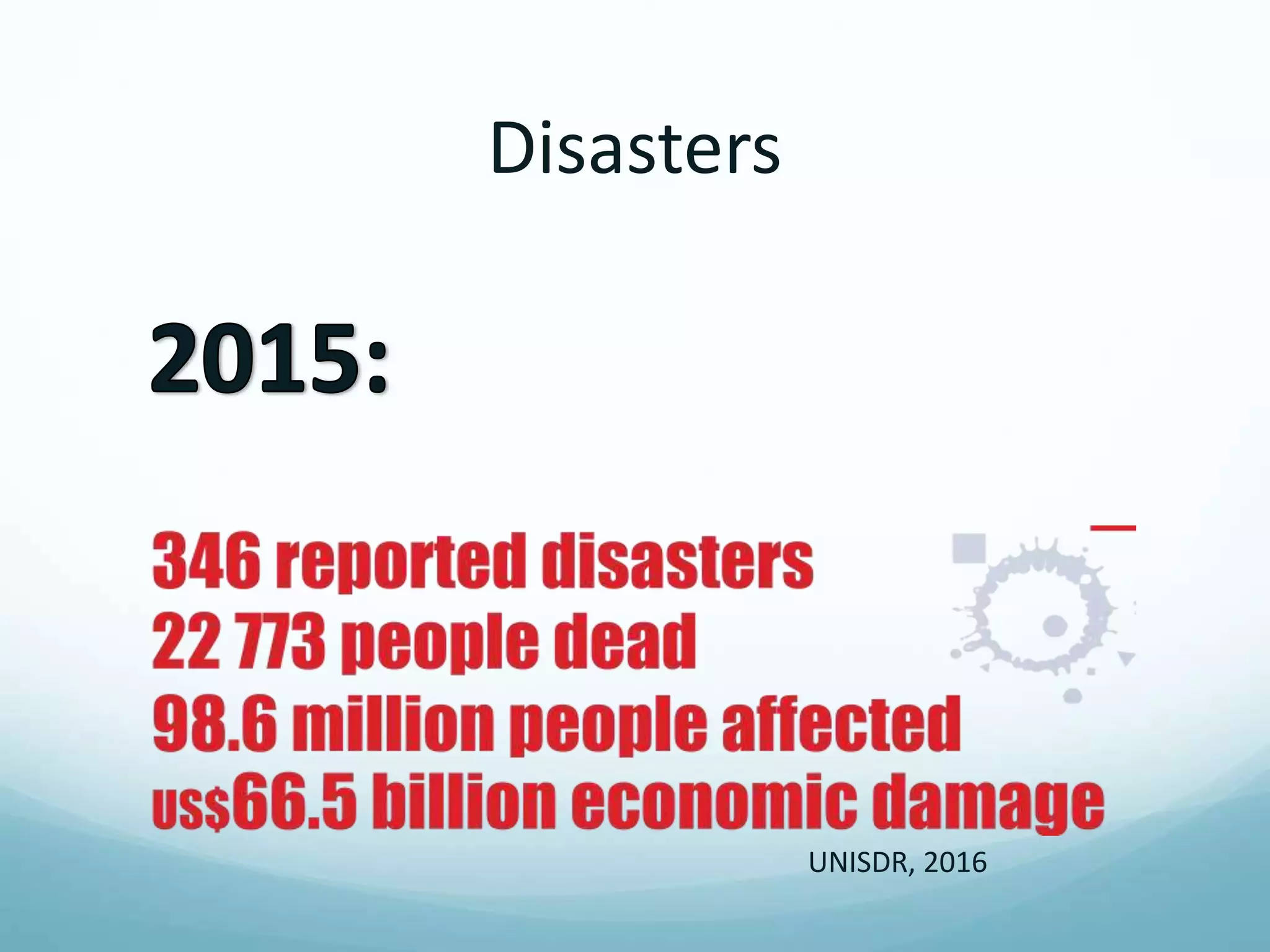
Disasters
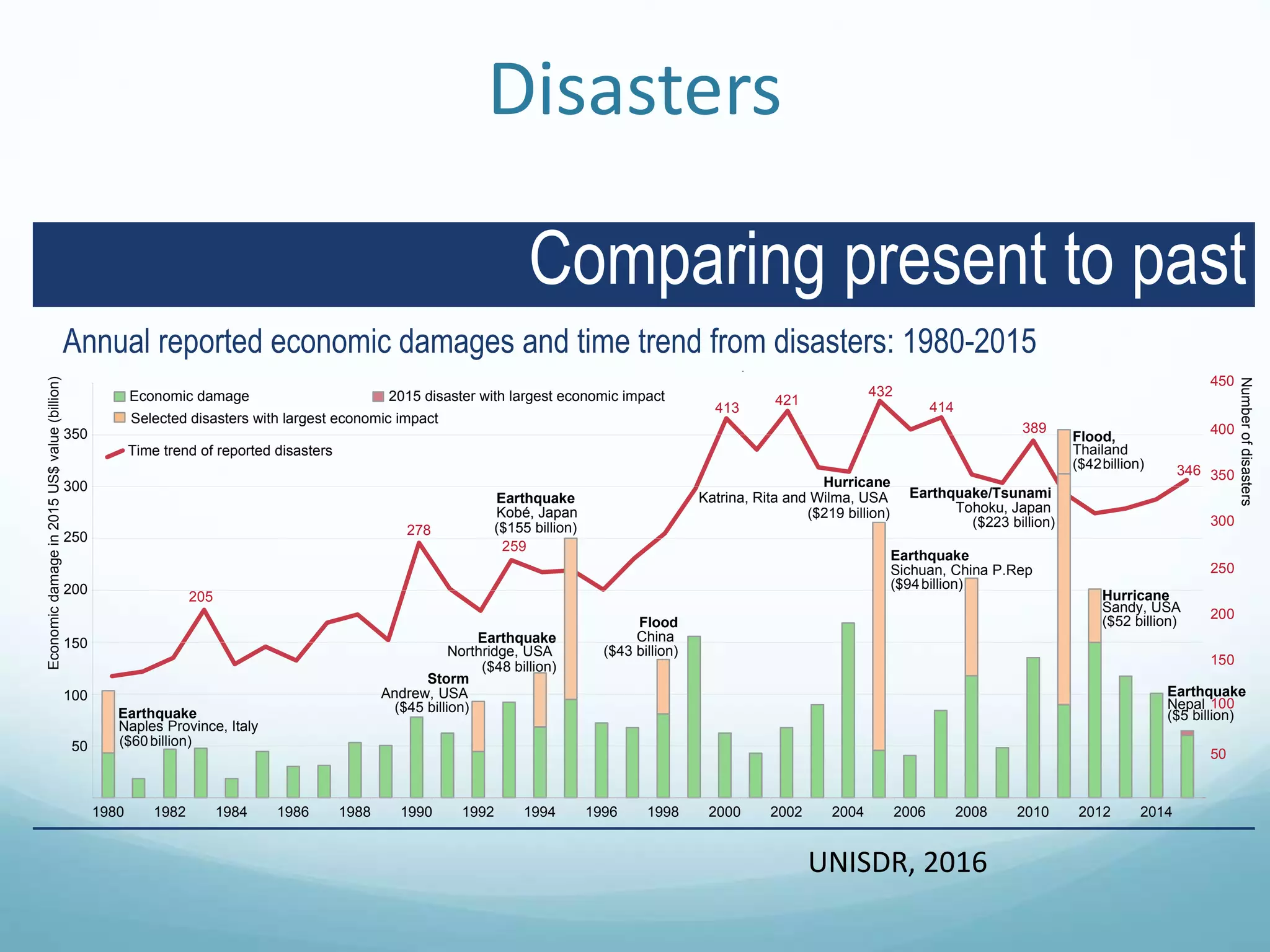
UNISDR, 2016
Disasters
Annual reported economic damages and time trend from disasters: 1980-2015
Human impact by disaster types (2015 versus average 2005-2014)
50
100
150
200
250
300
350
400
50
100
150
200
250
300
350
1980 1982 1984 1986 1988 1990 1992 1994 1996 1998 2000 2002 2004 2006 2008 2010 2012 2014
Numberofdisasters
Economicdamagein2015US$value(billion)
-
Earthquake
Nepal
($5 billion)
205
278
259
413
432
414
389
421
346
($60
Earthquake
Naples Province, Italy
billion)
Earthquake
Northridge, USA
($48 billion)
Earthquake
Kobé, Japan
($155 billion)
Hurricane
Sandy, USA
($52 billion)
Hurricane
Katrina, Rita and Wilma, USA
($219 billion)
Earthquake
Sichuan, China P.Rep
($94billion)
Earthquake/Tsunami
Tohoku, Japan
($223 billion)
Flood,
($42billion)
Thailand
Flood
China
($43 billion)
450
2015 2005-2014
Deaths Affected
Comparing present to past
Storm
Andrew, USA
($45 billion)
Economic damage
Time trend of reported disasters
2015 disaster with largest economic impact
Selected disasters with largest economic impact
Occurrence
UNISDR, 2016
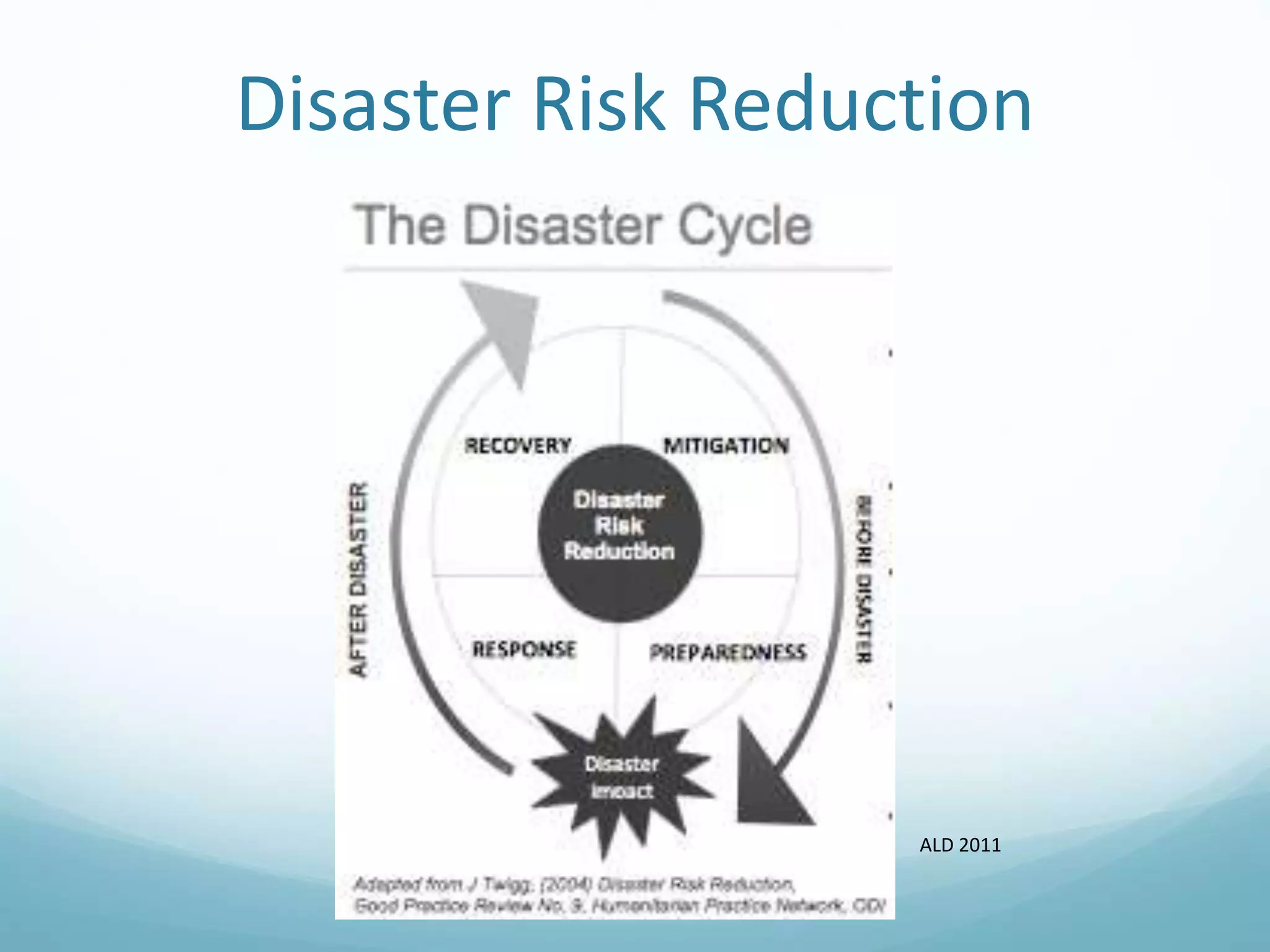
Disaster Risk Reduction
ALD 2011
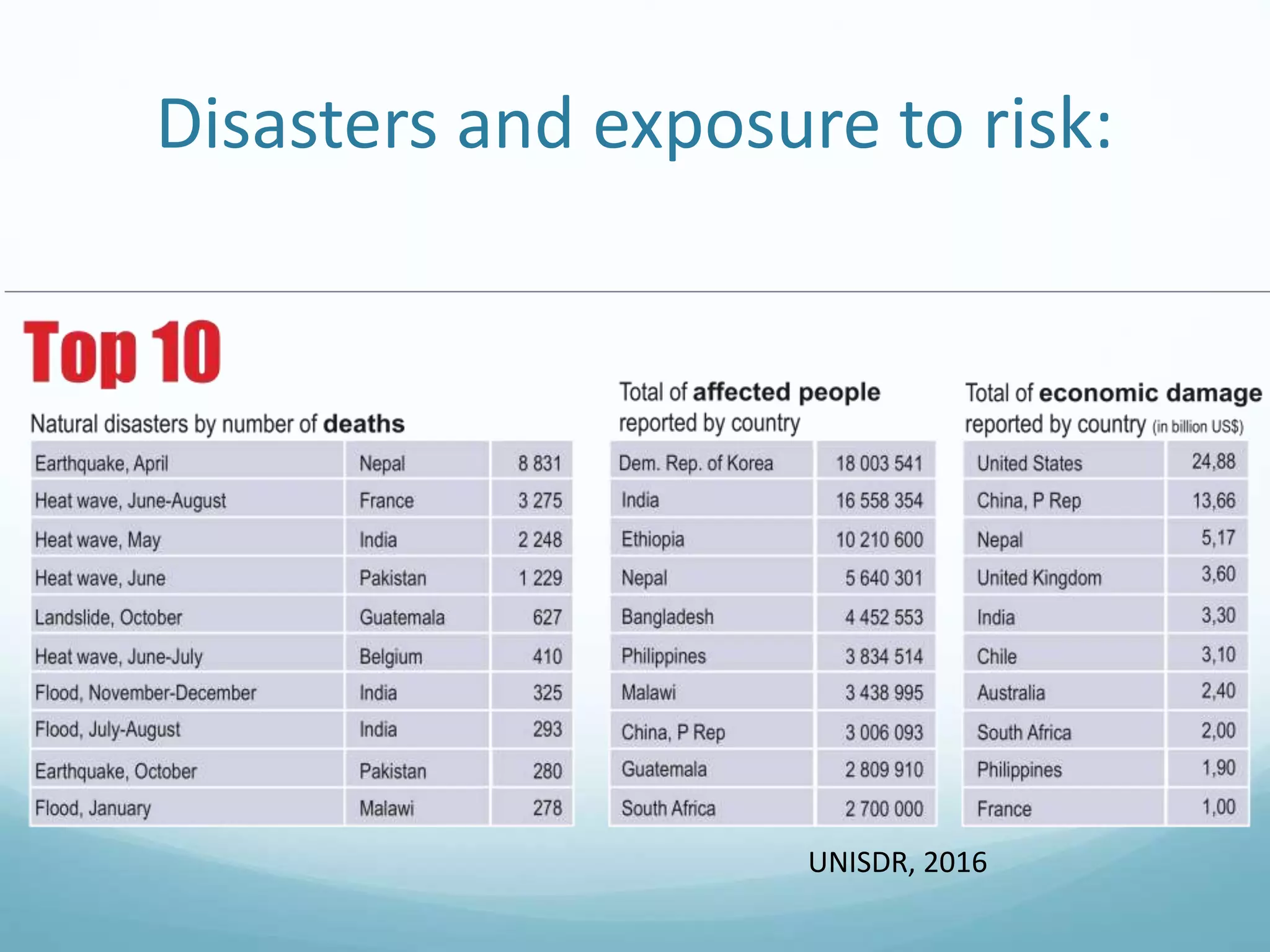
Disasters and exposure to risk:
UNISDR, 2016
Disasters and exposure to risk:
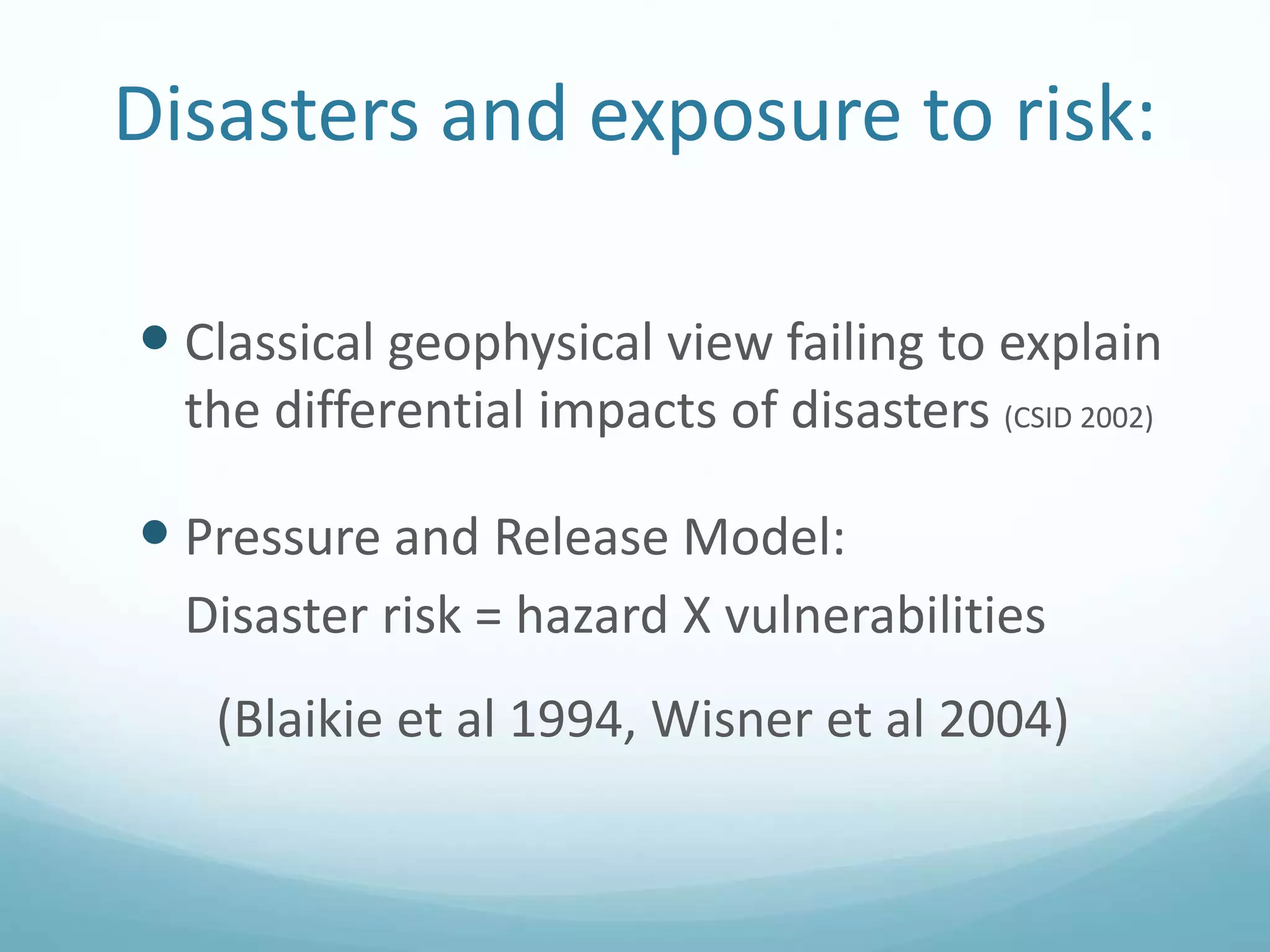
 Classical geophysical view failing to explain
the differential impacts of disasters (CSID 2002)
 Pressure and Release Model:
Disaster risk = hazard X vulnerabilities
(Blaikie et al 1994, Wisner et al 2004)
Vulnerability:
 “The characteristics and circumstances of a
community, system or asset that make it
susceptible to the damaging effects of a
hazard” (UNISDR 2007)
 Focus on capacities and resilience (Twigg 2009)
Debate topic:
 Vulnerability VS « at-risk » groups VS
« differentially impacted » (UN sessions, Roth 2014)
 Evolution of the concept: at-risk situations
 Persons with Disabilities included within
at-risk groups (WHO 2001, UN 2006, HI 2009)
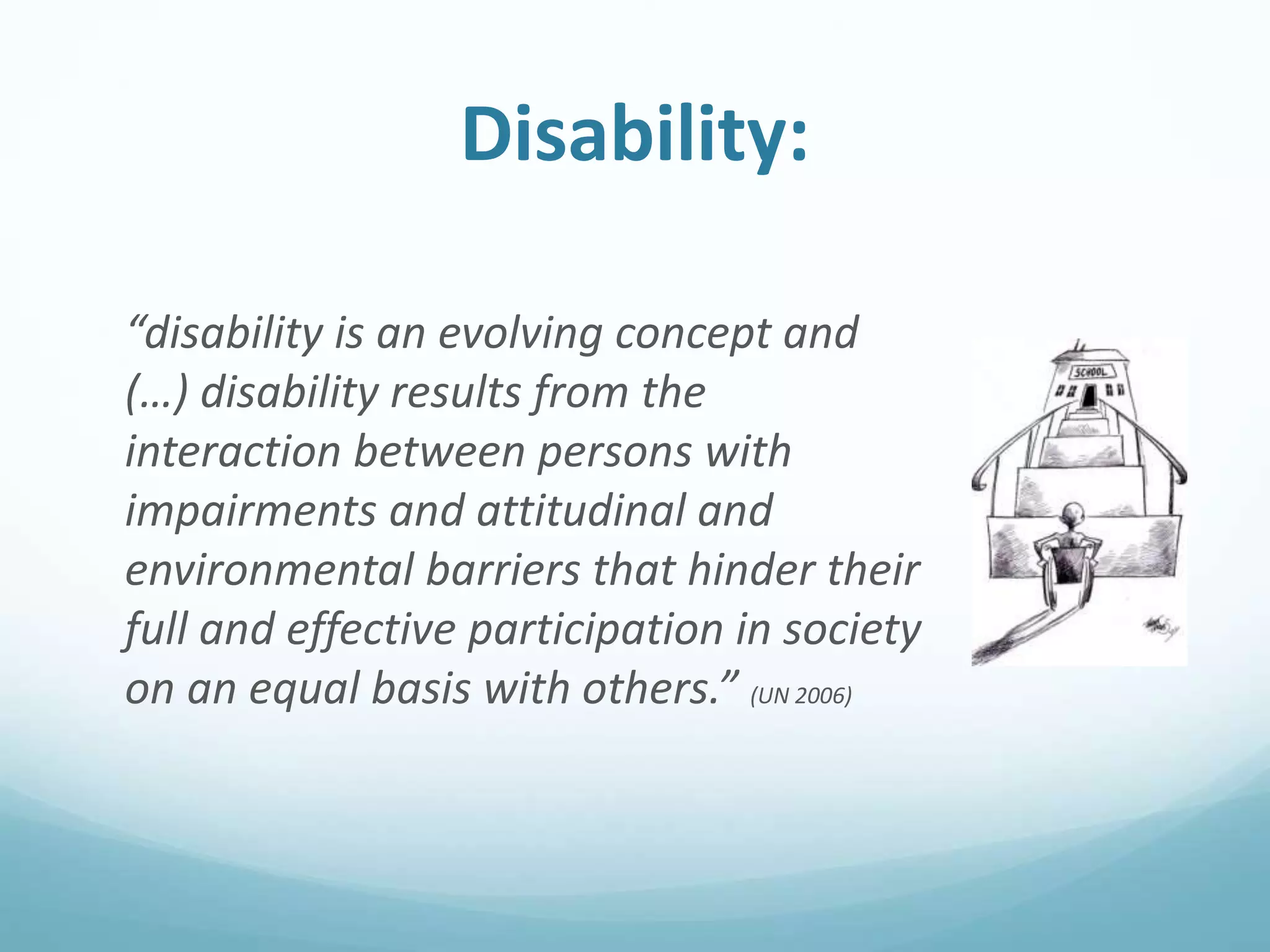
Disability:
“disability is an evolving concept and
(…) disability results from the
interaction between persons with
impairments and attitudinal and
environmental barriers that hinder their
full and effective participation in society
on an equal basis with others.” (UN 2006)
Differential impact
 Reports of differential impact of disasters on PWDs and
other at-risk groups
(Osaki and Minowa 2001; Chou et al 2004; IDRM 2005; Rooney and White 2007; Kett and Twigg 2007, Alexander 2011,
Katsunori Fujii 2014)
 Asia-Pacific Tsunami of 2004: estimation of double mortality
rate for PWDs (Chou et al 2004)
 Hurricane Katrina: older persons constituting 15% of the
population and 74 % of the victims (Weston and Tokesky 2006)
 Double to quadruple the mortality rate of general
population for persons with disability (Fujii 2014)
Differentially impacted groups
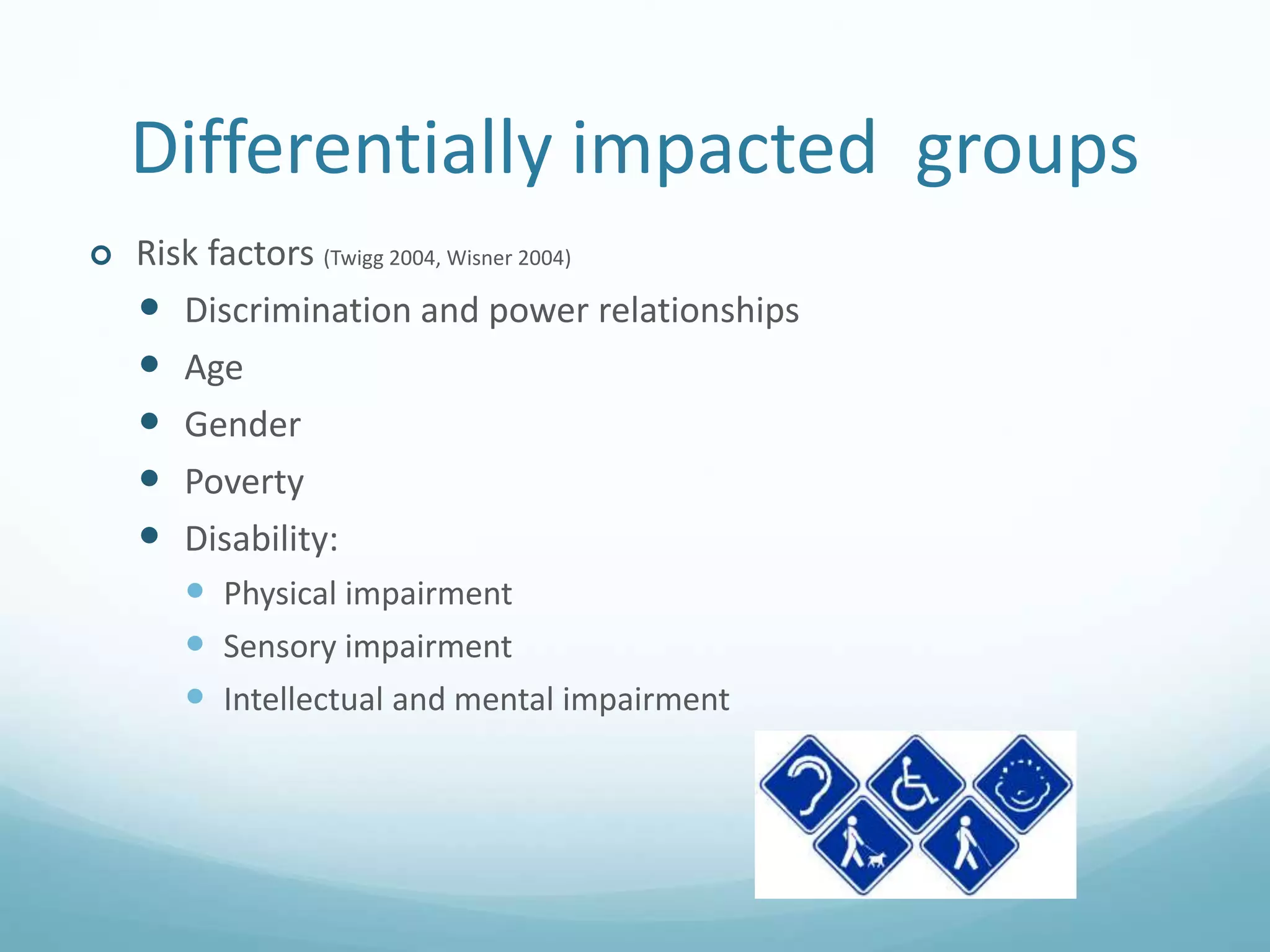
 Risk factors (Twigg 2004, Wisner 2004)
 Discrimination and power relationships
 Age
 Gender
 Poverty
 Disability:
 Physical impairment
 Sensory impairment
 Intellectual and mental impairment
Barriers… and facilitators
 Physical and communicational
 Structural (institutional)
 Attitudinal (social and cultural)
Quote: “You are (…) vulnerable to certain type of risk at a given
situation and time”. (T11)
The missing link…
 Field reports but limited research on :
 Differential impacts
 DiDRRR “good/ best practices”
 Effectiveness/ efficiency
 Monitoring and evaluation (Indicators)
 Policies and programming
 Good and best practices
8/4/2016 broken-chain.jpg (2560×1920)
Labourlist.org
Monitoring and evaluation
 Indicators for tracking progress
 Core and supplementary indicators
 Actual challenges: short timeline, limited reporting to date,
varied sets of indicators and limited resources to support or
monitor reporting
 “Count to be counted”
 Informed research to inform policy… to shape programming
The road towards
DiDRR
implementation
http://relationshipsmatternow.blogspot.ca/
DRR GUIDELINES
 Historically:
 Most mainstream guidelines not inclusive of PWD
(UNISDR 2009)
 Few inclusive guidelines from disability-focussed
NGOs (HI 2005/ 2009, SMRC 2005/2009, HI 2012 )
 Now: rapidly changing situation (at NGO level…)
Guidelines
 Sphere Guidelines (2011)
 Technical manuals (HI; 2012, 2015)
 Disability inclusive Disaster Risk Management (CBM, 2014)
 No guidelines for reporting… next two years will exposing
gaps and challenges at all levels
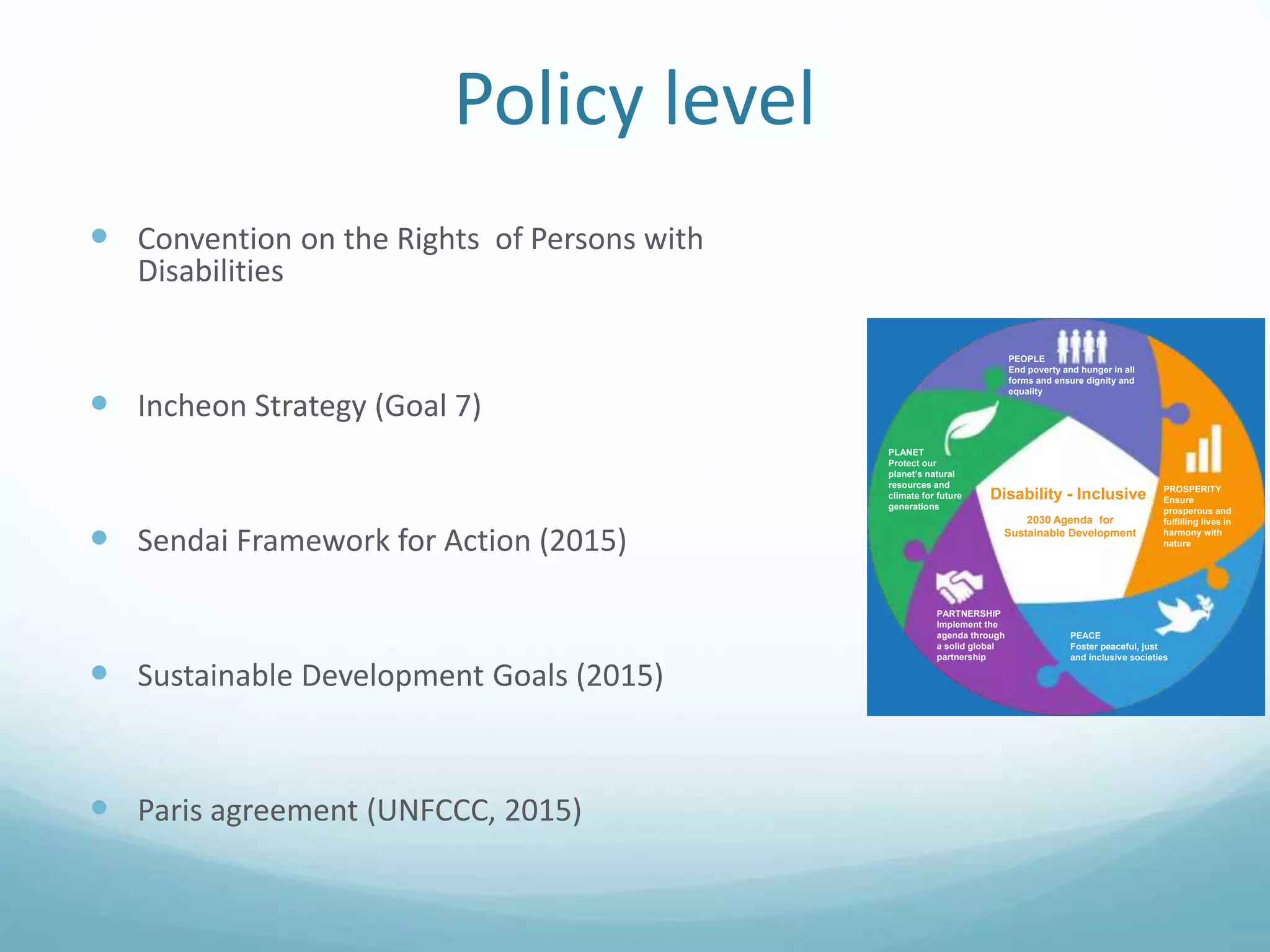
Policy level
 Convention on the Rights of Persons with
Disabilities
 Incheon Strategy (Goal 7)
 Sendai Framework for Action (2015)
 Sustainable Development Goals (2015)
 Paris agreement (UNFCCC, 2015)
disability disaggregated
data
11
6
“Persons with disabilities” or “disability” are sp
mentioned in the 2030 Agenda for Sustainable
Development
Persons in vulnerable situations are specificall
mentioned in the 2030 Agenda for Sustainable
Development
PARTNERSHIP
Implement the
agenda through
a solid global
partnership
PEACE
Foster peaceful, just
and inclusive societies
PROSPERITY
Ensure
prosperous and
fulfilling lives in
harmony with
nature
x
2030 Agenda for
Sustainable Development
PLANET
Protect our
planet’s natural
resources and
climate for future
generations
PEOPLE
End poverty and hunger in all
forms and ensure dignity and
equality
Disability - Inclusive
www.un.org/disabilities
x
Globally…
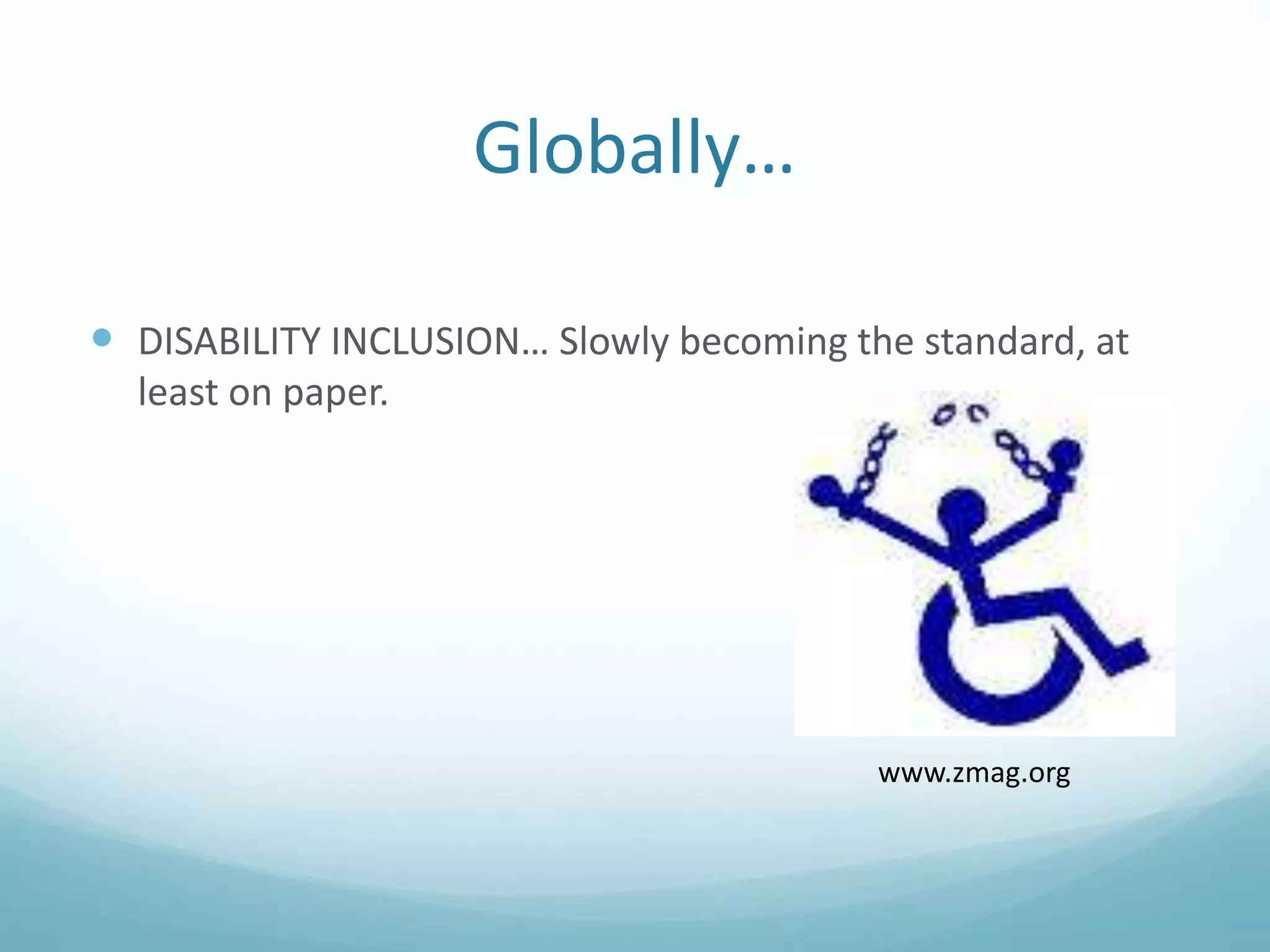
 DISABILITY INCLUSION… Slowly becoming the standard, at
least on paper.
www.zmag.org
What’s next?
 Implementation of the Sendai Framework and SDG’s
 Program evaluation and monitoring
 Applied research and policy development
 World Humanitarian Summit VS follow-up actions
 Sustainable and inclusive urban environments
 Financing
Contact information
Mathieu Simard
Rehabilitation International's Task Force on Disability, Armed Conflict, and Natural Disasters
Deputy Vice-President, Rehabilitation International North America
Vice-chair International Commission on Accessibility, Technology and Accessibility
Faculty Lecturer
Department of Health Sciences
Université du Québec à Chicoutimi
Email 1: simardmat@hotmail.com
Email 2: mathieu1.simard@uqac.ca
Phone: (418) 376-8453
Skype: mathieu.simard_pro
Main references
 All in Diary (ALD) (2011) Managing Disasters: The Disasters Cycle http://www.allindiary.org/page/disastercycle Accessed 2011-08-05
 Alexander D (2011) Disability and disaster; Wisner B (ed.) Chapter in Handbook of Hazards, Disaster Risk Reduction and Management, London,
Routledge (in press).
 Bartlett S (2008) Climate change and urban children: Impacts and implications for adaptation in low- and middle-income countries, Environment
and Urbanization, 20 (2): 501-519.
 Blaikie P, Cannon T, Davis I, Wisner B (1994) At Risk: Natural Hazards, People’s Vulnerability and Disasters. Routledge, London. 471p.
 Bricout JC, Baker PMA (2010) Leveraging online social networks for people with disabilities in emergency communications and recovery. Int J
Emergency Management; 7(1): 59-74.
 Centre for Services and Information on Disability CSID (2002) Unveiling Darkness: The Situation Analysis on Disaster and Disability Issues In the
Coastal Belt of Bangladesh, Khathamuddran, Dhaka. http://www.csid-bd.org/research/research01.pdf Accessed 2011-08-04
 Chou Y-J, Huang N, Cheng-Hua L, Shu-Ling T Long-Shen C, Hong-Jen C (2004) Who Is at Risk of Death in an Earthquake? Am. J. Epidemiol.
160:688-695
 Clive A, Davis EA, Hansen R, Mincin J (2010) Disability; Chapter in Philips BD, Thomas DSK, Fothergill A, Blinn-Pyke L (eds.) Social Vulnerability to
Disasters. New York, Taylor and Francis Group: 75-99.
 Davis E, Mincin J (2005) Incorporating Special Needs Populations into Emergency Planning and Exercises
http://www.nobodyleftbehind2.org/findings/pdfs/JMFinal072105.pdf Accessed 2011-07-12
Main references
 Lang R (2009) The United Nations Convention on the right and dignities for persons with disability: A panacea for ending disability
discrimination?, Asia Pacific Rehabilitation Journal, Vol 17, No 1, p.3-11.
 Kett M and Twigg J (2007) Disability and Disasters: Towards an Inclusive Approach; Chapter for World Disasters Report: Focus on
Discrimination. Satigny/ Vernier, International Federation of Red Cross and Red Crescent Societies
 Kett M, Stubbs S, Yeo R, Deshpande S, Cordeiro V (2005) Disability in Conflict and Emergency Situations: Focus on Tsunami-
affected Areas. IDDC Research Report. http://www.pacificdisaster.net/pdnadmin/data/original/IDCC_2005_Disability_conflict.pdf
Accessed 2011-07-16
 IDRM (International Disability Right Monitor) (2005) Disability and Early Tsunami Relief Efforts in India, Indonesia and Thailand.
http://www.ideanet.org/cir/uploads/File/TsunamiReport.pdf Accessed 2010-02-18
 Handicap International (HI) (2005) How to include Disability Issues in Disaster Management Following Floods 2004 in Bangladesh.
Bangladesh, Handicap International Bangladesh. http://www.handicap-
international.org.uk/Resources/Handicap%20International/PDF%20Documents/HI%20Associations/DisabilityDisasterManagement_
2005.pdf Accessed 2010-11-14
 Handicap International (HI) (2009) Mainstreaming Disability into Disaster Risk Reduction: A training Manual. Kathmandu,
Handicap International Nepal. http://www.handicap-international.fr/fileadmin/documents/publications/DisasterRiskReduc.pdf
Accessed 2010-11-14
Main references
 Murray JS (2011) Disaster preparedness for children with special healthcare needs and disabilities. Journal for Specialists in
Pediatric Nursing, 16:226-232.
 National Council on Disability. (2005). Saving Lives: Including People with Disabilities in Emergency Planning. Washington.
http://enla.org/wp-content/uploads/2011/06/saving-lives.pdf Accessed 2010-08-20
 Osaki Y and Minowa M (2001) Factors Associated with Earthquake Deaths in the Great Hanshin-Awaji Earthquake, 1995, Am. J.
Epidemiol. 153:153-156
 Peek L and Stough L (2010) Children with Disabilities in the Context of Disaster: A Social Vulnerability Perspective. Child
Development; 81(4):1260-1270.
 Plan International (2010) Child-Centered DRR Toolkit. London, Plan International.
 Rooney C and White GW (2007) Consumer Perspective: Narrative Analysis of a Disaster Preparedness and Emergency Response
Survey from Persons with Mobility Impairments, Journal of Disability Policy Studies, 17: 206-215
 Shanta Memorial Rehabilitation Centre (SMRC) (2005) Training Manual for Inclusion of Disability in Disaster Response.
Bhubaneswar, Orissa. http://www.preventionweb.net/files/9707_trainingmanual.pdf Accessed 2011-11-15
 Shanta Memorial Rehabilitation Centre (SMRC) (2009) Mainstraiming Disability in Disaster Management – A Tool Kit-
http://data.undp.org.in/dmweb/pub/DisabilityToolkit.pdf Accessed
Main references
 Simpson J (2009) Everyone Belongs A Toolkit for Applying Intersectionality. Ottawa, CRIAW-ICREF. http://criaw-
icref.ca/sites/criaw/files/Everyone_Belongs_e.pdf Accessed 2011-08-01
 Sobsey D (1994) Violence and Abuse in the Lives of People with Disabilities: The End of Silent Acceptance. Baltimore, Paul H.
Brooks Publishing Co, Inc.
 Sullivan HT , Häkkinen MT (2011) Preparedness and Warning Systems for Populations with Special Needs: Ensuring Everyone
Gets the Message (and Knows What To Do) (2011) Geotechnical and Geological Engineering, 29 (3), pp. 225-236.
 Tataryn, M. (2011). AIDS, Power and Politics: Examining their dimensions within the disability movement globally. Keynote
address, ‘Disability and the Majority World: Towards a Global Disability Studies’ First International Conference. Manchester
Metropolitan University, Gaskell Campus, Hathersage Road, Manchester, 7th – 8th July, 2011. http://vimeo.com/26584134
 Twigg J (2004), Disaster risk reduction: Mitigation and preparedness in development and emergency programming, London,
Overseas Development institute. 365p.
 Twigg J (2009) Characteristics of a Disaster-Resilient Community, a Guidance Note
http://www.abuhrc.org/Publications/CDRC%20v2%20final.pdf Accessed 2011-07-12
 UN (2006) Convention on the Rights of Persons with Disability http://www2.ohchr.org/english/law/disabilities-convention.htm
Accessed 2010-10-22
 UN Enable (2006) Disability Fact Sheet http://www.un.org/disabilities/convention/facts.shtml Accessed 2011-05-15
 UNISDR (2007) Hyogo Framework for Action http://www.unisdr.org/we/coordinate/hfa Accessed 2011-06-18
 UN/ISDR (2009) Making Disaster Risk Reduction Gender-Sensitive: Policy and Practical Guidelines
http://www.unisdr.org/files/9922_MakingDisasterRiskReductionGenderSe.pdf Accessed 2011-08-03
Main references
 Venton P and Collymore J (2009), Introduction to Technical Paper: Integrating practices, tools
and systems for climate risk assessment and management and disaster risk reduction strategies
into national policies and programmes
http://unfccc.int/files/adaptation/application/pdf/nwp_app_cuba2009_venton_and_collymore.p
df Accessed 2010-11-08
 World Health Organisation (WHO) (2001) International Classification of Functioinning, Disability
and Health (ICF) http://www.who.int/classifications/icf/en/ Accessed 2011-07-27
 Wisner B (2002) Disability and Disaster: Victimhood and Agency in Earthquake Risk Reduction,
Chapter for Rodrigue C and Rovai E (eds.) Earthquakes, London, Routledge: 1-28.
 Wisner B, Blaikie P, Cannon T, Davis I (2004a) At Risk: Second Edition: Natural Hazards, People’s
Vulnerability and Disasters, London, Routledge. 471p.
 World Bank/ GPDD (2009) The impact of Climate Change on People with Disabilities
http://www.ucl.ac.uk/lc-
ccr/centrepublications/staffpublications/Impact_of_Climate_Change_on_Disability-Report-
2010.pdf Accessed 2011-07-15

RIWC_PARA_A118 implementing the sendai framework for disaster risk reduction disability inclusion as a continuum within disaster risk mgmt

  • 1.
    RI World Congress: Implementingthe Sendai Framework for Disaster Risk Reduction
  • 2.
    Structure  Background: climatechange, disasters, DRR and differential impact  Barriers and facilitators  Guidelines and frameworks  Action towards implementation of Sendai framework
  • 3.
    Climate change anddisasters  Role of climate change linked with extreme events (EPA, 2016)  Extreme events are more likely to cause disasters  Hence, likelihood of climate change causing disasters is enhanced
  • 4.
  • 5.
    Disasters Annual reported economicdamages and time trend from disasters: 1980-2015 Human impact by disaster types (2015 versus average 2005-2014) 50 100 150 200 250 300 350 400 50 100 150 200 250 300 350 1980 1982 1984 1986 1988 1990 1992 1994 1996 1998 2000 2002 2004 2006 2008 2010 2012 2014 Numberofdisasters Economicdamagein2015US$value(billion) - Earthquake Nepal ($5 billion) 205 278 259 413 432 414 389 421 346 ($60 Earthquake Naples Province, Italy billion) Earthquake Northridge, USA ($48 billion) Earthquake Kobé, Japan ($155 billion) Hurricane Sandy, USA ($52 billion) Hurricane Katrina, Rita and Wilma, USA ($219 billion) Earthquake Sichuan, China P.Rep ($94billion) Earthquake/Tsunami Tohoku, Japan ($223 billion) Flood, ($42billion) Thailand Flood China ($43 billion) 450 2015 2005-2014 Deaths Affected Comparing present to past Storm Andrew, USA ($45 billion) Economic damage Time trend of reported disasters 2015 disaster with largest economic impact Selected disasters with largest economic impact Occurrence UNISDR, 2016
  • 6.
  • 7.
    Disasters and exposureto risk: UNISDR, 2016
  • 8.
    Disasters and exposureto risk:  Classical geophysical view failing to explain the differential impacts of disasters (CSID 2002)  Pressure and Release Model: Disaster risk = hazard X vulnerabilities (Blaikie et al 1994, Wisner et al 2004)
  • 9.
    Vulnerability:  “The characteristicsand circumstances of a community, system or asset that make it susceptible to the damaging effects of a hazard” (UNISDR 2007)  Focus on capacities and resilience (Twigg 2009)
  • 10.
    Debate topic:  VulnerabilityVS « at-risk » groups VS « differentially impacted » (UN sessions, Roth 2014)  Evolution of the concept: at-risk situations  Persons with Disabilities included within at-risk groups (WHO 2001, UN 2006, HI 2009)
  • 11.
    Disability: “disability is anevolving concept and (…) disability results from the interaction between persons with impairments and attitudinal and environmental barriers that hinder their full and effective participation in society on an equal basis with others.” (UN 2006)
  • 12.
    Differential impact  Reportsof differential impact of disasters on PWDs and other at-risk groups (Osaki and Minowa 2001; Chou et al 2004; IDRM 2005; Rooney and White 2007; Kett and Twigg 2007, Alexander 2011, Katsunori Fujii 2014)  Asia-Pacific Tsunami of 2004: estimation of double mortality rate for PWDs (Chou et al 2004)  Hurricane Katrina: older persons constituting 15% of the population and 74 % of the victims (Weston and Tokesky 2006)  Double to quadruple the mortality rate of general population for persons with disability (Fujii 2014)
  • 13.
    Differentially impacted groups Risk factors (Twigg 2004, Wisner 2004)  Discrimination and power relationships  Age  Gender  Poverty  Disability:  Physical impairment  Sensory impairment  Intellectual and mental impairment
  • 14.
    Barriers… and facilitators Physical and communicational  Structural (institutional)  Attitudinal (social and cultural) Quote: “You are (…) vulnerable to certain type of risk at a given situation and time”. (T11)
  • 15.
    The missing link… Field reports but limited research on :  Differential impacts  DiDRRR “good/ best practices”  Effectiveness/ efficiency  Monitoring and evaluation (Indicators)  Policies and programming  Good and best practices 8/4/2016 broken-chain.jpg (2560×1920) Labourlist.org
  • 16.
    Monitoring and evaluation Indicators for tracking progress  Core and supplementary indicators  Actual challenges: short timeline, limited reporting to date, varied sets of indicators and limited resources to support or monitor reporting  “Count to be counted”  Informed research to inform policy… to shape programming
  • 17.
  • 18.
    DRR GUIDELINES  Historically: Most mainstream guidelines not inclusive of PWD (UNISDR 2009)  Few inclusive guidelines from disability-focussed NGOs (HI 2005/ 2009, SMRC 2005/2009, HI 2012 )  Now: rapidly changing situation (at NGO level…)
  • 19.
    Guidelines  Sphere Guidelines(2011)  Technical manuals (HI; 2012, 2015)  Disability inclusive Disaster Risk Management (CBM, 2014)  No guidelines for reporting… next two years will exposing gaps and challenges at all levels
  • 20.
    Policy level  Conventionon the Rights of Persons with Disabilities  Incheon Strategy (Goal 7)  Sendai Framework for Action (2015)  Sustainable Development Goals (2015)  Paris agreement (UNFCCC, 2015) disability disaggregated data 11 6 “Persons with disabilities” or “disability” are sp mentioned in the 2030 Agenda for Sustainable Development Persons in vulnerable situations are specificall mentioned in the 2030 Agenda for Sustainable Development PARTNERSHIP Implement the agenda through a solid global partnership PEACE Foster peaceful, just and inclusive societies PROSPERITY Ensure prosperous and fulfilling lives in harmony with nature x 2030 Agenda for Sustainable Development PLANET Protect our planet’s natural resources and climate for future generations PEOPLE End poverty and hunger in all forms and ensure dignity and equality Disability - Inclusive www.un.org/disabilities x
  • 21.
    Globally…  DISABILITY INCLUSION…Slowly becoming the standard, at least on paper. www.zmag.org
  • 22.
    What’s next?  Implementationof the Sendai Framework and SDG’s  Program evaluation and monitoring  Applied research and policy development  World Humanitarian Summit VS follow-up actions  Sustainable and inclusive urban environments  Financing
  • 24.
    Contact information Mathieu Simard RehabilitationInternational's Task Force on Disability, Armed Conflict, and Natural Disasters Deputy Vice-President, Rehabilitation International North America Vice-chair International Commission on Accessibility, Technology and Accessibility Faculty Lecturer Department of Health Sciences Université du Québec à Chicoutimi Email 1: simardmat@hotmail.com Email 2: mathieu1.simard@uqac.ca Phone: (418) 376-8453 Skype: mathieu.simard_pro
  • 25.
    Main references  Allin Diary (ALD) (2011) Managing Disasters: The Disasters Cycle http://www.allindiary.org/page/disastercycle Accessed 2011-08-05  Alexander D (2011) Disability and disaster; Wisner B (ed.) Chapter in Handbook of Hazards, Disaster Risk Reduction and Management, London, Routledge (in press).  Bartlett S (2008) Climate change and urban children: Impacts and implications for adaptation in low- and middle-income countries, Environment and Urbanization, 20 (2): 501-519.  Blaikie P, Cannon T, Davis I, Wisner B (1994) At Risk: Natural Hazards, People’s Vulnerability and Disasters. Routledge, London. 471p.  Bricout JC, Baker PMA (2010) Leveraging online social networks for people with disabilities in emergency communications and recovery. Int J Emergency Management; 7(1): 59-74.  Centre for Services and Information on Disability CSID (2002) Unveiling Darkness: The Situation Analysis on Disaster and Disability Issues In the Coastal Belt of Bangladesh, Khathamuddran, Dhaka. http://www.csid-bd.org/research/research01.pdf Accessed 2011-08-04  Chou Y-J, Huang N, Cheng-Hua L, Shu-Ling T Long-Shen C, Hong-Jen C (2004) Who Is at Risk of Death in an Earthquake? Am. J. Epidemiol. 160:688-695  Clive A, Davis EA, Hansen R, Mincin J (2010) Disability; Chapter in Philips BD, Thomas DSK, Fothergill A, Blinn-Pyke L (eds.) Social Vulnerability to Disasters. New York, Taylor and Francis Group: 75-99.  Davis E, Mincin J (2005) Incorporating Special Needs Populations into Emergency Planning and Exercises http://www.nobodyleftbehind2.org/findings/pdfs/JMFinal072105.pdf Accessed 2011-07-12
  • 26.
    Main references  LangR (2009) The United Nations Convention on the right and dignities for persons with disability: A panacea for ending disability discrimination?, Asia Pacific Rehabilitation Journal, Vol 17, No 1, p.3-11.  Kett M and Twigg J (2007) Disability and Disasters: Towards an Inclusive Approach; Chapter for World Disasters Report: Focus on Discrimination. Satigny/ Vernier, International Federation of Red Cross and Red Crescent Societies  Kett M, Stubbs S, Yeo R, Deshpande S, Cordeiro V (2005) Disability in Conflict and Emergency Situations: Focus on Tsunami- affected Areas. IDDC Research Report. http://www.pacificdisaster.net/pdnadmin/data/original/IDCC_2005_Disability_conflict.pdf Accessed 2011-07-16  IDRM (International Disability Right Monitor) (2005) Disability and Early Tsunami Relief Efforts in India, Indonesia and Thailand. http://www.ideanet.org/cir/uploads/File/TsunamiReport.pdf Accessed 2010-02-18  Handicap International (HI) (2005) How to include Disability Issues in Disaster Management Following Floods 2004 in Bangladesh. Bangladesh, Handicap International Bangladesh. http://www.handicap- international.org.uk/Resources/Handicap%20International/PDF%20Documents/HI%20Associations/DisabilityDisasterManagement_ 2005.pdf Accessed 2010-11-14  Handicap International (HI) (2009) Mainstreaming Disability into Disaster Risk Reduction: A training Manual. Kathmandu, Handicap International Nepal. http://www.handicap-international.fr/fileadmin/documents/publications/DisasterRiskReduc.pdf Accessed 2010-11-14
  • 27.
    Main references  MurrayJS (2011) Disaster preparedness for children with special healthcare needs and disabilities. Journal for Specialists in Pediatric Nursing, 16:226-232.  National Council on Disability. (2005). Saving Lives: Including People with Disabilities in Emergency Planning. Washington. http://enla.org/wp-content/uploads/2011/06/saving-lives.pdf Accessed 2010-08-20  Osaki Y and Minowa M (2001) Factors Associated with Earthquake Deaths in the Great Hanshin-Awaji Earthquake, 1995, Am. J. Epidemiol. 153:153-156  Peek L and Stough L (2010) Children with Disabilities in the Context of Disaster: A Social Vulnerability Perspective. Child Development; 81(4):1260-1270.  Plan International (2010) Child-Centered DRR Toolkit. London, Plan International.  Rooney C and White GW (2007) Consumer Perspective: Narrative Analysis of a Disaster Preparedness and Emergency Response Survey from Persons with Mobility Impairments, Journal of Disability Policy Studies, 17: 206-215  Shanta Memorial Rehabilitation Centre (SMRC) (2005) Training Manual for Inclusion of Disability in Disaster Response. Bhubaneswar, Orissa. http://www.preventionweb.net/files/9707_trainingmanual.pdf Accessed 2011-11-15  Shanta Memorial Rehabilitation Centre (SMRC) (2009) Mainstraiming Disability in Disaster Management – A Tool Kit- http://data.undp.org.in/dmweb/pub/DisabilityToolkit.pdf Accessed
  • 28.
    Main references  SimpsonJ (2009) Everyone Belongs A Toolkit for Applying Intersectionality. Ottawa, CRIAW-ICREF. http://criaw- icref.ca/sites/criaw/files/Everyone_Belongs_e.pdf Accessed 2011-08-01  Sobsey D (1994) Violence and Abuse in the Lives of People with Disabilities: The End of Silent Acceptance. Baltimore, Paul H. Brooks Publishing Co, Inc.  Sullivan HT , Häkkinen MT (2011) Preparedness and Warning Systems for Populations with Special Needs: Ensuring Everyone Gets the Message (and Knows What To Do) (2011) Geotechnical and Geological Engineering, 29 (3), pp. 225-236.  Tataryn, M. (2011). AIDS, Power and Politics: Examining their dimensions within the disability movement globally. Keynote address, ‘Disability and the Majority World: Towards a Global Disability Studies’ First International Conference. Manchester Metropolitan University, Gaskell Campus, Hathersage Road, Manchester, 7th – 8th July, 2011. http://vimeo.com/26584134  Twigg J (2004), Disaster risk reduction: Mitigation and preparedness in development and emergency programming, London, Overseas Development institute. 365p.  Twigg J (2009) Characteristics of a Disaster-Resilient Community, a Guidance Note http://www.abuhrc.org/Publications/CDRC%20v2%20final.pdf Accessed 2011-07-12  UN (2006) Convention on the Rights of Persons with Disability http://www2.ohchr.org/english/law/disabilities-convention.htm Accessed 2010-10-22  UN Enable (2006) Disability Fact Sheet http://www.un.org/disabilities/convention/facts.shtml Accessed 2011-05-15  UNISDR (2007) Hyogo Framework for Action http://www.unisdr.org/we/coordinate/hfa Accessed 2011-06-18  UN/ISDR (2009) Making Disaster Risk Reduction Gender-Sensitive: Policy and Practical Guidelines http://www.unisdr.org/files/9922_MakingDisasterRiskReductionGenderSe.pdf Accessed 2011-08-03
  • 29.
    Main references  VentonP and Collymore J (2009), Introduction to Technical Paper: Integrating practices, tools and systems for climate risk assessment and management and disaster risk reduction strategies into national policies and programmes http://unfccc.int/files/adaptation/application/pdf/nwp_app_cuba2009_venton_and_collymore.p df Accessed 2010-11-08  World Health Organisation (WHO) (2001) International Classification of Functioinning, Disability and Health (ICF) http://www.who.int/classifications/icf/en/ Accessed 2011-07-27  Wisner B (2002) Disability and Disaster: Victimhood and Agency in Earthquake Risk Reduction, Chapter for Rodrigue C and Rovai E (eds.) Earthquakes, London, Routledge: 1-28.  Wisner B, Blaikie P, Cannon T, Davis I (2004a) At Risk: Second Edition: Natural Hazards, People’s Vulnerability and Disasters, London, Routledge. 471p.  World Bank/ GPDD (2009) The impact of Climate Change on People with Disabilities http://www.ucl.ac.uk/lc- ccr/centrepublications/staffpublications/Impact_of_Climate_Change_on_Disability-Report- 2010.pdf Accessed 2011-07-15

Editor's Notes

  • #2 Cou
  • #6 Trend: Increasing rate and severity
  • #8 Example of Haiti heartquake in 2010 (7.0) and Chile in 2010 (8.8)
  • #11 Can be measured as « differential impact » Concept valid in both low, middle and high income countries Practical example in this room : no light (advantage vision impaired) VS fire (mobility – but also hearing if no measure put in place). Put visual alert sign – and the are not at risk anymore.
  • #12   “those who have long-term physical, mental, intellectual or sensory impairments which in interaction with various barriers may hinder their full and effective participation in society on an equal basis with others.” (UN 2006) Story: World Trade Building in 2001 and the group of highly-trained, individual with visual impairment.
  • #13 Older persons: 60 and over
  • #14 According to own research, litterature reviews, case stories and NGOs case studies and guidelines Example of warning systems ; even at most universities, in Canada, in new buildings: no flashing emergency warning system.
  • #16 Exemple from DRR in terms of losses prevention: Red River Floodway in Canada (and 1997 floods)
  • #17 Diversity of sets of indicators, frameworks, Reports from NGO / gvts / agencies / etc.
  • #20 Easier, open access; generating more interest. Anecdote of my initial research in 2011. Mainly anecdotal at this stage, but can only improve.
  • #21 Accessibility, inclusion, universal design (Stough, 2015)
  • #23 Including the question of Situations of armed conflicts, AMCDRR, gvt an NGO level reporting, etc
  • #24 Capacities and resilience Hokusai, the Great Wave Off Kanagawa