Water Footprint
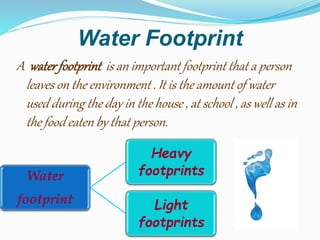
A waterfootprint is an important footprint that a person
leaves on the environment . It is the amount of water
used during the day in the house , at school , as well as in
the food eaten by that person.
Water
footprint
Heavy
footprints
Light
footprints
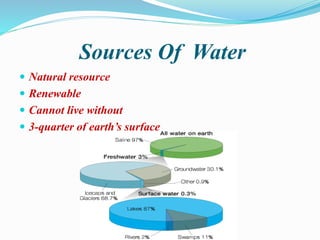
Sources Of Water
 Natural resource
 Renewable
 Cannot live without
 3-quarter of earth’s surface
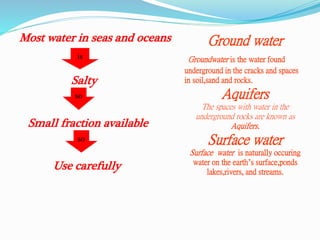
Most water in seas and oceans
is
so
Small fraction available
Salty
so
Use carefully
Ground water
Groundwater is the water found
underground in the cracks and spaces
in soil,sand and rocks.
Aquifers
The spaces with water in the
underground rocks are known as
Aquifers.
Surface water
Surface water is naturally occuring
water on the earth’s surface,ponds
lakes,rivers, and streams.
States Of Water
Wate
r
Liquid state
#Calledwater
#0’c-100’c
#Rain,waterbodies
Gaseous
state
#Intheairaswatervapour
#Occursanytime
Water Cycle
 Known as Hydrological cycle.
 The water cycle describes how Earth’s water is not only
always changing states between liquid(rain),solid(ice),and
gas (vapour),but also moving on,above,and inside earth.
Evoparation
Transpiration
CondensationPrecipitation
Percolation
Availablity of Water In India
Indiaisavastcountryandthe
rainfall isnotthesameeverywhere.
Someregionshaveexcessiverains
whilesomeothershaveverylittle
rainfall. Excessive rainscause
floods,whereastheabsenceof
rainsresultsindroughts.Therefore,
someregionsinourcountrymay
havefloodswhileothersmaysuffer
fromdroughtsatthesametime.
Uses of Water
Domestic use
Water is not only used for drinking or cooking food, It is used in so
many works such as washing clothes, need for plant, bathing and
used in many experiments as an agent.
In a house, water is needed for carrying out various activities.
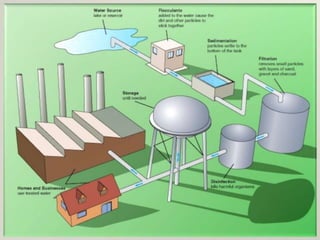
The system of drawing water from treatment plant and making it
available at all appliances (fixtures) for use is known as domestic
water supply system.
Commercial and Industrial use
Commercial and Industrial Uses of Water. Besides being
vital for human survival, water is also necessary in
commerce and in industry.
Agricultural Use
Agricultural water is used for irrigation, pesticide and
fertilizer applications , crop cooling (for example,
light irrigation), and frost control.
Industrial Agricultural Domestic
Use use use
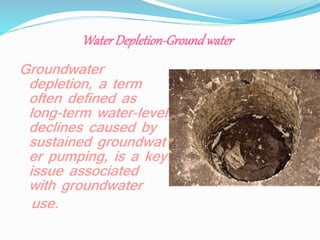
WaterDepletion-Groundwater
Groundwater
depletion, a term
often defined as
long-term water-level
declines caused by
sustained groundwat
er pumping, is a key
issue associated
with groundwater
use.
Reasons for Groundwater Depletion
Increasing population
Careless and excessive usage
Increasing
industrialization/commercializati
on
Erratic monsoons
Deforestation
Non-biodegradable waste matter
Conservation of Water
• Educatingourpopulation
• Recyclingof water
• Treatingsewageandfactorywaste
• Buildingdamsandreservoirs
• Buildingcheckdams
• Betterwaysof irrigation
• Plantationoftrees
• Encouragingrainwaterharvesting
Checkdam Dripirrigation
Plants Without Water?
Plants need nutrients from the soil, water, and light from
the sun to grow and stay alive. If plants did not
get water, they would die.
-Done by MAANVI.S
7 a5

Water:A precious resource

  • 2.
    Water Footprint A waterfootprintis an important footprint that a person leaves on the environment . It is the amount of water used during the day in the house , at school , as well as in the food eaten by that person. Water footprint Heavy footprints Light footprints
  • 3.
    Sources Of Water Natural resource  Renewable  Cannot live without  3-quarter of earth’s surface
  • 4.
    Most water inseas and oceans is so Small fraction available Salty so Use carefully Ground water Groundwater is the water found underground in the cracks and spaces in soil,sand and rocks. Aquifers The spaces with water in the underground rocks are known as Aquifers. Surface water Surface water is naturally occuring water on the earth’s surface,ponds lakes,rivers, and streams.
  • 6.
    States Of Water Wate r Liquidstate #Calledwater #0’c-100’c #Rain,waterbodies Gaseous state #Intheairaswatervapour #Occursanytime
  • 7.
    Water Cycle  Knownas Hydrological cycle.  The water cycle describes how Earth’s water is not only always changing states between liquid(rain),solid(ice),and gas (vapour),but also moving on,above,and inside earth. Evoparation Transpiration CondensationPrecipitation Percolation
  • 9.
    Availablity of WaterIn India Indiaisavastcountryandthe rainfall isnotthesameeverywhere. Someregionshaveexcessiverains whilesomeothershaveverylittle rainfall. Excessive rainscause floods,whereastheabsenceof rainsresultsindroughts.Therefore, someregionsinourcountrymay havefloodswhileothersmaysuffer fromdroughtsatthesametime.
  • 10.
    Uses of Water Domesticuse Water is not only used for drinking or cooking food, It is used in so many works such as washing clothes, need for plant, bathing and used in many experiments as an agent. In a house, water is needed for carrying out various activities. The system of drawing water from treatment plant and making it available at all appliances (fixtures) for use is known as domestic water supply system.
  • 12.
    Commercial and Industrialuse Commercial and Industrial Uses of Water. Besides being vital for human survival, water is also necessary in commerce and in industry. Agricultural Use Agricultural water is used for irrigation, pesticide and fertilizer applications , crop cooling (for example, light irrigation), and frost control.
  • 14.
  • 15.
    WaterDepletion-Groundwater Groundwater depletion, a term oftendefined as long-term water-level declines caused by sustained groundwat er pumping, is a key issue associated with groundwater use.
  • 16.
    Reasons for GroundwaterDepletion Increasing population Careless and excessive usage Increasing industrialization/commercializati on Erratic monsoons Deforestation Non-biodegradable waste matter
  • 17.
    Conservation of Water •Educatingourpopulation • Recyclingof water • Treatingsewageandfactorywaste • Buildingdamsandreservoirs • Buildingcheckdams • Betterwaysof irrigation • Plantationoftrees • Encouragingrainwaterharvesting
  • 18.
  • 20.
    Plants Without Water? Plantsneed nutrients from the soil, water, and light from the sun to grow and stay alive. If plants did not get water, they would die.
  • 21.