Water distribution system
WHAT IS DITRIBUTION SYSTEM?
• A water distribution
systems is one in which the
drinking water is
transported from the
treatment plant or well
supplies to the service
connection or consumers’
taps. These systems aim to
preserve the quality and
quantity of water, as well as
CLASSIFICATION Of DISTRIBUTION
SYSTEM NETWORKS
• Dead End System
• Radial System
• Grid Iron System
• Ring System
METHODS OF WATER
DISTRIBUTION
• Gravity System
• Pumping System
• Combined gravity and pumpingsystem
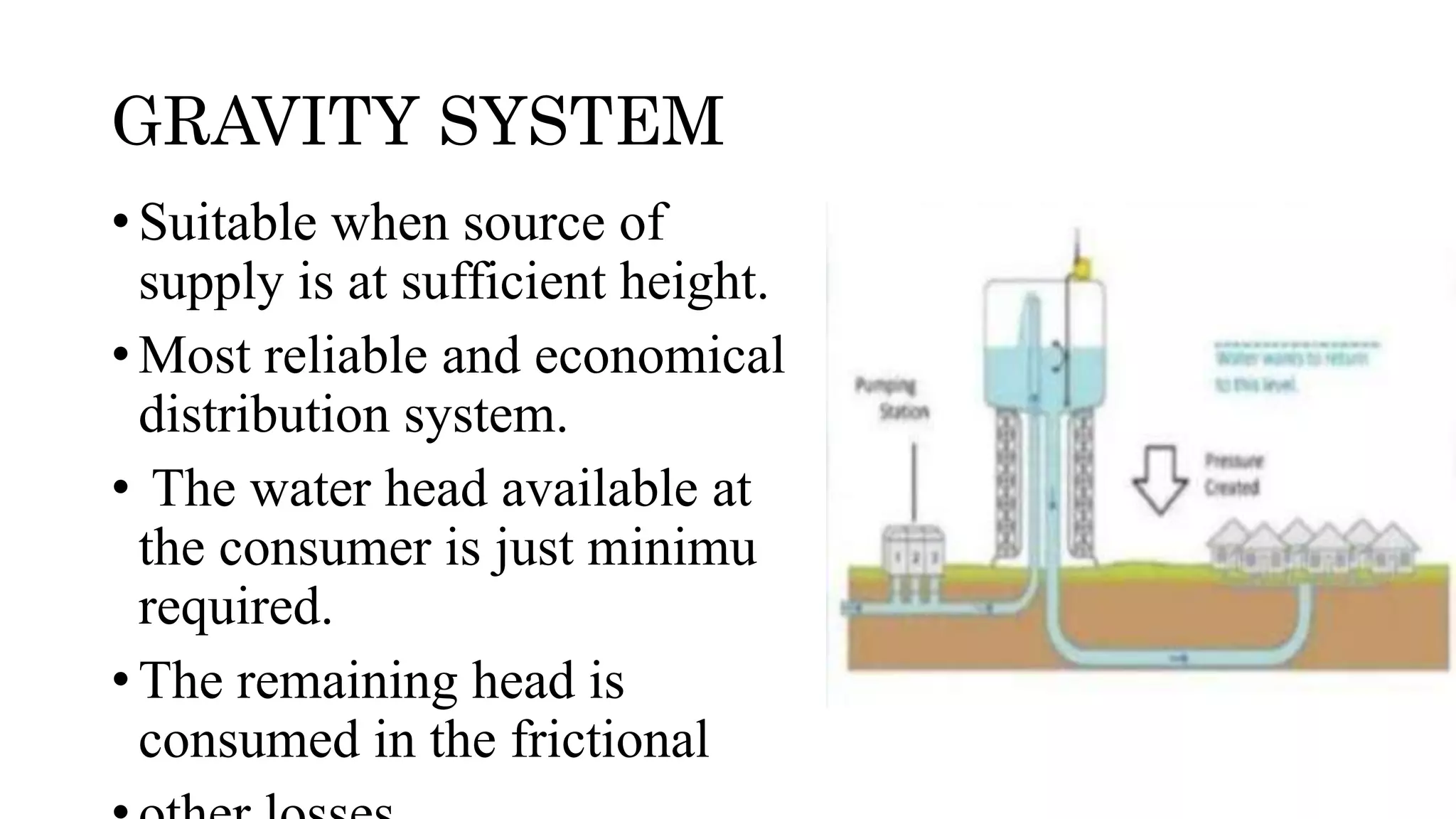
GRAVITY SYSTEM
• Suitable when source of
supply is at sufficient height.
• Most reliable and economical
distribution system.
• The water head available at
the consumer is just minimu
required.
• The remaining head is
consumed in the frictional
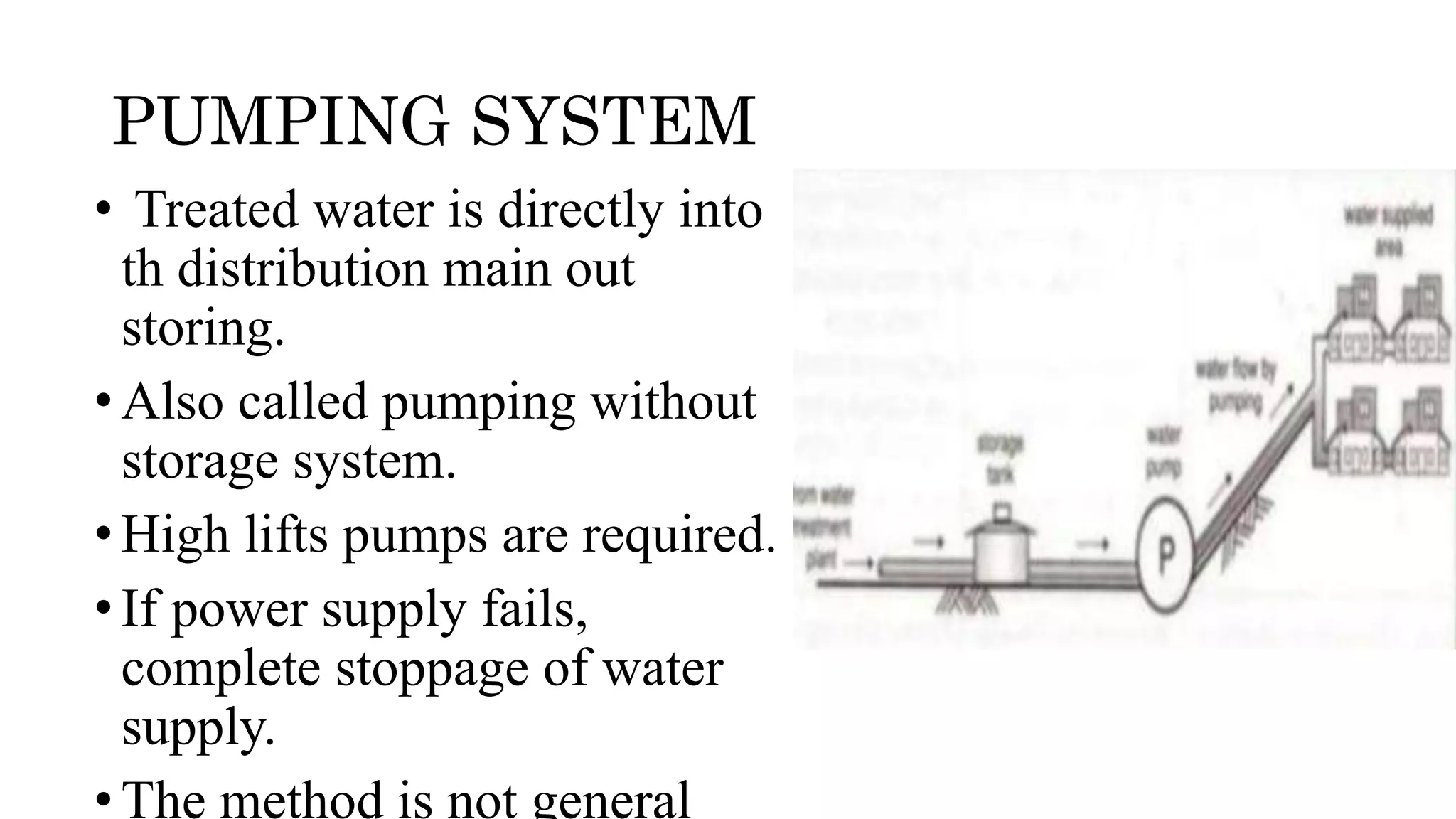
PUMPING SYSTEM
• Treated water is directly into
th distribution main out
storing.
•Also called pumping without
storage system.
•High lifts pumps are required.
•If power supply fails,
complete stoppage of water
supply.
•The method is not general
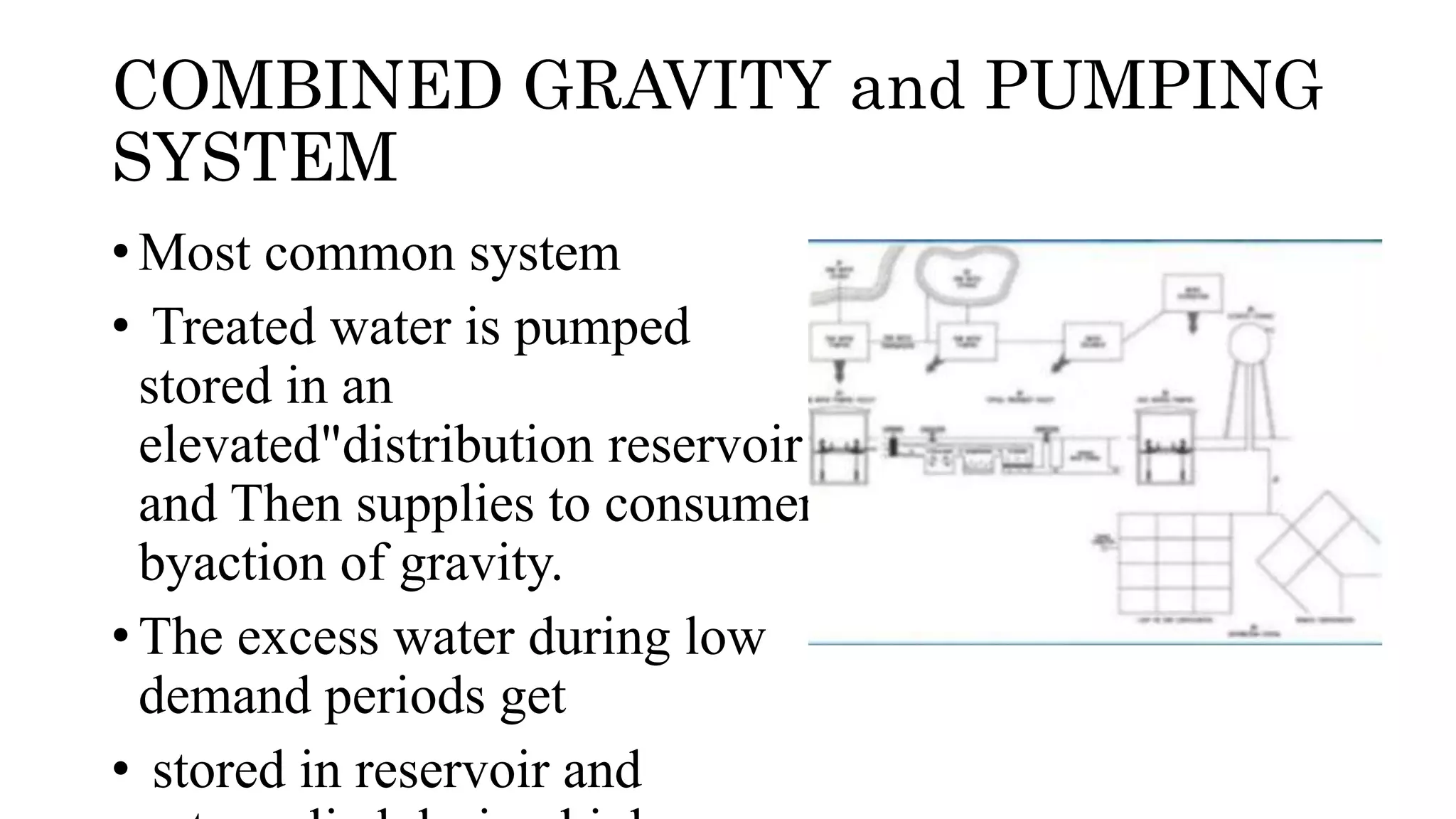
COMBINED GRAVITY and PUMPING
SYSTEM
• Most common system
• Treated water is pumped
stored in an
elevated"distribution reservoir
and Then supplies to consumer
byaction of gravity.
• The excess water during low
demand periods get
• stored in reservoir and
DISTRIBUTION RESERVOIRS
Distribution reservoirs,
also called service
reservoirs, are the storage
reservoirs, which store the
treated water for supplying
water during emergencies
(such as during fires;
repairs, etc.) and also to
help in absorbing the
hourly fluctuations in the
FUNCTION
•To absorb the hourly
variations in demand. To
maintain constant
pressure in
thedistribution main.
•Water stored can be
supplied
duringemergencies.
TYPES OF RESERVOIRS
Depending upon the elevation with
respect to ground
• Surface reservoirs
• Elevated reservoirs
SURFACE RESERVOIRS
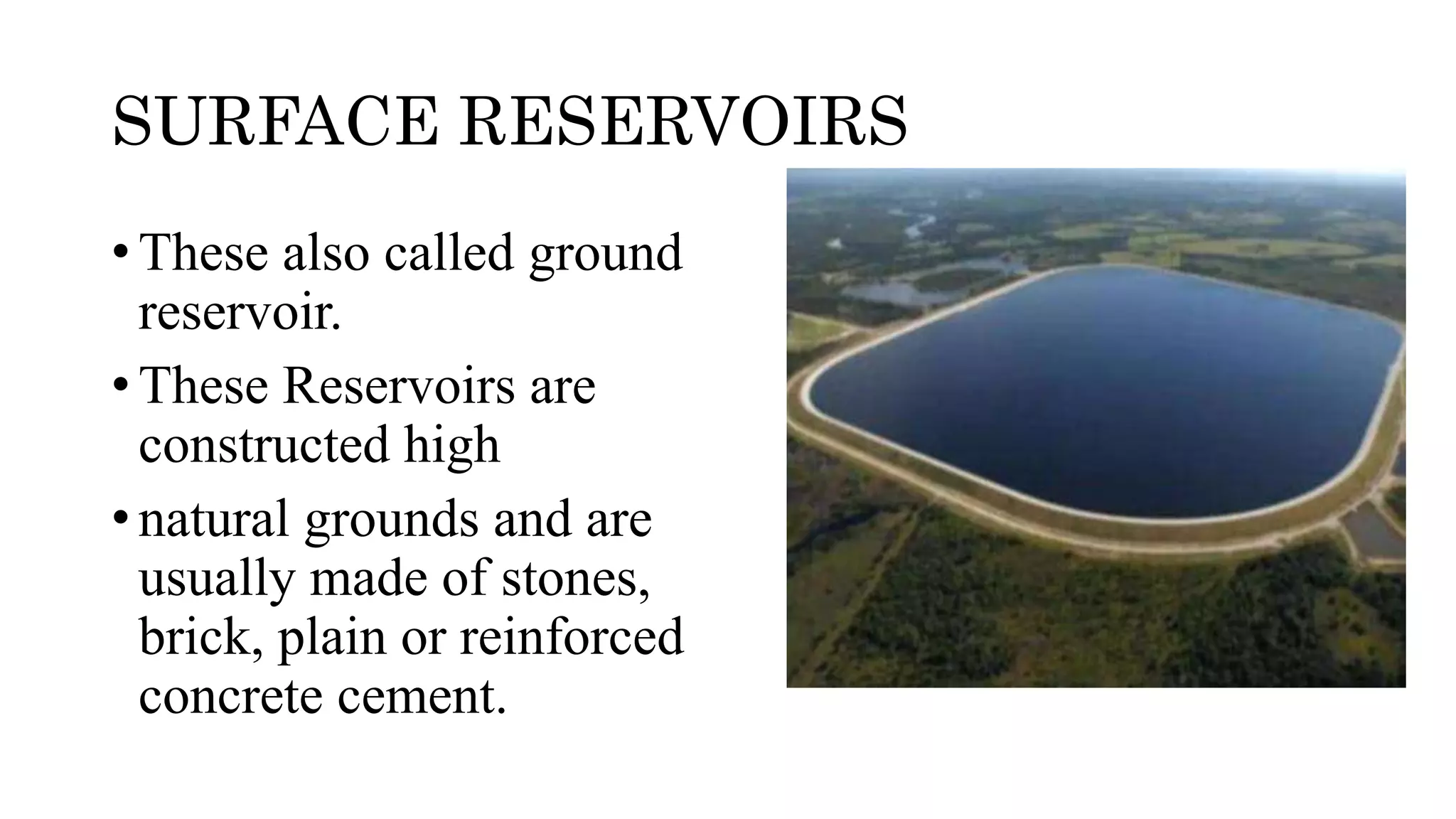
• These also called ground
reservoir.
• These Reservoirs are
constructed high
• natural grounds and are
usually made of stones,
brick, plain or reinforced
concrete cement.
ELEVATED RESERVOIR
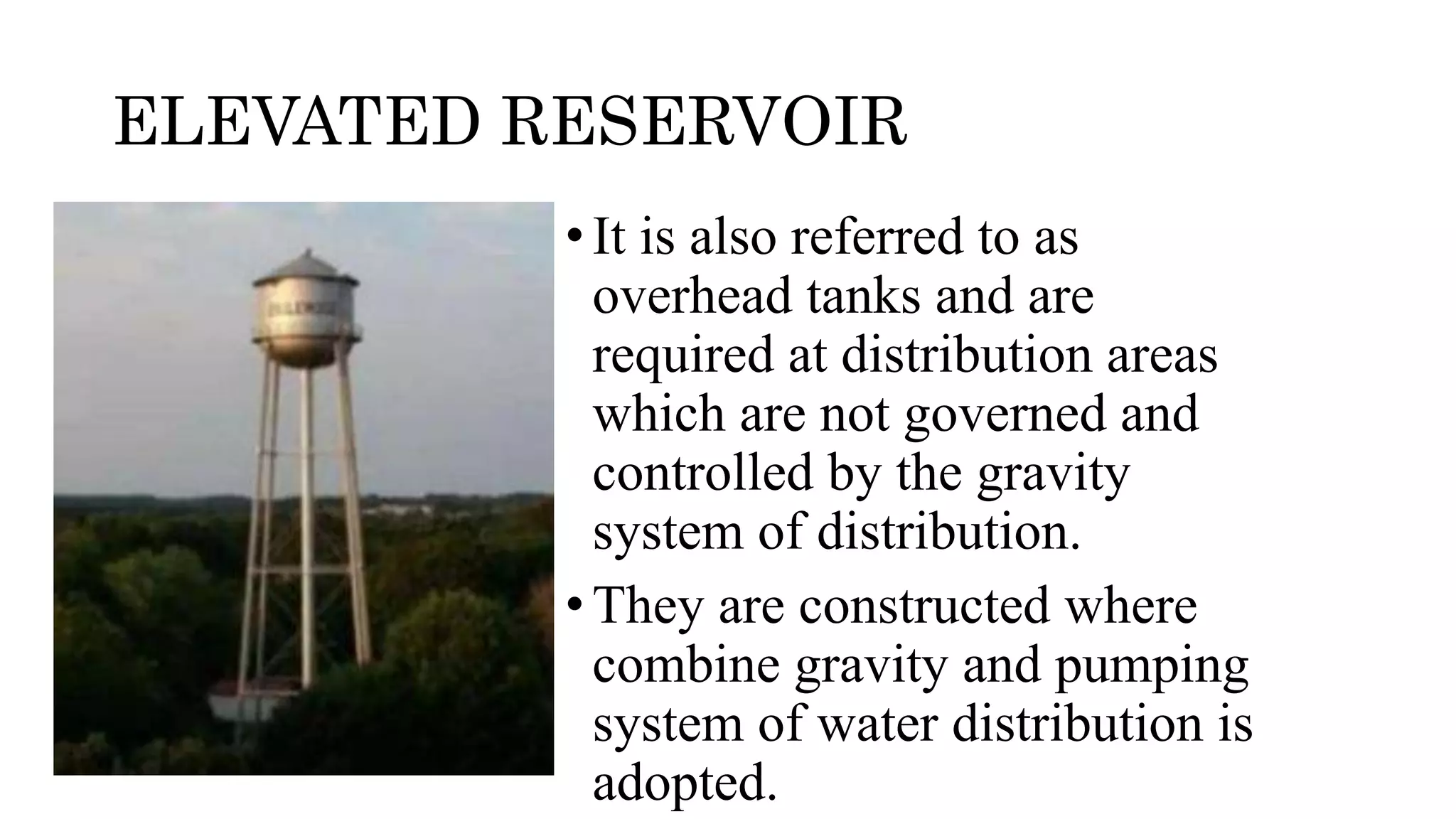
•It is also referred to as
overhead tanks and are
required at distribution areas
which are not governed and
controlled by the gravity
system of distribution.
•They are constructed where
combine gravity and pumping
system of water distribution is
adopted.
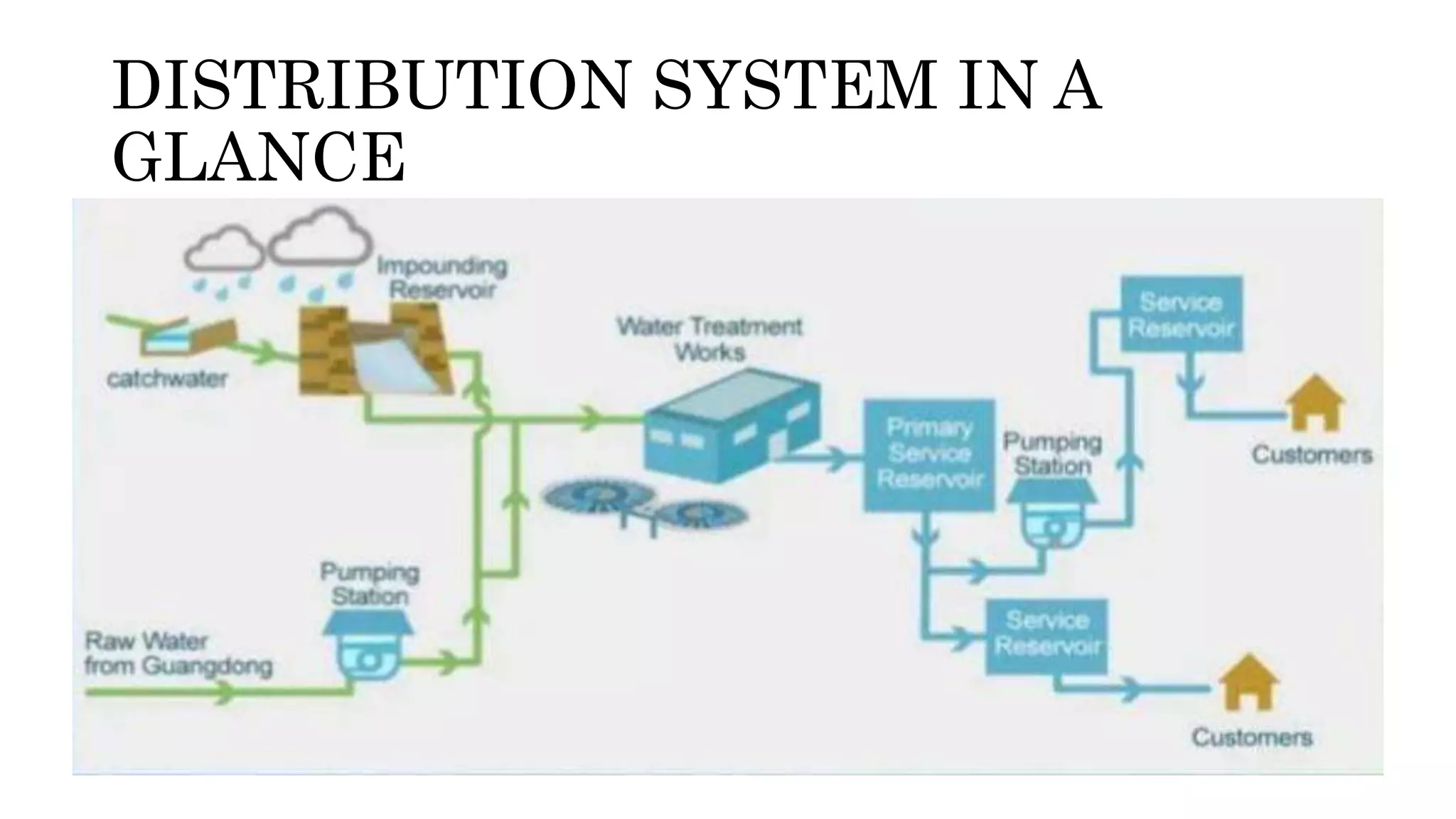
DISTRIBUTION SYSTEM IN A
GLANCE
Water Distribution System

Water Distribution System

  • 1.
  • 2.
    WHAT IS DITRIBUTIONSYSTEM? • A water distribution systems is one in which the drinking water is transported from the treatment plant or well supplies to the service connection or consumers’ taps. These systems aim to preserve the quality and quantity of water, as well as
  • 3.
    CLASSIFICATION Of DISTRIBUTION SYSTEMNETWORKS • Dead End System • Radial System • Grid Iron System • Ring System
  • 4.
    METHODS OF WATER DISTRIBUTION •Gravity System • Pumping System • Combined gravity and pumpingsystem
  • 5.
    GRAVITY SYSTEM • Suitablewhen source of supply is at sufficient height. • Most reliable and economical distribution system. • The water head available at the consumer is just minimu required. • The remaining head is consumed in the frictional
  • 6.
    PUMPING SYSTEM • Treatedwater is directly into th distribution main out storing. •Also called pumping without storage system. •High lifts pumps are required. •If power supply fails, complete stoppage of water supply. •The method is not general
  • 7.
    COMBINED GRAVITY andPUMPING SYSTEM • Most common system • Treated water is pumped stored in an elevated"distribution reservoir and Then supplies to consumer byaction of gravity. • The excess water during low demand periods get • stored in reservoir and
  • 8.
    DISTRIBUTION RESERVOIRS Distribution reservoirs, alsocalled service reservoirs, are the storage reservoirs, which store the treated water for supplying water during emergencies (such as during fires; repairs, etc.) and also to help in absorbing the hourly fluctuations in the FUNCTION •To absorb the hourly variations in demand. To maintain constant pressure in thedistribution main. •Water stored can be supplied duringemergencies.
  • 9.
    TYPES OF RESERVOIRS Dependingupon the elevation with respect to ground • Surface reservoirs • Elevated reservoirs
  • 10.
    SURFACE RESERVOIRS • Thesealso called ground reservoir. • These Reservoirs are constructed high • natural grounds and are usually made of stones, brick, plain or reinforced concrete cement.
  • 11.
    ELEVATED RESERVOIR •It isalso referred to as overhead tanks and are required at distribution areas which are not governed and controlled by the gravity system of distribution. •They are constructed where combine gravity and pumping system of water distribution is adopted.
  • 12.