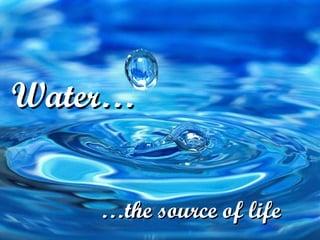
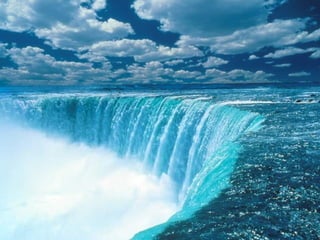
Water…


    …the source of life
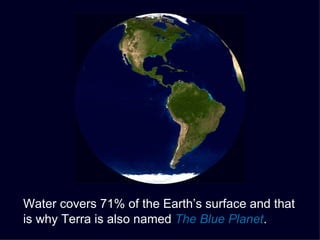
Water covers 71% of the Earth’s surface and that
is why Terra is also named The Blue Planet.
                                    Planet
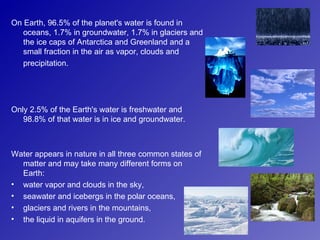
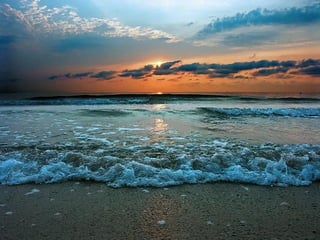
On Earth, 96.5% of the planet's water is found in
   oceans, 1.7% in groundwater, 1.7% in glaciers and
   the ice caps of Antarctica and Greenland and a
   small fraction in the air as vapor, clouds and
   precipitation.


Only 2.5% of the Earth's water is freshwater and
   98.8% of that water is in ice and groundwater.


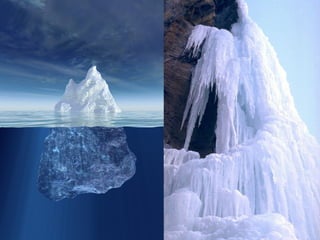
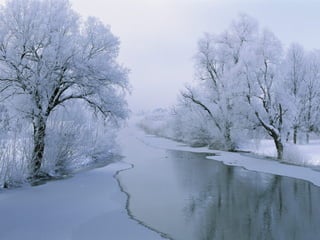
Water appears in nature in all three common states of
  matter and may take many different forms on
  Earth:
• water vapor and clouds in the sky,
• seawater and icebergs in the polar oceans,
• glaciers and rivers in the mountains,
• the liquid in aquifers in the ground.
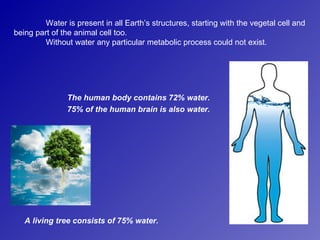
Water is present in all Earth’s structures, starting with the vegetal cell and
being part of the animal cell too.
         Without water any particular metabolic process could not exist.


               The human body contains 72% water.
               75% of the human brain is also water.


   A living tree consists of 75% water.
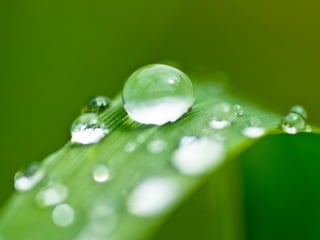
The beauty of water is unique in its ability of
         taking different forms…
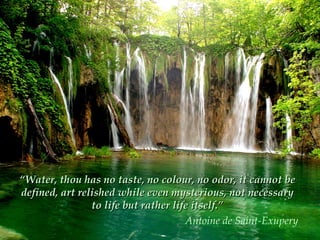
“Water, thou has no taste, no colour, no odor, it cannot be
defined, art relished while even mysterious, not necessary
                to life but rather life itself.”
                                      Antoine de Saint-Exupery
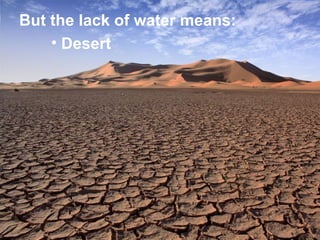
But the lack of water means:
    • Desert
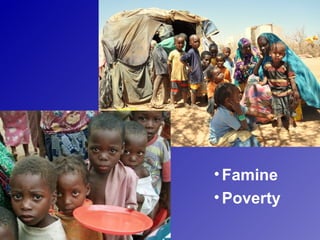
• Famine
• Poverty
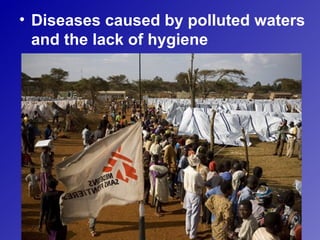
• Diseases caused by polluted waters
  and the lack of hygiene
Water pollution
• Water pollution means any physical or
  biological change in the quality of water.

• Rivers are the most affected by pollutants.

• The main causes are: the industrial
  development, chemicals used in agriculture,
  the growth of population in cities.
Industrial pollution
• Most water pollutants are produced by the
  food industry, the metal and the paper
  industry.

Chemical pollution
• The use of fertilizers in agriculture affects
  water and groundwater. All life forms are
  also affected.
Radioactive Pollution
• A lot of rivers from Ukraine, Russia and
  Japan are polluted by radioactive
  substances from the atomic plants.

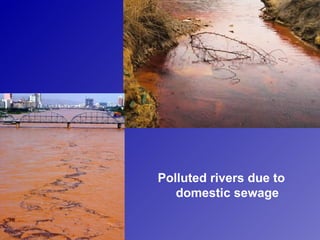
Domestic sewage is 99.9% pure water and
 0.1% are pollutants.
Polluted rivers due to
   domestic sewage
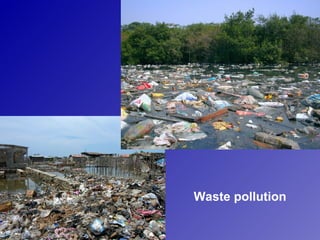
Waste pollution
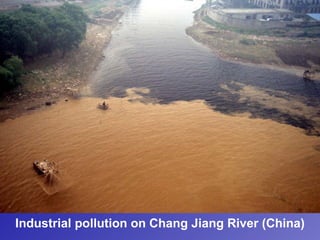
Industrial pollution on Chang Jiang River (China)
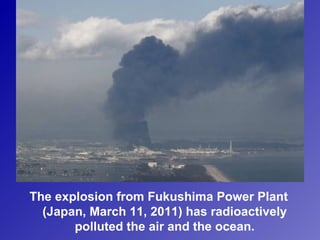
The explosion from Fukushima Power Plant
  (Japan, March 11, 2011) has radioactively
       polluted the air and the ocean.
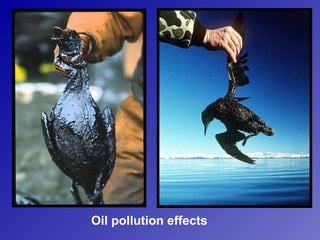
Pollution in the ocean directly affects
  ocean organisms and indirectly affects human
  health and resources.

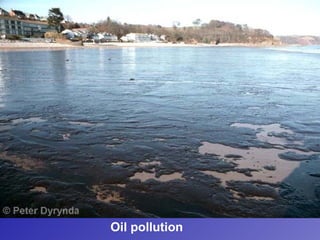
• Oil spills, toxic wastes and dumping of other
  harmful materials are all major sources of
  pollution in the ocean.

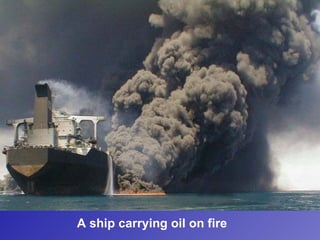
• The two main causes of oil pollution in the
  ocean are big ships leaking oil or ships
  carrying oil crashing into things in the ocean.
Oil pollution
A ship carrying oil on fire
Oil pollution effects
Attention to water!
It cannot be made!


      What can you do for
        saving water?
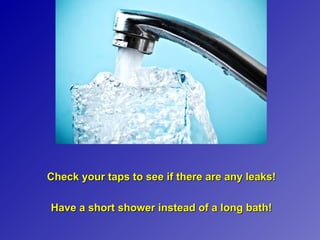
Check your taps to see if there are any leaks!

Have a short shower instead of a long bath!
Change your taps with water-saving ones!

Turn off the running water while brushing your
       teeth or shaving yourselves!
Wash your vegetables in a bowl full of water!

  Use your washing machine or your dishwasher
                  fully loaded!

Wash your car early in the morning in order to avoid
water evaporation, you will use less water this way!
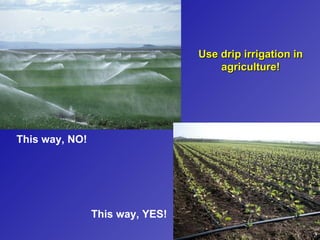
Use drip irrigation in
                                     agriculture!


This way, NO!


                This way, YES!
“In nature there are neither rewards nor
 punishments; there are consequences.”
                                                         (Robert G. Ingersoll)


         Realized by the pupils of School number 1, Bicaz, Romania,
         for the Comenius Project “How schoolchildren can contribute
         to keeping our planet green and clean”


                  This project has been funded with support from the European Commission.
                  This presentation reflects the views only of the author, and the Commission
                  cannot be held responsible for any use which may be made of the
                  information contained therein.

Water Day

  • 1.
    Water… …the source of life
  • 2.
    Water covers 71%of the Earth’s surface and that is why Terra is also named The Blue Planet. Planet
  • 3.
    On Earth, 96.5%of the planet's water is found in oceans, 1.7% in groundwater, 1.7% in glaciers and the ice caps of Antarctica and Greenland and a small fraction in the air as vapor, clouds and precipitation. Only 2.5% of the Earth's water is freshwater and 98.8% of that water is in ice and groundwater. Water appears in nature in all three common states of matter and may take many different forms on Earth: • water vapor and clouds in the sky, • seawater and icebergs in the polar oceans, • glaciers and rivers in the mountains, • the liquid in aquifers in the ground.
  • 4.
    Water is presentin all Earth’s structures, starting with the vegetal cell and being part of the animal cell too. Without water any particular metabolic process could not exist. The human body contains 72% water. 75% of the human brain is also water. A living tree consists of 75% water.
  • 5.
    The beauty ofwater is unique in its ability of taking different forms…
  • 7.
    “Water, thou hasno taste, no colour, no odor, it cannot be defined, art relished while even mysterious, not necessary to life but rather life itself.” Antoine de Saint-Exupery
  • 12.
    But the lackof water means: • Desert
  • 13.
  • 14.
    • Diseases causedby polluted waters and the lack of hygiene
  • 15.
    Water pollution • Waterpollution means any physical or biological change in the quality of water. • Rivers are the most affected by pollutants. • The main causes are: the industrial development, chemicals used in agriculture, the growth of population in cities.
  • 16.
    Industrial pollution • Mostwater pollutants are produced by the food industry, the metal and the paper industry. Chemical pollution • The use of fertilizers in agriculture affects water and groundwater. All life forms are also affected.
  • 17.
    Radioactive Pollution • Alot of rivers from Ukraine, Russia and Japan are polluted by radioactive substances from the atomic plants. Domestic sewage is 99.9% pure water and 0.1% are pollutants.
  • 18.
    Polluted rivers dueto domestic sewage
  • 19.
  • 20.
    Industrial pollution onChang Jiang River (China)
  • 21.
    The explosion fromFukushima Power Plant (Japan, March 11, 2011) has radioactively polluted the air and the ocean.
  • 22.
    Pollution in theocean directly affects ocean organisms and indirectly affects human health and resources. • Oil spills, toxic wastes and dumping of other harmful materials are all major sources of pollution in the ocean. • The two main causes of oil pollution in the ocean are big ships leaking oil or ships carrying oil crashing into things in the ocean.
  • 23.
  • 24.
    A ship carryingoil on fire
  • 25.
  • 26.
    Attention to water! Itcannot be made! What can you do for saving water?
  • 27.
    Check your tapsto see if there are any leaks! Have a short shower instead of a long bath!
  • 28.
    Change your tapswith water-saving ones! Turn off the running water while brushing your teeth or shaving yourselves!
  • 29.
    Wash your vegetablesin a bowl full of water! Use your washing machine or your dishwasher fully loaded! Wash your car early in the morning in order to avoid water evaporation, you will use less water this way!
  • 30.
    Use drip irrigationin agriculture! This way, NO! This way, YES!
  • 31.
    “In nature thereare neither rewards nor punishments; there are consequences.” (Robert G. Ingersoll) Realized by the pupils of School number 1, Bicaz, Romania, for the Comenius Project “How schoolchildren can contribute to keeping our planet green and clean” This project has been funded with support from the European Commission. This presentation reflects the views only of the author, and the Commission cannot be held responsible for any use which may be made of the information contained therein.