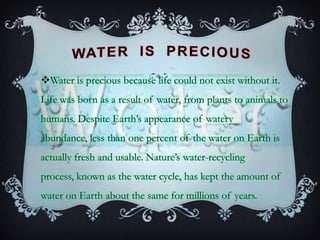
Water is a chemical substance with the chemical formula H2O. Its molecule
 contains one oxygen and two Hydrogen atoms connected by covalent bonds.
  Water is a liquid at ambition conditions but it often co-exists on Earth with
         its solid state , ice, and gaseous state, water vapors or steam.
  Water covers 70.9% of the earths surface[and is vital for all known forms
 of life. Earth, it is found mostly in oceans and other large water bodies, with
   1.6% of water below ground in aquifers and 0.001% in the air as vapor's
        , clouds (formed of solid and liquid water particles suspended in
    air), and presipitation.oceans hold 97% of surface water, glaciers and
   polar ice caps 2.4%, and other land surface water such as rivers, lakes
and ponds 0.6%. A very small amount of the Earth's water is contained within
                    biological bodies and manufactured products.
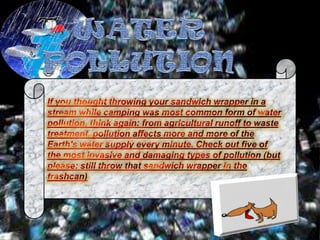
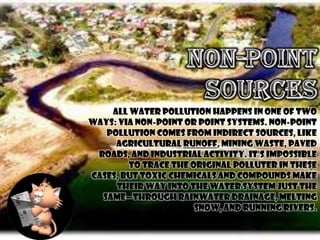
All water pollution happens in one of two
ways: via non-point or point systems. Non-point
   pollution comes from indirect sources, like
     agricultural runoff, mining waste, paved
 roads, and industrial activity. It's impossible
        to trace the original polluter in these
cases, but toxic chemicals and compounds make
     their way into the water system just the
  same—through rainwater drainage, melting
                      snow, and running rivers.
This may not seem like such a bad thing—
after all, hot water and cold water even out
eventually, right? Right—but until
then, discharging hot water while cooling
power plants means changing the
temperature of the water source, which can
encourage the species density to change and
alter the biology of the water. Thermal
pollution, then, can be just as damaging as
bacterial or sediment pollution.
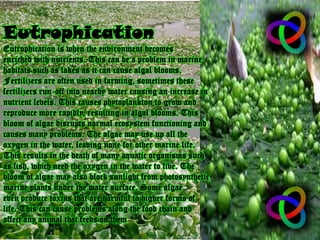
Eutrophication
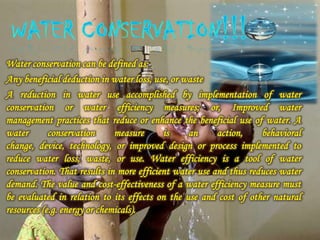
 Water-saving technology for the home includes:
 Low-flow shower heads (sometimes called energy-efficient shower heads as they also use less
   energy, due to less water being heated).[
 Low flush toilets and Composting toilets. These have a dramatic impact in the developed world, as
   conventional Western toilets use large volumes of water.
 Dual flushed toilets created by Caroma includes two buttons or handles to flush different levels of
   water. Dual flush toilets use up to 67% less water than conventiona l toilets.
 Saline water (sea water) or rain water can be used for flushing toilets.
 Faucet aerators, which break water flow into fine droplets to maintain "wetting effectiveness"
   while using less water. An additional benefit is that they reduce splashing while washing hands
   and dishes.
 Wastewater use or recycling systems, allowing
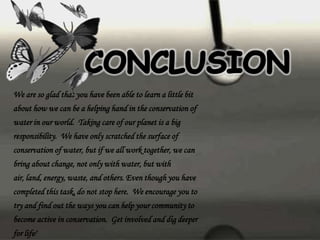
We are so glad that you have been able to learn a little bit
about how we can be a helping hand in the conservation of
water in our world. Taking care of our planet is a big
responsibility. We have only scratched the surface of
conservation of water, but if we all work together, we can
bring about change, not only with water, but with
air, land, energy, waste, and others. Even though you have
completed this task, do not stop here. We encourage you to
try and find out the ways you can help your community to
become active in conservation. Get involved and dig deeper
for life!
Watersdg
Watersdg

Watersdg

  • 4.
    Water is achemical substance with the chemical formula H2O. Its molecule contains one oxygen and two Hydrogen atoms connected by covalent bonds. Water is a liquid at ambition conditions but it often co-exists on Earth with its solid state , ice, and gaseous state, water vapors or steam. Water covers 70.9% of the earths surface[and is vital for all known forms of life. Earth, it is found mostly in oceans and other large water bodies, with 1.6% of water below ground in aquifers and 0.001% in the air as vapor's , clouds (formed of solid and liquid water particles suspended in air), and presipitation.oceans hold 97% of surface water, glaciers and polar ice caps 2.4%, and other land surface water such as rivers, lakes and ponds 0.6%. A very small amount of the Earth's water is contained within biological bodies and manufactured products.
  • 15.
    All water pollutionhappens in one of two ways: via non-point or point systems. Non-point pollution comes from indirect sources, like agricultural runoff, mining waste, paved roads, and industrial activity. It's impossible to trace the original polluter in these cases, but toxic chemicals and compounds make their way into the water system just the same—through rainwater drainage, melting snow, and running rivers.
  • 17.
    This may notseem like such a bad thing— after all, hot water and cold water even out eventually, right? Right—but until then, discharging hot water while cooling power plants means changing the temperature of the water source, which can encourage the species density to change and alter the biology of the water. Thermal pollution, then, can be just as damaging as bacterial or sediment pollution.
  • 18.
  • 20.
     Water-saving technologyfor the home includes:  Low-flow shower heads (sometimes called energy-efficient shower heads as they also use less energy, due to less water being heated).[  Low flush toilets and Composting toilets. These have a dramatic impact in the developed world, as conventional Western toilets use large volumes of water.  Dual flushed toilets created by Caroma includes two buttons or handles to flush different levels of water. Dual flush toilets use up to 67% less water than conventiona l toilets.  Saline water (sea water) or rain water can be used for flushing toilets.  Faucet aerators, which break water flow into fine droplets to maintain "wetting effectiveness" while using less water. An additional benefit is that they reduce splashing while washing hands and dishes.  Wastewater use or recycling systems, allowing
  • 24.
    We are soglad that you have been able to learn a little bit about how we can be a helping hand in the conservation of water in our world. Taking care of our planet is a big responsibility. We have only scratched the surface of conservation of water, but if we all work together, we can bring about change, not only with water, but with air, land, energy, waste, and others. Even though you have completed this task, do not stop here. We encourage you to try and find out the ways you can help your community to become active in conservation. Get involved and dig deeper for life!