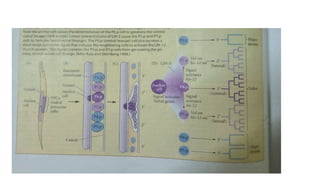
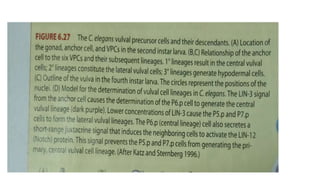
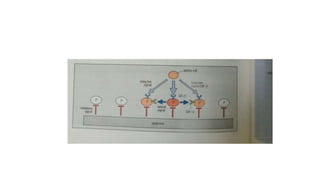
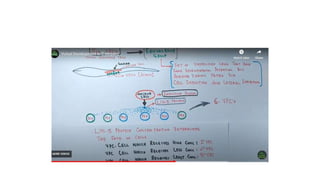
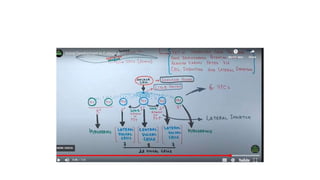
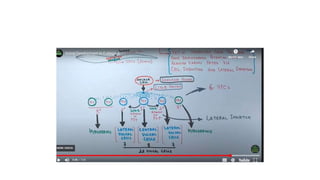
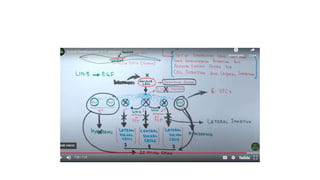
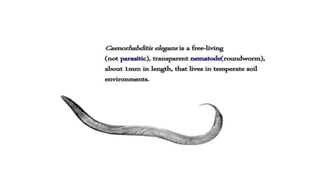
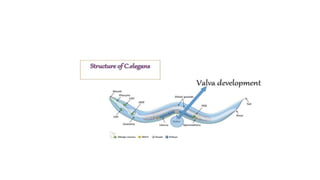
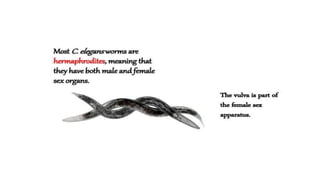
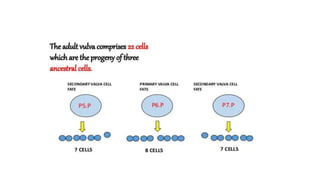
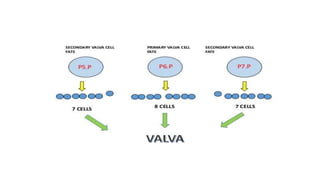
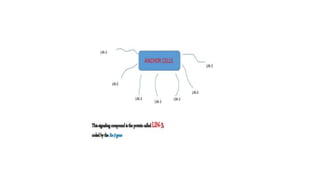
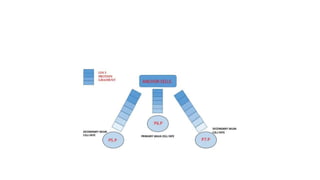
Vulval Development in Caenorhabditis elegans
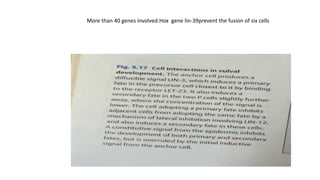
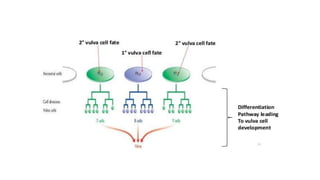
More than 40 genes involved.Hox gene lin-39prevent the fusion of six cells
• One of the most common intracellular signaling
pathways triggered by RTKs is known as the mitogen-activated
protein (MAP) kinase cascade, because it involves three serine-
threonine kinases. The pathway starts with the activation of
Ras, a small G protein anchored to the plasma membrane.
• receptor tyrosine kinases (RTKs)
• In biology, juxtacrine signalling (or contact-dependent signalling) is a
type of cell–cell or cell–extracellular
matrix signalling in multicellular organisms that requires close contact.
Hence, this stands in contrast to releasing a signaling molecule
by diffusion into extracellular space, the use of long-range conduits
like membrane nanotubes and cytonemes (akin to 'bridges') or the use of
extracellular vesicles like exosomes or microvesicles (akin to 'boats').
There are three types of juxtacrine signaling:
1.A membrane ligand (protein, oligosaccharide, lipid) and a membrane
protein of two adjacent cells interact.
2.A communicating junction links the intracellular compartments of two
adjacent cells, allowing transit of relatively small molecules.
3.An extracellular matrix glycoprotein and a membrane protein interact.
• Notch proteins are a family of type-1 transmembrane proteins that form a
core component of the Notch signaling pathway, which is highly conserved
in metazoans. The Notch extracellular domain (NECD) mediates
interactions with DSL family ligands, allowing it to participate in juxtacrine
signaling.The Notch intracellular domain (NICD) acts as a transcriptional
activator when in complex with CSL family transcription factors. Members
of this Type 1 transmembrane protein family share several core structures,
including an extracellular domain consisting of multiple epidermal growth
factor (EGF)-like repeats and an intracellular domain transcriptional
activation domain (TAD). Notch family members operate in a variety of
different tissues and play a role in a variety of developmental processes by
controlling cell fate decisions. Much of what is known about Notch function
comes from studies done in Caenorhabditis elegans (C.elegans)
and Drosophila melanogaster. Human homologs have also been identified,
but details of Notch function and interactions with its ligands are not well
known in this context.
• A mitogen-activated protein kinase (MAPK or MAP kinase)
is a type of protein kinase that is specific to the amino
acids serine and threonine (i.e., a serine/threonine-specific
protein kinase). MAPKs are involved in directing cellular
responses to a diverse array of stimuli, such
as mitogens, osmotic stress, heat shock and proinflammatory
cytokines. They regulate cell functions
including proliferation, gene expression, differentiation, mitosis,
cell survival, and apoptosis.[1]
vulva formation in c.elegans.pptx

vulva formation in c.elegans.pptx

  • 1.
    Vulval Development inCaenorhabditis elegans
  • 10.
    More than 40genes involved.Hox gene lin-39prevent the fusion of six cells
  • 15.
    • One ofthe most common intracellular signaling pathways triggered by RTKs is known as the mitogen-activated protein (MAP) kinase cascade, because it involves three serine- threonine kinases. The pathway starts with the activation of Ras, a small G protein anchored to the plasma membrane. • receptor tyrosine kinases (RTKs)
  • 16.
    • In biology,juxtacrine signalling (or contact-dependent signalling) is a type of cell–cell or cell–extracellular matrix signalling in multicellular organisms that requires close contact. Hence, this stands in contrast to releasing a signaling molecule by diffusion into extracellular space, the use of long-range conduits like membrane nanotubes and cytonemes (akin to 'bridges') or the use of extracellular vesicles like exosomes or microvesicles (akin to 'boats'). There are three types of juxtacrine signaling: 1.A membrane ligand (protein, oligosaccharide, lipid) and a membrane protein of two adjacent cells interact. 2.A communicating junction links the intracellular compartments of two adjacent cells, allowing transit of relatively small molecules. 3.An extracellular matrix glycoprotein and a membrane protein interact.
  • 17.
    • Notch proteinsare a family of type-1 transmembrane proteins that form a core component of the Notch signaling pathway, which is highly conserved in metazoans. The Notch extracellular domain (NECD) mediates interactions with DSL family ligands, allowing it to participate in juxtacrine signaling.The Notch intracellular domain (NICD) acts as a transcriptional activator when in complex with CSL family transcription factors. Members of this Type 1 transmembrane protein family share several core structures, including an extracellular domain consisting of multiple epidermal growth factor (EGF)-like repeats and an intracellular domain transcriptional activation domain (TAD). Notch family members operate in a variety of different tissues and play a role in a variety of developmental processes by controlling cell fate decisions. Much of what is known about Notch function comes from studies done in Caenorhabditis elegans (C.elegans) and Drosophila melanogaster. Human homologs have also been identified, but details of Notch function and interactions with its ligands are not well known in this context.
  • 31.
    • A mitogen-activatedprotein kinase (MAPK or MAP kinase) is a type of protein kinase that is specific to the amino acids serine and threonine (i.e., a serine/threonine-specific protein kinase). MAPKs are involved in directing cellular responses to a diverse array of stimuli, such as mitogens, osmotic stress, heat shock and proinflammatory cytokines. They regulate cell functions including proliferation, gene expression, differentiation, mitosis, cell survival, and apoptosis.[1]