POL 205
Fall 2019
Answer the following questions:
What make people vote the way they do?
Why don’t some people vote?
What percentage of U.S. citizens vote in presidential
elections? Midterm elections?
 Who votes –and who doesn’t?
 What makes people vote the way they do?
 Why don’t people vote?
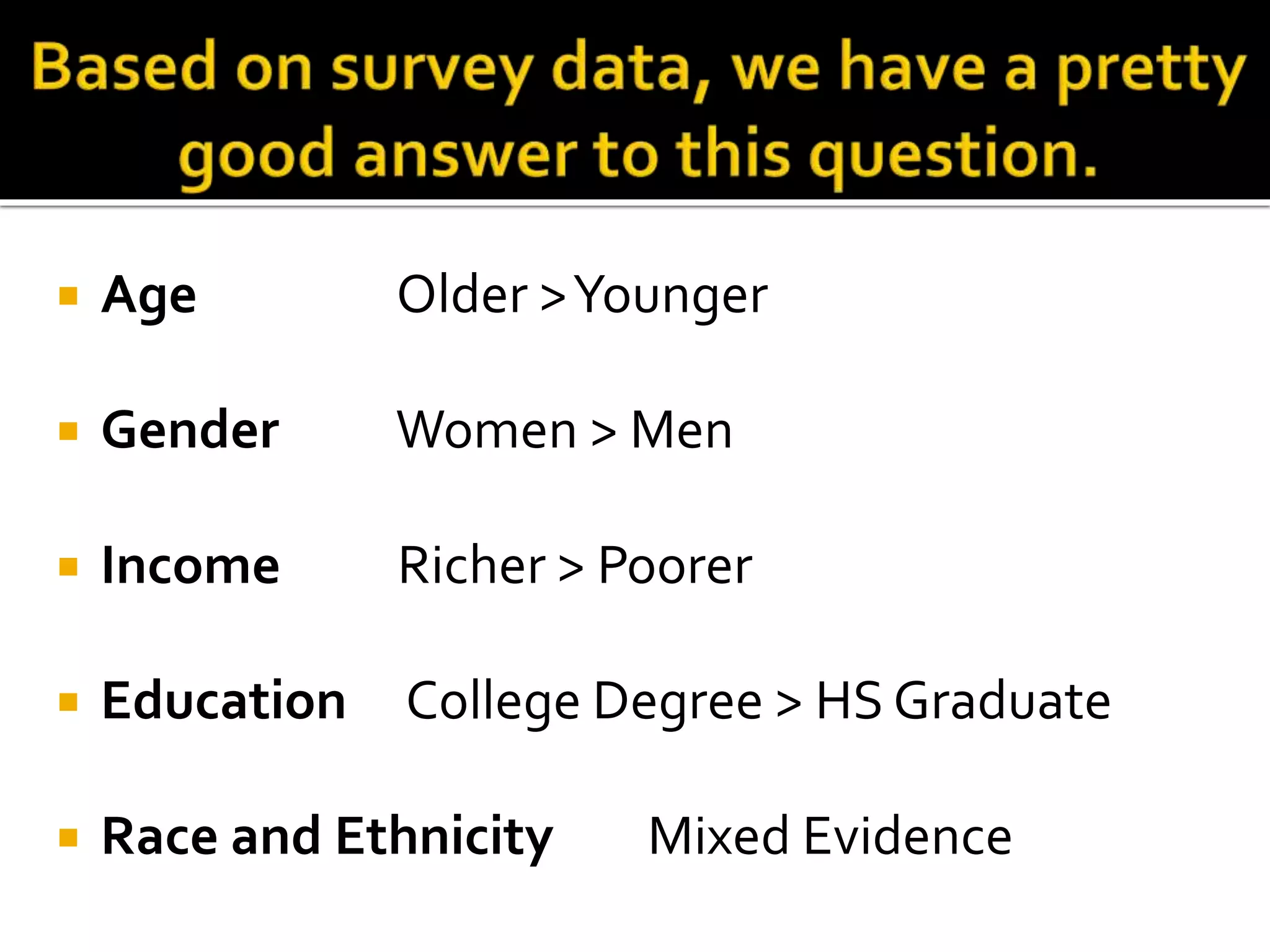
 Age Older >Younger
 Gender Women > Men
 Income Richer > Poorer
 Education College Degree > HS Graduate
 Race and Ethnicity Mixed Evidence
SOCIOLOGICALTHEORY
 Importance of
Social Context
 Partisanship of Family
and Friends
 Impact of Socio-
Economic Status (SES)
and Religion
PSYCHOLOGICALTHEORY
 Political Socialization
 Party ID
 Political Attitudes
 Voting Decision
 How are attitudes
formed?
 Voting based on past performance
 If you are the incumbent:
 Remember great things?
 “Are you better off than you were four years ago?”
 If you are the challenger:
 Remember problems?
 “Are you better off than you were four years ago?”
 Voting based off of future considerations
 If you are the incumbent:
 Plans for a new term if re-elected
 What will future look like with challenger?
 If you are the challenger:
 Reject incumbent’s policies
 Vote for change in years ahead
 Based on costs and benefits
 Voting Components:
 Probability ofVote Mattering (“P)
 Benefits ofVoting (“B”)
 Costs ofVoting (“C”)
 “Civic Duty” (“D”)
 Individuals weigh these items
and make their voting decision
POCKETBOOKVOTING SOCIOTROPICVOTING
Citizens’ political
knowledge hasn’t increased
in the last few decades.
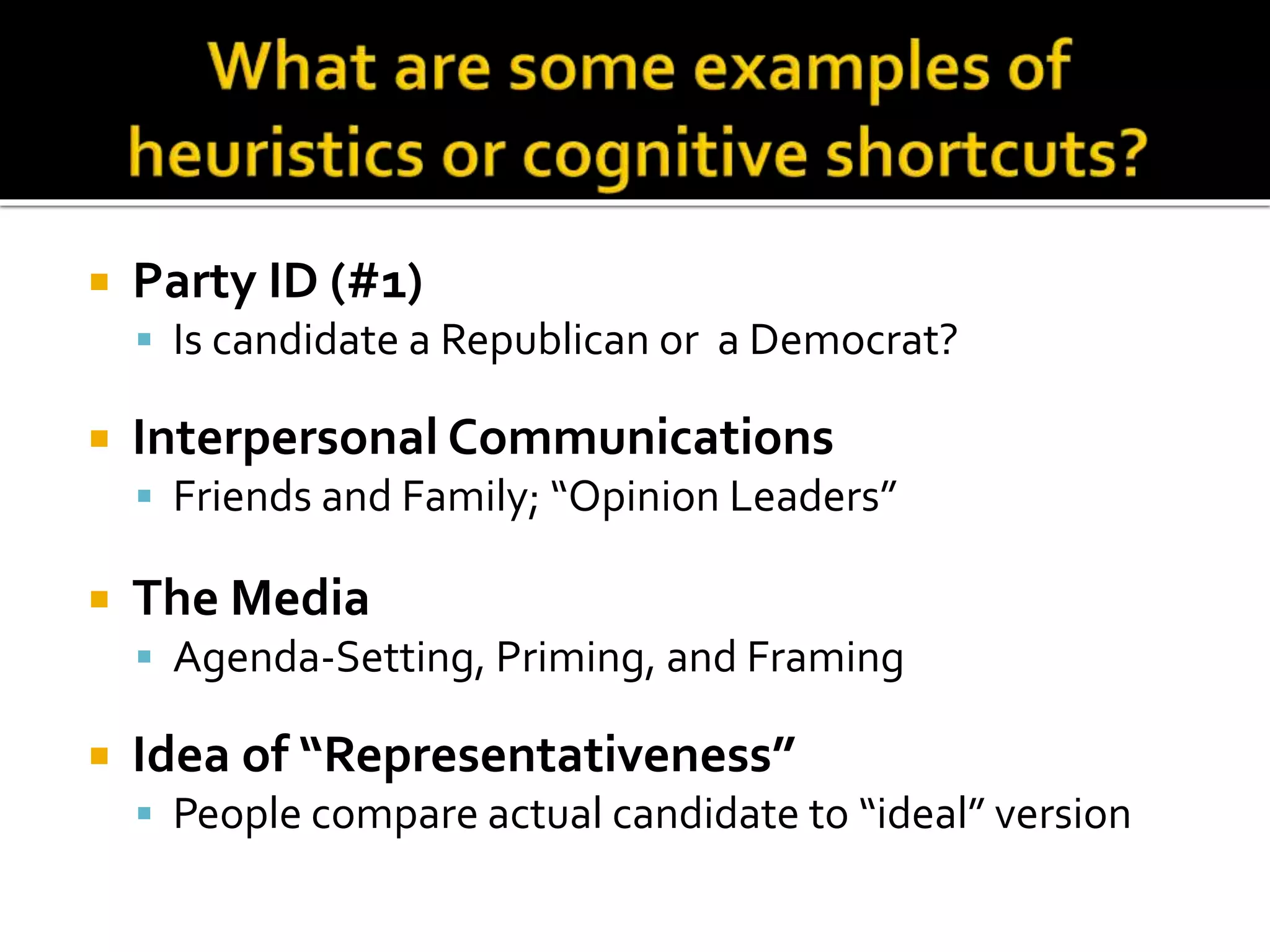
 Party ID (#1)
 Is candidate a Republican or a Democrat?
 Interpersonal Communications
 Friends and Family; “Opinion Leaders”
 The Media
 Agenda-Setting, Priming, and Framing
 Idea of “Representativeness”
 People compare actual candidate to “ideal” version
 Legal Obstacles
 Attitude Changes
 Voter Mobilization
 Decrease in Social Connectedness
 Generational Changes
 The “Rational Nonvoter”

Voting and Participation

  • 1.
  • 3.
    Answer the followingquestions: What make people vote the way they do? Why don’t some people vote? What percentage of U.S. citizens vote in presidential elections? Midterm elections?
  • 4.
     Who votes–and who doesn’t?  What makes people vote the way they do?  Why don’t people vote?
  • 5.
     Age Older>Younger  Gender Women > Men  Income Richer > Poorer  Education College Degree > HS Graduate  Race and Ethnicity Mixed Evidence
  • 8.
    SOCIOLOGICALTHEORY  Importance of SocialContext  Partisanship of Family and Friends  Impact of Socio- Economic Status (SES) and Religion PSYCHOLOGICALTHEORY  Political Socialization  Party ID  Political Attitudes  Voting Decision  How are attitudes formed?
  • 10.
     Voting basedon past performance  If you are the incumbent:  Remember great things?  “Are you better off than you were four years ago?”  If you are the challenger:  Remember problems?  “Are you better off than you were four years ago?”
  • 11.
     Voting basedoff of future considerations  If you are the incumbent:  Plans for a new term if re-elected  What will future look like with challenger?  If you are the challenger:  Reject incumbent’s policies  Vote for change in years ahead
  • 13.
     Based oncosts and benefits  Voting Components:  Probability ofVote Mattering (“P)  Benefits ofVoting (“B”)  Costs ofVoting (“C”)  “Civic Duty” (“D”)  Individuals weigh these items and make their voting decision
  • 14.
  • 16.
    Citizens’ political knowledge hasn’tincreased in the last few decades.
  • 17.
     Party ID(#1)  Is candidate a Republican or a Democrat?  Interpersonal Communications  Friends and Family; “Opinion Leaders”  The Media  Agenda-Setting, Priming, and Framing  Idea of “Representativeness”  People compare actual candidate to “ideal” version
  • 19.
     Legal Obstacles Attitude Changes  Voter Mobilization  Decrease in Social Connectedness  Generational Changes  The “Rational Nonvoter”