Why d o n ’ t 
people vote? 
Why do people 
vote the way 
they do? 
VOTER 
BEHAVIOR
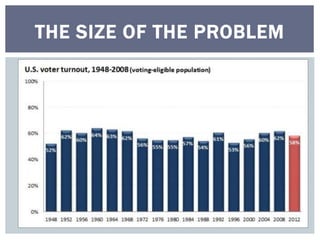
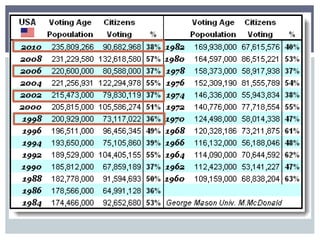
THE SIZE OF THE PROBLEM
WHY PEOPLE DO NOT VOTE 
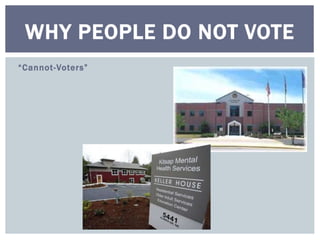
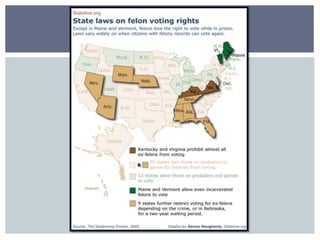
“ C an not - Voter s ”
WHY PEOPLE DO NOT VOTE 
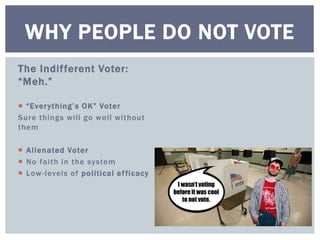
The Indif ferent Voter: 
“Meh.” 
 “ E v e r y t h i n g ’ s O K ” Vo te r 
Sure things wi l l go wel l wi thout 
them 
 Al ienated Voter 
 No fai th in the system 
 Low- levels of pol itical ef f icacy
WHY PEOPLE DO NOT VOTE 
Other Factors 
 Di f ficult process 
 Bad weather 
 “ t ime - zo ne ” f a l l o ut 
 Should increasing voter turnout be a national priority?
WHY PEOPLE DO NOT VOTE 
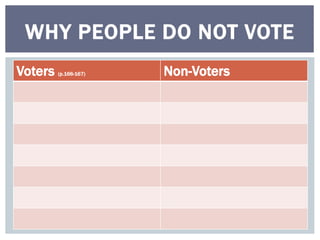
Voters (p.166-167) Non-Voters
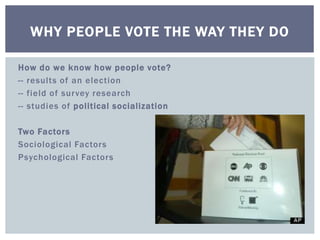
WHY PEOPLE VOTE THE WAY THEY DO 
How do we know how people vote? 
-- results of an election 
-- field of survey research 
-- studies of pol itical socialization 
Two Factors 
Sociological Factors 
Psychological Factors
SOCIOLOGICAL FACTORS 
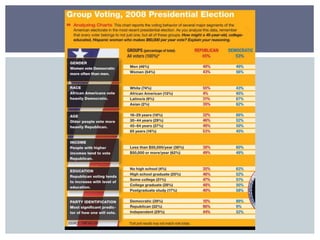
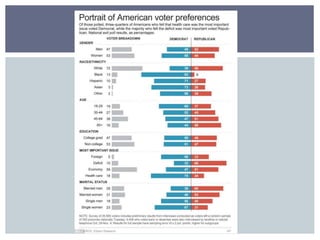
Income & Occupat ion 
- - Higher income = Republ ican 
Educat ion 
- - Col lege graduates tend toward 
Republ ican 
- - higher levels of educat ion skew 
Democratic 
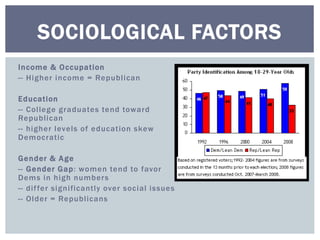
Gender & Age 
- - Gender Gap: women tend to favor 
Dems in high numbers 
- - di f fer signi ficant ly over social issues 
- - Older = Republ icans
SOCIOLOGICAL FACTORS 
Rel igious & Ethnic Background 
-- Protestants = Republicans 
-- Cathol ics & Jews = Democratic 
Why are some Catholic voters skewing Republican? 
-- African Americans = Democrats 
Republican voters from post -Civil War unti l New Deal 
-- Hispanic & Latino Voters = Democrats
SOCIOLOGICAL FACTORS 
Geography 
-- Post-Civil War: Sol id Democratic South 
-- Today: Republicans strong in South and Midwest 
Democrats strong in Nor theast & West 
-- Democrats strong in urban areas 
-- Republ icans strong in rural areas & smal l towns 
ht tp: / / elec t ions .ny t imes . c om/2012/ resul t s /pres ident 
Family & Other Groups 
-- 9 out of 10 married couples vote the same 
-- 2 out of 3 voters fol low the pol itics of their parents
PSYCHOLOGICAL FACTORS 
 Par ty Identification 
-- has been the most signi ficant predictor 
-- many st raight -ticket vote 
-- weakening; spl it-ticket voting 
-- growing number of independents 
What role do the candidate and the issues play in influencing 
voter behavior?

Voter behavior

  • 1.
    Why d on ’ t people vote? Why do people vote the way they do? VOTER BEHAVIOR
  • 2.
    THE SIZE OFTHE PROBLEM
  • 4.
    WHY PEOPLE DONOT VOTE “ C an not - Voter s ”
  • 6.
    WHY PEOPLE DONOT VOTE The Indif ferent Voter: “Meh.”  “ E v e r y t h i n g ’ s O K ” Vo te r Sure things wi l l go wel l wi thout them  Al ienated Voter  No fai th in the system  Low- levels of pol itical ef f icacy
  • 7.
    WHY PEOPLE DONOT VOTE Other Factors  Di f ficult process  Bad weather  “ t ime - zo ne ” f a l l o ut  Should increasing voter turnout be a national priority?
  • 8.
    WHY PEOPLE DONOT VOTE Voters (p.166-167) Non-Voters
  • 9.
    WHY PEOPLE VOTETHE WAY THEY DO How do we know how people vote? -- results of an election -- field of survey research -- studies of pol itical socialization Two Factors Sociological Factors Psychological Factors
  • 12.
    SOCIOLOGICAL FACTORS Income& Occupat ion - - Higher income = Republ ican Educat ion - - Col lege graduates tend toward Republ ican - - higher levels of educat ion skew Democratic Gender & Age - - Gender Gap: women tend to favor Dems in high numbers - - di f fer signi ficant ly over social issues - - Older = Republ icans
  • 13.
    SOCIOLOGICAL FACTORS Religious & Ethnic Background -- Protestants = Republicans -- Cathol ics & Jews = Democratic Why are some Catholic voters skewing Republican? -- African Americans = Democrats Republican voters from post -Civil War unti l New Deal -- Hispanic & Latino Voters = Democrats
  • 14.
    SOCIOLOGICAL FACTORS Geography -- Post-Civil War: Sol id Democratic South -- Today: Republicans strong in South and Midwest Democrats strong in Nor theast & West -- Democrats strong in urban areas -- Republ icans strong in rural areas & smal l towns ht tp: / / elec t ions .ny t imes . c om/2012/ resul t s /pres ident Family & Other Groups -- 9 out of 10 married couples vote the same -- 2 out of 3 voters fol low the pol itics of their parents
  • 15.
    PSYCHOLOGICAL FACTORS Par ty Identification -- has been the most signi ficant predictor -- many st raight -ticket vote -- weakening; spl it-ticket voting -- growing number of independents What role do the candidate and the issues play in influencing voter behavior?

Editor's Notes

  • #4 Off year elections highlighted Do people vote for president more than lower offices? Ballot fatigue (hand out sample ballot)
  • #5 Resident aliens Sick or physically impaired Mentally ill Incarcerated Religious beliefs prevent voting Racial bias -- people in mental institutions or found mentally incompetent -- 25% of states preclude anyone convicted of a serious crime from ever regaining the right to vote -- some states preclude those dishonorably discharged from the military Should ex-felons be allowed to vote?
  • #9 Voters High levels of income, education, job status High levels of political efficacy Party id Non-voters Younger than 35 Unmarried Unskilled, low skilled Low level of political efficacy Women vote more than men Better competition increases turnout