PO 101
Fall 2016
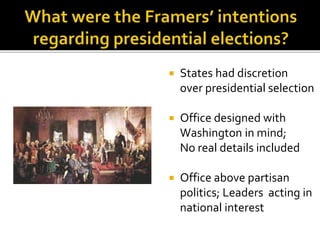
 States had discretion
over presidential selection
 Office designed with
Washington in mind;
No real details included
 Office above partisan
politics; Leaders acting in
national interest
 The House
 Allotted based on proportional representation
 Entire House up for election every two years
 The Senate
 Each state has two senators, regardless of size
 Seventeenth Amendment provided for direct
election of the Senate
 Terms are staggered
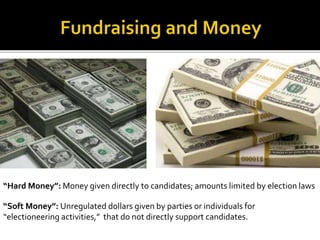
“Hard Money”: Money given directly to candidates; amounts limited by election laws
“Soft Money”: Unregulated dollars given by parties or individuals for
“electioneering activities,” that do not directly support candidates.
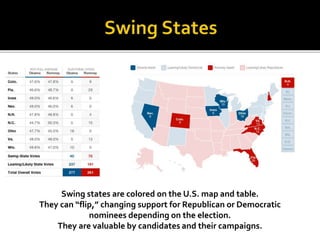
Swing states are colored on the U.S. map and table.
They can “flip,” changing support for Republican or Democratic
nominees depending on the election.
They are valuable by candidates and their campaigns.
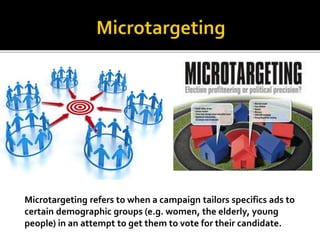
Microtargeting refers to when a campaign tailors specifics ads to
certain demographic groups (e.g. women, the elderly, young
people) in an attempt to get them to vote for their candidate.
 Valence Issue: Issues that most voters agree on
(e.g. honesty in govt., a strong economy)
 Position Issue: Issues on which most voters
differ in their perspectives (e.g. health care)
 Wedge Issue: Controversial issue candidates
use to drive “wedge” between other party
 Example: Republican trying get Democrats who may
be anti-abortion to vote for him instead of Obama
 The Economy
 What is the condition of the economy?
 Presidential Popularity
 How popular is the sitting president?
 Incumbent Party’sTime in Office
 How long has the incumbent party controlled
theWhite House?
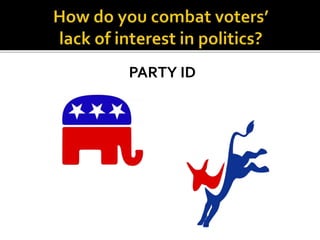
PARTY ID
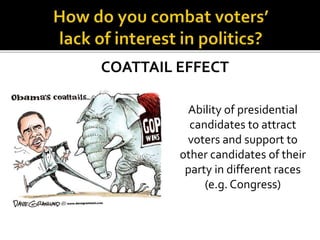
COATTAIL EFFECT
Ability of presidential
candidates to attract
voters and support to
other candidates of their
party in different races
(e.g. Congress)

Campaigns and Elections

  • 1.
  • 4.
     States haddiscretion over presidential selection  Office designed with Washington in mind; No real details included  Office above partisan politics; Leaders acting in national interest
  • 6.
     The House Allotted based on proportional representation  Entire House up for election every two years  The Senate  Each state has two senators, regardless of size  Seventeenth Amendment provided for direct election of the Senate  Terms are staggered
  • 10.
    “Hard Money”: Moneygiven directly to candidates; amounts limited by election laws “Soft Money”: Unregulated dollars given by parties or individuals for “electioneering activities,” that do not directly support candidates.
  • 12.
    Swing states arecolored on the U.S. map and table. They can “flip,” changing support for Republican or Democratic nominees depending on the election. They are valuable by candidates and their campaigns.
  • 13.
    Microtargeting refers towhen a campaign tailors specifics ads to certain demographic groups (e.g. women, the elderly, young people) in an attempt to get them to vote for their candidate.
  • 14.
     Valence Issue:Issues that most voters agree on (e.g. honesty in govt., a strong economy)  Position Issue: Issues on which most voters differ in their perspectives (e.g. health care)  Wedge Issue: Controversial issue candidates use to drive “wedge” between other party  Example: Republican trying get Democrats who may be anti-abortion to vote for him instead of Obama
  • 16.
     The Economy What is the condition of the economy?  Presidential Popularity  How popular is the sitting president?  Incumbent Party’sTime in Office  How long has the incumbent party controlled theWhite House?
  • 22.
  • 23.
    COATTAIL EFFECT Ability ofpresidential candidates to attract voters and support to other candidates of their party in different races (e.g. Congress)