Focus On Job Enrichment


Presented by
E-18 Sneha Thanneru      E-08 Arzoo Bista    E-48 Himanshi Sahlot
E-58 Purnima Vidyarthi   E-28 Parag Saxena   E-38 Meenesh Pachauri
Introduction to VOLVO

            Origin of VOLVO group 1927


            Headquarter :
            Gothenburg, Sweden


            Industry: Commercial
            Vehicles


            Product: Heavy Equipments
            (trucks, buses, construction
            equipments)
The Beginning
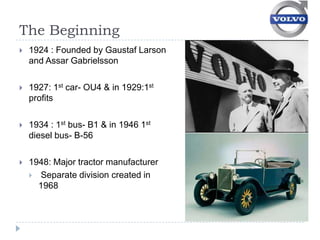
   1924 : Founded by Gaustaf Larson
    and Assar Gabrielsson

   1927: 1st car- OU4 & in 1929:1st
    profits

   1934 : 1st bus- B1 & in 1946 1st
    diesel bus- B-56

   1948: Major tractor manufacturer
     Separate division created in
      1968
Global Entry
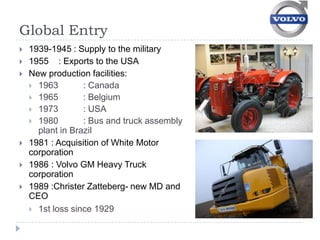
   1939-1945 : Supply to the military
   1955 : Exports to the USA
   New production facilities:
     1963        : Canada
     1965        : Belgium
     1973        : USA
     1980        : Bus and truck assembly
      plant in Brazil
   1981 : Acquisition of White Motor
    corporation
   1986 : Volvo GM Heavy Truck
    corporation
   1989 :Christer Zatteberg- new MD and
    CEO
     1st loss since 1929
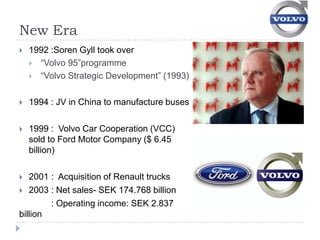
New Era
   1992 :Soren Gyll took over
     “Volvo 95”programme
     “Volvo Strategic Development” (1993)


   1994 : JV in China to manufacture buses

   1999 : Volvo Car Cooperation (VCC)
    sold to Ford Motor Company ($ 6.45
    billion)

  2001 : Acquisition of Renault trucks
 2003 : Net sales- SEK 174.768 billion
        : Operating income: SEK 2.837
billion
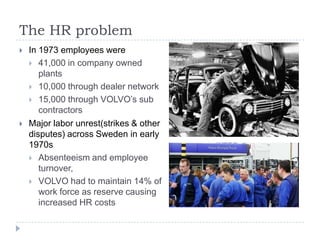
The HR problem
   In 1973 employees were
     41,000 in company owned
       plants
     10,000 through dealer network
     15,000 through VOLVO’s sub
       contractors
   Major labor unrest(strikes & other
    disputes) across Sweden in early
    1970s
     Absenteeism and employee
       turnover,
     VOLVO had to maintain 14% of
       work force as reserve causing
       increased HR costs
The HR problem

                 • Sweden’s per capita expenditure on
                   education made its citizen more educated
                   so accident prone factory environment
    Education      was no longer an attractive proposition


                 • Attracting and retaining talented
                   workforce
                 • Immigrant labors Increased diversity at
    Challenges     workplace affected work culture leading
                   to disrupted communication system
HR solutions
   Job enrichment programmes were initiated to train
   leaders and employees to improve working
   conditions


   New recruits had 130 hours induction programme
   for familiarizing them with working conditions


   Leadership training for group leaders were
   organized to focus on communication skills &
   worker welfare
Cont..

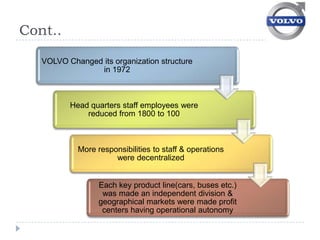
   VOLVO Changed its organization structure
                in 1972


          Head quarters staff employees were
              reduced from 1800 to 100


            More responsibilities to staff & operations
                      were decentralized


                  Each key product line(cars, buses etc.)
                   was made an independent division &
                  geographical markets were made profit
                   centers having operational autonomy
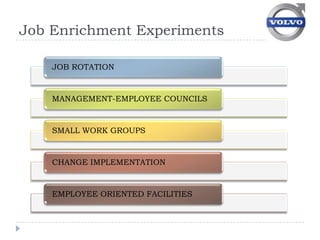
Job Enrichment Experiments

    JOB ROTATION


    MANAGEMENT-EMPLOYEE COUNCILS


    SMALL WORK GROUPS


    CHANGE IMPLEMENTATION


    EMPLOYEE ORIENTED FACILITIES
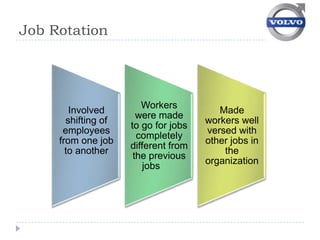
Job Rotation


                        Workers
        Involved                         Made
                       were made
       shifting of                    workers well
                     to go for jobs
      employees                       versed with
                       completely
     from one job                     other jobs in
                     different from
       to another                         the
                      the previous
                                      organization
                         jobs
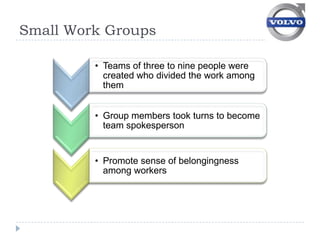
Small Work Groups

         • Teams of three to nine people were
           created who divided the work among
           them


         • Group members took turns to become
           team spokesperson


         • Promote sense of belongingness
           among workers
Management Employee Council


              Enhance employee participation


                Enabled local work councils to
                handle issues


              Enabled workers in developing plans
              for welfare of employees
Change Implementation


              Involved two work areas- work
             design and work environment

            Work design – the way they worked
             at the shop floor was taken into
              consideration and improvised

                Work environment- the
             manufacturing equipments were
                   always kept clean
End of Social-Technical Approach?
   Lack of demand in the 1990’s forced the
   company to stop the progress of its job
   enrichment initiatives.


   Operations at the Kalmar and Uddevalla plants
   were suspended which ,however, reopened in
   1993.


   Volvo’s productivity was far behind Japanese
   and US plants.


   Experts felt that there was a mismatch between
   the amount of money spent on training and the
   results.
End of Social-Technical Approach?

      After a decade, with severe global recession in
     the automobile industry, Volvo realized it had to
                    change with time.


          Volvo’s car unit sold to Ford in 1999.


     The company had to revert to the assembly line
                 production system.
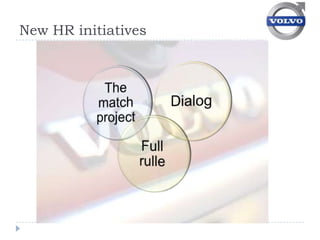
New HR initiatives
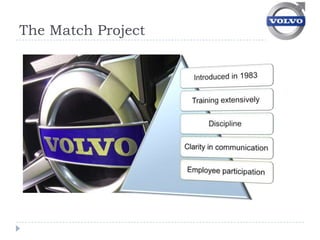
The Match Project
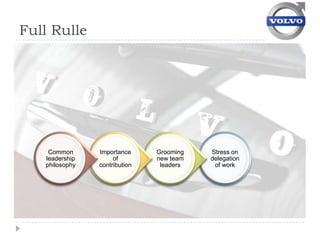
Full Rulle


    Common      Importance     Grooming   Stress on
   leadership        of        new team   delegation
   philosophy   contribution    leaders    of work
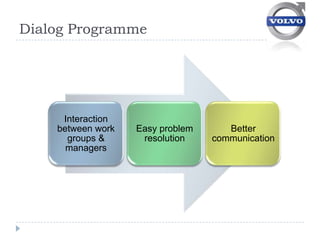
Dialog Programme


     Interaction
    between work   Easy problem      Better
      groups &      resolution    communication
      managers
 Thank   You

Volvo hr practices

  • 1.
    Focus On JobEnrichment Presented by E-18 Sneha Thanneru E-08 Arzoo Bista E-48 Himanshi Sahlot E-58 Purnima Vidyarthi E-28 Parag Saxena E-38 Meenesh Pachauri
  • 2.
    Introduction to VOLVO Origin of VOLVO group 1927 Headquarter : Gothenburg, Sweden Industry: Commercial Vehicles Product: Heavy Equipments (trucks, buses, construction equipments)
  • 3.
    The Beginning  1924 : Founded by Gaustaf Larson and Assar Gabrielsson  1927: 1st car- OU4 & in 1929:1st profits  1934 : 1st bus- B1 & in 1946 1st diesel bus- B-56  1948: Major tractor manufacturer  Separate division created in 1968
  • 4.
    Global Entry  1939-1945 : Supply to the military  1955 : Exports to the USA  New production facilities:  1963 : Canada  1965 : Belgium  1973 : USA  1980 : Bus and truck assembly plant in Brazil  1981 : Acquisition of White Motor corporation  1986 : Volvo GM Heavy Truck corporation  1989 :Christer Zatteberg- new MD and CEO  1st loss since 1929
  • 5.
    New Era  1992 :Soren Gyll took over  “Volvo 95”programme  “Volvo Strategic Development” (1993)  1994 : JV in China to manufacture buses  1999 : Volvo Car Cooperation (VCC) sold to Ford Motor Company ($ 6.45 billion)  2001 : Acquisition of Renault trucks  2003 : Net sales- SEK 174.768 billion : Operating income: SEK 2.837 billion
  • 6.
    The HR problem  In 1973 employees were  41,000 in company owned plants  10,000 through dealer network  15,000 through VOLVO’s sub contractors  Major labor unrest(strikes & other disputes) across Sweden in early 1970s  Absenteeism and employee turnover,  VOLVO had to maintain 14% of work force as reserve causing increased HR costs
  • 7.
    The HR problem • Sweden’s per capita expenditure on education made its citizen more educated so accident prone factory environment Education was no longer an attractive proposition • Attracting and retaining talented workforce • Immigrant labors Increased diversity at Challenges workplace affected work culture leading to disrupted communication system
  • 8.
    HR solutions Job enrichment programmes were initiated to train leaders and employees to improve working conditions New recruits had 130 hours induction programme for familiarizing them with working conditions Leadership training for group leaders were organized to focus on communication skills & worker welfare
  • 9.
    Cont.. VOLVO Changed its organization structure in 1972 Head quarters staff employees were reduced from 1800 to 100 More responsibilities to staff & operations were decentralized Each key product line(cars, buses etc.) was made an independent division & geographical markets were made profit centers having operational autonomy
  • 10.
    Job Enrichment Experiments JOB ROTATION MANAGEMENT-EMPLOYEE COUNCILS SMALL WORK GROUPS CHANGE IMPLEMENTATION EMPLOYEE ORIENTED FACILITIES
  • 11.
    Job Rotation Workers Involved Made were made shifting of workers well to go for jobs employees versed with completely from one job other jobs in different from to another the the previous organization jobs
  • 12.
    Small Work Groups • Teams of three to nine people were created who divided the work among them • Group members took turns to become team spokesperson • Promote sense of belongingness among workers
  • 13.
    Management Employee Council Enhance employee participation Enabled local work councils to handle issues Enabled workers in developing plans for welfare of employees
  • 14.
    Change Implementation Involved two work areas- work design and work environment Work design – the way they worked at the shop floor was taken into consideration and improvised Work environment- the manufacturing equipments were always kept clean
  • 15.
    End of Social-TechnicalApproach? Lack of demand in the 1990’s forced the company to stop the progress of its job enrichment initiatives. Operations at the Kalmar and Uddevalla plants were suspended which ,however, reopened in 1993. Volvo’s productivity was far behind Japanese and US plants. Experts felt that there was a mismatch between the amount of money spent on training and the results.
  • 16.
    End of Social-TechnicalApproach? After a decade, with severe global recession in the automobile industry, Volvo realized it had to change with time. Volvo’s car unit sold to Ford in 1999. The company had to revert to the assembly line production system.
  • 17.
  • 18.
  • 19.
    Full Rulle Common Importance Grooming Stress on leadership of new team delegation philosophy contribution leaders of work
  • 20.
    Dialog Programme Interaction between work Easy problem Better groups & resolution communication managers
  • 21.