 A portal is a unified place that connects 
people to contextually relevant information, 
services, and applications. 
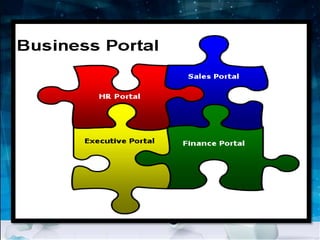
 Business Portal provides the right 
information to the right people. 
 The HR portal you create is a specialized 
“piece” of Business Portal. 
 HR portal will provide HR-related content and 
applications to those who need it—those 
assigned to the Employee, Manager, Payroll 
Administrator, and Human Resources
It is accessible anywhere any time, real time 
and allowing your sale force or business 
users to make powerful decisions without 
spending time in files. 
Portal also is most efficient way of sharing 
company information. Powerful knowledge 
base engine behind the portal is the key to 
portal success. 
Portal enables users/employees to make
1) Generate ideas & information for HR portals: 
 Most HR portals offer topics related to HR 
policy, recruiting or training. 
 In addition to written documents, newer 
portals may also include videos and social 
networking that promote employee 
interaction. 
 However, the exact content will vary 
depending on the company's needs and 
culture.
2) Determine which HR transactionswill be 
handled through the portal: 
 While some portals are used primarily for 
sharing information, & others offer a full 
array of HR services. 
 These services may include tools for 
managing performance, forms for updating 
or changing employee work information and 
access to work and salary history. 
 By adding employee and manager self-service 
functionality, HR departments can 
reduce paperwork and cut costs.
3) Design an interface that is easy to use and 
promotes engagement: 
 Add navigation and search tools to help 
employees find information quickly. 
 Use a template that includes company logos 
and colors to create a consistent look and 
feel throughout the site. 
 Offer options for users to personalize their 
home pages to highlight content that is 
most relevant to their job type or location.
4) Partner with your information technology 
department to select the appropriate technical 
infrastructure: 
 Portals that will primarily consist of HR 
documents and policies require only basic 
web page technology. 
 While a portal with lots of tools and 
functionality will require a more complex 
solution. 
 Incorporate security features that 
automatically identify employees and their 
level of access to confidential information.
5) Set up a review schedule to make sure the 
content is always current and relevant: 
 Remove old and outdated information to 
minimize confusion and disruption to 
worker productivity. 
 Assign an administrator to oversee site 
maintenance and provide support for users.
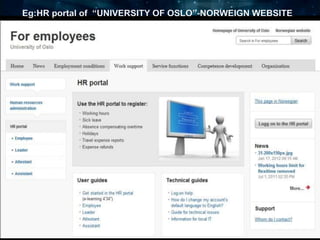
Eg:HR portal of “UNIVERSITY OF OSLO”-NORWEIGN WEBSITE
DESIGNING A HR PORTAL

DESIGNING A HR PORTAL

  • 2.
     A portalis a unified place that connects people to contextually relevant information, services, and applications.  Business Portal provides the right information to the right people.  The HR portal you create is a specialized “piece” of Business Portal.  HR portal will provide HR-related content and applications to those who need it—those assigned to the Employee, Manager, Payroll Administrator, and Human Resources
  • 4.
    It is accessibleanywhere any time, real time and allowing your sale force or business users to make powerful decisions without spending time in files. Portal also is most efficient way of sharing company information. Powerful knowledge base engine behind the portal is the key to portal success. Portal enables users/employees to make
  • 5.
    1) Generate ideas& information for HR portals:  Most HR portals offer topics related to HR policy, recruiting or training.  In addition to written documents, newer portals may also include videos and social networking that promote employee interaction.  However, the exact content will vary depending on the company's needs and culture.
  • 6.
    2) Determine whichHR transactionswill be handled through the portal:  While some portals are used primarily for sharing information, & others offer a full array of HR services.  These services may include tools for managing performance, forms for updating or changing employee work information and access to work and salary history.  By adding employee and manager self-service functionality, HR departments can reduce paperwork and cut costs.
  • 7.
    3) Design aninterface that is easy to use and promotes engagement:  Add navigation and search tools to help employees find information quickly.  Use a template that includes company logos and colors to create a consistent look and feel throughout the site.  Offer options for users to personalize their home pages to highlight content that is most relevant to their job type or location.
  • 8.
    4) Partner withyour information technology department to select the appropriate technical infrastructure:  Portals that will primarily consist of HR documents and policies require only basic web page technology.  While a portal with lots of tools and functionality will require a more complex solution.  Incorporate security features that automatically identify employees and their level of access to confidential information.
  • 9.
    5) Set upa review schedule to make sure the content is always current and relevant:  Remove old and outdated information to minimize confusion and disruption to worker productivity.  Assign an administrator to oversee site maintenance and provide support for users.
  • 10.
    Eg:HR portal of“UNIVERSITY OF OSLO”-NORWEIGN WEBSITE