ANEESH.S
S5 EEE
ROLL NO: 9
GPTC
ATTINGAL








It is one of the new developed technology.
Researchers from Texas , &university of Houston
working on just such a concept back in 2008.
They focused on a certain type of piezoelectric
material at around 21 nanometer thick.
South korean researchers developed the effective
methode.
.









You have probably heard of renewably energy
source like solar , wind,…
Have you ever heard about sound energy?
Sound that always exists in our everyday life and
environments has been overlooked as a source.
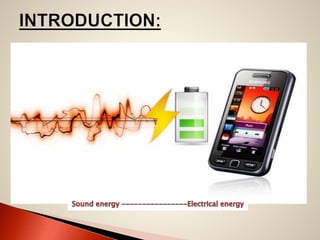
This motivated us to realize power generation by
turning sound energy from speech , music into
electrical power.
Sound pollution is a great disadvantage that we
come across our daily life.
But using this technology we can convert this great
disadvantage to our use




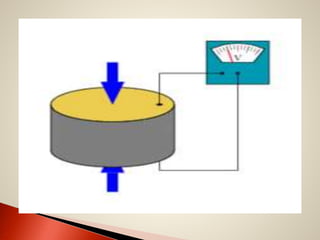
It works on the principle of piezo electric
effectric phenomenon.
The generation of an electric charge in certain
non conducting material when they are
subjected to mechnical stress is called
piezoelectric effects (conversion of ME to EE)








Piezo used to describe the materials that accumulate a charge
as a result of piezoelectric effect.
Piezo material , including crystals and ceramics generate a
voltage in response to an applied mechanical force.
In reverse piezoelectric effect, these same material will
lengthen or shorten in response to an applied voltage.
The voltage at force generated by piezo material are small
and usually required amplification.
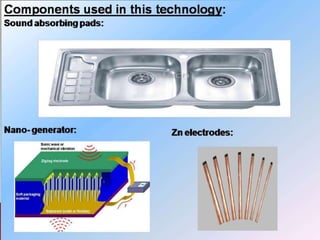
Components used in this technology:
Sound absorbing pads
Zn electrodes
Nano- generator
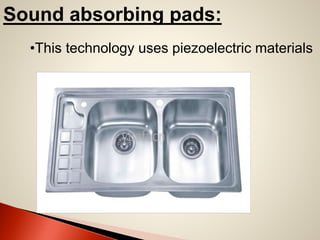
Sound absorbing pads:
•This technology uses piezoelectric materials
Features of sound absorbing plates:
Environment-friendly
Shock resistant
Sound absorption
 Moisture proof
Heat insulation, acid-base resistant
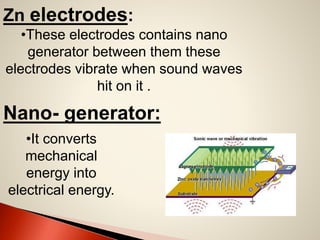
Zn electrodes:
•These electrodes contains nano
generator between them these
electrodes vibrate when sound waves
hit on it .

Nano- generator:
•It converts
mechanical
energy into
electrical energy.






Tiny strands of zinc oxide sandwitched
between two electrodes.
A sound absorbing pad is placed on the top
of of zinc oxide.
Nano generator is placed between the
sandwitched zinc oxide electrode.










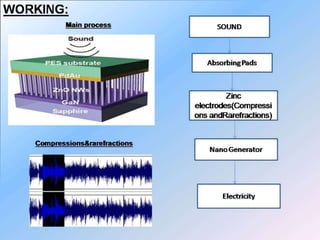
Sound waves are given as input and we get electrical energy
as output.
When the sound waves are hit on the sound absorbing pad, it
will vibrate.
This result in the tiny zinc oxide wires to compress and
release.
This given to the nanogenerator.
It convert the given ME To EE.
The generated electrical energy is used to charge the battery.






Sound wave of 100 decibels produced an electric
current of about 50 millivolts

Normal conversation is conducted at about 60-70
decibels.

5-12 volts needed to properly charged the typical
mobile device.
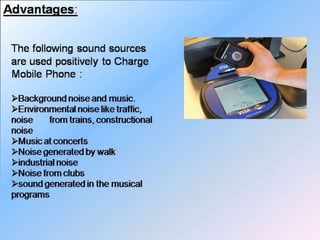
Advantages:
•The mobiles can be
charged not only by
using our voice but also
by employing
background noise and
music.
•Environmental noise like traffic, noise from
trains, constructional noise can also be used
to charge the battery.





It is expensive.
Construction is difficult.
Only possible for low voltage application.
Applications:
Military purpose:
•Since there may be no availability of charging
at the place of their arraival .
Unavailability of switch boards:
•At Beach
•At Forests






Sound insulating walls near highways and airports to produce
electricity for lightning and other use.
Recharge electric cars by tapping into the energy in traffic
noise.
Both reducing noise levels and capturing wasted energy.





Sound pollution is a great disadvantage that we come across
our daily life.
By using this great disadvantage to our use.
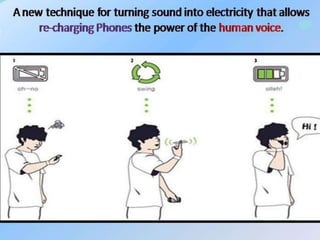
Voice usage to charge mobile phones creates a new era with
cleanly environment along with saving energy.







www.Seminarpaper.com
www.Authorstream.com
www.Gizmag.com
www.Pptsforece.blogspot.com
www.Wikipedia.com
Voice usage mobile charging

Voice usage mobile charging

  • 2.
    ANEESH.S S5 EEE ROLL NO:9 GPTC ATTINGAL
  • 3.
        It is oneof the new developed technology. Researchers from Texas , &university of Houston working on just such a concept back in 2008. They focused on a certain type of piezoelectric material at around 21 nanometer thick. South korean researchers developed the effective methode.
  • 4.
  • 5.
          You have probablyheard of renewably energy source like solar , wind,… Have you ever heard about sound energy? Sound that always exists in our everyday life and environments has been overlooked as a source. This motivated us to realize power generation by turning sound energy from speech , music into electrical power. Sound pollution is a great disadvantage that we come across our daily life. But using this technology we can convert this great disadvantage to our use
  • 7.
      It works onthe principle of piezo electric effectric phenomenon. The generation of an electric charge in certain non conducting material when they are subjected to mechnical stress is called piezoelectric effects (conversion of ME to EE)
  • 9.
        Piezo used todescribe the materials that accumulate a charge as a result of piezoelectric effect. Piezo material , including crystals and ceramics generate a voltage in response to an applied mechanical force. In reverse piezoelectric effect, these same material will lengthen or shorten in response to an applied voltage. The voltage at force generated by piezo material are small and usually required amplification.
  • 10.
    Components used inthis technology: Sound absorbing pads Zn electrodes Nano- generator
  • 12.
    Sound absorbing pads: •Thistechnology uses piezoelectric materials
  • 13.
    Features of soundabsorbing plates: Environment-friendly Shock resistant Sound absorption  Moisture proof Heat insulation, acid-base resistant
  • 14.
    Zn electrodes: •These electrodescontains nano generator between them these electrodes vibrate when sound waves hit on it . Nano- generator: •It converts mechanical energy into electrical energy.
  • 15.
       Tiny strands ofzinc oxide sandwitched between two electrodes. A sound absorbing pad is placed on the top of of zinc oxide. Nano generator is placed between the sandwitched zinc oxide electrode.
  • 16.
          Sound waves aregiven as input and we get electrical energy as output. When the sound waves are hit on the sound absorbing pad, it will vibrate. This result in the tiny zinc oxide wires to compress and release. This given to the nanogenerator. It convert the given ME To EE. The generated electrical energy is used to charge the battery.
  • 18.
       Sound wave of100 decibels produced an electric current of about 50 millivolts Normal conversation is conducted at about 60-70 decibels. 5-12 volts needed to properly charged the typical mobile device.
  • 19.
    Advantages: •The mobiles canbe charged not only by using our voice but also by employing background noise and music. •Environmental noise like traffic, noise from trains, constructional noise can also be used to charge the battery.
  • 20.
       It is expensive. Constructionis difficult. Only possible for low voltage application.
  • 21.
    Applications: Military purpose: •Since theremay be no availability of charging at the place of their arraival . Unavailability of switch boards: •At Beach •At Forests
  • 23.
       Sound insulating wallsnear highways and airports to produce electricity for lightning and other use. Recharge electric cars by tapping into the energy in traffic noise. Both reducing noise levels and capturing wasted energy.
  • 24.
       Sound pollution isa great disadvantage that we come across our daily life. By using this great disadvantage to our use. Voice usage to charge mobile phones creates a new era with cleanly environment along with saving energy.
  • 25.