Voice	
  Interac,ve	
  Learning:	
  	
  
A	
  Framework	
  and	
  Evalua,on	
  
María	
  del	
  Puerto	
  Paule	
  Ruiz	
  ,	
  Víctor	
  Manuel	
  Álvarez	
  García,	
  	
  
Juan	
  Ramón	
  Pérez	
  Pérez,	
  Moisés	
  Riestra	
  González	


Project	
  funded	
  by:	
  Ministry	
  of	
  Science	
  and	
  Technology	
  of	
  Spain	


Department	
  of	
  Computer	
  Science	
  
University	
  of	
  Oviedo	


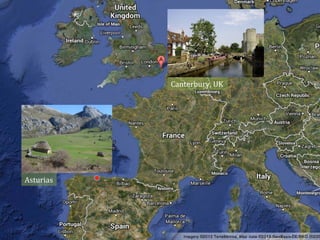
Asturias	
  
Canterbury,	
  UK	
  
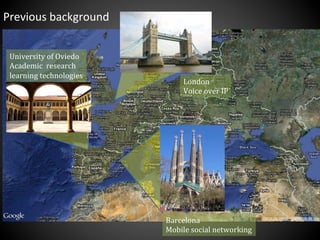
Previous	
  background	
  
Barcelona	
  
Mobile	
  social	
  networking	
  
London	
  
Voice	
  over	
  IP	
  
University	
  of	
  Oviedo	
  
Academic	
  	
  research	
  
learning	
  technologies	
  
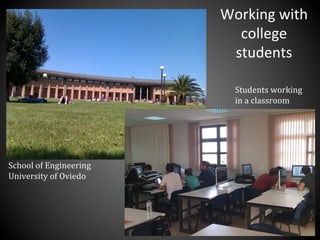
School	
  of	
  Engineering	
  
University	
  of	
  Oviedo	
  
Students	
  working	
  	
  
in	
  a	
  classroom	
  
Working	
  with	
  
college	
  
students	
  
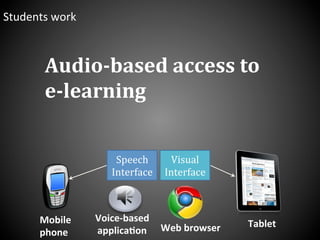
Tablet	
  
Voice-­‐based	
  
applica0on	
  
Mobile	
  
phone	
   Web	
  browser	
  
Visual	
  
Interface	
  
Speech	
  
Interface	
  
Students	
  work	
  
Audio-­‐based	
  access	
  to	
  	
  
e-­‐learning	
  
What	
  for?	
  
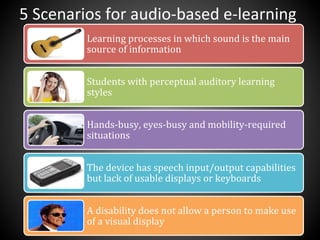
Learning	
  processes	
  in	
  which	
  sound	
  is	
  the	
  main	
  
source	
  of	
  information	
  
Students	
  with	
  perceptual	
  auditory	
  learning	
  
styles	
  
Hands-­‐busy,	
  eyes-­‐busy	
  and	
  mobility-­‐required	
  
situations	
  
The	
  device	
  has	
  speech	
  input/output	
  capabilities	
  
but	
  lack	
  of	
  usable	
  displays	
  or	
  keyboards	
  
A	
  disability	
  does	
  not	
  allow	
  a	
  person	
  to	
  make	
  use	
  
of	
  a	
  visual	
  display	
  
5	
  Scenarios	
  for	
  audio-­‐based	
  e-­‐learning	
  
How?	
  
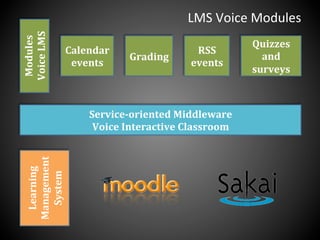
Service-­‐oriented	
  Middleware	
  
Voice	
  Interactive	
  Classroom	
  
Learning	
  
Management	
  
System	
  
Quizzes	
  
and	
  
surveys	
  
RSS	
  
events	
  
Grading	
  
Modules	
  
Voice	
  LMS	
  
Calendar	
  
events	
  
LMS	
  Voice	
  Modules	
  
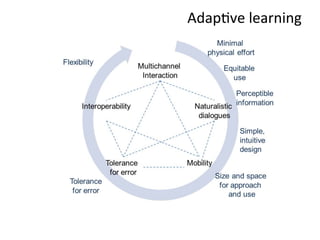
Adap,ve	
  learning	
  
Video	
  Moi	
  
How	
  can	
  others	
  create	
  
	
  Voice	
  Interactive	
  	
  
Classrooms?	
  
SoEware	
  
development	
  
methodology	
  
Choice	
  of	
  
scenarios	
  
Technological	
  
design	
  
Voice	
  modules	
  
backlog	
  
Platform	
  
Web	
  
Voice	
  
Grades	
  
Events	
  
Authentication	
  
Evaluation	
  
Development	
  
Sprints	
  
Deliverable	
  
prototype	
  
increment	
  
Deliverable	
  
prototype	
  
increment	
  
Deliverable	
  
prototype	
  
increment	
  
How	
  can	
  we	
  evaluate	
  
	
  Voice	
  Interactive	
  	
  
Classrooms?	


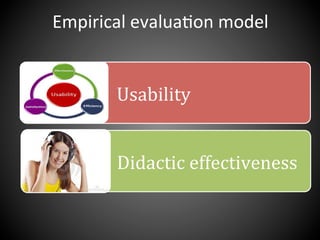
  Usability	


  Didactic	
  effectiveness	
  
Empirical	
  evalua,on	
  model	
  
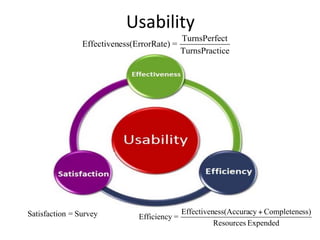
Usability	
  
ExpendedResources
ss)Completenecyess(AccuraEffectiven
=Efficiency
+Survey=onSatisfacti
iceTurnsPract
ctTurnsPerfe
=ate)ess(ErrorREffectiven
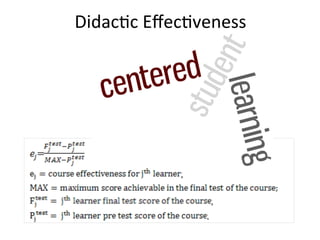
Didac,c	
  Effec,veness	
  
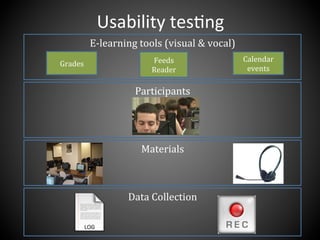
E-­‐learning	
  tools	
  (visual	
  &	
  vocal)	


Participants	
  
Materials	
  
Grades	
   Feeds	
  
Reader	
  
Usability	
  tes,ng	
  
Calendar	
  
events	
  
Data	
  Collection	
  
Usability	
  Tes,ng	
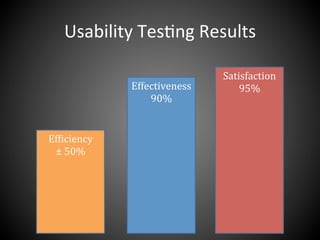
  Results	
  
Ef[iciency	
  	
  
±	
  50%	
  
Effectiveness	
  
90%	
  
Satisfaction	
  
95%	
  
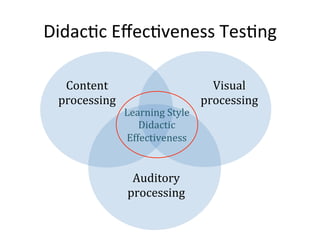
Didac,c	
  Effec,veness	
  Tes,ng	
  
Content	
  
processing	
  
Visual	
  
processing	
  
Auditory	
  
processing	
  
Learning	
  Style	
  
Didactic	
  
Effectiveness	
  
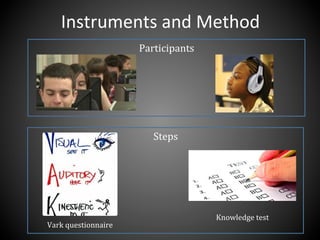
Participants	
  
Steps	
  
Instruments	
  and	
  Method	
  
Vark	
  questionnaire	
  
Knowledge	
  test	
  
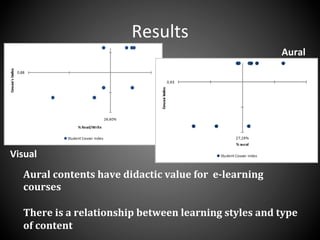
Results	
  
Aural	
  contents	
  have	
  didactic	
  value	
  for	
  	
  e-­‐learning	
  
courses	


There	
  is	
  a	
  relationship	
  between	
  learning	
  styles	
  and	
  type	
  
of	
  content	
  
Aural	
  
Visual	
  
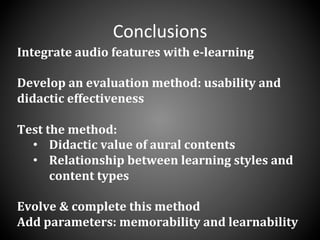
Conclusions	
  
Integrate	
  audio	
  features	
  with	
  e-­‐learning	


Develop	
  an	
  evaluation	
  method:	
  usability	
  and	
  
didactic	
  effectiveness	


Test	
  the	
  method:	
  	
  
•  Didactic	
  value	
  of	
  aural	
  contents	
  
•  Relationship	
  between	
  learning	
  styles	
  and	
  
content	
  types	


Evolve	
  &	
  complete	
  this	
  method	
  	
  
Add	
  parameters:	
  memorability	
  and	
  learnability	
  
Thank	
  you	


  paule@uniovi.es	
  
victoralvarez@uniovi.es	
  	
  
Department	
  of	
  Computer	
  Science	
  
University	
  of	
  Oviedo	


Voice interactive learning. A framework and evaluation @ ITiCSE 2013

  • 1.
    Voice  Interac,ve  Learning:     A  Framework  and  Evalua,on   María  del  Puerto  Paule  Ruiz  ,  Víctor  Manuel  Álvarez  García,     Juan  Ramón  Pérez  Pérez,  Moisés  Riestra  González       Project  funded  by:  Ministry  of  Science  and  Technology  of  Spain     Department  of  Computer  Science   University  of  Oviedo      
  • 2.
  • 3.
    Previous  background   Barcelona   Mobile  social  networking   London   Voice  over  IP   University  of  Oviedo   Academic    research   learning  technologies  
  • 4.
    School  of  Engineering   University  of  Oviedo   Students  working     in  a  classroom   Working  with   college   students  
  • 5.
    Tablet   Voice-­‐based   applica0on   Mobile   phone   Web  browser   Visual   Interface   Speech   Interface   Students  work   Audio-­‐based  access  to     e-­‐learning  
  • 6.
  • 7.
    Learning  processes  in  which  sound  is  the  main   source  of  information   Students  with  perceptual  auditory  learning   styles   Hands-­‐busy,  eyes-­‐busy  and  mobility-­‐required   situations   The  device  has  speech  input/output  capabilities   but  lack  of  usable  displays  or  keyboards   A  disability  does  not  allow  a  person  to  make  use   of  a  visual  display   5  Scenarios  for  audio-­‐based  e-­‐learning  
  • 8.
  • 9.
    Service-­‐oriented  Middleware   Voice  Interactive  Classroom   Learning   Management   System   Quizzes   and   surveys   RSS   events   Grading   Modules   Voice  LMS   Calendar   events   LMS  Voice  Modules  
  • 10.
  • 11.
  • 12.
    How  can  others  create    Voice  Interactive     Classrooms?  
  • 13.
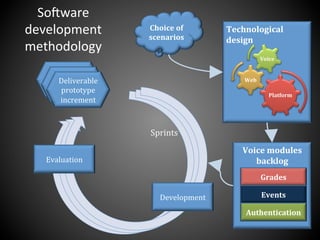
    SoEware   development   methodology   Choice  of   scenarios   Technological   design   Voice  modules   backlog   Platform   Web   Voice   Grades   Events   Authentication   Evaluation   Development   Sprints   Deliverable   prototype   increment   Deliverable   prototype   increment   Deliverable   prototype   increment  
  • 14.
    How  can  we  evaluate    Voice  Interactive     Classrooms?  
  • 15.
             Usability            Didactic  effectiveness   Empirical  evalua,on  model  
  • 16.
  • 17.
  • 18.
    E-­‐learning  tools  (visual  &  vocal)     Participants   Materials   Grades   Feeds   Reader   Usability  tes,ng   Calendar   events   Data  Collection  
  • 19.
    Usability  Tes,ng  Results   Ef[iciency     ±  50%   Effectiveness   90%   Satisfaction   95%  
  • 20.
    Didac,c  Effec,veness  Tes,ng   Content   processing   Visual   processing   Auditory   processing   Learning  Style   Didactic   Effectiveness  
  • 21.
    Participants   Steps   Instruments  and  Method   Vark  questionnaire   Knowledge  test  
  • 22.
    Results   Aural  contents  have  didactic  value  for    e-­‐learning   courses     There  is  a  relationship  between  learning  styles  and  type   of  content   Aural   Visual  
  • 23.
    Conclusions   Integrate  audio  features  with  e-­‐learning       Develop  an  evaluation  method:  usability  and   didactic  effectiveness     Test  the  method:     •  Didactic  value  of  aural  contents   •  Relationship  between  learning  styles  and   content  types     Evolve  &  complete  this  method     Add  parameters:  memorability  and  learnability  
  • 24.
    Thank  you            paule@uniovi.es   victoralvarez@uniovi.es     Department  of  Computer  Science   University  of  Oviedo