EDUCAUSE Learning Initiative Annual Meeting January 28–30, 2008 San Antonio, Texas Alisa Cooper, EdD, English Faculty, South Mountain Community College Veronica Diaz, PhD, Instructional Technology Manager, MCLI Cheri Hebert, MA, Communications Faculty, Estrella Mountain Community College Amy MacPherson, MEd, Faculty Director, Teaching and Learning Center
The 2.0 learner  Reviewing the Five Models for Course Redesign (National Center for Academic Transformation)  Emerging technologies and instructional delivery models  Presentation Website:  http://drcoop.pbwiki.com/ELI2008


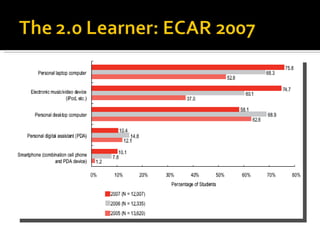
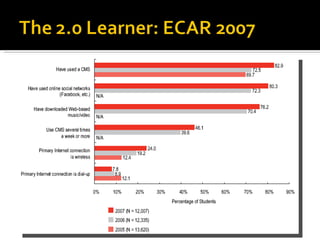
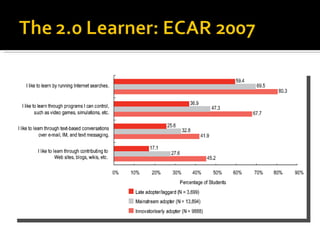
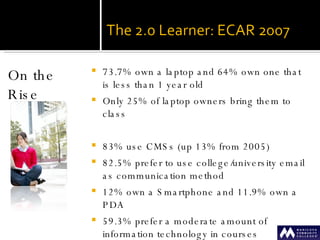
73.7% own a laptop and 64% own one that is less than 1 year old Only 25% of laptop owners bring them to class 83% use CMSs (up 13% from 2005) 82.5% prefer to use college/university email as communication method  12% own a Smartphone and 11.9% own a PDA 59.3% prefer a moderate amount of information technology in courses  On the Rise
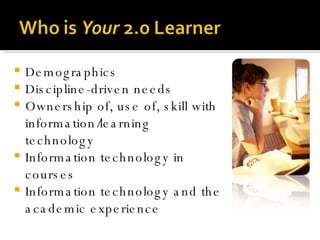
Demographics  Discipline-driven needs Ownership of, use of, skill with information/learning technology  Information technology in courses  Information technology and the academic experience
Distributed Engagement Model  Emporium Model  Buffet Model  Web-Enhanced Model Supplemental Model  Blended/Hybrid Model  Replacement Model  100% Online Model *Based in part on the National Center for Academic Transformation models.
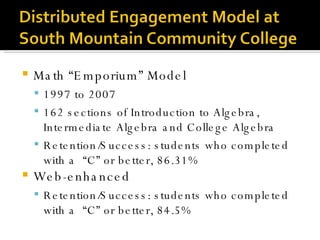
Math “Emporium” Model 1997 to 2007 162 sections of Introduction to Algebra, Intermediate Algebra and College Algebra  Retention/Success: students who completed with a  “C” or better, 86.31% Web-enhanced Retention/Success: students who completed with a  “C” or better, 84.5%
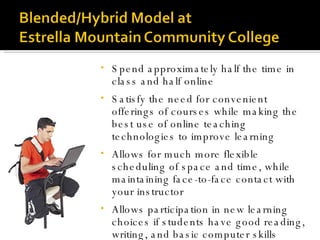
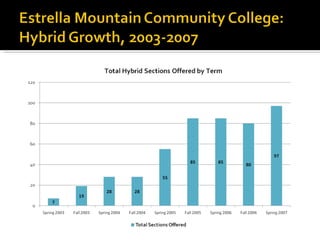
Spend approximately half the time in class and half online Satisfy the need for convenient offerings of courses while making the best use of online teaching technologies to improve learning Allows for much more flexible scheduling of space and time, while maintaining face-to-face contact with your instructor  Allows participation in new learning choices if students have good reading, writing, and basic computer skills


Podcasts and screen casts Example assignments In-depth instructions  Instructor feedback Course structure and organization
Select a model that might be useful to your  institution,  department, and/or  course  Tell us which you selected and why
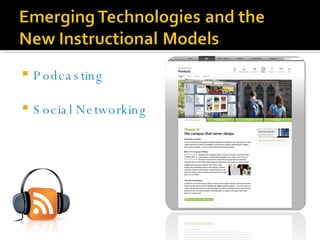
Podcasting  Social Networking
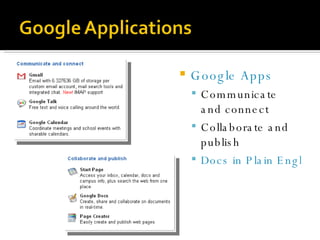
Google Apps  Communicate and connect Collaborate and publish  Docs in Plain English
Take a look at your index card  Describe how you would address the scenario using an emerging technology  Describe how you would integrate the tool/technology into your selected course model
Alisa Cooper, EdD, English Faculty, South Mountain Community College:  [email_address]   Veronica Diaz, PhD, Instructional Technology Manager, MCLI:  [email_address]   Cheri Hebert, MA, Communications Faculty, Estrella Mountain Community College:  [email_address]   Amy MacPherson, MEd, Faculty Director, Teaching and Learning Center:  [email_address]

E L I 2008 Presentation

  • 1.
    EDUCAUSE Learning InitiativeAnnual Meeting January 28–30, 2008 San Antonio, Texas Alisa Cooper, EdD, English Faculty, South Mountain Community College Veronica Diaz, PhD, Instructional Technology Manager, MCLI Cheri Hebert, MA, Communications Faculty, Estrella Mountain Community College Amy MacPherson, MEd, Faculty Director, Teaching and Learning Center
  • 2.
    The 2.0 learner Reviewing the Five Models for Course Redesign (National Center for Academic Transformation) Emerging technologies and instructional delivery models Presentation Website: http://drcoop.pbwiki.com/ELI2008
  • 3.
  • 4.
  • 5.
  • 6.
    73.7% own alaptop and 64% own one that is less than 1 year old Only 25% of laptop owners bring them to class 83% use CMSs (up 13% from 2005) 82.5% prefer to use college/university email as communication method 12% own a Smartphone and 11.9% own a PDA 59.3% prefer a moderate amount of information technology in courses On the Rise
  • 7.
    Demographics Discipline-drivenneeds Ownership of, use of, skill with information/learning technology Information technology in courses Information technology and the academic experience
  • 8.
    Distributed Engagement Model Emporium Model Buffet Model Web-Enhanced Model Supplemental Model Blended/Hybrid Model Replacement Model 100% Online Model *Based in part on the National Center for Academic Transformation models.
  • 9.
    Math “Emporium” Model1997 to 2007 162 sections of Introduction to Algebra, Intermediate Algebra and College Algebra Retention/Success: students who completed with a  “C” or better, 86.31% Web-enhanced Retention/Success: students who completed with a  “C” or better, 84.5%
  • 10.
    Spend approximately halfthe time in class and half online Satisfy the need for convenient offerings of courses while making the best use of online teaching technologies to improve learning Allows for much more flexible scheduling of space and time, while maintaining face-to-face contact with your instructor Allows participation in new learning choices if students have good reading, writing, and basic computer skills
  • 11.
  • 12.
  • 13.
  • 14.
  • 15.
  • 16.
    Podcasts and screencasts Example assignments In-depth instructions Instructor feedback Course structure and organization
  • 17.
    Select a modelthat might be useful to your institution, department, and/or course Tell us which you selected and why
  • 18.
  • 19.
    Google Apps Communicate and connect Collaborate and publish Docs in Plain English
  • 20.
    Take a lookat your index card Describe how you would address the scenario using an emerging technology Describe how you would integrate the tool/technology into your selected course model
  • 21.
    Alisa Cooper, EdD,English Faculty, South Mountain Community College: [email_address] Veronica Diaz, PhD, Instructional Technology Manager, MCLI: [email_address] Cheri Hebert, MA, Communications Faculty, Estrella Mountain Community College: [email_address] Amy MacPherson, MEd, Faculty Director, Teaching and Learning Center: [email_address]