listen to learn
Moza Naya
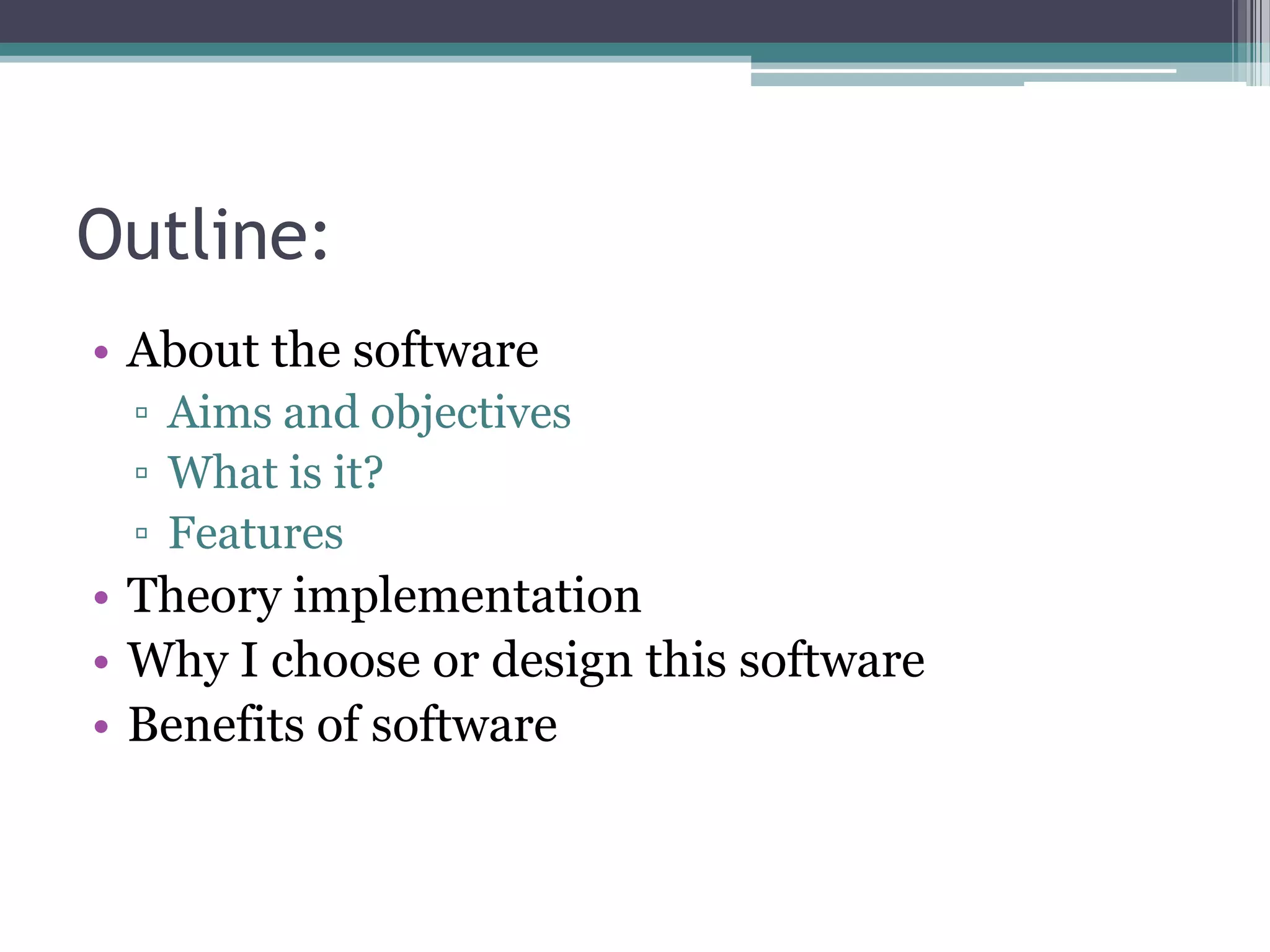
Outline:
• About the software
▫ Aims and objectives
▫ What is it?
▫ Features

• Theory implementation
• Why I choose or design this software
• Benefits of software
Aims
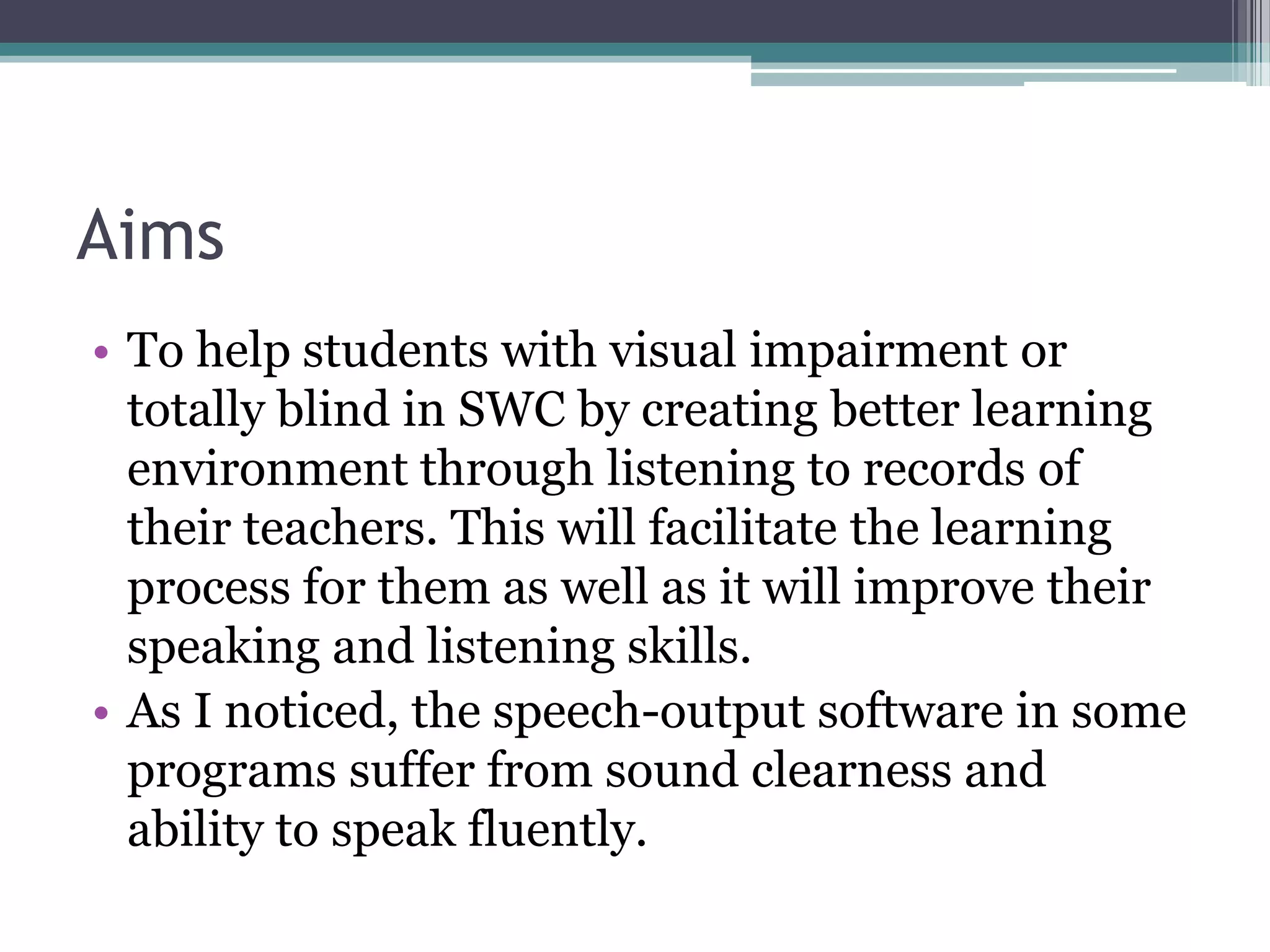
• To help students with visual impairment or
totally blind in SWC by creating better learning
environment through listening to records of
their teachers. This will facilitate the learning
process for them as well as it will improve their
speaking and listening skills.
• As I noticed, the speech-output software in some
programs suffer from sound clearness and
ability to speak fluently.
What is the software (about the
software)?
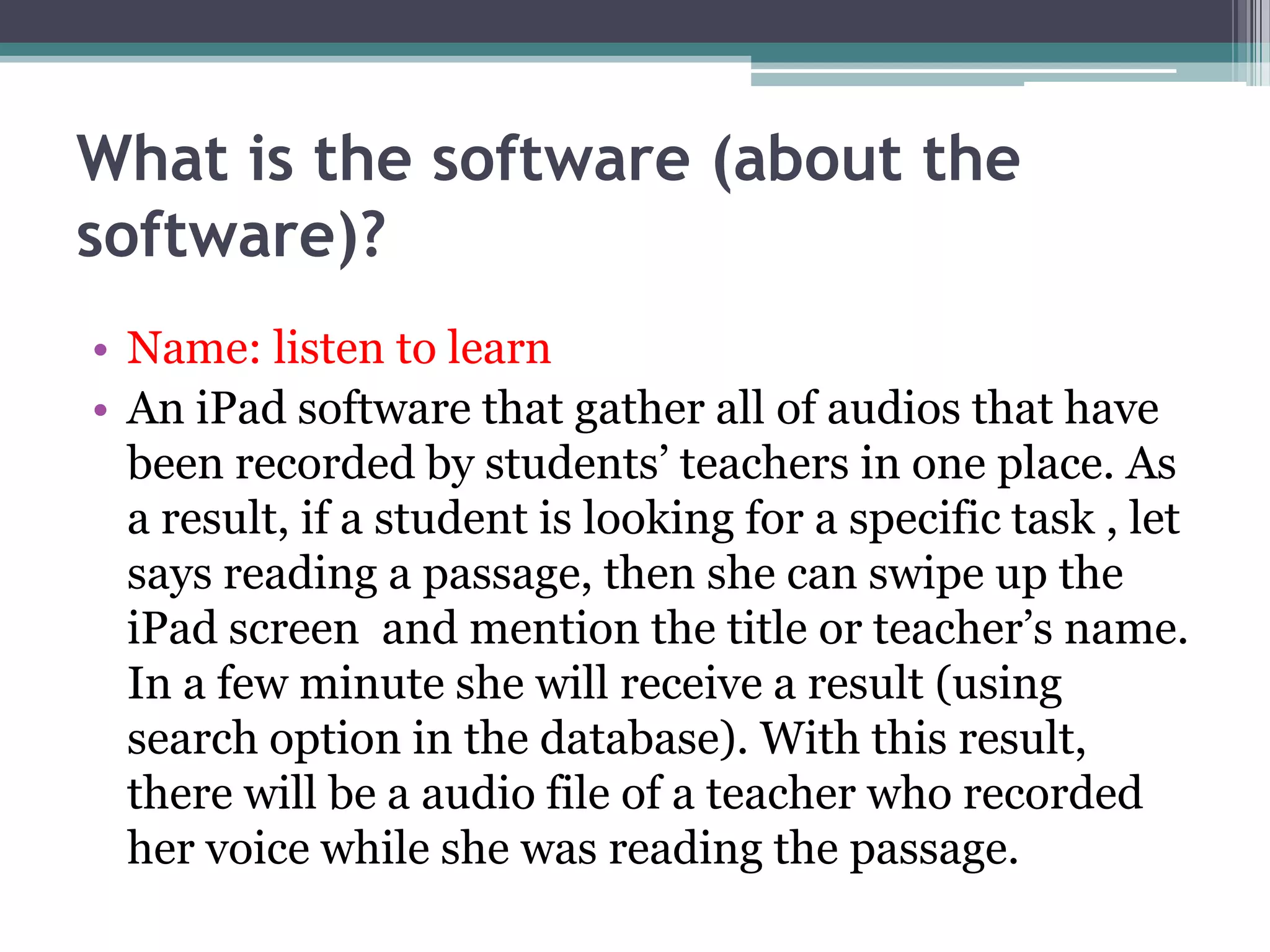
• Name: listen to learn
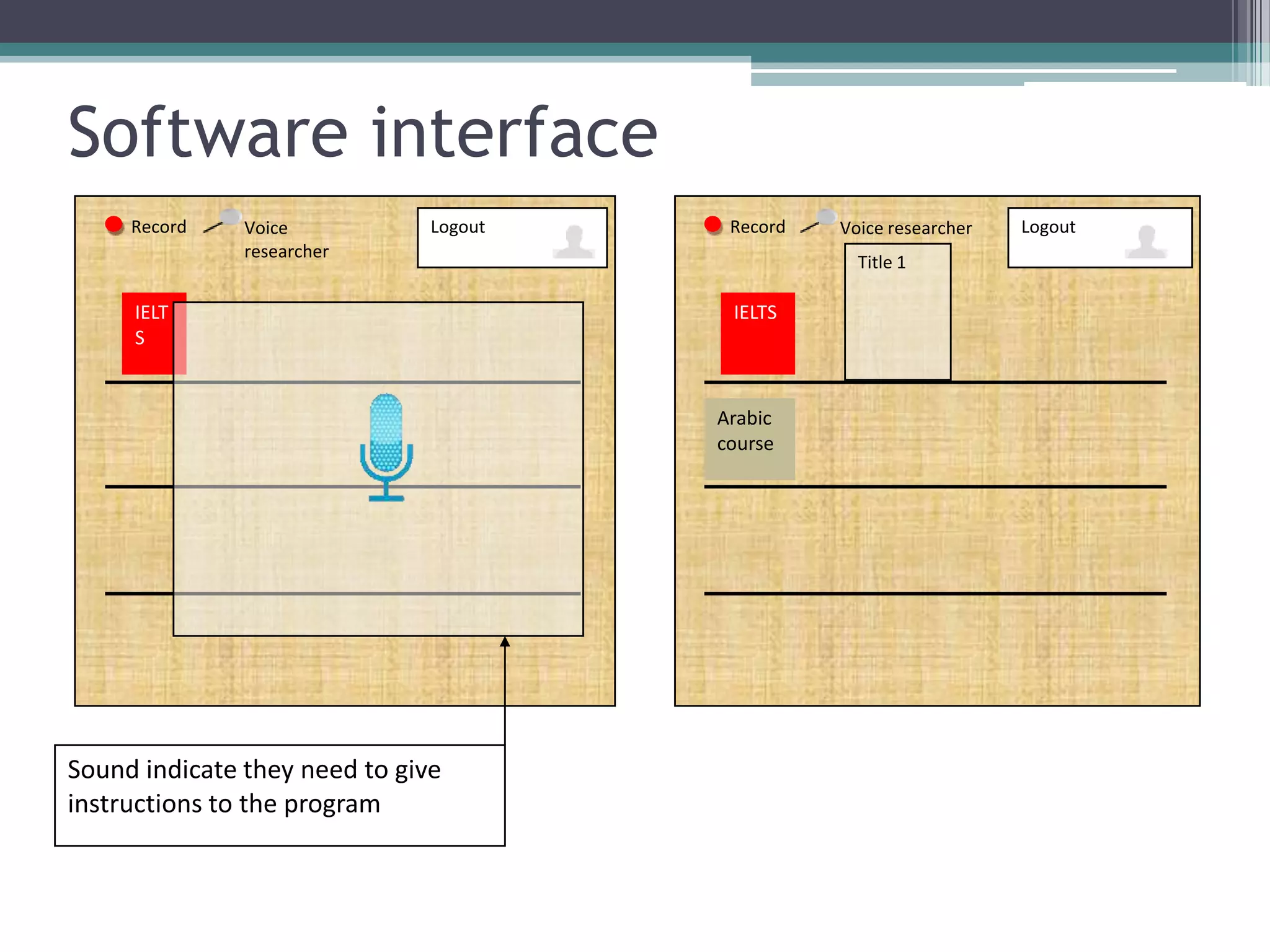
• An iPad software that gather all of audios that have
been recorded by students’ teachers in one place. As
a result, if a student is looking for a specific task , let
says reading a passage, then she can swipe up the
iPad screen and mention the title or teacher’s name.
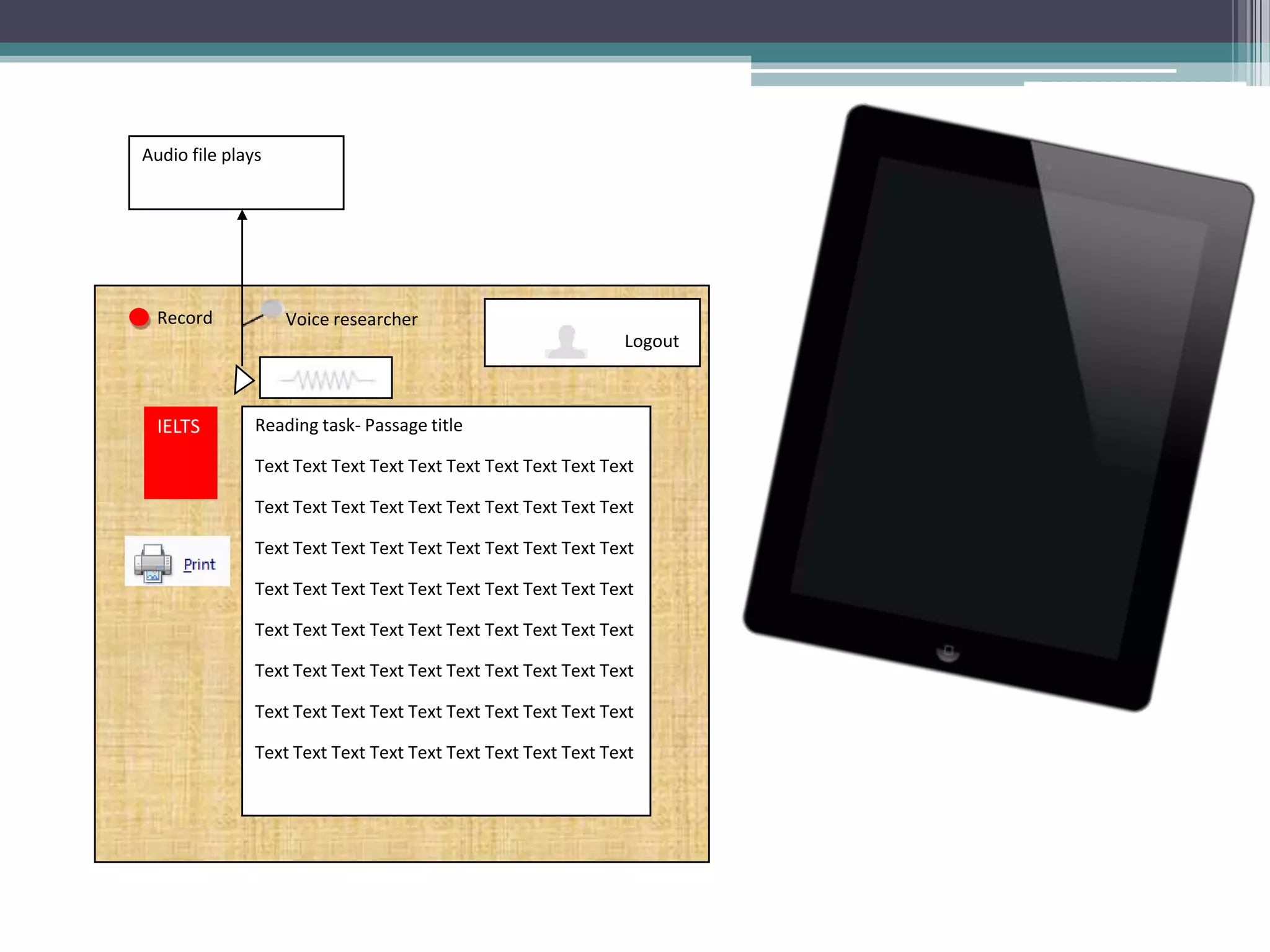
In a few minute she will receive a result (using
search option in the database). With this result,
there will be a audio file of a teacher who recorded
her voice while she was reading the passage.
Features:
• Students
▫
▫
▫
▫

Using voice searching
Having all audios in one place for every course
Voice writer (write what students say)
Print option (Braille language) connect to
translation software and the Braille language
printer

• Teachers
▫ Voice record button
▫ Course management (deleting, editing, adding,
control access, upload, download)
Software interface
Record

Voice
researcher

Logout

IELT
S

Record

Title 1

IELTS

Arabic
course

Sound indicate they need to give
instructions to the program

Voice researcher

Logout
Audio file plays

Record

Voice researcher
Logout

IELTS

Reading task- Passage title
Text Text Text Text Text Text Text Text Text Text

Text Text Text Text Text Text Text Text Text Text
• Pavlov
▫ Students will hear a sound to indicate they need to call
the title of the subject or teacher’s name. So that means
students will associate the sound with the need of saying
or telling title to the voice researcher.
• Vygotsky’s (ZPD)
▫ They don’t have enough knowledge about it. As a
result, they search using voice researcher by telling the
program the title of the topic and start hearing
information that has been recorded by their teachers or
print it out. So this application allows students to
scaffold their knowledge. By the end of the lesson these
students learn about lesson, new vocabs and the exact
pronunciation for vocabs.
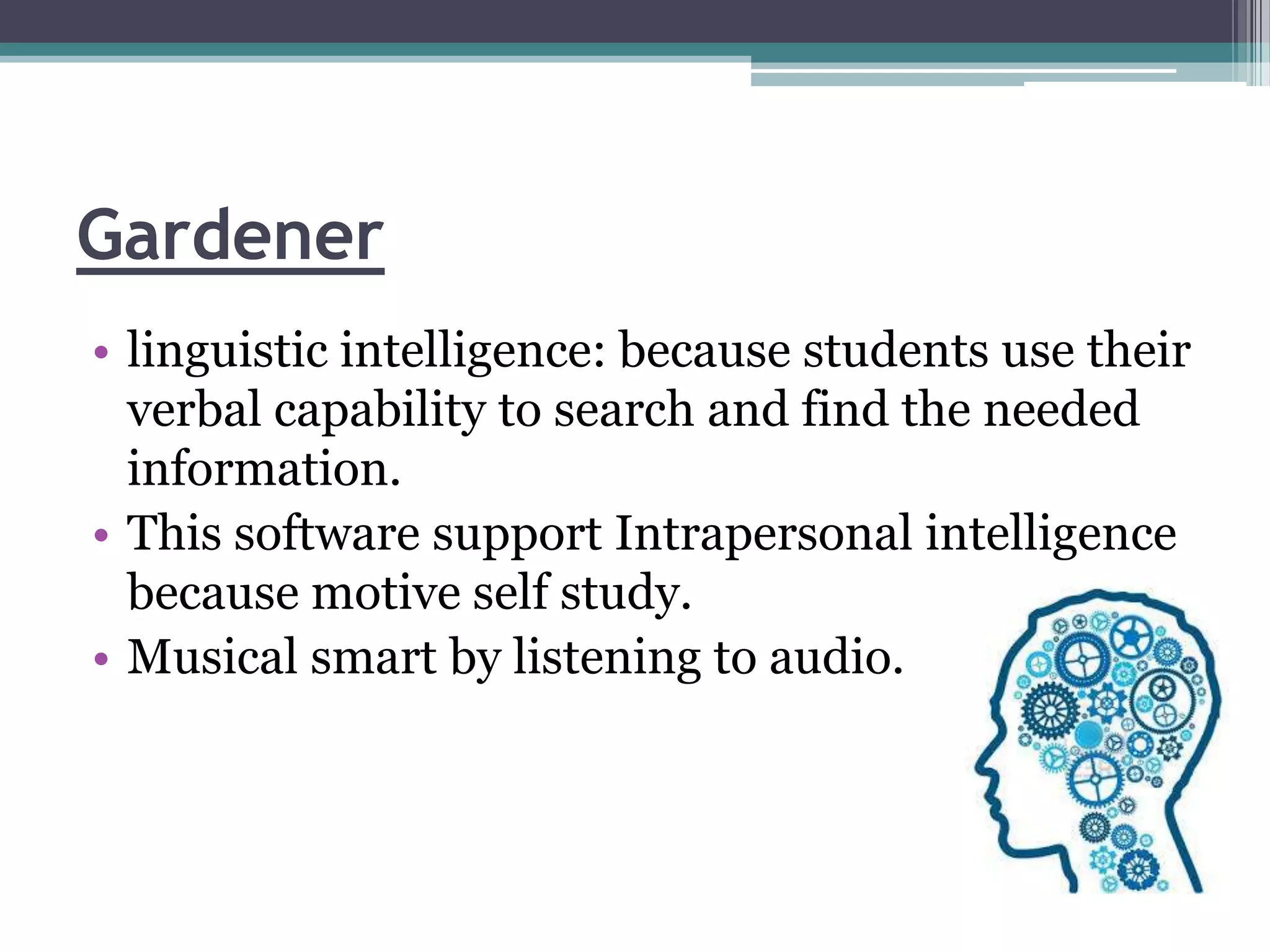
Gardener
• linguistic intelligence: because students use their
verbal capability to search and find the needed
information.
• This software support Intrapersonal intelligence
because motive self study.
• Musical smart by listening to audio.
Why did you choose this particular learning technology? Why is it
particularly needed in schools or colleges? Why is this technology
particularly suited to its learning situation? (explain the needs of this
software)

• SWC cares about the special needs students and there is a number
of students with visual impairment however, I never saw or knowen
that SWC taught totally blind students. In order to, help this
category and SWC as well as I came up with this program which I
think could be the best way and guide for these students. As I
understand from (Sultana &Hayhoe, 2013) that HCT in general has
portable Braille note taking devices and translation
software as well as speech recognition technology and they
are Dragon, Dictate2 and IBM VoiceType3 for windows.
• The different between pervious speech
technology and the one I design is the ability to
speak and pronounce fluently . The significant
different is that learning by listening to audios
software, it allows teacher to directly record
their voice and upload it to the course. In
addition, speech text reader is working only
with icons and software bar, but it is not working
with software contents (Text in the word
document).
• Listen to learn software will improve college’s
regular students and stuff performance in
dealing and teaching blind students.
• Related to The Federal Law No. 29 of year 2006 on the Rights
of People with Special Needs guarantees: “…the person with
special needs access to equal opportunities of education
within all educational institutions…” as a result, all of schools
and colleges should implement this law in their environments.
In addition, this software will facilitate the teaching process
for teachers and help disable students to learn better and
become a part of modern learning style. From my point of
view I think this is one of the greatest assistive technology and
easiest to be applied and used by both teacher and blind
students.
Future Development for this software
• Creating iPad screen with more senses where
blind students can touch and feel the dots of
Braille language. This is going to be very
intelligent technology and will impact positively
in the other areas of technology especially
assistive technology.
• ackson, R. M. (2013, 05 04). Audio-Supported Reading
for Students Who are Blind or Visually Impaired.
Retrieved from national center on accessible

instructional materials:
http://aim.cast.org/learn/practice/future/audio_suppor

Reference: •

ted_reading#.UtpRErRfrDd
Students who have Visual Impairments or are Blind.
(2013). Retrieved from The New School:
http://www.newschool.edu/student-services/studentdisability-services/subpage.aspx?id=32668

• Sultana, N., & Hayhoe, S. Assistive Technology for
Students with Special Needs.

Listen to learn

  • 1.
  • 2.
    Outline: • About thesoftware ▫ Aims and objectives ▫ What is it? ▫ Features • Theory implementation • Why I choose or design this software • Benefits of software
  • 3.
    Aims • To helpstudents with visual impairment or totally blind in SWC by creating better learning environment through listening to records of their teachers. This will facilitate the learning process for them as well as it will improve their speaking and listening skills. • As I noticed, the speech-output software in some programs suffer from sound clearness and ability to speak fluently.
  • 4.
    What is thesoftware (about the software)? • Name: listen to learn • An iPad software that gather all of audios that have been recorded by students’ teachers in one place. As a result, if a student is looking for a specific task , let says reading a passage, then she can swipe up the iPad screen and mention the title or teacher’s name. In a few minute she will receive a result (using search option in the database). With this result, there will be a audio file of a teacher who recorded her voice while she was reading the passage.
  • 5.
    Features: • Students ▫ ▫ ▫ ▫ Using voicesearching Having all audios in one place for every course Voice writer (write what students say) Print option (Braille language) connect to translation software and the Braille language printer • Teachers ▫ Voice record button ▫ Course management (deleting, editing, adding, control access, upload, download)
  • 6.
    Software interface Record Voice researcher Logout IELT S Record Title 1 IELTS Arabic course Soundindicate they need to give instructions to the program Voice researcher Logout
  • 7.
    Audio file plays Record Voiceresearcher Logout IELTS Reading task- Passage title Text Text Text Text Text Text Text Text Text Text Text Text Text Text Text Text Text Text Text Text Text Text Text Text Text Text Text Text Text Text Text Text Text Text Text Text Text Text Text Text Text Text Text Text Text Text Text Text Text Text Text Text Text Text Text Text Text Text Text Text Text Text Text Text Text Text Text Text Text Text Text Text Text Text Text Text Text Text Text Text
  • 8.
    • Pavlov ▫ Studentswill hear a sound to indicate they need to call the title of the subject or teacher’s name. So that means students will associate the sound with the need of saying or telling title to the voice researcher. • Vygotsky’s (ZPD) ▫ They don’t have enough knowledge about it. As a result, they search using voice researcher by telling the program the title of the topic and start hearing information that has been recorded by their teachers or print it out. So this application allows students to scaffold their knowledge. By the end of the lesson these students learn about lesson, new vocabs and the exact pronunciation for vocabs.
  • 9.
    Gardener • linguistic intelligence:because students use their verbal capability to search and find the needed information. • This software support Intrapersonal intelligence because motive self study. • Musical smart by listening to audio.
  • 10.
    Why did youchoose this particular learning technology? Why is it particularly needed in schools or colleges? Why is this technology particularly suited to its learning situation? (explain the needs of this software) • SWC cares about the special needs students and there is a number of students with visual impairment however, I never saw or knowen that SWC taught totally blind students. In order to, help this category and SWC as well as I came up with this program which I think could be the best way and guide for these students. As I understand from (Sultana &Hayhoe, 2013) that HCT in general has portable Braille note taking devices and translation software as well as speech recognition technology and they are Dragon, Dictate2 and IBM VoiceType3 for windows.
  • 11.
    • The differentbetween pervious speech technology and the one I design is the ability to speak and pronounce fluently . The significant different is that learning by listening to audios software, it allows teacher to directly record their voice and upload it to the course. In addition, speech text reader is working only with icons and software bar, but it is not working with software contents (Text in the word document). • Listen to learn software will improve college’s regular students and stuff performance in dealing and teaching blind students.
  • 12.
    • Related toThe Federal Law No. 29 of year 2006 on the Rights of People with Special Needs guarantees: “…the person with special needs access to equal opportunities of education within all educational institutions…” as a result, all of schools and colleges should implement this law in their environments. In addition, this software will facilitate the teaching process for teachers and help disable students to learn better and become a part of modern learning style. From my point of view I think this is one of the greatest assistive technology and easiest to be applied and used by both teacher and blind students.
  • 13.
    Future Development forthis software • Creating iPad screen with more senses where blind students can touch and feel the dots of Braille language. This is going to be very intelligent technology and will impact positively in the other areas of technology especially assistive technology.
  • 14.
    • ackson, R.M. (2013, 05 04). Audio-Supported Reading for Students Who are Blind or Visually Impaired. Retrieved from national center on accessible instructional materials: http://aim.cast.org/learn/practice/future/audio_suppor Reference: • ted_reading#.UtpRErRfrDd Students who have Visual Impairments or are Blind. (2013). Retrieved from The New School: http://www.newschool.edu/student-services/studentdisability-services/subpage.aspx?id=32668 • Sultana, N., & Hayhoe, S. Assistive Technology for Students with Special Needs.