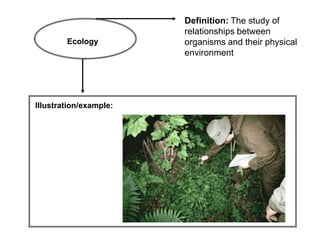
Definition: The study of
                        relationships between
        Ecology         organisms and their physical
                        environment


Illustration/example:
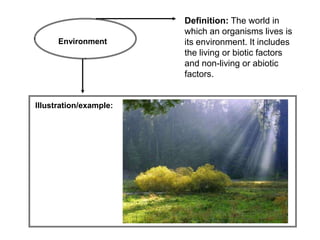
Definition: The world in
                        which an organisms lives is
      Environment       its environment. It includes
                        the living or biotic factors
                        and non-living or abiotic
                        factors.


Illustration/example:
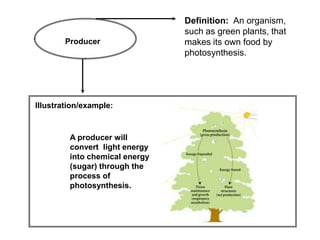
Definition: An organism,
                                such as green plants, that
        Producer                makes its own food by
                                photosynthesis.


Illustration/example:


         A producer will
         convert light energy
         into chemical energy
         (sugar) through the
         process of
         photosynthesis.
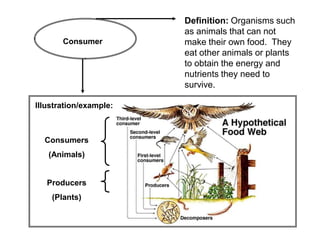
Definition: Organisms such
                        as animals that can not
       Consumer         make their own food. They
                        eat other animals or plants
                        to obtain the energy and
                        nutrients they need to
                        survive.

Illustration/example:


  Consumers
   (Animals)


   Producers
    (Plants)
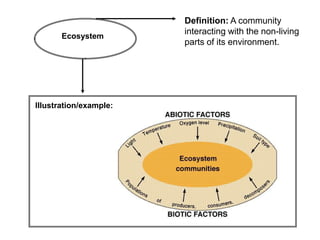
Definition: A community
                        interacting with the non-living
       Ecosystem
                        parts of its environment.


Illustration/example:
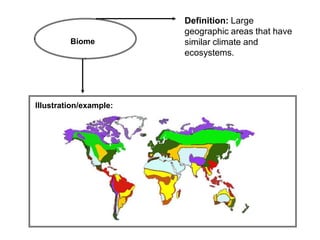
Definition: Large
                        geographic areas that have
         Biome          similar climate and
                        ecosystems.


Illustration/example:
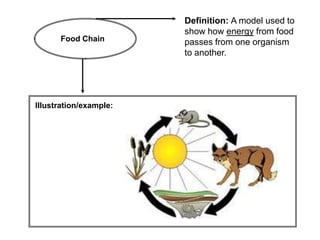
Definition: A model used to
                        show how energy from food
      Food Chain        passes from one organism
                        to another.


Illustration/example:
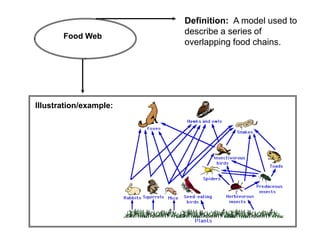
Definition: A model used to
                        describe a series of
       Food Web
                        overlapping food chains.


Illustration/example:
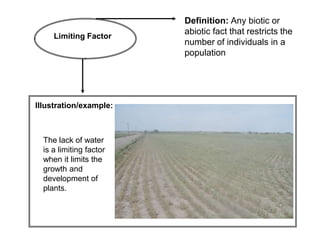
Definition: Any biotic or
                         abiotic fact that restricts the
     Limiting Factor
                         number of individuals in a
                         population


Illustration/example:


  The lack of water
  is a limiting factor
  when it limits the
  growth and
  development of
  plants.
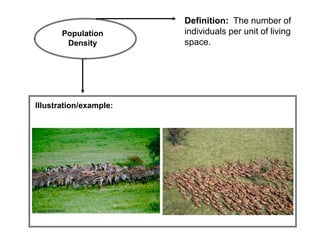
Definition: The number of
       Population       individuals per unit of living
        Density         space.


Illustration/example:
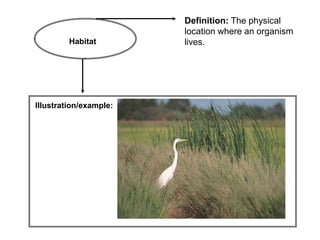
Definition: The physical
                        location where an organism
         Habitat        lives.


Illustration/example:
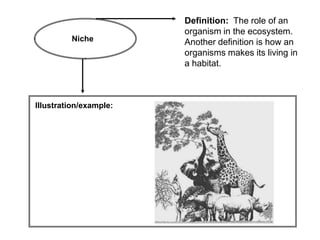
Definition: The role of an
                        organism in the ecosystem.
         Niche          Another definition is how an
                        organisms makes its living in
                        a habitat.


Illustration/example:
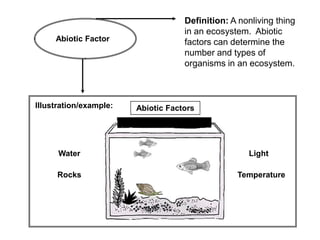
Definition: A nonliving thing
                                    in an ecosystem. Abiotic
     Abiotic Factor                 factors can determine the
                                    number and types of
                                    organisms in an ecosystem.


Illustration/example:   Abiotic Factors


      Water                                         Light

     Rocks                                       Temperature
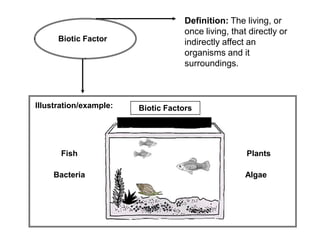
Definition: The living, or
                                    once living, that directly or
      Biotic Factor                 indirectly affect an
                                    organisms and it
                                    surroundings.


Illustration/example:   Biotic Factors


      Fish                                           Plants

    Bacteria                                         Algae

Vocabulary Book: Ecosystems

  • 1.
    Definition: The studyof relationships between Ecology organisms and their physical environment Illustration/example:
  • 2.
    Definition: The worldin which an organisms lives is Environment its environment. It includes the living or biotic factors and non-living or abiotic factors. Illustration/example:
  • 3.
    Definition: An organism, such as green plants, that Producer makes its own food by photosynthesis. Illustration/example: A producer will convert light energy into chemical energy (sugar) through the process of photosynthesis.
  • 4.
    Definition: Organisms such as animals that can not Consumer make their own food. They eat other animals or plants to obtain the energy and nutrients they need to survive. Illustration/example: Consumers (Animals) Producers (Plants)
  • 5.
    Definition: A community interacting with the non-living Ecosystem parts of its environment. Illustration/example:
  • 6.
    Definition: Large geographic areas that have Biome similar climate and ecosystems. Illustration/example:
  • 7.
    Definition: A modelused to show how energy from food Food Chain passes from one organism to another. Illustration/example:
  • 8.
    Definition: A modelused to describe a series of Food Web overlapping food chains. Illustration/example:
  • 9.
    Definition: Any bioticor abiotic fact that restricts the Limiting Factor number of individuals in a population Illustration/example: The lack of water is a limiting factor when it limits the growth and development of plants.
  • 10.
    Definition: The numberof Population individuals per unit of living Density space. Illustration/example:
  • 11.
    Definition: The physical location where an organism Habitat lives. Illustration/example:
  • 12.
    Definition: The roleof an organism in the ecosystem. Niche Another definition is how an organisms makes its living in a habitat. Illustration/example:
  • 13.
    Definition: A nonlivingthing in an ecosystem. Abiotic Abiotic Factor factors can determine the number and types of organisms in an ecosystem. Illustration/example: Abiotic Factors Water Light Rocks Temperature
  • 14.
    Definition: The living,or once living, that directly or Biotic Factor indirectly affect an organisms and it surroundings. Illustration/example: Biotic Factors Fish Plants Bacteria Algae