VOCABULARY
1. What is vocabulary?
Vocabulary is commonly defined as "all the
words known and used by a particular
person”
A person's vocabulary is the set of
words within a language that are familiar to
that person.
2. Why is vocabulary important ?
 To express feeling, ideas and needs
 To understand others better
 ,etc.
3. How should vocabulary be learned?
 Types of vocabulary
 Ways to learn vocabulary
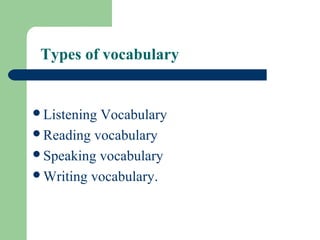
Types of vocabulary
Listening Vocabulary
Reading vocabulary
Speaking vocabulary
Writing vocabulary.
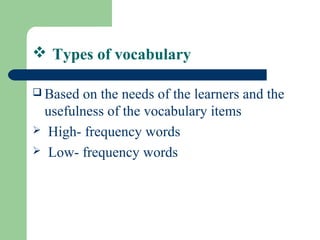
 Types of vocabulary
 Based on the needs of the learners and the
usefulness of the vocabulary items
 High- frequency words
 Low- frequency words
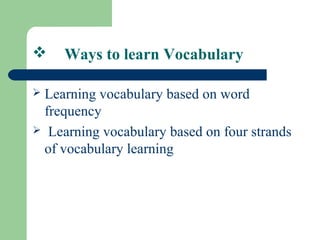
 Ways to learn Vocabulary
 Learning vocabulary based on word
frequency
 Learning vocabulary based on four strands
of vocabulary learning
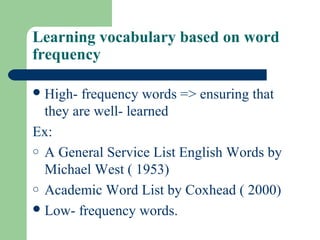
Learning vocabulary based on word
frequency
High- frequency words => ensuring that
they are well- learned
Ex:
o A General Service List English Words by
Michael West ( 1953)
o Academic Word List by Coxhead ( 2000)
Low- frequency words.
Learning vocabulary based on four
strands of vocabulary learning
Learning Vocabulary from Meaning-
focused Input
Learning Vocabulary from Meaning-
focused Output
Deliberate Vocabulary learning.
Develop Fluency with Vocabulary across
the Four Skills
Meaning- focused Input Strand
Learning through Listening and Reading
Meaning- focused Output Strand
Learning from Speaking and Writing
Deliberate learning
Deliberate learning can raise learners’
consciousness of particular words.
Deliberate learning can help learners gain
knowledge of strategies and of systematic
features of the language.
Well- established vocabulary learning
Fluency development
The focus lies on improving fluency in
your target language in all four skills:
listening, writing, reading and speaking.
The goal is not to learn new items or new
language, but to increase your processing
of existing skills

Vocabulary

  • 1.
  • 2.
    1. What isvocabulary? Vocabulary is commonly defined as "all the words known and used by a particular person” A person's vocabulary is the set of words within a language that are familiar to that person.
  • 3.
    2. Why isvocabulary important ?  To express feeling, ideas and needs  To understand others better  ,etc.
  • 4.
    3. How shouldvocabulary be learned?  Types of vocabulary  Ways to learn vocabulary
  • 5.
    Types of vocabulary ListeningVocabulary Reading vocabulary Speaking vocabulary Writing vocabulary.
  • 6.
     Types ofvocabulary  Based on the needs of the learners and the usefulness of the vocabulary items  High- frequency words  Low- frequency words
  • 7.
     Ways tolearn Vocabulary  Learning vocabulary based on word frequency  Learning vocabulary based on four strands of vocabulary learning
  • 8.
    Learning vocabulary basedon word frequency High- frequency words => ensuring that they are well- learned Ex: o A General Service List English Words by Michael West ( 1953) o Academic Word List by Coxhead ( 2000) Low- frequency words.
  • 9.
    Learning vocabulary basedon four strands of vocabulary learning Learning Vocabulary from Meaning- focused Input Learning Vocabulary from Meaning- focused Output Deliberate Vocabulary learning. Develop Fluency with Vocabulary across the Four Skills
  • 10.
    Meaning- focused InputStrand Learning through Listening and Reading
  • 11.
    Meaning- focused OutputStrand Learning from Speaking and Writing
  • 12.
    Deliberate learning Deliberate learningcan raise learners’ consciousness of particular words. Deliberate learning can help learners gain knowledge of strategies and of systematic features of the language. Well- established vocabulary learning
  • 13.
    Fluency development The focuslies on improving fluency in your target language in all four skills: listening, writing, reading and speaking. The goal is not to learn new items or new language, but to increase your processing of existing skills