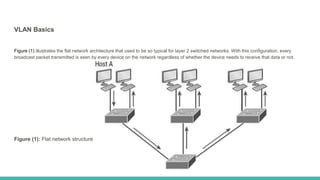
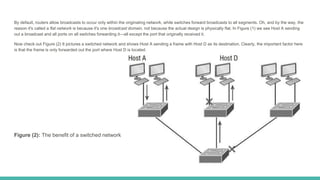
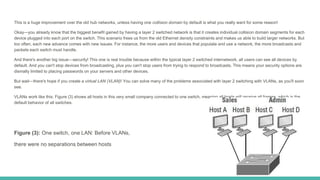
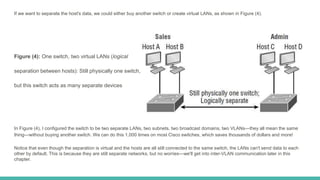
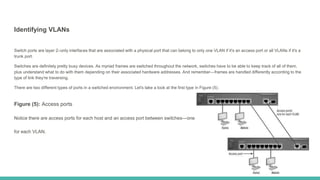
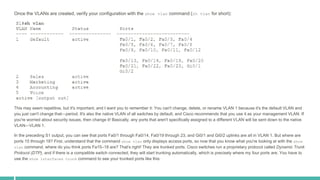
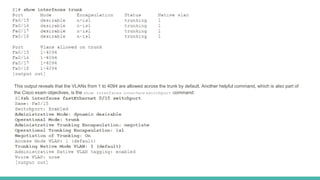
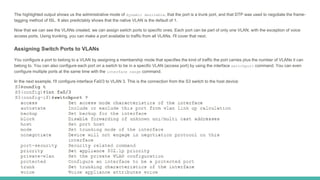
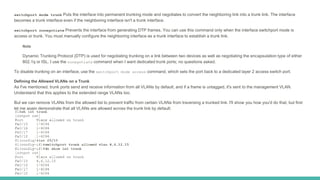
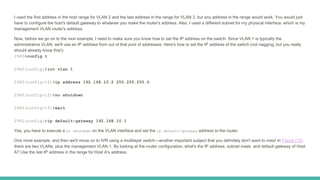
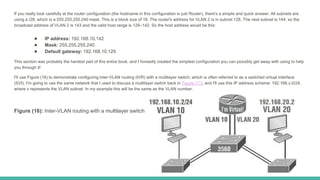
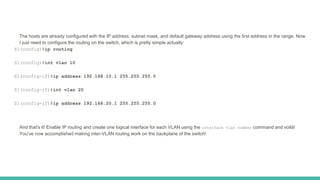
This document discusses VLANs and inter-VLAN routing as part of CCNA routing and switching training, explaining the limitations of traditional flat layer 2 networks, such as security vulnerabilities and broadcast issues. It highlights the benefits of using VLANs to create separate broadcast domains, enhance network security, and improve management flexibility. Additionally, it covers the differences between access and trunk ports, as well as frame tagging methods like ISL and IEEE 802.1q for VLAN identification.