Downloaded 12 times


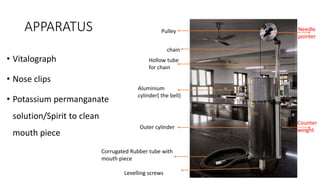
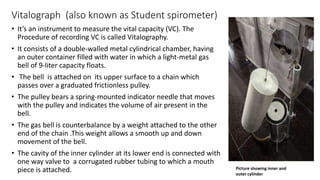


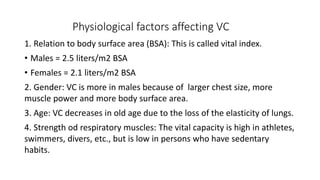
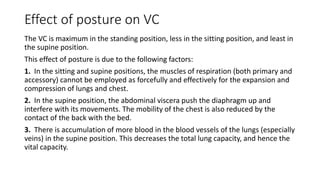
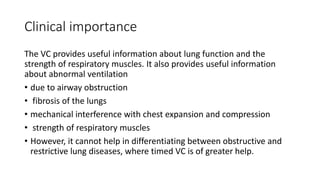


1. Vital capacity is the largest volume of air a person can exhale after taking the deepest breath possible. It is measured using a device called a vitalograph or spirometer. 2. When measuring vital capacity, the subject inhales fully then exhales as much air as possible into the vitalograph, which measures the volume expelled. Readings are taken in standing, sitting, and lying down positions. 3. Vital capacity is highest when standing and lowest when lying down due to effects of posture on lung volume and respiratory muscle function. Physiological factors like age, gender, and fitness level also impact vital capacity.


